Many exhibitions claim to be a landmark show, but few live up to the hype. This one exceeds the hype.
Queer is a beautiful, strange, hard-hitting and challenging exhibition where the central concept is like liquid mercury that, on hitting a hard surface, instantly scatters into innumerable droplets – each perfect in itself.
It is a show about art made by people who consider themselves as queer. In some cases, it is an exploration of gender and sexuality. In others, it is a journey into a sensibility or an interpretation of existing art made by non-queer artists that can be interpreted through a queer perspective.
More specifically, it is an examination of art history through a “queer lens”, art that spans millennia and that is drawn from the fabulously rich collections of the National Gallery of Victoria. The exhibition is not anchored in any specific medium but ranges over many art forms through more than 400 artworks occupying five gallery spaces.
Queerness across millenia
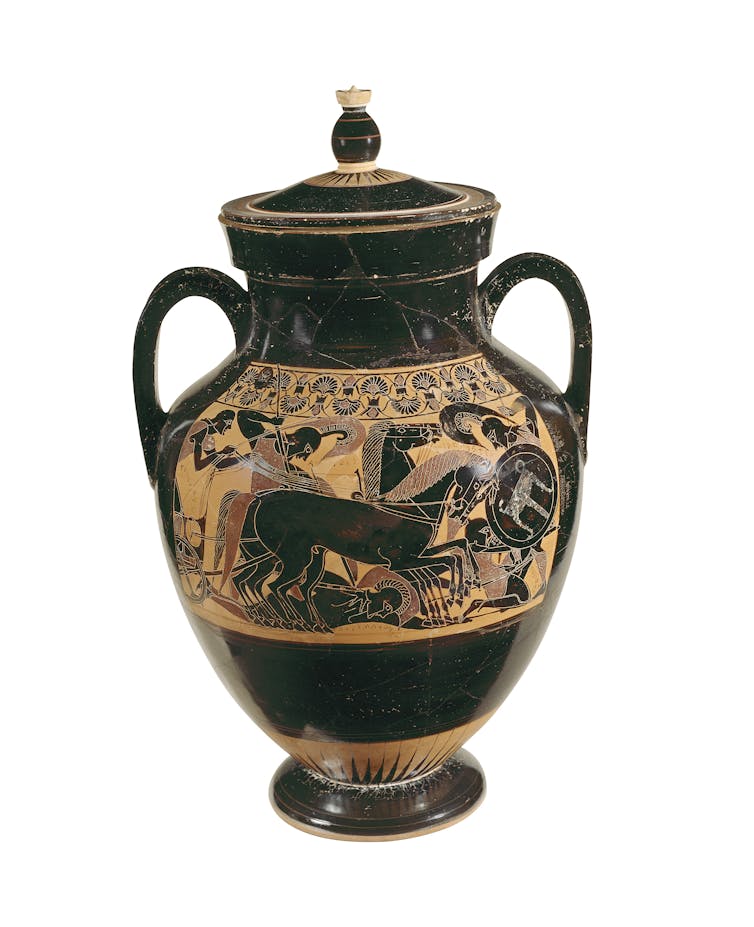
This broad-brush approach to the concept of “queer” has meant that it is possible to include a Greek Chalkidian black-figure vase, 540 BCE, depicting Achilles, the Greek hero of the Trojan War, who, according to some readings of Aeschylus and Plato, took his warrior friend Patroclus as his lover.
In the context of this exhibition, it is an illustration of homosexual love in the ancient world.
GREECE, Chalkis / ITALY. The Inscriptions Painter (attributed to) Psykter amphora (Chalkidian black-figure ware) 540 BCE. Earthenware (a-b) 60.2 × 37.1 × 34.9 cm (overall) National Gallery of Victoria, Melbourne, Felton Bequest, 1956
Some 2,500 years later, in a remarkable photograph by Ponch Hawkes, two women embrace in a public display of their affection as part of the 1970s Gay Liberation Movement in Melbourne. Again it is an expression of a gay relationship celebrated through art.
In Christian iconography, some characters, including the youthful King David who as a shepherd and harpist slew the giant Goliath, were imbued by some artists with homoerotic qualities, such as in the wondrous painting by Johan Zoffany of 1756.
The making of a queer icon
Another example was Saint Sebastian, who was martyred by the Roman emperor Diocletian for his Christian faith and who was frequently shown as a beautiful almost naked youth tied to a tree or pillar and pierced with numerous arrows. Such depictions opened a path to erotic and phallic readings of the imagery.
Albrecht Dürer. St Sebastian at the tree 1501. Engraving 11.5 × 7.1 cm (image and plate) 11.6 × 7.2 cm (sheet) National Gallery of Victoria, Melbourne. Felton Bequest, 1956
Contrary to popular belief, Sebastian survived his experiences as a pincushion and was ultimately clubbed to death after he confronted the emperor over his evil ways. However, it was the saint transfixed by arrows that became his most enduring image and the excuse for artists to explore the beauty of the male nude.
Albrecht Dürer’s magnificent engraving of St Sebastian of 1501 may not have had a queer interpretation at the time of its creation, but by the 19th century, Sebastian had morphed into a gay icon. Oscar Wilde in his French exile took the alias Sebastian Melmoth.
Once the saintly image was freed of its canonical content, Sebastian marched through time attracting rich traditions of interpretation.
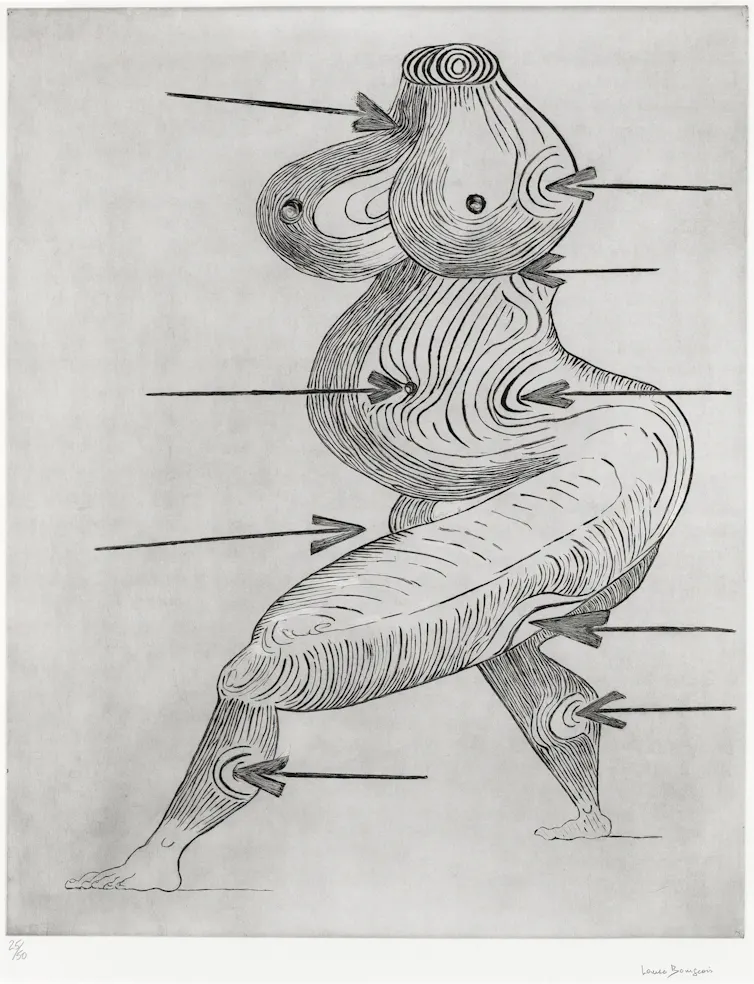
The fabulous Louise Bourgeois in her bold and monumental Ste Sébastienne, 1992, recreated the saint as a headless mutilated female who is surrounded by arrows that become a pointed reference to the contemporary persecution of women and a parallel to the historic persecution of Christianity by pagan rulers.
A new reading
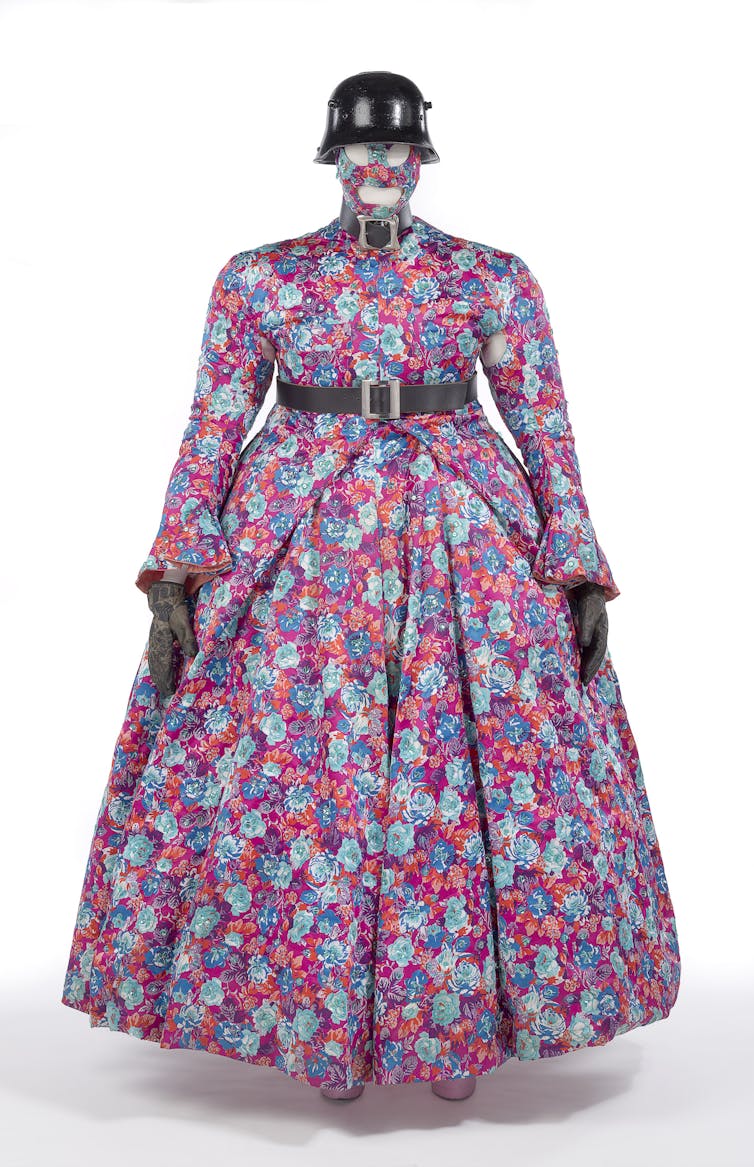
One of the highlights of the exhibition is the fabulous costume designs by Leigh Bowery, the Melbourne-born artist, designer and performer, who revolutionised the English art scene in the 1980s making a great impact on Lucian Freud and Boy George.
Costumes including The Metropolitan (c. 1988) and Pregnant tutu head (1992) scandalised in a subversive manner the conventions of dress and performance art at the time.
Although many of the exhibits document the centuries of struggle for the recognition of queer rights, a queer identity or simply the right to exist as a queer person, the overwhelming prevailing theme of the exhibition is the celebration of love between two people of the same gender.
Quite a number of the assembled artworks are familiar to us, including Ethel Walker’s Lilith (c. 1920s) – the image of the first wife of the first man Adam but also possessing the properties of a primordial she-demon.
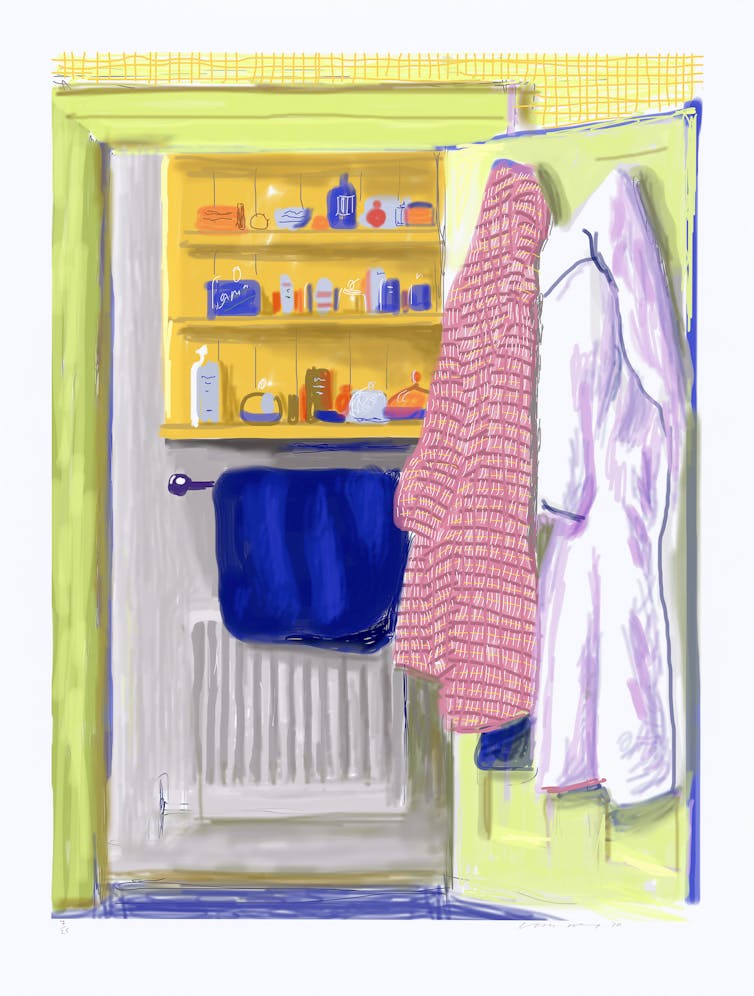
Also Glyn Philpot’s symbolic images, Agnes Goodsir’s celebration of her love for her beloved Cherry, the sensuous images of Janet Cumbrae Stewart and the homoerotic works of David Hockney, James Gleeson and Gilbert & George.
By assembling, for the first time, such a huge cross-section of art with its phenomenal cultural diversity, richness of imagery and exceptional artistic calibre, this exhibition suggests an alternative and viable reading for art history through a queer lens.
The curatorial team responsible for this extravagant exhibition – include the NGV curators Dr Ted Gott, Dr Angela Hesson, Myles Russell-Cook, Meg Slater, and Pip Wallis – all identify with the LGBTQ+ community and present an insider’s view of queer art.
It could be argued that the 20th century was the age of writing women back into a history of art. The opening decades of the 21st century represent an age when the “queer gaze” is presenting a new and alternative reading for art of the past and of the present.
This is the latest in a series we call Plant PPL, where we interview people of color in the plant world. If you have any suggestions for PPL to include in our series, tag us on Instagram @latimesplants.
Brandy Williams’ business is landscape design, but it’s more accurate to think of her as an artist who paints for pollinators, primarily with succulents and what she calls “California friendly” plants.
Williams never consciously intended to make plants her life’s work. In college, the Compton native thought about majoring in accounting or teaching, finally settling on human resources. But when it came to a project for her master’s degree, she found herself creating a program around gardening — specifically creating a pollinator garden at Augustus F. Hawkins High School in the Vermont-Slauson neighborhood of South L.A. — and it was as if someone had opened a door to her true profession.
“I had been working with plants with my grandmother ever since I was young,” Williams said. “She taught me how to keep a garden clean and be resourceful. But I had no idea I would make it my work until this project in 2014. That’s when I learned who I was. Plants gave me the freedom to create.”
Eight years later, her business, Garden Butterfly, is creating landscapes at private homes and businesses around Los Angeles. Her specialty is designing gardens laced with succulents of every size, California natives and other noninvasive plants fit for a Mediterranean climate. Her studio “lab” is the front yard of her 1930s Storybook-style home in Vermont Knolls.
Brandy Williams uses her front yard as a studio “lab” for her landscape design business called Garden Butterfly.
(Ricardo DeAratanha / Los Angeles Times)
The 900-square-foot yard was just lawn and vintage walkway when she and her family moved in seven years ago. She got help removing the old grass and then started creating.
The result is so lovely that the Theodore Payne Foundation has made it part of its 2022 Native Plant Garden Tour on April 23-24. It will feature extraordinary landscapes where at least 50{6d6906d986cb38e604952ede6d65f3d49470e23f1a526661621333fa74363c48} of the plants are natives of California.
“Every year, Brandy hosts a tour for her neighborhood, and she invited us last year, and we were blown away by her style and skill,” writes Evan Meyer, the foundation’s executive director. “So when we went about deciding who should be featured in the [2022] tour, she was right at the top of the list.”
Williams’ landscape “canvas” is relatively small, but lushly filled with 20 varieties of California native plants — salvias, ceanothus, buckwheats, mallows and such perennials as monkey flower and yarrow. Stone pavers float inside a pea gravel path littered with the feathery leaves of California poppies and other emerging wildflowers. Interlaced in the plants are large rocks, half-buried logs (to provide shelter and breeding grounds for insects and animals) and a National Wildlife Federation sign designating the area as a certified wildlife habitat.
Tour gardens filled with native plants
Being a habitat requires a water source too, so Williams installed a fountain against the house, half hidden by pots of reeds and the long graceful branches of a Waverly sage, its constant burble a soothing garden song. Huge aeoniums — sort of the succulent version of a sunflower — and flapjack kalanchoe share space with seaside daisies and the long-stemmed purple flowers of lavender and Mexican sage. More succulents spill from pots along the porch and side of the house — creamy green burro’s tail (Sedum morganianum) paired with ruffled echeverias or aloes. Tiny rosettes of sempervivum succulents are nestled against mounds of lemon thyme and nearby, a silver green dudleya shares a pot with the aptly named red fairy duster (Calliandra californica), whose flowers look like a wispy vegetable brush.
At the corner of the yard, next to the house, Williams has built a small deck nearly covered by a large bench, where you can study a pallet-turned-planter brimming with succulents or watch hummingbirds flit over mounds of blooming lavender and sage to perch across the garden on the gangly Mexican succulent with reddish blooms known as tall slipper plant (Pedilanthus bracteatus).
Brandy Williams’ garden is a dense mix of succulents, California native plants and Mediterranean-climate plants, such as this grouping that includes dudleyas, red fairyduster, succulents, lavender, a bromeliad and a pot of buckwheat. A birdbath and a simple statue of a Hindu deity compliment the greenery.
(Ricardo DeAratanha / Los Angeles Times)
It’s easy to be transported in this artfully arranged space, and like many artists, Williams sees her medium as a way to communicate with the world. Her website features a quote from agriculture scientist George Washington Carver, the first African American to earn a bachelor’s of science degree and whose innovative research and inventions at Tuskegee University helped Southern farmers restore their depleted soil: “I love to think of nature as an unlimited broadcasting station, through which God speaks to us every hour, if we will only tune in.”
That quote resonates in part because “plants have always talked to me,” Williams said, but also because she so admires Carver’s style.
“This is the way nature communicates with you. It’s saying, ‘You got a meeting this morning? Slow down, it’s O.K. You’ve got this.’”
“Of course, he was connected to the Black community, but he worked for humanity in general, and he was respected by all,” she said. “And what he was saying with this quote I experienced just this morning, when I was out in the garden drinking coffee. The hummingbirds were flying around, I saw two monarch butterflies and the bees were all around me. He was saying this is the way nature communicates with you. It’s saying, ‘You got a meeting this morning? Slow down, it’s OK. You’ve got this.’”
Williams, a slender, youthful mother of two college-age daughters, laughingly refuses to tell her age. For a photo shoot, she looks like a fashion model posing in a perfect prop garden wearing stilettos, but she laughs at the idea that this is her normal attire. At a job site, she says, she dresses in jeans, work boots and a flannel shirt, with a well-worn paint brush sticking out of her back pocket.
That brush is part of her grandmother’s legacy, the final touch when she’s planting her succulent gardens. She uses it to whisk dirt off the plants and tidy everything up.
A small footbridge and shady plantings, which include aeonium succulents and asparagus fern, accent Brandy Williams’ home garden.
(Ricardo DeAratanha / Los Angeles Times)
“She taught me that when you think of a garden, it should be swept and clean,” Williams said. “It’s a small task, but a necessary one. Even with a little raised garden bed, even when you’re planning, you have to keep it organized.”
Williams shares more about her grandmother’s lessons, her landscaping inspirations and how she uses plants to build community below.
Her grandmother’s collard greens and purple grapes inspired her craft
“I always say there were many paths that led me here. I have always been interested in and appreciated plants, but growing up in Compton with my grandmother, I was really influenced by her life in general. She grew up on a farm in Arkansas, and she and my grandfather were part of the great migration of Blacks who left the segregated South to move north and west, looking for better opportunities and education. They came west, and settled in Compton.
Brandy Williams’ front yard garden is filled with succulents, like this purple aeonium.
(Ricardo DeAratanha / Los Angeles Times)
An heirloom Stupice tomato growing happily in a raised-bed vegetable garden planted on the sunny east side of Brandy Williams’ house.
(Ricardo DeAratanha / Los Angeles Times)
“My grandmother raised me, and I was required to work in the yard. I had to sweep and keep the garden clean and make sure the lawn was watered. I could not waste water — she got upset with me if I overwatered the lawn with the hose. But I didn’t mind doing the work. I just felt it was necessary, and I didn’t mind being outside. She had turf in the yard, a few succulents, a large lemon tree and a garden with collard greens and tomatoes and grapes growing along the gate. They were purple grapes and they tasted sour, but I thought it looked so cool. And that was my entry into all of this.
“Originally, when I went to school I was thinking about going into accounting and then I wanted to be a teacher, but life just had all these changes…. I started out at Compton College, but I became a nontraditional college student. I earned my master’s degree online, years later. I was a stay-at-home mom for awhile, but my husband encouraged me to finish my degree in human resources. There are lots of different paths with human services — counseling, working with elders — but for my master’s degree, I decided to create lessons for creating pollinator gardens in schools. Augustus Hawkins High School asked me to help re-establish a garden they had created years earlier. They already had garden beds for food — fruits and vegetables — but my idea was to also grow plants that attract pollinators.
“I have a love for flowers and I always knew you needed pollinators [to get fruit], and growing up, whenever I saw a butterfly, I would stop in my tracks and be mesmerized. So I started researching. I learned about native plants through the Theodore Payne Foundation website — I took their certification program — and Las Pilitas Nursery in Santa Margarita. But I also did a lot of reading at the library. It’s like a field trip for me — some people go shopping, and I go to the Los Angeles Central Library downtown. I love the library.”
Obama persuaded her to save the bees
“That project [at the high school] was really my epiphany. I felt like I was led here [to landscaping] by a higher power, because once I got here, doors started to open for me.
“I wasn’t really focused on succulents or native plants at first. I knew I wanted to make plants my work, but then I read this presidential memorandum [from the Obama White House] in 2014, called ‘Creating a Federal Strategy to Promote the Health of Honey Bees and Other Pollinators.’ I read the whole thing, because that’s the way I am — I study and read. I thought, ‘I was able to establish a garden for butterflies even though I have a master’s in human services because I’m creative and I have an open mind.’ The memo encouraged businesses to incorporate plants for pollinators, and there was something about how you can do it on a small scale, and I was like, ‘Yeah, this is what I want to do. I want to branch out with pollinator-friendly landscaping.’
A flowering calla lily in mottled shade is one of many pollinators Brandy Williams has planted.
(Ricardo DeAratanha / Los Angeles Times)
“My grandmother grew a few succulents — agaves, jade and aloe, but she didn’t have all the variety of succulents you see here today. I was always familiar with succulents because she grew them and then one day I saw a video on YouTube by [succulent designer] Laura Eubanks. I saw what she did, creating these beautiful gardens with succulents, and it really encouraged me to become more creative. She was so free in working with the succulents. There weren’t any limitations, and because I’m an artist working with plants, I really connected to that.
“During my studies, I also walked around the gardens at the Natural History Museum [of Los Angeles County] to get ideas and observe how the plants grow together. I met a lady who worked there as a volunteer and she was just so excited talking about how we live in a Mediterranean climate here on the coast. People always identify this as a being a dry, desert climate, but at that moment, I learned that no, we aren’t a desert along the coast. Maybe inland, but here we’re a Mediterranean climate, and again, it was confirmation for me to go out and explore.
“It’s like my garden. What people will see is a mix of native plants, succulents and those California-friendly Mediterranean plants, and I say that because not all Mediterranean plants are California friendly. The plants I grow are noninvasive and grow well with California native plants. An example is moonshine yarrow [Achillea ‘Moonshine’ — a hybrid introduced in England] growing near bee’s bliss sage, or sweet lavender and rosemary growing near a native buckwheat and hummingbird sage.
A pair of Aloe brevifolia succulents grow next to a mottle-leaved bromeliad and elephant bush (Portulacaria afra) in Brandy Williams’ front yard garden.
(Ricardo DeAratanha / Los Angeles Times)
“Lavender is one of my favorite plants in the whole wide world, and I don’t think there’s anything wrong with that. I don’t want to not experience lavender because it’s a non-native plant. As long as I do as much study and research as I can, if a plant is not invasive and it’s California friendly, then I’m with the group that says, ‘I’m OK with that.’ I promote natives but also succulents because not everyone appreciates native plants. So I make my succulent gardens, but I always try to introduce those native host plants for pollinators too. The bees and butterflies will appreciate nectar flowers like lavender but they need the native host plants to feed their young, like native milkweed for monarchs. So I always try to incorporate some native plants to create habitat and help bring people along [to appreciate natives].”
Her motto: ‘plants belong to all of us’
“When I’m designing, this is what I think: ‘A garden is an opportunity for people of different backgrounds to come together and just learn about each other. It’s a way to connect with people and break down barriers, because plants are something we all have in common. We all have to eat, and most people love beautiful things and a lot of people enjoy pollinators — they enjoy seeing the hummingbirds and butterflies. So if you’re an introvert or just need a way to have a conversation, you know you can always talk about plants.’
“One of my goals is to help people understand that they can do it wherever they are, even if it’s just a little raised garden bed or containers. Sometimes people are intimidated by gardening. They think, ‘I can’t grow that, it’s too hard, you have to know certain stuff, blah blah blah,’ but plants belong to all of us. Whatever socioeconomic background you have doesn’t matter. Plants belong to everyone, and gardens are one way to express that, so why would you be intimidated about something that’s good and belongs to everybody?
Brandy Williams garden is filled with plants that pollinators love, and inside her home she decorates this windowsill with a variety of cacti and low-water plants.
(Ricardo DeAratanha / Los Angeles Times)
“If you are interested in reaching out, even just to family, a garden is the perfect place to gather and communicate. It’s also an opportunity to teach. It’s what I do when I have my [personal] garden tour; I am a teacher and people learn. They take the information back to their families and neighborhoods and they communicate, and that lets me know that I did my job.
“I think it’s awesome for people to come out and see my garden. It’s not about me, it’s about what I’m doing and what the impacts are for our community. I want to play my part in the whole environmental conservation movement, and, hopefully, I can inspire people to think in the same way.”
Areal and annual C burial rates were calculated for four to six sediment cores extracted per pond in June 2019 using total OC (TOC), dry weight, and piston corer dimensions. Mean TOC content in whole cores of ponds ranged from 1.7 to 26.5{6d6906d986cb38e604952ede6d65f3d49470e23f1a526661621333fa74363c48} (Table 1 and Supplementary Fig. 1). The areal OC stock ranged from 306 ± 8.2 g OC m−2 in Pond 14 (14-year-old pond) to 7380 ± 56.1 g OC m−2 in Pond 34 (34-year-old pond), increasing linearly with increasing pond age (R2 = 0.99, p < 0.001, Fig. 1a and Table 1). Scaling this OC stock by pond age (assuming constant burial rates over time) yields estimated annual burial rates ranging from 21.8 ± 7.5 g OC m−2 y−1 in Pond 14 to 217 ± 50.2 g OC m−2 y−1 in Pond 34, with annual rates increasing logarithmically with pond age (R2 = 0.93, p < 0.01, Fig. 1b). These OC burial rates, especially in the 23- and 34-year-old ponds (141 and 217 g OC m−2 y−1, respectively), are comparable to or exceed previously reported rates from a range of aquatic ecosystems (Supplementary Table 1) including critical blue C sinks such as mangrove forests, salt marshes, and seagrasses21. The OC burial values reported here are also similar to reported rates in other SWPs and constructed systems9,16,22,23, but remain below results for some impoundments around the globe (Supplementary Table 1).
Table 1 Pond morphology, water chemistry, and C burial data (mean ± standard error).
Fig. 1: Sediment organic carbon stocks and burial rates in stormwater ponds.
Organic carbon stock (g OC m−2, a) and the estimated rate of burial (g OC m−2 y−1, b) increase with pond age. Individual core values (n = 4–6 per pond) are plotted as small gray points and the larger black points represent the pond mean, which was used for regressions. Both linear and logarithmic regressions are statistically significant (p < 0.01).
The relationship between C burial and pond age suggests that internal sediment and/or aquatic properties allow ponds to become increasingly stable environments for C deposition and storage. Burial rates were not related to pond morphology (perimeter, area, depth, area:perimeter). SWPs are unique ecosystems that receive a dramatic quantity of sediment from impervious and piped catchments. It is possible that over time and as more particulate material is added to the sediment surface, sediment thickness and anaerobic conditions beneath newly deposited material increase, slowing down the rate of OM decomposition. A higher degree of recalcitrant OM can also be left behind, increasing the pool of stable OM more resistant to degradation. Further, the addition of SWPs to newly developed landscapes is associated with the addition of new landscaping vegetation to the urban watershed, such as trees which can increasingly contribute leaf litter to ponds as they mature over time, suggesting that allochthonous C inputs may increase concurrent with in-pond conditions favorable for C burial. Natural factors such as precipitation, length of the growing season, and littoral vegetation also affect C accumulation in urban SWPs9,22. In addition to allochthonous inputs, SWPs can support highly productive algal communities and phytoplankton turnover represent an internal OC input24. Littoral vegetation may provide a similar autochthonous OC source, but sites in this study contained no littoral vegetation and also had not been dredged (a common management practice). Despite the apparent relationship between age and C burial, our sample size is small, and this relationship may be spurious. A prior study found no relationship between sediment OC and age in an analysis of 45 aquaculture ponds25, but the aquaculture activities may have offset natural successional dynamics. Furthermore, an experimental study of small ponds found that new ponds (3 years old) exhibit significantly less C burial in sediments than mature ponds12. Nonetheless, in the process of preventing urban sediment from moving into downstream waters, constructed SWPs have emerged as significant reservoirs of sediment C, as shown here and in other anthropized ecosystems (reservoirs, impoundments, SWPs) or small ponds3,9,17,22,23.
In Florida, there are at least 76,000 SWPs5. Given the role of SWPs in storing sediment C and their ubiquity on the landscape, these anthropized ecosystems represent a large pool of C in urban aquatic sediments. Using the mean OC burial rates in the youngest and oldest pond combined with the estimated surface area covered by SWPs in Florida (627 km2)5, we estimate that SWPs in Florida can store between 0.2 and 4.6 Tg C annually. The upper end of this estimate would be enough to offset 1.4{6d6906d986cb38e604952ede6d65f3d49470e23f1a526661621333fa74363c48} of the global CO2 evasion from inland lakes and reservoirs26.
Carbon gas fluxes are controlled by physical and chemical factors within ponds
The mean floating chamber flux of CO2 over the study period (biweekly measurements June 2019 to March 2020) was 5940 ± 857 mg CO2 m−2 d11 with a range of −13600 to 34300 mg CO2 m−2 d −1 (Supplementary Fig. 2). CH4 fluxes were consistently positive but more variable and lower than CO2 fluxes with a mean of 47.8 ± 17.1 mg CH4 m−2 d−1 and range of 0.12–1400 mg CH4 m−2 d−1 (Supplementary Fig. 3). This maximum CH4 flux was accompanied by an unexplained water quality change that coincided with cloudy white water and DO levels depressed to 0–5{6d6906d986cb38e604952ede6d65f3d49470e23f1a526661621333fa74363c48} throughout the water column. Using median values, annual fluxes equate to 1290 g CO2 m−2 yr−1 and 5.0 g CH4 m−2 yr−1. The median estimate for CH4 is far below the 2019 Intergovernmental Panel on Climate Change estimate for manmade freshwater ponds (18.3 g CH4 m−2 yr−1), although the mean CH4 flux in this study is on par at 17.4 g CH4 m−2 yr−127. On a C mass basis, the daily mean flux of C gases combined (CO2-C + CH4-C) equates to 1636 mg C m−2 d−1 (CO2 making up 98{6d6906d986cb38e604952ede6d65f3d49470e23f1a526661621333fa74363c48}), and an annual flux of 324 g C m−2 yr−1 (using the median). Diffusive CH4 contributed a small percentage of total pond C fluxes in this study. Converting CH4 to CO2 equivalents with a sustained-flux global warming potential of 4528 and summing with CO2 fluxes results in a mean of 8090 mg CO2 eq m−2 d−1, of which CH4 makes up 27{6d6906d986cb38e604952ede6d65f3d49470e23f1a526661621333fa74363c48}, and annual median of 1660 g CO2 eq m−2 yr−1. This is a smaller fraction of CH4 contribution to overall CO2 equivalent fluxes compared to other urban SWPs such as 94{6d6906d986cb38e604952ede6d65f3d49470e23f1a526661621333fa74363c48} of 28.2 g CO2 eq m−2 d−1 (excluding ebullitive emission)29 and 62{6d6906d986cb38e604952ede6d65f3d49470e23f1a526661621333fa74363c48} of 9.2 g CO2 eq m−2 d−1 (including ebullitive emissions)16. Using the median CO2-equivalent fluxes in the oldest and youngest pond combined with the estimated surface area covered by SWPs in Florida (627 km2)5, we estimate that SWPs in Florida can emit between 52 and 204 Tg CO2-equivalents annually (or 12–50 Tg C annually).
Ponds were a source of CO2 over the vast majority of the study period excluding the two oldest ponds, which reported negative flux values during 6 of 17 sampling events each (35{6d6906d986cb38e604952ede6d65f3d49470e23f1a526661621333fa74363c48}), reaching as low as −507 mg CO2-C m−2 d−1 (Pond 23) and −3730 g CO2-C m−2 d−1 (Pond 34, Supplementary Fig. 2). Ponds 15 and 18 only exhibited negative CO2 gas flux one time each. These results suggest that at some points in the year, older ponds may switch from net heterotrophy to net autotrophy. A gradual decrease in mean CO2 flux with increasing pond age can be seen in Supplementary Fig. 3, but the same pattern is not evident with CH4 fluxes. Similarly, a survey on hydroelectric reservoirs around the globe (n = 85) found that CO2 and CH4 emissions were inversely related to reservoir age30 a pattern that was also found on a temporal study of a single hydroelectric reservoir (CO2 only)18.
The CO2 fluxes from this study were similar to or higher than other aquatic ecosystems, CO2 fluxes were similar or higher, whereas CH4 fluxes were typically lower than other urban studies (Supplementary Table 2). Ebullition is considered an important pathway for methane emission in lentic ecosystems with anoxic sediments31. Because we did not measure ebullition our values for overall CH4 flux are likely underestimated. Small patches of bubbles were occasionally captured underneath our flux chamber, causing the internal concentration of CH4 to spike to ~130,000 ppb. For reference, the global mean atmospheric CH4 concentration for 2019 was 1870 ppb32. There was not a similar spike in CO2 concentrations when bubbles were captured.
Linear mixed-effects models (LMM) were used to estimate the relationship between gas fluxes and environmental variables measured in this study (Supplementary Table 3). For both CO2 and CH4 models, site (five levels) and sampling date (seventeen levels) were set as random effects and pond age was a similar fixed effect. Including the variation from random effects, 68{6d6906d986cb38e604952ede6d65f3d49470e23f1a526661621333fa74363c48} of the variation in CO2 fluxes was explained by inverse relationships with surface {6d6906d986cb38e604952ede6d65f3d49470e23f1a526661621333fa74363c48} DO, pH, pond age, and the interaction between {6d6906d986cb38e604952ede6d65f3d49470e23f1a526661621333fa74363c48}DO and pH. In addition to the negative relationship between CO2 and pH and the observed decrease in mean CO2 flux with age (Supplementary Fig. 3), an associated observation was the slight increase in mean pH with pond age, up to 10.4 in Pond 34 (Fig. 2 and Supplementary Fig. 4). Surface {6d6906d986cb38e604952ede6d65f3d49470e23f1a526661621333fa74363c48}DO and pH were strongly related to CO2 in the LMM, and when combined can be considered indicators of primary production. Photosynthetic fixation of CO2 from the water column results in an increase in pH and DO. Concurrently, the chemical form of CO2 in the water column (and its concentration) is controlled by pH, speciating into carbonic acid, bicarbonate, and carbonate at higher pH values. According to the kinetics of this reaction, free CO2 in freshwater becomes depleted at pH > 8.3. Of the 14 observations of negative fluxes, all but one occurred above pH 8.3 (Fig. 2). So, while primary production contributes to a decrease in CO2 emissions, the increased pH can exert a compounding effect, rendering high pH ponds and lakes to be weak CO2 sources, similar to observations in in other urban ponds11, saline lakes33, and in agricultural reservoirs34. Other abiotic factors may contribute to an increase in pH. Florida is known to have shallow carbonate bedrock which, coupled with the weathering of urban concrete infrastructure (calcium hydroxide, portlandite, calcium silicate hydrates), can contribute carbonates and calcium salts, increasing alkalinity in aquatic ecosystems35,36. Additionally, in high CaCO3 systems, inputs of CO2 can contribute to increased alkalinity over time via calcium release. Thus, ponds have the potential to become CO2 sinks over time as a result of increasing eutrophication and accumulation of natural- and anthropogenically sourced alkaline ions increasing pH.
Fig. 2: Carbon dioxide fluxes in stormwater ponds as a function of surface water pH.
CO2 fluxes decrease with increasing surface water pH. In agreement with CO2-carbonic acid equilibrium, a majority of CO2 fluxes result in negative values at pH > 8.3, the point at which water column CO2 is nearly all converted to carbonate or bicarbonate. The dotted line denotes zero CO2 flux.
Compared to CO2, a lower amount of the variation in diffusive CH4 flux was explained by variables in this study. With accounted variance from random effects, 51{6d6906d986cb38e604952ede6d65f3d49470e23f1a526661621333fa74363c48} of CH4 flux variation was explained by an inverse relationship to benthic {6d6906d986cb38e604952ede6d65f3d49470e23f1a526661621333fa74363c48}DO and positive relationships to benthic temperature and log-transformed CO2 fluxes (Supplementary Table 3). There was no relationship between CH4 flux and site age. The bottom of most pond water columns remained hypoxic throughout the study period with 65{6d6906d986cb38e604952ede6d65f3d49470e23f1a526661621333fa74363c48} of the data below 3.0 mg/L DO, creating conditions beneficial for anaerobic methanogenesis, which can produce CH4 alone (by hydrogenotrophic methanogens) or CH4 and CO2 (by acetoclastic and methylotrophic methanogens). The positive relationship between CH4 and CO2 could be due to this simultaneous production, or due to increased production of CH4 using CO2 and H2 as substrates as a result of its increased availability (by hydrogenotrophic methanogens). CO2 may also be attributed to aerobic or anaerobic CH4-oxidation. The negative relationship with water column DO was also indicated during the extreme methane emission during DO depletion (0−5{6d6906d986cb38e604952ede6d65f3d49470e23f1a526661621333fa74363c48} DO through the water column) in Pond 14. Finally, sedimentary methanogens typically become more active at higher temperatures as a result of increasing use of higher redox potential electron acceptors as well as a higher input of primary production-derived substrates that fuel their metabolic activity37,38.
Younger ponds are net sources of C to the atmosphere
We estimated a C balance for each pond by comparing median organic C burial to median C gas flux (CO2-C + CH4-C flux) (Fig. 3). The combination of C gas flux (C export) and burial (C storage) reveals that three of the five ponds were, on average, net sources of C to the atmosphere. However, the median burial values fall within the 5th−95th quantile range for C efflux in Pond 23 and 34, the net burial ponds (Fig. 3 and Table 1). It should be noted that these estimates compare rate measurements determined at separate time scales (seconds vs multi-decadal). As pond age increased, the difference between C gas efflux and C storage in sediments decreased, implying that ponds may become more C-neutral as they age. The degree of this net benefit in older ponds may change if methane ebullition estimates had been included, as others have found that urban pond ebullition accounted for up to 50{6d6906d986cb38e604952ede6d65f3d49470e23f1a526661621333fa74363c48} of total CH4 emission16. Previous studies have identified increasing CH4 emission with ecosystem age18 and increasing trophic level39, which can be associated with pond succession, converting ponds into net sources in terms of CO2-equivalents due to increasing CH4 contributions. Regardless of pond age, this study provides evidence that SWPs, which are constructed to provide ecosystem services, may be providing a disservice by acting as net contributors to GHG emissions, despite storing substantial quantities of C in sediments. Other studies of small ponds support this assertion. For example, both Peacock et al. (2019) and Ollivier et al. (2019) observed release of GHGs from urban and small agricultural ponds at rates high enough to call for their inclusion in global carbon budgets.
Fig. 3: Net carbon flux in stormwater ponds based on sediment burial and gaseous emission.
A comparison of median C flux (blue circles, CO2–C + CH4–C) as positive values and median OC burial rate (brown circles) as negative values. The net C flux (g C m−2 y1) in stormwater ponds is shown by the red circles and line and represents the difference between gas flux and burial. Bars on points indicate the 5th and 95th quantiles.
C burial and C gas fluxes have been compared in other anthropized ecosystems. In a 20-year old urban pond (the Netherlands) the annual flux of CO2-C and CH4-C combined, 391 g C m−2 yr−1, was substantially higher than the pond’s rate of burial at 29 g C m−2 yr−1. The aforementioned pond exhibited a lower burial rate and annual emission than Pond 18 (and younger sites) in our study (burial = 126 g C m−2 yr−1, emission = 429 g C m−2 yr−1). In a 4-year-old (time since flooding) hydroelectric reservoir, daily estimates of flux and burial were 2.3 g C m−2 d−1 emission vs. 0.1 g C m−2 d−1 burial18.
Our results suggest that after urban ponds are constructed, they emit large proportions of C inputs from the landscape and potentially increase storage efficiency over time. We suspect that when C enters urban SWPs, less C is buried in younger ponds compared to older ponds, as seen in burial studies on aging artificial ponds12. Younger ponds may exhibit higher C mineralization rates which simultaneously increases emissions while reducing burial. However, identified trends can be drastically altered depending on how ponds are managed, suggesting management actions can be used to modulate pond C storage and C emission. For example, increasing urban pond depth is associated to reduced CH4 release29, likely due to increased water column contributions to organic matter oxidation prior to sediment settling and CH4 oxidation, and ponds or lakes larger in area exhibit lower C emissions per unit area compared to smaller ponds2. Other suggested properties for anthropized ecosystem C management include water column stratification, water retention time, water source inputs, and landscape position34. It is important to note that drivers of C emission can differ between natural and anthropized ecosystems such that CH4 emissions from reservoirs globally were correlated to productivity and fluxes increased with increasing area40. In contrast, natural lakes were better explained by morphometry and fluxes decreased with increasing area40.
Methods for pond maintenance include sediment dredging and muck removal, algaecide application, aeration systems (fountains, bubblers), fish stocking, and vegetation management41. Although ponds included in this study have not been dredged, dredging could reset the ‘effective pond age’. Dredging may not effectively reset a pond, however, as sediment resuspension that occurs in the process has caused lakes to relapse into a eutrophic state because of the reintroduced availability of sediment nutrients to the water column42. The application of aquatic pesticides (i.e., chemical treatments for algal blooms and invasive macrophytes) in SWPs is likely to impact C cycling such that substantial amounts of labile OC are rapidly contributed to the sediment surface, influencing sediment oxygen demand and the respiration of CO2 and CH4. Fish are added to ponds for recreation as well as mosquito and algal consumption, and can have varying effects on CO2-equivalent fluxes. For example, by grazing on zooplankton that consume both algae and CH4-oxidizing bacteria, fish can elicit a trophic cascade that causes an increase in algal productivity and CH4 flux and reduced CO2 flux39. However, fish can also graze on predators to CH4-oxidizing bacteria, decreasing CH4 flux43. The presence of vegetation may also be beneficial for reducing GHG emission, as seen in previous studies44 and is responsible for increasing C burial rates22. Finally, aeration systems are commonly used to prevent anoxia and could therefore reduce CH4 emissions, as shown in experimental studies on hypolimnetic DO manipulations45.
The number of small constructed ponds was found to increase 18-fold from 1937 to 2005 in the Brandywine watershed of central Pennsylvania and northern Delaware, and land use change associated with urbanization will likely continue to increase the numbers of small constructed ponds regionally and globally46. As ubiquitous anthropized aquatic ecosystems such as SWPs continue to be constructed in urban landscapes and have emerged as significant contributors to GHGs and C storage, more work is required to assess their net C footprint, patterns with ecosystem age over a larger number of sites, and biogeochemical responses to management strategies. An improved knowledge of how management actions interact with natural ecological processes is critical for understanding the role of SWPs and other small, anthropogenic aquatic ecosystems in the global C cycle.
On the Deccan Plateau and Gujarat, most sloth bear attacks occurred in winter, which differs significantly from the seasonality of attacks reported by other studies. Unlike other study areas, people on the Deccan Plateau and in Gujarat are more active in the forest in winter when monsoons and crop harvests have ended. The higher incidence of attacks during monsoons in central India correlates with the increased presence of people farming and protecting crops from cattle depredation, as well as from bears and other wildlife species grazing in nearby forested areas5, 16,17,18. The Kanha–Pench Corridor study was the only one which documented an increase in sloth bear attacks during summer. This increase is concurrent with an increase of people in the forest that collect mahua flower (Madhuca spp) and tendu leaf (Diospyros spp)19. In Sri Lanka, most attacks occurred in the dry season, coincident with the highest levels of human activity in forested areas. People in Sri Lanka enter forests for alternative sources of income as agriculture activity declines during the dry season4.
Across all studies, the majority of sloth bear attacks are correlated with the time of year when human activity is greatest in bear habitat. However, the time of year that the peak of human activity occurs in sloth bear habitat varies by region. We conclude that the seasonal activity of bears plays a much smaller role on attack rates than the seasonal activity of humans. Consistent with findings in other studies, human incursion into bear habitat is the primary factor responsible for precipitating conflict21.
Time of day influences on human–bear conflict
Most studies attributed the time of day that attacks occurred to when most humans were active in the forest4, 17,18,19,20. However, the Deccan plateau differed in that the majority of attacks occurred after dark when fewer people were active in or near the forest. Working in agricultural areas after dark is a more common practice on the Deccan Plateau than for the other study areas due to the availability of electricity and artificial lighting, though even with artificial lighting human activity after dark on the Deccan Plateau is still substantially less than during daytime. While a contributing factor, we do not feel that the increase in nighttime activity on the Deccan Plateau fully explains the significant increase in attacks during that time period as compared to other areas. We suspect that sloth bear activity patterns on the Deccan Plateau, and how bears use their environment, accounts for the shift in attack timing.
Sloth bears, though potentially active throughout the day, are predominately crepuscular and nocturnal17, 22,23,24. During daytime, sloth bears seek shelter in naturally occurring caves, crevices between big boulders, the spaces between tree roots, beneath fallen trees, or under bushes1, 25,26,27,28. On the Deccan Plateau, however, sloth bears utilize rocky caves almost exclusively for daytime denning29. A cave reduces chance encounters with people and predators while providing a modicum of security, hence the lower incident rate for areas with naturally occurring caves.
Conversely, studies conducted in Sri Lanka, Maharashtra and the Kanha-Pench corridor documented more attacks during daytime when people are more active but sloth bears are less active4, 5, 19. Large areas where sloth bears are located in Sri Lanka do not have caves for resting, though they do have dense vegetation and tree cavities (S. Ratnayeke, personal communication July 28, 2020). The Dnyanganga Wildlife Sanctuary, in the state of Maharastra, is mostly lower plains forest without rocky caves (N. Dharaiya, personal communication June 25, 2020). The Kanha-Pench corridor landscape is largely comprised of sal (Shorea spp) and teak (Tectona spp) forests largely devoid of caves30. The role of caves in minimizing daylight sloth bear attacks may be best exemplified by an attack in Sri Lanka as quoted in Ratnayeke et al.4:
“I was following two of my companions and saw a black form lying at the foot of a clump bushes, about 10 m from me. I called out to my companions. Before I knew it, the impact of the charging bear knocked me off my feet. It happened so fast, I didn’t see the bear coming… just dust, flying leaves, and the screams and roars of the bear.”
Had this bear been in a cave rather than the shade of a bush, it likely would not have felt threatened and reacted defensively. We speculate that during daylight on the Deccan Plateau, sloth bears rest securely within a cave and are not threatened by humans passing nearby. We know that farmers and livestock herders work in relatively close proximity to known den locations without fear of being attacked (S. Shanmugavelu, pers. observation). Clearly, caves afford a level of protection and separation that benefits both bears and humans. Consequently, we suggest this is the most likely explanation as to why there are relatively few attacks on the Deccan Plateau during daytime.
Season and sloth bear safety messaging
Bear attack research and safety messaging often recognizes a seasonal component17,18,19,20, 31 (e.g., more sloth bear attacks occur during the monsoon season than during other seasons). Sloth bears are active year-round, and the rate of attacks is strongly correlated with the level of human activity in the forest. Similarly, in Alaska, Smith and Herrero32 reported that human-brown bear conflicts were strongly seasonal in their occurrence. Additionally, they reported that attacks occurred most often when both people and bears vied for the same resource, such as salmon or ungulates. Farther north, human-polar bear conflict peaks when bears are on land awaiting freeze up in the fall33. Not infrequently, sloth bear safety messaging amounts to little more than general statements such as “when in the forest or in sloth bear country be aware”. In other words, an individual’s odds of being attacked by a sloth bear while in the woods may not significantly vary regardless of season. But, where it has been found to vary by season, this information should be conveyed to the public.
Time of day and sloth bear safety messaging
Sloth bear research and safety messaging often reports and warns of the “most dangerous” time or times of the day to be active in the forest17,18,19,20, 31, 34. Sloth bear attacks, like grizzly bear or American black bear attacks33, can occur anytime, day or night6. However, due to an abundance of naturally occurring caves on the Deccan Plateau, stumbling across a sleeping sloth bear mid-day is much less likely to occur than it is in Sri Lanka or in the Kanha-Pench corridor. Therefore, regional sloth bear safety messaging should acknowledge this significant difference which will promote bear safety.
The Corbett Foundation31 and Dharaiya et al.34 do an admirable job of focusing their safety messaging to a specific regional group of people in their respective publications. This type of regional messaging is necessary for optimizing sloth bear safety messaging efficacy. However, there is also value to non-site-specific sloth bear safety messaging. The short film “Living with Sloth Bears”35 intentionally addresses general safety messaging that applies to sloth bears across their entire range. Consequently, in the making of this film, we purposely avoided referring to the timing of attacks, seasons or time of day, or other aspects of human-bear conflict because we were aware of significant differences with respect to these variables between locations.
Yet another aspect of bear safety messaging is to keep it simple so that a person, under duress, will remember what to do in the event of a bear encounter Attempting to recall the details of an extended message, especially when being threatened by a bear, can be difficult, if not impossible. Therefore, the trend has been to keep bear messaging as simple as possible and we agree with it. However, teaching people that work in bear habitat the most likely times of day encounters occur can be beneficial. In summary, there is a time and place to provide detailed information that is regionally specific, and other situations in which to keep messaging simple.
Sloth bear denning ecology on the Deccan Plateau and its role in human–bear conflict
The Deccan Plateau is known as high quality sloth bear habitat, as evidenced by the relatively high density of bears in this area (S. Shanmugavelu, pers. observation). While there is ample food on the Deccan Plateau, the abundance of caves there sets it apart from other areas within the specie’s range. Sloth bears use only caves or cave-like structures on the Deccan Plateau for resting (Shanmugavelu et al. In Print). Caves provide protection from the elements, such as the heat of the day or severe storms, as well as protection from potential predators. Sloth bears do not have many predators and while a cub or very young bear may be at risk from leopards (Panthera pardus) or wolves (Canis lupes pallipes), the only natural predator of adult sloth bears is the Bengal tiger (Panthera tigris tigris). Tiger scat studies revealed that sloth bears can comprise up to 2{6d6906d986cb38e604952ede6d65f3d49470e23f1a526661621333fa74363c48} of a their diet36,37,38,39. Tigers no longer occur on the Deccan Plateau, but the abundance of caves in the area undoubtedly historically benefited sloth bears, perhaps facilitating a higher density than would have been otherwise attainable. Presently, however, an increase in human population and habitat loss represents greater threat to the species.
Giuliani, Trump’s previous attorney, promoted baseless election fraud claims at the event.
Barr comprehensive his feelings all around the 2020 election in his new memoir introduced Tuesday.
Former Attorney Basic William Barr wrote in his new memoir that the infamous November 2020 press meeting hosted by President Donald Trump’s lawyer Rudy Giuliani in the parking great deal of a tiny firm referred to as Four Seasons Full Landscaping was “a grotesque humiliation.”
Barr shared his feelings on the unsuccessful endeavours by Trump’s authorized group to problem the 2020 election final results in his new e-book, “One Damn Point Soon after A further,” released on Tuesday.
“His lawful staff had a difficult circumstance to make, and they built it as badly and unprofessionally as I could have imagined,” Barr wrote, pointing to the “bizarre” 4 Seasons Whole Landscaping push conference on November 7 and the November 19 push function “in which mascara appeared to drip from” Giuliani’s sideburns.
“It was all a grotesque shame,” Barr added.
Four days soon after the 2020 presidential election, Giuliani promoted baseless voter fraud claims all through a push meeting at 4 Seasons Overall Landscaping, a tiny landscaping enterprise in Philadelphia, Pennsylvania. But Giuliani’s claims were being drowned out by critics mocking the party location, theorizing that Trump’s lawful crew mistakenly booked the landscaping organization as an alternative of the luxurious 4 Seasons hotel.
“A gap shortly designed between what Giuliani and his team have been indicating in general public and what they have been telling courts. In public, they aired sweeping but unsubstantiated assertions of voter fraud,” Barr wrote. “But in their courtroom papers—as Giuliani frankly acknowledged—they were not saying fraud.”
In fact, as the push briefing took put, major news networks projected then-Democratic nominee Joe Biden as the winner of the election, prompting an outcry from Giuliani.
“The get in touch with for Joe Biden isn’t, just isn’t — who was it called by?” Giuliani asked. A reporter replied that “all” the major cable information networks had announced that Biden was the envisioned winner.
“All of them! Oh my goodness! Wow, all the networks! We have to ignore about the law, judges don’t count!” Giuliani responded sarcastically, throwing his arms in the air.
Giuliani and other users of Trump’s lawful group continued to pursue endeavours to overturn the benefits in numerous battleground states that Biden won, though they had been unsuccessful. Federal, point out, and community officials have repeatedly claimed there was no popular voter fraud in the 2020 election.
Barr made no magic formula of his disdain for Giuliani in his guide, contacting the previous mayor “an unguided missile.” The former AG described his frustration with how Giuliani tried using to rope the Section of Justice into his schemes to pressure Ukraine to look into Biden’s son Hunter in 2019 and then to back again Trump’s false claims of significant fraud in the 2020 election.
“Rudy Giuliani saved New York Metropolis following 9/11 and should go down as probably the most consequential mayor of a huge metropolis in American history,” Barr wrote. “But he will also go down as the gentleman who helped President Trump get himself impeached—not once but, as it turned out, two times.”