Florida’s skyline is defined by the graceful silhouettes of palm trees. For homeowners and commercial developers alike, these botanical giants are more than just aesthetic choices; they are the architectural backbone of a resilient, tropical environment. However, selecting the right palm involves understanding the delicate balance between soil composition, salt tolerance, and cold hardiness. Success in Florida landscaping requires moving beyond the “vacation vibe” and looking at the functional benefits of specific species.
Why Should You Prioritize Native Palm Trees in Florida?
Choosing indigenous species isn’t just a nod to conservation—it’s a practical strategy for long-term maintenance. Native palm trees in Florida have evolved to withstand the state’s unique stressors, from the nutrient-poor sandy soils to the intense humidity and seasonal hurricane winds.
Native varieties, such as the Sabal Palm (Sabal palmetto), the state tree, offer unparalleled durability. Unlike many exotic imports, native palms often require less supplemental irrigation once established and possess a natural resistance to local pests like the palmetto weevil. From a landscape design perspective, they provide a sense of place that honors the local ecosystem while providing essential habitats for native pollinators and birds.
Which Palms Handle Coastal Conditions Best?
If your property is within a few miles of the Atlantic or Gulf coasts, salt spray is your primary adversary. Salt causes desiccation in many plants, leading to browned fronds and stunted growth.
The Coconut Palm (Cocos nucifera): While synonymous with the tropics, it is highly salt-tolerant and thrives in the sandy, well-draining soils of South Florida.
The Silver Saw Palmetto (Serenoa repens): This is a low-growing powerhouse. Its silver-blue foliage adds incredible texture to the understory and can handle direct salt exposure without flinching.
The Thatch Palm (Thrinax radiata): A slender, elegant choice for smaller coastal lots where space is at a premium.
When sourcing these for large-scale projects, professionals often turn to specialized nurseries like Treeworld Wholesale, where the focus is on specimen quality and species accuracy—crucial factors when you are betting your curb appeal on a plant’s ability to survive a storm surge.
How Do You Choose the Right Palm for Your Hardiness Zone?
Florida is divided into several USDA hardiness zones, ranging from 8a in the Panhandle to 11 in the Keys. A common mistake is planting a “Miami palm” in Tallahassee.
Can the Pindo Palm Survive North Florida Winters?
Yes. The Pindo Palm (Butia capitata) is exceptionally cold-hardy, capable of withstanding temperatures as low as 15°F. Its blue-grey, arching fronds offer a Mediterranean look that survives freezes that would kill a Queen Palm.
Is the Bismarck Palm Right for Small Gardens?
Probably not. The Bismarck Palm (Bismarckia nobilis) is one of the most stunning specimens available, but its massive canopy can reach 20 feet across. In professional landscape design, we use the Bismarck as a “focal point” in wide-open spaces. Planting it too close to a structure is a recipe for future structural interference.
What Are the Key Signs of Nutritional Deficiency in Palms?
Palms are “heavy feeders,” particularly when it comes to potassium, magnesium, and manganese. In Florida’s high-alkalinity soils, these minerals often become “locked,” making them unavailable to the plant.
Yellowing of older fronds: This usually indicates a potassium deficiency. Do not trim these yellow fronds immediately; the tree is actually relocating nutrients from the old growth to the new bud.
Frizzle top: If the newest leaves emerge distorted or “scorched,” it is likely a manganese deficiency, common in the alkaline soils of the Florida Keys and coastal areas.
Designing for the Future
The longevity of a Florida landscape depends on the quality of the initial stock and the intelligence of the planting plan. By selecting palms that match your specific microclimate—be it a wind-swept coastal bluff or a humid inland garden—you reduce future replacement costs and water consumption.
Focus on diversity. Instead of a monoculture of one species, mix heights and textures. Combine the towering height of a Royal Palm with the mid-level canopy of a Christmas Palm and the low-profile texture of a Coontie. This creates a layered, professional look that matures beautifully over decades.
To ensure your landscape thrives, prioritize sourcing from growers who understand the specific physiological needs of Florida’s flora and always test your soil pH before the first spade hits the ground.
Your backyard holds endless potential—it’s not just a patch of grass or an empty space behind your home. With the right design elements and a little creativity, it can become a beautiful extension of your indoor living space. Whether you love to entertain guests, unwind after a long day, or simply enjoy the outdoors, a well-designed patio can elevate the entire vibe of your home.
In this blog post, we’re diving into 15 stunning backyard patio ideas that blend style, comfort, and practicality. From modern minimalist designs to cozy bohemian lounges and nature-inspired retreats, there’s something here for every taste and backyard size. Ready to turn your outdoor area into a personal paradise? Let’s explore the ideas that will inspire your next transformation.
Section 1: Modern & Minimalist Inspirations
If you love clean lines, simplicity, and a clutter-free aesthetic, modern and minimalist patio designs are the perfect starting point. These styles focus on functionality, space optimization, and a sleek visual appeal that turns your backyard into a sophisticated retreat.
1. Modern Minimalist Patio
Simplicity is key in modern patio design. Think sleek concrete or wooden flooring, neutral color palettes (white, gray, black), and streamlined outdoor furniture with sharp angles and minimal embellishment. The minimalist patio creates a serene and open atmosphere that feels effortlessly elegant.
Why it works: By eliminating visual clutter and focusing on high-quality, functional pieces, this design creates a relaxing, high-end vibe—perfect for both small and large spaces.
Design Tips:
Use modular seating for flexibility
Incorporate subtle accent lighting (LED strips or recessed lights)
Add greenery with symmetrical potted plants for a touch of nature
2. Concrete & Gravel Industrial Look
Channeling an urban, industrial aesthetic, this patio style combines raw materials like poured concrete, crushed gravel, and steel or iron accents. It’s bold, contemporary, and low-maintenance—ideal for homeowners looking for something edgy yet functional.
Why it works: The contrast between rough textures and sleek furniture gives the space a modern edge while remaining practical and easy to clean.
Design Tips:
Use contrasting furniture materials, such as wood or matte black metal
Add visual warmth with outdoor rugs or throw cushions
Line pathways or borders with gravel for a budget-friendly modern touch
Overall Benefits of Modern & Minimalist Patios:
They make small spaces feel bigger
Easy to clean and maintain
Versatile and suitable for all climates
Offer a timeless aesthetic that complements modern architecture
Ready to embrace modern elegance? These two ideas will give your patio a sleek upgrade without sacrificing comfort or function.
Section 2: Relaxed & Bohemian Vibes
If your dream patio is one where time slows down, barefoot comfort is encouraged, and every detail feels warm and welcoming, then a relaxed or bohemian-inspired outdoor space is just for you. These patio styles are all about layered textures, cozy elements, and an effortlessly curated look that feels lived-in and loved.
3. Boho-Chic Lounge Area
The boho-chic patio is a haven for free-spirited design lovers. It mixes earthy tones, natural materials, and handcrafted décor for a space that feels both eclectic and inviting. Think rattan chairs, hanging swings, colorful throw pillows, patterned rugs, and string lights to tie it all together.
Why it works: It’s personal, full of character, and invites relaxation. Boho patios are perfect for lounging, reading, or hosting casual get-togethers under the stars.
Design Tips:
Use layers of textiles like throws, outdoor rugs, and cushions
Mix and match patterns and colors for a whimsical feel
Add lanterns, candles, or string lights to create a cozy glow at night
4. Zen Garden Patio
For those who seek peace and simplicity, a Zen-inspired patio offers a calming retreat. Influenced by Japanese garden design, it uses natural materials, minimalist furniture, and a neutral palette to create an atmosphere of serenity.
Why it works: This style fosters mindfulness and relaxation, making it the perfect escape from daily stress. It’s ideal for yoga, meditation, or simply sipping tea in peace.
Design Tips:
Use gravel, bamboo, and smooth stones to define the space
Incorporate a water feature, like a small fountain or pond, for soothing sound
Add low-profile seating and bonsai or other minimal greenery for balance
Overall Benefits of Relaxed & Bohemian Patios:
Encourage a calm and casual lifestyle
Infuse personality and warmth into your outdoor space
Easily customizable with affordable, unique finds
Great for small patios or urban balconies
Whether you’re drawn to the artistic flair of boho design or the tranquil simplicity of a Zen garden, these ideas will help you create a backyard escape that feels just right for you.
Section 3: Functional & Entertaining Spaces
Your backyard patio can be much more than just a pretty place—it can be a hub for socializing, dining, and spending quality time with family and friends. This section highlights functional and entertaining patio ideas that combine style with purpose, making your outdoor space a true extension of your lifestyle.
5. Fire Pit Conversation Circle
There’s something timeless about gathering around a fire. A circular seating arrangement around a fire pit invites warmth, storytelling, and late-night laughs. Whether you opt for a wood-burning pit or a sleek gas version, this setup brings people together.
Why it works: It creates a central focal point that’s both cozy and interactive—perfect for year-round enjoyment.
Design Tips:
Use weather-resistant seating like Adirondack chairs or cushioned benches
Surround the pit with stone pavers or gravel for safety and aesthetics
Add cozy blankets or throw pillows for chilly evenings
6. Patio with Outdoor Kitchen
An outdoor kitchen brings the heart of the home outside. With a built-in grill, countertop space, sink, and even a mini-fridge, you can cook, entertain, and dine without ever stepping indoors. It’s a game-changer for backyard parties and family dinners.
Why it works: It streamlines entertaining by keeping the cook in the middle of the action and eliminates the need to constantly run inside.
Design Tips:
Choose durable, weatherproof materials for cabinetry and surfaces
Include overhead shade or a pergola for sun protection
Add bar seating or a dining table nearby for easy flow
Overall Benefits of Functional & Entertaining Patios:
Turn your backyard into a go-to space for gatherings
Maximize the use of your outdoor area year-round
Add long-term value and lifestyle appeal to your home
Enhance daily living with convenience and comfort
Whether you’re hosting weekend barbecues or enjoying quiet family dinners under the stars, these functional patio ideas help you make the most of your backyard by blending beauty with utility.
Section 4: Stylish Shelter & Privacy
A great patio isn’t just about open space—it’s also about comfort, shade, and a sense of seclusion. Adding structure and privacy elements to your backyard patio can make it feel like a true outdoor room. Whether you’re escaping the sun, creating a cozy retreat, or simply carving out some personal space, these stylish ideas offer both form and function.
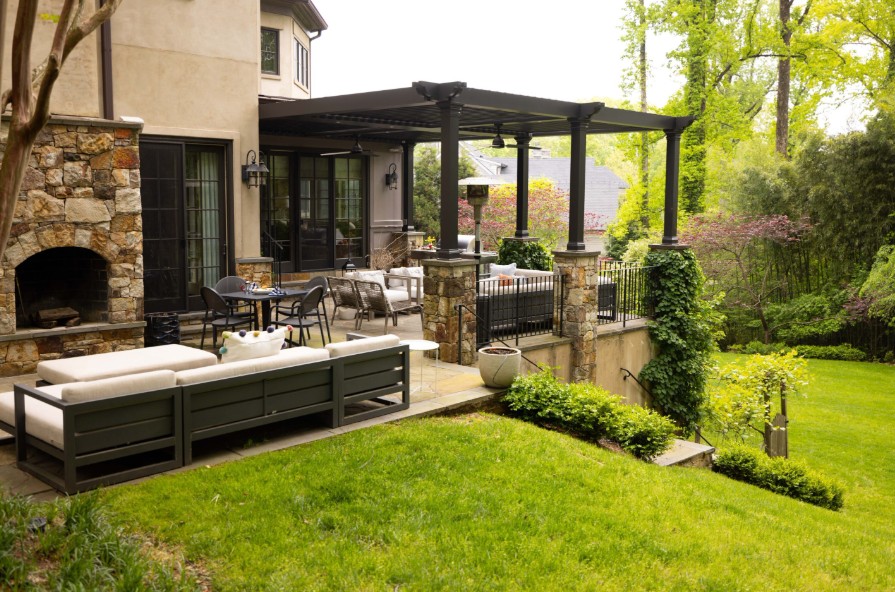
8. Pergola-Covered Patio
A pergola is a classic way to define your patio while adding partial shade and architectural interest. Whether made of wood, metal, or vinyl, pergolas give your space a refined and finished look.
Why it works: It frames the area beautifully and serves as a base for other design elements like lighting, curtains, or climbing plants.
Design Tips:
Add vines such as wisteria, ivy, or jasmine for natural shade and fragrance
Hang string lights or pendant fixtures for ambiance
Install outdoor curtains for softness and wind protection
9. Cozy Covered Patio with Curtains
For a more enclosed and intimate atmosphere, consider adding flowing outdoor curtains to a pergola, canopy, or even a porch. Curtains not only soften the look of your patio but also provide sun protection and privacy.
Why it works: It adds a sense of luxury and comfort while giving you control over light, wind, and visibility.
Design Tips:
Choose weather-resistant, fade-resistant fabric
Use tiebacks or curtain weights to keep them in place
Pair with plush seating and warm lighting for a cabana-style escape
Overall Benefits of Stylish Shelter & Privacy Features:
Enhance comfort and usability in any weather
Provide privacy from neighbors or nearby streets
Create a more structured and cozy outdoor space
Offer endless customization with fabric, lighting, and plants
By incorporating these shelter and privacy solutions, your patio becomes more than just an open space—it transforms into a personalized hideaway, perfect for relaxing, reading, or entertaining in peace and style.
Section 5: Nature-Infused Designs
If you find peace in nature and want to bring more of the outdoors into your everyday living, these nature-infused patio ideas are for you. By blending your patio seamlessly with its natural surroundings, you create a calming, earthy escape that soothes the senses and nurtures a deeper connection to the outdoors.
10. Tropical Paradise Vibes
Turn your patio into a lush, island-inspired retreat with tropical plants, vibrant colors, and natural textures. Think palm trees, banana leaves, bamboo furniture, and pops of turquoise, coral, or sunny yellow.
Why it works: This design instantly transports you to a vacation state of mind—without ever leaving home.
Design Tips:
Use bold foliage like bird of paradise, monstera, and hibiscus
Incorporate tiki torches or lanterns for island ambiance
Add a hammock or hanging chair for ultimate relaxation
11. Rustic Retreat with Wood Accents
Celebrate nature’s raw beauty with a rustic patio that uses weathered wood, stone, and earthy tones. This look is warm, grounded, and full of character—perfect for those who love a cozy, back-to-basics feel.
Why it works: It creates a welcoming, lived-in space that feels timeless and authentic.
Design Tips:
Use reclaimed wood for furniture or decking
Incorporate vintage elements like an old wagon wheel or antique lanterns
Add woven baskets and potted herbs for a homey touch
12. Mediterranean-Inspired Patio
Channel the sun-drenched charm of Southern Europe with terracotta tiles, wrought iron furniture, and lush greenery. Mediterranean patios are known for their casual elegance and earthy richness.
Why it works: It combines relaxed outdoor living with a timeless, romantic style.
Design Tips:
Use olive trees, lavender, and citrus plants for authenticity
Decorate with mosaic tables or patterned tiles
Add clay pots and textured cushions in deep blues, whites, and terracotta tones
Overall Benefits of Nature-Infused Patios:
Encourage a tranquil, grounding atmosphere
Improve air quality and create a micro-ecosystem
Bring color, texture, and life to your patio design
Blend the boundaries between indoor and outdoor spaces
Whether you love the exotic vibe of a tropical escape or the rustic charm of natural materials, these nature-infused patio ideas help you create an outdoor space that feels alive, inviting, and uniquely yours.
Section 6: Space-Saving & Multi-Functional Ideas
A small backyard doesn’t mean you have to sacrifice style or function. With thoughtful design, even the tiniest patio can become a versatile outdoor oasis. These space-saving and multi-functional patio ideas help you make the most of every square inch—perfect for urban living, compact yards, or anyone who loves efficiency without compromising on beauty.
13. Vertical Garden Wall Patio
If you’re short on ground space, think vertically. A living green wall or vertical garden adds lushness and freshness without taking up valuable floor area. It can double as a privacy screen and a decorative focal point.
Why it works: It turns bare walls into a natural feature, ideal for growing herbs, flowers, or decorative plants.
Design Tips:
Use modular wall planters or mounted pallets
Choose low-maintenance plants like succulents or ferns
Combine with built-in bench seating for added functionality
14. Small Space Patio Makeover
Small patios can still be stylish and comfortable with smart choices. Foldable furniture, compact seating arrangements, and dual-purpose décor make a big impact in a small footprint.
Why it works: It proves that thoughtful design trumps size. Every element has a purpose and place.
Design Tips:
Choose café-style tables and chairs for charm and function
Use outdoor rugs to visually define zones
Incorporate hanging lights or wall-mounted planters to free up floor space
15. Multi-Level Patio Design
If your backyard is sloped or spacious, a tiered or multi-level patio creates distinct zones for lounging, dining, and gardening. This approach adds dimension and separates areas without walls.
Why it works: It makes the space feel larger and more organized, offering specific uses for each level.
Design Tips:
Use steps or retaining walls to divide sections
Vary materials (wood deck on one level, stone pavers on another)
Add railing or planters to visually define zones
Overall Benefits of Space-Saving & Multi-Functional Patios:
Maximize usability in compact or challenging spaces
Keep the patio clutter-free and organized
Create distinct experiences in one cohesive design
Ideal for both city dwellers and creative homeowners
With the right approach, any backyard—big or small—can be transformed into a stunning, multi-use retreat that balances form, function, and style.
Conclusion
Transforming your backyard patio doesn’t have to be overwhelming. Whether you prefer sleek modern lines, cozy bohemian vibes, or a nature-inspired sanctuary, there’s a perfect design idea to elevate your outdoor space. From functional entertaining areas to stylish shelters that offer privacy and comfort, these 15 stunning backyard patio ideas provide endless inspiration to create a space that truly reflects your lifestyle and personality.
Now it’s time to take action—choose the ideas that resonate most with you, gather your favorite materials, and start turning your backyard into the beautiful, inviting retreat you’ve always wanted. With a little creativity and planning, your patio can become your go-to spot for relaxation, fun, and making memories. So go ahead, elevate your space and enjoy the great outdoors in style!
Modern landscape design has become a go-to choice for homeowners who want their outdoor spaces to reflect clean, contemporary aesthetics and functional elegance. Gone are the days of overly crowded gardens and complicated layouts—instead, today’s sleek and stylish landscapes focus on simplicity, balance, and thoughtful use of materials. Whether you have a small urban yard or a sprawling suburban garden, modern design principles can transform your space into a sophisticated retreat that complements your home’s architecture and enhances your lifestyle. In this post, you’ll discover key elements, inspiring ideas, and practical tips to help you create a modern landscape that you’ll love for years to come.
What Defines Modern Landscape Design?
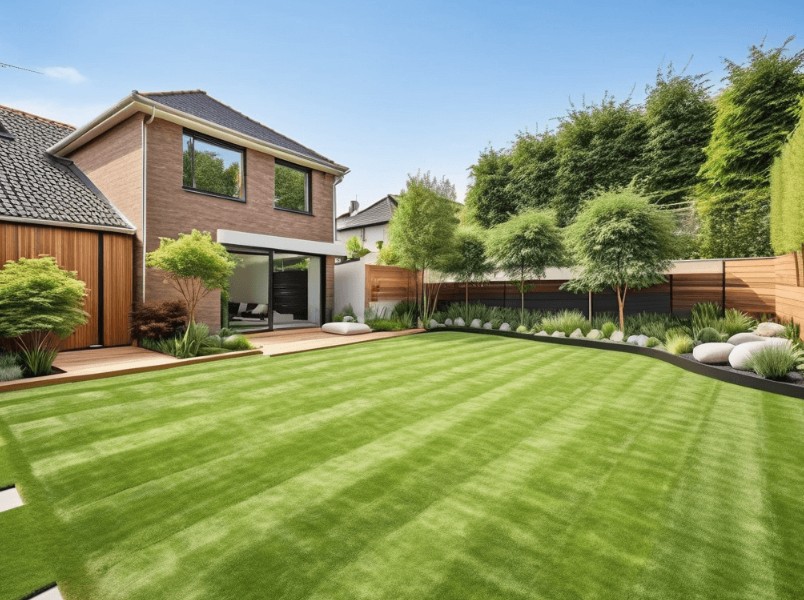
Modern landscape design is defined by its emphasis on simplicity, clean lines, and a harmonious balance between natural and architectural elements. Unlike traditional gardens that often focus on lush, layered plantings and ornate details, modern landscapes prioritize minimalism and order. Key characteristics include the use of geometric shapes and structured layouts that create a sense of calm and clarity.
Materials play a vital role in defining this style, with a preference for sleek, innovative options such as concrete, steel, glass, and natural stone. Plant choices tend to be purposeful and restrained, favoring native or drought-tolerant species with strong architectural forms rather than an abundance of diverse blooms. This approach not only highlights the beauty of individual elements but also enhances the overall flow and functionality of the outdoor space.
Ultimately, modern landscape design seeks to blend the outdoor environment seamlessly with the home, creating a cohesive, stylish, and inviting living area that feels both contemporary and timeless.
Key Elements of Modern Landscape Design
Modern landscape design is distinguished by several core elements that work together to create a sleek, stylish, and cohesive outdoor space. Understanding these elements will help you achieve the clean and contemporary look that defines this design style.
Clean Lines and Geometric Shapes Straight edges, sharp angles, and clear geometric forms are fundamental to modern landscapes. Whether it’s rectangular patios, linear pathways, or square planting beds, these shapes bring structure and order to the space.
Neutral and Monochromatic Color Palettes Modern landscapes typically use subdued color schemes with shades of gray, black, white, and green. This minimalist palette enhances the serene atmosphere and allows textures and shapes to take center stage.
Innovative Materials Materials such as polished concrete, corten steel, glass, and smooth wood add a contemporary touch. These often contrast beautifully with natural elements like stone, gravel, or water, creating visual interest through texture and finish.
Minimalist Plant Selection Instead of a dense mix of plants, modern landscaping favors fewer species with bold, architectural shapes. Popular choices include ornamental grasses, succulents, bamboo, and neatly trimmed hedges, often native or drought-tolerant for easy maintenance.
Integration of Outdoor Living Spaces Modern landscapes blur the line between indoors and outdoors. Features like covered patios, sleek outdoor furniture, built-in fire pits, and outdoor kitchens transform the yard into an extension of the home, perfect for relaxing or entertaining.
Together, these elements create a balanced and elegant outdoor space that is both functional and visually striking—hallmarks of successful modern landscape design.
Modern Landscape Design Ideas to Inspire You
If you’re ready to embrace a sleek and stylish outdoor space, here are some modern landscape design ideas that can inspire your next project:
Monochrome Zen Garden Create a peaceful retreat by using varying shades of gray and green. Incorporate gravel beds, slate slabs, and tall bamboo for privacy. A simple, linear water feature can add a soothing element without overwhelming the minimalist vibe.
Linear Pathways with LED Lighting Design pathways with concrete or stone slabs arranged in straight lines. Add recessed LED lighting underneath or along the edges to guide visitors and create a dramatic effect after dark, enhancing both safety and style.
Sculptural Plants and Green Walls Incorporate architectural plants such as agave, yucca, or ornamental grasses that provide striking shapes and textures. Vertical gardens or living green walls made from succulents or moss can serve as living artwork and save space.
Floating Decks and Platforms Elevate portions of your yard with wooden decks that appear to float above gravel or grass. This layering adds dimension and openness, making your outdoor area feel more expansive and modern.
Geometric Fire Pit Areas Design a gathering spot with a built-in fire pit featuring sharp geometric shapes—circles, squares, or rectangles—using sleek materials like metal or stone. Surround it with minimalist seating for a cozy, contemporary feel.
These ideas showcase how modern landscape design blends simplicity with creativity, helping you craft an outdoor space that’s as functional as it is beautiful. Whether you want tranquility, drama, or a social hub, these inspirations can guide you toward your dream modern yard.
Tips for Achieving a Modern Landscape Look
Creating a modern landscape that feels sleek and stylish involves more than just choosing the right plants or materials—it requires thoughtful planning and attention to detail. Here are some practical tips to help you achieve that perfect modern look:
Embrace Simplicity Avoid clutter by keeping your design minimal. Focus on a few key features and let clean lines and open spaces speak for themselves. Less is more in modern landscaping.
Play with Texture Since modern designs often use a neutral color palette, texture becomes crucial. Combine smooth concrete, rough stone, soft grasses, and sleek metals to add depth and visual interest without overwhelming the space.
Choose Low-Maintenance Plants Opt for drought-tolerant and native plants with architectural shapes that require minimal upkeep. This not only keeps your yard looking sharp but also saves time and resources.
Incorporate Technology Use smart irrigation systems to conserve water and automated lighting to highlight key features at night. Technology can enhance both the functionality and ambiance of your modern landscape.
Plan for Outdoor Living Design spaces that encourage relaxation and socializing. Integrate comfortable seating, fire pits, or outdoor kitchens to extend your living area seamlessly into the outdoors.
Maintain Balance and Proportion Ensure that hardscape elements and plants are proportionate to your yard size and home architecture. A balanced design creates harmony and avoids feeling overcrowded or sparse.
By following these tips, you can create a modern landscape that is not only visually stunning but also practical and enjoyable for everyday use.
Why Choose Modern Landscape Design?
Modern landscape design offers a unique blend of style, functionality, and simplicity that appeals to homeowners seeking a fresh and sophisticated outdoor space. Here are some compelling reasons to choose this design approach:
Timeless Elegance Modern landscaping focuses on clean lines and minimalist aesthetics, creating a look that remains stylish and relevant over time. Unlike trendy styles that may quickly feel outdated, modern design offers lasting appeal.
Enhanced Functionality By emphasizing open spaces and seamless integration of outdoor living areas, modern landscapes are designed to be practical and enjoyable. Whether you want a peaceful retreat or an entertainment hub, this style supports versatile uses.
Low Maintenance Modern landscapes often incorporate drought-tolerant plants and durable materials, reducing upkeep and water usage. This makes it ideal for busy homeowners or those seeking eco-friendly options.
Complement to Contemporary Homes If your home has modern architecture, a matching landscape design creates harmony between indoor and outdoor spaces, boosting your property’s overall aesthetic and value.
Focus on Sustainability Many modern designs emphasize native plants, water conservation, and environmentally friendly materials, making them a smart choice for those committed to sustainable living.
Choosing modern landscape design means investing in an outdoor space that combines beauty, comfort, and practicality—helping you create a stylish sanctuary that truly feels like an extension of your home.
Final Thoughts
Modern landscape design is more than just a style—it’s a way to bring elegance, simplicity, and functionality to your outdoor space. By focusing on clean lines, thoughtful plant choices, and innovative materials, you can create a sleek and stylish yard that complements your home and lifestyle perfectly. Whether you’re starting from scratch or updating an existing garden, embracing modern principles will help you craft an inviting, low-maintenance retreat that stands the test of time. Now is the perfect moment to transform your outdoor area into a sophisticated sanctuary you’ll enjoy for years to come.
Normandy: the northwest region of France rolls off an English-speaking tongue as easily as a French one.
It’s known for its bucolic countryside and impossibly long stretches of beach where the famous D-Day landings took place during WWII. Beyond the shores lies much to discover: a rich literary history, four protected designation of origin cheeses, and of course, the iconic Mont St-Michel, a surreal Gothic abbey dating from the 13th century set on top of an island that appears to float like a mystical dream on water during high tide.
But the floating abbey is just the tip of an iceberg of things to do in the region, which can be divided into two main sections. There’s La Normandie Haut, or upper Normandy aka the Parisian’s Normandie, accessible by train and dotted with beachgoers and casino gamblers in Deauville and Trouville. Then there’s La Basse Normandie, or lower Normandy, which is much farther from the country’s capital and offers sights and tastes a bit more off-the-beaten-track. For those who are in need of a deep breath of fresh air, here are the very best things to do, eat and see in Normandy that’ll leave you wanting to come back for more.
Discover the world’s most intriguing experiences with our weekly newsletter delivered straight to your inbox.
For those with busy schedules that want to carve out a weekend with fresher seaside air, a quick train ride will take you from the bustling French capital to the calmer and more relaxed shores of the Côte Fleurie. One popular destination is the glamorous beachside town Deauville. There you’ll find locals with their sunglasses on and sleeves rolled, strolling in loose linen outfits that perfectly match the white sand beaches dotted with colorful umbrellas. Along the shore you’ll find Les Planches, 1920s wooden art-deco changing cabins bearing the names of Hollywood stars who’ve attended the town’s yearly fall American film festival.
If proximity to fame makes you hungry, get the perfect meal at L’Etoile Sur Mers where you can pick out seafood that will freshly cookedand served (though the uni – or sea urchin – is exceptional raw). Equestrian fans can head to the Deauville-La Touques racecourse, where the fiberglass sand track allows for races even in the winter, or sit on a plush leather chair and test your luck at one of the many spinning bright lights of the slot machines at the Casino Barriere.
Planning tip: If you’re making the trip from Paris, book train tickets in advance online. You could also save up to 30{6d6906d986cb38e604952ede6d65f3d49470e23f1a526661621333fa74363c48} on train fares.
2. Tour Caen Castle and visit the Caen Memorial Museum
Caen is the capital city of the Calvados department of Normandy and has a history going back to Roman times. Today you can still spot stone houses from the Middle Ages in the Vaugueux neighbohood, and history buffs should check out this unique tour with Viking specialist, Laurence. With tours available in both English and French, you’ll visit the castle, town hall, and both the men’s monastery (L’Abbaye-aux-Hommes) and the nunnery (L’Abbaye-aux-Dames).
On rainy days (chances: high, bring an umbrella), you can head inside to the Caen Memorial Museum that sits atop an old German bunker. One of the most visited memorials by the French, this sprawling museum covers an immense amount of ground (plan at least three hours). Despite the breadth of information, there is an uniquely intimate glimpse of the past offered through artefacts: shoes and uniforms that belonged to the actual soldiers, newspapers and propaganda of the day and even a wartime wedding dress made from a parachute.
Once you’ve worked up an appetite, head to Le Bouchon Du Vaugueux for a taste of traditional dishes of the terroir made from locally-sourced seasonal products in a snug and convivial space – hone your French-listening skills by eavesdropping on neighboring conversations.
Planning tip: The Memorial Museum, despite a deceptively grand entrance, can get really crowded in the mornings with tour groups. Visit in the afternoon for more breathing room.
3. Sample Camembert on a Normandy cheese tour
In French, there’s a saying “en faire tout un fromage”, which essentially means to make a big fuss, or cheese, out of something. It’s used in a chiding manner, but let’s be real: French cheese is something that deserves a big fuss. Normandy doesn’t lack in the cheese department, and each of the famous four has a hometown you can visit. There’s the world-famous Camembert, which is creamy and soft. Livarot, which is a soft and stinky cheese made from the local Normandy breed of cows. Pont l’Evêque is a square and soft cheese that reached the height of its fame during the 14th century, and offers a subtle hazelnut taste. Finally, there’s Neufchâtel, another soft cheese made from raw milk that also has the honor of being the oldest cheese from the region, and usually comes in a heart-shape. All are worth a taste, but a visit to the Fromagerie Reo in Lessay merits a visit above the rest. Tour the factory to see first-hand how Camembert is made there with a brilliant English-speaking guide and best of all, at the end, you get a to sample the cheese.
Detour: If you’ve got enough dairy and have an interest in antique vehicles, head to the nearby Paul’s Classic Cars, where you can look at vintage collection cars like a 1961 Austin Healy and a 1966 Ford Mustang. While there are many Americans obsessed with French cheese, it’s charming to meet one Frenchman obsessed with American cars – most of them are imported from California.
Before there was Netflix, there was the Bayeux Tapestry, an 11th-century 70m-long (230ft) scroll of hand-embroidered wool thread on linen that tells the story of the Norman Conquest of England. And incredibly, this rare piece of art is just as mesmerizing as it ever was. At the museum, you enter a dark and cool chamber wrapped with tales of 1066: warfare, kings being crowned, kidnappings, farming, and even a comet. This one-of-a-kind piece radiates with a strange magic; since it was commissioned shortly after William the Conqueror’s victory at the Battle of Hastings, it’s as if the emotions of the time were captured through thread and needle by those who lived and witnessed the events.
5. Frolic at the colorful beach huts at Gouville-sur-Mer
Sometimes the most beautiful sights are the unexpected and unassuming: impressive Gothic cathedrals are nice, but after a while all of that grandeur can tire the eye. Take refuge in the pleasing line of white beachside changing cabins with bright primary color roofs in red, yellow and blue that turn the natural landscape of Gouville-sur-Mer into a painting one can meander in. The cabins were originally built for vacationers in the 1920s, disappeared during the German occupation and were reinstated post-liberation – now, there are about 70 in total. Nearby, you can lunch at L’azac, where you’ll find unpretentious and delicious food at affordable prices served by friendly staff.
Detour: Coutances is a 15-minute drive from Gouville-sur-Mer and is home to one of Normandy’s best creperies, Crêperie Le Râtelier, which has been around for over 20 years. Call ahead to reserve a table (+33 2 33 45 56 52) since it’s often fully booked and ask for the soubise, a simple crepe of confit onion and butter.
6. Eat oysters fresh off the beach at Barneville-Carteret
For the French, prendre l’air, or to get some fresh air, is a key concept to good health, and there’s no better way to do that than to go for a long stroll on a Normandy beach. Clear your mind in Barneville-Carteret, a town that won’t be teeming with tourists, where you can even find fresh oysters in the water to eat if you can shuck ‘em by hand.
An easier-to-eat fresh and free sea treat are the calyptraea chinensis, also called the Chinese snail hat, which are often found clinging on to the sides of the jagged rocks poking out of the shore. All you need to do is pop them off and you can eat the flesh immediately for a taste of the Normandy sea. Keep walking north past a row of blue-and-white cabins until you see the ruins of an old church then look for Le Russel, a cozy and intimate bar à vins with comfort foods like quesadilla and large wedge fries. Wash everything down with a perfectly mulled wine on cooler nights.
Detour: Pick up dessert at La Maison du Biscuit, a charming store that transports you back to 1903. The family-run business offers artisanal cookies, which you can enjoy with a coffee in the tea salon.
Apples are abundant in Normandy, and with the plentiful harvest the locals have turned the fruit into liquid gold. Calvados is a brandy that must be made in Calvados to merit its AOC status (Appellation d’Origine Protégé). Get a taste and tour at Calvados Roger Groult, a family-run distillery that’s been around since the beginning of the 19th century and has been distilling apples over wood-fires for over five generations. The estate is impressive and the tour is infused with passion without being overly salesy – but the tasting at the end works its own magic.
Two hours’ drive to the west is Ciderie Claids, is a cidery that’s been around since 1992. A visit here is a full-body apple-trip; you smell them first and then the fizzy flavors dance on your tongue. You can even take home a bottle that’s been made a certain year, just like wine.
8. Visit the charming harbor town of Honfleur
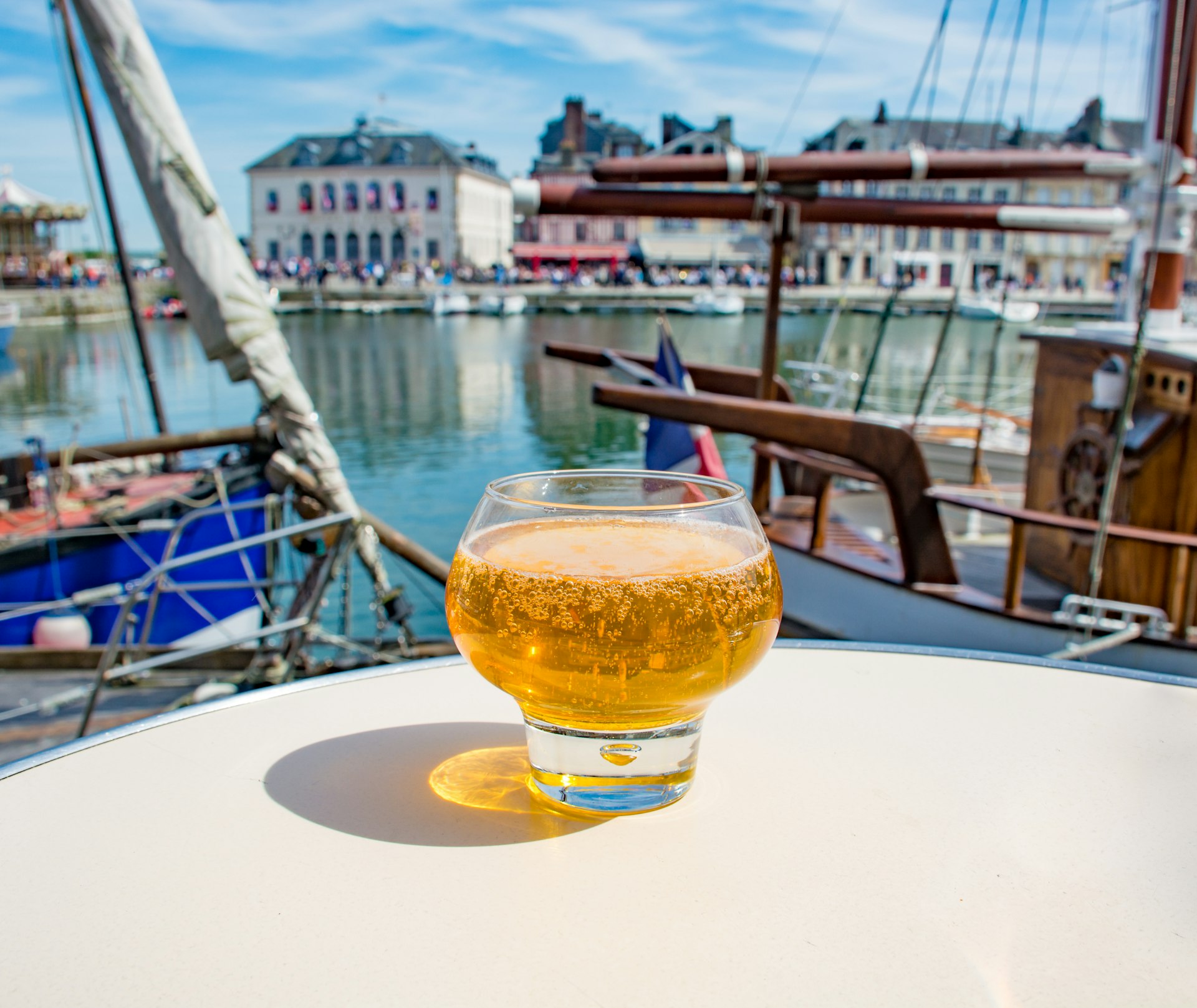
Another Upper Normandy port village to visit with cobblestone streets and houses made of timber, Honfleur oozes with charm. It has been around for over a millennium, but unlike other port cities, it is situated at the end of the Seine, which means it’s at the edge of the sea and riverside. Lining the harbor are tall and narrow slate roof houses that are reflected in the water lined with boats by day and glowing with amber street lights by night.
Meander towards the town hall, where you’ll find a decadent carousel from 1900 that remains frozen in time; lions, giraffes, horses and old-world glamor carriages spin around and around as the sailboats drift by. From the historic center it’s a nice uphill hike to the 17th-century chapel (which may be difficult for young children or those with mobility issues) Notre-Dame de Grâce, where you can see model ships, an ancient organ, and views of the sea and the Pont de Normandie.
Planning tip: From Honfleur, it’s a 25-minute bus ride to the neighboring port city Le Havre. Famous for its artistic inspiration, Le Havre is where the Impressionist painting movement was born thanks to Monet. Cinephiles may recognize the city too as it’s been the backdrop to over 100 films, including the French classic The 400 Blows (1959).
9. Immerse yourself at an interactive old manor turned museum
Part immersive-theater, part-history lesson, kids and adults alike will giggle and delight in the poetic and playful adventure-meets-spectacle that takes place at Le Manoir du Tourpe. Located in La Hague, this 16th-century manor covers local history, legends, and origin stories through characters that quite literally come to life. Nestled atop a tranquil and lush countryside where the grass stretches for miles, this free museum also offers craft workshops for children, temporary exhibitions, a cafe-hotel-restaurant Auberge des Goubelins, a library, guided hikes, and even a seed and plant library, where you can bring and swap seeds and plant cuttings.
Detour: Lovers of French romanticism can pay homage to famed poet and screenwriter at Maison Jacques Prévert and daydream of an idyllic, creative existence, about 15km (9 miles) away in Omonville-la-Petite. After a morning of writing under exposed wooden beams, take a leisurely walk along stone-paved paths through a garden perfumed with orange tulips, daisies and lilies until you reach an old church and cemetery to ponder the ephemeral nature of life.
For a contact high with nature, head straight to the falaises of Étretat to enjoy the staggering sights of the dizzying chalk cliffs, made up of a type of porous limestone that inspired the likes of painters Claude Monet and Gustave Courbe. Due to the fragile nature of the stone, walking underneath is not allowed, but there are numerous hikes in the area for those who want to take in the natural splendor of the rocky arches. The well-paved hike of Porte d’Amont Loop that begins at Chemin de Criquetotis is suitable for any fitness level and takes about an hour (though allow longer to really soak in the mythic scenery). For more hardcore hikers, the Roc Vaudieu loop, which takes about four to five hours, offers incredible views of the massive cliffs that emerge from the water.
Detour: Aspiring writers may want to visit La Guillette, a villa built by short story writer Guy de Maupassant after he achieved publishing success. You can see the house where Maupaussant worked on Bel Ami and Pierre et Jean, but for actual visits inside contact the association via this form.
11. Spend a day in Rouen, Normandy’s capital city
Like other charming port cities of Normandy, Rouen has endured since Roman times and is brimming with medieval architectural charm. Art-aficionados will particularly appreciate the Museum of Beaux-Arts, which offers a range of idyllic landscape paintings, homages to ecclesiastical greatness, and of course Impressionist masterpieces. Best of all: admission is free. If contemporary art is more your speed, Rouen is also known for its street art – follow the map for a glimpse of urban and contemporary art in an ancient city.
Next, be awed as you stand underneath the 14th-century astronomical clock in the city center as the bells ring. A guide is available to explain the intricate detailing of the clock thoroughly, though at €7.50, it is somewhat steep for the brevity of the tour.
Detour: If you just want to get a taste of the slow life, book yourself a stay at a Parcel tiny house. It’s under two hours from Paris but offers a true nature escape to the middle of an apple orchard haven. Through a partnership with the neighboring organic farm Jardins de la Thillaye, you can taste Saint-Émilion wine, the best butter of the region, locally made calva and cider, and Norman beef. Bring boots – the trek out to the cabins is long and the grassy fields can turn muddy easily under the volatile Normandy skies.
12. Snag a striped sweater at Saint James
Clichés of French style include a beret paired with a horizontally striped sweater (cigarette and baguette accessories depending on the time of day), and one of the classic brands for French knitwear, Saint James, is also a charming little village you can visit. The most famous export, the striped shirt, has a long history: they were uniform for the navy seaman of the North, and the original 1858 design has 21 stripes for each of Napoleon Bonaparte’s victories of war. For a first-hand look at how the sweaters are made, you can get a tour of the Saint James atelier and then leave the shop with your own Breton striped sweater or shirt.
13. Tour the D-Day beaches
About 22km (14 miles) from Bayeux is Omaha beach, one of the most famous locations of the D-Day landings locations and home to an impressive Memorial Museum. Nowadays, little evidence of the events of 1944 remain, except for the harrowing American cemetery and concrete German bunkers. At very low tide you can see remnants of the Mulberry Harbour, a huge temporary port set up off the coast. Otherwise, it’s a tranquil spot, a gorgeous golden stretch with dunes and summer houses. Look out for the yellow stripes marking the Circuit de la Plage d’Omaha, a self-guided tour along the beach.
Detour: Once you’re done feasting on history, get ready for some of the creamiest and best ice cream of your life at Ferme de la Haizerie in Vaux-sur-Aure. It’s a tiny and unpretentious ice cream shop that offers local flavors such as Calvados, and teurgoule – a Normandy rice pudding – made from fresh farm milk.
14. Visit the iconic abbey at Mont St-Michel
Finally, it’d be impossible to talk about Normandy without mentioning the iconic Mont St-Michel, a floating abbey known as “the Wonder of the Western World”. The sight of it is surreal and unique but it’s even better when you aren’t fighting for boardwalk space. Get there as early as possible to avoid crowds (or late), and if you can walk, skip the free shuttle that’s usually packed with tourists and has long lines.
The best way to discover the island is to simply wander into the tiny crevices and narrow alleys. The abbey itself is beautiful, with chimneys as big as some modern living rooms. Trekking around barefoot in the surrounding bay is also quite an experience, and the cool sand relieves worn feet, but due to quicksand and a fast-rising tide you should only attempt it with a seasoned guide, such as Ludo, who was raised in the area.
Local tip and detour: While the famous, large and fluffy omelette de la mère Poulard that tourists usually flock to looks impressive, it’s quite pricey and not good value. Drive instead to the Auberge Sauvage, an incredible modern French restaurant that offers 6- or 8-course meals made with locally grown garden fruits and vegetables – the humble carrots transformed into glazed edible sculptures are nothing short of art.
‘At the Toes of Living Things’ journals experiences of ecologists who practise a collaborative and socio-ecologically sensitive tactic to conservation
Illustration: Yogendra Anand
Until the late 1990s, pupils of mother nature mostly worked within protected places and seldom interacted with the societies and cultures that existed in the larger sized landscape. They had been guided by the prevailing conservation notions that species would be adequately guarded if there were being secured parts, and that nearby people and their tactics had been a risk to wildlife.
Having said that, only about five for each cent of India’s land is secured, which is not more than enough to sustain wild animals in the very long operate. Science reveals that wildlife have normally travelled via and/or stayed in human-utilized spaces. Moreover, the earlier two decades also witnessed the devastating impacts of neoliberal economic guidelines on nature.
It soon grew to become distinct that to preserve species, one would will need to look further than secured places and operate with distinct styles of stakeholders — regional communities, the forest section, development sectors, policymakers, non-public providers and character fans from all walks of lifestyle.
This introduced a demanding proposition to college students of nature who had been not totally properly trained to don the hat of a multitasker. They experienced to learn on the career. At the Toes of Residing Things is the gathered practical experience of ecologists from Mysuru-dependent general public charitable belief Nature Conservation Basis (NCF), who have adopted this conservation tactic around the past 25 decades. The technique sheds its previously typical, exclusionary, elitist pores and skin and is emerging as collaborative, constructive and socio-ecologically sensitive.
The e book has three chapters on snow leopard conservation from the conflict-prone trans-Himalayan landscape. Right here, a herder may well get rid of his life’s discounts in a issue of several hours if a snow leopard enters his corral and kills 30-40 sheep at a time.
Assuming that the attacks had been going on owing to a dearth of wild prey, researchers worked with the neighborhood group to set apart an location the place only wild herbivores would graze, not livestock. This revived wild herbivore populations. As a result, snow leopard populations also enhanced and attacks on livestock continued, even though snow leopards were feeding a lot less on livestock than ahead of.
To aid coexistence, NCF predator-proofed livestock enclosures, served herders file for compensation statements and introduced an impressive livestock insurance policy scheme. They foregrounded the importance of conserving total landscapes and labored with the stakeholders to internalise conservation as a common societal objective.
In the Anamalai landscape of Western Ghats, researchers observed that most elephant-brought on human fatalities have been, in actuality, mishaps. To mitigate this, they set up an comprehensive volunteer community to keep track of elephant movement and established a procedure to forewarn folks of the animals’ existence in the spot.
They emphasised shifting to centralised and safe food storage houses, in place of the many, unprotected storages that elephants could quickly rummage. This minimized human mortality and home problems substantially.
On the other hand, inclusive and participatory conservation has also observed limitations, these as hardened minds that refuse to reconcile distinctions. Aparajita Dutta narrates her experience of hoping to reconcile distrust and hatred amongst the Lisu tribe and the forest department in a remote and reasonably unexplored tropical forest of Arunachal Pradesh. But regardless of 8 a long time of her operate, a stalemate exists. Namdapha’s wildlife carries on to remain unprotected, unmonitored and the Lisu proceed to be demonised.
Nature’s resilience and capacity to regenerate, nonetheless, gives potent motivations to keep on the elephantine journey that conservation is. In this respect, Rohan Arthur’s chapter on the coral reefs in Lakshadweep is a ought to-examine.
For we should satisfy Pavona clavus—an impossibly huge coral that is a reef by by itself and has stood underwater for thousands and thousands of many years, preventing a silent and inspiring struggle from local climate change—a fantastic, fantastic, terrific grandparent nearly, to whom Rohan introduces his pupils, to learn resilience and perseverance from.
What is heartening is that character can instruct persistence, love and care to any individual who is willing to find out. Do go through the chapters on eBird and SeasonWatch to master how a single can grow to be a student of character by means of one’s observations.
These observations might just seed future conservation tips. For occasion, the seed of a fig tree nestled in a civet’s scat in the center of a rainforest in the Western Ghats sparked an concept.
T R Shankar Raman and Divya Mudappa began gathering these kinds of seeds from scats of seed-dispersing wildlife and from ripe fruits fallen beneath trees, and nursed them until they grew to become saplings — a learning that would assist them restore rainforest patches in the plantation-dominated Valparai landscape.
Anindya Sinha’s chapter, once again, is encouraged by observations. It is a prosperous qualitative description of primate societies that are making an attempt to adapt to urbanisation, adopted by riveting scientific discussions explaining the observations. The chapter signifies a departure from the studies-major quantitative analyses that excessively dominates the discipline of ecology.
Even further, it pushes audience to imagine “what bearings do our lives, and our generally-unfeeling steps have on the lifeworlds of animals and how can our knowledge of these shared lifeworlds add to a recasting of our have environmental perspectives, prejudices and methods?”
This was to start with published in the February 16-28, 2023 print edition of Down To Earth


We are a voice to you you have been a assist to us. Collectively we build journalism that is unbiased, credible and fearless. You can additional enable us by creating a donation. This will suggest a large amount for our means to bring you news, views and investigation from the ground so that we can make improve with each other.
There is something so special about going to a concert. Seeing the band in person, hearing the vocals and instruments live, dancing with hundreds of people, and spending a few hours truly living in the moment all add to the magical experience of attending a show.
Another factor that makes a concert special is the venue. While there are cool concert venues around the world, the US specifically is filled with incredible theaters and concert halls. While some music lovers prefer road-tripping to the coolest record stores, an unforgettable road trip experience also involves visiting an incredible concert venue. Below are ten of the most epic concert venues in America every music lover should visit at least once.
Related: Guide: How To Find Live Music In Any Town You’re Visiting
10 The Green Mill, Chicago, Illinois
Music lovers planning to explore Chicago’s energy, music, and arts scene should spend an evening listening to live jazz at The Green Mill. Originally named Pop Morse’s Roadhouse, this iconic bar opened in 1907. Throughout the years, it attracted jazz musicians, actors, and even mobsters, including Al Capone.
This iconic Uptown cocktail bar features performances from both big-name artists and local talent. Snap a picture of The Green Mill’s iconic green neon sign, then head inside to watch bands perform from 8 pm-midnight.
New York features plenty of music festivals worth traveling to, but one unique NYC venue every music lover should visit is Blue Note Jazz Club. This unique club contains locations across the world, including New York, Hawaii, Tokyo, Milan, and Beijing. The New York City location was established in 1981 and has hosted several legendary jazz musicians, including Ray Brown and Robert Glasper. A list of upcoming shows and ticket information can be found on Blue Note’s website.
Located in Greenwich Village, Blue Note Jazz Club features intimate seating, colorful neon signs, incredible live acts, and a gift shop for travelers wishing to purchase a souvenir.
Address:
131 W 3rd St, New York, NY 10012
Hours:
Monday-Saturday 6 pm-12 am, Sunday 11 am-12 am
8 Preservation Hall, New Orleans, Louisiana
An epic concert hall in the South is Preservation Hall in New Orleans, Louisiana. Preservation Hall itself is very well-preserved, as the building was originally a tavern way back in the early 1800s. This unique concert hall possesses a no-frills, rustic feel. While in New Orleans, many visitors enjoy taking a creative tour of the city’s colorful architecture to further enjoy the city’s unique buildings.
Preservation Hall is known for sharing traditional New Orleans jazz since 1961. Enjoy an intimate night of live jazz music at this New Orleans gem.
Address:
726 St Peter, New Orleans, LA 70116
Hours:
5-9:30 pm daily
7 Doug Fir Lounge, Portland, Oregon
A West Coast concert venue worth a trip is Doug Fir Lounge in Portland, Oregon. This charming venue, designed to look like a log cabin with a futuristic twist, is perfect for people looking for an intimate concert experience. With a capacity of 300 people, Doug Fir Lounge is known for its intimate indie shows. A list of upcoming shows can be found on the venue’s website.
People do not need to take in a show to enjoy this unique venue, however. Doug Fir Lounge doubles as a restaurant, offering breakfast, lunch, and dinner daily.
Address:
830 E Burnside St, Portland, OR 97214
Hours:
7 am-1 am daily
6 9:30 Club, Washington, D.C.
An incredible indie rock venue in Washington, D.C., is 9:30 Club. What started out as a rat-infested building that could only fit 200 people turned into one of the most iconic concert venues in America. Legendary performers such as Nirvana, Red Hot Chili Peppers, and R.E.M. have graced the 9:30 Club’s stage. Each concert at 9:30 Club is truly magical, with colorful lights flashing, confetti floating down from the ceiling, and hundreds of people gathered to enjoy the live music.
Address:
815 V St NW, Washington, DC 20001
Related: 10 Truly Awesome Things That Washington, D.C. Is Famous For
5 ACL Live At The Moody Theater, Austin, Texas
When crafting the ultimate travel guide to Austin, music lovers need to include a trip to ACL Live at the Moody Theater. This amazing music venue is known for hosting a wide variety of musicians from varying genres. About 100 concerts are held at this venue each year, and the famous PBS series, Austin City Limits, is taped here.
There are multiple ways to enjoy and explore this venue. The first and obvious way is to buy a ticket to a show. Another route is to embark on a venue tour. These tours take place from 11 am-12:30pm every Monday-Saturday. Tour ticketing information can be found on the ACL Live website.
Address:
310 W Willie Nelson Blvd, Austin, TX 78701
Tour cost:
Adult- $12, child (6-12)- $6, a family of four- $40
4 Hollywood Bowl, Los Angeles, California
With over 1,000 venues in California, it can be tricky to narrow down which are worth visiting. California’s top must-visit concert venue is Hollywood Bowl in Los Angeles. Los Angeles is one of the ten best U.S. cities for a day trip, and Hollywood Bowl should be added to any LA day trip itinerary. This breathtaking outdoor venue holds 17,500 people and first opened back in 1922. The arched band shell, designed by Frank Lloyd Wright Jr., creates incredible acoustics. Notable past performers at Hollywood Bowl include Louis Armstrong, The Beatles, and Yo-Yo Ma. The surrounding hills, greenery, and bright blue skies are just as awe-inspiring as Hollywood Bowl’s architecture.
Address:
2301 N Highland Ave, Los Angeles, CA 90068
3 Ryman Auditorium, Nashville, Tennessee
A Nashville treasure is Ryman Auditorium. This legendary music venue is most well-known for hosting the Grand Ole Opry from 1943-1974. The venue was even temporarily renamed the “Grand Ole Opry House.” Ryman Auditorium also played a crucial role in the rise of bluegrass music, featuring Bill Monroe’s Blue Grass Boys in 1945.
After the Grand Ole Opry moved to a bigger venue, Ryman Auditorium endured a period of hardship and sat unused for nearly two decades. Today, however, this important auditorium is restored and has welcomed incredible talents such as Ringo Starr in 2012 and Harry Styles in 2017.
The beautiful city of Minneapolis, Minnesota, is one of the ten most underrated Midwest destinations to visit. While in Minneapolis, music lovers need to visit First Avenue, a unique rock venue since 1970. The building’s exterior features a series of white stars painted atop black brick walls. Each star contains the name of an incredible artist or band that performed at this Minneapolis venue, including Tina Turner, The Misfits, and Lenny Kravitz. The venue is known for hosting several past performances by Prince, who was from Minneapolis.
Address:
701 N 1st Ave, Minneapolis, MN 55403
1 Red Rocks Amphitheatre, Morrison, Colorado
Known for its incredible acoustics and natural backdrop, Red Rocks Amphitheatre in Colorado should be at the top of every music lover’s bucket list. With a capacity of 9,545, this breathtaking venue opened in 1906. What makes this venue unique is it was built into the natural landscape and rock structure. Evening shows at Red Rocks feature watercolor skies, fresh air, magnificent rock and mountain views, and outdoor acoustics that perfectly scratch the itch in one’s brain.
There are plenty of reasons to visit Red Rocks Amphitheatre besides concerts, however. The Trading Post Trail, Red Rocks Trail, and Geologic Overlook Trail all feature incredible views of the red rock landscape.