Charlotte businessman, philanthropist Isaac Luski, dies

Isaac and Sonia Luski loaned a large amount of artwork, especially glass work, to the Foundation for the Carolinas. The couple will be remembered as devoted patrons of the arts in Charlotte. Isaac passed away on Tuesday, Oct. 19.

Isaac and Sonia Luski loaned a large amount of artwork, especially glass work, to the Foundation for the Carolinas. The couple will be remembered as devoted patrons of the arts in Charlotte. Isaac passed away on Tuesday, Oct. 19.

The Observer File Photo

Isaac Luski loved the simpler pleasures of life: good music, good wine and good company.

He also loved art. There was so much of it in the Luskis’ SouthPark home that walking through it feels like a tour of a colorful, crowded, live-in museum.

Luski and his wife, Sonia, came to the United States from Cuba after fleeing Fidel Castro’s regime in 1960. They spent over half a century building a life — and an extensive art collection — in Charlotte.

Isaac Luski died peacefully at home at age 92 on Tuesday; his funeral was on Thursday. Sonia had died in 2019.

Luski’s array of artwork is just one piece of his legacy. He had a keen intellect, a generous spirit and a love for his adopted hometown, friends and family said.

He also was a prominent member of the local Jewish community, and helped establish Shalom Park.

“He had this passion for life,” said Shane Fero, an artist and friend. “He tried to impart that in people: really enjoy your life, and enjoy the beauty in your life.”

IMG_TOMMY_COL_FOUNDATION_1_1_NF3QUNB9.JPG
An untitled glass work by Sidney Hutter on loan from Sonia and Isaac Luski was displayed in a first floor gallery named for the couple at the Foundation for the Carolinas in this 2011 file photo. The Charlotte Observer file photo

Fleeing from Castro

The Luskis were in their early 30s when they uprooted their life in Cuba to come stateside. It was 1960, about two years after Castro seized control of the island.

Pretending they were going on vacation, the Luski family flew to the U.S. with just four suitcases and two paintings they picked up on the way to the airport. One of those works, an abstract portrait of a woman in shades gray, still hangs above the mantle in their living room.

3922576.JPG
In this undated photo, Sonia and Isaac Luski eat with Isaac’s cousin Gerry Grinberg in a famous Havana restaurant called “the little grocery store in the middle of the street”. HO

The prospect of starting over was not unfamiliar to the family. Isaac and Sonia’s parents had all left eastern Europe for Cuba in the early 20th Century, according to the Luskis’ son, Moses.

Moses said his parents always viewed fleeing Cuba “not as a defeat, but as an opportunity.”

“He moved forward,” youngest daughter Ellie Valenstein said. “They weren’t going to get stuck in what they had left, even though they loved their life in Havana.”

The couple saw potential in mid-century Charlotte, and they also had family there. They moved to the city shortly after arriving stateside, bought a house in SouthPark in 1962, and lived there over the decades.

Luski had helped run his family’s successful dry goods business in Cuba. He tried out a couple different ventures in Charlotte. What stuck was commercial real estate. He quickly built a successful business — and an extensive social network.

Moses said that growing up, people were always drifting in and out of his parents’ house for spontaneous brunches and dinner parties.

Artists, musicians, bankers and baseball players would drop by for a meal, gathering in the wood-paneled dining room. They’d listen to music, talk about politics and help themselves to servings of Isaac Luski’s signature black beans and rice, Moses said.

“(My parents) had this magnetism that people were attracted to,” he said. “They weren’t social show-offs. They just welcomed you into their home and let you be yourself and talk about the world.”

Fascinated by glass

Two lifelong lovers of crafts, Isaac and Sonia made a name for themselves as patrons of the arts. They were particularly drawn to works of glass.

“I was fascinated with the glass medium, the composition, the colors, the shapes,” Isaac told the Observer in 2002. He added that he felt about art like he felt about music: “It’s a healing process in my life.”

A few years later, he reiterated to the the Observer, “Glass is healing. You look at it and it makes you feel better.”

LUSKI_03.JPG
This glass orb is one of the pieces that Isaac and Sonia Luski gave to the Foundation for the Carolinas for exhibition. Observer 2008 file photo

In their home, family photos share counter space with glass sculptures and vases. Chuck Close paintings gaze back at viewers from one side of the dining table. Even some of the furniture is art: in front of the red velvet couch, a wooden coffee table unfurls itself like the pages of a book.

By 2002, their collection had grown to more than 500 pieces. They shared widely, donating to museums, hospitals and libraries.

The Foundation for the Carolinas lobby in uptown is packed with pieces donated by the couple. The Sonia and Isaac Luski Gallery on the first floor of the nonprofit’s headquarters features contemporary glass art, a large painting of a cat and other works.

The Luskis took pride in the gallery’s free admission and ample seating. They wanted it to feel like home, they told the Observer in 2012. Isaac Luski encouraged patrons to touch the art.

“Isaac wanted art to be as accessible as it could possibly be,” Michael Marsicano, president and CEO of the Foundation for the Carolinas, told the Observer in an email. “He brought art out of the museums and into our community to the great joy of those who discover his collection in every corner of our city.”

Mariscano delivered the eulogy at Luski’s funeral at Temple Israel in Shalom Park. Memorials may be made to Temple Israel, Rabbi’s Tzedakah Fund or the Hebrew Cemetery. He is survived by Moses Luski and daughters Ellie Valenstein and Frances Luski.

A friend and patron

The Luskis also supported many individual artists.

“They admired the spirit of people who could make something,” Valenstein said.

Fero met Isaac Luski while at the Penland School of Crafts in the Blue Ridge Mountains in Spruce Pine, an institution the couple regularly supported. Luski became a patron of Fero’s work as well as a fatherly figure and a friend.

“It was just (Isaac and Sonia’s) demeanor, their approach to life… that reached a deeper level in me than him buying my work,” Fero said.

Of faith and good fortune

Beyond art, Isaac Luski was deeply involved in Charlotte’s Jewish community.

He also was part of the leadership group that helped establish the Shalom Park campus in south Charlotte. The 54-acre site serves as the center of Jewish life for many in the region.

Shalom Park Carolina Digital Photo Group LLC
Isaac Luski was deeply involved in the city’s Jewish community and was a part of the leadership group that helped establish the Shalom Park campus, pictured here, in south Charlotte. Carolina Digital Photo Group LLC

His faith was important to him, his son said.

In many ways, Moses Luski said, his parents embodied the American dream, finding success and building a fruitful life in a new homeland.

“Seeing everything they had seen made them very adaptive, and made them realize that nothing was permanent,” he said. “But Charlotte was permanent.”

“Charlotte welcomed Isaac and Sonia with open arms,” Marsicano said. In return, he said, the couple gave back “generously and repeatedly.”

Leave the last word to Luski. He summed up his experiences nearly 20 years ago, in an Observer interview: “My father is the one who told me if the Lord has been good to you, you have to share.”

This story was originally published October 21, 2021 4:29 PM.

Profile Image of Hannah Lang

Hannah Lang covers banking and finance for The Charlotte Observer. She studied business journalism at the University of North Carolina at Chapel Hill and grew up in the same town as her alma mater.
Black-Out Curtains: Curtains That Will EFFECTIVELY Block The Sun

In blocking suns we always think of blinds because we already know the capabilities of the blinds but some curtains can do what blinds can also do and give more design options too. Some curtains are also made to block the sun effectively in a way that we can keep ourselves safe. We can also find made-to-measure curtains and blinds that can effectively block the sun.

We know UV rays from the sun can be harmful to our skin, but that’s not the only reason why people like curtains that can block the sun effectively it is also because they don’t like getting interrupted by the moonlight, sunlight, or any lights while they are relaxing or chilling alone.

Style

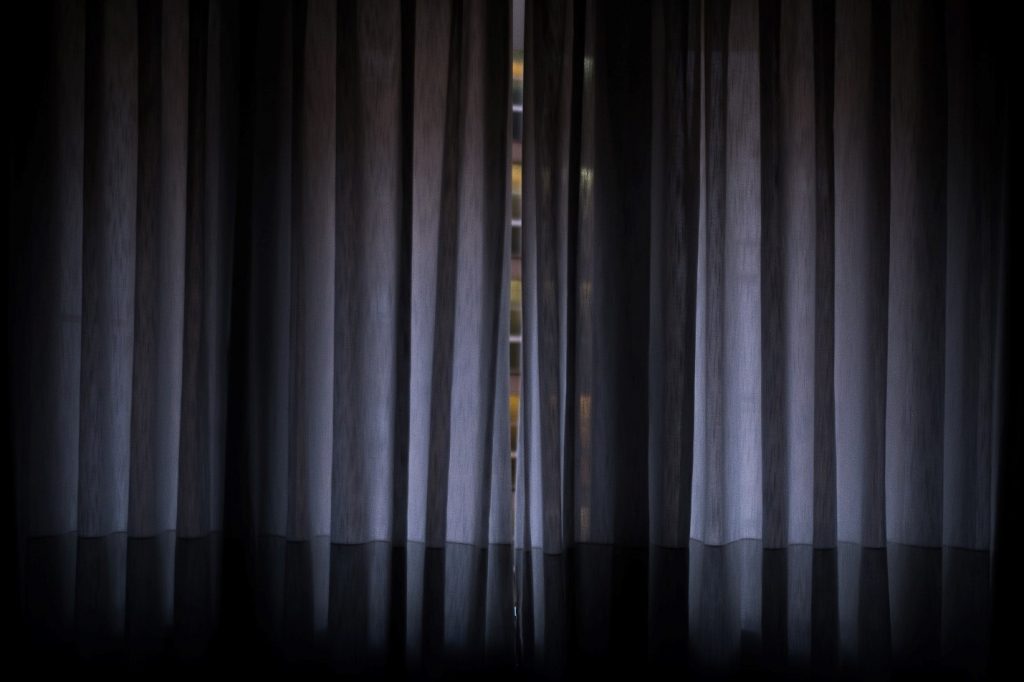
Using dark colors can effectively block it is because of heavy colors that are hard to enter. The reason why dark colors are more preferable is that by just making dark colors you are already using dark fabrics that can block the sun but if you don’t like the color alone you can also pick the styled color or patterned color that has thick fabrics that is enough to block the sun but it doesn’t mean that you can choose soft colors anymore there are also soft colors that can effectively block the sun too.

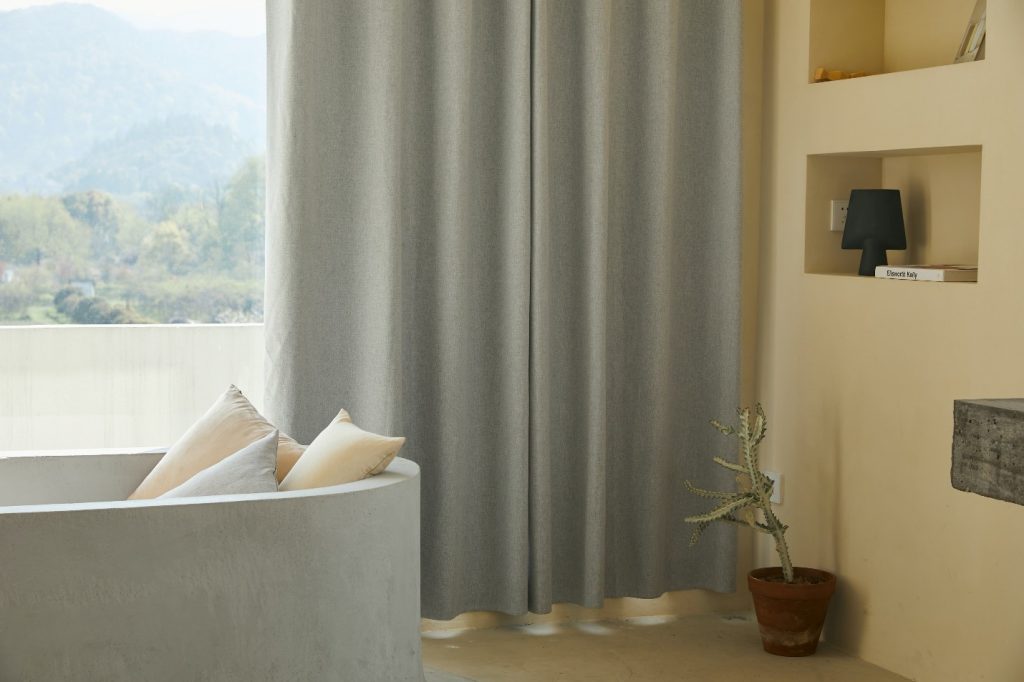
But still, you want soft colors to display in your room you can pick curtains, shades, or blinds that have a much thicker fabric to cover up or to block the sun out. We can’t always assure that all people like dark colors there are still people who like soft colors as their comfort in this way you can still pick it up by just choosing high-quality fabrics on it and picking durable curtains too.

Fabrics

The reason why there are curtains that can block the sun effectively is because of the fabric that is used on making that type of curtains. In choosing the best block-put curtains you should always check if that type of curtains is heavy-duty because if you choose soft duty it won’t last and, eventually some lights will appear on it.

Another way to effectively block the sun is using thermal insulated curtains and, these curtains can effectively block the sun, These types of curtains are also ideal in the winter season and drafty windows. Both block-out and thermal curtains can effectively block the sun but the primary function of thermal curtains is to insulate the room and also help in saving energy.

Cooling

Reasons why others like block-out curtains are because they can make the room cooler. It is because most light gives heat and the use of block-out curtains can also block heat from entering, and the reason why heat can’t enter and air can’t leave nor enter it are because of the fabrics that are used. Don’t you notice that most dark places are cooler than bright places it is because there is no heat identified in those places? With it can also help in saving energy for the house. But still, with this, you can choose durable curtains to display in any room you want for it to last long.

Conclusion

In conclusion in choosing block-out curtains, you could identify them by choosing a dark color or dark pattern because it can also help in blocking the sun effectively but the most important thing to keep in mind is choosing high-quality fabrics for your curtains to be durable enough to last long. But There are block-out curtains that have a heavy-duty of fabrics used and fabrics that are combined in making block-out curtains.

In this way, we can also keep our room cool and save energy with it. There are also a lot of benefits you can get while having bock-out curtains. This type of curtains can legitly give privacy to you and your family. It can give a classy vibe too in a way that you can feel safe with it. Having this can also save or keep your skin safe from UV rays that can give infections or whatsoever. Here’s an important tip for you in choosing block-out curtains always choose durable curtains to avoid changing curtains now and then due to the curtains getting broken or ruining your expectations about it.

At Museums and Auctions, Paintings, Posters and a Magician’s Treasures

BEACON

“Joan Jonas”

Significant-scale artworks are portion of Dia’s DNA, and this clearly show of the museum’s Hudson Valley branch capabilities three significant installations in its collection by the groundbreaking video and general performance artist Joan Jonas, perhaps greatest identified for her 2015 present in the U.S. Pavilion at the Venice Biennale. Ms. Jonas has rethought the functions for the museum’s cavernous decreased stage, and two of the items, “Stage Sets” and “After Mirage (Cones/May well Home windows),” both of those from 1976, are recent acquisitions. Continuing Dia Beacon, diaart.org

NEW YORK Town

“Ruth Asawa: All is Possible”

Arranged by the respected curator Helen Molesworth, this demonstrate of extra than 100 will work is element of a continuing hard work to familiarize the community with the Japanese American sculptor Ruth Asawa (1926-2013). Her most effective-recognised is effective are looped- and tied-wire sculptures, and the show mixes individuals with the lesser-identified drawings and abstract work, in an energy to see the totality of her occupation. Nov. 4 to Dec. 18 David Zwirner Gallery, davidzwirner.com

The Ricky Jay Collection

The renowned magician, author and actor Ricky Jay died in 2018, leaving behind a trove of artifacts and memorabilia. Much more than 1,000 products distribute more than 700 loads will go on the block in this two-day sale. Unusual publications on magic and posters featuring Harry Houdini’s finest feats are in the mix. Some of the heaps are estimated at only a couple of hundred bucks — get there soon, in advance of they disappear. Oct. 27 and 28 Sotheby’s New York, sothebys.com

Impressionism From the Cox Collection

When he died past November, the oil and expenditure magnate Edwin L. Cox remaining behind some decision art collections. To start with to occur on the block at Christie’s are 25 Impressionist images by the likes of van Gogh and Gustave Caillebotte. The trove involves Paul Cézanne’s landscape “L’Estaque aux toits” (ca. 1883-85), with an estimate of $35 million to $55 million. Mr. Cox’s decorative arts and home furnishings will be bought in an on line sale Nov. 9 to 19. Nov. 11 Christie’s New York, christies.com

“Bronx Contacting: The Fifth Aim Biennial”

Almost 70 artists who recently participated in the Bronx Museum’s fellowship system, Artists in the Marketplace, are featured in this vast-ranging show — this is a collection of genuinely rising talents, as opposed to some other biennials. Trevor King’s “Never” (2021), an set up manufactured of burlap, paper and wooden, mixes with movies by Lawrence Mesich and Kris Gray, among the other functions. Nov. 10 to March 20 Bronx Museum of the Arts, bronxmuseum.org

Picture-perfect day in Toronto with beautiful art and a spa treatment

Article content

A trip to two art shows and a visit to the spa. Sounds like a divine way to spend the day in Toronto, yes?

Advertisement

Article content

BLUE ON BLUE: Picasso: Painting The Blue Period at the AGO is really a lesson on “Picasso becoming Picasso,” as my guide Gillian McIntyre put it, focusing on his early works from 1901-1904.

Born to a painter father in Malaga, Pablo Picasso was all of 19 years old when the Spaniard arrived in Paris, soaking up influences by such contemporaries as Degas, Toulouse-Lautrec and Rodin, and living in a Montmartre apartment.

Pablo Picasso. Woman and Child by the Sea, 1902. Oil on canvas, 81.7 x 59.8 cm. Pola Museum of Art. © Picasso Estate / SOCAN (2020), Photo: Pola Museum of Art / DNPartcom

His Blue Period began with 1901’s The Blue Room, depicting a nude woman bathing in his apartment, and it’s one of three paintings in the AGO exhibit including 1902’s Crouching Beggarwoman and 1903’s The Soup (both painted in Barcelona), which detail the science that uncovered the paintings underneath the trio of works.

As interesting as those discoveries are, it’s the art itself that wows as Picasso focused on beggars and sex workers, including those inside the women’s prison, Saint-Lazare, where many suffered from venereal diseases but he often depicted them as nuns or the Virgin Mary to evoke empathy.

Pablo Picasso. La Soupe, 1903. Oil on canvas, Overall: 38.5 x 46 cm. Art Gallery of Ontario. Gift of Margaret Dunlap Crang, 1983. © Picasso Estate / SOCAN (2021) 83/316

He was also mourning the loss of his close friend Carles Casagemas, who had taken his own life.

The colour blue was associated with “loneliness and solitude” by artists in Paris and Barcelona at the turn of the century.

Picasso turned a mental corner with his Rose Period of 1904-1907, also on display at the AGO, after he fell in love with bohemian artist Fernande Olivier and began painting her in “warm terracotta hues” of pinks and oranges.

Advertisement

Article content

MONET ALL DAY: Beyond Monet: The Immersive Experience, being held at the Metro Toronto Convention Centre, is a digital art experience that enables attendees to feel like they’re inside the work of late 19th-century French Impressionism founder Claude Monet.

In his own words, Monet was obsessed with “landscapes of water and reflection.”

Unlike Immersive Van Gogh, which opened last summer in one huge room (and will host Immersive Klimt: Revolution starting Oct. 21), Beyond Monet is broken up into two rooms.

Attendees walk around the Beyond Monet exhibit at the Metro Toronto Convention Centre.
Attendees walk around the Beyond Monet exhibit at the Metro Toronto Convention Centre. Photo by Jane Stevenson /Toronto Sun

The first room, bathed in pink and purple light with the sound of birds, water and ambient music, is inspired by Monet’s famous Water Lilies painting so there’s plenty of reflective ponds and wooden bridges, along with hanging placards with information about the artist (unlike Van Gogh).

Next you walk through a darkened hall with dangling silver strips and enter a much larger room with a 360-degree projection of various Monet paintings while you sit on a large gazebo in the centre or distanced circles, some with elevated seating.

The gazebo in the second room at the Beyond Monet exhibit at the Metro Toronto Convention Centre.
The gazebo in the second room at the Beyond Monet exhibit at the Metro Toronto Convention Centre. Photo by Jane Stevenson /Toronto Sun

The latter is the more enticing of the two rooms as Monet quotes are also displayed among the striking art work that continuously surrounds you on a loop: “Water … I wish I could be before it or above it and, when I die, to be buried in a buoy,” the artist is quoted as saying.

Monet had me until that very last thought.

SPAHHH: The Omni King Edward Mokara Spa opened in July after a nine-month, $3-million facelift and is the first of its kind in Canada.

Advertisement

Article content

The 6,000-square-foot elegant, sleek-looking and calm space has lots of gold, beige, brown and purple accents, a welcoming front desk staffed by spa director Julia Chang, an array of products including Eminence Organic Skin Care from Hungary — used in my 80-minute Your Majesty’s Facial, and a full salon including manicure and pedicure stations.

The Mokara Spa sign at the Omni King Edward Hotel in Toronto.
The Mokara Spa sign at the Omni King Edward Hotel in Toronto. Photo by Jane Stevenson /Toronto Sun

After going to the changing room, I hang out in the waiting room in my robe before esthetician Natalia Dolzycki takes me into one of seven candle-lit treatment rooms for a facial that begins with me selecting a Mokara Aromatherapy Blend (uplift, invigorate or relax).

Given your feet might be aching after wandering around two art exhibits, it’s pretty wonderful that this facial begins with a foot ritual with the relaxing Aromatherapy Blend added to the foot bath.

I get a gentle foot scrub on a chair in the room before making my way over to the bed for the deluxe facial, which includes a double cleanse, exfoliation with hand and arm massage, blueberry stimulant (which heats up and reddens my face), followed by a calm toner spritz, facial massage, menthol mask and skin massage.

A treatment room at the Mokara Spa at the Omni King Edward Hotel in Toronto.
A treatment room at the Mokara Spa at the Omni King Edward Hotel in Toronto. Photo by Jane Stevenson /Toronto Sun

Among the last steps is marine peptide eye cream, moisturizer and a final spritz of aromatherapy blend.

I definitely feel like a work of art when I float out of the spa.

We apologize, but this video has failed to load.

IF YOU GO:

For tickets to Picasso: Painting the Blue Period, opening to the public on Oct. 26 and running until Jan. 16, visit tickets.ago.ca/events/Picasso .

For tickets to Beyond Monet: The Immersive Experience, currently running until Nov. 7, check out monettoronto.com .

To book at treatment at the Mokara Spa, contact omnihotels.com/hotels/toronto-king-edward/spa or call 416-863-3131.

    Advertisement

    Comments

    Postmedia is committed to maintaining a lively but civil forum for discussion and encourage all readers to share their views on our articles. Comments may take up to an hour for moderation before appearing on the site. We ask you to keep your comments relevant and respectful. We have enabled email notifications—you will now receive an email if you receive a reply to your comment, there is an update to a comment thread you follow or if a user you follow comments. Visit our Community Guidelines for more information and details on how to adjust your email settings.


    Business Loans
    Healthy Update
    Seo Services

    Anila Quayyum Agha ‘A Beautiful Despair’ At Amon Carter Museum Of American Art

    Beautiful.

    Despair.

    Attractiveness pervades Anila Quayyum Agha’s artwork.

    For despair, viewers will have to search deeper, Art Of Landscaping.

    Further to her upbringing as a girl in a Pakistan that experienced become more and more Islamic and hostile to the value of females. Deeper to her immigration to the U.S. in 2000, arriving in Texas to experience the full power of the nation’s post-9/11 discrimination toward any one showing “Middle Eastern.”

    She overcame those obstructions, rising to acquire her MFA from the College of North Texas in Dallas, two grand prizes at Art Prize in 2014, solo exhibitions at prestigious museums around the earth, the Cincinnati Museum of Art’s Schiele Prize, a Joan Mitchell grant and a Smithsonian fellowship among many achievements.


    Her latest honor: an exhibition of her installations and drawings at the Amon Carter Museum of American Art in Ft. Worth, Texas, “Anila Quayyum Agha: A Wonderful Despair,” on watch by means of January 9, 2022.

    Agha (b. 1965 Lahore, Pakistan) channeled her despair at seeing the each day tragedies of 2020 unfold into one more breathtaking case in point of her now iconic lantern-like cube sculptures, Gorgeous Despair (2021), a site-precise piece commissioned by the Carter for this exhibition. The strength of the artist’s will reveals by itself through her creation of a timeless, spectacular installation through a period of personal and nationwide angst in which millions–understandably–found it hard to do anything at all.

    Agha strikes to accomplish a balance in her artwork of “conceptually hard and aesthetically relaxing,” here using the patterns and motifs of her Pakistani heritage to assemble an inclusive sanctuary for processing emotions of decline that have transcended cultural and geographic boundaries.

    Gorgeous Despair invites viewers into a triangular house carefully suffused with a pumpkin-coloured light-weight radiating from a significant, intricately thorough cobalt blue cube in its center. Agha’s cubes are laser cut from lacquered metal, astonishing for their tangible precision and intangible hospitability. The styles and designs plainly influenced by Islamic architecture’s cravings for geometry and purchase.

    A transportation occurs no much less overwhelming than that felt by moving into just one of Yaoyi Kusama’s Infinity Rooms–although far more solemn.

    “I was primarily critiquing structured faith in generating the cube job,” Agha explains in the Carter’s catalogue for the exhibition. “My intent was to reveal the injustices perpetrated on gals due to religious dogma, which is generally based mostly on incorrect interpretations of spiritual doctrine that reduce women of all ages to mere chattels made use of for procreation and domestic servitude by the quite adult males who are intended to make them feel risk-free and empowered.”

    Lovely despair.

    A 2011 grant supplying the artist travel to Spain wherever she visited the Alhambra Palace in Granada served as inception for the strategy.

    “At the palace, I grew to become euphoric viewing the abundance of sample and shade on every surface in the elaborate,” Agha is quoted in the catalogue. “The Alhambra advanced further reminded me of the artwork and architecture of mosques in Pakistan, which I had only professional as a tourist in my have region considering the fact that gals are discouraged to pray in the mosques. I needed to re-build a similar sensation of belonging in my art, to investigate the complex emotions of both of those inclusion and exclusion I experienced felt at the Alhambra, and the Badshahi Mosque in Lahore, utilizing light-weight, shadows and patterns typically ascribed to women.”

    Agha’s signature hanging metal armatures encase a single gentle resource.

    “This piece was a way to redress the equilibrium in occupying the oft-regarded as male situation of an architect and using a structured, geometric item built with resources frequently attributed to adult men,” Agha has explained.

    Agha’s perform routinely upends classic male/woman inventive roles, no much more so than in her drawings, a dozen new examples of which be part of Gorgeous Despair–along with the artist’s first diamond-shaped hanging reduction sculpture–in the show. Her fragile, precise drawings are extra precisely explained as intricate combined-media items reliant upon an abundance of time, toil and technical mastery. They aspect cutout paper, metallic thread–sourced by the artist in Pakistan–mylar, charcoal, embroidery, dyes and, most shockingly, encaustic, a waxy materials integral to Pakistani textiles.

    All of which considerably repositions the laborious intricacy of women’s handiwork as a fantastic-artwork prompt for focused introspection.

    “Within my get the job done, embroidery embodies the woman existence and the force or pull of the needle and thread alongside one another symbolize the domestic id of women of all ages and their ambivalent relationship to that identity,” Agha, who’s mom taught her to sew around the age of 5 in order for the female to have a ability, explained.

    Agha recalled a now-amusing anecdote about telling her mom she wanted to be an artist at a reception for her hosted by the Carter.

    “I feel my mother cried–she seriously cried–I wanted to be a painter again then and she pulled me apart and designed me promise not to be a painter,” Agha remembers.

    Despair.

    “She reported research textiles because at minimum you will be ready to have a job–which is why I do all the fiber (operate).”

    Gorgeous.

    Check out Ft. Worthy of

    The Amon Carter Museum of American Artwork is a person of a few environment-course art museums in Ft. Worthy of signing up for the Modern-day Art Museum of Ft. Really worth and the Kimbell Art Museum. All three are conveniently located adjacent to every single other and present exceptional temporary exhibitions to go alongside with their strong permanent collections. A century of oil, land and cattle wealth has allowed patrons and institutions in the spot to get a caliber of artwork vastly exceeding what could be predicted.

    When going to, the not long ago opened and regionally-owned, 21-place Resort Dryce–a converted dry ice warehouse–in the heart of the cultural district delivers a short walk to the museums, sumptuous Texas-design and style barbecue at Railhead Smokehouse BBQ and hearty breakfast tacos from Taco Heads. Hotel Dryce leans into the city’s Western, cowboy, rancher vibe the place cowboy hats and boots are additional than cosplay featuring horse blanket drapes and faux cowboy duster bathrobes inside of their contemporarily appointed rooms.

    Visit : https://ilandscapin.com/

    Rey’s ‘Lost Beauty II’ solo exhibit opens at Buffalo Museum of Science | News, Sports, Jobs

    &#13
    &#13

    &#13

    An Alberto Rey painting of the Blue Noticed Salamander.

    &#13

    Paintings by SUNY Distinguished Professor Alberto Rey of the State College of new York at Fredonia Division of Visible Arts and New Media will be showcased in “Lost Elegance II: The Art of Museum Tales,” a distinctive two-month exhibit that opens Saturday, Oct. 16, at the Buffalo Museum of Science.

    “Lost Beauty” will showcase a range of 15 objects from the museum’s extensive selection. These compact fragments influenced Mr. Rey, and via his paintings he asks audiences to glimpse past the scale, label or fragment and respect the misplaced beauty within. A reserve accompanies the project.

    “While museums can house artifacts and specimens from across time and position, it is how these goods inspire some others that genuinely gives them benefit,” explained Kathy Leacock, the museum’s deputy director. “The exact item or specimen invokes a little something unique in every of us. The Buffalo Museum of Science has additional than 750,000 objects and artifacts in its assortment – but why these objects? What can they explain to us? Why really should they make any difference? And how does safeguarding these collections further our understanding of the planet about us?”

    Just about every of the 15 goods is accompanied by a massive portray by Rey. A person certain merchandise – a handwoven basket from the 20th century that actions just millimeters in diameter – is introduced to existence in a four-foot painting.

    Some items have never prior to been on exhibit for public viewing.

    An exhibition catalog will accompany the exhibition which information the record of the Buffalo Museum of Science, the process in building the artwork and narratives about each and every of the artifacts.

    “We are thrilled to last but not least be in a position to present this beautiful and carefully curated show. ‘Lost Elegance II’ shines a gentle on the Buffalo Modern society of Purely natural Sciences’ (BSNS) importance as a collecting institution. Alberto Rey’s paintings enable us explain to the wealthy stories that make these products considerable – stories that, with out this sort of close inspection and context, may possibly effortlessly go unnoticed at to start with glance,” said Buffalo Society of Natural Sciences President and CEO Marisa Wigglesworth.

    3 yrs in the producing, “Lost Beauty II” is the second in a sequence of exhibits by Rey. “Lost Natural beauty I” was on display at the University at Buffalo’s Anderson Gallery in 2019 and showcased Rey’s “The Extinct Birds Challenge.” This second installment was scheduled to open up at the museum in Summer months 2020 prior to the show was place on hold in reaction to adjustments to the museum’s show plan due to the pandemic.

    “This show will charm to those with passions in science, heritage and globe cultures just as substantially as it will to artwork fans, making it a just cannot-overlook attraction in Buffalo this fall,” Ms. Wigglesworth claimed. The museum is open up Wednesday through Sunday, 10 a.m. to 4 p.m.

    “I have often cherished science and art and this undertaking was a superb chance to take a look at and highlight a number of of the small gems ‘lost’ in the museum’s wide assortment,” Rey claimed.

    Aleron is the exhibit sponsor. Admission to the museum, found at 1020 Humboldt Parkway, can be ordered by calling (716) 896-5200 or on the internet.

    &#13 &#13
    &#13

    &#13
    &#13

    Modern breaking news and a lot more in your inbox

    &#13
    &#13

    &#13
    &#13
    &#13
    &#13
    &#13