Savannah College of Art and Design helped push Savannah growth

This story is part of the Art of Gentrification, an investigative series looking at how the Savannah College of Art and Design has impacted the city’s downtown and surrounding neighborhoods. 

Protected from the pelting rain in red and blue ponchos, four figures stood on the northeast corner of Fahm and Turner streets and threw verbal rocks at Turner House, the five-story co-ed residential complex for first-year Savannah College of Art and Design students.

“Black people used to live here!” 

Keiajah Brooks, an activist and merchandise designer, bellowed into her megaphone as she led the protest. Across the street, parents and students hauled mini fridges, futons, luggage and desk lamps down the sidewalk and into the courtyard. The start of the Fall 2021 quarter was just days away. 

The 912 Liberation Crew protests across from the Savannah College of Art and Design's Turner Hall, a first-year residential facility built in 2008 on land that was once a rail yard. The 912 Liberation Crew, led by Savannah-native Keiajah Brooks, says SCAD's expanding footprint is responsible for displaying Black families.
The 912 Liberation Crew protests across from the Savannah College of Art and Design’s Turner Hall, a first-year residential facility built in 2008 on land that was once a rail yard. The 912 Liberation Crew, led by Savannah-native Keiajah Brooks, says SCAD’s expanding footprint is responsible for displaying Black families.
Richard Burkhart/Savannah Morning News

The land where Turner House opened in 2008 had historically been used for commercial and industrial buildings to support the Central of Georgia railroad, according to archival maps of the city. But historically Black neighborhoods north, west and south of the dorm have been emptied of their long-time residents over the past 60 years as public infrastructure in the form of highways and bridges, and tourism- and university-related businesses moved into town. 

Previous SCAD development reporting: SCAD issues $159M bond to build 17-story dorm on River Street, renovate Chatham Apartments

The rain failed to quell the protestors’ anger with Savannah’s biggest university. Brooks screamed at a student who filmed the protest on his phone. She traded barbs with police officers who fined her for using a megaphone without a permit ($800 for the fine; $0 for the permit). She questioned the intent of white people who walked up to join her four-day protest. 

She wanted the freshmen — but more importantly, their parents — to understand the realities of the place where they would be living – the realities not found in course catalogs and brochures or mentioned by the guides in the white trolley tour buses that picked up passengers in the lot to her west. And she wanted them to know what she thought of their school in the hopes it would spur them to action. Money talks, Brooks said, and the checks SCAD parents cut are the only way to get school leadership to listen.

First City Progress: Group calls on SCAD, city, county to enter payment-in-lieu-of-taxes program

“They sell this kind of art fantasy, like ghost tours and history, and they forget to mention to people that there’s Black people who’ve lived here throughout history,” Brooks said two days before the protest, when she walked around West Savannah handing out fliers and inviting locals to her cause. 

“I honestly don’t think 90{6d6906d986cb38e604952ede6d65f3d49470e23f1a526661621333fa74363c48} of SCAD students come here knowing what’s going on or knowing the history of Savannah,” she added. “And knowing that there are people who have never left here since slavery.”

Keiajah Brooks
They sell this kind of art fantasy, like ghost tours and history, and they forget to mention to people that there’s Black people who’ve lived here throughout history.

Brooks’ sentiments are rooted in the displacement of lower- and middle-income Black families from the downtown neighborhoods to the city’s edges. In the past three decades, that displacement has been fueled largely by two forces: tourism and SCAD’s ever-growing footprint.

The burden of this change is not only SCAD’s to bear. Dozens of factors influence gentrification, of which displacement is a symptom. Real estate investors, infrastructure improvements, a COVID-driven migration of wealthy professionals from across the country into the city, and an energetic tourism industry have all contributed to the city’s housing affordability crisis.   

But residents have seen SCAD’s presence growing for decades. The past few years have seen its presence inching further south into second- and third-ring neighborhoods, such as Bingville and Feiler Park, home to hundreds of low- and middle-income families.  
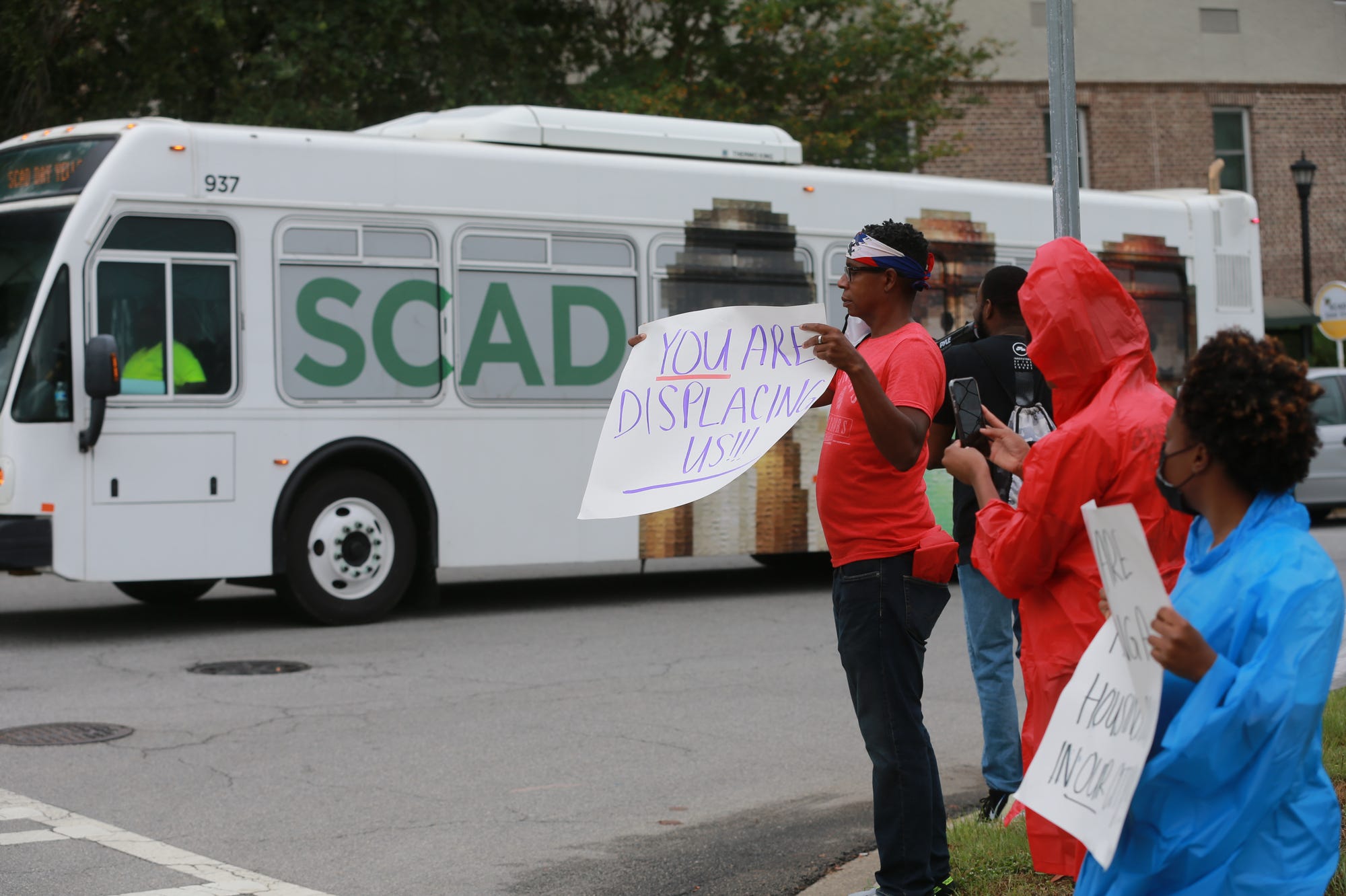
The 912 Liberation Crew protests across from the Savannah College of Art and Design's Turner Hall, a first-year residential facility built in 2008 on land that was once a rail yard. The 912 Liberation Crew, led by Savannah-native Keiajah Brooks, says SCAD's expanding footprint is responsible for displaying Black families.
The 912 Liberation Crew protests across from the Savannah College of Art and Design’s Turner Hall, a first-year residential facility built in 2008 on land that was once a rail yard. The 912 Liberation Crew, led by Savannah-native Keiajah Brooks, says SCAD’s expanding footprint is responsible for displaying Black families.
Richard Burkhart/Savannah Morning News

“You revitalize [Savannah] for people to come in who don’t have the connections here,” said fellow protestor Amir Jamal Touré, a Savannah native who advocates for human rights with Geechee Kunda, a living history museum in Riceboro. 

‘I’m in prison’: Disabled Savannahians struggle to find affordable, accessible housing

Touré said SCAD uses Savannah’s tourism and vibrancy to grow and recruit students, but that the university fails to acknowledge who built the city. As he protested alongside Brooks that August day, the Geechee man wielded a sign that said, “You are displacing us.” 

“[African Americans] built up a foundation for people to come here and to enjoy Savannah, and that foundation is based on the people that you are displacing,” Touré said. 

Brooks, Touré and the 912 Liberation Crew gathered on that day, fueled by a rumor.

All believed SCAD was angling to purchase the nearby 1940s-era public housing complex Yamacraw Village, slated for demolition in the coming months. The rumor seemingly began after a SCAD student submitted an urban design proposal for the area in 2019, dubbing their concept “The Y District.” The design was for a competition with the American Institute of Architects and was not intended to serve as a guidepost for the property’s redevelopment, according to a 2021 article from WTOC. Whether the housing complex will be re-imagined, rebuilt, or the land sold for development — leaving the residents scattered throughout the city — has yet to be announced.  

Amir Jamal Touré
[African Americans] built up a foundation for people to come here and to enjoy Savannah, and that foundation is based on the people that you are displacing.

SCAD, however, has been clear on this issue. On Feb. 2, university spokesperson J.J. Maxwell issued the following statement to the Savannah Morning News: “According to SCAD, the university does not have any interest or intention of purchasing or developing the historic Yamacraw property.”

Previous reporting: Local group files appeal to halt Housing Authority’s demolition of Yamacraw, Kayton Homes

Savannah Mayor Van Johnson said he disproves rumors and lies about the university’s plans that come across his desk “on a daily basis.”

But, that doesn’t mean SCAD has stopped – or will stop – growing.
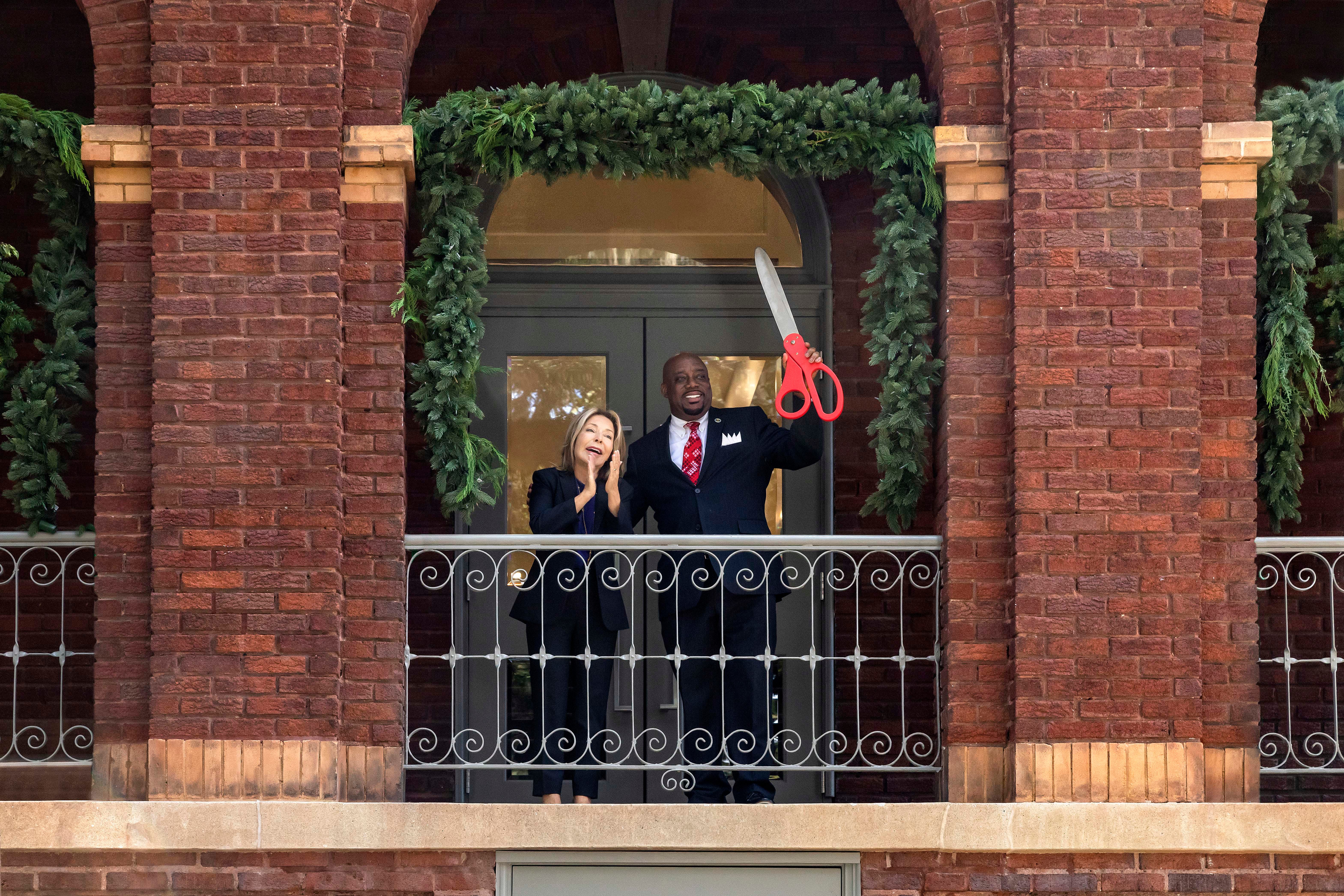
Savannah College of Art and Design Co-founder and President Paula Wallace, left, and Mayor Van Johnson cut the ribbon on SCAD's Lofts at Pulaski, a former student residence that the university adapted into 22 units of workforce housing aimed at providing affordable rent for downtown workers.
Savannah College of Art and Design Co-founder and President Paula Wallace, left, and Mayor Van Johnson cut the ribbon on SCAD’s Lofts at Pulaski, a former student residence that the university adapted into 22 units of workforce housing aimed at providing affordable rent for downtown workers.
SCAD/Colin Douglas Gray

The Tipping Point

Since opening in 1979 in a restored National Guard Armory building at 340 Bull St., now called Poetter Hall, the art college has expanded to more than 90 buildings across three campuses in Savannah, Atlanta, and Lacoste, France; 15,500 students and nearly 4,000 employees, according to public tax documents. 

In Savannah alone, SCAD owns 59 parcels within the boundaries of the Historic Landmark District and has branched holdings into primarily residential neighborhoods such as Starland and now Bingville.

Through historic preservation, SCAD has revitalized dozens of blighted properties in the city, building upon the dream of the seven ladies who in 1955 founded the Historic Savannah Foundation, which established one of the nation’s first revolving loan funds and advocated for tax breaks for folks restoring historic homes and buildings in the distressed downtown neighborhoods.

Recent HSF news: Historic Savannah to restore blighted properties to address affordable housing shortage
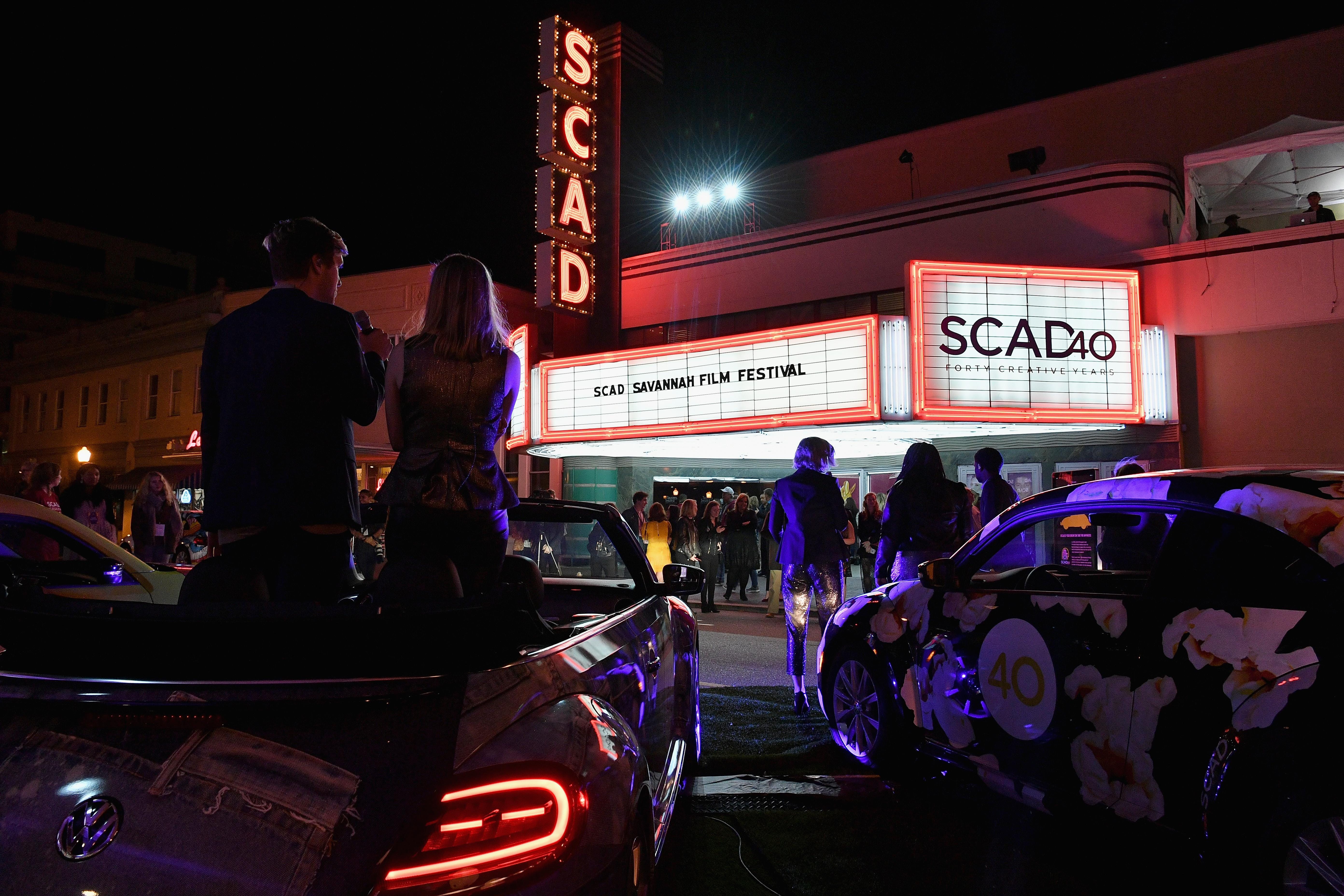
A view of the reception at the 21st SCAD Savannah Film Festival on October 27, 2018 in Savannah, Georgia.
Photo by Dia Dipasupil/Getty Images for SCAD

Yet, as with many success stories, there comes a tipping point. Savannah may have reached it.

A number of factors have converged to render Savannah a city geared toward tourists and wealthy transplants, not the people who built this city and who’ve kept it running since its founding in 1733. SCAD is not solely responsible. It is one institution of power in the city that’s stoking a crisis of housing and income inequality, which reached a fever pitch over the past few years as rents skyrocketed to record levels and businesses shuttered under the weight of soaring property prices and pandemic pressures. 

Previous reporting: SCAD unveils Pulaski House, 22 units aimed at non-student, downtown, low-wage workers

SCAD’s swelling footprint has spurred both new development and redevelopment, helped decrease crime and contributed, by its own estimation, $577 million annually to Savannah’s economy. Annual events such as the SCAD Savannah Film Festival bring thousands of visitors to town, and the university said there are 120 SCAD alum-owned businesses in Savannah contributing to the city’s diverse economy.

Because of its nonprofit and educational status, SCAD also has taken nearly $800 million of property out of local tax revenue and spurred gentrification by purchasing and holding land for future growth, razing distressed properties while restoring others, and building new educational and residential facilities that impact surrounding property values (and taxes). Its historic preservation practices have enticed luxury developments to previously low-income neighborhoods surrounding downtown, transforming the makeup of those neighborhoods into a transient community for students and tourists.  

/ˌjentrəfəˈkāSH(ə)n/

the process whereby the character of a poor urban area is changed by wealthier people moving in, improving housing, and attracting new businesses, typically displacing current inhabitants in the process.

SCAD represents itself as a culture monger in the community and world at-large. It views itself as a revitalizer, bristling at the suggestion that its growth has gentrified the historic district or surrounding neighborhoods, stating that “SCAD has a legacy of successful, positive urban revitalization—as opposed to gentrification.

“According to urban planner Stacey Sutton, ‘Revitalization refers to neighborhood change, improvement, upgrading.’ Gentrification, on the other hand, explains Benjamin Grant, urban design policy director at SPUR Urban Center, is frequently characterized by the displacement of existing residents. SCAD has shown a commitment to improving and invigorating, rather than fundamentally altering or replacing, neighborhoods.”
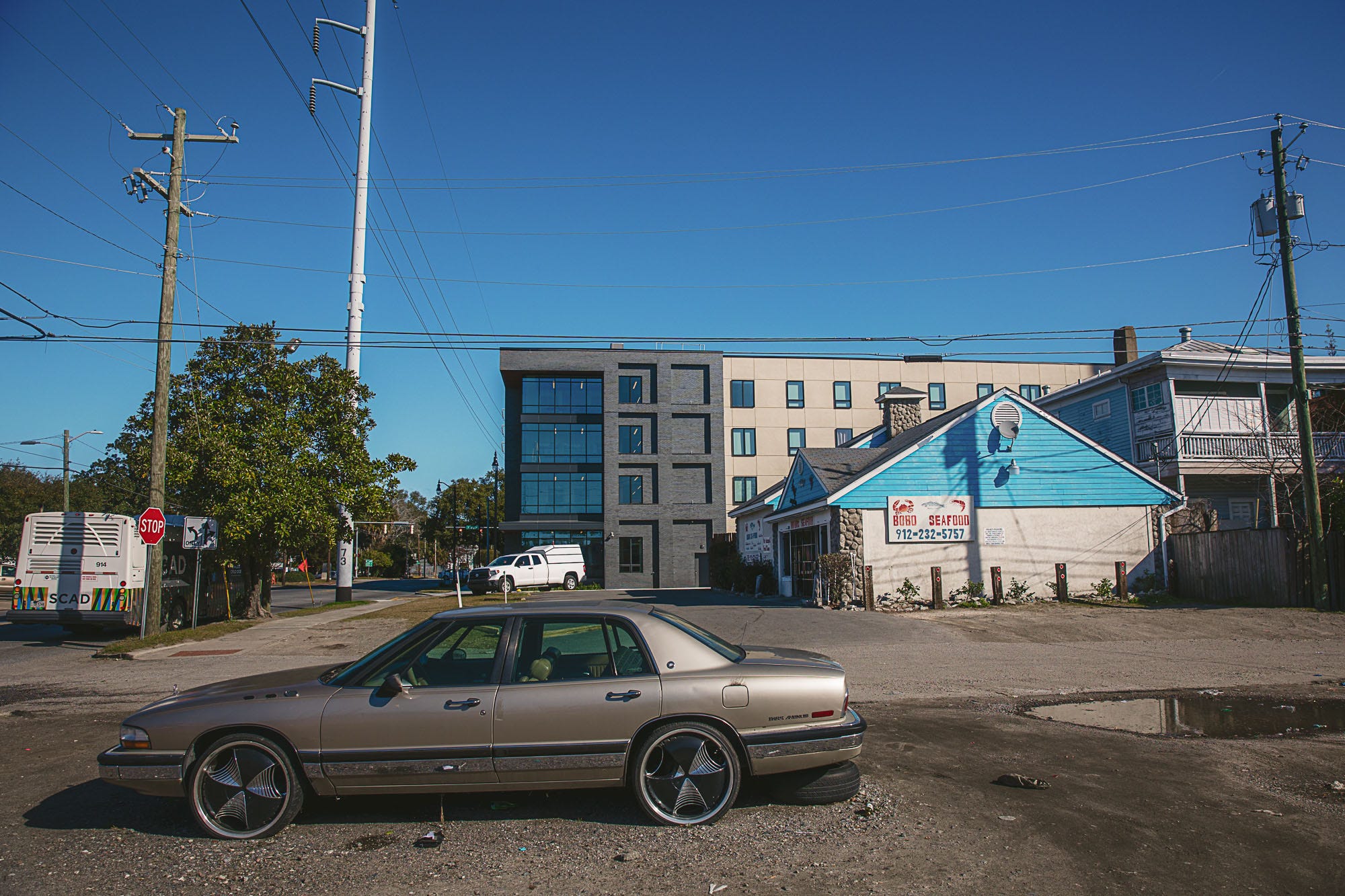
The Savannah College of Art and Design’s recently completed Victory Village student housing is visible over the homes and businesses located behind it on Montgomery Street.
Richard Burkhart/Savannah Morning News

Savannah Morning News’ own research showed that SCAD is both a revitalizing force that breathed life into a blighted downtown and one of the key instigators of housing unaffordability near critical jobs and transportation corridors. It has been both renewer and gentrifier.

To wrestle with SCAD’s full impact, the Morning News reviewed what was publicly available — IRS filings, municipal bond documents, research studies and the university’s public tour — to separate fact from fiction. In its ongoing effort to search for solutions to Savannah’s affordable housing crisis, Savannah Morning News sought to figure out how SCAD’s seemingly unchecked growth has not only transformed the city but also made it harder for middle- and low-income residents to live within its boundaries.

The university refused every interview request made by the Savannah Morning News for this story, opting instead to send a 16-page “fact sheet” that stated the school “saved Savannah” from ruin. Requests to review the university’s in-house economic studies and growth plans also were rebuffed.

Since August 2021, Savannah Morning News has published more than 40 articles exploring the varied and complicated forces influencing housing affordability in the greater Savannah area, examining the policies that can create homelessness, and assessing how both the public and private sectors can work together to provide housing opportunities for people of all incomes. Together, these stories have resulted in relocation assistance for people displaced from their homes, additional funding for housing programs, and broader community conversations leading toward solutions. The work continues and that’s why some articles fall behind a paywall — so that we can provide the kind of thoughtful, in-depth journalism that enlightens and engages our community.  

To continue reading this series, subscribe here $1 for six months.

NewGal Presents Immersive Tour of New Art and Music

NewGal Presents Immersive Tour of New Art and Music

In its initial are living and in-man or woman effectiveness given that prior to the pandemic, the New Gallery Concert Collection (NewGal) offers an immersive tour of art and new music, checking out themes of adoption and adaptation. On Saturday, April 30 at 8 pm, Undertake and Adapt will welcome audiences to consider an active journey roaming visible and musical installations at the Longy School of Audio. Performances and artwork installations uncovered in the course of the rooms of the historic Zabriskie Home are intended to mirror the encounter of currently being adopted-into a household, into a region, into a person’s accurate self-and to evoke resilience, belonging, and empathy.

The program facilities on the operate of 3 neighborhood creators-visible artist Sharon Berke and composers Maria Finkelmeier and Jonathan Bailey Holland-who are developing by way of the lens of their own adoption experiences. A numerous group of artists-which include composers Fred Onovwerosuoke and Sarah Hennies, pianist Sarah Bob, cuatro player Fabiola Méndez and her trio, The Fisher/Lau Job, and percussionists Steph Davis and Aaron Trant-will broaden the concert’s topic by checking out the complexities of finding and adapting to one’s accurate id.

“NewGal exists to elevate new will work of audio art along with the living composers and artists who produce them,” states the organization’s president Sarah Bob. “No matter if another person has joined a new family members, moved nations around the world, or uncovered a new section of themselves, Undertake and Adapt invites curious listeners and adventurous art lovers to traverse the complexities of id as if it were a home of unlimited rooms.”

Through the night, concertgoers will regularly come upon will work from artist Sharon Berke’s Rearrangement sequence. These paintings and collages are research of duality, household, relatives, separation, connection, and belonging-all deeply personalized concepts to Berke, who was adopted at start. Her operates are abstractions of domestic scenes and serve as individual narratives for the artist, who states that each piece reflects her possess continuously evolving self-recognition.

Adapt and Adopt commences in Pickman Hall with the planet premiere of Jonathan Bailey Holland’s String Quartet No. 4, for string quartet and recording, which explores the distortion of time and narrative that accompany assimilation. The composer worries the audience to talk to thoughts: What does the approach of adoption and adaptation do to the idea of memory or history? How is a narrative designed when the connection to the previous is no lengthier recognised? The quartet will attribute Gabriela Diaz and Lilit Hartunian on violin, Ashleigh Gordon on viola and David Russell on cello. As the string quartet fades, the audience’s self-guided journey as a result of the tunes and artwork installations in the Zabriskie House starts.

In just one home, audiences will uncover Sarah Bob undertaking options from composer Fred Onovwerosuoke‘s The Twenty-Four Scientific tests in African Rhythms. Born in Ghana to Nigerian dad and mom, the award-profitable composer grew up in both nations around the world and traveled by about 30 African countries in advance of settling down in Saint Louis, MO, and founding the Intercultural Music Initiative. Onovwerosuoke’s songs is informed by a life span of adoption and adapting to new environment, even though remaining accurate to his roots. The 20-4 Reports in African Rhythms attract inspiration from unique dances and musical patterns discovered throughout the continent.

In a different room, concertgoers will uncover Fabiola Méndez and her trio accomplishing parts from her album “Afrorriqueña” (Afro-Rican). The album is motivated by her expertise as a Black Puerto Rican lady and celebrates the satisfaction, joy, difficulties, and self-acceptance that will come with adopting and adapting one’s genuine identity. Fabiola Méndez Trio will also accomplish selections from Mendez’s album “Al Otro Lado del Charco” (On the other aspect of the pond), which characteristics audio motivated by the thought of leaving one’s homeland in search of new chances and advancement.

Audiences will also discover percussionists Steph Davis and Aaron Trant doing composer Sarah Hennies‘ do the job Settle. Hennies’ minimalist piece enables two vibraphone gamers to adopt and adapt their artistic interpretations of the operate primarily based on their modifying bodily or psychological house. Their compositions typically discover musical, sociopolitical, and psychological concerns which includes queer & trans id, psychoacoustics, and the social and neurological circumstances fundamental creative thought.

Undertake and Adapt culminates with the globe premiere of percussionist, composer, educator, and general public artist Maria Finkelmeier‘s hottest installation, the Me you See. Built for a significant, versatile ensemble, the Me you See encompasses all the performers on the application. The get the job done starts with an on-stage efficiency by present-day percussion songs duo, the Fisher/Lau venture, who are step by step joined on phase by extra performers all over the new function. In the course of the functionality of the Me you See, a stunning movie projection will showcase a model new collage developed stay in the course of the functionality by visual artist Sharon Berke.

Tickets for Adopt and Adapt are out there online for amongst $10-$20. All attendees will be essential to present their ticket and proof of vaccination (such as booster shot) upon arrival. Masking is optional and supplemental COVID data related to the Longy University of Audio is out there listed here. Adopt and Adapt is made probable by funding from Are living Arts Boston by The Boston Foundation.

Your Concise New York Art Guide for April 2022

This month, bodies are everywhere — even when they’re not. Exhibitions across New York City delicately dissect the omnipresence of the body in abstract and virtual space, address corporeality’s constructed or collaged nature, explore the political potential of bodies in dialogue, and revel in the sheer absurdity of moving through the world in one of these things. Take care out there and enjoy.

***

Richard Hawkins, “Legend” (2022), collage, oil and pencil on paper, paper: 14 1/2 x 12 1/2 inches, frame: 19 7/8 x 18 inches (courtesy the artist and Greene Naftali, New York; photo by Zeshan Ahmed)

When: through April 23
Where: Greene Naftali (508 West 26th Street, Ground Floor, Chelsea, Manhattan)

A bait fisherman by day and painter by night, Forrest Bess (1911-77) made symbolic abstractions inspired by an elaborate personal philosophy that tied hermaphroditism to immortality and prompted him to explore body modification. For The Forrest Bess Variations, contemporary artist Richard Hawkins, whose work grapples with bodily taboos via (counter)cultural reference points, probed Bess’s lexicon through a research deep dive, hypnagogia, and Jungian Active Imagination. Hawkins’s painted and collaged variations on Bess’s work incorporate legends that interpret the meaning of specific colors — white means “penetrable” — and shapes — a black line is a “prostate stimulator” and “sounding rod.”

Morgan Bassichis, “Pitchy #3” (2020), single channel video (color, sound), commissioned by the Renaissance Society for Renaissance TV. Filmed by and featuring Max Silver. Captioning by Isaac Silber. 4:27 (© Morgan Bassichis, courtesy the artist and Bridget Donahue, NYC)

When: through April 23 (Performance dates: April 1, 8, 14, 22 at 7:30pm)
Where: Bridget Donahue (99 Bowery, 2nd Floor, Chinatown, Manhattan)

“Why were you so curt in your appointment reminder text?” comes a whisper from the hidden speaker in a potted plant by an analyst’s couch. Comedic musical performer and obsessive list-maker Morgan Bassichis brings their subversive hilarity into a solo show context with offerings spanning videos (“My father told me one day I’d grow up and have a line of saunas,” Bassichis informs us), informational pamphlets (“Questions to Ask Before Visiting Marfa”), and to-do lists (“To do: Silent meals (conversation is peer pressure)”). The show will also feature a live solo performance, “Questions to Ask Beforehand,” directed by Tina Satter.

Frida Orupabo, “Comfort” (2022), collage with paper and pins, 65 1/2 x 57 1/2 x 2 1/2 inches (© Frida Orupabo, courtesy the artist and Nicola Vassell Gallery; photograph by Adam Reich Photography)

When: through April 30
Where: Nicola Vassell Gallery (138 10th Avenue, Chelsea, Manhattan)

Taking its evocative title from Gayle Jones’s Corregidora (1975), a novel on intergenerational trauma, Closed Up Like A Fist features a group of 16 haunting collages and digital prints by Norwegian Nigerian artist and sociologist Frida Orupabo. Pinning together cut-up imagery, much of it culled from colonial archives, Orupabo constructs anonymous, fragmented Black women subjects, sometimes with White body parts. These figures variously spread their sweeping batwings, crush Black and White dolls underfoot, stare out from behind chairs, or hold out an apple as if it were a pistol in a Western shootout — or a gift.

Detail of Uuriintuya Dagvasambuu, “Zoom Meeting” (2021), acrylic on canvas, 55 1/8 x 55 1/8 inches (courtesy Sapar Contemporary and the artist)

When: through May 7
Where: Sapar Contemporary (9 North Moore Street, Tribeca, Manhattan)

A master of contemporary Mongol Zurag, Uuriintuya Dagvasambuu hails from a generation of Mongolian artists that revived a style of pictorial painting on secular and nationalist themes that was suppressed for the bulk of the 20th century under Soviet influence. Dagvasambuu’s fantastical, hyper-detailed paintings capture some of the surreality of the pandemic, remote work, and life online: A blue deity wears a protective mask on each of its many faces; a dachshund stretches across two Zoom screens, simultaneously inhabiting the deep sea and a meadow; icons from a phone’s home screen float above a roiling tumult of horses and sheep.

Rose Nestler, “Three Tongues” (2022), velvet, carved soapstone, fabric, thread, batting, wood, staples, epoxy, 29 x 24 x 5 inches (courtesy Mrs. and the artist)

When: through May 7
Where: Mrs. (60-40 56th Drive, Maspeth, Queens)

In her sculpture-centric show too bad for heaven, too good for hell, Rose Nestler takes on the freakiness of femininity with discerning wit and a wicked sense of body humor. Wooden hands lift a tulle skirt to reveal a young woman/old woman optical illusion; a massive florid cone bra presides over a bent, phallic red candle; a parade of red high-heeled shoes circling around a frilly centerpiece evokes Hans Christian Andersen’s twisted fairy tale The Red Shoes. The exhibition also features a new video work exploring the phenomenon of women-produced TikToks dedicated to the satisfaction of playing with slime.

Cameron Welch, “Gravity Chasm” (2022), marble, glass, ceramic, stone, spray enamel, oil, and acrylic on panel, 120 x 288 inches (courtesy the artist and Yossi Milo Gallery)

When: through May 7
Where: Yossi Milo Gallery (245 Tenth Avenue, Chelsea, Manhattan)

In historically scaled mosaics made from marble, stone, glass, paint, found objects, and tile (some of which is cheekily printed to mimic marble), Brooklyn-based artist Cameron Welch brings a contemporary collage- or graffiti-style aesthetic to an ancient art form that has similarly prized flat, graphic imagery at many points in its history. These monumental mosaics are densely packed with a temporally and thematically diffuse iconography of cartoonish figures — ranging from a cross-eyed cowboy to an anti-police protester to a Modigliani-style nude — along with animals, handprints, ceramic pots, skulls, blood, and masstige clothing.

Theresa Hak Kyung Cha, still from Permutations (1976), 16mm film, black and white, silent; 10 min (Collection University of California, Berkeley Art Museum and Pacific Film Archive; gift of the Theresa Hak Kyung Cha Archive)

When: April 6–September 5
Where: Whitney Museum of American Art (99 Gansevoort Street, Meatpacking, Manhattan)

Hotly anticipated and only slightly delayed, the 80th edition of the Whitney Biennial is the brainchild of Whitney Museum curators David Breslin and Adrienne Edwards, who elected to follow a “series of hunches” about the present moment rather than a unified theme.” The presentation features an artist list that is as interdisciplinary as it is intergenerational: The works of long-established artists such as Tony Cokes, Ralph Lemon, and Yto Barrada can be found alongside those of relative newcomers such as Aria Dean and Andrew Roberts, and several figures often more associated with literary arts — including Theresa Hak Kyung Cha, N.H. Pritchard, and Steve Cannon — are also given room to shine.

Raphael Montañez Ortiz, “The Memorial to the Sadistic Holocaust Destruction of Millions of Our Ancient Arawak-Taino-Latinx Ancestors Begun in 1492 by Columbus and His Mission to, With the Conquistadores, Colonize and Deliver to Spain the Wealth of the New World No Matter the Human Cost to the New Worlds Less Than Human Aborigine Inhabitants…” (2019-2020), mixed media, overall display dimensions 76 x 94 x 21 inches (Collection of El Museo del Barrio, New York, gift of the artist, 2020; artwork © Raphael Montañez Ortiz; image © El Museo del Barrio, New York; photography by Martin Seck)

When: April 14–September 11
Where: El Museo del Barrio (1230 Fifth Avenue, East Harlem, Manhattan)

More than fifty years ago, artist and educator Raphael Montañez Ortiz, along with a coalition of community members, founded El Museo del Barrio to counter a dearth of local arts representation for Latinx and Caribbean creators. Now, the museum is honoring Ortiz with a survey spanning six decades of his work as an artist and activist. The exhibition includes early films and sculptures resulting from destructivist performances and deconstructions of everyday objects, reclamatory work springing from ethnoaesthetics, and later participatory performances rooted in ritual and breathwork.

Basel Abbas and Ruanne Abou-Rahme, Still from May amnesia never kiss us on the mouth, 2020-ongoing (courtesy the artists)

When: April 23–June 26
Where: online & MoMA (11 West 53rd Street, Midtown, Manhattan)

Through multimedia installations and live performances, collaborators Basel Abbas and Ruanne Abou-Rahme create non-linear narratives that explore the politics of bodies in our endless — and endlessly catastrophic — present. The duo’s evolving project May amnesia never kiss us on the mouth (2020–ongoing), which can be viewed as a multichannel video installation at MoMA or experienced online via Dia Art Foundation, grew out of an extensive collection of found online recordings of singing and dancing in public space in Iraq, Palestine, and Syria, and features new performances that the artists made in tandem with Ramallah musicians and a dancer.

Kazuko Miyamoto, “Plant Kimono” (1991) (courtesy the artist and Zürcher Gallery, New York/Paris)

When: April 29–July 10
Where: Japan Society (333 East 47th Street, Midtown East, Manhattan)

Not long after moving to New York in her twenties in 1964, Tokyo-born artist Kazuko Miyamoto became Sol LeWitt’s studio assistant, joined the women-led nonprofit A.I.R. Gallery, and, within a decade, secured her debut New York City solo show at 55 Mercer. Marking the first institutional survey of Miyamoto’s pioneering post-minimalist oeuvre, the Japan Society exhibition spans early paintings, string construction drawings, conceptual performances, and performalist kimono pieces, tracing the artist’s evolution and increasing interest in exploring her own intersectional identity in her work.

Reddit Brought The World Together With A Collaborative Massive Art Project

Reddit receives a poor rap. When included in the push, the media focuses on members submitting and pumping meme stocks or deriding people in the r/antiwork team accusing them of being lazy anti-capitalists.

There is anything gorgeous that transpired about the weekend. Close to 5 million associates of the r/area 2022 subreddit united the earth jointly and established an artwork project.

Starting last Friday, Reddit consumers collectively created a significant collaborative piece of artwork that turned a viral phenomenon. The open up canvas allowed associates to put up a one, tiny, coloured pixel each individual 5 minutes. Much more than 72 million tiles had been placed by in excess of 6 million people, at the fee of 2.5 million tiles put for each hour. Communities exterior of Reddit, this sort of as Discord and Twitch, assisted with the challenge also.

The slogan from the group—which has practically five million members— reads, “Some have visited a canvas right before. / A place in which togetherness produced more. / Now in quantities significantly higher, having extra place, / It falls on you to develop a greater place.”

The undertaking was started out by Josh Wardle, the guy who created the ubiquitous addicting entire world activity Wordle, again in 2017 on April Fool’s Day. The preliminary experiment lasted 72 hrs. Far more than a single million users edited the canvas, putting a whole of approximately 16 million tiles.

The way it is effective is that a individual could spot a tile each individual 5 minutes. The time limit is set to keep away from any a person individual or group dominating the collective artwork installation. It is really a collaborative work, although there is competition involving teams to get their possess work observed.

The consequence was a chaotic still gorgeous and significant collective piece of artwork. With all the dislike, anger and violence permeating our globe, it’s pleasant to see people close to the environment nearly coming jointly to make one thing unique.

In gentle of the Russian invasion of Ukraine, the website welcomed r/PlaceUkraine to assist manage and create the Ukrainian presence on r/Place. Nomad, a moderator, together with other people, aided to ensure that Ukraine was nicely represented. An alliance was formed to shield their do the job. Since r/Spot is “extremely Chaotic,” there had been teams that devolved into tribalistic actions and tried using to attack some countries’ contributions.

Nomad wrote, “In order to Protect the house we have, we have to have to do the job with other communities to assistance ensure that we have folks shielding our space at all hours of the working day. This arrives down to negotiations extremely similar to authentic lifetime, where by we may possibly supply something, and get a little something in return. Trust me, it really is not pleasurable.”

He included, “r/Put is a area of compromises and teamwork, these who do not get the job done with other folks are attacked by communities like The Void, and just place, we do not want for any of the artwork designed by our amazing designers to be ruined,” and “let us get the job done together to the frequent goal of symbolizing Ukrainian Lifestyle as finest as feasible, and educating the world on what is likely on.”

An art gallery carries on Trinity Hoblit’s love for others

An art gallery in Amelia Island will aid fund aneurysm investigate.

FERNANDINA Seaside, Fla. — Inside of just one of the newest beach inns on the 1st Coast, there is an art gallery honoring a teenager who manufactured a huge affect in the group, with the intention of producing a bigger effect in the healthcare subject.

The gallery is inside of the Courtyard Marriott and Springhill Suites on Amelia Island. The general manager is Olivia Hoblit. 

It honors her late daughter Trinity, who stood 29 inches tall. Trinity had primordial dwarfism. Many years after she died, the neighborhood carries on to guidance her.

“We overlook her each working day, mainly because every thing just will make her pleased,” Hoblit claimed.

She functions in the major again corner place of work surrounded by memories.

“It could be the simplest issue. When she wakes up in the morning, she is like, ‘Good early morning!’ When I get property from perform, she’s like, ‘Hey mother! How are you?!’” Hoblit described her late daughter’s individuality. 

She talks about Trinity in existing tense, even producing absolutely sure she is nevertheless in household photos, with a framed image of Trinity on her lap. 

Trinity died in 2015 from a brain aneurysm. She was 14.

“Sometimes it is tricky to speak about,” Hoblit mentioned. 

But she insists people know about Trinity’s problem, with the Trinity Appreciate Hoblit Basis. 

Down the corridor, the hotel stunned her by opening up this gallery.

“Beautiful abstractions of nature, movement, texture,” gallery curator Shaughnessy Johnson stated the art. 

Johnson is showcasing neighborhood artists. All the things bought goes to aneurysm analysis through Trinity’s basis.

The foundation is now funding study to establish regardless of whether aneurysms can be genetic. They do the job with Baptist Neurological Institute and Wolfson Children’s Medical center.

It was a location close to Trinity.

“Every time we go to Wolfson Children’s Hospital, (Trinity) would often explain to me ‘Mom I’m praying for the youngsters to much better.’” Hoblit explained. “In her problem, being aware of what she was going as a result of, but she would usually feel about the other young children 1st and other persons. That is just total of love, and that is what Trinity is about.”

Seven yrs due to the fact she died, Trinity is portray a brighter potential for other people. 

“It’s sharing her tale, but it is also great consciousness. It is conserving a lot more life out there,” Hoblit claimed about the gallery. 

The artwork exhibit is open now. 

You can find out much more about Trinity and her affliction right here.

https://www.youtube.com/observe?v=zPEEbcolYc0

Teen art sensation Makenzy Beard turns to the beautiful game for stunning new painting

//= do_shortcode(‘[in-content-square]’)?>

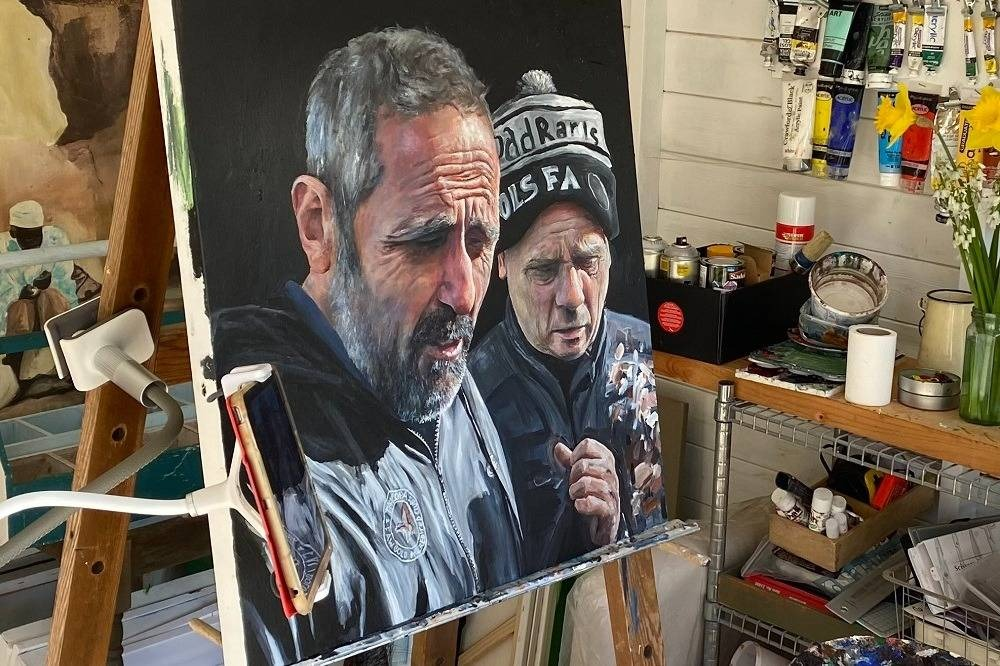
Jimmy Jenkins & Mike @ fifty percent-time by Makenzy Beard

The youthful Welsh artist who has taken the art entire world by storm has revealed a glimpse of her most current portray, and correct to sort it is breathtakingly ‘on the ball.’

The portray entitled ‘Jimmy Jenkins & Mike @ fifty percent-time’ is of Jimmy Jenkins who is Makenzy’s soccer coach at Swansea University girls and Talycopa where his daughter Macy is a teammate of Makenzy.

Jimmy is proven along with assistant mentor Mike Phelps all through a 50 {6d6906d986cb38e604952ede6d65f3d49470e23f1a526661621333fa74363c48} time converse when they have been 1- up in a genuinely tense match. Mike’s daughter Anna is the staff goalie.

Makenzy concluded the painting in March working from an first photograph was taken by her mum and the objective was to present the depth and generate they have during a crew communicate.

Revealing the impression on her Twitter feed, Makenzy came in for a lot of praise for the comprehensive realism and capabilities, with a person commentator saying:  “I can nearly hear them speaking.”

Not minimal to artwork and soccer, Makenzy is also a gifted hockey player, representing Wales at less than 16s stage.

The younger Welsh painter’s rise has been one thing of a phenomenon due to the fact her work went viral previous yr following her painting of a regional farmer named John Tucker was posted on Twitter by her college.

The very lifelike portrait capturing the farmer in a hi-vis jacket and a knitted hat was chosen for exhibition at the Royal Academy Young Artists’ Summer time Exhibit in London.

In Oct Makenzy unveiled a painting of her grampa, Bernard Davies, after much more sending shockwaves by means of social media to unanimous acclaim.

In December The Makenzy Beard Selection grew to become obtainable to purchase from the Blackwater Gallery in Cardiff. The sequence of restricted version prints and authentic paintings showcasing the 15-yr-old’s astonishing artwork bundled her two most renowned paintings to date.

The Makenzy Beard charm

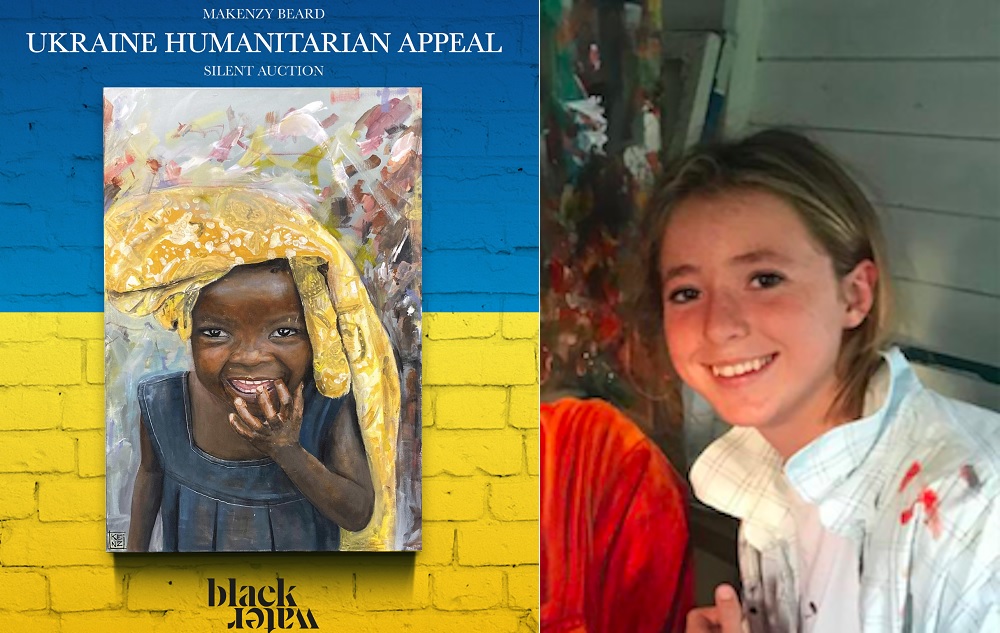
Final week a restricted edition print by Makenzy went up for sale in a silent auction to elevate money for the men and women of Ukraine.

The silent auction ends at 9am BST on 5 April and bids in GBP can be submitted by e-mail throughout that time. The winning bidder will be notified by electronic mail when the auction closes.

Bids can be submitted by emailing Hello there@BLACKWATERGALLERY.CO.Uk

More specifics about the print and the celebration can be identified right here.


Assist our Nation these days

For the selling price of a cup of coffee a month you can enable us develop an impartial, not-for-gain, countrywide information service for the people today of Wales, by the people today of Wales.