
Grandstanding, or critical needs? City Council debates streets, landscaping, and staffing fire engines in budget hearing finale

Photo of overgrown Apopka sign, used in presentation by Commissioner Kyle Becker

By Reggie Connell, Managing Editor

By any measurement, the Fiscal Year 2021-22 budget process was the most contentious in recent memory. From economic development, to wish lists, to staffing sizes on fire trucks, to millage rates, there was something for everyone to agree or disagree with on this one.

But with a 4-1 vote to approve the 4.1876 millage rate and a $130 million total budget last week, the final hearing/vote could have been a formality wrapped up in short order.

But after 90 minutes of debate at Wednesday’s final budget hearing, it was clear that would not be the case.

Commissioner Kyle Becker, the lone dissenter in the first vote for the budget/millage, took a tour of Apopka in the preceding week between hearings and even had photos to share with the Council.

“I’m not trying to place blame on anyone here, but either it’s a lack of execution or a lack of funding. If we’re saying this is good enough, we’ve got to have a conversation.”

Becker went on to present multiple photos of areas in Apopka that needed significant attention. His premise was that if there are this many things overlooked on its streets and landscaping, maybe there are departments underfunded.

“This is just an hour and a half trip around the city,” he said. “And yet we’re thinking about giving back $400,000-$500,000 of tax revenues that can go to improving Apopka?”

Then Becker showed a photo of the Apopka Fire Department’s massive tower truck.

“This is our tower truck. It’s a 100-foot rig. Two people respond to calls on this apparatus,” Becker said. “These are critical needs.”

Commissioner Kyle Becker: “This is our tower truck. It’s a 100-foot rig. Two people respond to calls on this apparatus. These are critical needs.”

Commissioner Doug Bankson was first to respond to Becker, although he found the observations too late to act on.

“I would say this would have been a great presentation at the beginning of our budgeting process to see why it isn’t getting done,” he said. “Do you have an estimate on those things getting done? I thought some of these things were funded. I know in some cases it was because of the transition between the prisoner program we had used to using our own people, and it wasn’t on the list. But as soon as it went on the list, it’s been done. I don’t have the answer for that because it was just presented. But we’ve done an incredible amount in this budget in back-to-back years.”

Mayor Bryan Nelson, who Becker is challenging in the 2022 Apopka Mayoral Election, saw the presentation differently than Bankson.

“It’s great grandstanding in front of the City Council,” said Nelson. “But our parks, recreation, and streets are taken care of. As far as the streets go, we’ve got the survey coming in to look at which roads need to be replaced. We also made sure the crosswalks at the schools were re-painted. Now, it’s probably only been a year or two depending on the cycle, but I wanted to make sure the schools had proper striping for the kids to go across… so we have made a lot of progress. I think if you drive around and go from Orange County to Apopka, I’d venture to say that our [streets] look better across the board. And I think our landscape guy… he struggled this year. Not for lack of trying, but for getting the people that he needs. But I’ll tell you I’ve seen him out there mowing on 441 on Saturdays and Sundays, and on 436. He tries to keep up with what we requested, but we’ve made a lot of progress. We see City Hall and we’re ready to get this all re-landscaped… so things are coming around.”

Nelson thought it might be more productive if Becker simply pointed out these issues with staff instead of making a visual presentation during the final budget hearing.

“A lot of these things are just… he [Becker] could have emailed Edward [City Administrator Edward Bass] and gotten a response on some of the small fixes that are a part of our budget,” Nelson said.


But Becker did not see these issues as small fixes, and according to him, it wasn’t the first time he approached the staff or Council.

“I don’t view this as grandstanding,” he said. “I see these as critical needs. I’ve presented stuff like this before in City Council. I’ve sent emails as residents put their requests forward. What I’m saying is, if this is an execution issue – okay. Let’s manage through that. But for me as a layperson outside looking in as a commissioner, I have to assume that if these basic things aren’t getting done, it has to be a funding resource capacity and other things that aren’t directly related to execution. And if it’s a funding mechanism, which is what I believe, then we should be providing those departments with the proper and adequate funding to get the job done properly. I will not ever say that I’m grandstanding when it comes to properly funding our fire department.”

“He is right about the 429,” said Commissioner Diane Velazquez. “It’s an eyesore. For me, it has been the signage. I’m hoping we can get to that point where we have a sign when you come off 51 that says ‘Welcome to Apopka’ and there is no sign there. We are driving on the 429, which I do use often. That house always catches my attention and that is part of Apopka. We should have done something with that house years ago. And somehow either paint it or demolish it. Those are the only two choices you have with that. But you always have to see that dilapidated house on the highway there.”

Commissioner Diane Velazquez: “That house always catches my attention and that is part of Apopka. We should have done something with that house years ago. And somehow we should find… either paint it or demolish it. Those are the only two choices you have with that. But you always have to see that dilapidated house on the highway there.”

Velazquez then turned her attention back to the Apopka Fire Department.

“How much did we [the taxpayers] pay for that engine?” she asked Bass.

“Over a million dollars,” Bass said.

“Is it wrong for the firefighters to say it needs to be staffed with three firefighters minimum?” she asked. “We’re putting two firefighters on a truck we paid over a million dollars for.”

“The fire chief spoke to that,” Bass said. “He laid his plan out and he has his future plans. We applied for some grant opportunities. We’re hoping to see some movement there. We have a great fire department and the safety of our firefighters is very important.”

“I had a conversation with the chief [APD Chief Sean Wylam] yesterday and I did say that to him,” said Velazquez. “I don’t want to keep beating him up, but I want him to commit that he will, at least, address the one important thing the firefighters are wanting… to secure a three-person team at a minimum on this apparatus. I’m glad we’re seeing it and hearing what we paid for it because it should be staffed [with three] – I agree.”

“I understand,” said Nelson. “That’s the union.”

“It’s not just the union,” Velazquez said.

“We got our ISO-1 rating 17 years ago, and we ran the same program,” Nelson said. “So under Chiefs Anderson, Bronson, Carnesale, and Wylam, we’ve always had a two-man squad and a two-man fire truck. So now, all of a sudden, 17 years later, now it’s important we go to three. What changed?”


As Wylam approached the podium, Becker responded to Nelson’s question.

“The thing is the [AFD] staffing levels are at 29, citywide, at any given time based on our last hearing,” Becker said. “I don’t think staffing levels were below that in past years. Now granted, the model hasn’t changed, but at least for me personally, we have always gotten into this idea of ISO, ISO, ISO until recently, and quite honestly, it isn’t because of the union, but the material that came as a result that we were copied on, where it was articulated what that means in terms of staffing on an apparatus… based on the national standards for firefighters where it’s 15-person minimum on these calls. And I know you can only respond to one structure fire in the city at a time when you staff at 29. So, it’s a combination of things.”

“It’s my understanding from your [Wylam’s] presentation that you agree we need to have three per engine,” said Commissioner Alexander Smith. “It’s your methodology how we get there… and you want to make sure it’s done correctly. I understand that if we don’t receive the grant, that we’re going to fund those six that you’ve requested from the reserves – three district chiefs, and three firefighters – and we’re moving in that direction. You said you want to do it the right way… is that correct?”

“Yes,” said Wylam. “We’ve always had two people assigned to this apparatus. One of the first things I did, if you remember, is I augmented manpower from Stations 5 and 6 and put them at Station 1 so we could put an officer on this unit. Assigning the right personnel is vitally important.”

Wylam went on to explain that adding district chiefs was his goal for this budgeting cycle rather than adding a third member to the two-person teams.

“So, we’ve always had two people assigned. Nothing has changed as far as that goes. What I asked for this year as well as last year was a district chief. That’s a safety-related issue. We need supervision. We need control. We have seven lieutenants right now. We have six engines and one tower truck. That’s seven lieutenants per shift. Right now, we have one district chief who supervises all of those people. If we do respond to multiple calls, we want those district chiefs to disperse. We want a safety officer.”

He also used an example of the Orange County Fire and Rescue Department calling on the AFD for assistance.

“We’re handling our call volume. We’re able to respond. We have a contract with the county. We also have a contract in place where we assist when they call us. We responded 175-190 times in the last two years to assist Orange County. How many times did we ask them to assist us? Zero. We’re handling our call volume and more. Only .8{6d6906d986cb38e604952ede6d65f3d49470e23f1a526661621333fa74363c48} of the fire departments in the country have an ISO-1 rating. That is the litmus test… and for these grants, that’s the litmus test. We’ve applied for them for multiple years. The squad system is in place and it’s worked for 20 years. Again, are we going to grow? Absolutely. Are we going to increase our manpower when it’s necessary? Absolutely. But I can tell you right now, we have a great department. I get it. We’re growing, and we all want to move in that same direction as Chief McKinley. But what my priorities are now, and you want to talk about safety, is the district chiefs.”

Despite the AFD’s success in servicing calls and assisting Orange County, Becker still believes three-person teams are a safer way to approach a fire call.

“I just feel like the line of discussion up here [City Council] is that it’s incorrect thinking to try and get to three-person staffing on the apparatus,” he said. “But I’ll go back to the budget workshop where I asked if money were no object, is that a staffing model you would pursue, and the answer was in the affirmative… so it’s not like I’m fabricating this idea of going to this model because I think you agree we should be going to this model. I’m just using your acknowledgment during the budget workshop.”

“As we increase…,” said Wylam. “But when you ask if we can handle more than one fire call… we’re not Orlando yet. We’re getting there. We’re more like Ocoee right now. Ocoee cannot handle more than one fire call without the help of the county. That’s why agreements are in place. It’s a mutual aid thing, but we are handling our calls. We proved it by showing on a daily basis how many times we are assisting them. They signed a contract with us.”

“Just to bring this into perspective for me, in the tenure I’ve been here, I believe it was three or four years ago we added 28 firefighters,” said Bankson. “We were beginning to see bigger buildings, and so we got the tower truck. I don’t have any issue with our model changing if the structure of our city is changing… but the issue is we can’t do all of it at once.”

Bankson recalls that the millage rate increased already, and giving back a small discount to taxpayers will go a long way during these difficult times.

“My bigger point is we’ve gone from 3.76 [millage] to what it is now [4.1876],” he said. “We extended that because some of the things were still unknown back when we set the temporary millage rate [4.2876] and so we pushed it higher. Some of the things were resolved… so where do we go? We’ve got a taxpayer base that has been through two of the most difficult years. We have restaurants that are closing. Businesses that are closing. People have lost their jobs. People have not been able to catch up. Insurance rates are skyrocketing. Gas is going up. Food is going up. These are practical issues that are affecting every common person’s budget. So again, I’m not arguing against anyone. I respect everyone up here [City Council]. And I want to get to that goal. I’ll just say that. I just want to make sure we’re doing it in a wise way that’s not strangling the cow that’s giving the milk.”

Becker, however, thinks the city has too many critical needs to address, as evidenced by his photos, to give away $400,000.

“What I presented tonight is pictures…. pictures to words I’ve said over and over and over again,” he said. “This is a state of affairs. I harken back to the last budget workshop a year ago. There was a comment made on the dais to say ‘no one will remember a year from now that the grass was 12 inches too high’. These are views I’ve said repeatedly are an issue. I’ll use Lester Road striping as an example. We said in previous years that it would be taken care of… that never happened. So these things, while we say we have a budget for it, I just don’t have proof. I think it would be more prudent to prove that we can get these things done, and then lower the millage…than trusting that things that haven’t been getting done will get done.”

He is also concerned about potentially depleting the general fund reserve should several key grants not come in.

“We have to be careful now, because what we’re saying is we have six fire positions that, if we don’t get grant funding for, will be paid from reserves. We’ve got 10 police positions that, if we don’t get grant funding for, will come out of reserves. We’ve got the fire department venting costs that will come from reserves if we don’t get the grants. We’re treading into the area where we’re treating our reserve as an operational account, not a rainy day fund as we all sat up here and said needs to happen. So we have a lot of people with hands open in reserve balance funds if they don’t get the grants. The $400,000 in tax money, which I think is fair, keeps the tax rate the same as it is today, hedges our bets if we don’t get those grants, which we need to spend on critical needs in our city.”

Smith closed his remarks by reminding the Council that there are residents who need the refund no matter how small it is.

“A couple of residents saw the rhetoric that people were saying about ‘it’s only going to save them $15’, and their comment was ‘$15 may not sound like a lot to us sitting up here [City Council] because they think we’re rich… but to us, $15 means a lot.’ And even if it’s only at tax time when they pay their tax bill, that $15 could make a difference of whether they pay it or not. So $15 is a lot to them and they don’t want us to make a joke out of it in meetings that were talking about it.”

The final vote, despite the debate, ended exactly as it did a week ago; a 4-1 approval with Becker being the lone dissenter.
The Most Beautiful Art Tour in Alberta begins this weekend

CALGARY –

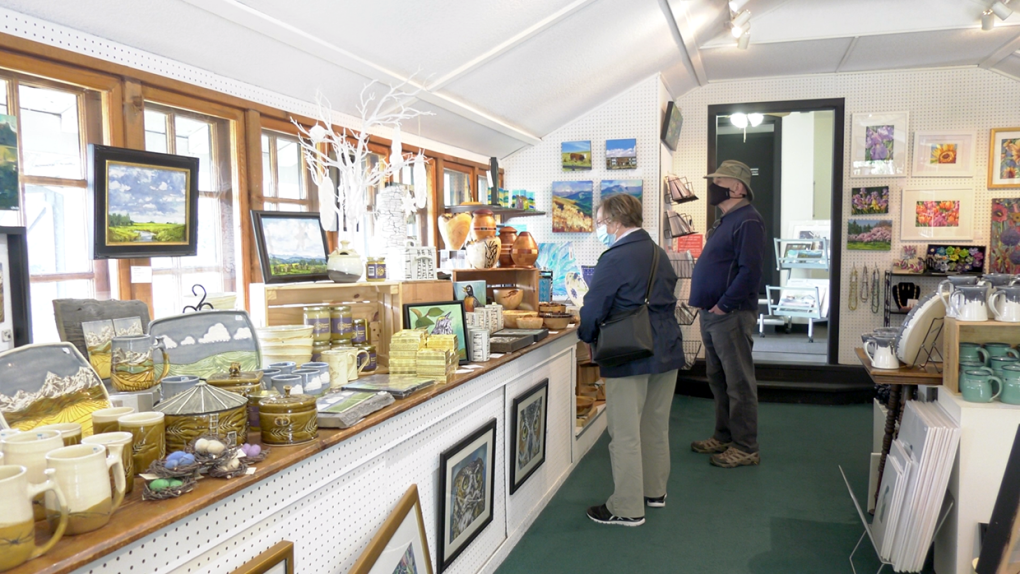
This weekend, site visitors are invited to get a search at the rear of the studio doors of some of southern Alberta’s most celebrated artists, who have turned the Cowboy Path into a beehive of inventive life.

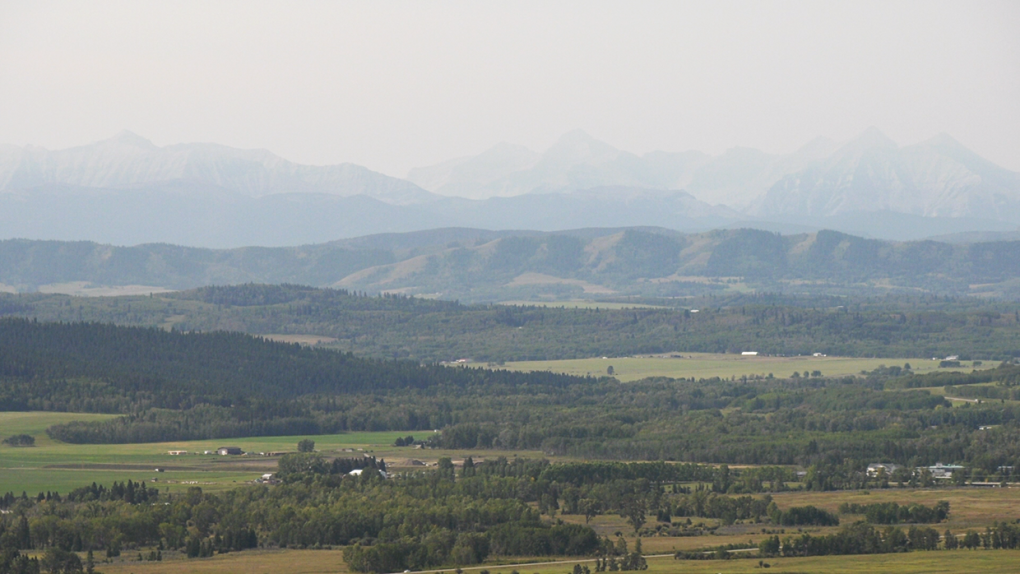
Dotting the foothills of the Rocky Mountains, alongside Hwy. 22 (the “Cowboy Trail”) and Hwy. 2A lives a local community of artists, craftspeople and galleries who celebrate creativeness and aid each and every other’s abilities.

These all-entry, self-driven excursions only happen 2 times a yr and are an awesome opportunity to pay a visit to the private artist studios with no the need to have to make a personalized appointment. Furthermore there are several extra routines and events to just take part in The Most Stunning Art Tour in Alberta. (https://themostbeautifularttourinalberta.com)

Dotting the foothills of the Rocky Mountains, along Hwy 22 (the “Cowboy Trail”) and Hwy 2A lives a local community of artists, craftspeople and galleries who rejoice creative imagination and assist each individual other’s talents.

CELEBRATING Tradition Days

Amanda MacKay,  Leighton Art Centre’s director of internet marketing and communications claimed during the weekend, they’re not only celebrating the most beautiful artwork tour in Alberta, they’re also celebrating Alberta Lifestyle Days.

“Here at Leighton Artwork Centre in particular, we have educational courses that appear and go calendar year spherical,” MacKay mentioned, “But these personal artists’ studios generally you are unable to visit them as a member of the general public without the need of at minimum creating a pre organized appointment. So this tour is a likelihood to go in see some points that you generally would have to system ahead.”

Dotting the foothills of the Rocky Mountains, together Hwy 22 (the “Cowboy Trail”) and Hwy 2A life a group of artists, craftspeople and galleries who celebrate creativity and assist each individual other’s talents.

Alberta Society Days presents Calgarians and other readers the opportunity to celebrate nearby artwork and artists.  “I assume when persons consider about Alberta, they typically don’t believe oh, Alberta is a desired destination for the arts, ideal?” MacKay stated.

“We assume about our Rocky Mountains,” she added. “We imagine about our sporting activities that are outdoors, the things to do, and we love all of all those things, but we have a ton of actually innovative people today in Alberta as properly. We are blessed with some seriously lovely country rural drives, some amazing sights and also these actually gifted individuals.”

Dotting the foothills of the Rocky Mountains, together Hwy 22 (the “Cowboy Trail”) and Hwy 2A life a neighborhood of artists, craftspeople and galleries who rejoice creative imagination and help each individual other’s skills.

The 4 gallery’s and 4 non-public studios collaborating in The Most Attractive Art Tour in Alberta are:

Galleries:

            •           Leighton Art Centre

            •           Lineham Household Galleries

            •           OAG Okotoks Artwork Gallery

            •           Bluerock Gallery
Personal Studios:

            •           Mady Thiel-Kopstein

            •           Eversfield Ceramics – David Barnes

            •           Kristoferson Studio

            •           Firebrand Glass Studio

Members can push them selves to just about every studio paying out as significantly time as they like discovering free of charge of demand. There are also a host of added functions and workshops getting position, for the comprehensive agenda and a lot more information visit https://themostbeautifularttourinalberta.com and  https://culturedays.ca/en/ab

Open Architecture: The husband-and-wife design duo redefining China’s cultural landscape

Created by Oscar Holland, CNN

With China suffering from a museum growth, and cities of all dimensions making cultural venues at unprecedented velocity, there is some thing refreshingly modest about Li Hu and Huang Wenjing’s solution to architecture.
The spouse-and-wife duo, founders of Beijing-centered practice Open Architecture, are responsible for some of the final decade’s most imagined-provoking Chinese arts locations. Ideal acknowledged for transforming a series of aviation gasoline tanks into a popular riverside gallery in Shanghai, the pair’s understated theaters and efficiency areas offer a welcome dose of subtlety in a place with skylines all much too usually blighted by bold statements.

“It is about making a dialogue concerning us, as humanity, and mother nature,” Li said in a video clip job interview.

Chapel of Snow

Chapel of Sound, a live performance corridor constructed in a valley northeast of Beijing. Credit rating: Courtesy Ni Nan/Open

The couple’s most up-to-date undertaking is a case in level. Nestled in a valley northeast of Beijing, a stone’s throw from the Terrific Wall, the boulder-like Chapel of Seem seems as if it had been carved from the landscape itself. The architects additional area rocks to the concrete and mimicked sedimentary layers to aid assimilate the structure with its surroundings.

While envisaged as a location for tranquil contemplation — or “a chapel without having religion,” as Li set it — the developing is primarily a live performance corridor. As a substitute of regular soundproofing, Li and Huang opted for strategically placed holes that, they declare, play the very same job as absorbent surfaces.

The openings also provide two extremely different functions: Manufacturing performs of light and shadow that vacation across the cavernous interior as the sunlight moves as a result of the sky and letting in the appears of breeze, birds and insects. Whilst this may perhaps seem counterintuitive for a peaceful live performance space, the architects have been never ever interested in generating “a excellent silence.”

Another view of the Chapel of Sound.

A further check out of the Chapel of Seem. Credit score: Courtesy Jonathan Leijonhu/Open

“We’re really seeking to make a further link to the ancient organic history of the site,” Li said. “There’s a mysterious quality of house, and mysteriousness is a thing we’re really interested in: bringing men and women to find out a unique form of expertise.”

Far more than landmarks

Around 150 miles to Beijing’s east, in the seaside town of Qinhuangdao, an equally mysterious artwork museum features a distinct take on Open up Architecture’s manifesto pledge of “hanging a new stability in between the person-designed and nature.”

UCCA Dune, a new outpost for a person of Beijing’s most respected contemporary artwork institutions, normally takes the visual appearance of pebbles strewn throughout a sandy beach. The primordial, cave-like gallery areas are not only integrated with their environment — they are partly submerged by them.

The photogenic design and style has assisted make Qinhuangdao an unlikely place for style-lovers and working day-trippers from the Chinese funds. And while Li and Huang appear unshowy by character, they are acutely mindful of the energy of iconic architecture.

UCCA Dune, an art museum in the coastal city of Qinhuangdao.

UCCA Dune, an artwork museum in the coastal town of Qinhuangdao. Credit history: Courtesy Zaiye Studio/Open

In China, it really is a energy that has been abused in new yrs — by property giants branding authentic estate developments with outlandish skyscrapers, and by area officers employing major-funds cultural properties to place their metropolitan areas on the map. But, citing Sydney Opera Home as an instance, Li thinks that effectively-made arts venues can give cities a unique identification while also contributing to their cultural cloth.

What Open up Architecture is opposed to, he said, are landmarks for landmarks’ sake. This stance can put the pair at odds with their clients, like when officers from Yantai, in Shandong province, approached them with an invitation to “produce an iconic landmark.”

“That was the only quick: ‘Make a landmark,'” Li recalled. “They came to us and reported, ‘We want some thing like the Vessel in New York’s Hudson Yards.’ And I reported that was exactly what we never want to do.”

Alternatively than going for walks absent, Li said he certain the city’s governing administration to develop a a lot more meaningful cultural application. Eventually happy that their creation would serve a goal, the architecture duo made a sundial-motivated structure — dubbed The Sunshine Tower and established for completion in 2023 — that incorporates a library, electronic museum and outdoor theater.

“I think it’s a enormous waste of sources to develop a thing devoid of being aware of what it is,” Li stated.

Sun Tower rendering

A electronic rendering of the Solar Tower in Yantai, Shandong province. Credit history: Courtesy Open up

The thought that architects must only generate structures that are needed looks easy ample. But it is a person usually disregarded in China. With the country’s federal government now pumping billions of dollars a calendar year into the cultural sector, supply can outstrip demand, foremost to unused vanity tasks and “ghost” museums. When it will come to tradition, the “make and they will come” product that has accommodated China’s breakneck rural-city migration, may possibly not apply, Huang explained.

“There is a big force for cultural structures,” she mentioned. “(In China, we) sense as if we have created seriously speedy, but still left ourselves powering and have to have to catch up to clearly show the earth we have lifestyle. But it is really hard to cultivate society and… considerably more rapidly to establish. So that is why you see a lot of cultural buildings pop up with no contents and no person to work them.”

These kinds of accusations could not be leveled versus Open up Architecture’s Tank Shanghai, a gallery that breathed new lifestyle into the internet site of a decommissioned airport by the Huangpu River. Constructed into 5 renovated gas tanks, the location provides not only gallery areas but also a pub, a cafe and overall performance services. Landscaped parks in the meantime dissolve the distinction concerning community and personal place, large lifestyle and recreation.

Tank Shanghai

Tank Shanghai was created in a series of disused aviation gas tanks. Credit history: Courtesy Tian Fangfang/Open

Giving local community parkland was not basically a gesture to the town — it expressed the concept that artwork ought to not stand aside from everyday lifestyle.

“The reason of a cultural properties is to try and enlighten people, but today they’re starting to be a lot more and a lot more like isolated objects,” Li stated. “Art is set up (on a pedestal). We want to convey it nearer to the floor — to the folks — and blur the boundaries.”

Universal values

That homegrown designers like Li and Huang are staying entrusted with a new era of Chinese venues must occur as very little surprise. But the cultural landscape has lengthy been formed by international forces. From Zaha Hadid’s sculptural Guangzhou Opera Property to a Norman Foster’s extensive-awaited museum in considerably-flung Datong, Western names are often questioned to oversee China’s most important up to date landmarks — not only for their technical prowess and avant-garde layouts but, frequently, for the prestige.

The pattern traces back to the early 2000s and Beijing’s Nationwide Centre for the Executing Arts (NCPA), a big, shining oval identified domestically as “The Big Egg.” Just a couple blocks from the historic Forbidden Town, French architect Paul Andreu’s controversially futuristic making sparked a wave of Western-made landmarks and, in Li’s text, “started the full work out” of constructing “legendary buildings” in China.

It is also a venue that immediately shaped Open Architecture’s strategy. Going to when for a concert, Li identified himself on a extensive quest for h2o during the intermission, inevitably discovering just one particular spot “in the entire gigantic put” to get a consume. A smaller gripe, admittedly, but just one he felt spoke to a absence of consumer-centric design.

By way of comparison, Li then recounted a current stop by to Germany’s “wonderful” Berliner Philharmonie live performance corridor: “The crack was fifty percent an hour, and it was like a get together. It was a wonderful social function. That is the legitimate objective of a cultural creating: bringing people today alongside one another, not just listening to audio though you won’t be able to even get a h2o.”

This is not to propose that Open’s founders are somehow opposed to Western structure in China. Following all, Li built his identify under Steven Holl, one particular of the most prolific international architects operating in the country, when Huang after labored for the late I.M. Pei in New York. And even though the pair welcome a leveling participating in area for neighborhood corporations, they see their styles as neither Chinese nor Western, but an expression of a thing common.
One of the cave-like gallery spaces at UCCA Dune.

A person of the cave-like gallery areas at UCCA Dune. Credit history: Courtesy Wu Qingshan/Open

“Undeniably, getting Chinese, we have our means of on the lookout at our romance with — and our existence in relation to — mother nature and the cosmos,” Huang explained. “But intuitively we are exploring for a thing a lot more timeless.”

“We usually get this question from clients and students who say, ‘Your setting up would not glimpse really Chinese, the place are the connections?'” Li added. “Which is since we believe in a great deal deeper which means, and a further connection to culture.

“There are two traits of architecture that are profoundly essential,” he summarized. “Just one is remaining radical. We want anything that radically improvements our way of residing, and this is more urgent than at any time.

“The other detail is poetry. The poetic top quality of architecture is so critical. It is a little something that you should encounter in particular person by strolling all over the space, touching the surfaces and feeling the textures.”

The importance of creating art sustainably

.

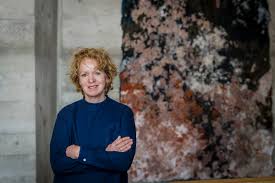
Dutch artist Claudy Jongstra is as effectively acknowledged for her dedication to sustainability as she is for her signature artworks and installations built from wool felt. Her get the job done is immediately recognisable: substantial in scale, prosperous in texture and lively in color.

Not only is all of the wool for her jobs sourced sustainably from her individual herd of sheep but she also provides her have pure dyes from her diligently curated botanical backyard garden

A Textile Designer Who Draws on Art History and Neuroscience

Through her time at Tufts, Van Dusen made costumes for the university’s theater department, which ready her for internships each for the duration of and immediately after college or university with the style makes Norma Kamali and Proenza Schouler, and a postgraduation occupation in the studio of the designer Mary Meyer. All the even though, Van Dusen was creating her own vivid, sample-centric dresses — which she’d been executing because higher university — on the side. 

“I would go to material or classic stores and test to obtain major bolts of material,” she claims. “I would make samples, get preorders from shops, and then produce the collection six months later on.” Duo NYC, a boutique in New York’s East Village selling curated classic clothing and unbiased designers, was an early supporter of Van Dusen’s samples and put a selection get.

Just a few decades immediately after going to New York, Van Dusen began Dusen Dusen, her own womenswear line, but she quickly turned disenchanted with the dictates of the output process and with the need to have to adhere to a rigid seasonal selection cycle. “I did not really come to feel at dwelling in just the style field,” she says. “I was extra interested in dresses than funds-‘F’ trend, and the scene was under no circumstances superappealing to me.” As an alternative, her persistent interest in the fundamentals of shade and sample led her to start off developing her have prints, partly mainly because of the difficulties inherent in functioning with the minimal portions of the vintage dead-stock materials she desired.

As she moved absent from manufacturing apparel (she even now tends to make them “very from time to time,” she claims) and toward textiles, Van Dusen became discouraged by the relative deficiency of awareness staying paid to particular regions of domestic layout, this kind of as bedding. “It just felt like this massive neglected group,” she suggests. “So I was like, ‘Well, if no one particular else is gonna do it, I’m gonna have to.’” The model expanded to include things like Dusen Dusen Dwelling, a line of textiles and household components that features towels, pillows, kitchen textiles and, of training course, bedding. This sort of a reorientation also opened up interesting inventive issues: “It was an chance to assume about prints on a greater, uninterrupted scale.”

That her daring colors and geometric patterns — huge stripes, cursive squiggles, ’60s flower prints — have an insistent childlike high-quality and would not automatically be out of put in a playroom aren’t perceived as demerits in Van Dusen’s universe. All over again, it all goes back to our primitive psychology: Little ones “are drawn to daring designs and bold shades for the reason that it’s the way we’re wired to exist,” she states. “It’s a real disgrace that there’s not considerably in the globe for grown ups which is supercolorful and pleasurable. I imagine there’s a way to do shade that’s complex and smart.”

When picking out hues all through the style and design process, Van Dusen works by using an artist’s colour wheel and a balanced dose of instinct to strike on combinations of shades that will make each individual sing. “On the structure conclusion it can be an endless sea of revision,” she states. “I’m continuously tweaking right until I sense like it is finalized, but in some cases I have an plan and it just will work right absent.”

Her playful, distinction-weighty tactic stands out in a structure landscape characterised by social-media temper boards comprehensive of muted, monochromatic minimalism, which may possibly be one particular purpose Van Dusen’s items have turn into cult favorites among the celebs like Lena Dunham, Tavi Gevinson and Jessica Williams. But her wares’ appeal has also gone completely mainstream, as evidenced by her new collaborations with significant-scale shops: with the home furniture manufacturer Dims on a wooden chair with the baggage and vacation-add-ons maker Arlo Skye on a suitcase selection and with Uniqlo and Keds on attire.

Which poses the issue: How does Van Dusen alter her procedure when partnering with a company large? “I have to reorient myself about their shopper,” she states, “and I uncover it to be a definitely exciting psychological challenge. They want my eyesight and my aesthetic, but it has to be through their eyes.”

Up future is a whimsical selection of kitchenware — a saltshaker, a pepper grinder with interchangeable “outfits,” a kitchen timer with a facial area — as properly as a new set of boldly patterned towels in neutral tones.

Van Dusen’s deficiency of official style and design education and learning has permitted her to protect what she calls her “naïve design” aesthetic, and to retain a certain spontaneity inside of her process she typically generates “on impulse, in its place of through this belabored course of action, the way factors are normally produced,” she states. Hers is a maximalist vision by means of which the quotidian gets to be a variety of assertion and playfulness a sort of chromotherapy. “I’m not super trend-driven I have always experienced my exact same type of aesthetic. If you look at some thing I designed in 2010, it appears to be like the same,” she suggests. “Obviously, I’ve evolved, but I’ve constantly been drawn to poppy hues and styles and as much stuff on the wall as you can suit — in just an organizational procedure.”

Amarillo’s Hoodoo Mural Festival unveils new public art

After a one-year hiatus for COVID-19, the Hoodoo Mural Festival returned for its second year promoting Amarillo’s downtown public art. Among featured artists was local group Blank Spaces.

Just after a 1-12 months hiatus for COVID-19, the Hoodoo Mural Festival returned for its second year promoting Amarillo’s downtown public artwork.

The pageant heading on Saturday is featuring five artists’ wall murals that are done solely for this event on many areas and properties of the downtown place.

Amongst the artists taking part in the party are highlighted artist and Clovis indigenous Drew Merritt Amarillo native Natalie Fletcher, who was the first-area winner of year 1 of Entire body Wars DAAS from Austin, Ivan Roque of Miami and local favorites Blank Areas Murals.

This year’s function additional musical attendees headlined by Austin based mostly band Nané. Also doing were being Kaelin Ellis, Corbin Cary, Rupert the Duke, Vamping and a silent disco with regional dee-jays. Reside painting and artwork demonstrations are featured as well.

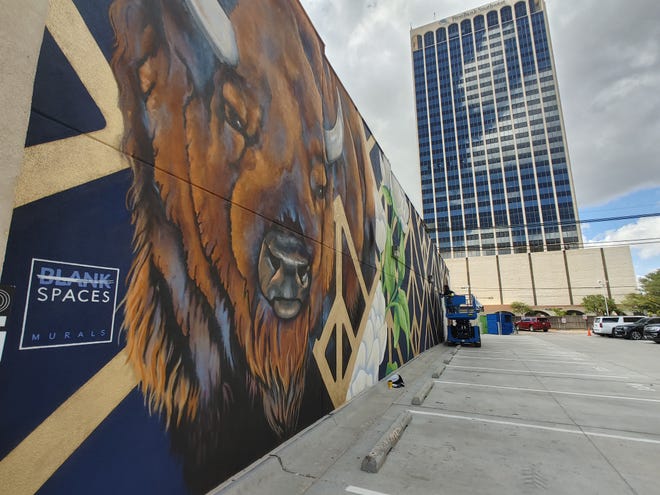
Local art group Open Spaces puts its final touchups on its new mural for the Hoodoo Festival Oct. 2.

Among the regional artists who delivered a mural for the occasion was the team Blank Areas. Blank Areas is an artwork plan for learners, which offers professional encounter in painting murals all through Amarillo. The objective of the program is to give students a genuine-globe opportunity to study about hosting artwork displays and placing on mural displays.

Far more:Artwork on a grander scale: Hoodoo Mural Festival brings city uplift to downtown Amarillo

Shawn Kennedy, the govt director of Blank Spaces, spoke about the chance to do artwork for the downtown competition currently being vital for the city of Amarillo and to his college students in the organization.

The team has done 27 murals in the Amarillo place.

The Hoodoo Mural Festival returned to downtown Amarillo Saturday, for its second year promoting public art.

Kennedy described Saturday’s mural as quintessential Amarillo, with gold art deco backgrounds that are uncovered in the Barfield and matching a good deal of the architecture of downtown.

“Public artwork beings art to every person. Folks that would not generally pay a visit to a museum or a gallery can arrive walk the streets and get involved with the parts as they stroll by,” Kennedy reported. “Beautifying the group pays dividends to the regional overall economy. I am just fired up that Amarillo’s art community is developing.”