ROLL, TIDE | Landscape Architecture Magazine

Gulf State Park in Alabama is one of the largest public projects to be funded through the Deepwater Horizon settlement. Many more are coming.


The Lodge at Gulf State Park is built directly into the dunes, so when you walk from the parking lot into the spacious lobby, you’re looking straight through the glass back wall of the hotel, across a stretch of white-sand beach, and out into the seemingly endless Gulf of Mexico.

For Alabama, whose precious few miles of beaches all but carry the state’s tourism economy, this was the essential goal of the Gulf State Park Enhancement Project: A view of the sea for visitors and, says Matt Leavell, the director of design and planning at the University of Alabama Center for Economic Development, “an experience of being in the dunes.”

But being in the dunes can mean a lot of things. In 2004, Hurricane Ivan swept across the dunes and destroyed the original lodge, which was built in the 1970s. In 2010, tar balls washed onto the beach as oil gushed from an underwater well operated by BP after the explosion of the Deepwater Horizon drilling rig, which killed 11 workers. The night before the ribbon-cutting at the new lodge in 2018, as dune-grass plantings were still taking hold, strong winds blew about two feet of sand into an area between the lobby and the restaurant, and crews scrambled to shovel it away before the governor arrived at 8:00 a.m.

“There is something really unique about designing in a dynamic dunescape,” says Kate Tooke, ASLA, a principal at Sasaki, which did the landscape architecture work for the lodge while completing a master plan for enhancements throughout the state park. “Every other landscape you design in, you can sort of assume that the landscape is going to stay mostly where it is. But a dunescape is constantly changing. Dunes are growing, they’re shifting, wetlands are forming, and swales are forming in different places, and that’s part of a healthy dunescape, to have that growth and change over time.”

The Lodge at Gulf State Park was rebuilt as a sustainable tourism destination after a previous lodge, a popular vacation spot, was destroyed by Hurricane Ivan in 2004. Photo by Volkert, Inc., and Forrest Funk Drone Photography.

Gulf State Park was constructed by the Civilian Conservation Corps in the 1930s and opened to the public in 1939. As a culture of beachgoing developed on the Gulf Coast throughout the 20th century, the park became the crown jewel of Alabama’s state park system. The lodge was a rare profit-making amenity within that system, and for years it held the system up, subsidizing the operating losses of the other 20 parks around the state. In recognition of the role it played in that system, the state made plans to rebuild the lodge after it was destroyed in 2004. But it didn’t have a chance to fund the project until after the 2010 spill.

In 2014, a federal judge ruled that BP had acted with “gross negligence” in the lead-up to the spill, and in the years that followed, billions of dollars in settlements and damages began flowing to gulf communities, distributed according to the terms of the RESTORE Act passed by Congress and signed by President Obama in 2012. BP settled with the U.S. Department of Justice in 2015, agreeing to pay more than $20 billion to settle environmental and economic impact claims throughout the gulf. But even before that settlement was reached, BP had begun paying out money through the Natural Resource Damage Assessment (NRDA), a federal process for assessing the effects of oil spills and other human-made disasters. One billion of those NRDA dollars went to Alabama.

The state spent $1.5 million to launch an early restoration project in 2012, using Christmas trees to stabilize the dunes (see “Christmas on the Beach,” LAM, March 2016) outside the lodge. And in 2014, it launched the $85.5 million Gulf State Park Enhancement Project, with the goals of rebuilding the lodge as “a ‘green’ overnight stay and meeting facility,” according to an NRDA project description. The project incorporated work to restore the dunes, build an interpretive center and a learning center, and improve a network of public access trails connecting a variety of ecosystems throughout the 6,150-acre state park.

To manage the project, the state hired the University of Alabama Center for Economic Development, which turned to Sasaki to lead a master planning effort for the enhancements. Early on, the groups settled on a vision: The park would be “an international benchmark for economic and environmental sustainability demonstrating best practices for outdoor recreation, education, and hospitable accommodations,” according to the master plan. Since then, the project has won a handful of awards for sustainable tourism, including from the American Planning Association, the Boston Society of Landscape Architects, and the Society of American Travel Writers. The lodge has earned SITES Platinum, LEED Gold, and Fortified Commercial certification, and it has become a popular regional conference space; visits to the beach rebounded after a slow season in the wake of the spill.

The lodge was placed within the secondary dune, on the gulf side of the main throughway. Image courtesy Sasaki/Biohabitats.

When I visited in May, Leavell was leading a tour for a group from the Hoover Institution, the right-leaning think tank based at Stanford University, which had been hired to make a report to the Alabama legislature on opportunities for economic growth. The lodge sits on the beach side of Alabama’s Coastal Connection, a five-lane road that passes through the built-up resorts of Gulf Shores and Orange Beach and into the Florida Panhandle 11 miles east. The bulk of Gulf State Park—6,000 acres of wetlands, freshwater lakes, dune ridges, and maritime forest—sits on the other side of the highway. Chris Blankenship, the commissioner of the state Department of Conservation and Natural Resources (DCNR), carted a group of us around the park in a black Chevy Suburban, surveying the damage and recovery from Hurricane Sally, which hit Gulf Shores in September 2020, and admiring the variety of the landscape.

“It’s a very spectacular coastline,” he said. “I think so many people took for granted the environment and the beach, and when we had something that took that away for a certain amount of time, it created a new appreciation for what we have here—the coast in general, but specifically for Alabama.”

Blankenship helped lead the state response to the oil spill in 2010 and told me that the biggest harm to the state was economic rather than environmental. Early estimates of the spill’s impacts suggested that the state could lose nearly $1 billion in earnings and up to 49,000 jobs. But the size of the settlement was so great that, just a few years later, local news outlets were already asking whether the state’s economy could “gain more from the oil spill than it lost.” In 2019, before the COVID-19 pandemic, Alabama had its best year ever for tourism.

When Blankenship became the DCNR commissioner in 2017, he helped settle a lawsuit filed by the Gulf Restoration Network, now called Healthy Gulf, over the use of settlement funds to reconstruct the lodge. The group argued that the project had been on the state’s wish list even before the spill and that it was inappropriate to use NRDA funds to build a private hotel with steep overnight rates instead of on work that would restore public access to the beach and state park. As part of that settlement, the state committed long-term funding to maintain public access to the park.

Jill Allen Dixon, an associate principal and planner at Sasaki who grew up in Birmingham and spent some family vacations at Gulf State Park as a kid, said the key to the plan was respecting the experience that locals and tourists had with the park, while making improvements both for public access and the health of the various ecosystems. Because of its siting, the old lodge had been “a middle finger to Mother Nature,” Leavell told me. But the state insisted that the new lodge be located within the existing building footprint. Working with Biohabitats, a Baltimore-based ecological restoration and design firm, and Watershed, an Alabama-based sustainability consultant, the team spent a lot of time figuring out how best to orient the building both to capture the views of the beach for tourists and leave space for the dunes to evolve naturally. They ended up siting the building on the secondary dune layer, a few feet above near-term projections for sea-level rise, and expanding the number of rooms in the process.

It’s a large park, but the transition from a luxurious beach resort to more rugged terrain happens fast. Families were lounging by the pool at the lodge when I visited in May, and sunbathers were reclining on chaise longues in the sand outside the lobby. Across the road, we drove past a bright-blue wetland lake and a group of newly built cabins, and then rode bikes up to an old dune ridge dotted with swamps. A few years prior, Leavell told me, a woman walking in the park had had her puppy suddenly eaten by an alligator, prompting officials to post new signs warning people to be aware of alligators’ presence. The woman told the local news she didn’t blame the alligator. The sense of a wild landscape right next to a relaxing beach resort was something that residents and visitors had always cherished, Dixon said.

“People already loved what the park had to offer,” she told me. “It was this whole range of experiences, but connected by a theme of connecting with nature, enjoying the natural environment and outdoor recreation.”

The master plan supported different zones for everything from solitary bird-watching to campground concerts.

“There’s a place to be social. There’s the backcountry zone, which is really more of a place to escape and be quiet and enjoy nature in that way too,” Dixon says. “It’s about trying to find those common themes between different perceptions about what connecting with nature means to people.”

Money from the BP settlement is funding shoreline stabilization and ecosystem restoration projects, such as the one above in Bayou La Batre. Photo by Jared Brey.

The morning after the tour, I rode the ferry across Mobile Bay to Dauphin Island, and drove from there to Bayou La Batre, the seafood capital of Alabama. I was aiming for the Bayou La Batre City Docks, a coastal restoration and public improvement project funded with BP settlement money, and the route took me along Shell Belt Road, a small coastal byway strewn with trash and debris that seemed to have been flooded only moments before I arrived. I parked the car next to a large sign announcing the restoration project and walked through a narrow stand of pines to a beach, where plugs of seagrass were newly planted in neat rows on the far side of a riprap barrier. Terns nested on the sand and a reddish egret danced around in a shallow pool of water. Brown pelicans were resting on the rocks, and in my binoculars, through the quivering heat waves, I could see the production platforms of a Chevron refinery across the state line in Mississippi.

The Deepwater Horizon spill was one of the worst environmental disasters in the history of the United States, pumping 134 million gallons of oil into the Gulf of Mexico over the course of nearly three months before the well was capped. In the aftermath, researchers collected the carcasses of thousands of birds. But many thousands more died in obscurity, sinking to the bottom of the gulf or being unable to escape from predators, said Kara Fox, the director of Gulf Coast restoration for Audubon. Conservative estimates put the number of dead birds around 100,000, but Audubon estimates that more than a million birds were killed as a direct result of the Deepwater Horizon spill.

“Every aspect of the gulf ecosystem was injured by this oil spill,” Fox told me. “There was nothing that was left untouched.”

The deployment of the settlement money—through the NRDA and the RESTORE Act, as well as individual and state claims—is off to a good start, Fox says. Money is flowing to coastal restoration projects big and small, including many miles of new living shorelines and epic sediment diversions in the Mississippi Delta. Those projects will help stabilize coastal areas, protect nesting habitat for birds, and control freshwater flows that were threatening wetland ecosystems well before the spill. The 15-year settlement requires BP to pay out money every year through 2031. But even the record-setting settlement looks small compared to the scale of the gulf and the variety of degradation in coastal ecosystems, both resulting from the spill and predating it.

As Fox said, “This isn’t going to be enough money.”

Much of the settlement money will go to major engineering projects, with a role for landscape architects on projects that involve public access. But even if they aren’t hired to work on all of those projects, landscape architects have been building out the ideas and concepts that underpin them for years, says Gena Wirth, ASLA, a design principal at SCAPE Landscape Architecture. SCAPE is currently leading a $1 million watershed restoration plan for the Carpenter Creek and Bayou Texar watersheds in Escambia County, Florida, funded through the RESTORE Act. Like the Gulf State Park project, the watershed plan is a response to environmental conditions that were degraded well before the BP oil spill and the settlement that’s paying for it, says Lee Altman, SCAPE’s director of design management.

“In response to the oil spill, there’s all of a sudden multiple, huge pots of money that can be applied to projects that were a long time in the making and should probably have been funded beforehand,” Altman says. “We saw a similar pattern with the funding that became available in the Northeast after Hurricane Sandy. So it is really unfortunate that in this kind of world of disaster capitalism, we’re only responding to these major disasters after they happen, and then we remember to go back and look on our shelf for all these amazing projects that have already been developed and never been funded.”

After I left Bayou La Batre I drove down Marine Laboratory Road, aiming for the Grand Bay Savanna Nature Preserve in Mobile County. It was a gravel road through a swampy pine forest, similar to the Pine Barrens of New Jersey, near where I live. It brought to mind the Jersey Devil and all the mythical beasts that spring from seemingly interminable landscapes. And then it brought to mind the very real beasts hiding around the gulf: gators and great white sharks, dragonfish and vampire squid, the seeds of tropical storms and the remains of organisms that lived millions of years ago, squeezed into a black ooze at the bottom of the sea. Oil has a natural presence in the gulf ecosystem even in its healthiest places, but humans are perpetually unleashing its destructive potential, whether by spilling it into the water or burning its toxins into the atmosphere. Over the summer a gas pipeline exploded in the gulf, forming a fire-breathing chimera on the surface of the water, and I later read that a Coast Guard official referred to the oil spreading after the Deepwater Horizon disaster by the name Grendel, the cursed monster from Beowulf. I felt a measure of relief when I came across a deep puddle on Marine Laboratory Road and had to turn around. Two months later, Hurricane Ida struck Louisiana.

A variety of ecosystems and amenities are packed into the park’s 6,000 acres. Image courtesy Sasaki.

Gina Ford, FASLA, a cofounder and principal at Agency Landscape + Planning, worked on the Gulf State Park plan at Sasaki before leaving to start her own firm. A few days before I visited the park, she sent me what she called “a little mood deck” with a few slides of her favorite spots in the park. Included was a picture of a bike path on Gulf Oak Ridge, on the far side of the park from the lodge. The path is lined with live oaks, droopy with Spanish moss. Her caption said, “mmmmmm.”

After lunch at the park, Leavell and I rode up to the ridge with Wes Michaels, ASLA, a principal at the New Orleans-based firm Spackman Mossop Michaels, which worked on the enhancement project, and Rebecca Bryant, a cofounder of Watershed. At the top we paused at an overlook and surveyed the expanse of pine forest, the freshwater lakes and the marsh, the faraway pedestrian bridge over Alabama’s Coastal Connection, and the lodge.

When we continued, riding on a boardwalk over one of the lakes, Bryant told me that 10 years earlier she had gone with her young kids to the beach at Gulf Shores on a day when tar balls were washing up on the shore. The older one was angry, she said; the younger one thought it was a game. When it came to planning the enhancements to Gulf State Park, though, there was an opportunity to consider the health of the ecosystem as a whole, rather than just responding to specific harms from the disaster.

“The way the spill itself factored into it was mostly just that realization in the community that the economy is tied to a healthy ecology,” Bryant said. “Obviously that was a wake-up call. And then extending that—not just ecology that doesn’t have oil on top of it, but really a healthy ecology.”

The American alligator is native to the Gulf Coast and is found in groups, or congregations. Photo by Jared Brey.

We were paused at a small lake just off the bike path when Leavell asked the rest of us if we could see an alligator in the water.

“Maybe,” said Bryant, who then continued describing to me the early discussions about situating the lodge. “Because we were doing SITES, that defended the landsc—Oh, that is totally a gator.”

“That is a big alligator,” Michaels said.

“I don’t think I’ve ever seen one that big,” Leavell said.

The top of its head was sticking out of the water, wide and craggy, just hinting at the extent of the terrible submerged form.

Jared Brey is a freelance reporter in Philadelphia and a contributing editor at the magazine.

United States Garden Hand Tool Markets, 2021-2026

DUBLIN, Jan. 18, 2022 The “U.S. Garden Hand Tool Market – Industry Outlook & Forecast 2021-2026” report has been added to ResearchAndMarkets.com’s offering.

The report considers the present scenario of the US garden tool market and its market dynamics for 2021-2026. It covers a detailed overview of several market growth enablers, restraints, and trends. The study covers both the demand and supply sides of the market. It also profiles and analyses leading companies and several other prominent companies operating in the market.

Home gardens are an essential source of contributing nutritional supplements to improve livelihoods with low-cost production. Prominent vendors like Fiskar are designing lightweight tools that are easy to handle for ease of application, unlike power tools, where garden hand tools are gaining prominence with simple technology reaping nutritional benefits to the family. Gardening activities enhance psychological well-being and provide relief from stress.

Research shows that viewing nature through windows can positively affect stress recovery, lowering blood pressure. Simple being in a garden or viewing elements of a garden may provide benefits such as relaxation and restoration.

U.S. GARDEN HAND TOOLS MARKET SEGMENTATION

Demand for garden hand tools has been elevated due to the factors like high disposable income, consumer’s awareness towards the environment, the aging population, who has a huge inclination in improvising their lawns and indoor gardens for enhancing aesthetics and beautifying spaces.

The US market holds a majority share in garden tools. Thus, emerging economies like Europe and India contribute significantly to the garden hand tool market.

GEOGRAPHICAL ANALYSIS

North Carolina, Florida, and Texas are the largest hubs for indoor plantation, with more growing residential sector driving the demand for garden hand tools in the region.

The south region accounted for a significant share in the US garden tool market, owing to the huge presence of community gardens, the housing market, and increasing disposable incomes.

VENDOR ANALYSIS

Vendors such as Stanley Black & Decker, Emerson, The AMES Companies, Fiskars, and Griffon are key players alongside numerous domestic tool manufacturers that manufacture garden hand tools per local demands and regulations.

The market is characterized by the presence of diversified global and regional vendors. As international players increase their footprint in the market, regional vendors are likely to find it increasingly difficult to compete with these global players.

KEY MARKET DYNAMICS

  • Growing Demand for Community Gardens
  • Increase in Internet Penetration Shaping End Users Purchase Behaviour
  • Development of Sustainable Cities
  • Development of Growing Demand for Unconventional Methods of Gardening
  • Growing Landscape Industry
  • Increase of Indoor Plantation
  • Increase in D.I.Y Culture
  • Growing Demand for Organic Farming

Prominent Vendors

  • Fiskars Group
  • Griffon Corporation
  • Husqvarna Group
  • Stanley Black & Decker

Other Prominent Vendors

  • AMPCO Safety Tools
  • The American Garden Tool Co.
  • Bully Tools
  • Cobra Head LLC
  • Red Pig Garden Hand Tools
  • Root Assassin
  • Ray Padula Holdings
  • Sneeboer & ZN
  • Seymour Middlewest LLC
  • Solid Tools Inc

Key Topics Covered:

1 Research Methodology

2 Research Objectives

3 Research Process

4 Scope & Coverage
4.1 Market Definition
4.1.1 Inclusions
4.1.2 Exclusions
4.1.3 Market Estimation Caveats
4.2 Base Year
4.3 Scope Of The Study

5 Report Assumptions & Caveats
5.1 Key Caveats
5.2 Currency Conversion
5.3 Market Derivation

6 Market at a Glance

7 Introduction
7.1 Overview
7.2 Overview Of Garden Hand Tools
7.2.1 Gardening Activities In Schools & Universities
7.2.2 Improving Interior Asthetics
7.2.3 Growing Demand For Living Walls
7.2.4 Market Analysis Of Garden Hand Tools
7.2.5 Growing Trends In Kitchen Gardens
7.2.6 Consumer Preference Toward Garden Hand Tools
7.3 Impact Of Covid-19

8 Market Opportunities & Trends
8.1 Growing Landscape Industry
8.2 Increase In Indoor Plantation
8.3 Growth Of DIY Culture
8.4 Growing Demand For Organic Farming

9 Market Growth Enablers
9.1 Growing Demand For Community Gardens
9.2 Internet Penetration Influencing Consumer Behavior
9.3 Development Of Sustainable Cities
9.4 Growing Demand For Unconventional Gardening Methods

10 Market Growth Restraints
10.1 Growing Adoption Of Power Tools
10.2 Increase In Usage Of Faux Plants
10.3 Operational Challenges By International Markets
10.4 Seasonality Of Demand

11 Market Landscape
11.1 Market Overview
11.2 Market Size & Forecast
11.3 Five Forces Analysis

12 Value Chain Analysis
12.1 Value Chain Overview
12.2 Value Chain Analysis
12.2.1 Raw Material & Component Suppliers
12.2.2 Manufacturers
12.2.3 Distributors / Dealers / Retailers
12.2.4 End-Users

13 Product
13.1 Market Snapshot & Growth Engine
13.2 Market Overview
13.3 Pruning Tools
13.4 Digging Tools
13.5 Striking Tools
13.6 Other Products

14 End-User
14.1 Market Snapshot & Growth Engine
14.2 Market Overview
14.3 Residential Users
14.4 Commercial Users
14.4.1 Market Overview
14.4.2 Market Size & Forecast
14.4.3 Shopping Centers
14.4.4 Healthcare
14.4.5 Education Centers
14.4.6 Corporate Offices
14.4.7 Hospitality
14.4.8 Market By Geography

15 Sales Channel
15.1 Market Snapshot & Growth Engine
15.2 Market Overview
15.3 Offline Sales
15.4 Online Sales

16 Key Regions
16.1 Market Snapshot & Growth Engine

17 South
17.1 Market Overview
17.1.1 Texas
17.1.2 Florida
17.1.3 North Carolina

18 Northeast
18.1 Market Overview
18.1.1 New York
18.1.2 New Jersey

19 Mid-West
19.1 Market Overview
19.1.1 Illinois
19.1.2 Michigan
19.1.3 Minnesota

20 West
20.1 Market Overview
20.1.1 California
20.1.2 Washington

For more information about this report visit https://www.researchandmarkets.com/r/2g11yk

Media Contact:

Research and Markets
Laura Wood, Senior Manager
[email protected]

For E.S.T Office Hours Call +1-917-300-0470
For U.S./CAN Toll Free Call +1-800-526-8630
For GMT Office Hours Call +353-1-416-8900

U.S. Fax: 646-607-1904
Fax (outside U.S.): +353-1-481-1716

SOURCE Research and Markets

A Dollhouse You Could Call Home

Final 7 days I took my daughter to the Museum of the City of New York to see the Stettheimer Dollhouse and the breadbox-sized artwork exhibit set up inside of. The dollhouse and its artwork clearly show both have been at the museum considering that 1945, but only in the final year have they been provided a room of their possess. And whilst my daughter was a very little distracted by a sighting of Oscar the Grouch, down the corridor in “Puppets of New York,” I was absolutely entranced.

Commissioned in 1916 by Carrie Stettheimer — a rich New Yorker who ran stylish salons with her mother, Rosetta, and her sisters Ettie, an writer, and Florine, the properly-recognised painter — the home is a 28-inch-tall, two-story, 12-place mansion, full with bathrooms and an elevator, modeled on André Brook, the Tarrytown estate exactly where the family members summered. Carrie used 19 several years decorating its inside with Empire wallpaper, Louis XV home furnishings and other beautiful furnishings, at 1 issue even leasing herself a independent condominium in which to do the job on the job.

She also certain notable artists of the time, like the sculptors Alexander Archipenko and Gaston Lachaise, to contribute correctly sized art. Most famously, Marcel Duchamp reprised his “Nude Descending a Staircase,” the Cubist-affected portrait of a overall body in movement that scandalized New York at the 1913 Armory Demonstrate. His 1918 rendition, an ink-and-clean edition to some degree much more jagged and explosive than the unique, is just more than 3 and a 50 percent inches tall.

Soon after her mom died in 1935, Carrie stopped doing the job on the home, and when she herself passed nine many years later, the parts she’d gathered had been unhung. Just before donating every little thing to the museum, her sister Ettie selected 13 of the postage-stamp-sized drawings and paintings to cling as an exhibition in the house’s grand ballroom, as she believed her sister would have desired, and a few sculptures to position close by. (A few additional hold in other places in the home.)

The to start with rooms you’ll meet up with are the residing quarters, uncovered to view by removal of the facade. They glimpse as if their citizens have only just stepped out. There’s bacon on the stove and a cake on the icebox very last night’s mahjong tiles, handmade by Carrie, still litter the library desk. At to start with it could be a thrill to peer into all the rooms with a God’s eye check out, or it may really feel comforting and cozy to envision on your own inside. But as you commence to count up the specifics — the dumbbells and dresses wringer in the learn rest room, the crafty small cabinets in the linen place, the Dreiser and Van Vechten titles on the library’s pink lacquer bookshelf — you will swiftly discover they are a lot more than you can take in. About the back, in the meantime, the art exhibition is only partly visible by means of 3 French windows.

The new set up addresses these difficulties by encompassing the house with pics of enlarged interior sights, together with related historic elements. It’s a even handed presentation, one particular that tends to make the inviting but secretive property far more accessible without stripping absent its thriller, even though I’d have preferred longer wall labels to QR codes. A receipt for Ettie’s 1945 donation indicates that along with the home, she sent a doll, finish with a Saratoga trunk and trousseau and Carrie shows up, in a reproduction of a portrait by Florine, as a glamorous flapper at a back garden celebration.

The art exhibition starts on the house’s patio, the place Ettie put in Gaston Lachaise’s stately alabaster “Venus” and a bronze “Mother and Child” by William Zorach. Zorach’s sensitively rendered mom gazes towards her counterpart with an expression of problem, whilst the goddess, regally flicking a cape behind her nude human body, deigns to appear at no a single. If you were being compact sufficient to enter this miniature Stettheimer salon, you’d have to go among eros and domesticity to do so.

But looking in, at the very least, you’ll obtain a portrait of two dancers by the Swedish painter Carl Sprinchorn hanging above the fireplace. She, in a billowing pink skirt, does a jeté, when he, in a navy leotard, waits beside her all around them hover blocks of most important shade so vivid that the pair is nearly obscured. Eleven more framed drawings and paintings cluster all around the Sprinchorn: a mix of voluptuous graphite nudes by Lachaise sinuous feminine bathers, posed versus blood-crimson skies, by Marguerite Zorach a sailboat confronting a fantastic wave a Cubist pastoral scene Duchamp’s “Nude” and, in Louis Bouché’s “Mama’s Boy,” a baby peering concerning significant green curtains.

In retrospect, it is curious to take note that Ettie Stettheimer, one of a few excellent free spirited women putting the ending touches on another’s terrific artistic challenge, chose to hold these types of a massive proportion of feminine nudes with do the job by only one particular woman painter. But it is also a good trick, a time capsule in just a time capsule that captures each the constraints and possibilities of daily life as a bohemian lady in prewar New York.

Sprinchorn’s wide, squarish canvas dominates the arrangement and the designs of the other parts — smaller sized, narrower — and their less florid colours emphasize that reality. It is like the dancers are the leading characters and all the other pics their desires. And what specifically is in their dreams? They are both equally preoccupied with female attractiveness, whether as a image or as a concrete actuality. But amongst the photographs on the right facet, next to the ballerina, there’s also the doughty sailing ship, a Lachaise nude posing exuberantly and Duchamp’s portrait of a lady as pure electrical electrical power, all acceptable enough for a person gracefully leaping onstage.

On the left, beside the male dancer, there is only a sullen small boy looking at from his bedroom — and a different Lachaise drawing of a figure turning away. The male dancer is definitely just standing there. The ballerina is the place the action is.


The Stettheimer Dollhouse

By means of Could 20 at the Museum of the Town of New York, 1220 Fifth Avenue, Manhattan. 212-534-1672 mcny.org.

See Prince Charles’ Watercolors of Landscapes Around the World | Smart News

watercolor painting of cloudy day and a gray worn down building overlooking seascape
This watercolor of Huna Mill in Scotland is a single of 79 paintings by Prince Charles on screen at the Garrison Chapel in London.
The Prince’s Basis

The premier-ever exhibition of paintings by Prince Charles, heir to the British throne, is currently on display screen in London. On check out at the Garrison Chapel in the former Chelsea Barracks through February 14, it attributes 79 watercolors of landscapes in England, Scotland, France, Tanzania and much more, studies Laura Elston for the Scotsman.

The Prince’s Basis, an educational charity established by Charles in 1986, structured the showcase, which is explained in a assertion as the to start with “full exhibition” of his artwork. Charles formerly exhibited 50 of his watercolors at Hampton Court docket Palace in 1998 and 30 at the Nationwide Gallery of Australia in 2018.

picture of elderly white man in blue pinstripe suit and purple tie with white flowers

Prince Charles is viewed as just one of the most successful living watercolor artists in the United Kingdom.

Arnaud Bouissou by using Flickr under CC0 

In wall textual content composed for the exhibition and quoted in the statement, Charles explains how watercolor portray permits him to refocus his energies:

[Y]ou turn out to be progressively knowledgeable of things that may well have escaped your interest previously—things like the quality of light and shade, of tone and texture and of the form of properties in relation to the landscape. It all necessitates the most powerful focus and, consequently, is just one of the most relaxing and therapeutic physical exercises I know.

According to Theo Farrant of Euronews, the prince started off experimenting with the medium in the 1970s after knowing that photography—a passion of his mom, Elizabeth II—failed to present him that exact same feeling of creative expression.

“Quite simply, I knowledgeable an frustrating urge to specific what I noticed by way of the medium of watercolor and to convey that almost ‘inner’ perception of texture, which is difficult to accomplish by means of pictures,” the royal suggests in the wall textual content.

Robert Waddell, an artwork instructor at the Gordonstoun boarding college in Scotland, launched Charles to portray during his university student yrs in the 1960s. The prince later on reviewed approach with the late British watercolorist Edward Seago and took lessons with notable artists Derek Hill, John Ward and Bryan Organ, as Lucy Davies documented for the Telegraph in 2018.

Nevertheless Charles says he is “appalled” by the quality of his previously will work, he believes his approach has improved over the several years. At the very same time, the prince argues that the therapeutic added benefits available by watercolor portray considerably outweigh any notion that his artwork could possibly be of a higher common of high-quality.

watercolor painting of snowcapped mountains

A landscape by Prince Charles of Haughs in Glen Callater of Scotland.

The Prince’s Foundation

“I am less than no illusion that my sketches depict fantastic artwork or a burgeoning expertise,” he writes in the wall text. “They represent, extra than anything at all else, my unique form of ‘photograph album’ and, as these types of, signify a great offer to me.”

A self-described “enthusiastic novice,” Charles is actually 1 of the most financially successful living artists in the United Kingdom. In between 1997 and 2016, an investigation by the Telegraph’s Robert Mendick observed that prints of the prince’s paintings sold for a whole of a lot more than £6 million (all over $8.9 million currently). All proceeds went to the Prince’s Foundation, which supports a vary of charitable endeavors.

Other British royals have engaged in creative pursuits in the previous. In 2015, Charles’s niece, Princess Eugenie, joined the Hauser & Wirth gallery as an artwork director. She has shared various watercolors of her personal on her Instagram account, like a portray of a pink flower on Environment Art Working day in 2020, experiences Stephanie Petit for Men and women. Queen Victoria, Charles’ wonderful-terrific-fantastic-grandmother, was also a renowned watercolorist. Past calendar year, the Royal Assortment Have confidence in exhibited a array of watercolors collected and commissioned by the queen and her husband, Prince Albert.

The New Art Of Decision-Making

CEOs are leading in a time of regular transformation and relentless tension, dealing with never-ending streams of selections that have to be made—at lightning speed, with imperfect facts. At the similar time, they will have to handle the hazards those selections pose to their providers and make certain that leaders decreased down in the organization are armed with the knowledge wanted to consider wise hazards, steer clear of completely wrong choices and, if required, fail speedily. 

That’s a more difficult task than at any time in the weather of remote do the job, wherever some employees have yet to phase into the office for the initially time, agreed CEOs gathered for a roundtable dialogue cosponsored by PURE Group of Insurance policies Corporations. 

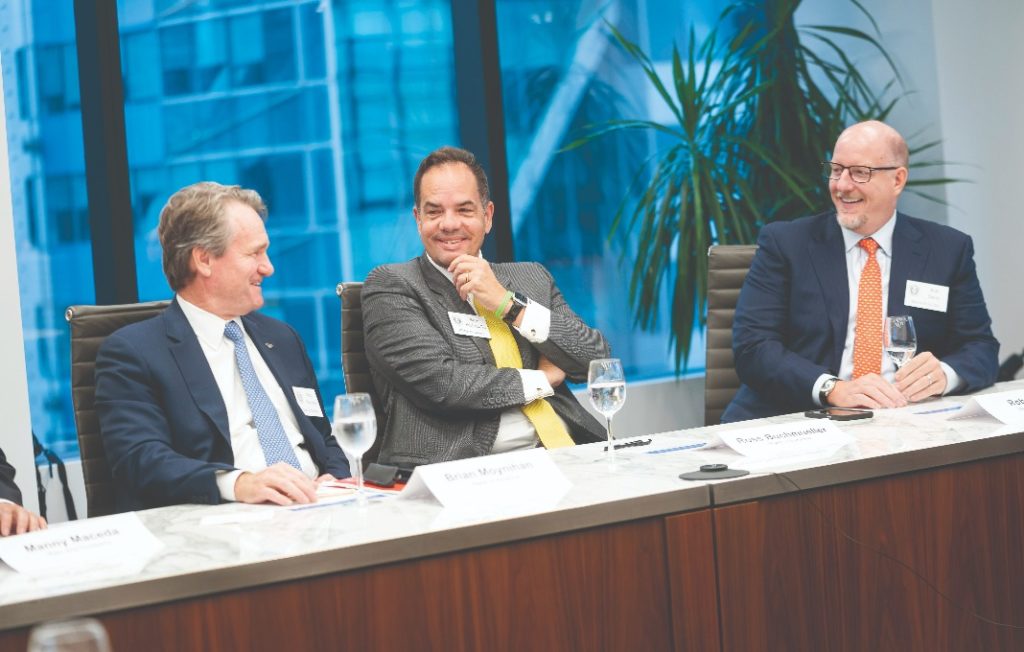
Bain & Co.’s Manny Maceda

“You have a full era of folks who are coming into the agency who haven’t been inculcated in the values of the organization,” mentioned Manny Maceda, throughout the world taking care of lover for Bain & Co. “The 1st line of defense in danger-getting is choice-making by the leaders. We can put in all the risk administration processes—and we do—but generally, the frontline choices, particularly for us as a provider industry, involve people today with a set of values, who have some potential to make tradeoffs.” 

Which is since while availability of knowledge can give decision-makers far better footing, it can not swap knowledge born of knowledge. “That’s part of the concern,” said Ross Buchmueller, group president and CEO of PURE. “We consider about how we use facts to notify conclusion-earning, but we also use our activities. And when [employees] don’t have a lot of experiences, you have received to seriously have a fantastic infrastructure.” 

Newer personnel who have not had a opportunity to discover at the feet of veterans may well be lacking the kind of institutional understanding needed to choose calculated risks although not repeating previous errors, reported Lender of The usa CEO Brian Moynihan. “There’s no one genuinely significantly beneath the age of 35 or 40 who is aware of what happened in the fiscal crisis. And now you’re seeing household price ranges go up again, and you’re thinking, do individuals realize the exact challenges? Specially now that you have three yrs of school kids coming in who have under no circumstances seen a manager.” 

There’s also only so a lot you can do on Zoom, Maceda additional. “It’s far more effective, and it’s a much better carbon footprint for individuals who air travel as a significant part. But does it train an whole era to make excellent choices, which is normally going to be the frontline for threat administration? I never think it is sufficient.”

The reality that workforce have not had a likelihood to get the job done aspect-by-facet is also problematic, mentioned Simon Freakley, CEO of AlixPartners. “Best functionality is actually nicely-executing groups, not just effectively-executing people today. And what will make nicely-undertaking teams is folks doing work in team rooms jointly, basically finding out from a person a different, simply because it’s considerably of an apprenticeship product,” he stated. “When our people make awful selections, and hopefully it’s not that often, but it’s commonly when they are on their possess. When you’re dealing with a knotty trouble, sitting down all-around in particular person produces an power and a dialogue that is beneficial.”

Melinta Therapeutics’ Christine Miller

Regardless of its limits, the engineering has been useful for newly minted CEOs who would usually have an not possible time communicating lifestyle through a pandemic. Christine Miller stepped into the top job at Melinta Therapeutics in August 2020. “I applied Zoom as an possibility to get to know people. I was in a position to attain really deeply into the firm, and a huge concentration that I experienced was really about knowing the tradition of the firm.” What did she uncover? “There was no culture. The past leaders had performed acquisitions but experienced not intentionally integrated the cultures or set forth what it really should be.”

Devoid of that, workforce would have no basis for savvy determination-earning. So Miller spent significantly of her time to begin with performing on setting up culture, and then it all arrived back again to workforce creation. “It’s just not excellent more than enough to bring in individuals who know what to do—they have to be ready to work jointly as a team. So I have an advisory group that will work with us to deliver coaching for my government crew, mainly because major group via a transformation is significantly various than a startup company—you even now have some of the previous ghosts from the earlier.”

For Robert Davis, who grew to become Merck’s new CEO in July pursuing Ken Frazier’s retirement, teamwork will be the critical to innovation. “That’s the large detail I’m striving to drive—one Merck, just one crew, unified at the rear of the goal. And as lengthy as we set the client at the heart, we realize what we’re targeted on and driving towards.”

Receiving boards behind rough conclusions

When Bank of The us manufactured the decision in 2014 to settle with the Justice Office to finish litigation that had plagued the financial institution due to the fact the close of the financial disaster, the board eventually supported it, stated Moynihan. “But the trick was acquiring the board to understand all the facts and nuances” to get to an settlement. 

That can be hard when a crisis hits, and the source of that disaster isn’t always in the wheelhouse of the board’s collective techniques, explained Freakley. “So these are complicated challenges wherever a lot of of your board members have no experience… And especially when it is about a significant lawful difficulty, to deliver the board’s understanding up to a position wherever they can have a watch is a real obstacle. And you really do not have a good deal of time.” 

Bank of America’s Brian Moynihan, PURE Group’s Ross Buchmueller and Merck’s Robert Davis

“That’s why you have to have CEOs” on the board, stated Moynihan, “because they have faced that form of ‘the buck does not stop anyplace but correct here’ [and] have had to make these conclusions, irrespective of whether it’s a decision to provide or to buy or to settle a situation. They realize the process—you have to make a determination, and you have to make a choice that no 1 else is heading to be capable to enable you make.”

That’s a single of the factors Neil McFarlane, when he took in excess of as CEO of Adamas Pharmaceuticals in 2019, introduced in a new board member who had been the normal counsel of a significant multinational biopharma. Adamas was working with 6 ongoing lawsuits at the time. “I necessary any individual on that board who had been as a result of the wringer…[and] could essentially aid clarify some of the choices that were being coming [down],” he claimed. He also invested appreciable time with every member of the board. “I wanted to make absolutely sure these ended up the kinds of folks who were going to be there for me, who I could understand from, who have been intrigued in improve.”

McFarlane pointed out that when earning conclusions about settling litigation, CEOs have to factor in the time it will acquire to get the lawsuit, as effectively as the uncertainty in the current market for the duration of that time. “[It] was really stopping men and women in that mid-cap spot from having a flyer on a wonderful product that produced a tremendous difference in the life of people,” he stated. “That uncertainty was a killer.” 

Freakley famous that stakeholders also never reply perfectly to uncertainty close to challenges like social justice, racial equality, environmental troubles, etcetera., and that CEOs have to be prepared to react decisively. “We can’t wait for our internal comms people today or our PR agents to be drafting stuff for us,” he mentioned. “Chief executives have to be their have main interaction officers.”

Acquiring potential leaders

Creating tough decisions during a disaster can be agonizing but will also normally expose your star talent, explained Steven Collis, chairman, president and CEO of AmerisourceBergen. “That is where you study what individuals are produced of. It is a interesting time to look at the final decision high quality.” He recalled that several executives ended up due to retire through the pandemic, demanding some management restructuring. “Some of the persons who done perfectly in this disaster got to the management desk because of it, and they’re great leaders,” he explained. “People say disaster would make character—I consider it reveals character.”

Moynihan agreed. Through the shutdown and economic crisis introduced on by the worldwide pandemic, Lender of The usa personnel and executives experienced to operate all over the clock—including on Easter Sunday—to get PPP financial loans performed. “That rapidly sorts the electrical power takers from the energy givers. And it swiftly kinds of persons who will make conclusions when they have to.”

Disruption does develop chance, said Miller. “It’s just having that way of thinking for you to appear for it. My dad constantly suggests, ‘Don’t waste a great crisis’ because there’s unquestionably a superior prospect, and you have to have persons who are amount-headed and option-oriented. You will have persons who will produce spin and drama, and you don’t will need individuals persons in leadership roles. But if you can get people today to stay degree-headed and look for the upside chance, you are going to benefit from it.”

Stendhal syndrome: can beautiful art make you mentally ill?

In 1817, the French writer Marie-Henri Beyle, superior recognized by his literary alias Stendhal, traveled to Florence. The function of this voyage was a stop by to the Basilica of Santa Croce, an imposing cathedral that housed the tombs of three of the most impressive individuals in human historical past: the thinker Niccolò Machiavelli, the artist Michelangelo, and the astronomer Galileo Galilei. 

Just about every of these 3 persons had played a critical purpose in the development of artwork and science. They experienced also created a highly effective influence on a younger Stendhal, informing the condition and compound of the novels he would afterwards write down. For this really rationale, the writer felt a robust but strange emotion when he entered the Basilica and approached the burial tombs inside of. As he remembers in Naples and Florence: A journey from Milan to Reggio:

“I was in a sort of ecstasy, from the idea of remaining in Florence, shut to the fantastic adult males whose tombs I experienced found. Absorbed in the contemplation of sublime… I arrived at the point in which a single encounters celestial sensations… Every thing spoke so vividly to my soul. Ah, if I could only forget. I experienced palpitations of the heart, what in Berlin they simply call ‘nerves.’ Life was drained from me. I walked with the concern of falling.”

Stendhal is not the only individual to have seasoned a visceral response from being in the existence of artwork and artifacts in 2019, the New York Situations devoted an total write-up to surveying health-associated incidents noted by the important museums of Florence. Nor was Stendhal the first to place his working experience into words and phrases two centuries ago, Longinus explained a similarly too much to handle feeling brought on by exposure to splendor, the Elegant. 

No matter, it was Stendhal whose name would eventually develop into involved with this condition as Italian researchers and lifestyle critics, no question flattered by the author’s description of their countrywide treasures, coined the time period “Stendhal syndrome.” Whilst the tantalizing notion that artwork can make us bodily or mentally ill is surely attractive, experts nevertheless aren’t guaranteed what this syndrome in fact is, enable on your own no matter whether or not it even exists. 

The history of Stendhal syndrome

Stendhal syndrome was born in Italy, and to this working day, quite a few of the most extensive research on the matter have been executed in this country. In 1989, the Santa Maria Nuova healthcare facility in Florence printed a publish-up of all 106 crisis conditions that had been brought in by ambulance from museums and galleries close to the metropolis. Claimed symptoms ranged from disorientation and dizziness to coronary heart palpitations, hallucination, and decline of id. 

Italian scientists promptly pushed their nationalistic interpretation of Stendhal syndrome onto the relaxation of the tutorial entire world. Santa Maria Nuova medical center mentioned “an impressionable personality” as a precipitating factor, along with “the pressure of journey and the experience with a town like Florence, haunted by the ghosts of the great, death and the viewpoint of background.” Patients had been encouraged to go away Italy so their eyes could readjust to earthly imperfection.

Subsequent study papers contested the hospital’s notion that the syndrome was connected to a precise area. Certainly Italian art was not the only art able of evoking psychosomatic responses. In France, Michel Proust endured from consistent bronchial asthma attacks although performing on In Search of Missing Time, and in Russia, Fyodor Dostoevsky became so fixated on a spiritual painting that his spouse anxious he would slip into an epileptic in shape. 

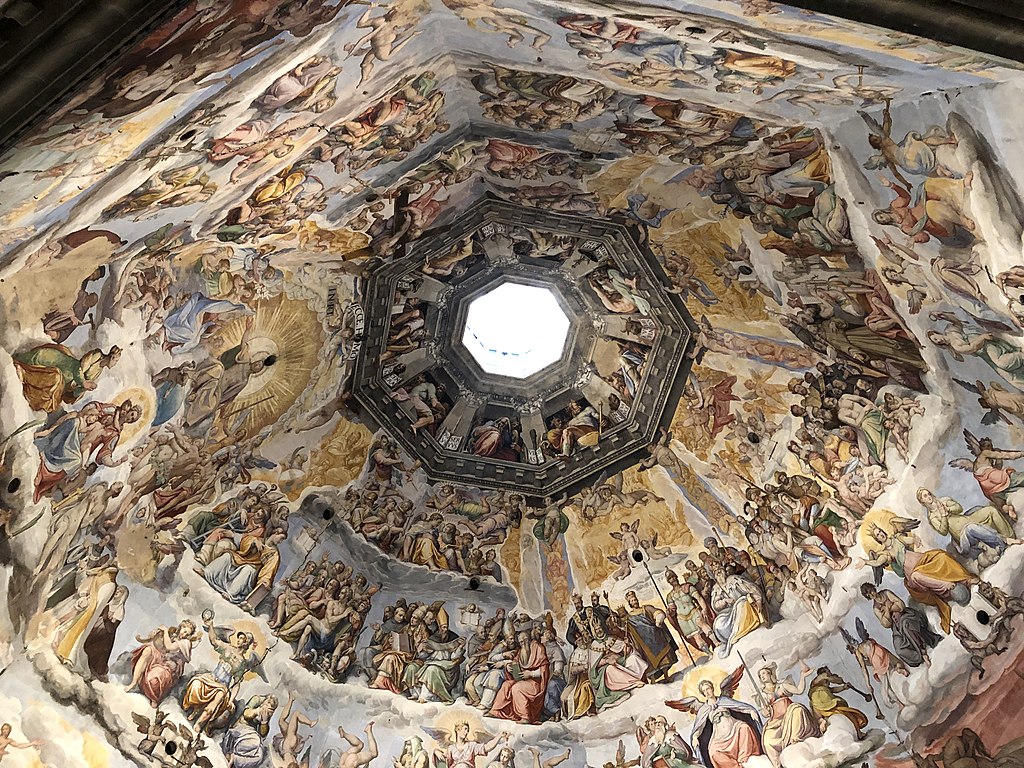
Stendhal Syndrome Florence
Just about every calendar year, thousands and thousands of people are overwhelmed by Florence’s artwork, but some get a little also confused. (Credit score: Maksim Sokolov / Wikipedia)

Nor is Stendhal syndrome tied to Italian Renaissance, for that make a difference. The way in which some key resources relate what several historic pilgrims felt when they eventually arrived at their religious destinations is eerily similar to what’s discovered in the hospital report on regular, the city of Jerusalem treats as several men and women with inexplicable clinical complications — referred to as “Jerusalem syndrome” — as Florence’s major museums.

These days, aestheticians and neuroscientists concur that Stendhal syndrome — far from currently being confined to the heartland of Italy — is truly a universal practical experience brought about by our shared skill to recognize attractiveness. “While the object of magnificence could change from one individual to an additional,” one new survey of scientific literature on the syndrome declared, “the awe and the thrill knowledgeable by an enthralled beholder continues to be the very same.”

Feasible explanations

A 2017 posting from Psychology and Cognitive Sciences – Open up Journal described the syndrome as “a rare psychiatric issue characterized by a condition of dizziness, panic, paranoia or madness caused by being exposed to inventive or historic artifacts.” It then proceeds to listing off the radically distinct but similarly viable explanations for Stendhal syndrome that have been set ahead over the previous a long time.  

One particular of these retains that the signs attributed to the syndrome are truly a end result of actual physical exhaustion. Traversing one particular or more museums in a day calls for large quantities of electrical power, especially when you are out of shape or struggling from a health care affliction. Looking at that most of the people who have checked into Florence’s emergency rooms have been visitors with jam-packed schedules, this concept is rather plausible.

Some believe that Stendhal syndrome has fewer to do with the high-quality of artwork and more with the exclusive posture of the beholder, typically a vacationer who traveled far and huge to see a area, person, or artwork. In their e-book, The Geography of Tourism and Recreation, C. Michael Hall and Stephen J. Page glimpse at journey as a process of self-actualization, a single that regularly places mentally secure persons in a more vulnerable, prone state of thoughts, producing them prone to psychological outbursts.

Even so mundane these explanations could be, there stays a little something irresistible about the notion that anything could be so lovely that its notion leads to us discomfort and insanity. Proust and Dostoevsky interpreted their respective medical situations as the unfortunate byproducts of their potential to observe actuality in increased element and with greater intensity than individuals about them, the exact same ability that enabled them to generate their novels.

In idea, it would make feeling that someone who appreciates art would be extra impressed by, say, Leonardo da Vinci’s Mona Lisa than somebody who understands very little about paintings. However, even more research is required to obtain out just how these responses are processed inside our brains. Until finally then, all we can say with relative certainty is that folks from classical or religious backgrounds are at higher chance of contracting Stendhal syndrome when visiting Florence.