Text description provided by the architects. Usually, the particularity and complexity of the site also constitute the front label of the building. This design object is the Yunlong Mountain Meditation Hotel, Xuzhou, which is located on the axis of worshiping Buddha in Xinghua Temple. It has a natural tranquil atmosphere and a superior landscape vision. The operator hopes that the hotel can provide accommodation and commercial support for the worshiping Buddha meditation guests. Under this background, our intervention strategy for this site is to first consider following the original environment, then integrating into it, and finally creating a new “order”.
The site, “Stitch the gap between the ancient temple and the city. “The site is located in the north extension of Taishan Road in Xuzhou, at the foot of Yunlong Mountain. There are many historical sites and abundant landscape resources around it. The west side is adjacent to Xinghua Temple, the entrance square of an ancient temple, and Xiayuandun Museum on the south side, and the east and north sides are adjacent to the planned creative block across the street. The mountains and cities on both sides of the plot are in a chaotic state of separation. Precious historical sites in the site are also unavoidable objects in the design: Xinghua Temple, which was first built in the Tang Dynasty and one of the eight ancient temples in Xuzhou, is located on Yunlong Mountain and is a Zen Buddhist temple. The location of the meditation hotel occupies the gap between the ancient temple and the city, similar to the “Viewing Station” connecting the preceding and the following, and has multiple perspectives of tradition and modernity. The Buddha Culture Square at the foot of the mountain is based on the lotus flower, a typical symbol of Buddhism. The vertical dimension of the square is 16 meters away from the entrance of Xinghua Temple and 60 meters away from the three emperor palaces at the top of the mountain. It makes use of the terrain to gather people’s popularity, and at the same time serves as a guide and sign. As the common entrance of meditation and Xinghua Temple, it serves as a venue for Buddhist culture festivals and also eases the interface conflict with urban roads.
Secular Life and Monastic Life “At the foot of the mountain is earthly daily life, and on the mountain is a meditation site.” Through multi-dimensional analysis of the characteristics of the surrounding environment, the spatial planning basis of “Zen” above and “normality” below is obtained. The foot of the mountain is earthly daily, accommodating commercial blocks, cultural exhibitions, etc., and traces of Zen temples on the mountain, emphasizing stability, relaxation and perception. From bottom to top, the environment forces the mood to change from moving to static. The positioning of the hotel with the theme of “meditation” is in line with the nature of the venue. Under this conceptual framework, we actively seek and respond to the millennium axis order of Xinghua Temple, and create a path from “secular life to monastic life”. The main entrance is located near Xinghua Temple on the west side, on Yundong Erdao Street, which is relatively quiet, and the entrance is opposite to Shanxi Hall across the street. The second entrance is located on Yundong Road on the east side of the plot, which is relatively open, echoing the demand of worshiping Buddha on holidays. On the way into the hotel, from the outside to the inside, complete a “cleaning” of body, mind, and distractions.
Old and New Order “Four modern attics form a new spatial order. “The form and function of the space are still in accordance with the principle of “Routine under, Zen on”, and respond to the original environment as much as possible with a pitching attitude. Four modern attics form a new spatial “order”. The prototype comes from the traditional attics, pagodas, and palaces, echoing Xinghua Temple on the mountain. The interior is the core functional space, namely the Great Zen Hall, the Vegetarian Canteen, the Zhike Hall, and the Squatter’s Foyer. Others are used as hotel squatter rooms, ancillary businesses, and other functions. The secret eaves of symbols come from the modern translation of “Ge”, which is square and regular in form, gradually retracted and folded. “Ge” is the core space of meditation, and the cornice can control the angle of light and indoor illumination according to the needs of meditation. The light in the space undoubtedly needs to be restrained, which not only meets the functional requirements but also belongs to the spontaneous expression of the spatial characteristics of meditation. Deliberately compressed on a small scale, the hotel shack emphasizes the quietness and concentration of the senses, the interior is connected with six courtyards, and other courtyards of different sizes define different spaces, creating a progressive sense of depth. The setting of a narrow courtyard implies an inward package and short stay and is equipped with a waterscape, green plants, a dry landscape, and bonsai with oriental images.
Material Language is “the unity of material characteristics and spatial imagination.” Putting wooden structures in modern architecture can successfully create the experience of overlapping ancient and modern time and space, taking into account the needs of integrating into the environment, abstracting and refining the images of “far-reaching” and “cornices and corners” of traditional attics, and forming a new type of eaves that gets rid of the limitations of traditional ideas. The wooden structure language is also used in the roofs and entrance canopies of public core spaces such as Zen Hall, Vegetarian Canteen, Zhike Hall, and the reception area of hotel squatters. It is not only a load-bearing component, but also a decorative component, and integrates indoor and outdoor vision. In terms of organization and expression, the wooden structure pays attention to strewn-at-random sequence and simple texture, mortise, tenon, lap joint, and modern technology of glued wood, which conforms to the stress principle and simple visual sense, and keeps the unity of material characteristics and spatial image. The facade and part of the walls are made of sandstone and Huanggang rock, creating a typical modern Zen space.
Traditional order is constantly impacted by modern concepts, and its breaking and reconstruction symbolize vitality. However, the humble integration and restrained expression make the architecture break away from the creative limitations of individual consciousness, fully absorb the environmental characteristics, and achieve a smart place for conveying the spirit and interactive dialogue.
Financepeer is a identify synonymous with education funding. More than the many years, Financepeer has revolutionised education finance in India with its disruptive AI-primarily based design of funding charges.
The company’s modern payment answer has aided offer price assortment companies and solved the woes about operating money for institutes across the place, therefore enabling the sector to glimpse at education and learning finance from a new standpoint.
Ever since its inception, the business has partnered with far more than 10,000 institutions throughout India to deliver cost-effective payment financing answers, edu-tech information and enhance economical literacy.
For the duration of the pandemic, Financepeer witnessed 10x development and emerged as India’s swiftest increasing edu-fin-tech firm. Not only has it served in arresting university dropout fees and enabled countless numbers of learners to proceed their instruction throughout the lockdown, but it was also instrumental in encouraging the education method stay away from a collapse in the absence of operating money.
Financepeer has also aided the education and learning procedure get a digital press by implementing methods like business source setting up (ERP) and discovering management method (LMS) with out any rates.
Agencies
“We are thrilled by the audacious eyesight set out by the founders to create the infrastructure about funding, payments, rewards, cross-market and SaaS to far better serve students, moms and dads and educators” — SANDEEP PATIL
Empowering pupils, establishments Financepeer has empowered pupils to realise their larger schooling dreams. The company has processed more than $100 million really worth of charges on its platform, helping hundreds of thousands of students accessibility high-quality instruction. All stakeholders recognise fee-financing as a substantial catalyst in the education ecosystem currently.
With Financepeer, mother and father do not have to fret about superior-curiosity prices, collaterals or guarantors whilst applying for instruction finance for their young children. The electronic platform assists them keep away from prolonged processes and paperwork.
Not only has Financepeer manufactured instruction finance affordable but also less intricate and stress-no cost. Moreover, it’s also been striving to strengthen economic literacy amid college students as a portion of its social dedication.
At a time when India’s training method is heading via revolutionary modifications, Financepeer has enabled institutes to obtain and put in the expected infrastructure to efficiently accomplish the transition from pre-Covid to publish-Covid education. Through the pandemic, Financepeer enabled extra than 8,000 institutions proceed their functions by giving them with operating capital.
At any time given that the pandemic, a lot more and a lot more institutes throughout the country have acknowledged the have to have for price payment alternatives and have revealed an fascination in these solutions.
Founder story Started in 2017 by Rohit Gajbhiye, Sunit Gajbhiye, Naveesh Reddy and Debi Prasad Baral — seasoned alumni from IIT, IIM and Stanford — Financepeer is one particular of the initial gamers in this space to cater to both equally offline and on line education and learning suppliers, such as pre-schools, K-12, faculties, universities, offline take a look at prep, edu-tech and skilling.
Rohit Gajbhiye is an IIT Bombay alumnus and holds the Stanford Ignite Entrepreneurial Certi ficate from Stanford College. His qualified and able leadership has manufactured Financepeer a home title in the education sector in a extremely limited span of time. Rohit’s attempts have been recognised by Forbes, which featured him in its ‘30 beneath 30 Asia entrepreneurs’ list.
In the modern sequence B funding spherical, Financepeer elevated $31 million from a group of investors led by US QED Buyers and Avishkaar Cash. With a eyesight to make excellent training available to all, Financepeer options to utilise the resources to boost its engineering platform and offerings, develop and bolster its partnerships, and deepen its arrive at in rural locations to empower far more college students, specifically ladies, accessibility good quality education.
Organizations
“We are content to partner with this fast-escalating, progressive and progressive start out-up. The plans of the company are in line with our commitments to commit in the nation’s growth” — SUSHMA KAUSHIK
This investment is also evidence of the escalating faith among buyers in the mission and vision of the enterprise. Not only are they looking at Financepeer as a financially rewarding business enterprise avenue but also as a kind of effects expenditure to remedy the perennial challenges that have ailed India’s schooling system for a pretty extended time.
Even though conversing about the investment in Financepeer, Sandeep Patil, Lover and Head of Asia, QED Buyers, reported, “We are thrilled by the audacious eyesight set out by the founders to establish the infrastructure about financing, payments, rewards, cross-promote and SaaS to greater serve students, parents and educators. The team’s strength, determination and depth of expertise established them apart and we cannot wait to see what they will execute subsequent.”
Sushma Kaushik, Partner, Aavishkaar Cash, also expressed her enthusiasm upon partnering with Financepeer. “Financepeer is disrupting the education and learning method in India, where by finance is a major bottleneck for many pupils.
We are content to associate with this fast-expanding, impressive and progressive start out-up. The objectives of the corporation are in line with our commitments to make investments in the socio-financial development of the country. This helps make us organic companions,” she claimed.
Financepeer’s affect on the technique can be recognized by the actuality that currently, price financing has turn into the new norm. Various new players are venturing into the sector, commence-ups as perfectly as recognized types. As one particular of the pioneers in the business, Financepeer has emerged as a powerful reworking pressure.
Encouraged by the results achieved in the past several many years, Financepeer intends to preserve the juggernaut of social transformation in education and learning rolling, and enable education and learning access the underserved, primarily women and little ones with particular requirements, by infrastructural interventions at the grassroots degree.
This Household Treatment in United states of america market report features a extensive tutorial to the dimensions and condition of the sector at a countrywide amount. It delivers the most recent retail gross sales facts (historic date selection), allowing for you to detect the sectors driving progress.
The home treatment business in the US observed customer income soften in 2021, even with soaring price ranges and inflation, as some individuals still had provides in stock from 2020, and did not have to restock as frequently.
While cleaning routines remained better than 2019, client conduct began likely back again to pre-pandemic stages faster than anticipated, even with buyers continuing to function from dwelling, as vaccines turned extensively obtainable.
It identifies the foremost corporations, the main brand names and features strategic investigation of key components influencing the sector – be they new products developments, packaging improvements, economic/way of living influences, distribution or pricing concerns. Forecasts to 2026 illustrate how the industry is set to transform.
Products protection: Air Treatment, Bleach, Dishwashing, Household Insecticides, Laundry Treatment, Polishes, Surface Care, Toilet Treatment.
Knowledge protection: sector sizes (historic and forecasts), firm shares, brand name shares and distribution information.
Why buy this report?
Get a detailed photograph of the Home Care industry
Pinpoint growth sectors and detect aspects driving alter
Recognize the aggressive setting, the market’s main players and leading brand names
Use five-yr forecasts to assess how the market place is predicted to establish.
Essential Subjects Lined:
Government SUMMARY
Home care in 2021: The huge photo
2021 crucial tendencies
Competitive landscape
Retailing developments
What is subsequent for property care?
Current market INDICATORS
Current market Facts
Sources
LAUNDRY Care IN THE US
Crucial Facts Findings
2021 DEVELOPMENTS
Premiumisation pushes growth in laundry treatment in a created current market
Scent booster booms as consumers’ interest in scent peaks
E-commerce carries on to penetrate laundry care types
Potential customers AND Alternatives
Sustainability in laundry care turning into a precedence for all gamers and will thrust progress for sustainable brands
Sanitising statements to force innovation and new groups
Powder detergents set for extinction as private label offers frugal alternatives in liquid and pill formats
Group INDICATORS
Category Data
DISHWASHING IN THE US
Crucial Info Conclusions
2021 DEVELOPMENTS
Dishwashing declines in 2021 as consuming out and food items supply increase
Hand dishwashing declines as dishwashing tablets carries on to gain share
Non-public label enters the sustainable place with EPA Safer Decision dishwashing pods
Prospective buyers AND Options
House delivery and reopening of dining establishments to disrupt taking in at property practices and dishwashing
Instruction on water efficacy of dishwashers as opposed to hand dishwashing could additional push sustainability
Dishwasher development to positively impression revenue of dishwashing tablets
Classification INDICATORS
Surface Treatment IN THE US
Crucial Facts Findings
2021 DEVELOPMENTS
Floor treatment retail income tumble in 2021, as they can not preserve historic 2020 stages
Need for impregnated damp wipes softens, but they continue being well-known
Shoppers return to models as they turn out to be out there
Prospective buyers AND Opportunities
Sustainability and antibacterial claims present an chance for impregnated damp wipes
Consumption to keep previously mentioned the pre-pandemic level as shoppers deepen labelling and ingredient scrutiny
Specialised surface cleaners to eliminate share versus multipurpose alternatives
BLEACH IN THE US
Key Information Conclusions
2021 DEVELOPMENTS
Demand for bleach declines, but price gross sales remain above pre-COVID-19 levels
Clorox continues to dominate the classification and gains share despite fall in income
Non-public label strains reduce worth share towards Clorox due to brand recognition
Potential customers AND Chances
Hypochlorous acid as a sustainable option to bleach
Return to pre-COVID-19 drop predicted in the forecast time period
Buyers additional possible to favor more light disinfectant solutions
Toilet Treatment IN THE US
Vital Details Conclusions
2021 DEVELOPMENTS
Rest room treatment desire softens as COVID-19 limitations are lifted
Clorox retains onto its share and proceeds to lead rest room treatment
Prospective customers AND Possibilities
Efficacy to determine the long run of sustainable solutions in bathroom treatment
Bidets and smart bogs provide chances for specialised cleaning answers
Forecast period of time will display minimal nevertheless secure growth as it battles with other goods
POLISHES IN THE US
Vital Data Results
2021 DEVELOPMENTS
Ground polish continues to decline as flooring surfaces and units evolve
E-commerce advancement in polishes pushed by product availability
SC Johnson remains the chief in the classification, when sustainable selections start off to rise
Prospective clients AND Chances
Home furniture polish set to proceed its gross sales drop as furniture resources adjust
Growth in shoe polish to be affected by prolonged doing work from residence and fashion trends
Over-all polishes set to decline throughout the forecast interval
AIR Care IN THE US
Key Details Findings
2021 DEVELOPMENTS
Continued household seclusion and wellness pattern thrust advancement in the class
Air care innovation on a mission to combat olfactory exhaustion
Bath & Body Will work and Yankee Candle remain US consumers’ favored makes in air care
Potential customers AND Chances
Healthier expansion predicted for air care in the forecast period of time as it caters to consumers’ lifestyles
Intelligent products to determine innovation in electric powered air fresheners
Consumer desire for all-natural substances reaching air treatment
House Pesticides IN THE US
Critical Facts Results
2021 DEVELOPMENTS
Residence pesticides grows as prolonged household seclusion potential customers to residence renovation
Spray/aerosol stays the most well-liked insecticides structure between US customers
SC Johnson maintains its dominance with Raid
Prospects AND Chances
Only marginal quantity expansion envisioned for home insecticides in the forecast period of time
Sustainability could aid push need
Insecticide baits to proceed to drop level of popularity against spray/aerosol pesticides
Water collects in a ditch south of Chugach Way on April 20 in Anchorage. The area is within the historic Fish Creek watershed. (Loren Holmes / ADN)
An Anchorage group wants the city to take a closer look at reviving a creek that once flowed through town by “daylighting” the waterway.
Duringdecades of development in Midtown Anchorage, Fish Creek was partially routed into underground drainage pipes. Now, a group called Friends of Fish Creek isadvocating for the upstream section to flow again at the surface.
Everyone seems to acknowledge that bringing the creek into the open won’t be easy. But advocatessay such a move will transform the creek into a prized community asset, running through the heart of town and into Spenard.
“We’ve never tackled anything like this in our city before, and what’s really cool about it is how we can co-exist with our natural landscape,” said Karen Button, the group’s president. “And Anchorage is still young enough that we have that opportunity.”
Friends of Fish Creek members sayit can be rehabilitated in sections, to manage costs.
A storm drain is adorned with the image of a fish and the words “drains to waterways” at the intersection of Arctic Boulevard and Chugach Way in Anchorage. The area is within the historic Fish Creek watershed. (Loren Holmes / ADN)
Anchorage voters last month approved a $320,000 bond to pay for a study of the daylighting idea.
But bond attorneys for Anchorage have informed city officials that a study can’t be paid for with a bond, which typically funds capital assets, said Lance Wilber, the municipality’s public works director.
However, Anchorage Assembly member Austin Quinn-Davidson, who led the effort to get the item on the ballot, said she plans to pursue other funding sources.
Restoration efforts go from ‘crazy to cool’
The study, ifit’s funded and gets underway, will help determine how and whether the project should be pursued.
About five years ago when the Fish Creek group formed, people thought daylighting the creek sounded crazy, Button said.
But restoration efforts around the country — including the ongoing recovery of Eklutna River northeast of Anchorage — have changed views, she said.
Karen Button, president of Friends of Fish Creek, looks out over the Fish Creek wetlands at Northwood Park on May 5 in Anchorage. (Loren Holmes / ADN)
People are increasingly interested in “green infrastructure” projects like this one — using natural features to manage water and build resilience to climate change, she said.
“It’s gone from crazy to cool, and that just tells me how far we’ve come,” Button said.
Quinn-Davidson said the study, requested by the Fish Creek group, would be a “visioning process” with public hearings to see what’s possible, she said.
Maybe Anchorage can create something like the River Walk in San Antonio, Texas, she said. The flood-control project on the San Antonio River is an open-air tourist attraction below city streets, lined with trees and shops.
“It would take some real vision and money, but it doesn’t have to happen all at once,” Quinn-Davidson said.
Maybe sections can be daylighted as developers undertake projects, she said.
“That could be a nice asset for development,” she said.
Quinn-Davidson said she’ll push for other funding sources for the study. After all, voters approved the measure. The money could come possibly come from the American Rescue Plan Act, she said.
Urbanization
The Fish Creek that remains today is often small and sometimes grimy. Its lower portion flows through much of Spenard and Turnagain, accompanied at times by a bike trail.
Fish Creek flows alongside a path at Red Bridge Park in Spenard on April 20 in Anchorage. (Loren Holmes / ADN)
The creek begins at a spring far to the east, in a wooded area near medical offices and the intersection of Lake Otis Parkway and Tudor Road. It soon heads into the city’s underground drainage system.
But here and there, pieces of the historic creek remain. They’re often dry ditches strewn with trash, unless it rains or snow melts.
During a recent bike tour of the creek’s historical route, some of the original banks contained mucky brown water.
“We built over the top of it, but the creek keeps trying to flow,” said Jed Smith, a Friends of Fish Creek board member who led the tour.
Friends of Fish Creek board member Jed Smith points to an aboveground section of Fish Creek next to Chugach Way on April 20. (Loren Holmes / ADN)
Sometimes, the creek remnants ducked behind houses and businesses, cutting off access. It smelled like sewage in a couple spots.
In the early 1950s, the creek was thin and moved slowly across what would become Midtown. It lost its shape in marshy areas, but grew more defined in Spenard. It was fed by wetlands, unlike other Anchorage creeks that start in mountains, Button said.
As Anchorage boomed, water sources were paved over and dried up, she said.
Builders scraped away spongy peat and replaced it with gravel to throw up buildings and parking lots.
An important source called Blueberry Lake was covered with gravel and asphalt, she said. The lake is gone from today’s maps, replaced by Walmart and other businesses.
To prevent flooding, city planners redirected much of the creek into underground pipes, she said.
The ponds at Cuddy Family Midtown Park are part of Fish Creek’s historical course. They were created more than a decade ago, from wetlands near the Loussac Library, to help control flooding.
A flock of geese lands on the pond at Cuddy Family Midtown Park in 2017. (Bill Roth / ADN)
The creek is temporarily daylighted there, before the waters vanish underground again.
‘Hypothetically feasible’
A conceptual drawing from the group envisions the daylighted creek leaving Cuddy Family Midtown Park, and heading past the Centerpoint Business Park, with its tall buildings occupied by Hilcorp and other businesses.
The creek would cross under major streets and, after more than a mile, reconnect with the lower creek near the Minnesota-Tudor intersection.
The group says ideally, the project could support more biking trails and salmon habitat. And the creek could still deliver stormwater into Cook Inlet, with sediment removed in biofiltration areas such as grassy swales near the creek.
The project would also involve complex engineering questions, plus costly steps like acquiring land and removing asphalt and other structures.
A 2019 preliminary review by HDR Engineering took a rough look at the idea.
It said that daylighting the creek from Cuddy Park to the Minnesota-Tudor intersection could cost $56 million and is “hypothetically feasible.” Rehabilitating a smaller section, in east Spenard, would cost $16 million, the review found.
An in-depth study would provide more certainty on costs, said Bill Spencer, a civil and environmental engineer with HDR who worked on the 2019 report. It could lead to higher cost estimates.
“I wish someone had thought about this in the ‘60s, but we weren’t thinking like this in the ‘60s” said Spencer. “Once you urbanize an area, it’s really hard to change that.”
Cost and elevation among the challenges
Cook Inlet Housing Authority is planning for the possibility that the creek will one day be daylighted, said Tyler Robinson, a vice president with the authority.
The builder is working on a housing development near Spenard Road and 36th Avenue that will leave extra space along a nearby, often-dry channel of the creek, he said.
The extra room will also support a creekside trail and features like rain gardens to manage rainwater, so the area will be attractive even if the creek isn’t daylighted, Robinson said.
Water from a culvert joins an aboveground portion of Fish Creek at Old Hermit Park in Spenard on April 20 in Anchorage. (Loren Holmes / ADN)
He said rehabilitating the creek faces big obstacles. Providing enough setback off the creek in other areas may not be easy, he said.Land will have to be acquired, possibly from reluctant property owners.
“There are engineering challenges and land-acquisition challenges,” he said.
Spencer, with HDR, said that to be a community asset with grass, trees and trails, the creek will need a wide floodplain along it.
Stream gradient issues that arise because part of the creek is now deep underground in pipes could lead to extensive digging in some areas, he said. That could bring complications.
“If you take a stream and drop it 6, 8 feet below the existing road, you run into fiber optic cables, telephone lines, existing storm drains,” he said. “There’s a huge amount of work that would have to be pulled off.”
A study will provide a closer look at those challenges and others, such as whether the expected increase in land values near the rehabilitated creek will be sufficient, Spencer said.
“And the quality of life and recreational opportunities, what are those worth?” he said. “There’s a whole bunch of analysis that the city and its residents have to look at.”
The study will consider alternatives to daylighting the creek.
One question is whether it will be more economical to stick with the status quo of repeatedly repairing the city’s aging stormwater pipes.
People walk along the Coastal Trail as it crosses Fish Creek on April 25. (Loren Holmes / ADN)
Fish Creek group members say the project will pay off in the long run.
“Managing stormwater above the surface is a lot cheaper than burying it and always digging up pipes every 25 years,” Smith said on the bike ride.
How the restoration would be paid for is unknown. The giant federal infrastructure bill could be a source of money, Button said.
“It’s not a small project,” she said, “but it’s the right project.”
[Correction: An earlier version of this story incorrectly referred to the American Rescue Plan Act as the American Recovery Plan Act.]
Call it the ACE effect. The lodge brand grew to become famous for placing up store in offbeat neighborhoods—where the rent was presumably cheaper—and then transforming individuals regions into new capitals of amazing. They had been pioneers in neighborhoods like New York’s NoMad, district, London’s Shoreditch, and DTLA. And they encouraged many others, the two in cities and in rural places.
DAVE Pink, Athens
The initially house in the new affordable resort line DAVE–Son of a Brown (from Israel’s hip Brown Lodges team) to launch outside the house of Tel Aviv, the Athens lodge occupies the former KKE (Communist bash of Greece) headquarters in Omonia Square. The sq. experienced been in a point out of operate-down neglect just after the demolition of its initial drinking water aspect in the latest yrs it’s been through a redevelopment plan to make it a UN–certified “sustainable spot.” (And just about anything that aids get people today out of the busiest vacationer locations gets sustainability details in my reserve.) The lodge is a single of the centerpieces, with a mural on the mezzanine that honors the building’s historical past and an “adults’ playground” with pool tables, first Nintendo and Packman consoles and a balcony with hammocks.
The TWA Lodge
David Mitchell
TWA Lodge, New York
Not so lengthy back, some New Yorkers would go out of their way to avoid traveling out of JFK. Now they’re eagerly likely there, even with no aircraft ticket in hand. Which is due to the fact the TWA Lodge has supplied them all types of factors to experience the A prepare. The Eero Saarinen landmark 1962 terminal is now an “experiential hotel” with 512 midcentury modern-day rooms—and immersive exhibitions, various eating places (such as 1 from Jean-Georges), a rooftop infinity pool and observation deck, a roller skating rink, an Intelligentsia espresso bar and a 1958 airplane that’s been reworked into a cocktail lounge.
Galei Kinneret
AMIT GERON
Galei Kinneret, Israel
Couple men and women make it to the Sea of Galilee in northern Israel, but that’s shifting with the rebirth of this 123-room luxurious lodge. Constructed in 1946, it was inspired by the owner’s journey to Villa d’Este in Lake Como. The hotel was uninhabited when the Amsterdam-primarily based designer Saar Zafrir started the operate on it, drawing inspiration from its before glory days, ancient ruins identified on the website, the normal landscape and the owner’s initial eyesight.
Stunning George
Courtesy of the hotel
Beautiful George, Cape Town
Downtown Cape Town’s George Street is much from the regular waterfront tourist path, but with its to start with boutique hotel—part of Style Hotels—curious vacationers commenced coming. On its heels arrived new internal-town galleries, bars and eating places, furthermore a new exhibition place following door. Of study course, the hotel alone is a lure, occupying two beautifully restored heritage buildings with a trendy African aesthetic by South African designer Tristan du Pleiss, and with performs by nearby artists and designers all over.
A home at ReMIX
Courtesy of the lodge
ReMIX, Paris
Another task from Saar Zafrir, this revamp of an aged resort is bringing new life to Parc de la Villette in the city’s northeastern edge, in the 19th arrondissement. His colorful, eclectic style for the 259-room hotel requires inspiration from the 1980s pop music “Forever Youthful,” with vivid designs, retro textures and summary touches all over. Now it is an anchor of a recently cool neighborhood that is drawing new breaths of tradition, art and eating.
Lapota Lake Resort
Courtesy of the resort
Lopota Lake Resort, Georgia
Again in 2008, making a hotel on one of the forgotten lakes in Kakheti, Georgia (the state), appeared like a mad plan. But the founder of Lopota Lake Vacation resort, Goga Maisuradze, stuck to it—and put Lopota on the world’s touristic map. Desire has been so superior that what started out as a 7-place relatives resort has developed into a resort with 232 rooms, numerous restaurants, a spa, horses and vineyards. (Kakheti is Georgia’s leading wine location.) What has not changed is the heat hospitality which is nonetheless dished out by the founder’s family.
Doug Ford’s Progressive Conservatives call the Ring of Fire a “corridor to prosperity.”
The remote region in Ontario’s Far North, known for the mineral deposits that lie beneath its boggy peatlands, has had a special place in Ford’s plans for Ontario since the 2018 provincial election, when he promised to build an all-season road there even if he had to “hop on a bulldozer” himself. Now, with Ford seeking a second term as premier, the Ring of Fire is once again front and centre.
On the campaign trail in northern Ontario on May 7, Ford accused the other parties of being “all talk but no action,” saying the Progressive Conservatives “will get it done and build the road to the Ring of Fire.”
But internal briefing notes and correspondence obtained by The Narwhal show that a vital component of the Ford government’s plan to do so is sputtering out instead of gaining momentum. The 565 pages, obtained through 20 separate freedom-of-information requests to the provincial and federal governments, show that Ontario is no closer than it was in 2018 to securing the $1 billion in federal funding it needs to pay for roads and other infrastructure.
Without funding and the roads it would build, mining development in the Ring of Fire cannot happen.
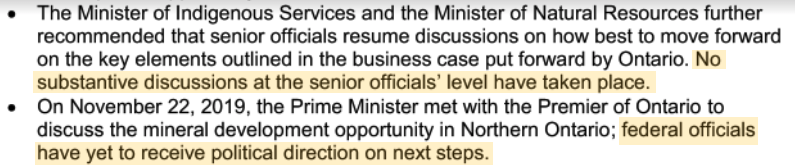
For at least two years, from 2019 to 2021, senior officials from the provincial and federal governments failed to meet to advance negotiations. “The co-funding request fell through the cracks and has yet to be revived,” said a briefing note prepared for officials with Indigenous Services Canada in August 2021.
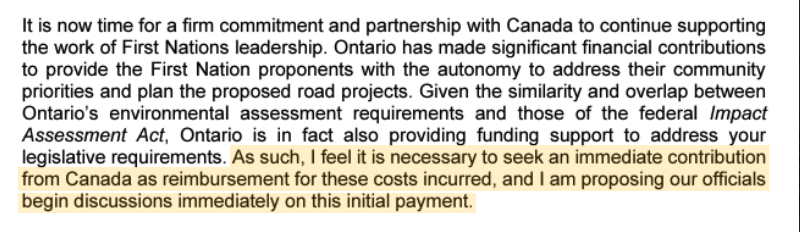
Highlighted excerpts of two briefing notes to federal Indigenous Services Minister Patty Hajdu from August 2021 and December 2021, respectively. The documents were obtained by The Narwhal through freedom-of-information requests.
Ontario pushed forward work on various environmental assessments for two road projects during those two years, including a regional assessment sparked by the federal government, aimed at examining the cumulative impact of development in the area. But the process has so far been hampered by COVID-19 delays and pushback from several First Nations in the region, including a court challenge from Neskantaga First Nation. Neskantaga — which has been under a boil water advisory for 26 years, the longest such advisory in Canada — is arguing the federal government’s consultation on the Ring of Fire is “inadequate,” especially given extra challenges due to COVID-19.
“The attitude that Ontario has projected all along is that it wants to kind of put its head down and pretend that everybody is on board with this — and hope that people in the south will be not paying close enough attention to realize that everybody is not on board,” said Dayna Nadine Scott, the co-director of the environmental justice and sustainability clinic at York University’s Osgoode Hall Law School, who also advises Neskantaga First Nation.
Meanwhile, the costs of the project are increasing, creeping up from between $1.1 billion and $1.6 billion in 2019 to over $2 billion. That’s according to a September 2021 internal briefing note to the office of Greg Rickford, Ontario’s minister of northern development, mines, natural resources and forestry and also minister of Indigenous affairs. Officials from both governments are still internally relying on outdated estimates for the value of minerals in the Ring of Fire, which were authored nearly a decade ago and debunked as “nonsense” by the Globe and Mail in 2019. And the federal government is staying mum about whether it’s willing to commit serious money to the project.
Rickford’s office did not grant a request for an interview with the minister and did not answer detailed questions from The Narwhal about the information in various documents.
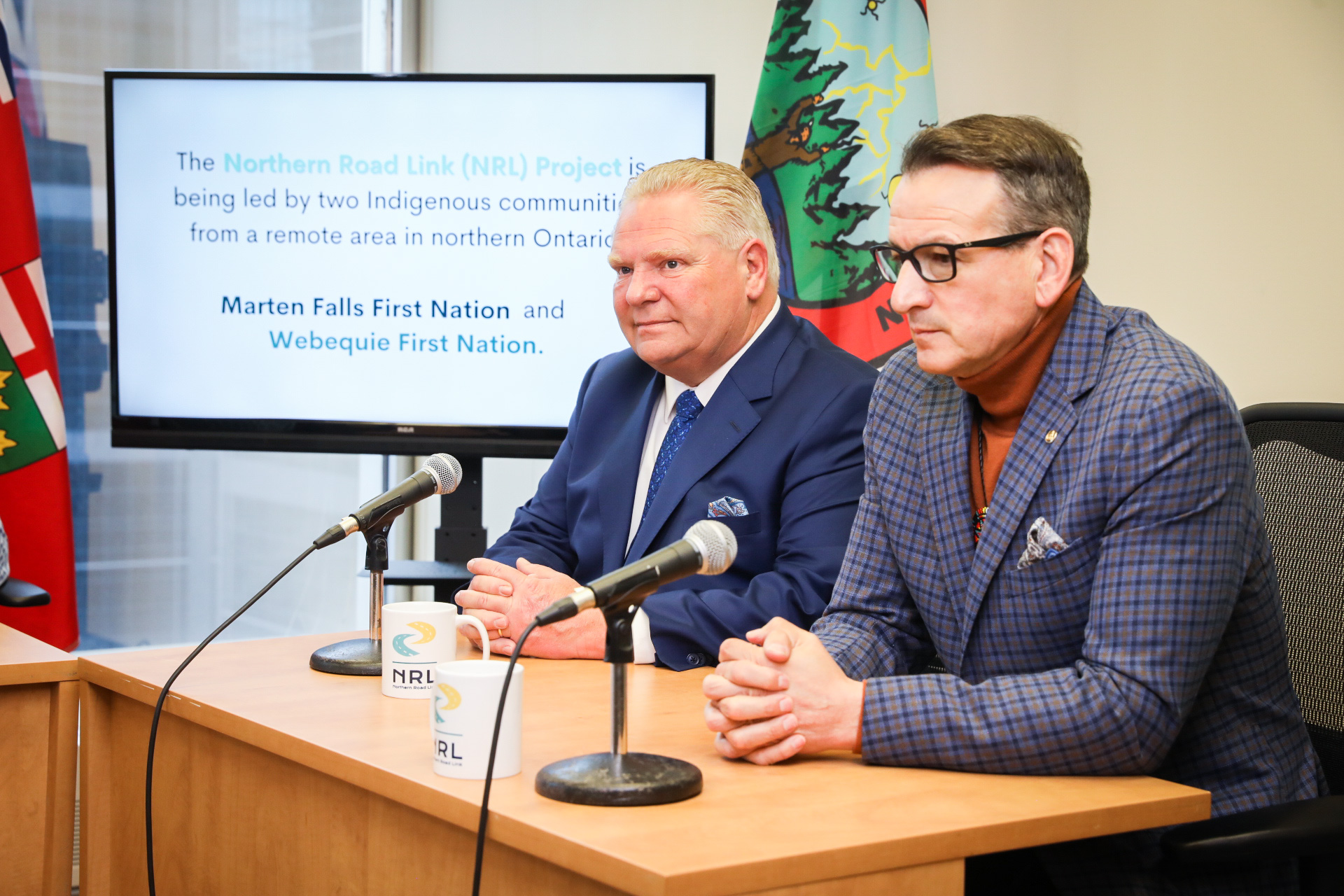
Premier Doug Ford and Minister of Northern Development, Mines, Natural Resources and Forestry Greg Rickford in April 2022. Before entering provincial politics, Rickford briefly sat on the board of Noront Resources, a longtime leader in the push to develop the Ring of Fire before it was recently sold to Australian giant Wyloo Metals. Photo: Government of Ontario
“Premier Ford is getting it done by unleashing the mineral might of the north with a $1 billion investment for an all-season road network into the Ring of Fire,” wrote Curtis Lindsay, a spokesperson for Rickford, in an email.
Kate Kempton, a lawyer representing Attawapiskat First Nation — which would be affected by development in the Ring of Fire — said the entire concept has “unequivocally been proven to be stupid and wrong.”
“For 500 years, stupid white men have led us to the edge of climate collapse,” she said.
“This is what we have, the idea that environmental concerns are just a political chess piece. And they can all be dealt with at some point after the thing is built and the harm is done.”
The office of federal Natural Resources Minister Jonathan Wilkinson declined an interview request from The Narwhal.
“We will continue to support efforts to develop the Ring of Fire, as well as its surrounding communities, in an environmentally sustainable manner and in collaboration with local First Nations and the Government of Ontario, taking into account the need for environmental assessment and regulatory approval before any development can proceed,” Natural Resources Canada said in an email.
It burns, burns, burns, the Ring of Fire
Building a road to the Ring of Fire is no simple thing. The prospect has eluded governments and mining companies in Ontario for more than a decade.
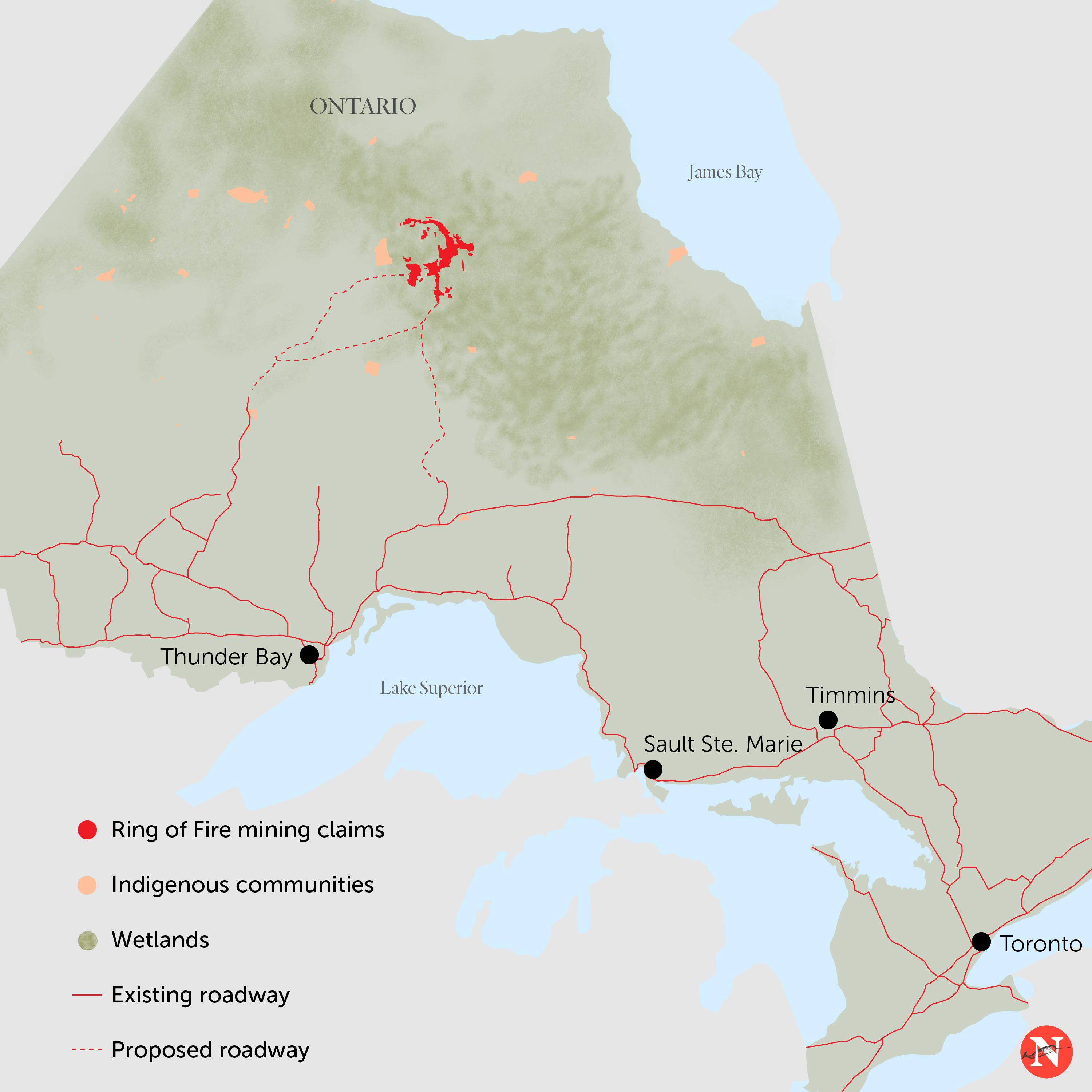
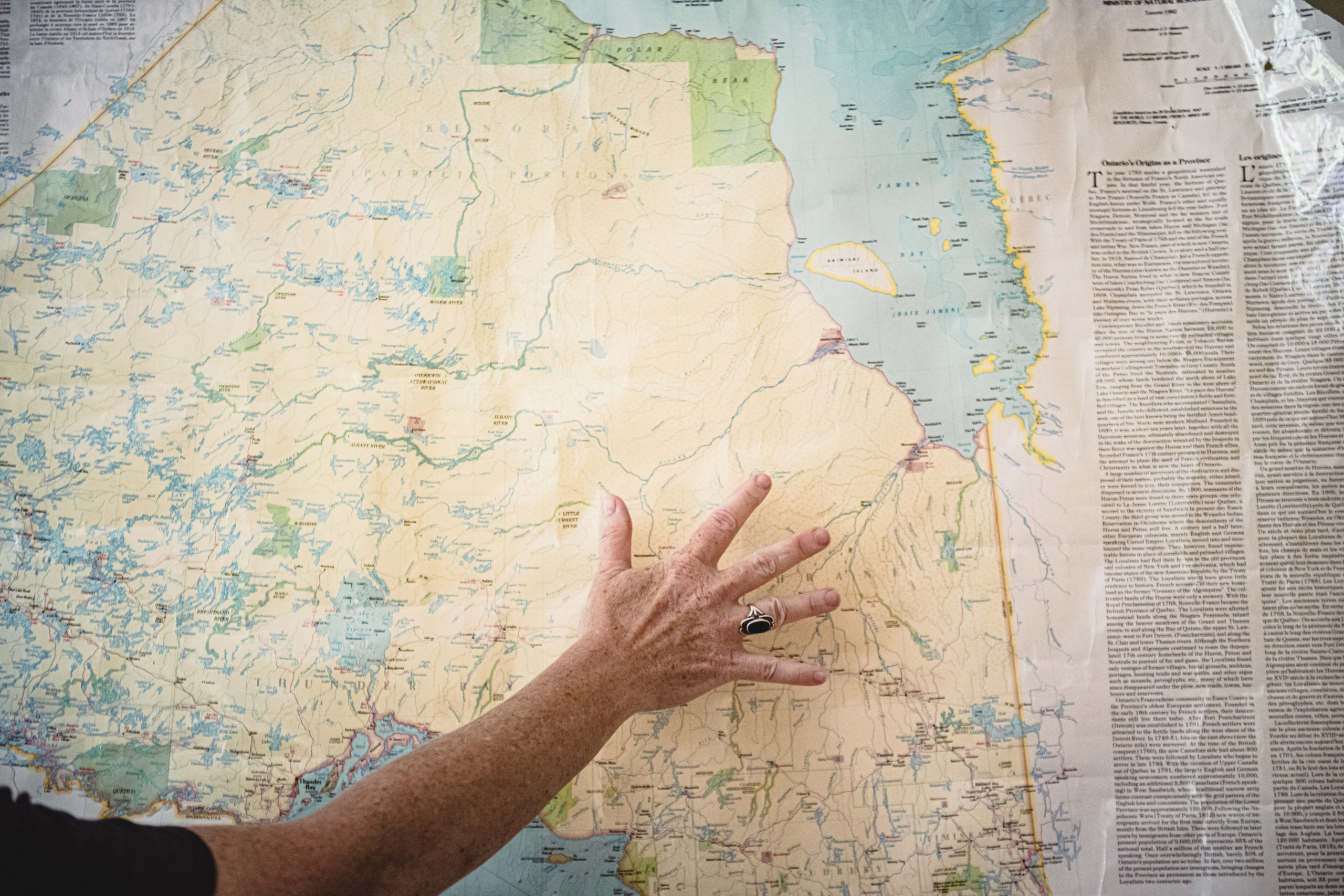
The region, which was named after a Johnny Cash song and the shape of its mineral deposits on a map, is located on peatland in Treaty 9 territory, about 540 kilometres northeast of Thunder Bay, Ont. It’s accessible only by air or by ice roads in the winter — there are no permanent roads, and the area lacks other basic infrastructure.
“No single mining company can carry the financial burden of building the needed road infrastructure,” read a September 2021 briefing note to Rickford’s office, marked as “confidential intergovernmental advice.”
The northern landscape can also make such projects tricky — for example, an effort to improve internet access for five remote First Nations near the Ring of Fire was set back by a year due to the “loss of amphibious equipment through the ice,” according to a March 2021 meeting note for a video call between Rickford and a deputy minister. Rickford’s office did not answer a question about the current status of the internet access project, which is jointly funded by the Ontario and federal governments, but a March 2022 briefing note to Rickford said the communities were scheduled to be connected to the broadband network by early 2023.
Industry and governments believe minerals in the Ring of Fire — like nickel, which is used in many electric vehicle batteries — could put Ontario in position to supply the world with the materials needed for technologies that could help lower global greenhouse gas emissions. Mining companies around the world are rushing to secure supplies of nickel ahead of a forecasted surge of demand. Two major Australian companies, Wyloo Metals and BHP, got into a bidding war last year to gain control of the leading Canadian company in the Ring of Fire, Noront Resources. Wyloo closed the deal last month and bought Noront for $616.9 million. (Rickford briefly sat on Noront’s board before entering provincial politics.)
Environmental advocates and some First Nations question whether development in the Ring of Fire is a good idea at all, given the importance and sensitivity of the landscape. Northern Ontario’s peatlands sequester an estimated 35 billion tonnes of carbon, the equivalent of a year’s worth of emissions from seven billion cars. The landscape doesn’t naturally recover once it’s been disturbed by humans. The area is also an important habitat for wildlife.
In a 2021 Natural Resources Canada memo also released through freedom-of-information legislation, the federal department acknowledged the region’s importance as a “carbon sink.” The memo notes that the Ring of Fire is “considered as having some of the last original, intact forest in North America, and is home to a number of species at risk,” including caribou, lake sturgeon, wolverines and bald eagles.”
A map of the Ring of Fire and the routes of proposed access roads. Map: Carol Linnitt / The Narwhal
Then again, roads aren’t just about mining. More than a dozen First Nations live near the Ring of Fire, and many are coping with long-term boil water advisories, youth suicides, poverty and high food prices. Though there are a wide range of opinions, some First Nations see all-season roads linking their communities to the south as a way to improve their communities’ quality of life. Marten Falls and Webequie First Nations are backing efforts to build access roads to their communities.
“Why can’t youth be supported in these kinds of essential things that our forefathers had envisioned when they signed the treaty?” Marten Falls Chief Bruce Achneepineskum told The Narwhal last year. (Achneepineskum and Webequie Chief Cornelius Wabasse didn’t respond to interview requests for this story by publication time.)
Other First Nations aren’t sure that roads — and the mining development they could bring — are a great idea. Attawapiskat, Fort Albany and Neskantaga First Nations declared a moratorium on development in the Ring of Fire in April 2021, saying no projects should go ahead until there’s more than “token involvement” of First Nations and adequate environmental considerations. The current process, they said, is “political puffery.”
The March 2021 meeting note for the call between Rickford and his deputy minister noted the turbulence.
“This year has the potential for significant progress, but with risks,” it read in underlined text.
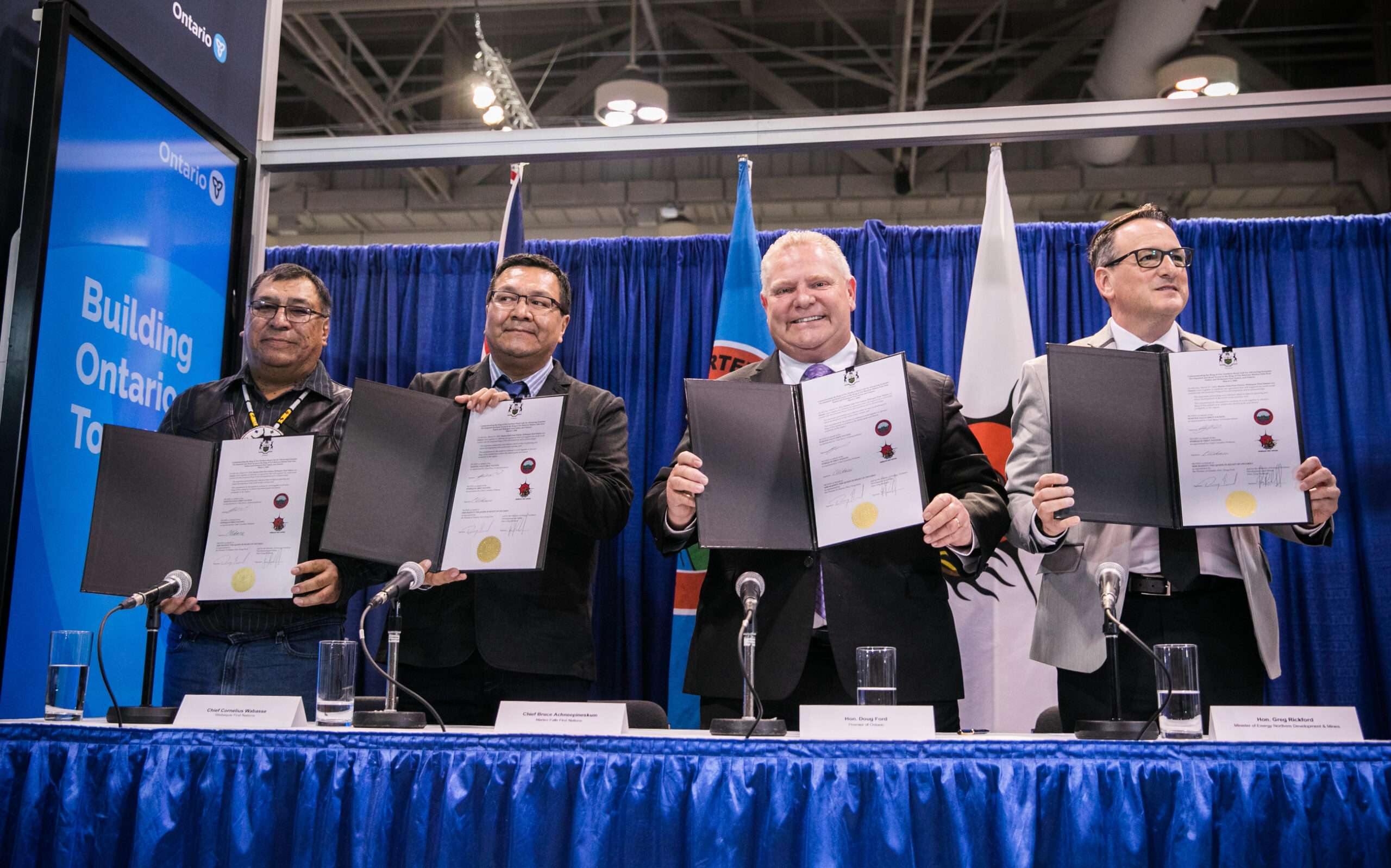
Webequie First Nation Chief Cornelius Wabasse, Marten Falls First Nation Chief Bruce Achneepineskum, Premier Doug Ford and Minister Greg Rickford in March 2020. The two First Nations are working with the province on road proposals connecting their communities with the south. Photo: Government of Ontario / Flickr
“COVID-19 consultation and engagement challenges persist, and court challenges are likely to continue … the federally initiated regional assessment of the Ring of Fire has created very high expectations from those who oppose road and Ring development and there continue to be calls to halt all [environmental assessments] and planning until the federal regional assessment is complete.”
Sarah Beamish, a lawyer representing Fort Albany First Nation, said the Ontario government’s approach, as written in the meeting note, is “obviously disturbing” but not a surprise. The fact that it chose to push forward despite knowing some First Nations were opposed and likely to file legal challenges “speaks volumes about the honour of the Crown,” she added.
“The fact that the Crown is framing the issue as being about First Nations’ ‘high expectations,’ I think that’s very revealing about the colonial attitudes that are still so present in government,” Beamish said.
Given the ecological and cultural significance of the region, it’s reasonable for communities there to have high expectations for a process that will shape its future, Scott said. So much is at stake.
“It’s perhaps not surprising that [the Ontario government wants] to see opposition to this vision as a minor roadblock to be, kind of, navigated rather than a genuine problem,” Scott said.
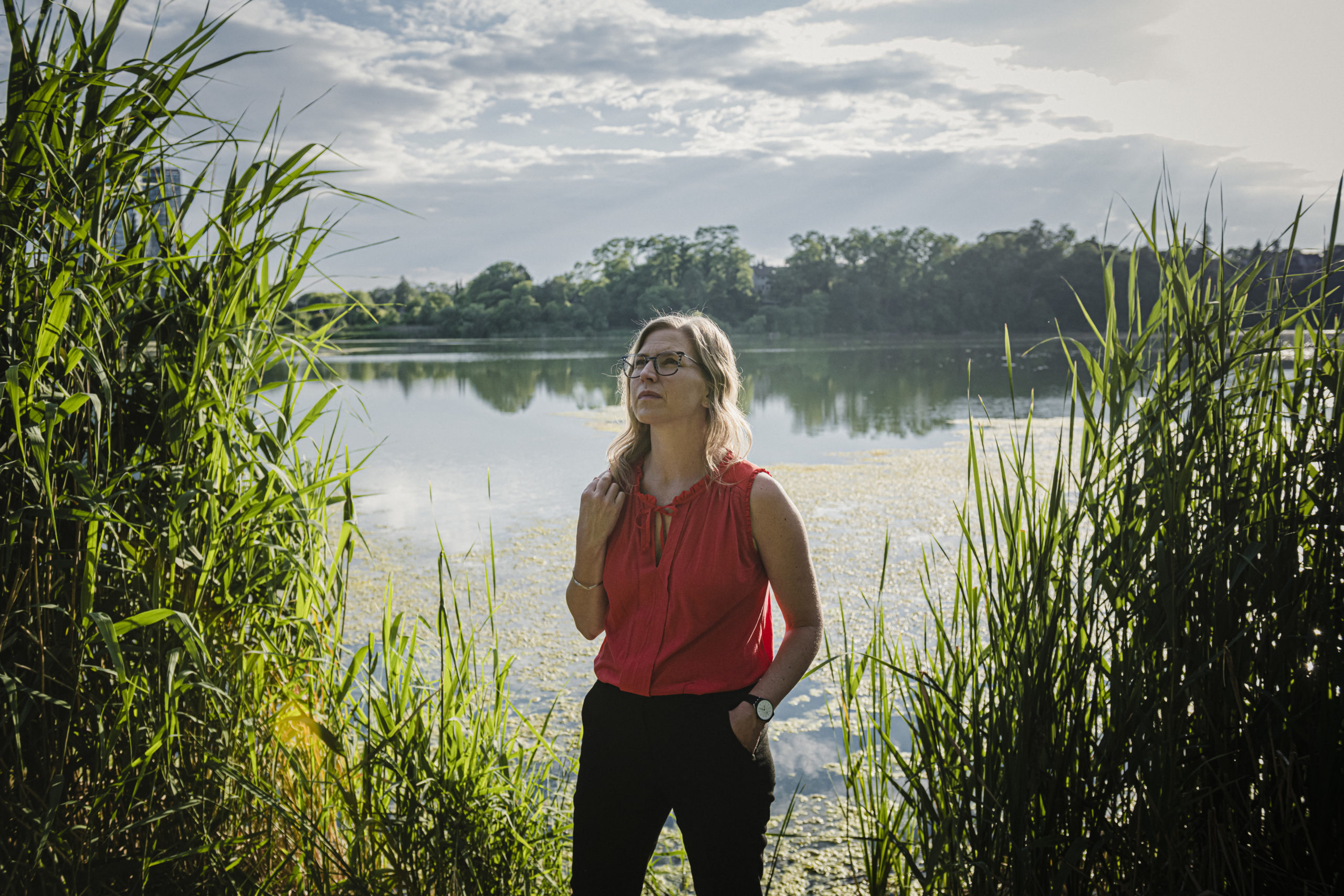
Dayna Nadine Scott is the co-director of the environmental justice and sustainability clinic at York University’s Osgoode Hall Law School, and also advises Neskantaga First Nation. She said the Ontario government sees opposition to Ring of Fire development as a roadblock to be navigated instead of a real problem. Photo: Christopher Katsarov Luna / The Narwhal
Kempton said Ontario and Canada are latching on to the idea that two First Nations have agreed to road development, while ignoring the fact that other communities, which she said will be “permanently and potentially catastrophically affected,” must also give their consent.
“They’re not looking at this in any other way than from the viewpoint of the Crown governments, and not understanding at all what free prior and informed consent means and having no vision on what it’s going to take to get there,” she said.
“They’re also quite happy with the fact that two First Nations are consenting, manipulating that into a divisive force.”
U.S. mining analyst: the Ring of Fire is ‘just some stupid idea in Canada’
Another looming uncertainty is whether the mineral deposits in the Ring of Fire will actually be worth the money the Ontario government would like to spend to reach them. When mining companies first found minerals there in 2007, the frenzy was around chromite, a vital component of stainless steel. But global demand for chromite has dropped and now the focus is on nickel, which is needed to feed a rapidly growing market for electric vehicle batteries.
Back in 2014, the Ontario Chamber of Commerce estimated the Ring of Fire could contribute as much as $9.4 billion to the province’s GDP in its first 10 years of development and $60 billion over the lifetime of various projects, and sustain 5,500 jobs. However, the calculation was based on a dubious analysis of the value of minerals in the Ring of Fire, done by a geologist who told the Globe and Mail in 2019 that his figure shouldn’t be used and is “just not proper.” Regardless, the Ontario government cited the Chamber of Commerce figures in internal documents as recently as September 2021, freedom-of-information requests by The Narwhal show. The federal government, too, did so internally in April 2021.
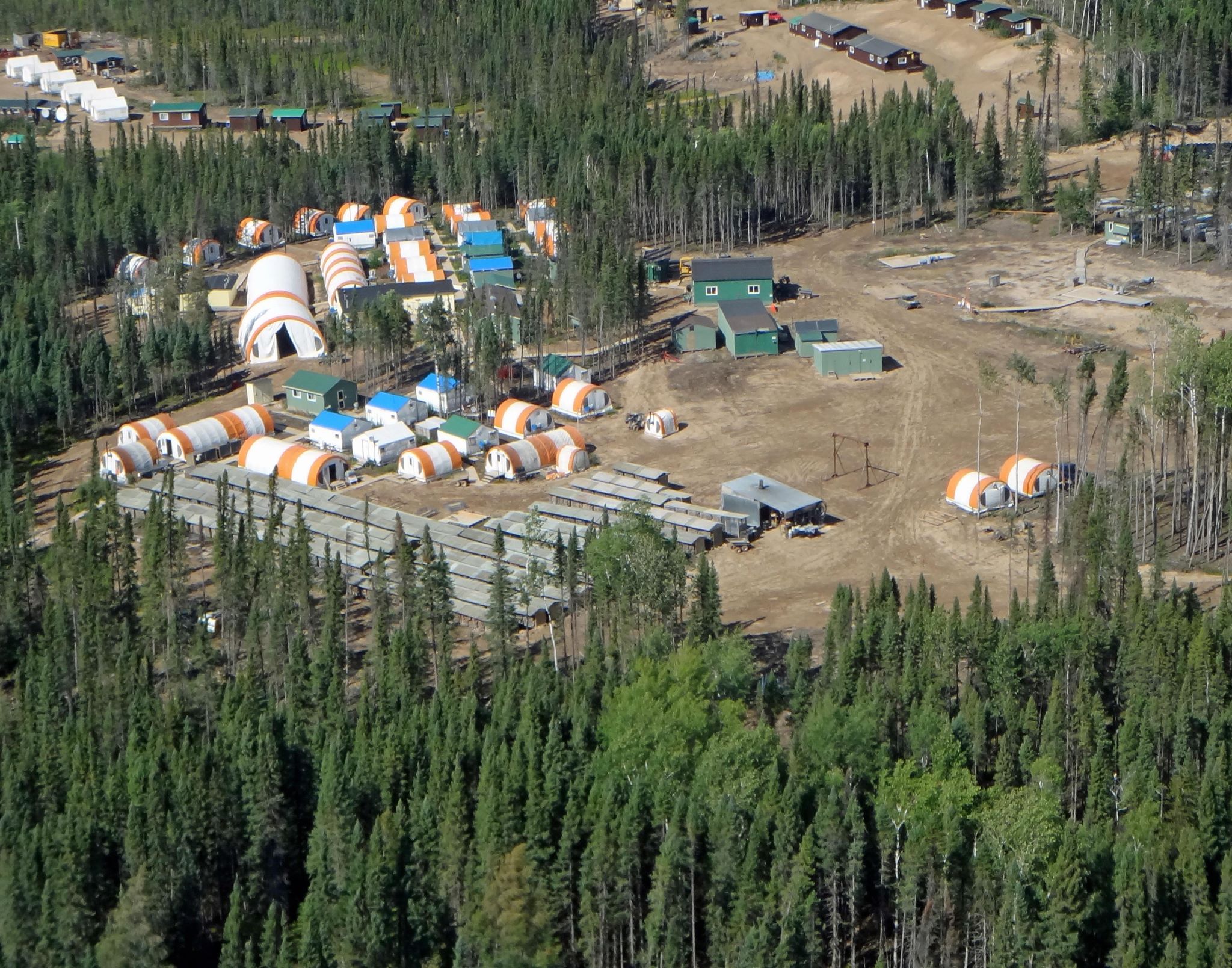
Noront Resources’ Esker camp in the Ring of Fire. Photo: Noront Resources / Facebook
Rickford’s office didn’t answer when asked why it’s relying on outdated numbers. Natural Resources Canada said it has not made any decisions based on the Chamber of Commerce figures.
“Any federal decisions related to mineral development in the Ring of Fire will be based on evidence informed by economic, social and environmental data, and engagement with the Government of Ontario and local First Nations,” the department said in an email.
Patrick Ryan, a consultant with Mining for Facts in the United States, said it’s foolish to base decisions in 2022 on estimates calculated in 2014. The chromite market has changed. COVID-19 and inflation have shifted the global economy. And even though there’s demand for nickel for electric vehicle batteries now, technology can change, and there’s no guarantee it’ll still be needed in a decade.
“The numbers are all already wrong based on inflation and everything else,” Ryan said. “I mean, it’s ridiculous.”
Last year, on the heels of a fall economic statement in which the Ford government once again reiterated its commitment to developing the Ring of Fire, The Narwhal requested the government’s most recent estimate of the value of minerals there through freedom of information, and was told no such records exist. Rickford’s office did not answer questions about whether it has done independent work to assess the mineral deposits’ value.
Ryan said any way you slice it, the Ring of Fire does not make economic sense.
“If it’s such a goddamn good project, why does it depend on massive amounts of government aid?” Ryan said.
“I wouldn’t worry about it because it’s never going to be built … No one really cares. It’s just some stupid idea in Canada.”
Our plan is to make Ontario the electric battery vehicle leader in #NorthAmerica & that starts by connecting the mineral-rich opportunities in the Ring of Fire with manufacturing & auto sectors in Ontario. We’re the only party that will build the roads needed to #GetItDone. pic.twitter.com/n1iVgDWBBy
Doug Ford’s Progressive Conservatives have carried over a $1 billion commitment previously made by the former Liberal government to build the infrastructure needed to access the Ring of Fire. In July 2019, Rickford sent the federal government a pitch deck asking Ottawa to match some of that funding and contribute up to $780 million.
“This is a multibillion-dollar project of national significance and Ontario cannot unlock its full potential on its own,” Rickford wrote in an accompanying letter, saying the project would deliver “significant economic benefit to both Canada and Ontario.”
The federal natural resources minister at the time, Seamus O’Regan, wrote back in early September 2019 signalling interest, encouraging Ontario to submit an application for funding through Infrastructure Canada. But that came with a caveat.
“As you know, the Government of Canada is deeply committed to reconciliation with Indigenous Peoples, and will continue to support efforts to advance their economic prosperity and self-determination,” O’Regan wrote.
“The Ring of Fire has tremendous potential toward this end but it must be advanced in consultation and partnership with all affected First Nations. A completed application and business case submitted to the Government of Canada will need to demonstrate that this is the case.”
Soon after that, a federal election was called, and the funding discussion fell by the wayside for two years.
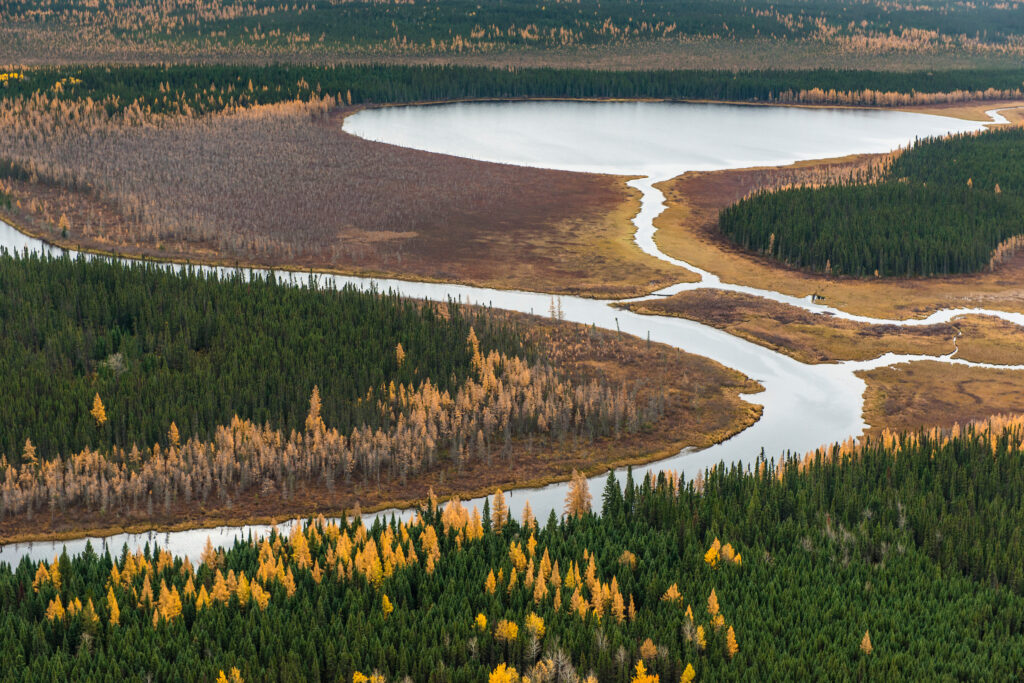
The James Bay Lowlands, where the Ring of Fire is located, are known for boggy peatlands and boreal forest. It’s an important carbon sink and a sensitive habitat for wildlife. Photo: Garth Lenz
A December 2021 briefing note to current Indigenous Services Minister Patty Hajdu refers to a meeting between Prime Minister Justin Trudeau and Ford in November 2019, which also failed to push the process forward: “Federal officials have yet to receive political direction on next steps,” it said. Though O’Regan and then-federal Indigenous Services Minister Jane Philpott “recommended that senior officials resume discussions on how to best move forward … no substantive discussions at the senior officials’ level have taken place.”
In an email, Natural Resources Canada said it had set aside $1.5 billion over seven years for investments in infrastructure to support the development of certain critical minerals, with a “focus on priority deposits.” But the federal government didn’t say whether the Ring of Fire is a priority deposit.
“Negotiations on the Ring of Fire have not taken place between the Government of Canada and the Government of Ontario to date in 2022,” Natural Resources Canada said.
It’s not clear whether the Ontario government ever requested the money from Infrastructure Canada as O’Regan advised. Rickford’s office did not answer when asked whether it had done so, and the federal government didn’t directly answer a question about whether it had received such an application. A November 2021 briefing note to current Natural Resources Minister Jonathan Wilkinson notes that the federal government “would consider” Rickford’s proposal if Ontario made its case to Infrastructure Canada, implying that this had not happened in the two years since Ottawa first suggested it.
Earlier this year, Rickford resumed attempts to put pressure on Ottawa to come to the table.
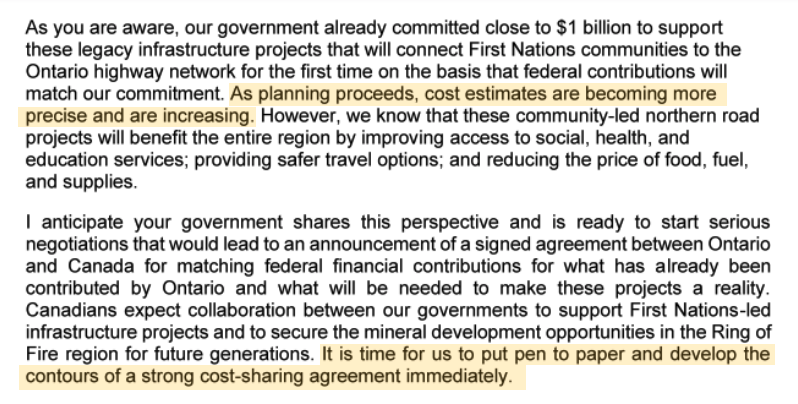
Highlighted excerpts of a letter from Ontario Minister of Northern Development, Mines, Natural Resources and Forestry Greg Rickford to three federal ministers, dated Feb. 18, 2022. The Narwhal obtained the letter through a freedom of information request.
“I anticipate an announcement from your government that would include signing a funding agreement with the province for matching financial contributions of $1 billion to secure this opportunity,” Rickford wrote in a letter to Wilkinson on Jan. 28.
He wrote another letter a few weeks later, on Feb. 18, this time addressing it to Wilkinson, Hajdu and federal Intergovernmental Affairs Minister Dominic LeBlanc. “As planning proceeds, cost estimates are becoming more precise and increasing,” Rickford wrote. “It is time for us to put pen to paper and develop the contours of a strong cost-sharing agreement immediately.” (The Narwhal filed a freedom-of-information request for the latest cost estimate for building roads to the Ring of Fire; the Ontario government refused to release the records.)
Rickford also argued that not only should Ottawa contribute, it must. The Ring of Fire road projects are undergoing assessments from both the federal and provincial governments. Ontario is providing some First Nations with funding to ensure they have the resources they need to fully participate in consultations — and since some of the provincial and federal requirements overlap, Rickford argued that Ontario is essentially “providing funding support to address [federal] legislative requirements,” and should be paid back.
“I feel it is necessary to seek an immediate contribution from Canada as reimbursement for these costs incurred, and I am proposing our officials begin discussions immediately on this initial payment,” Rickford wrote.
Ottawa hasn’t written back yet. “The federal government is developing a response to these letters,” Natural Resources Canada said in an email.
Governments and mining companies have been pushing to mine in the Ring of Fire for more than a decade. Photo: Christopher Katsarov Luna / The Narwhal
Natural Resources Canada also said it has made “major investments” in helping First Nations “improve socio-economic conditions” and make informed decisions about natural resource development. That includes $39 million to the broadband internet project, $20 million to “support First Nations participation in the mining sector,” $20 million for a community wellbeing pilot project and $6 million to Ontario to cover added costs for consulting with First Nations amid COVID-19.
Other documents suggest Ontario is quietly beginning to think about contingencies.
“If the federal government does not agree to an equal cost-sharing arrangement, then the province will have to consider other options to cover the anticipated federal contribution,” a September 2021 briefing note to Rickford said.
Rickford’s office did not answer questions about what other options those might be. A briefing document prepared a month later for the minister ahead of a mining industry event gave no hint that anything might be off track.
“The next two years will be incredibly important and exciting as the projects advance, leading to what could be the next road to prosperity,” it said.
Banner:
On the campaign trail in northern Ontario on May 7, Premier Doug Ford said the Progressive Conservatives “will get it done and build the road to the Ring of Fire.” But internal documents show that his government is no closer to securing $1 billion in necessary federal funding than when first elected in 2018.




 + 31
+ 31



:quality(70)/cloudfront-us-east-1.images.arcpublishing.com/adn/TAUJV7A5BFBAPN4EO63TBXMCWE.jpg)
:quality(70)/cloudfront-us-east-1.images.arcpublishing.com/adn/CU6NSIEAIVH3ZAOUY5RZGRSQHM.jpg)
:quality(70)/cloudfront-us-east-1.images.arcpublishing.com/adn/NKD25Z3QA5EIJKZDTI267XRFYU.jpg)
:quality(70)/cloudfront-us-east-1.images.arcpublishing.com/adn/MB6OIAPWORCQNGLOV5YBCF666Q.jpg)
:quality(70)/cloudfront-us-east-1.images.arcpublishing.com/adn/JJ36C4WP7NEX3KX3G54OABPRRE.jpg)
:quality(70)/cloudfront-us-east-1.images.arcpublishing.com/adn/7XHMU7HXLJA7ZFYICN6H45O4W4.jpg)
:quality(70)/cloudfront-us-east-1.images.arcpublishing.com/adn/TRDYGBH325C2TAI5DLA2H3ODWY.jpg)
:quality(70)/cloudfront-us-east-1.images.arcpublishing.com/adn/IP5MFSIYK5CZTF7ZVTDYYY7HMM.jpg)
:quality(70)/cloudfront-us-east-1.images.arcpublishing.com/adn/GDGJVFNRWJAM5DGGWBRGGQMW4M.jpg)