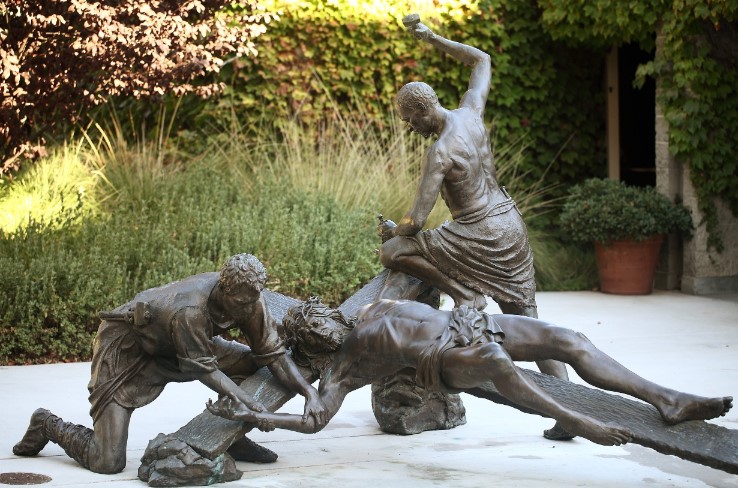
The Intersection of Art, Landscape Design, Sacred Places and Religious Statues

The intersection of art, landscape design, sacred places, and religious statues presents a profound exploration of humanity’s spiritual and aesthetic expressions. Since the dawn of civilization, sacred places have served as spiritual conduits, bridging the earthly realm with the divine. They are not merely geographical locations but intricate tapestries of faith, culture, and artistry. Embellished with exquisite art, thoughtfully designed landscapes, and symbolic religious statues, these spaces stand as tangible manifestations of our collective faith, spirituality, and aesthetic sensibility.

These sacred spaces are mirrors reflecting humanity’s quest for transcendence, understanding, and connection with the divine. They encapsulate the creative interplay between image and meaning, nature and architecture, and the human and the divine. This article delves deeper into this fascinating intersection, exploring how art, landscape design, religious statues, and sacred places harmoniously converge to create environments that resonate with spiritual significance and aesthetic appeal.

From the ancient Greek temples adorned with mythological friezes to the tranquil Zen gardens fostering mindfulness; from the iconic Christ the Redeemer statue overlooking Rio de Janeiro to the meticulously planned cityscape of Mecca centered around the Kaaba, we will traverse various cultures and faiths. We will unravel the stories these sacred spaces tell, the spiritual experiences they facilitate, and the timeless wisdom they embody.

Join us on this enlightening journey as we navigate the intricate interplay of art, landscape design, sacred places, and religious statues, and discover how they collectively shape our spiritual landscapes and cultural narratives.

Historical and Cultural Contexts

Sacred places form a pivotal part of human history, serving as profound spiritual sanctuaries and significant cultural landmarks. These are more than just mere physical locations. They symbolize a complex interplay between the divine and the earthly, the tangible and the ethereal. They embody centuries of human faith, devotion, and cultural evolution, standing as timeless testaments to our collective spiritual journey.

The Role of Art and Architecture

Art and architecture have played an instrumental role in shaping these sacred spaces. Every element, from the grand architectural structures to the intricate artistic details, carries profound symbolism and cultural meaning. For instance, the elaborate carvings on the walls of Egyptian temples tell tales of their gods and pharaohs, while the awe-inspiring stained glass windows of Gothic cathedrals illustrate biblical stories in vibrant colors.

Each brush stroke, chiseled stone, or architectural design is more than an aesthetic feature. They are expressions of faith, embodying religious narratives, spiritual ideologies, and cultural values. They serve to inspire, educate, and evoke a sense of reverence among those who visit these sacred places.

Significance of Religious Statues

Religious statues, spanning different cultures and faiths, serve as tangible embodiments of the divine. These statues depict various divine entities, revered figures, and key religious events, often embodying core spiritual principles. Just think about the Rio de Janeiro statue, the Christ the Redeemer statue, it stands as a symbol of Christianity’s central theme of redemption and divine love.

These statues provide a visual form to the abstract concepts of divinity, making the divine more accessible and relatable to the followers. They also serve as tools for meditation and prayer, helping devotees focus their minds on their spiritual practices.

Integration of Landscape Design

Integration of Landscape Design

The integration of landscape design into sacred places adds another layer of depth to these spaces. It extends the sacredness beyond the confines of the main worship structures, enveloping the entire space in a spiritual aura. From the tranquil Zen gardens of Japan, designed to foster mindfulness and serenity, to the grandeur of Vatican City, where every tree and water fountain is carefully placed to enhance the aesthetic appeal and spiritual ambiance, landscape design is a crucial aspect of sacred places.

These landscapes are not random; they are meticulously planned and maintained. They reflect the ethos of the specific faith, harmoniously integrating natural elements with man-made structures. Whether it’s the sacred groves of India, preserved for centuries due to religious beliefs, or the labyrinthine paths in Christian monasteries for contemplative walks, landscape design plays a vital role in defining the character, experience, and spiritual resonance of a sacred place.

Interplay of Art, Landscape, Religion, and Statues

Art, landscape design, religion, and statues all converge in sacred spaces, each contributing to the spiritual resonance of these places. They form an intricate tapestry of elements that interact with one another, shaping the physical environment and influencing the spiritual experience of the devotees.

The Role of Art in Sacred Places

Art in sacred places serves as a visual narrative of religious beliefs and customs. It transcends linguistic and cultural barriers, communicating profound spiritual truths through a universally accessible visual language. This form of expression is not confined to any single medium or style. From the intricate iconography in Orthodox churches to the vibrant murals in Hindu temples, from the grand mosaics in Byzantine basilicas to the delicate frescoes in Buddhist caves, art forms are as diverse as the faiths they represent.

Each piece of art tells a unique story of faith and devotion. They illustrate religious myths, depict divine figures, symbolize spiritual concepts, and sometimes even narrate historical events associated with the faith. They serve as visual scriptures, educating devotees about their faith and inspiring them with their beauty and symbolism.

Significance of Religious Statues

Religious statues add a tangible dimension to faith, transforming abstract religious concepts into concrete visual forms. These statues, be it a serene Buddha in a meditative pose, a crucified Christ symbolizing sacrifice and resurrection, or a multi-armed Hindu deity representing various cosmic powers, enable devotees to visualize and connect with divine figures.

These statues transcend mere artistic representation. They are revered objects of veneration, meditation, and pilgrimage, heightening the spiritual journey of devotees. Serving as focal points for prayers and contemplation, they provide a tangible connection to the virtues and principles that followers strive to embody.

Role of Landscape Design in Enhancing Sanctity

Landscape design plays a vital role in shaping the physical environment of sacred places, elevating their sanctity and significance. By creating a serene setting that fosters worship, reflection, and spiritual connection, it establishes an ambiance that resonates with the ethos of a particular faith.

These thoughtfully crafted landscapes are carefully integrated with their natural surroundings, seamlessly incorporating elements such as water bodies, trees, hills, and rocks. They provide a haven of calm and tranquility, offering solace from the demands of daily life, while also facilitating specific religious practices. Christian monasteries feature labyrinthine paths for contemplative walks, while mosques embrace open courtyards for communal prayers.

In conjunction with art and religious statues, landscape design forms a cohesive spiritual environment in sacred places. The interplay between these various elements, in harmony with the minds and hearts of devotees, greatly influences their emotions, thoughts, and spiritual experiences.

Specific Examples

Ancient Greek Temples

The ancient Greek temples, with their intricate sculptures and detailed friezes, stand as a testament to the deep reverence and remarkable aesthetic sensibilities of the Greeks towards their pantheon of gods. Architectural masterpieces like the Parthenon in Athens or the Temple of Apollo at Delphi seamlessly blend art and religion.

Each sculpture adorning these temples tells captivating tales of myth and legend, bringing the gods and goddesses to life in the minds of devotees, and making them more relatable and accessible. The friezes also serve as visual narratives, depicting various mythological events and religious rituals, enlightening devotees about their faith.

Christian Art in Roman Environments

In contrast, the Roman environments of the late antiquity period witnessed a remarkable infusion of Christian iconography, materializing in the form of captivating mosaics, intricate frescoes, and evocative statues. This profound transition indicated a significant shift from the long-standing polytheistic Roman religion to the emergent faith of Christianity, thereby highlighting the complex interplay between art and religion during that era.

The catacombs of Rome best exemplify this transformative period, as they house an array of the earliest Christian art forms. These subterranean burial sites are adorned with vivid frescoes that depict pivotal biblical narratives and meticulously crafted symbols associated with early Christianity, such as the iconic fish and the Good Shepherd. Not only do these masterpieces symbolize the remarkable growth and evolution of the Christian faith within the expansive Roman Empire, but they also provide profound insights into the profound beliefs and practices of early Christians.

Buddha Statues in Buddhist Temples

The statue of Buddha, often observed in a meditative posture, stands as a powerful symbol of enlightenment and inner peace. Seen in Buddhist temples worldwide, from the expansive Borobudur temple in Indonesia to the serene Mahabodhi temple in India, these statues serve as focal points for worship and meditation.

With its serene expression and graceful posture, the Buddha statue embodies the core values of Buddhism – mindfulness, compassion, and detachment. It motivates practitioners to strive for spiritual liberation by evoking the Buddha’s enlightening journey. Additionally, the statue offers a tangible representation of the abstract concept of Nirvana, facilitating devotees’ comprehension and aspirations.

Landscape Design in Mecca

The city of Mecca, renowned for its awe-inspiring landscape design centered around the sacred Kaaba, serves as a striking manifestation of the Islamic principles of unity and communal worship. More than just a city, Mecca holds the esteemed position as the holiest site in Islam, attracting countless pilgrims from all corners of the globe during the annual Hajj pilgrimage.

Each facet of the cityscape is meticulously planned with the sole aim of facilitating the spiritual sojourn of the pilgrims. The expansively designed circular pathways leading to the Kaaba efficiently accommodate the movement of monumental crowds, symbolizing the profound unity and solidarity among Muslims as they reverentially circumambulate the hallowed edifice. The minimalist approach employed in the architecture of the Grand Mosque, characterized by its modest, unadorned aesthetics devoid of elaborate artworks or statues, embodies the Islamic principle of monotheism and simplicity. The picturesque backdrop of towering mountains and sprawling desert surrounding Mecca further enhances the spiritual ambiance, serving as poignant reminders of the life and hardships of the revered Prophet Muhammad.

These compelling illustrations vividly demonstrate the diverse yet harmonious amalgamation of artistic expressions, religious sculptures, and carefully crafted landscape designs that reverberate across cultures and faiths, ultimately serving to engender distinctive and profound spiritual environments.

Unveiling Spiritual Landscapes: Final Reflections

Delving into the complex interplay of art, landscape design, sacred places, and religious statues unveils a rich tapestry of human faith and spirituality. This exploration transcends the aesthetic realm, offering profound insights into diverse cultural expressions and spiritual practices.

Appreciating this intricate intersection fosters a sense of global empathy and mutual respect among different cultures and traditions. It serves as a poignant reminder of our shared human pursuit for spiritual enlightenment and connection, despite our diverse paths.

From the ancient Greek temples to the tranquil Buddhist gardens, from the majestic Christian cathedrals to the awe-inspiring Islamic mosques, these sacred spaces embody the beauty, wisdom, and resilience of human spirit. They are more than just physical locations or artistic creations; they are spiritual havens that inspire, educate, and uplift humanity.

Through their compelling symbolism and cultural significance, these spaces continue to resonate with spiritual seekers across generations. They stand as timeless testaments to our collective aspiration for transcendence, serving as beacons guiding us on our spiritual journeys.

As we conclude this exploration, let us carry forward the appreciation and understanding gained from these spiritual landscapes. Let these sacred spaces inspire us to cultivate a deeper sense of spirituality in our lives and foster greater harmony in our diverse global community.


Junk Removal Service Tips on Decluttering Before Moving

You may decide to move, or you wish to declutter belongings that are affecting your situation because you can save both time and energy. Before moving or relocating, you must free space by throwing away things you do not need. Generally, when you have lots of belongings, you will need more space for the process.

At the same time, when you decide to sell or donate belongings for downsizing, you can take more money to spend on the relocation process. If you wish to learn the tips that will help stay on time, on track and feel better, you should stay with us.

Generally, with all decluttering advantages that we can mention here, the process can seem like a challenging assignment, especially if you combine it with relocation, which can be significantly stressful situation you must control properly.

The good thing is that you do not have to consider decluttering as a problem, but a solution. You should know where, when and how to go through your belongings to boost the entire process, make it simpler and have fun throughout the process.

That is why you should stay with us to learn more about on how to create a strategy that will help you prevent unwanted stress from affecting you. Let us start from the beginning.

1.    Motivation

You should be real about the process: decluttering is a process that can easily affect your emotionally due to nostalgia side effects, especially if it is your first time. Generally, you need a slight push to find ways to ensure the process and deal with it without causing severe problems that may happen when you start remembering the old days.

You should remind yourself that trimming the extra belongings will save you money, help you make money in specific situations and start without baggage in a new household. You will be surprised at how interesting it is to find ways to break free from unnecessary belongings. The main idea is to throw things that served their purpose, which will prevent potential problems.

2.    Start Early

Before calling Junk Removal Service, you should remember specific mistakes people make. Generally, the decluttering project is not as simple as it seems, meaning you should start on time. Generally, we tend to collect and gather stuff from all around, which is why it is vital to start early.

We recommend you begin a few months before the relocation date. Of course, with a large household, you may start twelve months before, while six months is optimal for everyone because you will have time to use for nostalgia and rationalisation.

3.    Begin With Rooms You Do Not Use

Begin With Rooms You Do Not Use

When the time comes, you should think about each room you have and your belongings altogether. Since the process requires entering all rooms and dealing with items you have an emotional connection with, we recommend you avoid memorabilia.

For instance, if you begin in rooms where you cannot find the items that will bring you down, which means you will have enough time to sort the things you do not need and things you do.

Therefore, we recommend you to begin at a garage, which is the perfect way to motivate yourself and train yourself to understand the idea of purpose and value of things you possess. That way, you can reach the important stuff, especially because you will perfect the perspective before reaching rooms filled with memories.

When packing, you should keep stuff in boxes, which will help you remove them by calling professionals and dealing with processes. The main idea is to tackle a few birds with a single stone and cause minimal disruption to your daily activities.

4.    Be Effective

Since you will relocate to the new household, the main idea is to combine cluttering with packing, which will save you time throughout the process. It is vital to deal the certain areas where you can pack items you will not use until you reach a new home.

Taking time to deal with every item in your home should allow you to ensure your items are without additional dust, which will prevent potential issues from happening. The best thing about it is that you will cut down on materials, which will allow you to reduce the expenses.

5.    Avoid Lingering

You do not have to think about things you wish to do, because decluttering features emotional attachment is something you cannot avoid and neglect. The main idea is to get back to the present as soon as you notice that a small piece of something took you down and ensure you fall into a web of the past.

When decluttering, the biggest problem is staring at a box a husband bought you for the first year. The main idea is to consider these things as the relevant part of your lives, but you should avoid nostalgia, because it is not effective and efficient, especially since the relocation process is closer than you think.

The crucial step you should remember when it comes to decluttering is sorting and separating items, which will ensure whether you need them or not. The most common options include donate, sell, shred, store and recycle.

6.    Involve Your Loved Ones

Although it may require much longer, you should bring your loved ones in the decluttering process, especially when it comes to their belongings. The main idea is to teach them about patience and time, but generally, children can help you go through the relevant possessions and help you decide what to keep.

When it comes to dealing with toys, you should directly ask them whether they want to play with them or not. That way, you can avoid bringing things that your loved ones do not wish to use anymore.

The best thing about children is their honesty, which is something that will help you throughout the process. You do not have to do it for five hours a day, but spare one with loved ones.

Garden Maintenance Services: Keeping Your Outdoor Oasis Flourishing

Garden Maintenance Services

Introduction

Creating a beautiful and well-maintained garden is a rewarding endeavor. However, maintaining a garden requires time, effort, and expertise. Many homeowners find it challenging to devote sufficient attention to their gardens amidst their busy schedules. That’s where professional garden maintenance services come into play. In this article, we will explore the ins and outs of garden maintenance, the benefits of hiring professionals, and provide you with valuable tips to keep your outdoor oasis in prime condition.

Garden Maintenance Services: Ensuring Your Garden’s Vitality

A well-kept garden not only enhances the curb appeal of your property but also provides a serene and inviting environment. Proper garden maintenance involves a range of activities that contribute to the health and beauty of your plants, flowers, and outdoor space.

1. Regular Lawn Care: A Lush Green Carpet

A well-manicured lawn is the foundation of a beautiful garden. Garden maintenance services offer regular lawn care, including mowing, edging, and trimming, to keep your grass looking neat and healthy.

2. Pruning and Trimming: Shaping Nature’s Masterpieces

Pruning and trimming are essential for maintaining the shape and size of your plants and trees. Professional gardeners have the expertise to perform precision pruning, ensuring your garden’s greenery remains visually appealing and healthy.

3. Weed and Pest Control: Eliminating Unwanted Intruders

Weeds can quickly take over your garden and disrupt the growth of your desired plants. Effective weed control methods, such as manual removal and herbicide application, are part of comprehensive garden maintenance services. Additionally, professional gardeners can address pest infestations, protecting your plants from harmful insects and diseases.

4. Soil Maintenance: The Foundation of Healthy Growth

Healthy soil is vital for the optimal growth of your plants and flowers. Garden maintenance services include soil testing, fertilization, and soil conditioning, ensuring that your garden’s soil composition is balanced and rich in nutrients.

5. Seasonal Planting and Flowerbed Maintenance: Colorful Delights All Year Round

To keep your garden vibrant throughout the year, professional gardeners can assist with seasonal planting, ensuring a continuous display of blooming flowers and lush foliage. They also take care of flowerbed maintenance, including deadheading, weeding, and mulching, to enhance the longevity and beauty of your flower displays.

6. Irrigation and Watering: Nurturing Your Garden’s Thirst

Proper irrigation and watering are crucial for the health and growth of your garden. Expert garden maintenance services can design and install efficient irrigation systems tailored to your garden’s specific needs, saving you time and effort while ensuring your plants receive adequate water.

7. Tree Care and Maintenance: Preserving Nature’s Majesty

Trees play a significant role in any garden, providing shade, beauty, and a habitat for wildlife. Professional garden maintenance services offer tree care, including pruning, tree removal, and disease management, to maintain the health and integrity of your trees.

8. Landscape Design and Renovation: Transforming Your Vision into Reality

If you’re looking to transform your garden into a stunning outdoor retreat, professional garden maintenance services can provide landscape design and renovation expertise. From conceptualization to implementation, skilled professionals can help you create the garden of your dreams.

Why Opt for Professional Garden Maintenance Services?

Now that we’ve explored the key aspects of garden maintenance, let’s delve into the reasons why hiring professionals for your garden’s upkeep can make a significant difference.

1. Expertise and Knowledge

Professional garden maintenance service providers have extensive knowledge and expertise in horticulture. They understand the unique needs of different plants, the appropriate techniques for pruning and trimming, and the best methods for weed and pest control. Their expertise ensures that your garden receives the care it deserves, promoting healthy growth and longevity.

2. Time-Saving Convenience

Maintaining a garden requires a considerable amount of time and effort. By hiring garden maintenance services, you can reclaim your valuable time and use it for other priorities. Professionals will take care of all the necessary tasks, allowing you to enjoy your garden without the stress of constant upkeep.

3. Access to Professional Tools and Equipment

Proper garden maintenance often requires specialized tools and equipment. Professional service providers come equipped with high-quality tools and machinery necessary for tasks such as mowing, pruning, and irrigation. By hiring professionals, you won’t need to invest in expensive equipment or worry about the maintenance and storage of these tools.

4. Consistent and Regular Care

One of the advantages of professional garden maintenance services is the consistency and regularity of care. They will establish a maintenance schedule tailored to your garden’s needs, ensuring that all necessary tasks are performed at the right time. Consistent care contributes to the overall health and vitality of your garden, keeping it in its best condition throughout the year.

5. Enhanced Aesthetic Appeal

Professional gardeners have an eye for aesthetics and design. They can help you enhance the visual appeal of your garden by offering suggestions on plant selection, placement, and landscape design. With their expertise, they can transform your outdoor space into a stunning and harmonious oasis that reflects your personal style.

6. Seasonal Expertise

Different seasons require different care for your garden. Professional garden maintenance services understand the specific needs of each season and can adapt their maintenance practices accordingly. Whether it’s protecting your plants from frost in winter or providing adequate water during the hot summer months, professionals will ensure that your garden thrives year-round.

Frequently Asked Questions (FAQs)

1. How often should I hire garden maintenance services? It depends on the size and complexity of your garden, as well as your personal preferences. Most homeowners opt for regular maintenance services, such as monthly or bi-weekly visits, to keep their gardens in optimal condition. However, you can discuss your specific requirements with the service provider to determine the frequency that suits your needs.

2. Will garden maintenance services work within my budget? Garden maintenance services can be tailored to fit various budgets. The cost will depend on factors such as the size of your garden, the scope of work required, and the frequency of visits. It’s advisable to obtain quotes from different service providers and compare their offerings before making a decision.

3. Can garden maintenance services help with landscaping projects? Yes, many garden maintenance service providers also offer landscaping services. Whether you want to redesign your entire garden or make small enhancements, professionals can assist you in creating a captivating and functional outdoor space.

4. Are garden maintenance services only for residential properties? No, garden maintenance services cater to both residential and commercial properties. Whether you have a small backyard garden or a large corporate landscape, professional gardeners can tailor their services to meet your specific requirements.

5. Do I need to be present during garden maintenance visits? It’s not necessary for you to be present during every garden maintenance visit. However, it’s recommended to communicate your expectations and requirements to the service provider beforehand. You can also schedule periodic walkthroughs with the professionals to discuss any specific concerns or changes you’d like to make.

Conclusion

Maintaining a beautiful garden requires time, effort, and expertise. Hiring professional garden maintenance services can alleviate the burden of garden upkeep and ensure that your outdoor oasis thrives year-round. With their knowledge, skills, and access to specialized tools, these professionals can provide regular care, tackle weed and pest control, offer expert advice, and enhance the aesthetic appeal of your garden. By opting for professional services, you can enjoy a flourishing and stunning garden without the stress and hassle.

So, if you’re ready to transform your garden into a vibrant and captivating space, consider hiring professional garden maintenance services today.

Partner Site : Financial Management, Vacation Destinations, Home Garden, Landscape Design, Home Decoration, How News Today, Healthy Lifestyle, Finance News, Business Loans, Healthy Update

Large Garden Statues: Adding Artistic Splendor to Your Outdoor Space

Large Garden Statues

Are you looking to transform your garden into a captivating oasis of art and beauty? Look no further than large garden statues. These stunning sculptures not only add a touch of grandeur to your outdoor space but also serve as exquisite focal points that ignite conversation and captivate the imagination. In this article, we will explore the world of large garden statues, their benefits, types, materials, factors to consider when purchasing, installation tips, maintenance guidelines, and how they can enhance the overall aesthetics of your garden.

1. Introduction to Large Garden Statues

Gardens have long been cherished as serene retreats, a place where nature and creativity intertwine. By incorporating large garden statues, you can elevate the ambiance of your garden, turning it into a captivating sanctuary. These statues come in various shapes, sizes, and designs, offering an array of options to suit different preferences and garden styles.

2. Benefits of Large Garden Statues

Large garden statues offer numerous benefits that go beyond mere aesthetics. They provide a focal point that draws the eye and adds a sense of structure to your garden design. These statues can evoke emotions, tell stories, and create a harmonious connection between nature and art. Moreover, they can enhance the overall value of your property and create a memorable impression on visitors.

3. Choosing the Right Location for Your Large Garden Statue

The placement of a large garden statue is crucial for its visual impact. Before selecting a statue, consider the available space, the existing landscape, and the overall design theme of your garden. Whether you want it to be a central piece or nestled among the foliage, ensure that the location complements the statue’s size and style while providing a clear view from different angles.

4. Different Types of Large Garden Statues

4.1 Animal Statues

Animal statues are a popular choice for garden enthusiasts. Whether you prefer majestic lions, playful rabbits, or elegant birds, these statues add a touch of wildlife charm to your garden. They can symbolize strength, grace, or the beauty of nature itself.

4.2 Mythological Statues

Mythological statues, such as Greek gods and goddesses, mythical creatures like unicorns or dragons, bring a sense of mystique and enchantment to your garden. These statues can transport your imagination to ancient times, where legends and folklore come alive.

4.3 Religious and Spiritual Statues

For those seeking spiritual solace For those seeking spiritual solace or a connection to their faith, religious and spiritual statues are an ideal choice. Whether it’s a serene Buddha statue, a serene Virgin Mary, or a serene Hindu deity, these statues can create a serene and sacred atmosphere in your garden.

4.4 Abstract and Contemporary Statues

If you have a modern or contemporary garden design, abstract and contemporary statues can add a touch of artistic flair. These statues often feature unique shapes, bold lines, and unconventional materials, making them a statement piece in your outdoor space.

5. Materials Used in Large Garden Statues

Large garden statues can be crafted from various materials, each with its own unique characteristics and appeal. Common materials include:

  • Stone: Stone statues, such as those made from marble or granite, exude elegance and timeless beauty. They can withstand various weather conditions and develop a lovely patina over time.
  • Metal: Metal statues, such as those made from bronze or copper, offer a sleek and contemporary look. They are durable, rust-resistant, and can withstand the elements with proper maintenance.
  • Resin: Resin statues provide a lightweight alternative to stone or metal. They are often intricately detailed and can mimic the appearance of other materials. Resin statues are typically more affordable and easier to move and position in your garden.

6. Factors to Consider When Purchasing a Large Garden Statue

When choosing a large garden statue, consider the following factors:

6.1 Size and Scale

Consider the available space in your garden and ensure that the size and scale of the statue are proportionate. A statue that is too small may go unnoticed, while one that is too large can overwhelm the surroundings.

6.2 Style and Design

Select a statue that complements the overall style and design of your garden. Consider the theme, colors, and materials used in your garden’s landscaping to ensure harmony and visual coherence.

6.3 Maintenance and Durability

Take into account the maintenance requirements and durability of the statue. Depending on the material, some statues may require periodic cleaning, sealing, or protection from harsh weather conditions.

6.4 Budget

Set a budget for your large garden statue. Prices can vary widely depending on the size, material, and craftsmanship of the statue. Research different options and choose one that fits within your budget without compromising quality.

7. Placing and Installing Large Garden Statues

When installing a large garden statue, it’s essential to ensure stability and proper positioning. Consider the weight and size of the statue, and use a solid base or foundation to prevent tipping or damage. Follow any installation instructions provided by the manufacturer or consult a professional if needed.

8. Maintaining and Cleaning Large Garden Statues

To keep your large garden statue looking its best, regular maintenance and cleaning are necessary. Depending on the material, use appropriate cleaning methods and products to remove dirt, debris, and any signs of aging. Avoid harsh chemicals that could damage the statue’s finish.

9. Enhancing Your Garden with Large Garden Statues

Large garden statues can be strategically placed to enhance the overall aesthetic of your garden. Use them as focal points, creating visual interest and drawing attention to specific areas or features. Experiment with different placements to find the perfect balance and harmony.

10. Popular Themes and Ideas for Large Garden Statues

Consider incorporating popular themes and ideas for large garden statues, such as:

  • Nature-inspired: Choose statues that depict animals, flowers, or elements of nature to create a harmonious connection with the surrounding environment.
  • Water features: Combine a large garden statue with a water feature, such as a fountain or waterfall, for a soothing and tranquil ambiance.
  • Geometric shapes: Explore statues with clean lines and geometric forms to add a modern and contemporary touch to your garden.
  • Zen and mindfulness: Opt for statues that embody Zen principles, such as serene Buddhas or meditating figures, to create a peaceful and calming atmosphere.
  • Cultural influences: Incorporate statues that reflect your cultural heritage or pay homage to different cultures around the world, adding diversity and richness to your garden.

11. Large Garden Statues as Focal Points in Landscaping

Large garden statues serve as eye-catching focal points that can anchor your landscaping design. They create a sense of balance, structure, and visual interest. Consider placing a statue at the end of a pathway, in the center of a flowerbed, or amidst lush foliage to draw attention and create a captivating landscape composition.

12. Large Garden Statues for Specific Garden Styles

Different garden styles can benefit from specific types of large garden statues. For example:

  • Traditional gardens: Opt for classic statues that embody timeless elegance and reflect the historical elements of traditional garden designs.
  • Mediterranean gardens: Choose statues that showcase Mediterranean influences, such as Greek or Roman gods and goddesses, to complement the warm and vibrant atmosphere of these gardens.
  • Contemporary gardens: Embrace modern sculptures that incorporate abstract or geometric shapes, reflecting the clean lines and minimalist aesthetics of contemporary garden designs.

13. Large Garden Statues as Conversation Starters

Large garden statues have the power to captivate and intrigue visitors, sparking conversations and creating memorable experiences. Whether it’s a thought-provoking abstract sculpture or a whimsical animal statue, these artistic pieces can serve as excellent conversation starters during gatherings or garden parties.

14. Large Garden Statues: A Symbol of Personal Expression

Choosing a large garden statue is an opportunity to express your personality and values. Whether you resonate with a particular theme, find inspiration in a specific cultural tradition, or simply appreciate the beauty of a certain design, your choice of statue becomes a representation of your unique taste and individuality.

15. Conclusion

Large garden statues offer a remarkable way to infuse art, beauty, and personal expression into your outdoor space. From animal and mythological statues to religious and contemporary designs, the options are endless. Consider the size, style, and materials of the statue, and carefully plan its placement to create a visually stunning and harmonious garden. With proper maintenance and thoughtful landscaping, these statues will continue to enchant and inspire, transforming your garden into a captivating sanctuary.

FAQs (Frequently Asked Questions)

1. Are large garden statues weather-resistant?

Yes, many large garden statues are designed to withstand various weather conditions. However, it’s important to choose statues made from durable materials like stone or metal, and apply proper maintenance to ensure their longevity.

2. Can I move a large garden statue once it’s installed?

While large garden statues can be moved, it’s best to plan their placement carefully from the beginning. Moving a heavy statue may require assistance or professional help to prevent any damage or injury.

3. How do I clean and maintain a large garden statue?

The cleaning and maintenance requirements depend on the material of the statue. Follow the manufacturer’s guidelines and use appropriate cleaning products and techniques. Regular dusting and occasional deep cleaning can help preserve the statue’s appearance.

4. Can I customize or commission a large garden statue?

Yes, it is possible to commission a custom-made large garden statue. Many artists and sculptors offer personalized services, allowing you to create a unique and bespoke piece for your garden. Reach out to local artisans or browse online platforms to explore custom options.

Partner Site : Business Tips , Health News, Future Technology, Home Decorating, Travel Tips, Classic Car, Online Education, Business Law, Women Fashion, Beauty Salon

8 Legendary BIPOC Designers Who Inspire Today’s Talents – Robb Report

From Black architect Paul R. Williams, who designed homes for Hollywood’s biggest stars, to Gira Sarabhai, who cofounded a design school in her native India, BIPOC talents have too often been overlooked. Here, some of today’s brightest stars shine a light on eight visionaries who deserve a fresh appraisal.

Riten Mozumdar (1927-2006)

Following India’s independence from the British Empire in 1947, artisans moved to revive the subcontinent’s ancient handicrafts. One of the most notable was Riten Mozumdar, whose work significantly shaped the country’s post-colonial modernist designs. An apprentice of pioneering artist Benode Behari Mukherjee, Mozumdar has a multifaceted résumé, ranging from furniture and art-work to fashion and sculpture. He gleaned inspiration from India’s rich history—at one point traveling throughout the country to learn more about fabric-dyeing techniques—as well as abroad, in places such as Finland, where he worked in textile manufacturing and absorbed some of the no-frills elements of Scandinavian design. His works are minimalist but often feature bright, bold colors, as seen in his graphic linens for Fabindia and his Kashmiri rugs, awash in fluid calligraphy. Mozumdar designed pavilions and exhibitions in India and showed his work around the world at such prestigious venues as the Museum of Modern Art in New York and the Museum of Decorative Arts in Copenhagen.

Riten Mozumdar Textile Designer

A Namda felted-wool rug by Riten Mozumdar, made with tie-and-dye, resist block print and embroidery.

Courtesy of Chatterjee, Lal, and Ushmita Sahu

“Unlike many modernist Indian designers who emerged from the National Institute of Design with a more Western-focused approach, Mozumdar studied at Santiniketan as an artist and approached modernism from a more indigenous angle. Working with Kashmiri felt-rug makers and Gujarati tie-and-dye artisans and drawing inspiration from both traditional Mughal calligraphy and Bengali script, he developed a modernist design language that felt fresh and new but was still deeply rooted in Indian traditional craft. For me, Mozumdar’s work resonates because it synthesizes traditional Indian motifs and patterns with Western minimalist and abstract art.” —Puru Das, DeMuro Das

Sami El Khazen (Circa 1943-1988)

Born in Lebanon in the early 1940s, El Khazen was a pivotal interior designer in the Middle East, though much of his work has been lost. Many of the homes that he decorated were destroyed in the Lebanese Civil War that ravaged the country during the latter half of the 20th century. Still, bits and pieces of his influential oeuvre remain. He received one of his biggest commissions remarkably early in his career: the interior design of the Lebanese Pavilion at the 1964 World’s Fair in New York. The centerpiece was a massive, nickel-plated-bronze and acrylic chandelier (pictured below) that he made in collaboration with Italian manufacturer Arredoluce. The Shah of Iran purchased it and displayed it in his palace dining room after re-engineering it into a slightly smaller piece; it sold at auction for $32,500 in 2018. What defined El Khazen’s approach was his ability to combine Eastern and Western traditions while also prioritizing Islamic art. His sensibility is most evident in his studio and home on the ground floor of the Rose House in Beirut, a colorful building constructed in 1882. El Khazen softened some of the Arabic architecture’s characteristic geometries to create a more calming environment for work. It was featured in Architectural Digest, which referred to him as “one of the Middle East’s most innovative designers.”

Sami El Khazen Ceiling Light

A ceiling light by Sami El Khazen.

Bonhams/Paul R. Williams: Security Pacific National Bank Collection/Los Angeles Public Library

“Sami El Khazen was a Lebanese designer in the ’60s and ’70s whose legacy was interrupted by war, cut short by an early death and then erased by Beirut’s constant growth. The homes he had designed exist by word of mouth, and very little has been documented or published….

“The project that our studio takes a lot of inspiration from is his home and studio in the Rose House in Beirut, which is decaying now but was a beautiful rose-colored home in traditional Lebanese architecture. His space within the home was published in 1974 in Architectural Digest, and the article notes Sami’s creation of ‘Oriental Contemporary,’ blending East and West. The space is timeless, chic and, above all, has identity. We bring it up a lot to our clients who like contemporary design and architecture as a case study, since a lot of them are from different countries or first-generation born here in the States. We ask them to pull from the different identities within them to create a unique space that’s actually reflective of their journey, not just a Western image of what contemporary is.” —Homan Rajai, Studio Ahead

Paul R. Williams (1894-1980)

His architecture defined the Hollywood aesthetic in the mid-20th century, and yet Williams had to sketch his ideas upside down: The trailblazing Black architect consciously opted to sit across from his white clients rather than next to them, cognizant that such proximity to a Black man might make them uneasy. It’s just one example of the rampant racism that Williams faced in his profession. His contributions to the Beverly Hills Hotel (pictured below) include its instantly recognizable swoopy logo and pink-and-green color scheme, as well as his work on its Polo Lounge, but he was not permitted to stay there. He designed 2,000 homes in Los Angeles—celebrity clients included Cary Grant and Frank Sinatra—but many were in neighborhoods where he would have been barred from buying a house. His legacy, however, is indelible: As the first Black member of the American Institute of Architects, he hoped that his work would ultimately open doors for the next generation.

The Beverly Hills Hotel

The swoopy logo of The Beverly Hills Hotel and its pink-and-green color scheme was contributed by Paul Williams.

Slim Aarons/Getty Images

“The Hollywood style and Art Deco of California’s charm is all to do with his presence in the structures. He set the standard for the cinematic style and glamour for Hollywood and the film industry—something that is still replicated throughout Hollywood today….

“It does alot for me to think about what he may have been experiencing during the designing period, knowing the state of the country during the 1930s, ’40s, ’50s and ’60s and its treatment of Black Americans. He pushed through to produce memorable works to be used by the public; his works were wanted by the very Americans who rejected his Black body, and that speaks more to me as a Black Caribbean designer in 2021.” —Leyden Lewis, Leyden Lewis Design Studio

Demas Nwoko (1935- )

Both an artist and an architect, Nwoko has prioritized his native Nigeria’s traditions throughout his lengthy career. Now 86, he studied fine arts at the College of Arts, Science and Technology in Zaria and later studied scenic design at the Centre Francais du Théâtre in Paris, experiences that exposed him to many different aesthetic traditions. In the late 1950s, just before Nigeria gained independence from the UK, he founded an art society, which became known as the Zaria Rebels, with a handful of other students, among them the renowned artists Bruce Onobrakpeya and Uche Okeke. Their goal was to reintroduce indigenous ideas and forms into the postcolonial landscape while simultaneously incorporating a few of the techniques brought by Westerners. The objective carried over into Nwoko’s architectural practice, where he worked with local materials in order to create a new, distinctly Nigerian design tradition. One of his first major projects, for example, was for the Dominican Mission in Ibadan, which wanted to redesign its churches with African motifs following independence. Nwoko’s chapel (pictured) features a semicircular design evocative of indigenous architecture and stained-glass windows in the shape of crosses scattered, off-kilter, along one wall. Nwoko also built a cultural center in the same city, as well as a theater in Benin.

Demas Nwoko Architecture

One of Nwoko’s first designs (pictured), a chapel featuring a semicircular design evocative of indigenous architecture.

Almay

“Demas Nwoko is a Nigerian artist with no formal training as an architect but nonetheless has designed beautiful buildings and special projects and is at the forefront of creating a modern African vernacular in design. He has a very distinct style that’s almost a deconstructed, African maximalism.” —Tosin Oshinowo, CmDesign Atelier

Gira Sarabhai (1923-2021)

Sarabhai was born into a prominent family in India in 1923 and moved to New York when she was a teenager. In the following years, she trained under Frank Lloyd Wright at his Taliesin West studio in Arizona, then returned to India to create the project that she’s best known for: the National Institute of Design (NID) in Ahmedabad. The architect was a cofounder of the institute, along with her brother—the two collaborated on the design of the campus’s main glass-and-concrete building (pictured). Sarabhai was instrumental in enticing talent from abroad to join the new school as consultants, including Finnish designer Helena Perheentupa, who set up NID’s textile department. Sarabhai helped create an Indian design identity, as the academy not only preserved the past—she stocked its library with important works from the country’s history—but also nurtured young talent for the future. NID still operates today, as does her Calico Museum of Textiles, which houses an extensive collection of Indian fabrics.

Gira Sarabhai Architecture

The National Institute of Design (NID) in Ahmedabad created by Sarabhai.

National Institute of Design

Gira Sarabhai, who passed away earlier this year was a visionary in Indian design education, modern architecture and research. She achieved too much in her life to put in one or two sentences, so I would have to focus on something I got to experience: the National Institute of Design campus. Walking through the campus as an outsider, I couldn’t help but feel jealous of the students who got to live and learn in such an incredible space. While she is credited with having brought numerous global design icons to India as it transitioned to being an independent nation, she is no less an icon herself through the impact she has had and will have over the future of Indian design.” —Urvi Sharma, Indo

Clara Porset (1895-1981)

Porset was born in Cuba in 1895, but she traveled the world to hone her craft at institutions such as the famed École des Beaux-Arts and the Louvre, in Paris. After returning home, she created furniture for schools and gave lectures about the importance of modern design, but her outspoken support for the Cuban worker uprisings quickly led to political exile in 1935. Porset decamped to Mexico, where she married painter and muralist Xavier Guerrero. The two entered the Museum of Modern Art’s Organic Design in Home Furnishings competition as a team in 1940—the first time that Latin American designers were included in a call for proposals—but only Guerrero received credit. While in Mexico, Porset advocated for the use of traditional handicrafts and techniques, in contrast to the prevailing enthusiasm for more efficient industrial manufacturing methods. Perhaps her most notable achievement is her reinvention of the Butaque chair, a low-slung seat that was originally introduced by Spanish conquerors but was later appropriated by Mexicans as a symbol of nationalism. Porset took that activism a step further, tapping local artisans to make the popular design with regionally sourced materials, including wicker, oak and leather.

Clara Porset Interior Designer

Clara Porset’s wood-and-hide Butaque chair by Luteca.

Courtesy of Archivo Clara Porset/CIDI/FA/UNAM/Mexa Design

Within the design industry there’s no doubt that Porset is considered a pioneer. However, in the mainstream, her work is often lesser known to that of her contemporaries, including architect Luis Barragán, who himself commissioned her now-iconic Butaque chairs. Porset was one of the leading voices of Mexican modernism, believing that contemporary Mexican design should also honor its craft history. She was part of a group of progressive designers in Mexico who encouraged the use of local materials, age-old techniques and indigenous design motifs to create a distinct Mexican modernist style.” —Natasha Baradaran, Natasha Baradaran Interior Design

John Moutoussamy (1922-1995)

In 1971, Moutoussamy became the first Black architect to design a high-rise in Chicago. In 2021, he remains the only one. The commission came from John H. Johnson, the powerful founder of Johnson Publishing Company and the first Black businessman to appear on the Forbes 400 list of the richest people in America. Moutoussamy designed the 11-story concrete, marble and glass building (pictured) as the headquarters for Johnson’s magazines, led by Ebony and Jet.

The building received city landmark status in 2017; two years later, apartments replaced the offices, but the exterior signage for the original publications remains. The Chicago-based architect continued designing in the Windy City for the rest of his career, working on projects such as Harry S. Truman College and the Chicago Urban League building. He is also remembered as the first Black architect to be named a partner at a major firm, a milestone he achieved in 1966.

John Moutoussamy Architect

Moutoussamy designed the 11-story concrete Johnson Publishing Building as the headquarters for magazines, led by Ebony and Jet.

Chicago History Museum/Hedrich-Blessing Collection

“One of my favorite Black American architects is John Warren Moutoussamy, who’s best known for designing the Johnson Publishing Building in Chicago. It is more popularly known for its bold interiors (often heralded as a celebration of Black American culture), but I also appreciate the simplicity of its understated, geometric facade. The minimalist aesthetic is most often credited to Mies van der Rohe (under whom Moutoussamy studied), but I also think it’s important to examine the ways in which modernism was largely inspired by African aesthetics. I think the juxtaposition of the minimalist exterior with the colorful, pattern-rich interiors makes for an interesting conversation about Black ownership over different styles of American design.” —Tariq Dixon, Trnk

As one of Indonesia’s pioneering and most prolific interior designers, Ibrahim helped define the much-imitated look and feel of Asia’s luxury hotels. But he never formally studied design. It wasn’t a popular discipline in Indonesia in the 1960s, so Ibrahim earned an economics degree at the UK’s University of York instead. After graduating, he took a job as an assistant to a friend, actress turned interior designer Anouska Hempel. It turned out to be his first big break. Hempel noticed the attention to detail that Ibrahim brought to arranging table settings for her lunches—always symmetrical and color-coordinated—and started training him. By the early ’90s, Ibrahim had returned to Indonesia and was making his mark with commissions for prestigious, five-star hotel projects such as the historic Aman Summer Palace in Beijing, the Legian Bali and the Setai Miami Beach. The prevailing aesthetic was simple: symmetry above all else. Ibrahim also had a keen eye for creating spaces that felt calming and tranquil while still leaving a lasting impression on visitors. Following his death in 2015, his legacy endures via his interiors firm and furniture-manufacturing practice, and his projects continue to influence hospitality designers.

Jaya Ibrahim Hotels and Residences

An Amanfayun Hangzhou villa guest bathroom designed by Jaya Ibrahim.

Courtesy of Jaya Hotels and Residences

Jaya Ibrahim was an Indonesian designer who lived and studied in London and Singapore. I share with him that experience of both Western and Eastern culture. He was one of the first generation of Southeast Asian designers to create a new aesthetic of Asian design that was contemporary and bold.” —Andre Fu, Andre Fu Studio

Best of Design 2023: This New Home is a Work of Art in More Ways that One

200 Buckingham4

It’s simple to suppose sure matters basically won’t perform collectively: Ultra-modern architecture cannot also have a warm, inviting vibe a property with mostly windowed walls can not accommodate an considerable artwork assortment the Pittsburgh weather isn’t conducive to a household designed all-around the notion of indoor/outside dwelling.

In Fox Chapel, an strange property has managed to defy all individuals assumptions by way of a complex structure that lends itself to a lived-in, welcoming space in which the outdoors play as much a purpose as every little thing occurring inside. It also wowed our judges, who named it their Most effective New House in this year’s Greatest of Style and design Contest.

200 Buckingham19

“I appreciated the custom made details that are executed in the course of the dwelling. The move of the indoor/outdoor practical experience is phenomenal,” claims Crystal DeCastro Knapik, a venture designer at Vocon, which has spots in Cleveland and New York City.

Indeed, each individual depth of the property — a collaboration in between the property owners (who want to continue to be anonymous), Chicago-centered architect Thomas Shafer and lead carpenter Mike Craig — carries meaning and objective, resulting in a seamlessness that can be both of those observed and felt.

“There will be those people who will have complications inserting this architecture inside of their definition of a ‘house,’” claims Shafer, principal at Shafer Crowe Kueck Architecture + Design. “It’s not a common brick-and-wooden-sided house. There is not a gable or a brick chimney. There are no columns, or turrets. It is not referential.

“What are those concrete partitions for? Is it a museum or a college? What particularly is it? It problems notions of ‘house.’ And nevertheless that was just it — the commencing position wasn’t to be prescriptive,” he suggests. “It was not an itinerary to in good shape within just a distinct glimpse or definition — rather the opposite.”

200 Buckingham30

The exterior by yourself has been regarded to quit passersby in their tracks. When the proprietors ended up creating the dwelling, a female driving by pulled around to talk to the house owner what the composition was likely to be. When he replied, “My dwelling,” she immediately responded: “It’s so unattractive!”

Perhaps she was thrown by the sweeping concrete wall major up to the driveway of the courtyard-type home, 1 of several that the two afford to pay for the residence privacy and allow any customer know they are not approaching anything at all standard to the Pittsburgh area.

200 Buckingham24

But any operate of artwork is intended to elicit a response, and all functions took the reaction in stride.

“Personally, I adore this story,” Shafer says. “It’s so appealing how a thing so wonderful and normal to one particular could be so alarming to an additional. It certainly was outside her convenience zone.”

It also was a strike with Ideal of Style and design judges, who praised the seamlessness amongst the indoor and outside areas as very well as the thoroughly clean lines uncovered in the course of the home.

“I like that this is Mid-Century Modern day design and style, but it however felt extremely warm and inviting,” says choose Katie Savakis, a challenge designer at Vocon in Cleveland.

200 Buckingham5

That was one of the most important aims for the householders, who had been specified about wanting a modern-day aesthetic but also desired to stay clear of it experience much too sterile or cold. They wanted a area where by they could occur household and place their ft up a put exactly where their puppies could operate about outdoors then curl up with them by the hearth a put exactly where friends didn’t feel like they experienced to continue to be standing and not dare touch anything.

To attain the preferred stability, Shafer relied on proportion, scale, shade and texture. Use of mild was possibly the most crucial element in infusing the property with its inviting come to feel, he says. As these, the floor-to-ceiling windows through the home immerse the occupants in the 1.5-acre house outdoor. Shafer also states the house is oriented to improve variations in gentle all through the days and seasons.

“It’s a living and at any time-altering sculpture,” he suggests. “In the tumble, the yellows and reds of the altering trees mirror into the household.”

200 Buckingham7

The 4,500-sq.-feet area was intended in volumes, each made up of a collection of cozy areas with guest quarters on just one close and the owner’s own quarters at the other the two are related in the middle by the key living areas. Shafer suggests the plan was to create locations in which day-to-day life could overlap but that also let for isolation when necessary.

“Several significant and vibrant pivoting ‘doors/panels’ assist in opening or closing off the spaces to make it possible for for these distinctive pursuits to occur,” he states. “These thresholds consistently modify dependent on who is there and/or what is going on. It breathes and modifications appropriately, not always the similar.”

1 of the most important worries with fashionable houses is the lack of trim, in accordance to the owners. That signifies everything has to line up there is nowhere to cover any disconnect or flaw. The ceilings and the overhangs are on the identical plane. Steel beams achieve exterior with no noticeable disruption. Charred Shou Sugi Ban partitions designed from Japanese cypress carry from the inside out to line the home’s exterior. The crew also created a Mid-Century Modern day corduroy siding detail for particular exterior walls, which wraps into the dwelling and blends into walnut cabinets.

Throughout the residence, hardwood was preferred for flooring about stone to incorporate warmth it also enhances and softens the aluminum curtain wall, Shafer claims. The home’s playful shade palette ranges from heat grays and whites, to soft blues and sage greens, to even the occasional pop of vermillion.

200 Buckingham2

From the rows of guitars adorning the wall of the property place of work to the pieces by common Pittsburgh artist Burton Morris in the key-ground gym, artwork also infuses the dwelling with identity. Residing in a residence of mostly windows also did not restrict the householders from displaying their intensive assortment. For occasion, a tryptich of Damien Hirst artwork is embedded inside of the glass curtain wall of the dwelling place to get the job done with the open up space all around it.

Lighting decisions also spotlight the all-natural setting, these as the bronze wire Moooi piece over the eating desk that illuminates although nevertheless making it possible for the eye to move through to the outside the house. Higher than the customized blackened steel hearth, fabricated by Jorg Gerlach and his team at Echt Style Solutions, a wall of polished Venetian plaster dances with gentle when the sunlight hits it.

200 Buckingham9

In the kitchen, the granite of the substantial island will come alive as it demonstrates golds and blues new tones are discovered from every single vantage issue as ample natural light-weight skims across the surface. A relaxed take in-in nook with seating for two is the great location to sip coffee and glance out into the private zen backyard. A glass enclosure separating a place from the walk-in closet is supposed for a saltwater fish tank.

Even though Shafer says he does not assume the house owners anticipated to end up living in a concrete, aluminum, wooden and glass property, their willingness to acquire quite a few odds resulted in a property not like any other.

“A profitable venture is a consequence of a exceptional customer, and [the homeowners] were being surely distinctive,” Shafer says. “They were curious and engaged and remained open up-minded each and every stage of the way. They dependable the procedure and suspended disbelief. It was a distinctive collaboration, and frankly, is the very rationale it turned out to be these kinds of a successful challenge.”


Suppliers

Architectural Style: Tom Shafer, Shafer Crowe, Kueck Architects, Chicago, IL
Inside Layout: Tom Shafer, Marian Leventon Interiors 
Landscape Architect: Frank Dawson, J.Frank Studios
General Contractor: Hainer Construction Team
Website Operate: J.A. Martin Enterprises
Structural Metal: MultiMetal Inc.
Home windows and Doorways: SCHÜCO Home windows
HVAC: Climatech
Electrical: S& L Electric powered
Plumbing: East Conclusion Plumbing & Mechanical
Cabinetry/Casework: The Kitchen area Gallery
Paint Get the job done: Rieger’s Painting
Customized Millwork: Allegheny Millwork
Counter tops: Greatest Granite, Morrow Brothers Countertops
Tile Function: Mandy’s Tile Service
Ornamental Steel Fabricator: Echt Design and style Services
Landscaping: Evanovich, Inc.