Much of a creek that once ran through Anchorage is now in underground pipes. A group wants to return it to the daylight.

An Anchorage group wants the city to take a closer look at reviving a creek that once flowed through town by “daylighting” the waterway.

During decades of development in Midtown Anchorage, Fish Creek was partially routed into underground drainage pipes. Now, a group called Friends of Fish Creek is advocating for the upstream section to flow again at the surface.

Everyone seems to acknowledge that bringing the creek into the open won’t be easy. But advocates say such a move will transform the creek into a prized community asset, running through the heart of town and into Spenard.

“We’ve never tackled anything like this in our city before, and what’s really cool about it is how we can co-exist with our natural landscape,” said Karen Button, the group’s president. “And Anchorage is still young enough that we have that opportunity.”

Friends of Fish Creek members say it can be rehabilitated in sections, to manage costs.

Anchorage voters last month approved a $320,000 bond to pay for a study of the daylighting idea.

But bond attorneys for Anchorage have informed city officials that a study can’t be paid for with a bond, which typically funds capital assets, said Lance Wilber, the municipality’s public works director.

However, Anchorage Assembly member Austin Quinn-Davidson, who led the effort to get the item on the ballot, said she plans to pursue other funding sources.

Restoration efforts go from ‘crazy to cool’

The study, if it’s funded and gets underway, will help determine how and whether the project should be pursued.

About five years ago when the Fish Creek group formed, people thought daylighting the creek sounded crazy, Button said.

But restoration efforts around the country — including the ongoing recovery of Eklutna River northeast of Anchorage — have changed views, she said.

People are increasingly interested in “green infrastructure” projects like this one — using natural features to manage water and build resilience to climate change, she said.

“It’s gone from crazy to cool, and that just tells me how far we’ve come,” Button said.

Quinn-Davidson said the study, requested by the Fish Creek group, would be a “visioning process” with public hearings to see what’s possible, she said.

Maybe Anchorage can create something like the River Walk in San Antonio, Texas, she said. The flood-control project on the San Antonio River is an open-air tourist attraction below city streets, lined with trees and shops.

“It would take some real vision and money, but it doesn’t have to happen all at once,” Quinn-Davidson said.

Maybe sections can be daylighted as developers undertake projects, she said.

“That could be a nice asset for development,” she said.

Quinn-Davidson said she’ll push for other funding sources for the study. After all, voters approved the measure. The money could come possibly come from the American Rescue Plan Act, she said.

Urbanization

The Fish Creek that remains today is often small and sometimes grimy. Its lower portion flows through much of Spenard and Turnagain, accompanied at times by a bike trail.

The creek begins at a spring far to the east, in a wooded area near medical offices and the intersection of Lake Otis Parkway and Tudor Road. It soon heads into the city’s underground drainage system.

But here and there, pieces of the historic creek remain. They’re often dry ditches strewn with trash, unless it rains or snow melts.

During a recent bike tour of the creek’s historical route, some of the original banks contained mucky brown water.

“We built over the top of it, but the creek keeps trying to flow,” said Jed Smith, a Friends of Fish Creek board member who led the tour.

Sometimes, the creek remnants ducked behind houses and businesses, cutting off access. It smelled like sewage in a couple spots.

In the early 1950s, the creek was thin and moved slowly across what would become Midtown. It lost its shape in marshy areas, but grew more defined in Spenard. It was fed by wetlands, unlike other Anchorage creeks that start in mountains, Button said.

As Anchorage boomed, water sources were paved over and dried up, she said.

Builders scraped away spongy peat and replaced it with gravel to throw up buildings and parking lots.

An important source called Blueberry Lake was covered with gravel and asphalt, she said. The lake is gone from today’s maps, replaced by Walmart and other businesses.

To prevent flooding, city planners redirected much of the creek into underground pipes, she said.

The ponds at Cuddy Family Midtown Park are part of Fish Creek’s historical course. They were created more than a decade ago, from wetlands near the Loussac Library, to help control flooding.

The creek is temporarily daylighted there, before the waters vanish underground again.

‘Hypothetically feasible’

A conceptual drawing from the group envisions the daylighted creek leaving Cuddy Family Midtown Park, and heading past the Centerpoint Business Park, with its tall buildings occupied by Hilcorp and other businesses.

The creek would cross under major streets and, after more than a mile, reconnect with the lower creek near the Minnesota-Tudor intersection.

The group says ideally, the project could support more biking trails and salmon habitat. And the creek could still deliver stormwater into Cook Inlet, with sediment removed in biofiltration areas such as grassy swales near the creek.

The project would also involve complex engineering questions, plus costly steps like acquiring land and removing asphalt and other structures.

A 2019 preliminary review by HDR Engineering took a rough look at the idea.

It said that daylighting the creek from Cuddy Park to the Minnesota-Tudor intersection could cost $56 million and is “hypothetically feasible.” Rehabilitating a smaller section, in east Spenard, would cost $16 million, the review found.

An in-depth study would provide more certainty on costs, said Bill Spencer, a civil and environmental engineer with HDR who worked on the 2019 report. It could lead to higher cost estimates.

“I wish someone had thought about this in the ‘60s, but we weren’t thinking like this in the ‘60s” said Spencer. “Once you urbanize an area, it’s really hard to change that.”

Cost and elevation among the challenges

Cook Inlet Housing Authority is planning for the possibility that the creek will one day be daylighted, said Tyler Robinson, a vice president with the authority.

The builder is working on a housing development near Spenard Road and 36th Avenue that will leave extra space along a nearby, often-dry channel of the creek, he said.

The extra room will also support a creekside trail and features like rain gardens to manage rainwater, so the area will be attractive even if the creek isn’t daylighted, Robinson said.

He said rehabilitating the creek faces big obstacles. Providing enough setback off the creek in other areas may not be easy, he said. Land will have to be acquired, possibly from reluctant property owners.

“There are engineering challenges and land-acquisition challenges,” he said.

Spencer, with HDR, said that to be a community asset with grass, trees and trails, the creek will need a wide floodplain along it.

Stream gradient issues that arise because part of the creek is now deep underground in pipes could lead to extensive digging in some areas, he said. That could bring complications.

“If you take a stream and drop it 6, 8 feet below the existing road, you run into fiber optic cables, telephone lines, existing storm drains,” he said. “There’s a huge amount of work that would have to be pulled off.”

A study will provide a closer look at those challenges and others, such as whether the expected increase in land values near the rehabilitated creek will be sufficient, Spencer said.

“And the quality of life and recreational opportunities, what are those worth?” he said. “There’s a whole bunch of analysis that the city and its residents have to look at.”

The study will consider alternatives to daylighting the creek.

One question is whether it will be more economical to stick with the status quo of repeatedly repairing the city’s aging stormwater pipes.

Fish Creek group members say the project will pay off in the long run.

“Managing stormwater above the surface is a lot cheaper than burying it and always digging up pipes every 25 years,” Smith said on the bike ride.

How the restoration would be paid for is unknown. The giant federal infrastructure bill could be a source of money, Button said.

“It’s not a small project,” she said, “but it’s the right project.”

[Correction: An earlier version of this story incorrectly referred to the American Rescue Plan Act as the American Recovery Plan Act.]

• • •
What Is Art Deco Style? 6 Things You Should Know

art deco style

Image: istockphoto.com

Art Deco design was at the height of its acceptance in the course of the 1920s and 1930s, but it stays a staple in inside layout currently. It can still be found in architecture, furnishings, textiles, wallpaper patterns, jewelry, glassware, lighting fixtures, and far more. The name “Art Deco” is derived from the French time period Arts Décoratifs and was based mostly on an exhibit held in Paris in 1925 called the Exposition Internationale des Arts Décoratifs et Industriels Modernes (or the Intercontinental Exhibition of Contemporary Ornamental and Industrial Arts).

What is Artwork Deco style? If you’re intrigued in using Art Deco interior design ideas to adorn your residence, below are a few issues to know.

Related: What Is Basically Regarded as Contemporary Architecture?

1. Art Deco is extraordinary, alluring, and deluxe.

In advance of buying for Art Deco items, it’s vital to familiarize you with the style’s essential attributes. Art Deco has a incredibly distinct glimpse that sets it aside from other preferred interior style aesthetics. It lives someplace concerning the previous and the present—its roots are in the Roaring Twenties, but its placing colours, patterns, and geometric styles make it timeless. Art Deco rooms can carry a perception of luxurious, earning it the great model for any person who desires to include some magnificence and glamor to their dwelling.

art deco style

Picture: istockphoto.com

2. It is rooted in the celebration of technological breakthroughs and mass manufacturing.

The Art Deco movement started soon following Environment War I, when artists had been optimistic about the upcoming and looking to seize the spirit of the situations in their perform. The Artwork Deco movement began in Paris in the 1920s. It was a rejection of the creative model that arrived right before it, Artwork Nouveau, which was all about organic, naturalistic designs and layouts. Art Deco styles ended up sleek and geometric—an enjoyable departure from the curves of Art Nouveau. Getting inspiration from a wide array of influences, which include Cubism and Egyptian motifs, Artwork Deco was all about sharp angles and edges to symbolize business and progress. Its attractiveness waned throughout World War II, when lots of materials and means have been alternatively directed to the Allied war exertion.

3. Symmetry plays an important purpose.

When creating with Artwork Deco in mind, symmetry is important. Even though the design is a melting pot of influences ranging from conventional to present day, it however follows a demanding established of rules. Even when Artwork Deco motifs and elements are abstract, they are organized in a symmetrical sample to generate a visible rhythm and harmony. Solid vertical strains are also employed to make a sense of get and sophistication. Artwork Deco is about balance, so retain symmetry in intellect when incorporating this style into your property. A sofa flanked by matching armchairs or lamps, for case in point, can change a regular area into an Art Deco oasis.

art deco style

Photo: istockphoto.com

Linked: Mid-Century Contemporary Fashion: 5 Items All Do-it-yourself Designers Should really Know

4. Geometric styles are attribute of Art Deco.

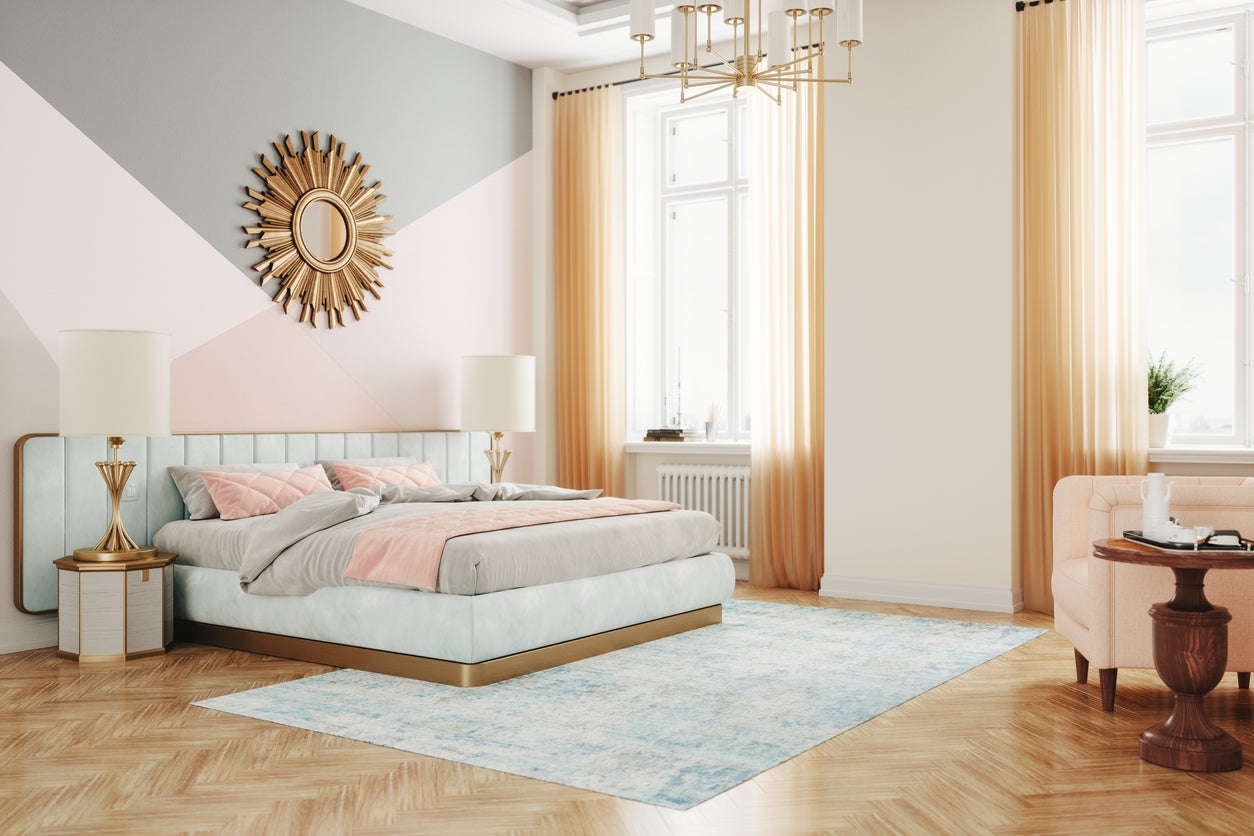
Usually speaking, the shape of a piece is a lot more significant than its shade when it will come to Artwork Deco style. Normal Artwork Deco styles involve chevrons, zigzags, waves, and sunbursts. These designs are often recurring in the course of a area in diverse kinds: an space rug might attribute zigzags, the wallpaper can be patterned with waves or chevrons, and a desk or mirror could involve the design’s legendary sunburst form. Lots of Art Deco pieces also attribute bold colors, but muted pastels are similarly widespread.

5. Shiny metals, mirrors, and acrylic are mainstays.

One defining attribute of Artwork Deco style is its use of components like steel, steel, plastic, and glass, which had been quickly growing additional economical for designers and home furnishings makers. The Empire Point out Building is just one of the most effective-known illustrations of Art Deco architecture, displaying sharp traces in its relief and a higher-gloss exterior.

In properties, steel was generally employed as trim for home furniture or an accent material on decor. Metal was notably well-liked, as the metal is powerful and retains up in excess of time, earning it a excellent selection for furnishings frames. Mirrors were being yet another common choice mainly because they reflected gentle again into the area, creating an ethereal outcome. They could also be quickly slash into angular styles to improved fit with the style.

art deco style

Picture: istockphoto.com

6. Artwork Deco components appear from all-around the world.

Art Deco is exemplified by its use of motifs and resources from far-flung locales. These models are a reflection of how well known vacation was escalating amongst the elite and middle class—and a wider general public fascination with world wide cultures people today have been gaining first-time exposure to. Furniture designers regularly produced use of overseas hardwoods inlaid with ivory or ebony. Brass hardware was typically utilised to give the household furniture an elegant glow. Animal skins (particularly people from significant cats) or furs were being well known ornamental accents for upholstery. Now, fake animal rugs and hides deliver additional sustainable Artwork Deco solutions.

Call of the Night Anime Adaptation Unveils New Art, Adds Four New Cast Members

from Call of the Night


The anime adaptation of Kotoyama‘s insomniac vampire manga Simply call of the Night (Yofukashi no Uta) is coming in July. And with just two months to spare, the sequence has introduced four much more voice actors under its thrall — portraying 4 far more vampiric characters.


Initial, though, a glimpse at the new vital visible, the place you can capture a glimpse of the newly-declared solid:


Call of the Night key visual


Related: Call of the Night TV Anime Puts the Chunk on New Forged Member


Gen Satō and Sora Amamiya were previously announced as collection protagonists Ko and Nazuna. Signing up for the rest of the solid so far will be:


Eri Kitamura (Mina Ashido in My Hero Academia) as Nico Hirata, a vampire instructor who teaches evening classes.


Shizuka Itou (Minako Aino/Sailor Venus in Sailor Moon Crystal) as Kabura Honda, a vampire nurse.


Naomi Ohzora (Jahy in The Great Jahy Will Not Be Defeated!) as Midori Kohakobe, a vampiric maid café waitress with an otaku underling.


Azumi Waki (Hinata Tachibana in Tokyo Revengers) as Haka Suzushiro, an desirable vampire with no desire in acquiring an underling.


Associated: Fantasy Comedy Stage 1 Demon Lord and 1 Space Hero Gets Television Anime


The Connect with of the Evening manga is certified in North The united states by Viz, who describe it as a result:


One sleepless evening, Ko slips out to walk the streets. Daily life just after darkish is a revelation! When flirtatious Nazuna invitations Ko to invest the night time at her area in an abandoned developing, he’s stoked! But then he awakens to kisses on his neck with a little far too significantly bite to them… Is it just the delightful flavor of his blood that would make her satisfy him night time just after night for late-night time adventures, discussion and…naps? Or something else? Then, when a lovable lady from Ko’s past displays up and competes for his focus, his budding romance with the undead is place to the test!


Contact of the Night is directed by Tetsuya Miyanishi and Tomoyuki Itamura and capabilities animation generation by Liden Movies. The sequence is scheduled to broadcast as section of Fuji TV’s “noitaminA” animation programming block beginning in July of 2022.


© 2022 Kotoyama, Shogakukan / “Call of the Night time” Manufacturing Committee


Resource: Comic Natalie


——

Kara Dennison is the reserve reviewer for Sci-Fi Magazine and a common features writer for Otaku United states of america Journal. Follow her on Twitter @RubyCosmos, and go through a lot more at KaraDennison.com.

At the Modern Art Museum of Fort Worth, the female painter’s gaze is on display : NPR

For decades, women artists have been fighting to get their work on museum gallery walls. Recently, the battle is being won: Various exhibitions across the country feature female’s work. Once visitors notice the change, they see that art can be different when women wield the paintbrushes. Sometimes. And sometimes not.

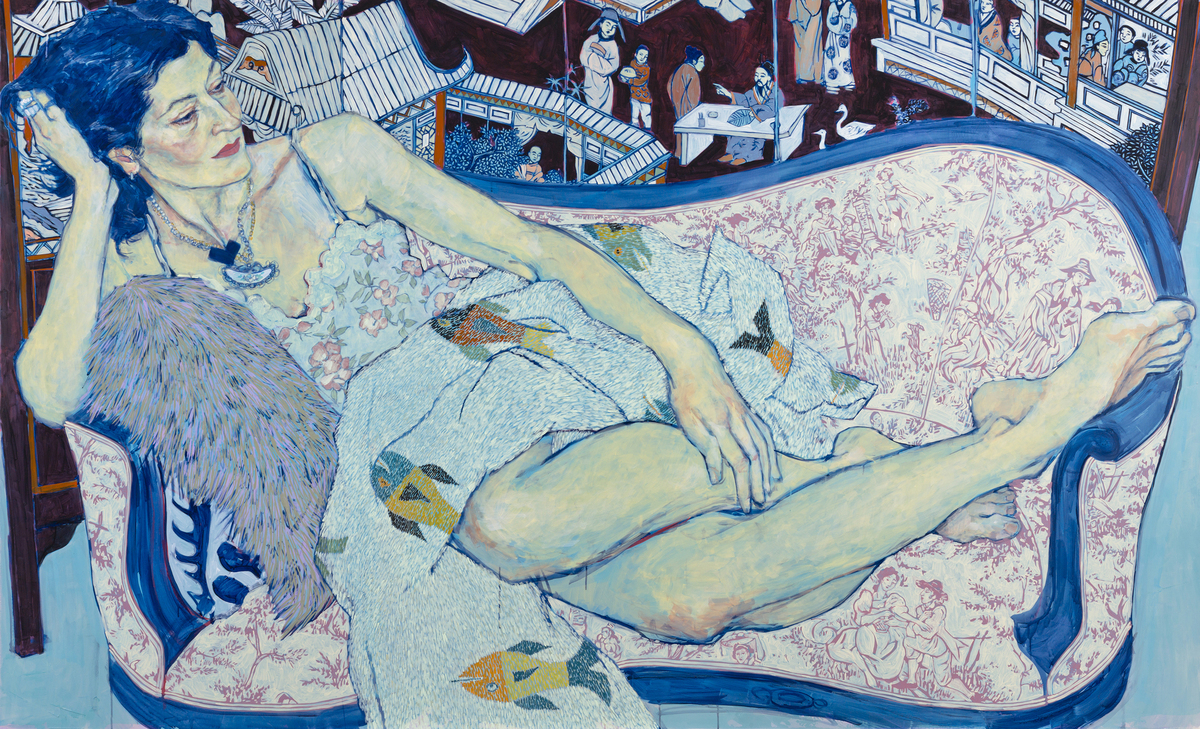
Hope Gangloff, Queen Jane Approximately, 2011. Acrylic on canvas, 66 x 108 inches. Collection of Alturas Foundation, San Antonio, Texas © Hope Gangloff.

Adam Reich/Courtesy of the Artist and Susan Inglett Gallery, NYC


hide caption

toggle caption

Adam Reich/Courtesy of the Artist and Susan Inglett Gallery, NYC


Hope Gangloff, Queen Jane Approximately, 2011. Acrylic on canvas, 66 x 108 inches. Collection of Alturas Foundation, San Antonio, Texas © Hope Gangloff.

Adam Reich/Courtesy of the Artist and Susan Inglett Gallery, NYC

Nothing much different there, except all the blue, and the beauty of the model and the painting. It’s called Queen Jane Approximatelylike the Bob Dylan song.

Gangloff doesn’t seem to be painting blue-as-in-sad. This blue is meditative, relaxed, reflective. The woman, former model and fashion designer Jane Mayle, is a friend — as are all of Gangloff’s models, says Andrea Karnes, curator of the Modern Art Museum of Fort Worth exhibition Women Painting Women.

The acrobatic Iraqi women below may be friends (although how long would you shoulder responsibility for a friend this way?). To me, they look more like relatives, maybe sisters, with their beautiful black hair, brows and red, red lips.

Hayv Kahraman, The Tower, 2019. Oil on linen104 1/8x 79 1/8 inches © Hayv Kahraman

Courtesy of the Artist and Jack Shainman Gallery, New York


hide caption

toggle caption

Courtesy of the Artist and Jack Shainman Gallery, New York

Kahraman paints this woman often. Contorted and multiplied as she is here, I see incredible strength. Those powerful legs, the steady gaze and humor — I laughed at first glimpse. But curator Karnes says it’s a salute to “countless displaced women, past and present.” Women who have suffered “disfigurement, violence, sexual abuse,” standing on the shoulders of their predecessors.

So, how do women paint women? It’s less about seeing them differently from men, than showing them different. For centuries, artists’ male gaze saw women as objects of desire, idealized and voluptuous, with luscious white skin and dimpled knees. Women artists in this exhibition, like Alice Neel and Emma Amos and others, show women as differently beautiful: pregnant, overweight, sometimes despondent. As we are, wrapped in our truths.

Arpita Singh, My Mother, 1993. Oil on canvas, 54 x 72 inches. From the Collection of Sharad and Mahinder Tak © Arpita Singh

Kiran Nadar Museum of Art and Talwar Gallery


hide caption

toggle caption

Kiran Nadar Museum of Art and Talwar Gallery

Arpita Singh’s mother has seen and lived through so much conflict: the bloody partition of India and Pakistan, with its religious divides, political disputes, loss and deaths. At the top of the canvas, like a frame, Arpita has written the words, “Between what I say and what I keep silent.” The mother clutches her hands. Her sari is white — in India, the color of mourning. Near her, a row of dead bodies. Surrounded by chaos, the mother is … what? Silent? Steady? Firm? Stalwart? What do you see in her face, reader?

Luchita Hurtado, Untitled, 1970. Oil on canvas, 30 x 50 inches. © The Estate of Luchita Hurtado

Jeff McLane/Courtesy The Estate of Luchita Hurtado and Hauser & Wirth


hide caption

toggle caption

Jeff McLane/Courtesy The Estate of Luchita Hurtado and Hauser & Wirth


Luchita Hurtado, Untitled, 1970. Oil on canvas, 30 x 50 inches. © The Estate of Luchita Hurtado

Jeff McLane/Courtesy The Estate of Luchita Hurtado and Hauser & Wirth

Like so many of the 46 female artists in this exhibition, Luchita Hurtado had no money to hire models. But she had the wealth of her talent, and the will to make art. Again, like so many of these artists, Hurtado was driven to make art. She had responsibilities: a husband and children. At night, after dinner, when they’d gone to bed, curator Andrea Karnes says, “she would go into the closet and paint.” Driven, “even when there was no market for her work.” Hurtado said for her painting was a constant — “a need, like brushing your teeth.” And when she lacked money for models, her own body became her favorite model. Hurtado didn’t idealize herself. But she viewed herself from a perspective no man (or woman, for that matter) could share. Looking down toward the geometric Navajo rug, she painted her breast, her belly, hand, leg with clarity and tremendous confidence.

Do women paint themselves and one another differently? “Women artists look beyond the ideal beauty — the archetype” Andrea Karnes declares. In doing so, they create a portfolio of new archetypes.

Art Where You’re At is an informal series showcasing online offerings at museums you may not be able to visit.

Landscapes can be weaponized to influence public opinion and perception during war

Blast craters, denuded landscapes and burning oil wells. When we feel of the relation involving war and the landscape, we think of such destructive functions and poisonous legacies. Through this lens, character and the landscape are usually witnessed as casualties of war.

Still there have been situations wherever nations have utilised the landscape as a weapon. In a single these types of touchstone case — Operation Ranch Hand — the U.S. navy unveiled a defoliant referred to as Agent Orange over the South Vietnam countryside to weaponize the forest in the course of the Vietnam War.

Though the stop of the Vietnam War observed an global ban on making use of the setting as a weapon, landscape structure — which consists of the preparing and planting of environmentally friendly areas — carries on to present itself as a instrument capable of influencing the hearts and minds of nearby populations and finally accomplishing military services targets.

Whilst talking about the ongoing Russia-Ukraine conflict, U.S. Secretary of State Antony Blinken stated,

“Winning a struggle is not successful the war. Having a metropolis does not suggest Vladimir Putin’s taking the hearts and minds of the Ukrainian persons. On the contrary, he is destined to eliminate.”

Plainly, the United States military services doctrine considers profitable “hearts and minds” as a needed measure to earn a war.

As a structure critic who has been finding out the function of landscapes in warfare, I argue that trees and inexperienced areas can be elements of a non-coercive method of warfare, as they can be applied to more local community solidarity and diminish the probability of insurgency.

Winning hearts and minds

The practical experience of the United States military services in Afghanistan has tested that having a additional potent army force does not assurance profitable a war.

Though the Taliban surrendered Kandahar only two months after the launch of Procedure Enduring Independence in 2001, the U.S. armed service remained in Afghanistan and engaged in violent conflict for the following 20 a long time, eventually withdrawing and returning the nation to Taliban management.

Central to the United States’ hard work to protected peace was the method of successful “hearts and minds,” or creating emotional and mental appeals to the area population by way of attraction and persuasion rather of drive.

An army officer high-fives a girl carried by a woman outside the door of a bus.
A U.S. Military officer large-fives a girl, evacuated from Kabul, Afghanistan, in the course of the ‘Operation Allies Welcome,’ on Aug. 30, 2021.
(AP Image/Jose Luis Magana)

The U.S. military may well have eventually unsuccessful to gain the war in Afghanistan, but they did produce tactics to safe peace and acquire in excess of the hearts and minds of nearby citizens. Even though not every single work was thriving, I found quite a few situations wherever the U.S. military’s war-preventing objectives aligned with an unlikely ally — the job of landscape architecture.

Landscape architects, soon after all, have generally labored to boost general public and environmental health. And when hearts and minds are not just the similar as physical and mental wellbeing, it is comprehended that physical overall health and nicely-currently being are important to build a tranquil culture.

Eco-friendly areas influence wellness and mental very well-remaining

American landscape architect Frederick Regulation Olmsted’s legacy of park making in the United States shows that landscape architects are involved with general public overall health and social security. Olmsted was the first professional to use the title of “landscape architect” and is ideal identified for developing New York’s Central Park.

Olmsted’s parks served maintain Americans’ mental and actual physical wellbeing and social connections all through the darkest days of the pandemic. Urban residents loved the greenery in these designed spaces after recognizing that shelling out time in mother nature can enhance one’s bodily wellness and mental nicely-currently being.

Since Olmsted’s time, a expanding overall body of scientific analysis has concluded that publicity to inexperienced place contributes to enhanced health and fitness and well-currently being. Although health care gurus have been prescribing investing time with character, landscape architects have been working to increase the beneficial results of publicity by way of style and design.

Landscape design offers itself as a resource able of influencing the health and properly-being and, therefore, the hearts and minds of nearby populations. Ultimately it can obtain army aims through the preparing and planting of inexperienced house.

Weaponizing the landscape

Employing the landscape as a weapon is an underappreciated region of review.

A sign that reads 'Dioxin contamination zone — livestock, poultry and fishery operations not permitted' is placed in a field.
A warning indicator near Danang airport, Vietnam, that reads ‘Dioxin contamination zone — livestock, poultry and fishery operations not permitted’ is found in a industry that was contaminated during the Vietnam War.
(AP Photograph/Maika Elan, File)

In 1976, the United States, along with 47 other nations, grew to become signatories to the Convention on the Prohibition of Military services or Any Other Hostile Use of Environmental Modification Approaches. This treaty prohibits “modification of the organic environment for use as a weapon of war” and “acts of war injurious to the organic surroundings.”

Although deliberate environmental destruction proceeds, exemplified by the burning of oil wells set ablaze by Iraqi troops all through the Gulf War, scientists hope that the International Criminal Court docket may possibly a person day prosecute “crimes towards the atmosphere.”

Additional not long ago, the Halt Ecocide Basis has been performing to supply a felony definition of ecocide that will have the pressure of international legislation, generating punishable “severe and both prevalent or very long-expression problems to the surroundings.”

These endeavours are laudable and are entitled to our aid. Nonetheless, the understandable emphasis on problems and destruction decreases the consideration supplied to functions of war, like tree planting initiatives, that “improve” an surroundings.

Understanding the extensive-term impacts of war

One particular project carried out by the U.S. armed service in Afghanistan observed lively troops lead a reforestation exertion in the Panjshir region, in which they planted 35,000 trees, generating a regional eco-friendly house.

An Army officer planting a sapling.
A U.S. Military officer vegetation a sapling for the duration of the ‘Afghanistan’s Long term Takes Root’ initiative in Panjshir, Afghanistan.
(1st Lt. Holly Hess/DVIDS)

As several men and women seasoned this regional planting hard work, the landscape affected the hearts and minds of local citizens on a inhabitants scale.

Irrespective of the U.S. armed forces now possessing withdrawn from Afghanistan, these planted trees and other environmentally friendly areas proceed to increase and exert impact. As a result, it is not just functions of war injurious to the setting that have vast-achieving and extensive-phrase impacts on a populace.

As I publish from my business office on the unceded territory of the Musqueam individuals, I am a lot more keenly aware that a beautiful landscape can manipulate hearts and minds and turn out to be a weapon of war. The ongoing presence of a colonial landscape, developed and imposed on these lands, is easier to understand if we talk to what this land seemed like right before and soon after developing a settler-colonial modern society.

We encounter environmentally friendly areas in another way depending on their style and design and our cultural qualifications. We will need to feel about who made and created our regional green areas and for what goal. Finally, it matters if the landscape is redesigned and replanted by nearby populations or by occupying forces.

How Hotels Are Revitalizing Forgotten Neighborhoods

Call it the ACE effect. The lodge brand grew to become famous for placing up store in offbeat neighborhoods—where the rent was presumably cheaper—and then transforming individuals regions into new capitals of amazing. They had been pioneers in neighborhoods like New York’s NoMad, district, London’s Shoreditch, and DTLA. And they encouraged many others, the two in cities and in rural places.

DAVE Pink, Athens

The initially house in the new affordable resort line DAVE–Son of a Brown (from Israel’s hip Brown Lodges team) to launch outside the house of Tel Aviv, the Athens lodge occupies the former KKE (Communist bash of Greece) headquarters in Omonia Square. The sq. experienced been in a point out of operate-down neglect just after the demolition of its initial drinking water aspect in the latest yrs it’s been through a redevelopment plan to make it a UN–certified “sustainable spot.” (And just about anything that aids get people today out of the busiest vacationer locations gets sustainability details in my reserve.) The lodge is a single of the centerpieces, with a mural on the mezzanine that honors the building’s historical past and an “adults’ playground” with pool tables, first Nintendo and Packman consoles and a balcony with hammocks.

TWA Lodge, New York

Not so lengthy back, some New Yorkers would go out of their way to avoid traveling out of JFK. Now they’re eagerly likely there, even with no aircraft ticket in hand. Which is due to the fact the TWA Lodge has supplied them all types of factors to experience the A prepare. The Eero Saarinen landmark 1962 terminal is now an “experiential hotel” with 512 midcentury modern-day rooms—and immersive exhibitions, various eating places (such as 1 from Jean-Georges), a rooftop infinity pool and observation deck, a roller skating rink, an Intelligentsia espresso bar and a 1958 airplane that’s been reworked into a cocktail lounge.

Galei Kinneret, Israel

Couple men and women make it to the Sea of Galilee in northern Israel, but that’s shifting with the rebirth of this 123-room luxurious lodge. Constructed in 1946, it was inspired by the owner’s journey to Villa d’Este in Lake Como. The hotel was uninhabited when the Amsterdam-primarily based designer Saar Zafrir started the operate on it, drawing inspiration from its before glory days, ancient ruins identified on the website, the normal landscape and the owner’s initial eyesight.

Beautiful George, Cape Town

Downtown Cape Town’s George Street is much from the regular waterfront tourist path, but with its to start with boutique hotel—part of Style Hotels—curious vacationers commenced coming. On its heels arrived new internal-town galleries, bars and eating places, furthermore a new exhibition place following door. Of study course, the hotel alone is a lure, occupying two beautifully restored heritage buildings with a trendy African aesthetic by South African designer Tristan du Pleiss, and with performs by nearby artists and designers all over.

ReMIX, Paris

Another task from Saar Zafrir, this revamp of an aged resort is bringing new life to Parc de la Villette in the city’s northeastern edge, in the 19th arrondissement. His colorful, eclectic style for the 259-room hotel requires inspiration from the 1980s pop music “Forever Youthful,” with vivid designs, retro textures and summary touches all over. Now it is an anchor of a recently cool neighborhood that is drawing new breaths of tradition, art and eating.

Lopota Lake Resort, Georgia

Again in 2008, making a hotel on one of the forgotten lakes in Kakheti, Georgia (the state), appeared like a mad plan. But the founder of Lopota Lake Vacation resort, Goga Maisuradze, stuck to it—and put Lopota on the world’s touristic map. Desire has been so superior that what started out as a 7-place relatives resort has developed into a resort with 232 rooms, numerous restaurants, a spa, horses and vineyards. (Kakheti is Georgia’s leading wine location.) What has not changed is the heat hospitality which is nonetheless dished out by the founder’s family.