Q&A: Historian Richard Bushman and the relevance of Latter-day Saint art

What was the first substantial work of art in the history of The Church of Jesus Christ of Latter-day Saints?

If you ask Richard Bushman, considered by many as the dean of historians in Mormon studies, the answer centers around the church’s earliest temples.

“The Saints, without means, in their time of poverty, put a huge amount of effort into the Kirtland temple,” Bushman told the Deseret News. “They carved those sunstones, moonstones and star stones because the temple deserved to be beautified and honored by art. If you put beauty at the center of our religious culture, that means it’s sort of essential. Our greatest work of Mormon art, by far, is the Salt Lake Temple — it’s powerful, beautiful, uplifting, everything. Putting art as the center means that it becomes a model of our own lives.”

Bushman and his wife, Claudia, were in Salt Lake City this past weekend for a dinner celebrating his 90th birthday and events sponsored by the Center for Latter-day Saint Arts, which seeks to tell a global story of the Latter-day Saints through the arts. Bushman co-founded the center and serves as chairman.

Elder Dieter F. Uchtdorf of the church’s Quorum of the Twelve Apostles and his wife, Sister Harriet Uchtdorf, attended the dinner Saturday evening.

Elder Dieter F. Uchtdorf speaks with author, historian and scholar Richard Bushman at a dinner.

Elder Dieter F. Uchtdorf of the Quorum of the Twelve Apostles speaks with author, historian and scholar Richard Bushman at a dinner in the Marriott Hotel in Salt Lake City, Utah, on Saturday, Sept. 25, 2021.
Rebecca Reed

During the dinner, the center announced an initiative to raise $2 million toward a survey of Latter-day Saint visual art from the beginning to the present, with the first step being the publication of an extensive “Guide to Mormon Art” featuring the work of 24 scholars.

The center is also planning an inclusive 2025 exhibition of Latter-day Saint art in a New York venue on Fifth Avenue near the Metropolitan Museum, followed by another installation in Salt Lake City in the Church History Museum and the Utah Museum of Contemporary Art, with travel to other Latter-day Saint population centers in the future.

Bushman hopes these efforts will help establish a scholarly benchmark for ongoing research.

“We need to have art. It’s a way of enhancing, exploring and manifesting our deepest religious feelings, including our despair, yearnings, strivings, fears and rejoicings,” Bushman said. “We need to honor our art and understand it better, use it better.”

In between weekend events, the author, scholar and historian spoke with the Deseret News about his birthday, his next book, the state of Joseph Smith studies, highlights of his career and which Latter-day Saint artwork he admires the most.

Note: This interview has been edited for length and clarity.

Deseret News: What goes through your mind when you turn 90 years old?

Richard Bushman: There are reflections on my life. What does it amount to? Have I done worthwhile things? Can I be pleased and satisfied?

That’s one side. The other is, in my case, I’m deeply preoccupied with the Center for Latter-day Saint Arts and with a book I’m writing on Joseph Smith’s gold plates. So I’m thinking the same thoughts I had when I was 40 or 50 — can I get my work done?

So my thoughts are sort of a cross between those two.

Richard Bushman blows out candles on a birthday cake at a dinner on Saturday, Sept. 25, 2021.

Author, historian and scholar Richard Bushman blows out candles on a birthday cake at a dinner on Saturday, Sept. 25, 2021.
Rebecca Reed

DN: What can you reveal about the topic of your new book?

RB: It’s about Joseph Smith’s gold plates. It’s called a cultural history, which means the history of how people thought about the plates. It’s not my effort to say what were they and to determine the exact truth of them, but to ask how they’re treated by both critics and believers, right down to the present.

Why that project? You know, I can’t give an answer to that. But I’ve always felt the plates were so luscious, something intricate, beautiful and strange. It’s not like just a nugget of gold, it’s gold that has been shaped to serve many purposes, with ancient characters inscribed on them and made by the hands of ancient people. I wanted to explore how people have reacted to that and what it means to Latter-day Saints today.

Richard Bushman, author, historian and scholar, speaks at a dinner on Saturday, Sept. 25, 2021.

Richard Bushman, author, historian and scholar, speaks at a dinner on Saturday, Sept. 25, 2021.
Rebecca Reed

DN: What is the state of Joseph Smith studies today and how has it been changed by the Joseph Smith Papers project and books like your biography, “Joseph Smith: Rough Stone Rolling?”

RB: Well, the massive change is the adoption of what the Church History Department calls transparency, and that is a willingness to seriously consider critical works about Joseph Smith. At one point, we just dismissed them as the works of wicked men, fabrications.

But every historical source has terrible biases in it. There’s no avoiding a bias. We’re beginning to be able to sift through the anti-Mormon biases to find out what truth is in them and try to assimilate them into our system. Thoughts that at one time would just seem too negative or totally out of keeping, we are now beginning to assimilate, and that’s being done primarily by the Joseph Smith Papers, which is considering every negative, every difficulty in the sources and finding a way to understand it.

My book was a part of that because I was one who ventured into a full-scale biography of Joseph Smith to be as candid as I could about the historical materials. I would just add that this has led to something of a crisis in that people who had been brought up with one story of Joseph Smith and suddenly had to grapple with another version of Joseph Smith that had flaws in it. For some people, that’s very disruptive. They couldn’t handle it. For others, it was kind of a relief because Joseph Smith appeared more human and real. So it’s been varied and sort of turbulent times, but in the end, if we can pull it off, we’ll be much more secure. We’ll finally have founded our stories on an evaluation of the sources that’s as accurate and balanced as possible.

DN: Which project in your career has been most rewarding?

RB: There are two books I put in that category — one is “Joseph Smith: Rough Stone Rolling,” as it did have a high impact and a lot of people have bought it and read it.

The other is a book called “The Refinement of America,” which is the coming of genteel culture to the United States, beginning in the 18th century, which resulted in erection of beautiful houses, the attempt to acquire beauty in your life and good manners, creating a refined person. That’s probably the book that has had as much influence as any that I wrote.

Richard Bushman, author, historian and scholar, speaks during his birthday dinner

Richard Bushman, author, historian and scholar, speaks during his birthday dinner on Saturday, Sept. 25, 2021.
Rebecca Reed

DN: What do you hope people will take away from your career’s work?

RB: I hope that they take away fearlessness, that they won’t be afraid to look at historical facts; that they will be patient in trying to understand the meaning; and that they will realize that history can never be totally objectified. That is, you cannot find the truth that everyone is obligated to accept, that the sources do not yield to that kind of demand. You have to realize that there’s going to be perspectives — some people will see the very same facts from a different point of view. If they do that, they will be able to respond when our story is criticized or undermined. They will look for another point of view and then decide for themselves which one they believe.

DN: What do the divisions in the United States mean for Latter-day Saints today?

RB: The first response is surprise, that our own brothers and sisters could differ so radically on certain things. They can’t decide whether it’s good or bad to wear a mask, and that sort of thing. From my own perspective, I think we have to think about how we value civilization. Because civilization involves moving away from dog-eat-dog, every man for himself. Fighting for your rights and putting your trust in broader institutions. Do you trust the clergy to give you a religious truth? Would you trust the courts to deliver justice? Do you trust scientists to arrive at truth? As soon as you give up on the institutions that allow us to live together, because we have some arbiters of what is true and right and good, as soon as give up that trust, then you’ve kind of destroyed civilization and you are moving back towards the law of truth, and that it’s just every man for himself. So that’s a very biased analysis of the world today. But it’s the way I see it.

DN: Is there a piece of Latter-day Saint art that you admire or has inspired you?

RB: I’ve always admired Minerva Teichert. Who can resist her?

But when I was doing research on art of the First Vision, I ran across a piece by a man named Paul Forster that showed Joseph Smith recovering from the powers of darkness as Christ and God come through the woodland to his rescue, and God commands the evil forces to depart, and Christ reaches out to the young Joseph Smith to give him succor and assure him all is well. It’s done in kind of a magical way and I really love that. There are other pieces, but that’s certainly one that captured my imagination.
Ceramics exhibit in Canton is disturbing and beautiful

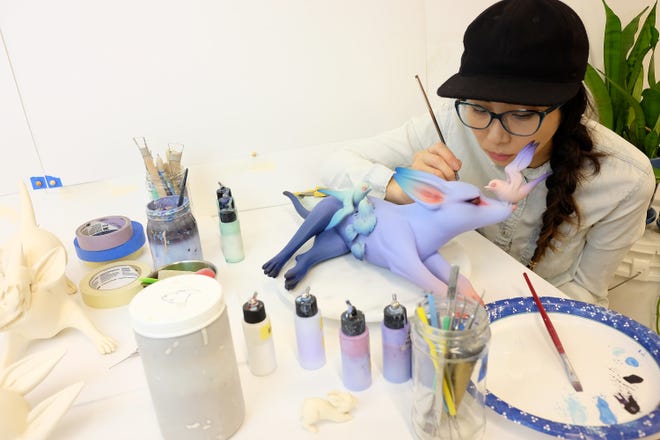
California artist paints the sculpture “Differences of Opinion.”

Where by artists find inspiration for their perform is frequently the majority of the problem for building something new. Irrespective of whether they are dancers, musicians, designers or sculptors, the concepts that push the creative vision are the defining sections of no matter if a remaining merchandise “works” or not.

Discovering an artist who seemingly “bleeds” creativity is often an sudden occurrence. Irrespective of the medium chosen by the artist, when you see a person who has a deep useful resource for concepts and enthusiasm, you want to make take note and keep in mind that particular person. 

“Close to Me: Ceramics by Erika Sanada,” on view at the Canton Museum of Art as a result of Oct. 24, is a visible knowledge that highlights the boundless artistic mind of this California artist. The work is a creepy, fantastical, vibrant feast that is as disturbing as it is beautiful.

Bigger than ever, Beautiful Land pops up in downtown Ames Sunday

Friendship Ark will be selling Halloween costumes Sunday at the Beautiful Land market. They will also be accepting donations of gently used costumes.

Creations designed by Ames Substantial School students and carefully-used Halloween costumes offered by the Friendship Ark are two of the new features at the Beautiful Land’s fall pop-up market place. The Ames-dependent party, which highlights handmade and classic objects, will be held from 11 a.m. to 4 p.m. Sunday in the downtown Fareway parking large amount, 619 Burnett Ave.

A absolutely free, family-helpful event, the Attractive Land pop-up marketplace will showcase far more than 65 vendors – regional artisans, designers and vintage collectors – alongside with food trucks and are living audio.

Shoppers browse at a past Beautiful Land pop-up market at the downtown Ames Fareway.

Dwell audio will be presented for four hours, double that of earlier markets, with nearby musicians Fred Like and Tyler Miller every doing two-hour sets.

Two Ames Significant teams, the Nationwide Artwork Honor Society and the Artwork Club, will promote work they’ve designed, together with paintings, drawings, prints, images and knitted products.

“We are really enthusiastic to have this option to support showcase our student artwork,” Lindsay Wede, Ames Large Artwork instructor and NAHS/Artwork Club advisor, mentioned in a news release. “We have several pupils with a wide variety of perform and they are keen to be involved.”

Photo gallery: New art display at city hall | Arts & Entertainment

KINGSPORT — Kathy Millhorn Hawk is the new highlighted artist in the metropolis hall gallery.

The display, entitled “God’s Canopy,” went on show Tuesday and showcases a selection of monotype prints and pastels featuring the outdoors, such as landscapes and flowers.

For many years, Kingsport has showcased nearby artwork and photos in the foyer of city hall.

Hawk, a Kingsport indigenous, is a graduate of East Tennessee Point out University with a master’s in art education. Through her 30-year job as an elementary artwork teacher, Hawk taken care of an active job in regional visual arts plans by means of instructing, volunteering, and participating in several exhibitions.

More than the previous 40 many years, Hawk has been related with the Kingsport Art Guild in lots of capacities. She has expertise in calligraphy, watercolor, plein air pastels and monotype printmaking. Her get the job done can be observed in collections during the location and is also represented in the southeastern and northwestern United States.

Locally, Hawk’s artwork may be viewed at the Renaissance Center Gallery and the Downstairs Gallery at Hawksnest by appointment by way of [email protected].

“I have constantly been attracted to the outside, specifically bouquets and trees, and truly feel rejuvenated with just about every new period,” Hawk explained. “Each of us has been blessed by God to dwell on this attractive Earth, and we must be conscious, great stewards of it. My hope with this exhibit is to share a like of journey by way of my expression of the outdoors and convey this exact pleasure to its quite a few viewers.”

The “God’s Canopy” exhibition and sale will be on the initial ground in city corridor at 415 Broad St. right up until Nov. 29 on weekdays from 8 a.m. to 5 p.m. A portion of the art revenue will go to the Golden Brush Awards sponsored by the Kingsport Artwork Guild, The honors go to chosen area superior college seniors preparing to big in art at the college or university level.

For extra facts about the art exhibit, get hold of Kingsport’s Business of Cultural Arts at (423) 392-8414.

Tokyo Ghoul Creator Makes Tokyo Revengers Look Haunting in New Art

Modern Twitter posts from Tokyo Ghoul creator Sui Ishida clearly show Tokyo Revengers leaders Mikey and Draken in certainly haunting new illustrations.

Recent illustrations from Tokyo Ghoul creator Sui Ishida clearly show Tokyo Revengers‘ Mikey and Draken in a haunting gentle. The two artwork pieces present Tokyo Majin Gang President and Vice-President in night time and working day illustrations that deliver out the characters’ personalities as a result of the horror mangaka’s traditional watercolor-like model.

Tokyo Revengers created by Ken Wakui was first serialized in Kodansha Weekly Shonen Magazine in March 2017. The time-traveling manga focuses on Takemichi Hanagaki, an underachiever with a next probability to preserve his center university ex-girlfriend from being murdered by the Tokyo Manji Gang aka Toman. The leaders of the Toman are President Mikey and Vice-President Drakken, co-founders and greatest buddies with a aim to make Toman the largest gang in Tokyo. Tokyo Revengers recently celebrated reaching 32 million quantity copies sold back again in June surpassing My Hero Academia in July gross sales. The anime adaption by Liden Movie started airing in June and is now ongoing.


Similar: Tokyo Ghoul Creator’s New Manga Has a Hero As opposed to Any Other Shonen

Tokyo Ghoul creator Sui Ishida is known for his watercolor artwork design and style that demonstrates prominently in all volume covers of the well known horror sequence. His new series Choujin X is no unique provided the similarities in horror themes concerning both of those sequence. In 2018 a couple of yrs right after the finish of Tokyo Ghoul, the artist established a Youtube channel where by he are living-streams his art procedure and gaming capabilities while partaking with admirers. So of study course lovers have been taken aback when the Tokyo Ghoul creator posted Mikey’s illustration on his next Twitter account (@sotonamix) and Drakken on his key account (@sotonami) in late June. Captioning both of those posts with a around translated “I ate somen noodles currently” and ” I like Drakken”, the spectacular artwork, however, spoke for alone.

The beautiful artwork of Toman chief Mikey displays the character in a hard yet endearing expression that takes way in the artist’s soft watercolor strokes. The laid-back again and unruly temperament of Mikey is what will make him the feared chief of Toman. While it truly is the character’s baby face that certainly extenuates the temper of the illustration. The next artwork of Mikey’s suitable-hand man Drakken depicts the character in a additional sinister environment as he is recognized to be the enforcer of Toman. Drakken’s challenging demeanor, stature, and Dragon tattoo are genuinely represented well in the horror mangaka’s art style of rough nevertheless comfortable watercolors with a dark history. The splotches of crimson on the character’s experience builds on the scary delinquent aura recognised all over the sequence.

Mikey and Drakken’s connection is important in Tokyo Revengers as they are the glue that keeps Toman alongside one another. Mikey’s dream to bring back the delinquents era that he observed rising up as a child is symbolic in his illustration. Drakken’s enforcer angle is also a likeness to his illustration as he is the only person who can lead Mikey again on observe to his dream. The Tokyo Ghoul creator did an great position of exhibiting the pairings’ evening and day personalities in these astounding items.

A lot more: Dragon Ball’s Trunks Would Have A Hard Time in Tokyo Revengers

Molly Hopkins 90 Day Fiance

90 Day Fiancé: Forged Customers With The Best & Worst Buddies


Your Concise New York Art Guide for October 2021


With October upon us (how?!), New York City arts organizations of all stripes are offering up a veritable cornucopia of compelling exhibitions and performances. From MoMA PS1’s quinquennial survey featuring 47 intergenerational artists and collectives, to a presentation of the late Winfred Rembert’s intricately tooled leather paintings, here’s a choice slice of what we’re excited about this month.

***

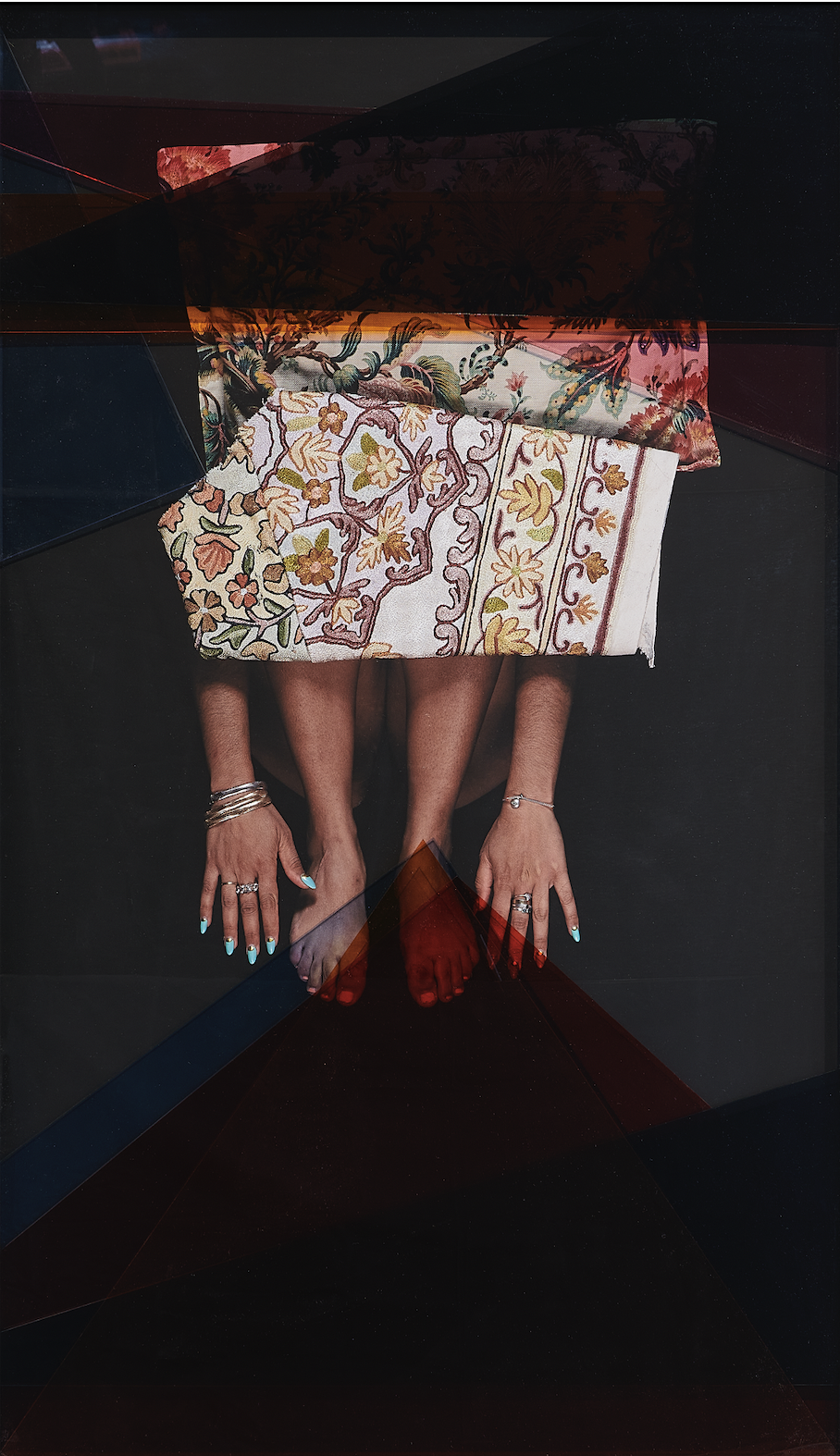
Baseera Khan, “Level of Psychic Distress, (Orange)” (2021), chromogenic photograph and laser-cut acrylic, 62 × 37 inches (image courtesy the artist and Simone Subal Gallery, New York, © Baseera Khan, photo by Stephen Takacs)

When: October 1, 2021–July 10, 2022
Where: Brooklyn Museum (200 Eastern Parkway, Prospect Park, Brooklyn)

In their first museum solo show, Brooklyn-based artist Baseera Khan explores their bodied subjectivity as a femme Muslim American living in a racist and xenophobic surveillance state that runs on extractive capitalism and frenetic othering. Across new and recent works of sculpture, installation, textile, collage, video, and more, Khan examines the frequently traumatic archives that bodies can hold, often using well-placed parody and hyperbole to drive the point home. Six new works by the artist will debut at the show, on view at the museum’s Elizabeth A. Sackler Center for Feminist Art.

Yvonne Shortt, Jenna Boldebuck, and Kelly Li, “African American Marbleization–An Act of Civil Disobedience: Hair Sanctuary” (2021), image based on installation by Mayuko Fujino (image courtesy the artists and Socrates)

When: October 2, 2021–March 6, 2022
Where: Socrates Sculpture Park (32-01 Vernon Boulevard, Long Island City, Queens)

This year, the Long Island City sculpture park’s annual open call is centered around the theme of “sanctuary,” fittingly for a venue that spent the summer hosting a series of healing outdoor sound baths led by Guadalupe Maravilla. Made by 13 participating artists, the 11 sculptural projects on view imagine new sanctuaries as they pay homage to the ones that we’ve already built, drawing upon queer dance parties, plant care rituals, dreaming, inherited spiritual practices, hair care, engagement with nature, and more.

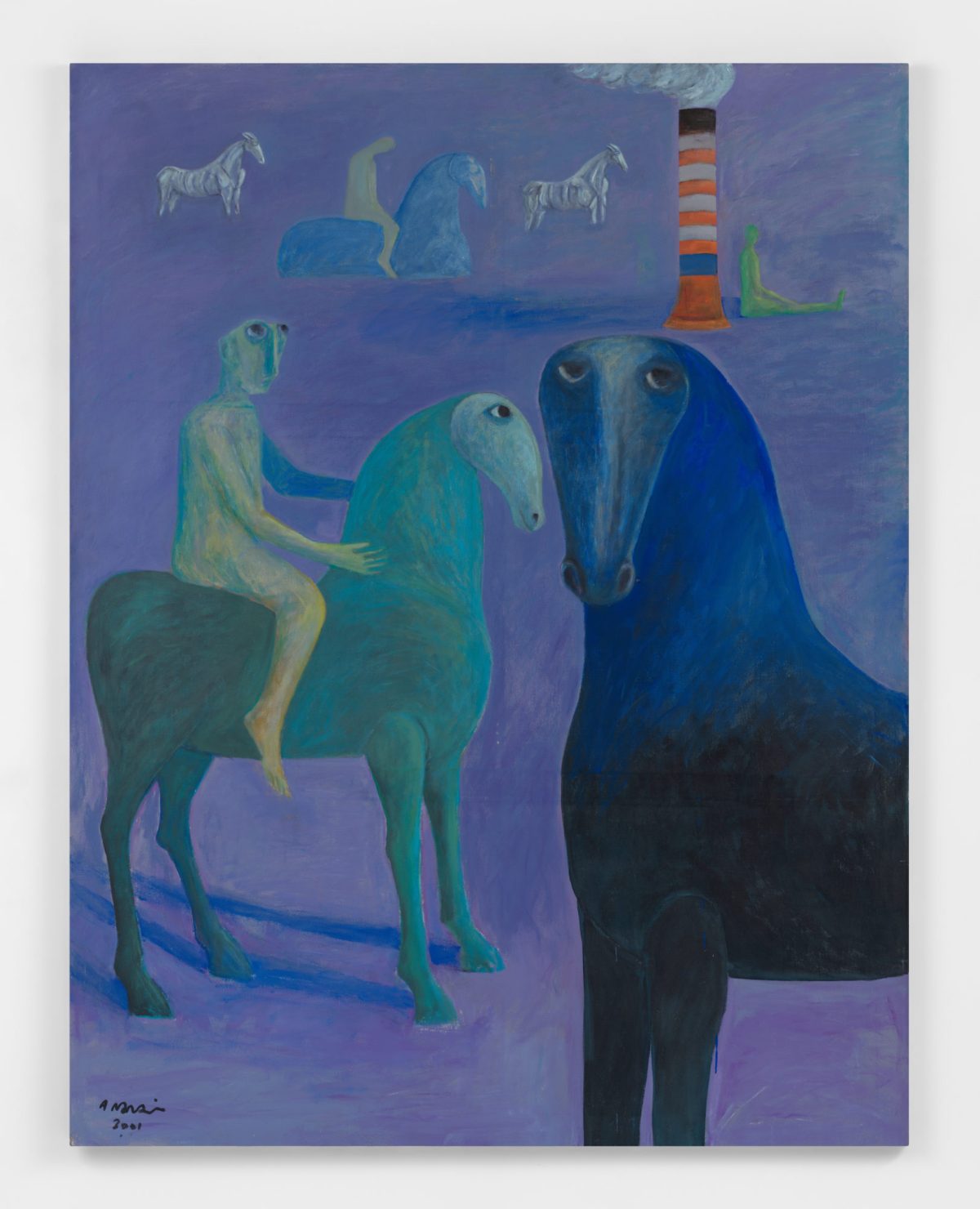
Ahmed Morsi, “Green Horse I” (2001), acrylic on canvas (image courtesy the artist and Salon 94, New York, © Ahmed Morsi)

When: October 7, 2021–April 18, 2022
Where: MoMA PS1 (22-25 Jackson Avenue, Long Island City, Queens)

Every five years, MoMA PS1 mounts a survey of work by artists with a relationship to New York City. This edition, which was postponed by a year due to the pandemic, features art across media by a fascinating selection of artists and collectives ranging from young up-and-comers like photographer and video artist Diane Severin Nguyen, who currently has a show up at SculptureCenter, to Paulina Peavy, a 20th-century West Coast spiritualist whose work has seen a resurgence of interest in recent years.

Winfred Rembert, “Sunshine II” (2012), dye on carved and tooled leather (©2021 Winfred Rembert / ARS NY)

When: October 7–December 18
Where: Fort Gansevoort New York (5 Ninth Avenue, Meatpacking, Manhattan)

Artist Winfred Rembert, who passed away in March of this year at the age of 75, learned how to tool leather during the seven years he spent in prison in Georgia. Decades after his release and subsequent relocation to Connecticut, Rembert began carving narrative scenes from his traumatic experience in the Jim Crow South onto tanned leather, producing intricate images in low relief that he painted with colorful dyes. The exhibition coincides with the posthumous release of the late artist’s memoir, Chasing Me to My Grave.

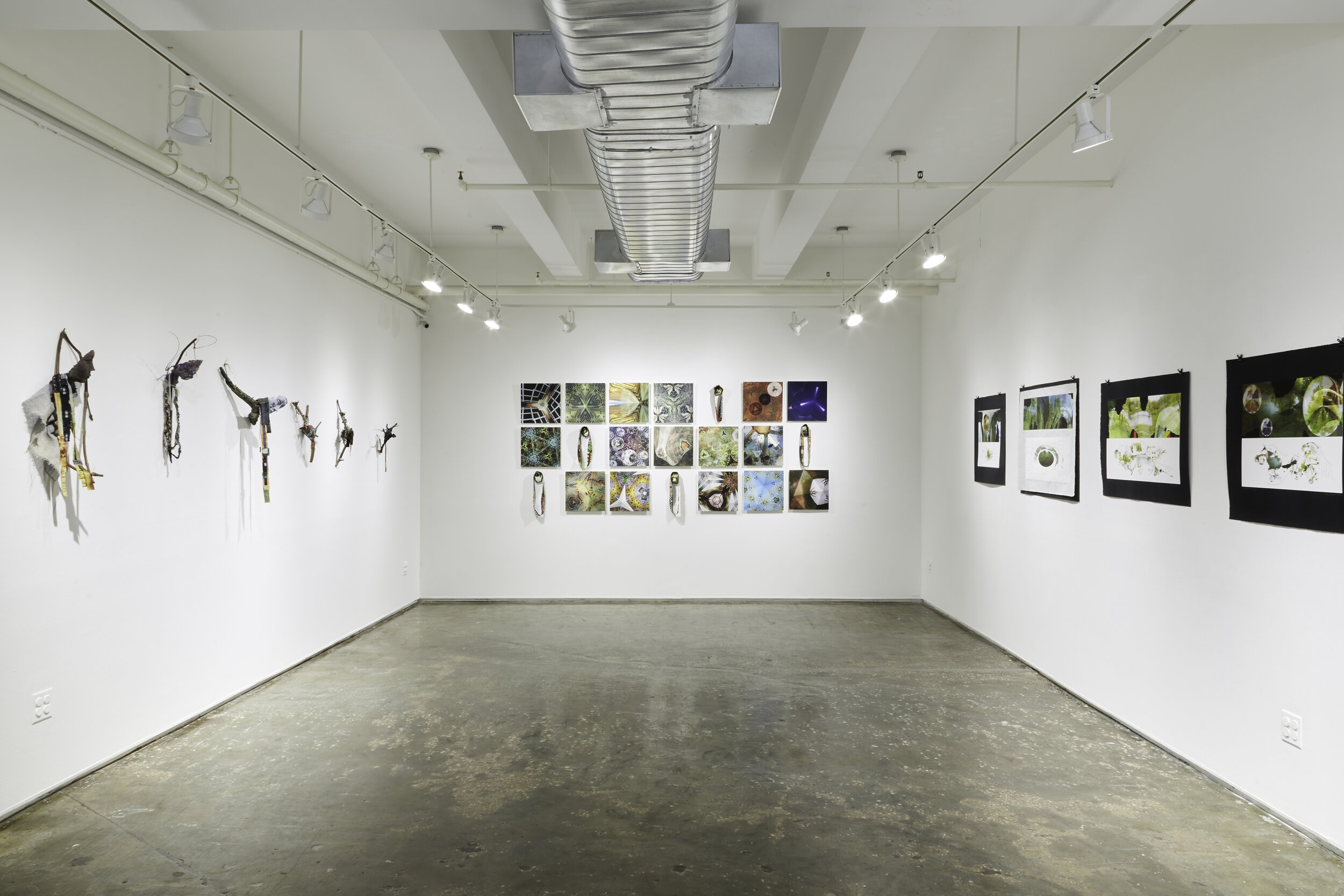
Installation view of Cosmologies at A.I.R. Gallery, New York (image courtesy A.I.R. Gallery, photo by Matthew Sherman)

When: through October 10
Where: A.I.R. Gallery (155 Plymouth Street, Dumbo, Brooklyn)

Three solo shows with overlapping interests in the environment and textiles are currently on view at A.I.R. Gallery. Daria Dorosh, one of the 20 women artists who co-founded the historic gallery in 1972, considers the place of human beings in ecological and technological networks in Cosmologies, a show of digital prints, textile sculptures, and neckwear pieces. Meanwhile, painter Mimi Oritsky presents bold, atmospheric landscapes in Above and Below, while 2020-2021 A.I.R. Fellow Destiny Belgrave displays new textile works that pay homage to sleep and dreams in where they go & what they leave.

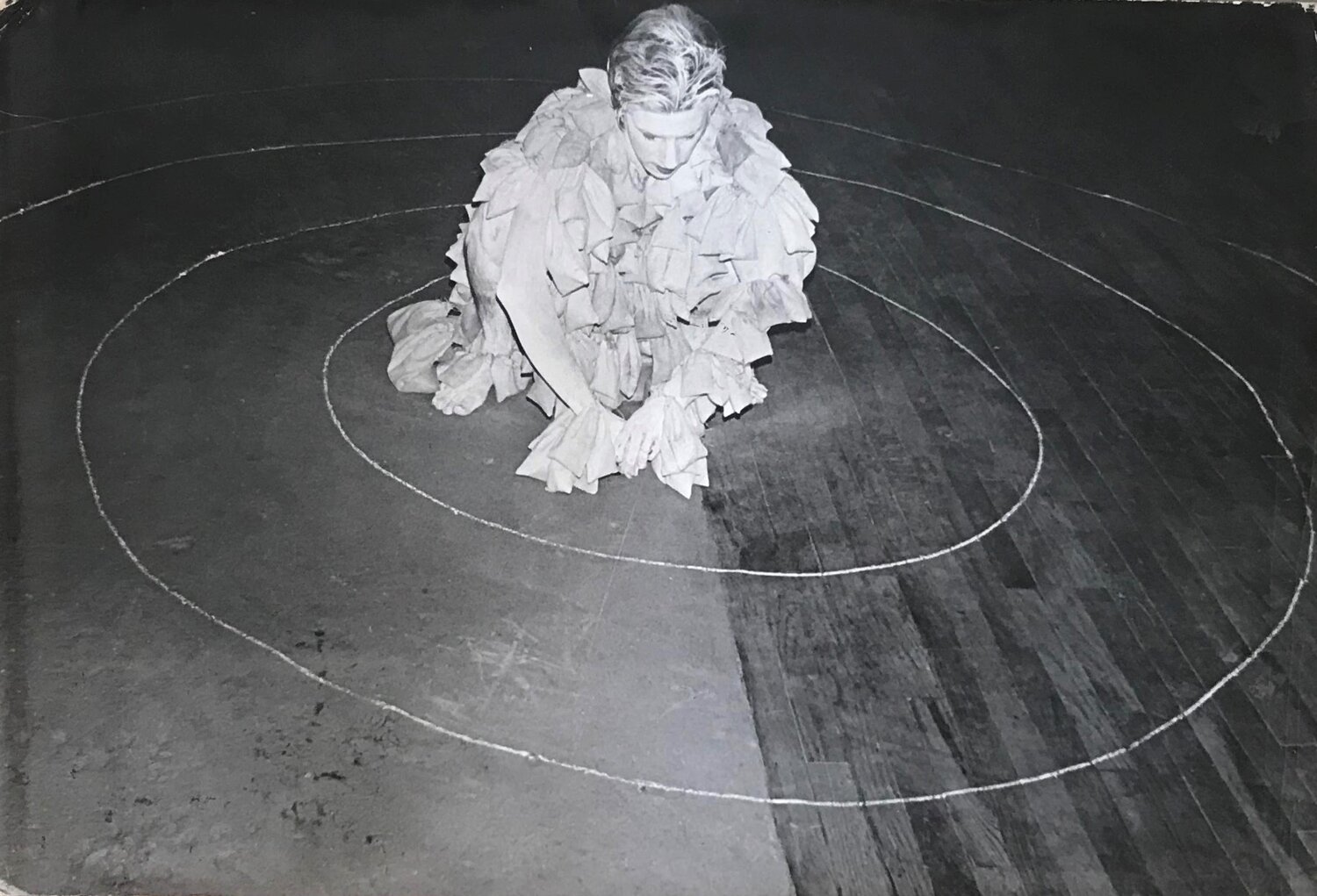
Betsy Damon, “7,000 Year Old Woman,” performance at Cayman Gallery, New York (March 21, 1977) (archival Print © Betsy Damon 1977/2021, courtesy the artist)

When: October 15–November 21
Where: LaMaMa Galleria (47 Great Jones Street, East Village, Manhattan)

American artist and activist Betsy Damon’s 250-foot paper pulp cast of riverbed in Utah was among the standout works in ecofeminism(s) at Thomas Erben Gallery last year. The curator of that show, Monika Fabijanska, is now zeroing in on the 81-year-old lesbian eco-artist’s oeuvre with an exhibition of photographs, videos, ephemera, and documents. The show focuses on Damon’s outdoor performance practice from the 1970s and ’80s, frequently guerrilla affairs that staked a claim to public space, grappled with themes of violence perpetuated against women and the environment, and asked how we might approach healing.

Installation view of Paul Thek: Relativity Clock at Alexander and Bonin, New York (image courtesy Alexander and Bonin, photo by Joerg Lohse)

When: through October 16
Where: Alexander and Bonin (47 Walker Street, Tribeca, Manhattan)

The strange, slippery material of time runs through the work of Paul Thek, a multidisciplinary artist who died of AIDS-related complications in 1988 at the age of 54. Loosely centered around this theme, Relativity Clock presents pieces made by Thek from the mid-1960s into the 1980s, including newspaper paintings, meat cable sculptures, and picture light paintings. Thek’s sketchbooks and journals from that period and Polaroids of him at work taken by Peter Hujar are also on view. The 1966 “Untitled (Meat Piece with Chair),” a hunk of wax “flesh” with blue skin encased in a clear vitrine, is an exhibition highlight.

Rodrigo Pimenta, “Broken Whisper” (2021) acrylic painting on paper (image courtesy the artist and Uncool Artist)

When: through October 23
Where: Uncool Artist (227 West 29th Street, Chelsea, Manhattan)

Responding to legacies of Latin American mail art in the ’60s and ’70s, this exhibition brings together work by 20 artists who are interested in questions of how we connect and communicate across space — with a focus on the cities in which the artists largely reside, New York, Miami, and São Paulo. Visitors are invited to write their fears on index cards and deposit them in a dropbox, complete a crossword based on the desires of the artist, and send postcards to anonymous strangers and government officials alike.

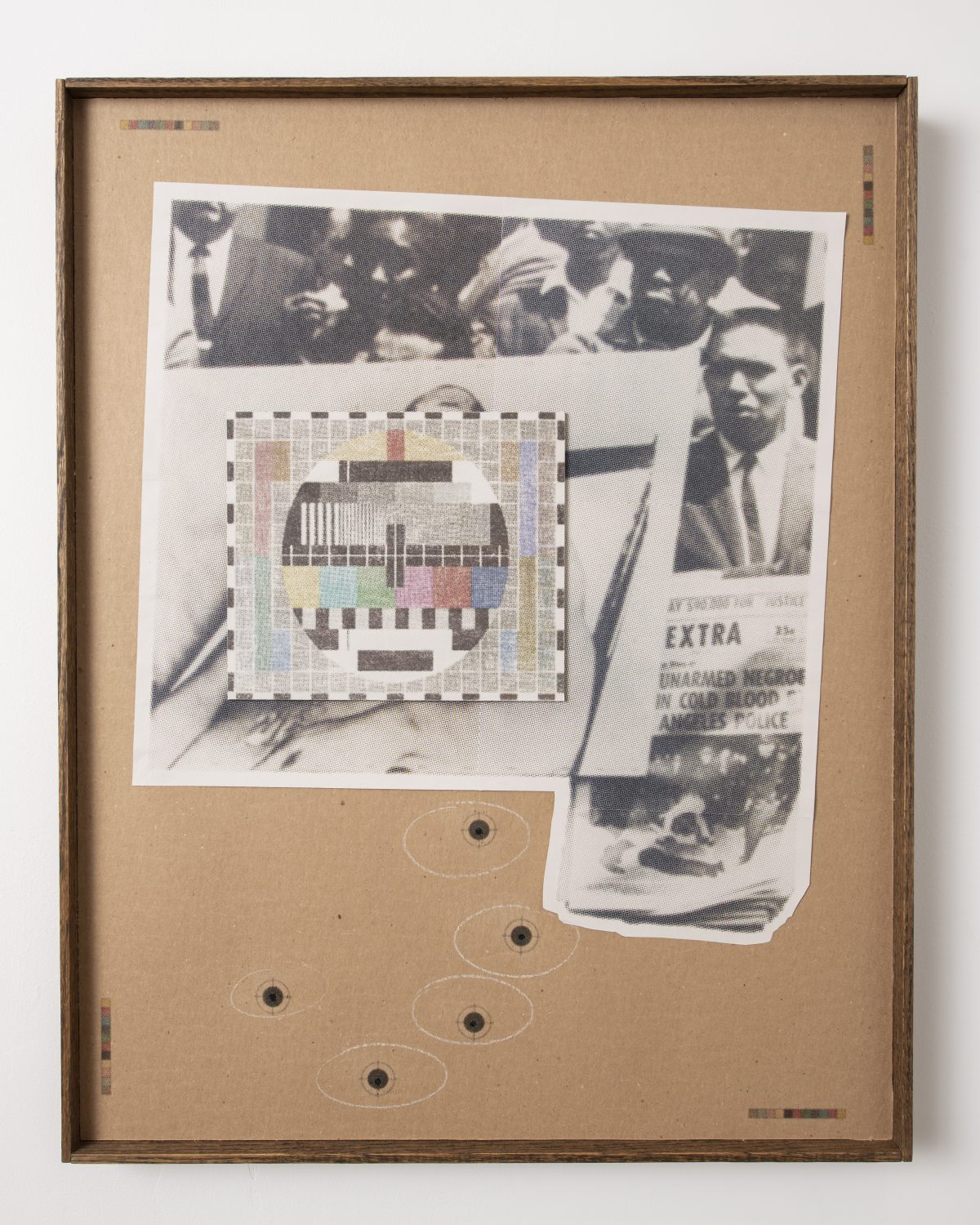
Lyndon Barrois Jr., “Start Spreadin’ the News” (2017), collage and solvent transfers on canvas and chipboard, chalk pencil, oak frame (image courtesy the artist and Miriam Gallery)

When: through November 7
Where: Miriam Gallery (319 Bedford Avenue, Williamsburg, Brooklyn)

How do opacity and redaction, refusal and obfuscation, operate as representational tools? Miriam Gallery, a new-ish artist-run space (and bookshop) to watch, presents a group of works that leverage these strategies in their engagements with Blackness. Among the media-spanning pieces on view are Patrice Renee Washington’s knobby grab bar, made to provide support for people who are recoiling; Keli Safia Maksud’s formalist response to social media phenomena like “Blackout Tuesday”; and Uwa Iduozee’s photographs of individuals from the African diaspora population in Finland.

Installation view of Robert Swain: Immersive Color, Minus Space (image courtesy the artist and Minus Space, photo by Yao Zu Lu)

When: through November 20
Where: Minus Space (16 Main Street, Suite A, Dumbo, Brooklyn)

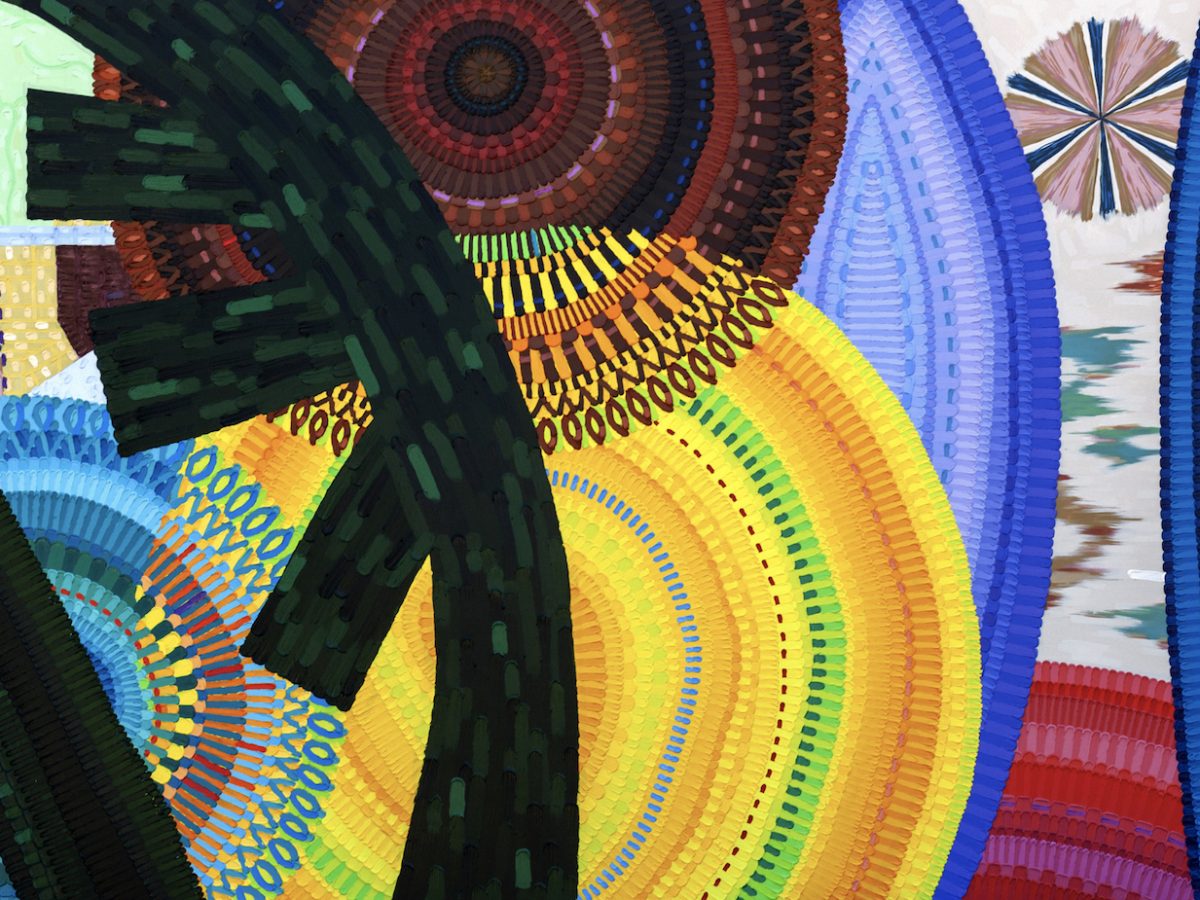
Three monumental, gridded paintings in a rainbow of hues overtake the gallery walls in Immersive Color, a show dedicated to the work of Hunter Color School painter Robert Swain. Swain, who first embarked upon his carefully calibrated color system of nearly 5,000 hues in 1969, takes his hallmark modular approach here, arranging painstakingly painted squares of color to compose new perceptual and emotional experiences.
The lineup, which changes every evening, includes Anne Carson, Arto Lindsay, Lafcadio Cass, and Rubin Kodheli.


Daisy Youngblood is a portrait sculptor whose themes include the embracing of one’s mortality.


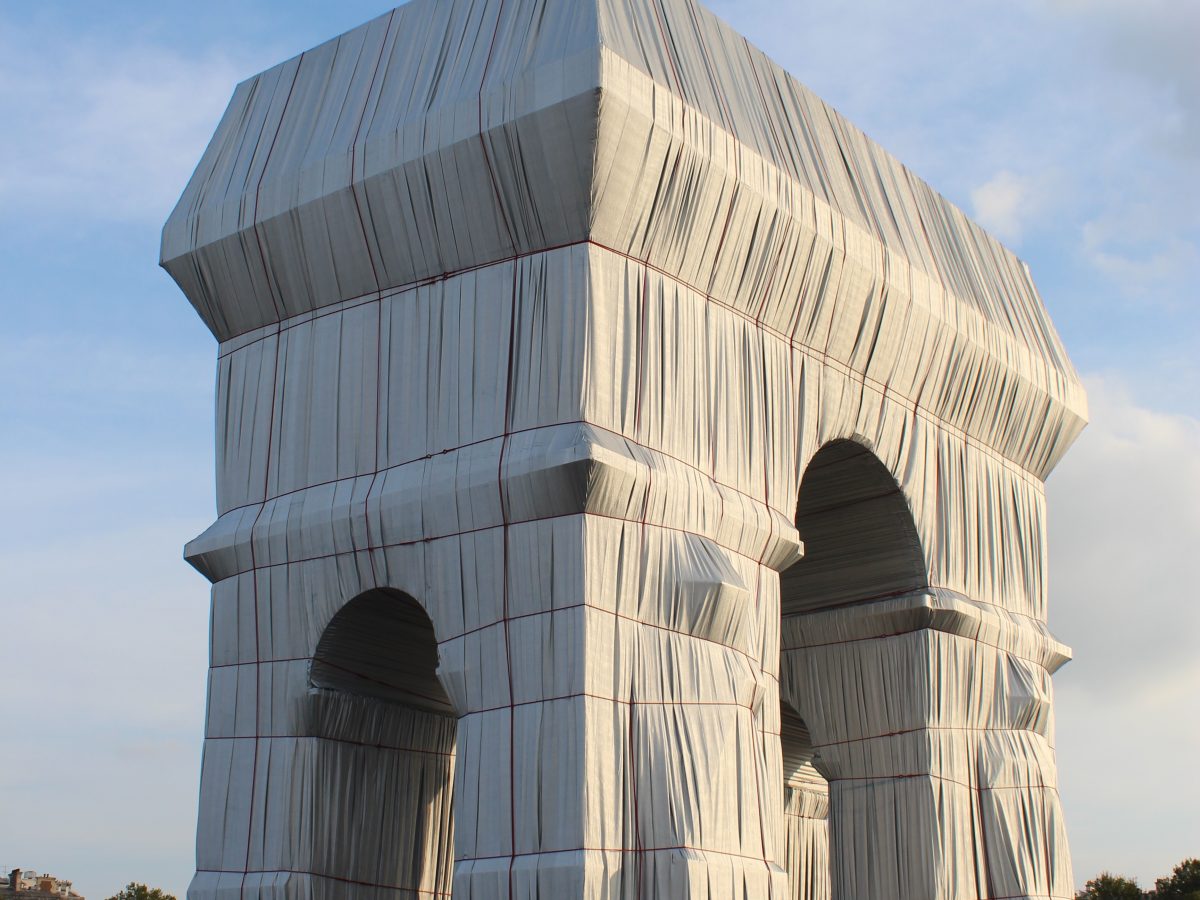
The project required 269,000 square feet of silvery-blue polypropylene fabric, 32,300 square feet of red rope, and the combined efforts of 1,200 workers.


Your list of must-see, fun, insightful, and very Los Angeles art events this month.