
Drought-Tolerant Landscaping Saves Money and Water

Alameda is getting an eco-friendly makeover one drought-tolerant yard at a time

Take a walk around your neighborhood and see how many front lawns are now dry and patchy, turned into yellow straw or dirt. This is no accident, nor are residents too lazy to take care of their yards. Most of them are conserving water. Living in extreme drought has prompted many Alamedans to make major changes in water usage, including converting lawns to drought-tolerant gardens and using drip irrigation systems. Lawns simply have to go in order to plant new landscaping. The initial transition may not always be lovely to look at, but the result can be lush and beautiful—and highly successful at conserving water.

Alameda Post - A Traditional Lawn Alameda Post - Lawn after conversion to draught-tolerant landscaping

Lawn before and after drought-tolerant landscaping. Photos courtesy EBMUD.

Here in the Bay Area, we have reduced our water consumption far more than the average Californian, according to state leaders and Bay Area water agencies gathered this week at the Quarry Lakes Demonstration Garden in Fremont. During the first six months of 2022, we reduced water use to an average of 60 gallons per person per day compared to the state average of 82 gallons, according to East Bay Municipal Utility District (EBMUD). Multiply that by EBMUD’s 1.4 million users and you get a picture of how much we saved by changing our water habits and habitats—at least 72 million gallons a day. “EBMUD customers are phenomenal at conserving water,” EBMUD general manager Clifford Chan said.

Get up to $2000 for making the switch

Transitioning from lawns to drought-tolerant landscaping not only saves water, it also saves money. Less water usage means lower water bills each month. And on top of that, EBMUD issues rebates for lawn conversions of up to $2.50 per square foot, with a maximum of $2,000 for single-family and small multi-family homes, or $15,000 for commercial, municipal, and large multi-family properties. There also are rebates for switching to efficient irrigation systems, using flow meters, and using gray water from indoor sources for outdoor landscaping. Visit the EBMUD website for information about the rebate program and instructions on how to apply.

A lot of Alamedans have already received those rebates. During the past eight years, EBMUD has processed more than 250 lawn conversion rebates, representing more than 380,000 square feet of conversions from lawn to drought-tolerant landscaping within the City of Alameda, according to Nelsy Rodriguez, the water agency’s public information representative. “We’ve also processed approximately 180 rebates for conversion from spray to drip irrigation,” she noted.
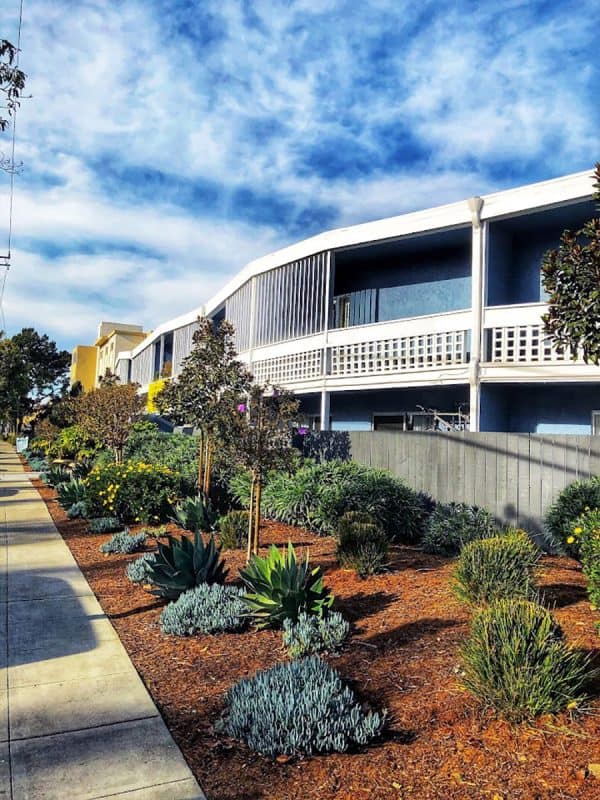
Alameda Post - A Lush Drought-tolerant Landscape at Otis Terrace
Otis Terrace Apartments transformed their sidewalk median into a lush drought-tolerant garden. Photo Google image capture.

It’s not just individual homeowners or renters who are making the switch. Many apartment complexes around town already have converted their lawns to beautiful drought-tolerant gardens. Most of the apartments that line Otis Drive across from the South Shore Center now have drought-tolerant landscaping on their medians between the sidewalk and the street. And the City of Alameda is conserving water as well, not just with City Hall’s new lawn conversion but also with city-owned properties such as Independence Plaza, an apartment complex for people aged 62 and older, which has drought-tolerant, bay-friendly habitat throughout the grounds.
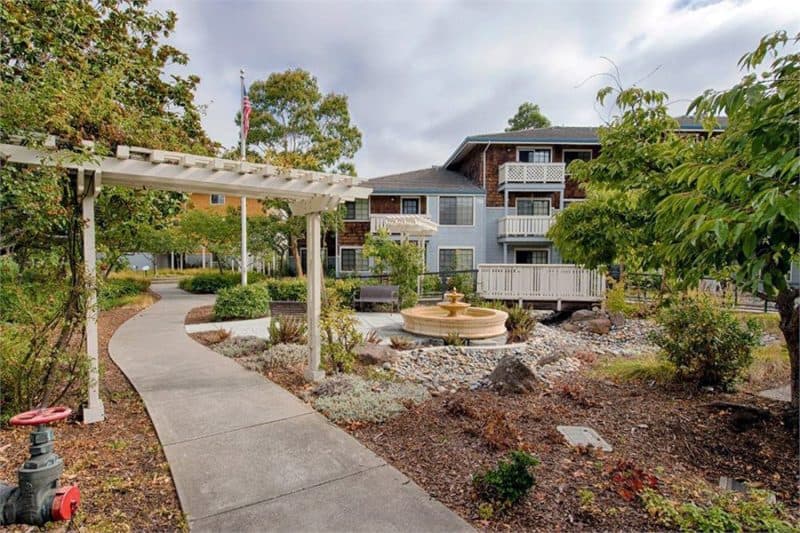
Alameda Post - A Garden with a fountain, rocks, and plants
Independence Plaza’s senior apartment complex features drought-tolerant landscaping. Photo Alameda Housing Authority.

Getting started with a drought-tolerant garden is fairly simple

Ready to convert your yard to a drought-tolerant garden? The first step is to get rid of your lawn in the area you want to re-landscape. The easiest and cheapest way to get started is sheet mulching (see video below).

Start by gathering cardboard boxes, often available from your neighborhood grocery store. Open the boxes out flat, cover your entire lawn with the cardboard, and then cover that with wood chip mulch, or bark. Many tree service companies will deliver free wood chips, and EBMUD will give you coupons for free mulch and compost at nearby nurseries.

Then just wait three to six months to let the cardboard and mulch break down into the soil. The best time to do this is summer or fall, but you can start whenever it is most convenient for you. The key ingredient is patience.

Check out free garden plans

For those of us who aren’t gardening experts, there’s a wealth of information online. The Harbor Bay Isle Homeowners Association (Bay Farm Island) offers free downloadable drought-tolerant landscape plans and lawn conversion guidelines with detailed plans for a variety of different gardens. Take a look at the fully customizable California Native Plant Society garden planner to see plants that are native to Alameda and suit your goals as well as your preferred garden aesthetic.
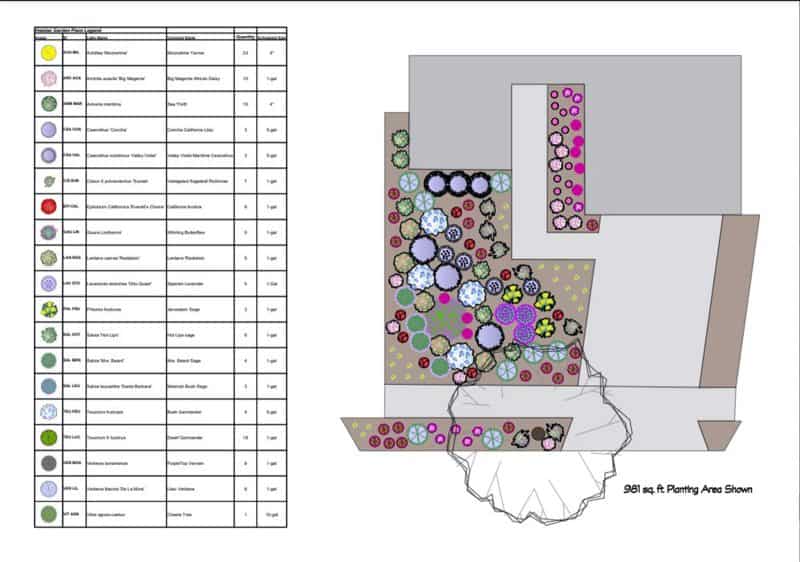
Alameda Post - A birds-eye view of a plan for converting a lawn to a drought-tolerant landscape. The plan includes a map of where all the plants will be placed.
Harbor Bay Isle provides free lawn conversion plans online. Photo HarborBay.org.
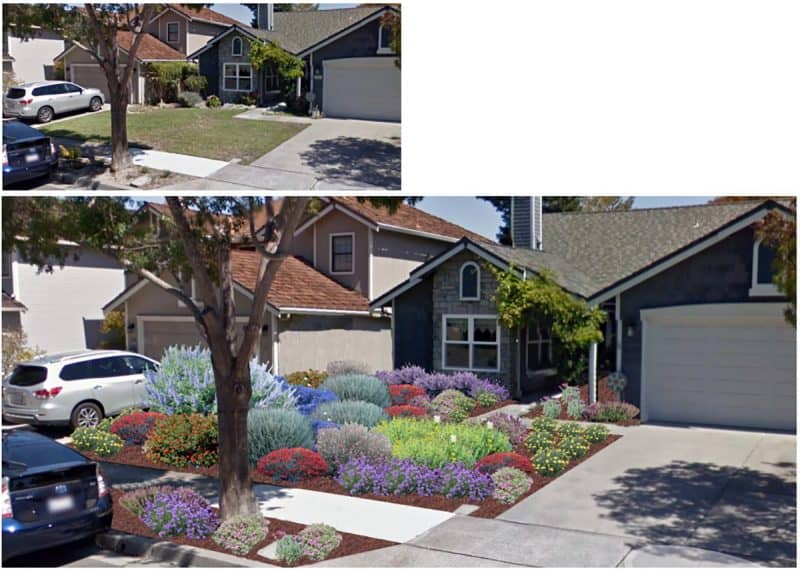
Alameda Post - A rendered photo of what a lawn could look like before and after replacing the lawn with a drought-resistant landscape
A rendering of a the lawn transformation using the above plans. Photo HarborBay.org.

Garden Center resources for drought-tolerant plants

And by all means, visit our local nurseries and ask questions. Encinal Nursery (2057 Encinal Ave., open seven days a week) is family-owned and operated and has been here in Alameda since 1946. Their huge variety of beautiful plants is second to none here on the island, and the staff is very helpful. Their greenhouse is filled with cacti and succulents.
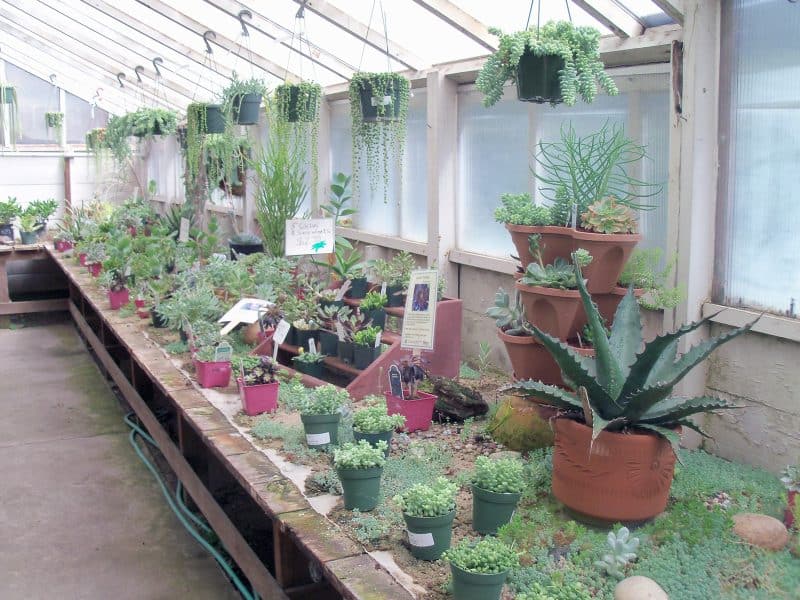
Alameda Post - A wall of different plants available for sale
Encinal Nursery has a wide selection of cacti and succulents. Photo @encinalnursery.

Ploughshares Nursery (2107 Main St., open Wednesday through Sunday), specializes in California native, drought-tolerant, and edible plants. Part of Alameda Point Collaborative (APC), the full-scale nursery has its own demonstration garden and offers hands-on workshops on sustainable landscaping and garden design. Sales from the nursery generate revenue for APC’s supportive housing for the formerly homeless, and the business provides job training to APC residents as well.
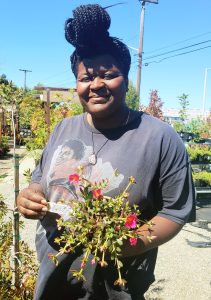
Alameda Post -Ploughshares manager Jordan Taylor smiling and holding a plant
Ploughshares manager Jordan Taylor is happy to help Alamedans with drought-tolerant garden planning. Photo Liz Barrett.

“Many people who come here are looking for heat-lovers and native plants that eventually will take care of themselves as far as water-wise gardening,” said Ploughshares manager Jordan Taylor. “Also, a lot of native plants have natural defenses against pests, so you can avoid using pesticides.”  Walking through the nursery, she noted that although succulents and cacti are beautiful and very popular in drought-tolerant gardens, they’re certainly not the only options. “Native milkweed is amazing,” Jordan said. “Monarch butterflies love milkweed. Echinacea is very popular. And people love passionflower vines. They’re not necessarily native, but they are once established, they are definitely drought-tolerant and very much love the heat. Salvia and most lavender also will be great for your drought-tolerant garden.”  Taylor and her staff are available during business hours and are happy to share advice on garden planning.

Liz Barrett is the Copy Editor of the Alameda Post and writes about the community. Contact her via [email protected]. Her writing is collected at AlamedaPost.com/Liz-Barrett.

Doctor Strange 2’s Deleted Variant Revealed In Official New Art (Photo)

Although jobs like Loki and Spider-Man: No Way Household dipped their toes into the MCU Multiverse, this year’s Medical doctor Bizarre in the Multiverse of Insanity took the dive head-to start with into it. The Multiversal epic observed Benedict Cumberbatch traverse several realities as he attempted to save the youthful The united states Chavez from a vengeful Scarlet Witch.

Sam Raimi’s MCU debut showcased a couple of Variants of the titular doctor, together with Defender Weird and Sinister Bizarre. These two, together with a couple of some others, showed the prospective of what the Multiverse could be, something that will definitely be explored even further in MCU’s Phases 5 and 6. 

Doctor Strange Variants
Marvel

But seemingly, there could have been even far more madness for Marvel’s good health care provider in the movie.

A Deleted Physician Peculiar Variant

Marvel costume strategy artist Darrell Warner uncovered a deleted Health care provider Unusual variant that under no circumstances created it into Medical professional Unusual in the Multiverse of Madness

Warner posted on his individual Instagram a strategy piece showcasing a version of Stephen Peculiar sporting a crimson fez and pulling a rabbit out of a hat like a classical magician. 

Doctor Strange Magician Variant
Marvel

The caption unveiled that the piece was titled “Marvellous Melvyn” and was accomplished “extremely early on in the 1st lockdown” as a aspect of the “the Scott Derrickson script that subsequently changed with the arrival of Sam [Raimi]:”

“I am honoured to be amongst these hallowed corporation and have this Watercolour progress via to be one of the Finalists of the ‘Live Motion Aspect Character’ at this a long time Concept Artwork Association Awards | ‘Marvellous Melvyn’ was a piece I finished really early on in the initially lockdown subsequent a single component/different ‘Strange’ universe inside of the Scott Derrickson script that subsequently improved with the arrival of Sam [Raimi} | It is very scarce to be permitted to follow one’s instinct as regards to a presented character and I need to increase a lot of many thanks to the Costume Designer Graham Churchyard for allowing for me to create and create this concept | All in all it was an complete pleasure to total and so incredibly pleased it has discovered some recognition”

This “Marvellous Melvyn” is seemingly the very same Unusual that was talked about in the Multiverse of Madness by writer Michael Waldron, the place Waldron revealed there was once a minute in the script exactly where the figures met a Variant of Medical professional Bizarre named “Melvin Unusual, a street magician who was a edition of Unusual without any magic:”

“…went to a universe and achieved a character named Melvin Weird, a street magician who was a variation of Peculiar with out any magic.”

The Additional Strange the Far better

Though Mother athletics loads of Multiversal insanity it would have been great to see even more versions of Benedict Cumberbatch’s magical Avenger. There ended up a good deal of Strange Variants in the film’s two-hour runtime, but there is actually no restrict to how several there possibly could have been throughout the Multiverse. 

And seeing this road magician Strange could have been interesting. He could have been an intriguing dichotomy to the Bizarre that enthusiasts know and enjoy. About the several years, Cumberbatch’s hero has proven he is 1 of the most strong magical beings in the Marvel Universe, so to see a version of the character who is very little more than a uncomplicated street magician, with no real powers could have been an exciting instant for not just lovers, but for Medical professional Strange himself. 

Assembly Melvyn could have posed a compelling dilemma for Peculiar, obtaining him talk to, ‘Who is Medical professional Bizarre without having his magic?’

But as the thought artist observed above, this character never designed it earlier the transition from director Scott Derrickson to Sam Raimi. So, like several other characters from the movie, Melvyn was remaining on the cutting space floor. 

Health care provider Unusual in the Multiverse of Insanity is accessible to stream on now Disney+.

Furniture exhibition staged in the home of landscape architect James Rose

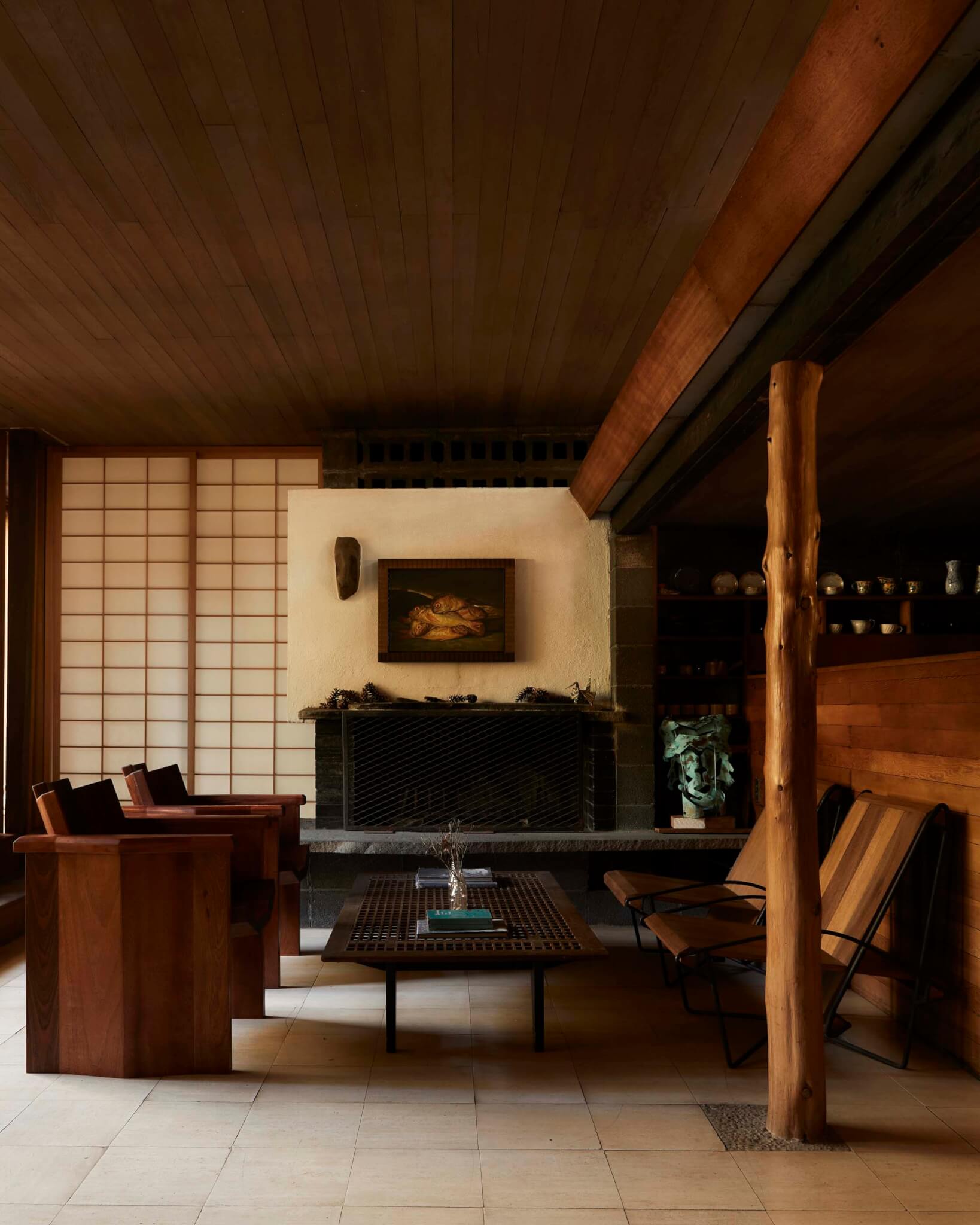
A set of leather Adirondack chairs, rice paper lamps, and an edition of Charles and Ray Eames’s Plywood Sculpture are amid the handcrafted furnishings and decorations set up in and all around the property and gardens of late landscape architect James Rose in Ridgewood, New Jersey, as component of the new exhibition At The Rose Dwelling. The demonstrate shows new models by household furniture and interiors studio Environmentally friendly River Undertaking LLC alongside up to date pieces from 20th-century designers including Eames, Nancy Holt, and Anne Truitt.

The set up is a collaborative endeavor among Inexperienced River Challenge LLC and Item & Matter. Objects on display screen acquire cues from the function and home of Rose, with contributions from galleries and companies these as Blum & Poe, Eames Business, Electronic Arts Intermix, Holt/Smithson Basis, Lisson Gallery, Matthew Marks Gallery, and P.P.O.W.

wood furniture in wood paneled room
At The Rose House: Eco-friendly River Undertaking LLC and Item & Matter. The James Rose Middle, Ridgewood, New Jersey. Photo courtesy of Green River Task LLC. Performs pictured [on fireplace , left to right]: Matt Kenny, Goya’s Nonetheless Daily life with Golden Bream (2022) with Eco-friendly River Undertaking LLC walnut body Environmentally friendly River Job LLC, Mask (2022) [left of center table] Environmentally friendly River Undertaking LLC, Rose Armchair (2022).

Rose, a landscape architect and theorist born in rural Pennsylvania, finished a number of jobs in and all-around North Jersey, where he resided, as very well as in New York, Connecticut, California, and abroad. For the duration of World War II he was stationed in Japan his time there greatly motivated his operate and lifetime. He not only turned a Zen Buddhist, but built-in Japanese architecture techniques into his work, several of which are obvious at the residence he hand-constructed for himself in 1953, which now serves as The James Rose Center, a basis and museum set up by Rose prior to he died that is dedicated to preserving his lifestyle and operate.

Amongst the Japanese factors identified inside his home and landscape is an admiration for wooden, the use of sliding doorways and shoji screens, and entry to the outdoor. In line with Buddhist procedures, Rose constructed the higher ground of his residence into a meditation place, which is at this time less than restoration by The James Rose Middle.

Obvious in the structure of his personalized abode is the landscape architect’s disdain for waste. He generally reused and repurposed making resources, notably converting doorways into benches and refashioning railroad ties into garden fences.

white leather adriondeck chair
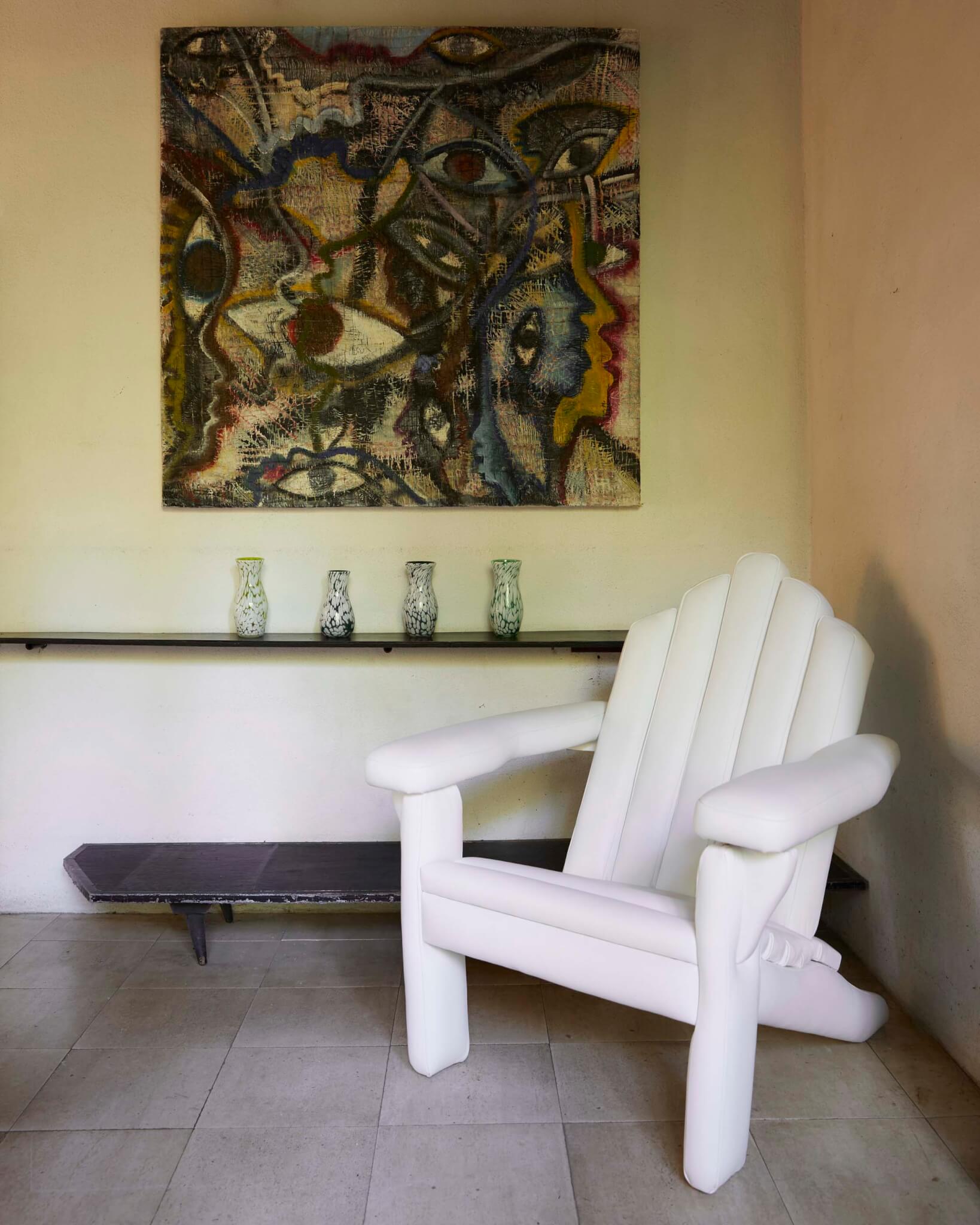
At The Rose House: Inexperienced River Undertaking LLC and Item & Point. The James Rose Centre, Ridgewood, New Jersey. Photograph courtesy of Green River Task LLC. Functions pictured [wall]: Lonnie Holley, Without having Pores and skin (2020),© Lonnie Holley / Artists Legal rights Modern society (ARS), New York, New York, Courtesy of the artist and Blum & Poe, Los Angeles/New York/Tokyo [shelf] Glass vessels by Paul Arnhold (2022) [foreground] Hugh Hayden, Upholstered Adirondack Chair(2022), courtesy Lisson Gallery.

“The simplicity in which Rose expanded the home employing prepared-built resources was an early stage of reference for our apply,” Aaron Aujla, cofounder of Environmentally friendly River Job LLC, claimed in a assertion. “Ben Bloomstein and I also began Green River Task LLC as a gallery in the barn of his family’s farm in upstate New York, so organizing this exhibition with [Object & Thing] was a great training that has introduced us back again to just one of our initial aims.”

Past collaborations amongst Green River Venture LLC and Item & Issue have brought equivalent stagings to the former properties of architect Gerald Luss and architect and industrial designer Eliot Noyes.

grooming objects on display in bathroom shelvingg
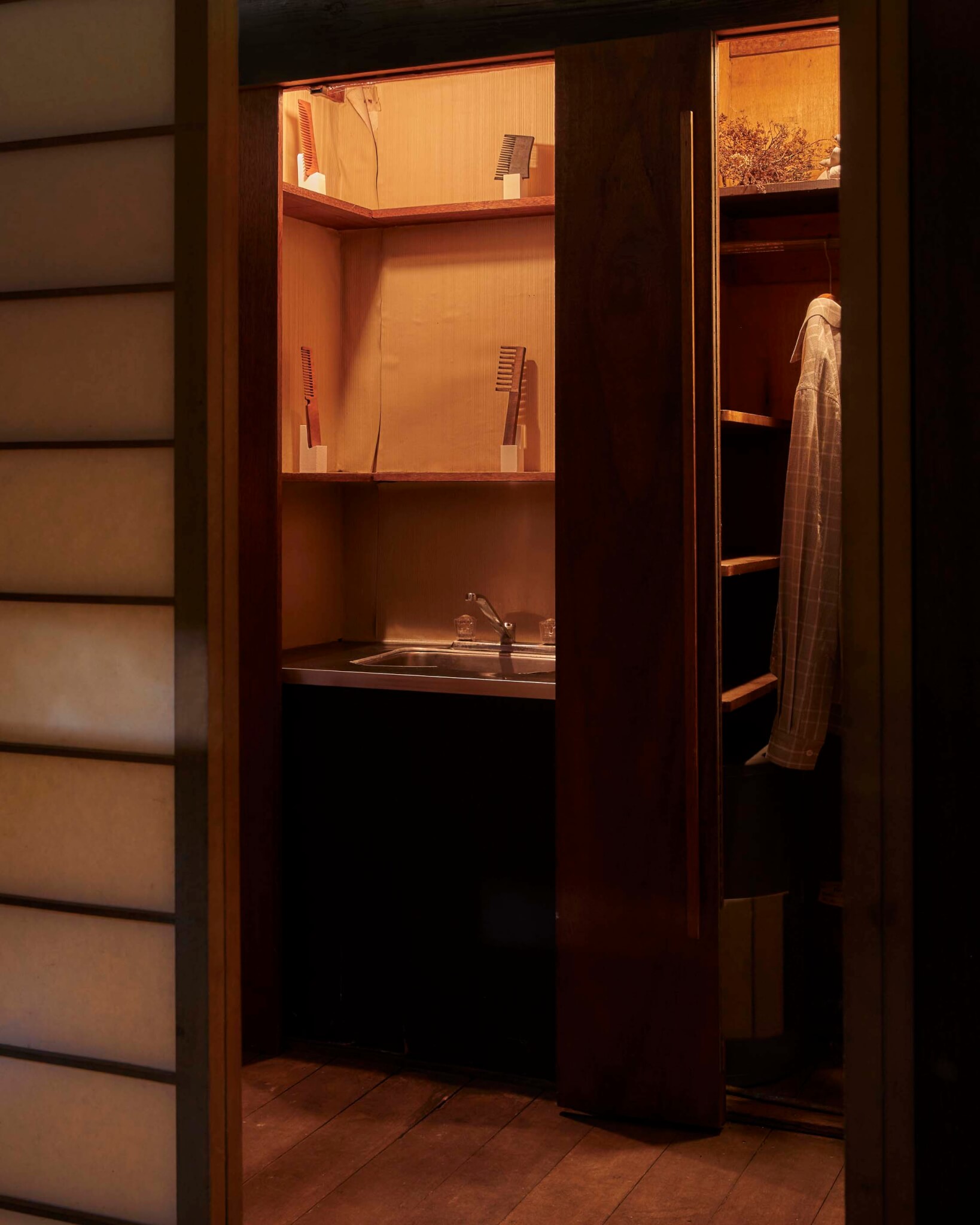
At The Rose House: Environmentally friendly River Undertaking LLC and Item & Issue. The James Rose Centre, Ridgewood, New Jersey. Picture courtesy of Environmentally friendly River Job LLC. Works pictured [left closet] Wooden combs by Teague’s Route (2022) [right closet] Bode clothing motivated by James Rose (2022).

Designers and artists building items for At The Rose Household took to heart the ethos and advert hoc strategies of the late landscape architect with their handcrafted types and multimedia will work. Among these installations are new pieces by designers functioning with Environmentally friendly River Project LLC, such as rice paper lamps by Preziosi Lights and a series of ornamental wooden grooming essentials by Teague’s Route which line the rest room shelving.

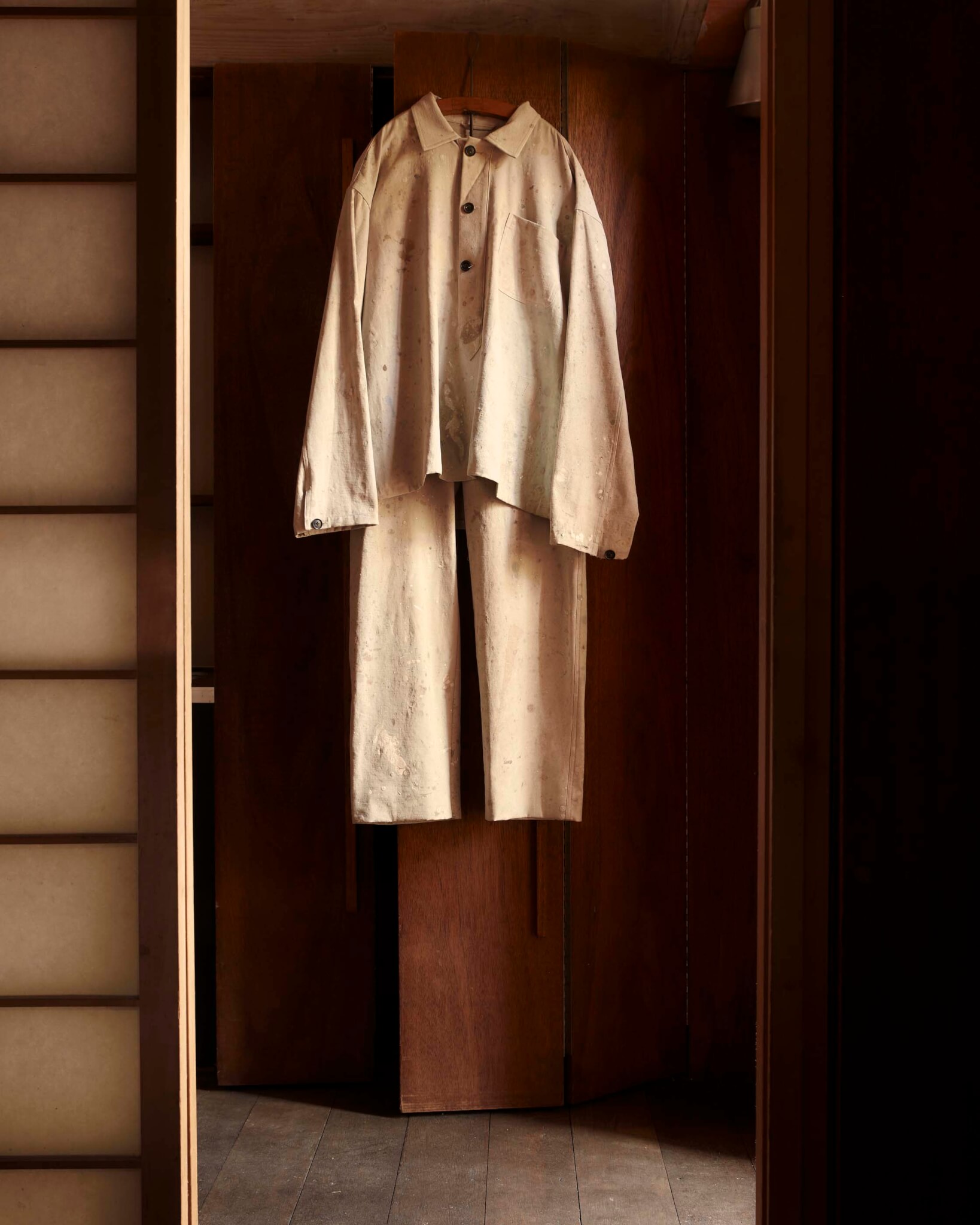
Other designers and artists contributing to the staged exhibition include clothing corporation Bode, which has made attire related to what Rose wore, a established of white leather Adirondack chairs by sculptor Hugh Hayden that contrast the dark-toned wood partitions, a selection of dyed rice paper illustrations by Anne Truitt, and a 1943 edition of Plywood Sculpture by Eames Office environment on display for the very first time in the United States.

clothing hanging
At The Rose Residence: Inexperienced River Task LLC and Item & Factor. The James Rose Center, Ridgewood, New Jersey. Image courtesy of Green River Undertaking LLC. Works pictured: Bode, The Landscape Architect I(2022) and The Landscape Architect II (2022).

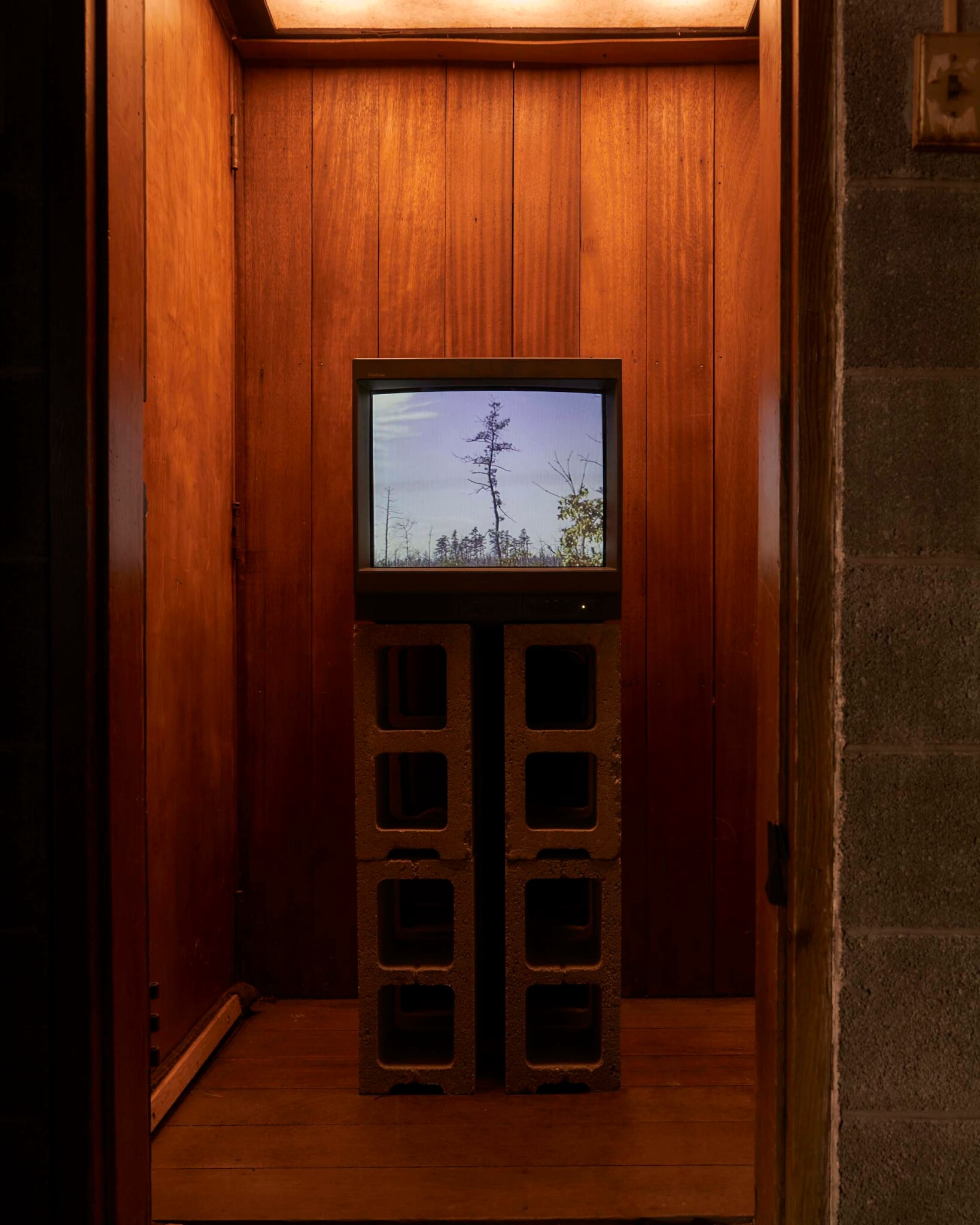
To embody Rose’s regard for the union of character and architecture, Pine Barrens, a 1975 film by Nancy Holt on the New Jersey landscape, plays on a loop from a tv positioned on best of makeshift cinderblock plinth, a style and design and use of item Rose most certainly would have authorized. Many glass-blown flower vases line the cupboard cabinets, alongside artwork and textiles on display that also harken to inexperienced landscapes.

“Rose was an not possible maverick, called by one writer, ‘The James Dean of Landscape Architecture,’ but I feel he would be really pleased with the eyesight Inexperienced River Project LLC and Object & Point have brought to his home and we glance forward to welcoming new audiences in the course of the exhibition,” Dean Cardasis, director of The James Rose Centre, said in statement.

television on cinderblock stand
At The Rose Household: Environmentally friendly River Challenge LLC and Object & Thing. The James Rose Middle, Ridgewood, New Jersey. Photo courtesy of Eco-friendly River Project LLC. Do the job pictured: Nancy Holt, Pine Barrens (1975), Courtesy of the Holt/Smithson Foundation and Digital Arts Intermix (EAI), New York.

At The Rose Property will be on see at The James Rose Middle in Ridgewood, New Jersey, right up until Oct 2, 2022. Extra info on the residence and exhibition can be observed below.

City advisory board fails to deliver recommendations on new Monument Avenue landscaping

A town advisory board was not ready to meet as prepared on Thursday, preventing it from creating tips on a proposal for short-term landscaping at the former web site of the Robert E. Lee Monument.

The Urban Layout Committee did not have a quorum, the least range of men and women to carry out formal business, following a member experienced an emergency, stopping the human body from building suggestions on the proposal submitted by VHB, an outside the house engineering organization. As at present envisioned, mulch paths would minimize via beds of small-routine maintenance crops, which could be eradicated effortlessly once a far more lasting redesign for the targeted traffic circle is understood.  

The speedbump in the procedure delays community dialogue — and doable suggestions from the UDC — on how the landscaping could impact the premier roundabout on Monument Avenue becoming employed as a gathering space in the upcoming. 

“The Lee circle was reclaimed by folks and applied by men and women the way they wished it to be employed. It definitely grew to become a self-created metropolis asset. And now that that is been taken absent, and the city’s putting programs in area, individuals need to have to be quite energetic in speaking what they want from that room,” stated UDC member Jessie Gemmer in an job interview Wednesday.

The region all-around the statue was dubbed “Marcus-David Peters Circle” by protestors in 2020, following a Richmond person who was killed by police in 2018. On June 4, 2020, previous Gov. Ralph Northam requested the removal of the Lee statue, which was on point out land. About two weeks later, concrete limitations went up all around the circle, and then in January 2021, the point out fenced in the circle, closing it to the general public.  

“Public areas exist on a continuum of buy and management,” stated Beth Meyer, a professor at the University of Virginia who’s an professional on landscaping and general public area. “I’m an idealist when it will come to public space, wondering that I would give up a very little bit of the order and management because I want to be in a location that feels like it is open to everyone, so that I really don’t see individuals just like me.”

Todd Woodson, a different committee member, mentioned in an job interview Wednesday that he favored the latest prepare.

“I search at this as the commencing of a healing system, the continuation of what’s gone on there. You will find really practically nothing additional therapeutic than mother nature,” he mentioned. “I would like to see some seating.”

The proposal garnered 10 pieces of penned public remark. Some feedback identified as for the house to encourage discussions highlighted in the course of the 2020 protests, though two self-explained Monument Avenue people wrote that opening up the circle to pedestrians would bring in “an element wishing to start out issues.” 

Site visitors security was also among the the worries published about. 

Kevin Vonck, scheduling director for the city, advised associates existing at the meeting that he would check with the planning fee chairperson to set the proposal on the frequent agenda and look at referring it back again to the UDC for recommendations in advance of a fee vote. 

“In the interest of timeliness for some of our [design] applicants, I want them to go on on by way of the process,” Vonck reported. 

He told the committee that the products would be on the preparing commission meeting scheduled for Sept. 19 the scheduling fee has the last say on whether or not the proposal is accredited. 

The state’s Division of Common Providers owns boundaries and fencing about the circle, a spokesperson from the section mentioned in an e-mail. The town is to deliver them to the condition at no charge to the office when they are eliminated. The land was conveyed to the town just before Northam remaining workplace earlier this calendar year. 

The transfer from the condition to the town intended that The Virginia Museum of Wonderful Artwork, which experienced been given tax revenue to make new, long-lasting models for Monument Avenue and the locations occupied by Confederate monuments, would no longer be concerned.   

Meyer, the professor at UVA, mentioned thoughtfulness is completely essential in creating new areas soon after the removing of monuments.  

“All the general public spaces that have had statues eliminated is an astounding prospect for the group to produce spots that are meaningful and not spots that are only fairly,” Meyer reported. “These jobs you should not need a landscaping proposal. They require a design and style proposal, due to the fact landscape structure, public-area structure is not the exact as shoving a thing up and filling it with flowers. It’s about producing areas that are significant.” 

Cooper Hewitt, Smithsonian Design Museum Unveils 2022 National Design Award Winners

Nader Tehrani, Melbourne School of Design, a new design school for the University of Melbourne (Melbourne, Victoria, Australia, 2014). Collaborator: John Wardle Architects
Peter Bennetts
Nader Tehrani, Melbourne School of Design, a new design school for the University of Melbourne (Melbourne, Victoria, Australia, 2014). Collaborator: John Wardle Architects

The Cooper Hewitt, Smithsonian Design Museum in New York has revealed the 2022 winners of the National Design Awards, an annual award series devoted to recognizing innovation and achievement in a variety of design specialties. This year’s honors feature experts in nine categories: design visionary, climate action, emerging designer, architecture/interior design, communication design, digital design, fashion design, landscape architecture, and product design.

“[The 2022] National Design Award winners reflect the central role that design can play in addressing some of the most urgent needs of our time,” said museum director Maria Nicanor in a press release. “Attuned to increasing social and planetary challenges, all awardees, regardless of their category, have a regenerative approach to design work that takes into account our shared future.”

Selected by a panel of designers, the 2022 winners are Nader Tehrani (design visionary); WEDEW by David Hertz (climate action); Emily Adams Bode (emerging designer); Rural Studio (architecture/interior design); Giorgia Lupi (communication design); Felecia Davis (digital design); Willy Chavarria (fashion design); Kounkuey Design Initiative (landscape architecture); and CW&T (product design).

Nader Tehrani is this year’s recipient of the design visionary award. The founding principal of the Boston-based architecture firm NADAAA, his wide-ranging residential, commercial, and institutional projects span the globe, including countries such as China and France. Tehrani’s many previous accolades include the prestigious Arnold W. Brunner Memorial Prize, which he received in 2020.

WEDEW generates renewable energy, heat, cooling, biochar, and water inside a 20-foot modified shipping container while sequestering atmospheric carbon into useful applications (Malibu, California, 2021)
Laura Doss Photography
WEDEW generates renewable energy, heat, cooling, biochar, and water inside a 20-foot modified shipping container while sequestering atmospheric carbon into useful applications (Malibu, California, 2021)

The 2022 climate action awardee is WEDEW, a water generator designed by California-based architect David Hertz, FAIA. It can manufacture more than 2,000 liters of water in one day while also harnessing excess heat to produce renewable energy. “WEDEW operates at the intersection of food, energy, water, and carbon transformation,” states the Cooper Hewitt release. “The processes of biomass gasification and atmospheric water generation have been combined in a single system that creates valuable resources while closing waste streams.”

Excerpt from Bode SS21 lookbook, titled A Year Off (New York, New York, 2021)
courtesy Bode
Excerpt from Bode SS21 lookbook, titled A Year Off (New York, New York, 2021)

This year’s emerging designer honoree is Atlanta native Emily Adams Bode, who debuted her high-end menswear brand Bode in 2016. The first female designer to present at New York Fashion Week: Men’s, the Parsons School of Design graduate “expresses a sentimentality for the past through the study of personal narratives and historical techniques,” according to the museum release. “Modern workwear silhouettes united with female-centric traditions of quilting, mending, and appliqué shape [her] collections.”

Rural Studio, Thermal Mass & Buoyancy Ventilation Research Project, part of a multi-institutional research project to investigate how to create a more responsible building system.
Timothy Hursley
Rural Studio, Thermal Mass & Buoyancy Ventilation Research Project, part of a multi-institutional research project to investigate how to create a more responsible building system.

Rural Studio is the recipient of the 2022 architecture/interior design award. Part of the School of Architecture, Planning, and Landscape Architecture at Auburn University in Alabama, the immersive program places architecture students in the state’s “under-serviced, persistently impoverished” Black Belt region where they design and build homes for local residents.

Giorgia Lupi, Mindworks: The Science of Thinking, data visualization and experience design for the world’s first working lab dedicated to behavioral science, hosted by the University of Chicago (Chicago, Illinois, 2020). Project Partners: Abbott Miller (Pentagram), Luke Hayman (Pentagram), K&S Partners
Tom Rossiter
Giorgia Lupi, Mindworks: The Science of Thinking, data visualization and experience design for the world’s first working lab dedicated to behavioral science, hosted by the University of Chicago (Chicago, Illinois, 2020). Project Partners: Abbott Miller (Pentagram), Luke Hayman (Pentagram), K&S Partners

This year’s communication design honoree is Giorgia Lupi, a data-visualization expert, TED Talk veteran, and partner at Pentagram—a multidisciplinary design studio with offices in New York, Austin, London, and Berlin. Her clients have included Google, the United Nations, the Museum of Modern Art (where her work belongs to the permanent collection), and more.

Felecia Davis, Stretch Sensor Knit, Pemotex Shrinking Yarn and Stainless Steel Fiber Resistive Yarn (Borås, Sweden and State College, Pennsylvania, 2015). Collaborator: Delia Dumitrescu
courtesy Felecia Davis
Felecia Davis, Stretch Sensor Knit, Pemotex Shrinking Yarn and Stainless Steel Fiber Resistive Yarn (Borås, Sweden and State College, Pennsylvania, 2015). Collaborator: Delia Dumitrescu

Felecia Davis is the winner of the National Design Award for digital design. A specialist in computational textiles—which, according to the Cooper Hewitt release, “respond to their environment via programming, embedded sensors and electronics”—Davis is an associate professor at Pennsylvania State University. Along with nine other designers, she was highlighted in the “Reconstruction: Blackness and Architecture in America” exhibition at MoMA in 2021.

Willy Chavarria, Uncut FW22, a runway show held at the historic Prince George Ballroom—an iconic hotel that fell into ruin and was eventually restored by the organization Breaking Ground to become a homeless shelter
Laura Fuchs
Willy Chavarria, Uncut FW22, a runway show held at the historic Prince George Ballroom—an iconic hotel that fell into ruin and was eventually restored by the organization Breaking Ground to become a homeless shelter

The recipient of the 2022 fashion design award is Willy Chavarria. Inspired by his childhood in California’s San Joaquin Valley, the senior vice president of design at Calvin Klein creates conceptual clothing “that blends the emotion of art and modern politics into a reactionary story of the human will,” the museum release states. “[Chavarria’s] collection has a hard edge with a strong message of anti-hate sentiment, including bold statements about racial, economic and sexual identity.”

courtesy Kounkuey Design Initiative
The Kibera Public Space Project, by KDI

This year’s landscape architecture winner is Kounkuey Design Initiative. With practices in the U.S., Kenya, and Sweden, the 16-year-old firm combines disciplines such as urban planning and civil engineering to produce equitable and inclusive green spaces. KDI has collaborated with the World Bank, Harvard University, the Los Angeles Department of Transportation, and others.

The Pen Type-B, by CW&T
Courtesy CW&T
The Pen Type-B, by CW&T

Helmed by Che-Wei Wang and Taylor Levy, New York–based CW&T is the 2022 winner of the product design award. The team’s vast array of creations includes everything from ball bearing-equipped jump ropes, engineered for maximum speed, to compasses for astronauts and 3D printed lamps. This year, their work was included in an exhibition at the Design Museum of Chicago.

Drought-tolerant LA yard thrives after city cease notice

Water-hungry lawns are symbols of Los Angeles’ past. In this series, we spotlight yards with alternative, low-water landscaping built for the future.

Susan and Steve Matloff are doing what they do most days when they are at home: spending time in their front yard with their kids, talking with neighbors, playing with their dog Blue and passing home-grown onions to random passersby.

When they installed raised vegetable beds alongside the sidewalk, they fantasized about living off the land despite warnings from friends that people might steal their produce.

“If someone wants to take a bell pepper, good on them,” says Steve, 49. “My office overlooks the garden, and every day I see people stop and look at our garden. Sometimes I run out there and talk to them. Our daughter Isabelle has been known to pull out a carrot and hand it to people walking by. The conversations start there. It’s part of what we wanted for our yard: to be a statement and community builder.”

The Matloff kids — Daniel, Isabelle and Edie — smile as they show off fresh-picked veggies.

The Matloff kids — Daniel, 12, Isabelle, 16, and Edie, 9 — have been known to share their home-grown produce with passersby.

(Allen J. Schaben/Los Angeles Times)

It wasn’t always this way.

The family of five, plus two dogs, moved from a two-bedroom condo in West Hollywood into the Windsor Square home in 2018, some years after it became too much for Steve’s parents. They renovated the home with climate change in mind.

“We set out to take a 1922 home and rethink it for the next 100 years,” says Steve, who recently co-founded a company called Tradicient — the blend of “traditional” and “efficient” — to do this work on other homes. “We retrofitted it, we achieved platinum LEED status, and the landscaping was a big part of that.” (To achieve LEED certification from the U.S. Green Building Council, a project earns points by demonstrating various improvements that address carbon, energy, water, waste, transportation, materials, health and indoor environmental quality.)

Green bell peppers in a raised garden bed.

Isabelle Matloff, 16, picks a bell pepper from one of the raised beds in her front yard.

(Allen J. Schaben/Los Angeles Times)

An overhead view of the Matloff's garden and concrete pavers.

A “lawn” composed of Carex pansa, or dune sedge, on the left. The water-absorbing swale on the right is filled with riparian native plants and collects storm water from the rooftop, back garden, drive and front walk.

(Allen J. Schaben/Los Angeles Times)

Unbeknownst to the couple, their front yard became a heated topic on Nextdoor during construction before they moved in. “FormLA Landscaping was overseeing the yard and was digging a bioswale and paths for concrete walkways,” recalls Susan, 48, a sports marketing consultant. “A friend sent me a thread on Nextdoor that began, ‘Has anyone seen this house? It looks like they are going to hardscape the entire front yard!’” It was actually going to be a rain garden.”

Shortly after the Nextdoor discussion, the couple came home to find a baffling cease order from the Los Angeles Department of Building and Safety that said they were missing permits they didn’t believe they needed.

“It didn’t identify why,” says landscape designer Isara Ongwiseth, a four-time Sustainable Innovation Award-winner with FormLA. “We didn’t do anything that violated any codes.”

Steve called the building department for weeks and got no response.

So he showed up at the agency’s office downtown. “I literally walked around for two hours with my notice,” he says. He finally got help but was directed to another staffer who works with historic preservation overlay zones, which are city districts with special renovation rules. “The [zone] administrator didn’t see anything wrong with the work we were doing, but the only thing she could do was put us on the agenda for the next [overlay zone] board meeting.” Such boards consist of five to seven local residents who review projects.

At the meeting, Ongwiseth shared detailed, color-coded plans for the yard. The board provided a required letter of support, and the project resumed two months later.

The Matloff's dog sits in a yard surrounded by native plants.

Blue sits in the bioswale surrounded by native red buckwheat, white sage, yarrow and other native plants.

(Allen J. Schaben / Los Angeles Times)

Asked for tips on dealing with historic preservation issues, Steve recommends starting the communication process early and remembering that these boards are made up of neighbors who are handling dozens of projects at once.

Equally important are city employees, Steve adds, who “do all the work to operationalize [overlay zone] boards’ decisions. What boards decide on cannot actually happen until an administrator walks your project through certain processes. But our best advice is to do all you can to stay out of the secondary review and stoppage process entirely; and the best way to do that is to preemptively try to answer and address neighbors’ and passersbys’ possible questions or concerns. If we could have educated the neighbor who submitted the inquiry about our project and process, we might have been able to avoid the stoppage altogether.”

For decades, the Matloffs’ Windsor Square neighborhood has been lined with stately homes bordered by sprawling lawns and sidewalks wet from sprinkler overspray. You could argue that the neighborhood is no different from others in Southern California where lush, green lawns have traditionally been a statement about pride of place. But the pervasive water waste involved in tending to a lawn as drought in California continues prompted the Matloffs to consider their footprint, as well as L.A.’s future water independence.

But it’s not just about the lawn.

Two photos, one showing a hand grabbing an onion from the ground and the other of a lawn, concrete path and native plants.

Isabelle Matloff, 16, picks an onion from the edible planter, left. Even in the triple-digit heat of summer, the Matloff family’s yard, right, is dynamic.

(Allen J. Schaben / Los Angeles Times)

In an unusual move, the Matloffs committed themselves to the LEED process: During renovation, they chose to keep the footprint of the house. They reused wood and concrete on-site. Solar panels on the roof generate twice the power they currently use. When the couple removed the original floribunda and Iceberg roses from the property, they found homes for all of them. “Reuse comes long before recycling,” Steve says. “We filled up our minivan with roses and drove them to my sister in Northern California.”

They had to remove an unhealthy jacaranda tree in the front yard and planted a California live oak in its place. “Although the jacaranda was big and beautiful, we found that it was infested with termites and would eventually cause danger to people and the home,” Ongwiseth says. “We removed it, and the live oak will give back to the community and to nature. It’s a host for so many insect species.”

The driveway's permeable bricks direct water into the garden.

The driveway’s permeable bricks direct water into the garden.

(Allen J. Schaben / Los Angeles Times)

A 270-square-foot bioswale, or rain garden filled with California native plants, was installed to absorb water from the front and back garden, as well as the home’s driveway, walkways and roof. Graywater from the upstairs laundry room feeds a small fruit orchard along the driveway. (Because graywater can contain sediment and bacteria, the couple decided against watering the vegetables and herbs via a laundry-to-landscape system.) Not far from the rain garden, a permeable driveway composed of interlocking brick pavers directs water into the garden and prevents runoff into the street and storm drain and keeps pollutants out of the Pacific. The material also helps control the heat island effect as Los Angeles struggles with rising temperatures and wildfires due to global warming.

Even when it’s hot in Los Angeles, the yard, which is fed by a subterranean low-flow drip system, is in bloom, with dwarf germander, yarrow, red buckwheat pom poms, Canyon Prince, deer grass and Cleveland and white sages. A large front “lawn” composed of native grass-like Carex pansa can transition from meadow to lawn with a simple trim. “A lot of people who want a manicured lawn fall in love with it,” Ongwiseth says.

The yard embodies Steve’s belief that “you’re not giving up anything” by planting drought-tolerant natives, as he puts it. “It functions better,” he says. “Our landscape changes throughout the year. The Cleveland sage turns purple when it blooms. When we don’t mow the Carex pansa, we have a big, flowy landscape that changes the character of the property over time. When we look outside, the rain garden is full. When the reclaimed hardscaping stone is saturated, it takes on different rays.“

Fruit on an apple tree.

The couple planted a fruit orchard alongside the driveway that is supported by graywater.

(Allen J. Schaben / Los Angeles Times)

The Matloff family on their front porch.

The Matloff family added a front porch and an ADA ramp so that Steve’s mother and guests with wheelchairs and strollers can access the home easily.

(Allen J. Schaben / Los Angeles Times)

The couple view their home as something to be shared and open it regularly for tours and other events. When friends and neighbors ask about their drought-tolerant meadow, Steve enjoys relaying how little maintenance it requires. A bench on the front porch provides a comfortable place to sit and commune with family and neighbors. “L.A. is so private in some ways,” Susan says. “No one uses their front yard. Our garden puts a face on our home. We are trying to use our front yard to get to know our neighbors. It’s important for us. It goes back to stewardship.”

White sage and buckwheat.

White sage and buckwheat require little water.

(Allen J. Schaben / Los Angeles Times)

Today, despite some misunderstandings, their neighbors have embraced the yard. (Another longtime neighbor, who was concerned about mosquitoes flocking to the bioswale, has since welcomed the addition). During the COVID-19 pandemic, the couple set up lawn chairs 12 feet apart in their yard, and neighbors joined them. At the height of the pandemic’s chalk drawing moment, some even drew plants from their garden on the street and identified them in pastel pigments.

Steve, who is an unusually upbeat voice for someone trying to save the planet, says his only regret is that he wasn’t able to complete the project before his father, Jack, a noted heart surgeon at Cedars-Sinai Medical Center who died in 2015, could have joined them on the front porch.

What does his mother, Martha, who is 87 and lives in a condo about a mile away, think of the changes? “My mom loves it,” Steve says. “No. 1, because we are here. No. 2, because we didn’t gut the house. And No. 3: It’s comfortable. There is a ramp that goes up from the driveway to the front door so that she and others can walk directly to the house with ease.”

A strip of native plants in between a driveway and a concrete path.

A view of the vibrant native foliage in the garden.

(Allen J. Schaben / Los Angeles Times)

Most striking is how a front yard that started as a family affair ended up as a bridge to connect with others.

“Last week, when I was weeding outside, a woman I’ve never met before stopped to tell me that our garden brings her joy,” Susan says with a smile.

Steve adds: “When we look at our collective footprint, it’s important to find where our resources are being used. It’s no secret that neighborhoods like ours use resources. We all need to be more thoughtful. We are all collectively a part of the solution.”