Thompson Savannah features new art installation, curated by local gallerist Susan Laney | Visual Arts | Savannah News, Events, Restaurants, Music

Thompson Savannah is featuring a new art installation with hopes of connecting both locals and tourists to art and culture in the Hostess City. 

The new installation is a part of the Thompson brand’s “Culture Lives Here” campaign. 

The hotel has partnered with local gallerist Susan Laney, owner of Laney Contemporary, to bring 40-50 pieces of work by Atlanta-based Benjamin Jones to its lobby.  

Jones’ featured works include sculptures of rabbits made from multicolor pins and pom poms, a display of hundreds of toy animals from Jones’ childhood, drawings and more. Laney Contemporary says Jones has been creating art for over 25 years that shows his “innermost feelings and insecurities, while touching a familiar place in all of us.”

Matt Graham, General Manager of the Thompson Savannah, says the point of the “Culture Lives Here” campaign is not to feature Savannah-themed art in the hotel’s lobby, but to celebrate work found in local galleries or by local artists that will be attractive to Savannahians. He says when locals enjoy a hotel in town, it creates a better experience for tourists and ultimately benefits the entire community. 

“The best way to make a hotel great for visitors to Savannah is to make it relevant to locals in Savannah,” Graham said. “If we can position this hotel as having some relevance to what we find interesting, whether it’s established or up-and-coming, here, it lends a value to the community that guests feel when they visit.”

“If you come to the bar in the evening as a visitor, and the person to your left or to your right is someone from Savannah, it opens up the experience of visiting Savannah in a different way and connects you a little more to what’s happening in our town than a hotel may normally be able to do,” Graham added. 

Graham says finding art, both established and up-and-coming, to feature in the hotel was a fun task. 

“Savannah punches over its weight culturally,” he said. “I think there’s our history, the influence of SCAD, the people who choose to make this place their home. It’s not difficult to find things to celebrate. There’s a lot of things going on when you just go for a walk around town.”

Ultimately, Thompson Savannah landed on Laney Contemporary to put together the first “Culture Lives Here” installation. 

“Susan graduated from SCAD and has been in town most of the time since then,” Graham said. “I think she has a good eye and she’s a really fantastic person.” 

Laney has also put together a list of local “hot spots” for visitors of the hotel to check out. Graham says he’s excited about the idea of visitors looking at art curated by Laney, then being able to go visit her favorite spots around town, feeling even more connected to the community. 

“I hope they feel that they chose a hotel for their visit to town that allowed them to connect to Savannah in a more meaningful way,” he said. “I hope that they feel the same love and connection to the arts that we all feel here and that they come away with the idea that culture matters in this town. If our hotel can be a small part of that just by celebrating others, then I feel like we’re on the right track.”

Jones’ work will be on display at Thompson Savannah, located at 201 Port St., through January, and then a new installation will go in. 

You can follow Thompson Savannah on Instagram at @thompsonsavannahga and learn more about Laney Contempory at laneycontemporary.com
How Can Arts Organizations Reduce Their Carbon Footprint? Here Are 6 Takeaways From a New Art-World Climate Conference

Is the art world going to save the warming planet? Yes, according to novelist and poet Ben Okri, for art deals with vision, which is needed to paint the picture of a sustainable future amid the urgent calls for change. “Don’t talk yourselves down,” he told the art-world audience members at the Gallery Climate Coalition (GCC) conference “Decarbonising the Art World” at London’s Barbican Centre on November 24.

Okri’s words were not empty. The GCC, a confederation of some 600 dealers, has set the ambitious goals of reducing the art world’s carbon emissions by 50 percent (from 2018 and 2019 levels) and achieving zero-waste operations by 2030. The conference marked the official launch of the detailed, 43-page Decarbonisation Action Plan, which offers concrete tips and a step-by-step guide to help its members (consisting primarily of art galleries and artists in Europe and the Americas) to transform pledges into action. 

The goal is aligned with those set out by the Paris Agreement, and the conference at the Barbican Centre was intended as a follow-up to the recently concluded United Nations Climate Change Conference (COP26) in Glasgow, which lacked discussion of culture on the agenda, said Lucia Pietroiusti, a curator and strategic consultant for ecology at the Serpentine Galleries.

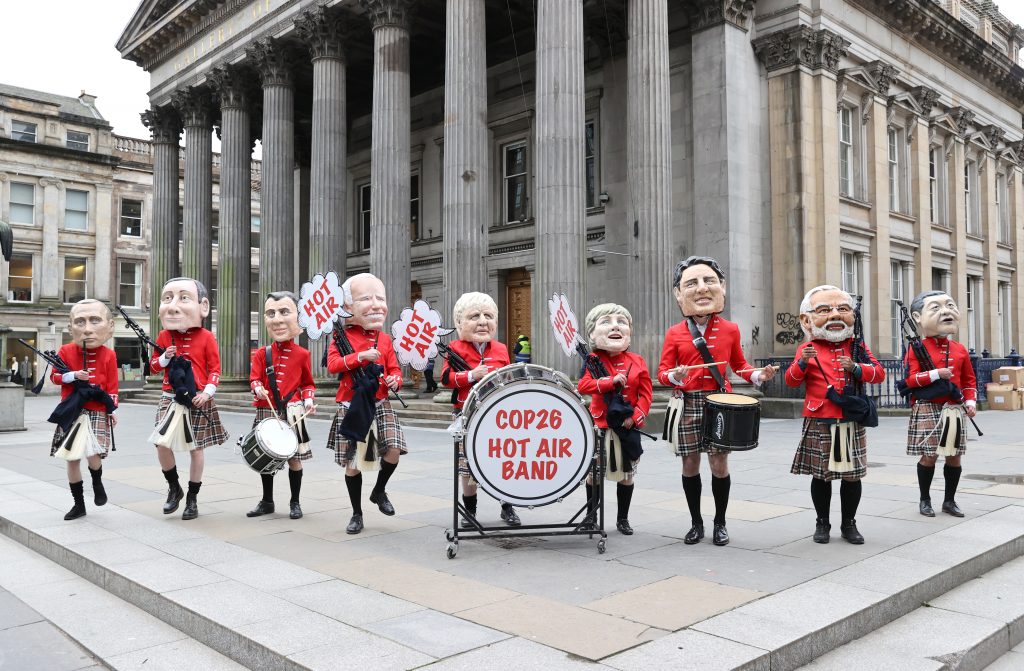
An Oxfam demonstration outside Glasgow’s Gallery of Modern Art on November 1, 2021. Photo: Chris Jackson/Getty Images.

“Compared to five years ago, there’s so much more activism and people are more outspoken,” Danny Chivers, an environmental researcher and advisor who played a key role in drafting the GCC’s Decarbonisation Action Plan, said at the conference. “If you talked about 50 percent [reduction in carbon emissions], people would be like, ‘Oh God!’ but now, people would say, ‘Let’s have that conversation.’ We are in a different space.”

Experts and some art-world leaders believe the goal is achievable—particularly those who have already taken action, following the coalition’s guidelines and plan.

Here are six simple steps proposed by GCC’s Decarbonisation Action Plan for the art world to kickstart reducing carbon emissions:

1. Appoint a ‘Green Team’

The GCC encourages art organizations are encouraged to form an internal group dedicated to making changes to reduce environmental impact. The team should be in charge of setting and reviewing targets, organizing meetings, and drafting a timeline for the organization to implement the action plan.

2. Do a Carbon Audit

“It’s like a tax return,” the London-based dealer Kate MacGarry said at the conference. Reduction goals cannot be set without calculating the baseline emissions in the first place, according to experts. The GCC has developed an online carbon calculator for its members, who are encouraged to do the carbon audit annually.

3. Analyze Data and Make Changes

In MacGarry’s case, emissions from business travels and art transport accounted for nearly 45 percent of the gallery’s total carbon emissions between 2018 and 2019. This year, the dealer decided to go to Art Basel by train. She has also given up bubble wrap and plastic for art packaging.

4. Set Targets for 2025 and 2030

The GCC action plan suggests art organizations divide their reduction goal into several stages. Those aiming to reduce carbon emissions by 50 percent in 2030 can start with a 25-to-30 percent reduction from the baseline by 2025. Those who are aiming for a 70 percent reduction by 2030 can set themselves a higher bar, at a 30-to-40 percent reduction by 2025.

5. Setting a Year-on-Year Milestone 

As a follow-up to step four, art organizations can look at their year-on-year annual carbon dioxide allocation, which should show a gradual reduction in carbon emissions every year. It’s almost like setting a financial goal and creating an annual financial budgeting that allows one to achieve this goal within a period of time, says the action plan.

For instance, a 30 percent reduction of carbon emissions by 2025 will require an average of five percent cut per year from 2019 to 2025. Then an art organization can look into the various areas of its operation, from travels to energy consumption and shipping, and decide what actions to take in order to achieve the reduction goal.

6. Action Time

Once you have done your carbon audit and set your goals, now it’s time to take action. The GCC has come up with a list of 50 effective actions to give art organizations ideas for changes to make, from smaller, manageable tasks to ambitious jobs that may require a little more research and planning. These actions are divided into six categories: shipping, travel, energy, packaging and materials, waste and recycling, as well as exhibitions and gallery spaces.

Regarding shipping, for example, the GCC asks its members to prioritize land and sea freight over air. (“Collectors need to be understanding as well, and not hurry the works,” said MacGarry.) The coalition also asks members to reconsider non-essential travel and avoid flying—whenever possible, taking a train rather than a plane. It also recommends hiring local teams to install international exhibitions remotely and avoiding single-use plastics in packaging.

This article was updated on November 26.

Follow Artnet News on Facebook:


Want to stay ahead of the art world? Subscribe to our newsletter to get the breaking news, eye-opening interviews, and incisive critical takes that drive the conversation forward.

The Yadkin Arts Council brings the Appalachian Nativity Musical ”Beautiful Star” back to the Willingham Theater stage Dec. 9-12, 2021 | Music

(Yadkinville, NC) –Beautiful Star, a down-home celebration and joyous musical revue, is back for an encore stage run this season from December 9-12, 2021. Beginning with the story of Adam and Eve, leading up to the birth of Jesus, this dramatized retelling will have you tapping your toes and singing its praises. Catchy Appalachian tunes and that peculiar mountain sense of humor make this a holiday favorite of families everywhere. This show also features backtrack recordings by local Bluegrass Americana band, None of the Above.  

Beautiful Star: An Appalachian Nativity

Book by Preston Lane, Music and lyrics by Laurelyn Dossett 

Show Directed by Jessie Grant & Presented by Willingham Performing Arts Academy

Tickets & Additional Information

What & When:”Beautiful Star” – December 9-11 at 7:30-pm; December 12 at 3pm. 

Tickets: $22. Tickets for these shows can be purchased at www.yadkinarts.org or at the Box Office from 10am-4pm, Monday-Friday. 

Where: Willingham Theater, 226 E. Main St., Yadkinville

About the Yadkin Arts Council

Transforming lives in our community through the arts by offering opportunities to encounter, create, and participate is the Yadkin Arts Council’s mission. We believe art is transformational.  Arts open minds, frees imagination, and helps people see the world from different perspectives.

The Yadkin Arts Council is a nonprofit 501(c)3 organization dedicated to enriching the lives of Yadkin County citizens through the arts. In September, 2010, the council opened the new Yadkin Cultural Center, providing a home for the arts in Yadkin County. It encompasses the Welborn Gallery, the Willingham Theater, the Center Bistro, classrooms and meeting rooms, staff offices and working artist studios. 

About the Willingham Performing Arts Academy

The Willingham Performing Arts Academy is located across the street from the Yadkin Cultural Arts Center and is operated by the Yadkin Arts Council. WPAA is a creative team, an educational studio, with a mission to enrich, educate, create, entertain, and collaborate with our community through professional quality productions and training.

About the Willingham Theater

The Willingham Theater hosted its first performance in December 2012, just two short years after the Yadkin Cultural Arts Center opened its doors to the citizens of Yadkin County. While many might dismiss the power of a small city theater, we like to prove that we can indeed bring the big city excitement and experience to our small town. Our state-of-the-art theater seats 193 patrons and showcases a variety of engaging performances ranging from music, dance, drama, comedy, and even film. In addition to ample seating, the Willingham Theater has remarkable state-of-the-art-technology. The Willingham Theater is owned and operated by the Yadkin Arts Council.

New art exhibit now open at MACC | Arts & Entertainment

Partner-and-spouse Jim and Rita Duxbury will have their picket artwork on exhibit and for sale at the Mebane Arts & Group Center in Mebane from November 11 via January 9.

Their purposeful, 3-D artwork, crafted on a wooden lathe working with neighborhood woods and exotic woods from all over the earth is exceptional and 1-of-a-type. The items include things like an beautiful hickory bowl on a walnut stand, parts incorporating spiral illusions, wooden-stemmed wine glasses and other special merchandise.

Rita Zoccolante Duxbury is a Massachusetts native. She is a part-time librarian at Alamance Local community School. A retired U.S. Naval Intelligence officer, she has traveled the planet. With an appreciation for the natural beauty and traits of wooden, and with the mentoring of her spouse, she has gone from sweeping sawdust to generating her own pieces.

“Just about every day is a new journey and I method life just that way, recognizing that there are not enough several hours in the working day to study, experiment, take a look at and make,” she mentioned. “Woodturning and training some others the talent of turning has turn into a element of my concentrate — as it is my husband’s everyday living and a lot a portion of our day-to-day program.”

James N. “Jim” Duxbury is a perfectionist recognized for “thinking out of the box.”  Recognised for his initial created kaleidoscopes, Jim doesn’t prevent there with his craftsmanship. He continues to generate both of those functional and artistic items that are actually 1-of-a-form.

“I satisfaction myself in producing picket products of attractiveness that also are created to perform nicely,” he stated. “My fascination with wood and wood grains, from the most exotic to the frequent native varieties, and my potential to make use of the wooden lathe and adapt instruments, direct to experiments of new and remarkable tips. Prototypes abound. I admire creativity and have a eager appreciation for wooden as a purely natural media.”

Also on exhibit at MACC is the artwork of Violet DeKnikker. She served and retired from the U. S. Air Force as an electronics technician where by she mounted, preserved and refurbished electronics products on a national and worldwide basis.  In the course of that time, she finished two master’s levels and then used those levels in management positions with Duke College and the University of North Carolina.  She applies her spare time now doing pen and ink drawings on various massive (15” by 18”) and smaller (2 ¼” by 3 ½”) sized pieces, operating on watercolor portray and executing combined media artwork. 

Her fascination in drawing opened the doorway for Silverpoint Drawing, a Renaissance Era form of drawing utilizing a piece of silver to attract with in its place of a guide pencil. The unique characteristic with that artform is that there is no erasing. Now she can make art journals for Silverpoint artists and teaches Silverpoint Drawing.

Mebane Arts and Community Heart is open up Monday through Saturday from 9 a.m. to 5 p.m.

For much more aspects on these displays, contact 336-226-4495 or pay a visit to www.artsalamance.org.

Indigenous Arts Arizona Festival at Tempe Center for the Arts

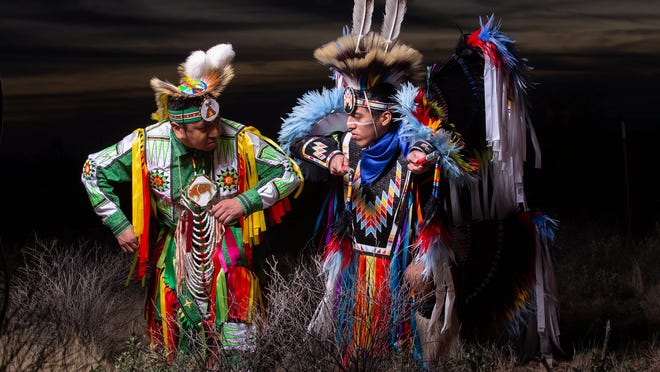
Each Native American tribe has its have individual styles of new music, dance, storytelling and visual arts. A new function in Tempe will highlight a selection of Indigenous traditions as a result of new music and dance performances, workshops and visible arts vendors.

The Indigenous Arts Arizona Pageant will get area at the Tempe Heart for the Arts on Saturday, Nov. 20.

Violet Duncan, the center’s Indigenous culture adviser, suggests that by way of the festival and applications this sort of as the Saturday wellness collection S.H.A.P.E., she hopes to deliver a space for Indigenous American artists and performers as effectively as teach people about Indigenous groups in Arizona.

“We want to make certain that, number a person, we are instilling satisfaction in Indigenous students and Native people, that we are supportive of arts and culture. Tempe Middle for the Arts is a massive piece in that, showing that we are a mainstream arts business that is supporting Native American Heritage Month.

“On top of that, with our non-Indigenous colleagues and good friends, to display them that this is our tradition. It is wide, diverse and wonderful,” claims Duncan, who is Plains Cree and Taino from the Kehewin Cree Country.

The festival’s theme is therapeutic

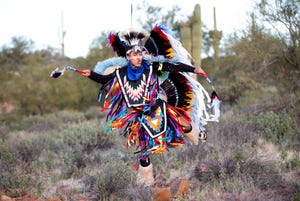
The Indigenous Arts Arizona Festival will feature Apache dancers from Yellow Bird Productions.

The pageant will focus on numerous sorts of therapeutic, including dance, tunes, meditation and visuals.

“I know this past 12 months, our healing and the way that we heal is influencing how we shift ahead. I actually needed to do this pageant not only as a type of schooling but as a sort of therapeutic,” Duncan says.

Duncan says she was inspired by her youngsters and how they use a variety of outlets to specific, heal and center themselves. 

For beloved artist Alma Thomas, beauty wasn’t just about art | The Arts

WASHINGTON — By the close of her career, Alma Thomas enjoyed substantial critical and common results. She was the first African American feminine artist to be provided a solo demonstrate at the Whitney Museum, in 1972. Her operates were accessioned by big museums throughout the country, and highlighted prominently in vital exhibitions in New York and Los Angeles. But it is unlikely Thomas could have imagined how her name would keep on to develop soon after her death at 86 in 1978, so considerably that she is now a single of the most beloved summary painters of the previous century.

The adulation is deserved, but it can make it hard to see her operate evidently, a obstacle that the curators of “Alma Thomas: Anything Is Beautiful” confront straight in a major retrospective on watch at the Phillips Assortment in Washington.

Arranged by the Chrysler Museum of Art in Norfolk and the Columbus Museum in Georgia, the exhibition mostly concerns Thomas’s time in Washington, wherever she lived most of her daily life. Thomas moved to the town from Georgia with her relatives when she was 16, analyzed art at Howard College, taught artwork at Shaw Junior Large Faculty for 35 a long time, and performed a key job in the advancement of an impartial and strong arts scene in the nation’s funds. The Phillips show is part of a citywide celebration of Thomas’s perform, which include a symposium released by former initial woman Michelle Obama in September at the Nationwide Gallery of Artwork and, via January, gatherings at Howard College and the Nationwide Museum of Gals in the Arts, among the other institutions.

Regular accounts of Thomas’s existence counsel that her retirement from teaching in 1960 was the necessary pivot point in her artistic improvement. Just after a lifetime of provider, she all of a sudden experienced liberty to discover and establish her talent, and she swiftly uncovered her stylistic identification in an abstract idiom that made use of broken brushstrokes and basic, nonfigurative geometries to take a look at vibrant juxtapositions.

That’s partly legitimate. But the exhibition involves crucial paintings from the 1950s to exhibit that Thomas’s perform was tending toward abstraction extensive in advance of she retired from instructing and that she was active as an artist through her adult daily life, like while at Shaw. The present also takes advantage of archival materials to argue for a holistic approach to Thomas’s inventive id, a seamlessness that contains no big breaks, these types of as retiring from teaching or identifying abstraction. Art was integral to her function at Shaw, to the design of her residence on 15th Road NW, to the cultivation of her back garden, to the way she dressed and her social life.

The exhibition also involves images and files to exhibit that Thomas was not apolitical or disengaged from the civil rights movement. Her art didn’t confront racism, exclusion or prejudice specifically, but she worked with her pupils in the 1930s to celebrate what was then recognised as Negro History 7 days and she made a sketch, also in the present, of the massive 1963 March on Washington.

The exhibition title, “Everything Is Lovely,” also hints at the bigger argument. Artwork wasn’t an escape from existence, or politics or conflict, but somewhat the assertion of an aesthetic best — that acquiring, elevating, preserving and disseminating elegance is essential to our survival. Stunning is a robust term, and artists, critics and students are chary of it. Associated strategies, these kinds of as “everything is pretty” or “everything is awesome,” propose a very simple-mindedness that is trivial. But “Everything Is Beautiful” is a daring and even risky way to tactic life, specially when so much of lifetime is manifestly unpleasant.

The exhibition proves that Thomas’s accomplishment of beauty was challenging won. She was not a seer or mage who instinctively channeled beauty. She worked for it and didn’t always achieve it. The notion that Thomas morphed all of a sudden into a genius on retirement lingers, probably, since there is a sizeable improve, and improvement, in her do the job in the 1960s. In her early abstractions, she struggles to unify the washes of coloration, which so encouraged the Washington Colour Faculty painters, with the exploration of line and marks. Her early landscapes, city scenes and figures are typically uncomfortable. A room that explores other painters energetic in mid-century Washington plainly shows Thomas grappling with painters, such as Jacob Kainen, who experienced, at the time, a stronger vision.

When she settles on the broken brushstroke, arranged loosely but rhythmically, the artist comes into her possess. Now she has a medium in which to examine colour and the confrontation of shades across the spectrum although preserving every little thing in visual harmony. Thomas’s concentrate on kinds, concentric circles of colour laid down in damaged brushstrokes, are a earth absent from their seeming cousins designed by Jasper Johns extra than a 10 years before. Her spherical forms often spill out of the frame, or agitate the place all-around them, these kinds of that they symbolize not issues or indications, but states of existence. Like Van Gogh’s brush operate, Thomas’s imputes electricity or some other unseen strength to the whole of the universe. Potentially that is her concept of magnificence.

The exhibition reaches its apex with the 1976 “Red Azaleas Singing and Dancing Rock and Roll Audio,” on bank loan from the Smithsonian American Art Museum. In contrast to the target illustrations or photos, or Thomas’s scientific tests in vertical traces or coloration rows, “Red Azaleas” is mostly monochromatic. It is a large operate, a lot more than 13 toes wide, painted on 3 panels. Created late in the artist’s life, when she was suffering from arthritis and ill well being, it is a big accomplishment from a purely actual physical standpoint.

But it also demonstrates Thomas exploring not just the corporation of electrical power, but also its dissolution. Pink marks, fewer official and much more various than her typical brushstrokes, cluster collectively in the first panel, expand extra diffuse and disorganized in the next, and eventually start to break aside in the 3rd. Thomas favored to listen to tunes though working, so probably that points out the title. But azaleas, which are so prolific in Washington, are also seasonal. They burst and die. If there is a trace of mortality in this essential perform, it is mortality tempered by the concept that governs the display: Almost everything Is Stunning.

In the early 1970s, Thomas painted several will work that reference NASA and the exploration of house. It is really hard to try to remember, but the early many years of the room software presented just one of the couple bright spots in American lifetime at the time. The state was coming apart racially, economically and politically it was riven by hypocrisy and corruption. In 1968, a lot more than 1,000 fires erupted in Washington as protests and riots broke out just after the April 4 assassination of Martin Luther King Jr. The destruction was obvious all all-around Thomas’s community, and people would have grappled with it just as the azaleas commenced to bloom.

The room program seemed to stand for a distinctive The usa. Less than a 12 months following the riots, Neil Armstrong landed on the moon, and in 1971 the initial room probe entered Mars’s orbit. Amongst the two most placing operates in the show are “Mars Reflection” and “Mars Dust,” equally built in 1972. The Mars reference seems to be largely by means of the use of purple. But in these two works, and many many others, Thomas also limitations her palette and very carefully calibrates a perception of foreground and track record, as if the purple brushstrokes are a form of screen hiding or blotting out of the darker blue of space.

The two shades are mesmerizing alongside one another. And each performs suggest some thing about how we select to see the world, and what we register from the area of notion. Maybe this is Thomas elaborating on the idea of attractiveness: Continue to keep it at any time in the foreground.

“Alma Thomas: Anything Is Beautiful” is accessible by means of Jan. 23 at the Phillips Selection. For a lot more details stop by, phillipscollection.org.