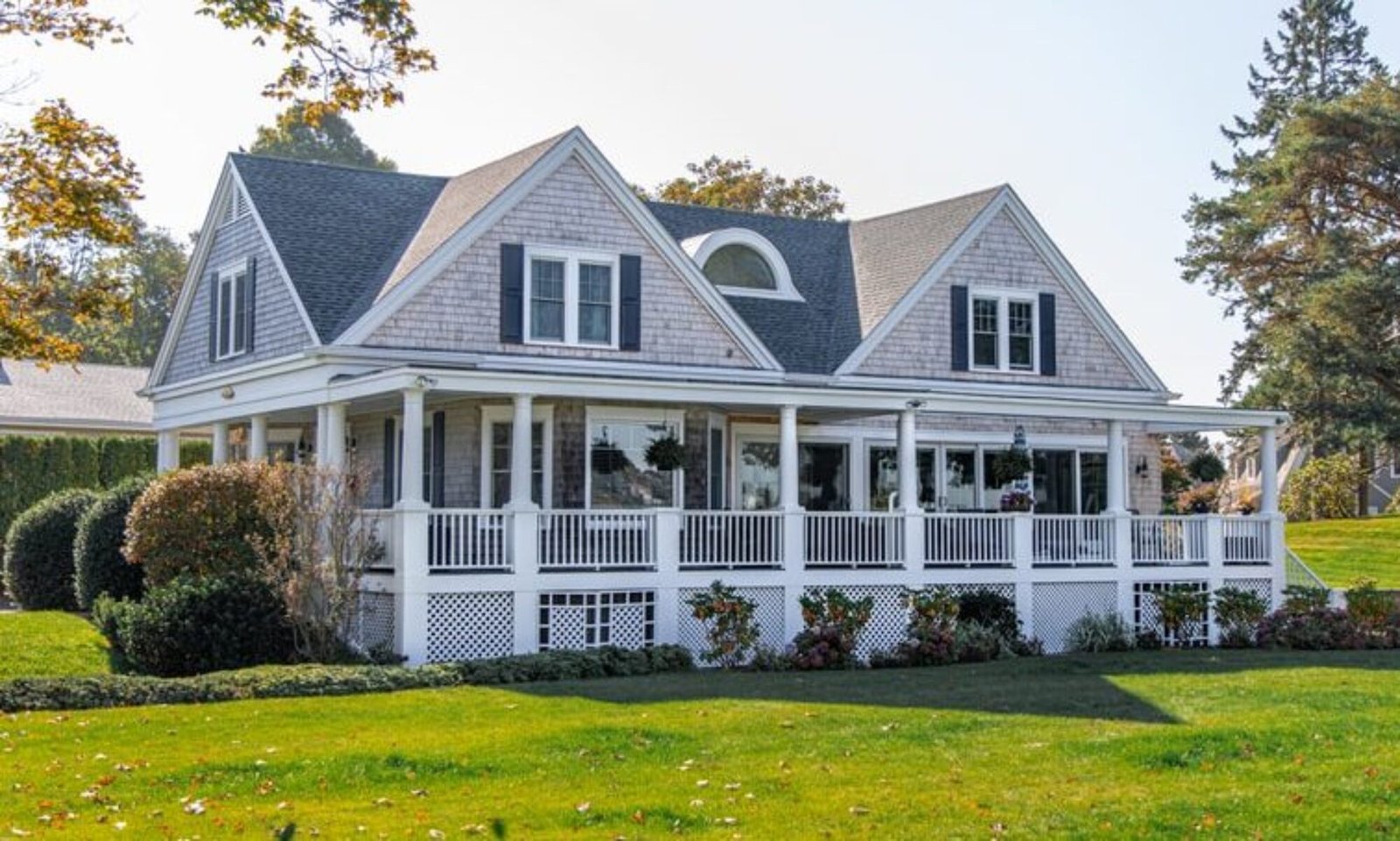

2022 “Best Landscaper” South-Jordan City: “Steve-N-Son Landscaping” Receives Blue-Ribbon Yard-Care Award | Draper Utah

Steve-N-Sons premier Landscaping service is “Big enough to serve your every need; small enough to care about all the details.

When it comes to the highest-quality landscaping in Utah & being recognized as BEST-of-STATE, Steve N Sons Landscaping is always in the discussion.””

— Better Business Bureau A Rating

COTTONWOOD , UTAH, UNITED STATES, September 15, 2022 /EINPresswire.com/ — Steve-N-Sons Landscaping (SNS) Motto: “Big enough to serve you, small enough to care.”

Steve-N-Sons Landscaping (SNS) started in 1993 with two mowers and a vision to help people create and maintain beautiful landscapes. The goal then was to create unique, professional landscapes our clients would be proud to talk with their neighbors about, and to provide the kind of professional lawn care that those neighbors would be compelled to ask about. It worked, and SNS have been growing in Utah ever since. Since then SNS has grown into multiple, specialized crews, each complimenting the other with professional quality lawn care and outstanding creative landscaping. SNS is proud to say they have

created some of the most breathtaking commercial and residential landscapes on the Wasatch front, and they are excited to outdo themselves on every next project. SNS hopes it’ll be your project.

(801) 523-8888

Steve(AT)steve-n-son.com

1998 W Nicholas Farm Rd, South Jordan

AWARD WINNING DESIGN: Steve-N-Sons Landscaping (SNS) has won multiple “Landscaper of the Year” awards as well as “Best of Show” in local the notable “Utah Parade of Homes.” Builders who need landscaping that matches their level of craftsmanship have used Steve-N-Son repeatedly. It’s not just contractors appreciating the exemplary landscape work that SNS does. Homeowners across nearly all review outlets have consistently rated Steve-N-Sons Landscape’s service as outstanding. https://www.steptap.com/How-To-Tell-If-Steve-N-Soncom-Is-The-Best-Option-For-Your-South-Jordan-Utah-Yard-3

Steve-N-Sons Landscaping (SNS) is 5-Star Rated on Manta.com

https://www.manta.com/c/mm6s9t5/steve-n-son-landscaping-inc

About Manta: Manta.com’s mission is to empower small businesses to achieve success. Manta is one of the largest online resources dedicated to helping small businesses grow. Their mission is to empower small businesses to achieve their full potential and reach new customers by claiming their business online, implementing effective SEO, and by building and strengthening anyone’s brand. Manta delivers products, services, and educational opportunities that are effective, easy to understand, and geared to help small business owners become more competitive in their respective industries. Millions of unique visitors search our Manta directory every month to find their local business needs through our comprehensive database for individual businesses, industry verticals, and geographic-specific listings.

With Manta, business owners can claim and customize their profile page to improve online visibility and marketability. And Manta does so much more by offering a full digital suite, helping businesses to grow and gain more customers, sales and revenue, no matter where they are along their digital journey. The Manta team works hard to deliver articles, resources, and tools for small businesses to utilize for growth. For more than 20 years, Manta has championed the small business by not only helping customers find them, but by helping businesses better connect with their customers.

What Is Manta? In the big-money ecommerce world, any tool or solution worth its salt gets reviewed, hyped, and discussed extensively on all the relevant platforms. Manta is a local business directory, where you can search for businesses by category, list a business for free, or run an ad. As early as 2004, Google was prioritizing geographic queries to make it easier for people to find things near them. Benefits of Manta: To some Manta is redundant, but it still offers some major benefits for your brand. First of all, it’s free. There’s no reason not to list your business for free on the off chance that someone new will find it there. Successful businesses tend to show up in as many places online as possible. Manta also may help legitimize local businesses that don’t have websites. In fact, at one point, 40 percent of businesses on Manta didn’t have a site of their own. There will always be some small businesses that lack websites, but need a legitimate online space to list basic business information. Manta can help.

Steve-N-Sons Landscaping (SNS) is 5-Star Rated on YP.com

https://www.yellowpages.com/south-jordan-ut/mip/steve-n-sons-landscaping-15057698

Yellowpages.com is a United States-based web site operated by Thryv that provides listings for local businesses. In 2013, it was re-branded as YP.com or simply “YP”. It currently offers a broad range of marketing tools including online presence, local search, display ads and direct marketing. It was previously a wholly owned subsidiary of AT&T. YP’s consumer brands include the YP mobile app and yp.com, which are used by nearly 80 million consumers each month in the U.S. and The Real Yellow Pages directory. In May 2016, YP entered into a partnership with the Better Business Bureau, displaying ratings for listings of businesses that have earned an A or A+ rating or BBB accreditation. What is the purpose of Yellow Pages? Yellow Pages is a book that contains advertisements and phone numbers for businesses and organizations in a particular area, grouped according to the type of business they do.

Steve-N-Sons Landscaping (SNS) and The Utah Valley Parade of Homes:

( .cbutah.com/central-bank/about-us/ )

The 2022 Home Show is one of the most anticipated events of the year. Take advantage of the highest-rated annual showcase of new, high-end and designer, homes. Located throughout Utah Valley, this self-guided tour features the work, design, and craftsmanship of Utah County’s finest builders, subcontractors, developers, and remodelers. It’s also an opportunity for homeowners and enthusiasts to view innovative ideas and the newest trends in home decorating.

Utah Valley Parade of Homes Sponsor: Central Bank (CB) has been serving Utah County for over 130 years and is proud of the history of sustained growth and security. Since the economy began to falter in 2008, CB has relied on their own reserves by not taking any “bailout” or TARP money—evidence that they have remained strong, safe, and secure since 1891. Central Bank (CB) believes the continuing progress is a direct result of dedication to caring for the individual needs of the people and communities served. Prime for Over a Century: On October 17, 1891, Milan Packard (great-great-grandfather of president, Mark Packard) helped establish the Springville Banking Company. The bank expanded gradually until 1924 when the community-focused officers and directors were instrumental in attracting the Columbia Steel Mill to the site between Provo and Springville. From this point, the bank enjoyed steady and substantial growth, and it was one of few banks that did not require Government Debenture Capital during the Great Depression. Progressive and ably managed, Springville Banking Company was the first bank in Utah to qualify for FDIC insurance on deposits.

University Avenue in Provo, Utah, where Central Bank’s Provo Office now resides. The State Bank of Provo was organized in 1902 by 16 men of incredibly diverse backgrounds—sheep farmer, plumber, attorney, you name it—who all wanted to find a safe, stable place to save and borrow money. From its founding, the State Bank of Provo grew steadily and the officers and board members were proud to be part of the bank that knew every customer as a friend. On July 1, 1966, the Springville Banking Company and the State Bank of Provo merged under the new name of Central Bank and Trust. This was not simply a union of the two oldest banks in Utah County, but a consolidation of strength that would provide greater lending power, more financial stability, and superior services. Central Bank opened its doors in Spanish Fork in 1969, followed shortly by offices in the Provo Riverside Plaza in 1971 and Mapleton in 1972. Continued expansion brought offices to Payson in 1980, Orem in 1982, American Fork in 1996, Lehi in 2003, Pleasant Grove in 2008, and Traverse Mountain in 2018. These new facilities demonstrate Central Bank’s commitment to serving Utah County and the people who call it “home.”

Central Bank (CB) is committed to offering all modern banking services and conveniences—mobile banking, online bill pay, advanced technology ATM’s, and online financial management through Money Management—without letting go of the personal, friendly touch. Aside from providing exceptional banking services, Central Bank makes valuable contributions that strengthen our communities. Central Bank (CB) employees spend many hours each year participating in local programs, and the bank donates to many educational and civic organizations throughout Utah County.

Steve-N-Sons
Steve-N-Sons Landscaping
+1 (801) 523-8888
steve@steve-n-son.com
Visit us on social media:
Facebook
Twitter
LinkedIn
Other

Salt Lake City eyes landscaping regulation changes amid ongoing confusion, drought

Darin Mano claims he is aware of how complicated Salt Lake City’s landscaping ordinance can be even as a member of the Salt Lake City Council.

There are a good deal of policies in position, that now seemingly contradict modern attempts to preserve drinking water, within a huge document that isn’t effortless to read.

“It is complex to know accurately what you might be permitted to do,” he stated.

This — together with just one of the worst droughts in Salt Lake City’s background — is why town leaders are now taking into consideration new amendments to simplify and overhaul landscaping rules for residents and business house owners in Utah’s money. Metropolis civil enforcement, community utilities workers and planners a short while ago collaborated on a report that assessments achievable changes to landscaping codes, specially policies with regards to park strips.

Michaela Oktay, the deputy director for the Salt Lake Metropolis Scheduling Division, offered the report to members of the council through a do the job session on Tuesday. The improvements, she reported, would support the city align its aims and laws, which could possibly not be aligned ideal now and could be a source of some confusion.

Should really park strips continue to be or go?

Park strips — the space involving a avenue and sidewalk in entrance of houses, corporations and governing administration buildings generally crammed with grass — are a person of the biggest landscaping matters that Salt Lake Metropolis seeks to handle. The document highlights means to amend the city’s park strip procedures or even remove sections of it.

The town at this time needs that vegetation, these as turf grass, addresses at minimum 33{6d6906d986cb38e604952ede6d65f3d49470e23f1a526661621333fa74363c48} of all park strips that are 36 inches or larger. A tree is also demanded in some situation but a tree canopy isn’t going to count towards the 33{6d6906d986cb38e604952ede6d65f3d49470e23f1a526661621333fa74363c48} rule, Oktay provides.

As noted by the doc, the vegetation aids the metropolis meet up with regulatory and environmental stormwater runoff high-quality needs by slowing runoff flows and even filtering air pollution prior to it operates off into storm drains and in the long run the Jordan River and the Terrific Salt Lake. Oktay mentioned the vegetation, particularly trees, can also aid reduce city heat island result.

Grass park strips also eat a lot of drinking water, although. The Utah Division of H2o Sources estimates that homeowners, on regular, shell out 5,000 to 8,000 gallons of drinking water on park strips every yr. Lots of inhabitants have switched to xeriscaping to lessen h2o intake as a result of an ongoing drought — the West’s worst 20-12 months span in 1,200 decades.

As residents started to flip their strip, the vegetation rule turned a person of the much more “commonly violated” city codes, the Scheduling Division report states.

“One of the most important worries with the code is that we are obtaining people just aren’t aware of what is required,” Oktay mentioned. “It could be partly to do with the 200-in addition some restrictions we have in the code. And it really is incredibly time-consuming to administer, very time-consuming.”

The stability among the code and the city’s calls for water conservation could be a different resource of confusion. Stan Holmes is just one of the a lot of Salt Lake Town house owners caught up in this confusion in excess of the past several many years. In a movie presentation to the East Liberty Park Group Corporation in April, Holmes spoke about his family’s choice to xeriscape the property outdoors of their Capitol Hill residence 6 many years ago in an work to conserve water, cut down the air pollution from mowing their lawn and because they chosen the aesthetic.

The family members eradicated all the sod surrounding their dwelling, although they held a several trees. They also changed their total water process with drip traces and sprinklers for the tall grass and other h2o-effective shrubs planted in position of the sod. To best it off, they taken off their park strip land and replaced it with gravel with no plants, which meant no drinking water was needed for the park strips.

He hardly ever listened to everything about it until past yr, when he acquired a see from the Salt Lake Town Department of Local community and Neighborhoods warning him that the family’s landscaping did not meet up with town code simply because vegetation didn’t protect at the very least one-third of the park strip. Holmes was puzzled for the reason that it arrived as town officers emphasised the relevance of drinking water conservation at the exact same time he acquired notices about the vegetation code.

“So in essence we observed out we had been in violation of a code that was written more than 20 a long time ago. … So I guess the concern then is, what do you do about this 20-year-aged ordinance, that was written before the drought got genuinely serious?” he questioned, at the time. “It will not even point out xeriscaping in it.”

Rachel Simeon, one more Salt Lake City resident, experienced a identical working experience final yr. She explained that she was told she could deal with everyday fines if she didn’t comply with the vegetation rule.

Rachel Simeon and her daughters are photographed on their Salt Lake City property on Friday, Aug. 20, 2021. Simeon says she was dumbfounded when she got a letter from Salt Lake City code enforcement, in the midst of Utah's historic drought, that she needed to add more vegetation to her park strip, which would require more water.

Rachel Simeon and her daughters are photographed on their Salt Lake Metropolis property on Friday, Aug. 20, 2021. Simeon claims she was dumbfounded when she received a letter from Salt Lake City code enforcement, in the midst of Utah&#39s historic drought, that she needed to add a lot more vegetation to her park strip, which would call for much more water.

Laura Seitz, Deseret Information

Oktay pointed to a photo of a sod-filled park strip projected on a display screen subsequent to the council all through Tuesday’s meeting. This, she stated, is thought of the normal by the metropolis code definition, but it also clashes with the city’s new initiatives to cut back again on drinking water waste, as Holmes said.

“With this sort of landscaping, is that suitable provided our climate, the availability of drinking water and the threat of rising temperatures linked with weather alter?” Oktay questioned rhetorically, as it can be a query the council users will have to response by themselves.

The doc outlines a handful of solutions for the Metropolis Council to take into account, these as generating a new vegetation prerequisite calculation for every single style of park strip, allowing tree canopy to rely toward the 33{6d6906d986cb38e604952ede6d65f3d49470e23f1a526661621333fa74363c48} rule or just doing away with the rule entirely. But doing away with the rule would “very likely final result in a hotter atmosphere and maximize storm runoff into the stormwater program,” the report warns.

The doc provides that there are other landscaping guidelines that the metropolis could rethink, these types of as its synthetic turf ban in park strips, needed landscaped yards or as some thing that counts towards the city’s vegetation protection rule.

The town started a short term enforcement pause on some of these landscaping procedures whilst it figures out what to do with the present-day approach.

Defining priorities

Tuesday’s presentation was purely informational prior to the council can take up any code modifications. However, customers of the City Council acknowledged that any adjustments to the city code might in the end be identified by the position of metropolis priorities and trade-offs — if they do vote to modify the code.

Simply just place, the city may well have to take into consideration if lowering water intake is a lot more critical than city warmth island outcome or stormwater improvement or vice versa.

Thinking out loud, Mano reported the city would not have to do away with all a few from staying thought of but would prefer if the city invested extra in drinking water conservation than it at this time does, irrespective of whether by way of incentives or new polices. This could incorporate a “supplies blacklist” that bars sure vegetation or supplies from currently being made use of in lawns or park strips, Salt Lake Metropolis Councilwoman Victoria Petro-Eschler instructed.

“We don’t have to reinvent the wheel,” added Salt Lake City Councilwoman Ana Valdemoros, recommending that Salt Lake City critique what is operating in other cities working with drought issues.

Clearing up the regulation confusion must also be a main town priority, many users of the council reported Tuesday.

“Actually, it can be ridiculous proper now. As a law firm, as a council member, I am not self-confident I can do this to my house devoid of support from anyone else in this city,” explained Salt Lake City Councilman Chris Wharton. “That is type of an indictment of the full method appropriate now.”

The council will have the remaining say on the matter, though no timetable has been established up for general public comment on the make a difference or a vote. The city’s target is to have a prepare ready for general public review and likely a vote ahead of spring 2023.

Metropolis officials added that they will keep on the enforcement pause as they investigate new code solutions.

City advisory board fails to deliver recommendations on new Monument Avenue landscaping

A town advisory board was not ready to meet as prepared on Thursday, preventing it from creating tips on a proposal for short-term landscaping at the former web site of the Robert E. Lee Monument.

The Urban Layout Committee did not have a quorum, the least range of men and women to carry out formal business, following a member experienced an emergency, stopping the human body from building suggestions on the proposal submitted by VHB, an outside the house engineering organization. As at present envisioned, mulch paths would minimize via beds of small-routine maintenance crops, which could be eradicated effortlessly once a far more lasting redesign for the targeted traffic circle is understood.  

The speedbump in the procedure delays community dialogue — and doable suggestions from the UDC — on how the landscaping could impact the premier roundabout on Monument Avenue becoming employed as a gathering space in the upcoming. 

“The Lee circle was reclaimed by folks and applied by men and women the way they wished it to be employed. It definitely grew to become a self-created metropolis asset. And now that that is been taken absent, and the city’s putting programs in area, individuals need to have to be quite energetic in speaking what they want from that room,” stated UDC member Jessie Gemmer in an job interview Wednesday.

The region all-around the statue was dubbed “Marcus-David Peters Circle” by protestors in 2020, following a Richmond person who was killed by police in 2018. On June 4, 2020, previous Gov. Ralph Northam requested the removal of the Lee statue, which was on point out land. About two weeks later, concrete limitations went up all around the circle, and then in January 2021, the point out fenced in the circle, closing it to the general public.  

“Public areas exist on a continuum of buy and management,” stated Beth Meyer, a professor at the University of Virginia who’s an professional on landscaping and general public area. “I’m an idealist when it will come to public space, wondering that I would give up a very little bit of the order and management because I want to be in a location that feels like it is open to everyone, so that I really don’t see individuals just like me.”

Todd Woodson, a different committee member, mentioned in an job interview Wednesday that he favored the latest prepare.

“I search at this as the commencing of a healing system, the continuation of what’s gone on there. You will find really practically nothing additional therapeutic than mother nature,” he mentioned. “I would like to see some seating.”

The proposal garnered 10 pieces of penned public remark. Some feedback identified as for the house to encourage discussions highlighted in the course of the 2020 protests, though two self-explained Monument Avenue people wrote that opening up the circle to pedestrians would bring in “an element wishing to start out issues.” 

Site visitors security was also among the the worries published about. 

Kevin Vonck, scheduling director for the city, advised associates existing at the meeting that he would check with the planning fee chairperson to set the proposal on the frequent agenda and look at referring it back again to the UDC for recommendations in advance of a fee vote. 

“In the interest of timeliness for some of our [design] applicants, I want them to go on on by way of the process,” Vonck reported. 

He told the committee that the products would be on the preparing commission meeting scheduled for Sept. 19 the scheduling fee has the last say on whether or not the proposal is accredited. 

The state’s Division of Common Providers owns boundaries and fencing about the circle, a spokesperson from the section mentioned in an e-mail. The town is to deliver them to the condition at no charge to the office when they are eliminated. The land was conveyed to the town just before Northam remaining workplace earlier this calendar year. 

The transfer from the condition to the town intended that The Virginia Museum of Wonderful Artwork, which experienced been given tax revenue to make new, long-lasting models for Monument Avenue and the locations occupied by Confederate monuments, would no longer be concerned.   

Meyer, the professor at UVA, mentioned thoughtfulness is completely essential in creating new areas soon after the removing of monuments.  

“All the general public spaces that have had statues eliminated is an astounding prospect for the group to produce spots that are meaningful and not spots that are only fairly,” Meyer reported. “These jobs you should not need a landscaping proposal. They require a design and style proposal, due to the fact landscape structure, public-area structure is not the exact as shoving a thing up and filling it with flowers. It’s about producing areas that are significant.” 

Drought-tolerant LA yard thrives after city cease notice

Water-hungry lawns are symbols of Los Angeles’ past. In this series, we spotlight yards with alternative, low-water landscaping built for the future.

Susan and Steve Matloff are doing what they do most days when they are at home: spending time in their front yard with their kids, talking with neighbors, playing with their dog Blue and passing home-grown onions to random passersby.

When they installed raised vegetable beds alongside the sidewalk, they fantasized about living off the land despite warnings from friends that people might steal their produce.

“If someone wants to take a bell pepper, good on them,” says Steve, 49. “My office overlooks the garden, and every day I see people stop and look at our garden. Sometimes I run out there and talk to them. Our daughter Isabelle has been known to pull out a carrot and hand it to people walking by. The conversations start there. It’s part of what we wanted for our yard: to be a statement and community builder.”

The Matloff kids — Daniel, Isabelle and Edie — smile as they show off fresh-picked veggies.

The Matloff kids — Daniel, 12, Isabelle, 16, and Edie, 9 — have been known to share their home-grown produce with passersby.

(Allen J. Schaben/Los Angeles Times)

It wasn’t always this way.

The family of five, plus two dogs, moved from a two-bedroom condo in West Hollywood into the Windsor Square home in 2018, some years after it became too much for Steve’s parents. They renovated the home with climate change in mind.

“We set out to take a 1922 home and rethink it for the next 100 years,” says Steve, who recently co-founded a company called Tradicient — the blend of “traditional” and “efficient” — to do this work on other homes. “We retrofitted it, we achieved platinum LEED status, and the landscaping was a big part of that.” (To achieve LEED certification from the U.S. Green Building Council, a project earns points by demonstrating various improvements that address carbon, energy, water, waste, transportation, materials, health and indoor environmental quality.)

Green bell peppers in a raised garden bed.

Isabelle Matloff, 16, picks a bell pepper from one of the raised beds in her front yard.

(Allen J. Schaben/Los Angeles Times)

An overhead view of the Matloff's garden and concrete pavers.

A “lawn” composed of Carex pansa, or dune sedge, on the left. The water-absorbing swale on the right is filled with riparian native plants and collects storm water from the rooftop, back garden, drive and front walk.

(Allen J. Schaben/Los Angeles Times)

Unbeknownst to the couple, their front yard became a heated topic on Nextdoor during construction before they moved in. “FormLA Landscaping was overseeing the yard and was digging a bioswale and paths for concrete walkways,” recalls Susan, 48, a sports marketing consultant. “A friend sent me a thread on Nextdoor that began, ‘Has anyone seen this house? It looks like they are going to hardscape the entire front yard!’” It was actually going to be a rain garden.”

Shortly after the Nextdoor discussion, the couple came home to find a baffling cease order from the Los Angeles Department of Building and Safety that said they were missing permits they didn’t believe they needed.

“It didn’t identify why,” says landscape designer Isara Ongwiseth, a four-time Sustainable Innovation Award-winner with FormLA. “We didn’t do anything that violated any codes.”

Steve called the building department for weeks and got no response.

So he showed up at the agency’s office downtown. “I literally walked around for two hours with my notice,” he says. He finally got help but was directed to another staffer who works with historic preservation overlay zones, which are city districts with special renovation rules. “The [zone] administrator didn’t see anything wrong with the work we were doing, but the only thing she could do was put us on the agenda for the next [overlay zone] board meeting.” Such boards consist of five to seven local residents who review projects.

At the meeting, Ongwiseth shared detailed, color-coded plans for the yard. The board provided a required letter of support, and the project resumed two months later.

The Matloff's dog sits in a yard surrounded by native plants.

Blue sits in the bioswale surrounded by native red buckwheat, white sage, yarrow and other native plants.

(Allen J. Schaben / Los Angeles Times)

Asked for tips on dealing with historic preservation issues, Steve recommends starting the communication process early and remembering that these boards are made up of neighbors who are handling dozens of projects at once.

Equally important are city employees, Steve adds, who “do all the work to operationalize [overlay zone] boards’ decisions. What boards decide on cannot actually happen until an administrator walks your project through certain processes. But our best advice is to do all you can to stay out of the secondary review and stoppage process entirely; and the best way to do that is to preemptively try to answer and address neighbors’ and passersbys’ possible questions or concerns. If we could have educated the neighbor who submitted the inquiry about our project and process, we might have been able to avoid the stoppage altogether.”

For decades, the Matloffs’ Windsor Square neighborhood has been lined with stately homes bordered by sprawling lawns and sidewalks wet from sprinkler overspray. You could argue that the neighborhood is no different from others in Southern California where lush, green lawns have traditionally been a statement about pride of place. But the pervasive water waste involved in tending to a lawn as drought in California continues prompted the Matloffs to consider their footprint, as well as L.A.’s future water independence.

But it’s not just about the lawn.

Two photos, one showing a hand grabbing an onion from the ground and the other of a lawn, concrete path and native plants.

Isabelle Matloff, 16, picks an onion from the edible planter, left. Even in the triple-digit heat of summer, the Matloff family’s yard, right, is dynamic.

(Allen J. Schaben / Los Angeles Times)

In an unusual move, the Matloffs committed themselves to the LEED process: During renovation, they chose to keep the footprint of the house. They reused wood and concrete on-site. Solar panels on the roof generate twice the power they currently use. When the couple removed the original floribunda and Iceberg roses from the property, they found homes for all of them. “Reuse comes long before recycling,” Steve says. “We filled up our minivan with roses and drove them to my sister in Northern California.”

They had to remove an unhealthy jacaranda tree in the front yard and planted a California live oak in its place. “Although the jacaranda was big and beautiful, we found that it was infested with termites and would eventually cause danger to people and the home,” Ongwiseth says. “We removed it, and the live oak will give back to the community and to nature. It’s a host for so many insect species.”

The driveway's permeable bricks direct water into the garden.

The driveway’s permeable bricks direct water into the garden.

(Allen J. Schaben / Los Angeles Times)

A 270-square-foot bioswale, or rain garden filled with California native plants, was installed to absorb water from the front and back garden, as well as the home’s driveway, walkways and roof. Graywater from the upstairs laundry room feeds a small fruit orchard along the driveway. (Because graywater can contain sediment and bacteria, the couple decided against watering the vegetables and herbs via a laundry-to-landscape system.) Not far from the rain garden, a permeable driveway composed of interlocking brick pavers directs water into the garden and prevents runoff into the street and storm drain and keeps pollutants out of the Pacific. The material also helps control the heat island effect as Los Angeles struggles with rising temperatures and wildfires due to global warming.

Even when it’s hot in Los Angeles, the yard, which is fed by a subterranean low-flow drip system, is in bloom, with dwarf germander, yarrow, red buckwheat pom poms, Canyon Prince, deer grass and Cleveland and white sages. A large front “lawn” composed of native grass-like Carex pansa can transition from meadow to lawn with a simple trim. “A lot of people who want a manicured lawn fall in love with it,” Ongwiseth says.

The yard embodies Steve’s belief that “you’re not giving up anything” by planting drought-tolerant natives, as he puts it. “It functions better,” he says. “Our landscape changes throughout the year. The Cleveland sage turns purple when it blooms. When we don’t mow the Carex pansa, we have a big, flowy landscape that changes the character of the property over time. When we look outside, the rain garden is full. When the reclaimed hardscaping stone is saturated, it takes on different rays.“

Fruit on an apple tree.

The couple planted a fruit orchard alongside the driveway that is supported by graywater.

(Allen J. Schaben / Los Angeles Times)

The Matloff family on their front porch.

The Matloff family added a front porch and an ADA ramp so that Steve’s mother and guests with wheelchairs and strollers can access the home easily.

(Allen J. Schaben / Los Angeles Times)

The couple view their home as something to be shared and open it regularly for tours and other events. When friends and neighbors ask about their drought-tolerant meadow, Steve enjoys relaying how little maintenance it requires. A bench on the front porch provides a comfortable place to sit and commune with family and neighbors. “L.A. is so private in some ways,” Susan says. “No one uses their front yard. Our garden puts a face on our home. We are trying to use our front yard to get to know our neighbors. It’s important for us. It goes back to stewardship.”

White sage and buckwheat.

White sage and buckwheat require little water.

(Allen J. Schaben / Los Angeles Times)

Today, despite some misunderstandings, their neighbors have embraced the yard. (Another longtime neighbor, who was concerned about mosquitoes flocking to the bioswale, has since welcomed the addition). During the COVID-19 pandemic, the couple set up lawn chairs 12 feet apart in their yard, and neighbors joined them. At the height of the pandemic’s chalk drawing moment, some even drew plants from their garden on the street and identified them in pastel pigments.

Steve, who is an unusually upbeat voice for someone trying to save the planet, says his only regret is that he wasn’t able to complete the project before his father, Jack, a noted heart surgeon at Cedars-Sinai Medical Center who died in 2015, could have joined them on the front porch.

What does his mother, Martha, who is 87 and lives in a condo about a mile away, think of the changes? “My mom loves it,” Steve says. “No. 1, because we are here. No. 2, because we didn’t gut the house. And No. 3: It’s comfortable. There is a ramp that goes up from the driveway to the front door so that she and others can walk directly to the house with ease.”

A strip of native plants in between a driveway and a concrete path.

A view of the vibrant native foliage in the garden.

(Allen J. Schaben / Los Angeles Times)

Most striking is how a front yard that started as a family affair ended up as a bridge to connect with others.

“Last week, when I was weeding outside, a woman I’ve never met before stopped to tell me that our garden brings her joy,” Susan says with a smile.

Steve adds: “When we look at our collective footprint, it’s important to find where our resources are being used. It’s no secret that neighborhoods like ours use resources. We all need to be more thoughtful. We are all collectively a part of the solution.”

5 reasons why you’ll love this new art exhibit in Cedar City

Approximated browse time: 4-5 minutes

Now as a result of Sept. 24, do not pass up the likelihood to immerse oneself in Southern Utah Museum of Art’s exhibition, “The Room Amongst: Visions of the Southwest,” structured in partnership with Modern-day West Good Art.

Apart from a scenic journey to Cedar Metropolis, a lot of other added benefits await as you make your way down to SUMA for this thought-provoking and visually remarkable exhibit. Here are 5 very good reasons to insert it to your family’s itinerary this tumble.

Witness the perform of 4 unbelievably proficient artists

“The House Amongst” delivers with each other functions from 4 artists who signify the previous, existing,

and long run of summary art solid in the creative crucible of the desert: two mid-century modernists, Louis Ribak (American, b.Lithuania, 1902-1979) and Beatrice Mandelman (American, 1912-1998) as nicely as two modern day artists, Arlo Namingha (American, Tewa/Hopi, b.1974) and Shalee Cooper (American, b. 1978).

Mandelman and Ribak were being users of the Taos Moderns group, which involved influential artists from New York, Los Angeles, and San Francisco who relocated to Taos, New Mexico. The team released abstract, modern-day kinds into the art of the Southwest.

Ribak and Mandelman 1st came to New Mexico in the mid-1940s and aided transform regular western artwork into a new variety of American Modernism that centered on abstractions of character. However they had been married and lived in the exact same artistic local community, their styles are distinctive. Ribak works by using natural forms and lyrical brushwork whilst Mandelman’s do the job consists of more geometric abstraction that performs with shade and collage.

Up to date artists Cooper and Namingha are equally inhabitants of the American Southwest and every single hire their personal special modernist variations.

Cooper, a trained photographer, began portray out of an interest in light-weight and geometric abstraction. Her connection to 20th-century abstractionists these kinds of as Mandelman and Ribak is distinct by their shared fascination in using unfavorable house and a preference for expressionism above representationalism.

Namingha will come from a spouse and children of artists and is the son of 1 of the most celebrated Hopi-Tewa artists in the globe, Dan Namingha. His sculptures, made of polished wooden and stone, are reductionist interpretations of pueblo buildings, landscapes, and animals as well as abstractions of cultural symbols.

5 reasons why you'll love this new art exhibit in Cedar City
Photo: SUMA

See operates that have never been shown publicly

Envision the bragging rights of staying able to claim that you were being amongst the first to perspective a renowned artist’s perform. Very well, lots of of the paintings and parts in “The House Between” have never ever been proven publicly, so this is your opportunity! And though lots of of these will be on display screen at SUMA, you can also capture some of Mandelman’s and Ribak’s do the job at Fashionable West’s exhibit in Salt Lake Town, which is being held simultaneously. That show runs by means of Sept. 10.

Deepen your appreciation for the American Southwest

The distinctive elegance of the Southwest desert is mirrored in “The House In between” exhibit. For illustration, Ribak and Mandelman ordinarily utilised the exact colour palette of major shades in their functions. But pursuing their transfer to New Mexico, they expanded the palette to incorporate desert colors, such as sandstone vermillion, vivid sky blue, lively sun yellow, bold turquoise and iron oxide purple. The Southwestern landscape also inspires Namingha’s artwork, together with narratives and symbols of the Tewa and Hopi.

Extend your intellect and get in touch with your feelings

The finest way to take pleasure in summary artwork is to concentrate on how it tends to make you sense somewhat than its literal interpretation. As you just take your time absorbing each individual work, pay notice to your thoughts. The goal of numerous summary artists, such as the four on display, is to use the universal languages of colour, variety, and composition to specific meaning and evoke an psychological response. Recognize the place your eyes concentrate and what grabs your consideration to start with. Most likely it may possibly stir up thoughts and recollections, equally good and detrimental. Even the shades an artist employs can evoke particular thoughts. Many scientific studies — including 1 published in the Frontiers in Human NeuroscienceJournal — have found that summary artwork can activate choice pathways in the brain and enhance creativity.

5 reasons why you'll love this new art exhibit in Cedar City
Image: SUMA

Admission is absolutely free

One particular far more factor you may enjoy about this exhibit is that it would not consider any funds out of your pocket. Thanks to Cedar Metropolis RAP Tax, Zions Bank, Utah Arts and Museums funded by the Utah Legislature and the Sam and Diane Stewart Family Basis, SUMA is totally free and open up to the community. Hours are Monday via Saturday from 10 a.m. to 8 p.m. and you can locate more data about this and other displays on SUMA’s internet site. Be certain to capture “The Space Among: Visions of the Southwest” from now right up until Sept. 24.

Southern Utah Museum of Artwork

Extra tales you may well be interested in

Community Engagement Series to Select Public Art Locations for the 2022 – 2027 Bond – The City of San Antonio

Contact: Stacey Norton, Department of Arts & Tradition
&#13
210-207-6960, stacey.norton@sanantonio.gov


SAN ANTONIO (July 28, 2022) – The Metropolis of San Antonio Section of Arts & Society wishes to hear from people on where they would like to see Public Arts initiatives mounted in each Council District as element of the 2022 – 2027 Bond. The Department of Arts & Culture will host a neighborhood engagement series, along with SASpeakUp surveys, to aid citizens present feedback. 

In the course of the Could 2022 election, voters accepted all 6 propositions in the 2022 – 2027 $1.2 billion municipal bond, which includes 183 money advancement projects and a history-large funding for community art. The City of San Antonio’s General public Art System depends heavily on neighborhood engagement and comments to shape what public art appears like in San Antonio. The Section of Arts & Culture’s local community engagement sequence allows residents to share their voice and help the placement of general public art for all. These group engagement efforts will assist figure out community artwork spots, varieties of tasks, themes and more.

“This is a civic chance to develop the San Antonio we – residents, businesses and readers – want to see in the foreseeable future,” reported Office of Arts & Lifestyle Director Krystal Jones. “Public Art presents financial alternatives for imaginative industries, remembers, honors and celebrates our culture, and provides accessibility to quality of everyday living for all citizens. General public Art does not just make a metropolis lovely. It would make a metropolis a dwelling.”

The following future periods will enable establish the area and scope of General public Art jobs:

    &#13

  • Tuesday, August 2, 2022 (5:30 p.m.): Digital via Webex
  • &#13

  • Tuesday, August 16, 2022 (5:30 p.m.): In-Human being at McCreless Library – 1023 Ada St., 78223
  • &#13

  • Tuesday, August 30, 2022 (5:30 p.m.): In-Particular person at Fantastic Northwest Library – 9050 Wellwood St., 78250
  • &#13

  • Saturday, September 17, 2022 (10 a.m.): In-Particular person at Encino Library – 2515 E Evans Rd., 78259
  • &#13

  • Tuesday, September 27, 2022 (5:30 p.m.): Digital by using Webex
  • &#13

People can adhere to the progress of these sessions on the SASpeakUp Site For more data about the Office of Arts & Culture’s General public Artwork Program, visit the Department of Arts & Culture’s Web-site and @GetCreativeSA on social media and by signing up for the Section of Arts and Culture’s e-newsletter.