This Alabama designer wants to create, not copy

The 50 States Project is a series of candid conversations with interior designers across the country about how they’ve built their businesses. This week, Birmingham, Alabama–based designer Dana Wolter tells us about the growing Birmingham design scene, why she has a three-room minimum, and why she’ll always choose texture and detail over pattern and color.

You were originally slated to kick off this series last year, but then you had a life-changing medical diagnosis. Can you share what happened?

I found out on December 23, 2021, that I had a tumor on my spine. We didn’t know what it was, but we knew it was bad. I found out on January 4, 2022, that I had Non-Hodgkin lymphoma, stage four. I found out that morning, and they started chemo that night.

That sounds so scary—and so sudden. You’ve been documenting your medical journey on Instagram for the past year. It seems like you’re doing well?

I was at MD Anderson [Cancer Center] right before Christmas, and everything looks good.

Congratulations!

Thank you. I’m very grateful for that. You know, you just never think it’ll happen to you—especially when you’re healthy, and you think you’re doing the right things. It was definitely a curveball, and a big one.

Cancer is not uncommon once you start talking about it—I know that from personal experience—but it’s crazy how rarely people talk about it.

It’s like one out of three women will face cancer, and one out of two men. I mean, the statistics are really high. I think that’s one of the reasons I’ve tried to be so vocal on social media. One, I wanted to control the narrative. I live in a beautiful community, but it’s small, and I wanted to make sure that the correct information was out there. And hopefully, I’ve been able to help some people along the way. I’ve had a lot of people help me too—even just to say it’s gonna be OK, you know? None of us are guaranteed tomorrow, but I’m really not guaranteed tomorrow. So it means a lot to hear somebody say, “Hey, I had this 15 or 20 years ago, and I’m doing great. You can do this.” I’m so glad I’ve shared it, and that I made the decision to be so open because it’s been a beautiful thing in so many ways.

How did this experience reshape the way you looked at your business?

My life was turned upside down. And it had happened so fast that there was no preparation. The whole process made me reevaluate a lot of things: What is important to me? Where do I want my life to go? I’m more focused now on who I want to be as a person versus what I want to accomplish. That was a really big transition for me after this journey.

My business is broken up into two different parts—an operations side and an interior design side, and each is very distinct with distinct roles. The operations side can run on its own in my sleep. But at the time, my hands were in too many of the weeds on the design side. I realized when I was sick that I had to get my hands out of the everyday things. We have really worked hard over the past six to eight months to get the right people in the right positions.

How did that evolve?

The highest-level person on my design team was part-time. She had been with me for a long time, but I realized that needed to be a full-time position. We’ve since made it a full-time position with someone else, and it’s completely transformed the way my office runs on that side. My hands are no longer in the weeds. That’s not to say we don’t have issues come up that I have to be involved in, but I’m not having to do the little things that I have no business doing. I feel like people are responsible for their jobs, and that they treat their jobs more as a passion and a career versus just a job.
This Alabama designer wants to create, not copy

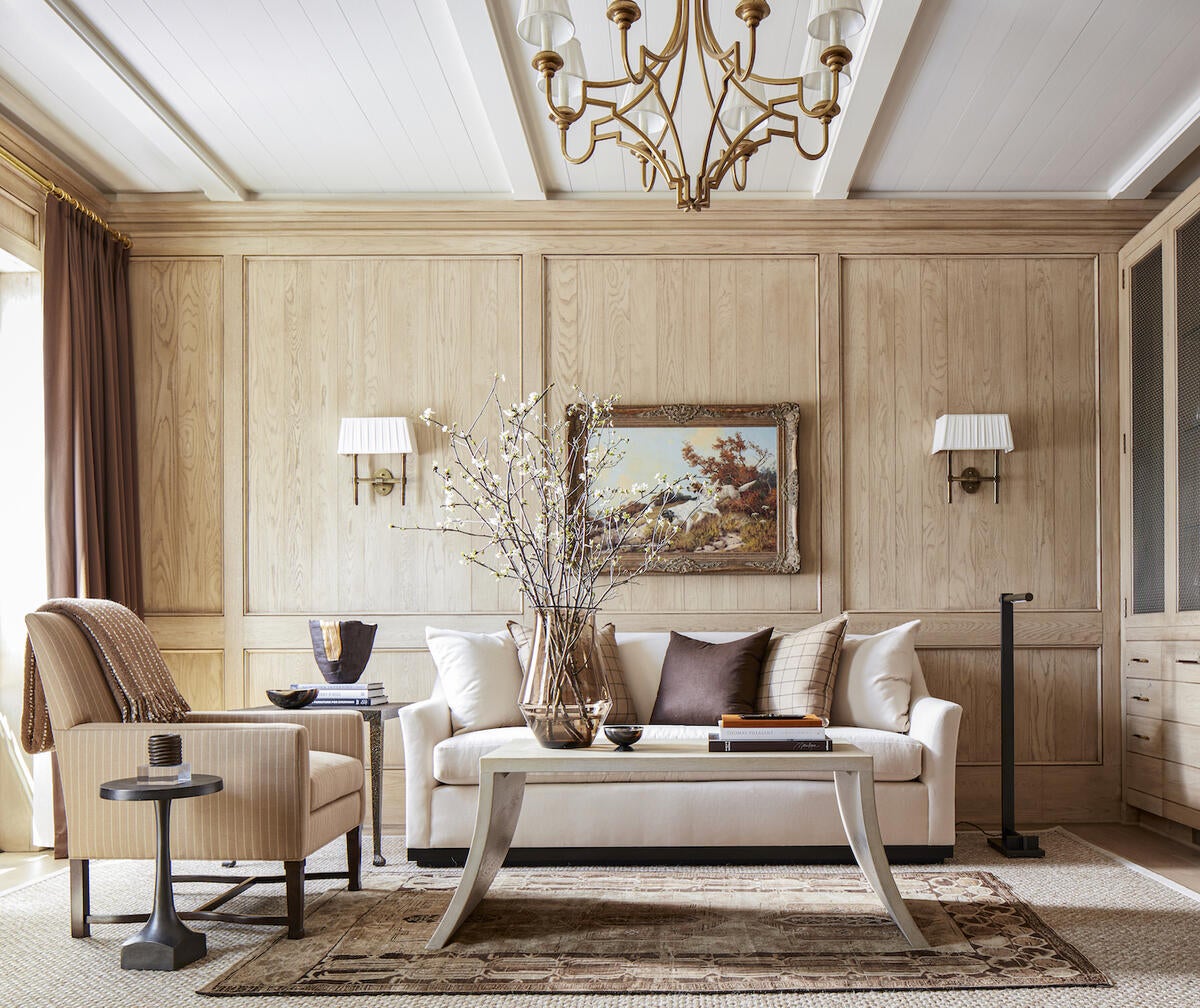
Warm wood paneling is an inviting backdrop for a living space that balances comfort and refinementJohn Bessler

How do you help your team feel invested in the purpose of the firm?

I think that comes from our core ideology and goals. For instance, our core ideology is “do the right thing”—even if it’s not advantageous to us, you do the right thing. And that really drives a lot of what goes on in our business.

One of the other things I’ve realized is that you have to hire people who are motivated. You can’t motivate people to want to do a job. They have to want to be there. Sometimes, it’s about making sure the right person is in the right position. You might have the right person, but they might be in the wrong position. And sometimes you just don’t have the right hires. I mean, that’s happened to all of us. But I feel very confident about my team right now, and I’m excited about where we’re going. We’re making some really lofty goals.

I love seeing personal growth too—that’s important to me. I want anyone who works in the office to continue to grow, and I want to be able to help them in any way I can. I want them to feel like they’re a better person and they have more skills from working at DWI than they would if they didn’t.

How many people are on the team total? What are each of their roles?

There are seven of us and we’re looking to add a junior designer, which will make eight. But I’m taking my time on the hire—I want to make sure we hire the right person.

So there’s me, the principal. And then there is Kimberly, the office manager, who oversees the operations side of the business while I oversee the interior design side. And under Kimberly, there’s a procurement manager. And then we have Alex, who’s my lead designer. And then I have Claire, who is my bookkeeper. And then I have Rebecca, who helps me with my social media marketing. And then we have an intern, and we’re looking to hire another junior designer under Alex.

As you were formalizing that structure and those roles, what did you realize that you wanted to hold on to for yourself?

I didn’t want my hands in any of the operations. Once the interior design side has curated a room or home, we turn it over to our operations team to enter it and create our mood boards. They know what the markup is. I let them do their job.

My hands are still into the interior design side, especially the overall vision of the home’s rooms. Alex is very talented and he does a great job with the drawings and elevations, but at the end of the day, I’m redlining them and giving my OK. Some days, I’m jumping in and pulling the fabrics for a room, but the goal is for me to give the overall creative vision, let the team do the work, and then they present it to me and we tweak it from there.

Where does the client see you, and where do they interact with your team?

It’s definitely a collaborative effort. I always know what’s going on with projects, and I’m not gonna give that up—my office does a good job of copying me on emails and keeping me abreast. But I trust my team to answer client questions, and if they aren’t sure how to answer, there’s communication between us, or I will jump in and help the team.
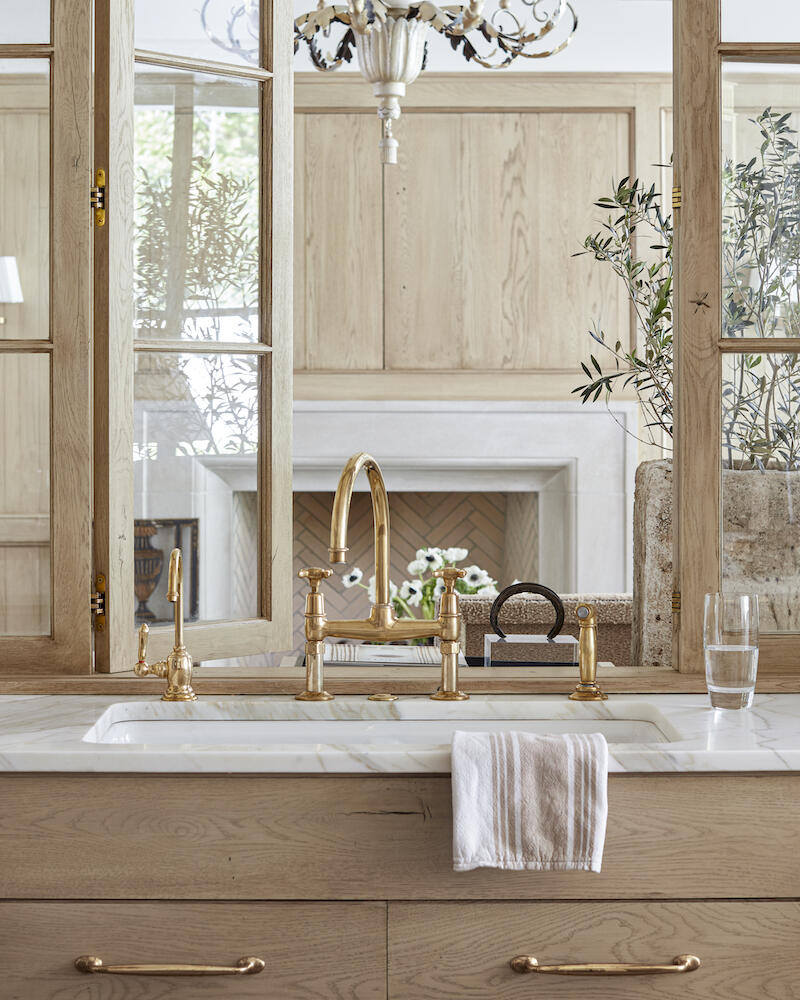
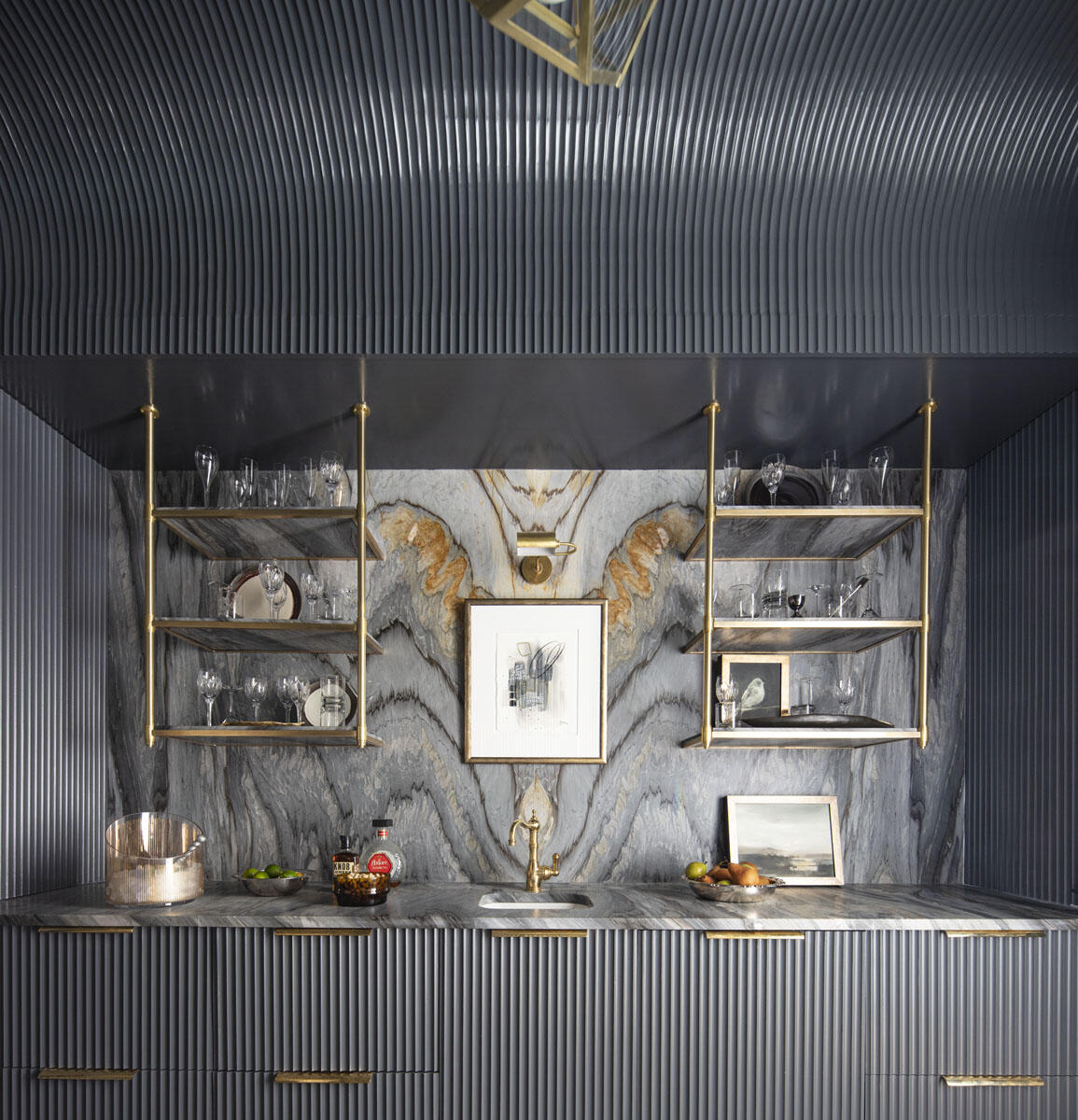
Left: A glass pass-through window between the kitchen and dining room allows the homeowners to opt for privacy or combine the two spaces John Bessler | Right: Plaster fluting echos the cabinetry, curving elegantly to meet the ceiling John Bessler

Did you always want to be a designer? When did you start to pursue this as a career?

I’ve been doing this a long time—it’ll be 18 years in April—but it was a windy road to get here.. I took some interior design classes when in college, but I changed my major three times. I had no idea what I wanted to do with my life. I graduated with a major in English and journalism. I went into sales after college, but the passion [for design] was always there. I always say to find things that come naturally to you that you enjoy. Passions may ebb and flow, but I think they’re always there.

After I had my second child, I stayed home, and my husband and I fixed a couple of houses and sold them. They sold well, and fast, and we had friends along the way who would say, “Will you help me with this?” Back in 2005, I had two friends approach me at the same time—they both said, “Look, I want to pay you to help me with my home.” I started my business that way. Then the referrals came, and in time, my business has grown to where it is.

How many projects is a full plate for you right now?

We vary from seven to 12, all of them at different stages. We try to be discerning as far as what we take on. Lately, we’ve been doing a lot of out-of-state projects. It used to be that we would have most of our work in Birmingham and around Alabama, but [then it shifted to other locations and] we didn’t have much going in Alabama until two or three months ago. And now we have two in Birmingham.

What gets you excited to say yes to a project right now?

I love that question. Right now, it’s when there are really detailed plans, with beautiful finishes, and where the client appreciates beautiful finishes and wants a truly custom home that is tailored to them and their family. That’s what really excites me—that they’re open to let us be creative.

For instance, we’ve had four houses in the past year over in Alys Beach and [on Scenic Highway] 30A. We’re working on one now for a Midwestern couple that will eventually be their forever home, and they are so open to our ideas, which has allowed me and my team to really say, “OK, what can we create for this family that’s beautiful and unique, makes it livable and a wonderful home that functions well for their family?” And that gets me excited.

Is there a way to tell that a client is going to be receptive in that way?

It’s hard. Sometimes we get it right, sometimes we don’t. Sometimes, questions about who they’ve hired for their team and their budget will help you see what kind of house they’re pursuing. In a way, the project is my baby as much as it is theirs, you know? I joke that a lot of times we know the house better than the client does because we know every nook and cranny, we can tell you the dimensions, and we want it to be as good of an end result as they do.

How much of your work is a primary home versus a secondary home? And does that change your approach at all?

We’ve been doing a lot of vacation homes since COVID, and I love doing vacation homes. It seems like the client may be a little bit more laid-back. We can do the whole shebang, where it truly is turnkey—everything from the potty brush in the bathroom to the dishes and cutlery in the kitchen cabinets, all in its place. We have done that a few times, and we have it down to a science, you know, where we know how to keep it running smoothly and keep it going.

Is a full-service project—the plates-in-the-cupboards kind—more fulfilling?

Yes, that is my favorite type of project, where the client walks in with a suitcase and just unpacks their clothes. And we’ve done several of that kind. For instance, we had a wonderful client in northern Alabama, and their house had burned down and very, very little had been saved. We did everything, and it’s just so fun to see. We’ve given them a beautiful surrounding to make new memories with their family. How much more of a reward can I ask for than that? What a blessing to me and my team just to see how happy they are after they lost everything, and to get emails that say, “This is more than I ever thought it could be. Thank you so much.”
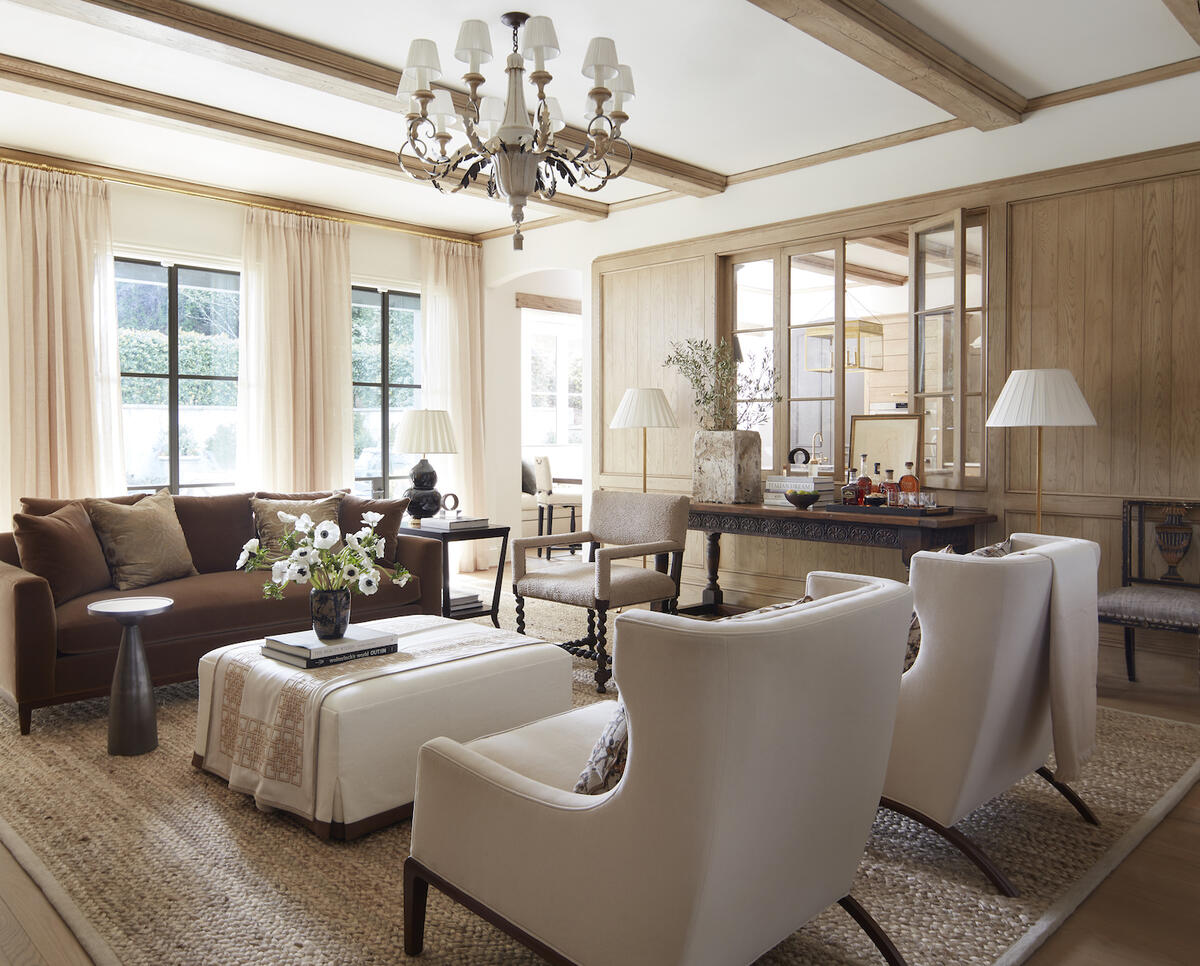
This Alabama designer wants to create, not copy

Wolter embraces layered, neutral schemes. ‘I like the yin and the yang of glass and metal against a waxed wood, or a linen against a leather, with a velvet thrown in,’ she says. ‘I love how different textures balance out and play against one another.’John Bessler

There’s such a lively, thriving design scene in Birmingham. Can you tell me about the design community there?

There’s so much talent in Alabama, particularly in Birmingham, and it’s a well-kept secret that I think people are starting to figure out, and it makes me so happy. You know, I had gone to a dinner with some architects and a couple of designers, and one of the men who was there from Philadelphia asked me, “Where do you shop for clothes?” Well, we have great shopping. I think it’s the best place to shop in the Southeast. But it’s a different type of shopping. Yes, we have Saks and we have department stores, but it’s really more just wonderful boutiques. I think you’re going to hear more and more about Birmingham. It’s a foodie town—a lot of James Beard winners here—and it’s growing. I think it’ll be fun to watch Birmingham over the next 10 years and to see where it goes.

What design resources are available, and how do you shop for your clients?

We are constantly looking for sources that everyone else doesn’t know about. We do full-service interior design, so we won’t just come in and pick paint colors for you. We have a three-room minimum to hire us if we end up working together. We have our manufacturers that we love for upholstery, like Hickory Chair and Century and A. Rudin. I love the customization that I can do with Hickory Chair. I like to customize whenever I can and get into any kind of detail. We do a lot of custom pieces—upholstered walls and upholstered screens, and we rarely use a manufacturer fabric. We’re always doing COM fabric on our upholstery. To me, it’s one more chance to fine-tune the fabric with the paint and the other finishes in the room. You can create a pretty room in 10 different ways, but we’re also [considering usage and wear and tear]. So we look at design from not only an aesthetic standpoint, but from a functional standpoint too.

I’m also constantly looking for art in the home. Rarely do we find a piece that we’ll just buy for the home—usually all of our art is commissioned. And we might do 75, 100 pieces of art in a house. It’s easier with some budgets than others.
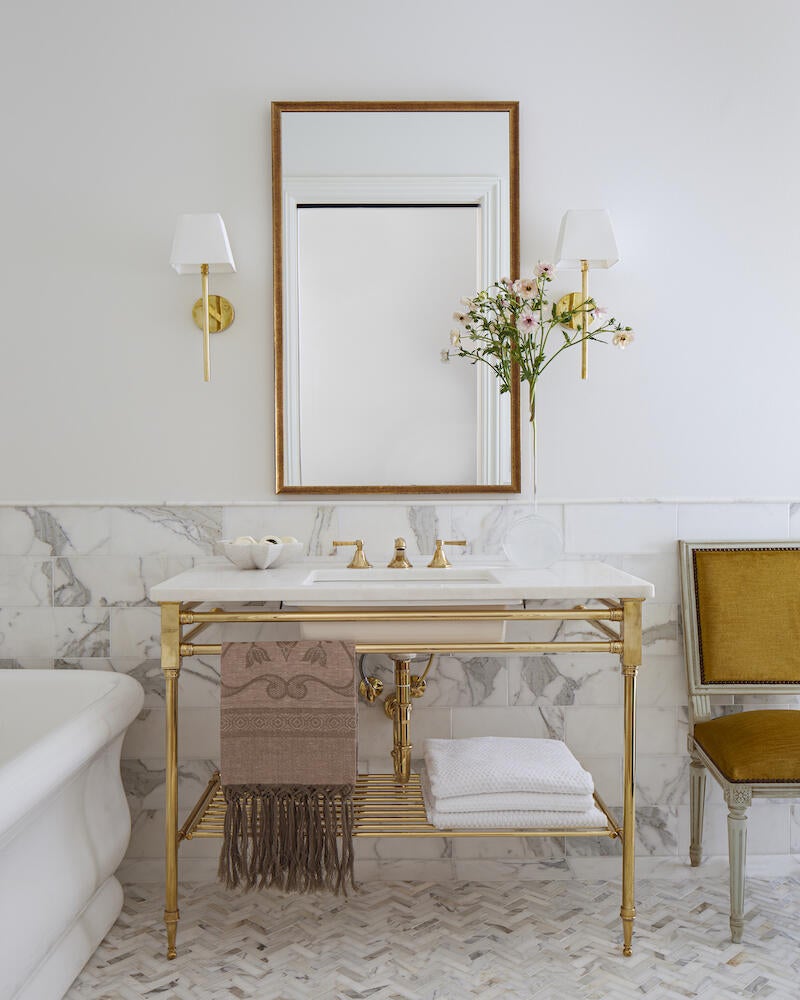
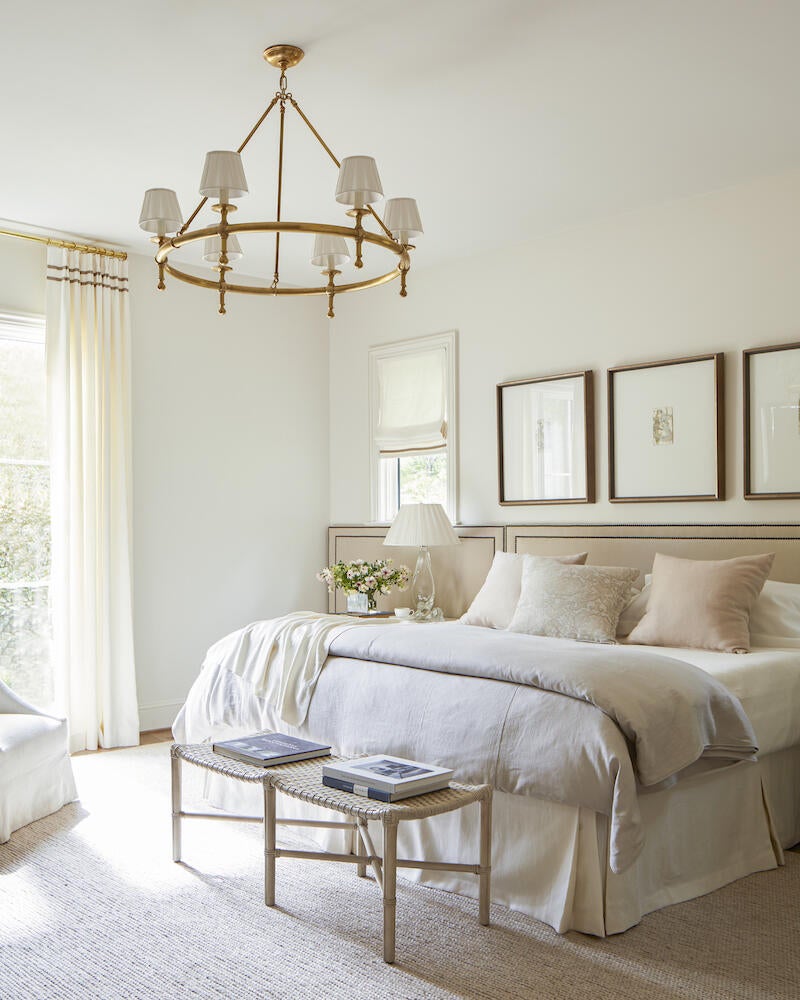
Left: An elegant brass-trimmed bath John Bessler | Right: Creamy textiles envelop a dreamy guest suite John Bessler

The Southeast has such a strong regional design style. How does that aesthetic impact your work?

I don’t look at that at all. I want to be leading what people are doing versus trying to follow. I’m looking at design more from an investment standpoint—it can be seven figures, you know—and I’m looking at how I can create a home that is beautiful, functional, livable, timeless, unique and not so trendy that it’s going to be dated in a few years. And how can this house grow with their family? That’s what I’m looking at.

And I’m drawn to what I’m drawn to. Even as a child, I hated wearing dresses—my mother and I would get into fights because I would not put a dress on as a 5- or 6-year-old. I’m not a very frilly person. I’m drawn to texture and layers, and I’m very practical. I’m one of five children, and our firm is really good at finding a function for a room and a way for our clients to use that space. I think that comes from being from a large family and being so practical. I’m not drawn to putting a big floral pattern on a chair. I don’t wear floral in my wardrobe. My wardrobe is very neutral. I like great cuts and details, but I don’t like big patterns or bright colors. I’m not saying I won’t use a color here and there if the client likes it, but that’s not what I’m drawn to personally. I like layers. I like the yin and the yang of glass and metal against a waxed wood, or a linen against a leather, with a velvet thrown in. I love how different textures balance out and play against one another.
This Alabama designer wants to create, not copy

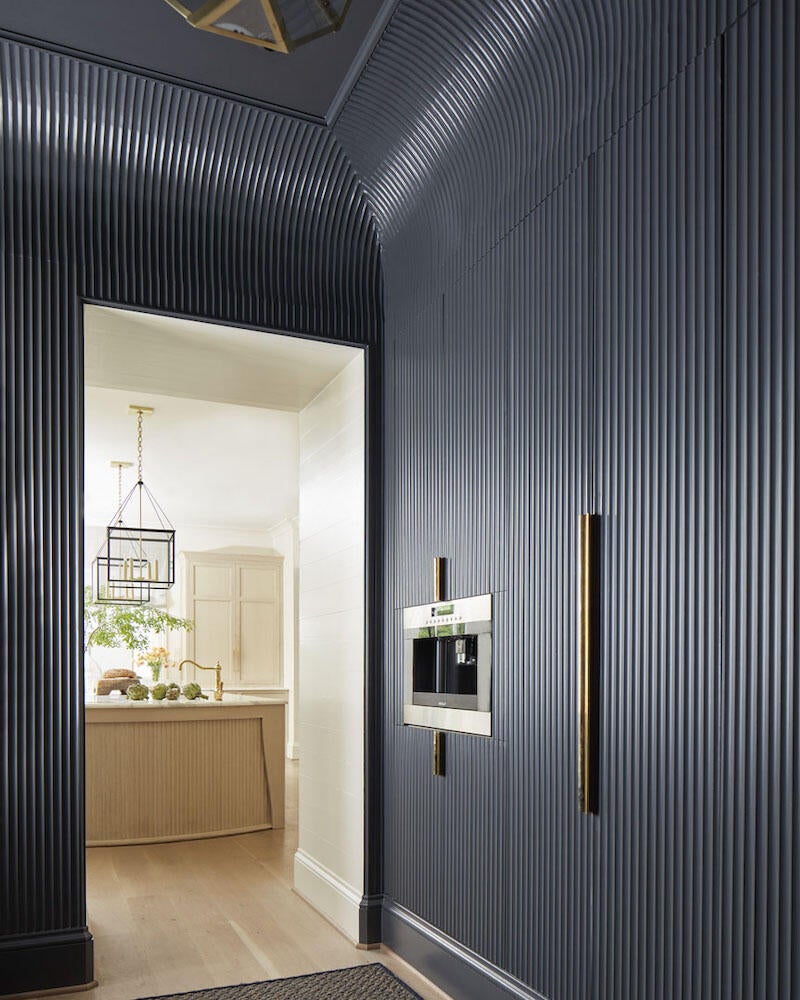
Wolter transformed a hallway into a high-impact sculleryJohn Bessler

How have you approached billing for your work?

We bill a flat fee based on project size and scope. And then we have markup on our product. And we do procurement as an hourly rate.

I love that breakdown. When did you land on that as sort of the most effective choice?

I’ve been doing a flat fee and a cost-plus [model] for many, many, many years. And then after COVID, we’ve had to add in an hourly procurement rate because we were spending so much time dealing with damages and back orders and having to replace things that it was greatly affecting our bottom line.

Have clients been receptive to that?

I think they understand. We are very transparent as far as how we bill and what we bill for. Our operation side of the office just turns it out according to the contract. At the end of the day, I’m not trying to take advantage of anybody, but I have to be profitable.
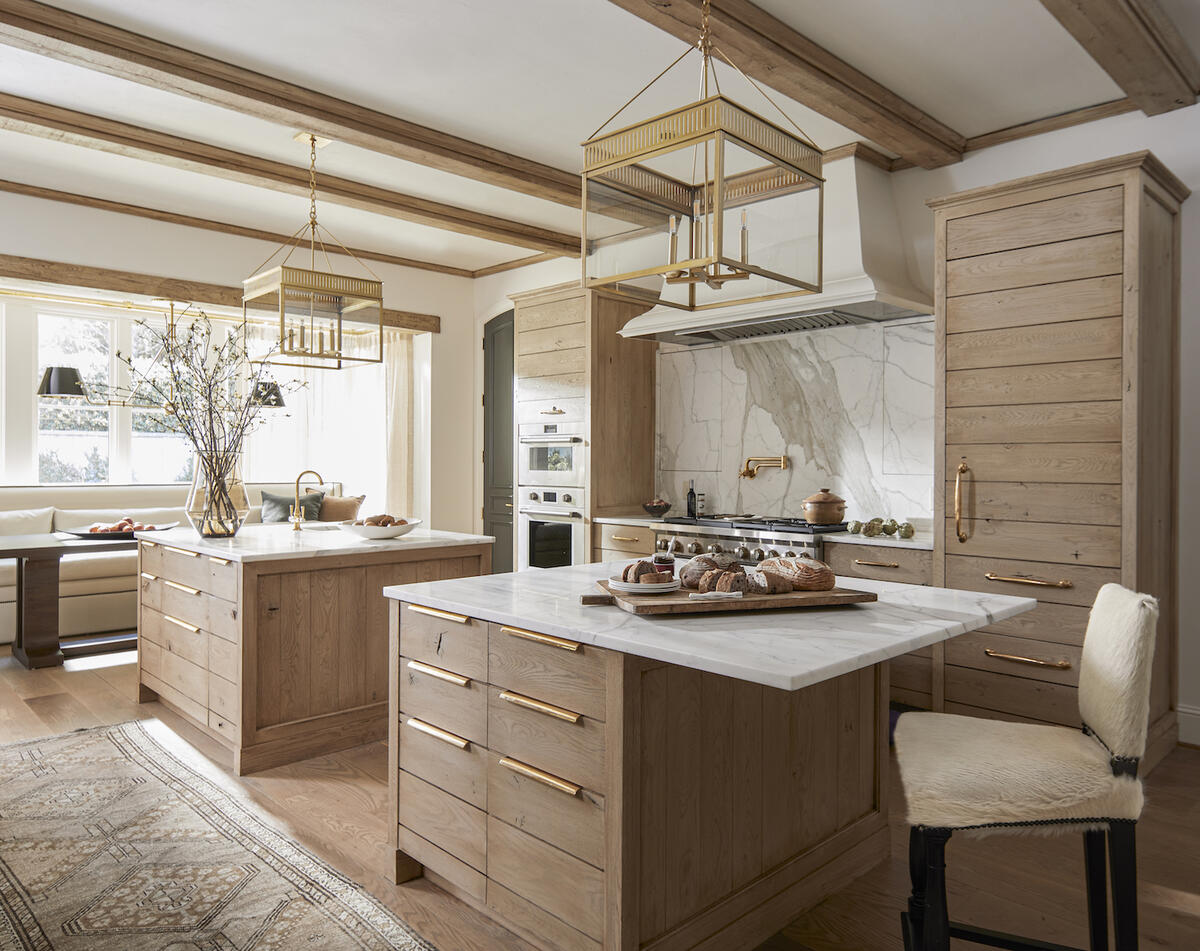
This Alabama designer wants to create, not copy

A pair of islands flank the range in a statement-making kitchen clad in warm neutralsJohn Bessler

When you look back, what do you know now that you wish you had known when you started your business?

That it will be OK, Kaitlin. Seriously. Even if something happens, or something gets messed up—at the end of the day, it’ll be OK.

When you look at the design industry at large, what do you see as the industry’s biggest challenge?

Mass production. I’m tired of seeing the same stuff over and over. I want to see unique things that are beautiful and a little different. I have made a conscious effort over the past four months not to be on social media as much because you start seeing stuff over and over, and I really want our office to come out with unique things. I don’t want to copy someone—I want to create something.

What is the part about being the principal of a firm that you feel like we don’t talk about enough?

That it’s hard. I feel like sometimes I have to be people’s cheerleaders, but there’s no one to be mine. I’ve got to sit there and say, “You can do this. You’ve got this. You’re doing a great job at it. Keep going, doing what you’re doing.” And I don’t always have somebody doing that for me. Yes, I have my family, and my family is beautiful, but they’re not going, “Good job at work today, Dana.”

When I was sick, the biggest challenge was just making sure that things were running like they’re supposed to be running. For instance, we had a client who had bought a 10,000-square-foot beach house compound, and they wanted it decorated so they could move in pretty quickly. This was our fourth time working with them, and we pulled together 10,000 square feet of everything for the entire home and presented it just before Christmas, and everything was great. We tabled it because of the holiday, and then I got sick. We made the changes they wanted—and then they decided not to make it their family beach house after all, and to instead keep it on the rental market. That was a seven-figure project that I was counting on for my business. Here I am in the hospital four times in a month, and I just had this horrible thing hit my bottom line—and at the end of the day, I’m responsible. I’m responsible for putting food on the table for my employees to eat. That’s hard. That’s a lot of responsibility.

How do you create the support system you need?

I’ve been doing this almost 18 years, so you get to know people over time. For instance, when I was named the New Trad for Traditional Home back in 2014, two of the ladies that I was named with are still my good friends. I talk with one of them every few months, and she’ll call me if she has an issue: “What would you do?” And I’ll call her if I have an issue. I’m in a small forum through the Design Leadership Network, and that’s proving to be a wonderful community—including some from the manufacturer side, some landscape architects. So just, you know, helping one another—if one of our struggles helps one person, then I’m happy to share [the experience].

What does success look like for you?

Being happy, healthy and building beautiful things that transform people’s lives, while the people in my office [become] better people because they’ve been part of it. It’s not about the money—I want to really help people. I want to change the way people live and be healthy and happy and content while I’m doing it.

To learn more about Dana Wolter, visit her website or find her on Instagram.

Susan Cohan to create landscape plan for Mansion in May 2023


From the Women’s Affiliation for Morristown Medical Center:

The Women’s Association for Morristown Healthcare Centre (WAMMC) is happy to announce that Susan Cohan, principal and design and style director of Susan Cohan Gardens, has graciously agreed to produce the Learn System for the Landscape Style for A few Fields, the site of Mansion in May perhaps 2023.

Susan Cohan delivers her award-winning experience to create the grasp strategy that will permit numerous popular landscape layout firms to rework the grounds of this Mendham Borough place estate.

For Mansion in May well 2023, Susan Cohan’s master system consists of delineating the landscape design areas for the backyard tour and assisting develop the logistics system for essential operational demands which are invaluable to the good results of the event.

“To day, Susan has participated in seven Mansion in May well tasks, and we actually enjoy her consistent determination to our fundraising initiatives for Morristown Health care Heart,” said Michelle Meszaros, co-chair, Mansion in May perhaps Landscape Style and design Committee.

“The accomplished gardens will showcase the splendor of this classy state estate. Susan’s generous contributions to the upcoming Mansion in May perhaps will absolutely make the grounds a ‘must see’ visitor encounter.”

“Many of the early 20th century estate properties are disappearing to suburban growth. A few Fields is one of the most intact estate households I’ve noticed. The household is an great instance of Tudor Revival and has wonderful views as very well as the bones of what was prior to. In my style observe we consider to honor those elements and develop spaces that also do the job for modern dwelling,” said Cohan.

“Mansion in May well makes it possible for other folks to practical experience that and is an critical pressure in respecting and preserving Morris County’s country estate legacy.”

Mansion in May is the preeminent designer showhouse in the New Jersey-New York area, attracting additional than 33,000 people. 3 Fields will be open to the general public for Mansion in May from May well 1 to May possibly 31, 2023.

Money elevated by Mansion in May well 2023 will lead to the expansion and modernization of the Institute of Bioskills Coaching and Innovation at Morristown Healthcare Centre.

ABOUT SUSAN COHAN

Susan Cohan is the principal and style and design director of Susan Cohan Gardens, a comprehensive-company landscape design and style studio found in the New York/New Jersey metro spot. She attained her certification in Backyard garden Layout from the English Gardening School at the Chelsea Physic Gardens in London.

The studio is dedicated to the creation of excellent household outside living areas and gardens and she has done tasks on all scales, from small courtyards to significant place estates. The completed effects are usually revealed in NYMetro ASID-Structure, DesignNJ, and The Checklist/Household and Garden.

Ms. Cohan was named The Designer of the 12 months and been given the Gold Award for Residential Layout by the Association of Experienced Landscape Designers in 2021. Most recently, she was invited to take part in the PHS Philadelphia Flower Exhibit where by her set up structure obtained the Gold Award and Very best Layout this past June.

ABOUT THE WOMEN’S Affiliation FOR MORRISTOWN Clinical Middle

Started in March 1893 to give economic aid to Morristown Medical Heart, element of the Atlantic Overall health Procedure, the Women’s Affiliation for Morristown Health care Centre (WAMMC) helps permit the medical center to reply to the transforming health care needs of the local community. With a volunteer foundation of much more than 400 users, WAMMC hosts a selection of fundraising events, anchored by the flagship occasion, Mansion in Might Designer Showhouse and Gardens.

WAMMC also operates the hospital’s gift stores and The Cut price Box Thrift Boutique, as effectively as WAMMC Network Tv set, which produced Contacting All Children and is the initial in-household household television station for youthful people and their households to delight in in the course of their continue to be at the healthcare facility.

WAMMC is an integral part of the hospital’s means to continue bringing chopping-edge technology and remarkable health products and services to the local community, and has lifted a lot more than $30 million to day to aid this mission.

Landscape Architecture Students Create Award-Winning Space for Local Elementary School

Finish transformation is a slow, arduous process—unless you are working with CU Denver Landscape Architecture graduate learners. They’ll get it completed in 15 weeks.  

When the pandemic commenced in early 2020, Peak Expeditionary Faculty in Wheat Ridge had a courtyard entryway with some green grass, a massive honey locust tree, and a concrete walkway. Now, with the experience of a proficient group of Landscape Architecture pupils and their advisors, the room is a discovering landscape loaded with sensory activities and immersive educational alternatives.  

The job attained the team a 2022 American Society of Landscape Architects (ASLA) Student Neighborhood Assistance Honor Award, and their get the job done was showcased in ASLA’s journal. This recognition delivers the creativeness and ingenuity of CU Denver learners to the forefront, and emphasizes the university’s strategic approach aim to be internationally acknowledged for its investigate and artistic perform. 

The student staff includes Finley Sutton, Claire Bulik, Anna Trexler-Varela, Sylvia Pasquariello, Ari Solomon, Alex Bullock, Eion Donelan, Miriam Hernandez Arroyo, and Victoria Hancock. School advisors are Lois Brink, MLA, and Louise Bordelon, MLA, PhD.  

“When I initially started off university in 2019, I often looked at the ASLA University student Awards as the precedent for my assignments and my graphics,” mentioned Sutton, a twin grasp of Landscape Architecture and learn of Urban & Regional Planning pupil. “So, to search up to these assignments, then last but not least be in the journal was genuinely exciting for us.” 

The venture began when Bordelon, assistant professor and section chair of the Landscape Architecture Division, heard that Peak Expeditionary was wanting to do a capital improvement undertaking in their outside room. The PreK-5 faculty in Jefferson County focuses on practical experience and experience, provides learners opportunities to go on mastering area visits, and prioritizes hands-on curriculum. And a very simple courtyard wasn’t cutting it. “They preferred to create a tree household,” Bordelon stated. “I proposed we could do a full great deal improved than that.”  

She called Brink, a professor in the Landscape Architecture Section who has encounter reworking schoolyards into mastering landscapes. Bordelon connected Brink with Peak Principal Tim Carlin and then with the Jefferson County College District and quickly the pupils in Brink’s Landscape Style Studio course achieved with academics and dad and mom to determine the wants for the room, their plans, and how much routine maintenance would be necessary by the school. They proposed several idea concepts, and the teachers’ favorite was consolidated into a master approach. “From a organizing point of view, it was intense,” Bordelon claimed.  

Soon after the job received approvals, the studio course had only 1 7 days for the full build. That 7 days just so took place to be spring break—with subpar temperature in the forecast. “I really feel like this was seriously what gained us the venture. It was this kind of a short timeline,” Sutton claimed. “We were out there likely 10 several hours a day setting up and planting and performing all the groundwork. And it was snowing and raining the complete time.” 

When the week was above, the 5,800-sq.-foot courtyard was unrecognizable. These days, guests are greeted by a sensory back garden with a pathway to a pollinator habitat. Based on the period, students can see butterflies and bees appropriate outside the house their classroom home windows.  

The huge, attractive tree that was as soon as the star of the place remains with a encompassing platform that is termed “The Nest.” There’s a vegetable yard with youngster-sized lifted beds to give college students quick entry. A dinosaur dig will allow pupils to uncover 3-D printed fossils made by a regional large college. Aspen trees and native grasses present an possibility for pupils to discover about the nearby landscape.  

While elementary learners are using the outdoor place to master now, the task also proved to be an invaluable mastering encounter for the CU Denver pupils. The room has turn out to be an academic catalyst for learners of all ages and lifestyle stages. “They had been in a position to find out on web site, to place factors together,” Bordelon mentioned. “Not just drawing and coming up with but learning to use a drill and a noticed. It is actually significant to know how to place issues jointly.” 

Due to the fact that snowy spring, the backyard and the courtyard have thrived. “From an ecological and biodiversity standpoint, the children can see what is going on in the back garden from their classroom there’s an abundance of life out there that was not there ahead of,” Bordelon stated. “As a social space, it’s sort of been a catalyst for social accumulating and neighborhood and it’s altered the encounter of the entrance of the university. It is definitely indicative of what is feasible when we imagine some thing is feasible.” 

1 area at a time, Brink’s studio courses are difficult the way communities see and use their spaces. By means of their fingers-on work, they are educating our regional communities and exhibiting what can be accomplished with some tutorial understanding and some creativeness. “I think my greatest takeaway is that you can make a genuinely large effect in a quite modest place and in a very smaller timeframe,” Sutton explained.  

How to create, plant a natural landscape in North Texas

The Sperry backyard landscape has a natural look.

The Sperry yard landscape has a organic look.

Specific to the Star-Telegram

When I sit down to compose my column for the Fort Really worth Star Telegram, I believe initially of the good persons of the lovely metropolis of Fort Really worth and all of its suburbs. That is, immediately after all, the core support region of this historic newspaper.

And then I realize that the paper’s protection place extends scores of miles past to all the establishing counties and metropolitan areas all over. So, I think about these locations and people as nicely.

Finally, I know that there are subscribers hundreds of miles absent in considerably diverse configurations that also get the Star Telegram. I consider about you, as well, but for needs of this story, I’m fine-tuning my imagining to North Central Texas.

With that rather rambling preamble, my subject for right now is “creating a organic landscape.” I hear that motivation several times a week. Folks explain to me that is their target, but when they clearly show me images of what they’d like to accomplish, I’m wanting at points that undoubtedly never search like Fort Worth, its suburbs or the encompassing counties. They really don’t appear natural to our location. They search much more like rocky outcroppings from the mountains of far southwest Texas.

We live in what was the Grand Prairie of Texas. It was large grasslands, a few of which even now exist. They prolonged from the Midwest down into Central Texas quite a great deal along what would turn out to be the I-35 corridor. There were being rolling hillsides interrupted by occasional forests. Rocky outcroppings have been reserved for eroding streambeds where hurrying runoff reduce by means of the black clay to expose levels of limestone.

In essential terms, it was a uncomplicated “natural landscape” that awaited the initially human beings 1,000 years in the past. When I consider to build a “natural landscape” all-around my dwelling, that’s what I’m keeping in brain.

Some points to think about …

My spouse and I have lived on 11 rural acres listed here in the Metroplex for the past 45 many years. These are some of the strategies that I’ve acquired to retain my landscape on the lookout as purely natural as probable.

When planting new shade trees I pick out styles that are indigenous to my place. I want my house to seem like it and the landscape all grew up with each other. The quickest way I can make a landscape appear like it was just introduced in from afar would be to plant matters that do not appear proper for the location. I use stay oaks, Shumard red oaks, Chinquapin oaks and bur oaks, cedar elms, pecans, redbuds, Mexican plums and japanese redcedars.

If I require a privateness screen, I plant jap redcedars, native to our location, on 18- to 20-foot facilities in a zigzag sample so they glimpse like they just happened the natural way. I commence with knee-large seedlings that I transplant in mid-winter season when they are dormant. Nellie R. Stevens hollies can also perform properly, but all over again, on irregular spacings.

I try out not to plant something in straight rows. Character doesn’t do that (other than for hackberry trees planted together a fence row by birds).

Official shearing doesn’t seem natural. I pick plants that increase to the peak and width that I want and then keep there with only occasional trimming to correct erratic advancement. Higher than all, I stay away from remarkably sculpted and “poodled” vegetation.

When setting up berms for privacy, seem deadening or to immediate movement of h2o or wind, I do so with mild swoops of soil. Other than fireplace ant mounds, character doesn’t leave us with globs of soil climbing abruptly out of the earth. The mounds will need to be low and they should taper gently into the surface.

And, when you get all set to landscape your berm, keep that simple, too. Really do not plant tall shrubs or trees down the top rated spines of the berms like you are going to see some people today doing. For a person issue that can make it hard to drinking water the vegetation. All the irrigation operates off.

Second, strictly from the element of seeking your landscape to seem all-natural, you will rarely see large crops increasing atop hills in character. They’re normally down the slopes a bit, exactly where the seeds have washed and gotten caught in a tiny draw. Drinking water was extra considerable there, so the seed sprouted and the plant thrived.

When I’m constructing retaining partitions or bringing in boulders or river rock, I try out to match what exists in my area. I’m in an region exactly where limestone is predominant, so I’m not as fascinated in purchasing orange/purple stone that will be prominently noticeable in my backyard structure. It just would not search like it belonged there.

My wife and I dwell in a pecan/purple oak forest. It was that way when we acquired our home in 1971, and the trees have just gotten bigger in the 50 many years since. Having said that, I’ve also learned an vital lesson during that time. Some of the old trees have died or turn into weakened. We have had to choose all those trees out. If I (or my ancestors) were being to continue on on this existing pattern for a further 50 several years, our home would be headed back again towards becoming a grassland. You have to have some young trees coming along in the forest. When you have a landscape, too often you’re fast paced thinking about pulling all the weeds, tree seedlings bundled. So, that all-natural appear also incorporates reforestation.

You can listen to Neil Sperry on KLIF 570AM on Saturday afternoons 1-3 p.m. and on WBAP 820AM Sunday mornings 8-10 a.m. Be a part of him at www.neilsperry.com and abide by him on Facebook.

Related stories from Fort Really worth Star-Telegram

Ask an expert: Steep slopes create landscaping challenges

Gardening season is underway, and you may well have issues. For solutions, turn to Ask an Qualified, an on the internet dilemma-and-answer tool from Oregon Condition University’s Extension Assistance. OSU Extension college and Learn Gardeners reply to queries in just two company days, normally fewer. To inquire a question, simply just go to the OSU Extension website, kind it in and consist of the county in which you stay. In this article are some concerns asked by other gardeners. What is yours?

Q: I have to have to remove creeping evergreens on a slope and replace them with suitable ground handles. They must be lower maintenance and drought hardy. – Klamath County

A: 1 challenge several house owners facial area with landscaping steep slopes is soil runoff. The topsoil on hills can conveniently wash off, leaving an unattractive and muddy mess. In this scenario, you may want to take into consideration planting your hill with groundcover plants. There are various kinds of shrubs and flowers that can prosper on slopes, providing you a improved check out and lessening the odds of erosion. Just continue to keep in brain that you may well want to carry in some supplemental soil and an erosion mat to set up the crops if the current soil on the hill lacks the essential nutrition.

An additional well-liked possibility is to terrace sections of the slope within just your lawn to build flat planting regions. Developing various tiers on a hilly property will assistance you prevent erosion and allow you to add a wide variety of vegetation and landscaping features for a useful and eye-catching design and style. Retaining walls can consist of a assortment of supplies to best in good shape your space and finances, this kind of as stone pavers, wood posts or concrete. On the other hand, when thinking about elements that stand the take a look at of time, stone pavers are advisable. Moreover, when putting in any retaining wall, it is crucial to insert a great drainage procedure at the rear of the wall to avoid the wall from cracking or even collapsing.

Having vegetation to consider keep on a hill can be challenging, as slopes tend to erode promptly due to drainage concerns and soil runoff. If you do not want to terrace your slope, introducing rocks of different designs and measurements is a different way to keep the soil and enable your crops to grow to be set up. Adding purely natural features, this kind of as a rock back garden can give your slope a normal hardscaped search that’s equally visually interesting and necessitates significantly less maintenance.

Whichever approach you pick for landscaping your slope, it’s also vital to choose the appropriate kind of vegetation for the spot in which you dwell and your individual area. For illustration, deep-rooted crops can support stabilize soil, floor deal with vegetation are excellent for covering up unattractive places and ornamental grasses and perennials can be utilized to increase coloration and texture to your slope.

When picking out your vegetation, it’s also essential to retain upkeep in mind. Plants that never require shearing or a large amount of once-a-year clean up up can help you save you time in the prolonged operate. Here’s some more details. –Chris Rusch, OSU Extension Master Gardener

Ask an expert

Is this string trimmer hurt?OSU Extension Support

Q: From the hooked up image can you inform me what I need to have to do, if something, about the wound on our dogwood trunk? Also, what you believe could have brought about it? – Polk County

A: The wound in the trunk is typical of damage from a lawnmower, string trimmer or some other form of collision.  The wound appears to be healing, as we would count on. Dressings are no lengthier regarded a good idea because they tend to trap bacteria in the wound. With air exposure by itself, the tree will mend the wound.

I do advise pulling the mulch back various inches away from the tree trunk. Also, the irrigation line seems to be too near to the trunk. The trunk does not gain from soil dampness. The most crucial position for irrigation is around the drip line of the tree or marginally outside of. That is in which the root expansion requires position. – Lynne Marie Sullivan, OSU Extension Grasp Gardener

Ask an expert

KatsuraOSU Extension Assistance

Q: What is wrong with my ‘Red Fox’ katsura tree? The leaves really feel like it is getting enough drinking water but the leaves glance funny on a handful of branches. We’re in Zone 8, dealing with east in Junction Town. The tree is on a deep-root watering system with two tubes and is watered for 22 minutes each individual 6 days. – Lane County

A: This is most possible the aftermath of the unexpected improve from cold and moist to blistering heat. We are observing numerous leaves with odd colors and even worse just now. – Pat Patterson, OSU Extension horticulturist, retired

Q: I have potted camellias and the pH of the soil is reasonably neutral. I’d like to reduce the pH to 5ish. What is the most effective way to achieve this target? – Yamhill County

A: You can modify the pH slowly and gradually in excess of time, which permits the plant roots to modify effortlessly. OSU Extension has an outstanding publication, “Acidifying Soil for Blueberries and Decorative Plants” which is a detailed tutorial in undertaking just that – creating the soil extra acidic. Soon after looking through the publication, appear for fertilizers for acid-loving plants in your preferred plant nursery. – Anna Ashby, OSU Extension Grasp Gardener

Ask an expert

Spider and beeOSU Extension Services

Q: Could you place into words what is going on with these 3 creatures – the spider, the bee and the one particular “waiting in the wings”? – Benton County

A: The spider is a goldenrod crab spider (Misumena vatia). They hold out on bouquets (which includes but not restricted to goldenrod) and ambush insect site visitors. Appears to be like it acquired the honeybee (Apis mellifera) on your sunflower that way and it is feeding on it. The other insect “waiting in the wings” is a little far more mysterious. It is a type of real fly (Buy: Diptera), but I can not see adequate depth to know for sure what kind of real fly it is. Apparently, there are small flies like that known as zombie flies (Loved ones: Phoridae, Apocephalus borealis) that parasitize and kill bumblebees and honeybees. Listed here is a url to a photograph showing a single of these flies on a bumblebee.

The adult zombie flies stalk grownup bees and lay their eggs inside them. Then the fly larvae hatch and feed internally in the bees altering their behavior and sooner or later killing them. I’m not absolutely sure if that is a zombie fly striving to parasitize the honeybee which is presently staying fed on by the spider, but that is just one likelihood. – William Gerth, OSU Extension Grasp Gardener

Ask an expert

Moist spring leads to smaller garlic headsOSU Extension Service

Q: I followed your OSU Extension pamphlet for increasing garlic and the bulbs under no circumstances bought quite huge. I bought good cloves and fertilized and watered a minor in the tumble. The tops came up, no bulb on top, planted in Oct and harvested very last 7 days. – Clackamas County

A: I’m going to allow you decide which cause you might be in a position to appropriate for following year in the next article about errors with garlic. My ideal guesses would contain planting as well early. We ordinarily advise November for planting here in the PNW. (I see that the OSU pamphlet claims September by means of November, but conventional wisdom says later is much better).

My other guess would be our rainy, rainy, wet spring. There was maybe just much too much h2o in the soil to enable for larger bulbs. I really don’t normally dig my garlic right until July, so I don’t know how mine have fared this yr, but an additional internet site claims small bulbs may possibly be related to soggy soils and we undoubtedly had that! Don’t give up. Plant what you harvested this calendar year or get new bulbs for subsequent fall, because when you do pull up a huge bulb with large fats cloves there is nothing at all superior. – Rhonda Frick-Wright, OSU Extension Grasp Gardener

Wildfire art can create beauty out of tragedy

Luke Zarzecki
lzarzecki@coloradocommunitymedia.com

Robert Nesladek carves wood. He is effective in a sawdust-filled studio powering his property in Arvada, which he has owned for 47 a long time. 


He works by using two wood lathes to carve out bowls, vases and other operates of artwork from wooden charred by wildfires. One particular of individuals lathes was handed down from his grandfather to his father, then to his uncle and now to him. 


He started off doing the job with wood after he give up consuming.


“I had to locate one thing to continue to keep my fingers occupied,” he reported. 


Out of a devastating event, wildfire art aims to produce a little something stunning — a vase, a portray or a poem. 

Nesladek transforms the wood burned by wildfires into attractive styles. He said burned wood normally takes on distinctive attributes due to the fact of the powerful warmth that dries out the log.


“It places a great deal of that charcoal grey colour into the wooden, and it just variety of operates by way of it,” he explained. “It just is definitely nice to work with.” 


Beginning out, the wooden is filthy. 


“As quickly as you contact it, you imagine ‘I’m not going to even mess with that things. It is just nasty,’” he mentioned. “But as soon as you get the bark off, it is thoroughly clean within, and it’s dry.” 


Nesladek turns the wooden on the lathe promptly and styles it with different chisels and blades. Once the burned charcoal coating the wooden is eradicated, he begins to mould the heart of the wood that endured extreme heat but wasn’t specifically touched the fire. Following he reaches the form he would like, he applies a very clear stain. 


“It amazes me how anything so horrible, so devastating, can transform into anything so attractive,” Nesladak mentioned. 


Painting from within 


Generating artwork from wildfires can also enable commence the healing course of action after these a tragedy. 


For Alissa Davies, of Boulder, that will involve intuitively portray emotions onto canvas.


Immediately after the Marshall Fire, Davies stated she and her local community felt an extreme sense of loss and concern. 


“We’ve experienced these wildfires in our neighborhood, and every single time the wind blows, we all feel this type of collective trauma,” she claimed. “What’s likely to come about to this spot?” 


Davies describes herself as an intuitive artist — stepping up to a canvas with no concept of what the conclude result will be. She seems to be inward to get in touch with her feelings and then paints. 


After the Marshall Hearth, she returned to her studio to get started addressing her thoughts and out arrived Firescape 1, 2 and 3. 


“We all are very impacted by exterior activities that come about all around us,” she mentioned. “(Portray) is just a very therapeutic system for me.” 


She claimed fires come with an immense, rigorous strength that she channeled into the paintings. She reported she professional people thoughts even nevertheless

she did not drop a house to the hearth, but in its place, she channeled the hardships of these who did. 


She champions artwork remedy courses in Boulder and bordering communities where by individuals can find out to get in touch with their thoughts and place them on to paper. 

All those courses give people area to freely produce artwork. She touches on her semester in college at the Artwork Institute of Chicago where by it was not so cost-free. 


Her painting classes made an intense ecosystem with critiques and competitiveness from professors and pupils. 


The art remedy lessons had been distinctive, she said, in that they established a additional encouraging surroundings. 

“There’s that level of acceptance,” Davies said. “Instead of imagining art is for the valuable few, it provides people today the view that we all genuinely know what to do with paint. It may well not be very, and it may well not appear like what’s in our head, but that is Alright, and it is far better that way.”


For individuals impacted by the Marshall Hearth, artwork treatment can begin all those conversations, each verbal and not. 


“It’s generally vital to chat it out, but I assume people nonverbal ways of expressing are equally as highly effective and helpful,” Davies stated. 


From time to time, it just can take a couple breaths and a blank canvas. 


To get in touch with her emotions before she paints, Davies meditates. Though portray, she turns off her thoughts and moves quite immediately. 


“I’m continually turning my canvas,” she claimed. “You can simply click above into that flow point out, you know that emotion of when time form of gets strange, it is suspended. It is bliss.”


Burning wood 


Radha Marcum of Boulder began producing at age 7 on her mother’s typewriter. Speedy forward to currently, and she’s a poet generating poems rooted in ecological, social and private landscapes of the American West. 


“I grew up in the West, so wildfire has usually genuinely been in my consciousness,” she reported. 


In 2019, she commenced composing a lot more about wildfires. The burning of the Notre Dame Cathedral in Paris induced her new topic.


She frequented the cathedral with her partner within weeks of the roof burning. Replacing the ceilings, designed of oak beams from Europe’s historical forests, remains pretty much difficult simply because those forests are extensive absent, she explained.


“At the identical time that we ended up shedding this spectacular human-manufactured framework, we were being also dropping nature’s cathedral,” she stated. “I consider of the outdated development forests in North The usa.”


It reminded Marcum of going to the Redwood forests in Northern California. 


“Thinking about the heritage of people today who have been in these places, whether it is a cathedral or a forest, there is a perception of continuity, and so when you lose a forest or you drop a cathedral, you’re losing that sense of continuity with ancestors and which individuals would occur just before you,” she explained. 


For this reason, she begun writing about wildfire, and the

Marshall Fireplace produced the matter even far more personal for her. 


“When it takes place in your backyard, and when you’re observing the outcomes in true time, that I imagine is profound,” she explained. “I feel in artwork, and in poetry, in our producing, we have the prospect to meditate on what is happening ideal right here, correct in front of us.”


For her, that can imply searching at precise variations in her environment. A person illustration she details to is a poem about a plum tree in her backyard that she moved inside of due to the drought. 


One more poem seems to be at smoke drifts and ashes falling in her backyard. People ashes, she claimed, are forests, people’s properties or wildlife. Some float in from other destinations. 


“There’s a link in between different sections of the region, amongst you and the landscape, in between the ecology, the trees, the wildlife,” she reported. “We’re all influenced by these functions, no matter if or not they are burning our structures, or they’re burning the forest.”


Marcum sees her poems as an invitation to readers to understand the situations going on around them. 


“(It is about) connecting with what’s genuinely heading on, somewhat than being kind of numb and overwhelmed by the information or by figures,” she claimed.