Winners of the “Best Ever” 2022 AAS Display Garden Landscape Design Challenge


DOWNERS GROVE, IL – All-America Selections’ 2022 Landscape Design Challenge certainly struck a chord with this year’s theme. AAS asked their Display Gardens to use their AAS Winning flowers and plants in and around a theme of “Games in the Garden” and the gardens certainly produced! The excitement was palpable as each garden described how they came up with their ideas and how they executed them for their garden visitors. As several gardens stated, “This was the best theme ever!”

For the challenge, AAS provided the gardens with recent AAS Winner seeds and plants. The gardens had the option to also incorporate older AAS Winners in their design to illustrate the theme. Gardens were encouraged to generate publicity and hold events to share the story of All-America Selections and AAS Winners.

Gardens are divided into three categories based on the number of visitors per year:

Category I: fewer than 10,000 visitors per year

Category II: 10,001 – 100,000 visitors per year

Category III: Over 100,000 visitors per year

All-America Selections recognizes and thanks the contest judges who are industry experts in the field of horticulture and landscaping:

Jeff Gibson, Landscape Business Manager, Ball Horticultural Company

Ron Cramer, Retired, Sakata Ornamentals and AAS Former President

Barbara Wise, Sales and Marketing Manager, Crescent Garden

A complete collection of photos of all contest entrants can be found on the All-America Selections website.

AAS is proud to announce the following winning gardens from the 2022 Design Challenge:

Category III: Over 100,000 visitors per year

First Place Winner: Boerner Botanical Gardens, Hales Corner, Wisconsin

As always, Boerner’s excitement for the AAS Display Garden Challenge shows through their design process and resulting ideas. To demonstrate this year’s theme of “Games in the Garden” they made dominoes with the ‘spots’ being an AAS Winner plant (seen in photo above). This vision was achieved by taking old cabinet doors and painting them, drilling holes in them, and placing a single plant of Zinnia Profusion Red/Yellow Bicolor in them. It is a visitor favorite! The other games were a chess board made by using Gypsophila Gypsy White and Dianthus Ideal Violet. By visiting the garden’s prop closet, they found giant dice, Pokémon balls, a Jenga stack, Monopoly board pieces, Scrabble tiles and a Game of Life Spinner to finish off the games collection. Vertical elements were added by using a trellis where Bean Seychelles grew. Finally, 12 x 12-inch pieces of plywood were painted in primary colors to create steppingstones that appeared to look like a standard game board. A total of 36 different AAS Winners were showcased within the games and beds.

Second Place Winner: State Botanical Garden of Georgia, Athens, Georgia.

The State Botanical Garden of Georgia has continued to use the AAS Landscape Design Challenge as an opportunity for UGA students to work in designing and installing a landscape. This year, a student worker organized and facilitated a charrette with students, volunteers, and garden staff to discuss ideas for this year’s theme. The design came from a conglomeration of ideas and signifies half a color-wheel like a spin-the-wheel feature in games such as Twister, Life, Candy Land and others. The lead student also designed a new sign displaying “What’s in Bloom” as seen in the above photo. The “What’s in Bloom” sign is a feature that they will adapt and reuse for seasonal color beds in the future.
Category II: 10,001 – 100,000 visitors per year

First Place Winner: Domaine Joly-De Lotbinière, Sainte-Croix, Quebec

Domaine Joly’s horticulture staff wanted to find a way children could play in the garden while also learning about plants. Taking inspiration from the talking flowers in the original Alice in Wonderland, they created a plan. First, they created a “family portrait” of the AAS Winners all together. Then they created a child’s coloring page based on that portrait. Garden staff wrote a short story about a clumsy gardener who mixed up all the AAS Winner seeds when sowing them then asked the children to help find the Winners in the garden. Each AAS Winner was represented as a person describing itself so the child could easily learn, identify and remember them. Each description included the flower color and stated, “I’m a Winner!” All the children who visited the garden were given a copy of the story and coloring page so they could play the game and leave with their own piece of artwork. Both children and adults were spotted playing the game and loving the experience.

Second Place Winner: Purdue Extension-Marion County Demonstration Garden, Indianapolis, Indiana

Purdue Extension Master Gardener volunteers worked with the local Purdue University Extension office to execute this year’s theme. A variety of games and other challenges were positioned throughout the garden and along garden pathways. AAS Winners were directly incorporated into the games with some of the most popular games being: Spin the Wheel, Dart ball, Tic-tac-toe, Checkers and Kerplunk. The “Spin the Wheel” games were used to help visitors find some of the new AAS Winners in the garden. Eleven new Winners were featured, each had a photo with a brief description on the wheel. Dart ball used a target and plastic golf balls that were covered with strips of hook and loop. The target was placed in the middle of the vertical garden where Petunia Evening Scentsation and Ornamental Pepper NuMex Easter were planted as shown in the photo above. Other games included Tic-tac-toe and checkers where AAS Winning tomatoes were used as game pieces! One adult remarked while playing checkers, “This is a lot more fun than I thought it would be.”

Third Place Winner: Horticultural Art Society Demonstration Garden, Colorado Springs, Colorado.   

The “Games in the Garden” contest was perfect for this garden, allowing them to showcase the AAS Winners via activities in their Children’s Garden. 2022 was the 60th Anniversary for Horticulture Arts as a community demonstration garden so it was perfect timing to reflect and share the history of what the gardens have provided to the community. During the celebration, musicians played amongst the AAS Winners while children and families participated in tic tac toe using AAS plants as game pieces. Participants used coloring books (that focused on water wise gardening) and a scavenger hunt (that incorporated locating special and unusual trees, statues of butterflies, dragonflies, the Caretaker and a pollinator house) to truly experience the games in the garden while enjoying and identifying AAS Winners.    

Category I: fewer than 10,000 visitors per year  

First Place Winner: Lee College Horticulture Program, Huntsville, Texas.

Let the “Games” begin! This year’s challenge brought people together to have fun, enjoy one another’s company and enjoy game-inspired landscapes featuring AAS Winning plants. The student landscapes had two distinct groups of game-themes: Classics and Contemporary.

In the Classics group, a Barrel of Monkeys game with monkeys hanging from a beautiful crepe myrtle put a smile on every visitor’s face. The space was accented with Big Duck Gold marigolds and Orange Flamma celosia. The Putt-Putt game contained ramps and putting greens surrounded with Queeny Lime Orange zinnias and Purple Asian Garden celosia. The Battleship landscape utilized the favored Queeny Lime Orange zinnias around the “battleships” created from reclaimed gas cylinders and sheet metal.

In the Contemporary group, the fun and popular Corn-Hole landscape has the playing boards bordered by South Pacific Orange cannas along with more Queeny Lime Orange zinnias and Onyx Red ornamental peppers. The interactive Jenga set was over 5 foot tall and was a big hit with all visitors.

Second Place Winner: Weston Garden Center, Weston, Missouri.

Weston Garden Center’s approach to the challenge was to create 7 different stations, each with a different Game theme and applicable AAS Winners. They encouraged visitors to read the plant tags then, using the clues given, asked them to guess the game. This helped teach visitors about the plants and their English and Latin names in a fun way. Although someone called it a collection of bad “Dad jokes” it successfully met the mission.
Station 1 – “Dungeons and Dragons” used Dragonfly and Red Ember peppers around a castle wall with Galahad Tomato growing out from the castle.
Station 2 – “The Count Counts” (Sesame Street) had a Dracula Celosia in the shade of a Midnight Snack tomato known for its black and blood red fruits.
Station 3 – “Bullfighting” used Escamillo Pepper and other props to give the feel of an arena.
Station 4 – “Roulette” featured peppers of various heat levels including Roulette. Without knowing the proper names of the peppers, eating any of them became a game of chance.
Station 5 – “Pickle Ball” used three varieties of AAS winning cucumbers (Green Light, Parisian and Diva) up the side of a Gazebo with some Pickle Balls hanging among the fruits.
Station 6 – “Duck, Duck, Goose” used the Big Duck collection of Marigolds (Gold, Yellow, and Orange) and paired them with Gooseneck Loosestrife plants.
Station 7 – “The Hunger Games” featured the plants Katniss, Rue and Primrose (names of some of the movie and novel characters) and Sparky Tomato to represent this game.

Third Place Winner (tie): Mississippi State Univ-South Mississippi Branch Experiment Station, Poplarville, Mississippi.

Participation in the AAS Display Garden Challenge is a highlight of the year for the dedicated volunteers at this garden. In planning, they decided to include a diverse mix of games as well as both old and new AAS Winners planted in a myriad of ways. Since June is the peak for both color and performance in South Mississippi, they planned June as the month to feature all the Games in the Garden. The games were positioned to bring visitors to the main display garden to see the AAS trials. From there, visitors saw the first game (Ring Toss) that played homage to AAS winning vegetables. Nearby, American Dream corn made the perfect ‘corny’ backdrop for their Corn Hole game. Next to that was a tic-tac-toe game using pool noodles for the game matrix and labeled frisbees: a Master Gardener logo (for the X’s) and an AAS Winner logo (for the O’s).

An AAS trivia game was extremely popular with all visitors who were given a card with questions related to the AAS Display Garden. For example, “Which AAS rudbeckia was a 1961 winner?” (Answer: Gloriosa Double Daisy) In order to determine the answer, visitors would have to find these plants in the garden and scan the QR code found on each label. Each QR Code goes to that AAS Winner’s webpage. As an added bonus, visitors who turned in a completed trivia card were presented with an AAS plant to take home. These free plants included Mega Bloom Pink Halo and Mega Bloom Polka Dot, among others. All in, they incorporated 26 ornamental and 18 vegetable varieties as part of the challenge.

Third Place Winner (tie): Master Gardener Association of Tippecanoe County Display Garden, Lafayette, Indiana

When the AAS landscape design challenge theme was announced, the MGA of Tippecanoe began designing their games. At the garden entrance, star-shaped beds took on the life of a Chinese Checkers game. The raised six-pointed beds had each point of the star planted with an AAS Winner representing one color of the Chinese checker marbles: Viking XL Red on Chocolate begonia for red; Evening Sensation petunia for the blue; Sweet Daisy Birdy leucanthemum for the white; Delizz strawberry for the green; Chef Choice Black tomato for the black and Big Duck marigolds and Chef Choice Yellow tomato for the yellow.

Another area hosted the AAS Tomato Scavenger Hunt. Thirteen tomato varieties were used. A mailbox housed clipboards with a list of questions. Hunters used the AAS variety signs to identify the varieties. A sample question: “Which AAS tomato variety would you give to your sweetheart?” (Valentine) This really made garden visitors focus on the signs plus, hunters  sampled the varieties as they searched.

There was also a cornhole match located near the American Dream corn patch and a tongue twister competition with the recitation of “Peter Piper Picked a Peck of Pickled Peppers” located in the AAS pepper patch. In all, 67 varieties were planted, and hundreds of visitors were educated about AAS varieties. Surplus vegetables were donated to local food pantries and a homeless shelter.

Honorable Mention Winners in each category can be found on the AAS website.

30 Creative Ideas and Ways to Display Photos On Walls

how to display photos

JENNIFER HUGHES

You probably already know that displaying photos and artwork around your home is a great way to up the personality of your space—but how you hang said photos on your walls can also upgrade the pieces themselves, turning flea market finds and iPhone shots into museum-worthy magic. Check out these 30 creative ways to display your family photos and artwork collections, from vintage-inspired picture rails to modern ledges and everything in between, you’re sure to find a display and composition you love ahead.

Advertisement – Continue Reading Below

1

Accent Your Architecture

For a creative take on the traditional gallery wall, use a slew of bite-sized photos to frame an architectural accent in your home, as designer Lathem Gordon did here in a door-filled hallway.

A hammer and nails aren’t a prerequisite to a beautiful photo display—in fact, you don’t need them at all! Take a hint from designer Sarah Magness‘ handbook and use any available surface to lean your artwork instead. Just make sure the pieces aren’t too precious or at risk of being plowed over by kids or pets.

3

“Wallpaper” With Photos

For a look that’s as nostalgic as it is dramatic, look no further than this photo-covered space by The Novogratz. Here, family photos (mostly black and white) act as a wallpaper of sorts, covering every available inch of space for a time-traveling surprise around every corner.

A photo display doesn’t have to take up the whole wall. In fact, sometimes, a bite-sized arrangement can have an even bigger impact. In this living room, designer Heidi Caillier opted for a freeform composition of mini frames for an artsy moment that makes you look twice.

5

Go Bold in Black and White

If a high impact is what you’re after, black-and-white photography is the answer. While a collection of grayscale pictures is already eye-catching, pairing the display with an inky black backdrop—like seen here in the home of designer Ariene Bethea‘s—adds another layer of drama to the whole scene.

For a cohesive look that unites your art display with the rest of your room, consider “framing” a favorite piece of furniture with an arrangement of your favorite pieces, as seen here by designer Katie Ridder. The end result? An eye-catching vignette every friend will want to Insta the second they come over.

7

Look for Unexpected Locales

Part of the fun in displaying artwork and photography around your home are the tiny moments of surprise it can bring. To harness that playful nature, look for unexpected spots to stash your favorite pieces. In this kitchen, designed by Rita Konig, two cheery frames find a permanent home on the hood of the stove.

For a dynamic, museum-worthy arrangement, try paring a similarly-sized gallery wall arrangement alongside a strikingly large piece. The unique layout works especially well when nestled into a corner, as designer Ann Pyne did in her New York City apartment.

When it comes to hanging treasured pieces of artwork, you want to put them somewhere you can really enjoy them every day. And if that spot happens to be the ceiling of your bedroom? Well, so be it! The creative locale can actually be a great spot for a one-of-a-kind display, as seen in this dramatic primary suite designed by Krystal Matthews.

To make a photo or art collection feel cohesive, stick to a general theme (don’t worry, it doesn’t have to be too prescriptive!), like the loosely nautical display seen here in the home of designer Jeffrey Alan Marks. Not only will it visually tie together your arrangement, but a common thread will allow you to be more playful with your other elements, like framing or matting, without skewing too eclectic.

Many homes—especially older ones—often have puzzling nooks or walls that just need a little something to make them come alive. (Hint: Art is that little something.) The next time you’ve got a sloped wall that has you stumped, try using it as an opportunity for a uniquely-shaped gallery wall display. Here, designer Phillip Smith leaned into the charm of his 1716 Hudson Valley home with an eccentric display of frames, sketches, and photographs.

If you’re the indecisive type that wants to take pictures down almost as quickly as you put them up, a photo ledge could be the perfect solution for you. Instead of committing to a permanent gallery wall display (with real nails and lots of measurements), photo ledges—like this angular display in a home by Laura Hodges—allow you more flexibility to rearrange your photos on a whim.

Eclecticism can be fun when it comes to artwork and photography—but so can sameness. In this cozy lounge, designer Javier Burkle used identical frames of different sizes to encase black and white sketches, providing a necessary moment of cohesion in the otherwise funky room.

For an experiential photo display that changes with every step, mirror the angle of your stairwell with a trailing gallery wall. Here, designer Zoe Feldman relied on frames of different sizes and orientations to mimic the slope of the handrail.

15

Create a Surprising Focal Point

The right artwork display can instantly transform a forgotten corner of your home—like a utilitarian hallway—into a true “moment.” Here, designer Jean Liu relied on a floor-to-ceiling display of colorful vintage art to breathe new life into a simple landing zone.

16

Take It to New Heights

If your home boasts particularly tall walls, carrying a gallery-style arrangement only halfway up them may look unfinished. Instead, lean into the drama and go floor-to-ceiling with your display, as designer Andrew Brown did here. Sure, you won’t be able to have those top pieces in your sightline every day, but the end result will be impactful enough to make it worth it.

17

Let Your Art Take the Lead

Figuring out the right way to display your photos or artwork is as much about listening to your chosen pieces as it is listening to your home. You want to strike a symbiotic balance with all elements—from the framing and matting to the layout—to find the right “look” for your pieces. Here, a bold collection of pieces marries seamlessly with the room’s color palette thanks to a streamlined display and simple white framing.

Think of this next idea as the artsy equivalent of Hansel and Gretel’s breadcrumbs. Instead of allowing carbs to lead the way, carry your artwork around the corner or down the hall with a never-ending gallery wall, like the dramatic display seen here by designer Fran Keenan.

And by box, we mean the living room, dining room, or bedroom. Many areas of your home could benefit from an artistic accent, so the next time you’re looking for some blank wall space to hang your new find, look to unexpected spots like a laundry room or bathroom for a touch of whimsy.

20

Play With Different Hanging Techniques

A more-is-more outlook on art and photography means your display techniques can follow in those exuberant footprints, incorporating two or even three ways of showcasing your pieces in one stunning moment. Here, designer Charlotte Lucas relied on traditional framing, display ledges, and casual photo holders to bring a dose of funk to this vibrant study zone.

Traditionally used in museum displays and homes circa the 1800s, picture rails have become a popular way to add dimension (and flexibility!) to photo displays. Here, a gallery wall designed by Lathem Gordon hangs elegantly off a brass rail spanning the length of the room.

How’s this for cool? The artwork you display in one room can actually have an impact throughout your home, as evidenced in this space designed by fashion maven Liz Lange and designer Todd Romano. The duo relied on a strategically placed mirror in the dining room to reflect the Roe Etheridge photo from the living room, allowing the entire area to benefit from the high-impact shot.

23

Break Up a Single Shot

Worried that your chosen photo won’t exactly wow in your space? Visit a print shop and see if they can jumbo-size the piece and split it into a DIY triptych similar to the piece designer CeCe Barfield Thompson used in this little boy’s bedroom.

24

Upgrade Your Bookshelves

There’s no rule that says your artwork has to hang on a wall—or even near one! Instead, try adding a piece to the exterior of your bookshelf, like designer Marissa Bero did here. It’s a great way to add dimension and a bit of cheeky fun to a more structured installation.

Artwork can be a beautiful accent in any space—but it can also act as a way to disguise more unsightly elements of your room. Take this clever application for example. Artist Kerri Rosenthal used an oversized piece of her work to hide the television in her family’s living room for a focal point that totally beats the Netflix homepage.

Up the classic appeal of any piece—whether it’s a collector’s item or an inexpensive flea market find—by placing your art in the center of picture frame molding on your wall. Here, designer Oliver Thornton took a nod from traditional museum displays, complementing an abstract sketch with a surround of refined detailing and a duo of sconces.

For a vignette that looks straight out of the MoMA, pair an oversized photo or piece of standout artwork with a photo light, like designer Meredith McBrearty did here. Not only will it bring out all the nuances in your chosen piece, but it’s a great way to add an extra glow and ambiance to your room.

Transform your frames themselves into part of the artistic experience by opting for a design coated in a bold, energetic hue. In the home of fashion designer Liz Lange, lacquered red bamboo frames have enough gusto to stand up to the other bold elements in the room (that zebra carpet!) and still allow the artwork inside to shine.

29

Play With Different Shapes

While square and rectangle frames tend to be the standard go-to, there’s no rule that says they’re your only option when framing art or photographs. Take this portrait gallery wall by Jeffrey Dungan as an example, where circle frames add a free-flowing romance to the scene.

Hear us out on this one: While displaying a photo or piece of art in front of a window may seem totally backward, it can be a great way to compliment an already quirky piece or bring a bit of privacy (without a ton of light-blocking!) to an intimate space. Here, designer Krystal Mathews used two sturdy chains to dangle a vintage painting in the window of a powder room.

Advertisement – Continue Reading Below

At the Modern Art Museum of Fort Worth, the female painter’s gaze is on display : NPR

For decades, women artists have been fighting to get their work on museum gallery walls. Recently, the battle is being won: Various exhibitions across the country feature female’s work. Once visitors notice the change, they see that art can be different when women wield the paintbrushes. Sometimes. And sometimes not.

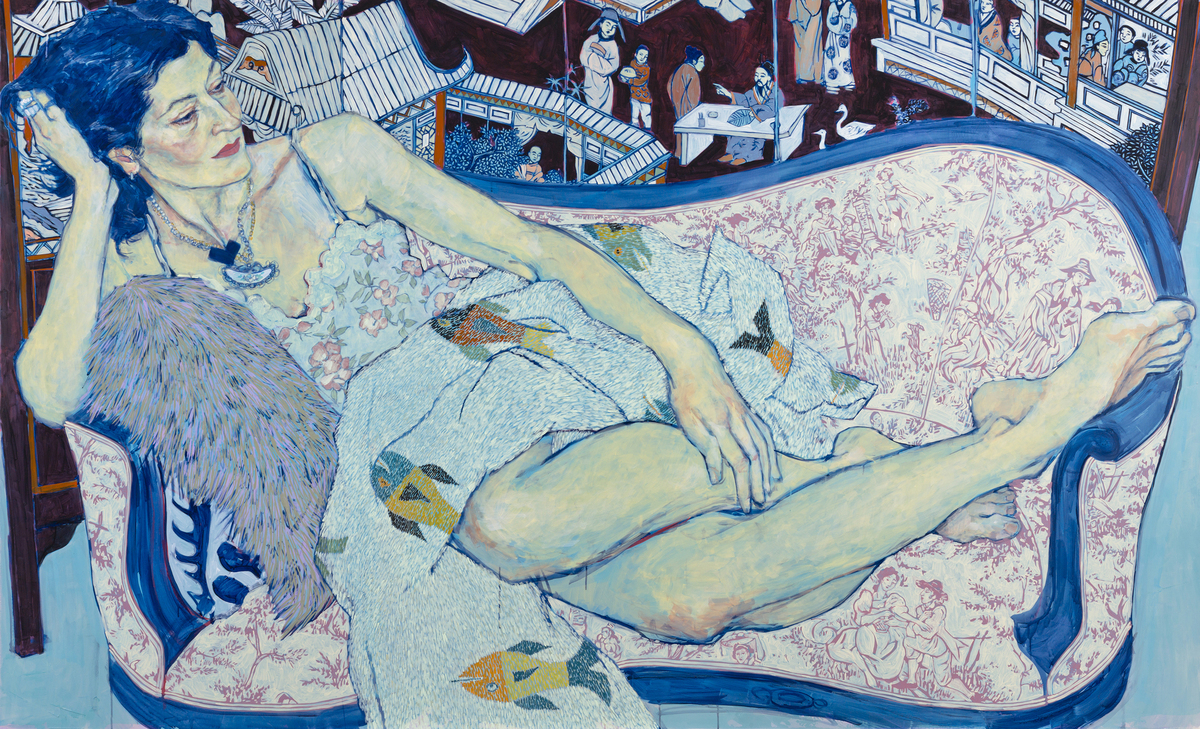
Hope Gangloff, Queen Jane Approximately, 2011. Acrylic on canvas, 66 x 108 inches. Collection of Alturas Foundation, San Antonio, Texas © Hope Gangloff.

Adam Reich/Courtesy of the Artist and Susan Inglett Gallery, NYC


hide caption

toggle caption

Adam Reich/Courtesy of the Artist and Susan Inglett Gallery, NYC


Hope Gangloff, Queen Jane Approximately, 2011. Acrylic on canvas, 66 x 108 inches. Collection of Alturas Foundation, San Antonio, Texas © Hope Gangloff.

Adam Reich/Courtesy of the Artist and Susan Inglett Gallery, NYC

Nothing much different there, except all the blue, and the beauty of the model and the painting. It’s called Queen Jane Approximatelylike the Bob Dylan song.

Gangloff doesn’t seem to be painting blue-as-in-sad. This blue is meditative, relaxed, reflective. The woman, former model and fashion designer Jane Mayle, is a friend — as are all of Gangloff’s models, says Andrea Karnes, curator of the Modern Art Museum of Fort Worth exhibition Women Painting Women.

The acrobatic Iraqi women below may be friends (although how long would you shoulder responsibility for a friend this way?). To me, they look more like relatives, maybe sisters, with their beautiful black hair, brows and red, red lips.

Hayv Kahraman, The Tower, 2019. Oil on linen104 1/8x 79 1/8 inches © Hayv Kahraman

Courtesy of the Artist and Jack Shainman Gallery, New York


hide caption

toggle caption

Courtesy of the Artist and Jack Shainman Gallery, New York

Kahraman paints this woman often. Contorted and multiplied as she is here, I see incredible strength. Those powerful legs, the steady gaze and humor — I laughed at first glimpse. But curator Karnes says it’s a salute to “countless displaced women, past and present.” Women who have suffered “disfigurement, violence, sexual abuse,” standing on the shoulders of their predecessors.

So, how do women paint women? It’s less about seeing them differently from men, than showing them different. For centuries, artists’ male gaze saw women as objects of desire, idealized and voluptuous, with luscious white skin and dimpled knees. Women artists in this exhibition, like Alice Neel and Emma Amos and others, show women as differently beautiful: pregnant, overweight, sometimes despondent. As we are, wrapped in our truths.

Arpita Singh, My Mother, 1993. Oil on canvas, 54 x 72 inches. From the Collection of Sharad and Mahinder Tak © Arpita Singh

Kiran Nadar Museum of Art and Talwar Gallery


hide caption

toggle caption

Kiran Nadar Museum of Art and Talwar Gallery

Arpita Singh’s mother has seen and lived through so much conflict: the bloody partition of India and Pakistan, with its religious divides, political disputes, loss and deaths. At the top of the canvas, like a frame, Arpita has written the words, “Between what I say and what I keep silent.” The mother clutches her hands. Her sari is white — in India, the color of mourning. Near her, a row of dead bodies. Surrounded by chaos, the mother is … what? Silent? Steady? Firm? Stalwart? What do you see in her face, reader?

Luchita Hurtado, Untitled, 1970. Oil on canvas, 30 x 50 inches. © The Estate of Luchita Hurtado

Jeff McLane/Courtesy The Estate of Luchita Hurtado and Hauser & Wirth


hide caption

toggle caption

Jeff McLane/Courtesy The Estate of Luchita Hurtado and Hauser & Wirth


Luchita Hurtado, Untitled, 1970. Oil on canvas, 30 x 50 inches. © The Estate of Luchita Hurtado

Jeff McLane/Courtesy The Estate of Luchita Hurtado and Hauser & Wirth

Like so many of the 46 female artists in this exhibition, Luchita Hurtado had no money to hire models. But she had the wealth of her talent, and the will to make art. Again, like so many of these artists, Hurtado was driven to make art. She had responsibilities: a husband and children. At night, after dinner, when they’d gone to bed, curator Andrea Karnes says, “she would go into the closet and paint.” Driven, “even when there was no market for her work.” Hurtado said for her painting was a constant — “a need, like brushing your teeth.” And when she lacked money for models, her own body became her favorite model. Hurtado didn’t idealize herself. But she viewed herself from a perspective no man (or woman, for that matter) could share. Looking down toward the geometric Navajo rug, she painted her breast, her belly, hand, leg with clarity and tremendous confidence.

Do women paint themselves and one another differently? “Women artists look beyond the ideal beauty — the archetype” Andrea Karnes declares. In doing so, they create a portfolio of new archetypes.

Art Where You’re At is an informal series showcasing online offerings at museums you may not be able to visit.

Brighton’s Soho House outpost opens with David Shrigley banana pool and the largest permanent display of queer art in the UK

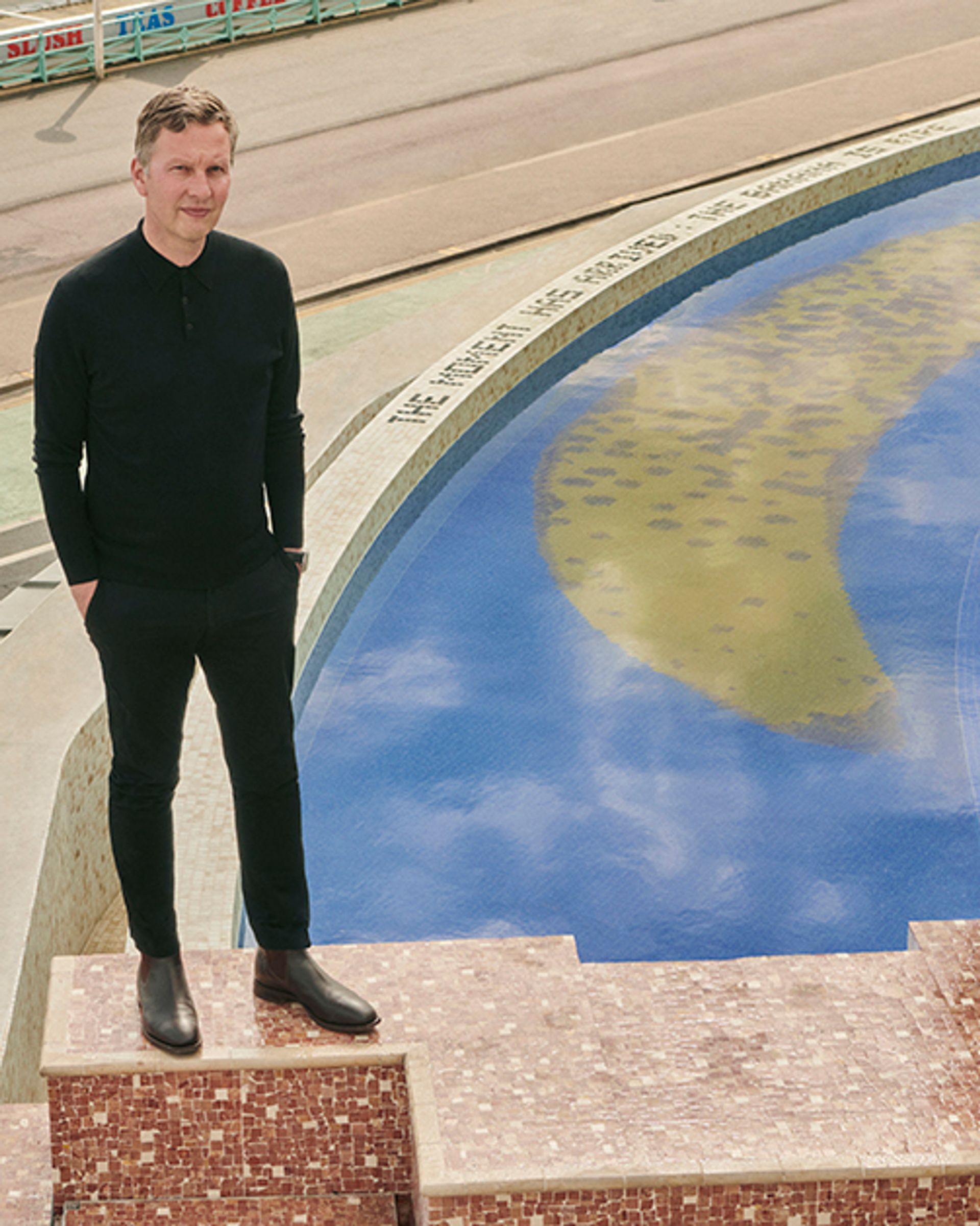
When David Shrigley was asked to create a operate for a semi-round swimming pool at Brighton Beach front Residence, Soho House’s most recent outpost on the south coastline of England, the style was, he states, a “no-brainer”. As he puts it: “It’s an arc, so what is it heading to be? A banana. It can not actually be a cucumber as they are not bendy more than enough.”

The banana, rendered in vibrant yellow mosaic tiles with splodges of brown, curls spherical the base of the pool, which overlooks the seafront to the east of Brighton pier in which the place known as Kemp City begins. All-around the rim of the pool are the terms: “The moment has arrived the banana is ripe”.

The structure is taken from a portray Shrigely developed final 12 months. But, he suggests, “an more than-ripe banana, with its decadent sweetness, is a metaphor for Kemptown. The banana is one particular of these kinds that you have had in your ruck sack all day… it tastes superior, it’s the great banana. But you don’t want to go away it there any for a longer time. Eat it now.”

David Shrigley has lived in Brighton since 2015. © Grace Difford

Obtaining lived in Glasgow for 27 years, Shrigley moved to Brighton in 2015. The sea was a significant pull (Shrigely prefers swimming in the sea to swimming pools), as was the comparatively moderate weather conditions. “There’s a true odd attraction about Brighton,” he claims. “It’s form of a metropolis but then it’s also a funny seaside city. It has a whole lot of exceptional attributes, I’ve usually preferred it listed here.”

Shrigley has a studio in Kemptown, in a disused church on the corner of the street he applied to stay on. He is now wanting to acquire a dwelling in Hove, while the opening of Brighton Seaside Home is offering him pause for imagined about remaining in Kemptown, which is regarded as the a lot more bohemian component of Brighton and has a large homeless inhabitants.

“You acquire the rough with the smooth in Kemptown,” Shrigley suggests, recounting an interview he did with the Observer newspaper in 2018 in which he explained the space as “full of dogshit and lunatics”—referring not to homeless persons, but as a substitute to “genuinely mad men and women, barking at the moon, who reside in houses and who are mad”.

He proceeds: “I was on the front web site of the Brighton Argus with that quote. I was mortified. At the time, I was the guest director of the Brighton Festival and the Argus tried to job interview people following just one of my performances, seeking to get them to say how dreadful what I claimed was. But individuals had been just like, that’s what Kemptown is like. They desired it to be a feeding frenzy, to make out that I’m some rich arsehole that doesn’t treatment about Brighton and Hove.”

That could not be significantly less correct. Shrigley is a patron of Phoenix Artwork Gallery, an exhibition house with 100 economical artist studios which opened with charitable standing in the centre of Brighton in 1995. “The point they have managed to face up to temptation from assets builders is an achievement in by itself,” Shrigley says. “The exhibition space is terrific, it’s just about making an attempt to obtain a way to make it function sustainably.”

As with Soho House’s other venues, the backbone of Brighton Beach Home is its community art assortment. Kate Bryan, Soho House’s world-wide head of art collections, found out various artists as a result of Phoenix Art Gallery, amongst them Miranda Forrester, who has intended the materials utilized during the club, including the parasols on the terrace of Cecconi’s Italian cafe, which opened at the finish of April ahead of the club’s total launch later this month.

Other artists who were being born, based mostly or qualified in and about Brighton and whose is effective have been acquired for the 110-powerful assortment include things like Rachel Whiteread, Dexter Dalwood, Somaya Critchlow, Dee Ferris, Harold Offeh, Magali Reus and Aimee Parrot, who has produced a mural on the ceiling of the foyer. Tania Kovats, in the meantime, has collected water from the sea in Brighton and displayed it in bottles of various dimensions at the entrance to the club.

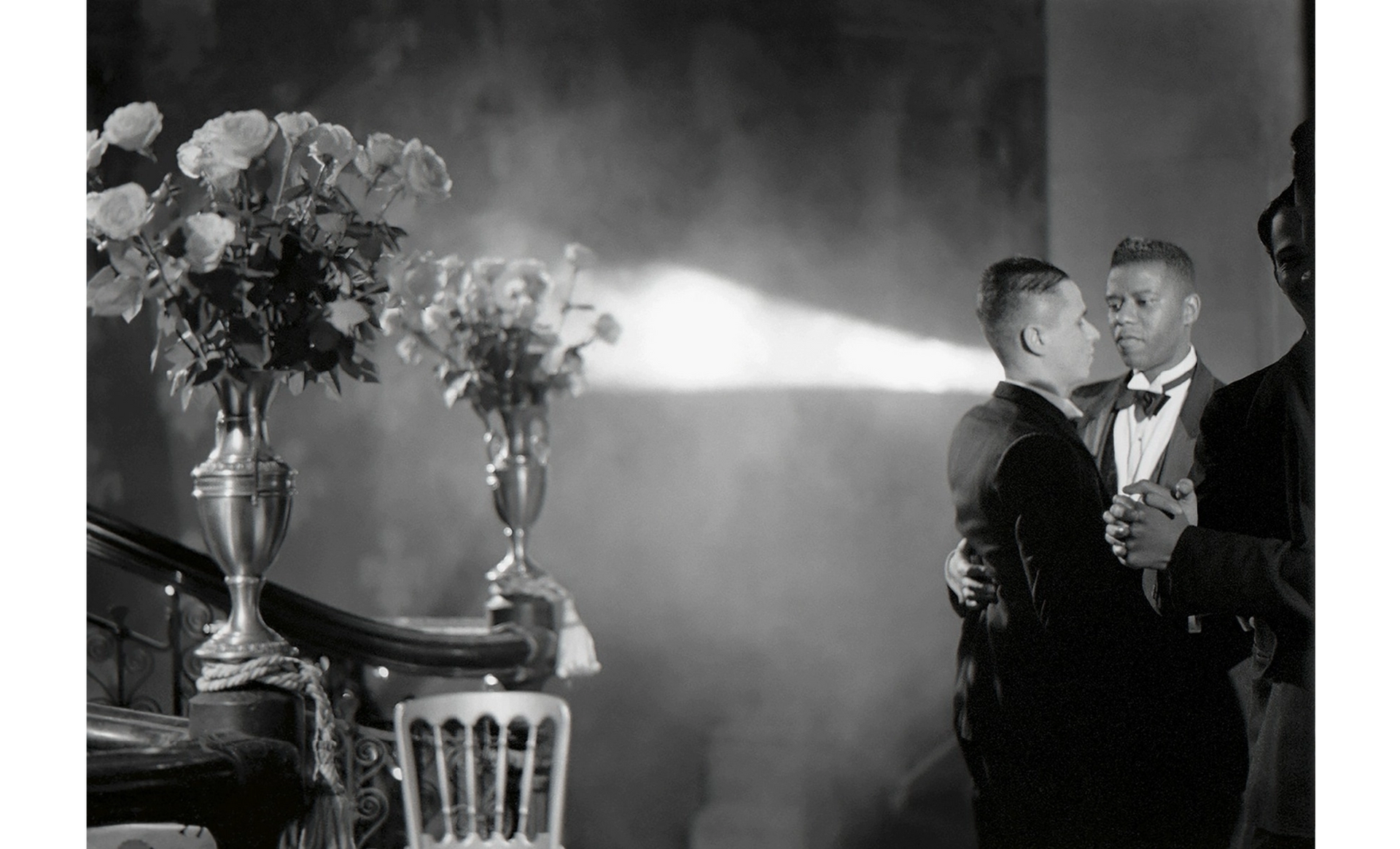
Print from Isaac Julien’s On the lookout for Langston movie series (1989). Courtesy of the artist

The overpowering majority of these artists, Bryan suggests, are “transient, in the feeling they go in and out of Brighton”. She adds: “Some have been born listed here or examined right here, but now they are in London due to the fact, even even though London is unbelievably highly-priced, there’s far more alternative when it comes to studio room. I normally hear artists saying they want to transfer again to Brighton—but studios are at a premium.”

Shrigley agrees: “When I moved listed here I felt the artwork scene was substantially a lot more about graphic art than it was about fantastic art. There was a lot of road artwork, and the cause for that is that you do not necessarily need a studio to be a graphic artist. It is a problem to have a studio and that is mirrored in what artists do in Brighton.”

Works by 50 LGBTQIA+ artists have also been acquired for the Beacon Selection, which has been set together by the curator Gemma Rolls-Bentley and is the premier assortment of queer artwork to be permanently on display screen in the United kingdom. “The explanation I named it the Brighton Beacon Selection was for the reason that of this concept of Brighton being someplace that individuals from the LGBTQIA+ local community is drawn to. It is a true risk-free haven,” Rolls-Bentley suggests.

Some artists developed new will work “thinking about coastal destinations this sort of as San Francisco, which have traditionally captivated the queer community”, Rolls-Bentley claims, while other people contributed current or historical items.

Isaac Julien has donated a print from his Wanting for Langston collection, though Catherine Opie has given a big-scale chromogenic print, Pig Pen (1993). Maggie Hambling has gifted a portrait of Oscar Wilde she painted decades ago but by no means marketed, deciding upon as an alternative to keep it in her studio. “As a painting of a queer icon, it was just perfect,” Rolls-Bentley suggests.

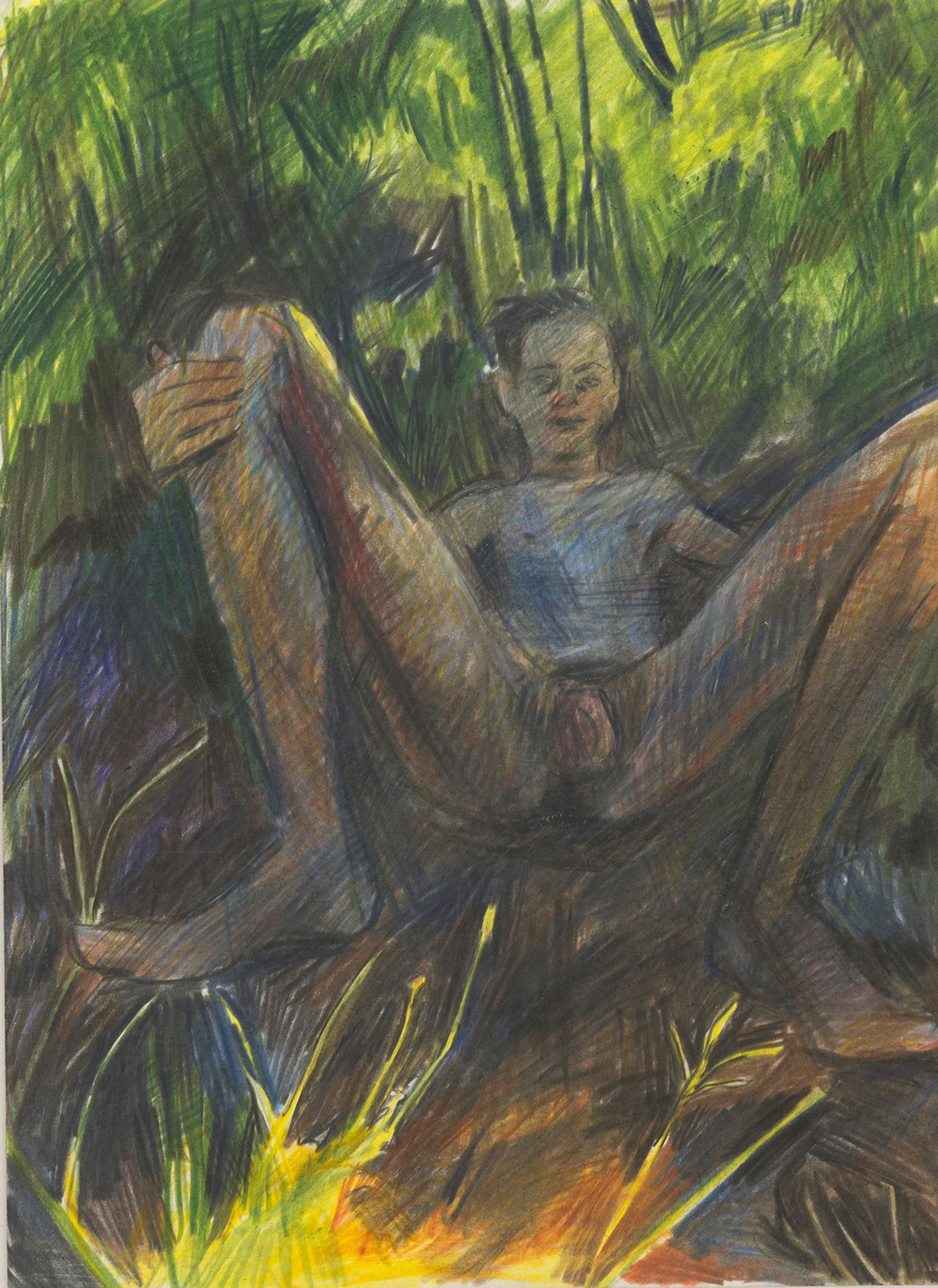
Jake Grewal’s Sweet Golden Kisses (2021). Courtesy of the artist

Archival functions appear courtesy of artists such as Wolfgang Tillmans, who donated a poster he designed for the Gay Online games in Amsterdam in 1990, even though E-J Scott, who started the Museum of Transology in Brighton in 2017, gifted an activist placard that reads “Transition now, I’ll show you how”. Amongst those to donate new functions are Jake Grewal, Christina Quarles and the artist duo Hannah Quinlan and Rosie Hastings.

Constructing the selection has been a “really relocating experience”, Rolls-Bentley says. “There have been so quite a few studio visits where myself and the artists are equally in tears as we’re conversing about the value of queer representation and how we just didn’t grow up with that in artwork.”

However Brighton Seaside House is a personal members’ club, Bryan is intent on opening up the collection to the community, by way of a web-site with devoted material, as nicely as the talks programme. Pupils can also book excursions. As she claims: “We want folks to be in a position to arrive in and see the art—that will be an significant legacy of the Brighton Beacon selection.”

“Stories Through Quilts” – New Art Exhibit on Display at Art Council of York Co.

ROCK HILL, S.C. (CN2 These days) – Now as a result of March 5th appear practical experience stories through quilts at the Centre of the Arts with the Arts Council of York County.

The show is named “Quilts Memorials: Expressing Their Names” in Cloth by Jo-Ann Morgan.

You can also satisfy Jo-Ann at an artist reception on Thursday, February 17th.

Down below is the official launch from the Arts Council of York County.

 “ROCK HILL, SC – Quilt Memorials: Stating Their Names in Fabric, works by Jo-Ann Morgan opens in the Dalton Gallery at the Heart for the Arts, 121 East Principal Street, Rock Hill, SC, on Friday, February 3, 2022. This exhibition runs by Friday, March 5, with a free, community reception on Thursday, February 17 from 5:30 – 7:30 PM, with remarks by Jo-Ann Morgan with Mike Gentry at 6:15 PM.

For the duration of a time of political and cultural unrest, Jo-Ann Morgan turned to quilt making, a medium that is acquainted, comforting, and common, via which she was capable to make potent, even provocative, statements in an approachable way. Crafting stories by quilts, Morgan proceeds the custom of representing pivotal times of the African American expertise.

Jo-Ann Morgan | https://www.picturingblackpower.com
Visual artist Jo-Ann Morgan is Professor Emeritus of African American Studies and Artwork Record at Western Illinois University, and writer of The Black Arts Motion and the Black Panther Party in American Visual Society (Routledge, 2019). Her reserve Uncle Tom’s Cabin as Visual Lifestyle won the prestigious Seaborg Award for Civil War Scholarship in 2008.

Additional facts can be located at yorkcountyarts.org/2021quiltmemorials.

In the Perimeter Gallery | Past Appears, functions by Renee Cloud
Our literate brains can not ignore words and phrases we see them as a string of letters that convey a meaning, and never just a collection of marks. We are always reading, generally consuming information devoid of pause. Renee Cloud’s operate aims to provide men and women nearer jointly as a result of shared encounters although employing her personal encounters as a platform. Language is Cloud’s medium, and the semiotics embodied by penned words fascinates her.

This sequence of etched glass mirrors presents the viewer an option to replicate and hook up with the language highlighted on the reflective glass floor. A wall of portals, the concentration is on the self-observed in and by way of the mirrors.

Renee Cloud | https://www.reneecloud.com
Renee Cloud (b. 1992) is a Charlotte indigenous and been given her BFA in Studio Art from Appalachian Point out University in 2015. Applying a combination of text artwork and combined media, Cloud generates perform that focuses on the personalized narrative, the Black expertise, and the ability of the prepared phrase. The text incorporated into her operate offers only a portion of the narrative, leaving the viewer to develop the relaxation. Cloud resides in Charlotte, North Carolina and is at the moment functioning as a freelance innovative within her group.

COVID-19 Visitation Rules | https://www.yorkcountyarts.org/take a look at
In adherence with CDC tips and in thought of the surge of the Omicron variant, face masks are required for all those people going to the Middle for the Arts and the workplaces at the Tom S. Gettys Middle, regardless of vaccination status. Social distancing is inspired. This policy may perhaps be revised as CDC suggestions improve

The Centre for the Arts is positioned at 121 East Major Road, in the Cultural District of Downtown Rock Hill. All three galleries at the Center for the Arts are open Monday by way of Friday – 9 AM – 5 PM, and on Saturdays from 10 AM – 4 PM.”

New Art Base installation puts process on display

Artist Reina Katzenberger will be producing her future human body of operate at the Artwork Foundation in Basalt over the subsequent three weeks in a exceptional mix of installation and residency.

This on-web page active artist studio is meant to give a window into the system of developing art and creative challenge resolving in genuine-time. The community is invited to discuss to Katzenberger about her get the job done although she is in home. She is predicted to be there from 1-5 p.m. Tuesday by way of Saturday.

“This is an opportunity to marry the exhibition and educational programming central to the mission of the Art Base,” the exhibition announcement reads. “For these weeks, the sidewalk-noticeable gallery will turn out to be a room for a pop-up artist residency that incorporates the bodily manifestation of a studio with components, tools and ephemera, made accessible to the general public.”


In addition to the in-gallery knowledge, viewable from the gallery’s Midland Ave. window, the Artwork base will doc Katzenberger’s operate by means of a reside-streaming webcam.

“Reina’s time will be absolutely open and unscripted as she aims to surrender every day to staying educated by the circumstance and interactions that take place on internet site,” reads the announcement. “Whatever art is made will crop up from the interactions, concepts and discussions that ensue. … These interactions will be unpredictable and challenge the two artist and customer to earnestly interact in artwork-producing as course of action — with the target not on a ultimate to take a look at and celebrate the inextricable link between all factors — anything is educated by anything else — working with combined media printmaking to illustrate and enhance these discussions.”


The venture is a collaboration with The Task Store, a creative house at Saw in Carbondale of which Reina is the creator and founder. It focuses largely on arts instruction by way of services-studying based print tasks.

The Artwork Foundation will host a closing bash from 5-7 p.m. Feb. 4. Restricted version prints and posters by Katzenberger will be readily available at that occasion. Additional at TheArtBase.org.

Visitors close to Aspen and Snowmass Village make the Aspen Times’ operate possible. Your economic contribution supports our efforts to deliver quality, locally relevant journalism.

Now more than at any time, your assist is vital to assistance us keep our community informed about the evolving coronavirus pandemic and the impression it is getting locally. Each contribution, having said that substantial or smaller, will make a big difference.

Just about every donation will be used exclusively for the growth and creation of greater news protection.


&#13
 &#13