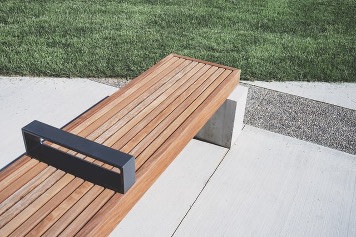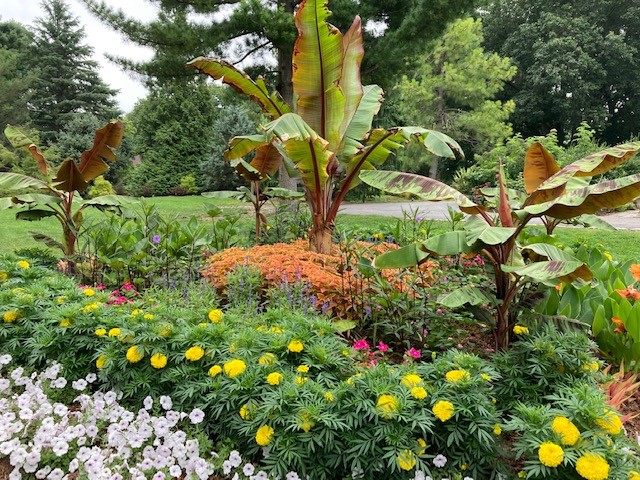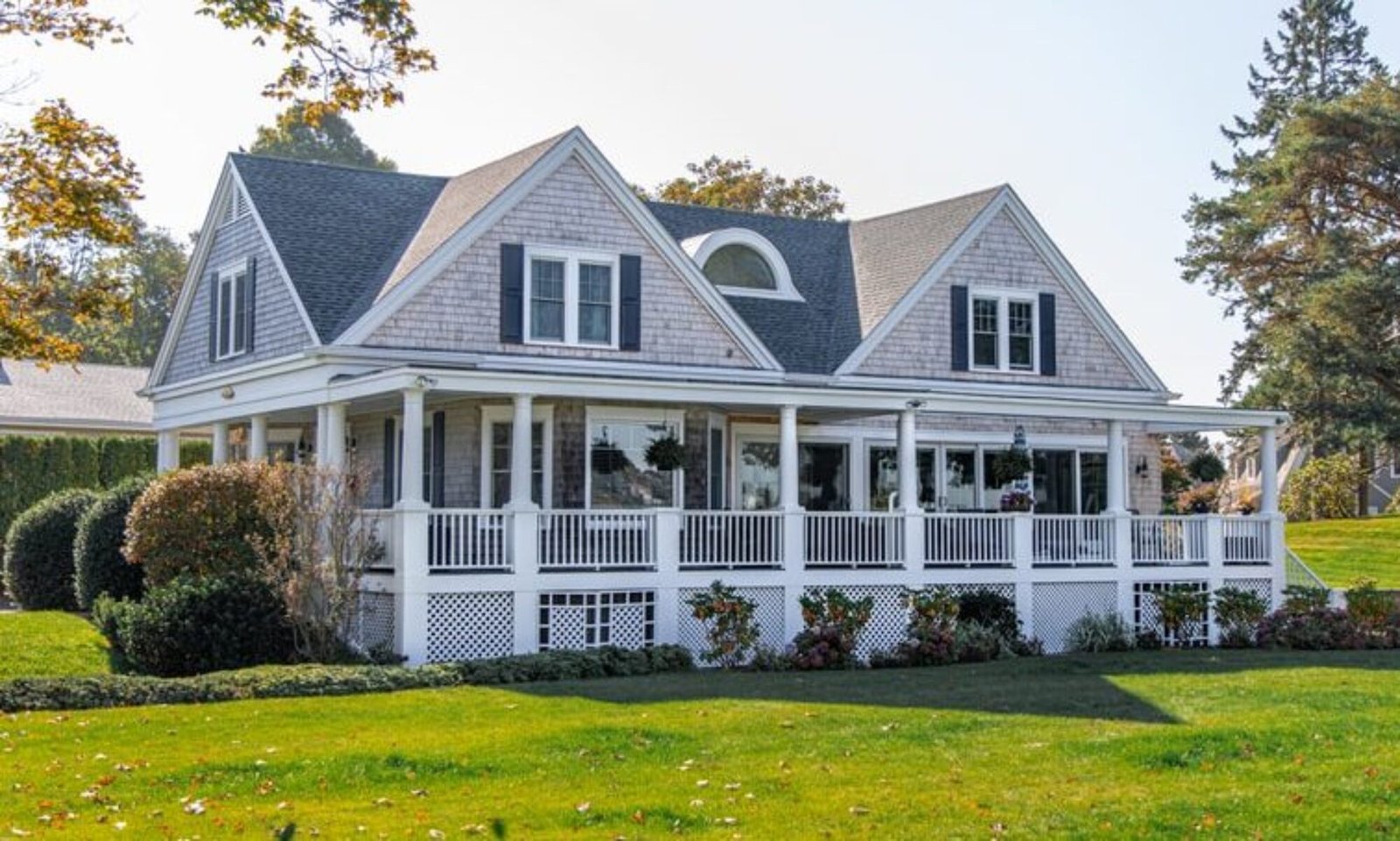

With more time spent at home, homeowners research landscape design ideas to create spaces for outdoor living, Business News

Landscape improvements can create functional living spaces. With the Covid-19 pandemic, homeowners are researching landscaping design ideas to improve their yards and create liveable spaces.
—

“Professional landscaping has tremendous value. It gets people outdoors and improves their lifestyle while spending time at home. It also boosts curb appeal and can increase property value,” said Keith Riley, Founder and CEO of RenovationFind.com and Design Landscaping by RenovationFind.

Design Landscaping provides a valuable resource for homeowners looking for landscaping ideas and trends for their properties. Once they have a picture of the landscaping features and living spaces they want for their yard, they can contact a reputable landscaping contractor in their city.

Popular landscaping trends in Canada:
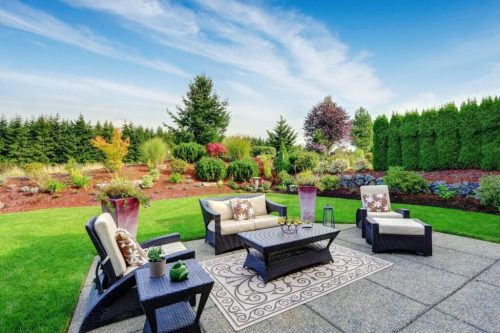
Multiple spaces for outdoor living: Incorporating more than one living area is a popular landscaping trend. An example of multiple living spaces would be a deck for dining and a patio in another area for relaxing or sitting by the fire.

Deck additions: Decks are a valuable addition to the home. According to this report, decks have a good return on investment and can recover about 72{6d6906d986cb38e604952ede6d65f3d49470e23f1a526661621333fa74363c48} of their cost at resale. Homeowners can use a deck as an outdoor living space.

Pergolas and arbors: Other wood-built hardscape features that are great landscaping ideas are pergolas and arbors. A pergola can provide shade over a deck or patio. An arbor signifies a pathway or entrance to an area of the yard. Both of these structures can support climbing vines and plants.

Outdoor kitchen: Outdoor kitchens is one of many landscaping trends that has risen in popularity thanks to home improvement reality shows. A backyard chef can have multiple grills, a wood-fired oven, countertops and storage, and even a bar to entertain guests while cooking.

Backyard campfire: Landscapers can create a firepit area using a concrete or stone patio. Define the space with retaining walls or plant beds, and get out the marshmallows. You can have a traditional fire pit, unique fireplace, or even a gas fire table for the space.

Landscape lighting: Illuminate these landscaping ideas with a well-designed outdoor lighting plan. Motion sensor lights can help illuminate pathways and deter intruders. Use soft accent lighting around landscape features and living spaces to create a warm ambiance. Ask your landscaper about solar-powered outdoor lighting options.

Water features: A pond, creek, small waterfall, or fountain are all options for backyard water features. Design Landscaping can help determine what would be best for you based on space and how much you want to commit to maintenance. Always have a water feature installed by a professional.

Artificial grass: Artificial turf has come a long way over the years. Varying blade lengths, thickness, colour, and texture make this fake lawn look like the real things. If you never want to mow or water again, it’s a good option.

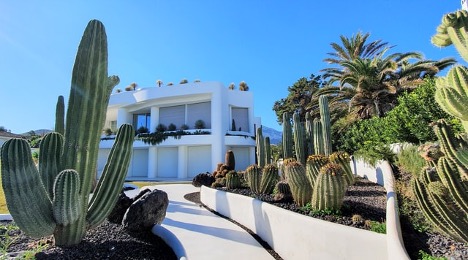
Xeriscaping: Another low-maintenance landscaping idea is xeriscaping. Use drought-resistant plants and surround them with mulch or gravel. The mulch keeps in moisture, so they require less water. A xeriscape reduces water use by up to 60{6d6906d986cb38e604952ede6d65f3d49470e23f1a526661621333fa74363c48} compared to conventional landscaping.

Edible landscape: If you’re looking for landscaping ideas that put food on the table, foodscaping can be the answer. In an edible landscape, Fruit and vegetable-bearing plants, herbs, and edible flowers are planted among the other plants creating a visually attractive and edible garden.

“Investing in landscaping is an investment for your lifestyle and home. It gives us more reasons to get outdoors and enjoy time with our family,” said Riley.

Find more ideas with these 12 Landscaping Trends & Ideas.

Design Landscaping by RenovationFind can assist with any commercial or residential landscaping project. Services include grading, sod, planting trees and shrubs, retaining walls, patios, walkways, plant beds, decks, fences, and more. Find a reputable and experienced landscape design and installer in your city with Design Landscaping. Because they have been certified and are continually monitored by RenovationFind, homeowners can feel confident they’ve found a trustworthy landscaper.

Contact Info:
Name: Keith Riley
Email: Send Email
Organization: RenovationFind INC.
Address: 11808 11 a ave NW
Phone: 7802184541
Website: https://designlandscaping.ca/

Source URL: https://marketersmedia.com/with-more-time-spent-at-home-homeowners-research-landscape-design-ideas-to-create-spaces-for-outdoor-living/89055604

Source: MarketersMEDIA

Release ID: 89055604
Signe Nielsen on the New Horizons Now Possible for Landscape Architecture

As New York City rebuilds in the aftermath of a long pandemic year, Pratt students are partnering in the local Brooklyn community and beyond to support a better, more equitable future with innovative solutions. In the Making a Difference series, Pratt’s news page is highlighting ways in which students and faculty have been working towards positive change in areas including sustainability, climate change, social justice, civic engagement, and public health. This article is the fourth in the series.

Over the past months, outdoor spaces where people can safely gather and enjoy nature have been crucial in cities. Little Island, which opened this May at the former site of Manhattan’s Pier 54 on the Hudson River, offers a new experience for New Yorkers to explore trails through trees and plantings overlooking the water as well as enjoy spaces for both leisure and performance. The design is a collaboration between the UK-based Heatherwick Studio and the New York-based landscape architecture firm MNLA, led by Signe Nielsen, adjunct professor of undergraduate architecture.

Nielsen recently joined Pratt Presents for a panel discussion on the design of Little Island—a conversation which is available to watch online—and will be teaching in the Master of Landscape Architecture (MLA) program launching in January 2022. She answered a few questions on the importance of the School of Architecture starting a landscape architecture program now, her work on Little Island and other landscape projects, and the need to consider the impact of climate change on nature in public space.

Little Island is opening in a shifting time for the city when outdoor space is more crucial than ever. What does it offer to New Yorkers at this moment?​

Little Island offers 2.5 acres of new waterfront park within Hudson River Park. For a neighborhood lacking in open space—I do not think the High Line, as beautiful and popular as it is for tourists and some New Yorkers, is viewed as a neighborhood park— it seamlessly marries nature and culture in forms that are rare to encounter in most public spaces.

Why is now an important time to start a landscape architecture program?

The time has never been more appropriate than now to start a new landscape architecture program. The field of landscape architecture is broad-ranging, which is what is needed at this moment to seek strategies and ideas to advance climate-positive design. Landscape architects are trained to think of systems rather than objects, and it is these environmental and human systems that need to be considered as integrated if we are going to make substantial, rapid progress towards addressing the acute impacts of climate change.

Working within the creative and innovative suite of world-class graduate programs at Pratt, the Master of Landscape Architecture program joins this esteemed company. Situated within New York City, the program will draw on this urban fabric as a laboratory, rich in both opportunities and challenges.

Are there design ideas reflected in the landscape of Little Island that you want to share with students through this program?

Little Island is the result of a unique set of circumstances bound in a particular place that is not easily replicated. That said, there are certain notions of public space design, the response of environmental forces including climate change, and the rethinking of the relationship of nature and art that offer fodder for scholarly and creative pursuits. There are equally questions pertaining to environmental justice and equity that also emerge from Little Island that also present opportunities for discourse.

How is Little Island looking ahead to the ecological shifts in climate change?

​Little Island is the first completed waterfront park that is substantially elevated above the year 2100 projected sea-level rise and storm surge. Additionally, the plants, particularly the trees, were selected to be adaptable to rising temperatures. Soils, slopes, and the drainage strategy were all designed for greater frequency and intensity of rainfall events and demonstrated their efficacy in Hurricane Ida in September.

Do you foresee more landscapes in the future needing to be designed for unconventional spaces?

​New York City, like many dense urban areas, is essentially out of readily available land waiting to be developed as parkland. This has been true for at least two decades, hence the need to look for sites that have been abandoned, neglected, underutilized, or contaminated, and imagine how they can be repurposed, reimagined, cleaned-up (decontaminated), and designed for a resilient future for both the environment and people. Many of these sites are along our waterfronts—former industrial, manufacturing, or warehousing areas—and others are complexly interwoven with surface and subsurface infrastructure.

Is there anything that the design of Little Island rethinks in terms of landscapes for parks and public space?​

One important aspect of Little Island is that the park’s design asks you, the visitor, to choose how to experience the place. Unlike most parks that offer playgrounds, sports courts, fitness equipment, and such, Little Island has no such designated activities. True, there are scheduled and impromptu cultural events in the amphitheater and Glade (a grassy slope facing a performance area), but these are neither year-round nor all-day long.

I am very supportive of public spaces that challenge and inspire the visitor to create their own experience, which I think Little Island does. Whether one is interested in strolling, jogging, gaining a new perspective on the cityscape and river, or enjoying an immersive landscape with perhaps a musical accompaniment—say, on a day of rehearsals—or evening getting together with friends over a drink, then the flexibility and inclusiveness of Little Island is the attraction.

Read additional stories in the Pratt Making a Difference series: Putting the Community First in Planning for a Brooklyn Neighborhood’s Future, School of Architecture Advocates for Climate Education with Pavilions & Projects on Governors Island, and Architecture Students Explore How Aquaculture Could Transform Industrial Brooklyn with Oysters and Algae.

Gene Gross of Denver Colorado Discusses What is Landscape Architecture?

Gene Gross Denver Colorado

Gene Gross of Denver Colorado is an architectural engineer focused on green design initiatives. Naturally, his work brings the opportunity to partner with other trades involved in a given project, and more and more, that includes specialists in landscape architecture.

Everyone is familiar with architects; they design buildings and infrastructure, but what exactly is involved with landscape architecture?

Gene Gross explains below what you need to know about landscape architecture, including what a landscape architect does and even some current trends that are affecting this industry.

What is Meant by Landscape Architecture?

Landscape architecture is the study and practice of designing environments, both interiors and exteriors, according to Gene Gross of Denver Colorado. A landscape architect designs environments, creating both attractive and functional spaces, which range from parks to residential areas and even college campuses. A landscape architect is trained and licensed to design, which means that they collaborate with builders to work together to complete the vision.

What Projects Can Entail

Landscape architects can take on various projects in which they analyze, plan, design, and construct the final vision. Projects can go from overhauling a whole area, including digging and reconstructing land, to simply adding aesthetical pieces, such as lighting.

Gene Gross explains that these projects can vary from a city-wide redesign to small details. For example, whole cities and towns can be designed, but so can ponds to make them more enticing to frogs and other creatures.

Some projects might be:

  • Urban design
  • Creating public parks
  • Greenways
  • Making a green belt
  • Community gardens
  • Living roofs and roof gardens

The Landscape Architecture Process

No matter what the project details are, the process of landscape architecture is lengthy and detailed. These steps include:

  1. An initial consultation.
  2. A proposal/ brief for the design.
  3. Analyzing the site and deciding resources needed.
  4. Concept design: This is a proposal that works with the client and gets all the documents needed in order.
  5. Design development or a more detailed design.
  6. Construction documentation: This is when a schedule for the project is decided with all the paperwork in order, including a proposed budget and detailed documents for every step.
  7. Construction: Gene Gross explains that this is the stage where the vision is brought to life. This is a lengthy process going from demolition, building, installing services, and any finishing touches.
  8. Post-Construction Evaluation: This is an important step for a landscape architect that allows for an evaluation of how the space functions and how effective it is. This can be analyzed in the months or even years following the finished design, whether anecdotal or written.

Qualifications of Landscape Architects

Becoming a landscape architect is a rigorous process. Usually, a bachelor’s or master’s degree is necessary to enter into the profession. An undergraduate degree can take four or five years to complete.

Gene Gross of Denver Colorado says that while undertaking either of these courses, most professionals will recommend completing a summer internship to gain experience in the field and make landing a post-graduate job easier. There are also courses to further develop skills and earn a higher salary.

Trends Affecting Landscape Architecture

While certain project needs never go out of style (lighting and terrain design, for example), there are several new trends that are affecting the industry and the types of projects that landscape architects are working on today.

Gene Gross Denver Colorado

Climate Change

The impact of climate change and the increasing focus on the importance of the environment has impacted how landscapes are designed. Architects are tasked with working with the planet, not against it, leading to reduced deforestation and excavation work.

Some examples of what we can expect are irrigation systems reusing rainwater and gardens designed to promote wildlife and encourage pollination. These trends are especially pertinent following Cop-26 and local equivalents, according to Gross.

COVID-19

Landscape architects are still in demand despite COVID-19’s impact on the United States workforce. Professionals in this industry have noticed an increase in outdoor spaces, pop-up places, and private and public garden projects since early 2020.

As a result of time spent indoors during lockdown and a need to meet publicly while adhering to strict safety precautions, people are seeking outdoor spaces. This means that more people are meeting in parks and outdoor cafes rather than close-quarter, indoor restaurants.

Landscape architects are hired to design outdoor spaces that will entice people of all ages, and they’ll continue working with businesses on how they can create more outdoor seating at their businesses to meet this trend.

Gardening for the soul began long before 2020. However, Gene Gross expects wellbeing gardens to continue being in demand for landscape architects, as many people developed a passion for gardening during lockdown.

What makes these spaces special is that landscape architects design them to be multipurpose areas for yoga, meditation, exercise, and growing fruits and vegetables.

We’re even starting to see workspaces begin creating these wellbeing gardens in their office buildings to bring employees back to working in the traditional office.

Getting Involved

Landscape architecture might be influenced by some unique trends as a result of climate change and a demand for outdoor spaces, but the need for beautiful, functional, and safe landscaping designs will remain.

Gene Gross of Denver Colorado is looking forward to seeing how these landscaping architecture trends continue over the next few years. Regardless, there will still be many opportunities to study landscape architecture at master’s level at a university in the United States, and architects in this field will continue to have a range of specialized projects to choose from throughout their long careers.

EYP Launches Sustainable Landscape Design Practice

ALBANY, N.Y.–(BUSINESS WIRE)–EYP, a leading architecture and engineering firm creating memorable designs that enhance people’s lives and communities, announces the launch of its sustainable landscape design practice that creates healthier and more productive environments from the ground up. Guided by programs like the Green Building Council and the Sustainable SITES Initiatives®, EYP’s sustainable landscape approach extends its long history of developing sustainable projects. Jessica A. Petro, PLA, ASLA, has joined EYP as lead designer and landscape architect to spearhead the firm’s focus on creating sustainable, high-performance landscapes.

“We’re advocates for your site,” stated Ms. Petro. “Our team thinks about how landscapes function and how they interact with their inhabitants and the surrounding community. From master planning and programming to complete design and documentation services, we work with our clients to pursue climate positive designs that can sequester carbon, clean the air and water, increase energy efficiency, and restore habitats.”

Although formalizing its sustainable landscape design practice, EYP has spent years working with local consultants to oversee the landscape narrative for multiple projects, including Birch Bayh Federal Building and U.S. Courthouse in Indianapolis, Ind.; U.S. Embassy in Oslo, Norway; Fulton State Hospital in Fulton, Mo.; and, The Quad at the University of Texas in Houston. The firm will continue its work with local experts and consultants to guide thought leadership and design implementation to benefit clients.

EYP has also worked on more than a dozen projects across the Texas Medical Center, including the recent Texas A&M University Intercollegiate School of Engineering Medicine. According to D. Kirk Hamilton, Ph.D., Beale Professor of Health Facility Design, Texas A&M University, “When I was in school, we had to draw to the edge of the vellum sheet, so the plan sat within a fully rendered site plan that included landscape, hardscape, drainage, parking, and walkways. In the business world, architects need to confront how their buildings interact with the land and natural environment. They need to collaborate with landscape professionals in their firm or consultants to their firm. We constantly remind our students about the close collaboration required in the design realm and the importance of the inseparable relationship between architecture and landscape.”

“Expanding our capabilities to include landscape and the natural environment is part of EYP’s long-term growth strategy because it’s a natural fit with our culture and commitment to sustainability. We can now work with clients to achieve their carbon neutral designs, inside and out,” stated Kef Mason, interim chief executive officer, EYP Inc. “It also provides greater depth and enrichment to our staff in areas important to them: resiliency and climate. Jessica’s knowledge and understanding of sustainable landscape design make her natural leader for this at EYP.”

As a lead designer and landscape architect at EYP, Jessica Petro will lead the team to align the built and natural environment, so systems can inform and respond to each other to address each client’s program and mission. In addition, she will leverage the expertise of EYP’s in-house interdisciplinary teams and environmental data to better inform decisions about site feasibility, circulation, and natural resources.

About EYP

EYP is a people-first, integrated design firm specializing in higher education, healthcare, government, and science & technology. Our integrated teams offer planning and design, high-performance engineering, environmental graphics, preservation and modernization, interiors and workplace, sustainable landscaping, and rapid response projects to tackle your pressing challenges. And together, we begin every project by asking, “What’s Possible?”

EYP has interdisciplinary offices in 11 cities across the United States and projects in more than 100 countries. Across our community of designers, we have diverse perspectives and life experiences, and we are united by our curiosity — about you, where you’re going, and what you imagine. http://eypae.com/

The Sustainable SITES Initiative®, or SITES®, is a registered trademark of GBCI®.

Clark Garden wins honorable mention in All-America Selections Landscape Design Challenge – Community News

Clark Garden wins honorable mention in All-America Selections Landscape Design Challenge

North Hempstead Town Supervisor Judi Bosworth and the Town Board have announced that Clark Botanic Garden was an honorable mention in the All-America Selections 2021 Landscape Design Challenge in the 10,000 to 100,000 visitors per year category.

All-America Selections is an independent non-profit organization that tests new, never-before-sold varieties. After a full season of anonymous trialing by volunteer horticulture professionals, only the top garden performers are given the AAS Winner award designation for their superior performance.

“I was so pleased to learn that All-America Selections has once again recognized the natural beauty that is on full display at Clark Botanic Garden in their Landscape Design Challenge,” said Bosworth. “This is a testament to our incredible Parks Department team and the wonderful staff working at Clark Botanic Garden. Their passion for and dedication to Clark Botanic Garden is what makes this special park a true hidden gem worth visiting here in the Town of North Hempstead.”

This year’s theme of the AAS Landscape Design Challenge was “Diversity in the Garden.” AAS provided the gardens with winning seeds from the last five years. Gardens not only had to create and execute a design based on this year’s theme but were also encouraged to generate publicity via social media and “real life” social events. Gardens were divided into three categories based on the number of visitors per year:

Category I: fewer than 10,000 visitors per year
Category II: 10,000 – 100,000 visitors per year
Category III: Over 100,000 visitors per year

Town horticulturist Bonnie Klein directed Clark Botanic Garden’s participation in the All-America Selections 2021 Landscape Design Challenge.

This year a formal Victorian oval including All-America Selections Winners were grown and designed by Clark staff. The planting area holds a diverse array of plant materials, traditional in a botanic garden.

“The AAS program at Clark Botanic Garden helps to educate our community about the wonderful variety of plants you can use in your home landscape. These grand displays are a wonderful form of entertainment where visitors can find an exciting yet peaceful space at Clark Botanic Garden for all to explore and enjoy,” said Bonnie Klein, town horticulturist.

Clark Botanic Garden is an AAS Display Garden, providing the public with an opportunity to view the newest AAS Winners (annuals) in an attractive well-maintained setting. The network of nearly 200 dedicated AAS gardens includes 55 locations that have served for 25 years or longer.

Founded in 1969, Clark Botanic Garden is a 12-acre living museum and education facility for all ages. Collections at the garden include native spring wildflowers, conifers, roses, perennials, daylilies, wetland plants, rock garden plants, herbs and over a dozen collections of particular plant families.

Clark Botanic Garden is located at 193 I.U. Willets Road in Albertson.

High Intensity Natural Sweetener Market SWOT Analysis, Competitive Landscape and Massive Growth 2021

“High
The global High Intensity Natural Sweetener market highlights industry and market information, technologies, and dominant player, industry trends and latest market developments. After in-depth research and analysis by consultants, research analyst, they also revealed the data on major key companies that contribute to the growth and expansion of the market and challenge each other in terms of demand, supply, and production, estimation of CAGR value, revenue and sales.

The business procedures referenced in the report are fully broken down by item type, driving players, application, and general regions. The report consists of a comprehensive analysis of the market that will help clients to gain knowledge of the market and use it for business purposes. This report provides clients with historically data (2016-2020) and forecast data (2021-2026). In addition, the report includes a summary of the aspects that are likely to slow the growth of the industry in the coming years.

Get Sample PDF Report of Exploration Report @width=361

Key Companies Profiled in the Report:

Nestle
Cargill
Archer Daniels Midland
Ingredion Incorporated
Tate and Lyle
Dupont
Koninklijke DSM
Symrise
Raizen
Associated British Foods
Wilmar International

Additionally, the Covid-19 Pandemic Update Market Report on Global High Intensity Natural Sweetener provides the market study for the evaluated prediction period. The research methodology is essential for the evaluation and measurement of market growth. The study covers the complete analysis of the sections that are covered in the market in general. In addition, the study covers the obstacles and control factors that are present in the market. Detailed analysis is underway to determine market growth for the estimated forecast period. Furthermore, the growth factors of the Covid-19 Pandemic Update on Global High Intensity Natural Sweetener market are also being investigated for the broader market.

Segmental Analysis

The report has classified the global High Intensity Natural Sweetener industry into segments including product type and application. Every segment is evaluated based on growth rate and share. Besides, the analysts have studied the potential regions that may prove rewarding for the High Intensity Natural Sweetener companies in the coming years. The regional analysis includes reliable predictions on value and volume, thereby helping market players to gain deep insights into the overall High Intensity Natural Sweetener industry.

>> Get Upto 20{6d6906d986cb38e604952ede6d65f3d49470e23f1a526661621333fa74363c48} Discount Use Coupon Code:RHR20 @ https://www.reporthive.com/checkout?currency=single-user-licence&reportid=2977973

Research Methodology:

This research study involves the extensive usage of both primary and secondary data sources.

datatriangulation

Market segmentation :

High Intensity Natural Sweetener Market, By Type–

Nutritive sweetener
Non-nutritive sweetener

High Intensity Natural Sweetener Market, By Application–

Bakery Goods
Sweet Spreads
Confectionery
Chewing Gums
Beverages

Table Research Programs/Design for This Report

Table

Market

Why buy a market analysis report on High Intensity Natural Sweetener?

: – Comprehensive and comfortable for our viewers to understand the market report High Intensity Natural Sweetener by offering in-depth information through in-depth analysis
: – The report includes a market scenario, a market structure, market constraints, a study statistics in a market-based market.
: – It allows tank buffer stainless steel key players to obtain informative data on market trends, upstream and downstream of the upcoming market.
: – Historical and futuristic information taken into account when running on the High Intensity Natural Sweetener types of products, applications and geographical areas
: – Detailed information on market classification, main opportunities and market developments, as well as on market restrictions and the major challenges facing the market.
: – High Intensity Natural Sweetener Report includes events associated with manufacturing and distribution networks, as well as cost analysis.

>>>> For more customization, connect with us at @
https://www.reporthive.com/request_customization/2977973

Table of Contents

• Chapter 1: The report starts with an overview of the global High Intensity Natural Sweetener market and highlights of the research study.
• Chapter 2: Here, the report provides a detailed study of growth driving factors, market challenges, trends, and opportunities.
• Chapter 3: This chapter offers complete segmental analysis where product and application segments are analyzed in detail.
• Chapter 4: This section of the report deals with key regions and their potential for growth in the global High Intensity Natural Sweetener market.
• Chapter 5: Here, the report provides deep company profiling of leading players. This chapter also provides an extensive study of the competitive landscape.
• Chapter 6: Readers are provided with accurate forecasts of production and production value growth in the global High Intensity Natural Sweetener market.
• Chapter 7: The report also provides projections related to consumption in different regions and across the globe.
• Chapter 8: Here, the authors of the report have discussed about key sales channels and the industry value chain. This chapter also includes comprehensive customer and distributor analysis.
• Chapter 9: This part of the report sheds light on significant aspects of the global High Intensity Natural Sweetener market through Porter’s Five Forces analysis and PESTLE analysis.
• Chapter 10: Finally, the report concludes with a summary of important findings about the global High Intensity Natural Sweetener market.

Why Report Hive Research:

Report Hive Research delivers strategic market research reports, statistical surveys, industry analysis and forecast data on products and services, markets and companies. Our clientele ranges mix of global business leaders, government organizations, SME’s, individuals and Start-ups, top management consulting firms, universities, etc. Our library of 700,000 + reports targets high growth emerging markets in the USA, Europe Middle East, Africa, Asia Pacific covering industries like IT, Telecom, Semiconductor, Chemical, Healthcare, Pharmaceutical, Energy and Power, Manufacturing, Automotive and Transportation, Food and Beverages, etc.

Contact Us:

Report Hive Research
500, North Michigan Avenue,
Suite 6014,
Chicago, IL – 60611,
United States
Website: https://www.reporthive.com
Email: [email protected]
Phone: +1 312-604-7084