Barrick Museum of Art Opens ‘Two Cultures, One Family: Building Family, Finding Home’ Aug. 30

The Weaving Our Cultures Arts Festival (WoCAF) and the Marjorie Barrick Museum of Artwork are happy to existing “Two Cultures, One Family: Setting up Household, Acquiring House” Aug. 30, 2022 through Jan. 28, 2023. With this exhibition, professor Erika Abad draws on her private knowledge as the daughter of a historically multiracial household to curate a range of artists who invite us to question thoughts about the way that strategies all-around household, gender, sexual intercourse, and reproductive justice are negotiated these days.

Abad’s curation moves throughout a large array of media, encompassing paintings, sculptures, poetry, textiles, zines, movies, and drawings. Her themes array from reproductive genocide to the decisions that LGBTQ+ American families are forced to make now that a lot of states are pushing for trans- and homo- antagonistic laws.

The artists she has picked out include Chris E. Vargas, the founder of the Museum of Transgender Hirstory and Artwork the influential self-taught Chicano realist Hector Silva and the formerly-undocumented Arizonan artist Gabriela Muñoz, as nicely as area artists these as Keeva Lough, Lyssa Park, and Xochil Xitlalli. “Two Cultures, 1 Spouse and children” capabilities new perform made specially for this exhibition by the country-spanning duo of Lisa and Janelle Iglesias (also recognised as Las Hermanas Iglesias), the Portland-based mostly artist Lisa Jarrett (co-founder of Artwork 25, a collective focused to Black and Indigenous artists), and Las Vegas’ possess Krystal Ramirez. The curator asks us to mirror on past injustices with the inclusion of ¿Y Tu Abuela Donde Esta? (Where is Your Grandmother?), a well-known poem about racial hypocrisy by the Puerto Rican poet Fortunato Vizcarrondo (1895-1977).

“I hope this exhibition aids folks feel seen,” Abad says. “To have their people feel noticed. “Two Cultures” is a love letter to my mom and grandmother. Though our struggles are diverse, I am here simply because of them – a testomony to their resilience and sacrifice.”

“Two Cultures, Just one Spouse and children: Setting up Loved ones, Obtaining Property” capabilities function by Abayomi Brownfield, Fawn Douglas, Justin Favela, Noelle Garcia, Q’Shaundra James, Lisa Jarrett, Las Hermanas Iglesias, Keeva Lough, Linda Garcia Merchant, Gabriela Muñoz, Jean Munson, Lyssa Park, Krystal Ramirez, Hector Silva, Rose B. Simpson, Lance L. Smith, Chris E. Vargas, Fortunato Vizcarrondo, and Xochil Xitlalli.

The exhibition is created attainable by The Intersection, the Psi Upsilon Omega chapter of Alpha Kappa Alpha Sorority, the Women’s Exploration Institute of Nevada, and the UNLV University Libraries with assistance from Art, Architecture, and Layout Librarian Richard Saladino.

The curator would like to give special thanks to her mother Aurea Abad, her sister Melissa Abad, and her aunt Cynthia Perry, in addition to the WoCAF collective, her pals and colleagues, Blanca Rincon, Iesha Jackson, and Doris Watson for supporting her throughout this undertaking.

The exhibition will be on look at at the Marjorie Barrick Museum of Art at UNLV from August 30, 2022 – January 28, 2023. Entry to the museum is free and open up to the public Tuesday – Saturday, 10 a.m.- 5 p.m. Masks are recommended.


About the Curator

Erika Abad, Ph.D. is an incoming assistant professor of conversation at Nevada Condition Faculty. A former college-in-home for UNLV’s Interdisciplinary, Gender, and Ethnic Reports program, Abad has been living in the Las Vegas Valley because 2016. Abad has collaborated with the Marjorie Barrick Museum due to the fact 2018, when she documented customer conversation with Mary Corey March’s Identity Tapestry set up and gave a similar lecture titled, “Who are we and How do we Recover?” She has penned on reveals and artists’ function for Settlers and Nomads, Latinx Spaces, and Dry Heat. She has been highlighted on The Art People Podcast, Latinos Who Lunch, and Viewing Shade. You can stick to her on IG: @prof_eabad. This show, motivated by “Mothers and Daughters in the U.S.,” a class she made at UNLV, brings full circle the conversation of what it signifies to excavate the socio-political problems of our foremothers to superior recognize why we exist in the environment the way we do.

About the Artists

Abayomi Brownfield is a multidisciplinary artist who produces representations of Black futures grounded in African and Afro-Indigenous cultural techniques and cosmologies. In 2021 she was an inaugural Roots Division Bay Location Black Artist Studio Fellow. Brownfield has a BA in African decoloniality in artwork & heritage from Mills School.

Justin Favela is a Las Vegas-dependent artist whose installations and sculptures manifest his interactions with American pop lifestyle and the Latinx working experience. A great deal of his oeuvre revolves close to creative reimaginings of piñatas. He has exhibited his operate in venues throughout the United States, which include the Sugar Hills Children’s Museum (New York Metropolis), the Museo de las Americas (Colorado), and the Phoenix Art Museum.

The artist and activist Fawn Douglas is an enrolled member of the Las Vegas Paiute Tribe. Her studio exercise includes portray, weaving, sculpture, dance, and other styles of functionality. Douglas tells tales in buy to recall the earlier and ensure the tales of Indigenous peoples are read in the existing. She is the founder of Nuwu Artwork + Activism Studios, a studio, gallery, and celebration house in Las Vegas.

Noelle Garcia, a Chicago-dependent artist from the Klamath and Paiute tribes, focuses on themes of id, spouse and children history, and recovered narratives. Her paintings, drawings, and sculptures have been exhibited in galleries and establishments across the United States. Garcia has earned awards and fellowships from many institutions these kinds of as the Smithsonian’s National Museum of the American Indian and the Nevada Arts Council. She received her MFA from UNLV in 2012.

Q’Shaundra James is a Las Vegas painter who produces up to date portraits and depictions of historic figures with the intention of enabling Black Us citizens to envision themselves exterior white America’s approved narrative. Her operate has been exhibited in venues throughout Southern Nevada.

Lisa Jarrett is an artist and educator whose intersectional practice considers the politics of difference in just a range of settings. Jarrett is an associate professor of neighborhood and context arts at Portland Condition University. She is co-founder and co-director of KSMoCA, the Harriet Tubman Middle Faculty Centre for Expanded Curatorial follow, and the artwork collective Artwork 25: Artwork in the 25th Century.

Las Hermanas Iglesias is a challenge-based mostly collaboration among artists Lisa and Janelle Inglesias. As the kids of Norwegian and Dominican immigrants, the sisters produce trans-disciplinary get the job done that explores concerns of hybridity, social participation, and transnational identities. Independently, every single sister has exhibited internationally and across the U.S. Often they collaborate with their mom, Bodhild. 

Keeva Lough uses video clip and overall performance to check out gender, social constructions, and their results on the system. She graduated from the College of Oklahoma in 2012 with a BA in film & media experiments and is at the moment an MFA candidate at UNLV. Her function has been exhibited in Oklahoma, Nevada, Missouri, and France.

Linda Garcia Service provider is a author, archivist, and filmmaker. She is the founder of Voces Primeras, a creation company that generates and distributes documentary options about groundbreaking Latinas, and the co-founder of the Chicana Por Mi Raza Digital Memory Collective, a national oral background venture documenting 2nd wave Latina feminists.

The perform of Gabriela Muñoz is rooted in her ordeals as a migrant who lived in Arizona, undocumented, for a lot more than a ten years. Her observe is anxious with actions of social justice and racial equality. Muñoz’s operate has been exhibited at the Scottsdale Museum of Contemporary Artwork (Arizona), the College of Arizona Art Museum, and the U.S./Mexico border fence. 

Jean Munson is a feminist Filipina activist, cartoonist, and podcaster from Guam who takes advantage of comedian textbooks to empower people who have been traditionally underrepresented and misrepresented by the medium. She is a graduate of UNLV and a co-founder of the Las Vegas comics organization, Plot Twist Publishing. Her publications include Magic Eyeglasses and Stretch Marks: a Psychological Autobiography. 

Lyssa Park is a Las Vegas-dependent artist who explores narrative by means of illustration, guides and hand-crafted objects, working with a wide range of approaches which includes pen-and-ink, collage, digital media, display printing, risograph printing, and sculpture. She has a BFA in illustration from the California Faculty of the Arts. At present she is a MFA prospect at UNLV. 

Krystal Ramirez is an interdisciplinary artist whose do the job is centered around course, labor, and intake of the brown human body. She chooses products that highlight impermanence and spirituality, hinting at the weightless and hallucinatory existence of immigrants with no historical past. Born and raised in Las Vegas, she is currently a MFA applicant in art follow at Stanford University. 

Hector Silva is a self-taught artist centered in Los Angeles. He uses drawing as a way to take a look at themes of cultural identity, eroticism, and natural beauty, concentrating on Latino road society and queer visibility. His operate has been exhibited in numerous venues, together with the Museum of Latin American Art (California), the Museum of Mexican American Art (Illinois), and the Autry Museum of the American West (California).

Rose B. Simpson is a blended-media artist dwelling in Santa Clara Pueblo, New Mexico. Her do the job involves ceramic sculpture, metals, style, effectiveness, tunes, installation, creating, and tailor made cars and trucks. She acquired an MFA in ceramics from Rhode Island University of Design in 2011, an MFA in innovative non-fiction from the Institute of American Indian Arts in 2018, is gathered in museums throughout the continent, and has exhibited internationally. 

Lance L. Smith is a Las Vegas-primarily based artist, illustrator, muralist, and trainer whose work generally explores themes of decline, distortion, and liberatory tactics. They have been highlighted in neighborhood and countrywide venues, like the Marjorie Barrick Museum of Artwork, Nevada Humanities Gallery, and the Bellevue Botanical Garden (Washington). Smith is the director of Rogers Art Loft, an artist residency in downtown Las Vegas.

Chris E. Vargas is a video maker and interdisciplinary artist whose operate deploys humor and functionality in conjunction with mainstream idioms to discover the intricate ways that LGBTQ+ individuals negotiate areas for by themselves inside of historical and institutional memory and common society. His operate has been exhibited internationally, with screenings at the Tate Fashionable (United Kingdom), Palais de Tokyo (France), LACE (California), and other venues. He is the government director of the Museum of Transgender Herstory & Art, an ongoing conceptual undertaking.

Fortunato Vizcarrondo Y Rodón was a musician and a poet. Born in Carolina, Puerto Rico, in 1895, he published three books of poetry: Dinga y mandinga (1942), Primavera y otoñales (1961), and Sonetos puertorriqueños (1968). His poems ended up generally recited and established to tunes. ¿Y Tu Abuela Donde Esta? – or ¿Y tu agüela, aonde ejtá? in the local dialect he adopted for the poem’s fictional Afro-Puerto Rican speaker – has been recorded quite a few situations. Vizcarrondo died in 1977.

Xochil Xitlalli is a self-taught Las Vegas-dependent artist and activist who shares the strategies of her Nahua ancestors by a assortment of mediums. She is effective in portray, clay sculpture, jewellery, textiles, and digital arts. Just lately she has targeted on depicting Aztec astrological symbols, companions, and guides from her personal non secular apply. 

About the Weaving Our Cultures Arts Festival (WoCAF)

WoCAF is a potent system dedicated to making far more artwork situations that emphasize the get the job done of local artists. In 2022, Ladies of Color Arts Festival recognized the have to have to adjust its name to Weaving Our Culture Arts Competition to reflect the gender range of the collective and the artists it supports.

About the Architecture Studies Library

The Architecture Scientific studies Library, portion of UNLV’s College Libraries, serves pupils and school in the Faculty of Architecture and School of Fantastic Arts, with an emphasis on means and details about the specialist fields of architecture, building and development, city planning, landscape architecture, and interior structure. The ASL is also home to a Distinctive Collections location devoted to the subjects of art, architecture, and structure.

About the Marjorie Barrick Museum of Art
The Marjorie Barrick Museum of Art thinks every person warrants accessibility to art that issues our comprehending of the present and evokes us to produce a foreseeable future that holds house for us all. Located on the campus of a single of the most racially assorted universities in the United States, we strive to produce a nourishing atmosphere for people who go on to be neglected by contemporary art museums, which include BIPOC and LGBTQIA+ groups. As the only art museum in the town of Las Vegas, we dedicate ourselves to leveling limitations that limit entry to the arts, specially for very first-time website visitors. To facilitate access for very low-money friends we provide cost-free entry to all our exhibitions, workshops, lectures, and local community actions. Our collection of artworks delivers an option for researchers and scholars to acquire a more intensive information of up to date artwork in Southern Nevada. The Barrick Museum is element of the Higher education of Fine Arts at UNLV.

All of the museum’s galleries are accessible to wheelchair customers and other website visitors who simply cannot use stairs. Solutions such as indicator language interpretation can be arranged. Be sure to contact the museum  or at 702-895-3381 to explore your requirements.

Obtain Us
The Marjorie Barrick Museum of Art is positioned in the coronary heart of the University of Nevada, Las Vegas campus. The museum is simply accessed from the west facet of campus at the intersection of Harmon Avenue and College Center Generate. Generate east on East Harmon Ave until eventually the highway enters the campus and terminates in a parking whole lot. The museum will be on your ideal, future to a desert landscape backyard. Instructions are obtainable on the internet. 
 
Parking
Visitors might park in metered, team, and student places cost-free of cost after 7 p.m. on weekdays, 1 p.m. on Fridays, and all working day Saturday.

Day by day, weekly, or month to month permits can be procured from Parking and Transportation Providers.

Metered parking areas for people can be uncovered in the parking lot outside the Barrick’s entrance, alongside East Harmon Ave, and in the large amount powering the Lied Library. Other metered green zones are out there in the Cottage Grove Avenue Parking Garage and parking regions all through campus. Obtain the “PayByPhone Parking” application from Google Enjoy or the iTunes application shop.
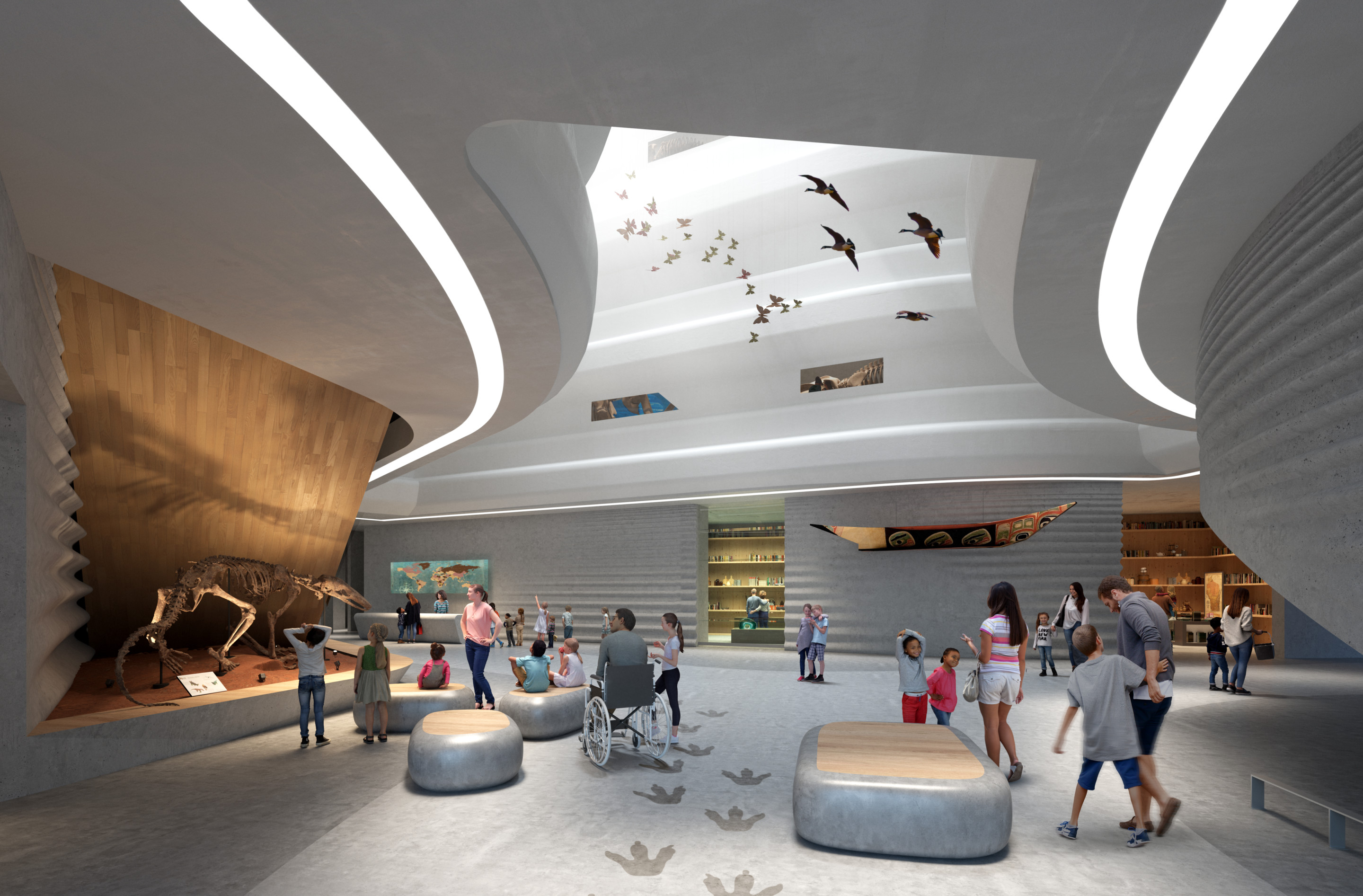
Ennead Architects reveals design for Milwaukee Public Museum

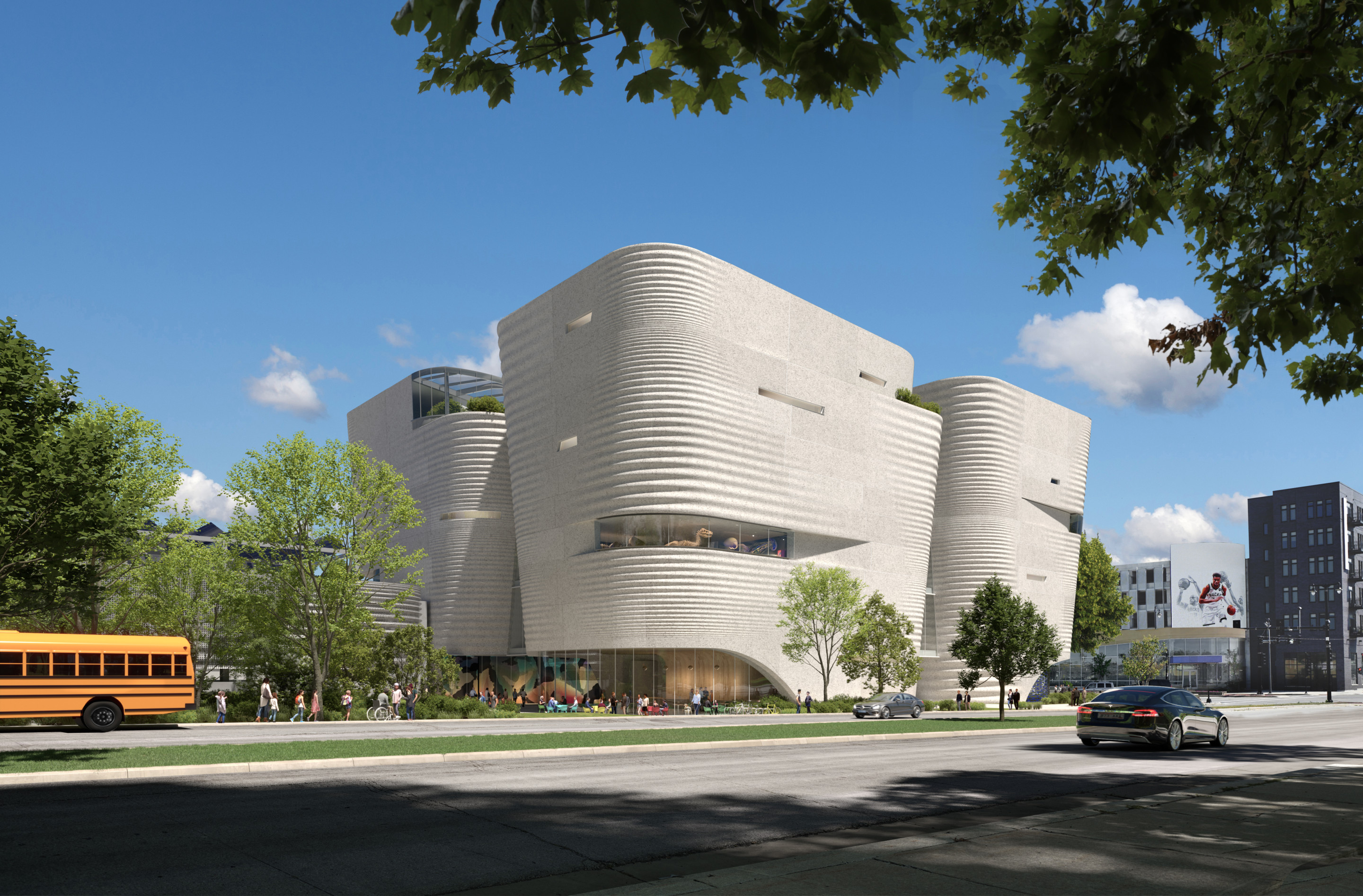
Cream Town people have been handled with a initially glance at the design of the $240 million new Milwaukee Community Museum (MPM) prepared for a 2.4-acre internet site at the corner of Sixth and Vliet in the city’s Haymarket neighborhood. Very first proven in 1882 and opening to the community two several years afterwards, the MPM serves as Wisconsin’s official organic background museum and has been situated at its Eschweiler Eschweiler & Sielaff Architects-developed Wells Avenue location, just various blocks south of its upcoming new residence, because 1962. The diorama-famous museum was initially co-located with the Central Library in a landmark Renaissance Revival creating on Wisconsin Avenue.

Ennead Architects is the style and design architect of what will be the third property for the MPM over its 140-year-history. Joining the New York City–based organization is architect of report Kahler Slater, exhibition designer Thinc Design and style, and Seattle-centered landscape architecture studio GGN for what is remaining billed as the most significant cultural challenge in Wisconsin historical past to day. For every a press announcement, the structure of the 5-tale new facility is guided by the 4 main principles of local community, nature, schooling, and the preservation of the museum’s collections.

Spanning 200,000 sq. feet with 80,000 square toes committed to exhibition space, the new MPM will have a considerably scaled-down in general footprint than its ageing present residence, which encompasses 480,000 square toes with 150,000 square feet of exhibition space. It’s a downsize, for absolutely sure, but also a significantly-necessary institutional upgrade that will help the museum to greater serve as an invaluable analysis hub and public source inside an expressive setting up set to have a catalytic impression on the encompassing community. (For people to some degree common with the lay of the land, the new museum will be found on the northern fringes of downtown Milwaukee near the Fiserv Discussion board, household of the NBA’s Milwaukee Bucks.)

rendering of three concrete museum buildings inspire by glacial forms
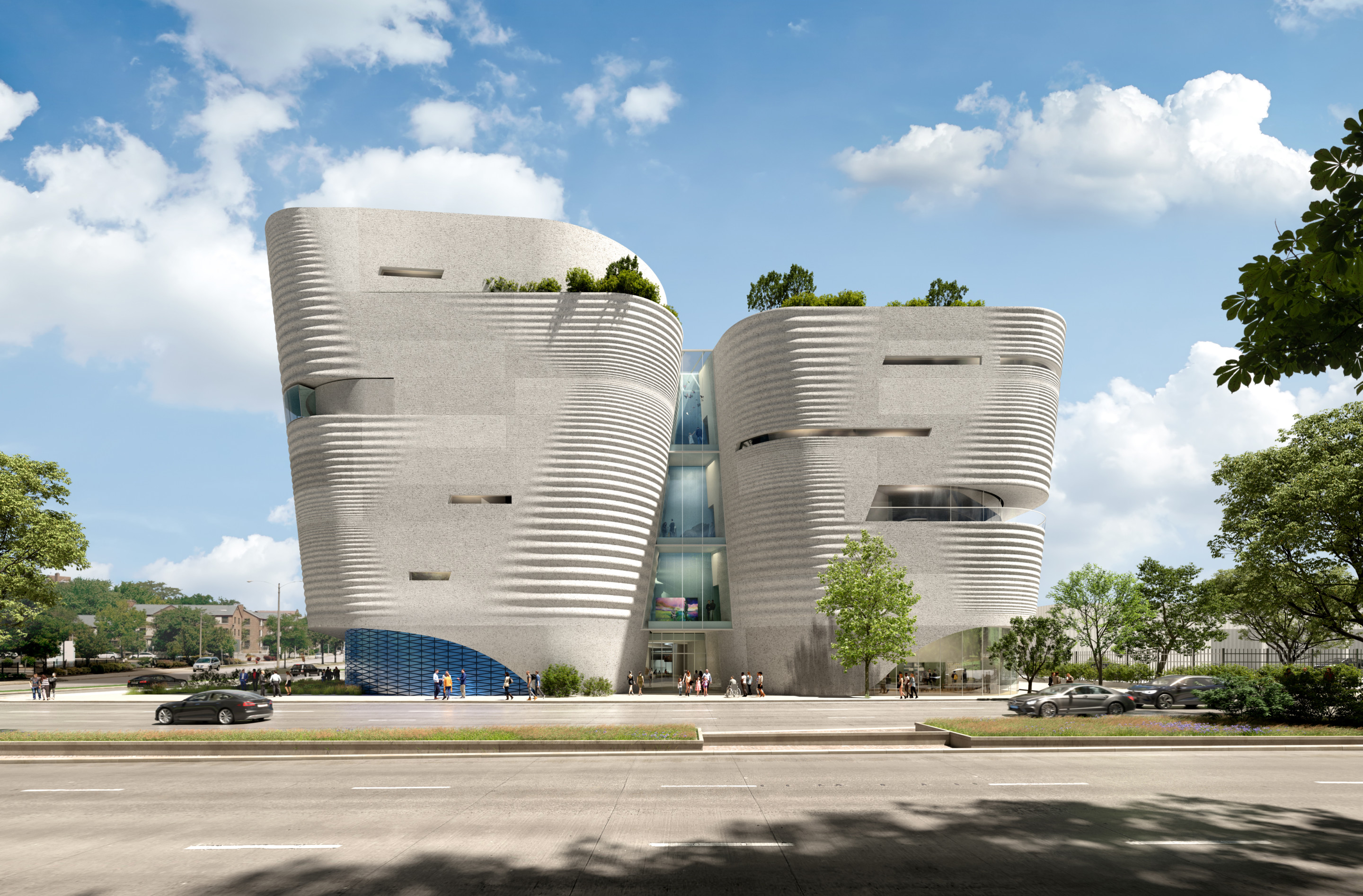
The new museum intricate is composed of a few five-story towers with forms that evoke wind- and water-shaped geological formations. (Ennead Architects)
rendering of a gallery in a natural history museum
Exhibition galleries will be positioned on the next via fifth flooring. (Ennead Architects)

“The Haymarket neighborhood has such loaded record in our metropolis and is on the cusp of a new chapter,” said Chris Ludwig, affiliate principal with Kahler Slater, in a statement. “The web-site of the long run museum will act as a conduit from the leisure district to the residential neighborhood perched just up the hill. The new area for MPM will be an iconic gateway welcoming visitors to the town.”

In addition to exhibition-dedicated long-lasting and changing gallery spaces that will comprise a bulk of the constructing, the new museum will also feature a planetarium, office and lab area, school rooms and versatile space, a cafe, and on-internet site collections storage. A sunlight-lit atrium will anchor the initial flooring and serve as a area for each the general general public and museum friends to congregate in a multifaceted space akin to a group middle-slash-occasion space.

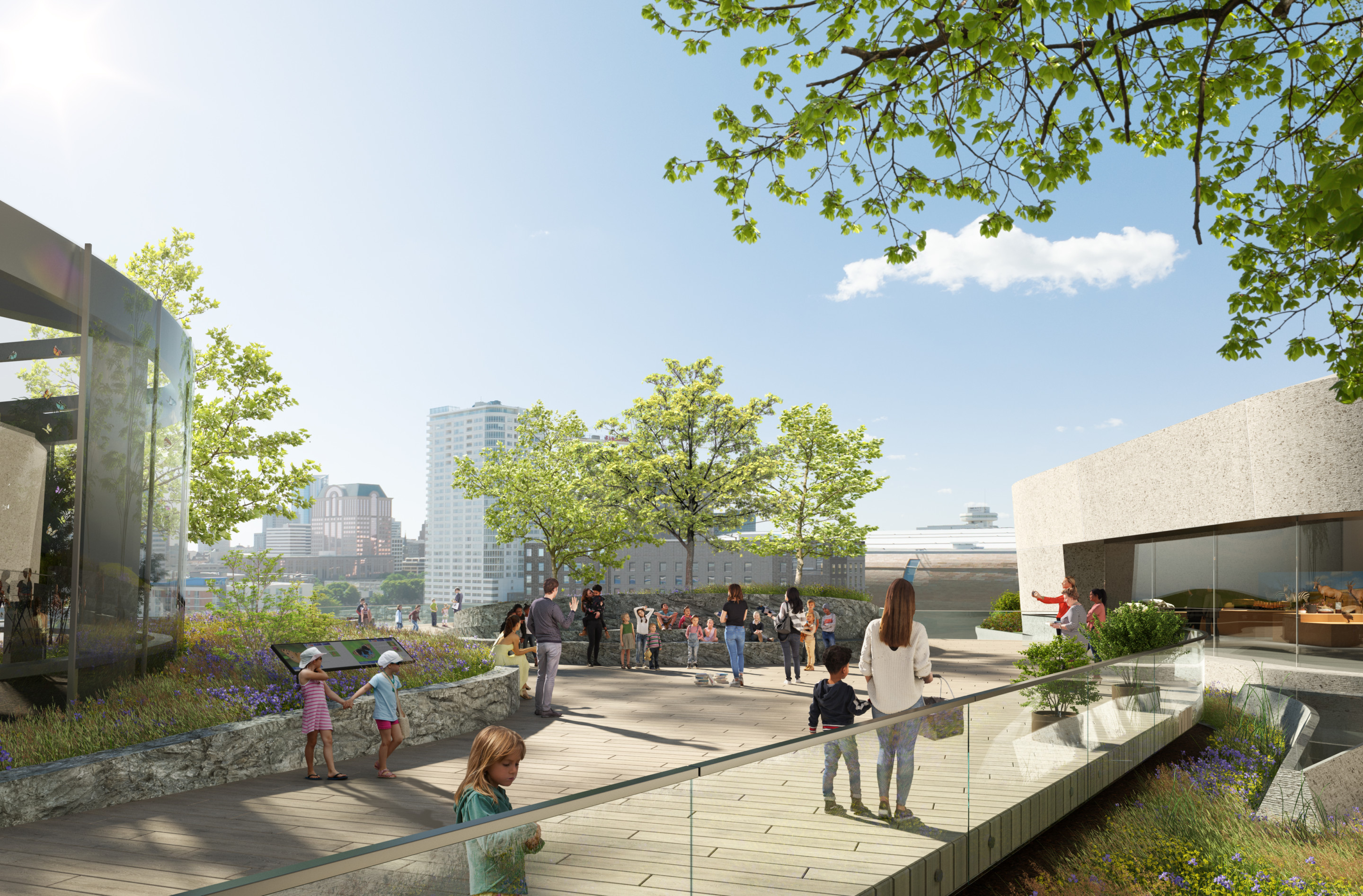
The complex will also feature two signature new out of doors venues: a street-level backyard garden in the vicinity of the museum entrance and a biodiversity-boosting rooftop yard full with a butterfly vivarium and lasting open-air exhibits. GGN’s landscape style aims to “redefine the Historic Haymarket metropolis edge, bringing a human scale to this aspect of the urban main and generating a new and beloved civic space, incorporating to the lexicon of public city gathering areas about Milwaukee.”

rendering of a rooftop garden at a museum
The rooftop garden and butterfly vivarium (Ennead Architects)
two-rock like concrete towers
The museum elaborate as viewed from the southeast. (Ennead Architects)

In the exhibition locations, friends will be addressed with unobstructed glimpses of “collection spaces, objects, and specimens that have commonly been concealed behind shut doors,” the push announcement included. As reported by Milwaukee Journal Sentinel, some objects and artifacts will be relocated to a 50,000-sq.-foot offsite storage facility because of to the extra compact dimension of the new making the MPM, however, will not element with any factors of its large selection.

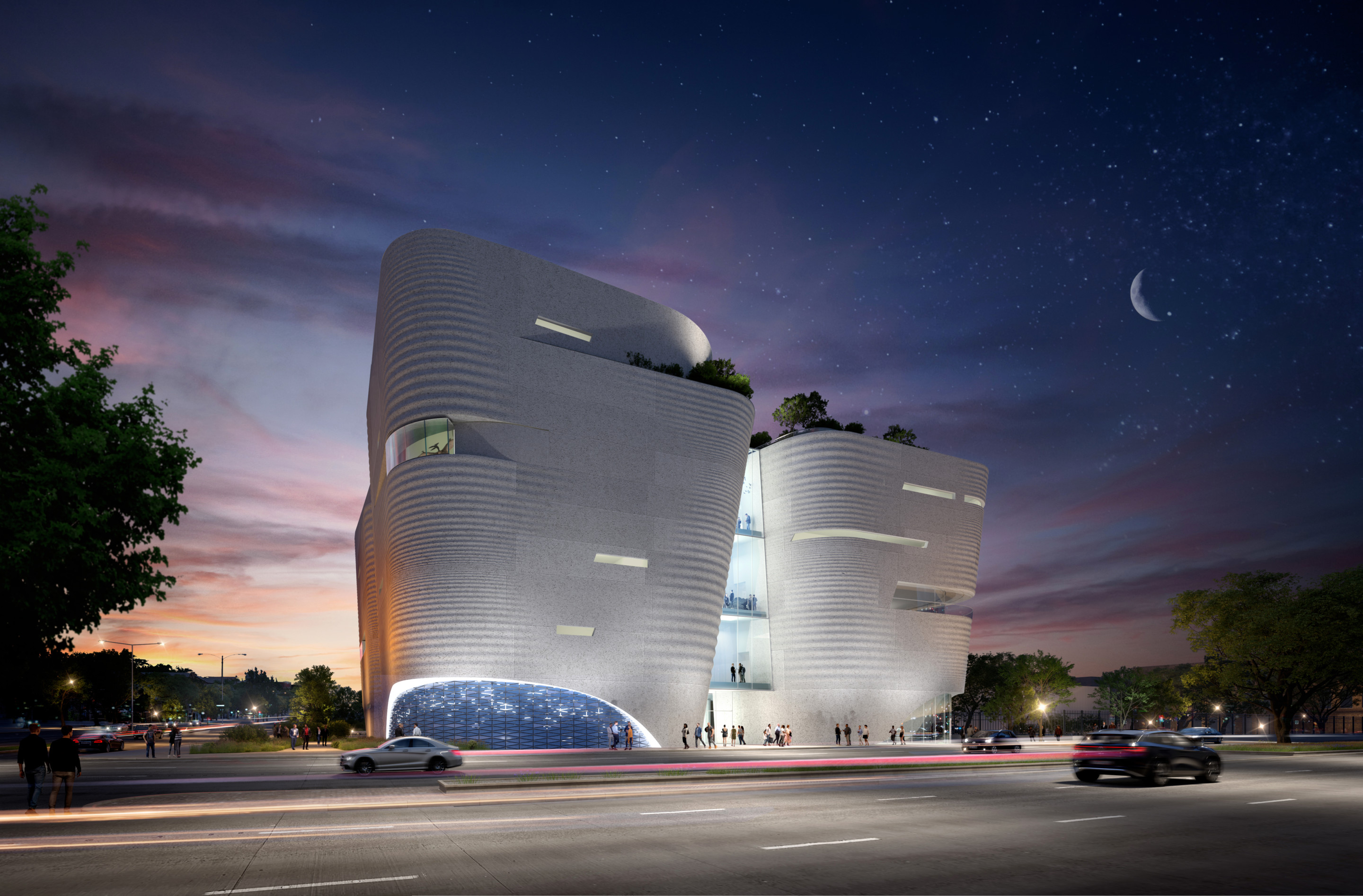
Markedly natural and organic in form, the structure of the striated concrete and glass building—MPM chief preparing officer Katies Sanders described it as “an legendary, 1-of-a-kind monument to Wisconsin and its people”—serves as an homage to the historic geological formations discovered in Mill Bluff Condition Park in west-central Wisconsin with its textured facade and rounded corners referencing the park’s layered sea stack bluffs shaped by eons of erosional forces. (Weathered glacial landscapes similarly encouraged the undulating, Studio Gang-led layout of the Richard Gilder Heart at the Museum of Natural Historical past in New York.) Inside, the style of the museum also pays tribute to the normal features of Wisconsin, with 3 distinct entrances flowing into the central atrium area in a nod to the convergence of Milwaukee’s 3 rivers: the Milwaukee, Kinnickinnic, and Menomonee.

“Our group has been so very pleased to function on this job, which is steeped in the men and women and position in which it will be located – a testomony to the solid eyesight and identification of the individuals of Milwaukee, the one of a kind cultures in the course of Wisconsin, and the all-natural landscapes in which they are living,” explained Todd Schliemann, a layout associate at Ennead Architects who served as lead designer on the undertaking. “Like the diversity of Wisconsin, the museum building unfolds like a journey, whole of surprises and wonder that will inspire visitors’ curiosity and make them peel back layers of comprehending as they learn something various each time they occur.”

a building with an organic, layered form at night
The long term Milwaukee Community Museum as found at night. (Ennead Architects)

The new MPM is slated to split floor future 12 months with an predicted opening in 2026. Fundraising for the making is now underway as is the demolition of the current structures at the progress web page. The transfer was a vital 1 for the MPM as it faces $70 million in deferred maintenance projects at its far too-major latest house. A major-to-bottom renovation of the creating would have exceeded the expense of setting up an solely new one at an estimated $250 million, according to the Journal Sentinel.

In Rome, a New Museum for Recovered Treasures Before They Return Home

ROME — Very last thirty day period, Italian officers inaugurated a new museum right here whose title sets a lofty agenda: the Museo dell’Arte Salvata, or the Museum of Rescued Art.

Rescued artwork is a broad expression, it turns out, and the museum will showcase the myriad methods in which artworks can be salvaged — from thieves, from the rubble of earthquakes and other countrywide disasters, from historic shipwrecks in the Mediterranean or from the ravages of time by Italy’s professional restorers.

Italy’s lifestyle minister, Dario Franceschini, stated at the inauguration of the museum that it would “show the planet the excellence of our work” in all these fields.

But it is telling that the museum’s initially exhibition — which operates as a result of Oct. 15 — focuses on the recovery of looted art and pays tribute to Italy’s crack art theft law enforcement squad — the Carabinieri Command for the Safety of Cultural Heritage. The unit is credited with obtaining returned to Italy countless numbers of art pieces, efficiently thwarting “the black current market in archaeological artifacts,” points out a panel on display screen.

About 100 pieces — Greco-Roman vases and sculptures and even cash courting from the seventh century to the 3rd century B.C. — are on watch at museum, which has been mounted in a cavernous corridor that was crafted as element of the Baths of Diocletian and is now annexed to the Countrywide Roman Museum.

Their stay in the exhibition in this article, though, will be a little something akin to a pit halt.

For decades, Italian society ministry plan has been to return recovered artifacts to the museums closest to the website they were being probably looted from, a process that can, at situations, require arduous deduction provided the clandestine nature of the excavations.

So, for illustration, when the looted second-century A.D. marble statue of Vibia Sabina, Hadrian’s wife, was ceded by the Museum of Good Arts in Boston, in 2006, it was returned to his villa in Tivoli (even though it is on temporary display in Rome these days, showcased by the Chamber of Commerce).

The undertaking of analyzing wherever artifacts in this new museum should really return to will drop to a team of archaeologists and experts.

“I imagine of this as a museum of wounded artwork, for the reason that the functions exhibited listed here have been deprived of their contexts of discovery and belonging,” said Stéphane Verger, the director of the Nationwide Roman Museum, less than whose oversight the new museum falls.

The Italian concentration on recovering artwork and faithfully returning it to spots of origin, no make any difference how distant, has had its detractors. Some say that in a globalized earth the place attempts are being built to unfold lifestyle, deal with troubles internationally and drop financial and social limitations, the repatriation of Western antiquities speaks to a extra insular persistence in the great importance of countrywide identity. Other people argue that antiquities are finest observed in establishments that bring in millions of people alternatively than in community museums in out-of-the-way cities in which they are extra likely to draw dust than folks.

A situation in issue is the evolution of an exhibition known as “Nostoi: Recovered Masterpieces,” from the Greek phrase for homecoming, which was initial mounted in 2007 by Italian cultural officials as a triumphal recognition of their good results in securing the return of stolen antiquities. Staged in Italy’s presidential palace in Rome, the exhibition acknowledged the tremendous good results Italy experienced had in persuading many American museums to return dozens of goods to Italy, most notably the Metropolitan Museum of Art in New York and the J. Paul Getty Museum in California.

But given that 2017, a refurbished version of the “Nostoi” exhibition has been installed in a collection of compact rooms in a small building in a central square in Cerveteri, when an Etruscan stronghold known as Caere, some 25 kilometers northwest of Rome. The exhibition doesn’t have regular traveling to hours, even though a tour information association that occupies adjacent space will open the rooms on ask for.

“We have to depend on volunteers to hold it open,” mentioned Alessio Pascucci, who was Cerveteri’s mayor until eventually very last thirty day period (he did not operate for re-election), who even so hopes the current museum can grow to turn into a nationwide institution for repatriated art.

A stone’s toss absent, arguably Italy’s greatest prize in the war in opposition to looting antiquities, the much treasured Euphronius Krater, is also exhibited in a area setting, the place it can be displayed in context and spark community tourism and the financial system. The sixth-century B.C. pink-determine krater had been looted in 1971 from a Cerveteri tomb and bought a calendar year afterwards to the Metropolitan Museum of Art for $1 million, an unparalleled sum at that time. The Fulfilled relinquished the krater in 2006. Soon after a stint at the Villa Giulia in Rome, it is now a long-lasting addition to Cerveteri’s archaeological museum, alongside with a kylix, or consuming cup, also by Euphronius, which the Getty Museum returned to Italy in 1999 after proof emerged of its murky provenance.

Franceschini, the society minister, mentioned the plan of a new museum that would showcase recovered antiquities prior to they returned to their neighborhood origins had occur to him when these two pieces experienced been lent to Cerveteri’s archaeological museum in 2014. Alternatively than returning the items to Villa Giulia, society officers decided the two vessels ended up improved off in Cerveteri, near the web-sites from which they experienced been illegally excavated.

Now the krater of Euphronius is “a symbol of the metropolis itself,” Franceschini claimed at the inauguration of the Museum of Rescued Art. “We are particular of the paramount value of returning the works to where by they belong.”

Vincenzo Bellelli, the new director of the Cerveteri archaeological park, stated it experienced been a “courageous choice,” and “enlightened coverage that gave nearby museums refreshing opportunities” to broaden their attractiveness. “It’s betting on websites of culture,” he mentioned.

In October, right after the exhibition at the Museum of Rescued Art closes, 20 pieces are predicted to be allotted to Cerveteri, together with a lidded white-on-crimson pithos decorated with the blinding of Polyphemus, the large son of Poseidon and Thoosa. The pithos, or significant vessel, is an Etruscan work from the seventh century B.C. just lately recovered from the Getty Museum.

Bellelli reported that for now the pithos would be provided its very own vitrine in the museum, along with the Euphronius pieces.

But like Verger, he argued that the tale of the looting and recovery of these parts should only be a footnote to the a lot more essential telling of the city’s history.

That two vases produced by Euphronius, one of historic Greece’s most renowned artists, had been found out in Cerveteri demonstrates the significance of the Etruscan city at the time. “It was a hub in historical times,” a “major market” and a spot exactly where suggestions traveled.

“There was a explanation why these valuable vases ended up discovered in Cerveteri,” he mentioned.

Right until then, even though, the returning artifacts will be in the highlight of the new museum in Rome.

The will work now on display screen there experienced been seized by the Manhattan district attorney’s office from museums, auction houses and personal collectors in the United States, acting on evidence provided by the carabinieri with regards to their unlawful provenance.

Previous December, 200 pieces ended up turned about to Italian officers, a handover described as the major single repatriation of relics from America to Italy, and these a major return “called out for an exhibition,” claimed Massimo Osanna, the head of the culture ministry’s directorate for museums.

“We’re currently operating on a new exhibit since we have so a great deal interesting product,” he claimed.

Verger said the recent display screen “exemplifies the wonderful hard work of the carabinieri” in Italy’s many years-prolonged campaign to stem antiquities trafficking, as perfectly as the perform of the Manhattan prosecutors, “which has been pretty essential.”

Explanatory panels found inside of the showcases synopsize many years of investigations on the section of the carabinieri that normally led to felony proceedings and subsequently the return of the sick-gotten goods. But there is not substantially finger-pointing at the museums and collectors that — inadvertently or not — fueled that black market place. For the most element, the dozens of vases and jars and statues and cash are introduced in accordance to variety and likely provenance, and not by the collections they were whisked away from.

It was a mindful selection to not lay blame.

“The piece has been returned, it is again,” Verger mentioned. The exhibition in the museum was a variety of “parenthesis in the existence of the item,” he included. “A stage of illegality is about, and now a new daily life begins.”

Bold confidence: Shepparton Art Museum

The very first matter you’ll see about the northern Victorian city of Shepparton is its interminable flatness, with the topography and nutrient-prosperous soil of the Goulburn River floodplain contributing to the region’s popularity as the “food bowl of Australia.” The next matter is the Shepparton Artwork Museum (SAM). Built by Denton Corker Marshall, it stands tall and very pleased on the most important freeway into the town, in stark contrast to the flatness.

John Denton, founding director of Denton Corker Marshall, says there are 3 motives for this tallness. The initially is to mitigate from floods, which Denton Corker Marshall has completed by raising the building onto its very own gentleman-built “art hill,” beneath which the building’s expert services are buried. The 2nd is to be a “cultural artefact” that alerts a visitor’s arrival into Shepparton. And the third is to supply a large vantage place from which to view the landscape throughout the picturesque Victoria Park Lake to the Barmah river crimson gum forest outside of.

The building, which includes Passive House principles, is the first museum/art gallery in Australia to achieve the highest Green Star rating possible.

The creating, which features Passive Household rules, is the 1st museum/art gallery in Australia to accomplish the maximum Inexperienced Star rating possible.

Graphic:

Tim Griffith

Denton Corker Marshall won a 2016 design and style competitors for the undertaking, with a scheme that was explained by the jury as a “beacon in the landscape.” Of the 5 shortlisted strategies, it proposed the smallest footprint, with the gallery spaces stacked vertically into a five-storey constructing.

The new SAM replaces the previous Shepparton Art Gallery, which was outgrowing its dwelling next to the council workplaces on Welsford Avenue. The gallery aspired to have an intercontinental-typical facility that would dwelling its long lasting assortment of ceramic and Indigenous art, as effectively as make it possible for it to borrow and show artworks from galleries and museums all around the environment. The ambition is to put Shepparton on the map as a spot for arts tourism, in the way that other regional galleries have accomplished for towns these kinds of as Bendigo, Ballarat and Benalla. Following a 2015 feasibility research for the project, the council endorsed the range of the lakeside website for the challenge due to the fact it presented “a perception of arrival” for visitors driving in from Melbourne.

Each of the building’s facades is composed of a different material, and each verandah is set at a different height.

Each and every of the building’s facades is composed of a diverse material, and each individual verandah is set at a unique height.

Impression:

Tim Griffith

Denton Corker Marshall responded to the short with a very simple cube that houses gallery areas at just about every corner and a big stairway that bisects the making internally. Every aspect of the building is preset with an L-shaped facade plate. The horizontal airplane of the “L” is an abstraction of the quintessential verandah uncovered commonly all through state towns. The four plates are offset from every single other, producing corresponding slim home windows with views from inside the gallery areas to different elements of Shepparton. The building’s sides – just about every a various color and materials – home entrances to four different parts: SAM by itself, the visitor centre, a cafe and the neighborhood Indigenous Kaiela Arts Centre, the place the earthy colour of Corten metal pairs with the adjacent natural landscape. The “verandahs” are all established at various heights, subtly denoting hierarchical relevance, with the SAM aspect the maximum.

Oriented askew, the making presents a daring, windowless confront to drivers as they get there, and a spectacular angular corner to the bridge throughout the lake. “We experimented with to build a set of incredibly crisp, sculptural aspects inside of which the gallery operated,” Denton said.

“We’ve completed really a good deal of buildings in the Australian countryside, and we were being fascinated in the sort of European intervention of a little something incredibly crisp, sharp and clear into a native landscape as a counterpoint to the scruffiness of the Australian bush.” This making has a commanding presence against the landscape, as if portion gallery, aspect fortress. Its “counterpoint” is tangible.

A twisted steel stairway bisects the cube-like building, with the gallery spaces located at each corner. Artwork: From the Ian Wong Collection.

A twisted steel stairway bisects the dice-like setting up, with the gallery areas found at each corner. Artwork: From the Ian Wong Selection.

Impression:

Tim Griffith

Shepparton is a person of the most deprived communities in Victoria. The 2015 feasibility examine for the undertaking highlighted the region’s substantial unemployment and youth unemployment premiums, and the social problems affiliated with economic disadvantage. Two days in advance of SAM opened to the public in late November 2021, Jesuit Social Solutions produced a report in which Shepparton and neighbouring Mooroopna were being indexed as areas that have experienced entrenched downside for years. 1

In addition, Shepparton is dwelling to Victoria’s most significant Indigenous community outside the house of metropolitan Melbourne. Like many destinations, its historical past with its regional Indigenous population is fraught, thanks in part to a unsuccessful indigenous title claim by the Yorta Yorta individuals in the 1990s. The city is also household to a developing multicultural local community, with recent migrants arriving from Sudan, Afghanistan and the Democratic Republic of Congo.

Comprehending the advanced social context of Shepparton was a important element of the structure process for the architect, explained Rebecca Coates, the now previous inventive director and CEO of SAM, who was also on the competitors jury. (She stepped down two months right after SAM opened to the community.) “Shepparton is unremittingly flat and I think it’s a tricky location. So you have to have a little something that has a sturdy existence and a incredibly sturdy language,” she said. “Some of [the other shortlisted schemes] had been lovely, but they made additional social troubles … The final detail you want to do is generate blind places or spaces where items can go erroneous.” In 2013, the former visitor centre that stood on the website now occupied by SAM was ruined by a fire that was intentionally lit. Denton Corker Marshall’s developing is built to be professional in the spherical, thus rising passive surveillance.

The museum’s top floor, overlooking Victoria Park Lake, includes a dedicated art wall, with the 2022 commission being by Louisa Bufardeci.

The museum’s top floor, overlooking Victoria Park Lake, consists of a devoted art wall, with the 2022 commission remaining by Louisa Bufardeci.

Picture:

Tim Griffith

Coates sees the museum as enjoying a important position in lifting the social and economic downside of the area through its multitude of plans that have interaction with, and provide employment for, the regional Indigenous local community, as well as multicultural communities, school groups and others. “We know that if we can maintain persons in work, there’s a considerably greater probability of them keeping in some type of education and learning – and education and learning is about change,” she reported. “It’s about the legitimacy of an aspiration – that you can have a task, and a protected spot to live, and you are entitled to have this. Arts and culture is our language and it’s the way we can operate to change agendas and modify the sense of satisfaction and probability.”

A deserving ambition, but the museum’s structure and its connection to the landscape belie a tension in between the desire to get to out and a defensiveness, as if the constructing have been an extrovert inside of an introvert’s pores and skin. Its location beside a highway that bodily separates it from the centre of Shepparton tends to make it even additional of a obstacle for it to embed, combine and interact with the area local community. Only time will inform if Shepparton reaches out to SAM as substantially as SAM reaches out to it.

At its opening weekend, SAM held a panel dialogue with the architect and the museum director. The title, “Build it and they will arrive,” sums up the proponents’ method for the building. Built for Shepparton’s vision of the foreseeable future, SAM’s boldness is a assertion of its legitimate self-confidence that “they” will without a doubt come.

take a look inside Norway’s half-a-billion pound mega museum

Read more about Norway’s new National Museum here

While Oslo’s other shiny new mega museum, the Munch, looms up dramatically over the habourside, the National Museum is more subtle and retiring. Despite a spectacular setting on the edge of the fjord, next to the ferry ports and opposite Oslo’s famous City Hall, the new museum slots in graciously behind two old train station buildings, one of which now hosts the Nobel Peace Center. Long and low, it is hard to see the true scale of this building—the biggest museum in the Nordic countries, with more floorspace than the Rijksmuseum—other than from the air.

It needs to be big. The National Museum has been created from the merger of five of Norway’s major art and design institutions, part of a larger consolidation of the country’s state-run galleries. (Like every single part of this massive project, this policy has been vigorously debated in Norway.) The grande dame was the old National Gallery—established way back in 1842 and in its previous building since 1882. The gallery housed a peerless collection of Norwegian painting, most famously Edvard Munch’s The Scream. The other merged museums were those dedicated to contemporary art, architecture, arts and crafts, and an agency that created national touring exhibitions.

“Norwegian politicians decided to bring these four collections into one to have an institution that was able to tell the whole story from antiquity up until today about visual arts and culture”, says the National Museum’s director, Karin Hindsbo.

The result is an institution of unusually broad scope. In its nearly 100 rooms, you will see everything from antique sculptures and Ming vases to the latest contemporary art. The design displays have the kind of everyday objects most Norwegians will have in their homes, while the fashion displays include the coronation dresses of Norway’s queens.

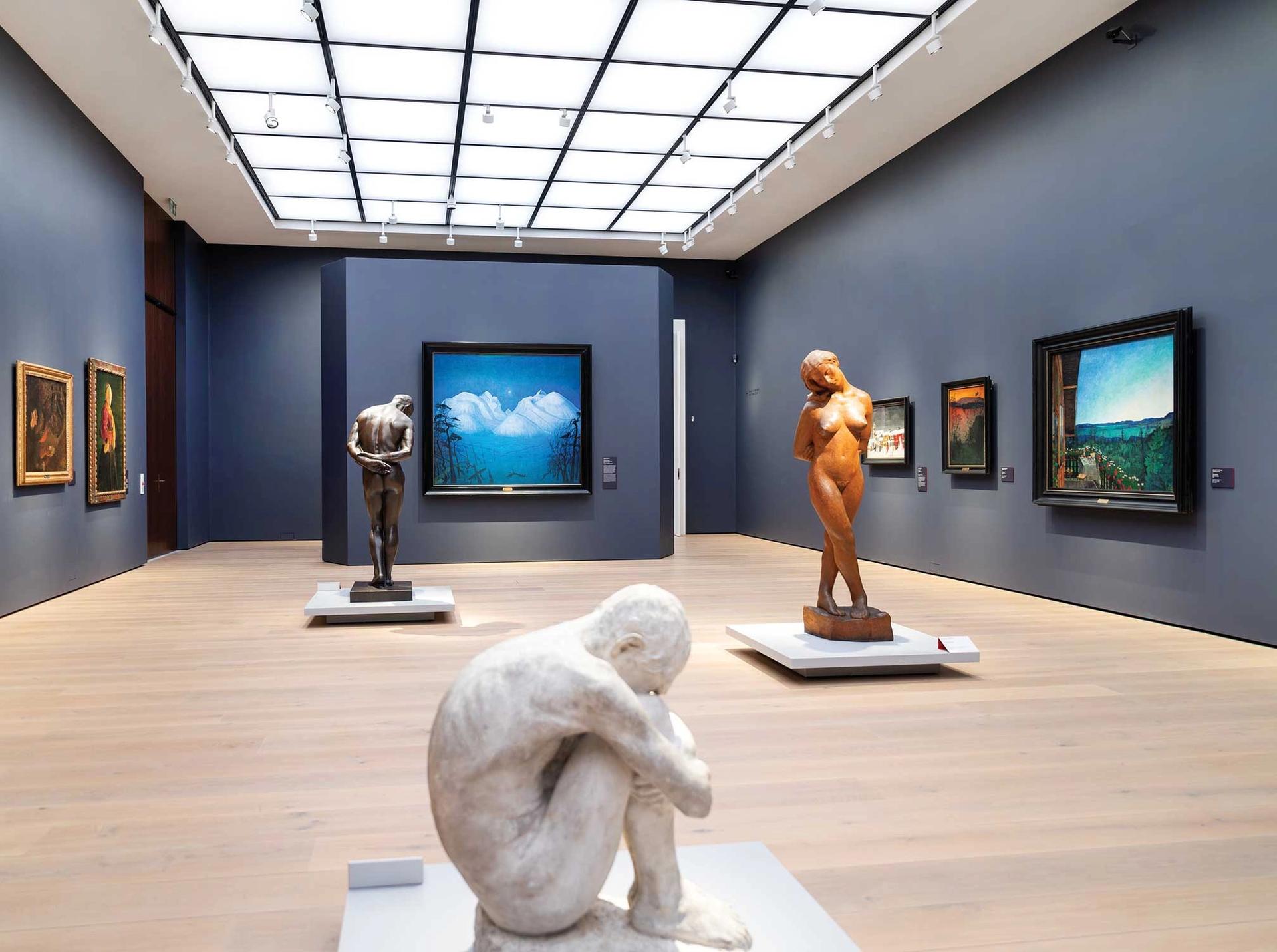
Harald Sohlberg’s Winter Night in the Mountains (1914), voted Norway’s favourite painting, is one of the Norwegian works on display alongside influential international artists

Photo: Ina Wesenberg. Courtesy of the National Museum

A less obvious benefit of the new building is behind the scenes. Unusually for a city-centre museum, it includes a store for most of the 400,000 objects in the collection, as well as offices, conservation and photography studios. “You start working together in a different way,” Hindsbo says. “We are able to gain new knowledge about our collection. For example we recently found underdrawings on Munch’s Madonna, supporting earlier theories that the National Museum’s version is the very first one Munch painted. This co-operation between different departments—in this context, photography and conservation—is made much easier when we are all gathered under one roof.”

Having a whole new building and the freedom to rethink the museum’s collections in any way they wanted also brought challenges. “There are not so many points of reference when you build a whole new national museum and do a new collection display from scratch,” Hindsbo says. “You have a blank canvas—of course it is difficult to choose what to do.”

After a long debate, the museum decided to display the collection using a relatively traditional chronological model. The ground floor has the design and arts and crafts displays, then the fine arts are on the first floor. It’s here you can find artworks including Harald Sohlberg’s Winter Night in the Mountains (1914), voted Norway’s favourite painting. They are interspersed with works by prominent international artists that have had a particular impact on Norwegian art—Cézanne, Picasso, Van Gogh. Then an enfilade of white-painted galleries present the museum’s contemporary collections.

Merging the collections and rehanging them has forced the National Museum to look at the gaps in its collection. “We see obvious gender gaps, especially when it comes to older works,” Hindsbo says. “It’s easier to achieve equality for contemporary art, it’s not so easy when it comes to 19th century art, or 15th or 16th for that matter. So our curators have invested quite a lot of time into research and locating pieces. We are also focusing on Sámi art. I think quite recently, and even when I began, there were some people who felt there wasn’t a place for that in the National Museum.”

‘The new institution is able to tell the whole story from antiquity up until today’

Karin Hindsbo, National Museum director

This attention to the art of the Sámi—the indigenous people of the far north of Scandinavia—is evident from entering the museum. The first work of art you see is Pile O’ Sápmi Supreme, a 2017 work by Máret Ánne Sara, an artist also currently exhibiting in the Nordic Pavilion at the Venice Biennale. Four hundred reindeer skulls, the flesh boiled off and the bone polished to a shine, hang like a macabre flag in the entrance foyer. The work protests a reindeer cull enforced by the Norwegian government.

Another way in which the museum is expanding the works it can show is by a partnership with the Fredriksen Family Collection. Whereas the museum’s contemporary collection is primarily of Norwegian artists, they will be able to supplement it with works from a trove of international art from the past 90 years, collected by the billionaire sisters Kathrine and Cecilie Fredriksen in memory of their mother, Inger Astrup Fredriksen. The works will be shown in a dedicated space next to the regular contemporary displays—the inaugural display includes prominent female artists such as Simone Leigh and Sheila Hicks.

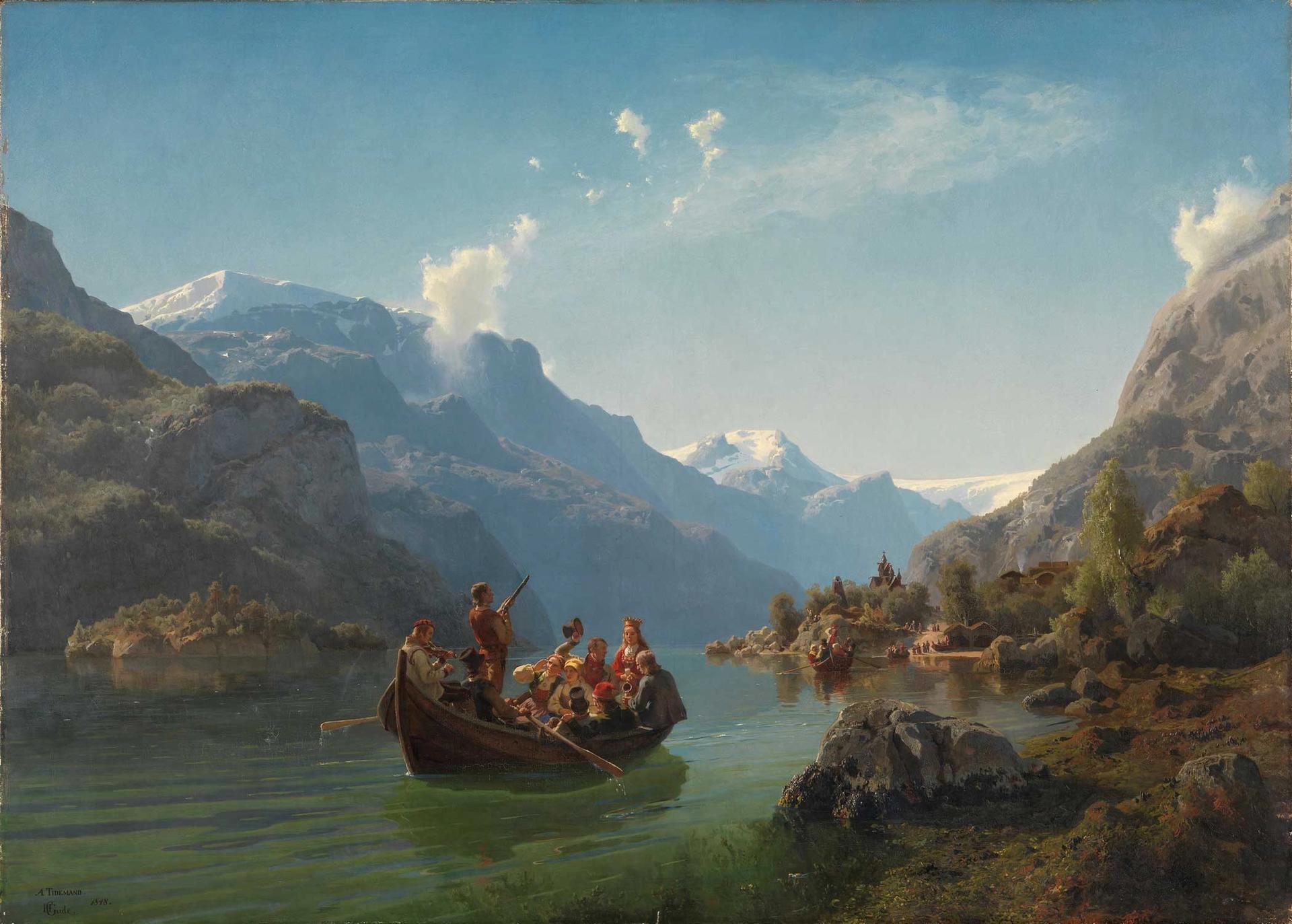
Hans Gude and Adolph Tidemand’s Bridal Procession on the Hardanger Fjord (1848), one of the works that toured Norway after the National Gallery closed in 2019

Photo: Børre Høstland. Courtesy of the National Museum

“From the Fredriksen Family Collection we have a focus on pioneering female artists, influences that have been important for Norwegian art history and artists,” says Stina Högkvist, the head of collections and exhibitions. “But also some of them can still inspire today’s artists as well. Artists that maybe haven’t been presented on a broader scale in the Nordic countries.”

Walking around the new museum, what is remarkable is the quality of the finish and the materials. The cost of the National Museum has been controversial—6.1bn kroner (around £500m)—but it is not hard to see where the budget has gone. The exterior is clad in Norwegian slate, with young vines starting to grow up it. The floors are oak and the fixings are bronze. The spectacular Light Hall at the top is walled with marble.

This is a museum designed to last for centuries, and environmental concerns were also paramount: the National Museum is planned to have half the carbon footprint of similar buildings, and uses water from the fjord for heating and cooling. “In terms of sustainability, the materials you use are quite important,” Hindsbo says. “So for instance it’s recycled steel, then the slate on the façade is a stone that can last for centuries and age gracefully. And the same for the oak floors. Maybe it would be easier or cheaper to buy a linoleum floor, but then you will need to change that in five or ten years.”

Of course, Norway has grown rich from oil—it boasts the world’s largest sovereign wealth fund—but, like the Gulf states, needs to transition eventually to a future that is free from fossil fuels. One way of doing that is attracting more tourists. The National Museum joins last year’s Munch Museum, the 2007 Opera House and 2012’s Astrup Fearnley Museum as part of a string of attention-grabbing new cultural buildings along Oslo’s harbour. It is part of a new outward-looking face for this traditionally modest country.

“There has been this huge investment in cultural institutions in Norway, in Oslo in particular in the last decade,” Hindsbo says. “So that’s quite special and significant. We need to work closely together to maintain the momentum that we’ve got now. To have art take another position in society. And also to use art to make Norway [assume] a position internationally.”

But Hindsbo points out that international tourists are not the only target. “We are also the National Museum, so we work very specifically with Norway, with telling stories from our collection that will have links to all parts of the country,” she says. “It’s important that the people of Norway feel an ownership of the new museum and our collection.”

The opening of the National Museum is the end of a long process, drawn out further by Covid and construction delays. The museums were merged administratively in 2003-05; in 2008 the site of the new museum was chosen; an architectural competition was held in 2009, won by the German-Italian architect Klaus Schuwerk; and building commenced in 2014. It was supposed to open in 2020, but delays pushed it back to 11 June of this year.

As a result, many of Norway’s artistic treasures have been out of view for several years—the old National Gallery closed in 2019. To help mitigate this, some key works from the collection have been toured around the country, many visiting the spots they depict.

My interview with Hindsbo takes place just over a month before the opening—the museum looks almost ready and they are just completing essential safety testing. As this marathon project approaches the finishing line, what does she hope visitors will feel?

“For a Norwegian audience, I would say pride,” she says. “To be extremely proud of what we’ve got in Norway, what kind of collection. What kind of cultural nation we’ve become and have been, for a lot longer than Norwegians probably think. And for the international audience? I can’t wait to be back.”

Four key spaces in the new museum

Photo: Iwan Baan. Courtesy of the National Museum

The Light Hall

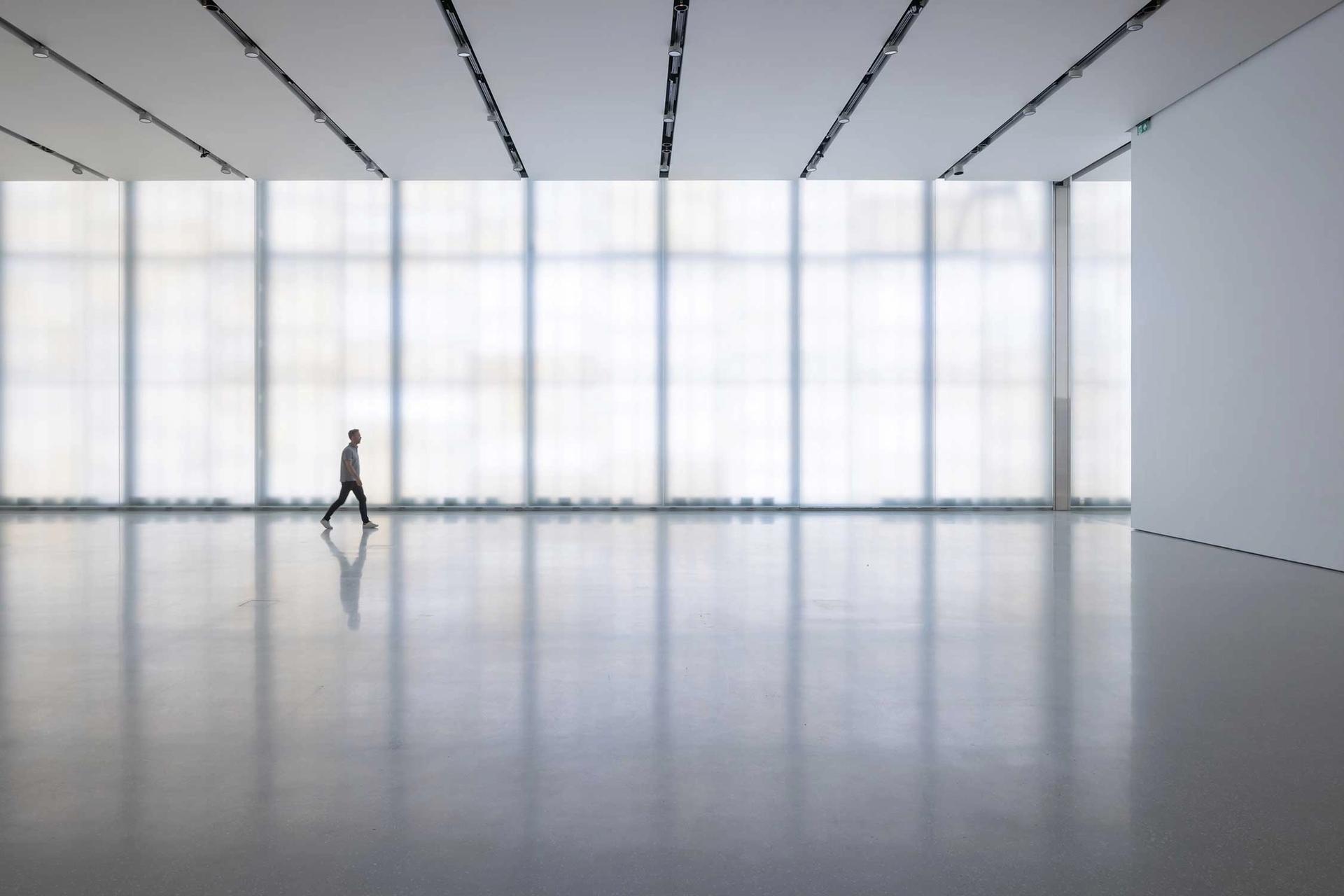
The signature space of the museum sits on the top of the building. The Light Hall is a long cuboid with walls made from thin, translucent layers of marble between panes of glass. At night, it will glow with the light of 9,000 energy-efficient LEDs and can be clearly seen from planes approaching Oslo’s Gardermoen Airport. Like Tate Modern’s Turbine Hall, it will be home to a series of single-artist contemporary commissions, but in form it is more reminiscent of the glass box that spans the London museum’s chimney. Inside it is 130 metres long and seven metres high.

The Fredriksen Family Collection room

Behind the series of galleries that house the museum’s contemporary collection is a special room dedicated to works from the Fredriksen Family Collection. The large gallery space is highly adaptable, with fold-out walls and a curtain system that allows it to be easily divided into smaller spaces, for example to show video work. This is to allow the displays to adapt rapidly to changing situations and also to reduce the material waste associated with rebuilding exhibitions.

Photo: Annar Bjorgli. Courtesy of the National Museum

The Salon

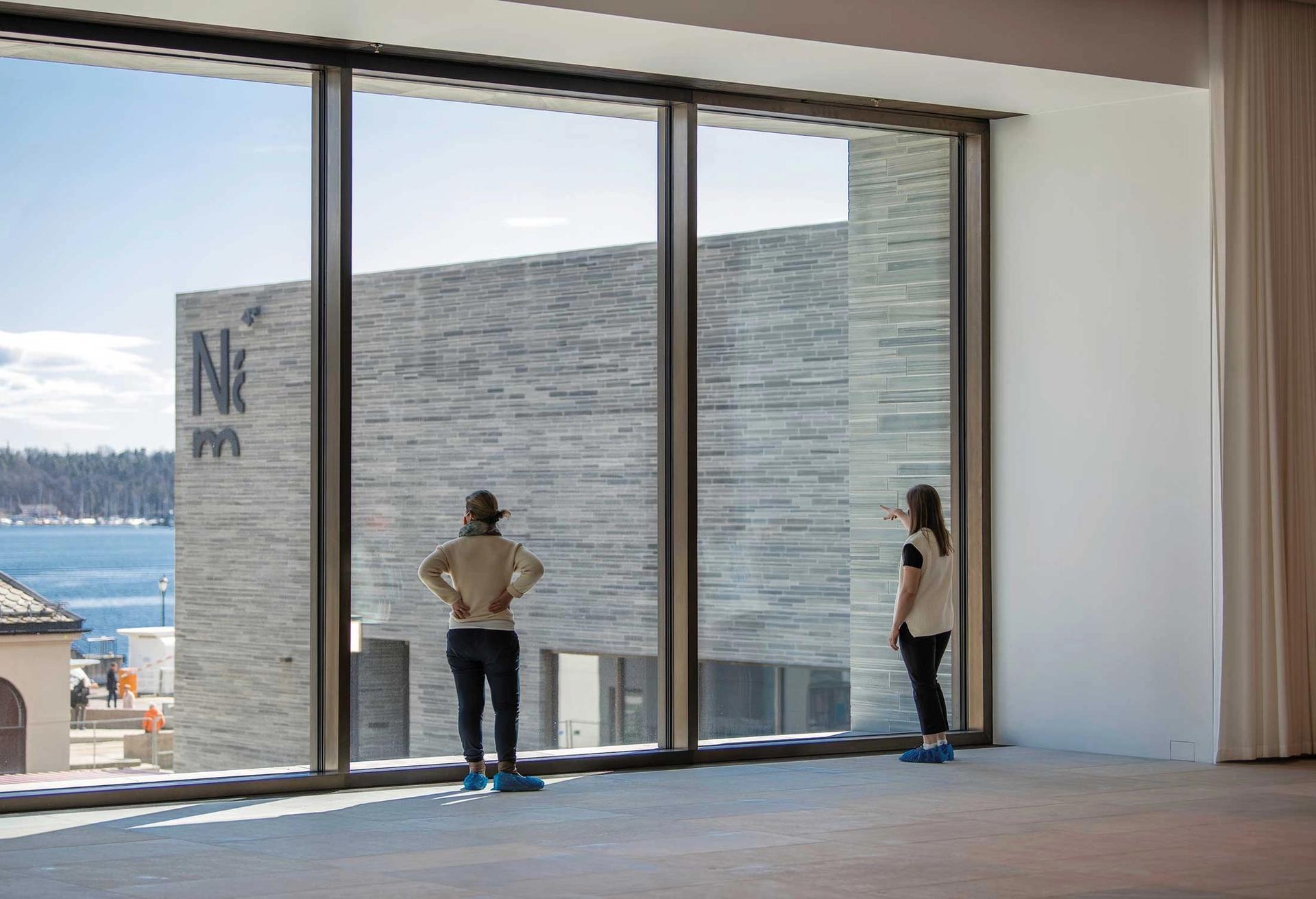
Whereas most of the galleries are windowless or overlook interior courtyards, the Salon on the second floor offers a widescreen view of Oslo’s harbour. It will have a bar serving drinks and light meals and an area for visitors to rest. The back of the space is enlivened by Sol LeWitt’s Wall Drawing #839, donated by the Norwegian financial services company Storebrand. The Salon overlooks the courtyard café created behind the old train station buildings in front of the museum, one of which is now home to the Nobel Peace Center.

Photo: Børre Høstland. Courtesy of the National Museum

The Munch Room

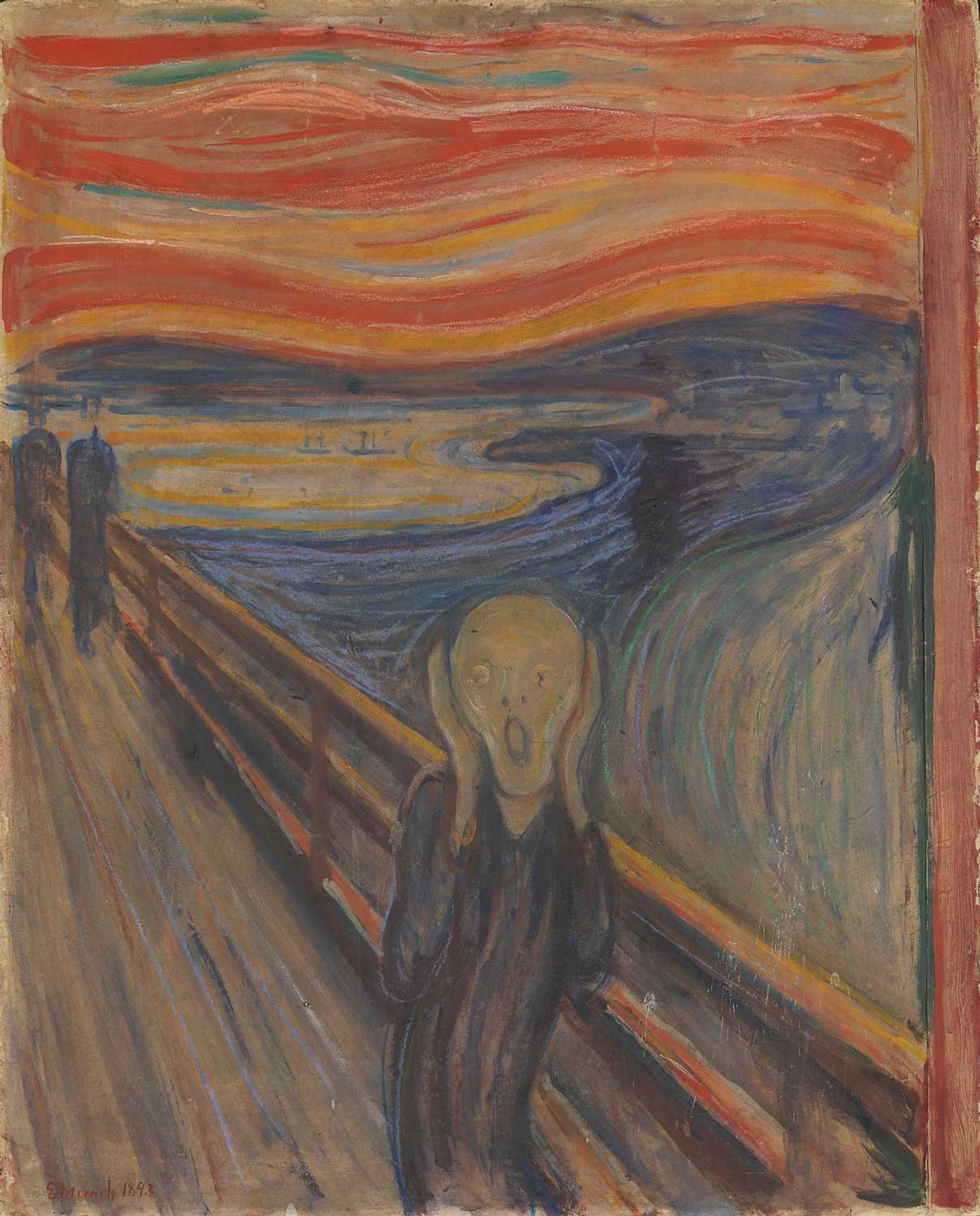
Oslo has been missing one of its defining spaces for over three years. The closure of the old National Gallery in 2019 meant saying goodbye to the room dedicated to the city’s most celebrated artistic son. The new Edvard Munch room evokes the old one. It will have 18 paintings, including The Girls on the Bridge (1901), Self-Portrait with Cigarette (1895), as well as probably the second most famous painting in the world, 1893’s The Scream. Further Munch works can be seen in the corridor outside as well as in the main hang.

• Read more about Norway’s new National Museum here

‘Star Wars’ Art So Beautiful You’ll Want It Hung in a Museum

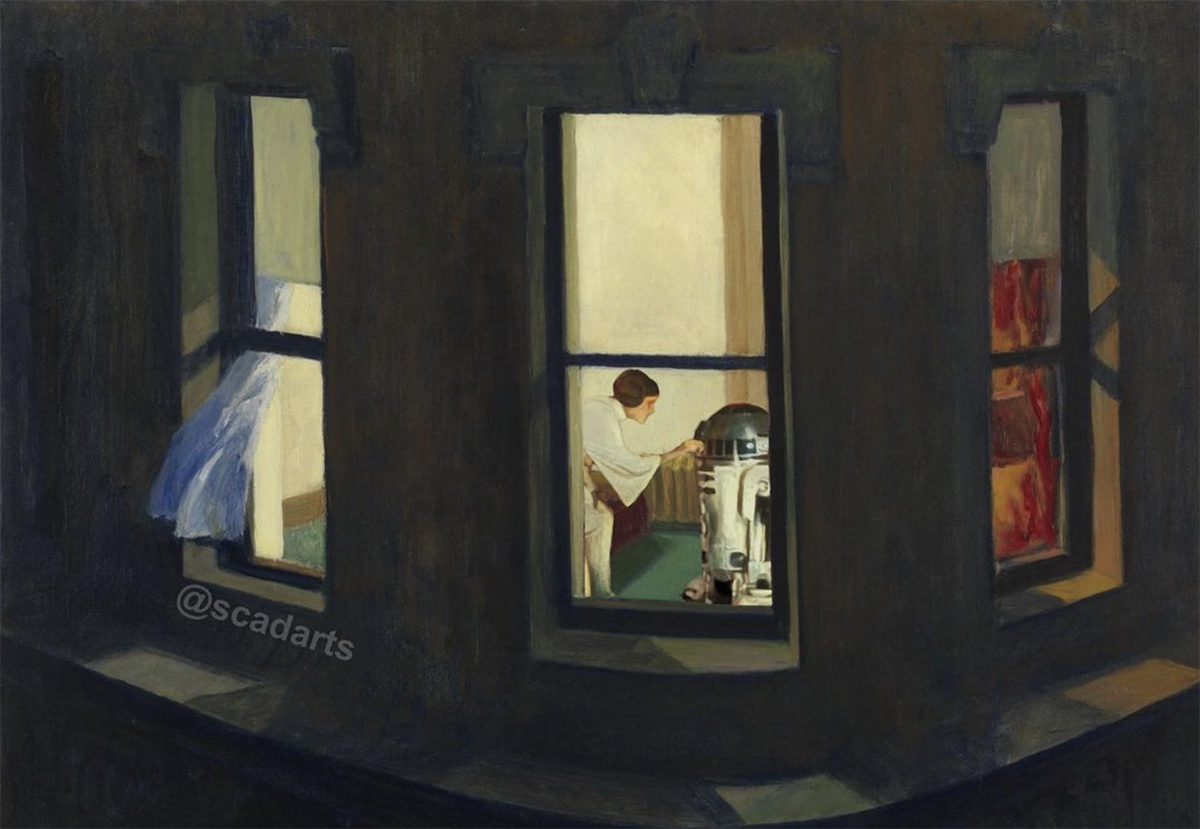
Scadarts art from Instagram

Possessing fandom art in your residence is some thing that can imply a good deal to fans. I know this as somebody who has a whole lot of fan art on my walls, and most of it is portraits of my favorite people. But from time to time, it is really hard to obtain artwork that blends in a very little a lot more seamlessly. Not that it is bad when it is obviously art from a nerdy home, but I am in my thirties in my grownup apartment, so in some cases, I want to look classy. That is where by Scadarts will come in.

Building incredible Star Wars pieces through photoshopping previous paintings, Scadarts posts their parts on Instagram, and you’d believe you were wanting at new installments in a museum show. They’re reminiscent of classic paintings, and you frequently recognize maybe a minor far too late that there is a Star Wars reference in there, and they’re all surprisingly beautiful to seem at.

1 of the parts that immediately drew my notice was Anakin Skywalker and Obi-Wan Kenobi in a piece titled “Une route à Louveciennes” that appears to be like like a typical painting and truthfully is one thing I would have hung in my residence so people today believe I am really classy, only for it to be uncovered that it is a Star Wars piece.

But that is the splendor of Scardarts’ artwork as a whole. All of the items experience like they could be shown in a museum and you wouldn’t assume 2 times about it. Like this piece of Ahsoka Tano and Grogu titled “Sentiment de pensées (emotion thoughts)” that, if it was in the MoMA in New York or even hanging in the Musée d’Orsay in France, I’d be like, “Yeah, checks out.”

The energy of enthusiast artwork

I do not like blank partitions, personally. They drive me a little bit up the wall. So, I like getting my walls lined with points that I know and love, and for me, it indicates possessing a good deal of parts I have picked up at conventions or a person has procured for me—like when our Kaila Hale-Stern bought me a piece which is Tom Holland doing the Umbrella dance. But with that comes a lot of particular design and style, and it can be difficult to uncover items that in shape with your vibe.

What is great about Scadarts’ work is that it is not just traditional items. It is nonetheless incredibly a great deal Star Wars and however has that feel that if you saw their operate hanging in someone’s dwelling, you may not instantly realize how nerdy it is. That staying said, I would instantaneously test to set this in a museum someplace and see how extended it took until a person clocked that it is Star Wars.

Scadarts does other fandoms, as perfectly (with some attractive Oscar Isaac parts that have caught my notice), and their operate is just anything so lovely that it is difficult to select which ones you’d want to cling up in your household mainly because the reply is truthfully all of them. If you haven’t checked out their work but, I really advocate it.

(showcased picture: Scadarts on Instagram)

—The Mary Sue has a rigid remark policy that forbids, but is not constrained to, own insults toward everyone, loathe speech, and trolling.—

Have a tip we should really know? [email protected]