Plant Garden: A Step-by-Step Guide to Growing Your Own Green Space

Introduction

Gardening is more than just a hobby; it’s a rewarding way to connect with nature, relieve stress, and even grow your own food. Whether you’re an experienced gardener or just starting out, planting a garden can provide immense satisfaction and numerous benefits. Let’s dive into the essential steps to create your own thriving plant garden.

Choosing the Right Location

Assessing Sunlight

The first step in gardening is selecting the right location. Most plants require at least 6-8 hours of sunlight each day. Observe your space throughout the day to understand where sunlight falls and for how long. This will help you choose the best spot for your garden.

Soil Quality

Healthy plants start with healthy soil. Test your soil to determine its pH and nutrient levels. Soil should be well-draining yet able to retain moisture. Depending on your soil type, you may need to amend it with organic matter like compost or manure to enhance its fertility.

Accessibility

Ensure your garden is easily accessible for regular maintenance tasks like watering, weeding, and harvesting. Proximity to a water source is also crucial for the health of your plants.

Planning Your Garden Layout

Types of Gardens

Decide on the type of garden you want. Do you prefer a traditional in-ground garden, raised beds, or container gardening? Each type has its own advantages and can suit different spaces and needs.

Spacing and Arrangement

Proper spacing is essential for plant health and productivity. Crowded plants compete for light, water, and nutrients, leading to poor growth. Follow spacing recommendations for each plant type to ensure they have room to thrive.

Companion Planting

Certain plants grow better together. Companion planting can enhance growth, repel pests, and improve soil fertility. For instance, planting basil near tomatoes can help deter pests that often affect tomato plants.

Selecting Plants for Your Garden

Annuals vs. Perennials

Annuals complete their life cycle in one growing season, while perennials return year after year. Decide whether you want to replant each year or have long-lasting plants.

Vegetables, Herbs, and Flowers

A diverse garden can include vegetables for eating, herbs for seasoning, and flowers for beauty and pollinators. Choose plants that suit your taste and garden goals.

Native vs. Exotic Plants

Native plants are adapted to your local climate and soil, often requiring less maintenance. Exotic plants can add variety and unique appeal but may need more care.

Preparing the Soil

Testing Soil pH

Soil pH affects nutrient availability. Most garden plants prefer a pH between 6.0 and 7.0. Test your soil and adjust the pH if necessary using lime to raise it or sulfur to lower it.

Amending the Soil

Add organic matter to improve soil structure, drainage, and nutrient content. Compost, aged manure, and peat moss are excellent amendments that can benefit your garden.

Organic vs. Chemical Fertilizers

Organic fertilizers release nutrients slowly and improve soil health over time, while chemical fertilizers provide immediate nutrient availability. Choose what best suits your gardening philosophy and needs.

Starting from Seeds vs. Transplants

Pros and Cons of Each

Starting from seeds can be cost-effective and offer a wider variety of plants. However, it requires time and patience. Transplants give you a head start but are usually more expensive.

Tips for Seed Starting

Use a seed-starting mix, keep the soil moist but not waterlogged, and provide adequate light. Seedlings need consistent care until they are ready to be transplanted outdoors.

Best Practices for Transplanting

Transplant seedlings when they have a few sets of true leaves. Harden them off by gradually exposing them to outdoor conditions before planting them in the garden.

Planting Your Garden

When to Plant

Timing is critical. Plant after the last frost date in your area to avoid damage to young plants. Some plants can tolerate cooler temperatures, so know the specific needs of your chosen varieties.

Techniques for Different Plants

Different plants have different planting requirements. Root vegetables like carrots need deep, loose soil, while leafy greens like lettuce thrive in cooler weather. Follow specific planting instructions for each type.

Watering Guidelines

Water your plants deeply and less frequently to encourage deep root growth. The best time to water is in the morning to reduce evaporation and help prevent disease.

Caring for Your Plants

Regular Watering Schedule

Establish a regular watering schedule based on your plant’s needs and weather conditions. Most gardens need about 1 inch of water per week.

Mulching Benefits

Mulch helps retain soil moisture, suppress weeds, and regulate soil temperature. Organic mulches like straw, wood chips, and leaves also decompose and improve soil quality.

Fertilizing Schedule

Follow a regular fertilizing schedule to keep your plants nourished. Use balanced fertilizers or those specific to your plant’s needs. Over-fertilizing can harm plants, so be mindful of the amounts.

Dealing with Pests and Diseases

Common Garden Pests

Identify common pests like aphids, caterpillars, and snails. Regularly inspect your plants for signs of pest damage.

Organic Pest Control Methods

Use organic methods like neem oil, insecticidal soap, and beneficial insects (like ladybugs) to control pests without harming the environment.

Recognizing and Treating Plant Diseases

Fungal, bacterial, and viral diseases can affect plant health. Learn to recognize symptoms and treat them promptly with appropriate methods, including removing affected plants and improving air circulation.

Pruning and Maintenance

Why Prune?

Pruning helps remove dead or diseased parts, promotes healthy growth, and shapes the plant. It’s essential for fruit trees, shrubs, and some perennials.

How to Prune Different Plants

Different plants require different pruning techniques. Learn the correct methods for the plants in your garden to avoid damaging them.

General Garden Upkeep

Regular maintenance, including weeding, deadheading flowers, and checking for pests, ensures your garden remains healthy and productive.

Harvesting Your Garden

When to Harvest

Harvest at the peak of ripeness for the best flavor and nutritional value. Each plant has specific signs that indicate it’s ready to be picked.

Techniques for Harvesting Different Plants

Use the right tools and techniques to harvest your plants without damaging them. For example, use scissors for herbs and a knife for large vegetables.

Storing Your Produce

Proper storage extends the shelf life of your produce. Some vegetables and fruits need refrigeration, while others can be stored in a cool, dry place.

Seasonal Gardening Tips

Spring and Summer Gardening

Focus on planting and nurturing your garden during the warmer months. Pay attention to watering needs as temperatures rise.

Fall and Winter Gardening

Prepare your garden for colder weather by planting hardy crops and protecting tender plants. Mulch heavily and consider using row covers.

Extending Your Growing Season

Use techniques like cold frames, greenhouses, and row covers to extend your growing season and protect plants from frost.

Creating a Sustainable Garden

Water Conservation

Implement water-saving techniques like drip irrigation and rainwater harvesting. Mulch and choose drought-tolerant plants to reduce water usage.

Composting

Composting reduces waste and enriches your soil. Compost kitchen scraps, garden waste, and other organic materials to create nutrient-rich compost.

Attracting Pollinators

Plant flowers and shrubs that attract bees, butterflies, and other pollinators. A diverse garden helps maintain a healthy ecosystem.

Common Gardening Mistakes to Avoid

Overwatering

Too much water can drown plant roots and cause diseases. Learn the watering needs of your plants and avoid overwatering.

Planting Too Close

Crowded plants struggle to grow well. Follow spacing guidelines to give each plant room to thrive.

Ignoring Soil Health

Healthy soil is the foundation of a healthy garden. Regularly amend and test your soil to ensure it meets your plants’ needs.

Conclusion

Starting a garden can seem daunting, but with the right knowledge and preparation, anyone can create a beautiful, productive garden. Remember to choose the right location, plan your layout carefully, and select plants that suit your climate and soil. Regular maintenance and care will help your garden thrive, providing you with fresh produce, beautiful flowers, and a rewarding connection to nature.

FAQs

How much sunlight do plants need?

Most plants need at least 6-8 hours of direct sunlight each day to grow well. However, some shade-tolerant plants can thrive with less light.

What are the best plants for beginners?

Beginner-friendly plants include tomatoes, lettuce, basil, marigolds, and zinnias. These plants are relatively easy to grow and maintain.

How often should I water my garden?

Water needs vary by plant and weather conditions, but generally, gardens need about 1 inch of water per week. Check soil moisture regularly to adjust your watering schedule.

Can I garden in a small space?

Yes, container gardening and vertical gardening are excellent options for small spaces. You can grow a variety of plants in pots, hanging baskets, and on trellises.

What should I do if my plants are not growing well?

Check for common issues like pests, diseases, inadequate sunlight, and poor soil quality. Adjust your care routine as needed, and don’t hesitate to seek advice from local gardening experts.

What kind of vines should I plant in my landscaping?

Vines are usually underused and underappreciated in home landscapes. 

This is regrettable mainly because vines can normally fill areas not simple for other landscape vegetation. Vines can deliver a rapid display screen for privacy on your patio, cover unsightly views, and they can be developed on a pergola for rapid shade or as groundcovers where lawns will not.

In little gardens, they excel at including the aspect of peak and when masking and blending a structure with other plantings. Not only are vines helpful but they also deliver attractive bouquets, prosperous foliage and sweet fragrance. In truth, vines may well be one particular of the most flexible plants in the landscape.

U.S. to plant more trees on charred western landscape


BILLINGS (AP) — The Biden administration on Monday announced strategies to replant trees on thousands and thousands of acres of burned and dead woodlands as officers wrestle to counter the increasing toll on the nation’s forests from wildfires, bugs and other manifestations of local climate improve.

Destructive fires in modern yrs that burned too hot for forests to swiftly regrow have significantly outpaced the government’s ability to replant trees. That’s developed a backlog of 4.1 million acres in require of replanting, officers mentioned.

The U.S. Agriculture Section claimed it will have to quadruple the variety of tree seedlings developed by nurseries to get by the backlog and satisfy upcoming requirements. That comes right after Congress previous 12 months passed bipartisan laws directing the Forest Company to plant 1.2 billion trees more than the next 10 years and after President Joe Biden in April purchased the company to make the nation’s forests more resilient as the globe will get hotter.

A lot of the administration’s broader agenda to deal with weather change remains stalled amid disagreement in Congress, wherever Democrats hold a razor-slim vast majority. That’s still left officers to go after a more piecemeal method with incremental measures these kinds of as Monday’s announcement, while the administration considers irrespective of whether to declare a weather crisis that could open up the doorway to extra intense government branch actions.

To erase the backlog of decimated forest acreage, the Forest Provider options around the up coming pair a long time to scale up get the job done from about 60,000 acres replanted past calendar year to about 400,000 acres every year, officials reported. Most of the work will be in western states the place wildfires now manifest yr round.

“Our forests, rural communities, agriculture and economy are related across a shared landscape and their existence is at stake,” Agriculture Secretary Tom Vilsack mentioned in a statement asserting the reforestation prepare. “Only by way of bold, climate-wise steps … can we make certain their upcoming.”

Nearly 5.6 million acres have burned so significantly in the U.S. this 12 months, placing 2022 on rate to match or exceed the history-placing 2015 fire season, when 10.1 million acres (4.1 million hectares) burned. Several forests regenerate naturally after fires, but if the blazes get too powerful they can leave behind barren landscapes that linger for a long time ahead of the trees appear back.

The Forest Assistance this year is investing much more than $100 million on reforestation perform. Paying is expected to additional enhance in coming a long time, to as substantially as $260 million per year, less than the sweeping federal infrastructure bill authorized very last year, company officers stated.

Some timber sector supporters ended up important of final year’s reforesting laws as inadequate to flip the tide on the scale of the wildfire problem. They want additional intense logging to thin stands that have turn out to be overgrown from many years of suppressing fires.

To prevent replanted parts from becoming equally overgrown, practices are modifying so reforested stands are considerably less dense with trees and for that reason less fire vulnerable, stated Joe Fargione, science director for North The us at the Nature Conservancy.

But difficulties to the Forest Service’s goal stay, from obtaining ample seeds to selecting ample personnel to plant them, Fargione explained.

Several seedlings will die before reaching maturity due to drought and bugs, both equally of which can be exacerbated by local climate alter.

“You’ve got obtained to be wise about exactly where you plant,” Fargione mentioned. “There are some sites that the climate has presently transformed plenty of that it tends to make the likelihood of properly reestablishing trees quite small.”

Living trees are a big “sink” for carbon dioxide that is driving local climate transform when it enters the environment, Fargione explained. That indicates changing those that die is important to retain climate modify from getting even worse.

Congress in 1980 developed a reforestation rely on that had beforehand capped funding — which came from tariffs on timber goods — at $30 million on a yearly basis. That was plenty of funds when the most significant will need for reforestation arrived from logging, but has tested way too minor as the range of huge, high depth fires improves, officers explained.

Bugs, illness and timber harvests also lead to the sum of land that desires reforestation get the job done, but the huge bulk will come from fires. In the past 5 many years by itself much more than 5 million acres were seriously burned.

How to create, plant a natural landscape in North Texas

The Sperry backyard landscape has a natural look.

The Sperry yard landscape has a organic look.

Specific to the Star-Telegram

When I sit down to compose my column for the Fort Really worth Star Telegram, I believe initially of the good persons of the lovely metropolis of Fort Really worth and all of its suburbs. That is, immediately after all, the core support region of this historic newspaper.

And then I realize that the paper’s protection place extends scores of miles past to all the establishing counties and metropolitan areas all over. So, I think about these locations and people as nicely.

Finally, I know that there are subscribers hundreds of miles absent in considerably diverse configurations that also get the Star Telegram. I consider about you, as well, but for needs of this story, I’m fine-tuning my imagining to North Central Texas.

With that rather rambling preamble, my subject for right now is “creating a organic landscape.” I hear that motivation several times a week. Folks explain to me that is their target, but when they clearly show me images of what they’d like to accomplish, I’m wanting at points that undoubtedly never search like Fort Worth, its suburbs or the encompassing counties. They really don’t appear natural to our location. They search much more like rocky outcroppings from the mountains of far southwest Texas.

We live in what was the Grand Prairie of Texas. It was large grasslands, a few of which even now exist. They prolonged from the Midwest down into Central Texas quite a great deal along what would turn out to be the I-35 corridor. There were being rolling hillsides interrupted by occasional forests. Rocky outcroppings have been reserved for eroding streambeds where hurrying runoff reduce by means of the black clay to expose levels of limestone.

In essential terms, it was a uncomplicated “natural landscape” that awaited the initially human beings 1,000 years in the past. When I consider to build a “natural landscape” all-around my dwelling, that’s what I’m keeping in brain.

Some points to think about …

My spouse and I have lived on 11 rural acres listed here in the Metroplex for the past 45 many years. These are some of the strategies that I’ve acquired to retain my landscape on the lookout as purely natural as probable.

When planting new shade trees I pick out styles that are indigenous to my place. I want my house to seem like it and the landscape all grew up with each other. The quickest way I can make a landscape appear like it was just introduced in from afar would be to plant matters that do not appear proper for the location. I use stay oaks, Shumard red oaks, Chinquapin oaks and bur oaks, cedar elms, pecans, redbuds, Mexican plums and japanese redcedars.

If I require a privateness screen, I plant jap redcedars, native to our location, on 18- to 20-foot facilities in a zigzag sample so they glimpse like they just happened the natural way. I commence with knee-large seedlings that I transplant in mid-winter season when they are dormant. Nellie R. Stevens hollies can also perform properly, but all over again, on irregular spacings.

I try out not to plant something in straight rows. Character doesn’t do that (other than for hackberry trees planted together a fence row by birds).

Official shearing doesn’t seem natural. I pick plants that increase to the peak and width that I want and then keep there with only occasional trimming to correct erratic advancement. Higher than all, I stay away from remarkably sculpted and “poodled” vegetation.

When setting up berms for privacy, seem deadening or to immediate movement of h2o or wind, I do so with mild swoops of soil. Other than fireplace ant mounds, character doesn’t leave us with globs of soil climbing abruptly out of the earth. The mounds will need to be low and they should taper gently into the surface.

And, when you get all set to landscape your berm, keep that simple, too. Really do not plant tall shrubs or trees down the top rated spines of the berms like you are going to see some people today doing. For a person issue that can make it hard to drinking water the vegetation. All the irrigation operates off.

Second, strictly from the element of seeking your landscape to seem all-natural, you will rarely see large crops increasing atop hills in character. They’re normally down the slopes a bit, exactly where the seeds have washed and gotten caught in a tiny draw. Drinking water was extra considerable there, so the seed sprouted and the plant thrived.

When I’m constructing retaining partitions or bringing in boulders or river rock, I try out to match what exists in my area. I’m in an region exactly where limestone is predominant, so I’m not as fascinated in purchasing orange/purple stone that will be prominently noticeable in my backyard structure. It just would not search like it belonged there.

My wife and I dwell in a pecan/purple oak forest. It was that way when we acquired our home in 1971, and the trees have just gotten bigger in the 50 many years since. Having said that, I’ve also learned an vital lesson during that time. Some of the old trees have died or turn into weakened. We have had to choose all those trees out. If I (or my ancestors) were being to continue on on this existing pattern for a further 50 several years, our home would be headed back again towards becoming a grassland. You have to have some young trees coming along in the forest. When you have a landscape, too often you’re fast paced thinking about pulling all the weeds, tree seedlings bundled. So, that all-natural appear also incorporates reforestation.

You can listen to Neil Sperry on KLIF 570AM on Saturday afternoons 1-3 p.m. and on WBAP 820AM Sunday mornings 8-10 a.m. Be a part of him at www.neilsperry.com and abide by him on Facebook.

Related stories from Fort Really worth Star-Telegram

Interior design student helps plant shop owner grow new business | WMU News

Contact: Erin Flynn
A portrait of Matt Collins in the MJ Home store.

Matt Collins, an interior design student from Mendon, Michigan, was lead designer for the new MJ Home store in downtown Kalamazoo.

KALAMAZOO, Mich.—A new business has sprouted up in downtown Kalamazoo, and a Western Michigan University student helped to cultivate its aesthetic.

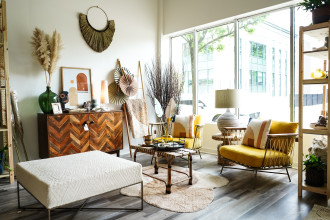
“We want people to come in and feel peaceful and take a moment to breathe and relax, and to just really… feel warm and cozy,” says Dianna Nance, owner of the new boutique home store MJ Home—sister store to Mason Jar Plant Shop. She tapped Matt Collins, a first-year interior design student, to help her make that vision a reality.

The seeds of the partnership were planted on social media. Collins worked in a restaurant next door to the plant shop and would often wander over on his breaks.

A display in a home furnishings store.

Collins designed displays to make shoppers feel at home.

“It was my little escape to go in there and be surrounded by all the plants,” he says. One day he bought a plant and posted a picture of it on Instagram. “Dianna noticed it and said, ‘I really like your living space, your style, how you stage things. I’m looking to open up a furniture and home decor shop, and I noticed you’re an interior design student. I was wondering if you could help me design a concept for it.'”

Collins cracked open his textbooks and got to work, inspired by bohemian style. He also tapped into some of his connections from class and contacted two designers in Sweden to go over his ideas. Everything from color schemes to customer circulation and customer movement played a part in his design.

“He’s brought a lot to the store,” says Nance. “He’s been great to work with, and he actually helped from the beginning with installing flooring and painting, all of that.”

Collins had the chance to see his work pay off at the shop’s grand opening June 1.

“When I see the reactions and how people interact with the space, something I created and helped create as a team, I love that. I feed off of that.”

Nance even gave Collins space around the shop to show off his design sketches during Art Hop, a monthly event where downtown businesses display local artwork.

Design sketches laid out on a table.

Nance displayed some of Collins’ sketches throughout the shop.

“I think (Western’s program) is amazing, and I’m hopeful that this really is beneficial to not only him but the whole organization,” Nance says. “I was in health care for 25 years, and I would hire people and say, ‘I want you to build your resume here. I want you to do what it’s going to take to get you to that next level. I hope that this is something that helps him along that journey and maybe will help others as well.”

DESIGNING A FULFILLING FUTURE

Collins is a creative at heart.

“Growing up, interior design is something I was always involved in. In high school I would doodle in my notebook floor plans for my dream house, and I didn’t know at the time that was a schematic design and part of the design process,” he says. “My brother and my dad are very hands-on, mechanically and building. I was always in the background observing.”

He wasn’t sure how that passion might translate into a career, however, and initially enrolled at Western as an education major. It was a logical fit—Collins had done some substitute teaching—but as he took classes, he still felt something was missing. A conversation with Dr. Suzan Smith-Ayers, chair of the Department of Family and Consumer Sciences, illuminated a new path forward.

“We were talking about commitments in class, and it didn’t seem fair to my future students that I’m not 100{6d6906d986cb38e604952ede6d65f3d49470e23f1a526661621333fa74363c48} into it,” Collins says. Smith-Ayers mentioned the interior design program, which was also part of her department. “I always had that ‘what if.’ What if I never pursued (this passion)? And I decided to take a leap of faith, saying, ‘I’ve got to do this.’ And I have not looked back since. It never feels like a chore to study or anything. I would do it all day long if I could. I just love it.”

The opportunity to design for MJ Home has only solidified his chosen path.

“To be in my first year in a design program and then have this project, it really did open my eyes. These are real experiences, real opportunities that are going to have a tremendous impact when it comes time to find career options,” says Collins.

“I’m so appreciative of my professors—Mary Beth Janssen, Kim Buchholz, Dr. Ayers—for being extremely supportive, as well as some of the talented students in the design program who I’ve gotten to know. They all add to this journey of growth with my career path and education. And I’m especially appreciative of Dianna for allowing me to do this, because it really feels like I can feel, think and see clearly what’s ahead.”

For more WMU news, arts and events, visit WMU News online.

Save Water, Plant Native! | Natural World | Bend | The Source Weekly

Water—or absence thereof—is a scorching subject matter these days. In accordance to the newest Oregon Local climate Assessment, extra than one particular-third of Oregon has been in a drought for the very last 20 a long time, and we usually are not likely to return to what we all think of as “usual” drinking water circumstances. The condition in Central Oregon is specially dire for farmers, ranchers and individuals who count on h2o for their livelihoods. Due to the fact we are not able to maintain hoping for rain or epic snow several years to modify the problem, we all require to adapt to the new standard of a warming world, which means way much less drinking water than we all had 50 yrs in the past. So, what is actually the ordinary particular person to do to assist? Conserve and adapt your individual h2o use to help our cherished, constrained offer go further more.

simply click to enlarge
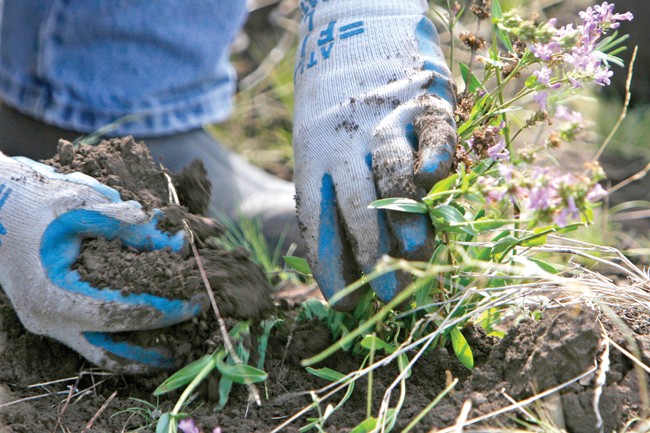
&#13 Amanda Egerston loads up a truck with native milkweed plants. Below, Clyde Dildine digs at a volunteer planting party at Camp Polk Meadow Preserve. - COURTESY DESCHUTES LAND TRUST&#13

    &#13 &#13 &#13 &#13 &#13

  • &#13 &#13 Courtesy Deschutes Land Trust&#13 &#13
  • &#13 &#13 &#13 &#13 &#13 &#13

  • &#13 Amanda Egerston hundreds up a truck with indigenous milkweed crops. Underneath, Clyde Dildine digs at a volunteer planting social gathering at Camp Polk Meadow Maintain.&#13
  • &#13 &#13 &#13 &#13 &#13

There are massive means on-line for how to audit and lower your h2o use close to your residence, indoors and out. Examine out your regional metropolis or water provider’s web page as perfectly, and dig in and dedicate to cutting your water use by transitioning your residence indoors—the Environmental Security Company estimates that 70{6d6906d986cb38e604952ede6d65f3d49470e23f1a526661621333fa74363c48} of our h2o use is indoors!

Outside water use is around 30{6d6906d986cb38e604952ede6d65f3d49470e23f1a526661621333fa74363c48} of our overall use. Having said that, the EPA cautions that use “can be substantially increased in drier elements of the country… the arid West has some of the best per capita household drinking water use because of landscape irrigation.” In Central Oregon, the City of Bend and OSU Extension have many outstanding publications about gardening/landscaping with considerably less h2o, but another way to help you save h2o in Central Oregon (the arid West!) and with that h2o-hungry landscaping, is to transition your lawn or gardens to native crops.

Indigenous vegetation are adapted to a high desert environment, and will need less drinking water to expand and thrive. They occur in all styles, sizes and colors and planting them instead of nonnative shrubs and perennials will conserve drinking water for folks and nature. As an added gain, planting native also will help gain community pollinators like bees, butterflies and bats, and can offer habitat for local wildlife as effectively. Native plants, bugs and animals need to have all the assist they can get as our local climate carries on to warm and alter!

Once more, there is no lack of on line methods for planting indigenous. For illustration, you can get rid of you in the rabbit hole of Doug Tallamy’s web page about turning your yard or garden into wildlife habitat. In Central Oregon, Oregon Point out College Extension has indigenous plant lists and we are blessed to have numerous native plant nurseries. Nonetheless, in some cases there is so a great deal facts it can be too much to handle. The Deschutes Land Believe in has a basic listing of 11 pollinator crops to develop to get you began with hyperlinks to additional natives that provide coloration and nectar all year prolonged.

click to enlarge
&#13 CREDIT JAY MATHER&#13

The nagging problem may perhaps be, how to get begun? In which do you rip out that garden 1st? About the years, the Deschutes Land Trust has planted hundreds of thousands of native vegetation at our secured lands (and a lot of in our home gardens!) and we have created some guidelines and tricks to supporting native crops thrive. Site is initially! Start off tiny, and obtain a sunny location in your backyard garden. Several of our indigenous plants (such as wildflowers) enjoy the solar! It will not have to be full sun, but your vegetation will be happiest if they have a good amount of money of sunshine (4-8 hours every single day, dependent on power of the sunlight). If you you should not have sunshine, glance for native crops that are shade tolerant or mature in wetter areas, but beware some will want additional water in your landscaping.

When planting non-native crops and veggies, you hear a large amount about enhancing your soil considering the fact that Central Oregon soil is generally sandy and not extremely nutrient abundant. Luckily for us, given that native vegetation are tailored to our soils, you don’t have to amend your soil. You must consider, nonetheless, when you will plant. We all get itchy to yard in the spring, but take into consideration planting your natives in the tumble. The Land Believe in crops all of our indigenous vegetation in the drop to acquire gain of cooler temperatures and organic humidity that comes over the winter. Drop planting, among other reasons, allows natives to focus on increasing roots and finding recognized in advance of incredibly hot summer time weather arrives.

When you do plant, give your natives house in your backyard garden. It really is tempting to shove them all alongside one another to seem additional sturdy, but young native plants don’t like competitors from other vegetation when they are starting out. The exact same goes for weeds! Preserve your indigenous plant backyard garden weed totally free to assistance give individuals natives a chance to get proven. If you are planting native milkweed to support the monarch butterfly, system on offering this plant even more house! Milkweed spreads underground by using rhizomes and you don’t want to fight it later. Give it the area it needs to generate balanced monarch butterfly habitat.

Last but not least, are inclined your garden. Native vegetation (even drought tolerant types) will require watering in get to set up their roots. This can at times acquire two to three decades, but be watchful of in excess of-watering: it is quite straightforward to give indigenous crops too significantly water. Once your vegetation are recognized, they will not likely need to have as significantly h2o and should thrive in our Central Oregon climate encouraging lower your overall domestic drinking water use.