Photographer Adam Eaton spotlights beauty | Revel in the Details

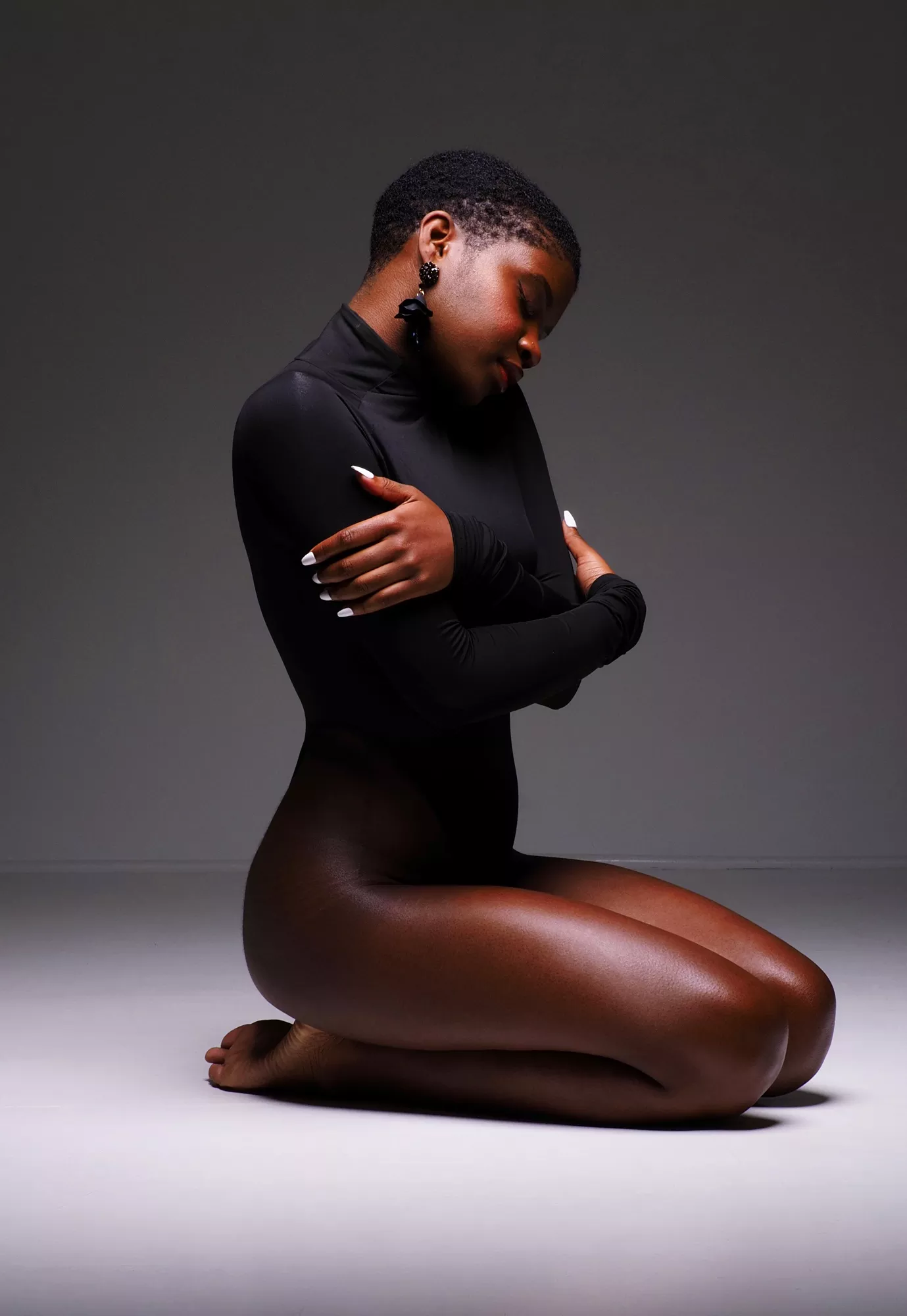
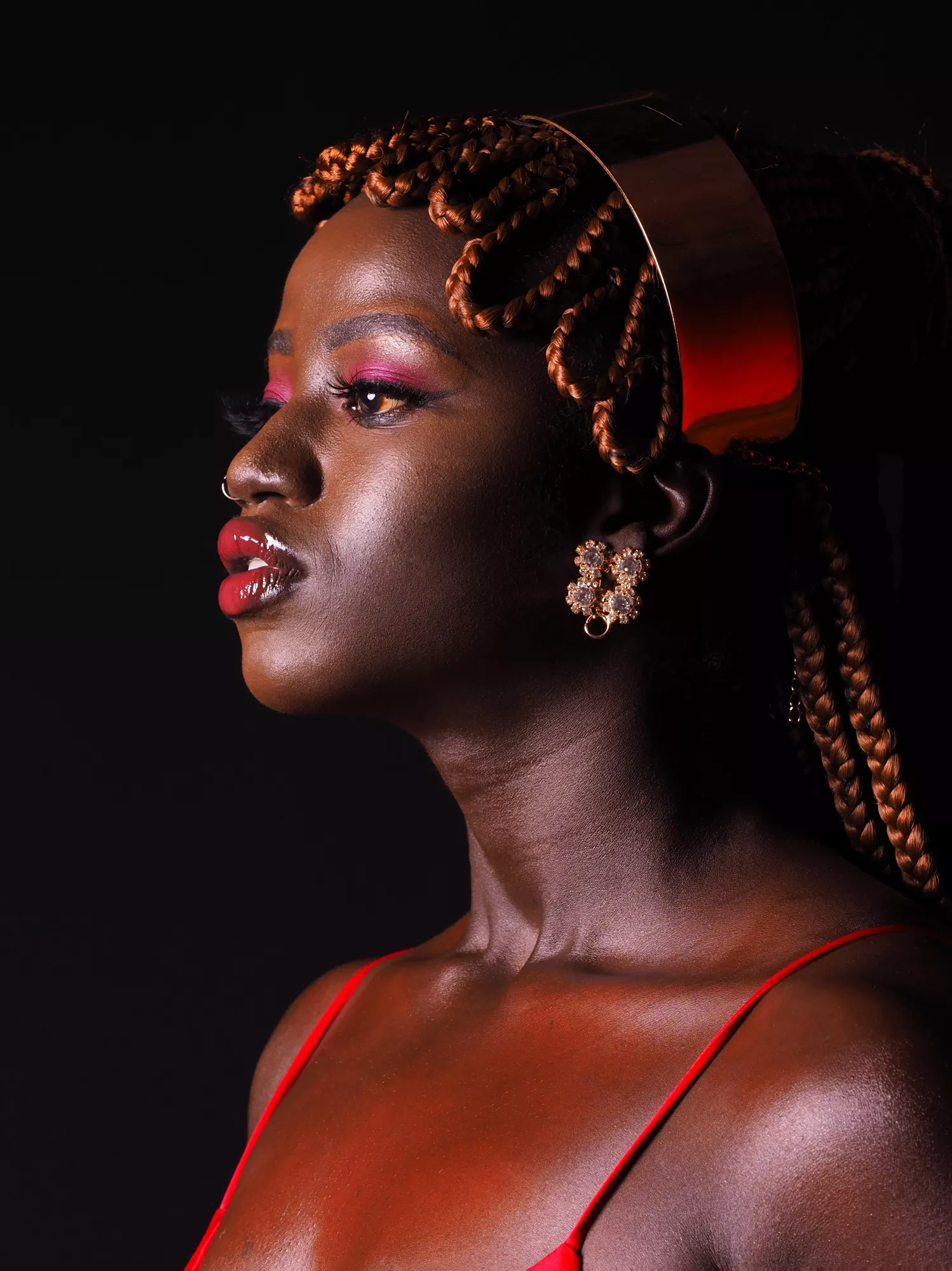
Adam Eaton is focused on spotlighting beauty. This drive is present in his photography, which is largely portraiture that draws on fashion influences, and emphasizes the rich radiance of people of color — and specifically the diversity of his own community. In Eaton’s images, which range from headshots to moody poses, his subjects confront the viewer with steady, confident gazes, or look away with inward expressions, arms wrapped gracefully around themselves.

“I see the beauty of people that maybe they don’t recognize, or maybe the society that we live in discriminates against, because the beauty standards of the world are leaning towards white people,” Eaton said. “Black people, our communities don’t feel that they are as beautiful as they truly are, because of our culture. I think that’s what I like about portraiture — I can make people feel beautiful.”
click to enlarge
Adam Eaton's work is about uplifting Black beauty and sense of self. Image from his "Black is Beautiful" series, 2021-22. - PHOTO BY ADAM EATON

  • PHOTO BY ADAM EATON
  • Adam Eaton’s work is about uplifting Black beauty and sense of self. Image from his “Black is Beautiful” series, 2021-22.

His work has gained the attention and respect of other local photographers and art patrons alike, and has earned him collaborations with organizations such as Geva Theatre (for an audioplay festival) and a solo show in the studio of prominent photographer Richard Margolis.

But Eaton wants to share the spotlight with other creatives of color, and he’s using his connections to gather resources and opportunities for those who don’t have access to either.

“Many of my artist friends were letting me know how difficult it was to be an artist in Rochester, a full-time working artist,” Eaton said. “And in the past few years, I’ve learned that artists need connections to opportunities or resources to be able to be successful.”

While there are opportunities, he said, many artists of color aren’t in the circles of people who are offering them or even discussing them.

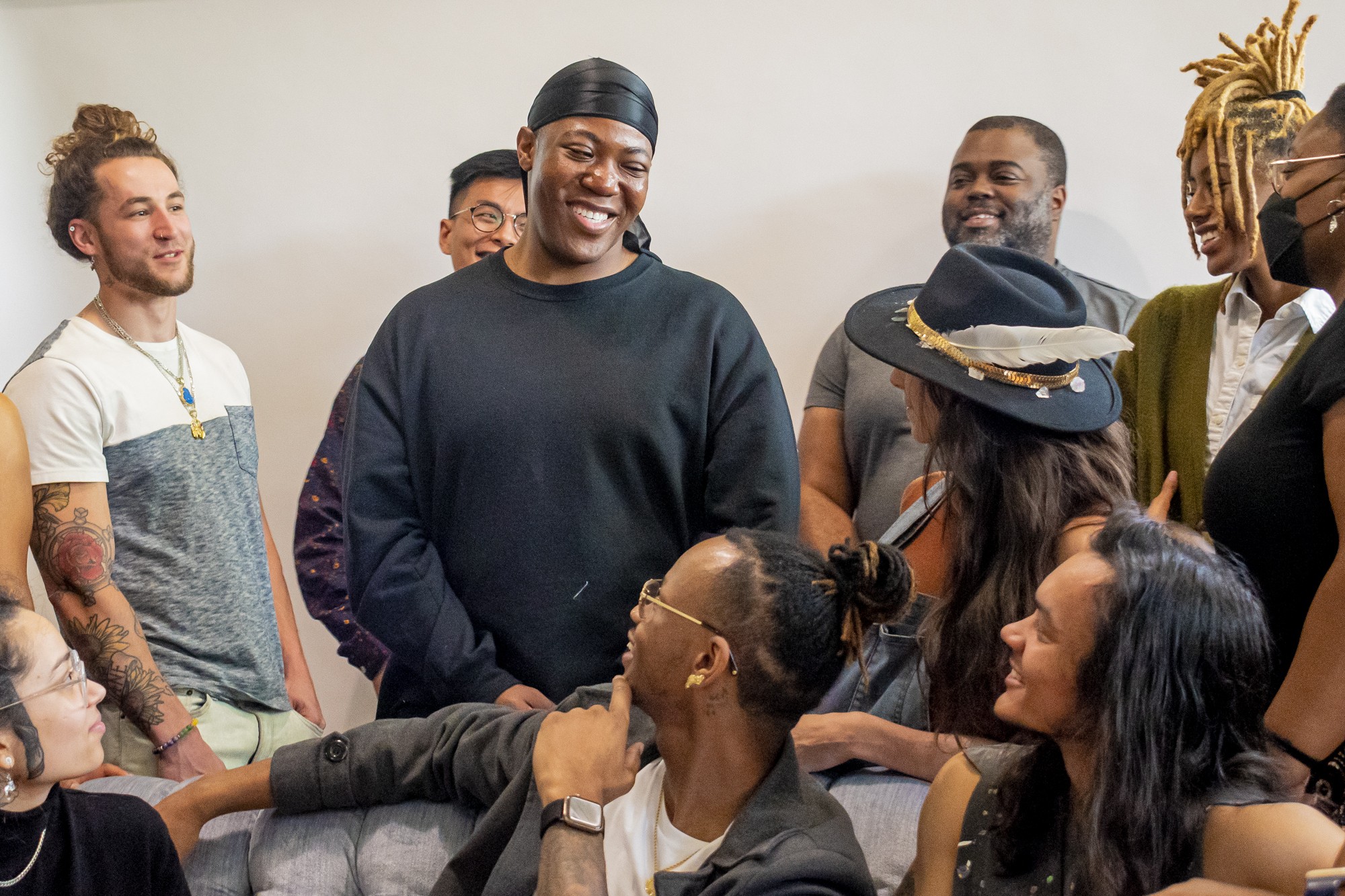
That’s why he founded the Rochester Artist Collaborative in 2019. In addition to Eaton, who is the director, RAC is run by studio assistants Rajae Barnes-Wright and Zayan Garba, as well as Christopher Harris, who handles the accounting. The group provides hundreds of local artists with information about artist opportunities such as grants, residencies, and job postings through a regular newsletter, and access to donated art supplies like canvases, paint, and drawing materials. Members who are photographers or videographers can access a shared workspace in the Anderson Arts Building in the Neighborhood of the Arts.
click to enlarge
Adam Eaton, center, surrounded by members of Rochester Artist Collaborative, an organization he founded in 2019 to help artists of color find work. - PHOTO BY JACOB WALSH

  • PHOTO BY JACOB WALSH
  • Adam Eaton, center, surrounded by members of Rochester Artist Collaborative, an organization he founded in 2019 to help artists of color find work.

The space, called the Creators Lab Photo Studio, is about 800 square feet with both good natural light and photo studio lighting, soft boxes, stools, props, and backdrops. Photographers need only bring their clients and their cameras.

The Creators Lab also has a program for artists to receive one-to-one tutorials on lighting with local experts in studio photography, including photographer Luke LaPorta.

“My job as director is to be able to find people who are interested in supporting local artists and also funding these opportunities,” Eaton said. “That’s a big part of what I do with my personal art — it seems like the community connects with me as a photographer. So I use whatever influence I can garner from that to be able to help other artists in the community.”
click to enlarge
Eaton's imagery emphasizes the warm radiance of people of color. Image from his "Black is Beautiful" series, 2021-22. - PHOTO BY ADAM EATON

  • PHOTO BY ADAM EATON
  • Eaton’s imagery emphasizes the warm radiance of people of color. Image from his “Black is Beautiful” series, 2021-22.

Eaton said a private donor has pledged to give $200,000 to the Creators Lab, which he said will pay employee salaries and fund equipment, scholarships, and micro grants for local artists.

By Eaton’s count, there are currently 20 Rochester Art Collaborative members that use the studio, most of whom pay $250 a month for the privilege. Five artists are supported through a scholarship provided by local advertising agency Helen & Gertrude, which has donated nearly $15,000 to the collaborative in the past year specifically to boost women artists of color.

“We’re working on getting fully funded so that all the artists that want to use this space can use it for free, or for an even more reduced cost,” Eaton said.

Photographer Jackie McGriff, 33, is a portrait photographer who received a scholarship.

“Having access to that studio has allowed me to do work that I’m not able to do anywhere else,” she said, citing the problems with Rochester’s unpredictable weather, and the benefit of having a professional space to bring clients.

She said that on-site resources like equipment and books on posing models, and opportunities for grants and classes are also benefits of the space.

click to enlarge
A family portrait from Adam Eaton's "Black is Beautiful" series, 2021-22. - PHOTO BY ADAM EATON

  • PHOTO BY ADAM EATON
  • A family portrait from Adam Eaton’s “Black is Beautiful” series, 2021-22.

McGriff feels that efforts like Eaton’s to assuage racial inequity are necessary.

“As far as the photography industry goes, I’ll just say it plainly, there’s a lot of white faces, there’s not a whole lot of diversity in terms of who we shine lights on,” she said, adding that disparity ranges from hiring practices and pay rates for professionals of different races to access to space, resources, exposure, and connections to opportunities.

click to enlarge
An image from Adam Eaton's "Black is Beautiful" series, 2021-22. - PHOTO BY ADAM EATON

  • PHOTO BY ADAM EATON
  • An image from Adam Eaton’s “Black is Beautiful” series, 2021-22.

Eaton is nothing if not driven. He talks of one day opening an art center with multiple studios for all types of artists.

Looking over his portfolio of work, which includes a 2021 set of portraits titled “Black is Beautiful,” it’s hard to believe that the 29-year-old artist began creating photographs just three years ago.

Eaton grew up on Lenox Street, off Genesee Street, and attended high school in Penfield through the Urban-Suburban program.

“My mom thought that would be a big priority because of the disarray at the Rochester City School District,” he said. “And I really believe that did help me — Penfield had a great art program.”

He attended Monroe Community College and studied the liberal arts, but withdrew short of a degree due to anxiety and depression.
click to enlarge
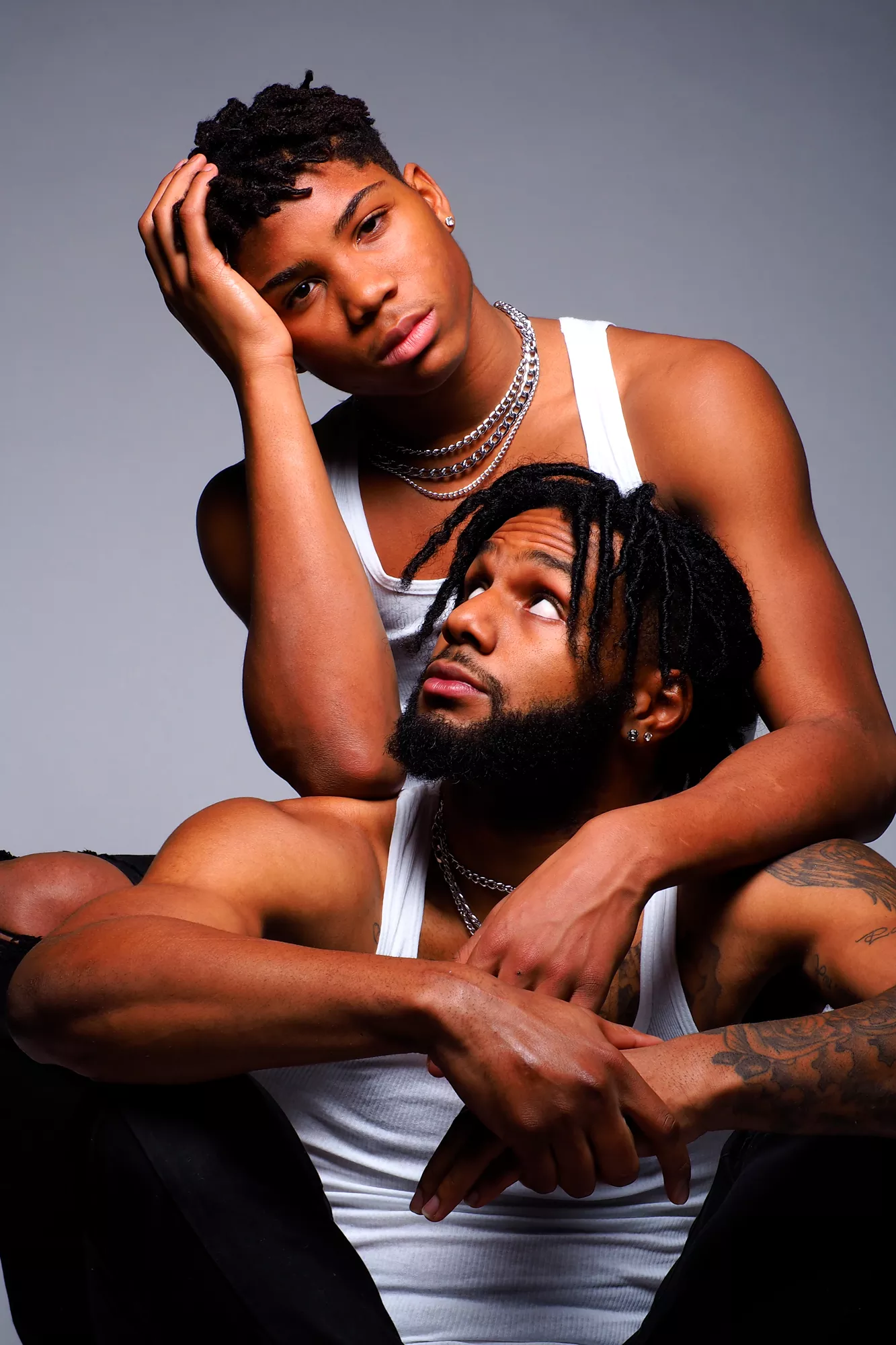
In his 2021-22 series, "Black is Beautiful," Adam Eaton represents the diversity of Black identity and beauty in his community. - PHOTO BY ADAM EATON

  • PHOTO BY ADAM EATON
  • In his 2021-22 series, “Black is Beautiful,” Adam Eaton represents the diversity of Black identity and beauty in his community.

“I never necessarily wanted to become an artist,” he said. “But for years, I dealt with this depression, and anxiety, and just feeling hopelessness, some suicidal ideas. Because for a long time, I really felt that Rochester was really small. I think because of the racism and discrimination in the community, you feel kind of isolated, like the city is not for you.”

He found motivation in his despair. He said he began to think seriously in 2019 about how good making art made him feel, and decided to start something with the tools available to him. He began creating photos of his friends with his iPhone and posting them to social media.

“People started telling me how much they liked what I was creating,” he said.

Shortly thereafter, he received a professional camera from a supporter as a gift, and photographer Scott Hamilton taught Eaton about studio lighting and how to control light.

“It’s been great to be on that journey with the community and be connecting with different people,” Eaton said. “Without the community and the connection it would not have been possible for me to be an artist.”
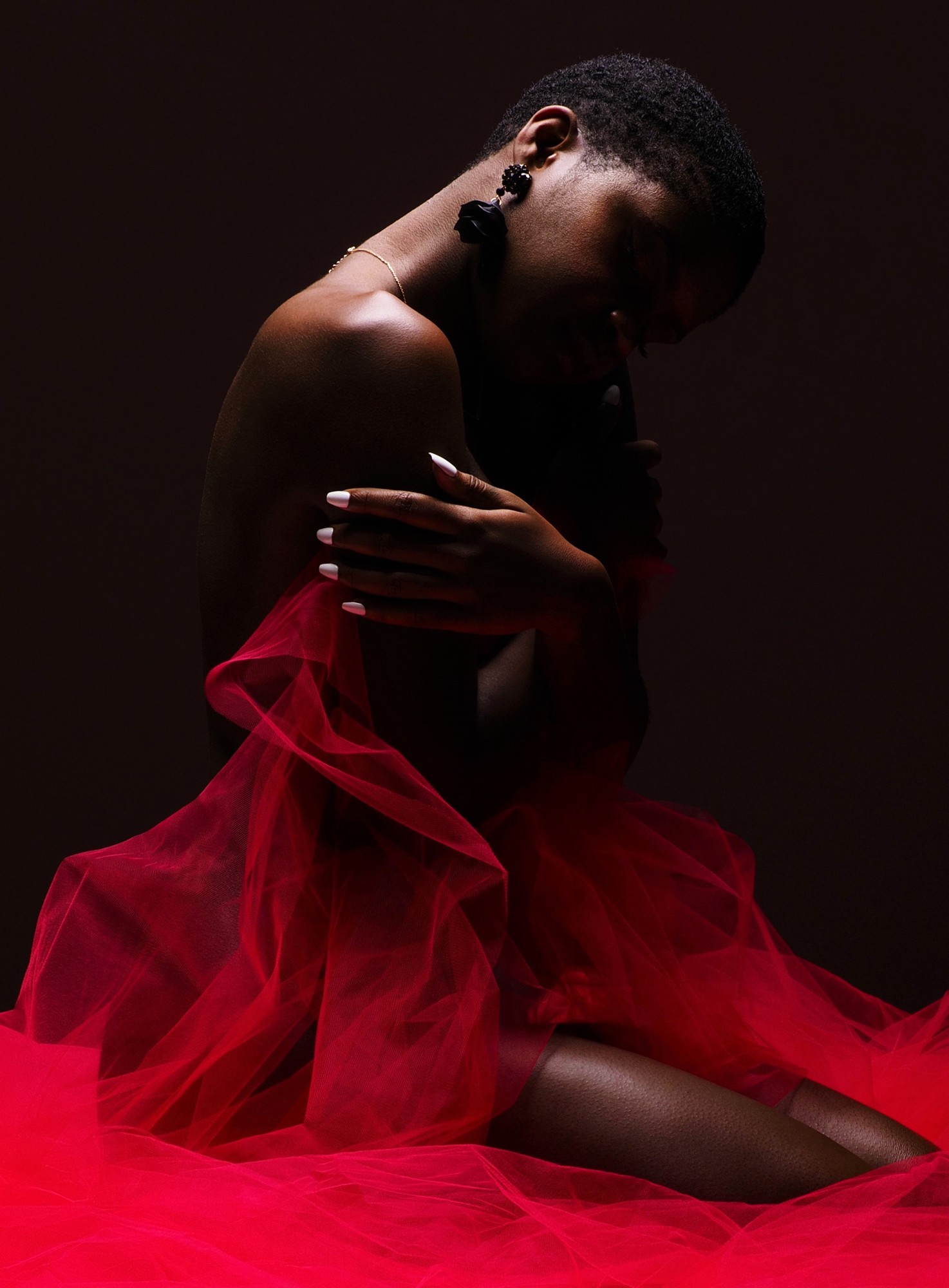
click to enlarge
Adam Eaton's photographic portraits draw from fashion influences. Image from his "Black is Beautiful" series, 2021-22. - PHOTO BY ADAM EATON

  • PHOTO BY ADAM EATON
  • Adam Eaton’s photographic portraits draw from fashion influences. Image from his “Black is Beautiful” series, 2021-22.

Eaton is gentle and thoughtful in his demeanor, but he is also frank about the problems he is doing his best to offset.

“Rochester has been notoriously. . . just racist,” he said.

He added that it’s what he sees as casual racism that impacts people the most, like Black artists and young creatives in underserved neighborhoods being overlooked for jobs and other opportunities.

But he has also seen and experienced the good in people, and takes that just as seriously. An unflappable hope is a prominent part of Eaton’s character.

“Lots of people are connecting with us,” he said. “And we’re just trying to grow the awareness to give all artists of all scopes and all mediums the opportunity to be able to have access to those resources.”

Learn more at adameaton.com and rochesterartistcollaborative.com.

Rebecca Rafferty is CITY’s life editor. She can be reached at becca@rochester-citynews.com.

click image
champion-story-banner.gif

Meet 3 Contemporary Artists Who Use Innovative Techniques to Revel in the Beauty of Black Hair

Black hair is—and has constantly operated as—a sort of identity. In early African cultures, hairstyles signified a person’s tribe, social standing, or spouse and children history. On the other hand, the pernicious consequences of colonialism later on shifted how Black hair was considered. In the new hierarchy that emerged, European attributes had been valued and kinky hair and coils were being ridiculed.

For centuries, unfavorable perceptions related with normal hair compelled Black people today to modify their hair to conform to a white the greater part as a type of survival. Altering their all-natural hair texture served Black people move by means of modern society much more effortlessly underneath the white gaze a straight and smooth glimpse aided in social mobility and position safety. It wasn’t until the 1960s and ’70s, when the Black Power motion emerged, that Black persons began to reclaim their dropped heritage and publicly rejoice their magnificence.

In excess of the decades, artists have identified inspiration in Black hair—from Lorna Simpson’s “Wigs” sequence to Nigerian photographer J.D. ’Okhai Ojeikere’s documentation of intricate, sculptural braids up to Zanele Muholi’s celebratory portraits. The a few contemporary practitioners profiled below—all with family ties to the crucial traditions of barbering and magnificence salons—are similarly utilizing form, sort, and texture to amplify the natural beauty of Black hair unaltered.

Through an era when benchmarks of gown are shifting, the definition of professionalism is being debated, and procedures on purely natural hair are remaining regulated, the function these young artists are creating is even more well timed and essential.


Shaina McCoy

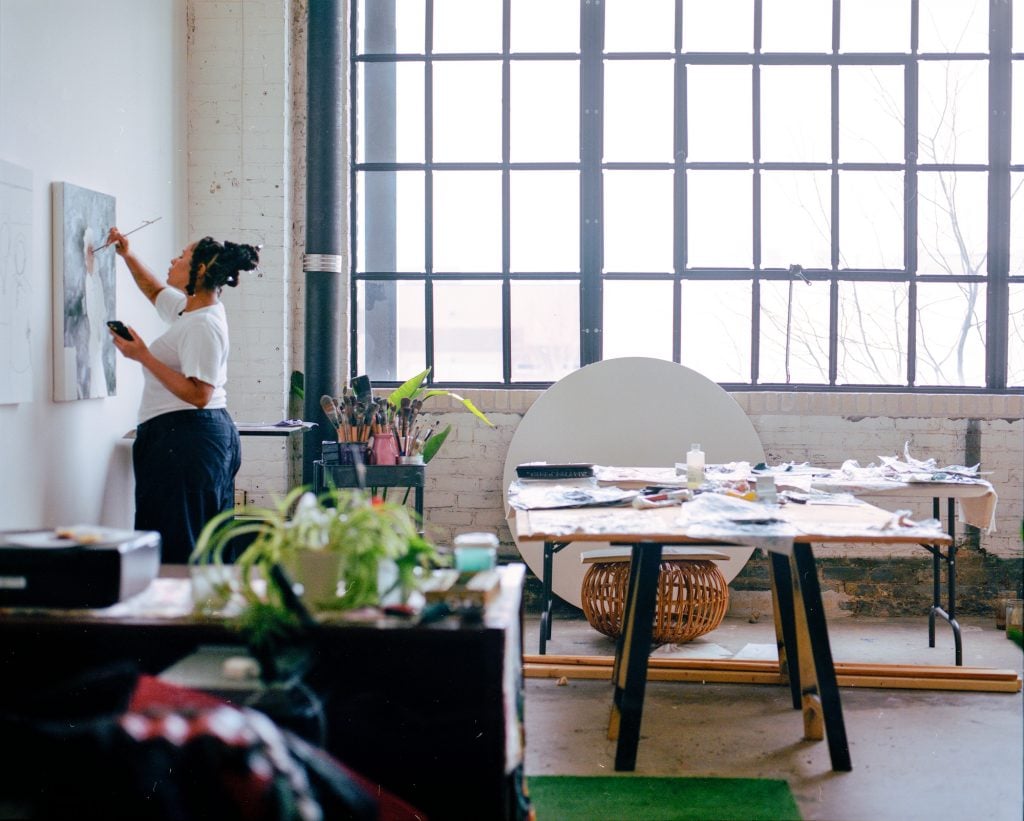
Shaina McCoy in her studio. Courtesy of the artist.

Shaina McCoy in her studio. Picture: Fadumo Ali. Courtesy of the artist.

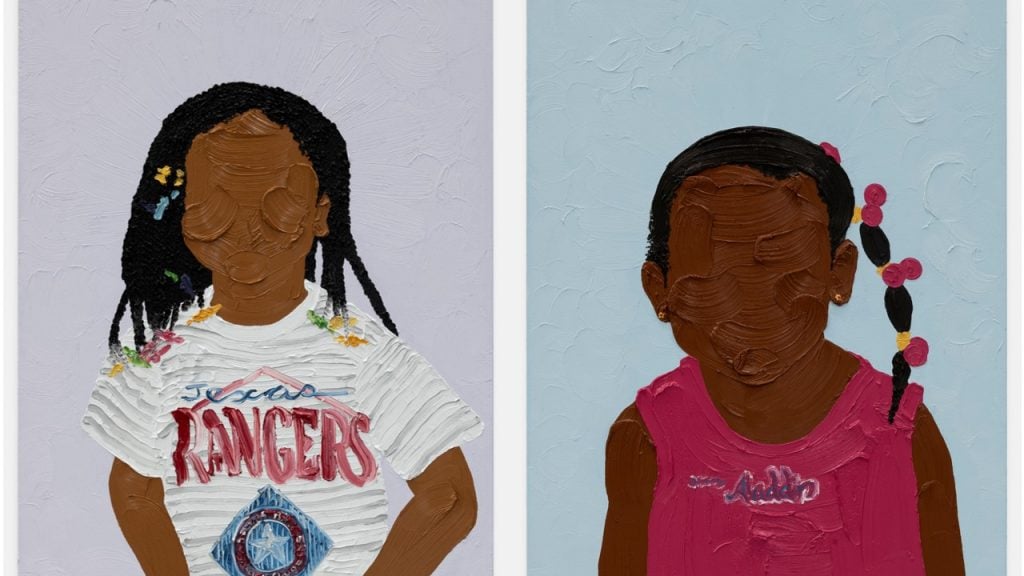
Minneapolis-primarily based figurative painter Shaina McCoy (b.1993) operates predominantly in oils to emphasize the importance of each day people today in her local community. Her signature faceless figures drive you to pay out awareness to the functions and setting in her portraits to fully grasp her subjects in their entirety. Referencing her family’s old photographs, the self-taught artist makes use of a wide variety of supplies these kinds of as paintbrushes or toothpicks to build layered, texturized surfaces. In her series “B is For” (2021), McCoy captures the essence of Black girlhood by concentrating on regular hairstyles. Bobbles, barrettes, and bows—“B” is for the little hair components that universally resonate in Black American households. By way of iconography and coloration palette, McCoy is capable to translate a emotion of nostalgia by recreating people acquainted appears to be. McCoy informed Artnet Information in a the latest job interview, “Hairstyles let us to be ourselves and have the individuality to embrace our beauty—because for so lots of yrs we have been explained to that we couldn’t.”

Shaina McCoy, <i>Tesha</i> (2021) and <i>Bobbles</i> (2021), from the "B is For" series. Courtesy of the artist.

Shaina McCoy, Tesha (2021) and Bobbles (2021), from the “B is For” sequence. Courtesy of the artist.

Barbershops and hair salons have customarily played a large part in Black culture past strictly grooming and actual physical repairs. McCoy’s father worked as a barber, and she recollects how impactful the barbershop’s perception of neighborhood and household was to her through her younger many years. To spotlight that existence stage, McCoy said, “This was a excellent sequence to place out there, since it is a popular tale that I can re-share with the entire world, between Black ladies. It’s essential to build a series like this, to have mirrors, so I can mirror the moments and replicate the folks. I never want our folks to be erased. I want folks to know that we’re right here and we’re not going wherever.” McCoy is now making ready for her fourth solo exhibition, “Cadillac4,” at Galeria Duarte Sequeira in Braga, Portugal, opening April 9.


Ashanté Kindle

Ashanté Kindle in her studio. Courtesy of the artist.

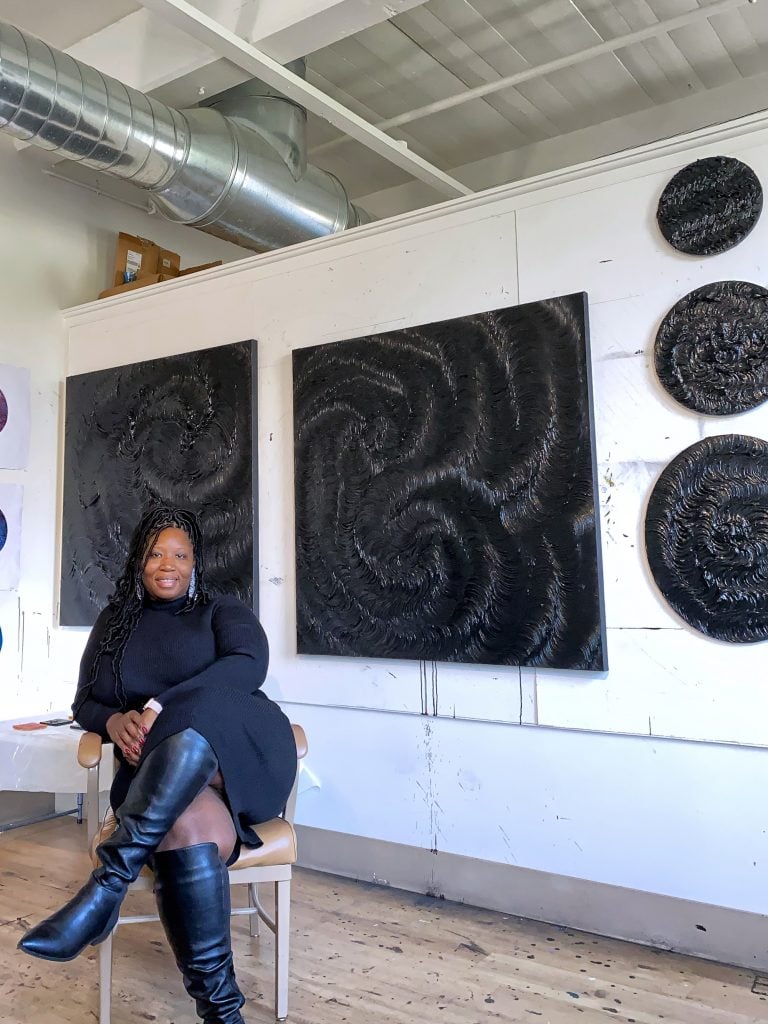
Ashanté Kindle in her studio. Courtesy of the artist.

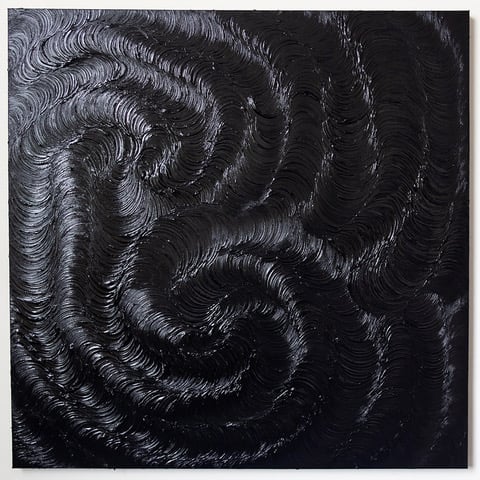
Rhythm and repetition provide as a type of recovery and remembrance for Connecticut-centered artist Ashanté Kindle (b. 1990), who celebrates the natural beauty of Black hair in abstracted paintings that resemble organic and stylized hair textures. Recreating patterns like an S curl or waves, Kindle invents a visible language that is quickly acknowledged in the Black community. Doing work with hefty-body acrylic paints, Kindle employs a variety of distinctive applications, like hairbrushes from the Sally Elegance Source keep, in combing motions to insert hair-like texture to her paintings. Her apply is partly inspired by her aunt, a beautician in creating the comparison among art-generating and hairstyling, she sees “how beauticians give a aspect of them selves to each client” in the exact same way she does with each portray.

Ashanté Kindle, Soft ripples into velvet waves (2021), currently on view in the exhibition "A Dream Transformed" at the University of Connecticut's Jorgensen Gallery in Storrs. Courtesy of the artist.

Ashanté Kindle, Comfortable ripples into velvet waves (2021), currently on watch in the exhibition “A Desire Transformed” at the College of Connecticut’s Jorgensen Gallery in Storrs. Courtesy of the artist.

Kindle’s all-black collection amplifies the sufficiency in the Black group as she said in a the latest Zoom interview with Artnet News, “I use all black paint simply because it is sufficient. I’m not automatically attempting to be much more subtle. Black is ample, Black individuals are enough…To detect as Black, it’s additional to do with a tradition and a connection to people today, even outdoors of this nation. Blackness exists all around the world, and which is a little something that we share all alongside one another.” Kindle’s works deal with the freedom, assurance, and privilege it takes to be in a position to have on your hair freely without the need of restraints. Her latest clearly show, “A Dream Remodeled,” is on watch at Jorgensen Gallery at the University of Connecticut—where she is completing her MFA—in Storrs by way of March 25.


Murjoni Merriweather

Murjoni Merriweather, T R A E (2021). Courtesy of the artist.

Murjoni Merriweather, T R A E (2021). Courtesy of the artist.

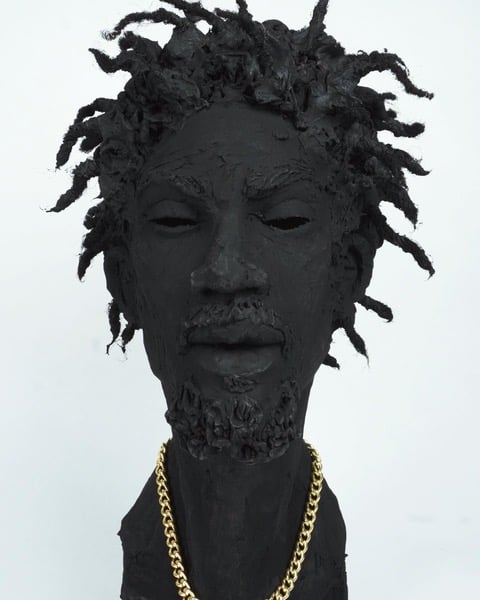
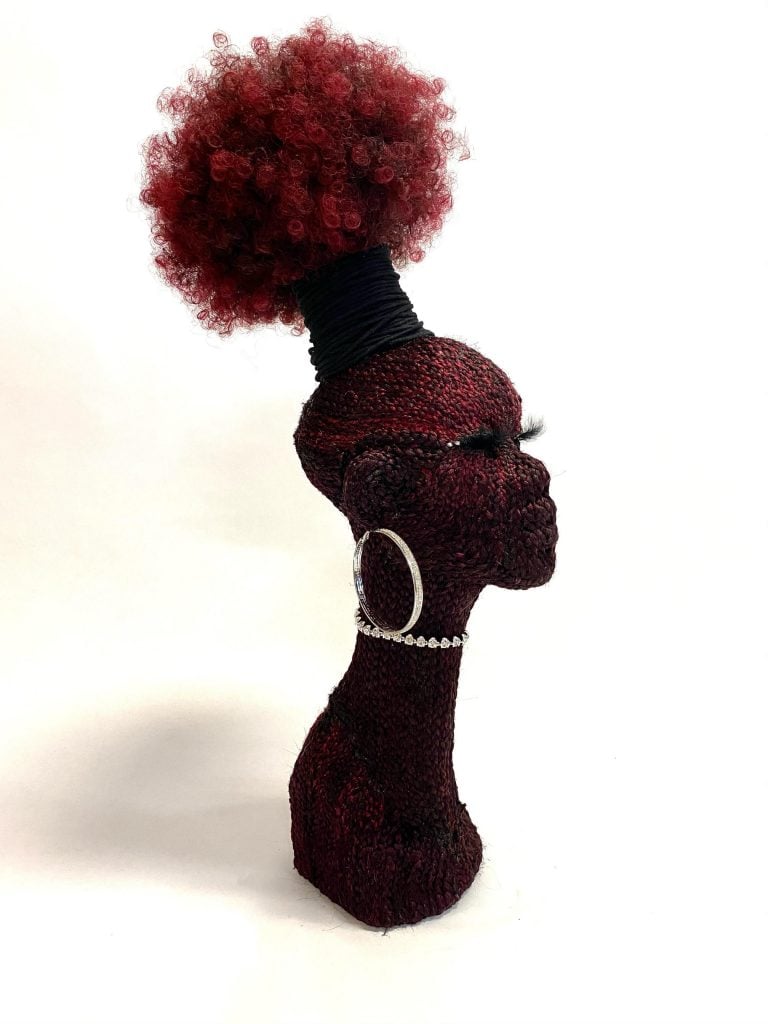
Modeling her exclusive sculptures on close friends or even herself, Baltimore-dependent artist Murjoni Merriweather (b. 1996) emphasizes the natural beauty of distinguished facial characteristics and hair texture—in no small component to combat the hazardous stereotypes that expose her authentic-life topics to racial profiling beyond her studio walls. Currently performing concerning two sculpted styles—raw ceramics, and ceramics with synthetic braids glued to the surface—Merriweather explores the dualities and complexities in the Black group. Experienced at the Maryland Institute Faculty of Artwork, the artist incorporates attractiveness and pop culture into her perform by including lash extensions, earrings, and grills to her sculptures, generating them virtually lifelike. In a new interview with Artnet Information, she claimed that she purposely will work in a larger sized scale so her get the job done can take up the area it deserves: “I appreciate my sculptures staying huge. I want us to take up areas, simply because we belong below and we are entitled to to be in all places that we are.”

Murjoni Merriweather, O Y A (2021). Courtesy of the artist.

Murjoni Merriweather, O Y A (2021). Courtesy of the artist.

Past the works’ imposing scale, she is also attuned to the place and how they are displayed. She extra, “I want my sculptures to stand out and be tall, and I want folks to seem up at them at eye degree or higher—I really do not want folks to ever seem down on my sculptures, since I do not want us to be looked down on.” Merriweather is presently displaying in “Hues” at New York’s Hannah Traore Gallery by way of April 9.

Adhere to Artnet News on Fb:


Want to stay forward of the art world? Subscribe to our publication to get the breaking information, eye-opening interviews, and incisive critical requires that drive the conversation forward.

Revel in the Garden Installations of Landscape Designer Piet Oudolf


Dutch landscape designer Piet Oudolf is internationally famous for his garden installations — from the UK to mainland Europe, to the High Line park in New York City. Now, as winter descends upon the Northern hemisphere and gardeners close their beds and open their minds to new sources of inspiration for the coming season, a book from Monacelli Press takes a deep dive into Oudolf’s most personal garden: Hummelo.

An overview of the Hummelo property in the Netherlands (Image by Arjan Otten)

Co-written by the titular plantsman and Noel Kingsbury, Oudolf Hummelo (2021, Monacelli Press) captures work that began in 1982, when Piet and his wife Anja purchased an old farmhouse outside the eastern Netherlands village of Hummelo, and moved there with their two sons. In the intervening decades, the place has been the site of personal experiments in landscaping, as well as the nursery that enables the cultivation of many of Oudolf’s signature flowering perennials. As an influential member of the Dutch Wave and New Perennial Style movements, Oudolf’s focus on ecological systems and the structural possibilities of year-round perennial cycles and native grasses emphasizes knowledge of plants, long term gains, and landscapes that reveal depth and showcase organic geometries — rather than relying on showy, short-term blooming seasons or outrageous walls of color.

The book mirrors this array of interests, including a detailed history of Hummelo and the Oudolf family’s efforts to develop the property into a landmark garden and nursery. It also boasts micro-essays on notable interlocutors and influencers to the Oudolf style, including Mien RuysErnst Pagels, and Henk Gerritsen, and details about the plants themselves, including a list of favorites from Anja, who eventually assumed responsibility for managing the nursery.

But most of all, there are images. Hundreds of pictures of Hummelo, from early days on, including intimate details of life on the property that seem to substantiate the farm-bohemian aesthetics of the Oudolfs’ professional reputation; a small white dog scavenges atop a picnic table, exploring the dregs of an emptied wine glass. There are sections rife with images and details on some of Oudolf’s major projects, including the High Line; the Trentham Estate (where he created a lush, perennial take on the traditional hedge labyrinth); and an installation-in-progress at the Belle Isle Conservatory garden in Detroit, Michigan — to name just a few that show his range as a designer, plantsman, and landscape-whisperer.

Oudolf Hummelo: A Journey Through a Plantsman’s Life is exactly the right kind of book for the winter season, whether the goal is to examine an influential figure in landscape design, bulk up on perennial knowledge, or simply revel in images of the growth of a garden through decades of seasonal turns. For lovers of landscape architecture, Dutch Wave aesthetics, and gardens alike, there is much inspiration to be found in its pages.

Private Garden on Nantucket (Image by Piet Oudolf)

Oudolf Hummelo: A Journey Through a Plantsman’s Life by Noel Kingsbury is published by Monacelli Press.

Applications are now open for RISD Pre-Collegiate Programs, which offer a residential summer immersive and a year-round online intensive.


Founded by Dora Napolitano in 2016, Zurciendo el Planeta planted its “Forest of Hope” international embroidery project in art spaces across Glasgow during COP26.


A book presents more than 110 pictures from Derby’s archive, offering a rich panorama of the key people and places behind the movement.


In the early 1980s, a teenager who tagged some anti-government graffiti was crushed by the state. Radu Jude’s fiction/documentary hybrid Uppercase Print tells his story with a mix of horror and dark humor.