H.C. McEntire: Every Acre Album Review

H.C. McEntire has produced a vocation complicating the tunes of her youth. A youngster of North Carolina’s Blue Ridge Mountains, McEntire started daily life on a family members farm, her days soundtracked by the neighborhood state radio station. On Sundays, she’d attend church, the heavenward hymns lifting her out of her weekday twang. These influences have educated McEntire’s individual reverent people tunes, whose gospel inflections and bucolic imagery replicate deep psychogeographic connections to the land in which she grew up.

Feeling of area continues to be the cornerstone of McEntire’s songwriting on Each and every Acre, an album that finds relief and resolution in the circadian rhythms of the normal entire world. Exactly where 2018’s Lionheart and 2020’s Eno Axis imagined the land as a internet site of memory, from which McEntire tried out to reconcile her queerness with her religious upbringing, Each Acre reconfigures the Southern setting as a scene of possible rejuvenation and regeneration: a position from which to start the sluggish wander in direction of restoration. “It ain’t the straightforward form of healing/When you are down on your knees, clawing at the yard,” she sings in a viscid drone on “Rows of Clover.”

Slowness, and an appreciation for the lengthy drag of time, is the album’s guiding aesthetic principle. McEntire’s environment will come steadily and languidly into concentrate: The seem of croaking night time frogs fills the hazy body, though McEntire outlines a landscape of flowing rivers, stacked logs, ripe onions. She grounds herself in these particulars, trying to lodge a restless and drifting mind into unerring, observable environmental point. The songs’ tranquil pulse lends them a therapeutic excellent that recollects the woozy and heat psychedelic tones of Neil Young’s Harvest Moon and the soniferous romance of Tammy Wynette’s We Absolutely sure Can Like Every Other.

It’s a tranquil distinction to the central preoccupation of McEntire’s lyrics, which concern  self-effacement, sublimation, grief, and the singer’s ongoing struggle with despair. McEntire can take all of these topics carefully by the hand, befriending them. Her voice dances a dawdling waltz with itself: melismatic, drawling, 50 {6d6906d986cb38e604952ede6d65f3d49470e23f1a526661621333fa74363c48}-drunk on sleep. Her guitar presents an even extra languid counterpoint, as McEntire hammers off and on at the unhurried tempo of a dipping hen. Slowness functions as a salve and a cure. Every Acre travels at the speed of therapeutic, however lengthy it can take a scab to suture a wound. 

McEntire, a innovative crafting graduate, proved herself a deft and diligent lyricist on preceding albums. Each Acre takes even greater benefit of the place in which language fails and only songs can fill the lapse. “Time ain’t normally variety,” she repeats on “Turpentine,” delighting much more in how the phrase sounds in tune than how it reads as verse. On Each and every Acre, McEntire’s individual observations of the land present her with a new footing: 1 whole of probability and guarantee. It is in the dedication to stasis that McEntire finds the fortitude to start off anew.

All solutions highlighted on Pitchfork are independently picked by our editors. Having said that, when you obtain something by our retail hyperlinks, we might make an affiliate commission.

H.C. McEntire: Just about every Acre

Review: What it’s Like to Stay at Aman’s Camp Sarika in Utah

→ Reserve now: aman.com

All over 9 a.m. on a sunny, but windy working day in distant Utah, I identified myself standing on an aerial stairway strung in between two sandstone towers additional than 400 toes over terra firma.

It’s portion of the Cave Peak by way of ferrata (Italian for “iron road”), a collection of metal rungs, ladders, and sky-significant bridges crisscrossing their namesake mountain that guide hikers to the summit. In advance of me, there were being nevertheless about 90 steps—fashioned out of metal pipes spaced 18 inches apart—and the only items blocking a drop have been a climbing harness and some surefootedness. My vertiginous climb was aspect of my itinerary during a 4-day stay at Aman Camp Sarika, a collection of 10 stand-by itself tented pavilions in Canyon Stage, Utah, right upcoming to the border of Arizona. The emphasis of my time there was to explore new ways to join with character in this desert landscape, although at that second I was additional anxious about the relationship amongst my carabiner and the cable that served as a handrail.

A climber on a via ferrata

The Cave Peak Stairway has 120 steps and is 400 toes higher than the ground.

“Wasn’t that remarkable?” our guide, Christian, questioned minutes later, right after I took my final shaky action on to much more reliable floor. “And seem, from right here, you can see the hotel.”

I adopted his gaze, but for a instant saw practically nothing in the distant landscape but a patchwork quilt of camel-colored sand and shrubby sage established in advance of a commanding mesa with rust and rose-hued striations. Then it appeared: Camp Sarika, a collection of low-slung canvas pavilions that camouflage to their environment. The by using ferrata expertise did indeed get me closer to nature—for substantially of the climb I pretty much hugged the rocky deal with of the mountain—but finding out of my convenience zone was worthy of it to see a practically aerial perspective of the special lodging and the geological Disneyland I’d had arrive to take a look at.

Opened midpandemic in 2020, Camp Sarika is the new tented extension of the iconic house identified as Amangiri, which opened in 2009 to invite people to turn into immersed in some of the United States’ most otherworldly terrains. The likes of Brad Pitt and Tom Hanks have stayed listed here, and it’s so coveted that the significant year (spring by way of tumble) is often booked months in progress. Amangiri and Camp Sarika are 1 piece of the bigger Aman universe, a collection of 34 resorts and resorts in 20 countries—many of which are close to or inside UNESCO-shielded sites—each identified for their unique feeling of location and planet-course provider.

However Camp Sarika’s suites glance like canvas tents from the outdoors, guests aren’t just roughing it. Each just one- or two-bed room dwelling (1,882 and 2,825-square-ft, respectively) is fully enclosed and features a spacious lounge, bar, and dining space. Bogs have deep soaking tubs and both indoor and out of doors showers that deal with pure rock escarpments estimated to be 164 million years previous. I needed to commit all working day on my terrace, which was outfitted with a plunge pool, a telescope, and a cozy firepit space the place each early morning I observed the dawn paint the landscape in shades ranging from indigo to apricot.

A patio with chairs and a plunge pool near a rock formation.

Camp Sarika is an all-climate, 12 months-spherical tented camp.

The house is set within just a secluded canyon adjacent to Grand Staircase–Escalante National Monument, a 1.87-million-acre swath of protected land masking a great deal of southern Utah. It is an location with rich geological diversity, which include very low-lying desert and coniferous forest. In the 600 acres of the Colorado Plateau in which Camp Sarika and Amangiri reside, there are flat-topped mesas, mountains, rivers, and deserts. Also encompassing the vacation resort are five countrywide parks and the Navajo Country Reservation, the premier Native American reservation in the United States.

The by way of ferratas are managed by Experience Companions, Amangiri’s have in-house guideline service. In addition to screening guests’ mettle on the iron pathways, guides also get friends for hikes into well known nearby shielded websites, including Zion and Bryce Countrywide Parks.

For the reason that Amangiri has deep connections in the location, its team can create bespoke itineraries for guests, ranging from horseback riding in the desert to hot air ballooning above community lands. One particular early morning I ventured out with yet another Amangiri experience-partner Adventurous Antelope Canyon Tour. Our tutorial, Joseph Secody, took me to a trio of pretty much Seussian slot canyons in the Navajo Country. Mainly because Secody is Navajo, we were equipped to go to take a look at slot canyons many others simply cannot. As we hiked, Joseph spelled out how some of the canyons, like Antelope, are regarded as sacred web-sites of worship. He spoke about how all ended up formed in excess of hundreds of years by wind and drinking water, even though standard storytelling gives a various explanation of the wavelike visual appearance of the partitions.

“Those waves, we feel, are people’s issues,” Secody said, introducing that when persons release or overcome their stressors, they manifest as undulations on the walls and, in change, “something wonderful is created.”

My time with Secody was a single of the several strategies Camp Sarika and Amangiri made available me a further comprehending of the region’s millennia-previous cultural traditions. Each individual day, I experienced my selection of actions, which include hoop dancing, storytelling, and flute performances—all led by Navajo practitioners. One afternoon I participated in a aspiration-catcher workshop led by Pearl Seaton. Two other company and I sat about a desk in Camp Sarika’s airy cafe with ground-to-ceiling home windows, every single of us diligently looping a extensive string around a metal hoop to develop a world-wide-web-like look. Seaton explained how the webbing of the dream catchers filters out nightmares and how the different stones and seeds included into the layout help secure you as you snooze.

A plunge pool at night, with a mesa in the background

The all-natural rock escarpments that encompass Camp Sarika that are estimated to be 164 million years old.

Some Navajo traditions obtain their way into Amangiri’s spa, a mainly open-air facility wherever friends can sip greenthread leaf–based Navajo Tea and soak up the desertscape among treatments. Covering 25,000 sq. feet, the spa houses 5 treatment method rooms, two outdoor terraces, a drinking water pavilion with a sauna, a steam home, and a plunge pool. Following a massage that started out with a smudging (impressed by Navajo rituals) and later included oils designed with community wild juniper, I expended a great deal of the afternoon in the heated move pool. Tracing the strains in the close by butte with my eyes and observing swallows flit involving holes in the stone, I felt far more quiet and existing than I experienced in months.

Every night during the turndown company, Camp Sarika’s staff members leaves a various memento to get home: a sensory reminder, like a sage candle, or a visual just one, like a pictures reserve of the Southwest, or a cultural souvenir, this sort of as a single of Seaton’s dream catchers. One particular night time, the reward by my bed was a linen bag containing four significant aquamarine marbles. The accompanying notice stated the selection 4 is an significant amount in Navajo society, representing the “four seasons that rhythm a calendar year, 4 existence values that Navajo people today aspire to, four mountains that define Navajo Nation, and the four levels of one’s life.”

These exact marbles have been beforehand made use of in an artwork installation by Maya Lin in Camp Sarika’s lobby—bunches of the glass orbs depicted the close by Lake Powell, a substantial zigzagging artificial reservoir in an or else thirsty land. They now occupy a location on my desk at my household back again in Colorado, a everyday reminder of my chic journey in the American Southwest.

Review: ‘The Light Pirate’ by Lily Brooks-Dalton

For December’s #ReadWithMC select, visitors curled up with Lily Brooks-Dalton’s The Light-weight Pirate, a well timed dystopian tale on weather modify and its devastating effects on the earth and the folks struggling to survive there. Informed in 4 parts—power, h2o, gentle, and time—it follows a Floridian relatives as they put together for an approaching hurricane in a landscape currently wrecked by damaging weather conditions styles and increasing sea stages. 

Reminiscent of Delia Owens’ In which the Crawdads Sing, readers particularly liked Brooks-Dalton’s vivid producing type, which @abookandadog states “was lovely and I was riveted from get started to end.” They increase, “The character building felt so serious, I *nearly* cried close to the close at a tender second among two characters.” Meanwhile, @bibliokyra shares a equivalent sentiment and raves, “Brooks-Dalton’s imaginative and atmospheric composing totally submerges you into this possible and frightening entire world.”

Island Ohana Tree & Landscaping Services Announces New Five Star Review in Honolulu, HI

Honolulu, Hi – Island Ohana Tree & Landscaping Companies is the go-to tree assistance and landscaping organization in Honolulu. The business has invested in major-of-the-line devices that enables its industry experts to total tasks of any scale with relieve. They deal with huge and smaller tasks with the exact same devotion and enthusiasm and have the methods to deal with just about any tree support.

Island Ohana Tree & Landscaping Solutions also stand out for their landscaping solutions. They enable remodel everyday yards into gorgeous lawns. Their companies entail planting trees and caring for them with services these as pruning, pest and sickness control, basic tree health trimming, and additional. They also use sod and artificial turf, which is a good substitute to all-natural grass.

Island Ohana Tree & Landscaping Services is thoroughly certified and insured and also fulfills the specifications needed by the Oahu tree products and services sector. This features worker’s payment for their members of workers and legal responsibility insurance policy, which covers the client’s house. They have standard treatments which be certain they take care of the client’s house whether or not they are around or not. They also cleanse up and go away the place better than they discovered it.

Some of the tree providers offered by the Oahu tree provider enterprise involve tree planting and wellness care, pruning, trimming, tree removal and stump grinding, spikeless palm tree trimming, dead wooding, dangerous tree evaluation, and unexpected emergency companies. They also conduct soil assessment which assists property owners know the real problem of their soil. This assists identify which trees and crops will increase most effective in the client’s lawn. Their qualified tree surgeons aid harmful and weakened trees and plants recover.

Island Ohana Tree & Landscaping Providers works with a skilled and knowledgeable crew who delivers exemplary workmanship and shopper provider. They are specialist, courteous, and often on time. Their crew is accredited for the talent and basic safety steps essential to tackle even the most intricate tree provider.

A pleased customer has this currently about their expert services, “We experienced a terrific experience with the Honolulu tree services contractor. We had a number of trees that essential to be trimmed and many others that required removal. They were prompt, friendly, and didn’t cost further from what was quoted in the estimate. I would use them yet again and recommend them to any one seeking for a responsible tree company organization.”

Island Ohana Tree & Landscaping Expert services is domestically owned and operated with a full commitment to the community communities. The Honolulu arborist provides unparalleled products and services and has the applications and expertise to supply upfront fair estimates relying on the job dimensions and complication. Their quoted charges are confirmed, and they do not add any excess fees until a consumer provides supplemental do the job not initially said in the estimate. They give no cost, no-obligation quotations.

Island Ohana Tree & Landscaping Companies is headquartered at 1050 Queen St #100, Honolulu, Hi, 96814, US. Customers can simply call the business at (808) 465-4602 for crisis providers, bookings, and other inquiries. They can also stop by their site for much more details on their companies.

https://www.youtube.com/observe?v=kIf8gXLuYDQ

Media Call

Business Name
Island Ohana Tree & Landscaping Companies
Get hold of Name
Brian Ohana
Cellular phone
(808) 465-4602
Tackle
1050 Queen St #100
Town
Honolulu
Point out
Hi
Postal Code
96814
Place
United States
Site
https://www.oahutrees.com/honolulu-tree-products and services

Design Review Panel Approves Front Street Landscaping – Business Journal Daily

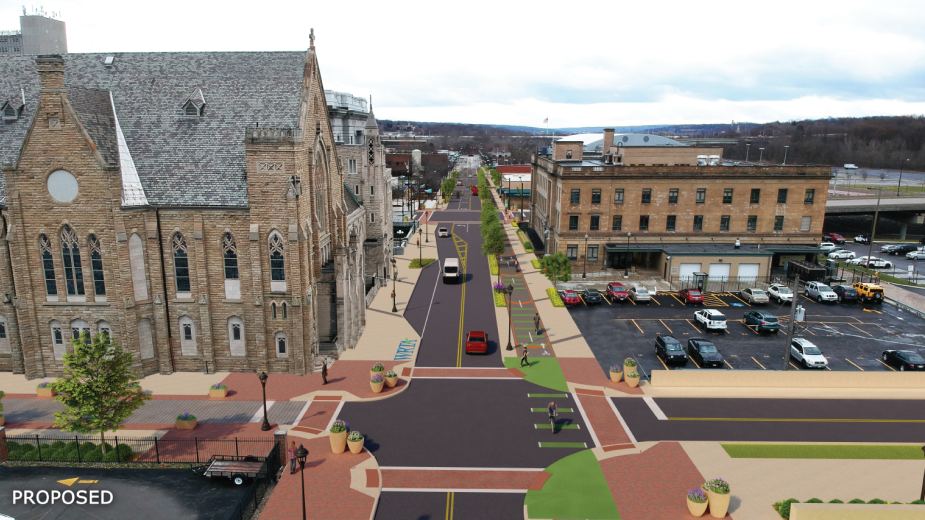
YOUNGSTOWN, Ohio – By this fall, the construction rubble that now represents Front Road downtown need to be all but long gone to make way for trees, boxwood, decorative grass and other landscaping, officials say.

The city’s Design and style Assessment Committee approved the proposed landscaping approach for Entrance Street, which is getting rebuilt as element of the $27.65 million Strategic & Sustainable, Health care & Production, Tutorial & Arts, Residential & Recreational, Engineering & Coaching – or Intelligent2 – Network undertaking.

The committee, which satisfied Tuesday morning, also permitted models for 3 other downtown spot tasks, in some conditions with situations.

The redesign of Entrance Street from South Avenue to Vindicator Square consists of shrinking the downtown road from five lanes to just one lane each for westbound and westbound visitors as well as a convert lane.

Features of the new streetscape will incorporate planting of Princeton elm, honey locust and ivory silk trees, as perfectly as boxwoods, feather reed grass and irises between other crops. In addition, there will be new planters, garbage cans and a freestanding bicycle air package, with instruments for cyclists to use to make repairs.  

The picked plants are related to those people on Phelps Street, Joe Banner, challenge manager with Marucci & Gaffney Excavating Co., Youngstown, reported. The aim is to attempt to get most of the landscaping accomplished this slide, if probable.

“Trees are time sensitive,” he reported. Perennials likely will be planted in the spring.  

The other 3 jobs the committee deemed involved constructing additions.

 Jim Sansabrino, venture manager with ChangeUp Inc., Dayton, offered a request to substitute the existing single-pane aluminum storefront of the JPMorgan Chase branch, 47 E. Federal Plaza, in Realty Tower, with a double-pane aluminum storefront. The developing is owned by GreenHeart Businesses inc., Boardman.

The department is “having local weather issues” with the present storefront, Sansabrino said. His firm is in the system of bidding resources for the get the job done but the contractor “would like to start as before long as feasible,” he claimed. Late August most likely would be the earliest get the job done would get started at the bank department.

Charles Shasho, Youngstown deputy director of general public will work, recommended Sansabrino there could be concerns relevant to forthcoming downtown design work as nicely as the Greater Youngstown Italian Fest, which is scheduled for Aug. 5 to 7.

Requests to put in an accessibility ramp at Victorian Players Inc’s’ Hopewell Theatre and to modify two indications on the former Silver’s Vogue Store building downtown have been also approved, but in both conditions committee associates required a lot more data.

The building will retain the Silver’s title on the 27 W. Federal St. storefront but two smaller signals facing West Federal and South Phelps streets would be replaced with black aluminum signs with white vinyl lettering that reads “Retail Galleria.”

Lori Bowser, symbolizing FastSigns in Boardman, reported she did not have an opening date for the galleria. The building is owned by QuickMed Urgent Care, Liberty Township.

Hunter Morrison, an urban setting up expert for the town who is chairman of the committee, echoed the sentiment of other customers who required to see a extra detailed plan for the building’s exterior. 

The theater, 702 Mahoning Ave., previously had sought approval for a modest addition to the making to deliver enhanced obtain but cost estimates set the job “just way out of finances,” Kevin Willis, principal at Strollo Architects, Youngstown, stated. The ramp is remaining created to accommodate the addition of the theater moves forward with it for extra restrooms.

Users of the committee, who desired to see how the ramp would tie to the sidewalk and parking great deal, accepted the ramp with the comprehending that an over-all site approach would be forthcoming.

Copyright 2022 The Small business Journal, Youngstown, Ohio.

Barbra Streisand’s My Passion for Design: Review

Photo: Douglas Kirkland/Corbis via Getty Images

Barbra Streisand is supernaturally good at almost everything: singing, acting, writing, directing, cloning. She is chutzpah in human form, an iconoclast who has looked both Nick Nolte and death in the face and said, “Feh!” She is so hard-core that she once made Larry McMurtry vomit out his car window after a friendly game of tennis.

In other words, it’s nearly impossible to capture Barbra Streisand’s essence, because she has hundreds of essences, all of them awe-inspiring in the Old Testament sense. So it’s inevitable that, in the flurry of tributes surrounding her recent 80th birthday, bits and pieces of her expansive brilliance have been left out. Which is why I am here to revisit one of the most important works of art that Barbra Streisand has ever put forth, a creation that, in my opinion, we should all be revisiting on a weekly basis as a guide to living Barbra-ly: My Passion for Design, her mammoth, madcap, 300-page (including an epilogue) coffee-table book on the construction and design of her sprawling compound in Malibu.

Photo: Rachel Handler

Published in 2010 but emanating a distinctly ’90s energy, My Passion for Design is an exercise in Streisand-ish goofiness and grandeur, unapologetic excess, and near-nuclear attention to detail. The title refers, of course, to Barbra’s account of creating her home’s design — her self-proclaimed “intense relationships with furniture” and the meticulous construction of her main home and its detached barn, millhouse, and “Grandma’s house” — but it is just as fascinating to read the book as Barbra’s account of her brain’s design. (“When I step into an 18th-century room, something about it feels so satisfying to me”; “French automatons fascinate me …”) To reduce it to a mere vanity project misses the point; it is also a project investigating the point of vanity.

My Passion for Design is about a Jewess building a paean to goyish Americana (complete with a “Federal Lounge,” a 4,000-pound waterwheel, and a fictional backstory about postcolonial settlers) in a conscious effort to distance herself from the plastic-sheathed couches of her mother’s Pulaski Street apartment. It is a rags-to-riches fable that begins with Barbra eating chicken soup on the streets of New York while hunting for knockoff antiques and ends with her eating spelt pancakes on the California coast, trading stocks from her custom-size bed (king is too big, queen is too small) to support her Tiffany-lamp habit. It juxtaposes philosophical ruminations on loss with sentences like “I’ve always loved barns.” It is about the uniquely American optimism that if you never stop buying things, you can cheat death.

And while we await her alleged future memoir, it may be the most significant attempt at a distillation of Barbra, a true manifesto written in her sublime voice, which is a conversational stream of consciousness, lousy with randomly placed ellipses and anecdotes about her dozens of dismissed architects and Steven Spielberg’s use of GPS. “Sometimes I’m impatient … too impatient to wait until I find the right thing,” she writes while lamenting her perfectionism. “So I’ll just get something in the meantime because my need for instant gratification is strong. Perhaps that’s because my father died so young.”

Photo: Rachel Handler

I recently plucked My Passion for Design from the coffee table at my friend’s aunt’s Seder on the Upper East Side and paged through it while eating gefilte fish and horseradish. I was familiar with it as the spark of inspiration for Jonathan Tolins’s 2013 play about Streisand’s basement mall, Buyer & Cellar, but I was not familiar with it on a line-by-line level, which is how it demands to be consumed. Though I recommend you set aside a day to luxuriate inside each and every one of the book’s stories and Barbra-shot photos, I have attempted to crystallize the experience of reading My Passion for Design by selecting 30 of the book’s Most Barbra Moments. Taken on their own, each quote — the ellipses and italics always hers, unless otherwise specified — offers a bit of singular Barbra wisdom that you may want to consider applying to your own life and Malibu barn.

1. On Oil-Drilling Robots: [Ed. note: This is My Passion for Design’s literal second sentence.] “In this frenetic world we live in, it seems as if machines are taking over … computers that drop the stock market a thousand points in a matter of minutes, metal detectors, oil-drilling robots. I don’t pretend to know much but I do think that technology without consciousness invites disaster.”

2. On Color Theory: “I used to have long discussions with my gardener, when we were choosing flowers, about what is red and what is pink. You can’t just say something is red.”

3. On Vocals: “My voice was hoarse from shouting over buzz saws for years.”

4. On Mistakes: “Here’s an example of a mistake! I’m sure someone was trying to please me when he changed the drawing and fancied up the panel by the window seat. But it didn’t look right. The lines of the raised panel should just die into the side of the window seat, as you see in the finished version.”

Photo: Rachel Handler

5. On Perfect Logic: “And then an idea occurred to me. I had some leftover fabric so I designed a dress to match the loveseat. Why shouldn’t you wear clothes to match the room? It seemed perfectly logical to me.”

6. On Human Contradiction: “I don’t like feeling a sense of loss … even something I’ve lost at an auction can haunt me. Years ago, a rare pin by the Viennese architect Josef Hoffmann was coming up for sale, and I left a bid because I couldn’t attend. I lost it to the next bidder. (This is why I don’t like to leave bids. You have to at least be on the phone.) I was so upset, and then of course I wanted it even more. My dear Renata Buser, who has been my personal assistant for more than 35 years, tried to have the pin copied for me but it wasn’t the real thing. I wouldn’t give up until I had traced that pin halfway around the globe, to a dealer in Germany. I ended up paying him four times what it went for at auction … and then never wore it.”

7. On America: “Then in 1992 when Bill Clinton was elected president, I fell in love with America all over again. [several sentences pass] At the Library of Congress, when they asked if I wanted to look at my own things, I said no. I just wanted to see Thomas Jefferson’s drawings of the dome at Monticello.”

8. On Intuition: “Let me say this: It was not an easy project. It was a creative challenge to blend several styles from several centuries. Some architects told me to not even try. But that was my dream, my vision … very similar to making a film. As an actress, I have always relied on my intuition. Same thing here … I’m happy with the results … even though I don’t live in it.”

Photo: Rachel Handler

9. On Indecision: “I’ve always wanted chickens. Shouldn’t a barn have animals? I wish we had room for cows … pigs … I love pigs. (I’ve been collecting miniature figurines of them for years.) But the most I’ve been able to manage is chickens. We have 22 of them and one rooster. At one point I decided to give him away because he does that crow thing all day long and I thought the neighbors would complain. But the next day I missed him, so I had him picked up and brought back.”

10. On Patience: “The design process seemed to go soooooo slowly. The first architect would appear for a meeting and then come back three weeks later having forgotten the changes he was supposed to have made. After that experience, I had another architect move in with me for five days a week so I could keep an eye on what he was drawing. (He lived too far away to commute.)”

11. On Wood: “While I was doing an interview with Diane Sawyer and telling her I was going to build a barn, she mentioned that her husband, Mike Nichols, knew the old-wood expert and she would get me his name. I told her to send it along with her recipe for cornbread.”

12. On What Happens When You Change Things Without Asking Her: “What was kind of shocking is that even with all of the measurements, it could still go wrong … sometimes because somebody decided to change things without asking me.”

13. On That Palace: “In Vienna I saw the most beautiful herringbone floor in one of the palaces. I measured the width of the boards and sent pictures back to my crew, telling them that this was how I wanted the floor to look in this room. What palace was that? It’s famous. I sang in front of it. Oh God, this is terrible. And it’s not age. I never know where I am. I’ve lived in London several times but I couldn’t tell you where unless I looked it up. Years ago, Steven Spielberg and I would get lost trying to find a street in Beverly Hills, where we lived! No kidding.” [One paragraph and several anecdotes later] “The Schönbrunn Palace! That’s it.”

Photo: Rachel Handler

14. On Hubris: “Let me just say this now: It is by no means easy to build a pond.”

15. On the Word No: “I wanted a storm cellar, like in The Wizard of Oz. It’s not that I’m expecting a tornado, but with climate change, you never know! One architect drew a 16-foot-long cellar. I looked at this concrete block thing, and it didn’t look like any storm cellar I’d ever seen. They were usually six to eight feet long, according to my memory. ‘Why do you need 16 feet?’ The answer: ‘Because it’s code and you have to have a certain ceiling height as a man walks down the steps.’ Hmmm. So how did Auntie Em and Uncle Henry get down there with only eight feet? I said, ‘I don’t buy it. It can’t be more than eight feet. It won’t look right. We have to find another way.’ I’m a person who does not believe in the word no.”

16. On Water: “And waterproofing. That’s another word that makes me cringe … [Several pages later] Don’t even ask about the waterproofing …”

17. On Staffing: “I always had an assistant devoted to this project, and at least one draftsman on site every day so any idea I had could be drawn.”

18. On Patience, Part Two: “The dark-paneled doors with those lovely posts and corbels were originally part of the Meet the Fockers set. I asked Rusty Smith, the production designer, ‘What are you going to do with those doors when we’re done?’ He said, ‘Throw them out.’ I said, ‘I’ll take them.’ … Unfortunately, the doors were cheaply made (no wonder, since they were only meant to last a few weeks) and it probably cost more to take them apart and reglue them than it would have cost to make them from scratch. But the big attraction for me is that they were already done. I could put them up and worry about them falling apart later.”

Photo: Rachel Handler

19. On Honor: “When Tom Carruth of Weeks Roses asked if he could breed a new rose and name it after me, I said I would be very honored. Of course it would have to have a wonderful scent, and the color was very important to me. The Barbra Streisand rose is very healthy and disease-resistant.”

20. On Not Cooking: “I can give you a meal of Persian rice, moussaka, and chocolate soufflé — but don’t ask for anything else. Oh, and hoisin spareribs (easy — just marinate them with honey, molasses, soy sauce, and garlic).”

21. On Process: “How do I design? I don’t know. I just visualize it.” 

22. On Stone Siding: “It looked too light and too new. Martha Stewart told me that if I brushed it with cow’s urine and buttermilk it would turn darker.”

Photo: Rachel Handler

23. On Not Being Asked: “But here’s the irony. This is one of the few rooms where we were working from actual plans, with specific dimensions, and yet the cabinets are three inches narrower than in the drawings. Three inches. That’s a lot. If there’s a discrepancy like that, why didn’t the carpenter ask the contractor, and why didn’t the contractor ask the art director and why, above all, didn’t somebody ask me? It’s fascinating how something like that happens. Apparently the problem is measuring. It’s one way in the drawings and another in reality. I still can’t figure that out, but I have to let it go. What I wonder is, did this sort of thing happen back in the 18th century?”

24. On Moral Relativism: “I’m only a purist when it suits me.”

25. On Hosting: “I could give a large dinner party and seat everyone around that library table, although I’m not sure I want those chairs scraping back and forth on my 200-year-old Aubusson carpet. We don’t really need to eat there or sit there.”

26. On Multitasking: “In the midst of all of these decisions, I had to leave for a European concert tour. I set up that tour with shopping in mind.”

27. On Juggling: [Ed. note: This is inserted in the middle of a paragraph about a dinner with CAA’s Ron Meyer, wherein they discussed how their architects sucked.] “By the way, I went to Cirque du Soleil the other afternoon and I saw this amazing juggler. It reminded me of the first newspaper article I ever wrote. I was 22 and starring in Funny Girl at the time. I started off talking about potatoes, pot holders, and penguins. At one point, I wrote, ‘It’s nothing to be a singer, a dancer, or an actor. The thing is jugglers.’”

28. On Chemistry: “I started buying dolls at auction, ordering all the catalogues from Christie’s and Sotheby’s. Soon I was bidding on Jumeau and Bru dolls in London and Paris. I would go to an antiques show and come back with one or two that I felt a rapport with. I do love some more than others because they’re unusual or rare, like my long-faced doll with her pensive, almost sad expression.”

29. On Acknowledgments: “And to all of you who think you should have been mentioned (especially architects), I still appreciate you.”

30. On Covering the Ceiling and Walls Above the Chair Rail in the Screening Room With Felt for Better Acoustics, But This Particular Color Felt Comes Only in Bolts 54 Inches Wide, Which Means That on the Bigger Sections of the Walls and on the Ceiling, You Would Have to See the Seams, So You Add a Piece to the Top of the Chair Rail, in Order to the Run the Fabric Horizontally, But There Was No Solution for the Ceiling, So We Ended Up Painting It: “I get a headache just talking about it.”