
Landscape edging saves maintenance – Portsmouth Daily Times

&#13

You may possibly have found that the easiest landscape beds to maintain are those people surrounded by concrete. For instance, most properties have a concrete wander in between the driveway and the entrance door. This arrangement generates a room for landscaping, surrounded by pavement and the front porch or exterior wall. Most often this space is filled with shrubs and bouquets. Since it is surrounded by concrete partitions and paving, garden grasses just cannot invade the mulched space, and creeping weeds have a more difficult time finding set up.

Apart from this tidy garden plot, most basis beds are surrounded by garden. Normally, the soil quality is much better in the basis beds than in lawn areas, so grass and weeds by natural means attempt to invade the landscape beds, causing them to shrink. Or, in lots of situations, the beds ended up too little to suit the shrubs once they mature, so shrubs overhang the garden, generating mowing tricky. This is a sloppy look. Retaining a neat physical appearance is hard operate.

The remedy is to put in some kind of actual physical barrier, termed mattress edging. This could be a slim strip of steel or vinyl, imbedded in the ground all over the edges of beds, or a much more considerable border of stone, brick, or concrete blocks.

We’ve experimented with a variety of kinds of metallic or vinyl strips, held in spot with stakes, and/or partly buried so that the pounds of the bordering soil holds them. Most frequently this sort of edging is pushed up out of the floor by seasonal freezing. It’s also tricky to put in except if the floor is beautifully degree and flat.

We want mattress edging of organic stone, or wall block, which can observe the contours of sloping or uneven bed edges. Here’s how to install this variety of hardscaping:

Initial, make guaranteed that the beds you are surrounding are massive enough for the crops to improve to their total size. Use stones or blocks that are substantial and heavy enough to remain set, and install them at least fifty percent underground and 50 percent over floor level. To do this you need to dig a trench virtually as deep as the top of your blocks, and at least 6 inches wider. At this level it is a very good thought to sprinkle some Preen in your trench, to discourage weeds. Weed barrier material in the base of your trench will help even far more.

Working with pea gravel or #8 thoroughly clean limestone, make a mattress at the base of your trench, at least an inch or two thick. This gravel mattress can make it quick to lay the stones evenly, and assists hold the stones from settling over time. Try to preserve any yard soil out of your get the job done, because you’ll have far more weeds if dirt gets combined with your gravel.

The moment you’ve laid the edging stones conclusion-to-conclude on the bedding gravel, alter them so that the tops are pleasant and stage from entrance to back again and facet-to-aspect. Then incorporate a lot more gravel, front and again, and amongst the stones if there are gaps, to lock the stones in put. Fill the trench with clear gravel up to floor amount.

There should be at the very least four inches of gravel showing in front of your edging. This tends to make a “trim strip” so that you really don’t want to hand-trim or “weed-eat” together the edging every single time you mow. Preferably your edging is small sufficient (two to 3 inches above floor) that you can cling the mower deck about it, building hand trimming unnecessary. If grass or weeds invade your trim strip you can just spray alongside the edging with Roundup.

Setting up this variety of hardscape edging is a critical venture that will get time, work and dollars, but it will repay you over many years of time by making your weekly routine maintenance significantly much easier. It also seems nice. If you do it you are going to be glad you did.

All-natural stone or concrete bed edging looks awesome and saves upkeep.

Steve Boehme

Steve Boehme is a landscape designer/installer specializing in landscape “makeovers.” “Let’s Grow” is released weekly column archives are on the net at www.goodseedfarm.com. For additional info simply call GoodSeed Farm Landscapes at (937) 587-7021.


Drought-Tolerant Landscaping Saves Money and Water

Alameda is getting an eco-friendly makeover one drought-tolerant yard at a time

Take a walk around your neighborhood and see how many front lawns are now dry and patchy, turned into yellow straw or dirt. This is no accident, nor are residents too lazy to take care of their yards. Most of them are conserving water. Living in extreme drought has prompted many Alamedans to make major changes in water usage, including converting lawns to drought-tolerant gardens and using drip irrigation systems. Lawns simply have to go in order to plant new landscaping. The initial transition may not always be lovely to look at, but the result can be lush and beautiful—and highly successful at conserving water.

Alameda Post - A Traditional Lawn Alameda Post - Lawn after conversion to draught-tolerant landscaping

Lawn before and after drought-tolerant landscaping. Photos courtesy EBMUD.

Here in the Bay Area, we have reduced our water consumption far more than the average Californian, according to state leaders and Bay Area water agencies gathered this week at the Quarry Lakes Demonstration Garden in Fremont. During the first six months of 2022, we reduced water use to an average of 60 gallons per person per day compared to the state average of 82 gallons, according to East Bay Municipal Utility District (EBMUD). Multiply that by EBMUD’s 1.4 million users and you get a picture of how much we saved by changing our water habits and habitats—at least 72 million gallons a day. “EBMUD customers are phenomenal at conserving water,” EBMUD general manager Clifford Chan said.

Get up to $2000 for making the switch

Transitioning from lawns to drought-tolerant landscaping not only saves water, it also saves money. Less water usage means lower water bills each month. And on top of that, EBMUD issues rebates for lawn conversions of up to $2.50 per square foot, with a maximum of $2,000 for single-family and small multi-family homes, or $15,000 for commercial, municipal, and large multi-family properties. There also are rebates for switching to efficient irrigation systems, using flow meters, and using gray water from indoor sources for outdoor landscaping. Visit the EBMUD website for information about the rebate program and instructions on how to apply.

A lot of Alamedans have already received those rebates. During the past eight years, EBMUD has processed more than 250 lawn conversion rebates, representing more than 380,000 square feet of conversions from lawn to drought-tolerant landscaping within the City of Alameda, according to Nelsy Rodriguez, the water agency’s public information representative. “We’ve also processed approximately 180 rebates for conversion from spray to drip irrigation,” she noted.

Alameda Post - A Lush Drought-tolerant Landscape at Otis Terrace
Otis Terrace Apartments transformed their sidewalk median into a lush drought-tolerant garden. Photo Google image capture.

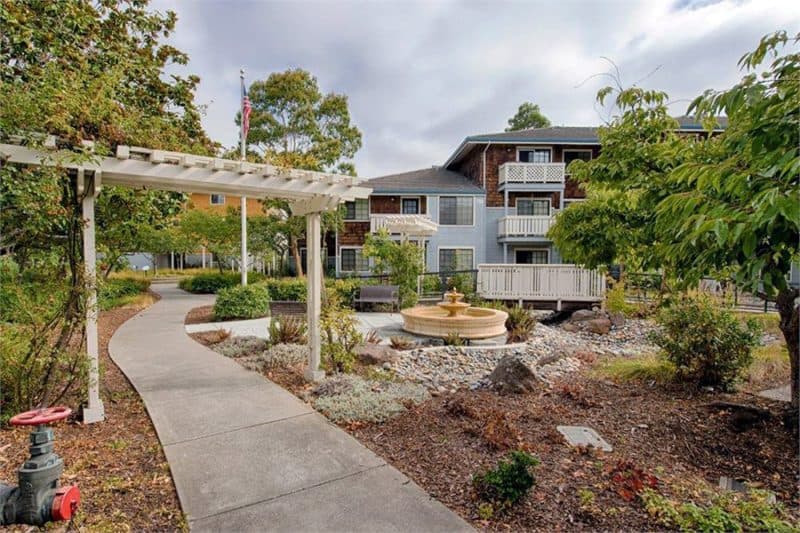
It’s not just individual homeowners or renters who are making the switch. Many apartment complexes around town already have converted their lawns to beautiful drought-tolerant gardens. Most of the apartments that line Otis Drive across from the South Shore Center now have drought-tolerant landscaping on their medians between the sidewalk and the street. And the City of Alameda is conserving water as well, not just with City Hall’s new lawn conversion but also with city-owned properties such as Independence Plaza, an apartment complex for people aged 62 and older, which has drought-tolerant, bay-friendly habitat throughout the grounds.

Alameda Post - A Garden with a fountain, rocks, and plants
Independence Plaza’s senior apartment complex features drought-tolerant landscaping. Photo Alameda Housing Authority.

Getting started with a drought-tolerant garden is fairly simple

Ready to convert your yard to a drought-tolerant garden? The first step is to get rid of your lawn in the area you want to re-landscape. The easiest and cheapest way to get started is sheet mulching (see video below).

Start by gathering cardboard boxes, often available from your neighborhood grocery store. Open the boxes out flat, cover your entire lawn with the cardboard, and then cover that with wood chip mulch, or bark. Many tree service companies will deliver free wood chips, and EBMUD will give you coupons for free mulch and compost at nearby nurseries.

Then just wait three to six months to let the cardboard and mulch break down into the soil. The best time to do this is summer or fall, but you can start whenever it is most convenient for you. The key ingredient is patience.

Check out free garden plans

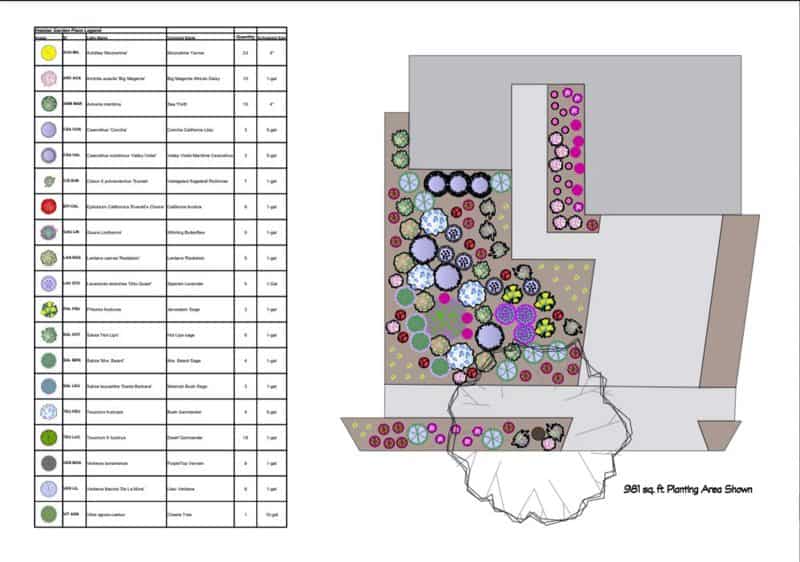
For those of us who aren’t gardening experts, there’s a wealth of information online. The Harbor Bay Isle Homeowners Association (Bay Farm Island) offers free downloadable drought-tolerant landscape plans and lawn conversion guidelines with detailed plans for a variety of different gardens. Take a look at the fully customizable California Native Plant Society garden planner to see plants that are native to Alameda and suit your goals as well as your preferred garden aesthetic.

Alameda Post - A birds-eye view of a plan for converting a lawn to a drought-tolerant landscape. The plan includes a map of where all the plants will be placed.
Harbor Bay Isle provides free lawn conversion plans online. Photo HarborBay.org.
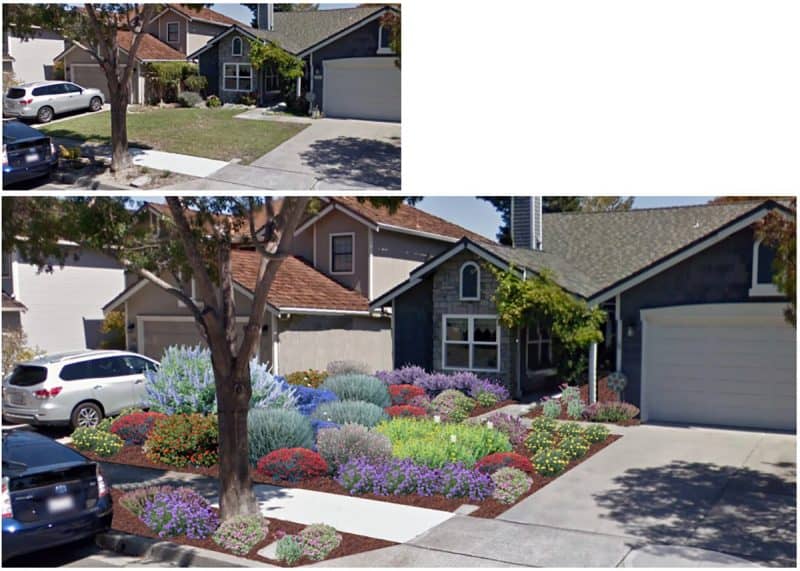
Alameda Post - A rendered photo of what a lawn could look like before and after replacing the lawn with a drought-resistant landscape
A rendering of a the lawn transformation using the above plans. Photo HarborBay.org.

Garden Center resources for drought-tolerant plants

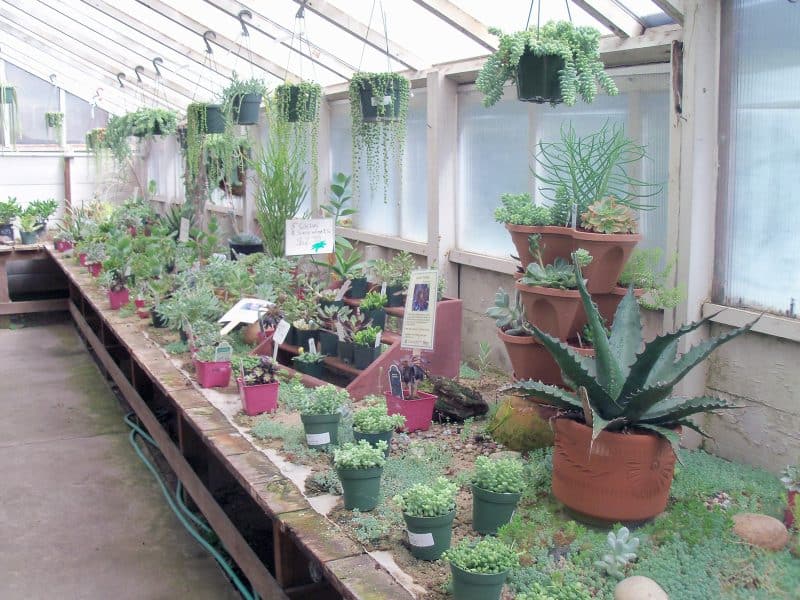
And by all means, visit our local nurseries and ask questions. Encinal Nursery (2057 Encinal Ave., open seven days a week) is family-owned and operated and has been here in Alameda since 1946. Their huge variety of beautiful plants is second to none here on the island, and the staff is very helpful. Their greenhouse is filled with cacti and succulents.

Alameda Post - A wall of different plants available for sale
Encinal Nursery has a wide selection of cacti and succulents. Photo @encinalnursery.

Ploughshares Nursery (2107 Main St., open Wednesday through Sunday), specializes in California native, drought-tolerant, and edible plants. Part of Alameda Point Collaborative (APC), the full-scale nursery has its own demonstration garden and offers hands-on workshops on sustainable landscaping and garden design. Sales from the nursery generate revenue for APC’s supportive housing for the formerly homeless, and the business provides job training to APC residents as well.

Alameda Post -Ploughshares manager Jordan Taylor smiling and holding a plant
Ploughshares manager Jordan Taylor is happy to help Alamedans with drought-tolerant garden planning. Photo Liz Barrett.

“Many people who come here are looking for heat-lovers and native plants that eventually will take care of themselves as far as water-wise gardening,” said Ploughshares manager Jordan Taylor. “Also, a lot of native plants have natural defenses against pests, so you can avoid using pesticides.”  Walking through the nursery, she noted that although succulents and cacti are beautiful and very popular in drought-tolerant gardens, they’re certainly not the only options. “Native milkweed is amazing,” Jordan said. “Monarch butterflies love milkweed. Echinacea is very popular. And people love passionflower vines. They’re not necessarily native, but they are once established, they are definitely drought-tolerant and very much love the heat. Salvia and most lavender also will be great for your drought-tolerant garden.”  Taylor and her staff are available during business hours and are happy to share advice on garden planning.

Liz Barrett is the Copy Editor of the Alameda Post and writes about the community. Contact her via [email protected]. Her writing is collected at AlamedaPost.com/Liz-Barrett.

Xeriscaping: The growing landscaping trend that saves water, helps pollinators

ST. PAUL, Minn. — As drought ailments worsen in the West, and carry on to effects elements of Minnesota, a growing development is aimed at saving drinking water and supporting pollinators.

Xeriscaping is the procedure of getting rid of grass lawns and planting indigenous, much more drought-resistant vegetation instead. Elisa Bernick has been xeriscaping for several years at her St. Paul house and now has a flourishing back garden with a lot of diverse species.

“I imagine numerous of us are coming to phrases of the truth we do not want to use extra sources than important. Fertilizer, water, this intense kind of gardening that we grew up with, but now we have an understanding of it is not appropriate for the planet, the way we are moving ahead,” Bernick reported.

She made the decision to start out xeriscaping right after design still left her soil unfertile in her backyard.

“I essentially just put sand and some dirt on major of all that particles and thoroughly chose my vegetation,” she said.

The location of where she chose to plant is just as important at the type of plant by itself. She said it took a ton of research, endurance and demo and mistake ahead of her backyard commenced to prosper.

“General, my water use has gone down, my plants are flourishing,” she stated.

Her neighbor is also hopping on the development.

“We are gonna in with each other on some gardening, so which is fascinating,” she reported.

Julie Weisenhorn, a horticulture educator at the College of Minnesota Extension, states though Minnesota’s climate is severe, it is really nevertheless possible to make a xeriscape.

“Native vegetation appear to thoughts correct absent for the reason that they have advanced, and they evolve actually well with different varieties of climate and distinctive forms of weather conditions circumstances,” Weisenhorn mentioned.

The exercise can also be advantageous for pollinators and need less upkeep from owners.

Knowing the landscape and drainage techniques is a great initially step for all those intrigued in transforming a lawn.

The University of Minnesota, among other places, offers soil testing for a smaller charge. The university offered other guidelines to conserve drinking water.