New art creations brought to center stage at Mayfest | Local News

Mayfest is encouraging festivalgoers to immerse themselves in art not only by looking at works from professionals but also by creating their own art on the spot.

Mayfest is a free outdoor art festival that allows people to support local artists and enjoy music, food and interactive fun. It’s open from 11 a.m. to 11 p.m. Saturday and 11 a.m. to 6 p.m. Sunday.

On the side of the ahha building — as the Arts & Humanities Council of Tulsa refers to its Arts District headquarters at 101 E. Archer St. — are sentences written in chalk with fill-in-the-blank sections at the end: “I feel most creative when ___.” In completing this sentence, people think about what inspires them and what environments encourage them to create.

Behind the FC Tulsa Main Stage at Guthrie Green, a studio has items for people of all ages to create something original. Stations for the youth offer items such as fairy wands, magical masks and rocks. Paint can be used to add to a wooden mural and chalk to beautify a sidewalk.

People are also reading…

Liz Osborn brought her family to Mayfest on Friday and was happy at how family-friendly the festival is. Her husband, Scott Osborn, drew a blue smiley face near the top of the wooden canvas, while their 3-year-old daughter drew a pink heart and made abstract strokes.

“We love to look at the art, but creating it is definitely one of our favorite parts,” Liz Osborn said.

Creating art on the spot at his artist tent, Josh Stout was sculpting a coyote inspired by one of his paintings. The coyote was a piece in a series of paintings inspired by his trip to Arizona.

“When you’re an artist for a long time, you’d like to become more creative and less worried about getting outside of the lines,” Stout said.

The bottom floor of ahha displays the Youth Art Gallery with emerging artists on one side and seasoned artists on the other. The art is supplemented with music from the Garden Stage, where bands and solo artists were moving others to dance in the sunny weather Friday.

Near the center of the festival, between both music stages, stands a row of pianos beautifully painted with a variety of themed designs for a section of the festival called Play Me Tulsa!

One piano player, John Ford, had attendees gravitating toward the instrument he has played for 61 years with his ragtime and classical tunes.

“I can’t compete with that,” Ford said modestly about a band on the Guthrie Green Main Stage. “If you can get other people interested in music, if you can inspire one person for that matter, then that’s great.”

Tony Walton, Award-Winning Stage and Screen Designer, Dies at 87

Tony Walton, a generation designer who brought a wide visible creativity to the generation of unique onstage seems to be for Broadway shows about a 50 {6d6906d986cb38e604952ede6d65f3d49470e23f1a526661621333fa74363c48}-century, earning him a few Tony Awards, died on Wednesday at his dwelling in Manhattan. He was 87.

His daughter, Emma Walton Hamilton, whose mom is Julie Andrews, reported the result in was problems of a stroke.

In extra than 50 Broadway productions, Mr. Walton collaborated on coming up with the sets (and sometimes, the costumes) with directors like Mike Nichols, Bob Fosse and Jerry Zaks, successful Tonys for “Pippin,” “The House of Blue Leaves” and “Guys and Dolls.”

He also worked in movie, wherever he shared the Oscar for the artwork and set decoration of Mr. Fosse’s “All That Jazz” (1979) years previously, Mr. Walton intended the inside sets and the costumes for “Mary Poppins” (1964), starring Ms. Andrews, to whom he was then married.

Mr. Walton’s television function integrated “Death of Salesman” (1985), which starred Dustin Hoffman, Kate Reid and John Malkovich, for which he won an Emmy.

Prior to the opening of his closing Broadway show, “A Tale of Two Cities,” in 2008, Mr. Walton explained his approach of conceiving a production’s design and style.

“These times, I try to study the script or pay attention to the rating as if it had been a radio demonstrate and not enable myself to have a hurry of imagery,” he explained to Playbill. “Then, right after assembly with the director — and, if I’m lucky, the author — and whichever input they may possibly want to give, I try out to envision what I see as if it ended up gradually being revealed by a pool of gentle.”

Donald Albrecht, the curator of an exhibition of Mr. Walton’s theater and film function at the Museum of the Going Impression in 1989, informed The New York Instances in 1992: “He never ever places a Walton style on best of the material. He arrives from inside of the operate out.”

Mr. Walton labored with Mr. Zaks on a lot of Broadway exhibits, including “Guys and Dolls,” a revival of “A Humorous Detail Took place on the Way to the Forum” and “Anything Goes.”

“I started off directing mainly because I liked performing with actors,” Mr. Zaks stated in a telephone interview. “I had no appreciation for what a established could for a creation. Tony pushed me to visualize the different options that could possibly be used to develop a set.”

For the 1986 revival of John Guare’s “The House of Blue Leaves,” about a spouse and children in Sunnyside, Queens, on the working day Pope Paul VI visited New York Town in 1965, Mr. Zaks recalled what Mr. Guare wrote in the actor’s edition of the play.

“He referred to Manhattan as Oz to the individuals who lived in Queens,” Mr. Zaks said, “and out of that he arrived up with a established that constantly had Manhattan in the distance.”

In his evaluate in The New York Occasions, Frank Rich described the affect of Mr. Walton’s set as a “Stuart Davis-like collage in which the Shaughnessys’ vulgar domestic squalor is hemmed in by the urbanscape’s oppressive model-title symptoms.”

Four years later on, Mr. Zaks extra: “I stated, ‘Tony, we could do ‘Six Degrees of Separation’ with two sofas and a Kandinsky.’ He stated, ‘Trust that, believe that,’ and he produced me a superior director.”

The double-sided Kandinsky hung around the two pink sofas on the phase in the play by Mr. Guare, about a mysterious younger Black con man.

Anthony John Walton was born on Oct, 24, 1934, in Walton-on-Thames, England. His father, Lancelot, was an orthopedic surgeon. His mother, Hilda (Drew) Walton was a homemaker.

He traced his like of theater to a night for the duration of Earth War II when he was 5 or 6. His mothers and fathers had just seen the musical “Me and My Woman,” he reported in the Playbill interview, and “they experienced paper hats and little hooters — and experienced definitely experienced a couple of bubbles to cheer them along the way — and they woke my sister and me up and taught us ‘The Lambeth Stroll.’”

His interest in the theater blossomed at Radley University, which is close to Oxfordshire, wherever he acted, directed and set on marionette exhibits. After serving in the Royal Air Power in Canada, he analyzed artwork and design and style at the Slade Faculty of High-quality Artwork in London. Although there, he was a portion-time actor and stagehand at the Wimbledon Theater.

Soon after graduating in 1955, he moved to Manhattan where he received a job sketching caricatures for Playbill. His very first major theater venture in the United States was an Off Broadway revival of the Noël Coward musical, “Conversation Piece” in 1957.

4 several years later on, immediately after commuting to London where by he intended productions for a variety of shows, he was hired for his to start with Broadway perform, “Once There Was a Russian,” established in 18th-century Crimea it shut on opening night time.

His following demonstrate, the first production of “A Amusing Detail,” ran for much more than two yrs, and used his notion to challenge several sky photographs on to a curved screen throughout the stage.

For the following 47 many years, he toggled in between musicals, comedies and dramas like a 1973 Broadway revival of Anton Chekhov’s “Uncle Vanya.” For a single of its stars, Lillian Gish, he had intended an eggplant-coloured gown that she turned down, telling him that “Russian peasants only wore wonderful pastel colors,” according to Ms. Walton Hamilton. “He said, ‘Of course, Miss Gish,’” she said, then he experienced it dyed 1 shade darker with just about every subsequent cleaning.

In the 1990s, he began directing at the Irish Repertory Theater in Manhattan, the Previous Globe Theater in San Diego, the Goodspeed Opera Property in East Haddam, Conn., and the Bay Avenue Theater in Sag Harbor in New York, which his daughter aided observed. At Bay Avenue, he was also the production designer of a 2003 revival of “The Boy Mate,” which was Ms. Andrews’s directorial debut.

Mr. Walton also illustrated the 12 children’s guides about Dumpy the Dump Truck, and “The Wonderful American Mousical,” that had been composed by Ms. Andrews and Ms. Walton Hamilton.

“Tony was my dearest and oldest buddy,” Ms. Andrews, who satisfied Mr. Walton when she was 12 and he was 13, claimed in a assertion. “He taught me to see the environment with refreshing eyes, and his talent was simply monumental.”

In addition to his daughter, he is survived by his spouse, Genevieve LeRoy-Walton his stepdaughter, Bridget LeRoy five grandchildren his sisters, Jennifer Gosney and Carol Corridor and his brother, Richard.

In 1989, Mr. Zaks recalled becoming uncertain about the type of hotel for the environment for the farce “Lend Me a Tenor.” Mr. Walton sketched just one that experienced a Victorian type, then an additional, more persuasive just one, with an Artwork Deco design.

“The beauty of the Artwork Deco sketch just blew me away,” he stated, “and I understood right absent that when matters received amok onstage, when persons commenced slamming doors in just a lovely piece of Art Deco architecture, it would be considerably funnier.”

Troye Sivan’s Fans Helped Design His Miami Art Basel Stage

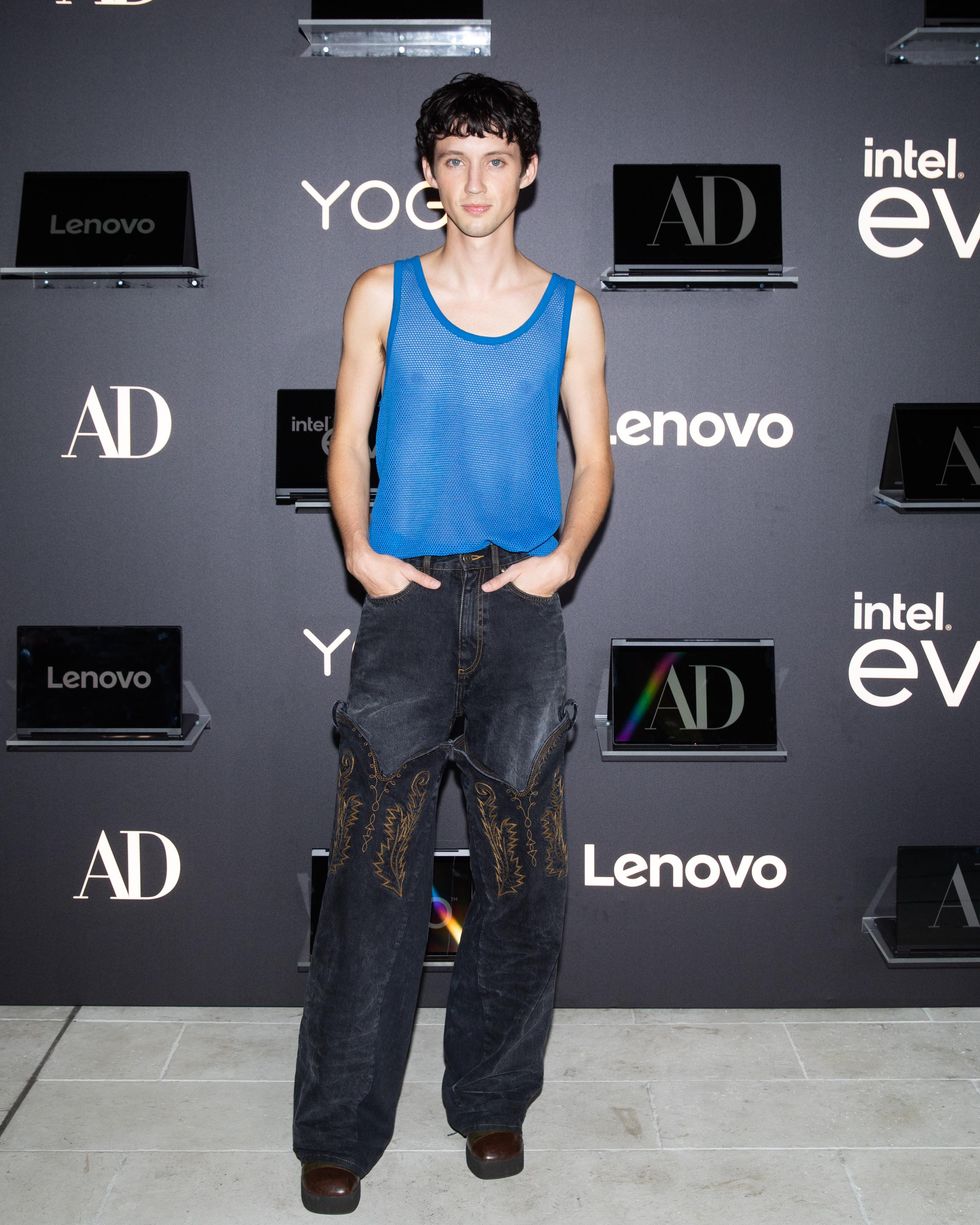
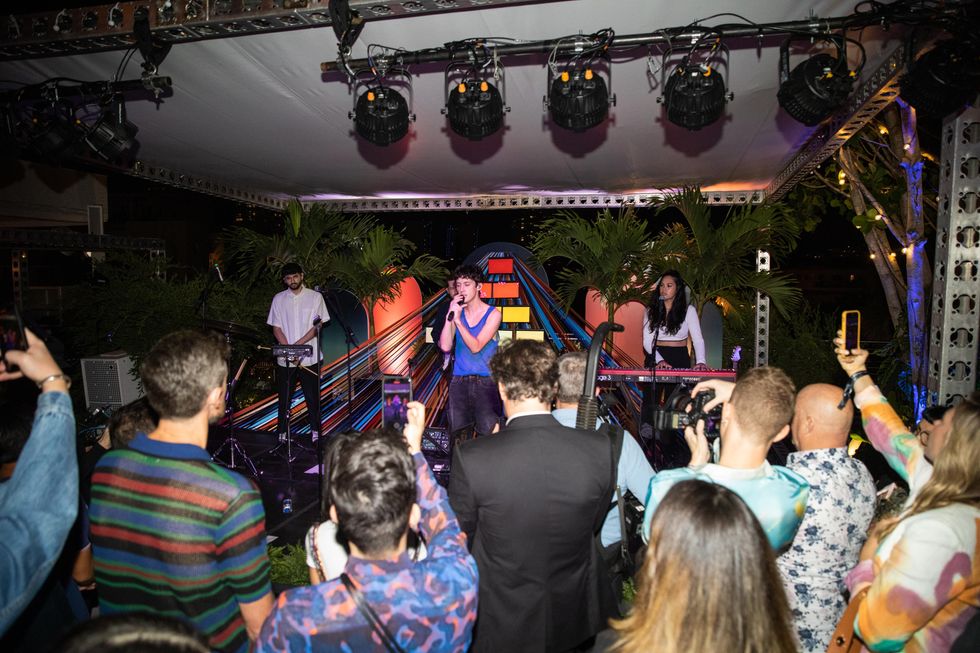
“If everything turns to shit, I’m gonna go run errands for Pamela Shamshiri,” joked Troye Sivan during his Miami Art Basel performance, referring to the interior design all-star whom he collaborated with on staging. It’s fitting, considering Sivan spent his lockdown living in Australia and renovating his Victorian-era Melbourne home alongside David Flack. (Reading nooks! apple tree centerpieces! the “most comfortable couch in the world!”)

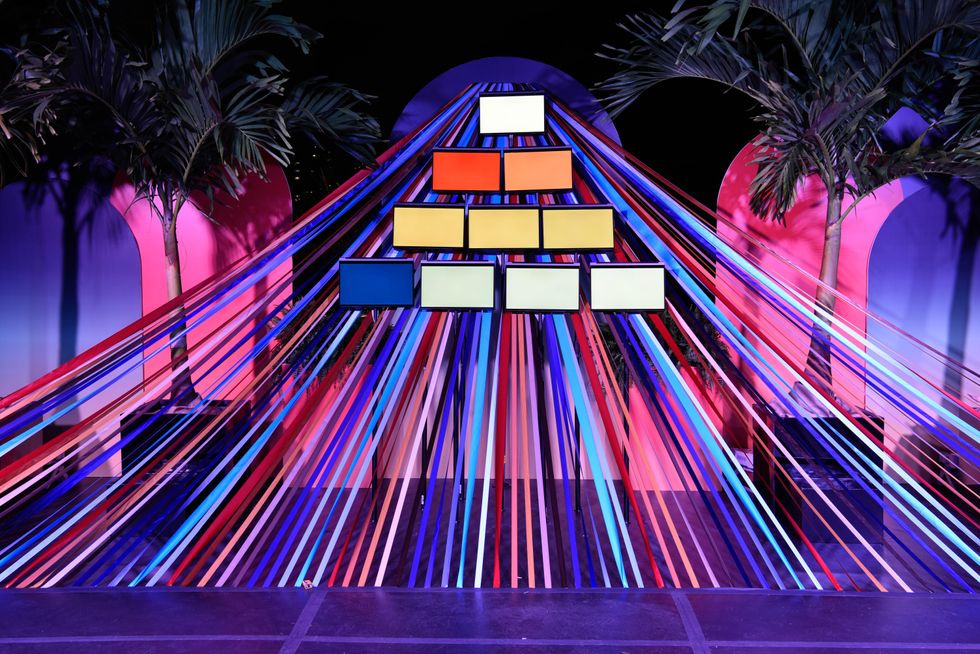
For Architectural Digest‘s AD100 launch, the Aussie pop star was asked to work with Shamshiri and Lenovo Yoga to call upon fan submissions to bring his Art Basel installation to life. They sent in ideas for four categories — “Paradise on Earth,” “Technology and Progress,” “Living in the Moment,” “Beauty and Art” — and helped Sivan land on an original background for his acoustic South Beach set at The Goodtime Hotel.

This was Sivan’s second live show post-pandemic, following his opening slot for the 2021 VMAs, and his parents stood front-row, iPhones raised to document the entire thing with giant smiles. Sivan was openly nervous, which is fair considering the guest list included everyone from Pharrell to Venus Williams, but he confidently powered through an emotional set with songs like “could cry just thinking about you” and his summer smash, “You.”

Ahead of Art Basel, PAPER called up Sivan from his current home in LA to talk about pre-show anxiety, how COVID changed the way he approaches performance and why collaboration helps him get out of his own head.

How has your approach to live performances changed, especially after being forced to make the shift to all things virtual for so long?

I have a new level of gratitude for it. I really appreciate being able to sing for people in real life. At the same time, I got very comfortable, as well, with doing these virtual performances. They allow for creativity in a different way. Essentially, you’re producing music videos, so it takes away a lot of boundaries. But nothing can ever compete with the feeling of being in front of a real crowd. That interaction… it sounds so cheesy, but I got choked up [at the VMAs] the moment I remembered this is my job and my life. I think it had been so long, that it almost could’ve been one big fantasy or dream that I had. Now, I look back on photos of a show from my tour or maybe a festival that I played and I’m like, “Holy shit, I can’t believe that actually happened and that used to happen all the time.” Hopefully we’ll get there again where I’m doing it often, but for now it still feels like such an intense experience again.

When you’re sitting at home alone and just creating things for the internet, it’s really easy to develop an imposter syndrome or you forget that there are even people at the other end.

Completely. I came back [to the US] and I was like, “All these people still want to get in the studio with me? Sick. I just booked this TV show? What the fuck?” I was really surprised, I’ve been so detached from it for so long being in Australia. I moved back home, so even coming back here and seeing that my friends are still here and they all still want to be my friend… I don’t know how to describe it, it just felt like the whole thing could’ve been something I imagined: my whole life in America, my whole life as an artist, could’ve been something that I just dreamt up. And I was like, “Oh wait this is real and it’s still happening and everyone’s so cool.” I was coming from 0 to 100. My first weeks back [in the US], it was the Met Gala and stuff, so it really felt like the craziest transition.

It seems like you did a lot of development in isolation as an artist. You appear to be more comfortable, and especially with your sexuality, than ever before. Do you think that’s true?

I do think that’s true and it comes from, ultimately, I don’t really care as much as I used to. Not in a bad way, like I care so much about the music I’m making and the music videos. I care about my job a lot, but the stuff that surrounds it, like what people say or comments on the internet, I don’t care about them as much. During the pandemic, I found such a solid base, something I was longing for for a really long time was I was lying to myself about how homesick I was. Then when I got home to Australia and set myself up there with my family and friends that have been my friends since I was two, I truly feel in my heart of hearts that I know I could go back to Australia and go to Uni for graphic design, or something like that, and I know I’d be happy. So it took off all the extra pressure and reminded me I’m here doing this because I love what I do and I’m so stoked to have all these opportunities. But it also gave me the sense of confidence and security where I’m like, nothing really matters. Just do it because you’re enjoying it, because you love it.


Photo via BFA/ Michele Sandberg

Pre-pandemic, the industry was like, Go go go. Is this song going number one? Will I become the biggest pop star in the world? Did you ever have that ambition and now do you feel more comfortable existing in whatever environment you find yourself in?

The people I’ve always looked up to, for example, someone like Mark Ronson or Robyn… I see the way they live their lives and I feel like they’re confident to just do good work and then live a good life at the same time. That’s my dream. At a certain point, I would imagine, your work would eclipse your ability to have a good life. I’m really intimidated by the thought of, and not saying I ever could do this, but having that level of commercial success. I think it would really impact your ability to hang out with friends or go to a club or go to a grocery store, and those are all things I really enjoy doing. So I don’t ever aspire to that, but I do think, and I’m even feeling it now, when you’re here in America and there are these cool opportunities and you’re loving your job, it’s very easy to prioritize that over something like family or friends. And I’m so lucky, this is coming from a place of privilege to do this, but I’m like, “You know what? No,I’m actually going to take off some time in December even if we have to say ‘no’ to that really cool thing cause I want to go on a family holiday for the first time in two years.” So it’s kind of a conscious effort to try and maintain some sort of balance in my life.

Those breaks are important to create work with intention, because otherwise it’s so easy to keep making more, but what exactly are we putting out? You’ve done such an incredible job, especially in the past few years, of releasing projects that look beautifully styled and art directed. You mentioned wanting to go to school for graphic design. Do you feel yourself growing more interested in the visual side of music?

I’ve always really loved that side of it. I’ve always loved photoshop. For me, I’m writing a good song when I’m imagining a music video, so the visuals have always been a huge part of my expression. But then I branched out over the pandemic and designed my house in Australia. I had such a good time falling into that world of interior design and architecture. I really fell in love with these YouTube videos about city planning and my mind definitely was in an exploratory phase. I was really enjoying being bored enough to find new interests because I hadn’t done that in a really long time. And that’s part of again this feeling of security for me. I have so much I want to do, and so much that interests and excites me. My main priority in life is to be happy and mentally stimulated, and I’m lucky that’s happening in music and in acting and in film, right now. I’m also curious to see what shape that takes in other industries or areas of my life. I don’t think I’m going to quit and go to Uni anytime soon, but I feel a sense of peace knowing that it’s there.

Your Art Basel performance is very visual and involved fan submissions for the stage design. Talk me through that process from the beginning and what it was like to work alongside Pamela Shamshiri.

This performance is a combination of pretty much everything we’ve been talking about, which is all my favorite things. It’s design, it’s live performance, it’s music, it’s collaboration. It’s a collaboration between me and Pamela, who’s my favorite interior designer, and then this collaboration with people from all over the US that submitted their ideas, treatments, mood boards, drawings and photos. That’s something that came out of the pandemic: outreach to the people who follow me on Instagram or Twitter became so important and inspiring to me. One of the first things I did in march 2020 was outreach to people for graphic design. It felt so nice to have something that made me feel connected to other people and something that made me feel inspired from my bedroom. I’m never not floored by how great the ideas are, so it was really nice to hop on a Zoom with the winners and talk through where their ideas came from and the “why” behind what they do. Each of them had such specific, different mediums that they were passionate about. Pam and I worked through the ideas, and came up with a really cool stage design and performance.


Photo via BFA/ Angela Pham

It’s always interesting to get an outside perspective on your work.

That’s the thing about collaboration: I would have never come up with half these ideas. It’s so cool to be able to stretch your mind and get out of your own head.

How’d you and Pamela determine what criteria to look at all the submissions through?

I think the criteria was people who felt genuinely inspired from a genuine place. Finding people who found their medium and really expressed themselves through that. One of the winners we spoke to worked exclusively in flowers and their whole treatment was floristry. We spoke to him for like five minutes and he had me thinking about flowers in the most beautiful way: talking about how sometimes beautiful things are not made to last and the flowers are going to die and the fact that they existed in that form in that one moment is beautiful enough. It was so inspiring to talk to all these people, that’s just one example.

One submission category was “Living in the Moment.” What does that mean to you, right now?

Living in the moment is something we’ve all had to really practice doing over the last two years. I’ve had my own struggles with anxiety, which is literally my definition of not living in the moment, and I often find myself not living in the moment. So developing those skills of trying to bring yourself back to the present and if you can create some piece of art that helps people do that… maybe it’s the flowers, maybe it’s a really intimate music performance, I think that’s sweet and very needed.


Photo via BFA/ Angela Pham

From Your Site Articles

Related Articles Around the Web

The Yadkin Arts Council brings the Appalachian Nativity Musical ”Beautiful Star” back to the Willingham Theater stage Dec. 9-12, 2021 | Music

(Yadkinville, NC) –Beautiful Star, a down-home celebration and joyous musical revue, is back for an encore stage run this season from December 9-12, 2021. Beginning with the story of Adam and Eve, leading up to the birth of Jesus, this dramatized retelling will have you tapping your toes and singing its praises. Catchy Appalachian tunes and that peculiar mountain sense of humor make this a holiday favorite of families everywhere. This show also features backtrack recordings by local Bluegrass Americana band, None of the Above.  

Beautiful Star: An Appalachian Nativity

Book by Preston Lane, Music and lyrics by Laurelyn Dossett 

Show Directed by Jessie Grant & Presented by Willingham Performing Arts Academy

Tickets & Additional Information

What & When:”Beautiful Star” – December 9-11 at 7:30-pm; December 12 at 3pm. 

Tickets: $22. Tickets for these shows can be purchased at www.yadkinarts.org or at the Box Office from 10am-4pm, Monday-Friday. 

Where: Willingham Theater, 226 E. Main St., Yadkinville

About the Yadkin Arts Council

Transforming lives in our community through the arts by offering opportunities to encounter, create, and participate is the Yadkin Arts Council’s mission. We believe art is transformational.  Arts open minds, frees imagination, and helps people see the world from different perspectives.

The Yadkin Arts Council is a nonprofit 501(c)3 organization dedicated to enriching the lives of Yadkin County citizens through the arts. In September, 2010, the council opened the new Yadkin Cultural Center, providing a home for the arts in Yadkin County. It encompasses the Welborn Gallery, the Willingham Theater, the Center Bistro, classrooms and meeting rooms, staff offices and working artist studios. 

About the Willingham Performing Arts Academy

The Willingham Performing Arts Academy is located across the street from the Yadkin Cultural Arts Center and is operated by the Yadkin Arts Council. WPAA is a creative team, an educational studio, with a mission to enrich, educate, create, entertain, and collaborate with our community through professional quality productions and training.

About the Willingham Theater

The Willingham Theater hosted its first performance in December 2012, just two short years after the Yadkin Cultural Arts Center opened its doors to the citizens of Yadkin County. While many might dismiss the power of a small city theater, we like to prove that we can indeed bring the big city excitement and experience to our small town. Our state-of-the-art theater seats 193 patrons and showcases a variety of engaging performances ranging from music, dance, drama, comedy, and even film. In addition to ample seating, the Willingham Theater has remarkable state-of-the-art-technology. The Willingham Theater is owned and operated by the Yadkin Arts Council.

Pianist Simone Dinnerstein debuts as stage director in a multimedia recital : NPR

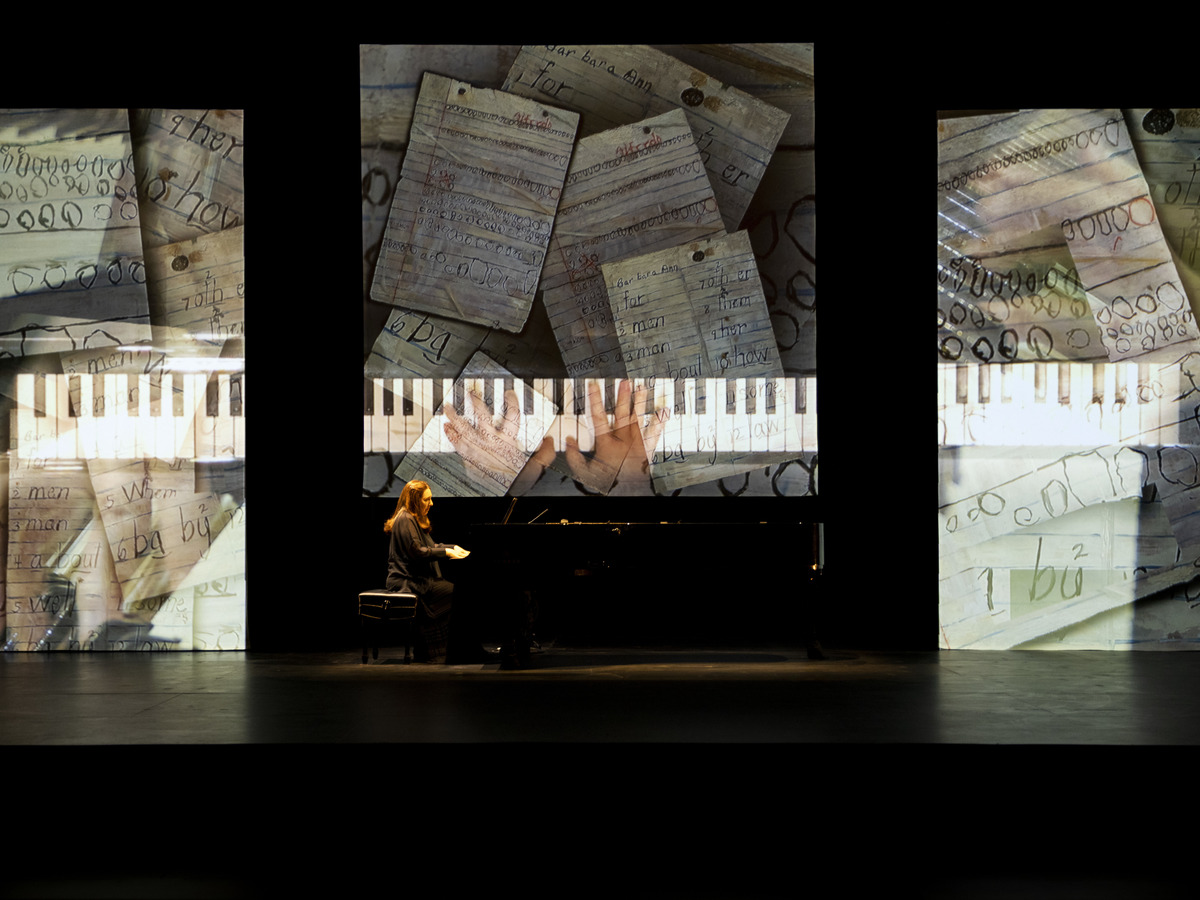
Simone Dinnerstein in dress rehearsal for The Eye Is the First Circle.

Maria Baranova/courtesy of Peak Performances


hide caption

toggle caption

Maria Baranova/courtesy of Peak Performances


Simone Dinnerstein in dress rehearsal for The Eye Is the First Circle.

Maria Baranova/courtesy of Peak Performances

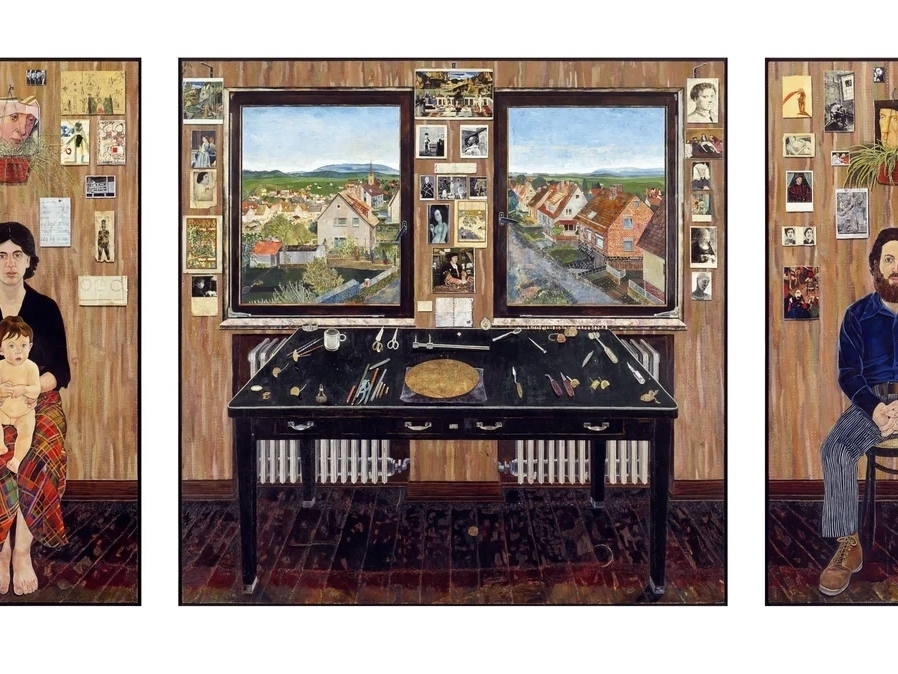
Most of us have snapshots of ourselves as infants. But pianist Simone Dinnerstein has a different kind of baby picture. Her father, Simon, included her, sitting on her mother’s lap, in The Fulbright Triptych, an enormous 14-foot-wide painting. That 1974 masterwork is at the center of a new multimedia performance piece devised and directed by the pianist: The Eye Is the First Circle premieres at Montclair State University in New Jersey on Thursday.

Dinnerstein lives in a house in Brooklyn, not far from where she grew up. During a recent interview, we sat at her dining room table, with a large replica of The Fulbright Triptych behind her – her infant-self looked over her right shoulder. It was all very meta.

Simon Dinnerstein, The Fulbright Triptych

Courtesy of Simon Dinnerstein


hide caption

toggle caption

Courtesy of Simon Dinnerstein


Simon Dinnerstein, The Fulbright Triptych

Courtesy of Simon Dinnerstein

The painting looks almost like a Renaissance altarpiece, “except instead of having the baby Jesus in the central panel, the central panel is all about the creation of a work of art and has a copper plate in the middle,” Dinnerstein says. “That is what my father was engraving at the time that he started working on this painting. My parents and I are on either side of this central panel that is devoted to art. And that’s really how I was raised, in that the most important thing really was art.” Within the triptych are other works of art: postcards of paintings, photos, literary quotations, children’s drawings.

While Dinnerstein is well known for her piano recitals, she has also created performances that venture beyond the bounds of conventional concerts. She recently performed An American Mosaic, a substantial work by composer Richard Danielpour, within a walking tour of Brooklyn’s Green-Wood Cemetery, with four pianos scattered along the route. On Tuesday, Columbia University’s Miller Theatre will stream a new video recital featuring a performance of that same composition.

Here, Dinnerstein wanted to make an evening that explored her own relationship to her father’s painting, which is both a family heirloom and a public work of art. “I knew that I wanted to address aspects of the painting that were meaningful to me, having to do with family and inspiration,” she explains, “and I guess a sense of spirituality that I feel that the painting reflects.”

A few years ago, she approached Jedidiah Wheeler, executive director of the Peak Performances series at Montclair State University, with the idea, and he commissioned her. What captured my imagination,” Wheeler says, “was the possibility that an artist of one particular and indisputable discipline, expertise in piano, wanted to step out of that.”

Wheeler introduced Dinnerstein to Laurie Olinder, a visual artist, to create projections and animations based on the painting. Olinder says she spent two and a half hours on a ladder in front of the triptych with her camera, capturing “every single detail of the painting,” she explains. “Multiple ones of each of the little postcards and the landscape. I even took movies of just moving the camera across the painting.”

Simone Dinnerstein in dress rehearsal for The Eye Is the First Circle.

Maria Baranova/courtesy of Peak Performances


hide caption

toggle caption

Maria Baranova/courtesy of Peak Performances


Simone Dinnerstein in dress rehearsal for The Eye Is the First Circle.

Maria Baranova/courtesy of Peak Performances

Olinder’s visuals, projected on three screens behind Dinnerstein at the piano and at times on a scrim in front of her, focus on various elements of the painting, while the pianist plays Charles Ives’ “Concord” Sonata. The piece is in four movements, devoted to the American writers Ralph Waldo Emerson, Nathaniel Hawthorne, Bronson and Louisa May Alcott and Henry David Thoreau.

The music ranges from spiky and difficult to simple and beautiful. Dinnerstein says the Ives piece feels much like her father’s painting: “That’s the musical kind of equivalent; a huge, ambitious piece of music that is striving to somehow, through the abstract medium of text-less music, to emulate the philosophies of various transcendentalist writers.”

The audience sometimes will see a live feed of Dinnerstein playing from the inside of the piano, captured with tiny spyware cameras placed in the soundboard. At other times, they’ll see images of the pianist walking in the garden of her childhood home.

Simone Dinnerstein in dress rehearsal for The Eye Is the First Circle.

Maria Baranova/courtesy of Peak Performances


hide caption

toggle caption

Maria Baranova/courtesy of Peak Performances


Simone Dinnerstein in dress rehearsal for The Eye Is the First Circle.

Maria Baranova/courtesy of Peak Performances

“It’s so much more creative than the average piano recital,” Dinnerstein says. “I felt like I just wanted to break out of this constraining shell of the recital and be able to do something more vibrant and more dimensional.”

The entire triptych is seen only in the work’s final movement. The manipulation of the painting creates some of the more emotional moments in the presentation. While Dinnerstein says she reveres and loves her father’s creation, “One of the things that I’ve always been bothered by was the fact that my father is on one side and my mother and I are on the other side, and we’re separated by art,” she explains.

“I just wanted them to be sitting next to each other,” Dinnerstein elaborates. “I asked Laurie, ‘Can we do that? Can we bring them next to each other?’ And she said, ‘Yes.'”

So, on a large screen behind the pianist, Olinder has assembled visuals of the nuclear Dinnerstein family, seated together as if to listen to the pianist perform. And in what will amount to an even more meta moment, Simone Dinnerstein’s parents, now in their late seventies, will be sitting in the audience at the premiere of The Eye Is the First Circle.