
New Year, New Yard: 12 Steps to Updating Your Landscaping This Year | Gardening Tips and How-To Garden Guides

As another new year unfolds, have you made any resolutions? Maybe it’s exercising more or eating healthier, but what about your yard?


landscape_01.jpg

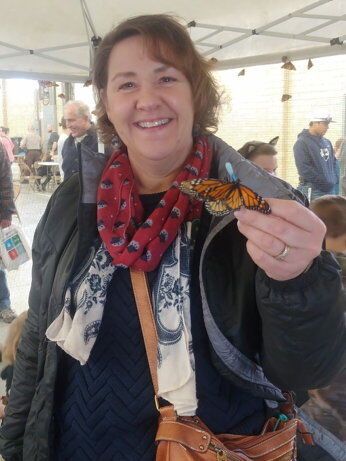
Montour County, Pa., Master Gardener and webinar presenter Carol Burke is feeding monarch butterflies, which are among the pollinators she strives to attract by appropriate landscape planning.


Now’s the time to think ahead for projects that will bring joy to your landscape this year. That’s the message of a webinar presented by Carol Burke, a Penn State master gardener from Montour County with a knack for landscape design and plenty of related helpful hints to share.

If you’ve already resolved to update your home’s landscaping, your first action step is deciding where to start. Burke’s approach, “plan your work, and then, work your plan.” She said landscaping design is the art of developing a plan to assure the best use of your yard’s available space in an attractive fashion.

Step 1: Determine the goal of your landscape update. Are you redoing an existing yard or planning for newly created areas such as adding a deck or a water feature? Do you want to attract new bird and pollinator species, or is repelling deer a priority? After that’s established, determine your timeline. Will you be implementing your new landscape ideas in the spring, or is this a plan that will require several seasons to complete?

Step 2: Look at the bigger picture. Are there invasive plants or unwanted trees that need to be removed? Are you taking into account wet or dry areas that need special attention? Do you want to add upgrades like a patio, fence, pergola or pond? What will the area be used for? Adding an entertainment area involves different considerations than installing a play area for youngsters. Are you looking to screen an area for greater privacy, hide garbage cans or disguise a woodpile? Are overgrown shrubs hiding your home’s best features?



soil health


Step 3: Get a soil test. It will help determine which plants should be planted and where. Measuring the amount of soil pH, humic matter and exchangeable acidity is essential. Burke said you can purchase a soil test kit at any Penn State Extension office.

Step 4: Consider plants that provide seasonal interest. Envision a mixture of plantings that will provide interest throughout the seasons — bulbs that bloom in spring, evergreens that hold up well under a coating of snow or annuals that you can vary from year to year. Research plants that attract birds and pollinators to create an additional dimension of interest.

Step 5: Only plant what you can maintain. Think about how much time you want to spend caring for your landscape, and decide whether you plan to maintain it yourself or if you will need to hire somebody. These decisions will also affect the necessary tools and equipment required for good maintenance.

Step 6: Don’t leave tree selection up to chance. Deciduous trees work best near the south side of a house because they can provide shade in the summer and, after losing their leaves, will allow sun exposure during cold weather months, Burke said. Plant evergreens on the west side where they’ll block cold winds and harsh sunshine.


landscape.jpg

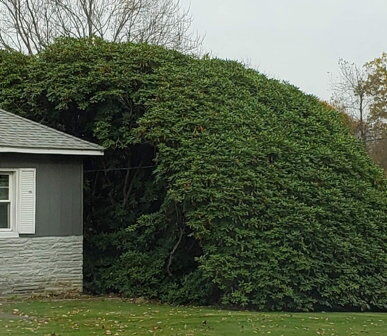
This shrub, planted too close to the house, is an example of what happens when landscapers don’t plan ahead and maintain pruning. This huge shrub has taken over a side yard, created an unsightly appearance, blocked the window views and, most likely, endangered the home’s foundation with roots.


Step 7: Think ahead. How tall and how wide will mature plantings grow? Trees and shrubs that are tiny today will have both branches and roots that will spread. Be sure to allow adequate space to avoid overcrowding or possible damage from errant roots. Burke advised placing trees off the corners of your home where they will accent your home and add curb appeal while being less likely to block views or limit air circulation.


landscape_02.jpg

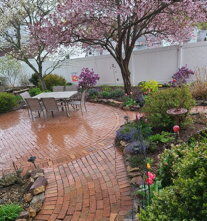
The careful planning that went into this brick patio and the walkway leading to it has created an oasis in this family’s yard. The plantings around it accent it and add interest.


Step 8: Landscaping goes beyond vegetation. Adding permanent, non-living features (known as hardscaping), such as fencing, a pergola, an arbor, a wall, a walkway or a patio, can add both accents and functionality to your yard. Consider a walkway among flowerbeds for easy access to weed, deadhead, etc., as well as to create a pleasant place for strolling. Brick, flagstones or pavers are appealing alternatives to concrete. A pergola provides a shaded area that’s perfect for entertaining or providing a comfy spot to sit and enjoy your lawn. Water features, like small ponds or fountains, can be both attractive and relaxing. Fences and walls don’t need to be lengthy to provide eye-catching appeal.

Step 9: Put your plans on paper. You don’t need to be a landscape architect to map out your lawn or garden layout, but drawing it — even in rough form — will help you be more attuned to the realities of your site. Burke emphasized these basic principles of design: scale, balance, unity, rhythm, accent and repetition.

Step 10: Establish a budget. Keep things real by estimating the costs for your project. Explore prices for plantings as well as any hardscaping, and don’t forget to include the cost of equipment that you might need to buy or rent. This will help establish if you need to scale back your plans or perhaps spread them out into affordable phases.


1120 Japanese Barberry.jpg

Japanese barberry and two other invasive species were added to the list of plants that are illegal to propagate or sell in Pennsylvania.


Step 11: Stamp out invasive species. Some plants that look nice aren’t. Barberries are a prime example, as are oriental bittersweet. They might add pops of color, but they spread easily over a wide area through bird droppings and can gradually overtake a forest. Bradford pears are an invasive tree that spreads quickly. All three of these came from Asia and thus are not adapted to our local flora and fauna. For more information on identifying and removing these and numerous other harmful plants, Burke recommended consulting conservect.org.

Step 12: Use native plants whenever possible. Native plants are already well adapted to your climate and ecosystem, so they will be healthier and require less maintenance than more exotic choices. They typically require less watering and fertilizing, and they attract and support wildlife, native birds and pollinators. They come in all sizes and colors, so finding ones that fit your yard’s style isn’t a difficult task. To find native plants that meet your needs, Burke encouraged using the native plant finder nwf.org, which provides plant information based on your ZIP code.

Carol Burke’s closing words of advice were to choose a few plants you love and decide where they will fit best. Then ask yourself, “What do I need my yard to provide for me?” And have fun making those wishes come true.

Carol Burke’s complete presentation, titled “New Year’s Resolutions for Your Lawn,” is available on demand through Jan. 24, 2023 by registering here. There is a $5 registration fee.

Jacksonville Steps Ahead | Landscape Architecture Magazine

Florida’s Emerald Path strides toward a more walkable future.

By Margaret Shakespeare

An open trail within a park
The path will develop connections to the h2o and present prospects for character-centered participate in. Courtesy Groundwork Jacksonville.

McCoys Creek Boulevard in Jacksonville, Florida, is a big thoroughfare that progressively is closed to targeted visitors mainly because of flooding, even after a regime afternoon shower. It’s one particular of lots of spots in the town that, because of to growing older infrastructure like undersized pipes and inadequate drainage—particularly in more mature residential neighborhoods—now encounters long-term flooding gatherings.

To handle these infrastructure demands and help lessen the city’s reliance on vehicular transportation, in 2019, the Town of Jacksonville formally adopted a prepare to establish the Emerald Path, a 30-mile community that will extend and link the handful of pedestrian pathways that have been constructed around the many years, which include the Northbank and Southbank Riverwalks on the St. Johns River.

Led by a public–private partnership in between the metropolis and Groundwork Jacksonville, aspect of a countrywide nonprofit trust network, the bold multiuse path process will offer direct relationship concerning 14 near-in neighborhoods, linking much more than a dozen faculties and faculties, parks, and hospitals.

“The Emerald Path breaks down the invisible limitations that independent neighborhoods. This invitations curiosity and sales opportunities to a socially and physically linked Jacksonville,” claims Andrew Kohr, ASLA, a principal and director of landscape architecture at Pond & Company, which has led the style and design of the Emerald Path for Groundwork Jacksonville.

A map of Jacksonville's Emerald Trail
When full, the 30-mile Emerald Trail will link 14 historic downtown neighborhoods. Courtesy Groundwork Jacksonville.

Adjacent advancements include the restoration of McCoys and Hogans Creeks, tributaries of St. Johns River, and the redesign of McCoys Creek Boulevard. These efforts have motivated community involvement, which include creek cleanup volunteers and an apprentice landscape design and style youth system termed Environmentally friendly Staff Youth Corps. The software, which serves youngsters ages 13–18, is run by Groundwork Jacksonville. Emerald Trail initiatives have involved creating a pollinator backyard garden and a tiny fruit orchard.

Kohr is at present concentrating on the almost finished a person-and-a-half-mile Emerald Trail portion by way of the LaVilla community. The segment will link to the current 3-mile S-Line path (a Rails-to-Trails Conservancy task) and established the stage
for the following segment, alongside Hogan Avenue, where there are undersized pipes to be upgraded. Further drainage to manage stormwater is also needed. “It’s [been] block-by-block solutions. Micro-
solutions with a very similar aesthetic,” Kohr says of the venture, which is projected to be total by decade’s stop.

The Model Mile

The LaVilla segment is staying dealt with as a multipurpose “model mile,” informing Kohr’s other structure do the job, building advertising momentum, and introducing the Emerald Path and its benefits to adjacent communities. “Our target was not to insert any new structures,” Kohr states. “We noticed a collection of experiences—parks, a pond, a bridge—and connecting opportunities.” The team seemed to activate forgotten areas and include multifunctional features, and along the path, strategically planted shade trees present habitat, mitigate heat, and further manage stormwater.

Performing with the city and the Florida Office of Transportation, Kohr’s team also reconfigured the Park Avenue Bridge from four vehicular lanes to two, allowing for for the trail as well as 8 ft of buffer house with shade structures, elevated seating, and skyline vistas. “The neat section about the bridge was to get people to think about how to retrofit roadways within just the existing infrastructure,” Kohr claims. “The value cost savings are tremendous. More asphalt equals a lot more impervious surface, which equals an raise in infrastructure wants for stormwater conveyance. We need to have to appropriate-dimension streets and retrofit cities with street weight loss plans. Applying what we have superior is wiser and far more fiscally liable.”

Margaret Shakespeare is a freelance contributor to Landscape Architecture Magazine.


Mohammed steps into new period of Beauty and Illusion | The Guardian Nigeria News

Alexis Galleries

Two essential components, aesthetics and perception, type the pedestal on which Raji Mohammed has built his new paintings. A regular figurative painter, he brings the duality of artwork into his new present, Beauty and Illusion, which opens to the general public from September 11 to 18, 2021, at Alexis Galleries, Victoria Island, Lagos.

The present is also on virtual platforms of the gallery’s social media handles such as, Instagram- alexisgalleries, Fb- Thehomestores & Alexisgalleries.

From his set up signature as a realist, the artist moves into pseudo-abstract expressionism. Nevertheless, his application of colours are sustained in the new style and procedure.

Amongst some of the functions that announce Mohammed’s fresh new canvas textures are Bond (Eko for Clearly show sequence), Unrestricted (Standing Tall sequence) and Secured, all dated 2021.

In every of the paintings, Mohammed lets house, precisely, on the headroom of the canvas to deliver illusory effect in conversation.

Black stripes of yellow, in most artistic expressions that depict Lagos, radiate aura of chaos. But in Mohammed’s Bond (Eko for Exhibit series), the canvas emits glamour from a few figures versus yellow track record of black stripes.
Perhaps, just one of most naughty areas of generating a masterpiece portray is the decision of firming for qualifications.

For Standing Tall, Mohammed’s brushings in linear technique for the qualifications makes contrast for the central determine to blossom. The attractiveness of the painting lies a lot more in the artist’s coalescence of loud colours, in the figure and subtleness of the qualifications.

The concept, Attractiveness and Illusion, was encouraged by a assortment of thoughts and awareness I collected from investigation and conversation with current working day experiences,” Mohammed said. “I discovered that many of the points that seem to be like an anchor are just a mirage, and that the modern society thrives on these illusions to continue to be applicable.”

He defined, “the 11 performs in Natural beauty and Illusion also existing the concept of true magnificence in growth, protection, unity and inclusivity as I juxtapose it with themes of buzz, stereotype, relevance, terrible governance and inequality.”

For Mohammed and most youthful, emerging as nicely as mid-career artists, transiting from a single interval to another will come with the apprehension around the mysterious. And dousing these types of dread, Mohammed seemed to have been bold plenty of in populating his present with performs of the new period of time. His past fashion of immediate realism, he warned, is not dumped but.

“This fashion is not replacing the a single I’m regarded for, but I want to use this exhibition to display the art local community that there is a different facet to the Raji brand or signature,” he disclosed. “I continue to create image-impressionist will work but determined to exhibit a entire body of function in a design I have been doing work on for shut to 3 decades now in which I have exhibited some of my explorative will work both of those in Nigeria and outdoors the country.”

Mohammed initial showed in the gallery, five years in the past. The gallery statement included: “Raji Mohammed is a figurative painter, who has about the several years, mastered his artwork. He is relentless in teaching and practising in a pattern that speaks progress. Raji has properly trained underneath the watchful eyes of fantastic masters, applying everyday lifetime occurrences and moods all around him as inspirations to generate inspiring functions of artwork.”

He examined Fantastic and Used Art at Adeniran Ogunsanya Faculty of Training, Ijanikin, Lagos, and graduated with a National Certification in Education (NCE) Great and Utilized Artwork in 2008. He received a Bachelor of Arts (Schooling) diploma from the College of Nigeria, Nsukka Nigeria in 2015.

The exhibit is sponsored and supported by Pepsi, Tiger, Indomie, Mikano, The Guardian, Wazobia Television set, Neat FM, UPS, Haier Thermocool, Cobranet, Delta Airways, Aina Blankson, The Homestores, Artwork Café, Shed In Lagos, Arzeh Intergrated Ltd, and AMG Logistics.

The gallery is partnering Cerebral Palsy (CP) Centre, which supplies treatment and care for youngsters with CP, grassroots awareness campaigns experiencing the challenges of increasing little ones with CP, advocating for support and plan alterations in favour of men and women residing with CP and other disabilities, by donating aspect of the exhibition proceeds to its system.