
Landscaping tips and best practices for a low-maintenance lawn


Front-hedge-St.-Louis-e1527787716477.jpeg

Photo courtesy of Frisella Landscape Group


As spring arrives, many homeowners are undoubtedly looking for ways to transform the state of their landscaping. From design and foundation to everything in between, this guide can teach you how to use evergreen trees and plants that provide foliage year-round to create the perfect low-maintenance lawn.

Three questions to ask yourself before you begin

Every living thing requires a certain degree of sustenance and nurturing, which is why “maintenance-free” landscapes aren’t entirely realistic. Low-maintenance landscapes, however, are achievable with a few impactful, long-lasting steps. Tony Frisella Jr., president of Frisella Landscape Group, lists three important questions to consider when designing your low-maintenance landscape:

  1. Am I choosing plant material that grows well in Missouri? Choose plant materials that grow well in Missouri plant hardiness zones 5 through 6. These USDA designations indicate how well a plant will thrive given the typical and extreme climate conditions in that area. Keep in mind that although St. Louis is in zone 6, harsher zone 5 winters can cause some plant material to burn and die. As you get closer to downtown St. Louis, zone 6 plants are typically safe – but it’s still important to research the hardiness zone of the plant material you’re selecting.
  2. Have I incorporated evergreens into my landscape? Evergreen trees and shrubs are hardy and low-maintenance. “Some options for low-maintenance evergreens include cypress, arborvitae, spruce and junipers,” Frisella says. “Evergreens come in all different sizes, colors and shapes, so there are many options to choose from.”
  3. Is there year-long interest? Incorporate a variety of plants in your landscape that are bred or cultivated for the features you want. “Missouri natives are colorful and interesting, but remember that being native does not always mean low maintenance,” Frisella says. “Native plants might require less irrigation and fertilizer, but for landscapes surrounding a home or building they can create as much, if not more, debris removal in the spring and fall cleanup.”

People are also reading…


Defiance-Missouri-Landscape-13-e1527617358364-1.jpg

Photo courtesy of Frisella Landscape Group


Frisella encourages homeowners to think of the big-picture when beginning their landscaping journey. Expect that trees and plants may need maintenance and care for two or three years before they’re fully established in the landscape. After that, however, most plants become low-maintenance and only require pruning once or twice a year.

The environmental impact of landscape maintenance

Landscape maintenance requires more than just selecting plants that establish easily. Site conditions, sun and shade impact, wind, drainage, water flow and soil assessment all factor into landscape design and upkeep.

“We can find the best fit where plants will be the happiest,” Frisella says. “Once we know our landscape will be functional, we can incorporate beauty. We use different design compositions, layouts and principles to add harmony to the landscape.”

Trees and plants that provide year-round foliage

Trees with year-round foliage can add a distinct element to your landscape from one season to the next. For example, the magnolia grandiflora (Bracken’s Brown Beauty) is a broadleaf evergreen featuring beautiful dark green leaves that shine along with fragrant white flowers in the spring.


Formal-Landscape-Design-St.-Louis-Missouri18.jpg

Photo courtesy of Frisella Landscape Group


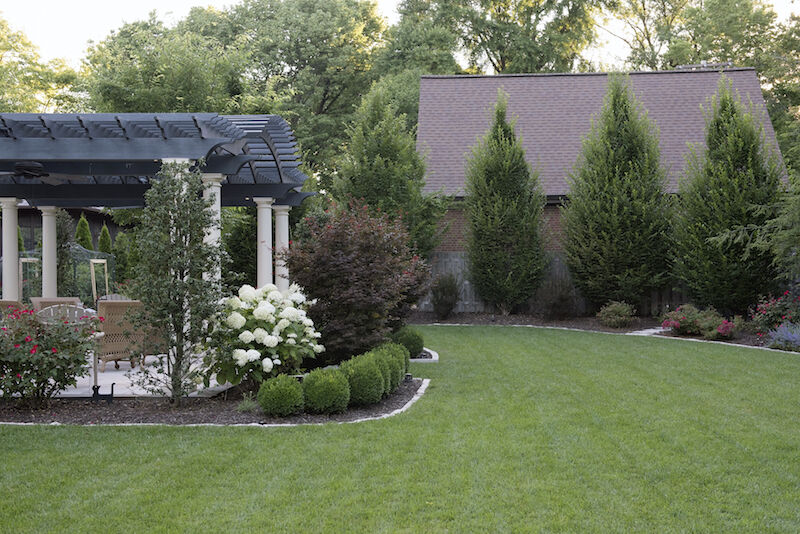
There’s also the cedrus deodara (Karl Fuchs), which serves as a great focal point for any landscape by giving height and texture to a home. Other notable recommendations include the tsuga canadensis, a low-maintenance conifer that favors shade and touts a feather-like texture, as well as the chamaecyparis nootkatensis (Glauca Pendula) which features lacy, blue-green foliage paired with a dramatic weeping branch structure.

Other landscaping tips and best practices to know

Research is key! Make sure the plants you select fit your goal of achieving a low-maintenance landscape.

It is also important to keep an eye on your irrigation system, making sure your plants aren’t getting more or less water than needed. Many times evergreens begin to yellow and die from the inside out, which is a sign of a plant receiving too much water. If a plant is dying from the top down, this is a sign of drying out. “Don’t be afraid to get into the soil a few inches,” Frisella says. “Then you can assess the situation.”
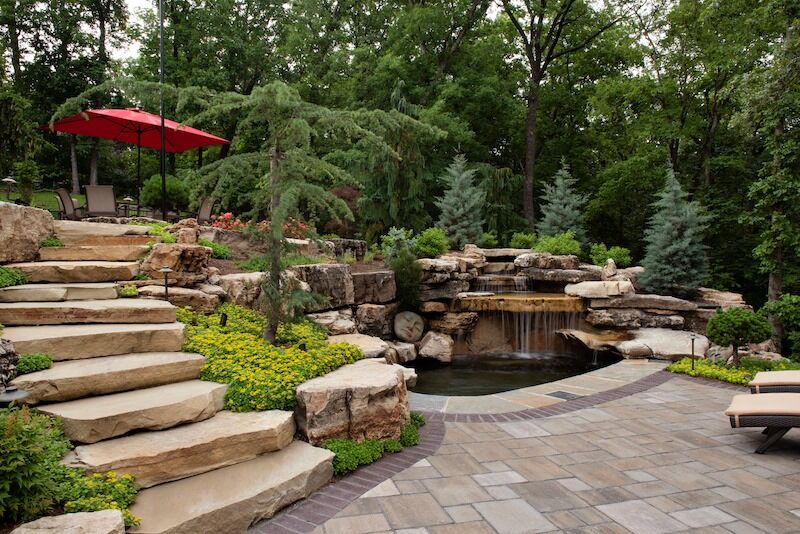


Frisella-Landscape-Group_-Wildwood-Natural-Pool-8.jpg

Photo courtesy of Frisella Landscape Group


If you get stuck or need another opinion, consult a landscaping expert for input.

Frisella Landscape Group, 2214 S. Big Bend Blvd., Richmond Heights, frisellalandscapegroup.com

Tips to bring minimalist interior design into Indian homes

Minimalism holds a assure of decluttering our houses and simplifying our life, serving to us cope with our latest living design and style. Fundamentally, minimalism is intentionally residing with only the matters one particular truly needs- this plan of uncluttered and thoroughly clean house also will come from our motivation to request and adapt that we can are living in any place with a whole lot less and anything at all of excess is extracted. A minimalist aesthetic attributes cleanse strains, hanging products, and a profile that is dramatic in its simplicity and delivers a sensation of openness.

Although minimalist inside design and style can in some cases be price tag-helpful, eco-friendly, and may eventually add to the democratization and accessibility of excellent layout, it has also turn into synonymous with a rarefied quest for the perfect object, a luxurious that only the privileged couple of can pay for and that can lead to its possess type of perpetual excess. (Also examine: 10 inventive thoughts to give your home a new look on tiny budget )

Jyoti Jaiswal, Designer, Livspace, shared with HT Life style, some recommendations on how you can carry minimalist inside design and style into Indian residences.

1. Introducing openness to place

Prevent cluttering the area. Control the temptation for a lot of furnishings. The notion is to preserve almost everything open up when it is a minimalist interior style. Spend in multi-useful and standout furnishings items and allow them shine. It’s then about constructing a story around it with lamps, plants, and art

2. Incorporate distinct shades and textures

Making use of a monochromatic color palette is a good way to bring warmth to the room by incorporating various shades and mixing textures. For instance, the use of linen wallpaper and gentle wool materials and rugs in the bed room provides comforting warmth contact. In the toilet, the texture and grain of tile patterns can include visual desire although continue to keeping a neutral colour palette. Wooden components can soften stark white or concrete things.

3. Use of textiles

Textiles increase texture and give additional dimension and warmth to a space. Material, bedding, cushions, and area rugs in various textiles these types of as linen, wool, and cotton are just a several examples of how you can increase warmth and convenience to a space whilst sustaining a minimalist fashion.

4. Sights can communicate for them selves

If your house has a phenomenal watch, lower the complexity of the indoor house and allow the focal stage be the look at of its glory. Take away items that you really don’t use and retain household furniture uncomplicated. Some indoor crops or some artwork would be a terrific suggestion

5. High quality fixtures

Minimalist actions are all about embracing frugality. Minimalist interior design is not necessarily about paying out much less. Utilizing some good quality fixtures or substantial-quality storage units or gas fires is an impressive way to enhance devoid of cluttering.

6. Mild as decor

Choose for lighting that’s gorgeous. Chandeliers may possibly be a minimalist’s worst nightmare although, there are some stunning lights accessible that are operates of artwork in by themselves and can completely complement the model. Hanging fall lights operate well or request out a frosted glass pendant gentle to add the sense.

7. Use glass as decor

Glass can be an efficient choice when scheduling a job all around minimalism. It is unobtrusive, can be invisible, if require be, and will allow for lots of mild to filter deep into inside spaces.

In summary, minimalism is not just a style fashion, it is a way of everyday living that celebrates a easy, litter-free of charge existence. It adds aesthetics and personality to your house, generating a calming and serene place all-around you.

Adhere to a lot more stories on Fb & Twitter

Jennifer Miree Cope Announces Publication of Her Latest Landscaping Tips in Disrupt Magazine

Jennifer Miree Cope shares beneficial gardening ideas in “Discovering Your Eco-friendly Thumb” to aid everyone delight in the splendor of a healthy back garden.

BIRMINGHAM, ALABAMA, Usa, February 1, 2023 /EINPresswire.com/ — Placing in several hours of really hard get the job done and paying barrows whole of cash at the nursery just to enjoy vegetation fall short to prosper can make the average newbie gardener want to give up. Fortuitously, Jennifer Miree Cope is listed here to notify every aspiring gardener that they can realize success at just one of the healthiest hobbies on the world.

Numerous people today want to acquire a environmentally friendly thumb but discover that finding started out with gardening is discouraging. The push to build and manage the backyard of their goals is not enough gardeners want to obtain a a great deal greater ability set.

Cope maintains that the important to a pleased, healthier backyard garden is acquiring back to principles. Her educational short article in Disrupt Magazine guides gardeners as they start off their journeys by clarifying widespread plant phrases. She also clarifies the 3 basic principles of gardening glory: deciding on the proper plants, offering proper vitamins and minerals, and having more pleasure from your yard.

Less than Cope’s self-assured tutelage, readers will shortly master that the specialized side of gardening is not impossible to master. Persistence and a willingness to discover from blunders are important.

Cope’s fascination in all things wellbeing-relevant will help travel her interest in gardening. Gardening will help make muscle energy, guarantees contributors get enough vitamin D exposure, encourages fantastic slumber, and is an superb instrument for handling tension. As Jennifer Miree Cope details out in “Discovering Your Inexperienced Thumb,” “Gardening should not boost your worry stages it must lower them.”

Gardening is one particular of the most preferred pastimes in the United States. With just about $2 billion spent on gardening in the U.S. each individual yr, it’s approximated that about 55{6d6906d986cb38e604952ede6d65f3d49470e23f1a526661621333fa74363c48} of American households preserve some form of backyard garden, like foods gardens. Cope’s eager insights into plant collection and treatment will assist residence gardeners get much more and commit fewer.

Viewers of “Discovering Your Inexperienced Thumb” will enjoy the very simple-to-comply with gardening assistance that comes from Cope’s individual and expert working experience as a landscape designer. Her background in engineering drew her to the globe of landscape design and style when she re-entered the office right after her little ones turned young people. In the post, Cope strikes a equilibrium amongst the critical complex elements of a profitable backyard and the sheer satisfaction that a flourishing backyard garden can bring to existence.

Disrupt Journal is printed by a new era of developers, creators, and thought leaders who have identified Jennifer Miree Cope as a correct disruptor — anyone whose impact worries the standing quo and has a significant influence on viewers.

About Jennifer Miree Cope

Jennifer Miree Cope is a happy graduate of Vanderbilt University and retains a degree in electrical engineering. She is a proficient landscape designer whose expertise are extremely sought following in the Birmingham area. Cope is a passionate supporter of the Susan G. Komen Basis and the O’Neal Comprehensive Most cancers Centre at the University of Alabama in Birmingham.

Jessica Brown
Mercury Information Media
+1 303-800-6186
e-mail us in this article

Real Estate in the Know: Wintertime landscaping tips | Opinion

Wintertime brings with it a time whereby house landscape appears to be to choose on significantly less of a precedence with routine maintenance and care. Just after leaves have fallen to the floor and grasses have turned brown, it appears landscaping goes into a winter season hibernation. However, a modern dialogue with Bernie Mondragon of Bernie’s Landscaping states this is not always the circumstance, specially if you are preparing to get a head begin for spring planting. Bernie experiences that January and February are the perfect months to transplant plants since most plants are dormant, and they will go by means of a lot less of a shock. Planting can occur any time of the year, nonetheless the excellent time in particular for trees is in the fall and wintertime months.

“During the wintertime months the greatest detail that can be finished to hold up landscaping is to hold watering,” explains Bernie. “Just because it’s cold does not imply plants and lawns never want water. Developing a program whereby crops and grass get watered throughout the center of the working day when temperatures are hotter will allow vegetation to stay away from freezing at night time.”

Bernie more opinions that, “Some of the best drought resistant vegetation to think about planting in this spot are lantana of any shade, crimson yucca, Mexican Desert Fowl of Paradise, crape myrtle trees and bushes, Ray Wooden ash tree, chitalpa tree, and palo verde trees. These are basically some of my favored trees and desert space crops.”

With the growing price of water charges, Mr. Mondragon encourages persons to take into account xeriscaping their property if they have not however completed so. There are a lot of alternatives to make a property seem gorgeous while conserving drinking water. Artificial turf is a wonderful option and will help save drinking water and funds in the very long operate.

Becoming 1 of the busiest landscaping organizations in the valley, Bernie does mention there are stresses with remaining a person of the major.

“The final couple of many years have been a challenge to all people. My enterprise, Bernie’s Landscaping, has not been immune to stringent prerequisites and restrictions that have been imposed on all of us,” he adds. “The finest problem for us has been finding shoppers to fully grasp we are a modest enterprise and have a plan to stick to and we just can’t often get to your occupation right away.”

Timewise, Bernie’s Landscaping is normally booked about two to a few months out with significant assignments. Scaled-down and unexpected emergency jobs can be in good shape in a shorter total of time.

Clint Freeman is a Broker Affiliate for Coldwell Banker Greatest Realty.

Pro tips for imagining and designing your dream Pacific NW garden

Editor’s Be aware: This is the first of a two-element Increase sequence on garden structure. Component two will appear listed here following 7 days.

A HOSPITABLE Backyard garden helps make room for folks and vegetation. Laura Kleppe is a back garden designer a skilled horticulturalist licensed by the Washington State Nursery and Landscape Affiliation and proprietor of Gardenworkz Outdoor Living, a style and design agency focused to generating customized gardens and out of doors living areas.

Prior to Kleppe sits down to the drafting desk, she guides shoppers by means of a sequence of questions — a back garden style and design workbook of types. Whether you are organizing to use a designer or are energized to dig in on your own, now is an outstanding time to do your research and lay the groundwork for generating a yard that is a very good healthy.

Make a backyard garden would like checklist
Just about every style and design starts with a conversation. Kleppe asks shoppers to name a favored outside memory, visualize their best landscape and think about how they will use the new landscape. This is the time to identify favorite vegetation and prioritize seasonal interest. Hunting to cultivate edibles? Set it on the record.

“Most of us have fond reminiscences that can aid condition our personalized landscape,” Kleppe states. “As a designer, I see myself as a translator of those backyard goals and needs.”

Whilst not all cherished associations translate to a garden that will work in our local climate, Kleppe looks for options that thrive in the Pacific Northwest. Just lately, the designer specified New Zealand flax (Phormium), many sedums, torch lily (Kniphofia) and crepe myrtle (Lagestromia) for a consumer who was partial to the Southwest. The consequence was a waterwise landscape filled with coloration employing vegetation that do well in our region.

If nurturing wildlife is a priority, Kleppe indicates attracting birds and pollinators by picking crops that foster habitat and deliver many seasons of bloom and berry. And if you’re hunting to lessen upkeep and preserve sources — and who isn’t? — the designer advises planting significant sweeps of ornamental grasses, drought-tolerant perennials and hardy floor covers. Native plantings support wildlife whilst also minimizing backyard inputs.

The designer’s purpose
“I assistance shoppers optimize their needs within just current constraints and finances,” states Kleppe, who functions to optimize every square foot of available place. Cozy seating and an outside dining desk inspire leisure time in the garden a warming fire aspect extends these hrs into the evening and chilly situations of the calendar year. If you like to entertain buddies and household, you’ll want to scale the place accordingly, it’s possible even include an outdoor kitchen area.

While you’re dreaming, do not overlook to identify leisure wants, like a perform place for little ones and space for animals. Or possibly you’d like a bocce courtroom, placing green, sport court docket or a committed space for cornhole.

When faced with competing priorities amid residence members (it’s certain to materialize), the designer indicates weighing how the space will be used and how generally. Investing in regularly made use of areas helps make feeling and allows to clarify layout and set up priorities.

Inventory the assets
Up coming, Kleppe conducts a functional evaluation of the web page to decide sunlight/shade exposure and indigenous soil disorders, including any potential drainage concerns. Competent specialists acquainted with jurisdictional constraints and governing municipal codes with regards to clearing and grading, correct of way, and building and tree elimination permits can help you save owners pricey problems. Really do not ignore to examine HOA things to consider.

On the furthermore side, perhaps you really do not have to start off from scratch. Current evergreen and deciduous trees and shrubs are backyard belongings that might be labored into the finished structure. Experienced landscape things are high priced. If you build on what’s by now in put, you can set your methods towards other functions.

Once you’ve described what you want and what you have acquired to perform with, your new garden will commence to consider shape. “There is usually an answer that connects your needs to the options,” Kleppe assures.

Future 7 days, we’ll look at plants difficulty-solving a practical program for care and maintenance and, most significant, budget — fewer dreamy subject areas than a yard desire listing but each and every little bit as critical to the achievement of a finished landscape.

New Year, New Yard: 12 Steps to Updating Your Landscaping This Year | Gardening Tips and How-To Garden Guides

As another new year unfolds, have you made any resolutions? Maybe it’s exercising more or eating healthier, but what about your yard?


landscape_01.jpg

Montour County, Pa., Master Gardener and webinar presenter Carol Burke is feeding monarch butterflies, which are among the pollinators she strives to attract by appropriate landscape planning.


Now’s the time to think ahead for projects that will bring joy to your landscape this year. That’s the message of a webinar presented by Carol Burke, a Penn State master gardener from Montour County with a knack for landscape design and plenty of related helpful hints to share.

If you’ve already resolved to update your home’s landscaping, your first action step is deciding where to start. Burke’s approach, “plan your work, and then, work your plan.” She said landscaping design is the art of developing a plan to assure the best use of your yard’s available space in an attractive fashion.

Step 1: Determine the goal of your landscape update. Are you redoing an existing yard or planning for newly created areas such as adding a deck or a water feature? Do you want to attract new bird and pollinator species, or is repelling deer a priority? After that’s established, determine your timeline. Will you be implementing your new landscape ideas in the spring, or is this a plan that will require several seasons to complete?

Step 2: Look at the bigger picture. Are there invasive plants or unwanted trees that need to be removed? Are you taking into account wet or dry areas that need special attention? Do you want to add upgrades like a patio, fence, pergola or pond? What will the area be used for? Adding an entertainment area involves different considerations than installing a play area for youngsters. Are you looking to screen an area for greater privacy, hide garbage cans or disguise a woodpile? Are overgrown shrubs hiding your home’s best features?


soil health


Step 3: Get a soil test. It will help determine which plants should be planted and where. Measuring the amount of soil pH, humic matter and exchangeable acidity is essential. Burke said you can purchase a soil test kit at any Penn State Extension office.

Step 4: Consider plants that provide seasonal interest. Envision a mixture of plantings that will provide interest throughout the seasons — bulbs that bloom in spring, evergreens that hold up well under a coating of snow or annuals that you can vary from year to year. Research plants that attract birds and pollinators to create an additional dimension of interest.

Step 5: Only plant what you can maintain. Think about how much time you want to spend caring for your landscape, and decide whether you plan to maintain it yourself or if you will need to hire somebody. These decisions will also affect the necessary tools and equipment required for good maintenance.

Step 6: Don’t leave tree selection up to chance. Deciduous trees work best near the south side of a house because they can provide shade in the summer and, after losing their leaves, will allow sun exposure during cold weather months, Burke said. Plant evergreens on the west side where they’ll block cold winds and harsh sunshine.


landscape.jpg

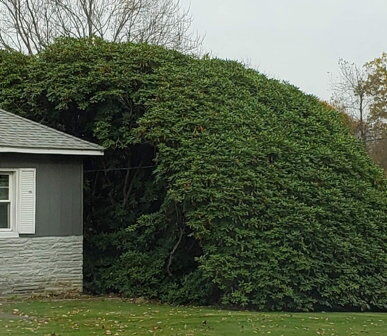
This shrub, planted too close to the house, is an example of what happens when landscapers don’t plan ahead and maintain pruning. This huge shrub has taken over a side yard, created an unsightly appearance, blocked the window views and, most likely, endangered the home’s foundation with roots.


Step 7: Think ahead. How tall and how wide will mature plantings grow? Trees and shrubs that are tiny today will have both branches and roots that will spread. Be sure to allow adequate space to avoid overcrowding or possible damage from errant roots. Burke advised placing trees off the corners of your home where they will accent your home and add curb appeal while being less likely to block views or limit air circulation.


landscape_02.jpg

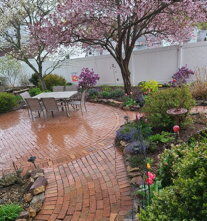
The careful planning that went into this brick patio and the walkway leading to it has created an oasis in this family’s yard. The plantings around it accent it and add interest.


Step 8: Landscaping goes beyond vegetation. Adding permanent, non-living features (known as hardscaping), such as fencing, a pergola, an arbor, a wall, a walkway or a patio, can add both accents and functionality to your yard. Consider a walkway among flowerbeds for easy access to weed, deadhead, etc., as well as to create a pleasant place for strolling. Brick, flagstones or pavers are appealing alternatives to concrete. A pergola provides a shaded area that’s perfect for entertaining or providing a comfy spot to sit and enjoy your lawn. Water features, like small ponds or fountains, can be both attractive and relaxing. Fences and walls don’t need to be lengthy to provide eye-catching appeal.

Step 9: Put your plans on paper. You don’t need to be a landscape architect to map out your lawn or garden layout, but drawing it — even in rough form — will help you be more attuned to the realities of your site. Burke emphasized these basic principles of design: scale, balance, unity, rhythm, accent and repetition.

Step 10: Establish a budget. Keep things real by estimating the costs for your project. Explore prices for plantings as well as any hardscaping, and don’t forget to include the cost of equipment that you might need to buy or rent. This will help establish if you need to scale back your plans or perhaps spread them out into affordable phases.


1120 Japanese Barberry.jpg

Japanese barberry and two other invasive species were added to the list of plants that are illegal to propagate or sell in Pennsylvania.


Step 11: Stamp out invasive species. Some plants that look nice aren’t. Barberries are a prime example, as are oriental bittersweet. They might add pops of color, but they spread easily over a wide area through bird droppings and can gradually overtake a forest. Bradford pears are an invasive tree that spreads quickly. All three of these came from Asia and thus are not adapted to our local flora and fauna. For more information on identifying and removing these and numerous other harmful plants, Burke recommended consulting conservect.org.

Step 12: Use native plants whenever possible. Native plants are already well adapted to your climate and ecosystem, so they will be healthier and require less maintenance than more exotic choices. They typically require less watering and fertilizing, and they attract and support wildlife, native birds and pollinators. They come in all sizes and colors, so finding ones that fit your yard’s style isn’t a difficult task. To find native plants that meet your needs, Burke encouraged using the native plant finder nwf.org, which provides plant information based on your ZIP code.

Carol Burke’s closing words of advice were to choose a few plants you love and decide where they will fit best. Then ask yourself, “What do I need my yard to provide for me?” And have fun making those wishes come true.

Carol Burke’s complete presentation, titled “New Year’s Resolutions for Your Lawn,” is available on demand through Jan. 24, 2023 by registering here. There is a $5 registration fee.