In previous months we’ve highlighted employment possibilities for current graduates and design industry experts with 1-3 decades of encounter. This 7 days we emphasize 5 work for corporations that focus in landscape architecture and urban setting up.
Be positive to test out our editorial certain to new graduates and designers searching to kick commence their careers on Archinect Work opportunities.
Living Habitats LLC seeks an Entry Amount Landscape Designer Spot: Chicago, IL
Specifics: “Residing Habitats is at present trying to get an entry-level landscape designer to join our office in Chicago. Perfect candidates will show superb interaction techniques and style and design capabilities – each digital and hand drawn and the skill to do the job both independently and in a collaborative quickly-paced atmosphere. Productive candidates are anticipated to have complex proficiency in AutoCAD, Microsoft Business, G-Suite, and Adobe Innovative Suite workflows. Practical experience in 3D modeling packages such as SketchUp, Rhino and Revit are most popular. Ideal candidates will have up to 2 years of qualified landscape architecture experience and a experienced degree in landscape architecture.” Study extra listed here.
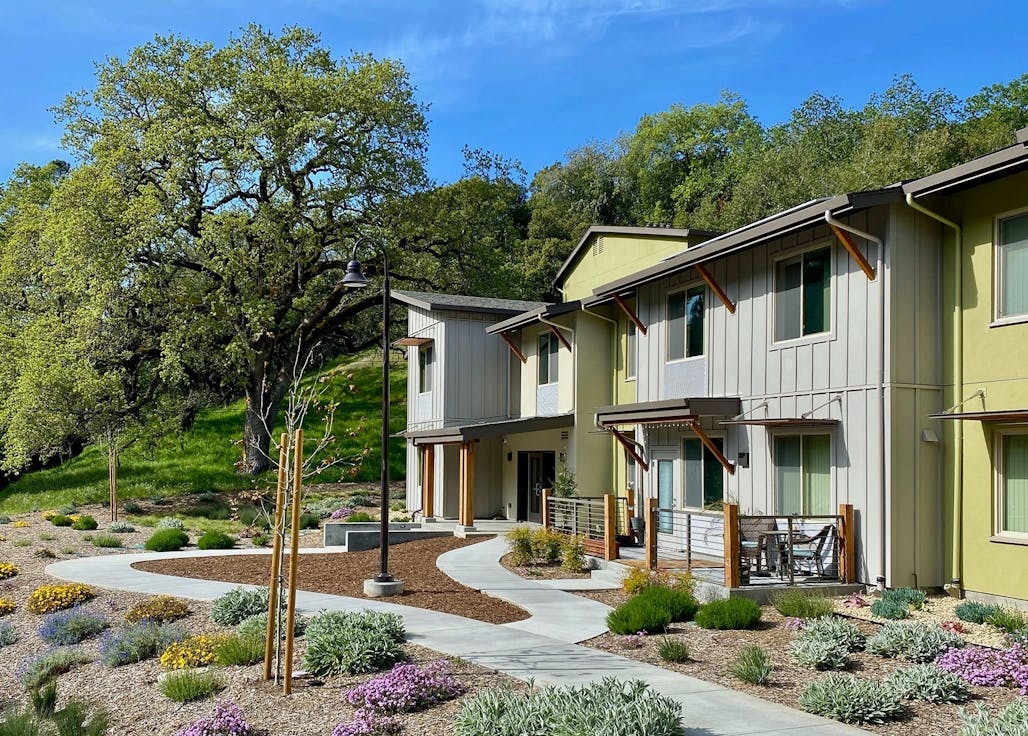
Fairfax Victory Village. Impression courtesy of Van Meter Williams Pollack.
Van Meter Williams Pollack seeks a Junior Urban Designer Location: San Francisco, CA
Particulars: “The Junior Urban Designer will help in all features of the city layout perform at VMWP which include graphic output, presentations, promoting and output of files. Powerful graphic techniques and competency in the subsequent application programs are inspired: Sketch Up, Photoshop, Illustrator, InDesign, and Revit. Hand-drawing techniques are a moreover. Candidates should work effectively in a group and individually in an interactive studio surroundings. A master’s degree in architecture, landscape architecture, planning, or urban structure is chosen.” Read through additional here.
ODA-Architecture seeks a Junior Landscape Designer | Architect Locale: New York, NY
Specifics: “The excellent candidate will have a diploma in landscape architecture with 2-3 years of verified do the job expertise. Primary tasks will incorporate collaborating with project teams to present technical and architectural abilities on varied assignments at all phases from schematic design and style through building administration. Personal need to be remarkably artistic and efficient in household web site planning and landscape structure.” Read far more right here.
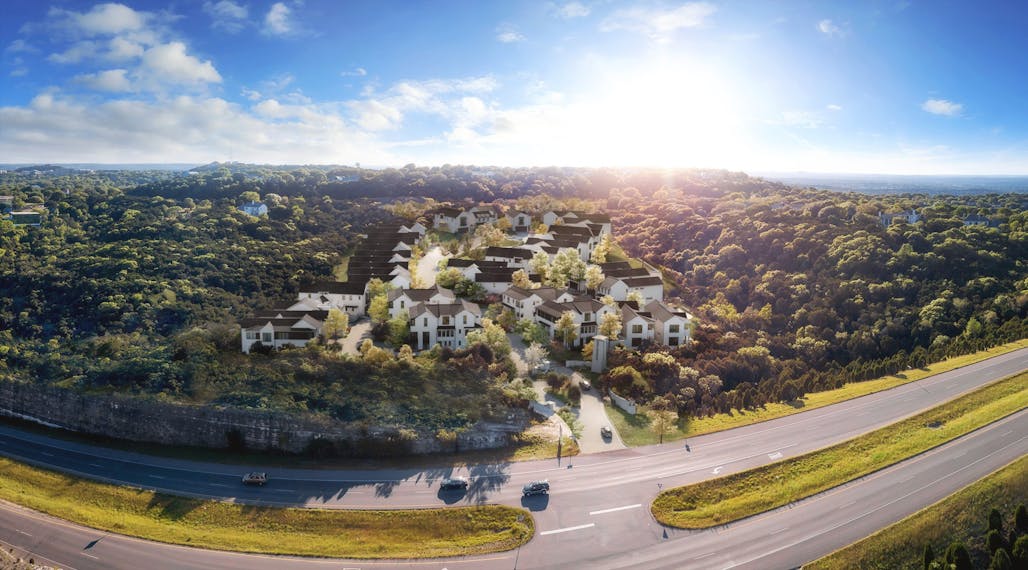
Graphic courtesy of DTJ Style.
DTJ Style and design seeks an Entry Stage Planner Spot: Chicago, IL
Aspects: “Entry Stage Landscape Architect: -3 a long time Encounter: We are searching for a motivated team player who brings a enthusiasm for creative imagination, storytelling, artistry, and positive strength to our design and style agency. This particular person will operate amongst our artistic design and style groups on a myriad of projects and will be liable for several design and style jobs and production documentation. Project sorts and scales encompass a vast selection of possibilities, together with Grasp Organizing, Neighborhood Layout and Internet site-Certain answers for household, resort and combined-use environments on a handful of acres to a number of thousand acres. Possibilities for sustained vocation growth, and improvement are readily available for enthusiastic and proficient persons.” Browse extra listed here.
Gwynne Pugh Urban Studio, Inc. seeks a Junior Designer Locale: Culver Metropolis, CA
Particulars: “Gwynne Pugh City Studio seeks an expert, self-enthusiastic Junior Designer to function in our Culver Metropolis workplace. Gwynne Pugh is a planet-renowned architect and engineer. Gwynne Pugh Urban Studio prides itself on its adaptable range of capabilities and talents together with developing cutting edge architecture ideal to its context, operating with communities and creating a solid city style presence. The firm is dedicated to checking out and enhancing the urban knowledge as a result of architecture, style and design and setting up. Fantastic graphic competencies with proficiency in Rhino modeling and Rendering applying Vray. Must have a expert diploma in Architecture and a minimum 3-5 yrs of whole-time employment in an architecture place of work.” Go through a lot more below.
If your CV or resume is in need of an update or you have to have strategies to increase your interviewing skills resume check our Archinect Tips portion. Committed to offering architects at all stages in their professions searching to sharpen their individual and professional improvement expertise.
If you’re an employer searching to hire top rated expertise or a design and style experienced seeking for a work be certain to examine out new listings daily. Remain up to date with the hottest work listing by following Archinect Jobs’ Facebook, Twitter, and Instagram feeds.
The latest impartial study doc on Urban Landscaping look at expense in Market. It describes how firms deploying these systems across many marketplace verticals goal to investigate its possible to come to be a big enterprise disrupter. The City Landscaping study eludes very practical critiques & strategic evaluation which includes the generic market place traits, emerging technologies, industry drivers, difficulties, regulatory insurance policies that propel the market place development, along with major gamers profile and tactics. This version of Urban Landscaping sector report advocates assessment of Shanghai Development Team (SCG), Evergrande Team, Region Garden, China State Building Engineering Company, LingNan Eco&Society-Tourism Co., Ltd, Shenzhen Wenke Landscape Co., Ltd, PUBANG LANDSCAPE ARCHITECTURE CO.,LTD, Beijing Orient Landscape and Setting Co., Ltd., Palm Eco-Town Growth Co., Ltd., Shenzhen Techand Ecology and Setting Co., Ltd., Shandong Meichen Ecological Ecosystem Co., Ltd., Boda Huanjing Group, Yueyang Forest & Paper Co.,Ltd., Flower King, Misho Ecology & Landscape, Honggutan Landscape Design Team Co., Ltd. & Huayuan Landscape Architecture Co., Ltd.
As Urban Landscaping investigate and software [Municipal, Commercial and Residential & Industrial] proceeds to develop in scope, the market place will see deeper integration and application of additional technologies in the future. This commercialization of current market is playing a positive purpose in accelerating City Landscaping company digitalization, enhancing market chain constructions and improving information and facts use performance. The findings largely aim on class or product type: , World Urban Landscaping Market place Section Percentages, by Variety, 2021 ({6d6906d986cb38e604952ede6d65f3d49470e23f1a526661621333fa74363c48}), Design, Style, Servicing & Other people and many others, which underpins numerous recent innovations in the other City Landscaping systems.
In get to offer a a lot more informed perspective, Urban Landscaping analysis presents a snapshot of the existing state of the quickly switching business, wanting via the lenses of the two finish buyers and provider gives/gamers of to appear up with a more strong perspective.
Sector Scope
Based on the type of solution, the market segmented into :, World wide Urban Landscaping Market Section Percentages, by Sort, 2021 ({6d6906d986cb38e604952ede6d65f3d49470e23f1a526661621333fa74363c48}), Development, Design, Servicing & Other people
Primarily based on the Finish use application, the market segmented into :Municipal, Business and Residential & Industrial
Geographically, the City Landscaping sector size by income is broken down by 18+ nations from North The united states, LATAM, the Middle East, Asia Pacific, Africa, and Europe centered on many attributes such as geographic footprints and organization operation places of players.
Analysts at HTF MI sheds mild on Urban Landscaping market knowledge by State
Asia-Pacific (Vietnam, China, Malaysia, Japan, Philippines, South Korea, Thailand, India, Indonesia, Australia and Some others) Europe (Germany, Russia, the British isles, Italy, France, Spain, Belgium, Netherlands, Switzerland, Nordic Nations, Rest of Europe.) North The us (the United States, Mexico, and Canada) South The united states (Brazil, Argentina, Chile, Relaxation of South The united states) Center East and Africa (GCC International locations, Turkey, Israel, South Africa, Egypt and Rest of MEA)
The City Landscaping study cites various market place development pursuits and enterprise methods this sort of as new merchandise/products and services enhancement, Joint Ventures, partnerships, mergers and acquisitions, and many others that Marketplace players these types of as Shanghai Construction Team (SCG), Evergrande Team, Region Backyard, China Point out Construction Engineering Corporation, LingNan Eco&Tradition-Tourism Co., Ltd, Shenzhen Wenke Landscape Co., Ltd, PUBANG LANDSCAPE ARCHITECTURE CO.,LTD, Beijing Orient Landscape and Setting Co., Ltd., Palm Eco-Town Advancement Co., Ltd., Shenzhen Techand Ecology and Ecosystem Co., Ltd., Shandong Meichen Ecological Natural environment Co., Ltd., Boda Huanjing Team, Yueyang Forest & Paper Co.,Ltd., Flower King, Misho Ecology & Landscape, Honggutan Landscape Building Team Co., Ltd. & Huayuan Landscape Architecture Co., Ltd are employing to defeat macro-financial situations. The City Landscaping Industry company profiles incorporate Organization Overview, Products / Company Offerings, SWOT Investigation, Phase & Total Revenue, Gross Margin and {6d6906d986cb38e604952ede6d65f3d49470e23f1a526661621333fa74363c48} Industry Share.
Extracts from Urban Landscaping Market place Research
1. Sector Snapshot 2. Urban Landscaping Marketplace Factor Analysis – Value Chain Examination – Development Motorists, Developments and Troubles – Porters 5- Forces Assessment – PESTEL Investigation 3.City Landscaping Market place by Variety (2017-2027) [, Global Urban Landscaping Market Segment Percentages, by Type, 2021 ({6d6906d986cb38e604952ede6d65f3d49470e23f1a526661621333fa74363c48}), Construction, Design, Maintenance & Others] 4. Marketplace by Programs/ Conclude Customers (2017-2027) [Municipal, Commercial and Residential & Industrial] 5.City Landscaping Market place: Region Landscape 6. Market place Sizing Breakdown for Each Place 7. Competitive Landscape – Market Share Examination by Players – Organization Profiles
……….. Continued
Information Sources & Methodology
The key resources include the industry industry experts from the Urban Landscaping Industry which include the administration businesses, processing companies, provider vendors of the industrial worth chain. In the considerable study process undertaken for this analyze, the major resources regarded this kind of as Postal Surveys, telephone, On the net & Encounter-to-Confront Study to attain and confirm equally qualitative and quantitative areas. When it will come to secondary sources Company’s Once-a-year reports, push Releases, Internet sites, Trader Presentation, Meeting Call transcripts, Webinar, Journals, Regulators, Countrywide Customs and Field Associations had been made use of.
Thanks for reading through City Landscaping Industry exploration publication you can choose for regional report edition like Western Europe, United states, China, Southeast Asia, LATAM, APAC and many others. Also, we can provide you with customise investigation services as HTF MI retains a databases repository that features Community businesses and Hundreds of thousands of Privately held firms with knowledge throughout many Business domains.
About Writer: HTF Market Intelligence consulting is uniquely positioned empower and inspire with investigation and consulting providers to empower enterprises with expansion approaches, by supplying services with extraordinary depth and breadth of considered management, investigate, instruments, situations and knowledge that support in determination earning.
Speak to US: Craig Francis (PR & Promoting Supervisor) HTF Marketplace Intelligence Consulting Non-public Confined Device No. 429, Parsonage Street Edison, NJ New Jersey Usa – 08837 Cellphone: +1 (206) 317 1218 [email protected]
Paul Wrona’s Crestmoor Park ranch property has an enviable 4 outdoor dwelling spaces—and freshly renovated interiors that consider cues from the home’s verdant location.
By Cheryl Meyers
When it strike the marketplace in 2011, this 1953 ranch household in Denver’s Crestmoor Park neighborhood was a time capsule. Its pine-paneled business office, metallic-wallpaper-wrapped bogs, and eco-friendly galley kitchen were 1960s originals. But to opportunity consumer Paul Wrona, an award-winning landscape architect with much more than a 10 years on the Denver structure scene, the home was the epitome of “good-bones” prospective. (Back again in its heyday, the charming ranch was featured in a journal.)
Paul and Susan Wrona with their children, Finn and Levi. Picture by Kylie Fitts.
Residing Place: A deep, linen sofa and oversize leather chair (both equally from Arhaus) and side table by Gus Modern-day (by way of Mod Livin’) set the stage for lounging in the Wrona family’s neutral residing home. A Jaipur Rugs woven location rug and Crate & Barrel teak espresso table emphasize the natural and organic come to feel. But it’s the property’s mature spruce trees, seen by way of the sliding glass doors, that make the finest components. “The inside is loaded with elevated factors that all seamlessly stream to the outside the house,” suggests designer Kelly Christensen. Photo by Kylie Fitts.
Back again Patio: The wraparound deck was additional during the renovation and is created with Thermory board (thermal-dealt with ash wooden). A pair of Entire world Industry chairs pulls up to the Notus fireplace pit by Nisho. Photograph by Kylie Fitts.
Entrance Exterior: “We live in a terrific neighborhood with fantastic neighbors, so I wished to make guaranteed we had a area to converse out front,” Paul states. “It’s a pleasant location to sit in the evenings and watch the boys engage in basketball or skateboard in the driveway. The fireplace pit is flanked by two fashionable Acapulco chairs in Tangerine. An uplit Pom Pom pine is Paul’s favorite new addition to the landscaping since of its “sculptural and Asian feel.” Image by Kylie Fitts.
Courtyard: “This was the initially area that I renovated,” states home-owner Paul Wrona of the rear courtyard. “I wished a place to cook, dine, and lounge outside the house.” The grill and bar are produced of a barnwood veneer and precast concrete countertop, and the patio is Belgard concrete pavers. Wrona developed the fireplace pit, which later served as inspiration for the Notus fireplace by Nisho (Wrona’s fire pit enterprise). European hornbeam trees deliver privacy. Photograph by Kylie Fitts.
Even far better for Wrona, co-operator and principal of landscape architecture firm Elevate by Structure, was the home’s spacious, flat whole lot, which boasted tremendous, experienced trees that only a decades-old property could provide. “The lot was substantial, and the dwelling was positioned properly to have equally a wonderful front yard and a spacious yard. It was the fantastic blank canvas,” Wrona claims. So, he and his spouse, Susan, and their then-3-year-old son (and a newborn boy on the way) purchased the 2,300-sq.-foot property, inheriting two spruce trees, a large Patmore environmentally friendly ash, and a substantial inside and exterior renovation job.
5280 Dwelling April/May possibly 2022
When the youthful spouse and children moved in, a spit-shine pulled the property into the 21st century. Goodbye, 1960s chintz hello, espresso-stained kitchen area island. But as the boys grew—one is now in middle school—the dwelling’s a person-and-a-fifty percent loos and cramped, dark rooms missing their charm. When spending budget and bandwidth synchronized, Wrona claims, “it was time to make the household seem and perform better for the fashionable-everyday living knowledge.”
The lengthy-awaited renovation started in 2018, and it was a community affair. The Wronas hired architect Luke Taylor-Brown of LTBA Architecture to re-visualize the layout and facade. “Luke is an extremely gifted architect—and he also takes place to be our neighbor, so he had the gain of researching our household from across the street,” Wrona suggests. Future, they employed builder Marty Harrison, owner of LifeHouse Design, who plays tennis with Wrona on community courts. And despite the fact that the Wronas’ interior designer, Kelly Christensen, principal of KC Studio, does not live in Crestmoor Park, she did go to university with Wrona’s business enterprise partner, and Christensen and Wrona have been pals for a lengthy time.
After the staff decided that a 2nd-tale addition would wreck the ranch’s appeal, and that more than-expanding the major amount would gobble up way too substantially of the garden, Taylor-Brown began the herculean undertaking of squeezing should-have amenities into just 600 supplemental sq. feet. “The major issues the house owners experienced with the property had been that it did not have huge more than enough bedrooms, sufficient place for storage, or immediate accessibility from the living home to the yard,” Taylor-Brown states. The addition presented a primary bedroom suite, generating way somewhere else for more substantial bedrooms and a total toilet for the boys, additionally a powder home, laundry place, and home office environment. La Cantina sliding doors in the living area were being a “key addition, as they visually borrow space from the property and make the area experience bigger than it is,” Taylor-Brown states. A heat, walnut-paneled wall (with built-in bar) separates the kitchen area and dwelling and dining rooms.
Wrona describes the couple’s vision for the interiors as “a present day vibe with rustic accents, with just about every room [feeling] warm and at ease.” Christensen delivered. “Kelly gave it a punch of coloration and texture that truly captured our design and style,” he states. A several perfectly-picked, character-impressed wallpapers, like the wispy, Emma Hayes Textiles’ pattern on the dining room’s accent wall, convey in an natural sense.
But it is the 4 outdoor residing parts, like three independent fireplace pits (Wrona also co-owns Denver-dependent fire pit enterprise Nisho) that really bring collectively the dwelling. “Our full landscape needed to be renovated, and because I couldn’t tackle all of it at once, I took it 1 place at a time,” Wrona suggests of the decade-extensive create-out. “I would pick out a house, analyze it for as extensive as it took to get a eyesight, and then determine out a way to carry out it.” There’s a yard courtyard, great for “outdoor eating, watching a motion picture or recreation, and cooking s’mores on the hearth pit,” he claims. The back deck, he adds, is the ideal spot for “morning coffee or an evening consume, the two superior with a fireplace, of program.” The family normally sits out entrance to chat with neighbors on summer months evenings or when ready for trick-or-treaters on Halloween. And the big back garden is where the family performs summer time rounds of cornhole and the boys follow their most loved sports activities.
“This household does not have a large footprint, so working with our outdoor place as a link to the residence was so vital,” Wrona suggests. “In the spring, summer time, and tumble, our slider doorways are almost often open to welcome in nature.” Which feels, well, completely pure.
Structure Professionals Architecture – Luke Taylor-Brown, LTBA Architecture
Inside Design and style – Kelly Christensen, KC Studio
Development – Marty Harrison, LifeHouse Design
Landscape Architecture – Paul Wrona, Elevate by Design and style
Areal and annual C burial rates were calculated for four to six sediment cores extracted per pond in June 2019 using total OC (TOC), dry weight, and piston corer dimensions. Mean TOC content in whole cores of ponds ranged from 1.7 to 26.5{6d6906d986cb38e604952ede6d65f3d49470e23f1a526661621333fa74363c48} (Table 1 and Supplementary Fig. 1). The areal OC stock ranged from 306 ± 8.2 g OC m−2 in Pond 14 (14-year-old pond) to 7380 ± 56.1 g OC m−2 in Pond 34 (34-year-old pond), increasing linearly with increasing pond age (R2 = 0.99, p < 0.001, Fig. 1a and Table 1). Scaling this OC stock by pond age (assuming constant burial rates over time) yields estimated annual burial rates ranging from 21.8 ± 7.5 g OC m−2 y−1 in Pond 14 to 217 ± 50.2 g OC m−2 y−1 in Pond 34, with annual rates increasing logarithmically with pond age (R2 = 0.93, p < 0.01, Fig. 1b). These OC burial rates, especially in the 23- and 34-year-old ponds (141 and 217 g OC m−2 y−1, respectively), are comparable to or exceed previously reported rates from a range of aquatic ecosystems (Supplementary Table 1) including critical blue C sinks such as mangrove forests, salt marshes, and seagrasses21. The OC burial values reported here are also similar to reported rates in other SWPs and constructed systems9,16,22,23, but remain below results for some impoundments around the globe (Supplementary Table 1).
Table 1 Pond morphology, water chemistry, and C burial data (mean ± standard error).
Fig. 1: Sediment organic carbon stocks and burial rates in stormwater ponds.
Organic carbon stock (g OC m−2, a) and the estimated rate of burial (g OC m−2 y−1, b) increase with pond age. Individual core values (n = 4–6 per pond) are plotted as small gray points and the larger black points represent the pond mean, which was used for regressions. Both linear and logarithmic regressions are statistically significant (p < 0.01).
The relationship between C burial and pond age suggests that internal sediment and/or aquatic properties allow ponds to become increasingly stable environments for C deposition and storage. Burial rates were not related to pond morphology (perimeter, area, depth, area:perimeter). SWPs are unique ecosystems that receive a dramatic quantity of sediment from impervious and piped catchments. It is possible that over time and as more particulate material is added to the sediment surface, sediment thickness and anaerobic conditions beneath newly deposited material increase, slowing down the rate of OM decomposition. A higher degree of recalcitrant OM can also be left behind, increasing the pool of stable OM more resistant to degradation. Further, the addition of SWPs to newly developed landscapes is associated with the addition of new landscaping vegetation to the urban watershed, such as trees which can increasingly contribute leaf litter to ponds as they mature over time, suggesting that allochthonous C inputs may increase concurrent with in-pond conditions favorable for C burial. Natural factors such as precipitation, length of the growing season, and littoral vegetation also affect C accumulation in urban SWPs9,22. In addition to allochthonous inputs, SWPs can support highly productive algal communities and phytoplankton turnover represent an internal OC input24. Littoral vegetation may provide a similar autochthonous OC source, but sites in this study contained no littoral vegetation and also had not been dredged (a common management practice). Despite the apparent relationship between age and C burial, our sample size is small, and this relationship may be spurious. A prior study found no relationship between sediment OC and age in an analysis of 45 aquaculture ponds25, but the aquaculture activities may have offset natural successional dynamics. Furthermore, an experimental study of small ponds found that new ponds (3 years old) exhibit significantly less C burial in sediments than mature ponds12. Nonetheless, in the process of preventing urban sediment from moving into downstream waters, constructed SWPs have emerged as significant reservoirs of sediment C, as shown here and in other anthropized ecosystems (reservoirs, impoundments, SWPs) or small ponds3,9,17,22,23.
In Florida, there are at least 76,000 SWPs5. Given the role of SWPs in storing sediment C and their ubiquity on the landscape, these anthropized ecosystems represent a large pool of C in urban aquatic sediments. Using the mean OC burial rates in the youngest and oldest pond combined with the estimated surface area covered by SWPs in Florida (627 km2)5, we estimate that SWPs in Florida can store between 0.2 and 4.6 Tg C annually. The upper end of this estimate would be enough to offset 1.4{6d6906d986cb38e604952ede6d65f3d49470e23f1a526661621333fa74363c48} of the global CO2 evasion from inland lakes and reservoirs26.
Carbon gas fluxes are controlled by physical and chemical factors within ponds
The mean floating chamber flux of CO2 over the study period (biweekly measurements June 2019 to March 2020) was 5940 ± 857 mg CO2 m−2 d11 with a range of −13600 to 34300 mg CO2 m−2 d −1 (Supplementary Fig. 2). CH4 fluxes were consistently positive but more variable and lower than CO2 fluxes with a mean of 47.8 ± 17.1 mg CH4 m−2 d−1 and range of 0.12–1400 mg CH4 m−2 d−1 (Supplementary Fig. 3). This maximum CH4 flux was accompanied by an unexplained water quality change that coincided with cloudy white water and DO levels depressed to 0–5{6d6906d986cb38e604952ede6d65f3d49470e23f1a526661621333fa74363c48} throughout the water column. Using median values, annual fluxes equate to 1290 g CO2 m−2 yr−1 and 5.0 g CH4 m−2 yr−1. The median estimate for CH4 is far below the 2019 Intergovernmental Panel on Climate Change estimate for manmade freshwater ponds (18.3 g CH4 m−2 yr−1), although the mean CH4 flux in this study is on par at 17.4 g CH4 m−2 yr−127. On a C mass basis, the daily mean flux of C gases combined (CO2-C + CH4-C) equates to 1636 mg C m−2 d−1 (CO2 making up 98{6d6906d986cb38e604952ede6d65f3d49470e23f1a526661621333fa74363c48}), and an annual flux of 324 g C m−2 yr−1 (using the median). Diffusive CH4 contributed a small percentage of total pond C fluxes in this study. Converting CH4 to CO2 equivalents with a sustained-flux global warming potential of 4528 and summing with CO2 fluxes results in a mean of 8090 mg CO2 eq m−2 d−1, of which CH4 makes up 27{6d6906d986cb38e604952ede6d65f3d49470e23f1a526661621333fa74363c48}, and annual median of 1660 g CO2 eq m−2 yr−1. This is a smaller fraction of CH4 contribution to overall CO2 equivalent fluxes compared to other urban SWPs such as 94{6d6906d986cb38e604952ede6d65f3d49470e23f1a526661621333fa74363c48} of 28.2 g CO2 eq m−2 d−1 (excluding ebullitive emission)29 and 62{6d6906d986cb38e604952ede6d65f3d49470e23f1a526661621333fa74363c48} of 9.2 g CO2 eq m−2 d−1 (including ebullitive emissions)16. Using the median CO2-equivalent fluxes in the oldest and youngest pond combined with the estimated surface area covered by SWPs in Florida (627 km2)5, we estimate that SWPs in Florida can emit between 52 and 204 Tg CO2-equivalents annually (or 12–50 Tg C annually).
Ponds were a source of CO2 over the vast majority of the study period excluding the two oldest ponds, which reported negative flux values during 6 of 17 sampling events each (35{6d6906d986cb38e604952ede6d65f3d49470e23f1a526661621333fa74363c48}), reaching as low as −507 mg CO2-C m−2 d−1 (Pond 23) and −3730 g CO2-C m−2 d−1 (Pond 34, Supplementary Fig. 2). Ponds 15 and 18 only exhibited negative CO2 gas flux one time each. These results suggest that at some points in the year, older ponds may switch from net heterotrophy to net autotrophy. A gradual decrease in mean CO2 flux with increasing pond age can be seen in Supplementary Fig. 3, but the same pattern is not evident with CH4 fluxes. Similarly, a survey on hydroelectric reservoirs around the globe (n = 85) found that CO2 and CH4 emissions were inversely related to reservoir age30 a pattern that was also found on a temporal study of a single hydroelectric reservoir (CO2 only)18.
The CO2 fluxes from this study were similar to or higher than other aquatic ecosystems, CO2 fluxes were similar or higher, whereas CH4 fluxes were typically lower than other urban studies (Supplementary Table 2). Ebullition is considered an important pathway for methane emission in lentic ecosystems with anoxic sediments31. Because we did not measure ebullition our values for overall CH4 flux are likely underestimated. Small patches of bubbles were occasionally captured underneath our flux chamber, causing the internal concentration of CH4 to spike to ~130,000 ppb. For reference, the global mean atmospheric CH4 concentration for 2019 was 1870 ppb32. There was not a similar spike in CO2 concentrations when bubbles were captured.
Linear mixed-effects models (LMM) were used to estimate the relationship between gas fluxes and environmental variables measured in this study (Supplementary Table 3). For both CO2 and CH4 models, site (five levels) and sampling date (seventeen levels) were set as random effects and pond age was a similar fixed effect. Including the variation from random effects, 68{6d6906d986cb38e604952ede6d65f3d49470e23f1a526661621333fa74363c48} of the variation in CO2 fluxes was explained by inverse relationships with surface {6d6906d986cb38e604952ede6d65f3d49470e23f1a526661621333fa74363c48} DO, pH, pond age, and the interaction between {6d6906d986cb38e604952ede6d65f3d49470e23f1a526661621333fa74363c48}DO and pH. In addition to the negative relationship between CO2 and pH and the observed decrease in mean CO2 flux with age (Supplementary Fig. 3), an associated observation was the slight increase in mean pH with pond age, up to 10.4 in Pond 34 (Fig. 2 and Supplementary Fig. 4). Surface {6d6906d986cb38e604952ede6d65f3d49470e23f1a526661621333fa74363c48}DO and pH were strongly related to CO2 in the LMM, and when combined can be considered indicators of primary production. Photosynthetic fixation of CO2 from the water column results in an increase in pH and DO. Concurrently, the chemical form of CO2 in the water column (and its concentration) is controlled by pH, speciating into carbonic acid, bicarbonate, and carbonate at higher pH values. According to the kinetics of this reaction, free CO2 in freshwater becomes depleted at pH > 8.3. Of the 14 observations of negative fluxes, all but one occurred above pH 8.3 (Fig. 2). So, while primary production contributes to a decrease in CO2 emissions, the increased pH can exert a compounding effect, rendering high pH ponds and lakes to be weak CO2 sources, similar to observations in in other urban ponds11, saline lakes33, and in agricultural reservoirs34. Other abiotic factors may contribute to an increase in pH. Florida is known to have shallow carbonate bedrock which, coupled with the weathering of urban concrete infrastructure (calcium hydroxide, portlandite, calcium silicate hydrates), can contribute carbonates and calcium salts, increasing alkalinity in aquatic ecosystems35,36. Additionally, in high CaCO3 systems, inputs of CO2 can contribute to increased alkalinity over time via calcium release. Thus, ponds have the potential to become CO2 sinks over time as a result of increasing eutrophication and accumulation of natural- and anthropogenically sourced alkaline ions increasing pH.
Fig. 2: Carbon dioxide fluxes in stormwater ponds as a function of surface water pH.
CO2 fluxes decrease with increasing surface water pH. In agreement with CO2-carbonic acid equilibrium, a majority of CO2 fluxes result in negative values at pH > 8.3, the point at which water column CO2 is nearly all converted to carbonate or bicarbonate. The dotted line denotes zero CO2 flux.
Compared to CO2, a lower amount of the variation in diffusive CH4 flux was explained by variables in this study. With accounted variance from random effects, 51{6d6906d986cb38e604952ede6d65f3d49470e23f1a526661621333fa74363c48} of CH4 flux variation was explained by an inverse relationship to benthic {6d6906d986cb38e604952ede6d65f3d49470e23f1a526661621333fa74363c48}DO and positive relationships to benthic temperature and log-transformed CO2 fluxes (Supplementary Table 3). There was no relationship between CH4 flux and site age. The bottom of most pond water columns remained hypoxic throughout the study period with 65{6d6906d986cb38e604952ede6d65f3d49470e23f1a526661621333fa74363c48} of the data below 3.0 mg/L DO, creating conditions beneficial for anaerobic methanogenesis, which can produce CH4 alone (by hydrogenotrophic methanogens) or CH4 and CO2 (by acetoclastic and methylotrophic methanogens). The positive relationship between CH4 and CO2 could be due to this simultaneous production, or due to increased production of CH4 using CO2 and H2 as substrates as a result of its increased availability (by hydrogenotrophic methanogens). CO2 may also be attributed to aerobic or anaerobic CH4-oxidation. The negative relationship with water column DO was also indicated during the extreme methane emission during DO depletion (0−5{6d6906d986cb38e604952ede6d65f3d49470e23f1a526661621333fa74363c48} DO through the water column) in Pond 14. Finally, sedimentary methanogens typically become more active at higher temperatures as a result of increasing use of higher redox potential electron acceptors as well as a higher input of primary production-derived substrates that fuel their metabolic activity37,38.
Younger ponds are net sources of C to the atmosphere
We estimated a C balance for each pond by comparing median organic C burial to median C gas flux (CO2-C + CH4-C flux) (Fig. 3). The combination of C gas flux (C export) and burial (C storage) reveals that three of the five ponds were, on average, net sources of C to the atmosphere. However, the median burial values fall within the 5th−95th quantile range for C efflux in Pond 23 and 34, the net burial ponds (Fig. 3 and Table 1). It should be noted that these estimates compare rate measurements determined at separate time scales (seconds vs multi-decadal). As pond age increased, the difference between C gas efflux and C storage in sediments decreased, implying that ponds may become more C-neutral as they age. The degree of this net benefit in older ponds may change if methane ebullition estimates had been included, as others have found that urban pond ebullition accounted for up to 50{6d6906d986cb38e604952ede6d65f3d49470e23f1a526661621333fa74363c48} of total CH4 emission16. Previous studies have identified increasing CH4 emission with ecosystem age18 and increasing trophic level39, which can be associated with pond succession, converting ponds into net sources in terms of CO2-equivalents due to increasing CH4 contributions. Regardless of pond age, this study provides evidence that SWPs, which are constructed to provide ecosystem services, may be providing a disservice by acting as net contributors to GHG emissions, despite storing substantial quantities of C in sediments. Other studies of small ponds support this assertion. For example, both Peacock et al. (2019) and Ollivier et al. (2019) observed release of GHGs from urban and small agricultural ponds at rates high enough to call for their inclusion in global carbon budgets.
Fig. 3: Net carbon flux in stormwater ponds based on sediment burial and gaseous emission.
A comparison of median C flux (blue circles, CO2–C + CH4–C) as positive values and median OC burial rate (brown circles) as negative values. The net C flux (g C m−2 y1) in stormwater ponds is shown by the red circles and line and represents the difference between gas flux and burial. Bars on points indicate the 5th and 95th quantiles.
C burial and C gas fluxes have been compared in other anthropized ecosystems. In a 20-year old urban pond (the Netherlands) the annual flux of CO2-C and CH4-C combined, 391 g C m−2 yr−1, was substantially higher than the pond’s rate of burial at 29 g C m−2 yr−1. The aforementioned pond exhibited a lower burial rate and annual emission than Pond 18 (and younger sites) in our study (burial = 126 g C m−2 yr−1, emission = 429 g C m−2 yr−1). In a 4-year-old (time since flooding) hydroelectric reservoir, daily estimates of flux and burial were 2.3 g C m−2 d−1 emission vs. 0.1 g C m−2 d−1 burial18.
Our results suggest that after urban ponds are constructed, they emit large proportions of C inputs from the landscape and potentially increase storage efficiency over time. We suspect that when C enters urban SWPs, less C is buried in younger ponds compared to older ponds, as seen in burial studies on aging artificial ponds12. Younger ponds may exhibit higher C mineralization rates which simultaneously increases emissions while reducing burial. However, identified trends can be drastically altered depending on how ponds are managed, suggesting management actions can be used to modulate pond C storage and C emission. For example, increasing urban pond depth is associated to reduced CH4 release29, likely due to increased water column contributions to organic matter oxidation prior to sediment settling and CH4 oxidation, and ponds or lakes larger in area exhibit lower C emissions per unit area compared to smaller ponds2. Other suggested properties for anthropized ecosystem C management include water column stratification, water retention time, water source inputs, and landscape position34. It is important to note that drivers of C emission can differ between natural and anthropized ecosystems such that CH4 emissions from reservoirs globally were correlated to productivity and fluxes increased with increasing area40. In contrast, natural lakes were better explained by morphometry and fluxes decreased with increasing area40.
Methods for pond maintenance include sediment dredging and muck removal, algaecide application, aeration systems (fountains, bubblers), fish stocking, and vegetation management41. Although ponds included in this study have not been dredged, dredging could reset the ‘effective pond age’. Dredging may not effectively reset a pond, however, as sediment resuspension that occurs in the process has caused lakes to relapse into a eutrophic state because of the reintroduced availability of sediment nutrients to the water column42. The application of aquatic pesticides (i.e., chemical treatments for algal blooms and invasive macrophytes) in SWPs is likely to impact C cycling such that substantial amounts of labile OC are rapidly contributed to the sediment surface, influencing sediment oxygen demand and the respiration of CO2 and CH4. Fish are added to ponds for recreation as well as mosquito and algal consumption, and can have varying effects on CO2-equivalent fluxes. For example, by grazing on zooplankton that consume both algae and CH4-oxidizing bacteria, fish can elicit a trophic cascade that causes an increase in algal productivity and CH4 flux and reduced CO2 flux39. However, fish can also graze on predators to CH4-oxidizing bacteria, decreasing CH4 flux43. The presence of vegetation may also be beneficial for reducing GHG emission, as seen in previous studies44 and is responsible for increasing C burial rates22. Finally, aeration systems are commonly used to prevent anoxia and could therefore reduce CH4 emissions, as shown in experimental studies on hypolimnetic DO manipulations45.
The number of small constructed ponds was found to increase 18-fold from 1937 to 2005 in the Brandywine watershed of central Pennsylvania and northern Delaware, and land use change associated with urbanization will likely continue to increase the numbers of small constructed ponds regionally and globally46. As ubiquitous anthropized aquatic ecosystems such as SWPs continue to be constructed in urban landscapes and have emerged as significant contributors to GHGs and C storage, more work is required to assess their net C footprint, patterns with ecosystem age over a larger number of sites, and biogeochemical responses to management strategies. An improved knowledge of how management actions interact with natural ecological processes is critical for understanding the role of SWPs and other small, anthropogenic aquatic ecosystems in the global C cycle.
—Opening the Way to Financial Evaluation of Biodiversity with Publication of Nature-Positive Methodology—
OSAKA, Japan, November 30, 2021–(BUSINESS WIRE)–Sekisui House, Ltd. (TOKYO:1928) has been pursuing the conservation of biodiversity since 2001 by creating green networks in urban residential districts under its Gohon no ki (“five trees”) indigenous landscaping concept. Together with the University of the Ryukyus1, the company has analyzed the outcome of the Gohon no ki Project that it has implemented with 1 million customer households2 over the space of 20 years, and has designed the world’s first mechanism for quantitatively evaluating urban biodiversity. It has published this qualitative evaluation mechanism today as a nature-positive methodology for promoting the conservation of biodiversity.
Results of quantitative evaluation analysis (1) – The number of native tree species in each region—the foundation of regional biodiversity—has increased tenfold. (Graphic: Business Wire)
The Gohon no ki Project
Since the 1970s, incessant urban development has dramatically reduced the amount of habitat available for flora and fauna in our cities. Sekisui House launched its Gohon no ki Project in 2001 as an initiative to conserve biodiversity through the eco-friendly landscaping and greening of the gardens of its customers. Based on the concept of planting five locally native trees, three for birds and two for butterflies, the Gohon no ki Project proposes greening gardens and local communities with native tree species suited to the local climate and benevolent to birds, butterflies, and other local fauna. The project takes its lead from garden landscaping modeled on traditional Japanese satoyama (which translates roughly as “village woodland”).
In the 20 years from 2001 up to 2020, more than 17 million trees have been planted under the project. The company has also promoted urban greening throughout Japan by incorporating the Gohon no ki concept into its planning of green spaces in its condominium and community development initiatives.
Quantitative evaluation of biodiversity
Sekisui House has since 2019 been working with the Kubota Laboratory, Faculty of Science, University of the Ryukyus, and Think Nature Inc. to quantitatively evaluate the contribution of this network-type greening to urban biodiversity. Based on the Japan Biodiversity Mapping Project (J-BMP)3 managed and operated by Think Nature Inc., a company established by Professor Yasuhiro Kubota, the partners have analyzed the data on tree number, species, and location accumulated over the 20 years of the Sekisui House Gohon no ki Project to quantitatively evaluate the effectiveness of the project in conserving and restoring biodiversity.
This quantitative evaluation revealed the following benefits for biodiversity from planting native tree species in line with the Gohon no ki Project as opposed to planting conventional horticultural and exotic species in gardens in urban areas where biodiversity has declined significantly (Japan’s three major metropolitan areas).4
The number of native tree species in each region—the foundation of regional biodiversity—has increased tenfold.
The number of bird species that residential districts can attract has doubled.
The number of butterfly species that residential districts can attract has increased fivefold.
Biodiversity in the three metropolitan areas has recovered to 30{6d6906d986cb38e604952ede6d65f3d49470e23f1a526661621333fa74363c48} of the level of 1977 for which the first trustworthy biodiversity related data exists.
This is the world’s first mechanism for quantitatively evaluating urban biodiversity and its application to an actual case. The disclosure of numerical data enables biodiversity to be expressed in terms of financial value, thereby providing a means for visualizing private sector contribution to biodiversity.
Nature-positive methodology
In recent years, increasing efforts are being made to conserve biodiversity. In June of this year, the Taskforce on Nature-related Financial Disclosures (TNFD) was launched, and in October, the 15th Conference of the Parties to the Convention on Biological Diversity (COP15) was held. In Japan too, discussion has begun in earnest on other effective area-based conservation measures (OECMs) for enlisting the support of the private sector to drive urban greening.
In this societal context, Sekisui House is making its 20-year biodiversity conservation initiative available to the public as a nature-positive methodology. The Gohon no ki Project’s nature-positive methodology represents a means for expressing urban biodiversity. Sekisui House is making this methodology available to the general public with the aim of raising awareness and enabling its store of knowledge and expertise to be utilized by others to promote greening and contribute to the conservation of biodiversity.
Based on joint review of available data, Sekisui House and its partners set the number of tree, bird, and butterfly species, diversity index, and number of individual trees, birds, and butterflies in 1977 as 100{6d6906d986cb38e604952ede6d65f3d49470e23f1a526661621333fa74363c48}, and using 2000, the year before the Gohon no ki Project was launched, as the base year, simulated change up to 2070 in Japan’s three largest metropolitan areas (Kanto, Kinki and Chukyo) that have suffered the greatest decline in biodiversity. This simulation indicated that planting native tree species that are likely to benefit local fauna (the Gohon no ki concept) compared to 2000, the year before the launch of the Gohon no ki Project, would enable biodiversity to recover to 37.4{6d6906d986cb38e604952ede6d65f3d49470e23f1a526661621333fa74363c48} of 1977 levels by 2030 (target year for conservation of biodiversity internationally), 40.9{6d6906d986cb38e604952ede6d65f3d49470e23f1a526661621333fa74363c48} by 2050, and 41.9{6d6906d986cb38e604952ede6d65f3d49470e23f1a526661621333fa74363c48} by 2070.
If the Gohon no ki concept of planting native trees were applied to 30{6d6906d986cb38e604952ede6d65f3d49470e23f1a526661621333fa74363c48} of all newly constructed properties in Japan moving forward, urban biodiversity is predicted to rise to 84.6{6d6906d986cb38e604952ede6d65f3d49470e23f1a526661621333fa74363c48} of 1977 levels. Sekisui House believes that this indicates that if the private sector works with the general public, the decline in biodiversity can be reversed to achieve the goal of post-2020 biodiversity recovery that is the theme of COP15, and that its Gohon no ki concept can contribute to this goal.
Mr. Makoto Haraguchi, Fellow, MS & AD InterRisk Research Institute and Sustainability Section SVP for TNFD, MS & AD Insurance Group Holdings
Mr. Teppei Dohke, Executive Secretary General of the Japan Committee for the International Union for Conservation of Nature
Ms. Mariko Kawaguchi, Specially Appointed Professor, Rikkyo University / Executive Advisor to CEO, Fuji Oil Holdings Inc.
Mr. Yasuhiro Kubota, Professor, Faculty of Science, University of the Ryukyus / Representative Director, Think Nature Inc.
1. This is joint research with the Kubota Laboratory, Faculty of Science, University of the Ryukyus. 2. Cumulative number of households built from February 2001 to January 2021 is 1,001,977. 3. Japan Biodiversity Mapping Project (J-BMP) website: https://biodiversity-map.thinknature-japan.com 4. Comparison of continuing to plant conventional garden tree species with planting tree species in line with the Gohon no ki concept over the 20 years from 2001 to 2020
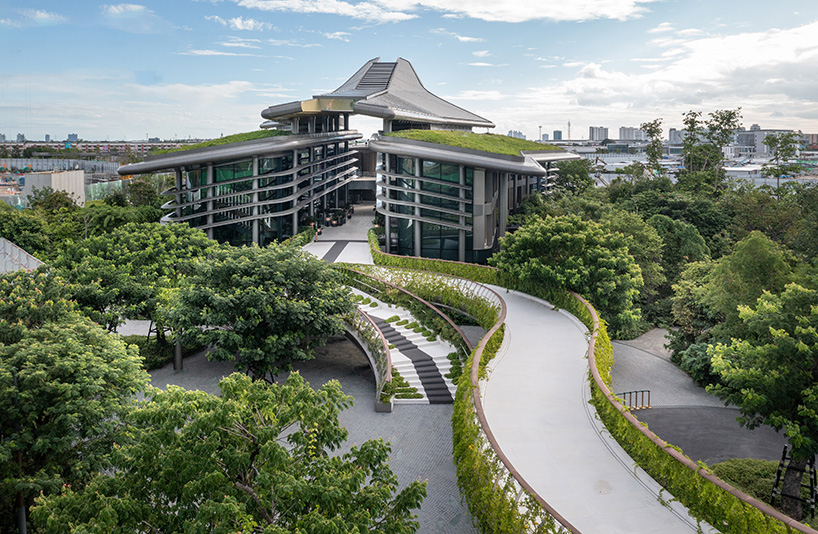
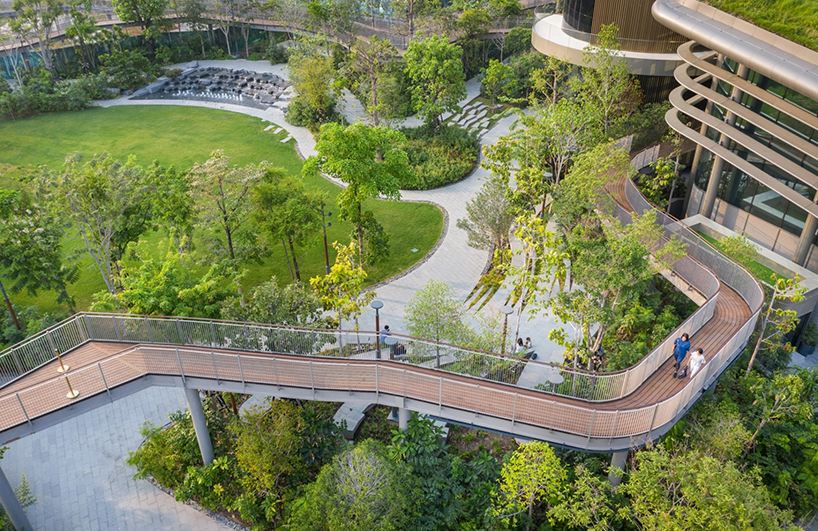
TK studio has formed the landscaping for ‘the forestias’, a multi-generational community made by foster + associates. found on the outskirts of bangkok in thailand, the new residential enhancement prioritizes the wellbeing of citizens and attributes a 48,000 sqm city forest at its heart, built by TK studio.
the ‘forest pavilion’ stands as a gateway to the forest-like landscape. at present serving as the profits gallery, the pavilion will afterwards be converted into ‘the forestias ecosystem discovering center’, an encounter hub with interactive exhibits.
the grand entrance and drop off
‘symbiosis with nature’
when generating this city forest, TK studio sought to aid the happiness and wellness of residents and create an immersive knowledge of living with mother nature. the landscape designers carried out investigation and from their conclusions, they decided to dedicate the the greater part of the area to environmentally friendly room that can be witnessed from each and every angle of the pavilion.
TK studio’s principle for the landscape design and style is explained as ‘symbiosis with nature’, which embraces a quantity of targets like balancing human pursuits with the growth of the city forest and furnishing the authentic experience of residing in the forest.
birds eye perspective of the cover wander
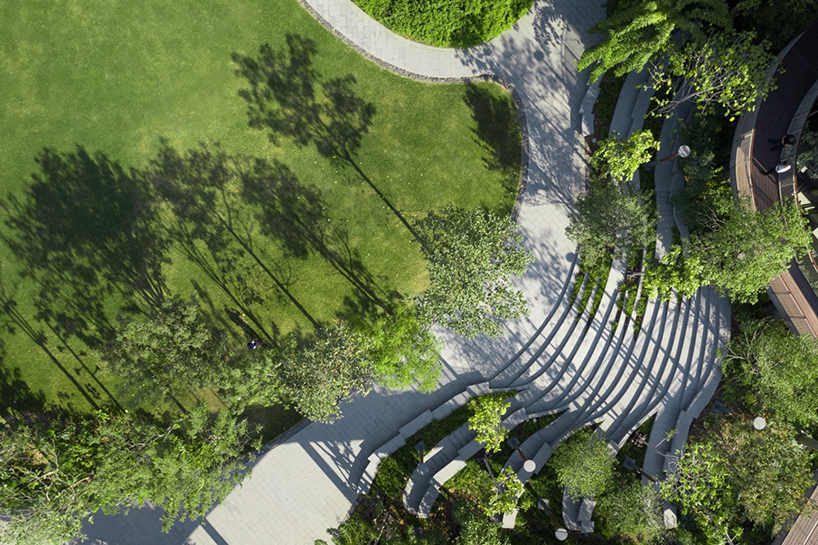
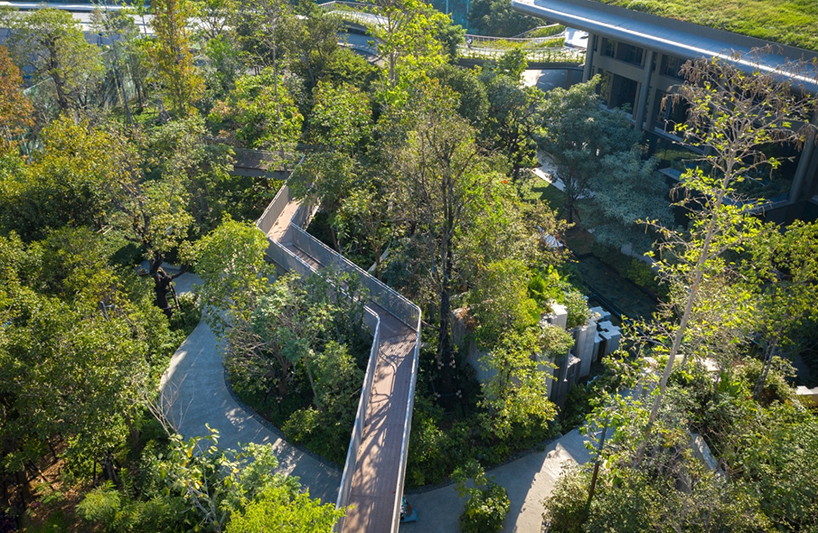
surrounding the setting up are mother nature paths and elevated walkways intended to transform the manmade kind of the pavilion into the organic and natural freeform of the forest, and to entice individuals to go outside the house and appreciate the normal ecosystem. the landscaping also features an outdoor amphitheater, an situations garden, and a stepped water function, which, as opposed to common drinking water functions, invites young children and grownups alike to perform.
to create the landscape, TK studio planted 183 indigenous species of crops and trees and a overall of 23,258 saplings. the aim is to create biodiversity on the web page, which will grow and evolve together with present and future generations of the forestias citizens. the landscaping also prioritizes sustainable layout with international standards of Web sites, Perfectly, and LEED all carried out.
amphitheater and gatherings garden
‘happiness—a very simple still strong manifesto advocated in the forestias. it is the ideal residing sanctuary that demonstrates the joy of dwelling in just the city forest,’ suggests TK studio about the challenge.
‘a good quality atmosphere will guide to excellent wellbeing and longevity of inhabitants, and it also makes a type and warm modern society for generations of households. people will share mutual rewards with character harmoniously, discovering to be element of nature and increasing recognition to develop a greater and much more sustainable entire world. with any luck ,, this can be a turning issue for housing developments in the state and guide to a series of large-excellent housing projects.’