New Year, New Yard: 12 Steps to Updating Your Landscaping This Year | Gardening Tips and How-To Garden Guides

As another new year unfolds, have you made any resolutions? Maybe it’s exercising more or eating healthier, but what about your yard?



landscape_01.jpg

Montour County, Pa., Master Gardener and webinar presenter Carol Burke is feeding monarch butterflies, which are among the pollinators she strives to attract by appropriate landscape planning.


Now’s the time to think ahead for projects that will bring joy to your landscape this year. That’s the message of a webinar presented by Carol Burke, a Penn State master gardener from Montour County with a knack for landscape design and plenty of related helpful hints to share.

If you’ve already resolved to update your home’s landscaping, your first action step is deciding where to start. Burke’s approach, “plan your work, and then, work your plan.” She said landscaping design is the art of developing a plan to assure the best use of your yard’s available space in an attractive fashion.

Step 1: Determine the goal of your landscape update. Are you redoing an existing yard or planning for newly created areas such as adding a deck or a water feature? Do you want to attract new bird and pollinator species, or is repelling deer a priority? After that’s established, determine your timeline. Will you be implementing your new landscape ideas in the spring, or is this a plan that will require several seasons to complete?

Step 2: Look at the bigger picture. Are there invasive plants or unwanted trees that need to be removed? Are you taking into account wet or dry areas that need special attention? Do you want to add upgrades like a patio, fence, pergola or pond? What will the area be used for? Adding an entertainment area involves different considerations than installing a play area for youngsters. Are you looking to screen an area for greater privacy, hide garbage cans or disguise a woodpile? Are overgrown shrubs hiding your home’s best features?



soil health


Step 3: Get a soil test. It will help determine which plants should be planted and where. Measuring the amount of soil pH, humic matter and exchangeable acidity is essential. Burke said you can purchase a soil test kit at any Penn State Extension office.

Step 4: Consider plants that provide seasonal interest. Envision a mixture of plantings that will provide interest throughout the seasons — bulbs that bloom in spring, evergreens that hold up well under a coating of snow or annuals that you can vary from year to year. Research plants that attract birds and pollinators to create an additional dimension of interest.

Step 5: Only plant what you can maintain. Think about how much time you want to spend caring for your landscape, and decide whether you plan to maintain it yourself or if you will need to hire somebody. These decisions will also affect the necessary tools and equipment required for good maintenance.

Step 6: Don’t leave tree selection up to chance. Deciduous trees work best near the south side of a house because they can provide shade in the summer and, after losing their leaves, will allow sun exposure during cold weather months, Burke said. Plant evergreens on the west side where they’ll block cold winds and harsh sunshine.


landscape.jpg

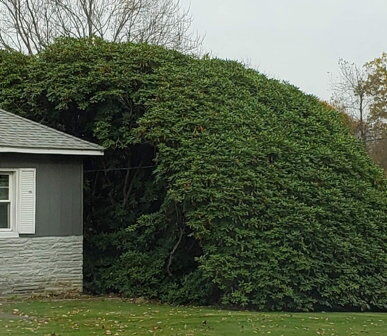
This shrub, planted too close to the house, is an example of what happens when landscapers don’t plan ahead and maintain pruning. This huge shrub has taken over a side yard, created an unsightly appearance, blocked the window views and, most likely, endangered the home’s foundation with roots.


Step 7: Think ahead. How tall and how wide will mature plantings grow? Trees and shrubs that are tiny today will have both branches and roots that will spread. Be sure to allow adequate space to avoid overcrowding or possible damage from errant roots. Burke advised placing trees off the corners of your home where they will accent your home and add curb appeal while being less likely to block views or limit air circulation.


landscape_02.jpg

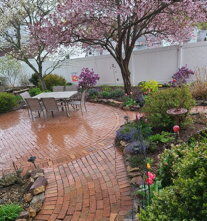
The careful planning that went into this brick patio and the walkway leading to it has created an oasis in this family’s yard. The plantings around it accent it and add interest.


Step 8: Landscaping goes beyond vegetation. Adding permanent, non-living features (known as hardscaping), such as fencing, a pergola, an arbor, a wall, a walkway or a patio, can add both accents and functionality to your yard. Consider a walkway among flowerbeds for easy access to weed, deadhead, etc., as well as to create a pleasant place for strolling. Brick, flagstones or pavers are appealing alternatives to concrete. A pergola provides a shaded area that’s perfect for entertaining or providing a comfy spot to sit and enjoy your lawn. Water features, like small ponds or fountains, can be both attractive and relaxing. Fences and walls don’t need to be lengthy to provide eye-catching appeal.

Step 9: Put your plans on paper. You don’t need to be a landscape architect to map out your lawn or garden layout, but drawing it — even in rough form — will help you be more attuned to the realities of your site. Burke emphasized these basic principles of design: scale, balance, unity, rhythm, accent and repetition.

Step 10: Establish a budget. Keep things real by estimating the costs for your project. Explore prices for plantings as well as any hardscaping, and don’t forget to include the cost of equipment that you might need to buy or rent. This will help establish if you need to scale back your plans or perhaps spread them out into affordable phases.


1120 Japanese Barberry.jpg

Japanese barberry and two other invasive species were added to the list of plants that are illegal to propagate or sell in Pennsylvania.


Step 11: Stamp out invasive species. Some plants that look nice aren’t. Barberries are a prime example, as are oriental bittersweet. They might add pops of color, but they spread easily over a wide area through bird droppings and can gradually overtake a forest. Bradford pears are an invasive tree that spreads quickly. All three of these came from Asia and thus are not adapted to our local flora and fauna. For more information on identifying and removing these and numerous other harmful plants, Burke recommended consulting conservect.org.

Step 12: Use native plants whenever possible. Native plants are already well adapted to your climate and ecosystem, so they will be healthier and require less maintenance than more exotic choices. They typically require less watering and fertilizing, and they attract and support wildlife, native birds and pollinators. They come in all sizes and colors, so finding ones that fit your yard’s style isn’t a difficult task. To find native plants that meet your needs, Burke encouraged using the native plant finder nwf.org, which provides plant information based on your ZIP code.

Carol Burke’s closing words of advice were to choose a few plants you love and decide where they will fit best. Then ask yourself, “What do I need my yard to provide for me?” And have fun making those wishes come true.

Carol Burke’s complete presentation, titled “New Year’s Resolutions for Your Lawn,” is available on demand through Jan. 24, 2023 by registering here. There is a $5 registration fee.
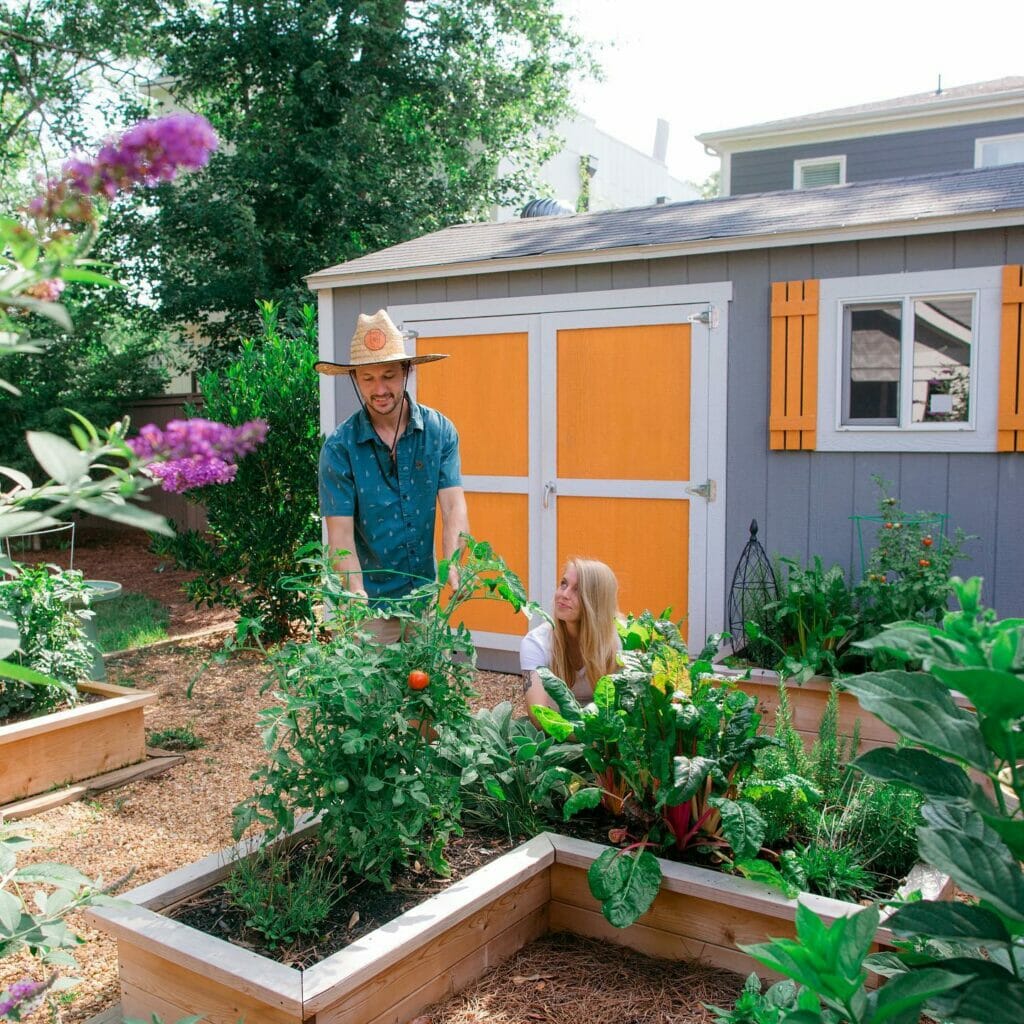
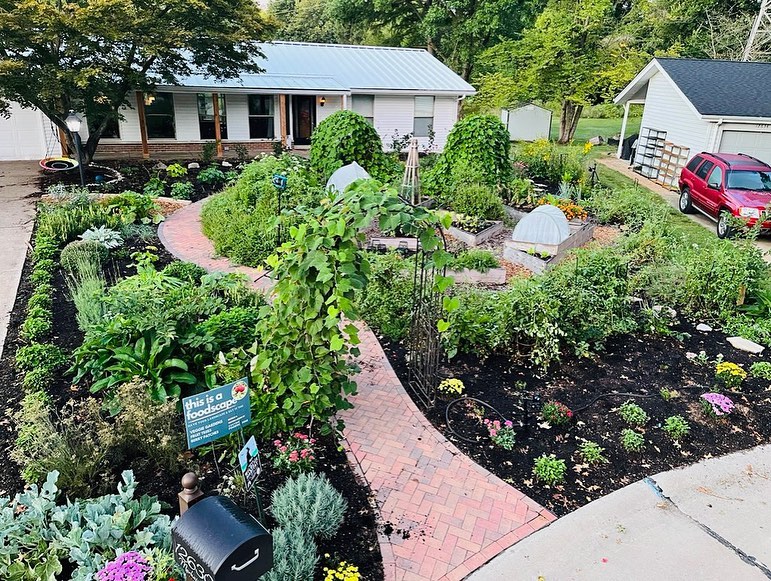
Turn Your Backyard Into a Snack Yard With Edible Landscapes

Daniel Mobley was one particular of the several people today laid off from their job at the commencing of the pandemic. No lengthier a recreation director, Mobley was in need to have of a pastime to help fill his newfound free of charge time. He observed inspiration in his backyard backyard. 

The Atlanta resident embraced the problem of turning his suburban lawn into a mini-farm, reimagining the room and putting in fruit trees and bushes. Collectively with his wife, Sarah, Mobley posted on social media about his home yard, which promptly grew to involve pomegranates, persimmons, satsumas, peaches and blueberries. Mobley liked to wander around his lawn, grazing on fruit he grew himself, and started off referring to the house as a “snack property.” 

“It indicates that you really don’t have to have to be a homesteader to go out to your land and snack and graze,” claims Mobley.

As the lawn grew bigger, so did the couple’s social media following. Shortly, they had been fielding requests to assistance some others rework their personal outside spaces. Which is when they released Thyme to Social gathering, where by Mobley now will work with customers on edible landscaping jobs of all sizes. Often, that indicates mimicking the seem of a “traditional” landscaped lawn but with crucial substitutions. 

“We’ll use evergreen pineapple guava alternatively of boxwoods or we’ll throw in a serviceberry tree that has really gorgeous spring bouquets,” says Mobley. “We just consider to adjust the paradigm that if you want to backyard garden or mature meals it has to look like your grandma’s backyard with straight rows.” 

Mobley is fortunate to be operating with a approximately 12 months-spherical increasing season. Atlanta’s hotter weather signifies that his gardens can mature just about just about anything and at most moments of the yr. His regional shoppers harvest lettuce as a result of January.

Edible landscapers in colder climates are not as fortunate. Andy Webster, operator of MEG’s Edible Landscapes in Northfield, Minnesota, has to do the job otherwise. “We have significantly less than 120 times frost-free of charge,” he suggests. “So, every little thing has to be thought out beforehand, and anything has to be started off indoors.” Webster is very careful with fruits and greens that really don’t tolerate frost, and he has to do a good deal of watchful setting up to ensure crops get a wholesome start just before they go anyplace in close proximity to a client’s property. 

Webster is aware how too much to handle finding out to yard can be and needs his customers to have the ideal chance of achievements. That is why he will work exclusively with improve luggage, which are manufactured from material and are lighter, far more breathable and a lot easier to transportation than standard pots. “At this point, I’ve set just about everything that I can get my palms on into a bag to see how it performs,” he suggests. “One detail that doesn’t get the job done is sweet corn. I tried it and the economics do not really get the job done out simply because I’d have to have a 10- to 15-gallon bag for just one stalk of corn. It just does not make any perception.” Aside from corn, Webster suggests approximately all plants adapt nicely to them.

The grow bags also function effectively for his clients, numerous of whom are renters or do not own their residences. “I have prospects who are living in townhouses, condos, apartments or even solitary-loved ones houses, but they never have eco-friendly area or they have weak soil. So, this method operates beautifully for them,” says Webster. The bags are lightweight, which is fantastic for individuals hunting for portability, especially with Minnesota’s temperature. 

Custom Foodscaping designed this edible lawn. Photograph courtesy of Tailor made Foodscaping.

Like Mobley, Webster assists his prospects decide out crops and varieties that do the job finest for their space. Ultimately, however, he hopes to exhibit people just how simple increasing your individual food can be. “One of my most loved issues is when somebody has a dread [of gardening failure] and now they have that joy because they knowledgeable the accomplishment,” he states.

That is what Matt Lebon aims to do as nicely. “We want gardens to have mass appeal, we want gardens to glance hot and built-in,” claims Lebon, founder and owner of The Foodscaper and Customized Foodscaping in St. Louis, Missouri. “We want a garden to feel like an straightforward determination for a consumer.”

With that in brain, Lebon and his group build gardens that involve every little thing from fruits and greens to herbs, trees and rainwater catchment parts. Often utilizing elevated beds to make the back garden far more physically accessible to purchasers, Lebon operates to bring in as quite a few distinct species of plants as doable. “When we plant any diversity, we can start off to boost interaction,” he says, noting that there is some schooling he does with his clients about why an raise in bees, butterflies and other animals in their room is a great matter. 

As extra landscapers pivot to the edible facet of the enterprise, skilled gardeners like Lebon hope to shift the terminology as very well. There is a motive he selected the term foodscaping. “It indicates a livelihood, a professionalism and training and understanding close to foods,” he says. Landscaping, as it is usually comprehended, may well be noticed as “a degenerative exercise, wherever we concentration on ornamental plants and grass. And neither of those people items are possessing a positive effect on our ecologies,” Lebon says. “We need this new language, for the reason that [foodscaping] is incredibly distinct.”

When foodscaping and edible landscaping could be common at personal residences and private residences, there are nevertheless options to increase the exercise. In Georgia, Mobley has labored with county commissioners to adapt regulations and incorporate edible landscaping in public places. Thyme to Celebration also worked with neighborhood Atlanta libraries in 2021 to make “pocket parks,” filling them with blackberries, blueberries, mulch pathways and trellises. Other organizations, like Atlanta’s Concrete Jungle, have mapped places in the town wherever fruit trees and bushes develop on community land, monitoring what is in time and what wants to be picked. Their volunteers harvest the food stuff and distribute it to community plans. 

There are several techniques that edible and ecological landscaping can be integrated into our towns, and Mobley suggests the shift in contemplating is occurring now. Somewhat than acquiring a pristine landscape or just one that involves a crew of folks to preserve, Mobley suggests individuals are excited by the notion of a residing and respiratory landscape—one that provides back as much as it gets.

Here’s how ‘xeriscaping’ your yard can help save water and money

So far, Northern California’s drinking water calendar year is off to a promising start out. Previously this 7 days, sections of the Sierra picked up 12″ to 18″ of snow although Valley rain served to dampen the ground.Much more rain and snow are in the forecast above the up coming 7 days, but on the heels of a few straight yrs of drought, it truly is going to just take additional than a few of storms to set the state’s water offer in excellent standing. That signifies water conservation will carry on to be best of mind for weather experts, drinking water supervisors and point out leaders. Sacramento County h2o administrators say that residential shoppers use most of their drinking water on out of doors watering. That landscaping alternatives a person area in which a large amount of h2o can be saved. Dr. Haven Kiers is a landscape architecture professional with UC Davis. Kiers states that switching a yard’s landscaping to “xeriscaping” can make a large big difference in the long time period.”Xeriscaping is just a extravagant term for a really simple principle which is prioritizing small-water plants above vegetation that need to have extra h2o,” Kiers claimed.Usually common sod, grass and decorative plants involve a good deal of h2o to manage and many of those people thirsty plant species are not indigenous to Northern California. Kiers claims that switching even some of those people crops to something more drought-tolerant can make a big difference in quite a few means.”It truly is gonna lower your h2o bill. And then also you’re bringing in a ton of California indigenous vegetation, you can carry in a lot more biodiversity,” Kiers reported.Drought-tolerant crops also require a ton fewer labor and eliminate the require for mowing. Though the added benefits of switching to a xeriscape can be many, it arrives with a price. Based on yard sizing, ripping out grass and introducing in gravel can charge thousands of pounds. In that case, Kiers encourages persons to commence compact.”The attractiveness with landscaping is that it usually takes years to create, it is likely to be there for several years,” Kiers claimed. “You will not have to go out and promptly rip out your full lawn and swap it with these great drought-tolerant plants.”And Kiers says that even although trees have substantial water requires, it really is significant to continue to keep them in put.”If you have a tree that is founded and is executing perfectly then you want to keep watering it. Preserving your trees alive is just one of the most vital factors that you can do,” Kiers mentioned.Due to the fact trees support manage soils, mitigate flooding and supply shade which can make a large variance on a hot day.A lot of regional drinking water businesses give courses that can aid offset the expenses of h2o-saving investments. Sacramento County Water Company is now offering up to $2,500 in its “Money for Grass” method.”This method gets extremely well known for the duration of situations like this when we are in the middle of a drought mainly because people today want to try to locate means to help save funds,” stated Matt Robinson, spokesperson for Sacramento County. Robinson states that 1,200 people have benefitted from this system since 2015. He also notes that this only applies to SCWA’s customers. There are additional than 20 h2o suppliers in Sacramento County alone. Robinson endorses residents get in touch with their provider straight to check with about approaches to save cash on their drinking water bill.

So far, Northern California’s drinking water 12 months is off to a promising start. Previously this week, elements of the Sierra picked up 12″ to 18″ of snow even though Valley rain served to dampen the floor.

Extra rain and snow are in the forecast in excess of the future 7 days, but on the heels of three straight yrs of drought, it is really going to acquire much more than a couple of storms to put the state’s h2o offer in great standing. That signifies water conservation will continue to be best of brain for climate authorities, water managers and condition leaders.

Sacramento County drinking water administrators say that residential buyers use most of their drinking water on out of doors watering. That landscaping selections just one area where by a lot of water can be saved.

Dr. Haven Kiers is a landscape architecture pro with UC Davis. Kiers says that switching a yard’s landscaping to “xeriscaping” can make a huge change in the long phrase.

“Xeriscaping is just a extravagant phrase for a seriously simple idea which is prioritizing very low-water plants more than vegetation that need far more h2o,” Kiers claimed.

Usually common sod, grass and ornamental plants require a whole lot of water to retain and a lot of of those thirsty plant species are not native to Northern California. Kiers says that switching even some of those people crops to something extra drought-tolerant can make a distinction in numerous ways.

“It’s gonna lessen your h2o invoice. And then also you’re bringing in a whole lot of California indigenous vegetation, you can bring in a lot more biodiversity,” Kiers stated.

Drought-tolerant vegetation also require a great deal a lot less labor and eradicate the need to have for mowing.

When the rewards of switching to a xeriscape can be lots of, it comes with a expense. Based on property measurement, ripping out grass and introducing in gravel can value countless numbers of dollars. In that scenario, Kiers encourages folks to start off compact.

“The attractiveness with landscaping is that it will take many years to build, it can be likely to be there for yrs,” Kiers explained. “You really don’t have to go out and right away rip out your complete garden and substitute it with these perfect drought-tolerant plants.”

And Kiers suggests that even although trees have significant water requires, it is critical to maintain them in spot.

“If you have a tree that is set up and is carrying out properly then you want to hold watering it. Preserving your trees alive is 1 of the most significant points that you can do,” Kiers mentioned.

Since trees support maintain soils, mitigate flooding and supply shade which can make a major change on a incredibly hot day.

A lot of neighborhood water companies give courses that can assist offset the charges of h2o-preserving investments. Sacramento County Water Agency is now giving up to $2,500 in its “Hard cash for Grass” system.

“This program gets quite well known throughout periods like this when we’re in the middle of a drought because people today want to attempt to locate ways to save revenue,” reported Matt Robinson, spokesperson for Sacramento County.

Robinson suggests that 1,200 citizens have benefitted from this method considering that 2015. He also notes that this only applies to SCWA’s customers. There are additional than 20 drinking water suppliers in Sacramento County on your own. Robinson recommends residents get in contact with their supplier immediately to check with about ways to preserve dollars on their water invoice.

By embracing the natural landscape, a barren yard turns into an eco-friendly outdoor retreat | News, Sports, Jobs

&#13
&#13
&#13
&#13

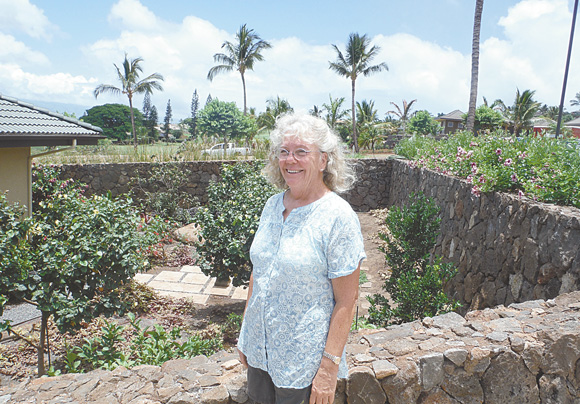
Deb Caswell, Lanikeha home-owner, stands higher than her backyard garden that features indigenous drought-tolerant crops, drip irrigation and other LID (Low-Impact Structure and Improvement) aspects these kinds of as bioswales to handle runoff and cut down pollution. Photo BY LIZ FOOTE.

KAANAPALI – When Debra Caswell purchased a barren 1-third-acre ton in Lanikeha above Kaanapali, creating a property wasn’t her best priority. “I required a property to mature a backyard,” said Caswell. When she bought the eco-friendly gentle to begin construction, she quickly moved her mass of vegetation – currently expanding in anticipation at her then-apartment – to her new house.

Her eyesight for the outside was equivalent to that of her now three-bed room, a person-tale residence that was made to catch the trades: it needed to embrace the all-natural landscape. Exclusively, she required a lower-water landscape that highlighted primarily indigenous crops.

The initially action was preparing her gardens – all 4 – in accordance to the route of the sun. The brilliant, west-experiencing back garden is for edibles, like Molokai sweet potatoes, squash and peppers. The south is for vegetation that can just take the warmth, this sort of as ma’o (Hawaiian cotton), kokio keokeo (white hibiscus), kokio ula (purple-orange hibiscus) and a hedge of a’ali’i (shrub). Alongside the east lies a steep slope, absolutely sunken from the entrance street, which Caswell turned into her serenity backyard garden.

“The space is shielded from the wind and pretty calming,” she reported. Below, trees like dwarf mango, keahi and hau offer a shaded cover. Winds from the northeast roll as a result of the north back garden, fingering via kupukupu ferns, green and pink ti plants.

The diversity of the outside places are like Caswell’s private compass. “When I was youthful, I made a dedication to myself that anywhere I dwell, I would have a location to go according to my temper,” she stated. “If I have to have sunshine, I go south. For tranquil, it’s the north. To experience cloistered, I go east. If I’m hungry, I head west.”

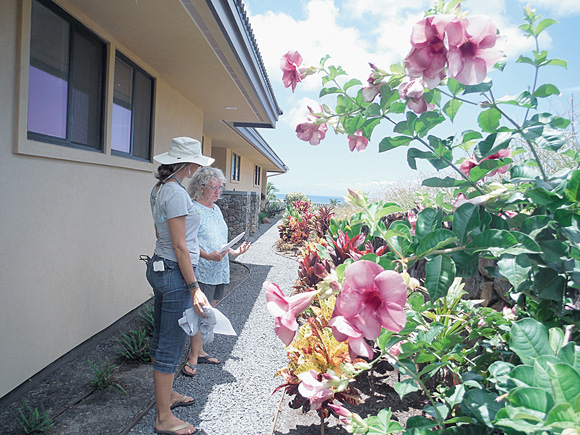
Deb Caswell (right) and West Maui Ridge to Reef Initiative Watershed and Coastal Administration Coordinator Tova Callender take a look at Caswell’s north-dealing with garden in her Lanikeha home, though standing in a bioswale that serves as a sustainable aspect developed to capture and filter storm-water runoff to avert flooding and pollution.

Navayo Caiserman, operator of West Maui Garden & Landscape, assisted Caswell put her thoughts into action. “Usually, I have a vision for the design,” reported Caiserman. “But Deb knew precisely what she wished. I steered her in the ideal way on selected aspects, but this was obviously her garden, her undertaking.” The venture took two months, and Caswell acquired her hands dirty with the crew, digging together with of them.

A person component served as a new undertaking for them both: two 50-foot-prolonged, two-foot-large bioswales that run along the north and south-experiencing sides of the assets. Nevertheless they glance and functionality like loose gravel pathways, the bioswales capture drinking water runoff and allow for it to slowly but surely percolate into the floor, equivalent to how a native forest catches rain and attracts water into the aquifer. “When we experienced our big rains very last spring, all of the drinking water was captured in the bioswales. It was a good results,” she spelled out.

Other water-conserving tricks include things like nixing sprinklers and opting for a drip procedure that runs for only 15 minutes every single other working day. Drip lines even drinking water the two-foot by six-foot swathe of garden built for her Chihuahua-Poodle blend, Parker. “Most persons told me to count on an original h2o invoice of $500 a month as my yard acquired underway,” reported Caswell, who admits to taking prolonged showers. “My major invoice has been $88 so considerably.”

A person of the factors for her minimal bill, claimed Caiserman, is that she used the correct vegetation in the proper spots. “Getting that Hana fashion of landscaping on West Maui involves a great deal of effort and hard work,” he said. “You’re going to require a lot of water and fertilizer, and when you mix that with our West Maui solar, the total of growth and ongoing upkeep can be large.” The two Caiserman and Caswell are swift to point out that a native back garden doesn’t indicate you have to exclude your preferred vegetation. For case in point, if you want pink ginger, put a few, not dozens, on the shady side of the household.

In the finish, Caiserman stated he learned a great deal from the challenge, and he’s heading to use his new techniques on other positions. “The coolest portion about Deb’s landscaping is that it price tag less to do, expenses significantly less to sustain and charges our island a good deal less assets,” he reported.

For Caswell, she finds gratification in simplicity. “Sometimes, I glance out and watch Monarch butterflies sit on my crown flowers and think, we made a room that honors this land and has lifestyle. Now that’s what I discover most critical.”

For people intrigued in understanding a lot more about sustainable landscaping practices, West Maui Kumuwai coordinates an Ocean-Friendly Landscaping Application and maintains a listing of companies on its internet site that have taken a pledge to adhere to sustainable landscaping methods. Ocean-Friendly Landscapers are supplied with internet marketing products to share with clients and receive exposure by means of the program’s media endeavours. To day, taking part businesses consist of A Nutt Nurseries, E’Scapes, Kaanapali Functions Association, MauiScapes LLC, Mel’s Lawn Company, SGS Hawaii, West Maui Garden and Landscape, and ZELM (Zero Emission Landscape Maintenance).

As aspect of a new project to endorse sustainability in West Maui and emphasize the link of landscaping techniques to the wellbeing of the coral reef, West Maui Kumuwai is especially hunting for Honokowai condo properties’ landscaping service vendors to sign up for the Ocean-Friendly Landscaping program. For extra data, or to be a part of, check out westmauikumuwai.org/methods/landscape-associates/, e-mail WestMauiKumuwai@gmail.com or call Campaign Supervisor Liz Foote at (808) 669-9062 or 283-1631.

&#13
&#13

Drought-tolerant LA yard thrives after city cease notice

Water-hungry lawns are symbols of Los Angeles’ past. In this series, we spotlight yards with alternative, low-water landscaping built for the future.

Susan and Steve Matloff are doing what they do most days when they are at home: spending time in their front yard with their kids, talking with neighbors, playing with their dog Blue and passing home-grown onions to random passersby.

When they installed raised vegetable beds alongside the sidewalk, they fantasized about living off the land despite warnings from friends that people might steal their produce.

“If someone wants to take a bell pepper, good on them,” says Steve, 49. “My office overlooks the garden, and every day I see people stop and look at our garden. Sometimes I run out there and talk to them. Our daughter Isabelle has been known to pull out a carrot and hand it to people walking by. The conversations start there. It’s part of what we wanted for our yard: to be a statement and community builder.”

The Matloff kids — Daniel, Isabelle and Edie — smile as they show off fresh-picked veggies.

The Matloff kids — Daniel, 12, Isabelle, 16, and Edie, 9 — have been known to share their home-grown produce with passersby.

(Allen J. Schaben/Los Angeles Times)

It wasn’t always this way.

The family of five, plus two dogs, moved from a two-bedroom condo in West Hollywood into the Windsor Square home in 2018, some years after it became too much for Steve’s parents. They renovated the home with climate change in mind.

“We set out to take a 1922 home and rethink it for the next 100 years,” says Steve, who recently co-founded a company called Tradicient — the blend of “traditional” and “efficient” — to do this work on other homes. “We retrofitted it, we achieved platinum LEED status, and the landscaping was a big part of that.” (To achieve LEED certification from the U.S. Green Building Council, a project earns points by demonstrating various improvements that address carbon, energy, water, waste, transportation, materials, health and indoor environmental quality.)

Green bell peppers in a raised garden bed.

Isabelle Matloff, 16, picks a bell pepper from one of the raised beds in her front yard.

(Allen J. Schaben/Los Angeles Times)

An overhead view of the Matloff's garden and concrete pavers.

A “lawn” composed of Carex pansa, or dune sedge, on the left. The water-absorbing swale on the right is filled with riparian native plants and collects storm water from the rooftop, back garden, drive and front walk.

(Allen J. Schaben/Los Angeles Times)

Unbeknownst to the couple, their front yard became a heated topic on Nextdoor during construction before they moved in. “FormLA Landscaping was overseeing the yard and was digging a bioswale and paths for concrete walkways,” recalls Susan, 48, a sports marketing consultant. “A friend sent me a thread on Nextdoor that began, ‘Has anyone seen this house? It looks like they are going to hardscape the entire front yard!’” It was actually going to be a rain garden.”

Shortly after the Nextdoor discussion, the couple came home to find a baffling cease order from the Los Angeles Department of Building and Safety that said they were missing permits they didn’t believe they needed.

“It didn’t identify why,” says landscape designer Isara Ongwiseth, a four-time Sustainable Innovation Award-winner with FormLA. “We didn’t do anything that violated any codes.”

Steve called the building department for weeks and got no response.

So he showed up at the agency’s office downtown. “I literally walked around for two hours with my notice,” he says. He finally got help but was directed to another staffer who works with historic preservation overlay zones, which are city districts with special renovation rules. “The [zone] administrator didn’t see anything wrong with the work we were doing, but the only thing she could do was put us on the agenda for the next [overlay zone] board meeting.” Such boards consist of five to seven local residents who review projects.

At the meeting, Ongwiseth shared detailed, color-coded plans for the yard. The board provided a required letter of support, and the project resumed two months later.

The Matloff's dog sits in a yard surrounded by native plants.

Blue sits in the bioswale surrounded by native red buckwheat, white sage, yarrow and other native plants.

(Allen J. Schaben / Los Angeles Times)

Asked for tips on dealing with historic preservation issues, Steve recommends starting the communication process early and remembering that these boards are made up of neighbors who are handling dozens of projects at once.

Equally important are city employees, Steve adds, who “do all the work to operationalize [overlay zone] boards’ decisions. What boards decide on cannot actually happen until an administrator walks your project through certain processes. But our best advice is to do all you can to stay out of the secondary review and stoppage process entirely; and the best way to do that is to preemptively try to answer and address neighbors’ and passersbys’ possible questions or concerns. If we could have educated the neighbor who submitted the inquiry about our project and process, we might have been able to avoid the stoppage altogether.”

For decades, the Matloffs’ Windsor Square neighborhood has been lined with stately homes bordered by sprawling lawns and sidewalks wet from sprinkler overspray. You could argue that the neighborhood is no different from others in Southern California where lush, green lawns have traditionally been a statement about pride of place. But the pervasive water waste involved in tending to a lawn as drought in California continues prompted the Matloffs to consider their footprint, as well as L.A.’s future water independence.

But it’s not just about the lawn.

Two photos, one showing a hand grabbing an onion from the ground and the other of a lawn, concrete path and native plants.

Isabelle Matloff, 16, picks an onion from the edible planter, left. Even in the triple-digit heat of summer, the Matloff family’s yard, right, is dynamic.

(Allen J. Schaben / Los Angeles Times)

In an unusual move, the Matloffs committed themselves to the LEED process: During renovation, they chose to keep the footprint of the house. They reused wood and concrete on-site. Solar panels on the roof generate twice the power they currently use. When the couple removed the original floribunda and Iceberg roses from the property, they found homes for all of them. “Reuse comes long before recycling,” Steve says. “We filled up our minivan with roses and drove them to my sister in Northern California.”

They had to remove an unhealthy jacaranda tree in the front yard and planted a California live oak in its place. “Although the jacaranda was big and beautiful, we found that it was infested with termites and would eventually cause danger to people and the home,” Ongwiseth says. “We removed it, and the live oak will give back to the community and to nature. It’s a host for so many insect species.”

The driveway's permeable bricks direct water into the garden.

The driveway’s permeable bricks direct water into the garden.

(Allen J. Schaben / Los Angeles Times)

A 270-square-foot bioswale, or rain garden filled with California native plants, was installed to absorb water from the front and back garden, as well as the home’s driveway, walkways and roof. Graywater from the upstairs laundry room feeds a small fruit orchard along the driveway. (Because graywater can contain sediment and bacteria, the couple decided against watering the vegetables and herbs via a laundry-to-landscape system.) Not far from the rain garden, a permeable driveway composed of interlocking brick pavers directs water into the garden and prevents runoff into the street and storm drain and keeps pollutants out of the Pacific. The material also helps control the heat island effect as Los Angeles struggles with rising temperatures and wildfires due to global warming.

Even when it’s hot in Los Angeles, the yard, which is fed by a subterranean low-flow drip system, is in bloom, with dwarf germander, yarrow, red buckwheat pom poms, Canyon Prince, deer grass and Cleveland and white sages. A large front “lawn” composed of native grass-like Carex pansa can transition from meadow to lawn with a simple trim. “A lot of people who want a manicured lawn fall in love with it,” Ongwiseth says.

The yard embodies Steve’s belief that “you’re not giving up anything” by planting drought-tolerant natives, as he puts it. “It functions better,” he says. “Our landscape changes throughout the year. The Cleveland sage turns purple when it blooms. When we don’t mow the Carex pansa, we have a big, flowy landscape that changes the character of the property over time. When we look outside, the rain garden is full. When the reclaimed hardscaping stone is saturated, it takes on different rays.“

Fruit on an apple tree.

The couple planted a fruit orchard alongside the driveway that is supported by graywater.

(Allen J. Schaben / Los Angeles Times)

The Matloff family on their front porch.

The Matloff family added a front porch and an ADA ramp so that Steve’s mother and guests with wheelchairs and strollers can access the home easily.

(Allen J. Schaben / Los Angeles Times)

The couple view their home as something to be shared and open it regularly for tours and other events. When friends and neighbors ask about their drought-tolerant meadow, Steve enjoys relaying how little maintenance it requires. A bench on the front porch provides a comfortable place to sit and commune with family and neighbors. “L.A. is so private in some ways,” Susan says. “No one uses their front yard. Our garden puts a face on our home. We are trying to use our front yard to get to know our neighbors. It’s important for us. It goes back to stewardship.”

White sage and buckwheat.

White sage and buckwheat require little water.

(Allen J. Schaben / Los Angeles Times)

Today, despite some misunderstandings, their neighbors have embraced the yard. (Another longtime neighbor, who was concerned about mosquitoes flocking to the bioswale, has since welcomed the addition). During the COVID-19 pandemic, the couple set up lawn chairs 12 feet apart in their yard, and neighbors joined them. At the height of the pandemic’s chalk drawing moment, some even drew plants from their garden on the street and identified them in pastel pigments.

Steve, who is an unusually upbeat voice for someone trying to save the planet, says his only regret is that he wasn’t able to complete the project before his father, Jack, a noted heart surgeon at Cedars-Sinai Medical Center who died in 2015, could have joined them on the front porch.

What does his mother, Martha, who is 87 and lives in a condo about a mile away, think of the changes? “My mom loves it,” Steve says. “No. 1, because we are here. No. 2, because we didn’t gut the house. And No. 3: It’s comfortable. There is a ramp that goes up from the driveway to the front door so that she and others can walk directly to the house with ease.”

A strip of native plants in between a driveway and a concrete path.

A view of the vibrant native foliage in the garden.

(Allen J. Schaben / Los Angeles Times)

Most striking is how a front yard that started as a family affair ended up as a bridge to connect with others.

“Last week, when I was weeding outside, a woman I’ve never met before stopped to tell me that our garden brings her joy,” Susan says with a smile.

Steve adds: “When we look at our collective footprint, it’s important to find where our resources are being used. It’s no secret that neighborhoods like ours use resources. We all need to be more thoughtful. We are all collectively a part of the solution.”

7 things to avoid in your yard.

Spring, summer time, and drop temperature encourage outdoor landscaping and routine maintenance tasks. No matter if you’re doing your own perform or using the services of it out, landscaping errors can come about and can direct to serious hurt to you or your residence. Continue to keep these 7 basic safety guidelines in mind for extra security as you dive into your upcoming venture.

  1. Employ the service of insured organizations. Landscaping work with ladders, machinery, and weighty products can pose a possibility to a crew and to your assets. Which is why it is crucial to verify any firm or contractor you employ has equally staff compensation and legal responsibility insurance policies. This will protect your home if there are any damages and will deal with personnel if they are injured on your residence whilst executing perform.
  2. Defend your home when planting. Crops and trees can be excellent ending touches to bring a home collectively, but you need to have to know where to plant them. If you are planting trees in the vicinity of your residence, go away plenty of area so roots really do not mature into and harm your plumbing, septic program, or foundation. Make it possible for room amongst trees and your home so slipping particles and significant limbs do not hurt your roof, gutters, or glass. Understand how substantial trees will grow and account for them prior to planting to keep away from any of these possible challenges.
  3. Know where by to dig. There are utility traces that operate beneath and all over properties, and detrimental them could disconnect essential expert services for your household or your neighbors’ houses. You are needed to area a locate ask for at least a few times prior to any excavation, which gives time for skilled locators to arrive and mark the spot. This services is free of charge and can help you save you from likely costly damages. Just after this is carried out, you can securely full your undertaking.
  4. Shell out awareness to your trees and bushes. Considerable injury can arise when tree limbs drop onto a household, cars, or other objects. Shell out shut attention when trimming trees or bushes that nothing is in the route of landing. Look at the well being of your trees as nicely. If there are massive, hanging limbs, have these taken out to assure they really don’t pose safety risks to you or many others. Additionally, when a tree is rotted or insect infested, there is a bigger possibility of it slipping and resulting in assets problems.
  5. Shield your devices. Instruments applied for outdoor initiatives can be pricey. Make confident your household or business is protected from theft by locking and storing gear absent when you are performed with it.
  6. Observe for tiny particles. Sticks and modest rocks have a way of the natural way ending up in your property. Even though this usually doesn’t produce problems, they can trigger injury when you’re mowing or edging your garden. This particles can be thrown at your residence, vehicles, or even people today. Acquire the time to glance for and decide up these goods just before you begin garden get the job done.
  7. Know your insurance coverage. It’s essential to know the limits of your owners coverage and the types of losses it addresses. For instance, support line protection is not often bundled in common owners insurance policies and may well need to have to be ordered as supplemental protection. This type of coverage is essential if tree roots trigger problems to your sewer, drinking water, or organic fuel strains.

Now that you know these seven suggestions to steer clear of landscaping issues, you’re completely ready to tackle your up coming undertaking securely. For even far more peace of mind, communicate to a area, independent agent to fully have an understanding of your property owners coverage and coverage.

image_pdf