

Shiloh Place receives award from Keep Fremont Beautiful for new landscaping | Local News

The idea to expand Shiloh Place came almost suddenly to Cyndi Whitten.

“We only had 16 beds in this, and I thought, ‘You know, we have all of this land, and I could put beds there,’” she said. “So one day just on a whim, we just called a contractor and voila, we doubled our size.”

With the addition to the assisted living center at 915 N. H St. now completed, Shiloh Place has received recognition from Keep Fremont Beautiful with its Clean Sweep Award.

“We are honored to have gotten it, and we really receive it with humility and gratitude from the community and on behalf of the whole neighborhood,” Whitten said. “We’re grateful to our neighbors and grateful to the chamber for acknowledging us and whoever nominated us.”

The award was given Nov. 12 during KFB’s annual Fremont Area Chamber of Commerce coffee event, in which KFB Board Director Al Sawtelle handed out various awards.

KFB Executive Director Casey Vaughan said the award is part of the organization’s recognition program.

“Part of our mission is to engage community members in taking a greater responsibility for our local environment, and the recognition program does that by recognizing those that are doing their part to keep the community clean, green and beautiful,” she said.

People are also reading…

The program also includes handing out certificates of appreciation to individuals on a monthly basis from April to September.

“Those are to local residences that are taking special steps to reduce litter, improve recycling or enhance the appearance of their property,” Vaughan said.

The Clean Sweep Award, given annually in November, goes to a local business or organization that has enhanced the appearance of its property through structural renovations or landscaping.

Vaughan said the Clean Sweep Award has nominations come in through community members and board members, and like the certificates, is voted on by the KFB Board.

“They just felt that Shiloh Place had done a beautiful job enhancing the exterior of their facility,” she said.

Whitten opened Shiloh Place with her husband, Eden, in 2014, in a Victorian mansion built in 1880. As well as assisted living, the center also provides medication management and meals.

“We also have our adult day program on Military, which offers activities and socialization during the day for adults who don’t have a lot to do during the day,” Whitten said. “And we provide transportation to and from that and to and from doctor’s appointments.”

As the building had a huge chunk of land next to it with no use, Whitten knew she wanted to expand Shiloh Place.

“My group here doesn’t really use the yard very much. It’s just a lot of older people, and it’s not just something we use,” she said. “We have to take care of it, but didn’t use it.”

Whitten brought the idea to her husband and First State Bank and Trust, which works with the center on its adult day program.

“I never saw myself building or adding on like this, but I’m really pleased that we chose to do this,” she said.

With a loan from First State Bank and everyone on board, the Whittens got to work on the project, which also included renovations to the existing building.

As well as repairing the building, Whitten said Fauss Construction also made the roof consistent with the addition.

“It was just time to do that. When they were tearing that old roof off, I think there were 10 layers on it,” she said. “It was bad.”

Additionally, Whitten said Siffring Landscaping and Garden Center provided landscaping, which included plants alongside a new sidewalk compliant with the Americans with Disabilities Act.

“They just did a fantastic job, and it’s all the way around,” she said. “And so we’re really super pleased with the job.”

Whitten said she was happy to receive so much help on the project, which was completed last summer.

“Thank God it started pre-COVID, because I got it built right before the price of lumber doubled and tripled, and I’m so grateful for that,” she said. “And we filled those beds almost immediately.”

The addition has been “seamless” for Shiloh Place’s existing residents, Whitten said.

“All of our residents are loving it,” she said. “We’ve also had people stop by, walking by and driving by, and just say how pretty it is. So we’re really enjoying it.”

Whitten said she was pleased that Shiloh Place received the Clean Sweep Award, as she said the area looked rough before the project was completed.

“We wanted it to look really nice for our neighbors, but it didn’t for a long time,” she said. “And so it’s very nice for everybody, for the whole community.”


Valley Lakes Assisted Living Executive Director Kris Pryor talks about the facility’s recent remodel.


Alyce Wilke, right, a resident in the assisted living community at The Heritage at Shalimar Gardens, talks with Chuck Davis, maintenance director. Wilke played an April Fools’ joke on Davis that went viral on social media. Now, the two are talking about a future joke they might play on another staff member.







After 200 years CT’s Way sisters get their first exhibition

Back in the 1890s when professional women artists were few and far between, the Lyman Allyn Art Museum’s new show highlights how the Way sisters of New London were creating art that was quite unique for its time. 

Mary Way (1769–1833) and Elizabeth “Betsy” (Way) Champlain (1771–1825) were among the earliest professional women artists in the United States. Living far from art centers or schools, the two were entirely self-taught. According to “The Magazine Antiques” Elizabeth never signed her works and only one signed piece by Mary is known so while their art was known regionally, it was attributed to unknown artists. Their story and legacy in the art world was largely forgotten until 1992. A scholar researching their work published an article in the magazine that fall and it was the first time the Way name was associated with their artwork in over a century.


The sisters are at last getting their due in the first exhibition about their artwork, “The Way Sisters: Miniaturists of the Early Republic,” on view through Jan. 23 at the Lyman Allyn Art Museum in New London. About 85 artworks from the sisters are on view: a mixture of works from the museum’s own collection and loans from regional museums and private collections, several never publicly displayed.

“I think what makes their work pretty remarkable is that they produced this unique kind of hybrid new form of collaged miniature portraits that were dressed with fabric clothing, which was different from anything that anybody else was doing in that era,” said Dr. Tanya Pohrt, the exhibition’s curator. “They took their schoolgirl training in textile embroidery and sewing and used those skills to create portrait miniatures.”

From the late 1780s until 1811 when Betsy moved to New York City to expand her artistic horizons (Mary stayed in New London painting portraits for another 15 years), the sisters created portraits of friends, relatives and acquaintances, as well as a large sampling of successful business people across southeastern Connecticut. She said many of their sitters were among the “blueblood” elite of Connecticut.

The sisters not only made significant contributions to the art and history of Connecticut at a key time in the nation’s history, but their body of artwork helps shape modern knowledge of early American art, Pohrt explained.

The struggles they faced as artists and their triumphs will come to life through their own words. A collection of letters between the two sisters from the American Antiquarian Society in Worcester, Mass., has been reproduced in a series of audio recordings. 

“One thing we have done to make these stories in the letters come alive is that we have a panel where we have voice recordings of actors reading the letters aloud,” Pohrt said.

Pushing the boundaries of miniatures as an art form, the Way sisters merged painting and fabric work to create a new style of art. 

“Their really creative use of materials is really striking and being able to see these objects in person, they have a lot of three dimensionality, particularly the dressed miniature portraits,” she said. “There are layers and sometimes the sisters painted little details onto the fabric: buttonholes, little seams and decorative details that are really difficult to see unless you are kind of right up there looking at these pieces with a magnifying glass.” 

Audiences at the exhibition will find magnifying glasses available for use in order to inspect the artworks up close to see these details.

The Lyman Allyn Museum is located at 625 Williams Street. For more information, visit www.lymanallyn.org. 


She Fell for the Art, Then for the Artist

Rebekah Headen fell in love with Tony Hernandez years before she actually met him. Not only that, it was love at first sight.

“Where did you get that beautiful painting?” Ms. Headen, 57, who is known as Becky, recalled asking a neighbor who had moved from Atlanta to Charlotte, N.C., where she lives, in 2001.

“It’s a Tony Hernandez,” the neighbor said of the painting of a WWI airplane with a fish hook hanging out of one of the wings. “He’s an extremely talented artist who lives in Atlanta.”

Ms. Headen’s interest in Mr. Hernandez, 56, as an artist increased significantly when he enjoyed a brush with fame following the release of “Drops of Jupiter,” the second album produced by the rock band Train, which featured his artwork.

“That was huge for him,” said Ms. Headen, who received a bachelor’s degree in studio art from the University of North Carolina, Chapel Hill, and works as a talent strategy manager for the Hendrick Automotive Group in Charlotte.

“I fell in love with his style,” added Ms. Headen, who at the time was married and raising two young boys. “I was like OK, I’m going to get one of those paintings one day.”

In 2002, she did just that, commissioning a painting by Mr. Hernandez through Hidell Brooks, an art gallery in Charlotte, as a Father’s Day gift for her then husband. (Titled “Inhook,” it was completed in 2003.)

Ms. Headen followed her order with her very first call to Mr. Hernandez, with whom she confirmed shipping details before learning that he is a history buff who has drawn inspiration from the lives of children who grew up during the Holocaust, as well as those who struggled through the Great Depression, especially in the ghettos of the Bronx where his grandparents lived.

An Atlanta native, Mr. Hernandez attended Georgia Tech before leaving college to pursue a career in painting. His works, mostly of children during the Holocaust and Great Depression, are currently on display at numerous art galleries, including the Fine Arts Museums of San Francisco and the Bronx Museum of the Arts.

The two connected again in 2004, this time in person, at a gallery opening in Charlotte.

“He was such a nice guy,” Ms. Headen said, “though he did seem to mumble a lot.”

After that, they would not see each other until 2013.

Early that year, Ms. Headen, who by then was divorced, went to Chicago with several friends, one of whom mentioned that she had a friend who was single and talented and that his name was Tony Hernandez.

“I thought to myself, ‘This could be very interesting,’” Ms. Headen said.

Mr. Hernandez, also divorced, reached out to Ms. Headen at the suggestion of their mutual friend in June 2013. They eventually began a conversation that led to a first date to watch the Sept. 1 episode of Breaking Bad, their favorite television show.

Mr. Hernandez rode his Harley motorcycle in the rain from Atlanta to Charlotte to meet Ms. Headen for the date.

“I had no negative thoughts as to why I shouldn’t go, which is rare for me,” Mr. Hernandez said. “So I thought maybe it was meant to be.”

In February 2018, after years of dating long-distance, Mr. Hernandez moved to Charlotte to live with Ms. Headen. (Her two sons were living on their own by then.) The pair became engaged roughly three years later, on Feb. 14, 2021.

“I found Becky to be the sum of so many beautiful things,” Mr. Hernandez said. “She was beautiful, smart and understanding, especially about the fact that I spend more time with my painting than I do with her.”

The couple was married Oct. 29 at the home of their friends Kim and Ed Seeger on Little Stono Island, in Charleston, S.C. Lauren Stines, a Unitarian Universalist minister, officiated before 10 fully vaccinated guests, who included Ms. Headen’s sons Franklin, 27, and James, 24.

“We connect on so many different levels,” the groom said of the bride a week after their wedding. “She fell in love with my art long before she fell in love with me, and I don’t think we could have happened any other way.”

Ten most popular Dezeen School Shows of 2021

We have now published over 170 school shows! As we approach the end of 2021, here are the ten most popular showcases of student work from throughout the year.


Dezeen School Shows provides universities with an affordable digital platform to put the work of their students in front of Dezeen’s huge global audience of over three million monthly readers.

Read on for a selection of the most popular school shows published in 2021, and contact us for details and pricing at schoolshows@dezeen.com if you would like to put on a Dezeen School Show.

December slots are still available, as well as dates throughout 2022.

Dezeen School Shows is complemented by our new resource Dezeen Courses, which launched in September. This new service presents details of undergraduate and postgraduate degree courses, as well as short courses and remote learning programmes.

Dezeen Courses provides an essential resource for anyone wanting to study architecture, interior design or any design-related discipline.

Read on for a selection of the most popular school shows we published in 2021:


Pratt Institute

Pratt Institute
Interior Design BFA and MFA

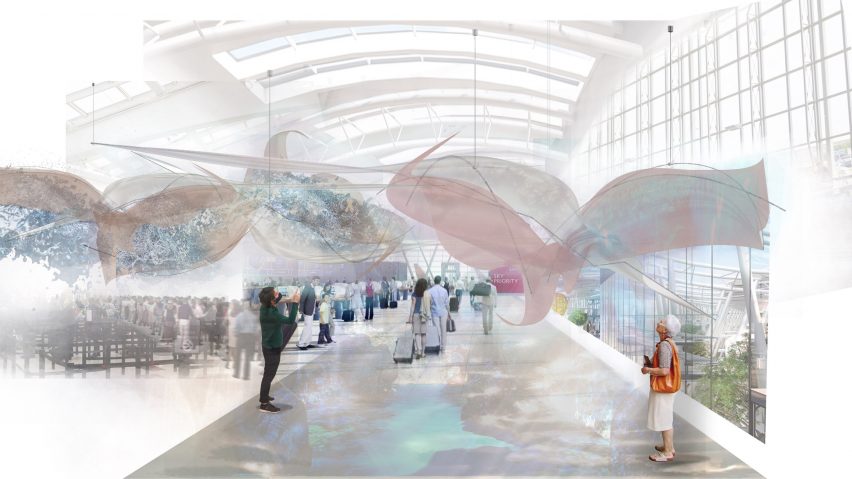
From a building that could purify contaminated floodwater to analysing how to improve users’ airport experiences (above), these projects by interior design students at Pratt Institute explore how interiors affect our environment and behaviour.

The digital exhibition displays a selection of ten projects by students on both the school’s undergraduate and postgraduate interior design courses.

See the school show ›

View courses at Pratt Institute ›


University for the Creative Arts illustration school show

University for the Creative Arts
BA (Hons) Illustration and Animation and BA (Hons) Illustration

An animation exploring a student’s fear of the unknown after graduating and a project which examines the human destruction of coral reefs (above) is included in this school show by students at the University for the Creative Arts.

The ten projects were selected from the studios of the undergraduate BA illustration and combined BA illustration and animation courses.

See the school show ›


Lucerne School of Art and Design, Lucerne University of Applied Sciences and Arts
Bachelor VS Jewellery

Jewellery designed to enhance people’s connection with dogs, glasses that improve with age and a jewellery prototype that resists facial recognition technology (above) are among projects by students at the Lucerne School of Art and Design that feature in this school show.

This trio of projects are presented alongside five further school shows from Lucerne University containing projects by students from its product, textiles and lighting design courses.

See the school show ›


Hongik University, Korea
BA Industrial Design

Hongik University, Korea presented ten projects by students enrolled on the institution’s BA Industrial Design course.

The digital exhibition features a fashion store (above) designed to reference a garden and a series of cocktail-making objects intended to enhance the work of bartenders (top image).

See the school show ›


School of the Art Institute of Chicago
Graduate Thesis Projects

School of the Art Institute of Chicago’s school show presented ten graduate thesis projects by architecture students.

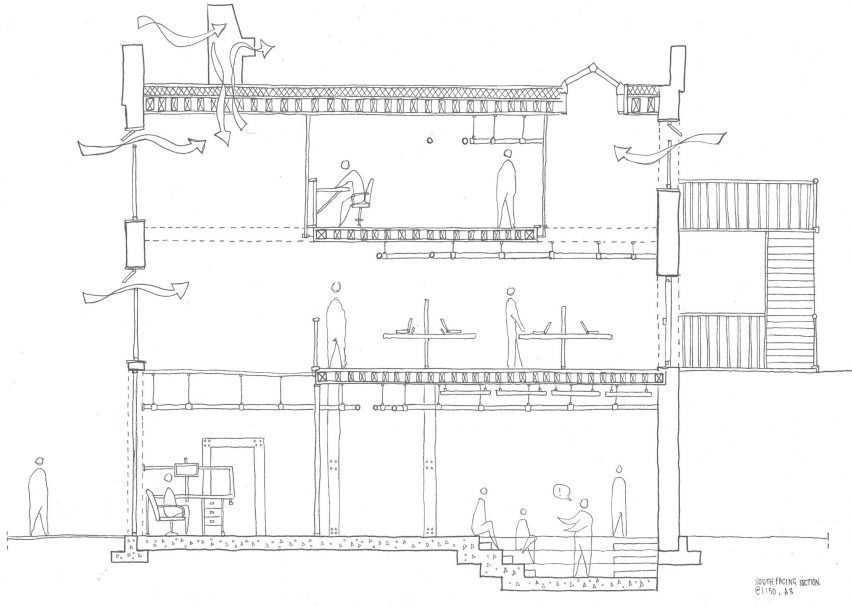
This school show presented a variety of projects, including one using hand-drawing techniques to explore “contemporary ruins” and another that examines how “house museums” serve as an opportunity to think about the way architecture communicates (above).

See the school show ›

View courses at School of the Art Institute of Chicago ›


Monash Architecture, Monash University
Bachelor of Architectural Design, Master of Architecture

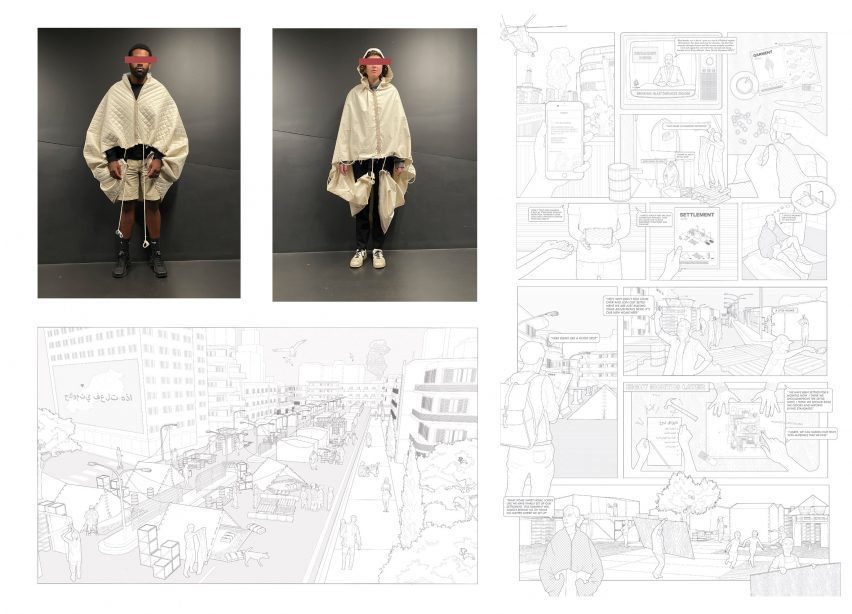
A project that addresses the lack of public space in Beirut (above) and an urban care home designed to enhance dementia patients’ quality of life are included in this showcase by students of Monash University.

The ten projects were created by undergraduate and postgraduate students of the university’s architecture faculty.

See the school show ›

View courses at Monash University ›


Ravensbourne University London
BA (Hons) Architecture, BA (Hons) Interior Design Environment Architectures and BA (Hons) Urban Landscape Architecture

Ravensbourne University London displays nine student projects in its showcase, including one which explores rituals around death through the use of mycelium and a pandemic-necessitated digital repair centre (above).

The ten highlighted projects were drawn up by undergraduate students from across the studios of architecture, interior and urban landscape design.

See the school show ›

View courses at Ravensbourne University London ›


Sydney Design School
Diploma of Interior Design and Advanced Diploma of Interior Design

A hotel interior informed by drag culture and a hospitality space that has a zero food waste philosophy (above) are among projects presented by Sydney Design School in its showcase.

The show features ten projects by students enrolled on the school’s interior design diploma courses.

See the school show ›


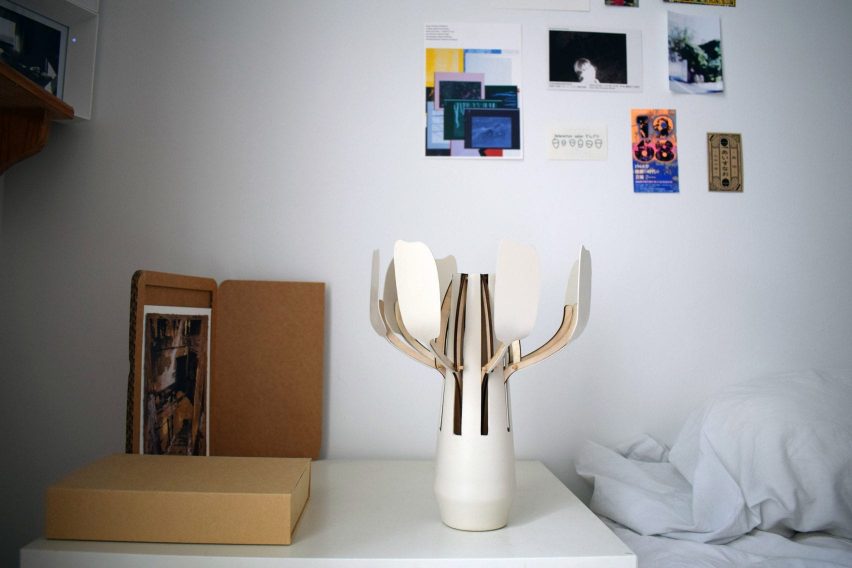
Lamp prototype on a surface in a bedroom/study space

L’ecole de design Nantes Atlantique
MDes Care Design, MDes City Design, MDes Food Design, MDes Digital Design, MDes Media Design, MDes Design and Innovation Management in apprenticeship, MDes Transcultural Design – China studio, MDes Transcultural Design – Brazil studio, MDes Transcultural Design – India studio, MDes Design and Entrepreneurship – Le Studio Montréal

A lamp that helps individuals with bipolar disorder understand their behavioural changes (above) and a drone programme tackling beaches affected by algae are among projects by students from a wide range of courses at L’ecole de design Nantes Atlantique.

The ten showcased proposals were drawn up by undergraduates and postgraduates from across the school’s architecture, furniture and interior design courses.

See the school show ›


Parsons school of design

The New School’s Parsons School of Design
Architectural Design (BFA), Architecture (MArch), Industrial Design (MFA), Interior Design (AAS), Interior Design (BFA), Interior Design (MFA), Lighting Design (MFA), Product Design (BFA)

The nine featured projects in this showcase by The New School’s Parsons School of Design were completed by both undergraduate and postgraduate students across the studios of architecture and design.

They include a project exploring how architecture is integral to healing trauma and another investigating how bioluminescence could change our relationship to interiors (above).

See the school show ›

View courses at Parsons School of Design ›

Villagers complain Florida-Friendly Landscaping has turned their neighborhood into jungle

Residents of The Villages say they are fed up and that Florida-Friendly Landscaping has turned their neighborhood into a jungle.

A home at 2167 Darwin Terrace in the Village of Amelia has been a sore point for years. It has been nicknamed the “Haunted House.”

Neighbors say they have called in complaints to Community Standards, however nothing has been done because the homeowner has adopted “Florida-Friendly Landscaping.”

Florida-Friendly Landscaping means using low-maintenance plants and environmentally sustainable practices, according to the University of Florida Institute of Food and Agricultural Sciences. Florida-Friendly Landscaping is allowed in The Villages. The water-saving practices associated with Florida-Friendly Landscaping are even encouraged.

The University of Florida Extension Service describes Florida-Friendly Landscaping as a “beautiful landscape that could save you time, energy and money while protecting our future.”

The complaints about the home on Darwin Terrace have been going on for several years. But it’s not the only Florida-Friendly Landscaping headache in Florida’s Friendliest Hometown.

A home at 2167 Darwin Terrace in The Villages has Florida-Friendly Landscaping.

Earlier this year, 81-year-old Myers Hand was called before the Community Development District 10 Board of Supervisors on a deed compliance case due to complaints about his Florida-Friendly Landscaping. Hand admitted that the Florida-Friendly Landscaping had become more than he could handle in the Florida heat. He also testified in a public hearing before the supervisors that he cannot hire and maintain landscapers who can groom the landscaping to his satisfaction. He vowed to move out of The Villages and sell the Premier home at 3610 Enterprise Drive he bought in 2015 for $671,900. He has yet to make good on that threat.

In 2019, a defiant homeowner in the Village of Piedmont fought to keep her Florida-Friendly Landscaping despite the difficulties she was having with it. Kathleen Stringer appeared before the Community Development District 4 Board of Supervisors in a public hearing where photographs presented as evidence showed a wild entanglement of plants, shrubs and bamboo at her home. Stringer testified that she “married into this situation” and she “didn’t even know about deeds and covenants.” She said her late husband may have signed off on some documents, but she had not been aware of it. Stringer eventually brought the property into compliance and her fines were forgiven.

Art Basel Miami Beach Returns, Smaller but Ready to Party

MIAMI BEACH — It’s back. Canceled last year because of Covid-19, the annual Art Basel Miami Beach fair returns next week, unfolding throughout the area. Beginning on Tuesday with invitation-only hours, and open to the public Thursday through Saturday, it will feature 253 galleries exhibiting work inside the city’s Convention Center, as well as a dizzying number of accompanying satellite art fairs, pop-up shows, and celebrity-studded private dinners.

It’s a sprawling cultural circus that has come to be called “Miami Art Week,” complete with corporate branding exercises, from a sculptural forest by the stage designer Es Devlin (commissioned by a Chanel fragrance) to a “Yacht the Basel” fete hosted by the snack food Cheetos, with “dynamic original art pieces created from Cheetos’ iconic orange dust.”

The return of Basel’s Miami fair couldn’t have come soon enough for the gallerists about to converge on Florida from around the globe. While contemporary art auctions are once again smashing records, overall gallery sales remain sluggish. A midyear Art Basel and UBS report by the economist Dr. Clare McAndrew found that nearly half of the 700 surveyed dealers saw a continued decline in sales during the first six months of 2021. Mega-dealers like Larry Gagosian and David Zwirner, with blue-chip rosters and multiple outposts, were rebounding quickly, the report said. But many smaller dealers, who had relied on Art Basel to develop new clients and introduce emerging talents, had been struggling.

Marc Spiegler, Art Basel’s global director, can pinpoint the moment when Miami’s revived art frenzy took off: Sept. 20, when the U.S. government said it would lift the Covid travel ban on most visitors from Europe and Asia in November, thus making the Miami fair the first truly international one in the U.S. since the pandemic’s start.

Spiegler’s phone immediately began burning up with messages from dealers who had previously passed on participating: “By the end of that week more than 30 galleries ‘uncancelled,’” he said, noting that despite all the grousing over “fair fatigue,” there was still no digital substitute for buying and selling art in the flesh. Nearly half the fair’s exhibitors will now be arriving from overseas and Latin America. “I’ve read all the predictions that art fairs were finished, that nobody was going to travel anymore,” Spiegler continued. “We have a show only marginally smaller than the one in 2019.”

This is no doubt a relief for Art Basel’s owners, the Swiss MCH Group, whose stockholder reports show they have lost more than $109 million since the pandemic’s start. Yet if the Miami fair’s return is reason for MCH to cheer, the future of its other two art fairs — Art Basel Hong Kong, scheduled for March 2022, and the flagship Art Basel in Switzerland, scheduled for June 2022 — remains uncertain. Even setting aside the growing wave of government repression and censorship in Hong Kong, there is a mandatory quarantine of up to three weeks for visitors entering the city. Come March, if that quarantine remains, Spiegler said it’s hard to imagine a full-fledged Basel fair happening. And with Covid infections surging again across Europe, sparking new lockdowns, it’s anyone’s guess what June will bring.

These potential losses in revenue for Art Basel make the smooth execution of the Miami fair all the more crucial. To avoid crowding, entry tickets are now timed and proof of a Covid vaccination or a recent negative test is required, as is the wearing of masks. These protocols may seem familiar — and reassuring — to visitors from New York or Los Angeles, but they’re almost nonexistent throughout Miami. Local officials have found themselves overruled on mask mandates by the Florida governor, Ron DeSantis, who has tried to make himself the face of Republican opposition to Biden administration virus policies. For Spiegler, however, the subject isn’t open to debate.

“When you bring together thousands of people from all over the world, wearing masks is the only thing that makes sense,” he said. And if a fair attendee, say, a billionaire art collector, refused to comply with the mask mandate? Would Basel’s security physically eject them from the Convention Center? “That’s what it means to have a mask mandate,” Spiegler answered firmly.

Beyond Art Basel, the mood within Miami’s year-round art scene is anything but tentative. Superblue, a joint venture of the heavyweight Pace gallery and Laurene Powell Jobs’s Emerson Collective, opened this past spring inside a 50,000-square-foot renovated warehouse in the Allapattah neighborhood. Meanwhile, Fotografiska, the privately owned global string of photography museums, has announced that it is moving into the 42,000-square-foot warehouse right across the street, next door to the Rubell Museum, with its David Rockwell-designed building set to open in 2023.

And in the city’s pre-eminent galleries, business is strong. At the Fredric Snitzer Gallery, the director, Joshua Veasey, said things are as busy now as at any point during his six-year tenure there. He credits the established collectors who fled cities up north or out west, riding out the coronavirus in their new Miami residences, who began visiting the gallery for the first time.

“After being stuck inside for so long, there was a lot of redecorating,” Veasey quipped. “These are the problems of the wealthy.” Yet the fresh faces at the gallery didn’t emerge out of Miami’s newly arrived “tech bros,” from the aspiring new media mogul Bryan Goldberg to the PayPal co-founder Peter Thiel, who have relocated here amid a wave of Silicon Valley cheerleading from the city’s mayor. New lower-key clients come with the more typical collector backgrounds of finance and real estate development.

What has trickled down from the tech industry is the love of all things NFT. Art Week hosts a bewildering array of NFT-themed gatherings, including the daylong NFT.BZL conference, featuring a bulging roster of NFT artists, tech figures, and both the city and county mayors. One of the many new NFT marketplaces, SuperRare, has even enlisted the engineers at SuperWorld to install 20 3-D sculptures throughout Art Basel’s Convention Center, viewable there only on their app — a novel way to get in front of influential eyeballs while sidestepping the fair’s curatorial committees and the roughly $60,000 (and up) booth fee.

“I was skeptical at first, I wanted to see if NFTs would have more than five minutes of life,” conceded the Miami multimedia artist Carlos Betancourt, one of the few established local talents to have embraced the new blockchain-based medium. He said the key to his comfort was finding a platform, Aorist, with a curator, Ximena Caminos, who was already a longtime supporter of his work. That, and Aorist’s willingness to produce a real-life version of his seen-only-on-a-screen NFT piece “What Lies Beneath,” which spotlights global warming’s rapid melting of the polar ice caps. The result, whose sale will benefit a local underwater sculpture park, is a pair of faux icebergs — one of which is 20 feet high and 30 feet wide, wrapped in collages of Sven-Olof Lindblad’s photos of actual icebergs, and set afloat in the oceanfront pool of Miami Beach’s Faena Hotel.

While room rates at the Faena — starting at $3,300 a night, $5,500 for an ocean view — may limit the audience for “What Lies Beneath,” it’ll still be hard to avoid seeing Betancourt’s artwork and its varied styles around Miami next week. “Into The Everglades,” his animated silhouettes of Florida wildlife, will lope nightly across the side of downtown’s 35-story-high InterContinental Miami hotel; “Milagro!,” a 38-foot-long string of 245 handcrafted charms, commissioned by the city of Miami Beach, will hang across a busy city boulevard; and two of his photos — homoerotic portraits of both himself and his longtime partner and collaborator, the architect Alberto Latorre — will be featured in a group show, “Skin in the Game,” inside a Beach storefront.

His ubiquity, Betancourt said, is proof that Miami’s museums and collectors alike have finally embraced the city’s own artists, prodded by Art Basel’s attention to made-in-Miami work. “People had an inferiority complex here for many years,” he continued, recalling his arrival from Puerto Rico as a teenager in 1980, discovering an art scene that too often looked elsewhere for direction. The shift is evident next week as local institutions proudly exhibit work steeped in Miami’s social fabric.

For starters, Anastasia Samoylova’s “FloodZone” photos at the HistoryMiami museum capture an often surreal visual interplay of flora, fauna, and crumbling concrete; Gary Monroe’s “Refuseniks” photographs at Florida International University’s Miami Beach Urban Studios offer a poignant study of early ’80s Jewish immigrants from the Soviet Union rebuilding new lives in a then-unraveling South Beach; and Jared McGriff’s otherworldly paintings at the NSU Museum of Art Fort Lauderdale depict visions of Black life that are simultaneously troubled and stirringly gorgeous.

This seriously minded artwork is being presented within the context of a tropical weeklong party. If that seems contradictory, Betancourt believes that embracing that contradiction is precisely what has made Miami finally come into its own as an art city: “We enjoy the party and that manifests itself in our work,” he said. “That’s what Miami brings to the equation — we do it all unapologetically.”