
New retrospective explores 50-year career of First Nations artist Robert Houle

The half-century-long career of renowned Saulteaux and Anishinaabe artist Robert Houle is the focus of a new major retrospective at the Art Gallery of Ontario titled “Red is Beautiful.”

The exhibition, named after one of Houle’s earliest pieces, features more than 100 works, including monumental paintings, intimate drawings and large-scale installations as well as personal and archival photos.

Putting together the show has been two years in the making but a dream of Houle’s for longer. The artist, who is 74, wanted to do a retrospective before he turns 75 next year. His work has been part of two other major shows but this is the largest exhibit to date.

“It’s kind of frightening. Makes me realize how old I am,” Houle said with a chuckle during a phone call.

“You still get [goosebumps] and anxiety no matter how many professionals are helping you put up your paintings, your installations, your objects. It’s still very nerve-racking.”

The retrospective opened Friday in Toronto.

A woman stands in front of a painting at the exhibition ‘Robert Houle: Red is Beautiful’ at the Art Gallery of Ontario in Toronto on Thursday. (Chris Young/The Canadian Press)

Houle is often regarded as one of the most influential First Nations artists since breaking into the contemporary art scene in 1970. The Art Gallery of Ontario’s website describes his work as blending abstraction, modernism and conceptualism with First Nations esthetics and histories. His work explores themes of Indigenous sovereignty, Ojibway spiritual traditions, major resistance movements and the residential school era.

Houle grew up in Sandy Bay Ojibway First Nation in southern Manitoba. As a young boy, he was forced to attend a residential school in the community, and as a teen was sent to another residential school in Winnipeg. Like many other Indigenous boys and girls, Houle says he was stripped of his language and culture and faced abuse while attending the institutions.

Later in life, Houle began to use art as a way to heal the wounds of the past.

Prompted, in part, by nightmares of his time in residential school, Houle spent 50 consecutive days illustrating his dreams. These drawings would eventually make up his Sandy Bay Residential School Series.

“It took me awhile to recover or to actually face and acknowledge what I had experienced. The abuse, the humiliation, being punished for speaking Saulteaux and other things,” said Houle.

“[Art] gave me the incentive. It gave me the courage, and I knew if I made something visual that was painful that it was a form of release.”

A set of paintings titled ‘Sandy Bay,’ named after the residential school attended by artist Robert Houle, hangs as part of the exhibition ‘Robert Houle: Red is Beautiful’ at the Art Gallery of Ontario. (Chris Young/The Canadian Press)

Houle pays tribute to the Oka Crisis in an oil painting called The Pines. Three panels depict a scene from a forested area, which was the subject of a land dispute between the Mohawk and the town of Oka, Que.

The 78-day standoff that began on July 11, 1990, between the Kanien’kehá:ka (Mohawk) community of Kanesatake, the Sûréte du Québec provincial police and, later, the Canadian military was over a contested area of land known as the Pines northwest of Montreal.

Houle studied at McGill University in Montreal and spent a lot of time in the nearby Kanien’kehá:ka communities of Kanesatake and Kahnawake.

“It gave me a lot of courage politically. Not to be shy about protests. Not shy about analyzing what was going on there and in the rest of our country,” said Houle.

Wanda Nanibush, curator of Indigenous art at the gallery, first became aware of Houle’s work in what she describes as a “life-changing” moment as a 16-year-old in 1992.

She visited a Houle-curated exhibit called Land, Spirit, Power at the National Gallery of Canada.

Artist Robert Houle stands among his work at the Art Gallery of Ontario in Toronto on Thursday. (Chris Young/The Canadian Press)

“It was the first time I had seen art by our own people that was contemporary … I just felt like he presented a totally different idea of who we were,” remembers Nanibush.

“It showed me a totally different way to be an activist in the arts and think about social justice from a very different point of view.”

Nanibush had to reach out to more than 30 lenders to have them agree to loan out Houle’s work for the exhibit.

She says thankfully none of them said no. “They want Robert to have the recognition he deserves.”

The exhibit runs until April 17, 2022, and will then tour Calgary and Winnipeg.
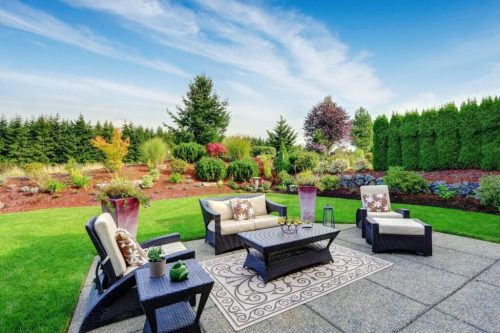
With more time spent at home, homeowners research landscape design ideas to create spaces for outdoor living, Business News

Landscape improvements can create functional living spaces. With the Covid-19 pandemic, homeowners are researching landscaping design ideas to improve their yards and create liveable spaces.

“Professional landscaping has tremendous value. It gets people outdoors and improves their lifestyle while spending time at home. It also boosts curb appeal and can increase property value,” said Keith Riley, Founder and CEO of RenovationFind.com and Design Landscaping by RenovationFind.

Design Landscaping provides a valuable resource for homeowners looking for landscaping ideas and trends for their properties. Once they have a picture of the landscaping features and living spaces they want for their yard, they can contact a reputable landscaping contractor in their city.

Popular landscaping trends in Canada:
Multiple spaces for outdoor living: Incorporating more than one living area is a popular landscaping trend. An example of multiple living spaces would be a deck for dining and a patio in another area for relaxing or sitting by the fire.

Deck additions: Decks are a valuable addition to the home. According to this report, decks have a good return on investment and can recover about 72{6d6906d986cb38e604952ede6d65f3d49470e23f1a526661621333fa74363c48} of their cost at resale. Homeowners can use a deck as an outdoor living space.

Pergolas and arbors: Other wood-built hardscape features that are great landscaping ideas are pergolas and arbors. A pergola can provide shade over a deck or patio. An arbor signifies a pathway or entrance to an area of the yard. Both of these structures can support climbing vines and plants.

Outdoor kitchen: Outdoor kitchens is one of many landscaping trends that has risen in popularity thanks to home improvement reality shows. A backyard chef can have multiple grills, a wood-fired oven, countertops and storage, and even a bar to entertain guests while cooking.

Backyard campfire: Landscapers can create a firepit area using a concrete or stone patio. Define the space with retaining walls or plant beds, and get out the marshmallows. You can have a traditional fire pit, unique fireplace, or even a gas fire table for the space.

Landscape lighting: Illuminate these landscaping ideas with a well-designed outdoor lighting plan. Motion sensor lights can help illuminate pathways and deter intruders. Use soft accent lighting around landscape features and living spaces to create a warm ambiance. Ask your landscaper about solar-powered outdoor lighting options.

Water features: A pond, creek, small waterfall, or fountain are all options for backyard water features. Design Landscaping can help determine what would be best for you based on space and how much you want to commit to maintenance. Always have a water feature installed by a professional.

Artificial grass: Artificial turf has come a long way over the years. Varying blade lengths, thickness, colour, and texture make this fake lawn look like the real things. If you never want to mow or water again, it’s a good option.

Xeriscaping: Another low-maintenance landscaping idea is xeriscaping. Use drought-resistant plants and surround them with mulch or gravel. The mulch keeps in moisture, so they require less water. A xeriscape reduces water use by up to 60{6d6906d986cb38e604952ede6d65f3d49470e23f1a526661621333fa74363c48} compared to conventional landscaping.

Edible landscape: If you’re looking for landscaping ideas that put food on the table, foodscaping can be the answer. In an edible landscape, Fruit and vegetable-bearing plants, herbs, and edible flowers are planted among the other plants creating a visually attractive and edible garden.

“Investing in landscaping is an investment for your lifestyle and home. It gives us more reasons to get outdoors and enjoy time with our family,” said Riley.

Find more ideas with these 12 Landscaping Trends & Ideas.

Design Landscaping by RenovationFind can assist with any commercial or residential landscaping project. Services include grading, sod, planting trees and shrubs, retaining walls, patios, walkways, plant beds, decks, fences, and more. Find a reputable and experienced landscape design and installer in your city with Design Landscaping. Because they have been certified and are continually monitored by RenovationFind, homeowners can feel confident they’ve found a trustworthy landscaper.

Contact Info:
Name: Keith Riley
Email: Send Email
Organization: RenovationFind INC.
Address: 11808 11 a ave NW
Phone: 7802184541
Website: https://designlandscaping.ca/

Source URL: https://marketersmedia.com/with-more-time-spent-at-home-homeowners-research-landscape-design-ideas-to-create-spaces-for-outdoor-living/89055604

Source: MarketersMEDIA

Release ID: 89055604

Farm payment scheme criticised for ‘lack of ambition’

Published:
3:05 PM December 2, 2021


Updated:
3:54 PM December 2, 2021

The government’s much-vaunted new green payment scheme has earned a lukewarm response from East Anglian farmers – while conservationists criticised its “shocking lack of ambition” for helping wildlife.

Environment secretary George Eustice outlined how the government aims to help farmers “deliver on environmental priorities to tackle biodiversity loss and climate change”. 

He also revealed some long-awaited details of the Sustainable Farming Incentive (SFI), due to be rolled out next year.

It is the first of three new environmental land management (ELM) schemes being introduced while the EU’s system of land-based subsidies is being phased out after Brexit.

Farmers will be paid for providing environmental benefits, such as improving grasslands and soils.

But the payment rates prompted disappointment from farmers, who questioned whether they reflected the cost of providing these so-called “public goods”.

Gary Ford, East Anglia regional director for the National Farmers’ Union (NFU), said: “Farm businesses in East Anglia have been crying out for clarity around the scheme so today’s announcement is a step forward. However, we need further steps before farmers have enough information to make informed decisions.

“It is crucial that the SFI recognises the significant costs farmers could incur in delivering public goods and that this is reflected in the payment rates. All this is happening against a backdrop of direct payments being phased out so it is critically important that Defra makes the right decisions. 

“This issue must be addressed if Defra is to attract the participation that it anticipates and that is required to deliver the environmental ambition of the scheme.”

Meanwhile, the announcement was described as a “huge disappointment” by the UK’s three largest nature charities.

The Wildlife Trusts, National Trust and RSPB said the scheme missed an opportunity to boost nature-friendly farming, potentially putting promises made by the government in its 25-year environment plan in jeopardy. 

Craig Bennett, chief executive of The Wildlife Trusts, said it shows a “shocking lack of ambition which does very little to address the climate and nature crises”. 

Eliot Lyne, chief executive of the Norfolk Wildlife Trust, added: “In light of the huge challenges our natural environment faces, it is vital that agricultural productivity in Norfolk does not come at a cost to our wildlife.

“We already know from our collaborative work with Norfolk landowners that there are better ways forward for farming and wildlife. 


Eliot Lyne, chief executive of Norfolk Wildlife Trust


Eliot Lyne, chief executive of Norfolk Wildlife Trust

– Credit: Danielle Booden

“Norfolk has always been a pioneering county for farming, and this is equally the case for regenerative agriculture. Across the county, we are seeing a great many landowners leading the way in farming with nature, environment, climate and human wellbeing in mind.  

“With adequate support, our farmers are vitally positioned to help create a healthier, more resilient, natural landscape.  

“If farmers are not properly incentivised as we fight species loss and climate change then countless extremely rare species with a stronghold in Norfolk face national extinction.” 

Mr Eustice made the announcement at the Country Land and Business Association (CLA) conference.


Cath Crowther, regional director for CLA East. Picture: Sonya Duncan


Cath Crowther, regional director for CLA East. Picture: Sonya Duncan

– Credit: Sonya Duncan

CLA East regional director Cath Crowther said it was a “major milestone” for agricultural incentive schemes, with “great importance for farmers and landowners here in the east”.

But she said there were still many concerns over farm finances as the Basic Payment Scheme, which distributes the current subsidies, is phased out.

“Make no mistake, whilst many farmers are very supportive of the direction of travel, they are deeply concerned about the transition from the old regime to the new, particularly regarding imminent cuts to the Basic Payment Scheme,” she said.

“Whilst high commodity prices in some sectors will help cushion the blow, we should remember that many farms operate on small profit margins.

“It is therefore incumbent on government to ensure every farmer is supported in the years ahead.”

Mr Eustice said the government needed to be clear about the policy outcomes it seeks, adding: “These are to halt the decline in species abundance by 2030; to reduce our greenhouse gas emissions; to plant up to 10,000 hectares of trees per year in England, to improve water quality; to create more space for nature in the farmed landscape; and to ensure that we have a vibrant and profitable food and farming industry.”

PAYMENT RATES

The Sustainable Farming Incentive will initially allow farmers to select from three “standards” to deliver improved outcomes for the environment.

  • The Arable and Horticultural Soils standard offers between £22 – £40 per hectare and includes activities such as testing of soil organic matter. 
  • The Improved Grassland Soils standard offers between £28 – £58 per hectare for activity including producing a soil management plan or herbal leys on at least 15pc of land. 
  • The Moorland and Rough Grazing standard offers £148 fixed per agreement per year, plus an additional variable payment rate of £6.45 per hectare.

Defra said farmers will be able to access up to £58 per hectare for improving soils from next year. As the rollout progresses, further standards will be included to deliver wider environmental outcomes, such as improving hedgerows and combining trees or shrubs with crop and livestock farming.

Sylvester Stallone Gets New Art Exhibit in Germany

Sylvester Stallone is a man of many talents. Writer, actor, producer, and even … artist? That’s right, the KO king himself turns out to be a talented painter and, according to The Hollywood Reporter, will be showing several of his paintings in the German city of Hagen at the Osthaus Museum Hagen.

The Rambo and Rocky star’s exhibition, titled Sylvester Stallone: The Magic of Being, will debut this Saturday, December 4, 2021 through February 20, 2022. The multitalented star said, “You know, maybe I should have been a painter. It sure would have meant a lot less stress” after arriving at the museum to unveil the exhibition’s first look.

“It’s an amazing honor to have my work hanging here, next to some of the greatest artists in the world. This gallery world is still a very new world for me,” Stallone added. And while this exhibit will mark the iconic actor’s largest showing of paintings from the late 1960s until present, his spot at the Osthaus Museum Hagen isn’t his first. In 2013, Stallone had an exhibition at St. Petersburg’s State Russian Museum and then again in 2015 at Musée d’Art Moderne et d’Art Contemporain located in Nice, France.


stallone-painting-Hercules-o-clock-publicity-H-2021
Image via Osthaus Museum Hagen

RELATED: Sylvester Stallone Shows Off ‘Guardians of the Galaxy Vol. 3’ Costume in Set Image

For those that wonder what would move a museum to give an actor their own exhibition, Mathias Rastorfer, an art dealer who calls the Gmurzynska Gallery in St. Moritz home and who was one of the people to organize the Hagen exhibit said, “Is [celebrity art] about the art or about the celebrity? I remember people asking the same question when we first showed Karl Lagerfeld’s art. Now every art museum in the world wants to show Largerfeld’s work,” Rastorfer explains before adding, “It will be the same with Stallone.”

Drawn to the work of artists, such as Jackson Pollack and Willem de Kooning, Stallone picked up a paintbrush at a young age. The master painters can be seen in much of Stallone’s work which he mentions selling “for $5 to get bus fare” after finishing each one with a signature of “Mike Stallone”. Upset by his initial attempt to become a famed artist and join his heroes, Pollack and de Kooning, Stallone went full steam ahead into his passion for writing and acting. His past characters and roles make appearances in some of his artwork as well. Many have nods to Rambo and Rocky as Stallone uses his paint brush to reflect on what the characters mean to him and his giant fan following.

COLLIDER VIDEO OF THE DAY

For those panicking that their favorite actor will ditch the screen for the canvas, they have no need to worry. Stallone recently wrapped filming for the newest installment of The Expendables franchise and, a few weeks ago, shared an Instagram post confirming that he would be reprising his role as Stakar Ogord in the upcoming, Guardians of the Galaxy Vol. 3.


syllvester-stallone-rocky 4 interview social
Sylvester Stallone on His New Cut of ‘Rocky IV’ and the Other Films He’d Love to Re-Edit

He also reveals who wins in a fight between Rocky in his prime and King Shark.

Read Next


About The Author

Inside Alicia Keys and Swizz Beatz’s Art Collection That Places a ‘Beautiful Black Face’ in Every Room of Their Home

Alicia Keys and her husband Swizz Beatz, whose real name is Keenan Dean, are one of entertainment’s hottest power couples. The pair are both heavily invested in music, and their synergy in creating long-lasting hits has solidified their names in the industry. Keys and Dean, who got married in 2010, share two children. The duo goes to great lengths to ensure their children see a bit of themselves in every part of the house.

Alicia Keys and Swizz Beatz ensure their children see a Black face in every room

Keys recently sat down with Marie Claire to talk about her longstanding music career while giving the publication a tour of her luxurious home. The architectural masterpiece boasts views of the Pacific Ocean as part of its appeal. It is also rumored to have been the inspiration behind Tony Stark’s bachelor pad in Iron Man.

Signe Nielsen on the New Horizons Now Possible for Landscape Architecture

As New York City rebuilds in the aftermath of a long pandemic year, Pratt students are partnering in the local Brooklyn community and beyond to support a better, more equitable future with innovative solutions. In the Making a Difference series, Pratt’s news page is highlighting ways in which students and faculty have been working towards positive change in areas including sustainability, climate change, social justice, civic engagement, and public health. This article is the fourth in the series.

Over the past months, outdoor spaces where people can safely gather and enjoy nature have been crucial in cities. Little Island, which opened this May at the former site of Manhattan’s Pier 54 on the Hudson River, offers a new experience for New Yorkers to explore trails through trees and plantings overlooking the water as well as enjoy spaces for both leisure and performance. The design is a collaboration between the UK-based Heatherwick Studio and the New York-based landscape architecture firm MNLA, led by Signe Nielsen, adjunct professor of undergraduate architecture.

Nielsen recently joined Pratt Presents for a panel discussion on the design of Little Island—a conversation which is available to watch online—and will be teaching in the Master of Landscape Architecture (MLA) program launching in January 2022. She answered a few questions on the importance of the School of Architecture starting a landscape architecture program now, her work on Little Island and other landscape projects, and the need to consider the impact of climate change on nature in public space.

Little Island is opening in a shifting time for the city when outdoor space is more crucial than ever. What does it offer to New Yorkers at this moment?

Little Island offers 2.5 acres of new waterfront park within Hudson River Park. For a neighborhood lacking in open space—I do not think the High Line, as beautiful and popular as it is for tourists and some New Yorkers, is viewed as a neighborhood park— it seamlessly marries nature and culture in forms that are rare to encounter in most public spaces.

Why is now an important time to start a landscape architecture program?

The time has never been more appropriate than now to start a new landscape architecture program. The field of landscape architecture is broad-ranging, which is what is needed at this moment to seek strategies and ideas to advance climate-positive design. Landscape architects are trained to think of systems rather than objects, and it is these environmental and human systems that need to be considered as integrated if we are going to make substantial, rapid progress towards addressing the acute impacts of climate change.

Working within the creative and innovative suite of world-class graduate programs at Pratt, the Master of Landscape Architecture program joins this esteemed company. Situated within New York City, the program will draw on this urban fabric as a laboratory, rich in both opportunities and challenges.

Are there design ideas reflected in the landscape of Little Island that you want to share with students through this program?

Little Island is the result of a unique set of circumstances bound in a particular place that is not easily replicated. That said, there are certain notions of public space design, the response of environmental forces including climate change, and the rethinking of the relationship of nature and art that offer fodder for scholarly and creative pursuits. There are equally questions pertaining to environmental justice and equity that also emerge from Little Island that also present opportunities for discourse.

How is Little Island looking ahead to the ecological shifts in climate change?

​Little Island is the first completed waterfront park that is substantially elevated above the year 2100 projected sea-level rise and storm surge. Additionally, the plants, particularly the trees, were selected to be adaptable to rising temperatures. Soils, slopes, and the drainage strategy were all designed for greater frequency and intensity of rainfall events and demonstrated their efficacy in Hurricane Ida in September.

Do you foresee more landscapes in the future needing to be designed for unconventional spaces?

​New York City, like many dense urban areas, is essentially out of readily available land waiting to be developed as parkland. This has been true for at least two decades, hence the need to look for sites that have been abandoned, neglected, underutilized, or contaminated, and imagine how they can be repurposed, reimagined, cleaned-up (decontaminated), and designed for a resilient future for both the environment and people. Many of these sites are along our waterfronts—former industrial, manufacturing, or warehousing areas—and others are complexly interwoven with surface and subsurface infrastructure.

Is there anything that the design of Little Island rethinks in terms of landscapes for parks and public space?

One important aspect of Little Island is that the park’s design asks you, the visitor, to choose how to experience the place. Unlike most parks that offer playgrounds, sports courts, fitness equipment, and such, Little Island has no such designated activities. True, there are scheduled and impromptu cultural events in the amphitheater and Glade (a grassy slope facing a performance area), but these are neither year-round nor all-day long.

I am very supportive of public spaces that challenge and inspire the visitor to create their own experience, which I think Little Island does. Whether one is interested in strolling, jogging, gaining a new perspective on the cityscape and river, or enjoying an immersive landscape with perhaps a musical accompaniment—say, on a day of rehearsals—or evening getting together with friends over a drink, then the flexibility and inclusiveness of Little Island is the attraction.

Read additional stories in the Pratt Making a Difference series: Putting the Community First in Planning for a Brooklyn Neighborhood’s Future, School of Architecture Advocates for Climate Education with Pavilions & Projects on Governors Island, and Architecture Students Explore How Aquaculture Could Transform Industrial Brooklyn with Oysters and Algae.