As part of the Desert X international contemporary art exhibition, the second edition of the Desert X AlUla features 15 contextual installations across the Saudi Arabian desert that explore “ideas of mirage and oasis”. This year’s exhibition is curated by Reem Fadda, Raneem Farsi, and Neville Wakefield, under the theme of Sarab (arabic for ‘Mirage’), and invites artists to address the history and culture of the desert, its contemporary significance, and the dichotomy between the natural and man-made world.
+ 17
Installed across the Al-Ula desert in the Al Mutadil Valley from February 11th until March 30th, the curators invited local and international artists to consider ancient concepts of the desert, responding with installations that address keywords such as: dreams, camouflage, fiction, dis/appearance, extraction, illusion and myths.
Read on to discover the 15 participating artists, along with their installations.
Related Article
19 Contemporary Installations Dotted Across the Coachella Valley Desert
I Have Seen Thousands of Stars and One Fell in AlUla by Shadia Alem
Alem’s sculptural installation takes inspiration from the art of Origami to create geometric forms that reference to the Arabian mathematics, literature, and mythology.
The installation explores globalization, water, and migration through crafted tapestries draped around slabs of rocks, made from yellow kufour gallons, which are used in Ghana for water storage and transportation.
The installation explores the relationship between the desert and nearby Red Sea through a pair of coral-like forms. Its temperature-sensitive surfaces reflect the effects of climate change and humans’ struggle to find a sustainable relationship with a rapidly changing ecosystem.
The artist intersected technology and nature in an installation of an underground greenhouse, hinting at the lush sanctuary of native plants. Below, solar panels are mounted onto the desert floor, creating an energy feedback loop where the sun’s energy is captured, stored, and transformed through photosynthesis.
The steel-made inflated structures are wedged in the voids of rocks, tensely balanced within the landscape to create a silent yet imposing composition suspended in inertia.
The artist created a mirage of of olive trees, which stand in the desert as living things displaced from their indigenous as an exploration of territory, survival, and citizenship.
The soundscape installation sits in a rocky cavern, and comprises horizontal sculptural wires and an audio projection of music, voices, and footsteps, that add to the chimes of nature.
The sculpture is inspired by the vernacular architecture of AlUla, mimicking the form of a concave geometric sculpture that references the Nabataean tombs, surrounding mountains, caverns, and rock formations.
A progression of imposing walls are laid out within the natural order of the AlUla canyons, each displaying a section of a larger algorithmic pattern related to the waveforms of the desert.
The artist created drawings with interlocking patterns that translate the shifts in magnitude and scale of the desert and how humans position themselves within the vastness of unbounded spaces.
The desert kite-shaped mud structure features mirrors on the façade to create the look of a mirage, and an urn-like sculpture embossed with four protective symbols traditionally used on Nabatean tombs.
The structures frame the natural artefacts that the artist encountered in the desert. Kwade rearranged and supplemented the linear frames to create constantly changing perspectives that highlight the dichotomy between reality and illusion.
The piece references theories of light refraction, linking back to the early days of desert civilization, with stainless steel plinths that interact with the light and create a radiant space.
The sculpture speaks to AlUla’s historical position as a hub and passage of trade, along with its recent cultural revival. The artist used heritage rails from the Hejaz railway that ran from Damascus to Medina, and transformed them into giant dried grasses that resemble the possibilities of growth and transformation.
The wife-and-spouse gallerists Julia and Max Voloshyn experienced planned to return to Kyiv last 7 days to open a new show at their space there. But with business air site visitors halted as Russian troops invaded Ukraine, their keep in Miami — and the run of their pop-up exhibition there — was prolonged.
The display, titled “The Memory on Her Face,” features socially charged do the job by 5 Ukrainian artists. After arriving in Miami in November to operate booths at two of the satellite art fairs held concurrently with Art Basel Miami Beach — NADA and Untitled Artwork — the Voloshyns contracted Covid, suspending their return for a month. By mid-January, with numerous well known Ukrainian art collectors coming to Miami in February, they mounted this impromptu present inside a little warehouse in the Allapattah community, with Untitled’s Omar Lopez-Chahoud as the curator.
“It’s a documentation of what has been occurring in Ukraine for the past few many years,” described Julia Voloshyn by cellular phone from the Miami rental, in which she, her husband and their little baby are staying.
One of Kadan’s pieces attributes a silk-screened photograph of a building in the jap Donbas region of Ukraine, partially turned to rubble just after Russian forces invaded the region in 2014 and keep on to aid separatists there. The silk-screen is loosely attached to a steel defend, so “when the air moves it, it captures the fragility of our place, and of our lives,” Voloshyn ongoing. “Now we see the identical thing in Kyiv.”
Khomenko’s portraits depict common functioning-course people today buffeted by social forces, their bodies straining versus the boundaries of the canvases.
A big painting by Sai, from his “Bombed” series, may well at first seem to be basically a geographic abstraction. But it attributes a modern satellite impression of fight-ravaged spots of the Donbas, overlaid on one particular of Sai’s previously paintings on aluminum, then attacked with a metallic grinder to simulate the craters still left at the rear of.
Even now, Voloshyn’s mind remained targeted on her gallery back in Kyiv. Employed as a bomb shelter throughout Environment War II when the German military besieged the metropolis, it sits beneath a 7-story condominium setting up. The Voloshyns experienced remodeled it into a stylish house, finish with wood flooring and tasteful lights. Now it was the moment all over again a bomb shelter, and Voloshyn experienced urged her gallery’s artists to get refuge there.
On Saturday night Kadan was hunkered within the Kyiv gallery with a little group, getting ready for the town-purchased, weekend-extensive curfew. His first reaction to the Russian invasion on Thursday experienced been stoicism. “I stayed in my apartment and watched outdated films by Ingmar Bergman,” he quipped around Zoom. By Friday evening nearby explosions had turn out to be much too loud to dismiss, and he’d moved to the gallery.
“I have so a lot of historic photographs in my head that I preserve considering about: Sarajevo in the ’90s, Leningrad all through Entire world War II,” he said. “Sure, now it will be distinctive. War is often modern day, constantly various. But it’s also often bloody. Currently, there is a great deal of blood.” He fixated on the modest young children holed up in adjoining subterranean bunkers. “Every time we go out for a cigarette, we see this vacant child stroller,” he additional grimly.
For Kadan, the function of an artist in this situation was clear: “To be witnesses.” But he also realized, as Russian troops bore down on Kyiv, that many artists ended up swapping their pens and brushes for bottles to manner Molotov cocktails. “Emotionally, I’m ready. But technically, to be sincere, I’m not,” he explained. “I’ve dealt with the fact of war in my art, but I have in no way held a actual weapon in my fingers. Perhaps I’ll toss an vacant champagne bottle at the tanks. I really don’t know.”
Khomenko and her family experienced also originally taken shelter at the Voloshyn Gallery. An activist in the course of Ukraine’s 2014 Maidan revolution, she had been thrilled to see the two the army and civilians rally together to resist the latest invasion. But Kadan experienced implored Khomenko to imagine of her 11-year-old daughter and go away for safer terrain to the west.
There was an hour of tense discussion — and a heated argument with Khomenko’s grandmother, who had lived by way of Germany’s 1941 assault on Kyiv, and unquestionably refused to go away the city now. Eventually on Friday, in advance of the Ukrainian army started defensively blowing up the city’s bridges, Khomenko, her daughter, husband, sister and mom, the mother’s cat and Khomenko’s canine, all crammed into her getting older Czech-crafted Skoda and sped off to a friend’s residence in the tiny western town of Ivano-Frankivsk.
Russia-Ukraine War: Essential Things to Know
Card 1 of 4
Russian convoy. Satellite images exhibit a Russian army convoy stretching 40 miles long on a roadway north of Kyiv, with a selection of households and structures noticed burning close by. Authorities worry the convoy could be employed to encircle and lower off the cash or to start a complete-on assault.
Migration wave. At least 660,000 men and women, most of them gals and young children, have fled Ukraine for neighboring countries, according to the U.N. refugee company. It’s the most rigorous wave of European migration considering that at the very least the 1990s.
“I’ve been driving for far more than 24 hrs,” a visibly fatigued Khomenko stated through Zoom on Saturday night time. To keep away from any battle, “we tried using to stay off the most important roadways involving villages, but all those back streets are pretty lousy, so it is annoying. It is fully dark, really tough.”
Still left at the rear of have been the collection of sprawling canvases she’d been operating on for the past five several years — meant to be unveiled in June at a Kyiv historical past museum. She’d at first been encouraged by her grandfather’s sketches of the 1941 German invasion: “I desired to evaluate the true practical experience of war with the socialist-realist propaganda from the time period.” Apart from that the comparison had quickly taken on an all-much too-true update. Her brain was by now racing as she mused aloud on Russia’s the latest electronic propaganda and the war scenes she’d just seen — and felt — firsthand.
“Painting has its very own language with a deep custom. I want to operate with that custom, to mix socialist realism with world-wide-web images, to layer it collectively and build a new image,” she ongoing before catching herself. She paused and shook her head: “It’s so ridiculous. We have been dwelling so typically, and then we turned meat just seeking to escape.”
The Memory On Her Facial area
By March 28 at 676 NW 23rd St. in Miami. To plan a totally free take a look at, e mail: voloshyngallery.miami@gmail.com.
Maintaining up with backyard garden trends this year is a get for us and the setting as nicely with landscape architects foremost the way. According to a attribute by Damian Holmes in the January difficulty of “World Landscape Architect,” the craze is towards putting the environment front and heart.
That said, it is local climate improve that is primary the charge in how professional landscape designers are approaching their tasks.
“We have recently found extra venture perform is dedicated to mitigating weather transform in the United states of america,” the write-up states. The article goes on to say: “The mitigation initiatives will include a wide spectrum from transforming land administration techniques to small initiatives this sort of as laws governing the color (sic) and reflectivity of surfaces.”
Making use of this idea at property could include a assortment of ways — from averting “blacktop” asphalt driveways that take in warmth to roof-area colors to considering drinking water-conserving products or back garden installations, such as rain gardens, swales or a “green roof” for back garden or other constructions to conserve drinking water and mitigate heat reflection.
One more factor the execs will be looking at is higher emphasis on the price of outside place.
For professional spaces this indicates: “People will spot bigger price on out of doors spaces as areas to exercise, relax, fulfill, dine and recreate,” the post states. “Industries (primarily arts and enjoyment) will start out to see smaller sized outside situations are ways to get persons to show up at comfortably, this will area bigger strain on parks and open up areas in cities. Will indoor stadiums and large enjoyment venues keep on to attract the crowds? Or will the expectation be that a lot more occasions will have to have to be held outdoor with lesser crowds?”
Of training course we are already looking at this come about as COVID troubles proceed constrict indoor activities, and with predictions of the possibility of continued public health and fitness problems like the COVID pandemic, it becomes noticeable that business spaces will start out to conform with the demands of the general public in get to retain people today safe and nutritious. Our personal encounters are by now mirroring this trend.
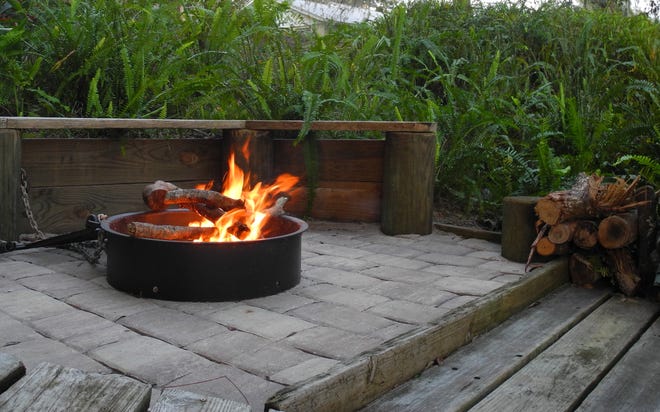
How numerous of us have planned out of doors occasions in the earlier year or two, to still delight in the organization of our pals and kin although preserving them and ourselves as harmless as feasible? No doubt numerous of us are contemplating or by now have seemed at approaches to lengthen our residing spots out of doors as temperature makes it possible for. The attractiveness of outside fire pits and free of charge-standing outside heaters and spots focused to out of doors eating no doubt attest to this want.
Specialist landscape designers are anticipating property owners to initiate design makeovers to facilitate higher use of outdoor spaces. We can expect to see expanded use of native vegetation in industrial landscapes, and there are loads of explanations to contemplate this observe at residence as nicely.
Minimizing carbon footprints and working with workers shortages in these making an attempt instances has experienced landscape designers searching for techniques to lessen backyard garden upkeep. Amen to that we say! Indeed peaceful battery-operated power garden instruments this kind of as chainsaws and mowers are one way we residence gardeners can be part of the corps having the sounds down a notch or two. And definitely setting up to facilitate companion planting of species that have equivalent drinking water demands and care demands can help lessen the workload.
The article states: “There is a will need to enhance biodiversity, not just plants but also soil biology, to preserve and give ecosystems for individuals and animals … Planting layout and soil must be front of head, in particular when it is increasingly tough to attain specified vegetation as commercial nurseries seem to be lowering the selection of plants readily available (in favour of color (sic) or flowering cultivars) to the business.”
Even the subject of weeds has captured the pros: “Much has been composed about the gains of weeds in city environments in making habitats, having said that, landscape architects want to acquire a higher comprehending of which weeds are invasive and noxious as these weeds can have a devastating environmental and economic impression. The trend in weed administration will go past the management time period during the building phase and will need a holistic approach across the whole venture period from begin by way of to servicing … Several will think that this is not a pattern but some of the tenets of landscape architecture, we will see a higher emphasis from governments and communities on conservation, biodiversity and weed management as equipment to mitigate weather improve.”
A different pattern for the coming calendar year is colour! Just about every year the Pantone color enterprise names a coloration of the yr. The new one for 2022 is Veri Peri. Here’s what Pantone has to say about this colour which we can anticipate to see a whole lot of this calendar year — each within our homes and outdoors in our gardens.
“Displaying a carefree self confidence and a daring curiosity that animates our imaginative spirit, inquisitive and intriguing Pantone Pretty Peri aids us to embrace this altered landscape of opportunities, opening us up to a new eyesight as we rewrite our life. Rekindling gratitude for some of the attributes that blue signifies complemented by a new standpoint that resonates right now, Pretty Peri locations the potential ahead in a new light-weight.
“We are residing in transformative situations … Quite Peri is a symbol of the worldwide zeitgeist of the minute and the transition we are likely by means of. As we emerge from an intense time period of isolation, our notions and benchmarks are transforming, and our physical and electronic lives have merged in new means. Really Peri illustrates the fusion of present day lifetime and how colour trends in the electronic globe are being manifested in the bodily entire world and vice versa.”
Hope to see out of doors accents in this perky colour as well as bedding vegetation to help distribute the cheer the Quite Peri represents.
Lynette L. Walther is the GardenComm Gold medal winner for crafting, a 5-time recipient of the GardenComm Silver Medal of Accomplishment, the Countrywide Garden Bureau’s Exemplary Journalism Award, and she is the creator of “Florida Gardening on the Go.” She is a member of GardenComm, the group of experienced back garden writers. Her gardens are on the banks of the St. Johns River.
There’s a “what if…” energy electrifying some of the most exciting exhibitions in New York City this month, speculative propositions ranging from “What if we saw architecture as an unsettled pastiche?” to “What if a reclamation could occur through genre choice?”, from “What if bodies voided of subjecthood gained otherworldly abilities?” to “What if indices of representation changed?” Asking “what if” can be a galvanizing, powerful thing; as you take in these shows across the city, let yourself brim and fizz with the question’s possibilities.
***
Installation view of The Black Index at Hunter College Art Galleries’ Leubsdorf Gallery, 2022. Alicia Henry, “Analogous III” (2020) (photo by Stan Narten, courtesy the artist)
When: through April 3 Where: Bertha & Karl Leubsdorf Gallery (132 East 68th Street, Lenox Hill, Manhattan)
Reviewed by Hyperallergic in its UC Irvine iteration, this traveling exhibitionpresents media-spanning work by six artists, including Titus Kaphar and Kenyatta A.C. Hinkle, that challenge harmful colonialist and classificatory conventions around Black figuration in the United States while proposing thoughtful alternatives. “Black people should not visually only exist in relationship to violence, crime and racial hate,” exhibition curator Dr. Bridget R. Cooks told the Los Angeles Times. “We exist in other ways and these artists are trying to represent those ways to us or to remind us there are other ways to see us, to find us in American culture.”
Still from Carlos Motta and Tiamat Legion Medusa, “When I Leave This World” (2022) (courtesy the artist, P.P.O.W. Gallery New York and OCDChinatown, New York)
When: through April 10 Where: OCDChinatown (75 East Broadway, Chinatown, Manhattan)
This two-channel video installation is the brainchild of Bogotá-born, New York-based artist Carlos Motta, whose oeuvre explores queer or otherwise marginalized counter-histories and alternative futures, and Tiamat Legion Medusa, a Texan trans performance artist who goes by it/its pronouns and has undergone extensive body modification surgery to metamorphose into a dragon, a corporeal protest against humans and what they represent. Medusa relays its personal history and politics in one video, while in the other, both artists are suspended in space through transgressive means (hooks and Shibari).
When: through April 16 Where: Higher Pictures Generation (16 Main Street, Ground Floor, DUMBO, Brooklyn)
Susan Meiselas may be best known for her documentation of Nicaragua’s Sandinista revolution, but her photographic career first took flight with Carnival Strippers (1972-75), a visual record of striptease performers, their employers, and their clients at small town summer carnivals around the East Coast. Painting a nuanced picture of her subjects, Meiselas depicted the performers onstage and off and ensured that their voices were represented through taped interviews and consultation on photos. Due to a recent discovery of color film rolls in storage, images from the series are being exhibited in vibrant color for the first time.
Installation view of Lyndon Barrois Jr.: Mirage Collar at Artists Space, 2022 (photo by Filip Wolak, courtesy the artist and Artists Space)
When: through April 23 Where: Artists Space (11 Cortlandt Alley, Soho, Manhattan)
Cinema has long celebrated the art of the con. With an emphasis on the Three-card Monte trick, Pittsburgh-based multidisciplinary artist and writer Lyndon Barrois Jr. mines the vast archives of filmic depictions of duplicity, double-dealing, and legerdemain in his first New York institutional solo show. Transforming borrowed cinematic imagery into exactingly arranged paintings, drawings, sculptures, and installations, the artist explores subterfuge’s many flavors on formal and narrative levels.
Kia LaBeija, “Mourning Sickness” (2014) (courtesy the artist and Fotografiska New York)
When: through May 8 Where: Fotografiska New York (281 Park Avenue South, Flatiron, Manhattan)
In her first museum solo show, Kia LaBeija (“Kia”), an artist, performer, and former Overall Mother of the Iconic House of LaBeija, presents tender autobiographical photographs and self-portraiture alongside personal archival material and ephemera. Through her vulnerable visuals, Kia, who was interviewed by Hyperallergic in 2020, opens a window onto her experience coming of age as a queer, HIV-positive woman of color involved with New York City’s Ballroom scene. prepare my heart is dedicated to the artist’s late mother Kwan Bennett, an AIDS activist.
When: through June 5 Where: The Met Museum (1000 Fifth Avenue, Upper East Side, Manhattan)
Quality trumps quantity in this spare presentation of 3 photos and 16 sculptures, spanning five decades, by Los Angeles-based artist Charles Ray, a “sculptor’s sculptor” who has produced around 100 works total over the course of his career — and is currently also the subject of exhibitions at Glenstone, the Centre Georges Pompidou, and the Bourse de Commerce. Spaced apart in an echo of the artist’s dictum “Space is the sculptor’s primary medium,” works on view in this focused survey range from an open aluminum box that riffs on the Minimalist cube to stainless steel figures referencing Mark Twain’s Huckleberry Finn, a complex and problematic American cultural touchstone.
Kay WalkingStick, “The San Francisco Peaks Seen from Point Imperiale” (2021) (image by JSP Art Photography, courtesy the artist and Hales, London and New York)
When: March 4–April 16 Where: Hales Gallery (547 West 20th Street, Chelsea, Manhattan)
While we might be (rightly) inclined to associate paintings of epic North American landscapes with the acquisitive violences of manifest destiny, artist Kay WalkingStick, who is of Cherokee and Anglo descent, has painted landscapes throughout her six-decade career to instead explore and honor the relationship between Indigenous peoples and nature. The multi-panel oil paintings on view, all made in the past ten years, overlay North American vistas with meticulously researched Indigenous patterns and designs that reference the people who once inhabited or currently inhabit the area.
Tenet, “Frame 2 (Hot Pipe/Transition Strip)” (2021) (courtesy the artists and CUE Art Foundation)
When: March 5–April 2 Where: CUE Art Foundation (137 West 25th Street, Chelsea, Manhattan)
With a focus on 19th century tenement housing built with working class, immigrant, and non-White inhabitants in mind, Tenet, or the collaborative New York duo Julia Eshaghpour and Kevin Hollidge, consider New York City’s layered pastiche of architectural styles, in which various social, material, and aesthetic histories awkwardly abut one another. Droll architectural sculptures and assemblages — a pillar is inexplicably made of fruit, a pipe snakes like a living thing — underscore the strange animacy of buildings.
Dewey Crumpler, “Sundown” (2020) (courtesy the artist and Derek Eller Gallery)
When: March 17–April 23 Where: Derek Eller Gallery (300 Broome Street, Lower East Side, Manhattan)
Since the 1990s, Bay Area artist Dewey Crumpler has been painting and drawing The Hoodies, anthropomorphic sweatshirts that act as bodiless proxies for Black subjects — perhaps above all, Black boys and adolescents. Whether they are zipping through outer space in Skittles-colored vehicles, wielding smartphones to photograph Pablo Picasso’s “Les Demoiselles d’Avignon”(1907) and Faith Ringgold’s “American People Series #20: Die” (1967) at MoMA, or gathering at a protest with homemade signs that read “The Thang” and “Being Non Being,” the Hoodies are uniquely compelling.
Installation view of Hassan Sharif: I Am the Single Work Artist, Malmö Konsthall, Sweden, 2020 (photo by Helene Toresdotter, courtesy Alexander Gray Associates)
When: March 17–April 23 Where: Alexander Gray Associates (510 West 26 Street, Chelsea, Manhattan)
Emirati conceptual artist Hassan Sharif (1951-2016), who worked across media but is most closely associated with his sculptural installations of refuse, gained recognition for his political caricatures and cartoons in the 1970s. Highlighting that critical figuration remained an important thread in Sharif’s mature work, the late, Expressionism-inflected paintings on view depict decontextualized, distorted politicians who appear maniacal at press conferences or raise their hands in ambiguous public gestures emptied of meaning.
Leroy Almon (American, 1938–1997), The New Heaven, 1984. Blended media (carved wooden, lightbulbs, … [+] synthetic pearls, paint). 36 x 28 in, Gift of Arthur J. Secor, by exchange, acquired with funds from the Florence Scott Libbey Bequest in Memory of her Father, Maurice A. Scott and present of the Souls Grown Deep Basis, 2020.25
The aim of an encyclopedic museum has generally been one thing of a fool’s errand, making an attempt to collate, interpret and screen the entirety of humanity’s creativeness. Performing so, of program, proves difficult.
No museum is comprehensive of just about every artwork from each and every society at every spot and time in human history. All encyclopedic museums make options when constituting their “encyclopedia.” Objects found and remaining out are pushed by priorities, access, funding.
At the Toledo Museum of Artwork, an encyclopedic museum founded in 1901, all of the previously mentioned are on screen. Earlier generations of management have picked out to prioritize, go after and obtain that product.
This era of leadership has decided on to add a new portion to the encyclopedia: quilts from Alabama, pencil drawings from Mississippi, painting from Louisiana.
Tangible proof supporting the TMA’s aim to broaden the tale of art history even though not sacrificing excellence.
“Our eyesight is that the Toledo Museum of Art will be deemed the product art museum in the United States for its determination to excellent and its society of belonging,” Edward Drummond and Florence Scott Libbey President, Director and CEO at the Toledo Museum of Art Adam Levine informed Forbes.com. “Foundational to that is this notion that high-quality is the most egalitarian and democratic thought there is. High quality will not discriminate. A emphasis on beauty without the need of bias will end result in illustration.”
Lucy T. Pettway (American, 1921–2004), 4-Way Star—four-block variation, about 1970. Quilt: … [+] Cotton, cotton/polyester mix. 72 x 72 in, Toledo Museum of Artwork, Present of Arthur J. Secor, by exchange, obtained with money from the Florence Scott Libbey Bequest in Memory of her Father, Maurice A. Scott and gift of the Souls Developed Deep Foundation, 2020.33
Each and every piece has been obtained by TMA in the earlier two many years from the Souls Grown Deep Foundation, a non-profit business focused to documenting, preserving and marketing the inventive production and cultural traditions of Black artists from the rural South.
“We’re questioning what ‘encyclopedic’ certainly means–can we really have almost everything represented,” exhibition curator Jessica S. Hong, TMA’s curator of contemporary and present-day artwork, instructed Forbes.com. “All of these artists had been constantly here. It is not about ‘discovery,’ it is about definitely symbolizing the much larger, international artwork historical narratives that museums ought to be telling.”
With artworks in the clearly show now belonging to the museum, the exhibition does not basically check a representational box or provide as a hit-and-run attempt at diversity and inclusion. TMA is fully commited to thoroughly incorporating these goods into its present American artwork collection, a collection which will bear a complete overall in just the subsequent calendar year to broaden its viewpoint although preserving what Levine describes as the museum’s “relentless concentration on high quality.”
In executing so, the TMA will rewrite its encyclopedia.
“The superpower that an artwork museum has is when anything goes up on the wall, it’s considered fantastic. We established the canon,” Levine reported. “By displaying these artworks, we not only middle them in the narrative of American artwork record and artwork history in standard, but by acquiring them, we show that they are of superlative quality, on par with anything else in this museum. This is an possibility for us to realize the price of artists who have not been specified the opportunity historically to be showcased at establishments like ours.”
Thornton Dial (American, 1928–2016), Vacation to the Mountaintop, 2004. Mixed media (wood, clothing, … [+] wire monitor, rope, steel, wire, and plastic). 132 x 86 x 51 in, Gift of Arthur J. Secor, by exchange, obtained with money from the Florence Scott Libbey Bequest in Memory of her Father, Maurice A. Scott and present of the Souls Developed Deep Basis, 2020.28
In selected means, objects in “Living Legacies” are not like nearly anything else in the museum. No other artworks at TMA are produced from previous denim operate garments or sheet steel. No other artists in the selection simply call Panther Burn off, MS or Tallapoosa, GA dwelling. No other paintings aspect carpet. No other sculptures rebar.
Look closely, however, and common themes from prehistory as a result of the Center Ages, Renaissance and modern working day are apparent.
“Through traces are neighborhood, loved ones, socio-political conditions, spirituality, religion, but also the joy these artists get from their art tactics,” Hong describes.
In that way, the museum’s painting by El Greco from the late 1500s is no diverse than its assemblage by Leroy Alman from 1984, on screen in “Living Legacies” a few galleries absent.
Equally also help realize 1 of the museum’s major targets.
“We want to have our communities come to feel like they are element of a bigger national, international, cultural and social cloth,” Hong stated. “While it’s significant to concentration on our regional group due to the fact that is our audience, we also hope they see by themselves as portion of a greater narrative as well.”
A continuum as a result of time and across spot. Not eradicated from, connected to. No visitor will hook up with just about every item on watch in a excellent encyclopedic museum like the TMA, but each customer will link with some thing. Each and every visitor will be amazed by a little something. Every customer will see her, his or their story mirrored, be that in a 19th century gold and turquoise brooch from England or a housetop quilt sewn by Martha Pettway (1911-2005) in Boykin, AL.
Toledo Surprises
Treehouse Village, element of Metroparks Toledo.
Metroparks Toledo
Levine is swift to explain to anybody who’ll listen that no metropolis can be a great city without the need of a wonderful art museum. Toledo has that. Government Director of Metroparks Toledo Dave Zenk says the very same matter about parks. Toledo is functioning on that.
Metroparks Toledo manages 19 parks throughout Lucas County with strategies to open 3 far more in the up coming two decades.
Started off through the Excellent Melancholy as Is effective Progress Administration and Civilian Conservation Corps tasks, Metroparks Toledo has knowledgeable dynamic progress in the 2000s. Toledo, in a tale told throughout the Rust Belt, had been rocked by the decline of countless numbers of production employment in the afterwards decades of the 20th century. Reeling as it entered a new millennium, citizens and management appeared inward for a answer to blight, pollution and a pervasive emotion of despair for this city after home to nine Fortune 500 providers in the course of its industrial heyday in the 1950s.
Parks emerged as a remedy.
Since 2003, the park procedure has improved its land holdings by far more than 60 per cent. Metroparks Toledo now cares for about 12,000 acres of parkland and trails with a Metropark no more than five miles from every single entrance doorway in the county.
The most remarkable developments are presently happening along the Maumee River connecting downtown to Lake Erie a few miles away. From Lake Erie, products and solutions made in Toledo arrive at the Fantastic Lakes, the St. Lawrence Seaway, the Atlantic Ocean and the relaxation of the globe. The Maumee River and Lake Erie authorized Toledo to develop into one particular of the busiest ports in America during the 1960s.
In September of 2018, Metroparks procured 67 acres of riverfront land adding to its present holdings with a eyesight of connecting neighborhoods on both sides of the river. A flavor of what is achievable thrilled inhabitants when period just one of the Glass Town Metropark opened in 2021.
Land previously employed for street salt storage, landfill and deserted warehouses will quickly attract tens of millions of site visitors downtown for recreation, procuring, dining and residences.
Vital ecological providers will be presented. The shoreline is currently being restored. Feel it or not, this previously industrial area of the Maumee River features the most productive walleye spawning grounds in the entire world. Much more than 2,000 trees are being planted together with indigenous plants. Stormwater wetlands and bioswales will filter runoff on home the moment so poisonous weeds wouldn’t improve.
Conceptual rendering of accomplished Glass City Riverwalk alongside the Maumee River in Toledo, OH.
Metroparks Toledo
Glass City Metropark will at some point join to a broader Glass Town Riverwalk which will restore far more than 90 acres of industrial or vacant land by Toledo’s downtown corridor to organic room. Practically 25,000 trees will be planted together the river on land once occupied by two coal fired powerplants. When accomplished later this decade, extra than 30,000 people from bordering neighborhoods will be in just 1 mile of clean up, secure, organic house.
In a design that need to be replicated nationwide, Toledo has been able to accomplish so considerably so rapidly with its parks technique and riverfront mainly because conservation, economic vitality, recreation and human well being all share top rated priority in the setting up. The parks and river are not specific fascination tasks, they are everyone’s fascinated projects.
At this amount, Toledo’s most effective times may possibly not be 70 decades in the rearview mirror, but tantalizingly just a couple many years absent.
A cadre of design critics claims that golf course architecture slipped into a dark place from 1945 to 1975, emerging only when Pete Dye began to hit his stride. Others extend the time period another 20 years, to 1995, when Bill Coore and Ben Crenshaw’s Sand Hills burst into course rankings and the national consciousness.
I am not one of those critics.
Hundreds of quality courses emerged between 1945 and 1965. Perhaps the predominant design style of that era doesn’t trend well today. Fine. That’s the nature of art — and trends. But there is always a “best of” breed, even if you don’t care for that particular breed. Because I prefer Monet’s impressionism to Picasso’s Cubism doesn’t mean I thought Picasso was a lousy painter. He simply expressed his artistic philosophy in a different way.
The same holds true for the influential post-war course architects. Robert Trent Jones was the leading light, with his “hard par, easy bogey” design credo. To blunt the modern power game, he built long, “airport runway” tee boxes for maximum flexibility, fairways squeezed by flanking bunkers and large, elevated greens often fronted by water and/or sand. His leading competitor, Dick Wilson, emulated many of Jones’ characteristics, while differing in the angular presentation of his slightly elevated putting surfaces.
The RTJ style was perfect for the post-WWII aerial game then in vogue, and unquestionably proved extremely testing for tour professionals. This, in turn, impressed early course rankings judges, who in the day, often emphasized difficulty over character. Eventually, those courses faded in the rankings, not because they were deemed poor but rather, tastes changed.
Yet, for every modern critic who chirped about how long and repetitive Firestone Country Club’s South was, they failed to look more closely at what Jones accomplished there, which was to transform a mediocre 1920s, 6,400-yard corporate course into a 7,000-yard championship test on the same grounds.
Moreover, even a cursory examination of his course ledger reveals that not all Trent Jones courses were alike. For all of his massive courses that demanded prodigious power-hitting, three of the five courses he labeled as personal favorites — Spyglass Hill (1966), Ballybunion’s Cashen (1985) and Valderrama (1964/1975) — were pure finesse courses with smallish greens. So, too, many of his quintessential efforts hold up today as timeless classics, including Peachtree (1948), the Dunes Golf and Beach Club (1949) and Mauna Kea (1964).
Wilson’s best works may have also vanished from current course rankings rosters, but two generations of PGA Tour pros appreciated the straightforward challenges proffered by Doral Blue (1962), Bay Hill Club and Lodge (1961), Royal Montreal Golf Club’s Red Course (1959), Cog Hill No. 4 (1964) and La Costa (1964), as well as at his chef d’oeuvre, Pine Tree (1962), of which Ben Hogan once called “the best course I have ever played.”
Understandably, mid-century architects mostly hewed to the formula unspooled by Jones and Wilson, as that’s what clients and customers wanted. Only occasionally were there genuine departures from these norms. Partly for that reason, and partly because widespread air travel didn’t occur until the late 1950s, few of these individuals outside of Jones and Wilson achieved national acclaim; they mostly practiced in one region. Several of them deserve to be better known. For the Torrey Pines U.S. Open preview in 2021, Morning Read profiled William F. Bell, who crafted more than 200 courses throughout the west from 1946-1984.
Here are four additional architects who created at least one Top 100 golf course. Each left massive marks on mid-century design.
The Country Club of North Carolina’s Dogwood course in Pinehurst is considered one of Ellis Maples’ finest works.
Kevin Murray
Ellis Maples
He was born in Pinehurst, N.C. in 1909 and died there in 1984, so it was inevitable that golf course architecture would be in Ellis Maples’ blood. In fact, it was. His father, Frank Maples, served as construction superintendent for Donald Ross and also greenkeeper at Pinehurst Country Club. In 1937, Ellis departed for Plymouth, N.C., where he helped William Flynn and Dick Wilson build a nine-hole course, gaining additional education from two superior design minds. In 1948, he followed in his father’s footsteps by serving as construction superintendent for Donald Ross’s final design, Raleigh Country Club. For the next three decades, Ellis Maples was one of the most prolific architects in the Southeast.
Ellis Maples
Architect Richard Mandell, who got his start in the design business with Ellis’ son Dan, points out that Maples followed many Ross principles, including lay-of-the-land routing that emphasized the high points of the property, using natural features to determine strategy and creating visibility in bunkers. Unlike Ross, however, Maples primarily utilized high-flashed sand bunkers to achieve this. Soft-spoken and much admired, Ellis Maples left behind a legacy of strong, beautiful tracks, including the Country Club of North Carolina’s Dogwood course in Pinehurst (1963), a former Golf Digest Top 100 entry where Hal Sutton captured the 1980 U.S. Amateur; Grandfather Golf and Country Club in Linville, N.C. (1968), another former Top 100 course currently ranked 144th in the U.S.; and Pinehurst Country Club, No. 5 (1961).
William Gordon
After serving in the Navy during World War I, William Gordon began work as a seed salesman. In that capacity, he eventually served as superintendent of his company’s golf course construction division, where he built courses for prominent architects Donald Ross, Devereux Emmet and Willie Park Jr.
In 1923, Gordon joined the Toomey and Flynn design firm, one of the finest of the era. During his 18 years there, the firm created Shinnecock Hills, Cherry Hills and Lancaster and revised Merion, The Country Club and Philadelphia Country Club. In 1941, he hung his design shop shingle, but World War II intervened. After the war, he built courses for Donald Ross and J.B. McGovern, before finally embarking on a solo practice in 1950. His son, David, joined the William F. Gordon Co. in 1953 and they created courses together until the elder’s death in 1973.
William Gordon
Of William Gordon, architecture scholar Ron Whitten pointed out that “Probably no other architect in history received such broad practical experience before setting up his own practice, nor was any more imbued with the history of the art.”
The Gordons greatest works reflected the muscular challenge and flowing lines of the times, yet were simple in their execution, natural and not overly adorned with “look-at-me” design features. Among their top courses were Saucon Valley Country Club’s Grace (1953/1958) in Bethlehem, Pa., a longtime member of Golf Digest’s Top 100, its vastly different sibling, the Weyhill course (1968) and the Stanwich Club in Greenwich, Conn. (1963), currently ranked 94th among the Top 100 Modern (post-1960) courses in the U.S. by Golfweek.
E.L. Packard
One of the new breed of landscape architects to enter the profession, Edward Lawrence “Larry” Packard worked in that capacity with the National Park Service in Maine, the Army Corps of Engineers and the Chicago Park District, before joining the staff of architect Robert Bruce Harris in 1946. In 1954, he established his own firm, partnering with Brent Wadsworth. Within three years, the two decided there wasn’t enough work to go around, so Wadsworth departed, and focused almost exclusively on the construction side of the business. Packard prospered in the Midwest, designing or remodeling well over 100 courses, in the 1950s,’60s and ‘70s, including Eagle Ridge Resort North (1977) in Galena, Ill.
E.L. “Larry” Packard
Yet, his finest efforts came about near Tampa, Florida, at the Innisbrook Resort. Two of the four courses he created there, Island (1970) and Copperhead (1974) reached Top 100 status with Golf Digest. Phil Mickelson captured the NCAA Men’s Individual title at Island in 1990, while Copperhead has been among the most respected courses on the PGA Tour since 2000 as host of the Valspar Championship.
In 2006, Ernie Els gushed, “I personally think the Copperhead layout is the best golf course that the PGA Tour visits in Florida.” In 2010, I asked Packard to comment on Els’ flattering portrayal. With the candor that only a 98-year-old could muster, Packard responded, “I think he’s right.”
Packard’s son, Roger, joined the firm in the early 1970s. Together, they continued to craft well-respected layouts, but they expanded their horizons to include courses in Egypt, Venezuela and Guatemala, among other exotic locales.
Whitten and the American Society of Golf Course Architects credit Packard for his contributions in advancing environmental issues, being an early advocate of using treated effluent for golf course irrigation. His design influence permeated the profession as well, especially in terms of softer sculpting of the land and the use of free-form shaping of golf course features, notably on tee complexes.
Robert F. “Red” Lawrence
As golf landscapes go, Westchester County, N.Y., and Maricopa County, Ariz., couldn’t be more different. Yet, Red Lawrence thrived in both. Nicknamed for the color of his hair, Lawrence started in the business at age 26, working for Walter Travis on the construction of Westchester Country Club’s two courses in 1919. From 1921 to 1932, he served as construction superintendent for Toomey and Flynn, playing a major role on many of the firm’s best designs, including the Cascades at the Homestead in Hot Springs, Va., the Seaview (Pines) in Absecon, N.J. and The Country Club, in the Cleveland suburb of Pepper Pike.
Robert F. “Red” Lawrence
While toiling on another Toomey and Flynn project in Florida for the Boca Raton Hotel, the Depression hit, scaling back all design projects and producing layoffs. Moored in Florida, Lawrence took the job as superintendent at the Boca Raton. As the story goes, he convinced Tommy Armour, the resort’s professional and a three-time major winner, to conduct a lesson with a wealthy member while sitting under an umbrella, cocktail in hand. While intended as a joke, Armour made it his teaching trademark.
During his residence in the Sunshine State, Lawrence began a modest side business designing courses, but was sufficiently serious enough about the profession to join the American Society of Golf Course Architects as a founding member in 1947. In 1958, his wife’s health compelled a relocation to a drier climate — Tucson, Arizona. By 1962, he had become a 69-year-old overnight sensation, with his revolutionary design of Desert Forest Golf Club in Carefree, north of Phoenix. As architecture scholar Brad Klein wrote, “There’s a strong case to be made that (Desert Forest’s) layout is not only unique but also a landmark in golf architecture.”
Lawrence’s remarkable achievement was in draping a minimalist design atop a most inhospitable desert tableau, with remarkable sophistication as to the detail work in contouring fairways and greens. He also pioneered a design concept at Desert Forest’s seventh hole, a true split fairway, with equal risk and reward for taking either route. True, his bunkering was simple ovals, but at least it didn’t compete with the rolling setting, lush desert and mountain backdrops.
Desert Forest was a member of the Golf Digest and Golf Magazine Top 100s for three decades. Another Lawrence design that achieved Top 100 status was the University of New Mexico’s South course (1966) in Albuquerque. Now known as the Championship course, the layout lacked Desert Forest’s brilliant shaping of fairways and greens, and his usual broad oval bunkers weren’t terribly artistic, but the stern challenge and lay-of-the-land routing proved effective. Phil Mickelson captured the 1992 NCAA Men’s Individual title here.
Tubac Golf Resort, Camelback Inn’s Padre course, the Wigwam’s West course and the original Boulders Club course were other Arizona gems that featured Lawrence’s craftsmanship. Longtime ASGCA secretary Paul Fullmer described Lawrence as “a popular, fun-loving guy who was always in the middle of the parties.” Echoes Robert Trent Jones Jr., “Lawrence was a character, and a funny, fun man. I liked his work in the desert.”
News and Reviews
New Tune at Streamsong
Central Florida’s Streamsong Resort celebrated its 10th anniversary with a big announcement at January’s PGA Show: A new sibling was on the way. Alongside the top-ranked Blue, Red and Black championship courses, a yet-to-be-named short course has started to take shape. Designed by Coore and Crenshaw, who authored the Red course at Streamsong, the new layout will feature 18 holes expected to measure between 70 to nearly 300 yards. Designed to be walkable and played with less than a full complement of clubs, the short course is being constructed on rippled, sandy terrain to the east of the resort’s main lodge, within walking distance. Coore is exceptionally inspired by the prospects.
“Comprised of moss-draped oaks, lakes and sand-based landforms, the site for the short course is dramatically gifted for golf,” Coore said. “And although smaller in scale and different in character from the Blue, Black and Red courses, we believe the site has the potential to complement the amazing golf experiences that have made Streamsong one of our nation’s most highly acclaimed golf destinations.”
This surely will be a superb addition to Streamsong. Coore and Crenshaw have an exemplary track record when it comes to constructing compelling par-3s courses, from Bandon Preserve to Sand Valley to Colorado Golf Club. Plus, Streamsong needed this. The problem with the additional daylight required to squeeze in a 36-hole day is that this is Florida, so that generally occurs in months where the heat and humidity can thwart many players. So, on those perfect winter days when you want more golf, but don’t have the daylight, the new short course should satisfy. Same for those hot days, when you have the daylight, but not the energy. No opening date has been announced, but anticipation and expectations are sky-high.
Faldo in Pakistan
If you’re the kind of golfer who craves the occasional dose of adventure travel—and who doesn’t — Sir Nick Faldo’s design firm has created a new bucket list experience. Pakistan’s Rumanza Golf and Country Club debuted in February 2022, and immediately stamps itself as the top course in the country. Situated in the city of Multan, where Alexander the Great fought a historic battle in 326 B.C., Rumanza was developed by the nation’s Defense Housing Authority as part of an ambitious mixed-use development that will include real estate, lodging and retail space.
On flat farmland, Faldo, lead designer Andy Haggar and their team created an oasis-style desert layout with large lakes and lush Paspalum grass throughout. Yet, they also incorporated local elements, from native mango and orange trees and holes that feature Dera walls, remnants of the farmers’ mud brick-and-straw dwellings that long occupied the site.
Pakistan boasts a surprisingly long golf tradition dating to British proliferation in the 19th century, but this course differs in every way from others in the country. Unsurprisingly for Faldo, it is a rigorous test, 7,533 yards, par 72 and laced with hazards. The development team expressed that it was important for future generations of Pakistani golfers to become acclimated to championship-style layouts so that they wouldn’t be surprised on difficult international tournament stages. For the traveling golfer looking to check another box, the surprise is that this facility exists at all.




 + 17
+ 17

__photo_by_Lance_Gerber_.jpg?1645611319)