Large-scale land restoration improved drought resilience in Ethiopia’s degraded watersheds

  • Sutton, P. C., Anderson, S. J., Costanza, R. & Kubiszewski, I. The ecological economics of land degradation: impacts on ecosystem service values. Ecol. Econ. 126, 182–192 (2016).

    Article 

    Google Scholar
     

  • Burrell, A. L., Evans, J. P. & De Kauwe, M. G. Anthropogenic climate change has driven over 5 million km2 of drylands towards desertification. Nat. Commun. 11, 3853 (2020).

    CAS 
    Article 

    Google Scholar
     

  • Reynolds, J. F. et al. Global desertification: building a science for dryland development. Science 316, 847–651 (2007).

    CAS 
    Article 

    Google Scholar
     

  • Nkonya, E. et al. in Economics of Land Degradation and Improvement—A Global Assessment for Sustainable Development (eds Nkonya, E. et al.) 117–165 (Springer, 2016).

  • Barbier, E. B. & Hochard, J. P. Does land degradation increase poverty in developing countries? PloS ONE 11, e0152973 (2016).

    Article 

    Google Scholar
     

  • Chonabayashi, S., Jithitikulchai, T. & Qu, Y. Does agricultural diversification build economic resilience to drought and flood? Evidence from poor households in Zambia. Afr. J. Agric. Resour. Econ. 15, 65–80 (2020).


    Google Scholar
     

  • Sustainable Land Management: Challenges, Opportunities and Trade-offs (World Bank, 2006).

  • Sustainable Land Management and Restoration in the Middle East and North Africa Region—Issues, Challenges, and Recommendations (World Bank, 2019).

  • Schmidt, E. & Tadesse, F. The impact of sustainable land management on household crop production in the Blue Nile Basin, Ethiopia. Land Degrad. Dev. 30, 777–787 (2018).

    Article 

    Google Scholar
     

  • Gashaw, T., Bantider, A. & G/Silassie, H. Land degradation in Ethiopia: causes, impacts and rehabilitation techniques. J. Environ. Earth Sci. 4, 98–104 (2014).


    Google Scholar
     

  • The Cost of Land Degradation in Ethiopia: A Review of Past Studies (World Bank, 2007).

  • Agriculture, Forestry, and Fishing, Value Added ({6d6906d986cb38e604952ede6d65f3d49470e23f1a526661621333fa74363c48} of GDP)—Ethiopia (World Bank, accessed 11 March 2021); https://data.worldbank.org/indicator/NV.AGR.TOTL.ZS?locations=ET

  • Rural Population ({6d6906d986cb38e604952ede6d65f3d49470e23f1a526661621333fa74363c48} of Total Population)—Ethiopia (World Bank, accessed 11 March 2021); https://data.worldbank.org/indicator/SP.RUR.TOTL.ZS?locations=ET

  • Gessesse, G. D., Tamene, L., Abera, W., Amede, T. & A, W. Effects of land management practices and land cover types on soil loss and crop productivity in Ethiopia: a review. Int. Soil Water Conserv. Res. 9, 544–554 (2021).

    Article 

    Google Scholar
     

  • Abera, W. et al. Characterizing and evaluating the impacts of national land restoration initiatives on ecosystem services in Ethiopia. Land Degrad. Dev. 31, 37–52 (2019).

    Article 

    Google Scholar
     

  • Project Appraisal Document on a Proposed Grant in the Amount US$20.0 Million and a Proposed Grant from the Global Environmental Facility Trust Fund in the Amount of US$9.0 Million to the Federal Democratic Republic of Ethiopia for a Sustainable Land Management Project Report No. 42927-ET (World Bank, 2008).

  • Project Appraisal Document on a Proposed Credit in the Amount of SDR32.6 Million and a Proposed Grant from the Global Environment Facility Trust Fund in the Amount of US$8.33 Million and a Proposed Grant from the Least Developed Countries Fund Trust Fund in the Amount of US$4.62 Million and a Proposed Grant from the Ethiopia Sustainable Land Management Project Trust Fund in the Amount of US$42.65 Million to the Federal Democratic Republic of Ethiopia for a Sustainable Land Management Project II (SLMP-2) Report No. PAD525 (World Bank, 2013).

  • Implementation Completion and Results Report (IDA-H3770 TF-92320) on a Grant in the Amount of SDR12.5 Million (US$20.0 Million Equivalent) and a Global Environmental Facility Grant in the Amount of US$9.0 Million to the Federal Democratic Republic of Ethiopia for a Sustainable Land Management Project Report No. ICR3074 (World Bank, 2014).

  • Implementation Completion and Results Report (IDA-53180/TF15838/TF15868/TF15869) on a Credit in the Amount of SDR32.6 Million (US$50 Million Equivalent) and a Grant from the Global Environment Facility Trust Fund in the Amount of US$8.33 Million and a Grant from the Least Developed Countries Fund Trust Fund in the Amount of US$4.62 Million and a Grant from the Ethiopia Sustainable Land Management Project Trust Fund (Norway) in the Amount of US$42.65 Million to the Federal Democratic Republic of Ethiopia for a Sustainable Land Management Project Report No. ICR00004449 (World Bank, 2019).

  • Huete, A. et al. Overview of the radiometric and biophysical performance of the MODIS vegetation indices. Remote Sens. Environ. 83, 195–213 (2002).

    Article 

    Google Scholar
     

  • Li, X. & Xiao, J. Mapping photosynthesis solely from solar-induced chlorophyll fluorescence: a global, fine-resolution dataset of gross primary production derived from OCO-2. Remote Sens. 11, 2563 (2019).

    Article 

    Google Scholar
     

  • Rouse, J. W., Haas, R. H., Schell, J. A. & Deering, D. W. Monitoring vegetation systems in the Great Plains with ERTA. In Proc. Third Earth Reserves Technology Satellite Symposium (eds Freden, S. C. et al.) 309–317 (NASA, 1974).

  • Tucker, C. J. Red and photographic infrared linear combinations for monitoring vegetation. Remote Sens. Environ. 8, 127–150 (1979).

    Article 

    Google Scholar
     

  • Song, X. P. et al. Global land change from 1982 to 2016. Nature 560, 639–643 (2018).

    CAS 
    Article 

    Google Scholar
     

  • Anderson, W. & Johnson, T. in Economics of Land Degradation and Improvement—A Global Assessment for Sustainable Development (eds Nkonya, E. et al.) 85–116 (Springer, 2016).

  • De Jong, R., De Bruin, S., Schaepman, M. & Dent, D. Quantitative mapping of global land degradation using Earth observations. Int. J. Remote Sens. 32, 6823–6853 (2008).

    Article 

    Google Scholar
     

  • Bai, C. G., Dent, D. L., Olsson, L. & Schaepman, M. E. Proxy global assessment of land degradation. Soil Use Manage. 24, 223–234 (2008).

    Article 

    Google Scholar
     

  • Frankenberg, C. et al. New global observations of the terrestrial carbon cycle from GOSAT: patterns of plant fluorescence with gross primary productivity. Geophys. Res. Lett. 38, L17706 (2011).

    Article 

    Google Scholar
     

  • Joiner, J. et al. First observations of global and seasonal terrestrial chlorophyll fluorescence from space. Biogeosciences 8, 637–651 (2011).

    CAS 
    Article 

    Google Scholar
     

  • Mohammed, G. H. et al. Remote sensing of solar-induced chlorophyll fluorescence (SIF) in vegetation: 50 years of progress. Remote Sens. Environ. 231, 111177 (2019).

    Article 

    Google Scholar
     

  • Porcar-Castell, A. et al. Linking chlorophyll a fluorescence to photosynthesis for remote sensing applications: mechanisms and challenges. J. Exp. Bot. 65, 4065–4095 (2014).

    CAS 
    Article 

    Google Scholar
     

  • Gu, L., Han, J., Wood, J. D., Chang, C. Y. & Sun, Y. Sun-induced Chl fluorescence and its importance for biophysical modeling of photosynthesis based on light reactions. N. Phytol. 223, 1179–1191 (2019).

    CAS 
    Article 

    Google Scholar
     

  • Guanter, L. et al. Global and time-resolved monitoring of crop photosynthesis with chlorophyll fluorescence. Proc. Natl Acad. Sci. USA 111, E1327–E1333 (2014).

    CAS 

    Google Scholar
     

  • Joiner, J. et al. Global monitoring of terrestrial chlorophyll fluorescence from moderate-spectral-resolution near-infrared satellite measurements: methodology, simulations, and application to GOME-2. Atmos. Meas. Tech. 6, 2803–2823 (2013).

    Article 

    Google Scholar
     

  • Sun, Y. et al. OCO-2 advances photosynthesis observation from space via solar-induced chlorophyll fluorescence. Science 358, eaam5747 (2017).

    Article 

    Google Scholar
     

  • Sun, Y. et al. Overview of solar-induced chlorophyll fluorescence (SIF) from the Orbiting Carbon Observatory-2: Retrieval, cross-mission comparison, and global monitoring for GPP. Remote Sens. Environ. 209, 808–823 (2018).

    Article 

    Google Scholar
     

  • Guan, K. et al. Improving the monitoring of crop productivity using spaceborne solar-induced fluorescence. Glob. Change Biol. 22, 716–726 (2016).

    Article 

    Google Scholar
     

  • He, L. et al. From the ground to space: using solar-induced chlorophyll fluorescence to estimate crop productivity. Geophys. Res. Lett. 47, e2020GL087474 (2020).


    Google Scholar
     

  • Ali, D. A., Deininger, K. & Monchuk, D. Using satellite imagery to assess impacts of soil and water conservation measures: evidence from Ethiopia’s Tana-Beles watershed. Ecol. Econ. 169, 106512 (2020).

    Article 

    Google Scholar
     

  • Climate Data: Standardized Precipitation Index (SPI) (NCAR, accessed 15 September 2021); https://climatedataguide.ucar.edu/climate-data/standardized-precipitation-index-spi

  • East Africa: Ethiopia (FEWS NET, accessed 12 January 2021); https://fews.net/east-africa/ethiopia

  • Agricultural Sample Survey 2012/13 (2005 E.C) Volume V, Report on Area and Production of Belg Season Crops for Private Peasant Holdings (Federal Democratic Republic of Ethiopia Central Statistical Agency, 2013).

  • Agricultural Sample Survey 2007/08 (2000 E.C) Volume V, Report on Area and Production of Belg Season Crops for Private Peasant Holdings (Federal Democratic Republic of Ethiopia Central Statistical Agency, 2008).

  • Wen, J. et al. A framework for harmonizing multiple satellite instruments to generate a long-term global high spatial-resolution solar-induced chlorophyll fluorescence (SIF). Remote Sens. Environ. 239, 111644 (2020).

    Article 

    Google Scholar
     

  • Ethiopia Sentinel2 Land Use Land Cover 2016 (RCMRD, 2018); http://geoportal.rcmrd.org/layers/servir{6d6906d986cb38e604952ede6d65f3d49470e23f1a526661621333fa74363c48}3Aethiopia_sentinel2_lulc2016

  • Burke, M., Driscoll, A., Lobell, D. B. & Ermon, S. Using satellite imagery to understand and promote sustainable development. Science 371, eabe8628 (2021).

    CAS 
    Article 

    Google Scholar
     

  • Lobell, D. B., Thau, D., Seifert, C., Engle, E. & Little, B. A scalable satellite-based crop yield mapper. Remote Sens. Environ. 164, 324–333 (2015).

    Article 

    Google Scholar
     

  • Lobell, D. B. et al. Eyes in the sky, boots on the ground: assessing satellite- and ground-based approaches to crop yield measurement and analysis. Am. J. Agric. Econon. 102, 202–219 (2019).

  • Li, X. & J, X. A global, 0.05-degree product of solar-induced chlorophyll fluorescence derived from OCO-2, MODIS, and reanalysis data. Remote Sens. 11, 517 (2019).

    Article 

    Google Scholar
     

  • Funk, C. C. et al. A Quasi-Global Precipitation Time Series for Drought Monitoring (USGS, 2014).

  • Hersbach, H. et al. ERA5 Monthly Averaged Data on Single Levels from 1979 to Present (Copernicus Climate Change Service, 2019); https://doi.org/10.24381/cds.f17050d7

  • Yamazaki, D. et al. MERIT DEM: a new high-accuracy global digital elevation model and its merit to global hydrodynamic modeling. In: American Geophysical Union, Fall Meeting 2017 abstr. H12C-04 (2017).

  • Hengl, T. et al. Mapping soil properties of Africa at 250 m resolution: random forests significantly improve current predictions. PLoS ONE 10, e0125814 (2015).

    Article 

    Google Scholar
     

  • Sebastian, K. Agro-ecological Zones of Africa (International Food Policy Research Institute, 2009).

  • Pérez-Hoyos, A. Global Crop and Rangeland Masks (JRC, 2018); http://data.europa.eu/89h/jrc-10112-10005

  • LSU creates a new canvas with renovation of LSU College of Art and Design Studio Arts Building | News

    LSU will unveil a new Studio Arts Building, which will home the College or university of Artwork and Style, in the slide of 2022 after historic renovations are comprehensive.

    For the 1st time considering the fact that 1924, the Studio Arts Making is going through big renovations, according to the LSU University of Artwork and Design website.

    The creating is 41,500 sq. feet and caters to college students and college inside the studio art plan. The challenge will charge a minor more than $18 million and is being funded by the condition and private donors.

    Previously named the Previous Engineering Shops, the Studio Arts Constructing was built in 1924 with nine other properties for LSU’s original master prepare.

    Simply because the current constructing is placed on the Countrywide Register of Historic Areas, a full historic renovation will consider location to comply with the Secretary of the Interior’s Criteria for the Rehabilitation of Historic Constructions.

    Once renovated, the developing will have modernized facilities for the College or university of Artwork, such as ceramics, printmaking and sculpture applications, as effectively as workplace areas. In addition to inside corporation to meet the wants of the faculty, the new Studio Arts Creating will have upgraded air conditioning and air flow devices as effectively as an interior complete enhance.

    Dean of the School of Art and Style and design, Alcibiades Tsolakis, is proud of the contributions manufactured by donors and the state of Louisiana to deliver LSU students with a renovated Studio Arts Constructing.

     “This setting up will carry alongside one another all learners and faculty who are at present dispersed in unique facilities all-around campus,” Tsolakis reported. “It will be a state-of-the-artwork facility.”

    Tsolakis desires this renovation to broaden the appreciation of art, its expansive culture, and its impactful history to the mass public.

    “I want college students inside the College of Art and Layout to have a artistic and collaborative surroundings that will boost the arts to the college community as properly as to the Louisiana neighborhood at large,” Tsolakis claimed.

    Scott Andresen, an associate professor at the Faculty of Art, claims the freshly renovated developing will let him to get to out to a wide spectrum of students within just the Higher education of Artwork.

    “For many several years, the University of Artwork has been break up amongst a number of properties across campus, and that has designed it tough to generate a serious identity inside of the Faculty of Art,” Andresen said. “This making will produce a central hub for learners and faculty alike, a location wherever that innovative spark will be shared with every other.”

    Andresen also expressed exhilaration about the new services and how they will effects the college.

    “Also, from a logistical standpoint, the freshly renovated facilities will be a recreation-changer for a lot of spots in the college: new fabrication amenities, a foundry and welding facilities, a kiln yard for ceramics, painting studios, gallery spaces and big open up workspaces for incoming college students,” Andresen reported. 

    The included house from the renovations will deliver students with the prospect to work on their projects with ample area. Prior to the renovations, college students could only function in the making if it was down below capacity, Andresen explained

    “I oversee the freshman artwork method, and college students have had to get the job done on artwork jobs in their dorms or at mother and dad’s household,” Andresen mentioned. “The new areas for incoming students are monumental, can house 100 college students and will be open all the time. This change will support generate a actual studio culture from the initial semester, a location wherever learners perform aspect by side at all hrs of the day.”

    Andresen suggests the most critical aspect of the new Studio Arts Constructing is that it will be a position for artwork and design learners, personnel and college to bond and share their adore and passion for art.

    “More than just about anything, the new Studio Arts Making presents a house for the College of Art,” Andresen reported. “It is a weird emotion to know other artwork students but by no means basically see what they do since the amenities are dispersed all close to campus. To be able to share a person roof is the most standard but the most vital improve that could come about for the School of Artwork.”

    Matthew Jones, a graduate scholar in the ceramics department, will be one of the initial graduate students to graduate from the freshly renovated Studio Arts Constructing. 

    “It feels surprisingly opportunistic to be among the to start with MFA (Main in Fine Arts) learners who will graduate from the new studio arts building,” Jones reported. “It is mighty scarce to have the chance to discover you building in this kind of an untainted house.”

    The 12 Biggest Landscaping Trends for 2022

    landscaping trends 2022

    Photo: istockphoto.com

    Like decorating styles, landscaping trends come and go. Some of this year’s top trends sprang from our evolving desire to interact with nature and preserve our world. Some evolved out of enforced confinement to our homes during the Covid-19 pandemic. Others have more of an aesthetic origin. Either way, they’re fun to incorporate into the growing season to add interest, convenience, and practicality.

    Last year’s experimentation with gardening has led to bolder color, increased comfort and convenience, and the realization that we’re not the only ones using the land.

    1. Edible Gardening

    The 12 Biggest Landscaping Trends for 2022

    istockphoto.com

    Whether you call it a kitchen garden, a victory garden, farm-to-table gardening, or something else, the age-old trend of growing your own food is bigger than ever. There are so many benefits. In addition to getting the freshest of fruits and veggies, you can control the growing—going full-on organic (or at least eschewing pesticides and herbicides) or selecting local compost rather than chemical fertilizers.

    You can involve the entire family and teach your children valuable skills in sustainability. Cut your carbon footprint by saving trips to the supermarket. The latest twists on growing food: plant in raised beds for better drainage and easier access; convert your lawn to garden space and reduce the water-hungry grass lawn monoculture.

    2. Wildlife Waterhole

    The 12 Biggest Landscaping Trends for 2022

    istockphoto.com

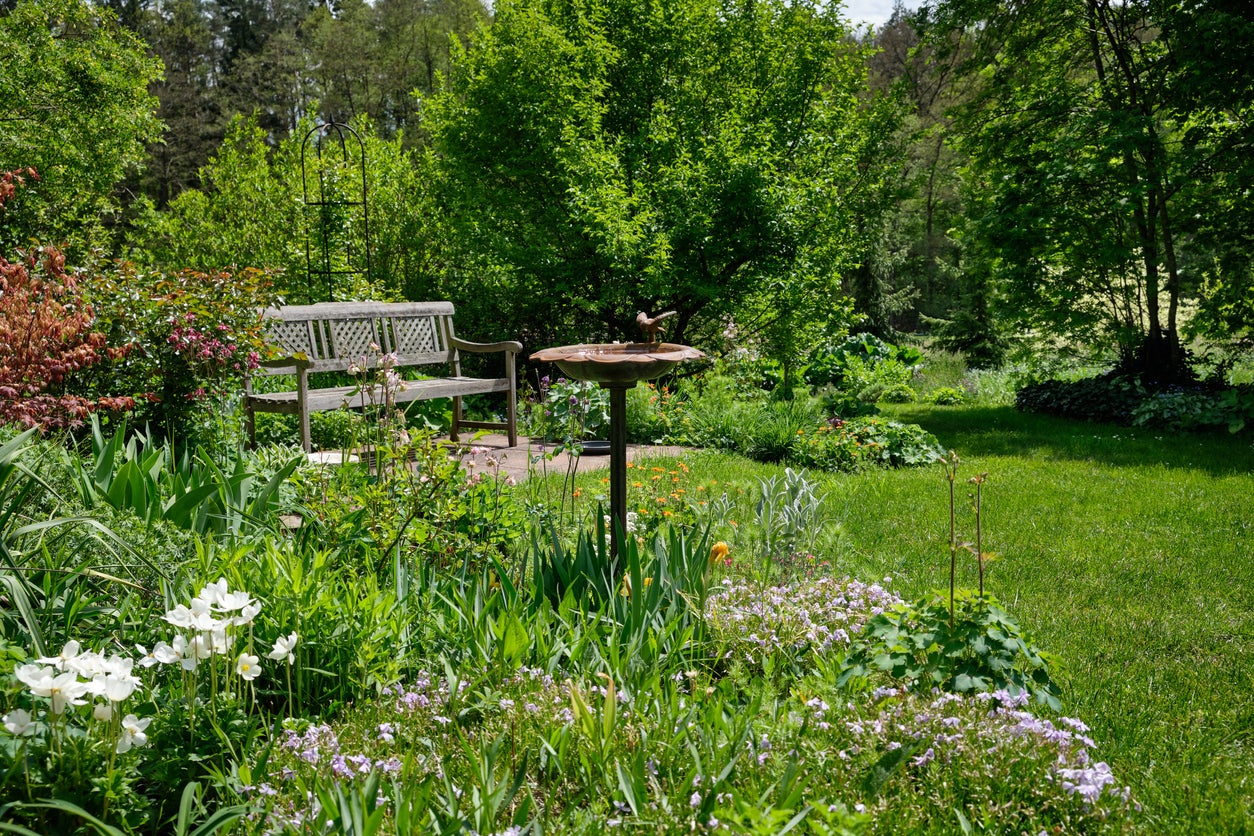
    Homeowners have hung up bird feeders for decades, but with shrinking wildlife habitat and climate change, many humans are doing more to support wildlife. It’s important to provide the right type of food, delivered in the right kind of feeder.

    This year’s buzz words, such as rewilding, nature scaping, and curated wilding suggest the desire for a “loose” garden design that looks natural and invites wildlife. Add water features—which are predicted to be big this year—that allow wildlife to safely drink. Plant sheltering shrubs and fruiting trees to afford them safety from predators. Add native plants to nourish wildlife and entice pollinators.

    Related: 12 Ways to Be a Good Neighbor—to Your Backyard Wildlife

    3. Climate Changes

    The 12 Biggest Landscaping Trends for 2022

    istockphoto.com

    Because climate change is a fact of life, many gardeners are making changes to their landscaping designs. It’s particularly important in hot, dry, fire-prone regions to incorporate xeriscaping and use native and drought-tolerant plants. Reduce the number of sap-filled plants that could fuel fire, or at least move them far away from your home.

    Stone or gravel pathways work both as a firebreak and a way to reduce rain runoff. In flood plains, create swales to carry water away and add rain gardens for stormwater mitigation. Plant slopes and hillsides for erosion control. In all areas, reduce your use of pesticides and chemical fertilizers.

    4. Cycles of Life

    The 12 Biggest Landscaping Trends for 2022

    istockphoto.com

    Recycling and upcycling are part of today’s eco-consciousness. For example, crushing material to use for pathways serves multiple purposes: recycling diverts items from landfills and reduces your carbon footprint. Plus, creating permeable paths avoids the use of concrete, which leads to rain runoff.

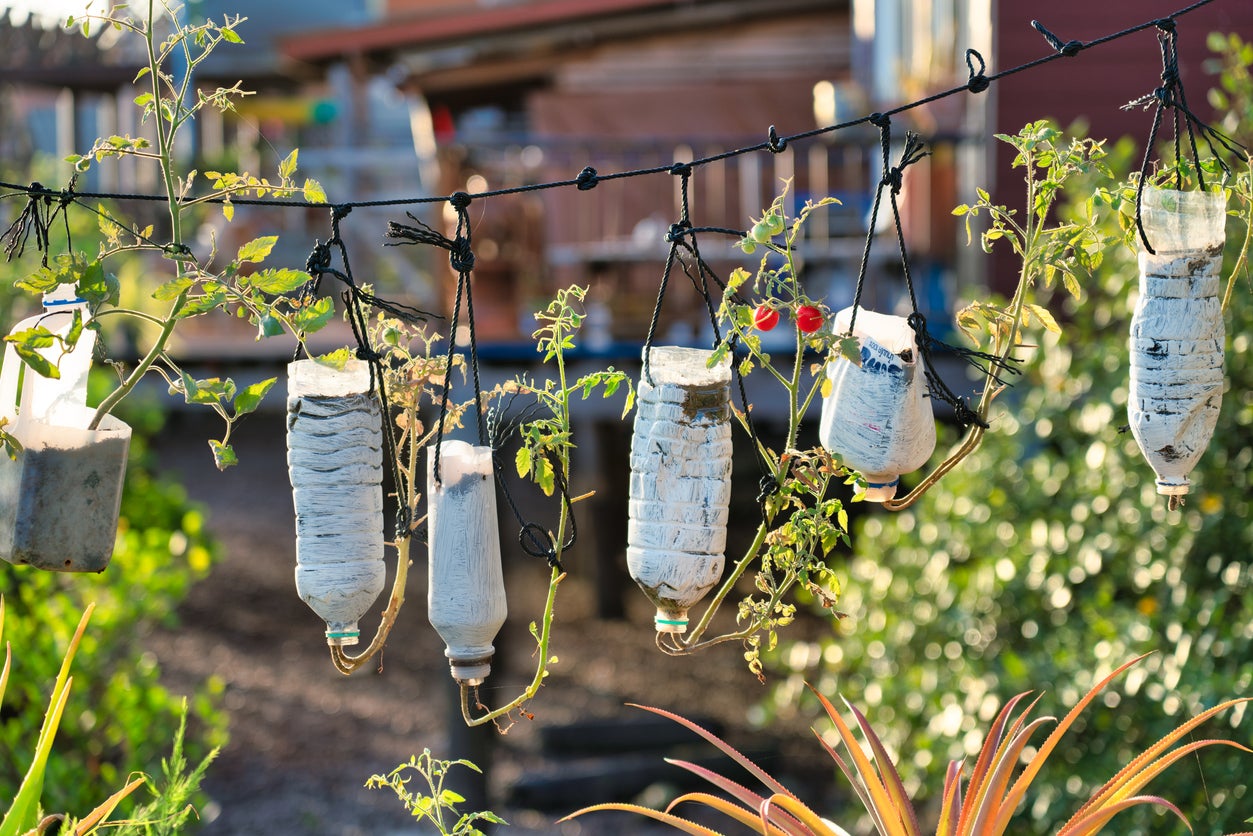
    Using pre-owned outdoor furniture or devising new uses for decorative accessories adds character and interest. Pallets can become screens to hide AC units. Old windows can become cold frames. Plastic water bottles can become cloches to protect seedlings from wind and cold. The list goes on.

    Related: 10 Tips for Creating a Woodland Garden at Home

    5. Going Native

    The 12 Biggest Landscaping Trends for 2022

    istockphoto.com

    Native plants attract local pollinators and support regional wildlife. They’re an important element in any xeriscaping plan, which helps to reduce water usage. Native plants shouldn’t need fertilizer or pesticides, which is an ecological advantage. They’ll also reduce erosion. An added bonus is that native plants should flourish in your landscape, whereas other plants can struggle without the right temperature, light, soil, and rainfall.

    6. Tropical Twist

    The 12 Biggest Landscaping Trends for 2022

    istockphoto.com

    While native plants impart environmental benefits, adding a few tropical plants to the landscape can evoke psychological benefits. Covid-19 travel restrictions kept most people at home for 2 years, but many of us long for the exotic locations for which vacations are known.

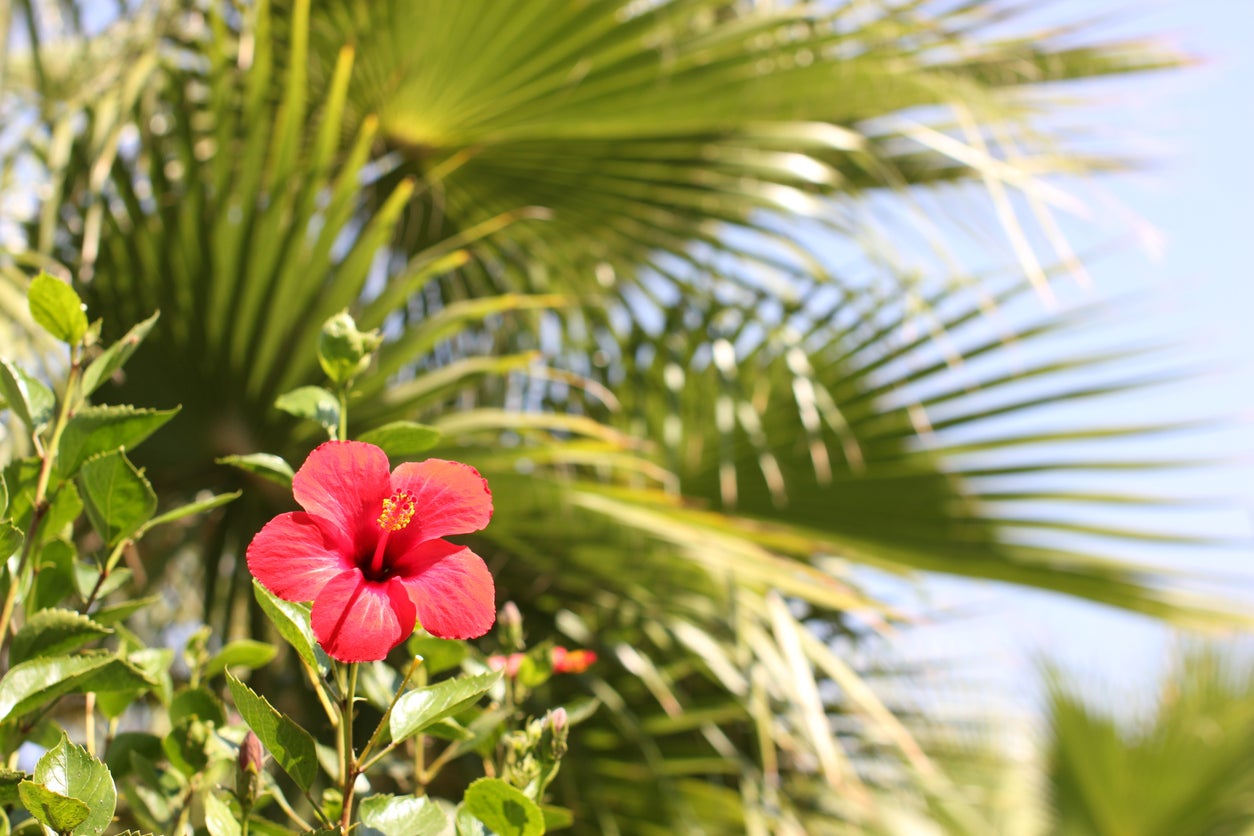
    Some plants, such as hardy hibiscus, hostas, ferns, yuccas, and certain bamboos look tropical but are cold hardy. Summer bulbs such as canna lilies, caladiums, Colocasia, and elephant ears impart a tropical look. You can always take your houseplants outside for the summer, or pick up some favorites like bird of paradise, palms, and bougainvillea at the local nursery for your “stay-cation.”

    7. Jewel Tones and Rich Colors

    The 12 Biggest Landscaping Trends for 2022

    istockphoto.com

    Whether you’re picking out tropical plants, bulbs, annuals, or perennials, this is the year to choose bold, vibrant colors in daring jewel tones to add positive energy to your landscape. Red, orange, magenta, lime, and deep purple are expected to be big this year—and can be found in crocosmia, salvia, allium, freesias, and cannas.

    Mix acid yellow with deep blue-purple to attract eyes and pollinators. You can also add color to accent lighter flowers by planting dark foliage, from plants such as coral bells, smoke bush, purple basil, Lorapetulaum, and others. Foliage plants add the drama and provide a pleasing contrast against structures and green leaves or flowering plants.

    8. Dahlias

    The 12 Biggest Landscaping Trends for 2022

    istockphoto.com

    Dahlias topped the Instagram chart last year in the U.K., a trend that is continuing on both sides of the pond in 2022. There are more than 100 varieties, which come in many sizes, shapes, and just about every color—which can build on the jewel tone and vibrant color trend. And these tubers are easy to care for and are robust growers. They look equally good in containers and borders. Resembling mums and zinnias, dahlias bloom for a long time and make great cut flowers.

    9. Inside Out

    The 12 Biggest Landscaping Trends for 2022

    istockphoto.com

    Since most of the world has spent much of the past 2 years at home, homeowners have begun to blur the lines between inside and outside by building outdoor kitchens, fireplaces, and pergolas that can be curtained off to create a private room. Some elaborate outdoor living rooms even include televisions, refrigerators, and outdoor sofas. Tall shrubs strategically planted add privacy, while strings of light add ambiance. Wanting the comforts of home just steps away from home is a lasting trend as people use their yards more.

    Related: Grow This, Not That: 12 Native Alternatives to Invasive Plants

    10. Health and Happiness

    The 12 Biggest Landscaping Trends for 2022

    istockphoto.com

    Outdoor rooms help promote hygge, a Danish word that means contentment and warmth—in other words, well-being, happiness, and health. It’s a buzzword that gained steam during the pandemic and is an idea still going strong.

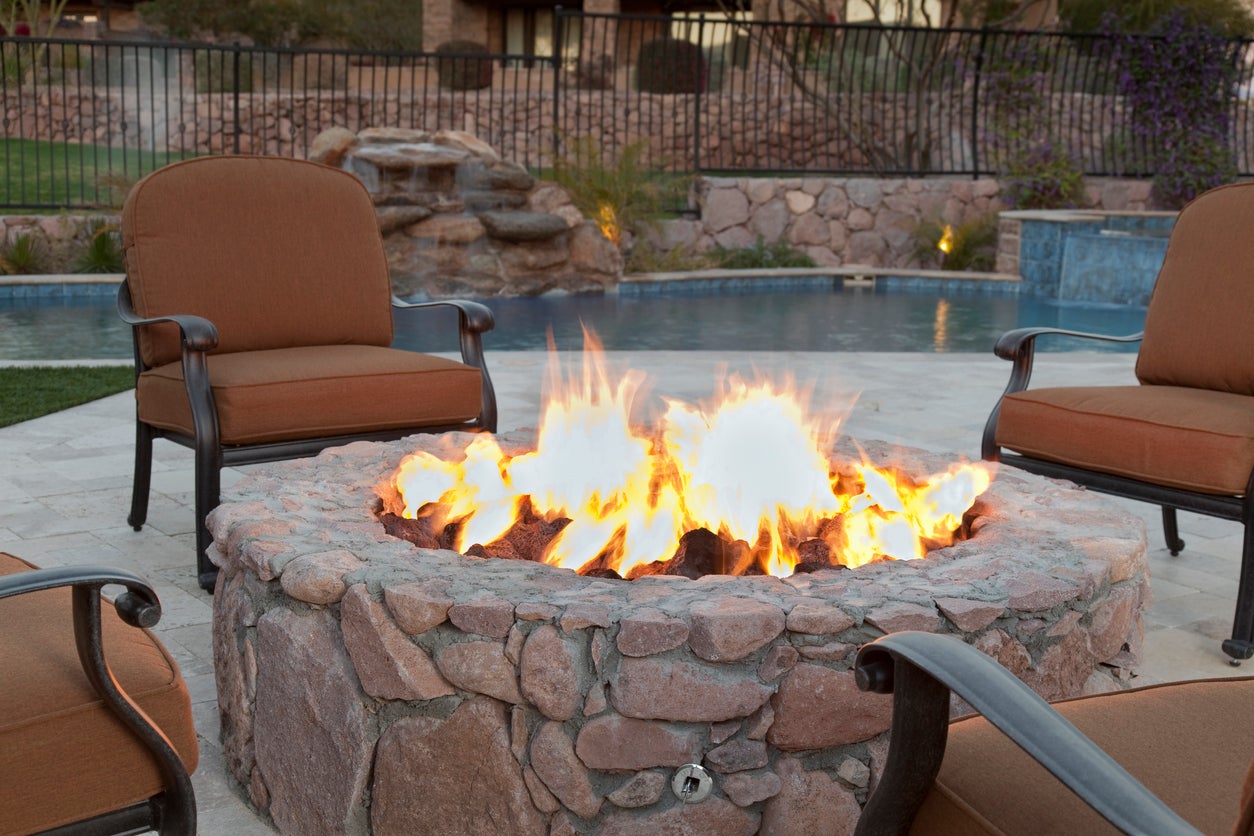
    In the landscape, the hygge concept means adding features that invite intimate gatherings of friends and family, such as a fire pit, and including soothing aspects, such as a water feature. Space to gather and eat should be part of the landscape design, as should soft lighting and lush plantings—including fragrant plants—and cozy spots to relax.

    11. Spatial Smarts

    The 12 Biggest Landscaping Trends for 2022

    istockphoto.com

    Not everyone has a large yard, but that doesn’t have to limit landscaping choices. Small spaces can make a big impact. Gardening is going vertical with living walls—and even up on the roof. Balcony gardens are back in a big way, thanks to window boxes and stackable planting. Using smaller-scale outdoor furniture or pieces that incorporate storage amplify the room. Multipurpose spaces make good use of small lots.

    12. Don’t Forget the Dog

    The 12 Biggest Landscaping Trends for 2022

    istockphoto.com

    Pet adoptions were off the charts during the pandemic, with nearly one in five American households adding a new pet to the family, according to the American Society for the Prevention of Cruelty to Animals (ASPCA). Most of us want to keep them with us forever. That means making space for them outside.

    Because dogs can create dead spots in the lawn, some homeowners are adding an area with artificial turf just for Fido. Others are adding dog runs, and many are fencing in their backyards to keep their pets safe because they want their animals with them while they’re enjoying their outdoor spaces. Just be careful when adding plants, since some can be toxic to your canine family members.

    Encanto’s Mirabel & Turning Red’s Mei Hang Out In Adorable New Art

    New fan art on Twitter depicts a hypothetical but cute instant of friendship between Encanto’s Mirabel and Turning Red’s Mei owning exciting together.

    Disney worlds collide as crossover fan art depicts Mirabel Madrigal from Encanto and Meilin “Mei” Lee from Turning Crimson as mates. Mirabel and Mei are the protagonists of their respective animated characteristics from Disney Animation and Pixar. Equally ended up unveiled in just the past 4 months, the previous in theaters and the latter on Disney+. The two movies have received praise from critics and audiences and were recognized for modifying how Disney heroines can be depicted.

    The stories of Encanto’s Mirabel (voiced by Stephanie Beatriz) and Turning Red’s Mei (voiced by Rosalie Chiang) each center about them as younger girls of shade working with some kind of relatives conflict. Mirabel is the only member of her household to not have a specific “reward,” nevertheless she’s destined to conserve them all from a looming danger. Meanwhile, Mei gains the skill to change into a large red panda because of to a generations-very long family members curse while also possessing to offer with her demanding mother. Although both equally movies have their variances, their depictions of generational trauma have triggered lovers to attract similarities, both equally literally and figuratively.

    SCREENRANT Video OF THE Working day

    Relevant: Turning Red’s Most Preposterous Criticism Is Why The Movie Is Superior

    On Twitter, CaveHag posted two drawings of Mirabel and Mei together. The very first image is of Mirabel with a drawing of herself and Mei with a red panda plush toy. The second image displays Mei “poofing” into her purple panda kind and offering Mirabel a huge hug, thanking her. The caption “Art Trade” was additional, elevating the newfound fictional friendship that the two people have discovered by way of just about every other’s creations. Look at it out down below:

    Click on here to perspective initial put up

    To say that the fan art of Mirabel and Mei’s new, hypothetical friendship is adorable would be an understatement. The deeper subtext involving the generational trauma that the two protagonists deal with is what would make the art in particular focus-grabbing. It demonstrates how Mirabel and Mei can just take comfort and ease in sharing every other’s agony and expressing by themselves as a result of art. Presented that Mei turns into a pink panda in times of powerful emotion, it would make perception why she feels the way she feels when giving Mirabel that huge hug.


    Even however Encanto and Turning Crimson have their differences, they each signify a transforming tide in Disney animation, providing new voices to new creators and actors to convey to new tales. Encanto selected the musical route whereas Turning Red goes for straight-comedy and anime influences, but both continue to offer with themes of spouse and children, adolescence, and future. There is no lack of very good storytelling at Disney and Pixar and there will definitely be plenty more fantastical tales to arrive alongside in the wake of Encanto and Turning Purple. It can be not probably a crossover in between the two universes will at any time truly come about on monitor, but that is why lover art exists.


    More: Why Mirabel’s Tragic Deficiency Of Presents In Encanto Was Inescapable

    Source: Twitter

    Will Smith in King Richard with Oscar

    How Numerous Oscars Will Smith Has Gained


    About The Creator

    The promise of public space

    What is not to enjoy about April in New Mexico? The times are longer, the weather conditions is warmer, and optimism is in the air. No surprise then that April – a time when additional and more people return to enjoy parks, playgrounds, trails and gardens, is also Planet Landscape Architecture Month – a month-extensive worldwide celebration of the landscape architecture job.

    As a landscape architect dwelling and doing the job in the Land of Enchantment, this coming month normally reminds me of the deep and enduring connections that we, as persons and whole communities, have to outdoor areas and places. Through latest durations of lockdowns and social isolation, a lot of of us have relied on outside spaces for protected social interaction, shared expertise and personalized respite. From little household courtyards to neighborhood parks, lots of of the outdoor spaces we cherish and rely on are established by landscape architects. Landscape architects also have a hand in trails in the bosque and trailheads in the Sandia Mountains.

    The Have faith in for Public Lands experiences that Albuquerque features a person of the greatest percentages of area devoted to parks in the United States: 23{6d6906d986cb38e604952ede6d65f3d49470e23f1a526661621333fa74363c48}! Our metropolis has virtually two times as substantially community room as most other cities in our country. But opportunities to leverage the opportunity of our current public spaces are generally ignored. As many of our more mature spaces shrink or tumble into disrepair, we have to check with how we can make far better use of current spaces to satisfy emerging requires and demand.

    Rehabilitating community place is an possibility for area authorities, business enterprise and group companions to operate with each other in reimagining outdated civic spaces even though setting up neighborhood possession and delight in the method. We have finished it prior to. It was a community partnership that reworked Albuquerque’s Civic Plaza from a significant expanse of empty, paved area into an exercise hub and downtown spot.

    When Downtown ABQ MainStreet gained a grant from Southwest Airways to modernize Albuquerque’s Civic Plaza, they collaborated with Challenge for General public Spaces, the metropolis, the Albuquerque Conference Center, area residents, artists and College of New Mexico learners. This grassroots local community-pushed exertion set the phase for a significant renovation led by city leaders. The different stakeholders worked alongside one another to detect what they desired the new area to contain. The style, done in collaboration with neighborhood companions, made spaces of various scales like space for spontaneous play and regions for additional structured, planned enjoyment.

    Just after the renovation, Civic Plaza loaded the void for a spouse and children-helpful general public space for engage in in an area that had been primarily a “playground desert.” Now, visitors assemble at the improved Civic Plaza for neighborhood celebrations, artwork and food markets, movie nights, performances, political marches and extra.

    Demand for high-quality public house in cities across the United States is on the increase and not diminishing any time quickly. In 2020, New Mexico by itself observed a 10{6d6906d986cb38e604952ede6d65f3d49470e23f1a526661621333fa74363c48} enhance in out of doors functions. Partaking community-driven partnerships in the revitalization of present general public areas can guidance our city to fulfill a escalating demand from customers for high quality general public space.

    The task of generating a healthier town, and far more livable neighborhoods within just our town, belongs to all of us. On this thirty day period primarily, I’m reminded that as landscape architects we are uniquely poised to increase to this obstacle.

    March design news: celebrating council houses and the vulva spaceship | Design

    In their introduction to the new book Queer Spaces, An Atlas of LGBTIQ+ Places, author Olivia Laing describes queer space: “It’s not just a physical building to hook up or hang out. Instead it’s an alternate universe, a secret network that runs right around the world.” The idea of a world where you’re allowed to write the rules and experiment is one that many creatives relate to.

    In his art book The Council House, photographer Jack Young celebrates the estates that sprung up in London in the idealist post-war era. His contemporary photographs showcase the remarkable architecture of these homes, reminding you of the good intentions behind social planning.

    Finally, if you want to find an alternate way to see the universe, sign the petition to get the vulva spaceship into development. A German feminist group is determined to replace the aerodynamically inferior phallic rocket with this new design. Because even in space, equality matters.

    Definitely a space where no man has gone before.

    For more news on architecture, sustainable living, art, fashion and new ideas, sign up for our monthly newsletter here

    The art of fine dressing

    Steven Campbell’s Waiting – Paisleycus Byrnicus Virus Invading Mr Gray, 2005
    Steven Campbell’s Waiting – Paisleycus Byrnicus Virus Invading Mr Gray, 2005 Photograph: Antonia Reeve

    Artist Steven Campbell always loved clothes. During his studies at Glasgow School of Art in the late 70s, he’d buy a suit each week from Oxfam, wear it to paint, to the pub, to lectures, then throw it away and buy a new one the following Monday. He was fascinated by performance artists such as Gilbert & George and Bruce McLean.

    Even when painting became his passion – winning him a Fulbright scholarship to New York’s Pratt Institute in 1982 – his vivid works teemed with clothes and sartorial persona. Over the years, his inspirations included film noir, Bram Stoker’s Dracula, PG Wodehouse, Pinocchio and film director David Lynch. His own appearance remained eye-catching, as his Glasgow art tutor Sandy Moffat once wrote of Campbell, he was “a flamboyant figure, often outlandishly attired, [who] looked as if he had arrived from the Paris or Vienna of the late 19th century”.

    Campbell was a celebrated painter in 80s New York, where he lived with his wife, Carol – who worked for sculptor Isamu Noguchi – then part of the Scottish art renaissance (known as the New Glasgow Boys, which he hated) when he returned to his homeland. He died far too young, aged 54 of a ruptured appendix in 2007.

    New exhibition Dressing Above Your Station looks at the importance of fashion and textiles in Campbell’s work, including his own wardrobe replete with his Comme des Garçons collection, accepted as payment for one of his paintings during his New York days.

    This virtual exhibition is curated by fashion designer and co-founder of label Atelier EB Beca Lipscombe and art historian Mairi MacKenzie, two Scottish creatives who relate to Campbell’s desire to make a statement. “The exhibition looks at the role of clothing in Steven and his wife Carol’s life and aspirations,” says Lipscombe. “The importance of leaving and returning home to their sartorial biographies, and what it feels to stick out like a sore thumb in Scotland.”

    It’s also a good chance to remember the work of a great painter.

    Dressing Above Your Station, is a virtual exhibition which can also be seen as projections in the windows of Tramway Museum and shop windows in Sauchiehall Street, Glasgow, 31 March-26 June

    Extraterrestrial equality

    Vulva spaceship for WBF Aeronautics by Dr Lucia Hartmann
    Vulva spaceship for WBF Aeronautics by Dr Lucia Hartmann Photograph: jasmin mittag

    Jeff Bezos, Elon Musk and Richard Branson blasting into space may have been a giant step for white, middle-aged billionaires, but did little to make anyone feel good about equality. As only 12{6d6906d986cb38e604952ede6d65f3d49470e23f1a526661621333fa74363c48} of space travellers have been female and woman has yet to walk on the moon, last year’s space explorers felt depressingly par for the course. But a German feminist group has a plan to change this.

    Wer braucht Feminismus? (translation: “who needs feminism?”) was started as an art-based feminism project in 2012 by artist Jasmin Mittag, but has developed into a networking and grass-roots campaigning organisation in Germany. This year, WBF has teamed up with aeronautics expert Dr Lucia Hartmann to form WBF Aeronautics – a space start-up. Hartmann’s main area of research is spacecraft efficiency and she’s created a vulva-shaped craft which is more aerodynamic than the typical phallic rocket.

    Hartmann says that the ship’s V-shape makes it surprisingly aerodynamic and also contributes to better fuel efficiency. “There’s less drag than on a conventional spacecraft.” She’s clear about her feminist message, too. In the promotional video for the vulva project, she wonders: “If space is for everyone, is a phallic-shaped rocket really the best way of getting there?”

    WBF Aeronautics has launched a petition on change.org to get the European Space Agency to consider the vulva spaceship for development.

    “With our mission, we prove that gender equality even has a place in space. We are not only inspiring space travel, but also rewriting the gender narrative,” says Mittag. “In space travel, all the problems that we have on earth are amplified. It’s time for equal opportunities in the entire universe.”

    Making craft count

    Designer Mac Collins, one of the artists taking part in the Harewood House Biennial, 2021
    Designer Mac Collins, one of the artists taking part in the Harewood House Biennial, 2021 Photograph: Dawn Kelly

    This month, Harewood House in Leeds opens its doors to artists seeking to answer the question Why Craft Matters. This is the theme of the second Harewood Biennial and, until August, the public can view these creatives’ attempts to address climate change or equality through craft. The Harewood Trust is trying to answer its own question about what makes a stately home relevant in the 21st century and the interesting range of artists involved in the biennial reflects how they’re trying to widen the house’s appeal.

    Designer Mac Collins has designed a domino set, games table and stools, inspired by the Caribbean community’s domino-playing culture for Harewood’s Cinnamon Drawing Room. Collins describes their presence in a room full of Chippendale furniture and lined with portraits of the Lascelles family, as a combined act of material and socio-cultural representation.

    Textiles artist Celia Pym has set up a “mending desk” and asked Harewood’s staff to bring a garment for her to repair, in exchange for a story of how these individuals care, repair and look after the estate.

    Architectural reclamation company Retrouvius. replaces the eight leaves of the table in the State Dining Room with reclaimed materials that mirror the original Robert Adam ceiling (which was taken to the Sir John Soane’s Museum).

    Smile Plastics, a Welsh company that recycles household plastic waste into building materials, as worked on a project to create a series of self-assembly, modular seating, which snakes its way around the north lawn of Harewood.

    Hugo Macdonald, curator, says: “Radical Acts [Why Craft Matters] brings together an exciting group of creative activists, joined by their commitment to craft as a force for positive impact. The biennial is not so much an exhibition as a call to arms. These are stories and initiatives to inspire us all so that, as individuals, we can make conscious choices that have positive impacts. It is a radical act to take responsibility for our lifestyles and our livelihoods, and to discover that our future is in our hands.”

    Harewood Biennial 2022 is at Harewood House, Leeds until 29 August

    Celebrating the council house

    Dawson’s Heights in East Dulwich by architect Kate Macintosh
    Dawson’s Heights in East Dulwich by architect Kate Macintosh Photograph: Jack Young

    Jack Young fell in love with London’s council housing during his lunch break. He’d explore Chamberlin, Powell and Bon’s Golden Lane Estate and the Barbican, architectural delights situated near the office where he worked as a product designer. Before long he found himself setting out at weekends to photograph developments and blocks around the capital. An instagram account was born.

    He’s devoted to the post-war era, when rebuilding society felt possible and civic planners had big dreams and architects, such as Kate Macintosh and Erno Goldfinger, had a vision of providing quality houses for all. It’s the estates from this era that fill the pages of his new book, The Council House.

    Though many of these buildings are now in disrepair, their inhabitants and architects more jaded about utopian ideals, Young’s images capture the best of these estates. In his introduction, he recalls how he was sometimes invited in by residents who watched bemused as he took his photos or that they would laugh at him as he obsessed over a concrete staircase. “But their pride in these estates was joyfully clear,” he writes. “It is my hope that in showcasing and championing the beauty and intelligence in these buildings, I can help to restore some of the rightful pride that was once felt in them.”

    The Council House by Jack Young (Hoxton Mini Press, £18.95) is out now

    Sign up to the Design Review Monthly newsletter

    Sign-up of a monthly dose of creative inspiration, emailed directly to you.

    Making art from Artforum

    Simon Linke’s Lucio Fontana at Hauser & Wirth, 2021
    Simon Linke’s Lucio Fontana at Hauser & Wirth, 2021 Photograph: Darren Flook

    Simon Linke has a new exhibition opening in London gallery Darren Flook this week. If you’re a fan of the conceptual artist, you know that his new show will be very like his others. Since the 1980s, when Linke first found fame as an artist and as an inspiration to the YBAs, he has only painted adverts from American art magazine Artforum. Few artists have been so faithful to an inspiration: for 35 years now, his canvases, thick with oil paint, have been ads for gallery and museum shows taken from Artforum. Though in the new show – his first for 10 years – he’s added unexpected texture to the graphic designs.

    On YouTube you can still find an excellent segment on Linke from revered 90s British culture TV programme The Late Show. In his interview with critic Matthew Collings Linke first gives monosyllabic answers, then interviews Collings, before finally admitting that in his work “I’ve found something that helps me negotiate the anxiety about what we can do and how we stay relevant”. And, although, looking at his work, there are good points to be made about art, repetition, commerce, history, and the influence of Freud and Warhol, this hard-won quote is still relevant all these years later.

    As gallerist Darren Flook, says: “Art and commerce are now so profoundly linked, auction prices are in newspapers and pop stars show off the art they’ve bought on their instagram feeds. It’s incredible to me that in the 80s a British painter really beautifully and quietly pointed it all out. It was so conceptually tight and visually pleasurable – and now – 35 years later, he’s still making them. Like art and money or power, the dance is the same.”

    Simon Linke is at Darren Flook, London, until 15 May

    A history of LGBTQI+ places

    Glasgow’s Category Is Books bookshop, a queer space chosen by Andy Summers for the new book Queer Spaces
    Charlotte and Fin Duffy-Scott outside thir shop Category Is Books in Glasgow, a queer space chosen by Andy Summers for new book Queer Spaces Photograph: Category Is Books

    “The idea that queerness requires an ecosystem to flourish helps clarify the fundamental importance of queer space,” writes Olivia Laing in the foreword to the new book Queer Spaces, An Atlas of LGBTIQ+ Places and Stories. “It’s not just a physical building to hook up or hang out. Instead it’s an alternate universe, a secret network that runs right around the world.”

    It’s a great introduction to this new book by designer Adam Nathaniel Furman and architectural historian Joshua Mardell which shares the stories and philosophy of the different, ingenious places which have served as havens for LGBTIQ+ people throughout time. Though some of these essays celebrate well established institutions which identify as queer (such as bookshops and community centres), there’s also a looking-glass world here, full of Havanan ice-cream shops, Sheffield terrace houses and Spanish train journeys, inventive and secret places created by the queer community.

    Designer Adam Nathaniel Furman says he hopes the book will become the resource he felt he missed as a student. “During a lonely and homophobic architectural education, there were no resources where I could find accessible histories and case-studies that showed how I was not alone, how what I was doing had a deep and rich history, full of proud individuals and incredible groups, spaces and communities creating radical spaces and ways of living.”

    With Queer Spaces, he’s achieved that.

    Queer Spaces, An Atlas of LBBTIQ+ Places and Stories (£40, RIBA books) is available for preorder now and published 1 May