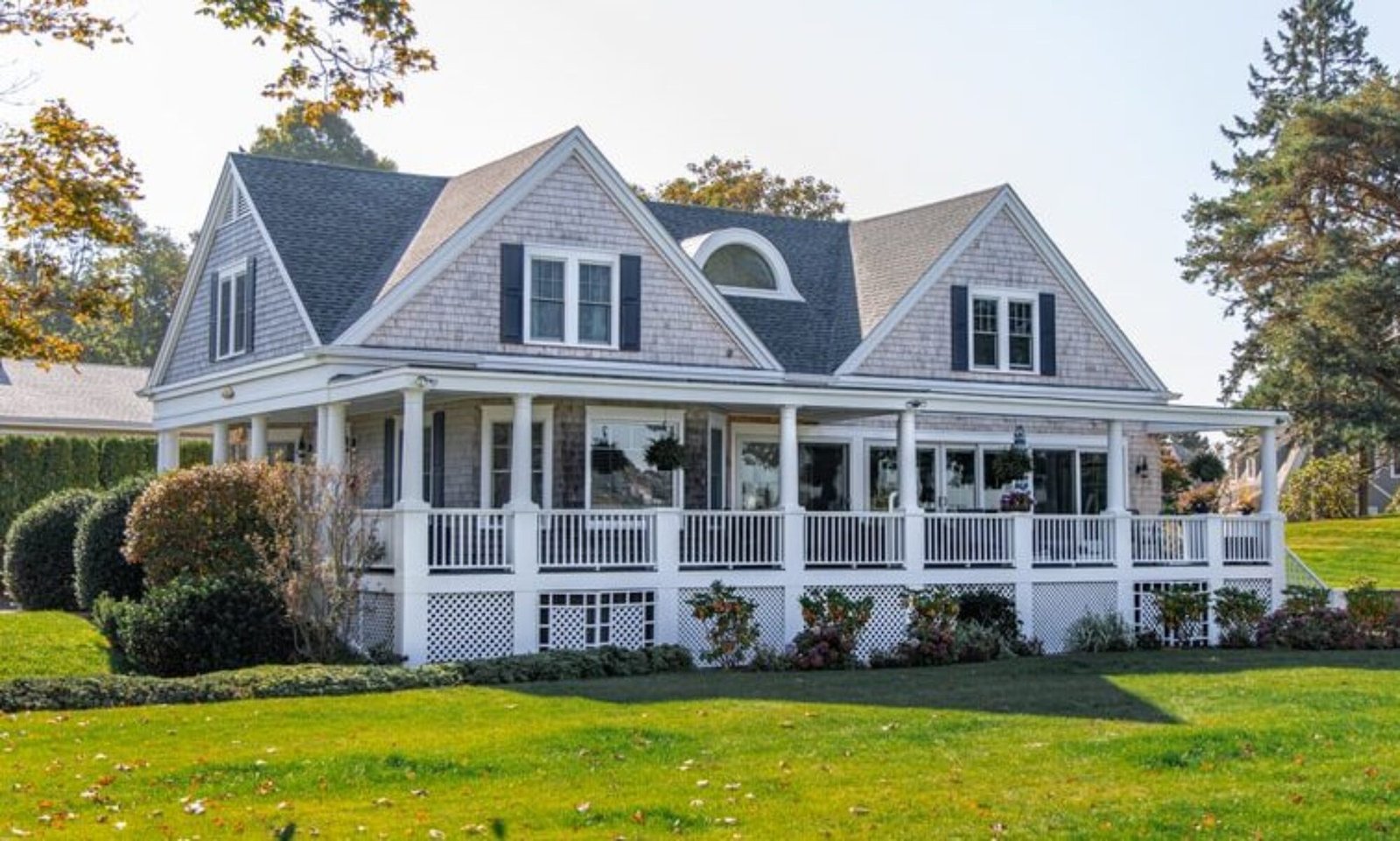

Drought-tolerant LA yard thrives after city cease notice

Water-hungry lawns are symbols of Los Angeles’ past. In this series, we spotlight yards with alternative, low-water landscaping built for the future.

Susan and Steve Matloff are doing what they do most days when they are at home: spending time in their front yard with their kids, talking with neighbors, playing with their dog Blue and passing home-grown onions to random passersby.

When they installed raised vegetable beds alongside the sidewalk, they fantasized about living off the land despite warnings from friends that people might steal their produce.

“If someone wants to take a bell pepper, good on them,” says Steve, 49. “My office overlooks the garden, and every day I see people stop and look at our garden. Sometimes I run out there and talk to them. Our daughter Isabelle has been known to pull out a carrot and hand it to people walking by. The conversations start there. It’s part of what we wanted for our yard: to be a statement and community builder.”

The Matloff kids — Daniel, Isabelle and Edie — smile as they show off fresh-picked veggies.

The Matloff kids — Daniel, 12, Isabelle, 16, and Edie, 9 — have been known to share their home-grown produce with passersby.

(Allen J. Schaben/Los Angeles Times)

It wasn’t always this way.

The family of five, plus two dogs, moved from a two-bedroom condo in West Hollywood into the Windsor Square home in 2018, some years after it became too much for Steve’s parents. They renovated the home with climate change in mind.

“We set out to take a 1922 home and rethink it for the next 100 years,” says Steve, who recently co-founded a company called Tradicient — the blend of “traditional” and “efficient” — to do this work on other homes. “We retrofitted it, we achieved platinum LEED status, and the landscaping was a big part of that.” (To achieve LEED certification from the U.S. Green Building Council, a project earns points by demonstrating various improvements that address carbon, energy, water, waste, transportation, materials, health and indoor environmental quality.)

Green bell peppers in a raised garden bed.

Isabelle Matloff, 16, picks a bell pepper from one of the raised beds in her front yard.

(Allen J. Schaben/Los Angeles Times)

An overhead view of the Matloff's garden and concrete pavers.

A “lawn” composed of Carex pansa, or dune sedge, on the left. The water-absorbing swale on the right is filled with riparian native plants and collects storm water from the rooftop, back garden, drive and front walk.

(Allen J. Schaben/Los Angeles Times)

Unbeknownst to the couple, their front yard became a heated topic on Nextdoor during construction before they moved in. “FormLA Landscaping was overseeing the yard and was digging a bioswale and paths for concrete walkways,” recalls Susan, 48, a sports marketing consultant. “A friend sent me a thread on Nextdoor that began, ‘Has anyone seen this house? It looks like they are going to hardscape the entire front yard!’” It was actually going to be a rain garden.”

Shortly after the Nextdoor discussion, the couple came home to find a baffling cease order from the Los Angeles Department of Building and Safety that said they were missing permits they didn’t believe they needed.

“It didn’t identify why,” says landscape designer Isara Ongwiseth, a four-time Sustainable Innovation Award-winner with FormLA. “We didn’t do anything that violated any codes.”

Steve called the building department for weeks and got no response.

So he showed up at the agency’s office downtown. “I literally walked around for two hours with my notice,” he says. He finally got help but was directed to another staffer who works with historic preservation overlay zones, which are city districts with special renovation rules. “The [zone] administrator didn’t see anything wrong with the work we were doing, but the only thing she could do was put us on the agenda for the next [overlay zone] board meeting.” Such boards consist of five to seven local residents who review projects.

At the meeting, Ongwiseth shared detailed, color-coded plans for the yard. The board provided a required letter of support, and the project resumed two months later.

The Matloff's dog sits in a yard surrounded by native plants.

Blue sits in the bioswale surrounded by native red buckwheat, white sage, yarrow and other native plants.

(Allen J. Schaben / Los Angeles Times)

Asked for tips on dealing with historic preservation issues, Steve recommends starting the communication process early and remembering that these boards are made up of neighbors who are handling dozens of projects at once.

Equally important are city employees, Steve adds, who “do all the work to operationalize [overlay zone] boards’ decisions. What boards decide on cannot actually happen until an administrator walks your project through certain processes. But our best advice is to do all you can to stay out of the secondary review and stoppage process entirely; and the best way to do that is to preemptively try to answer and address neighbors’ and passersbys’ possible questions or concerns. If we could have educated the neighbor who submitted the inquiry about our project and process, we might have been able to avoid the stoppage altogether.”

For decades, the Matloffs’ Windsor Square neighborhood has been lined with stately homes bordered by sprawling lawns and sidewalks wet from sprinkler overspray. You could argue that the neighborhood is no different from others in Southern California where lush, green lawns have traditionally been a statement about pride of place. But the pervasive water waste involved in tending to a lawn as drought in California continues prompted the Matloffs to consider their footprint, as well as L.A.’s future water independence.

But it’s not just about the lawn.

Two photos, one showing a hand grabbing an onion from the ground and the other of a lawn, concrete path and native plants.

Isabelle Matloff, 16, picks an onion from the edible planter, left. Even in the triple-digit heat of summer, the Matloff family’s yard, right, is dynamic.

(Allen J. Schaben / Los Angeles Times)

In an unusual move, the Matloffs committed themselves to the LEED process: During renovation, they chose to keep the footprint of the house. They reused wood and concrete on-site. Solar panels on the roof generate twice the power they currently use. When the couple removed the original floribunda and Iceberg roses from the property, they found homes for all of them. “Reuse comes long before recycling,” Steve says. “We filled up our minivan with roses and drove them to my sister in Northern California.”

They had to remove an unhealthy jacaranda tree in the front yard and planted a California live oak in its place. “Although the jacaranda was big and beautiful, we found that it was infested with termites and would eventually cause danger to people and the home,” Ongwiseth says. “We removed it, and the live oak will give back to the community and to nature. It’s a host for so many insect species.”

The driveway's permeable bricks direct water into the garden.

The driveway’s permeable bricks direct water into the garden.

(Allen J. Schaben / Los Angeles Times)

A 270-square-foot bioswale, or rain garden filled with California native plants, was installed to absorb water from the front and back garden, as well as the home’s driveway, walkways and roof. Graywater from the upstairs laundry room feeds a small fruit orchard along the driveway. (Because graywater can contain sediment and bacteria, the couple decided against watering the vegetables and herbs via a laundry-to-landscape system.) Not far from the rain garden, a permeable driveway composed of interlocking brick pavers directs water into the garden and prevents runoff into the street and storm drain and keeps pollutants out of the Pacific. The material also helps control the heat island effect as Los Angeles struggles with rising temperatures and wildfires due to global warming.

Even when it’s hot in Los Angeles, the yard, which is fed by a subterranean low-flow drip system, is in bloom, with dwarf germander, yarrow, red buckwheat pom poms, Canyon Prince, deer grass and Cleveland and white sages. A large front “lawn” composed of native grass-like Carex pansa can transition from meadow to lawn with a simple trim. “A lot of people who want a manicured lawn fall in love with it,” Ongwiseth says.

The yard embodies Steve’s belief that “you’re not giving up anything” by planting drought-tolerant natives, as he puts it. “It functions better,” he says. “Our landscape changes throughout the year. The Cleveland sage turns purple when it blooms. When we don’t mow the Carex pansa, we have a big, flowy landscape that changes the character of the property over time. When we look outside, the rain garden is full. When the reclaimed hardscaping stone is saturated, it takes on different rays.“

Fruit on an apple tree.

The couple planted a fruit orchard alongside the driveway that is supported by graywater.

(Allen J. Schaben / Los Angeles Times)

The Matloff family on their front porch.

The Matloff family added a front porch and an ADA ramp so that Steve’s mother and guests with wheelchairs and strollers can access the home easily.

(Allen J. Schaben / Los Angeles Times)

The couple view their home as something to be shared and open it regularly for tours and other events. When friends and neighbors ask about their drought-tolerant meadow, Steve enjoys relaying how little maintenance it requires. A bench on the front porch provides a comfortable place to sit and commune with family and neighbors. “L.A. is so private in some ways,” Susan says. “No one uses their front yard. Our garden puts a face on our home. We are trying to use our front yard to get to know our neighbors. It’s important for us. It goes back to stewardship.”

White sage and buckwheat.

White sage and buckwheat require little water.

(Allen J. Schaben / Los Angeles Times)

Today, despite some misunderstandings, their neighbors have embraced the yard. (Another longtime neighbor, who was concerned about mosquitoes flocking to the bioswale, has since welcomed the addition). During the COVID-19 pandemic, the couple set up lawn chairs 12 feet apart in their yard, and neighbors joined them. At the height of the pandemic’s chalk drawing moment, some even drew plants from their garden on the street and identified them in pastel pigments.

Steve, who is an unusually upbeat voice for someone trying to save the planet, says his only regret is that he wasn’t able to complete the project before his father, Jack, a noted heart surgeon at Cedars-Sinai Medical Center who died in 2015, could have joined them on the front porch.

What does his mother, Martha, who is 87 and lives in a condo about a mile away, think of the changes? “My mom loves it,” Steve says. “No. 1, because we are here. No. 2, because we didn’t gut the house. And No. 3: It’s comfortable. There is a ramp that goes up from the driveway to the front door so that she and others can walk directly to the house with ease.”

A strip of native plants in between a driveway and a concrete path.

A view of the vibrant native foliage in the garden.

(Allen J. Schaben / Los Angeles Times)

Most striking is how a front yard that started as a family affair ended up as a bridge to connect with others.

“Last week, when I was weeding outside, a woman I’ve never met before stopped to tell me that our garden brings her joy,” Susan says with a smile.

Steve adds: “When we look at our collective footprint, it’s important to find where our resources are being used. It’s no secret that neighborhoods like ours use resources. We all need to be more thoughtful. We are all collectively a part of the solution.”

Your Concise New York Art Guide for September 2022

Everyone knows September to be the month of art fairs, but the big Manhattan attractions are just a few of New York’s autumnal offerings. It isn’t quite winter yet, so you can still catch the tail end of an artist-made birdhouse show beside Prospect Park. All the same, a group exhibition of politically charged textiles along the Long Island Sound packs a punch in an area otherwise flooded with wealth. Our other highlights for this month include a sanctuary of African healing out on Governors Island, colorful deconstructions of gender and sexuality, and transmissions from a post-worker dystopia in Brooklyn.

* * *

Still from Gerardo Dexter Ciprian, Medicina De Amor (courtesy Bronx Museum of the Arts)

Gerardo Dexter Ciprian: Medicina de Amor

Dominican artist Dexter Ciprian’s new solo exhibition transforms deeply personal items into universal symbols of resilience. The artist breaks apart family-owned furniture pieces and reconstructs them as lanterns, bringing light to the island nation’s chronic blackouts. Likewise, he recalls the bricks of his childhood home in the Bronx through chunks of Jabón de cuaba, an all-purpose soap used throughout the diaspora. Named after a popular Dominican anthem, Medicina de Amor is a meditation on the home remedy, which becomes the first line of defense when no other support is in sight.

Bronx Museum of the Arts (bronxmuseum.org)
1040 Grand Concourse, The Bronx
Through September 4


Installation view of Mis-Shapes (courtesy Tiger Strikes Asteroid)

Mis-Shapes

If there is an ethical kind of “gender-critical,” Bushwick gallery Tiger Strikes Asteroid is nailing it. Three artists spanning South, Central, and North America — Ad Minoliti, KC Crow Maddux, and Madeline Jimenez Santil — deconstruct the social constructs of gender and sexuality, taking the uterus out of its traditional “female” context and presenting the binary as a soulless, outdated formula. In the exhibition essay, Nicolas Cuello laments how queer, nonconforming artists of color have long faced a “historical accumulation” of stigmatized discrediting despite marginal recognition in cultural institutions. Mis-Shapes is thus the antecedent, providing bodily and formal experimentations with space to breathe.

Tiger Strikes Asteroid (tigerstrikesasteroid.com)
1329 Willoughby Ave #2A, Bushwick, Brooklyn
Through September 11


Installation view of Threading the Needle (photo by Gary Mamay, courtesy The Church, Sag Harbor)

Threading the Needle

The aesthetics of sewing unite this group show of living and deceased textile artists. The late poet Edel Adnan’s warmly hued tapestries portray her lifetime of longing, contrasted by the vigorous protest rugs of Philadelphia-based Tabitha Arnold and Mexican artist Margarita Cabrera’s cacti made of border patrol uniforms. Despite their different styles, a shared textural foundation hints at the medium’s gendered and often political history. Threading the Needle thus centers the labor of marginalization, and in turn the marginalization of labor.

The Church (thechurchsagharbor.org)
48 Madison Street, Sag Harbor, Long Island
Through September 18


Installation view of Eros Rising: Visions of the Erotic in Latin American Art (photo by Martyna Szczesna, courtesy ISLAA)

Eros Rising: Visions of the Erotic in Latin American Art

The 10 artists in ISLAA’s Eros Rising ruminate on the unpredictable joys of being truly felt in one’s own skin, exchanging outward sexuality for colorful abstraction. Skin tones in Wynnie Mynerva’s sparse watercolors are reflected in Castiel Vitorino Brasileiro’s non-objective charcoal sketches, culminating in Oscar Bony’s photograph of two anonymous tongues forever on the verge of contact. Influenced by the pastels of Argentinian conceptualist David Lamelas, Eros Rising translates the simple act of touch into a revelation that can affirm one’s understanding of self and truth.

Institute for Studies on Latin American Art (islaa.org)
50 East 78th Street, Upper East Side, Manhattan
Through September 30


Nadia Gould, “Playful Sunshine” (c. 1964) (courtesy Derfner Judaica Museum and Hebrew Home at Riverdale)

Unlisted: Underappreciated Women

Historian Michael Lobel recently noted the market-centric pitfalls of labeling artists as “forgotten.” Accordingly, Derfner Judaica’s Unlisted tells the stories of several Jewish modernists through the lens of patriarchal erasure. Expressionist portraits by Lithuanian artist Yuli Blumberg appear alongside abstracted wild horses by Romanian painter Magdalena Rădulescu and jagged non-representational pieces by Nadia Gould and Gertrude Perrin. Presented in-person and online, these colorful, challenging works expand our understanding of how war, faith, and immigration shaped mid-century artists, reinforcing that the “Ninth Street Women” were hardly alone.

Derfner Judaica Museum (derfneronline.org)
5901 Palisade Avenue, The Bronx
Through October 1


Pamela Phatsimo Sunstrum, “Sinner Get Ready” (2022) (courtesy the artist and Galerie Lelong)

Pamela Phatsimo Sunstrum: I have withheld much more than I have written

Pamela Sunstrum has already lived many lives in the United States, Africa, and Southeast Asia. But as her latest exhibition title reveals, much of that experience has yet to be expressed. Thus, the individual painted canvases that comprise I have withheld — many of which are paired into diptychs or built into three-dimensional installations — together form a surreal tableau of placelessness. Sunstrum layers denim jeans, volcanic mountains, palm trees, and checkered tiles into visions of kaleidoscopic splendor, as if drawing from overflowing wells of memory. Perhaps, then, the artist is more prepared to speak than she lets on.

Galerie Lelong (galerielelong.com)
528 West 26th Street, Chelsea, Manhattan
September 8–October 22


Olalekan Jeyifous, “Birdega” (2022) (courtesy Brooklyn Botanic Garden)

For the Birds

The phrase “for the birds” often carries a dismissive connotation, yet the Brooklyn Botanic Garden means it literally. Dedicated to its diverse avian life, For the Birds scatters colorful artist-made birdhouses throughout the grounds, all designed and placed specifically to foster community. From a blue heron fishing platform to a crow’s nest of trash and a tiny communal sculpture garden, these makeshift maisons serve each species’ survival needs and bring a bit more color to the lush landscape.

Brooklyn Botanic Garden (bbg.org)
990 Washington Avenue, Crown Heights, Brooklyn
Through October 23


LaJuné McMillian, “Black Movement Library” (2021) featuring dancer Roukijah Rooks (photo by Guy de Lancey, courtesy Recess)

LaJuné McMillian: The Black Movement Library

LaJuné McMillian’s dynamic Black Movement Library series synthesizes the Black radical tradition and political unrest today. Using archives of motion-capture data collected from misrepresented Black performers and character base models, McMillian recreates their movements while wearing perception neuron motion-capture suits. Recordings from their many public workshops and performances with artists Roobi Gaskins, Renaldo Maurice, Ntu, Roukijah Rooks, and RaFia Santana show the Brooklyn Public Library’s entire facade illuminated as they dance to a crowd of onlookers. Drawing from archival footage of peoples’ movements around the world, McMillian’s work collapses the time between revolutions, warning us how quickly the inroads can be reversed.

Recess (recessart.org)
46 Washington Avenue, Clinton Hill, Brooklyn
September 15–October 29


Installation view of Elissa Blount-Moorhead and Bradford Young: Back and Song (courtesy Lower Manhattan Cultural Council)

Elissa Blount-Moorhead and Bradford Young: Back and Song

On Governors Island, a two-person show examines the poetics of health in the African diaspora. Blount-Moorhead and Young collaborated on four-channel films and installations set within the dark, desolate Lower Gallery of the Arts Center, juxtaposing personal testimonies of doctors, morticians, and health aids with clips of meditations and ritual performances. Equally critical and cleansing, Back and Song rejects the dominating singularity of Western colonial medicine, rooting generations of Black healing in community and lived experience.

The Arts Center (lmcc.net)
Building 110 at Soissons Landing, Governors Island, Manhattan
Through October 30


Rodrigo Valenzuela, “Afterwork #10” (2021) (courtesy the artist and Asya Geisberg Gallery)

Rodrigo Valenzuela: New Works for a Post-Workers’ World

Two photo series by Rodrigo Valenzuela, Afterwork and Weapons, imagine what may have happened if machinery actually made workers obsolete. For each shoot, he assembled elaborate, dystopian scenes out of old wood and scrap metal, concocting surreal yet familiar representations of what he calls a “post-workers’ world.” Drawing heavily from conceptual art and communist theory, Valenzuela depicts industrialism as a dehumanizing force that led capitalists to believe machinery would replace an imperfect and increasingly demanding laborer. Housed within a structure the artist built inside BRIC House, New Works for a Post-Workers’ World portrays a public sphere where the cause of labor is defeated, and it seems pretty terrifying.

BRIC House (bricartsmedia.org)
647 Fulton Street, Fort Greene, Brooklyn
September 22–December 23

Editor’s Note, 9/2/2022, 4:39pm EDT: An earlier version of this article misidentified KC Crow Maddux as Latinx. This has been corrected.

11 Natural Pool Landscaping Ideas for Privacy

Working on my garden to make it a relaxing place is one of my favorite hobbies!

natural-pool-landscaping-ideas-for-privacy

Trying to come up with some tasteful pool landscaping ideas for privacy? There are actually a bunch of different ways that you can go about this, and it really all comes down to what you are looking for in terms of privacy as well as what will look best with your pool area. Here are 11 pool landscaping ideas for privacy that you can use to get started.

Fairy Tail Creator Highlights Gray and Juvia’s Child With New Art

Fairy Tail enthusiasts have been teased with Grey and Juvia acquiring a boy or girl in the long run ahead of, but series creator Hiro Mashima has supplied a new glimpse at a probable upcoming for the two with some unique artwork highlighting their child Griege! Fairy Tail’s official sequel sequence, Fairy Tail: 100 Decades Quest, has been continuing the story from the unique significantly over and above where by it ended as Natsu and the key Fairy Tail crew consider on the titular 100 Several years Quest in an try to eventually apparent it off of the guild’s board. This indicates some crucial added time with all of the admirer favored fighters.

One of the major moments in Fairy Tail: 100 Several years Quest so considerably experienced witnessed Natsu and the many others return to Edolas considering the fact that leaving the magic totally free world in the unique operate of the series, and on their return locate out some pretty significant developments. A person of these revealed that the Edolas variations of Gray and Juvia received married and experienced a boy or girl named Griege, and now Mashima has brought this novice back again to the fold for some unique new art celebrating the “Gruvia” fan holiday break for the lover favorite Gray and Juvia pairing! Check out it out down below from Mashima’s formal Twitter account: 

Fairy Tail: 100 Years Quest has gone on to way a lot more adventures after these large reveals in the months because, but fortunately there will be an even much better way to check out out the sequence as an official anime adaptation has been announced. The probable release date, personnel, or production studio has nevertheless to be declared for the Fairy Tail: 100 Years Quest anime as of this writing, but quite several updates have been offered for the sequence at all. If you preferred to get a leap start off on the sequel just before the anime tends to make its debut, Fairy Tail: 100 Years Quest has been officially licensed by Kodansha Comics. They describe the sequel series as this sort of:

“Natsu, Lucy, Happy, Erza, and the whole Fairy Tail guild are back again in motion! And they’ve decided to tackle the ‘100 Years Quest’ – a work no one’s dared choose on considering the fact that the founding of the guild far more than a century in the past. A mysterious town, a baffling spirit, a ghastly new enemy…and a brand name new continent to discover. When you happen to be with actual pals, the adventures in no way cease!”

What do you assume of this appear at Gray and Juvia’s little one? Would you want to see this transpire in the main Fairy Tail universe? Allow us know all of your thoughts about it in the responses! You can even attain out to me directly about all matters animated and other amazing stuff @Valdezology on Twitter!

Minecraft at MoMA, Barbie Dreamhouse Paint, and More Finds

Photo: Maggie Shannon, Jenny Holzer, Nicole Franzen, Courtesy of Green River Project LLC

The objects, designers, news, and events worth knowing about.

From left: Photo: The Museum of Modern Art, New York. PAC-MAN TM & © 1980 BANDAI NAMCO Entertainment Inc.Photo: Museum of Modern Art, New York and the San Francisco Museum of Modern Art. © 2018 Susan Kare/

From top: Photo: The Museum of Modern Art, New York. PAC-MAN TM & © 1980 BANDAI NAMCO Entertainment Inc.Photo: Museum of Modern Art, New York and the …
From top: Photo: The Museum of Modern Art, New York. PAC-MAN TM & © 1980 BANDAI NAMCO Entertainment Inc.Photo: Museum of Modern Art, New York and the San Francisco Museum of Modern Art. © 2018 Susan Kare/

When MoMA announced that it would start collecting video games ten years ago, “all hell broke loose,” Paola Antonelli, a senior curator of architecture and design at the museum, said in a TED Talk about the acquisitions. Critics doubted if video games like SimCity2000 and Minecraft were a high form of creative expression, and there were complex negotiations with game designers and distributors about how to preserve and collect what essentially amounts to thousands of lines of source code. Since 2012, MoMA has acquired 36 games as part of a broader collecting strategy around interactive design, and these are the focus of “Never Alone: Video Games and Other Interactive Design,” on view in the museum’s public gallery from September 10 to July 16, 2023. “Interactive design is so present in our lives, from video games to the MetroCard machine, ATMs, and government websites,” Antonelli said during a walk-through of the exhibition. “We believe our job as curators is not to tell people what’s good and what’s bad, but to help them create their own critical sense and awareness of their surroundings so they can be more powerful citizens, push back, and demand better.” The exhibition, which includes ten playable games, shows how designers coax players through the worlds they create on a screen and ultimately invites us to think critically about how we experience all digital interfaces and our interactions with them — especially as companies like Meta continue to force their version of the “metaverse” on us.

“Drawings You’ve Never Seen,” a new exhibition at Egg Collective’s Tribeca showroom, spotlights the private sketches and doodles of 30 artists and designers, including Lindsey Adelman, Liam Lee, Simone Bodman-Turner, and Faye Toogood. The idea of “drawing” is loosely interpreted in the exhibition, which also includes paper, clay, and wood models. “Not only is it interesting to see that direct expression from the artist’s mind, but no one gets to see this,” says the show’s curator, Rodger Stevens. “There’s a lot of genius and artistry on the way to the piece meant for public consumption.” For example, Stevens points to Tyler Hays, the founder of the furniture company BDDW, who usually “has everything lathed and refined, but he doodles all these weird creatures all the time and texts them to me,” Stevens says. Alongside more technical and precise drawings of furniture components on graph paper, Hays’ contributions also include a playful sketch of a soldier leaping over a landmine and a nude sitting on a tree branch, which reveal a less-serious side of the designer. It took a lot of convincing for the artists to open their notebooks, but the spirit of community coming out of the pandemic eventually outweighed any shyness. By appointment, through November 4.

Clockwise from left: Photo: Michael BiondoPhoto: Courtesy of Green River Project LLCPhoto: Courtesy of Green River Project LLC.

From top: Photo: Michael BiondoPhoto: Courtesy of Green River Project LLC.Photo: Courtesy of Green River Project LLC

Object & Thing, a design and art fair, has found a niche exhibiting in architecturally notable homes, like the Noyes House, the Luss House, and Madoo, the former residence and studio of Robert Dash. (A generic white-box gallery pales compared to the intimacy of walking through someone’s time-worn, custom-designed space.) Its latest furniture and art show takes place in the Rose House, the Ridgewood, New Jersey, residence of the late landscape architect James Rose. He conceived of his home as a tiny village — with a studio, main house, and guest house inspired by Japanese architecture and made from salvaged materials — that nestles into the landscape. The exhibition, co-curated with Green River Project, brings works by Hugh Hayden, Charles and Ray Eames, Frances Palmer, and Michelle Oka Doner, among others, alongside Rose’s own possessions. Through October 2.

Photo: Text: Andrew Solomon, remarks at PEN Literary Gala, New York, April 26, 2017. © 2022 Jenny Holzer ARS

As the recent stabbing of Salman Rushdie and the murder of Las Vegas Review-Journal reporter Jeff German show, the necessary work of journalists and writers is all too often met with violence and repression. Next week, Jenny Holzer will present “Speech Itself,” a public outdoor installation that celebrates the right to speak, read, and write freely by projecting a series of quotes from famous authors about free expression onto Rockefeller Center. The exhibition honors the 100th anniversary of PEN America, a group that, through its campaigns, advocates for the fundamental right to be able to communicate without fear. The projections take place between 8 and 10 p.m. from September 14-18.

Photo: Maggie Shannon

Barbie is simply everywhere, from Barbiecore interiors to the forthcoming Greta Gerwig–directed Barbie movie and an ever-increasing number of fashion collabs. After the depressing solemnity of the last few years and the beige that went along with it, her brightly hued world feels like a welcome break. And now, a collaboration between Mattel and Backdrop paint offers three new colors — Barbie pink, blue, and purple — in honor of the Dreamhouse’s 60th anniversary this year. While one can only dream of owning a three-story house with a pool, waterslide, and roof deck, at least the colors (matched to the current playhouse) are fully attainable.

Photos: Courtesy Gabriel & Guillaume.

Photos: Courtesy Gabriel & Guillaume.

Vince Palacios, a potter based in Los Angeles, compares his creative process to a comedian’s: “There are set ideas, techniques and expectations; however, each time you create or perform, something new emerges,” he says. “I’m most interested in those things that emerge in the moment. Unexpected, surprising, mostly uncontrolled.” His latest exhibition, “Haptic Memory,” on view at the Upper East Side gallery Gabriel & Guillaume, is a reflection on his love of improvisation, with lumpy vessels he describes as “potato trees.” The sculptures are covered in striking crackle and crawl glazes, which make them feel like geologic samples from another world. Through November 10.

See All

Finger Amputation Doesn’t Slow Down Landscaping Entrepreneur

Victor Nuciforo was in the thick of a busy spring mowing year in 2021 when the landscaping entrepreneur from East Hanover, New Jersey, found a bump on his remaining ring finger. He handed it off as a bug chunk. His seven-day function schedule—which incorporates managing a coffee shop—led him to dismiss the progress for months, a conclusion he came to regret when he acquired it was a type of most cancers that could turn out to be life-threatening.

But regardless of the delay in cure, health professionals at Hackensack University Healthcare Center were capable to maintain Victor’s hand absolutely functional—and improve the father of three’s odds of a whole recovery—by executing an modern operation that amputated the diseased finger and pulled the remaining digits closer alongside one another.

“When I observed out it was cancer, I wondered: Did I choose my get the job done above my health? Would my young children be without a father? It definitely blindsided me, and I bought afraid,” states Victor, 50. 

Retaining Function and Kind

By way of their exploration, Victor and his wife, Judi, found Valdis Lelkes, M.D., an orthopedic oncologist, which is an orthopedic surgeon with special training to treat patients for noncancerous and cancerous lesions that improve in the delicate tissues or bones of the trunk, arms or legs. Dr. Lelkes explained that amputating the finger was the safest training course. Prior surgical procedure somewhere else experienced eradicated just the bump—which assessments experienced identified as squamous mobile carcinoma—but it was rising back again, Dr. Lelkes says.

The past surgical procedures by an additional surgeon didn’t completely get rid of the tumor, restricting Dr. Lelkes’ possibilities to help save Victor’s finger though eradicating the most cancers. “Despite me telling Victor the greatest choice was to slice off his finger—which, as a landscaper, was significantly shocking considering that his arms are his greatest tools—he wanted to get the best remedy and prevail over this,” Dr. Lelkes says. “But I instructed him I could make his hand typical in operate and relatively standard in physical appearance.”

In July 2021, Dr. Lelkes removed Victor’s ring finger and bone tissue increased up in the hand, pulling his center and pinky fingers jointly and minimizing the hole that would if not outcome. Tissue samples were taken to verify no tumor cells remained, and Victor was able to go property the subsequent working day.     

New Priorities

Quite a few weeks of put up-operative occupational hand treatment assisted Victor get well and understand to use his recently configured remaining hand. He’s now capable to “do fairly significantly everything” he did with his hand at function and property in advance of the medical procedures.

Victor loves to push his daughters close to in his common 1985 Mustang. “I’m unquestionably not putting perform in entrance of my family or overall health ever again,” he suggests. “This experience surely transformed my viewpoint. My priorities are no for a longer time work very first and wellness second.”

He will be monitored for several a long time to occur by experts at Hackensack, like Dr. Lelkes and a professional medical oncologist who will check for most cancers recurrence. 

“We recognized that this was a problem that essential a incredibly distinct type of treatment method,” Dr. Lelkes states. “By realizing the extent of his illness, we could come up with the best and most appropriate system.”   

Following Ways & Means:

The substance delivered through HealthU is intended to be used as general details only and should not replace the information of your doctor. Often talk to your medical doctor for specific treatment.