For a cleaner Chesapeake Bay, start with the maintenance crew | Pollution & Solutions

It all begins with a single, innocuous raindrop.

Instead of splattering onto soil and oozing into the ground, as it would have done a half-millennium ago, the droplet lands on a roof, road or parking lot. From there, it zips along one hard surface to another. Until this tiny traveler finds a larger body of water — a ditch, a creek, the Potomac River — it is fair game for any pollutant that wants to tag along.


Chesapeake Landscape Professional training group

Landscape architect Kelley Oklesson, kneeling, confers with (standing, left to right) Maureen Robinson of the Association of Professional Landscape Designers, neighborhood activist and gardener Jean Lee Cole and landscape architect Maya Mule during training for the Chesapeake Landscape Professional program. 


And that’s why, as far as the Chesapeake Bay is concerned, cities and towns are vast pollution factories, said Kelley Oklesson, a landscape architect based in Hyattsville, MD.

“Water moves downhill, so as it moves, it picks up a lot of things … that can go with it, like heavy metals, oil and trash,” she said. “And then it just continues to go to the low point, and that’s our Bay.”

For Oklesson, it isn’t enough for a client’s yard to look pretty. It must also be designed to prevent raindrops from destroying the fragile health of the largest U.S. estuary. So, she incorporates into her designs things from nature to capture and filter stormwater before it leaves the yard or garden.

Where did Oklesson gain the knowledge and skills to pull off such Bay-friendly projects? Not from her college degree, or even from a decade of experience in the landscaping industry. It mostly came, she said, from the Chesapeake Bay Landscape Professional certification program, which provides training for designers, installers and maintenance personnel in the landscaping field.

Since its inception in 2016, the program has certified more than 800 professionals in Maryland, New Jersey, Pennsylvania, Virginia and the District of Columbia. The first class in Delaware began meeting earlier this year.

Reducing pollution from urban and suburban stormwater is one of the most important and ambitious aims of the multistate and federal Bay restoration effort. The training program’s leaders say they work to ensure that a qualified workforce is available across the 64,000-square-mile watershed to help carry out that objective.

“It’s a living system you’re installing,” said Joyce Kelley, a landscape designer and one of the program’s instructors. “There’s nothing worse than these projects that go in that [cost] several hundred thousand dollars that look terrible in five years or get mowed over.”

Making progress

In 2010, the U.S. Environmental Protection Agency issued a “pollution diet,” officially called the total maximum daily load, aimed at making states more successful and accountable in the regional effort to clean up the Bay. The TMDL outlines limits for the amounts of pollutants each jurisdiction could send downstream. That set into motion a renewed cleanup effort with a 2025 deadline.


Chesapeake Landscape Professional training

Kelley Oklesson (left) talks with neighborhood activist and gardener Jean Lee Cole at the Contee-Parago park in Baltimore. Oklesson worked with the area residents to redesign the park and will oversee the work of volunteers who will plant native species there. 


The Chesapeake Bay Program, a federal-state partnership that oversees the effort, recognizes more than 400 pollution controls, known as best management practices or BMPs, that landowners can use to reduce water pollution. They can take many shapes and sizes — rain gardens, pervious pavers and bioswales are just some examples — but the general idea is the same: slowing drainage toward the Bay, giving pollutants like nutrients and sediment the means and the time to separate from the water.

Installing a BMP, though, is only the first step. Each state is required to track the BMPs and verify that they’re achieving their pollution-reduction goals. That means they must be maintained properly throughout their life cycle to continue receiving credit toward the cleanup.

The maintenance responsibility falls to whoever owns the property — whether it’s a hospital, public school system, town government, private landowner or homeowners association.

A 2012 study commissioned by the Hampton Roads Planning District Commission found evidence of tens of millions of dollars worth of BMPs already installed on private properties in Virginia — but nothing to indicate whether those practices were installed properly or are being maintained.

The study led to a statewide summit of industry, environmental, governmental and academic leaders. One of their top recommendations was to “build an effective and integrated network of powerful water quality and stormwater experts and advocates.” Afterward, members of the Virginia-based group Wetlands Watch, the author of the BMP study, began building financial and technical support to launch what became the Bay Landscape Professional program.

“Early on,” said Shereen Hughes, assistant director of Wetlands Watch and the Virginia coordinator of the landscape training program, “we saw that these stormwater practices were being implemented across the watershed to meet the TMDL. But when you look at those practices, they’re not always being maintained.”

It was not a problem confined to Virginia. In 2014, the Bay Program’s Local Government Advisory Committee, whose members include local officials from around the watershed, said that increasing the pool of qualified employees and contractors to carry out restoration and protection projects was one of its top priorities.

“There’s a disconnect in the maintenance,” said Beth Ginter, executive director of the Chesapeake Conservation Landscaping Council, which co-manages the program with Wetlands Watch. She said she has too often seen property owners receive hefty grants to install a BMP, only to allow it to fall into disrepair because they lack the funding and expertise to maintain it.


Beth Ginter, Chesapeake Conservation Landscaping Council

Beth Ginter, executive director of the Chesapeake Conservation Landscaping Council, directs a Chesapeake Bay Landscape Professional certification class in Seaford, DE. 


Brent Jett, a senior project engineer with the firm George, Miles and Buhr, said some of his own projects have deteriorated across the Delmarva Peninsula for lack of proper care.

“It’s disappointing,” he said. “You understand budget constraints and man hours. You hope for the best. But at the end of the day, it’s not your money and it’s not your land.”

An education in dry ponds

On a sunny and chilly February morning, Jett guided a group of about a dozen maintenance professionals on a driving tour in and around Seaford, DE, a former manufacturing hub in the southwest corner of the state. Once known as the “Nylon Capital of the World,” Seaford these days derives most of its economic vigor from its community hospital, a Walmart and a recently opened Amazon distribution center.


Brent Jett of George, Miles and Buhr

Brent Jett, a project engineer with George, Miles and Buhr, talks about a stormwater pond with participants in the Chesapeake Bay Landscape Professional Certification program in Seaford, De. Jett said some of his stormwater projects on the Delmarva Peninsula have deteriorated for lack of proper care. 


None of those institutions were on the tour. Instead, the itinerary included stops at a bioretention pond and bioswale outside a Catholic church, a fenced-in pond behind a government services building, and a “submerged gravel wetland” beside a medical office complex, which turned out to be a rock-strewn low spot tucked into a narrow strip between a parking lot and a dam-widened pond.

Clad in a black windbreaker outside a second medical complex, Jett steered the group toward a BMP with an oxymoronic name: a “dry pond.” It consisted of a shallow bunker rimmed with shrubs. As the moniker suggests, it’s intended to be dry most of the time, gathering water only after heavy rains, he said.

Local regulations require such ponds to handle stormwater during 10-year rain events, downpours that have a 10{6d6906d986cb38e604952ede6d65f3d49470e23f1a526661621333fa74363c48} chance of occurring in a given year. That equates to 5.6 inches of rainfall during a single event. But Jett said he routinely designs the ponds to store more water — up to 7 inches of falling rain — because climate change is triggering heavier cloudbursts.

“It literally rains differently now,” he told the group. “When we get 2 inches in a half-hour, it just blows everything out.”

Trailing along with the clipboard-carrying pack was Lisa Wool, executive director of the Nanticoke Watershed Alliance. This class — Delaware’s first — grew out of her concern that the region lacked the technical expertise to implement the new stormwater controls.

She acknowledged that the new methods involve more work and time. For example, workers may need to pull weeds with their hands instead of spraying an herbicide, which might kill desirable native plants, Wool said.

“A lot of these guys want to weed-whack, spray and then get out,” she said.

Wool directed grant money from the Delaware Department of Natural Resources and Environmental Control to bring the Bay Landscape Professional Program to the state. Initially, she and other organizers struggled to attract participants. So, they also used the money to fund scholarships, and the slots quickly filled up.

Rob Mason, who owns a landscape maintenance company based in West Ocean City, MD, said he hopes that the program can be a gateway to a new line of business. “There are not a lot of landscapers in this field,” he said as he leaned against his truck at the end of the Seaford tour.

He added that the program’s advice sometimes conflicts with his landscaper’s instincts to keep grass trimmed low and to avoid messiness at all costs. His new outlook: “Let it do what it’s supposed to do.”

Designing with nature

To become certified, participants must pass a final exam with a score of 75{6d6906d986cb38e604952ede6d65f3d49470e23f1a526661621333fa74363c48} or higher. The program offers a Level I certification, which emphases maintenance practices. Level II is available to graduates of the first level and provides an advanced course in design and installation.

Classes typically take place December to March and June to September to avoid landscapers’ busy seasons in the spring and fall.

Another early realization, Ginter said, was that there was no textbook for the region’s landscape professionals looking to green up their practices. So, with funding support from the DC Department of Energy and Environment, program officials wrote an 83-page Sustainable Landscape Maintenance Manual.

During the pandemic, organizers moved some of the education online and purchased equipment to make in-person interactions safer. But the health crisis did little to stem the program’s growth. Last fall, instructors integrated the curriculum — previously only available to working adults — with a class at a high school in Portsmouth, VA, and repeated the project this spring at a school in Gloucester. Some of the program’s partners are working to develop a Spanish language version.


Kelley Oklesson, landscape architect

Kelley Oklesson leads training for the Chesapeake Landscape Professional program at Contee-Parago Park in Baltimore.


Oklesson, the Hyattsville landscape architect, is certified in both levels.

She now tries to incorporate BMPs into her work even if they aren’t required by local regulations.

“Nature has had it figured out for so long,” she said. “We have so much to learn ourselves with how to design with nature.”

For information about Chesapeake Bay Landscape Professional training, visit cblpro.org.

Trump appointee Rodney Mims Cook Jr. exits U.S. Commission of Fine Arts

On March 23, the Biden administration declared the supposed appointment of Lisa Delplace, principal and CEO of Washington, D.C.–based landscape architecture agency Oehme, van Sweden (OvS), to the U.S. Fee of Wonderful Arts (CFA). This news signaled an conclusion to a around-unprecedented—albeit comparatively brief—period in which the impartial, seven-member federal agency billed with providing skilled guidance on style and design and aesthetics pertaining to architectural growth in the nation’s capital was without a landscape architect in its ranks.

The American Culture of Landscape Architects and other groups that had previously urged the White Home to proper the lapse by appointing a landscape architect to the CFA applauded the information. “The Fee and our country will advantage enormously from Lisa’s broad expertise throughout various scales of landscape architecture and her working experience with federal jobs,” claimed ASLA President Eugenia Martin in a statement.

On the other hand, a person problem remained: which sitting down member of the commission would Delplace exchange?

AN has learned that Delplace will just take the seat of Rodney Mims Cook dinner Jr., a developer and designer who serves as founder and president of the Countrywide Monuments Basis. The Atlanta-centered nonprofit firm has overseen the structure and construction of many monuments such as Atlanta’s Millennium Gate and Earth Athletes Monuments, also acknowledged as the Prince Charles Monument, because it was first conceived in 1999.

Appointed to the CFA in January 2021, Cook dinner was one particular of a few remaining Trump-appointed associates of the commission along with Duncan G. Stroik and James C. McCrery, II, the two of whom were appointed in December 2019.

Prepare dinner, Stroik, and McCrery maintained their appointments pursuing a major May 2021 shakeup in which the four other Trump appointees on the commission—chair Justin Shubow, Chas Fagan, Steven Spandle, and Perry Guillot, who was the CFA’s sole landscape architect at the time—were questioned by the Biden administration to post their resignations. These 4 members ended up replaced with Biden appointees Billie Tsien, Peter D. Prepare dinner, Justin Garrett More, and Hazel Ruth Edwards. Tsien at present serves as chair of the fee, the initial lady in the 112-year background of the CFA to do so, with Edwards performing as vice-chair. The commission’s 4 newest associates had been sworn in for 4-12 months conditions in June of previous yr.

As relayed to AN by architect Thomas Luebke, who has served as Secretary of the CFA considering that 2005, Cook’s assistance on the fee finished on March 23.

Cook’s appointment came to an stop following the White House formally requested that he post his resignation—well in advance of the standard four-12 months time period. Related to the past Trump appointees who did not voluntarily resign when asked for to do so, he was in the long run terminated.

Delplace will be formally appointed to fill the emptiness on the commission remaining by Cook in the coming months. An formal announcement from the CFA pertaining to her appointment is forthcoming.

Per his official CFA bio, Prepare dinner, in addition to his work with the National Monuments Foundation, is the designer of the Newington Cropsey Museum of Artwork in Hastings-on-Hudson, New York, and co-designer of a opposition entry for the Dwight D. Eisenhower Nationwide Memorial that was awarded the Commendation prize of the Nationwide Civic Artwork Modern society in 2011.

Extra not long ago, Prepare dinner was instrumental in the realization of Rodney Cook dinner Sr. Park, a new 16-acre Atlanta green place named in honor of his late father, a longtime Atlanta alderman and Republican member of the Ga Residence of Reps from 1966 by way of 1973. Positioned in the historic Vine City neighborhood adjacent to Mercedes-Benz Stadium and along the Atlanta Liberty Trail, the park opened to the community final June. Cook dinner also sits on a variety of boards and is a founding trustee of the Prince of Wales’s Basis for Architecture, a founding board member of the Institute for Classical Architecture and Artwork, and a constitution signer of the Congress for the New Urbanism.

Update 4/5/22: In response to Cook’s compelled departure, Justin Shubow, president of the Nationwide Civic Artwork Modern society and earlier chair of the CFA, despatched AN the pursuing statement: “By terminating a fifth member of the Wonderful Arts Fee, Biden has established that he is dealing with commissioners, who are statutorily intended to act independently of the president, as mere political appointees to be taken out at will. By violating the legislation and precedent heading back again in excess of 100 a long time, Biden has opened the floodgates. I would not be shocked if long term administrations switch all commissioners as soon as they appear into business. There will be a deleterious deficiency of continuity on the fee.”

6 landscaping and gardening products to consider this spring

Tracey Price


Tracey Price

Even if you have a green thumb, chances are you could still benefit from some pro tips when it comes to making sure your lawn and garden are in tip top shape. So we asked Tracey Price, owner of landscape design firms American Growers Company, American Heritage Landscape and American Landscape Incorporated, to share her list of powerhouse products that she and her crews love for picture perfect landscapes. Her firm has worked on projects including Universal Studios Jurassic World, the recently renovated Dodgers Stadium, BANC of California Stadium, Disneyland Entrance to Cars Land, Los Angeles County Museum of Art, Topgolf and more. Here are her picks.

Durable hand pruners

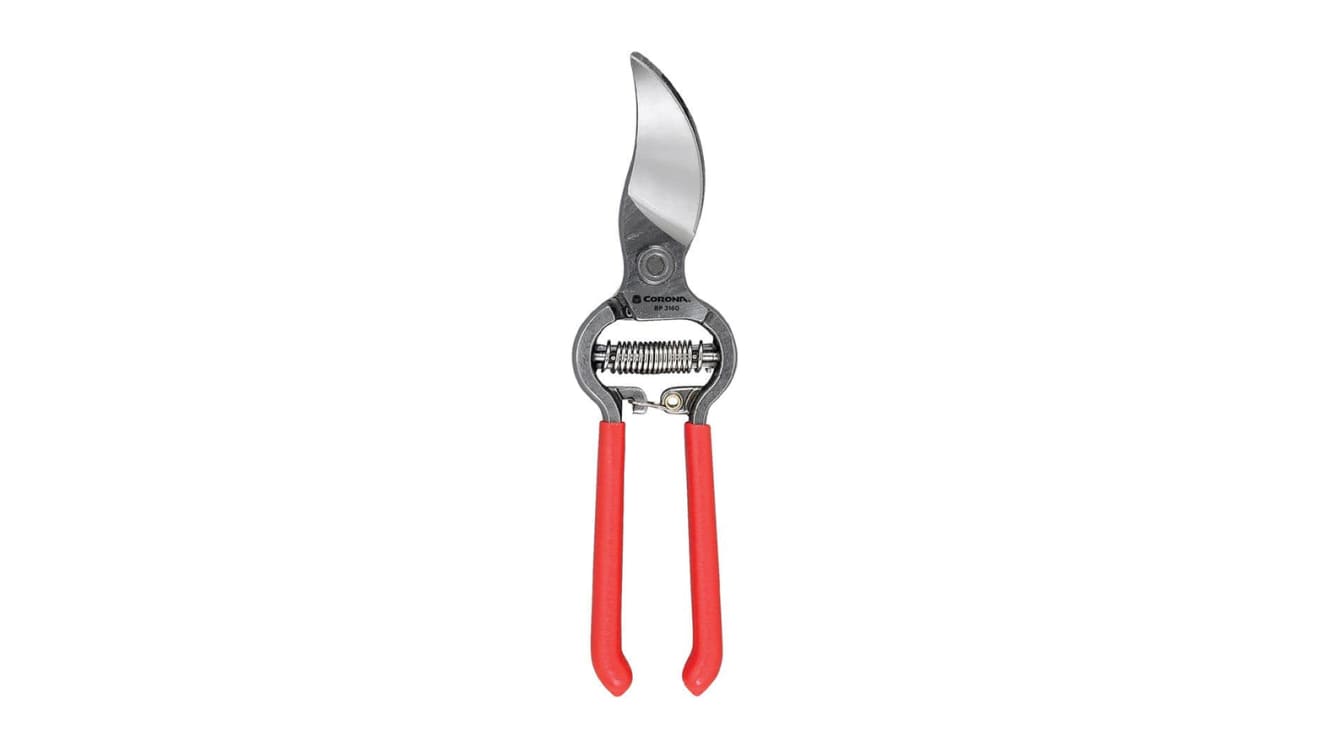
Corona ClassicCut 2.75″ High Carbon Steel Blade Hand Pruner

$22.15 at Home Depot

Start with the basics and get a solid hand pruner. “This proves indispensable and is attached at the hip of every amateur to master landscaper,” says Price. Made of solid forged steel and a resharpenable and replaceable blade, these pruners are designed for branches and stems and cut up to ¾” diameter. “They stay sharp, they’re easy to maneuver, and they never break,” says Price.”

Caddy for your tools

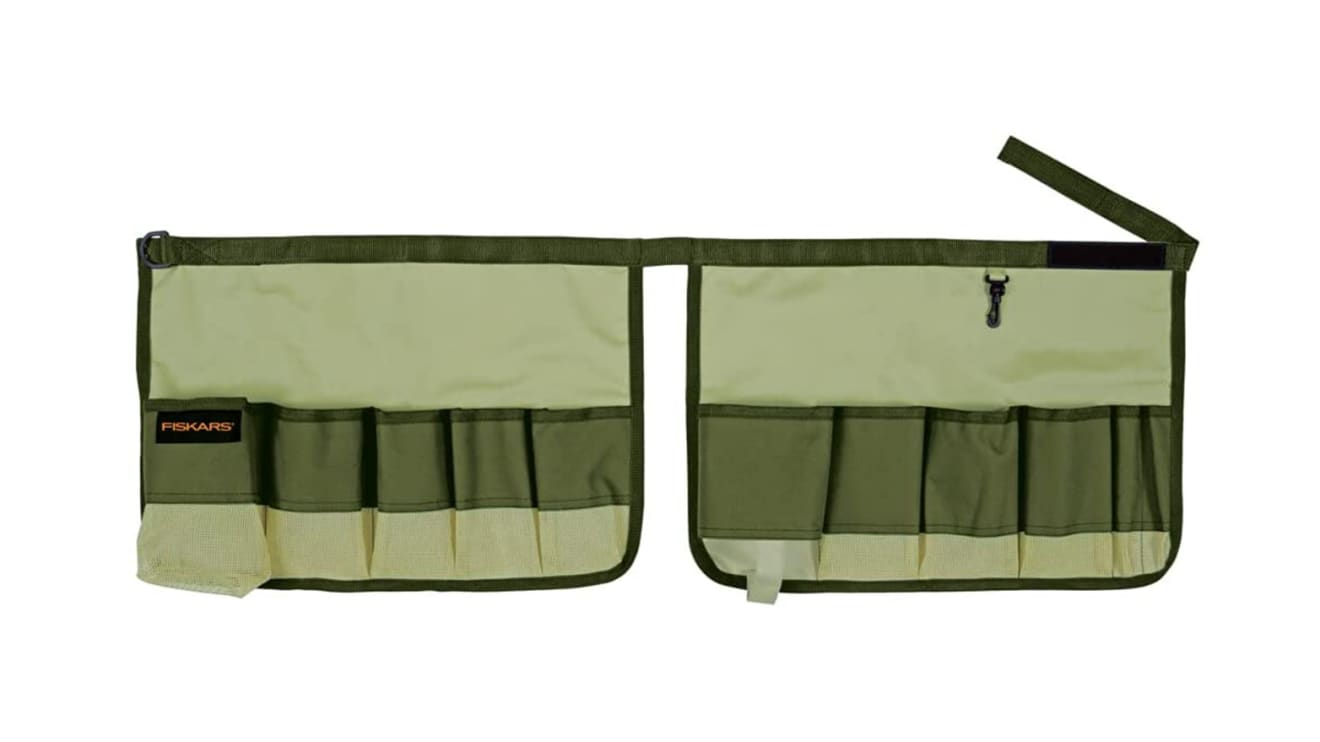
Fiskars 5-Gallon Garden Bucket Caddy

$8.59 on Amazon

“To corral the essentials, I have enjoyed my garden caddy for over 25 years. Attach it to any 5-gallon bucket and it will live tucked in the corner of the garage, ready to head out on every garden adventure,” says Price. Nine deep pockets keep essential tools accessible and organized and easy-to-clean canvas construction offers lasting value.

Pet-safe slug killer

Sluggo Wildlife and Pet-Safe Slug Killer

$15.27 on Amazon

“With your fertilized garden thriving, local pests like snails can become an issue. Coffee grounds or crushed egg shells can help, however, if they don’t work, try Sluggo. It creates a line of defense against those pesky critters, ensuring your leaves and blooms stay intact,” says Price.

Sturdy vine supports

Vigoro Sturdy Vine Supports

$4.98 at Home Depot

Taking advantage of the vertical space in the landscape? If so, use these cleats to tie up your vines and espaliers. “Clear, flat, with a sturdy hole to loop through, your green walls will add a beautiful dimension to the architecture. Give it a day for the glue to dry, don’t rush that curing time or these will not work properly. Beware, they may take off stucco/paint when removed so make sure that area is easily patchable if needed,” says Price.

Fire pit glass that goes all over the yard

Crushed Fire Pit Glass

$47.55 at Wayfair

“Sing the praises of a good recycled crushed glass and use it everywhere. We first started using it for fire pits and soon realized it looks modern piled around succulents in a low bowl, infilling the gaps between landscape pavers. I’ve even used some for the fish bowl in a pinch,” says Price.

Price-conscious patio umbrella

Sundale Outdoor 7.2′ Patio Umbrella

From $49.99 on Amazon

“You can never have enough of these. They all fade and get dirty looking, but this price point makes it easier to justify getting a new one before that next July 4th barbecue,” says Price. Made from 100{6d6906d986cb38e604952ede6d65f3d49470e23f1a526661621333fa74363c48} polyester fabric and outfitted with a rust-free aluminum pole, this umbrella has an air vented top to enhance stability and it comes in a variety of colors including yellow, red, dark green, blue and more.

Inside a Denver Landscape Architect’s Urban Oasis

Attributes

Paul Wrona’s Crestmoor Park ranch property has an enviable 4 outdoor dwelling spaces—and freshly renovated interiors that consider cues from the home’s verdant location.


When it strike the marketplace in 2011, this 1953 ranch household in Denver’s Crestmoor Park neighborhood was a time capsule. Its pine-paneled business office, metallic-wallpaper-wrapped bogs, and eco-friendly galley kitchen were 1960s originals. But to opportunity consumer Paul Wrona, an award-winning landscape architect with much more than a 10 years on the Denver structure scene, the home was the epitome of “good-bones” prospective. (Back again in its heyday, the charming ranch was featured in a journal.)

Even far better for Wrona, co-operator and principal of landscape architecture firm Elevate by Structure, was the home’s spacious, flat whole lot, which boasted tremendous, experienced trees that only a decades-old property could provide. “The lot was substantial, and the dwelling was positioned properly to have equally a wonderful front yard and a spacious yard. It was the fantastic blank canvas,” Wrona claims. So, he and his spouse, Susan, and their then-3-year-old son (and a newborn boy on the way) purchased the 2,300-sq.-foot property, inheriting two spruce trees, a large Patmore environmentally friendly ash, and a substantial inside and exterior renovation job.

5280 Dwelling April/May possibly 2022

When the youthful spouse and children moved in, a spit-shine pulled the property into the 21st century. Goodbye, 1960s chintz hello, espresso-stained kitchen area island. But as the boys grew—one is now in middle school—the dwelling’s a person-and-a-fifty percent loos and cramped, dark rooms missing their charm. When spending budget and bandwidth synchronized, Wrona claims, “it was time to make the household seem and perform better for the fashionable-everyday living knowledge.”

The lengthy-awaited renovation started in 2018, and it was a community affair. The Wronas hired architect Luke Taylor-Brown of LTBA Architecture to re-visualize the layout and facade. “Luke is an extremely gifted architect—and he also takes place to be our neighbor, so he had the gain of researching our household from across the street,” Wrona suggests. Future, they employed builder Marty Harrison, owner of LifeHouse Design, who plays tennis with Wrona on community courts. And despite the fact that the Wronas’ interior designer, Kelly Christensen, principal of KC Studio, does not live in Crestmoor Park, she did go to university with Wrona’s business enterprise partner, and Christensen and Wrona have been pals for a lengthy time.

After the staff decided that a 2nd-tale addition would wreck the ranch’s appeal, and that more than-expanding the major amount would gobble up way too substantially of the garden, Taylor-Brown began the herculean undertaking of squeezing should-have amenities into just 600 supplemental sq. feet. “The major issues the house owners experienced with the property had been that it did not have huge more than enough bedrooms, sufficient place for storage, or immediate accessibility from the living home to the yard,” Taylor-Brown states. The addition presented a primary bedroom suite, generating way somewhere else for more substantial bedrooms and a total toilet for the boys, additionally a powder home, laundry place, and home office environment. La Cantina sliding doors in the living area were being a “key addition, as they visually borrow space from the property and make the area experience bigger than it is,” Taylor-Brown states. A heat, walnut-paneled wall (with built-in bar) separates the kitchen area and dwelling and dining rooms.

Wrona describes the couple’s vision for the interiors as “a present day vibe with rustic accents, with just about every room [feeling] warm and at ease.” Christensen delivered. “Kelly gave it a punch of coloration and texture that truly captured our design and style,” he states. A several perfectly-picked, character-impressed wallpapers, like the wispy, Emma Hayes Textiles’ pattern on the dining room’s accent wall, convey in an natural sense.

But it is the 4 outdoor residing parts, like three independent fireplace pits (Wrona also co-owns Denver-dependent fire pit enterprise Nisho) that really bring collectively the dwelling. “Our full landscape needed to be renovated, and because I couldn’t tackle all of it at once, I took it 1 place at a time,” Wrona suggests of the decade-extensive create-out. “I would pick out a house, analyze it for as extensive as it took to get a eyesight, and then determine out a way to carry out it.” There’s a yard courtyard, great for “outdoor eating, watching a motion picture or recreation, and cooking s’mores on the hearth pit,” he claims. The back deck, he adds, is the ideal spot for “morning coffee or an evening consume, the two superior with a fireplace, of program.” The family normally sits out entrance to chat with neighbors on summer months evenings or when ready for trick-or-treaters on Halloween. And the big back garden is where the family performs summer time rounds of cornhole and the boys follow their most loved sports activities.

“This household does not have a large footprint, so working with our outdoor place as a link to the residence was so vital,” Wrona suggests. “In the spring, summer time, and tumble, our slider doorways are almost often open to welcome in nature.” Which feels, well, completely pure.


Structure Professionals
Architecture – Luke Taylor-Brown, LTBA Architecture

Inside Design and style – Kelly Christensen, KC Studio

Development – Marty Harrison, LifeHouse Design

Landscape Architecture – Paul Wrona, Elevate by Design and style

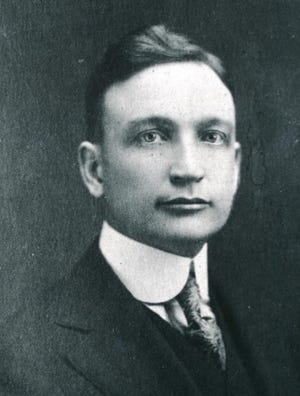
Charles F. Gillette, renowned landscape architect

Portrait of Charles F. Gillette early in his career, ca. 1920s, from the Charles F. Gillette Papers at the Library of Virginia.

PETERSBURG — Philanthropist Bill Nicholson who resides in an artwork-loaded Large Avenue row household in historic Previous Towne is at it again. The male with an inexplicable fascination with Petersburg is drawing consideration to his neighborhood in a wonderful way.

The Library of Virginia, Petersburg Yard Club and Petersburg General public Library will present a totally free public show sponsored by Nicholson. “Matters of Scale: Charles F. Gillette in Petersburg,” curated by the Library of Virginia, will celebrate the get the job done of the renowned landscape architect.

Nicholson has a particular request. He would like fellow Petersburgers to gussy up their gardens and clear up the streets to get ready for thousands of people today to ascend on Petersburg.

“This is a excellent accomplishment and opportunity for us all to demonstrate the wonderful elements of our metropolis,” Nicholson said.

Virginia Avenue entrance at Blandford Cemetery in Petersburg. This blueprint is included in the Charles F. Gillette Papers at the Library of Virginia.

‘Underground Gain Artwork Auction’:Petersburg vacant developing venue for artwork auction: Artists raise revenue for area faculty

Chef Ernie answers quirky inquiries:Petersburg’s Gluten Peddler shares kitchen: Social Butterfly will make Beaunuts in Aged Towne

The exhibition at the Petersburg General public Library will be aspect of the Petersburg Backyard garden Club’s tour on Tuesday, April 26 from 10 a.m. – 5 p.m., the working day just before it opens to the general public. 

Audio course offers glimpse of Olmsted’s life beyond landscape architecture – UB Now: News and views for UB faculty and staff

April 26, 2022, marks the 200th anniversary of the birth of Frederick Legislation Olmsted, and UB faculty member Adam Rome is supplying his take on Olmsted’s existence, legacy and innovations in a forthcoming Audible Primary class.

Olmsted is best recognised for his operate as a 19th-century landscape architect. But the audio study course, established to debut on April 21, offers a see of his do the job over and above this career.

However Rome discusses many of Olmsted’s iconic projects, specially Central Park in New York Town, the 3-hour Audible Unique also information Olmsted’s role as a journalist, pioneer in administration and social reformer.

The program demonstrates on typical themes that formed Olmsted’s get the job done in these positions. In an introductory lecture, Rome tells listeners that the material is divided into sections about Olmsted’s engagement with significant concerns: “How can folks produce a feeling of group in a extremely cell and individualistic modern society? What is the foreseeable future of the town? How can we stay away from destroying our setting? What is the purpose of authorities in society?”

Olmsted’s endeavors outside of landscape architecture different. He not only intended Central Park in partnership with Calvert Vaux, but also oversaw its construction as park superintendent. Other administration roles bundled foremost the U.S. Sanitary Commission, which delivered health-related help to Union troops during the Civil War. Ahead of all of that, Olmsted was a journalist. As Rome recounts, Olmsted’s newspaper function incorporated dispatches from the antebellum South for The New York Periods that “built assistance for the abolition of slavery” and formed the foundation of the influential e-book “The Cotton Kingdom.”

“Throughout his life, Olmsted requested big inquiries about the sustainability of society,” Rome, professor of environment and sustainability, College of Arts and Sciences, suggests in an job interview. “Olmsted’s existence tells us a great deal about the great challenges of his time — and ours. His way of pondering about what can make cities sustainable is unbelievably appropriate. He would also have a lot to say about the existing, in particular about how we may well offer with weather modify and social divisions.”

Ingrained in Olmsted’s perform on community parks was the thought that metropolitan areas must prepare for the long run, and that environmentally friendly spaces had been integral to the sustainability of towns, Rome says. Parks could improve health and well-staying. Persons desired a put to go to escape from active streetscapes, congestion, sound and strain. Trees cleaned the air.

Those people strategies stay suitable now. Olmsted and Vaux intended a technique of parks in Buffalo, and it was on a walk in 1 of these parks — Delaware Park — that Rome determined to produce his audio training course.

This was early in the COVID-19 pandemic, and the park offered some respite from the pressures of the day. The temperature experienced dipped underneath freezing, but in spite of the cold, Rome stood in the snow, looking at the sunset. The magnificence of the second influenced him.

“The park is 150 years aged. It’s survived a lot of improve, and that generally aids me to truly feel hope that our society will endure, that we will uncover approaches to get previous all our problems,” Rome suggests.

In addition to Buffalo parks, Olmsted’s operate in Western New York integrated taking a guide function in a late-1800s marketing campaign to restore all-natural landscapes on the U.S. side of Niagara Falls. The fight succeeded, main to the elimination of structures in the vicinity of the cataract. Olmsted and Vaux were being appointed to layout the landscape.

Just after getting ready a script, Rome traveled to a studio in Virginia this January to report the class on Olmsted. It is his 2nd Audible Original. His first, “The Genius of Earth Day,” talked about the to start with Earth Working day in 1970 and the wide-ranging legacy of that occasion.

Building these courses gave Rome a likelihood to examine training in a new medium. He experienced to consider about how to link to an anonymous audience of men and women who may be multitasking although listening. That encouraged him to come across a far more personal voice and assume about pacing and ways to signal when important details had been coming.

The Earth Day system developed on a ebook Rome had prepared, but the Olmsted course was the opposite. “I’ve been fascinated by him for a long time,” Rome stated, “and this was a beta check of how considerably I have to say about the ongoing significance of his life. And the solution is a lot.”