
Home Grown | Landscape Architecture Magazine

A mid-Atlantic design/build firm is converting homeowners into native plant advocates, one lawn at a time.

By Jared Brey

A well-grown natural habitat lawn
Refugia specializes in transforming lawns into pollinator-friendly habitats. Photo by Kayla Fell for Refugia.

Jeff Lorenz stood under the mid-June sun at FDR Park, monitoring the final touches on his company’s exhibit for the Philadelphia Flower Show. The exhibit space, ordinarily an asphalt parking lot, had been covered in mulch and lined with displays, all in the final moments of construction.

Teams of employees scuttled about in branded T-shirts—“REFUGIA: Functional Design for the American Landscape”—placing trees, shrubs, grasses, moss, and flowers in clumps for planting the next day.

The plants were native, as they are in all of Refugia’s projects. You could find them throughout the coastal plain, Lorenz said: pitch pine, gray birch, bald cypress, Atlantic white cedar, wax myrtle, blueberry, swamp milkweed, giant coneflower, hay-scented fern.

A small, sloping path made of Pennsylvania bluestone would flow with water when the show opened the next night. The boardwalk was made from bald cypress boards. Part of the space was enclosed beneath a mycelium roof made of lion’s mane and reishi mushrooms.

It was Refugia’s seventh year exhibiting at the Philadelphia Flower Show—a great tool for marketing and recruiting, Lorenz says. But as interest in Refugia’s work has accelerated, Lorenz quietly confided, he’d begun to wonder whether it was a distraction. “We’re slammed,” he said. “Every aspect of our business is overwhelmed right now.”

A lovely natural-wood shelter in a lush garden
Refugia, a firm focused on residential landscapes in the Philadelphia region, is building a greenway of native gardens. Photo by Rob Cardillo for the Pennsylvania Horticultural Society.

Lorenz founded Refugia in 2015. The company began with small jobs in the Philadelphia suburbs, helping homeowners incorporate native, pollinator-friendly plants into their lawns and gardens. Gradually, the business has grown, with several landscape architects and designers on staff and an expanding network of residential gardens and public commissions under its belt.

Refugia’s growth has mirrored an explosion of interest among homeowners in native plants and pollinators. In particular, over the past few years, a movement to kill the grass lawn and replace it with ecologically beneficial flora has taken hold in certain parts of the American suburbs.

Refugia is headquartered on the Main Line, a network of Philadelphia suburbs connected by commuter rail that’s among the wealthiest places in the United States. Among the area’s manicured lawns, Refugia’s approach has found detractors as well as enthusiasts.

But its portfolio is growing fast. On its website, the company claims an ecological “Greenway Network” of more than 75 native gardens it has completed within five miles of its home base in Narberth, Pennsylvania. And many more are in the works. Lorenz says he wants the company to be “just big enough” to meet the demand for native gardens in the area and, in the process, help make the suburbs more efficient with stormwater and more beneficial to bees, birds, butterflies, caterpillars, and, by extension, humans.

“The whole goal of our business is to pepper the suburbs and urban areas with habitat,” Lorenz says. “If there’s any direct way that we can all say we’re doing something about the changing climate and species collapse and all these things, it’s on private property.”

Ecological Links

Lorenz, whose father taught sustainable engineering at Villanova University and cofounded the sustainability consultancy Environmental Resources Management, tries to proselytize for native species without being preachy.

He frequently cites the author Doug Tallamy, an entomologist who has called native gardening “a grassroots solution to the extinction crisis.” In his books Bringing Nature Home and Nature’s Best Hope, Tallamy has framed the nation’s suburban yards as the last, best chance to restore some of the ecological function of the developed landscape and promoted “a suburban ecosystem that is complex enough to keep itself going without micromanagement on our part,” as he wrote in Bringing Nature Home (see “Big Tree, Small World,” LAM, September 2021).

A stone pathway through a green garden
The firm sources plants found in the Atlantic coastal plain primarily from local nurseries. Photo by Ngoc Minh Ngo.

Refugia’s Greenway Network is a small version of Tallamy’s “Homegrown National Park,” an advocacy effort to create 20 million acres of native plantings around the United States, representing about half the privately owned lawn space in the country.

Refugia’s website includes a testimonial from Tallamy, and at one time, Lorenz regularly handed out Tallamy’s books to potential clients, says Kayla Fell, Refugia’s creative content manager (and Lorenz’s wife). Increasingly over the past few years, the process has reversed, Fell says: Homeowners, already converted to the cause, approach Refugia looking for help making their gardens more functional and beneficial to insects. 

On a Tuesday morning in June, Lorenz drove with Amy Matusheski, a summer intern, to visit a potential client at a three-story stone house in Wynnewood, a Main Line suburb. The owner, Dan Mercer, had moved from the city in 2016 with his wife, Swati, and their 10-year-old daughter. When he bought the house, Mercer said, the front lawn had been mostly grass, with “mountains of mulch” surrounding planted areas.

Mercer had gradually removed the lawn and the mulch and covered the front yard in native plants, some of which he planted and some of which grew on their own, including boneset (Eupatorium perfoliatum), obedient plant (Physostegia virginiana), and bee balms. He’d established a series of rain gardens with sweet-scented joe-pye weed (Eutrochium purpureum), swamp milkweed (Asclepias incarnata), eastern bluestar (Amsonia tabernaemontana), and woodland sunflower (Helianthus divaricatus), which captured almost all the runoff from his house. But there was one downspout that still spilled into the driveway. He called Refugia looking for ideas about how to divert the remaining water into the garden. And he was also looking for ways to redesign the back patio and develop the backyard garden.

In the garden at his last house, Mercer told Lorenz, he’d had grapevines, which were nice until the fruit got heavy and dropped, rotted, and attracted bees and wasps. Was there a native vine that grew in a similar fashion? Lorenz recommended trumpet honeysuckle (Lonicera sempervirens) or crossvine (Bignonia capreolata), both of which would cover a trellis and produce big, colorful flowers in the spring and summer.

“And they don’t have tendrils, so they won’t adhere to it; they just wind around,” he told Mercer. “They won’t destroy the structure.”

Long luscious grass surrounds an outdoor firepit area
The native plant movement has grown since Refugia’s founding in 2015. Photo by Kayla Fell for Refugia.

Mercer became interested in native plantings after seeing how much flooding affected local trails in Wissahickon Valley Park, where he volunteers. The stormwater runs off suburban lawns and overwhelms the local creeks. Mercer wanted to be part of a solution.

“I’m not going to save any parks or anything like that. It’s just me. It’s a small lot,” he says. “But, you know, a lot of simple efforts could add up to something significant.”

Local Network

Whenever possible, Refugia sources plants from a small web of local growers, including Natural Landscapes Nursery, Quality Greenhouses, North Creek Nurseries, Sam Brown’s Wholesale Nursery in Pennsylvania, and Pleasant Run Nursery in New Jersey. They also pull some species from Pizzo Native Plant Nursery in Illinois.

Some plants are bought in bulk and stored at Refugia’s headquarters, especially hardy shrubs and small trees, Lorenz says. Delicate perennials and fungus-prone grasses they tend to buy once they have a planting plan for a specific project. The company includes a year of landscape stewardship for most of its installations, and in the course of maintenance, workers regularly pull cuttings to propagate in Refugia’s greenhouse. Occasionally they’ll make adjustments to the soil at a certain site, but typically they choose a plant palette based on existing conditions.

Over the past year, pandemic-related supply chain issues have mostly sorted themselves out for Refugia’s needs, Lorenz says. But sudden shortages have continued to occur as local demand for native plants spikes, especially on civic projects. The native-plant movement is growing for a few reasons, says George Coombs, the director of horticulture at the Mt. Cuba Center, a botanical garden focused on native plants in Hockessin, Delaware. One is that the idea of helping insects like monarch butterflies, which are “cute and fuzzy and charismatic,” is a relatively easy sell. The other is that planting natives is less of an act of sacrifice than other actions taken on behalf of the environment.

“So many conservation behaviors require you to give up something—less water, less electricity,” Coombs says. “But you don’t have to do that with plants. You can add native plants, keep all the ones you’ve always loved, and still have a really beneficial impact.”

Clusters of carefully-planted wildflowers in a residential lawn
Refugia’s gardens feature clusters of native plants, a contrast to the monochromatic lawns that have traditionally defined suburbia. Photo by Kayla Fell for Refugia.

Landscape architects deserve some credit for pioneering the use of native species in public and private gardens, says Andrew Bunting, the vice president of horticulture for the Pennsylvania Horticultural Society, which puts on the Philadelphia Flower Show. In particular, Andropogon, based in Philadelphia, and Oehme, van Sweden, based in Washington, D.C., were early proponents of the native plant movement, he says. The use of natives has become much more commonplace since those firms began using them in the 1980s. And while natives can be used in many of the same formal styles as traditional ornamentals, they’ve also become strongly associated with a particular meadow aesthetic. Some people want that. Others, including some in Philadelphia’s wealthy suburbs, don’t.

“For a lot of people, probably, the lawn and the shrubs [have] more to do with control,” Bunting says. “There’s something there that’s not necessarily horticultural. So, to get people to shift to the prairie or meadow style—for most people, that’s a major shift.”

In addition to hosting the greenway map on its website, Refugia posts street-facing signs on the native gardens it plants. It’s a marketing tool, but Fell says it’s also “designed to tell people why it looks like this.”

Rob Gladfelter, ASLA, the director of operations at Refugia, joined the company in 2021 after getting a bachelor’s in landscape architecture at Temple University. Before that, he’d worked in landscaping and horticulture for more than a decade. It’s been exciting to see a shift toward native plants in public gardens, he says, and to work for a company that has a mission to address the climate crisis. And one that stands by its principles, he says, including being willing to get fired by a client for refusing to plant a rosebush. He’s happy to plant a traditional garden with hedges, he says, as long as they are native.

“We really want everybody to do it,” Gladfelter says. “The whole idea is we really want to change people’s perception of what a healthy landscape looks like.”

Lorenz says he tries to follow the native ethos when it comes to hardscaping, too. He sources bald cypress boards from local lumberyards, and he’s an enthusiast of Pennsylvania bluestone, a sedimentary sandstone used for landscape steps and pavers that he sources from HEPCO Quarries, which has a stone yard in West Chester, Pennsylvania. It’s a unique stone that only occurs in a small area of northeastern Pennsylvania and southern New York, says Brad Hepler, a co-owner of HEPCO Quarries. The layers vary in size, from the five-foot-thick “saw rock” that’s processed and used for wall caps, mantels, hearths, and lintels to the more delicate, irregular slabs used for steps. It takes a lot of forethought and planning to extract and market all parts of the rock, Hepler says, and not all quarries do it. HEPCO operates on a 205-acre plot of land in Windsor, New York, according to Hepler, who says the company has been actively quarrying the same 10-acre section of it since 2005.

The bluestone slabs that Refugia used for the Philadelphia Flower Show were an opportunistic purchase, Lorenz says—two pallets had been prepared for another client who canceled. “We just try to have our materials be in the same world as the plants we use,” he says.

Jared Brey is a freelance reporter in Philadelphia and a contributing editor to the magazine.

Senior Landscape Architect – Cambridge, MA, US | Jobs

City of Cambridge
&#13
Metropolis of Cambridge&#13

Employer:

Cambridge, MA, USLocation:

Wed, Feb 15 ’23Posted on:

&#13
$83,531 – $110,390on a yearly basis&#13

Spend:

ABOUT THE Job:

The Local community Setting up Division potential customers the arranging and style of the City’s open up house system. We evaluate open up space needs in the course of the Town and build recommendations for foreseeable future open up room growth. Our planners, landscape architect, and designers do the job collectively with the local community and other Metropolis departments to layout beautiful, inventive, and playful open up areas that provide our assorted community’s requirements.

The Senior Landscape Architect is liable for running the layout of new or renovated parks, playgrounds, and open up spaces, including major participatory group procedures.  

Essential Responsibilities AND Obligations:

Less than the route of the Local community Setting up Director, the Senior Landscape Architect will help the division in the adhering to approaches. 

  • Handle park and open place style and design tasks this requires handling teams of workers and consultants associated in style and design of open up spaces throughout the city, and actively managing schedules and spending budget.
  • Do the job with City staff, consultants, and contractors to apply the Open up Space Program in Metropolis Cash Assignments such as parks, streets, sidewalks, and general public buildings.
  • Tutorial layout vision for City’s open up house process and particular person parks, with input from all passions in the Cambridge neighborhood.
  • Operate with an interdisciplinary staff of Metropolis team in the course of the style and design course of action. guarantee that open up area jobs meet the city’s higher design and style aims for fairness, livability, and sustainability.
  • Coordinate with different metropolis, point out and federal businesses on assignments and linked open house challenges.
  • Make sure the designs, technical specs, and estimates formulated for tasks meet up with the requires of the Department and Metropolis and will outcome in prosperous projects. 
  • Collaborate with staff and/or consultants to carry out inclusive and equitable public procedures all-around open room and community realm tasks.
  • Overview design and style of personal development projects to make sure they are incorporating suggestions from City’s various open place and environmental programs.

Minimum Demands:

Instruction and Practical experience: 

  • Undergraduate diploma in landscape architecture or associated subject.
  • 7 years of progressively accountable knowledge in style and development of landscape advancements including park initiatives, urban plazas, and streetscapes. A Master’s degree may possibly be substituted for 2 yrs of working experience.
  • Though the applicant’s abilities need to be largely in landscape architecture, a thorough knowing of environmental sustainability and general public place structure is remarkably essential.
  • Sturdy interpersonal, customer provider, challenge management and spending plan planning techniques.
  • Skill to function independently, proactively, and as a team participant. Applicant need to be cozy doing work in a multidisciplinary group natural environment and in options with in depth group participation.
  • Solid laptop or computer techniques including demonstrated facility with software (Term, Excel, Access) information of and working experience employing Adobe Inventive Cloud software, which include InDesign, as very well as other layout program.
  • Outstanding visual presentation, composed, and oral communication competencies.
  • Skill to create and get ready conceptual, schematic, and remaining layout documents (design drawings and specifications) put together bid offers inspect development of landscaped locations and acquire procedure and servicing ideas.
  • Know-how of relevant regional, point out and federal legal guidelines, regulations and laws associated to accessibility.
  • Understanding of development elements, specs, and procedures.
  • Expertise of procurement methods for structure and design of public operates projects.
  • Demonstrated understanding of the job that racial inequity plays in our society.
  • Will have to be self-determined and detail-oriented and have the capacity to get the job done as section of a staff.
  • Robust determination to fairness and regard, equally in the provision of services and in the office.

Know-how, Skills, and Talents: 

  • The Metropolis of Cambridge’s workforce, like the group it serves, is numerous. Demonstrated means to operate and interact properly with persons and teams with a variety of identities, cultures, backgrounds, and ideologies in a courteous, compassionate, and qualified fashion.

Desired Qualifications:

  • Designation as registered landscape architect.
  • Knowledge of the Cambridge group.
  • Knowledge in applying applications for physical house and 3-D visualization are highly attractive.

Physical Requires:  Means to obtain, input, and retrieve information from a computer. Ability to remedy phones, sustain various documents, and lift a minimal of at least 10 pounds. Ability to journey throughout the Town of Cambridge to several conferences, etc.  Do the job requires regular web site visits, requiring journey to and via active construction zones, driving, walking, bending, squatting, achieving, and stretching. Reasonable accommodations may possibly be made to permit persons with disabilities to perform critical functions.

Perform Setting: Operate included is the two indoors in a specialist business office location and outside such as construction sites and congested city roadways below all weather conditions problems. Standard office environment atmosphere. Fluorescent lighting and air conditioning. Average sound amount. This situation may possibly be eligible for hybrid operate below the City’s Telework Coverage, based on operational wants.

Wage/Advantages:

  • Amount: $83,531&dash$110,390 + great positive aspects
  • Summary of Positive aspects: Aggressive health, dental, and vision insurance policy Vacation and Unwell leave qualified Sick Incentive Shell out Suitable 3 Individual times 14 Paid Holiday seasons Administration Allowance, $2,700/calendar year Metropolis personnel transportation rewards (T-Go reimbursement Bluebikes membership, EZRide Shuttle)                                   

Software Treatment:  Submit the two your resume and go over letter by means of electronic mail to: work@cambridgema.gov or to the Staff Dept, Place 309, City Hall, 795 Massachusetts Avenue, Cambridge MA  02139. Fax 617-349-4312. Resume and address letter requested by 03/14/23.  Posture will continue to be open up until finally loaded.


Perspective your Software Background


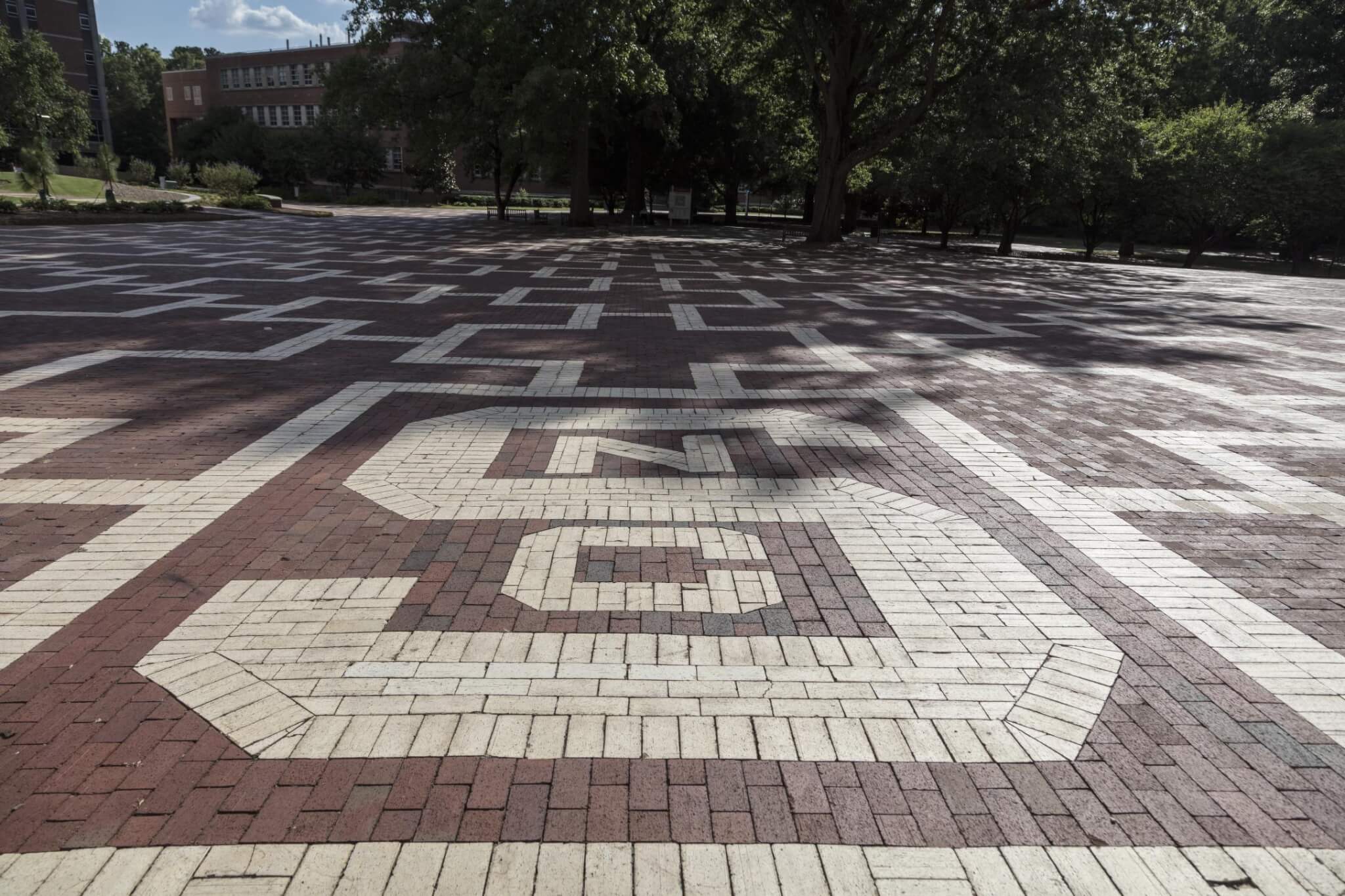
N.C. State campus master plan may alter the famous Brickyard

North Carolina State University’s proposal to rework its campus could change two modernist landscapes, including its renowned Brickyard.

The proposal was a short while ago flagged by Washington, D.C.–dependent preservation team The Cultural Landscape Basis (TCLF), which considered the campus landscape at-possibility dependent on a learn program now beneath review by the university. The corporation mentioned that the Brickyard, intended by landscape architect Richard Bell, and the plaza encompassing the nuclear engineering building (intended by landscape architect and N.C. State alumnus Geoffrey McLean), are likely eligible for listing in the Nationwide Sign up of Historic Areas because of to their respective superb layouts.

“Despite decades of community interest in modernism and modernist layout, postwar landscape architecture continues to endure from a absence of awareness, documentation, and appreciation leaving susceptible sites like the Brickyard and the Burlington Nuclear Engineering Lab Spot,” TCLF President and CEO Charles A. Birnbaum said in a push release.

(Library of Congress, Prints & Photos Division, photograph by Carol M. Highsmith [C-DIG-highsm-44573])

The Brickyard was designed as aspect of a 1963 university growth guided by a grasp prepare from Bell. The 45,000-sq.-foot plaza at the heart of the Raleigh, North Carolina, campus is paved with about 500,000 purple and white bricks in a geometric sample loosely inspired by Piazza San Marco in Venice. (Weirdly, about 500 bricks are stolen from the American plaza just about every 12 months.)

When foremost the design of the Brickyard, Bell was doing work on a vary of landscape jobs with his spouse Mary Jo Harris Bell from their household and studio, Water Backyard. (He was also an alumnus of the university.) Bell completed above 2,000 tasks, “from residences to public parks, college grasp strategies, and island resorts,” in accordance to a text by Rodney L. Swink posted on TCLF’s web site. In 2014, Bell gained the ASLA Medal, the expert association’s maximum award. He died in 2020.

The close by Burlington Nuclear Engineering Lab is encircled on 3 sides by a crimson-brick plaza, crafted in 1972, that, in accordance to TCLF, draws on Modernist structure concepts and foreshadows postmodern landscape style and design by using abstract brick sculptures that intensify purposeful landscape aspects like grates and manhole covers.

“Just past calendar year a part of the artistically intriguing and special Lab Location was demolished with minor community detect or enter,” Birnbaum pointed out.

“Landscape and placing are an integral aspect of considerable Modern day structure from the 20th century. We see all also generally that academic campuses target much too considerably on the buildings and not more than enough on the landscape architecture built at the same time,” claimed Liz Waytkus, executive director of Docomomo US, in a statement.” These landscapes which include people at N.C. Condition are incredibly vital to the total composition and the way we as individuals have interaction with the surroundings.”

For those people anxious about the fate of these and other perhaps at-hazard landscapes, TCLF has back links to action and advocacy solutions on its web page.

Louis Johnson Appointed as Executive Vice President of Gresham Smith’s Land Planning Market

Award-Successful Landscape Architect to Lead Land Setting up Current market Development

NASHVILLE, Tenn., Feb. 13, 2023 /PRNewswire/ — Gresham Smith, a prime-ranked nationwide architecture and engineering firm with far more than $290 million in annual gross revenue, announced currently that former Job Executive and Senior Landscape Architect, Louis Johnson, PLA, ASLA, has been selected as the Executive Vice President (EVP) of the firm’s Land Scheduling industry, which encompasses far more than 50 professionals and tasks across the country.

“We are very pleased to announce Louis’ assortment as our Land Arranging market’s EVP,” mentioned Gresham Smith CEO and Board Chair Rodney Chester. “Louis is both well-respected in the field and nicely-regarded throughout our organization. In point, he was named an proprietor of Gresham Smith just last yr.”

“I am honored to get on this place and guide the proficient Land Scheduling workforce,” claimed Johnson. “I am passionate about continuing to expand the market’s portfolio and effects. Regardless of whether which is a superior-overall performance infrastructure project or a general public place, we will keep on to lover with key stakeholders and communities to provide neighborhood-changing initiatives to lifestyle.”

Previously, the Land Setting up sector had a merged EVP/Marketplace Vice President (MVP) part. The company just lately split the two roles in order to capitalize on an significantly wide vary of chances to expand its client foundation when continuing to deliver extraordinary task execution to existing clientele. Jessica Lucyshyn, who had been serving in the blended part, will carry on as MVP. “We have viewed our land planning market place improve beneath Jessica’s management, and we are excited that she’ll have the likelihood to aim even additional so on our people, on providing excellence to our clients, and on getting our follow to the up coming level,” reported Rodney Chester.

An award-profitable Landscape Architect, Johnson provides 15 several years of expertise functioning across a assortment of undertaking sorts and scales, with a concentration on urban structure and setting up as perfectly as parks and general public spaces. Latest tasks consist of Town Branch Commons in Lexington and the Chattahoochee RiverLands in Atlanta. 

Johnson has also served as President of the Kentucky Chapter of the American Society of Landscape Architects (ASLA), is a earlier Midwest board member of the Congress for New Urbanism and has lectured as an adjunct instructor for the University of Kentucky’s Division of Landscape Architecture. He has also spoken about city troubles and public structure procedures at various conferences.

Johnson earned his Bachelor of Science diploma in Landscape Architecture from the University of Kentucky, and his Learn of Science degree in Architecture/City Design and style from the Ga Institute of Technological innovation. He resides in Louisville, Kentucky.

Supply Gresham Smith

Ontario landscape architects welcome support from MPP Saunderson

The Ontario Affiliation of Landscape Architects hosted MPP Brian Saunderson in the course of a ski working day event, and talked about housing, setting, and weather adjust

Information Release
&#13
ONTARIO Affiliation OF LANDSCAPE ARCHITECTS
&#13
***********************

Ontario Association of Landscape Architects (OALA) hosted its once-a-year loved ones snow and ski day at Alpine Ski Club in Town of The Blue Mountains on Feb. 3. The annual celebration raises funds for the association’s endowment application, which gives scholarships for pupils for the landscape architecture plans at the College of Toronto and College of Guelph.

Amongst the 100 associates and friends existing was Simcoe-Grey MPP Brian Saunderson to speak at the aprés ski event. 

“We are delighted to be back in City of The Blue Mountains again for relatives snow and ski day and have MPP Saunderson be a part of us this yr,” said OALA president Steve Barnhart. “Landscape architects support construct Ontario, and present-day function is essential as the cash raised right now will go towards increasing landscape architecture scholarships for learners.”

MPP Saunderson fulfilled with OALA reps to go over approaches landscape architects can guidance the Ontario federal government on a amount of issues, including producing spaces that promote general public health and fitness and safety, housing, the setting and climate change.

MPP Saunderson also experienced an in-depth discussion about the OALA’s pursuit of a Observe Act, which is a single of the Association’s main objectives in advancing landscape architects as regarded experts and respected leaders in the structure sector. 

“It was a enjoyment meeting and speaking to the skiers and boarders at OALA’s yearly snow and ski working day previous 7 days,” stated MPP Saunderson, who is also the Parliamentary Assistant to Attorney Standard Doug Downey MPP (Barrie-Springate-Oro-Medonte).

“I was pretty amazed to find out about the price and contributions landscape architects provide to the desk and seriously understand how vital their roles are when it comes to spearheading several government priorities this kind of as housing, environment and climate modify.” 

As the regulator of the title of “landscape architect” considering the fact that 1968, OALA and its 2,000 associates contribute to the improvement and conservation of the province’s purely natural, cultural, social and created natural environment to serve and secure community curiosity. 

***********************

Made for the Marsh | Landscape Architecture Magazine

A pair of landscape designers come up with a profitable idea for the land-starved Louisiana coast.

By Timothy A. Schuler

Larix Underground’s floating planter alongside docks
Larix Underground’s floating planter is developed to be accessible in several areas, including alongside docks or even in the open up water. Picture courtesy Larix Underground.

Like several inhabitants of southern Louisiana, the Indigenous people of Grand Bayou Village, found amongst the southernmost reaches of Plaquemines Parish in the Mississippi River Delta and obtainable only by boat, dwell with the different consequences of coastal land loss.

A crucial problem impacting the community’s skill to subsist in its ancestral place—a landscape that the moment was densely forested but that is now almost solely lined in saltgrass—is an rising shortage of dry land for rising foodstuff and medicinal plants. 

To increase what little land is still left, this past tumble the New Orleans-centered Water Collaborative arranged the Seeds of Innovation: Resilient Style Opposition. A stick to-up to its inaugural planter box style and design problem in 2021, this year’s opposition asked entrants to structure a planter box that was buoyant, simply repairable, and resilient in the confront of hurricanes, tidal flux, and potential saltwater intrusion.

Contributors have been particularly requested to answer to a wish record from Atakapa Ishak/Chawasha tribal elders, which include that planters be light-weight, transportable in the event of an evacuation, and available to elderly or disabled tribal associates.

Water Storage Chambers For Planters
To contend with the risk of saltwater intrusion, the designers added a way to drain the water storage compartment. Image courtesy Larix Underground.

The successful design, by Baltimore-primarily based Larix Underground, addresses these wants with an angular, powder-coated aluminum planter layout with a condition that lets for 18-inch soil depths and uncomplicated harvesting.

The kind and operate of the planter, named Alligator Island, are encouraged by the adaptability and ecosystem-engineering patterns of the American alligator, with an attachable collar and trellis that even further develop rising choices and mooring holes that allow the planter to be secured to docks, homes, or other planters. The prolonged, angled toes on both stop of the planter are meant to evoke the snout of its namesake though also producing the planter hydrodynamic ample to be towed at the rear of a boat.

Larix Underground’s winning design and style will go through more feasibility tests before getting fabricated by Eco-friendly Principle Structure in Vancouver, British Columbia. The firm’s founders, Zoe Roane-Hopkins and Ben Chronister, who are also landscape designers at EnviroCollab and Mahan Rykiel Associates, respectively, say the competition provided an possibility to make a smaller but significant variance in the confront of a substantially bigger environmental justice situation.

“There are a whole lot of layout competitions out there that are tremendous theoretical, like, design and style the long run of towns,” Roane-Hopkins claims. “This one particular was like, here’s a community, they are dropping land, they need to develop food stuff how can you make that materialize?”