Art by Maudsch Tipped As 2022’s Best Interior Design Trend

The handmade painting company provides excellent artwork for those who need to add something special to their home.

Are you looking for the next big focal point for your sitting room? Need a piece that echoes the color scheme of your bedroom? We know the frustrations of trawling through catalogs to find suitable artwork to suit you. For the connoisseur, it might be enjoyable, but when you’re not an art critic – how do you know when you have found something good?

Enter the artistic flair of Art by Maudsch. This talented team creates hand-painted artworks which suit any space. They have been tipped as the next important thing in interior décor in 2022 since their pieces are highly adaptable to your needs. Its artwork is tailored to your specifications. Here is how it all works.

Handmade Paintings for Your Home

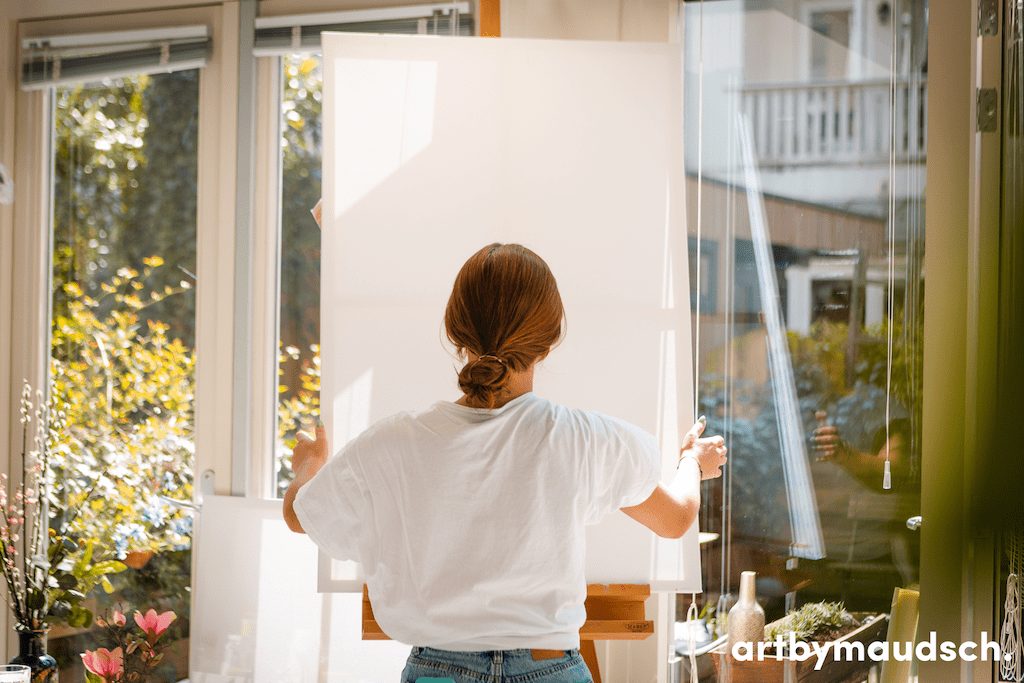
Art by Maudsch uses expert artists to hand paint each piece they sell. They use a mixture of mediums, either oil or acrylic paints. In addition, they use high-quality cotton canvases to create paintings using their network of professional artists.

Paintings are created to match your needs, then shipped worldwide free of charge. You can view and approve your painting online before committing to buy it. They have already gathered over three thousand satisfied clients, who each now own a piece of unique Amsterdam artwork. 

How does it Work?

The artworks are produced as original pieces and listed on the site with this seller. You can browse through the different sections to find art that matches your theme, space, or color scape. Next, you select the piece you would like to buy, and an artist paints it for you. Paintings are made entirely to order, and a painting purchased from Art by Maudsch is far more unique and exciting than mass-produced prints from any other outlet.

Framed by professionals

If you choose a framed painting, which we recommend you do, it will be framed by skilled professionals. The framing facility used by Art by Maudsch is also located in the Netherlands and produces frames from the highest-quality Czech pine wood. The framed pieces are delivered to your doorstep, ready to hang.

Canvas Sets from Art by Maudsch

Canvas sets are the ultimate way to decorate a designer home. They allow you to mix one art piece throughout several rooms or place many canvases on the wall to make up a single picture. Canvas sets are increasingly popular, allowing a pop of creative expression in any home. But, of course, the best part about a canvas set from this team of designers is that they are unrivaled in taste and style. They have been handmade for you by some of the finest modern artists in the world. Art by Maudsch is shipped to you from one of the best-known artistic cities on the planet.

Amsterdam & Art, a great combination, fueled by ArtbyMaudsch. 

What is the first thing that comes to mind when you hear ‘Amsterdam’? Maybe it’s the canals, the tolerance, or even the Red Light District! But did you know that Amsterdam was, in the Dutch Golden Age, the epicenter of world-renown art? Famous master artists like Rembrandt van Rijn, Johannes Vermeer, Frans Hals, and of course Vincent van Gogh all lived and worked in this beautiful city.
With many museums and statues to honor them around the city, their vision, expertise, and philosophy reverberate throughout older and future generations.

Spread the message

Art By Maudsch, based in Amsterdam, saw the big positive impact that art had on the population and the city. They acknowledged that art can be the bearer of timeless ideas and values and blissful beauty. Art can inspire people, spark new ideas or create a conversation between different people. With the many merits that art has to offer, Art By Maudsch felt the urge to share these with the whole wide world! 

Personal Adjustments

By offering handmade, original art pieces at fair prices online, they make pure, handmade art available worldwide. Sure, a printed painting is nice and affordable, but a real handmade artwork is something different! With a great communication center, available day and night, and even an option to make personal adjustments to the pieces, Art By Maudsch feels personal and as if you are in direct contact with the artists themselves. 

Canvas Sets

Because art is subjective, different people like different styles of art, the possibility to make personal adjustments can really help you find the exact piece for your home interior. And Art By Maudsch takes it even one step further, offering a variety of Canvas Sets. These sets consist of multiple, separated artworks with the same atmosphere, that you can freely adjust and style accordingly to match the atmosphere of your home interior perfectly.

Art By Maudsch is therefore more than just an online gallery, it is an experience where the professional team takes you by the hand in the search of your ultimate, handmade art piece. From the city where it all started, right to your doorway and without any costs whatsoever! 

Dave Verhoeven

Amsterdam

ArtbyMaudsch

Written in partnership with Aggrandize

Master Gardener: Landscaping with nature in mind | Lifestyles

Landscaping with nature in mind

The garden has been put to bed and is ready for a blanket of snow. The last of the garden ornaments are in storage, containers have been emptied, fall bulbs are planted and trees that didn’t find a home are healed in. Fences to keep hungry critters from nibbling on new trees have been erected. The gardener and garden are ready for a rest. The ladybugs, bumble bees, fireflies and butterflies are also at rest, finding shelter in leaves, old stems, rock piles, rotting logs and underground spaces. The birds that are spending the winter have been busy in the garden eating seeds left standing for them, checking out tree bark nooks and crannies for tasty insects and occasionally visiting the filled feeders and a heated water source.

I love my garden and I love it even more when it’s busy with singing birds, buzzing bees, blinking fireflies and butterflies gliding from flower to flower. This has been a work in progress for over 25 years. I started years ago trying to make my yard more appealing to birds as bird watching is another interest of mine. That got me interested in adding native flowering plants, grasses, and trees to help attract birds to the yard. I told visitors that the back of the yard was habitat, not garden, because people expected your garden to be weed free, no sign of insects and mulched. Wildflowers might not have been what they were looking for. Everyone wanted to ooh and ahh your hostas, daylilies, and plants whose origins were from far away.

And what about your lawn? You let your dandelions bloom? You don’t wipe out every weed that dares to grow? How come it’s not perfectly shorn and short? I call that the lawn syndrome. Americans have a love affair with the perfectly groomed lawn. No room for birds or bees there. Considering that residential yards account for 25 to 60{6d6906d986cb38e604952ede6d65f3d49470e23f1a526661621333fa74363c48} of the total green space in US cities, maybe we need to change our tune a bit. A 2014 study showed that homeowners who mowed their lawns once every 2 weeks (vs once a week) had a 60{6d6906d986cb38e604952ede6d65f3d49470e23f1a526661621333fa74363c48} increase in bee species. Those who mowed once every 3 weeks had a 300{6d6906d986cb38e604952ede6d65f3d49470e23f1a526661621333fa74363c48} increase in bee species. Not mowing allows those small “weeds” to bloom. Some of those flowers are especially helpful to bees that come out in early spring when nectar and pollen sources are limited.

The state of Minnesota has started a “Lawns to Legumes” program. They are encouraging the installation of pollinator-friendly native plantings in residential lawns. They are even willing to pay homeowners to help share the cost of establishing pollinator habitat in their yards. Why? Maybe it is because Minnesota’s state bee, the Rusty Patched Bumblebee, has been listed as endangered. In the last 20 years its population has declined by 87{6d6906d986cb38e604952ede6d65f3d49470e23f1a526661621333fa74363c48} and it is probably only still found in 0.1{6d6906d986cb38e604952ede6d65f3d49470e23f1a526661621333fa74363c48} of its historical range (which includes New York).

Why should you care that one bumblebee is in decline? Unfortunately, it’s not just one. Many insect populations, including bees, butterflies, fireflies and other beneficial insects have been in decline worldwide. Two common reasons are habitat loss and pesticide usage. Since most people think that all insects are pests or a nuisance this doesn’t sound like any reason to be alarmed, but insects play a greater role in ecosystems. They pollinate plants, not just our food plants, but native plants that provide food for many wild animals and birds. They are also food for many birds, reptiles, bats, and other animals. Many insects are decomposers or even predators of actual insect pests. We need insects.

Fortunately, most insects don’t need acres upon acres to thrive. Many native bees never travel more than a couple hundred feet from their home nest. Making changes to an area the size of your yard, or a portion of your yard, can have a huge impact on local insect populations. One place to start is to include native plants in your garden. Native plants support native insects as they evolved together. Many of the ornamental plants that have become standards in landscape plantings don’t support our native insects as there is no history between them. Some of these ornamental plants have also become invasive and have invaded what is left of our “wild” areas.

Just like our garden plants, not all native plants will grow just anywhere. It still comes down to the “right plant in the right place.” There are native plants for dry, sandy, sunny conditions just as there are native plants for shade or wet, soggy spots. Spend the winter doing some research on what native plants would be at home in your yard. If you have room, add a native tree to your yard. Trees give you a lot of bang for your buck. They can support a lot of caterpillars (baby bird food) and you’ll hardly notice if leaves are chewed on. If space is limited, concentrate on native plants that bloom in the fall. This is an important time of year, especially for bumblebee queens as they get ready to hibernate and it is an important time of year for migrating Monarch butterflies. Both need plentiful flowers to provide much needed nectar supplies.

Unfortunately, many will see your new habit as “messy” because it doesn’t conform with their vision of what a garden or lawn should be. You’ll probably have to educate your friends, family and neighbors. Try hanging a pollinator habitat sign in your front yard to announce to all that your garden is a haven for bees, butterflies and beneficial insects to forage, nest and spend the winter. Before you do a large conversion, check your local ordinances. In some areas there are height restrictions to observe and even restrictions against what you can plant in your front yard. Hopefully past aesthetic tastes will catch up with the fact that we need pollinators and other insects. Make 2022 the year you started to share your landscape with the little things that make the world go round.

Resources for this article include: Lawns to Legumes, Homegrown National Park, and OSU Pollinators in the City series (Policy Dimensions of Insect Pollinator Conservation).

Orleans County CCE will be offering Master Gardener training in 2022 for anyone interested in becoming an MG volunteer. This will be a new hybrid training, a combination of online and in-person classes. Training will start Jan. 13 and end April 7. Registration deadline is Dec. 22. Cost for the training is $200, but there is a 50{6d6906d986cb38e604952ede6d65f3d49470e23f1a526661621333fa74363c48} discount for the first 10 people to register. If internet accessibility is an issue, participants can utilize office hours at the Orleans County CCE Education Center. For more information or to register, contact Katie Oakes at (585) 798-4265 ext 125 or email klo54@cornell.edu.

YNACIO Releases Two New Art Pieces

HARDIN, Mont., Dec. 9, 2021 /PRNewswire/ — Ynacio, an artist from eastern Montana, gives us a rare glimpse into his soul as he explains the journey that led him here and the inspiration for his unique artwork. He says, “As I begin to paint I’m looking at the kitchen counter of my double-wide trailer asking God, what are you sending me tonight? As I paint, I’m pursuing what God put into me. I put Him first in my life and everything I do, my gift comes from Him and Him alone. I’m self-taught, I’ve never taken an art lesson in my life.”

“I was homeless for years,” he goes on, “eating free bread or nothing, living with no heat or water, in an abandoned building at -40 degrees, and today I’m a homeowner. I was an alcoholic, drinking until I blacked out, but I’m clean and sober today. Now I help other recovering alcoholics to fight their demons. I was sexually abused for years as a child by evil men who were supposed “men of faith”. All of this about destroyed me, but the human will to live and God kept me alive.

Today I talk with people about what I went through and I believe it helps them. Why? Because I truly understand their situations. I hope others can find the same healing and peace I have through God and my artwork.

When you look at these two pieces or my other work online, remember what you see is being finger painted in the dark, by a 50-year-old guy who’s gone through hell and back, praising almighty God because He’s in control.”

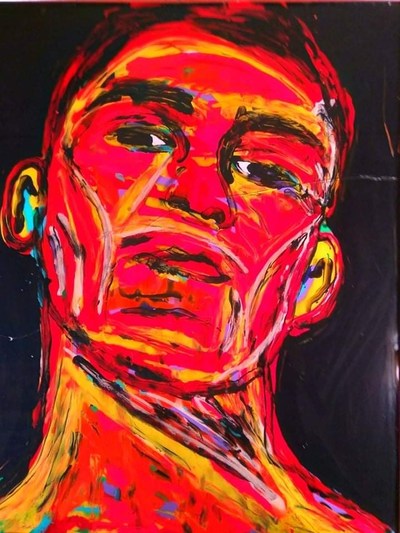
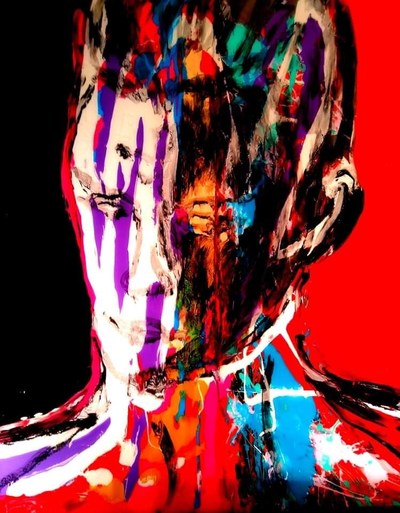
Displayed here are two of his pieces with descriptions given in his own words:

“His whole life, Broken has been told he would never be anything and he’s accepted it. Although he was created by a God who gave him so much potential he listens to the voices in his head and that’s what broke him. Broken is like many of us; he believes it’s easier to fade away than to fight. He is absolutely worth fighting for but he doesn’t see it in himself. Look into his eyes. Feel his pain. Let him speak to you. But don’t become him. I love Broken and I know the world will love him, he just doesn’t love himself.”

“When this piece came to life he didn’t say anything. He just walked out of the darkness as you see him. I poured my soul into this piece and felt nothing in return. Some pieces speak and some pieces just remain still and I feel nothing. “Man” was that piece. Look at Man and take what you want, or give to him what you choose. But honestly, he doesn’t care either way, he’s just Man.”

To learn more about the artist, view a wider variety of his work, or speak with a sales representative please join us on social media pages or visit our website.

Instagram: ynacioart

Facebook: ynacio

Website: Ynacio.com

Media Contact:
Devin Foy
801-404-4721
[email protected]

SOURCE YNACIO

The Art of the Deep Fake

“MY WORK IS about telling the truth, about capturing it, about showing it and about presenting it,” writes the Norwegian photojournalist Jonas Bendiksen in an introductory essay to The Book of Veles, his latest volume of photographs. “The truth is what you see, and it’s the essence of photography.”

In 2019 and again in early 2020, just before the onset of the pandemic, Bendiksen traveled to the small city of Veles on the Vardar River in North Macedonia. The trips were inspired by a series of press reports, beginning in the late stages of the 2016 US presidential campaign, which revealed that Veles was a major source of the fake news stories flooding Facebook and other social media sites. Scores of young people in the impoverished city had discovered that they could make a decent living by fabricating and circulating stories celebrating Donald Trump and denigrating Hillary Clinton.

In his essay, Bendiksen reports on meeting several of the most successful scammers, some of whom were working out of small offices with teams of colleagues. None of them expressed any interest in, much less regret about, the social ramifications of their work. To them, the fractious political situation in the United States was just a convenient opportunity to attract an online audience and earn ad revenues. “I support Trump for a few reasons,” a young man named Alex explained to Bendiksen. “One, he makes money. Two, he makes Americans happy. Third, he makes money quickly.”

Any attempt to curb fake news is doomed to fail, Alex went on to say. “There are too many haters on the net, and too many fake news sites, and fake news is the new truth. The main thing is that we believe in freedom of speech.”

Bendiksen’s book presents dozens of haunting images of the city and its inhabitants. A man leans out of a window of a large apartment block, a pair of satellite dishes hanging nearby. A woman sits on an unmade bed, gazing into the screen of a laptop. Two lovers embrace under a highway overpass. Soldiers stand smoking behind a barbed-wire fence. A bear wanders past a graveyard at the edge of town. Another bear drinks from a dirty stream.

Grainy and dimly lit, the images are eerie, poignant, and beautiful. They’re also fake.

Bendiksen did make two trips to Veles, but he didn’t photograph any people. He shot pictures of empty buildings and deserted cityscapes, and when he returned home to Norway he used video-game-production software to transform the images into three-dimensional renderings. He then downloaded digitized, 3D images of models from the web and placed them inside the scenes, carefully adjusting their poses, clothing, and lighting to make everything look as realistic as possible. Finally, he transformed the renderings back into two-dimensional images. The “photographs” that appear in the book are, essentially, screen grabs from a video game that doesn’t exist.

Bendiksen’s introductory essay, too, is a fake. He didn’t write any of it. Instead, he fed existing news stories about Veles and social media fraud into GPT-2, a software program that employs machine-learning algorithms to generate fake text, and used a variety of prompts to get the program to spit out made-up stories on the topics he wanted to cover. He pieced bits of the stories together, including the entirely fictional interview with “Alex,” to produce the essay. “My work is about telling the truth”: those words aren’t Bendiksen’s; they’re the words of a computer.

When The Book of Veles appeared in July, Bendiksen assumed that readers would see through his ruse. He went out of his way to circulate the book and its images among professional photographers, confident that they would quickly realize the photos were fabrications. He was wrong. His work earned praise but not suspicion. Anxious to come clean, he created a fake Twitter account under the name “Chloe Miskin” and, in early September, used it to raise doubts about his photographs. That didn’t work, either. Finally, in an interview posted on the website of his agency, Magnum Photos, in late September, he confessed to the deception. He also explained his motivation:

I started to ask myself the question — how long will it take before we start seeing “documentary photojournalism” that has no other basis in reality than the photographer’s fantasy and a powerful computer graphics card? Will we be able to tell the difference? How hard is it to do? How skilled will our own community of photographers and editors be in sniffing out what are deep fakes and what is real? I was so frightened by what the answers would be that I decided to try to do this myself.

When you read The Book of Veles now, knowing it’s a fake, the artifice jumps out at you. The facial features of the people in the photos look slightly plastic, and many of their poses feel unnatural, as if their bones were flexible rather than rigid. Some of the pictures, such as one of a girl floating across an otherwise abandoned public swimming pool on an inflatable unicorn in winter, come off as ludicrous. Bendiksen’s essay reads like a cut-and-paste job, marked by clumsy phrasing and ungainly transitions. And, in the book’s concluding acknowledgments section, the author slyly lists the image-manipulation tools he used. “What fun toys,” he comments.

The fact that no one spotted the forgery underscores just how easy it is to fool people, even experts. We humans want to believe whatever’s presented to our senses through the media, particularly when it takes the form of images. “Photographs furnish evidence,” wrote Susan Sontag in her 1977 classic On Photography. “A photograph passes for incontrovertible proof that a given thing happened. The picture may distort; but there is always a presumption that something exists, or did exist, which is like what’s in the picture.” Take away that presumption, and our ideas about existence get tenuous fast.

¤

“Images are powerful,” writes Noah Giansiracusa, a Bentley University mathematics professor, in How Algorithms Create and Prevent Fake News; “altering images is a method to alter reality and history.”

As Giansiracusa shows, image manipulation has been around as long as images have. A widely circulated photograph of Abraham Lincoln taken during the presidential campaign of 1860 was subtly altered by the photographer, Mathew Brady, to make the candidate appear more attractive. Brady enlarged Lincoln’s shirt collar, for instance, to hide his bony neck. In a portrait made to memorialize Lincoln after his assassination, the artist Thomas Hicks, working from earlier pictures, transposed Lincoln’s head onto a more muscular man’s body to make the fallen president look heroic. The body Hicks used was that of the pro-slavery zealot John C. Calhoun.

In 1950, in the midst of the Red Scare, Senator Joseph McCarthy’s staff circulated a fabricated composite image purporting to show Senator Millard Tydings, a fierce critic of McCarthy’s, in close conversation with the leader of the American Communist Party, Earl Browder. Historians suspect that the photo contributed to Tydings’s defeat in his reelection campaign that year.

Opponents of John Kerry’s 2004 presidential bid pulled a similar stunt. They made a composite photo showing Kerry standing beside the controversial actress Jane Fonda at a rally opposing the Vietnam War. The photo was widely accepted as real, even earning a mention in a New York Times article about Kerry’s youthful activism. Early this year, after Kerry joined the Biden administration, the same picture began circulating again, this time on Facebook.

Photos don’t need to be doctored to mislead. They need only be placed into a false context. During the Black Lives Matter protests in 2020, the Trump reelection campaign posted an ad featuring two side-by-side pictures. One showed the president meeting with police officials, with the caption “Public Safety.” The other showed police being attacked by a mob, with the caption “Chaos & Violence.” The timing of the ad implied that the latter photo was taken at a BLM protest, but it was actually taken at a pro-democracy rally in the Ukraine in 2014. The out-of-context ploy works equally well with videos. Giansiracusa points to a horrifying clip of a person being burned alive that’s been used, inaccurately, to back up claims of atrocities in at least four countries.

Such examples of images that are altered or otherwise falsified using traditional techniques are now referred to as shallow fakes. That’s to distinguish them from the deep fakes being generated by computers using machine learning and other artificial-intelligence techniques. The process of creating a deep fake is complicated, to say the least. In simple terms, it begins by teaching a computer to identify an object in a digitized image — a human face, say — by showing it many examples of that object. (The computer doesn’t actually learn what a face looks like, of course; it learns to recognize a pattern of pixels — a statistical pattern — that has a high probability of being a face.) The computer can then alter the appearance of a face, by changing the pattern of pixels, while ensuring that it will still be recognized as a face. It can also replace one person’s facial features and expressions with another person’s. And it can generate an image of an entirely new face — a face that has never existed — by producing a new array of pixels that fits the statistical model.

Deep fakes began to appear on social media about five years ago. Transposing a celebrity’s face onto a porn star’s body proved to be the most popular early use of the technology, with the resulting photos and videos appearing widely on sites like Reddit. Giansiracusa points to a 2019 survey that found that 96 percent of the deep fakes on the net at the time were “face-swap pornography.” Since then, deep fakes have proliferated — and become much more convincing. On TikTok, a series of videos featuring a strikingly realistic, but completely fake, Tom Cruise has been watched by millions.

The high-tech forgeries are also becoming much easier to create, thanks to technical advances and a welter of free production apps. No longer restricted to titillation and entertainment, deep fakes are starting to be used in politics, crime, and espionage. In March of this year, the FBI warned that “malicious actors” would soon begin using “synthetic content” as a tool for propaganda and cyber attacks.

Machine learning is also being applied to the production of bogus text, as Bendiksen’s essay illustrates. By scanning the internet’s enormous repository of prose, a computer can learn how words fit together to create sentences and paragraphs. It can build an ever more accurate mathematical model of how language works. Again, the computer’s understanding is purely a matter of statistics — it has no sense of meaning — but that’s enough to enable it to manufacture natural-sounding writing on any topic in any style. Give the machine a simple prompt — a headline, say, or a few introductory sentences — and it will in an instant output a reasonable facsimile of a human-penned article. Research cited by Giansiracusa suggests that most people can’t distinguish text written by GPT-3, the much more powerful successor to Bendiksen’s GPT-2, from the work of actual writers. And GPT-4, which will be much more powerful still, is already in development.

The spread of ever more realistic deep fakes will make it even more likely that people will be taken in by fake news and other lies. The havoc of the last few years is probably just the first act of a long misinformation crisis. Eventually, though, we’ll all begin to take deep fakes for granted. We’ll come to take it as a given that we can’t believe our eyes. At that point, deep fakes will start to have a very different and perhaps even more pernicious effect. They’ll amplify not our gullibility but our skepticism. As we lose trust in the information we receive, we’ll begin, in Giansiracusa’s words, to “doubt reality itself.” We’ll go from a world where our bias was to take everything as evidence — the world Sontag described — to one where our bias is to take nothing as evidence.

The question is, what happens to “the truth” — the quotation marks seem mandatory now — when all evidence is suspect?

¤

Bendiksen borrowed the title of his book from an ancient manuscript, written on thin wooden boards bound together with leather straps, that dates back more than a thousand years. The manuscript is said to have been discovered by a soldier in a bombed-out castle in the Ukraine in 1919. The soldier later gave it to a Russian scientist named Yuriy Mirolubov, who restored the boards, photographed them, and translated their words into modern Russian. The manuscript provides accounts of the god Veles, a prominent deity in Slavic mythology. Known as a shapeshifter, a magician, and a trickster, Veles would often visit the mortal world in the form of a bear, making mischief wherever he went.

The ancient Book of Veles shares something else with its namesake: it’s a fake. Historians now believe the manuscript was forged, probably by Mirolubov, sometime in the middle of the 20th century. Some members of contemporary neo-pagan cults nevertheless continue to consider the book a holy text.

In his own Book of Veles, Bendiksen intersperses passages from the old manuscript among his photographs. He generated the passages the same way he generated the essay: with GPT-2. Technically speaking, they’re deep fakes of shallow fakes, or deep shallow fakes. On one level, the passages are just another of Bendiksen’s tricks — more mischief. As he explains in his Magnum interview, “Stuff like this always gets me interested: when stories start layering up and weaving themselves together in surprising ways.” But the references to the pagan god also add an unexpected resonance to the photos. By drawing mythology into his work, Bendiksen is suggesting something profound about the nature of truth and the representation of reality.

Myths are works of art. They provide a way of understanding the world that appeals not to reason but to emotion. What’s most pleasing to our sensibilities — what’s most beautiful, in other words — is what’s true. Though it may have been shoved aside by the Enlightenment’s stress on rationality and objectivity, mythology’s subjective and fundamentally aesthetic way of defining what’s true never went away. Now, after a few centuries on the periphery, it seems to be moving back into the mainstream. Once again, truth is becoming an aesthetic construct.

Think about the growing popularity, in QAnon circles and elsewhere, of extraordinarily strange conspiracy theories. They only make sense when understood as myths. Believing that Washington politicians are vampiric pedophiles operating out of a neighborhood pizza parlor, or that world leaders like George W. Bush and Queen Elizabeth II are extraterrestrial “lizard people” bent on enslaving the human race, is no different from believing that a chaos-sowing god stalks the Earth in the form of a bear. When all the evidence presented to our senses is unreal, then strangeness becomes a criterion of truth. The more uncanny the story, the more attractive and convincing it becomes.

In creating beautiful photographs that subvert the documentary tradition of photography and call into question our assumptions about how we perceive reality, Bendiksen has opened a door onto a weird and unsettling future. “Beauty is truth,” wrote Keats, and as we all know, beauty is in the eye of the beholder.

¤

Nicholas Carr is the author of several books on technology and culture, including The Shallows, The Glass Cage, and Utopia Is Creepy. He is a visiting professor of sociology at Williams College.

Landscape design students brighten up Woodard Hall entrance

Students in Louisiana Tech’s Fall Quarter Landscape Design and Contracting class got their hands dirty and brightened up campus by designing and installing plants in the triangle bed near the northeast entrance of Woodard Hall.

Students work in the flower beds at Woodard Hall. “Hands-on learning experiences such as these put what we teach in the classroom into practice,” Dr. Paul Jackson, associate professor of plant science and the class instructor, said. “We had to coordinate soil being delivered to the site, we had to locate available plants, and we had to work with Tech’s Building and Grounds staff and the College of Education (COE) on logistics and selecting a proper design.
“This project provided collaboration between two colleges and created a unique service learning experience. The students did a great job.”

Students created designs that had to be scaled accurately, include unique symbols to represent the plants and materials used, and be thematically sound. The drawings were then evaluated by Jackson, COE Dean Don Schillinger, Superintendent of Tech Grounds Zach Mays, and loyal Tech alums Jeanette and Justin Hinckley; Jeanette graduated from Tech in Education and was COE Distinguished Alumna in 2016, and husband Justin, Class of 1978, was named Tech’s Alumnus of the Year in 2010.

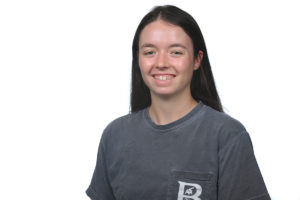
Although there were a few changes in the plants chosen due to supply issues, the design submitted by Kerington Bass, a junior Agriculture Education major from Calhoun, was selected.

Kerington Bass“The design had two main goals: 360 view and color,” Bass, a West Ouachita High graduate, said. “I have been in Woodard a thousand times due to being an education major and I knew the bed needed to be viewed from all sides since there is traffic coming from the Woodard and Tolliver buildings. With that in mind, I used the points of the triangle to do an almost stair-step design in starting smaller with spirea and gradually building in height to the center that will eventually be a Japanese Maple. So no matter what sidewalk you use you can have a complete view of all the plants.”

About eight cubic yards of soil was added to the landscape bed by both the class and Tech grounds staff after its delivery nearby by a dump truck. Plants were purchased from two nearby nurseries and planted on November 15. The plants used were Kaleidoscope abelia, double red dwarf spirea, October Magic sasanqua camellia, and the future Japanese maple that will be planted when the tree becomes available in January.

“Lack of color within the fall season is common within the piney hills of north Louisiana, which is why in my design, I included plants that provide different colors throughout the year,” Bass said. “The Japanese Maple I chose will be a burgundy throughout the spring to summer months and turn bright red for the fall and winter months. Other plants that have a strong fall and winter interest include the white camellias and double red dwarf spireas.”

To ensure she was going to be prepared for her career as an agriculture educator, Bass said she came to Tech because she “wanted to be exposed to all aspects of agriculture and education. With Tech’s lab school and an amazing College of Education, I knew by the time I would step into my own classroom, I would have the skills and strategies to be successful.

“The agricultural side of South Campus offers classes that cover everything from animal science and plant science to drone and wildlife. Taking a variety of classes has provided me with the knowledge needed to be an effective teacher. Tech also has classes solely for agriculture educators in which we learn every aspect of being an Ag teacher and the challenges we will face that no other teacher will experience. Since starting Tech, I’ve also worked on Tech Farm and been involved in multiple South Campus clubs, and I can truly say that it has become my home. I know I have made the right decision coming here.”

Can cryptocurrencies and CBDCs coexist in this era-defining economic landscape?

It’s a fine day today. You need to wrap up a few trivial tasks at home and pay a couple of bills online. Sounds simple, right? Well, not exactly.

As much as we adore digital payments, including NEFTs, UPI transactions, and more, the concept is inherently hinged on the existing banking hierarchy. While in most cases, the bills are paid out instantly, the concerned banks working behind the scenes do need to exchange information back and forth to make the transaction successful. And a server issue or two only makes things worse, doesn’t it?

In comes CBDC (Central Bank Digital Currency) and speculations concerning its nationwide adoption! And leading Indian crypto evangelists like
CoinSwitch Kuber
are digging deeper into this new digital realm by dishing out several unexplored aspects for the readers.


Unlike our traditional payment schema, where banks store customer information in dedicated databases, and every two or multi-party transaction requires constant monitoring and insight exchange, CBDC aims to bring the entire payment structure under a single canopy.

But that’s way too much lingo! CBDC is primarily a digital token issued and even backed by the central bank, i.e., the RBI in India. When it surfaces, CBDC will also be regarded as a legal tender.

CBDC in the crypto space

Wait, isn’t CBDC anti-crypto? Well, not by a long shot. For those who are well aware of how fiat currencies and the existing digital payment arena work, CBDC will surely usher into a new and more efficient world of transactions. And guess what, CBDC will have blockchain technology as its backbone, thereby facilitating real-time fund settlements.

NEFTs beware.

But that’s not the only reason why CBDCs are being hailed! Central Bank Digital Currencies, all thanks to the inherent blockchain framework, will make it easier, quicker, and cheaper for the government to deploy complex monetary policies and assign stimulus packages without having to account for the hefty logistics.

No wonder CBDCs will rely on the permissioned side of blockchain technology. This means the blockchain will have a central authority to modify transactions if needed. Doesn’t sound like crypto, does it? Not exactly, but to profess monetary sovereignty and financial inclusivity even for the unbanked, it might just be the need of the hour.

What does this mean for cryptocurrencies?

If you have been waiting for this discussion to surface with bated breath, here is the true picture that lingers. Long story short, CBDCs will in no way negatively impact the popularity and stead of cryptocurrencies. Confused?

Well, don’t be! CBDCs, despite coming across as anti-crypto at the first glace, still use the same technological sets to impact the global transactional infrastructure. The concept of programmable money via smart contracts, basic levels of transactional immutability, quicker payments, and more will still be possible.

And it is also important to note that a majority of global CBDCs are contemplating the use of Ethereum blockchain to set up what will be the inception of a reimagined and efficient form of digital payment.

Inbetween (2)ET Spotlight Special

Crypto-CBDC coexistence?

Short answer- Possible

Long Answer – With India being considered one of the global leaders in regard to crypto adoption, it is natural for digital respondents to be wary of government-backed CBDCs. But then, CBDCs will, in a way, add to the crypto craze by, first, getting the unversed right to the digital realm. And once people start exploring the diverse benefits of a blockchain-driven payment system, it wouldn’t take them long to venture out and look for something decentralized and private.

CBDCs, in their true form, will take centre stage when it comes to making payments simpler and quicker. Standard, decentralized crypto players with their on-chain cryptocurrencies will continue to function and thrive as a part of the crypto asset class.

To simplify further, CBDCs will speed up the transaction and regular payments while
Cryptocurrencies will continue to shine
, courtesy of the diverse use cases and palatial benefits in play. Sounds like a Win-Win!

What’s in it for crypto investors?

Truly, quite a lot. With Ethereum being considered at scale by major CBDC proponents as the go-to blockchain, crypto investors are slowly inching closer to the Ethereum-powered blockchains and their respective tokens. And a vast majority of them are flocking
CoinSwitch Kuber
and other credible Indian exchanges. Some of the key participants in this regard are the BAT (Basic Attention Token) and SNT (Status), two of the more popular cryptocurrencies that have soared quite a bit over the past few weeks.

The bigger picture: Inclusivity

CBDCs are filled with optimism. At least the ones that have blockchain technology powering adoption. But the bigger picture, in an era where financial inclusivity and asset class diversification are the key user requirements, hints at an amicable coexistence of cryptocurrencies and CBDCs. And the moment people start realizing the benefits of blockchain-driven financial rejigs, chain-relevant cryptocurrencies might see yet another bull run, with exchanges like
CoinSwitch Kuber
making wave riding easier for the Indian crypto adopters.

To be honest, the new era hinting at the development of a more inclusive digital payment infrastructure looks up to the snuff, especially with countries becoming more and more privy to cross-border transactions, quicker remittances, and a more compassionate space that doesn’t need to rely on the traditional banking systems. And that is why we are so upbeat about the CBDC-Crypto confluence running point on this.

Disclaimer: The above content is non-editorial, and TIL hereby disclaims any and all warranties, express or implied, relating to the same. TIL does not guarantee, vouch for or necessarily endorse any of the above content, nor is responsible for them in any manner whatsoever. The article does not constitute investment advice. Please take all steps necessary to ascertain that any information and content provided is correct, updated and verified.