
Art Basel Miami Beach Returns, Smaller but Ready to Party

MIAMI BEACH — It’s back. Canceled last year because of Covid-19, the annual Art Basel Miami Beach fair returns next week, unfolding throughout the area. Beginning on Tuesday with invitation-only hours, and open to the public Thursday through Saturday, it will feature 253 galleries exhibiting work inside the city’s Convention Center, as well as a dizzying number of accompanying satellite art fairs, pop-up shows, and celebrity-studded private dinners.

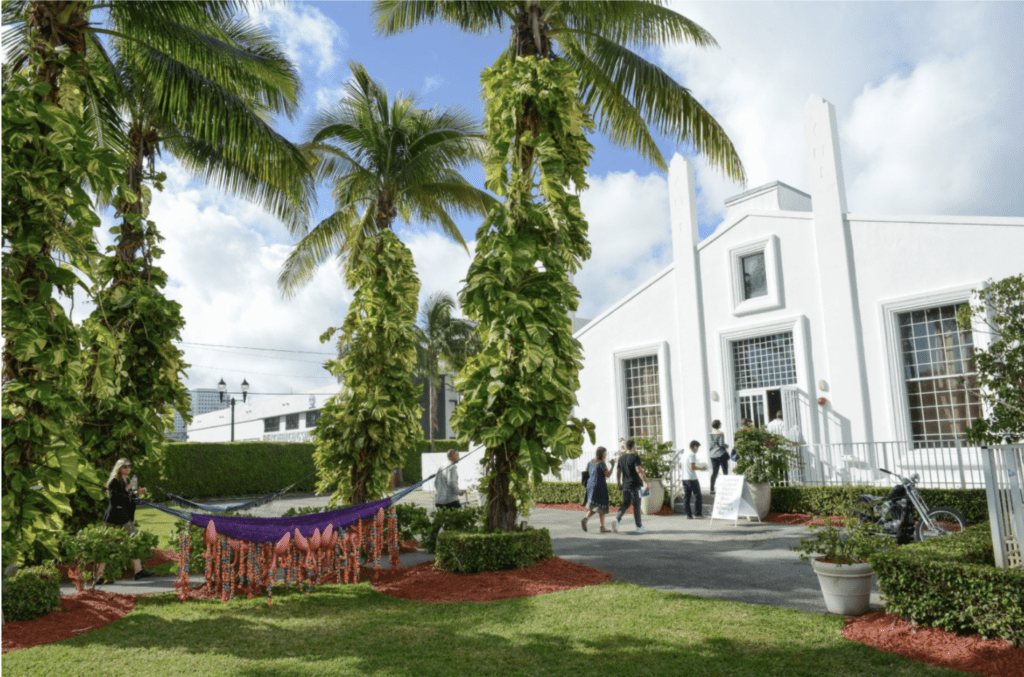
It’s a sprawling cultural circus that has come to be called “Miami Art Week,” complete with corporate branding exercises, from a sculptural forest by the stage designer Es Devlin (commissioned by a Chanel fragrance) to a “Yacht the Basel” fete hosted by the snack food Cheetos, with “dynamic original art pieces created from Cheetos’ iconic orange dust.”

The return of Basel’s Miami fair couldn’t have come soon enough for the gallerists about to converge on Florida from around the globe. While contemporary art auctions are once again smashing records, overall gallery sales remain sluggish. A midyear Art Basel and UBS report by the economist Dr. Clare McAndrew found that nearly half of the 700 surveyed dealers saw a continued decline in sales during the first six months of 2021. Mega-dealers like Larry Gagosian and David Zwirner, with blue-chip rosters and multiple outposts, were rebounding quickly, the report said. But many smaller dealers, who had relied on Art Basel to develop new clients and introduce emerging talents, had been struggling.

Marc Spiegler, Art Basel’s global director, can pinpoint the moment when Miami’s revived art frenzy took off: Sept. 20, when the U.S. government said it would lift the Covid travel ban on most visitors from Europe and Asia in November, thus making the Miami fair the first truly international one in the U.S. since the pandemic’s start.

Spiegler’s phone immediately began burning up with messages from dealers who had previously passed on participating: “By the end of that week more than 30 galleries ‘uncancelled,’” he said, noting that despite all the grousing over “fair fatigue,” there was still no digital substitute for buying and selling art in the flesh. Nearly half the fair’s exhibitors will now be arriving from overseas and Latin America. “I’ve read all the predictions that art fairs were finished, that nobody was going to travel anymore,” Spiegler continued. “We have a show only marginally smaller than the one in 2019.”

This is no doubt a relief for Art Basel’s owners, the Swiss MCH Group, whose stockholder reports show they have lost more than $109 million since the pandemic’s start. Yet if the Miami fair’s return is reason for MCH to cheer, the future of its other two art fairs — Art Basel Hong Kong, scheduled for March 2022, and the flagship Art Basel in Switzerland, scheduled for June 2022 — remains uncertain. Even setting aside the growing wave of government repression and censorship in Hong Kong, there is a mandatory quarantine of up to three weeks for visitors entering the city. Come March, if that quarantine remains, Spiegler said it’s hard to imagine a full-fledged Basel fair happening. And with Covid infections surging again across Europe, sparking new lockdowns, it’s anyone’s guess what June will bring.

These potential losses in revenue for Art Basel make the smooth execution of the Miami fair all the more crucial. To avoid crowding, entry tickets are now timed and proof of a Covid vaccination or a recent negative test is required, as is the wearing of masks. These protocols may seem familiar — and reassuring — to visitors from New York or Los Angeles, but they’re almost nonexistent throughout Miami. Local officials have found themselves overruled on mask mandates by the Florida governor, Ron DeSantis, who has tried to make himself the face of Republican opposition to Biden administration virus policies. For Spiegler, however, the subject isn’t open to debate.

“When you bring together thousands of people from all over the world, wearing masks is the only thing that makes sense,” he said. And if a fair attendee, say, a billionaire art collector, refused to comply with the mask mandate? Would Basel’s security physically eject them from the Convention Center? “That’s what it means to have a mask mandate,” Spiegler answered firmly.

Beyond Art Basel, the mood within Miami’s year-round art scene is anything but tentative. Superblue, a joint venture of the heavyweight Pace gallery and Laurene Powell Jobs’s Emerson Collective, opened this past spring inside a 50,000-square-foot renovated warehouse in the Allapattah neighborhood. Meanwhile, Fotografiska, the privately owned global string of photography museums, has announced that it is moving into the 42,000-square-foot warehouse right across the street, next door to the Rubell Museum, with its David Rockwell-designed building set to open in 2023.

And in the city’s pre-eminent galleries, business is strong. At the Fredric Snitzer Gallery, the director, Joshua Veasey, said things are as busy now as at any point during his six-year tenure there. He credits the established collectors who fled cities up north or out west, riding out the coronavirus in their new Miami residences, who began visiting the gallery for the first time.

“After being stuck inside for so long, there was a lot of redecorating,” Veasey quipped. “These are the problems of the wealthy.” Yet the fresh faces at the gallery didn’t emerge out of Miami’s newly arrived “tech bros,” from the aspiring new media mogul Bryan Goldberg to the PayPal co-founder Peter Thiel, who have relocated here amid a wave of Silicon Valley cheerleading from the city’s mayor. New lower-key clients come with the more typical collector backgrounds of finance and real estate development.

What has trickled down from the tech industry is the love of all things NFT. Art Week hosts a bewildering array of NFT-themed gatherings, including the daylong NFT.BZL conference, featuring a bulging roster of NFT artists, tech figures, and both the city and county mayors. One of the many new NFT marketplaces, SuperRare, has even enlisted the engineers at SuperWorld to install 20 3-D sculptures throughout Art Basel’s Convention Center, viewable there only on their app — a novel way to get in front of influential eyeballs while sidestepping the fair’s curatorial committees and the roughly $60,000 (and up) booth fee.

“I was skeptical at first, I wanted to see if NFTs would have more than five minutes of life,” conceded the Miami multimedia artist Carlos Betancourt, one of the few established local talents to have embraced the new blockchain-based medium. He said the key to his comfort was finding a platform, Aorist, with a curator, Ximena Caminos, who was already a longtime supporter of his work. That, and Aorist’s willingness to produce a real-life version of his seen-only-on-a-screen NFT piece “What Lies Beneath,” which spotlights global warming’s rapid melting of the polar ice caps. The result, whose sale will benefit a local underwater sculpture park, is a pair of faux icebergs — one of which is 20 feet high and 30 feet wide, wrapped in collages of Sven-Olof Lindblad’s photos of actual icebergs, and set afloat in the oceanfront pool of Miami Beach’s Faena Hotel.

While room rates at the Faena — starting at $3,300 a night, $5,500 for an ocean view — may limit the audience for “What Lies Beneath,” it’ll still be hard to avoid seeing Betancourt’s artwork and its varied styles around Miami next week. “Into The Everglades,” his animated silhouettes of Florida wildlife, will lope nightly across the side of downtown’s 35-story-high InterContinental Miami hotel; “Milagro!,” a 38-foot-long string of 245 handcrafted charms, commissioned by the city of Miami Beach, will hang across a busy city boulevard; and two of his photos — homoerotic portraits of both himself and his longtime partner and collaborator, the architect Alberto Latorre — will be featured in a group show, “Skin in the Game,” inside a Beach storefront.

His ubiquity, Betancourt said, is proof that Miami’s museums and collectors alike have finally embraced the city’s own artists, prodded by Art Basel’s attention to made-in-Miami work. “People had an inferiority complex here for many years,” he continued, recalling his arrival from Puerto Rico as a teenager in 1980, discovering an art scene that too often looked elsewhere for direction. The shift is evident next week as local institutions proudly exhibit work steeped in Miami’s social fabric.

For starters, Anastasia Samoylova’s “FloodZone” photos at the HistoryMiami museum capture an often surreal visual interplay of flora, fauna, and crumbling concrete; Gary Monroe’s “Refuseniks” photographs at Florida International University’s Miami Beach Urban Studios offer a poignant study of early ’80s Jewish immigrants from the Soviet Union rebuilding new lives in a then-unraveling South Beach; and Jared McGriff’s otherworldly paintings at the NSU Museum of Art Fort Lauderdale depict visions of Black life that are simultaneously troubled and stirringly gorgeous.

This seriously minded artwork is being presented within the context of a tropical weeklong party. If that seems contradictory, Betancourt believes that embracing that contradiction is precisely what has made Miami finally come into its own as an art city: “We enjoy the party and that manifests itself in our work,” he said. “That’s what Miami brings to the equation — we do it all unapologetically.”
‘A beautiful person who made beautiful paintings’: Galerie d’Orsay remembers life and work of artist Elizabeth DaCosta Ahern

But DaCosta Ahern died on April 19 last year, before the gallery was able to pay the studio a visit.

“She was just this quiet, but vivacious personality,” said Folsom.

“Even though she was quiet, she would always challenge you,” added Flythe, “challenge your beliefs and challenge the way you thought about things.”

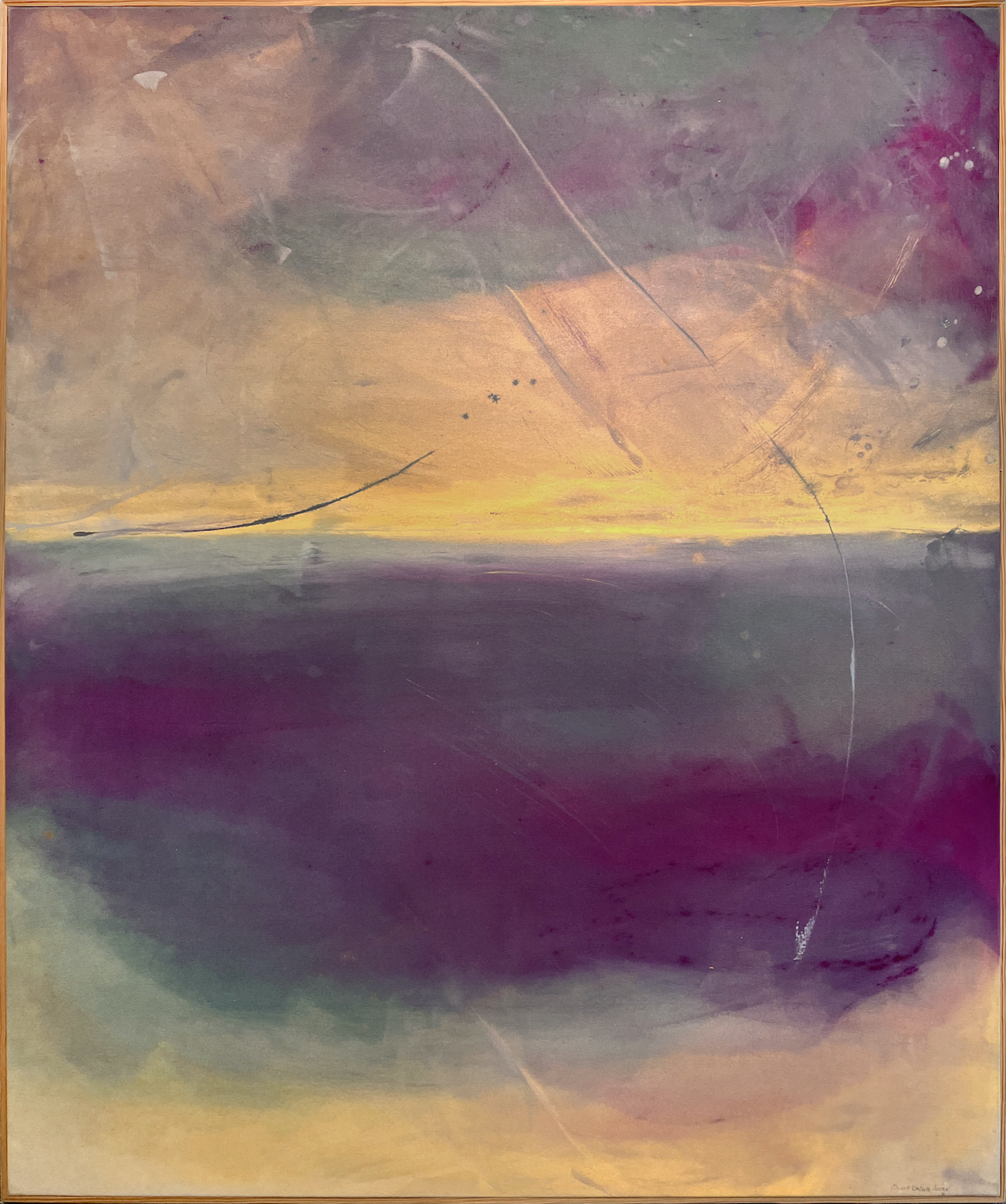
Elizabeth DaCosta Ahern's “O Mar Salgado"
Elizabeth DaCosta Ahern’s “O Mar Salgado”
Handout/Courtesy Galerie d’Orsay

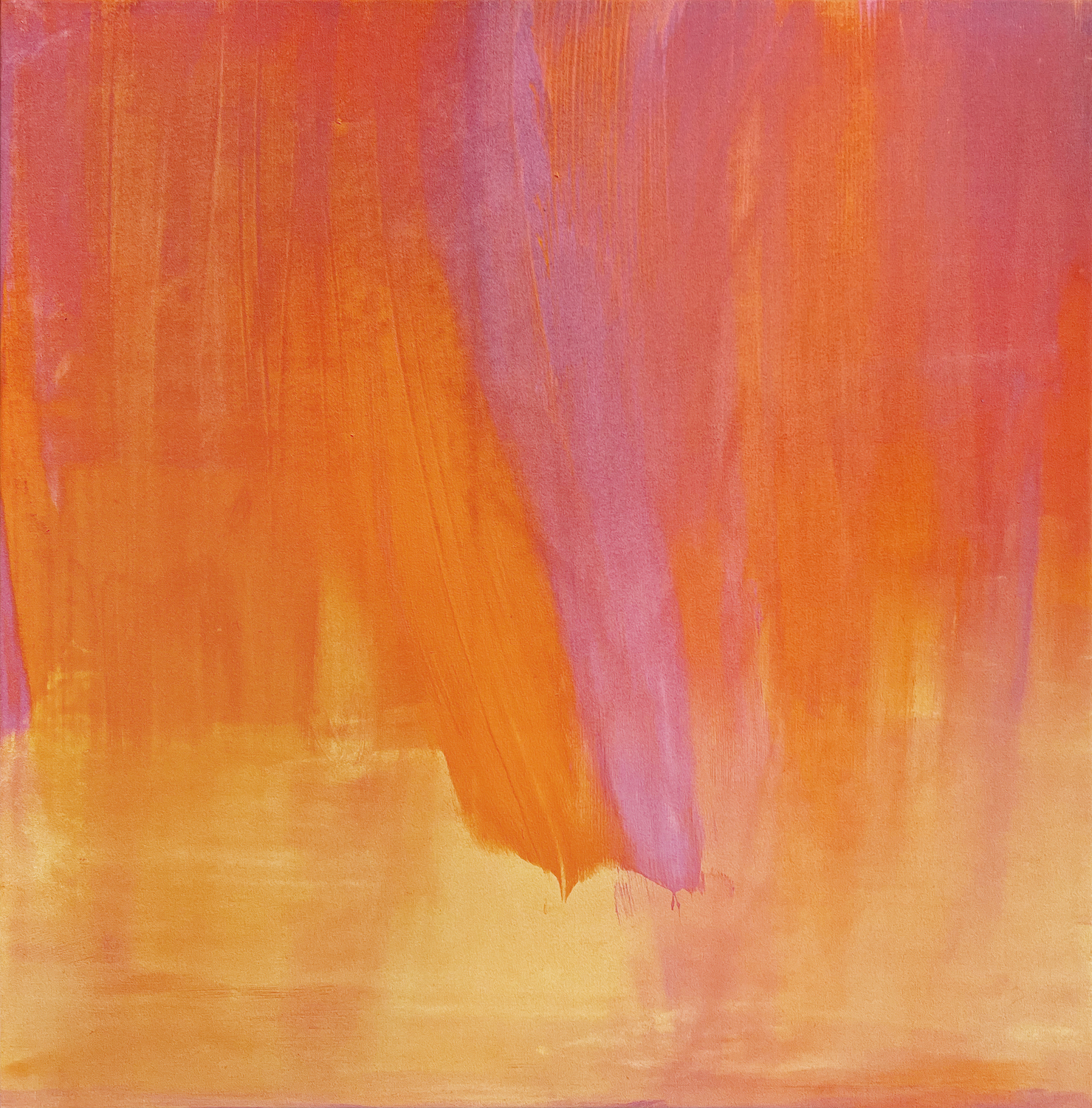
On Saturday’s showing of DaCosta Ahern’s work, Galerie d’Orsay presented a thread from mentor to mentee. “Jump In! Celebrating the thread between student + mentor” features a few of Frankenthaler’s works such as “Causeway” and “Aerie,” around 30 of DaCosta Ahern’s paintings, and then carries through to some of her students’ art. The works will be on view until the end of the year.

Several speakers remembered DaCosta Ahern’s influence. DaCosta Ahern’s husband, Thomas J. Ahern Jr., read aloud condolences sent to him by some of DaCosta Ahern’s students throughout the years. “I can tell you that she will be missed terribly … I will hear [her] in my head whenever I am painting, so I will still have her in my life,” one note read.

Originally from Providence, DaCosta Ahern taught at the deCordova Sculpture Park and Museum, Lesley University, and Worcester Art Museum. A graduate student at the School of the Museum of Fine Arts in the 1970s, she later made it her mission to mentor students.

In a phone interview, her husband recalled a recent visit he made to the Concord Center for Visual Arts. Coincidentally, three of the faculty artists presenting work were former students of DaCosta Ahern.

“She had an imprint on many working artists and very successful artists,” Ahern Jr. said.

Along with some of her students, DaCosta Ahern was a participant in the Art in Embassies program, exploring and presenting her work in Portugal and Angola. Frankenthaler encouraged her to partake in her workshops, resulting in six trips to Sante Fe, according to Ahern Jr.

“Every trip produced something,” he said. “She was a beautiful person who made beautiful paintings.”

Elizabeth DaCosta Ahern's “Luanda Sunset"
Elizabeth DaCosta Ahern’s “Luanda Sunset”Handout/Courtesy Galerie d’Orsay

Many of DaCosta Ahern’s friends and students were in attendance at the exhibit. Laura Lester said she felt both honored and grateful to be able to share her art with her mentor.

“[Elizabeth] would stand back with you and look at your work and not talk until she was ready to say something that was meaningful,” Lester said in an interview. “I will always miss her, and when I paint, I talk to her, and I hope she’s talking to me.”

After 59 years of marriage, “I feel enhanced,” Ahern Jr. said, noting that he couldn’t help but feel her presence at the gallery. “I feel grateful, except for the quantum of sadness and so forth, and the unavoidable remembrances looking at all her work.”

According to those who knew her, DaCosta Ahern always knew when her paintings were finished.

“I think it was innate in her,” Folsom said. “I wouldn’t say that about everyone.”

“Jump In! Celebrating the thread between student + mentor” is an ongoing exhibit until the end of the year at the Galerie d’Orsay on 33 Newbury St.


Ramsey Khalifeh can be reached at ramsey.khalifeh@globe.com.

In Brussels, a Designer’s Home Awash With His Own Vibrant Creations

WHEN THE SWISS textile designer and artist Christoph Hefti worked for the Belgian fashion designer Dries Van Noten in Antwerp from the late 1990s to 2010, he was involved in many parts of the process, from fabric design to budgets to collaborating with Italian printmakers. “It was rewarding,” says Hefti. “As part of the team, we built a vision with a great deal of concentration and mutual understanding.” When Hefti left the company to freelance, he eventually became frustrated — he found himself missing Van Noten’s holistic approach: “I design the fabric but someone else develops it into the final product, and I began to realize that wasn’t enough. I wanted to make something that was completely mine.”

In an attempt to recharge, he embarked in 2011 upon a five-week trip to Latin America, from Argentina up through Mexico; everywhere he traveled, he found himself noticing carpets, which were ubiquitous and had been mostly created for tourism purposes. “All of them were sized to fit a suitcase,” he says, “and in the tourist markets, they all looked more or less the same.” But one day in La Paz, Bolivia, he spotted an unusual, unexpectedly abstract rug, which appeared as if it had been pleated into a pattern of Art Deco-inflected waves. When he asked about it, the boutique’s salesperson told him that it was woven by “a crazy lady in the mountains who never follows the rules,” he recalls. “She said that she had only purchased the carpet because she felt sorry for her. I immediately bought it, and that was the moment I knew I wanted to make carpets.”

Hefti, 54, shares this story from the dining room table of his 750-square-foot apartment in Brussels’s Saint-Gilles neighborhood. Despite the flat’s size, each small, square room — a bedroom, a kitchen and a living/dining room — resembles an immersive theater set, filled with the designer’s vibrant custom textiles, from the curtains hanging in several windows that line the front of the Beaux-Arts five-story building to the carpets, which cover nearly every inch of the wooden floors. In the living room, which is dominated by a wildly overgrown dragon tree and a Monstera deliciosa plant, a large, rectangular carpet depicts six huge blue hands throwing and catching lemons. “For some time, I kept drawing landscapes [that were] indirectly inspired by all the magical realism I was reading while traveling through Latin America,” Hefti says. Along with the carpets, the shelves and mantels are lined with ceramic objects, including 1970s-era French tea sets and thickly glazed ceramic sculptures made by his friend the Belgian ceramist Gregory Georgescu.

ALTHOUGH IT WAS South America that inspired his now eight-year-old carpet enterprise, Hefti produces his pieces in Nepal, with two artisanal firms run by descendants of Tibetan exiles who live in Kathmandu. “There is always an exchange,” he says of his manufacturers. “I propose a design, and we discuss the technical possibilities from there.” The pieces are sold in the Brussels design gallery Maniera, which is co-owned by two of Hefti’s friends, Amaryllis Jacobs and Kwinten Lavigne. “The rugs are an explosion of color and texture, but they’re not just about beauty. There is always something disturbing about them,” says Jacobs, referencing their uncannily lifelike motifs, among them human faces and wild animals.

Most of Hefti’s creative work is done at his studio in a converted industrial warehouse on the Brussels Canal, but he spends his downtime between his apartment and a place he keeps in Zurich. The designer regularly commutes between the two cities by train, stopping over in Paris to create textiles for fashion houses like Mugler. Switzerland is where he takes care of himself, swimming in Lake Zurich, while Brussels is “the interesting, messy place that inspires my work. I meet creative people, have unexpected encounters, work until 11 p.m. and eat French fries for dinner.” The city’s avant-garde theater and dance scene regularly influences his work, in particular shows by the contemporary dance troupe Ultima Vez and the performance artists Diederik Peeters and Miet Warlop, both of whom fuse elements of horror and absurdism in their practices.

Late last year, Hefti held his own show at Dries Van Noten’s gallery, Little House, adjacent to the brand’s new Los Angeles boutique. In addition to his rugs, Hefti created a surrealistic curtain with facial parts floating in woodlands and poufs upholstered with fabrics pulsating with psychedelic colors, all of which are now installed in his living room. The exhibit allowed Hefti to completely manifest his vision, and was made all the sweeter by the fact that it was facilitated by his mentor. “I look around now and see that I have built a space of objects that’s entirely of my own making,” he says, adding that, despite his recent success, he still thinks of his rugs as “monsters on the floor with whom you become friends. They are often the strangest element in an apartment — but I have found that the carpets make friends with the rest of the room very quickly.”

Easements: Just for Now or Forever? | Lasher Holzapfel Sperry & Ebberson PLLC

Easements are a right to enter and use land that may transfer with the ownership of the land. Easement issues usually arise when one property owner makes improvements on his or her property without first surveying the property to identify the boundary lines of the property. If the improvement goes over the property line into a neighbor’s property, then the neighbor may seek legal action to remove the improvement or force an easement.

An easement allows a party to use land that belongs to someone else for a specific purpose, such as:

  • The right to walk through someone’s land to access your property;
  • The right to maintain a rockery, fence, or other landscaping features between your property and a neighbor’s; or
  • The right to use and access sidewalks, stairs, and other aspects of a communal living space between townhome or condo units or between properties.

The purpose of an easement it to allow the owner of the land to retain full legal title to the property but allow another party access to the land.

For example:

You live in a community with specific landscaping guidelines and pockets of community space or shared pathways between homes. The Homeowners’ Association also has limitations on the type of fencing and landscaping permitted.

During COVID your neighbor has become an avid gardener and has made improvements to their landscaping and added features that run along the edge of your property line. In an effort to maintain your own yard, you decide to conduct a survey and do landscaping work on your property. The survey reveals that a portion of the area your neighbor has been landscaping is actually a portion of your property. What can you do?

Your neighbor unknowingly has been landscaping a portion of your property which has resulted in them placing a rockery landscaping feature worth thousands of dollars. You want to maintain a good relationship with your neighbor but you are concerned that if they sell the property a new neighbor will expand the landscaping or otherwise stop maintaining the landscaping feature that now crosses onto your property.

How can you navigate this to ensure that they remain financially responsible for maintaining their encroaching landscaping and, if they ever remove it, do not replace it with a new feature?

In such a situation, an express easement can be drafted to provide specific terms regarding the maintenance of the landscaping feature. An express easement can be used to convey easement rights for the benefit of a specific neighbor that cannot be sold, assigned, or inherited. An express easement can also be used to delegate financial responsibility for ongoing maintenance of the landscaping feature to limit your financial liability if your neighbor fails to maintain the landscaping feature they build onto your property. Further, an express easement can be drafted to address what happens to the landscaping feature if it is removed or otherwise deteriorates to such a degree that it causes waste to your property. This allows you as the property owner to negotiate with your neighbor to limit any access they have to your property to solely maintaining the feature so long as it is feasible or until it is otherwise removed and prevents them from further expanding their landscaping onto your property.

[View source.]

New Art Dealers Alliance Announces MobileCoin Art Prize, To Be Awarded at NADA Miami 2021

NADA miami 2021

The New Art Dealers Alliance (NADA), the definitive non-profit arts organization dedicated to the cultivation, support, and advancement of new voices in contemporary art, is partnering with MobileCoin for the inaugural MobileCoin Art Prize, an award that highlights, celebrates, and supports artwork addressing the critical topic of privacy at NADA Miami 2021. Juried by writer and curator Andrew Beradini and contemporary artist and MobileCoin Art Director Inga Bard, the prize is the first of its kind within the cryptocurrency sector, establishing MobileCoin as an industry pioneer thoughtfully navigating the intersection between art and cryptocurrency. It will be awarded to one of the 170 plus exhibitors at NADA Miami 2021 in the form of $7,500 equivalent to MOB.

“We’re thrilled to partner with MobileCoin to introduce a new initiative that shines a light on privacy issues in the digital art space. As we see the art world expand into the digital sphere, we share in MobileCoin’s commitment to give artists at all stages of their careers the space, time, and platform that remains essential to artistic freedom.”

said NADA Executive Director Heather Hubbs.

MobileCoin is a cryptocurrency designed to be used as digital cash on your phone. With nearly instantaneous transactions and a strong commitment to supporting the arts, MobileCoin is the first carbon-negative cryptocurrency. 

“We believe that privacy is fundamental to art. The right to privacy is the right to solace, to reflection, to expression; it is the right to association and movement without intrusion or intimidation. Privacy is essential to the autonomy and dignity required to make art and participate in the cultural life of a free society,”

said Joshua Goldbard, Founder of MobileCoin.

NADA Miami will feature over 170 exhibitors across three sections: Galleries; NADA Projects, an open, exhibition-like presentation of new art from emerging voices; and the latest addition, Artists’ Book Publishers, a co-presentation of artist book publishers with Printed Matter and EXILE Books. This year also introduces Curated Spotlight, an inaugural special section at NADA Miami 2021 curated by Ebony L. Haynes. The section will feature eight solo presentations by exhibiting galleries.  

NADA MIAMI 2021 VIP Opening Previews (by Invitation): Wednesday, December 1, 10am–2pm
Open to the Public: Wednesday, December 1, 2–8pm, Thursday, December 2, 11am–7pm Friday, December 3, 11am–7pm Saturday, December 4, 11am–7pm newartdealers.org/nada-miami-2021

About MobileCoin
MobileCoin is a cryptocurrency designed to be used as digital cash on your phone. MobileCoin’s payment system is easy to use with near-instantaneous transactions. With a strong commitment to supporting the arts, MobileCoin is the first carbon-negative cryptocurrency. @mobilecoin.art

Categories

Tags

Author

Mark Westall

Mark Westall is the Founder and Editor of FAD magazine Founder and co-publisher of Art of Conversation and founder of the platform @worldoffad

The Ingram Collection today announced the finalists for Ingram Prize 2021, the leading annual prize for contemporary artists in the UK. The […]

lido-swimming-pool-at-the-curtain-hotel-shoreditch-london-conde-nast-traveller-7june17-Adrian-Houston

The covid-19 pandemic revealed to many people just how important travelling is. The lockdown has been eased in many countries; […]

Jacob Love wins the Concord Art Prize with his three-channel audio-visual installation, created in response to Rodgers & Hammerstein’s My […]

CasinoUSA.com has recently announced a plan to acquire a total of 50 BTC. The popular online gambling platform has been […]

Osher Lifelong Learning Institute at Ringling College Presents CELEBRATING FLORIDA’S WILD WONDERS

Osher Lifelong Learning Institute at Ringling College Presents CELEBRATING FLORIDA'S WILD WONDERS

Osher Lifelong Learning Institute at Ringling College presents “Celebrating Florida’s Wild Wonders,” a one-day event inspired by the book, The Wilder Heart of Florida, and featuring eight celebrated writers, poets, educators, environmentalists, architects, and artists.

The event is Friday, March 11, 2022, 9 a.m.-5 p.m. at the Ringling College Museum Campus, 1000 S. Tamiami Trail, Sarasota. General admission is $125; registration opens on December 7. The registration fee includes lunch and a complimentary reception. For more information and to register, call 941-309-5111, or visit www.OLLIatRinglingCollege.org.

Julie Cotton, a member of OLLI’s Advisory Council’s Strategic Program Committee, is the creative spark for “Celebrating Florida’s Natural Wonders.” She says that participants will “expand their emotional connection to Florida’s natural treasures and learn about places they never knew existed.” Cotton adds that audience members will have the opportunity to offer their own perspectives and interact with the guest speaker. The day will also include book signings and interactions with local environmental and art groups at display tables. Cotton encourages audience members to prepare for the event by reading The Wilder Heart of Florida, edited by Jack E. Davis and Leslie K. Poole, and The Palmetto Book by Jono Miller.

“This event was inspired by The Wilder Heart of Florida,” says Cotton. “Using the arts as our vantage point via evocative prose, poetry, painting, photography, architecture, and film, we aim to engage hearts and minds in celebrating and safeguarding our precious wild wonders.”

Panelists include: Leslie K. Poole, co-editor of The Wilder Heart of Florida and assistant professor of environmental studies at Rollins College; Gianna Russo, assistant professor of English and creative writing at Saint Leo University, author of several poetry collections, and winner of a Florida Book Award; and Bruce Stephenson, professor of environmental studies at Rollins College and author of John Nolen: Landscape Architect and City Planner.

Other presenters include notable environmental writers, artists, and educators, including: Jean Blackburn, contemporary artist, photographer, and naturalist who celebrates nature and the joy it can bring to human life; Susan Cerulean, multiple award-winning writer, naturalist, earth advocate, and author of three books, including the newly published I Have been Assigned the Single Bird, A Daughter’s Memoir; Pamela Callender, adjunct professor of eco-art history at Eckerd College, who has created a unique landscape design project called “Lifelines, Connecting Nature’s Habitat”; Joe King, the architect/developer who designed River Forest, the unique 26-home neighborhood on the Braden River, set among a lush native plants landscape; and Jono Miller, educator, activist, and natural historian who works to understand and protect wild places in Southwest Florida.

Visit www.OLLIatRinglingCollege.org.