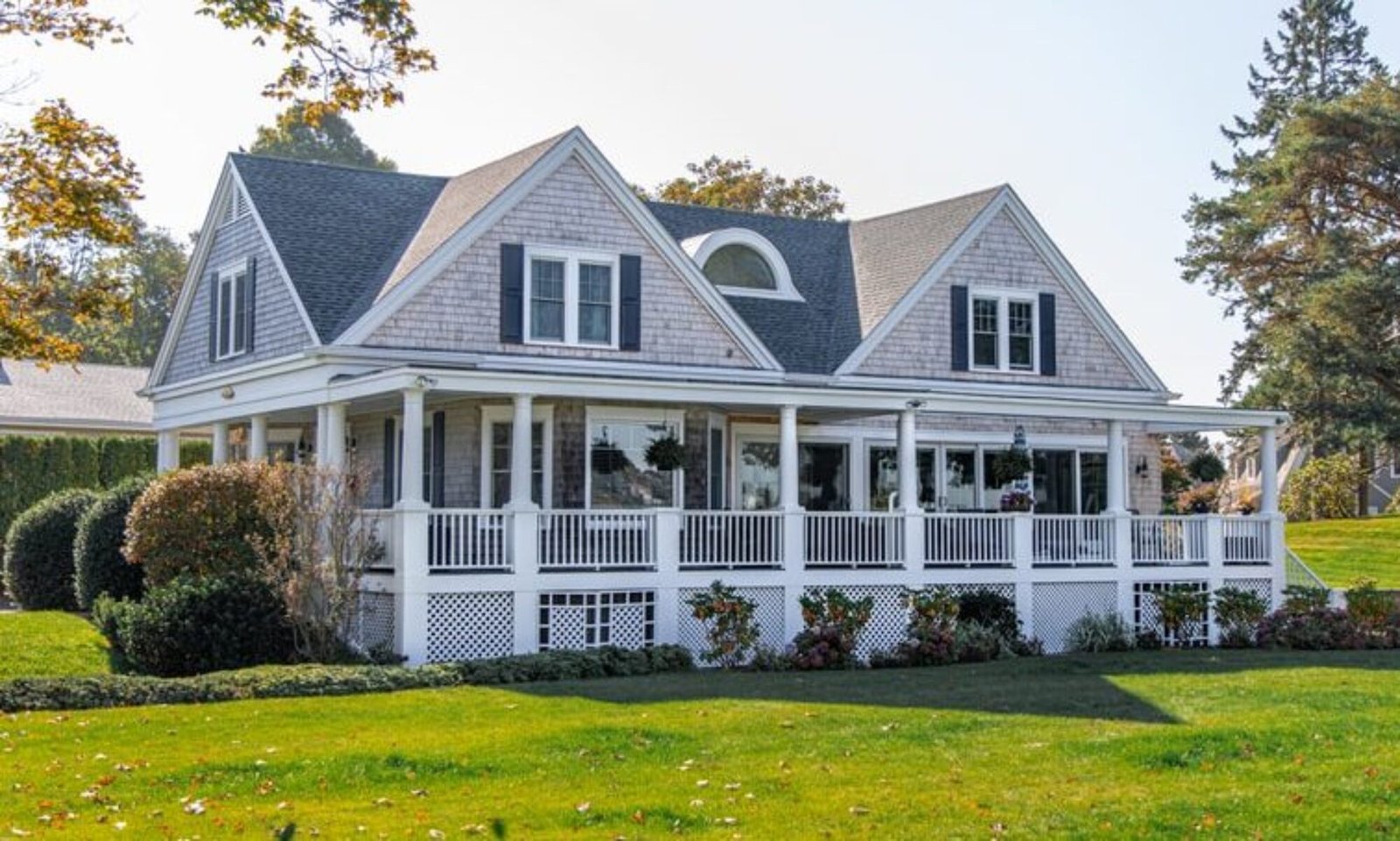
Rebekah Headen fell in love with Tony Hernandez years before she actually met him. Not only that, it was love at first sight.
“Where did you get that beautiful painting?” Ms. Headen, 57, who is known as Becky, recalled asking a neighbor who had moved from Atlanta to Charlotte, N.C., where she lives, in 2001.
“It’s a Tony Hernandez,” the neighbor said of the painting of a WWI airplane with a fish hook hanging out of one of the wings. “He’s an extremely talented artist who lives in Atlanta.”
Ms. Headen’s interest in Mr. Hernandez, 56, as an artist increased significantly when he enjoyed a brush with fame following the release of “Drops of Jupiter,” the second album produced by the rock band Train, which featured his artwork.
“That was huge for him,” said Ms. Headen, who received a bachelor’s degree in studio art from the University of North Carolina, Chapel Hill, and works as a talent strategy manager for the Hendrick Automotive Group in Charlotte.
“I fell in love with his style,” added Ms. Headen, who at the time was married and raising two young boys. “I was like OK, I’m going to get one of those paintings one day.”
In 2002, she did just that, commissioning a painting by Mr. Hernandez through Hidell Brooks, an art gallery in Charlotte, as a Father’s Day gift for her then husband. (Titled “Inhook,” it was completed in 2003.)
Ms. Headen followed her order with her very first call to Mr. Hernandez, with whom she confirmed shipping details before learning that he is a history buff who has drawn inspiration from the lives of children who grew up during the Holocaust, as well as those who struggled through the Great Depression, especially in the ghettos of the Bronx where his grandparents lived.
An Atlanta native, Mr. Hernandez attended Georgia Tech before leaving college to pursue a career in painting. His works, mostly of children during the Holocaust and Great Depression, are currently on display at numerous art galleries, including the Fine Arts Museums of San Francisco and the Bronx Museum of the Arts.
The two connected again in 2004, this time in person, at a gallery opening in Charlotte.
“He was such a nice guy,” Ms. Headen said, “though he did seem to mumble a lot.”
After that, they would not see each other until 2013.
Early that year, Ms. Headen, who by then was divorced, went to Chicago with several friends, one of whom mentioned that she had a friend who was single and talented and that his name was Tony Hernandez.
“I thought to myself, ‘This could be very interesting,’” Ms. Headen said.
Mr. Hernandez, also divorced, reached out to Ms. Headen at the suggestion of their mutual friend in June 2013. They eventually began a conversation that led to a first date to watch the Sept. 1 episode of Breaking Bad, their favorite television show.
Mr. Hernandez rode his Harley motorcycle in the rain from Atlanta to Charlotte to meet Ms. Headen for the date.
“I had no negative thoughts as to why I shouldn’t go, which is rare for me,” Mr. Hernandez said. “So I thought maybe it was meant to be.”
In February 2018, after years of dating long-distance, Mr. Hernandez moved to Charlotte to live with Ms. Headen. (Her two sons were living on their own by then.) The pair became engaged roughly three years later, on Feb. 14, 2021.
“I found Becky to be the sum of so many beautiful things,” Mr. Hernandez said. “She was beautiful, smart and understanding, especially about the fact that I spend more time with my painting than I do with her.”
The couple was married Oct. 29 at the home of their friends Kim and Ed Seeger on Little Stono Island, in Charleston, S.C. Lauren Stines, a Unitarian Universalist minister, officiated before 10 fully vaccinated guests, who included Ms. Headen’s sons Franklin, 27, and James, 24.
“We connect on so many different levels,” the groom said of the bride a week after their wedding. “She fell in love with my art long before she fell in love with me, and I don’t think we could have happened any other way.”
But DaCosta Ahern died on April 19 last year, before the gallery was able to pay the studio a visit.
“She was just this quiet, but vivacious personality,” said Folsom.
“Even though she was quiet, she would always challenge you,” added Flythe, “challenge your beliefs and challenge the way you thought about things.”
Elizabeth DaCosta Ahern’s “O Mar Salgado” Handout/Courtesy Galerie d’Orsay
On Saturday’s showing of DaCosta Ahern’s work, Galerie d’Orsay presented a thread from mentor to mentee. “Jump In! Celebrating the thread between student + mentor” features a few of Frankenthaler’s works such as “Causeway” and “Aerie,” around 30 of DaCosta Ahern’s paintings, and then carries through to some of her students’ art. The works will be on view until the end of the year.
Severalspeakers remembered DaCosta Ahern’s influence. DaCosta Ahern’s husband, Thomas J. Ahern Jr., read aloud condolences sent to him by some of DaCosta Ahern’s students throughout the years. “I can tell you that she will be missed terribly … I will hear [her] in my head whenever I am painting, so I will still have her in my life,” one note read.
Originally from Providence, DaCosta Ahern taught at the deCordova Sculpture Park and Museum, Lesley University, and Worcester Art Museum. A graduate student at the School of the Museum of Fine Arts in the 1970s, she later made it her mission to mentor students.
In a phone interview, her husband recalled a recent visit he madeto the Concord Center for Visual Arts. Coincidentally, three of the faculty artists presenting work were formerstudents of DaCosta Ahern.
“She had an imprint on many working artists and very successful artists,” Ahern Jr. said.
Along with some of her students,DaCosta Ahern was a participant in the Art in Embassies program, exploring and presenting her work in Portugal and Angola. Frankenthaler encouraged her to partake in her workshops, resulting in six trips to Sante Fe,according to Ahern Jr.
“Every trip produced something,” he said. “She was a beautiful person who made beautiful paintings.”
Elizabeth DaCosta Ahern’s “Luanda Sunset”Handout/Courtesy Galerie d’Orsay
Many of DaCosta Ahern’s friends and students were in attendance at the exhibit. Laura Lester said she felt both honored and grateful to be able to share her artwith her mentor.
“[Elizabeth] would stand back with you and look at your work and not talk until she was ready to say something that was meaningful,” Lester said in an interview. “I will always miss her, and when I paint, I talk to her, and I hope she’s talking to me.”
After59 years of marriage,“I feel enhanced,” Ahern Jr. said, noting that he couldn’thelp but feel her presence at the gallery. “I feel grateful, except for the quantum of sadness and so forth, and the unavoidable remembrances looking at all her work.”
According to those who knew her, DaCosta Ahern always knew when her paintings were finished.
“I think it was innate in her,” Folsom said. “I wouldn’t say that about everyone.”
“Jump In! Celebrating the thread between student + mentor” is an ongoing exhibit until the end of the year at the Galerie d’Orsay on 33 Newbury St.
Ramsey Khalifeh can be reached at ramsey.khalifeh@globe.com.
Kehinde Wiley has a love-hate relationship with western art history. “There’s something glorious about the portraits that you see of aristocrats and royal families. Something beautiful in those expansive imperialist landscapes.” But there’s a dead end. Such paintings, from the baroque, rococo, renaissance and Dutch golden age eras, are ultimately displays of European power, wealth, and beauty. “What I wanted to do was to take the good parts, the parts that I love, and fertilise them with things that I know to be beautiful – people who happen to look like me.”
Wiley, 44, beloved by hip-hop superstars, signed to a Hollywood talent agency, and the first Black, gay artist to paint a US president’s official portrait, rose to art world fame in the 2000s for reimagining such classic European paintings with Black protagonists. His brightly coloured work is easy to identify: glowing brown skin, statuesque poses, richly patterned, often floral, backgrounds and a roster of unfamiliar but photogenic faces. His subversion of the conventions of the medium often involved creating pastiches that foreground Black youth and hip-hop culture and fashion; his works include remakes of Napoleon Crossing the Alps, by Jacques-Louis David, Jacob de Graeff by Gerard ter Borch andThe Dead Christ in the Tomb by Hans Holbein the Younger. While he is famed for painting celebrities and cultural figures, from Spike Lee to LL Cool J, Questlove to Ice-T (his best known work is his 2018 portrait of Barack Obama, sitting relaxed on a wooden chair and surrounded by an abundance of leafy flowers), his work is just as likely to feature ordinary Black people he has found by scouring the local neighbourhoods.
In a similar way to other African American artists such as Kerry James Marshall, Amy Sherald and Jordan Casteel, Wiley’s work inserts Black faces into historical white spaces and thus also into the canon of painting. “It’s an opportunity for people who traditionally have had very little relationship to museums and to what’s on their walls, to feel themselves included,” he says.
Speaking over Zoom from New York, Wiley appears in a good mood. He’s at the SoHo Grand Hotel and has just finished his Observer photoshoot. There’s a sense of urgency in the air as he’s conducting several interviews back to back. “[I’m] busy but good,” he says, sounding exhausted but smiling widely.
We are on the call to talk about Wiley’s move into landscape painting for his latest show, The Prelude, which opens at the National Gallery next month. Inspired by Romantic landscapes and seascapes in the gallery’s collection by painters including Claude Lorrain, Caspar David Friedrich, JMW Turner, and Claude-Joseph Vernet, six new works (five paintings and one film) will still feature the emblematic Black figures, but the style will mark a dramatic departure from his kaleidoscopic portraits, with their lively brocade backdrops and vibrant pigments. Set in the fjords of Norway, these new paintings are muted in tone and hue. Sombre, but still arrestingly grand.
Christine Riding, head of the National Gallery’s curatorial department, believes the institution is the perfect forum for Wiley’s work. “I so admire how he draws out complex historical and contemporary issues – race, gender, identity, climate – with such power and poignancy,” she says, “while giving us the opportunity to look afresh at the gallery’s celebrated paintings.” Riding first encountered Wiley’s “exhilarating” work at the Brooklyn Museum in 2015. Determined to work with him, she led the acquisition of his Ship of Fools (2017) for the Royal Museums Greenwich, the first work by the painter to enter a UK public collection.
Wiley’s interest in remaking historical European paintings has everything to do with searching for a sense of belonging in places that feel alien. “We know that museums and institutions, like art, have to respond to the world that they’re in, in order to stay current, in order to survive, in order to correspond to the society that surrounds them,” he says. “It’s an exciting opportunity to take a stodgy old language and breathe into it the vibrant now.”
The models for the new paintings were cast on London streets. This way of working began when Wiley moved from Los Angeles to New Yorkafter finishing his studies in 2000, and began to approach strangers he met on the streets of Harlem, bringing them back into his studio and making preparatory images of them in poses they chose from an art history book. “Los Angeles is so mitigated by car culture,” he says. “In New York, everyone was in the streets. You can see how everyone is dressing and the peacocking that goes on every Saturday afternoon in Harlem. That was something I wanted to capture. It was magical to live in that new type of Black community. I thought it was really cool and translated really well to painting and portraiture specifically.”
Kehinde Wiley’s Portrait of Melissa Thompson, 2020. Photograph: Mark Blower/Courtesy Kehinde Wiley/ Stephen Friedman Gallery
There’s much to admire in Wiley’s flâneur tendencies – they have led him to pick up many people in places not normally classed as hotspots for model-scouting, such as Ridley Road market in Dalston, where he spotted Melissa Thompson in 2019. He painted her sitting on a Regency-style chair against a backdrop of William Morris wallpaper in a work that has now been acquired by the V&A. For the new show, he did an open call and street casting in south London. This time, instead of taking preparatory photographs of the models in his studio, he flew them to Norway and shot them in the fjords against snow-covered mountain backdrops.
Why Norway? I ask. “Mountains have always been figured and imagined as being closer to God,” he says. There are also political currents running through these images, including climate change as well as colonialism. “When we look at landscapes, we’re also thinking about domination and annexation. In my opinion, while the work is critiquing that it’s also imagining a new way of looking at the landscape in the 21st century. We have to reconsider some of the questions surrounding sustainability. Do we want to hold nature at arm’s length? We have to perhaps think about it as something a lot more fragile, a lot more vulnerable.”
Wiley was born in South Central Los Angeles in 1977. He is one of six siblings, a twin, and was raised by an African American mother, Freddie Mae Wiley, who encouraged his artistic talent. He beams at the mention of his mother. “She was a constant inspiration for me from day one, principally by leading by example,” he explains. “Her interest in languages, in linguistics, allowed me to understand both language and art as a series of systems that can be understood and dismantled.”
What seems certain is that without her sensing his talent early on, Wiley would not have had a career as an artist. “Essentially, I didn’t have a choice, I was sort of trapped into this,” he says laughing. His mother put him into Los Angeles County High School for the Arts, a public, tuition-free school, when he was 11. “I think so many kids just want to be able to be good at something, to be recognised and to be singled out as special. I was considered special for my drawings and I have held on to them, all these years later. My way of looking at the world, my way of painting was informed by the things that surrounded me.”
Photograph: Ali Smith/The Observer
Some of the things surrounding him were the objects in his mother’s thrift shop, known locally as Freddie’s Store. It sold secondhand art books, picture frames, figurines and knick-knacks and these offered Wiley his earliest encounter with creativity. “The decorative filigree on so many of the tchotchkes [trinkets] that my mom was selling when we were kids, that is a way of looking at the world that comes from someone who was part of a marginalised community,’’ he says. “The work that I ultimately made was informed by a type of empathy that comes from an outsider’s sensibility.”
At the age of 12, Wiley was sent to Russia on a free art programme for 50 American schoolchildren in a forest outside St Petersburg. The experience was transformative. “It opened my eyes to a community of artists and young people outside of what I knew in South Central. It represented a break from seeing what was immediately around me, and made me see that there were so many different ways to live. So many traditions to see. And so, as someone who was interested in art, I started digging directly into other histories, and seeing the histories of others as being perhaps something that belongs to me as well. So it almost created a kind of global citizen out of me.” It also made him fervently aware of his good fortune in receiving a creative education. He saw that the arts could give young people, especially those from under-served communities, “not only a creative outlet, but also a sense of mastery in the world … a confidence and grace that come from being able to fast-form your ideas into objects, into words, statements, images. That shouldn’t be for the privileged, that should be for the people.”
As a youngster, Wiley would visit the Huntington Library and Botanical Gardens collection in San Marino, California (the museum recently commissioned him to reimagine a 1770 painting by Gainsborough in their collection, Blue Boy). He recalls they had a great repository of British portraiture, but it was Kerry James Marshall’s De Style(1993), which depicts a scene at a barber shop, that really took hold of his imagination. “There was something absolutely heroic and fascinating about being able to feel a certain relationship to the institution,” he has said. “The fact that these people happen to look like me on some level.”
Winter Landscape, 1811, by Caspar David Friedrich, one of the Romantic landscapes in the National Gallery’s collection that have inspired Wiley’s new work. Photograph: Publicity image
Museums, says Wiley, need to appeal to all of society. “Their number one goal is to look at culture and society, and to say: this is our best. This is what we stand for. This is what we as a civilisation choose to put out there for eternity. And what happens when that responsibility is expanded to include people who come from different walks of life? It enriches us all.” For a brief moment, his pride jumps out. “So far I’ve been blessed because for every one of my shows, the number of people who attend that museum skyrockets.”
Wiley oscillates between institutional and commercial exhibitions. His first solo show was in Chicago in 2002, and since then, he’s had more than 20 shows across the US from New York to Seattle. His paintings have made a lot of money – in 2020, his Portrait of Mickalene Thomas (The Coyote), 2017, broke his previous auction record, selling for $378,000 – and he has had mainstream success through several high-profile commissions (including one from Michael Jackson, who is depicted in 2010’s Equestrian Portrait of King Philip II, which Wiley started just months before the singer died). Such is the demand for his art that he has a group of assistants in a Beijing studio to help with the creation of new works. When New York magazine asked him about having a team based in China, his answer was somewhat prickly: “I don’t want you to know every aspect of where my hand starts and ends, or how many layers go underneath the skin, or how I got that glow to happen.”
It’s understandable that Wiley might prefer not to reveal the mechanics of what is essentially a profitable business. Though he isn’t the first artist to use assistants (he follows Michelangelo and Damien Hirst, to name just two), few artists want to be viewed as sales tycoons. As Anish Kapoor said: “If everything’s for sale, how is it possible to find anything that’s radical?” I ask Wiley how much an awareness of collectors and buyers seeps into his art-making. “The commercial success of the work allows the work to get that much larger and that much more exciting,” he says. “It allows me to have a bigger reach and an ability to say more complicated things in more complicated structural ways.” However, thinking too much about a work’s place in the world has its limits. “I think it’s important to strike a balance and to understand oftentimes it’s not necessary to use brute force in order to create an image that appeals.”
Wiley seems committed to giving back financially and supporting other artists. In 2019, he founded Black Rock, a residency programme based in Dakar, Senegal. Inspired by his own early experience of an international programme, it aims to give others “the ability to go outside of your own country and personal experience, allowing you to grow as a thinker, as a creator”. Some of the artists who have visited include Amsterdam-based Nigerian artist Tyna Adebowale, who portrays queer bodies, and film producer Abbesi Akhamie, whose work focuses on African and diasporan cultures and experiences.
“For many people, living and working in Africa is a complete mystery,” he explains. “To be able to work side by side with other creative people in an international context allows everyone to grow, not only African artists, but artists from all over the world”
Why does he think there’s been such a surge in interest in art and culture from Africa? “Africa is hot right now,” he says. “But Africa has been hot for hundreds of years, because of our labour pool, our mineral resources and our habitable climate, and now we’re slowly starting to realise that there are people there. People with histories, and ways of looking at themselves and traditions of beauty. Unlike a fad or something that is simply a temporary shift, this is a thing that represents a whole new way of looking, not just at Africa but at the west.”
President Barack Obama shakes hands with Kehinde Wiley at the unveiling of his portrait in Washington DC, February 2018. Photograph: Saul Loeb/AFP/Getty Images
Wiley was at Black Rock last year when the Black Lives Matters protests spread across America after the murder of George Floyd. The distance from the US gave him a new perspective on Black America’s impact. “I saw that what smoulders in the United States catches fire in the rest of the world as well,” he says. “You start to see the advent of social movements – End SARS [a protest against police brutality] in Nigeria, young South Indians deciding to talk about colour issues and class issues… It’s a sort of global reckoning with power imbalances, and specifically with racial imbalances.”
Wiley tells me he’s working on sculpture next, for a major show in Italy. He’s made bronze busts in the past, but it’s thrilling to imagine someone with such an established “brand” and identity exploring a new medium. His debut film work, Narrenschiff (2017), reveals Wiley’s ability to tell stories as extravagant as his paintings. A three-channel digital film, it features a group of young Black men at sea struggling to reach land. It is a metaphor for migration and social dislocation and was inspired by the idea of the “ship of fools” –an allegory for the problems that arise when political governance is not supported by expert knowledge that was very popular in European culture from the late 15th century. The new National Gallery show builds upon these themes. “A show that opens in a British museum needs to be aware of the history of empire,” says Wiley.
The models in the new landscapes are connected by African ancestry. “It was interesting to create a global narrative in this new work,” Wiley says, “so that it becomes [about] more than the motif of western European painting, but a question of what it feels like to be young and Black and alive in the 21st century.”
Though race, Blackness, and identity are clear themes in Wiley’s works, his paintings aren’t overtly political. In the past, he’s even described them as “atheists”: the last thing he wants to do is preach, he wants to give us something to celebrate. His portraits feel something like posters for Black excellence, his subjects in positions of power, idealised and commanding respect. There’s another side to the coin, though. The attempt to challenge stereotypes through fantastical aspirational imagery can sometimes feel hollow. Must Black people assimilate into white-constructed displays of regalness, wealth, authority and class in order to be seen as valuable? Can’t we be ordinary, exist in ordinary conditions, and still matter? That’s not a question Wiley is trying to answer. “I hope my work doesn’t do harm,” he once said, “but I don’t necessarily design it to do good.”
That the work has a social impact is “a good thing”, Wiley says. “But sometimes to do that so consciously doesn’t make the best work. To make the best work you have to make it intensely personal. You have to have faith in the fact that everything that you do as an artist can be seen through a political rubric.”
In the past, Wiley himself has made some not-so-subtle works that have caused controversy, most notably Judith Beheading Holofernes, a 2012 painting which depicts a tall Black woman in a long blue dress. In one hand, she holds a knife. In the other, she swings the severed head (which was the head of one of Wiley’s assistants) of a white woman. Conservative media outlets, not knowing it was a play on Caravaggio’s painting of the same name, based on the Bible story, blasted it as racist.
So what advice does he have for young Black artists, who might feel a pressure to make “timely” work that fits a cultural landscape which has a fetish for a singular (often traumatic) Black narrative? “The best way to do it is to get really small and look at the details of your life, and to zoom in and find the beauty in the mundane,” says Wiley. “The beauty in that person who was just walking by you, who the world is ignoring. That is ultimately the most personal thing you can do and one of the most political things you can do.”
James Yarosh at home with his family portrait and paintings. Photo by Patricia Burke
James Yarosh in 2016 with his partner Barnet Cohn. Photo by Mark Ludak
James Yarosh is a celebrated designer and artist with a palpable passion for his work. Not only does Yarosh have incredible talent as an artist, an affinity for running a gallery, but also an eye for interior design that transcends far beyond, well, dare I say, your everyday HGTV episode of nearly anything. With his work largely inspired by extensive travel and time in museums, his design is an obvious expression of his life experience rather than merely an understanding of what “looks nice.”
When asked about the filters he uses as a designer, Yarosh shares, “I always edit with the question,‘will it move the design forward.’” A thoughtful driver for success, it can be argued that we should always ask ourselves the question “will it move us forward,” and an authentic expression of ourselves should always be represented in the space we live.
Thank you so much for spending time to chat with me, tell us, what are you working on?
James Yarosh: I’m so excited to be part of your magazine. Thank you!
My gallery, James Yarosh Associates Fine Art and Design Gallery, turned 25 this year, and I’m very proud of what I have been able to create. My Fall 2021 season is just opening with the further outreach of my gallery’s current exhibit, The Humanist Show, which features artist Sheba Sharrow, whose work I will also be exhibiting with my gallery at the New York City art fair Art on Paper.
My gallery efforts have always advocated what greatness looks like in the arts. This exhibit further focuses on narrowing the chasm between the type of art that artists and museums find of interest and what galleries typically offer the public as definitions of what art looks like. This advocacy comes with my wearing three hats in my career—an artist, a gallerist, and an interior designer—and I merge ideas and join the voices of artists who understand art is an intellectual engagement and an investment in the rewards of what is possible when we turn our attentions to beauty.
As the show title suggests, art is about what connects us to our humanity. As a painter, I’ve always favored paintings of people and as a designer, my work allows me near portraits of my clients with their homes that become settings that represent all the hopes for their lives going forward. Within that role, I can create spaces to compose and collage a space as if it were a painting, calling upon both my artist’s intuition and industry experience to find the correct answers for each project. It’s both very demanding and rewarding work.
In one of your previous interviews, you mention the synergy between your art/design and your extensive travel. Tell us how travel changes one’s perspective, in whatever way.
JY: Travel, particularly visiting museums here and in Europe, has been a great part of my education. It has formalized my ideas of design, enabling me to learn from the masters by seeing and experiencing art up close. What inspires me most is the near-unimaginable beauty and greatness that a single person can achieve as an artist. When you stand in front of a painting, you stand where the artist stood and can see the marks of his execution and feel the energy that connects us in ways words alone cannot.
James Yarosh in his gallery. Photo by Matthew Aquino
I remember loving Egon Schiele’s work when I was a young artist living in Ocean Grove, NJ, in the late ’80s—back when Asbury Park was still the “Wild West”—during my coming of age, and I only knew the work from books. Fast-forward to when my partner, Barney, retired as a chief at the New Jersey Department of Corrections after a 30-year-career and took a part-time job with the airlines. This made travel very accessible. I would say, “Let’s go to New York City to the Neue Galerie to see the German Expressionist artists there,” and he would say he didn’t want to, but then add, “You know, we can fly to Vienna.” Then, suddenly I’m at the Leopold and Albertina museums learning the artists’ biographies with show catalogs and audio tours and seeing art by giants like Oskar Kokoschka, and discovering Egon Schiele’s art in person. Seeing such masterpieces in person was all that I hoped for and more.
Barney is bolder than me. He thinks all those things are possible. I tend to color a little more in the lines—which makes us a great team in my mind. There is no doubt the experiences have allowed me to leap and grow in what I can do.
When did your passion for art turn into your passion for interior design?
JY: Identifying as an artist as much as I did as a gay man, I knew artists’ homes were always the most interesting to visit since artists know the importance of having a space that feeds your soul, is healing, and fuels creativity. My training began when I opened my gallery space in the building of an interior designer who would enlist me on her jobs to give another artist’s eye on new construction residential projects, with several of them over 20,000 square feet. I learned interior design on the job while growing my gallery and multi-tasked during my first decade of business. Although I am shy by nature, I have learned how to land on my feet on job sites and to sink or swim. As an artist, luckily I had a natural aptitude and earned my experience.
When I turned 40, I really “came out of the closet” as an interior designer. I felt I had a voice that wanted to offer examples of what living with fine art could look like in interior design. Toward that end, in 2009 I took the leap to have my home to be photographed. Happily, it was published internationally in Art & Antiques magazine and the again locally in DesignNJ. I was honored to show this first-hand on the magazine pages. Later, I was awarded the Grand Atrium space in the 2014 Mansions in May Designer Show House, where I successfully presented “An Art Collector’s Sanctuary” at Blairsden Mansion, Peapack, Gladstone. Since then, I have not looked back in including both fine art and design as part of my gallery’s presentations.
James Yarosh is proud of everything in his home. Photo by Patricia Burke
Your aesthetic is incredible: bold colors, diverse frames, soft colors mixed with striking brass accents. When you approach a new project, what is the first question you ask yourself?
JY: My travel and the time I have spent in museums have informed my idea of order, scale, and balance in my design work. My design logic was born with my interpretations of what I admired. For me, museums like the Louvre, the Hermitage, and the Prado embrace beauty and craftsmanship thoughtfully and grow design tastefully with the purpose of creating a space worthy of housing art.
My philosophy in design is that there is a logical pecking order when layering beauty: rugs sit on floors, wallpapers and fabrics adorn walls, and art sits at the top, not just as more decoration, but as symbols of our culture that tell the stories of artists and offer us opportunity to be in the presence of greatness. For me, once you understand the “big picture” answers, you can begin to create and realign and reassign elements in a space to manipulate and solve what will make a project sing.
You started the gallery at 29. What can you tell LGBTQ 30-something’s who are embarking on their own entrepreneurship journeys?
JY: Be true to yourself. A silver lining of being LGBTQ is that at hopefully an early age we have already found a successful path to find happiness and learn what definitions of family will look like for us outside of the norm. When I gave a talk at career day at the art department at Monmouth University a number of years ago, I began with the statement that choosing a career in the arts is outside the norms, and because of that, we have an opportunity to redefine what success means to us. I say to anyone who is beginning a career to focus on the work: Do your best work and the rest will follow. I have a bit of a workaholic ethic, so I understand it will take effort on all fronts, but my main mantra has always been: Put out good work, find rules that are true to yourself, and the rest will fall in line.
Has the COVID-19 Pandemic made any transformations to your work as an artist and interior designer? As a husband?
James Yarosh home design. Photo by Patricia Burke
JY: This can only be answered with the preface of having you and your loved ones safe and sound. Then, we can discuss lessons learned. The pandemic came at a time that I was looking for an excuse to go back to basics and used the shut down as the opportunity for the artist sabbatical I have been wanting to do. As an artist, I have jumped in and out of painting over the years, and I was able to create another painting in my A Family Portrait series that was autobiographical, where I was in my life ten years after I first began painting my partner, parents, and loved ones.
Another thing I learned was that I never felt lonely or isolated while living in a house filled with art and stories of artists and paintings of people. I was surrounded by life and life lessons emoted. I may be a bit of an introvert. My husband and I are celebrating 28 years together this year. I value that relationship most and do not take anything for granted. He’s my best friend.
“The trend I’m being asked to help with most of late is the downsizing of larger estates to townhomes”
In regard to art and design, I think I’m busier than ever right now. People are learning that where we live is really a much more important investment than just real estate offerings and if they can, it’s worth the effort required to make a house a home. The trend I’m being asked to help with most of late is the downsizing of larger estates to townhomes, turning them into more custom homes so that the homeowner’s lifestyle can become easier without downgrading the living space. It is instead an updated leap forward.
You have a gift for filling spaces with a lot of content without making a space feel cluttered or overwhelming. It’s almost like a paint palette in and of itself. When you curate product for your room, what is your filter?
JY: Curation is part of everything I do. My simple mantra is knowing that “beautiful is beautiful is always beautiful.” Accessories are books and vases for flowers or objects like china and crystal that help you entertain and host friends. The art on the walls: I dare say I’m practical in that way and only like quantity if it’s all quality. I do develop a space to compose and create highlights/low lights and create a composition to focus on and allow subplots. For example, I’ve begun working with some ideas of deconstructed color palettes that are interesting to me with an exterior paint project for a historical home in Montclair. I’m extending the palette beyond the house into the gardens and outside furnishings. With design for clients, I always edit with the question “Will it move the design forward?”
Our world is surviving a pandemic and has more recently begun to heal from a tumultuous four years. How does your work represent your worldview?
JY: I believe my activism is like that of the artists I admire from the generations before me who felt the need to bear witness and find a path to have a voice. I sometimes contemplated that I felt better equipped to handle the effects of this pandemic as a long-time out gay man living my truth. I’ve endured an epidemic before, and the similarities of having to co-exist within a culture of fear that contact had life-and-death stakes did not escape me.
That is the point of my advocation of artists who paint of their times to chronicle our collective journeys. We are all more the same than we are different, and that point is very clear in my current gallery exhibit, The Humanist Show, where I introduce the work of Miriam Beerman as part of this group show and with my previous show History Repeats with Sheba Sharrow. For example, I am perpetuating the voices of artists, born nearly a century ago, who are our teachers that can help us learn from the past. Art can eloquently share common truths and connect us in ways words cannot. I believe pointing to the works of artists who have artistic answers to large life questions provide immense comfort and hope for the world. The works I curate for the gallery tip the scale toward hope—regardless of subject matter. Even paintings with subjects of mortality in art can become a place of comfort, a way to assign a safe place to put one’s emotions and know that there are great minds showing us we are not alone.
Regarding my world view: I admire those who can quietly change the world—even if it is just the world of one person. My mother, Regina, was a hero to me, and I learned from her grace and strength. I find myself most vocal on subjects of inequality, and when I see hurt my empathy is near physical. I speak when I hear talk that perpetuates keeping others down. I’ve been very fortunate: I’m here, but I’ve also been there and my hand/mind is there to turn around and help others. It’s clearly bigger than me, but so are the arts and again on these fronts of social justice, the arts have always led the way and so it’s there that I find my role.
What’s next for you? How can our readers stay in touch with what James is doing?”
JY: Next for me is more interior design work and all of the above: I will be growing and learning more. I am certainly looking forward to travel when possible again and to my partner’s retirement, which will allow more time with him.
Being 54 is liberating. I have a lot I want to accomplish for myself with my career before my sixth decade. I hope that will favor more painting to further realize that ambition. My gallery’s current schedule focuses on advocating for two most formidable artists: Sheba Sharrow and Miriam Beerman. Both were expressionist artists who focused on the figure and humanist content and were New Jersey residents in their lifetimes. Their paths are not unlike Alice Neel whose recent exhibit People Come First at The Met has validated female artists who painted during a time when males dominated. I believe the door has been opened for a re-examination of female artists and their place in history.
Having a gallery just an hour outside Manhattan allows great freedom to curate shows that I feel are of merit and to invite conversation with larger institutions that could grow and give these exhibits legs. I’ve always enjoyed my past partnerships in co-curating exhibits, installation designs, and contributing text to catalogues. I remember seeing Miriam Beerman’s art in 1994 as a young artist at the Trenton Museum and learned she was one of the first women to have a solo show at the Brooklyn Museum in 1971–72. I never would have imagined I would be able to offer her art at a gallery level in a way that it was still accessible in 2021. These artists are far greater than most people realize and yet for those of us who do, it’s an amazing opportunity for collecting.
There is a 50-minute artist documentary Miriam Beerman–Expressing the Chaos currently streaming on Amazon Prime and YouTube. I recommend people watch it and then come see the work in person to say hello. I offer something beyond pretty paintings at the gallery. The works shown require a little investment of time in order to see and understand and allow appreciation to grow. Through that appreciation, a deeper, more lasting beauty can be found.
Anyone who knows Kerri Rosenthal’s art—or her cheerful shop in Westport, Connecticut—might expect her home to be busting with color. But, despite the bold hues favored in her creative work, Rosenthal’s family home goes neutral, relying on texture and light to bring coziness and warmth. “For me, my business world is all about color—our business model is a happy chaos, but it feels chaotic—so when I go home I need to chill out,” Rosenthal says. “I need my home to be as neutral as possible.”
The other benefit of a neutral backdrop? “It allows me to paint whatever paintings I want and hang them up,” says the artist. “I’m not a believer in matching your art to your interior—but when your home is neutral, the sky is the limit. So that allows me to change things out whenever the mood strikes me.”
And that strike happens often—the Rosenthal home is somewhat of a revolving gallery space, with artwork (as well as remnants of whatever project Rosenthal may be working on) rotating constantly. “Either I’m in the mood to change it or something sells,” Rosenthal explains.
Rosenthal’s store.
Kyle P Norton
She and her husband and kids moved into the home a little over 5 years ago…and faced some much-needed renovation. “It had been built in 1995 and had never been updated,” Rosenthal says. When she first saw the home, “my first reply to my husband was ‘no way,’” laughs the designer. She had just opened her first retail store and didn’t think she could take on a Reno at the same time. But the home’s layout was promising, so, “we made it happen,” says Rosenthal.
That meant not tackling everything at once: “We made a very achievable priority list and did things that were more of a surface renovation than a gut,” she reveals. “The floors were stripped—we triple-bleached the red oak and got them down to the purest of pure oak we could possibly and did a natural matte coat. That was a game changer. Then we put white paint everywhere so we had a clean canvas.”
But finding the right white was a project in itself. “I don’t like too much yellow and I don’t like stark, cold white either,” Rosenthal says. “When the sun hits it, you want it to warm up. I find that with Farrow & Ball paints especially, so I tend to use those.” She opted for All White throughout most of the home (“It has a real warmth to it,” she explains), then switched to Wimborne in the dining room. “When the sun hits it, it glows,” she says of the color. “It feels like a New York apartment white, but it worked with the oak table.”
For her bedroom, she selected a mix of Pointing and All White, and for her daughter’s room went with Cornforth White, which was also used for the trim throughout.
With the base set, Rosenthal filled the home with textural elements that invite coziness. Take the full tour below.
Entry
WINNIE AU
Though the home’s double-height entryway has a minimal palette, there’s always a slew of artwork propped against the walls. “That’s my hub, my Grand Central,” Rosenthal says of the space. “I have art going out to customers that ends up there for my messenger to pick up—I have new art that’s going to be scanned and added to my print collection, art that’s going to my shop. So a lot just ends up leaning there.”
Kitchen
WINNIE AU
Though the kitchen “needed more of a gut” when the family first moved into the house, Rosenthal found a way to (partially) hack it: “We worked with the cabinetry and just turned doors around, so the shaker was inside” for a more minimalist look. Then, they added a few new drawer fronts, new appliances, quartzite countertops, and changed the shape of the island. “We gave it a fresh look that maybe took three weeks,” Rosenthal says.
WINNIE AU
Meanwhile, a table and banquette serve as a work and homework station, dining table, or crafts center, depending on the day. “I loved bringing in richer colors with the walnut table and the mix of pillows on my Frederico bench,” says Rosenthal.
Living Room
WINNIE AU
In this all-white room, it’s all about texture. “You have to know when to have the right balance with what I call the earth wind and fire,” Rosenthal says of balancing different neutral hues and textures. “When it’s out of whack you feel off.” But here, she finds a mix that adds depth: “The sectional is a crushed velvet that’s very white, mixed with a Belgian linen couch from a previous house that works together, with an oyster-colored wool rug, and then lots of wood, and even the little vintage Lucite coffee table,” she says. “With the stone around the fireplace and some trees for greenery—there’s your balance.”
Family Room
WINNIE AU
WINNIE AU
“It can’t always be white, and even darker colors are neutrals,” points out Rosenthal. In the family room, that comes in the form of dark cabinetry. “I still have my grays and my woods and my taupes, but the house came with these amazing built-ins with this slate backdrop and I really liked it—so as soon as I whited out the rest, I felt like this was the inspiration for the rest of the room,” she explains. “I did add curtain panels in one of my fabrics, but they’re indigo and oyster linen, so still neutral.” The family’s books and collectibles add character to the shelves. The room’s smartest feature, though, may be Rosenthal’s use of a large-scale painting to conceal the TV.
Primary Bedroom
WINNIE AU
“I wanted the walls to be warmer, so I mixed two Farrow & Ball colors to create a very warm feel,” Rosenthal reveals. She opted for plenty of gray furniture and warmed things up with a rug. “I love a wall-to-wall rug in my bedroom—all the bedrooms have it,” she says. “Ours is kind of tweedy, which makes you feel cozy.”
Daughter’s Bedroom
WINNIE AU
For her daughter’s bedroom, Rosenthal went bolder with a pink bedspread, which pops against a wallpaper from Rosenthal’s own line. But the loudest elements are removable, so her daughter can redesign as she gets older.
Studio
WINNIE AU
Rosenthal creates her colorful work in the home’s sunny upstairs studio. “The selling point of this house was that it had a space I could use as a studio,” she says. Like the rest of the house, she painted the space white when she moved in—but five years of work has resulted in a rainbow of splatter on the floor, a motif that Rosenthal actually turned into a fabric pattern. “The life in the room are the paintings and my table filled with all my materials,” she says. “It’s my favorite place.”
Patio
WINNIE AU
When they moved in, the patio was angled—”and I don’t like anything angled,” Rosenthal reveals. “We squared it off, painted it black, and then stripped the wood decking and let it do its natural thing, so it’s graying beautifully.” She outfitted it (along with the veranda that runs around the house) with comfortable outdoor furniture. “We had so much fun designing a space that felt like it was an extension of what was happening inside—just as cozy,” she says. “We use that space so much. We sit there at the end of the day during the summer and see the sunset. It’s just a great perch.”
Hadley Keller Digital Director Hadley Keller is a writer and editor based in New York, covering design, interiors, and culture.
This content is created and maintained by a third party, and imported onto this page to help users provide their email addresses. You may be able to find more information about this and similar content at piano.io
Daniel Hymanson’s debut feature is a delicately noticed portrait of extensive-married Chicago artists as they confront their twilight years.
The couple at the middle of Daniel Hymanson’s documentary “So Late So Soon” normally look at by themselves to a mouse and an alligator. The characterization feels apt for Jackie and Don Seiden, two ageing artists who’ve occupied a multicolored Victorian residence in Chicago for many years. Jackie scurries all over, dancing, dusting, and decorating their dwelling with identified objects from Furbies to classic suitcases — all in pastel hues of pink, purple, blue, or yellow. Don, in the meantime, sits in his chair as he reads and sketches, like an alligator, he suggests, waiting “for points to pass me by.” He couldn’t be more out of area in Jackie’s candy-colored wonderland, and it’s this opposition that would seem to gas their fascination with a single a further, as very well as their fairly frequent feuds, as they navigate the ups and downs of getting older, artistic generation, and long-phrase cohabitation.
Hymanson grew up with Jackie and Don, becoming buddies with them right after getting Jackie’s youth art courses at the Artwork Institute of Chicago. Debut aspect “So Late So Soon” is an extension of a number of of his quick movie jobs centering on Jackie, the very first of which he built when he was 15. He cites “Charleen” — Ross McElwee’s extremely subjective, observational portrait of his pal and poetry instructor — as an affect on his do the job, and like that film, “So Late” is impressed by the impactful connections we make with folks outside our family members or age team. It’s clear he’s designed a stage of rely on and convenience with Jackie and Don that allows him fade into the background as he shoots with his handheld digicam. Every single so generally, even so, Jackie will handle Hymanson directly, or he’ll pop into the reflection of a toilet mirror, echoing the directorial interjections McElwee was acknowledged for, and reminding us that a person else is in there.
Linked
Associated
Though we fulfill the Seidens later on in lifetime, Hymanson and editor Isidore Bethel little by little introduce bits of Don and Jackie’s earlier into the photo, portray a fuller portrait of their life and highlighting their sluggish decay by way of comparison. Jackie is shown coming to terms with the constraints of her 78-yr-old overall body, crying out in soreness as she bemoans her condition. “I’m just broken-hearted,” she states. “Me of all men and women: the whirling dervish.” Hymanson then cuts to Tremendous 8 footage of Jackie dancing on roller skates in underwear and a bandeau bra leading in advance of transitioning to faucet shoes. She’s hardly touching the floor as she moves like no 1 is watching, entire of daily life and a seemingly inexhaustible strength. This footage, in particular in comparison with the subsequent shot of Jackie in fetal placement on her sofa, will make you want to get up and shift your physique even though you nevertheless can.
Jackie’s honesty about the ageing system is refreshing. Even as an artist who’s usually been interested in disintegration, she states, it is really hard for her to find the beauty in seeing her personal human body drop aside. Nonetheless, she doesn’t submit simply to old age, which she describes as a “really soiled trick.” Her persona would seem to be completely intact as she “power-dances” to Sade in her dwelling place, skips dessert at lunch (due to the fact she ate ice cream and fudge for breakfast), and carries on her eccentric art tasks around the house with products ranging from rocks to dental floss.
Even though Don is certainly a quieter existence in the house (his laconic mother nature can get on Jackie’s nerves), his inside world is highlighted by means of Hymanson’s watchful camerawork, which observes him speaking to the quirky portraits he sketches in his notebook, animating every 1 with its own identity. Via archival information footage, we’re released to Don’s far more significant artistic pursuits in sculpture, which are influenced by regular visits to the zoo and a adore of the rhinoceros. “I wished I experienced a rhino of my very own to stare at,” he tells the nearby Chicago news station. He sees his everyday living-measurement sculpture of the animal that emerged from this drive as a self-portrait: “The rhinoceros is endangered, but a survivor.”
Jackie and Don conduct a dance that’s in all probability familiar to most couples — how to strike the equilibrium between individuality and separatism? Placid photographs of Jackie participating in jazz piano while Don reads in the dwelling area counsel domestic bliss, but neither of them shy absent from expressing their displeasure when they sense as well individual from just one one more. Don feels “left out” when Jackie semi-lucidly cries for “Mama, daddy, Mark, somebody” to assist her when she’s in pain. Jackie feels slighted when Don wishes to purchase his individual toothpaste. At a dinner get together she spiritedly tells the story of how Don “choked” at the altar, acquiring to action exterior to imagine it in excess of ahead of in the end declaring “I do.” While she laughs about it now, it is distinct that the incident continue to bothers her, as does the reality that he did not want to have children with her. “You ended up exhausted of women, so you would have me. The basic insult,” she sighs all through a combat toward the close of the movie.
Eventually, Don, who’s about 10 a long time Jackie’s senior, has a serious tumble, forcing him to shell out time at a rehabilitation center. The film’s most poignant second comes when Hymenson performs a voice information from Don in excess of footage of their vacant, scarcely lit home, emphasizing just how desolate it feels without the need of him. “I don’t miss out on the television and I really do not miss the computer system, and I never overlook my chair even. But I pass up you.” It is the type of sentiment, clichéd as it may be, that is sometimes needed following a fight (or 50 a long time of them).
Capturing for the movie wrapped in 2017, and Don passed absent in 2019. Jackie has moved to a senior residing elaborate and is promoting the household. Even with out realizing this, the movie feels like a tribute, and an eventual goodbye — to two terribly unique folks, their unconventional house, and their actually outstanding way of everyday living.
Quality: A-
“So Late So Soon” is now playing theatrically in Chicago from Oscilloscope Laboratories. It will open up in New York on December 9 with a countrywide rollout to follow.