Your Concise New York Art Guide for February 2022

Installation view of Sadie Barnette: The New Eagle Creek Saloon, The Kitchen, New York, January 18, 2022–March 5, 2022 (courtesy of The Kitchen; photo by Adam Reich)

Contrary to the art world’s discursive habits, art isn’t a code you crack; it’s more like a place you go, ideally in good company. This February, go there. Lend an ear to a sonic fusion of orchestral music and noise from a concrete plant, watch furniture spring to life in protest or pleasure, and dance in a glittery reimagining of San Francisco’s first Black-owned gay bar.

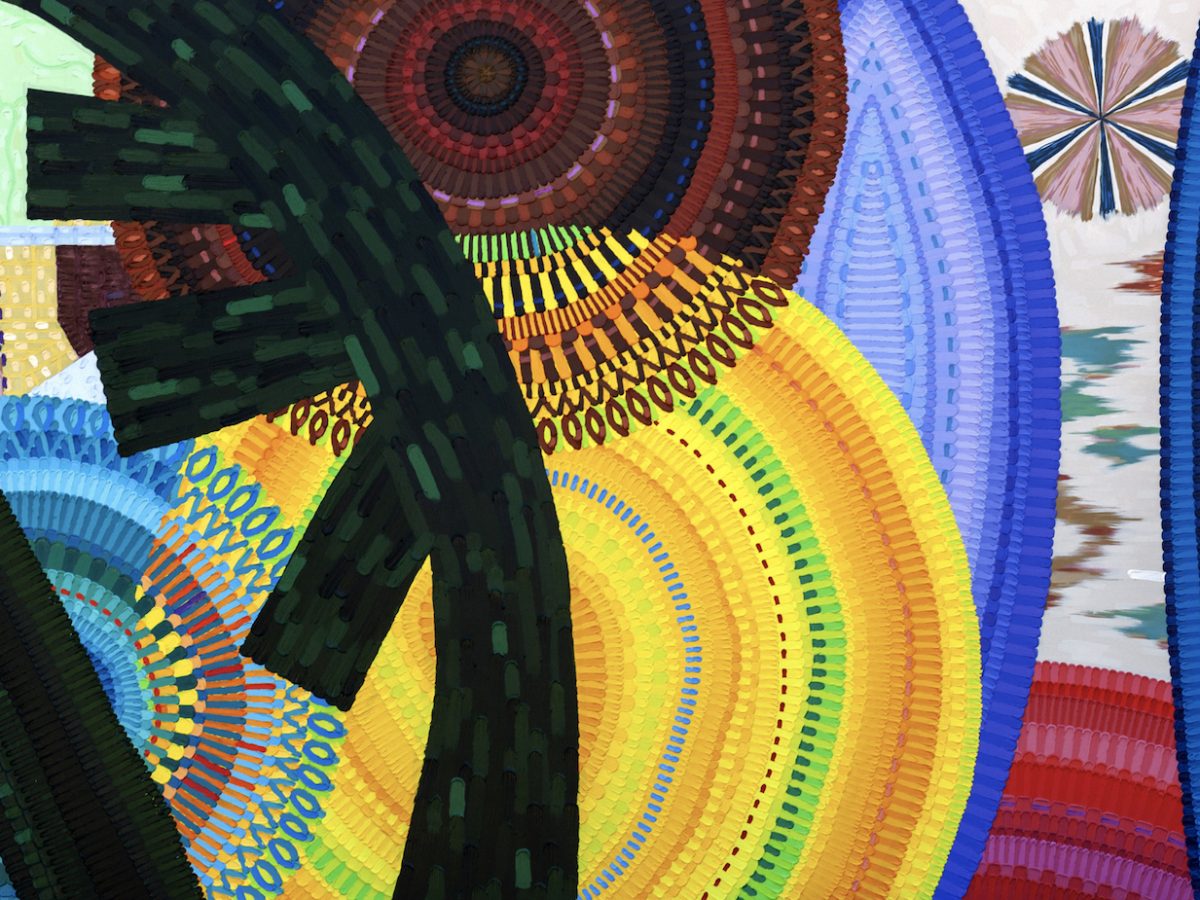
Installation view, Cosmic Geometries, EFA Project Space, 2022. From left to right: Marilyn Lerner, Queen Bee, Oil on panel, 36×48 inches, 2020. Rico Gatson, Untitled (Double Sun/Sonhouse), Acrylic on panel, 36×48 inches. 2021, Courtesy of Miles McEnery Gallery, NYC. Natessa Amin, variable small works, materials and dimensions variable, 2018-2021. Stephen Mueller, Passeggiata, acrylic on canvas, 72×66 inches, 2005, Courtesy of DC Moore Gallery, NYC. Anoka Faruqee and David Driscoll, 2017P-07, Acrylic and linen on panel, 33.75x 33.75 inches,  2017. Dorothea Rockburne, Lamenting Angels #2, Aquacryl and gouache on paper, framed, 22.5×30 inches, 2021, Courtesy of David Nolan Gallery. 

When: through February 26
Where: EFA Project Space (323 West 39th Street, Midtown West, Manhattan)

Hilma’s Ghost, a feminist artist collective cofounded by Brooklyn-based artists Sharmistha Ray and Dannielle Tegeder in 2020, used ritual divination — and an invocation of the spirit of the organization’s departed namesake, the Swedish Theosophist artist Hilma af Klint — to curate Cosmic Geometries. Work by a diverse group of 25 creators, including Carrie Moyer, Yevgeniya Baras, and Laleh Khorramian, unites around a shared affinity for the spiritual, the mystical, and the occult in abstraction.

Still from Theo Triantafyllidis, Ork Haus, 2022, video (courtesy of the artist and Meredith Rosen Gallery, New York)

When: through February 26
Where: Meredith Rosen Gallery (11 East 80th Street, Upper East Side, Manhattan)

“The feeling of presence: this is the defining quality of the metaverse,” a voice flatly tells us, borrowing some of Mark Zuckerberg’s vacant techno-utopic utterances. Among the highlights of Athens-born, Los Angeles-based artist Theo Triantafyllidis’s solo show are two video installations that connect contemporary feelings of alienation with the radicalization pipeline: one simulation depicts bored Orks on their electronic devices amid storms and kitchen fires, while the other features a violent clash of figures, some of whom carry white nationalist flags.

La Monte Young, Trio for Strings, 2021. © La Monte Young. Cover design by Jung Hee Choi with calligraphy by Marian Zazeela (courtesy of Dia Art Foundation)

When: through February 26
Where: Dia Chelsea (537 West 22nd Street, Chelsea, Manhattan)

Dia Art Foundation, which counts Max Neuhaus’s sound installation in Times Square as one of the eleven sites it manages, has been a staunch supporter of sound art for some time — and now has three releases to celebrate. In Listening Space, gallery-goers can enjoy a jukebox preloaded with the nonprofit’s sound publications, from On Kawara’s “One Million Years (Future)” (1993), in which a man and a woman methodically count, to new records by La Monte Young, Deantoni Parks and Lucy Raven, and Carl Craig.

Installation view, Looking Back / The 12th White Columns Annual – Selected by Mary Manning, White Columns, 2022 (photograph: Marc Tatti; courtesy of White Columns)

When: through March 5
Where: White Columns (91 Horatio Street, Meatpacking, Manhattan)

After a pandemic pause on the tradition, New York’s oldest alternative art space has opened the 12th iteration of its Annual, thoughtfully guest-curated by New York City-based photographer Mary Manning as a reflection on and response to their past year of art experiences. The exhibition features work by 25 intergenerational artists, including Patrick Angus, Aria Dean, Stewart Uoo, and Gordon Parks, and will be accompanied by a screening of Barbara Hammer’s films at the Lesbian, Gay, Bisexual & Transgender Community Center.

Kate Millett, Dinner for One, 1967. Mixed media, 48 x 24 x 24 in. (courtesy of the artist and Salon 94 Design, New York. © Kate Millett)

When: through March 5
Where: Salon 94 (3 East 89th Street, Upper East Side, Manhattan)

In 1967, The Judson Gallery debuted a suite of fantasy furniture by downtown New York artist and radical feminist writer Kate Millett, who is best known today for her 1970 text Sexual Politics. The furnishings, currently on view at Salon 94, are whimsical, anthropomorphic, and wonderfully weird fusions of found objects and hand-carved wood that form a cabinet that opens its chest cavity, a bed with protruding feet, a stool that feeds itself, and even a table on roller skates (whose depiction on New York City’s streets in a 1967 edition of Life was weaponized as “proof” that Millett, a doctoral candidate at Columbia, was not a serious scholar).

Installation view of Sadie Barnette: The New Eagle Creek Saloon, The Kitchen, New York, January 18, 2022–March 5, 2022 (courtesy of The Kitchen; photo by Adam Reich)

When: through March 6
Where: The Kitchen (512 West 19th St, Chelsea, Manhattan)

Organized in conjunction with The Studio Museum in Harlem, The New Eagle Creek Saloon presents Oakland-based artist Sadie Barnette’s fluorescent recreation of the San Francisco gay bar that her father, founder of the Compton chapter of the Black Panther Party, operated in the early 1990s. On select Saturdays, the architectural installation is activated by DJs invited by queer scholar and artist madison moore as part of The Kitchen’s new nightlife and club culture residency; visitors are invited to dance, an homage to queer Black spaces past and present.

Liz Larner, vi (calefaction), 2015. Ceramic, glaze, stones, and minerals, 36.6 x 21 x 7.5 inches (courtesy of the artist and Regen Projects, Los Angeles)

When: through March 28
Where: SculptureCenter (44-19 Purves St, Long Island City, Queens)

Don’t put it back how it was, co-organized with the Walker Art Center in Minneapolis, surveys the work of Liz Larner, an astonishingly versatile sculptor and installation artist who came out of CalArts in the 1980s. The works on view run the gamut from Larner’s early experiments with bacterial cultures, to a kinetic wall-bashing machine, to the ceramic slabs that have occupied the artist for the past two decades. Though materially and aesthetically diverse, these sculptures are rooted in a common interest in the ways that bodies move and exist in social and architectural space.

Hugh Hayden’s Brier Patch at Madison Square Park, 2022 (courtesy of the artist and Madison Square Park Conservancy; photo by Yasunori Matsui)

When: through April 24
Where: Madison Square Park (11 Madison Avenue, Nomad, Manhattan)

Overtaking four lawns of Madison Square Park, Hugh Hayden’s ambitious sculptural installation features 100 wooden elementary school task chairs rendered unusable by the bare tree branches that aggressively sprout from them. Contemplating inequity in the American education system, Hayden’s Surrealist twist on vernacular classroom furniture depicts institutionalized learning as a thicket that is structurally uninviting, exclusionary, and absurd.

Beverly Semmes, Eye Tooth, 2021. Ink, acrylic over photograph printed on canvas. 54 7/8 x 40 in. (courtesy of Susan Inglett Gallery, NYC; photo by Chris Kendall)

When: February 3–March 12
Where: Susan Inglett Gallery (522 West 24th Street, Chelsea, Manhattan)

Initiated in the early 2000s, Beverly Semmes’ ongoing “Feminist Responsibility Project” intervenes with vintage porn magazines; using paint or ink to obliterate the bulk of women’s bodies in graphic images, Semmes transforms the subjects into awkward abstractions. Continuing this complex gesture, recent works on view in POT PEEK explore the resemblances between the effaced women and vessels, literally and conceptually.

Faith Ringgold, The Wake and Resurrection of the Bicentennial Negro, 1975-89. Mixed media, dimensions variable. (courtesy of the artist and ACA Galleries, New York, 2021 © Faith Ringgold / ARS, NY and DACS, London; photo by Ron Amstutz, courtesy Glenstone Museum, Potomac, Maryland)

When: February 17–June 5
Where: New Museum (235 Bowery, Lower East Side, Manhattan)

Celebrating six decades of art by Harlem-born nonagenarian Faith Ringgold, this long overdue retrospective features a collection of figurative paintings, narrative textiles, and soft sculptures shaped by a belief in the power of women’s labor and Black visual traditions. A highlight is the entirety of the “The French Collection” (1991–1994), Ringgold’s 12-part series of experimental story quilts exploring the life of a Black American artist and model working in the modernist circles of 1920s Paris.
New policy will guide decision-making around requests for public art, murals

According to the proposed public art policy, 30 per cent of the public art fund will be allocated to new art and 70 per cent will maintain existing murals and plan for future projects

With the collapse of the murals advisory committee, city hall plans to develop a policy to guide decisions about public art and create a new committee focused on this area. 

The murals management committee has had difficulty finding and keeping members over the years. There were two citizens on the committee in January, but both quit this year, leaving Coun. Heather Eby as the remaining member.

Other than the murals program, the City of Moose Jaw does not have a formal policy to acquire and maintain public art, said Derek Blais, director of parks and recreation, during the Dec. 13 executive committee meeting.

“Over the past year, we’ve received a few different public art requests. A policy would provide us with a consistent approach to the acquisition and placement of all public art through purchase, commission, or donation for municipally-owned buildings, assets and properties,” he continued. 

An example of a public art initiative this year was the Downtown Moose Jaw Association’s walking art tour, which saw 33 public assets painted with colourful and kid-themed pictures. Another initiative was the Crescent Park tree carving project, which the Crescent Park Foundation and museum and art gallery sponsored. 

Restructuring the murals committee to a public art committee requires city council to repeal an existing murals bylaw and replace it with a new public art committee bylaw, Blais said. That bylaw would also serve as the terms of reference for the new group, composed of people with experience in the arts field.   

Meanwhile, members of the parks and recreation advisory committee, staff from the museum and art gallery, and community murals artist Grant McLaughlin provided feedback about the proposed policy. 

The next steps include having council repeal the murals committee bylaw and adopting the new public art committee bylaw and public art policy in the new year, with everything implemented by March, Blais said.

No additional funding is necessary for the new public art committee since it will use the funding provided to the murals committee, he continued. City hall provided the murals group with about $13,000 in annual funding; $19,675 will be carried forward next year, which means the new committee will only need an extra $6,475 to have a full budget of $26,150.

According to the proposed public art policy, 30 per cent of the public art fund will be allocated to new art and 70 per cent will maintain existing murals and plan for future projects. Therefore, next year $7,850 will be for new public art acquisitions and $18,300 will be for maintenance and planning. 

Coun. Doug Blanc thought it was important that the new committee focused on murals and art so that neither area was forgotten. He also thought that the art projects completed this year would benefit tourists and residents who visit the downtown or Crescent Park.

“I totally support this. It’s a good evolution of the murals committee … ,” said Eby.

It’s positive that there won’t be competition between funding mural repairs and acquiring new art, she continued. Murals degrade over time because of the elements, so she didn’t want to see those repairs stop.

Eby also hoped that this new committee attracted more volunteers, generated new interest in public art and led to more art city-wide.

Council later supported a recommendation to approve the proposed public art policy and public art committee bylaw. The recommendation must be approved during a future regular meeting to become official.

The next executive committee meeting is Monday, Jan. 10. 

A Design Lover’s Guide to Atlanta, Georgia

Atlanta’s skyline is dominated by John Portman’s iconic neo-futuristic buildings, but zoom in and you’ll find a city striking the balance between preserving history and embracing exciting design. “The beauty of Atlanta is change and progress. We’re not stuck in the past, and God forbid that we would be,” says Vivian Bencich, an interior designer and founding principal of Square Feet Studio, a firm that has designed some of Atlanta’s most beloved restaurants like The General Muir and Kimball House, Business Law.

The city has gained recent notoriety for its role in national politics and has a well-earned moniker as the Hollywood of the South. But it has long been a city of design interest as the home to such institutions as the Atlanta Decorative Arts Center (ADAC) and counts powerhouses like Suzanne Kasler and Michele Smith Boyd among its roster of interior designers.

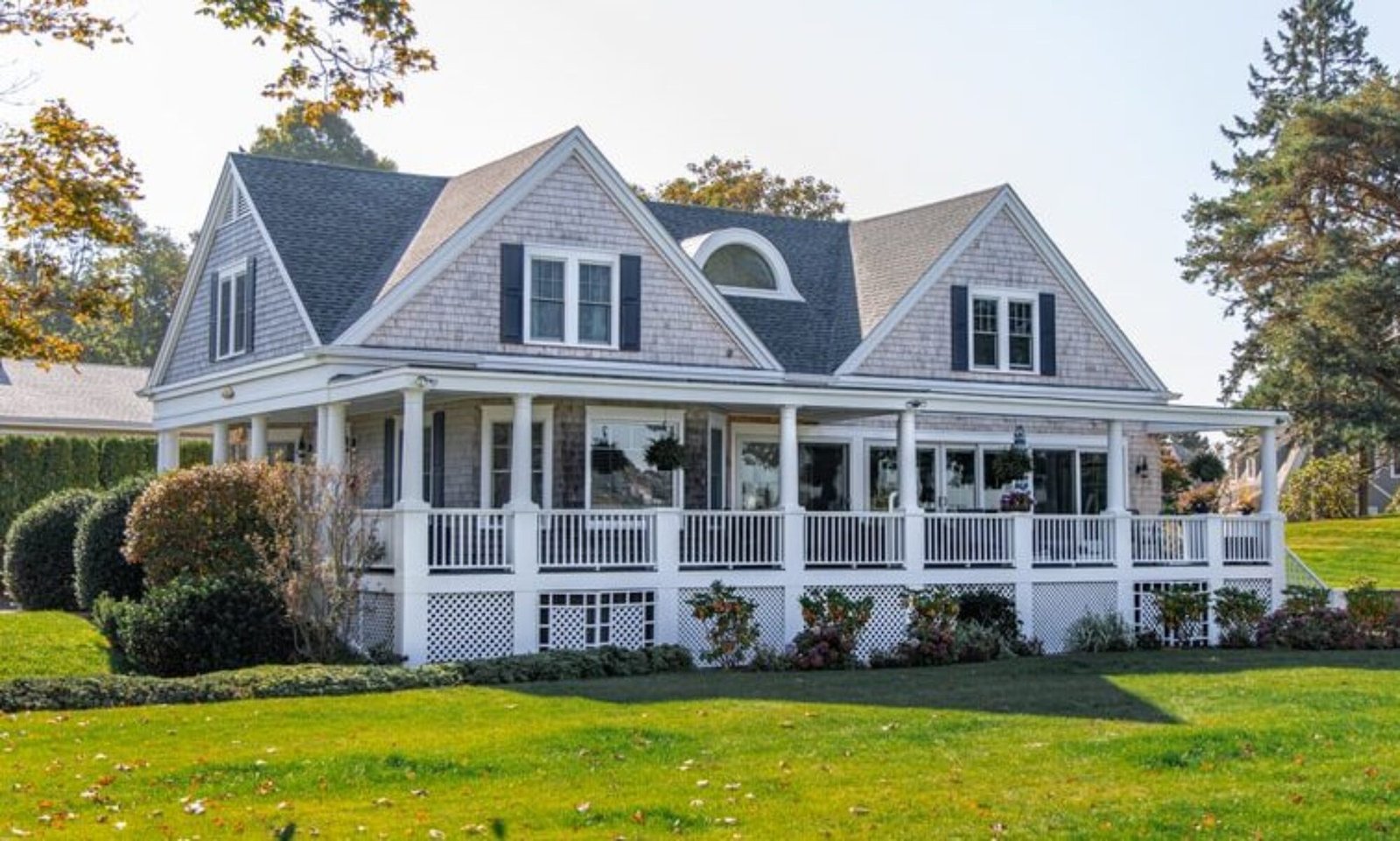
Atlanta is made up of vibrant neighborhoods lined with craftsman bungalows juxtaposed with mixed-use developments, and there is no shortage of independent coffee shops and seasonally-driven restaurants. Atlanta also happens to have the Hartsfield-Jackson airport, one of the busiest in the world, making it easily accessible to travelers. The next time you find yourself in Atlanta, these are the best places to stay, eat, drink, and visit : Business Law.

The lobby at The Bellyard.


Photo: Mark O’Tyson

Where to stay

The heart of the city is arguably Old Fourth Ward. It’s where historic treasures like the birthplace of Martin Luther King Jr. and modern attractions such as the BeltLine trail are located—and the recently opened Wylie Hotel gives you a chance to immerse yourself in Old Fourth Ward. The boutique hotel is situated on the main drag of Ponce de Leon avenue, and has been many things in its lifetime since the 1920s: A hotel that housed Atlanta’s first gay bar, the dance club MJQ’s first location, and student housing. Today, the interior has been reimagined by designers Kendal Rogers and Maria Garza Gossett of Pixel Design Collaborative who gave it a residential feel with Art Deco flair. Just down the street is the Hotel Clermont which came roaring back to life with eclectic guest rooms and a rooftop bar in 2018 after sitting vacant for years (though the famed lounge downstairs has never quit).

The Bellyard opened its doors in May and brings luxe hotel rooms to the ever-evolving neighborhood of West Midtown. Part of the Interlock, a work-meets-play property, the hotel’s design subtly pays tribute to the stockyards and railroads that once made up the landscape of the neighborhood (look up at the ceiling in the lobby restaurant Drawbar and see lighting in beams reminiscent of railroad tracks).

Home Decorating
Travel Tips
Classic Car

TriBeCa Gallery Guide: New York’s Most Vibrant Art Scene

Yawnghwe was born there in 1971. By that time his family members experienced by now remaining the region to escape the initial of what would be a succession of navy coups. The most new took spot in February 2021, and a great deal of the clearly show looks to be a response to that celebration in the sort of diptych paintings that juxtapose panels of narrative scenes with many others of summary patterning.

The narratives are drawn from news photographs, which report a historical past that is sophisticated, even contradictory. In a person portray, we see an graphic of the Burmese-born Louisa Benson, Myanmar’s initially Skip Universe contestant, posing in a bathing go well with. In a 2nd, from the 1960s, she seems as a rifle-toting rebel. The politician, Aung San, from time to time referred to as the father of modern day Burma, also appears in two mages. In just one, dated 1941, he’s getting military services schooling from the Japanese Army, while in Entire world War II he aligned himself with Britain — which claimed Burma as a colony — to defeat Japan. A photo image in a further portray shows Aung San in 1947 in London to negotiate Burma’s independence, which he reached but with compromises that alienated many of the country’s ethnic and religious minorities, resulting in conflicts that are incredibly significantly alive right now.

In quick, record as Yawnghwe depicts it, is oblique, opaque and unsettling. And in this context, the panels of abstract patterning — dependent on classic Burmese fabric models — perform as balancing, steadying features. As to the exhibition title, “Cappuccino in Exile,” which is directed at us in the West, who are inclined to react to everyday living-or-death conflicts in distant lands, when we respond at all, with the psychological equal of a mild espresso excitement. HOLLAND COTTER

As a result of Oct. 30, 58 White Road 212-967-8040, janelombardgallery.com.


In the extremely-stylized portraits of this Brooklyn-dependent painter, flesh resolves into Euclidean styles and ornamental patterning: eyes and breasts look as minimal half-moons, foreheads and shoulders as excellent semicircles of pink and powder blue. They may appear to be conveniently digestible at very first, but occur nearer. These paintings are basically wall reliefs: The models’ wavy hair is made up of incised resin blocks, and the backgrounds are tessellated tiles overlaid with pasted paper. Stiler understands her art historical past, and steeps these portraits in an omnivorous assortment of ornamental motifs: Roman friezes, Victorian wallpaper, Matisse’s stripes and squiggles, the ceramic tiles of Gio Ponti or Roberto Burle Marx. But in two self-portraits, that includes the artist cradling an aged-time painter’s palette, you also perception a sourer side. Those people millennial pinks, these curves, individuals Insta-all set backgrounds: It’s as if the annals of artwork record fed straight into the Wing. JASON FARAGO

Through Oct. 30, 7 Franklin Spot 212-375-8043 nicellebeauchene.com.


Your Concise New York Art Guide for October 2021


With October upon us (how?!), New York City arts organizations of all stripes are offering up a veritable cornucopia of compelling exhibitions and performances. From MoMA PS1’s quinquennial survey featuring 47 intergenerational artists and collectives, to a presentation of the late Winfred Rembert’s intricately tooled leather paintings, here’s a choice slice of what we’re excited about this month.

***

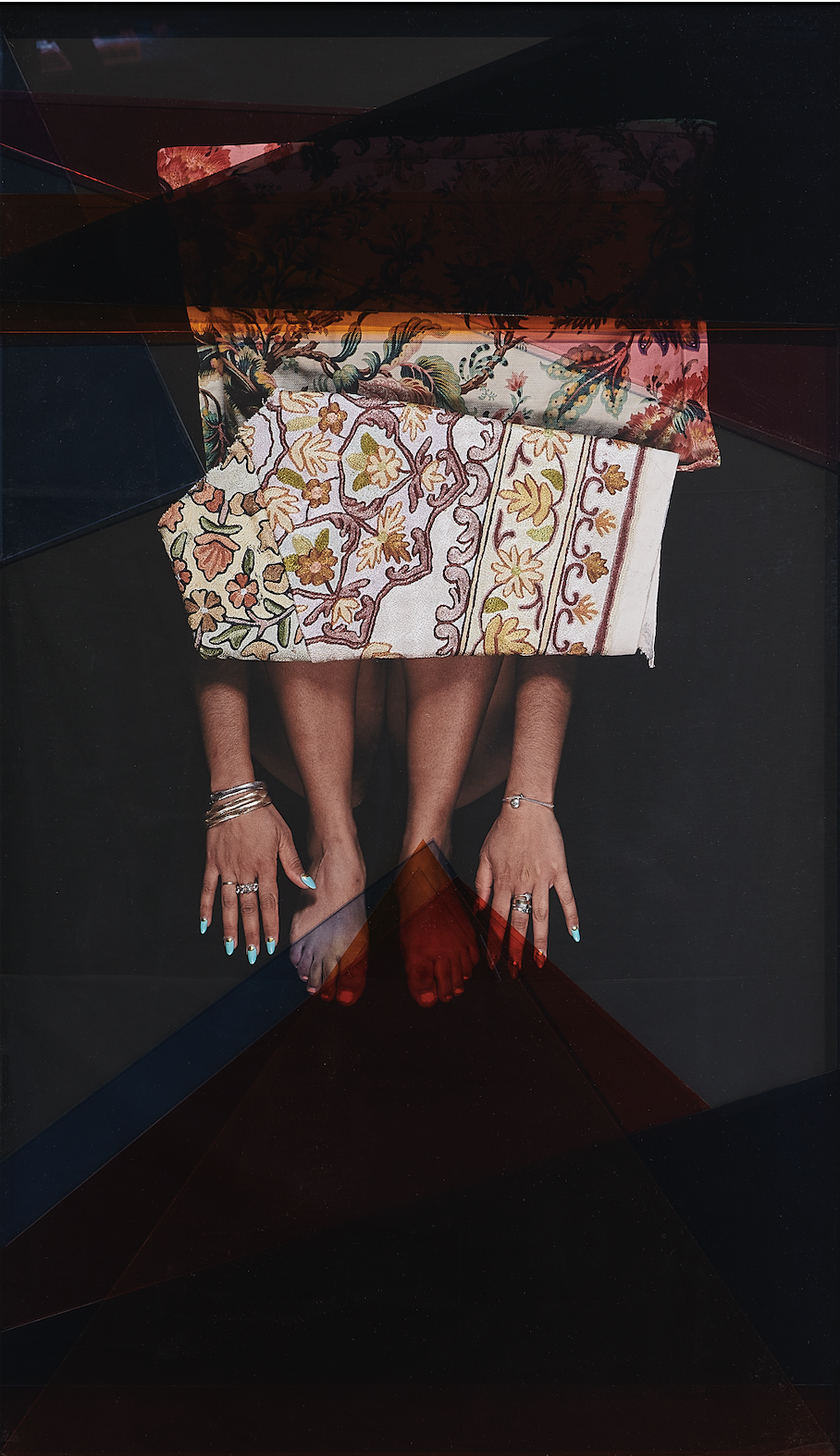
Baseera Khan, “Level of Psychic Distress, (Orange)” (2021), chromogenic photograph and laser-cut acrylic, 62 × 37 inches (image courtesy the artist and Simone Subal Gallery, New York, © Baseera Khan, photo by Stephen Takacs)

When: October 1, 2021–July 10, 2022
Where: Brooklyn Museum (200 Eastern Parkway, Prospect Park, Brooklyn)

In their first museum solo show, Brooklyn-based artist Baseera Khan explores their bodied subjectivity as a femme Muslim American living in a racist and xenophobic surveillance state that runs on extractive capitalism and frenetic othering. Across new and recent works of sculpture, installation, textile, collage, video, and more, Khan examines the frequently traumatic archives that bodies can hold, often using well-placed parody and hyperbole to drive the point home. Six new works by the artist will debut at the show, on view at the museum’s Elizabeth A. Sackler Center for Feminist Art.

Yvonne Shortt, Jenna Boldebuck, and Kelly Li, “African American Marbleization–An Act of Civil Disobedience: Hair Sanctuary” (2021), image based on installation by Mayuko Fujino (image courtesy the artists and Socrates)

When: October 2, 2021–March 6, 2022
Where: Socrates Sculpture Park (32-01 Vernon Boulevard, Long Island City, Queens)

This year, the Long Island City sculpture park’s annual open call is centered around the theme of “sanctuary,” fittingly for a venue that spent the summer hosting a series of healing outdoor sound baths led by Guadalupe Maravilla. Made by 13 participating artists, the 11 sculptural projects on view imagine new sanctuaries as they pay homage to the ones that we’ve already built, drawing upon queer dance parties, plant care rituals, dreaming, inherited spiritual practices, hair care, engagement with nature, and more.

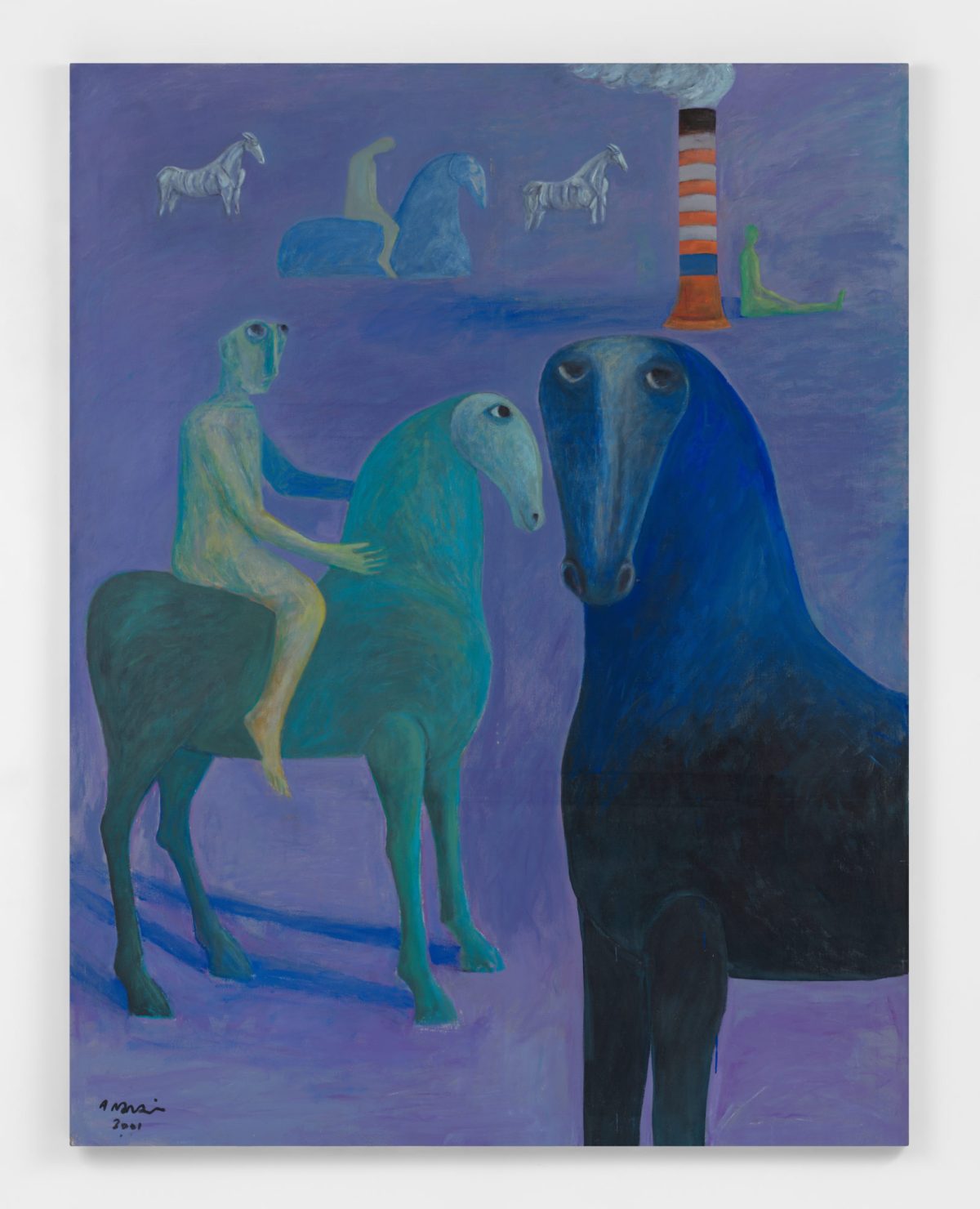
Ahmed Morsi, “Green Horse I” (2001), acrylic on canvas (image courtesy the artist and Salon 94, New York, © Ahmed Morsi)

When: October 7, 2021–April 18, 2022
Where: MoMA PS1 (22-25 Jackson Avenue, Long Island City, Queens)

Every five years, MoMA PS1 mounts a survey of work by artists with a relationship to New York City. This edition, which was postponed by a year due to the pandemic, features art across media by a fascinating selection of artists and collectives ranging from young up-and-comers like photographer and video artist Diane Severin Nguyen, who currently has a show up at SculptureCenter, to Paulina Peavy, a 20th-century West Coast spiritualist whose work has seen a resurgence of interest in recent years.

Winfred Rembert, “Sunshine II” (2012), dye on carved and tooled leather (©2021 Winfred Rembert / ARS NY)

When: October 7–December 18
Where: Fort Gansevoort New York (5 Ninth Avenue, Meatpacking, Manhattan)

Artist Winfred Rembert, who passed away in March of this year at the age of 75, learned how to tool leather during the seven years he spent in prison in Georgia. Decades after his release and subsequent relocation to Connecticut, Rembert began carving narrative scenes from his traumatic experience in the Jim Crow South onto tanned leather, producing intricate images in low relief that he painted with colorful dyes. The exhibition coincides with the posthumous release of the late artist’s memoir, Chasing Me to My Grave.

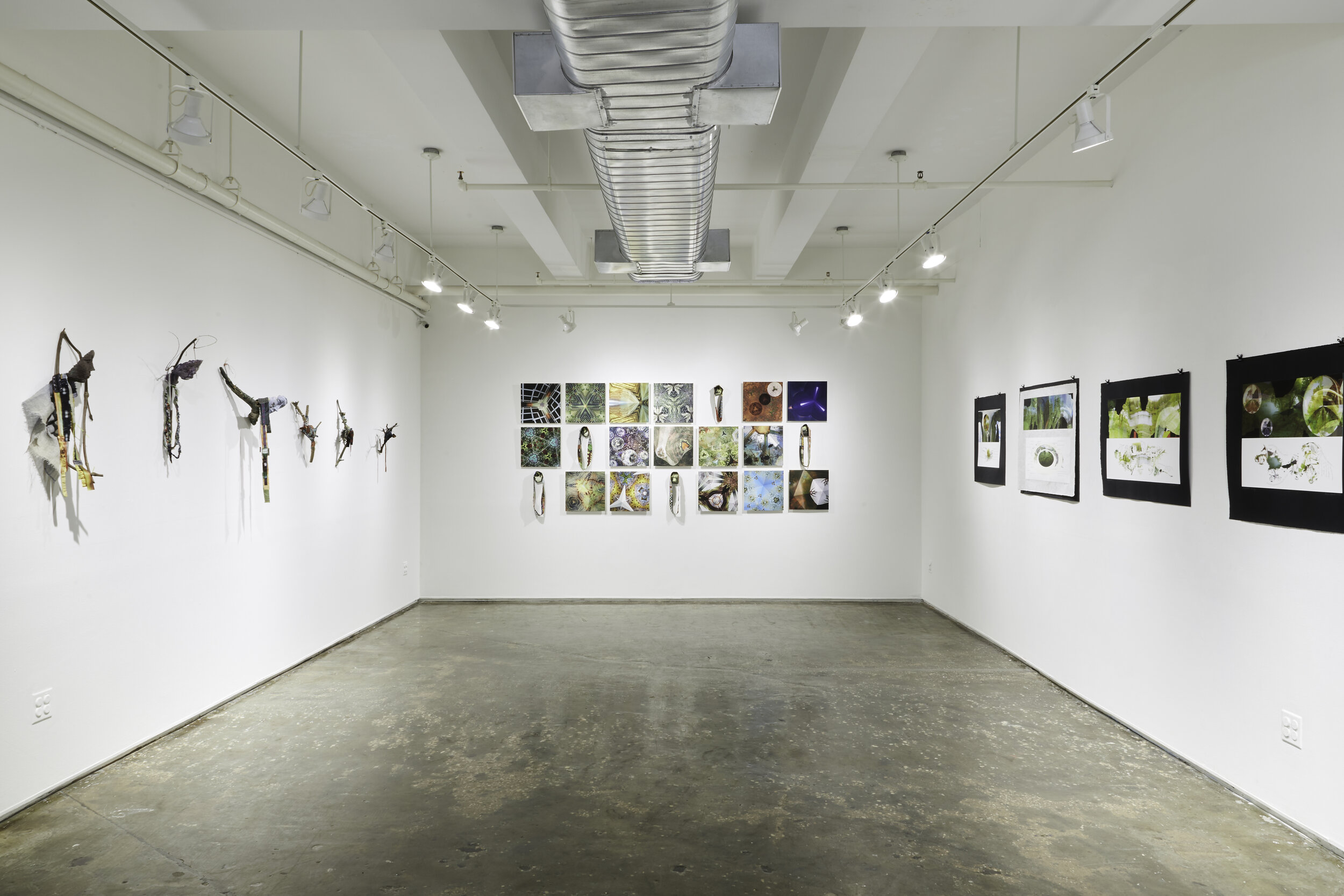
Installation view of Cosmologies at A.I.R. Gallery, New York (image courtesy A.I.R. Gallery, photo by Matthew Sherman)

When: through October 10
Where: A.I.R. Gallery (155 Plymouth Street, Dumbo, Brooklyn)

Three solo shows with overlapping interests in the environment and textiles are currently on view at A.I.R. Gallery. Daria Dorosh, one of the 20 women artists who co-founded the historic gallery in 1972, considers the place of human beings in ecological and technological networks in Cosmologies, a show of digital prints, textile sculptures, and neckwear pieces. Meanwhile, painter Mimi Oritsky presents bold, atmospheric landscapes in Above and Below, while 2020-2021 A.I.R. Fellow Destiny Belgrave displays new textile works that pay homage to sleep and dreams in where they go & what they leave.

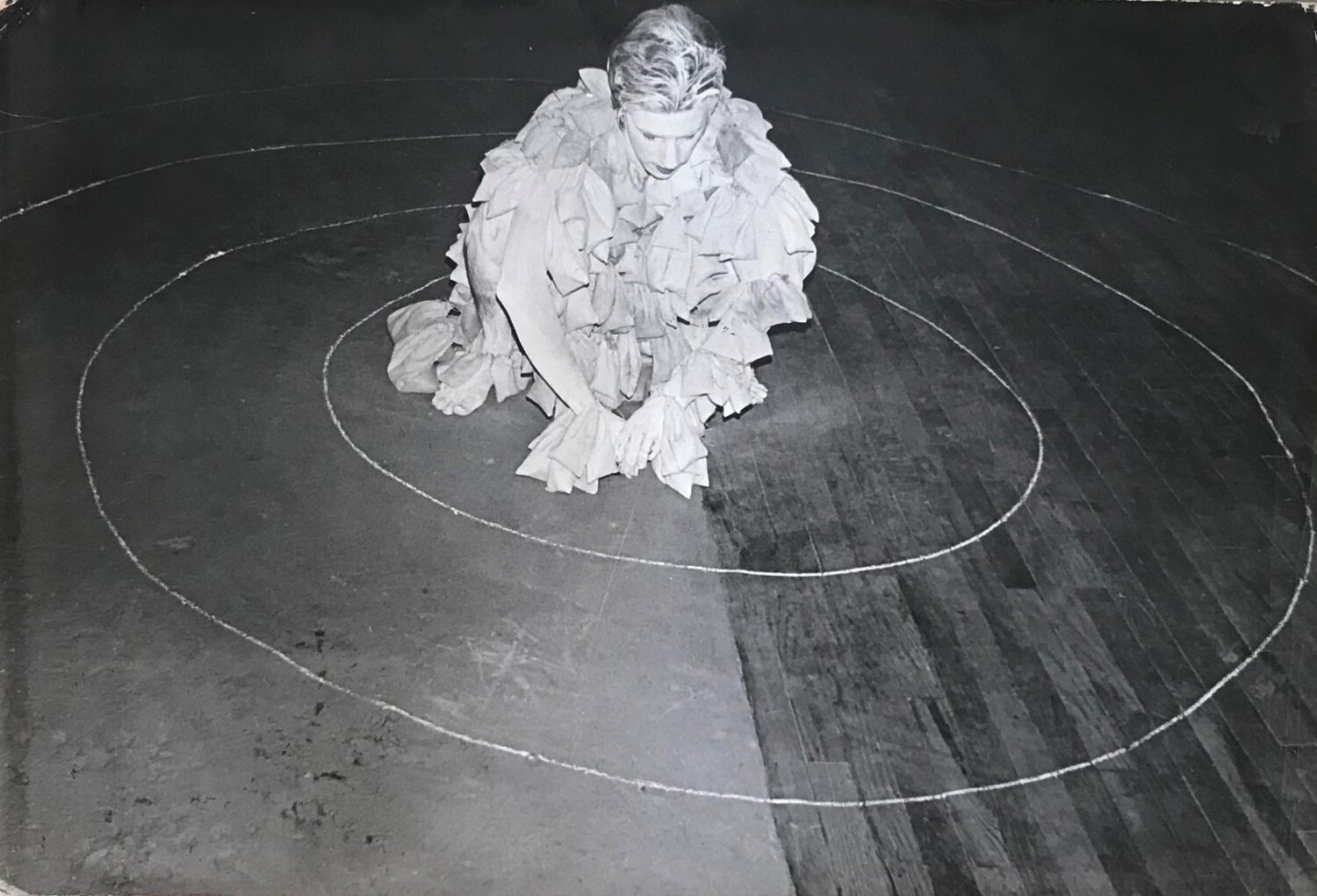
Betsy Damon, “7,000 Year Old Woman,” performance at Cayman Gallery, New York (March 21, 1977) (archival Print © Betsy Damon 1977/2021, courtesy the artist)

When: October 15–November 21
Where: LaMaMa Galleria (47 Great Jones Street, East Village, Manhattan)

American artist and activist Betsy Damon’s 250-foot paper pulp cast of riverbed in Utah was among the standout works in ecofeminism(s) at Thomas Erben Gallery last year. The curator of that show, Monika Fabijanska, is now zeroing in on the 81-year-old lesbian eco-artist’s oeuvre with an exhibition of photographs, videos, ephemera, and documents. The show focuses on Damon’s outdoor performance practice from the 1970s and ’80s, frequently guerrilla affairs that staked a claim to public space, grappled with themes of violence perpetuated against women and the environment, and asked how we might approach healing.

Installation view of Paul Thek: Relativity Clock at Alexander and Bonin, New York (image courtesy Alexander and Bonin, photo by Joerg Lohse)

When: through October 16
Where: Alexander and Bonin (47 Walker Street, Tribeca, Manhattan)

The strange, slippery material of time runs through the work of Paul Thek, a multidisciplinary artist who died of AIDS-related complications in 1988 at the age of 54. Loosely centered around this theme, Relativity Clock presents pieces made by Thek from the mid-1960s into the 1980s, including newspaper paintings, meat cable sculptures, and picture light paintings. Thek’s sketchbooks and journals from that period and Polaroids of him at work taken by Peter Hujar are also on view. The 1966 “Untitled (Meat Piece with Chair),” a hunk of wax “flesh” with blue skin encased in a clear vitrine, is an exhibition highlight.

Rodrigo Pimenta, “Broken Whisper” (2021) acrylic painting on paper (image courtesy the artist and Uncool Artist)

When: through October 23
Where: Uncool Artist (227 West 29th Street, Chelsea, Manhattan)

Responding to legacies of Latin American mail art in the ’60s and ’70s, this exhibition brings together work by 20 artists who are interested in questions of how we connect and communicate across space — with a focus on the cities in which the artists largely reside, New York, Miami, and São Paulo. Visitors are invited to write their fears on index cards and deposit them in a dropbox, complete a crossword based on the desires of the artist, and send postcards to anonymous strangers and government officials alike.

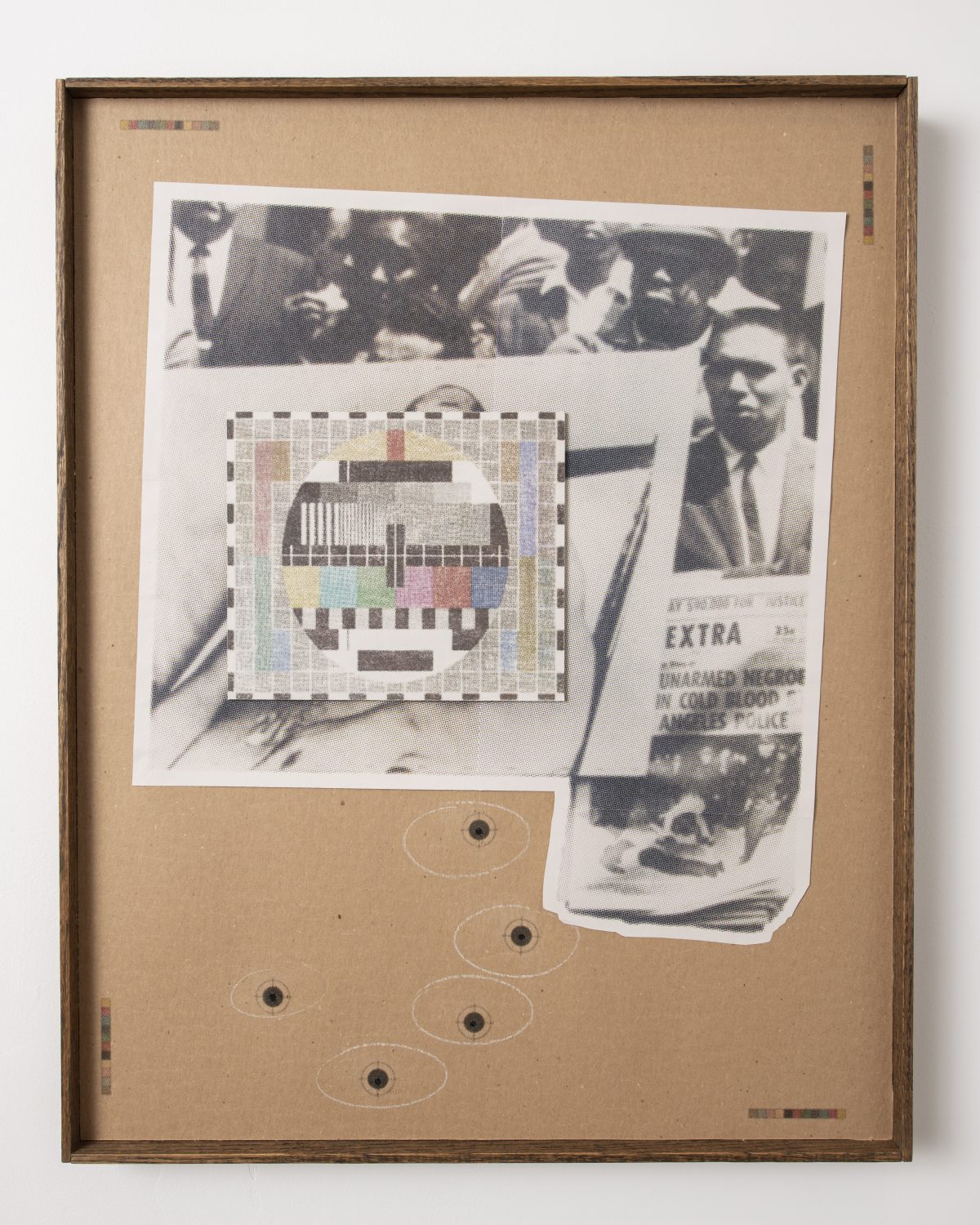
Lyndon Barrois Jr., “Start Spreadin’ the News” (2017), collage and solvent transfers on canvas and chipboard, chalk pencil, oak frame (image courtesy the artist and Miriam Gallery)

When: through November 7
Where: Miriam Gallery (319 Bedford Avenue, Williamsburg, Brooklyn)

How do opacity and redaction, refusal and obfuscation, operate as representational tools? Miriam Gallery, a new-ish artist-run space (and bookshop) to watch, presents a group of works that leverage these strategies in their engagements with Blackness. Among the media-spanning pieces on view are Patrice Renee Washington’s knobby grab bar, made to provide support for people who are recoiling; Keli Safia Maksud’s formalist response to social media phenomena like “Blackout Tuesday”; and Uwa Iduozee’s photographs of individuals from the African diaspora population in Finland.

Installation view of Robert Swain: Immersive Color, Minus Space (image courtesy the artist and Minus Space, photo by Yao Zu Lu)

When: through November 20
Where: Minus Space (16 Main Street, Suite A, Dumbo, Brooklyn)

Three monumental, gridded paintings in a rainbow of hues overtake the gallery walls in Immersive Color, a show dedicated to the work of Hunter Color School painter Robert Swain. Swain, who first embarked upon his carefully calibrated color system of nearly 5,000 hues in 1969, takes his hallmark modular approach here, arranging painstakingly painted squares of color to compose new perceptual and emotional experiences.

The lineup, which changes every evening, includes Anne Carson, Arto Lindsay, Lafcadio Cass, and Rubin Kodheli.


Daisy Youngblood is a portrait sculptor whose themes include the embracing of one’s mortality.


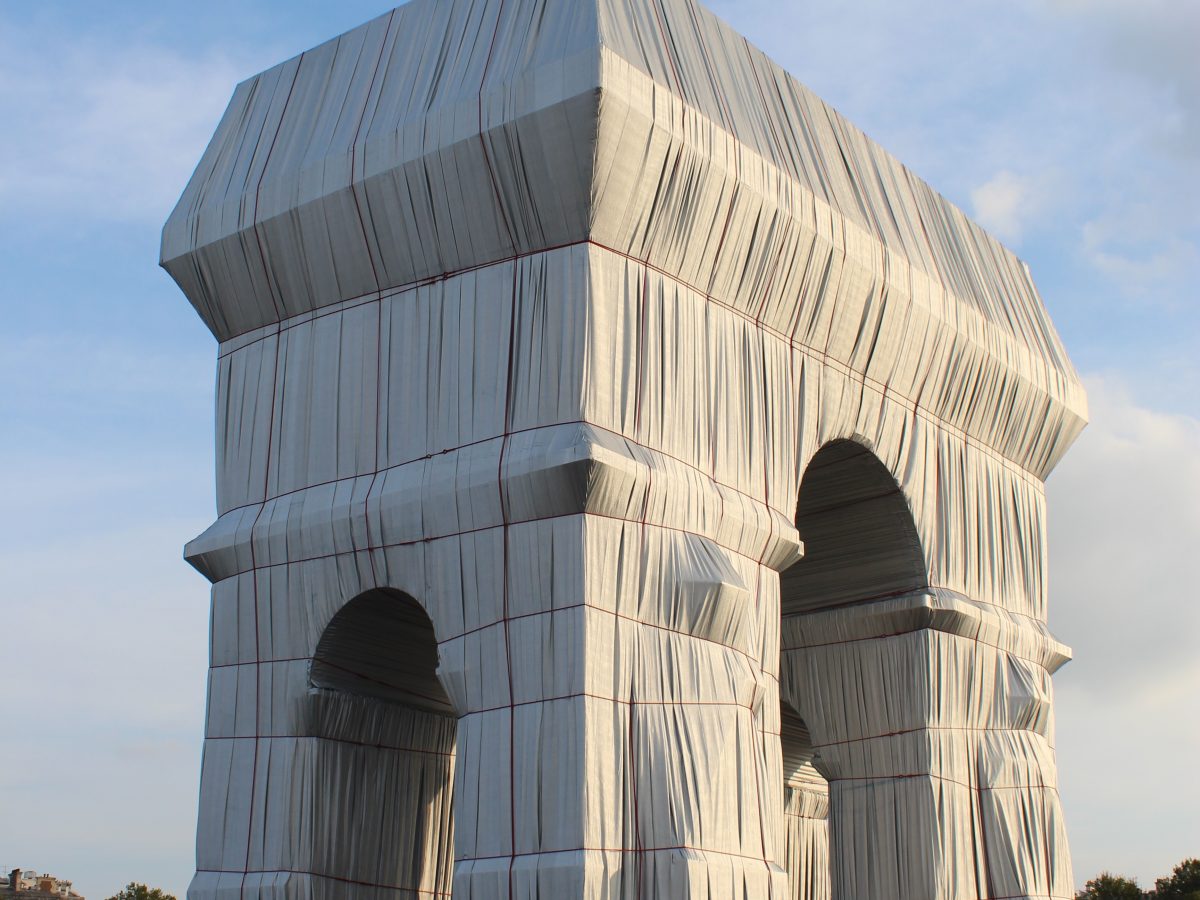
The project required 269,000 square feet of silvery-blue polypropylene fabric, 32,300 square feet of red rope, and the combined efforts of 1,200 workers.


Your list of must-see, fun, insightful, and very Los Angeles art events this month.