Chef Brian Banister and Aspen Art Museum food items and Alex Fonseca on the web site of their incoming Rooftop Cafe, opening Dec. 3.
The Aspen Art Museum has appointed a new culinary group and will start a new restaurant in its rooftop house when the constructing reopens on Dec. 3. The renamed Rooftop Café will be led by Chef Brian Banister and foodstuff and beverage director Alex Fonseca, the museum declared.
The pair will work carefully with close by farms and community associates on the new cafe, established beside the out of doors art installations in the rooftop sculpture yard.
“I am delighted to welcome chef Banister and Alex Fonseca to the Aspen Art Museum crew,” director Nicola Lees said in the announcement. “As the premier rooftop cafe in Aspen, we have a unique prospect that combines the city’s iconic setting atop a artistic institution in the heart of our neighborhood. The Rooftop Café is definitely a gathering position not only to appreciate the business of fellow diners, but to serve as a venue that promotes dialogue and group connections, built-in in just our lively artistic programming.”
Bannister and Fonseca succeed the spouse and spouse culinary group of Julia and Allen Domingos, who originated the museum’s rooftop So Café notion and led it given that the new building’s opening in 2014. Their final working day of operation at the museum was Oct. 16, when an extended closure started to prepare for the installation of this winter’s “Andy Warhol: Lifetimes” exhibition.
“We are very proud to have formulated the AAM’s food items and beverage application as the founding culinary spouse of this fantastic Aspen establishment,” the pair wrote last month. “While we have savored our collaboration with the museum above the earlier 8 a long time, we sense it is time to change our concentrate on relatives and our up coming culinary enterprise.”
In addition to the new eating services, the museum will proceed to work The Slippery Slope, a operating sculpture by Los Angeles-based mostly artists Adam Stamp that serves as a bar on the rooftop and opened very last year.
Banister explained the restaurant would team with regional farms and the food items cooperative Farm Runners to supply ingredients from the Roaring Fork, Gunnison and Grand valleys.
“The Rooftop Café’s offerings will mirror a lot of of my personalized passions all around sustainability, plant-based mostly cuisine and community agriculture,” Banister explained in the announcement. “You will see this in a menu that is constantly updated all through each and every period, earning it a exceptional addition to Aspen’s culinary scene.”
Fonseca extra an expanded beverage plan is in the operates together with a collection of purely natural and biodynamic wines from smaller winemakers from around the world as very well as espresso from Bonfire Coffee in Carbondale and beers from Casey Brewing in Glenwood Springs and Primitive Beer from Longmont.
“I am assured we’ll put the Rooftop Café amid the ideal of the après-ski locations in the town,” Fonseca claimed.
Cafe assistance several hours will coincide with the museum’s program, Tuesday by means of Sunday from 10 a.m. to 6 p.m. In addition, there will be a aim on après from 3 p.m. to closing including an après food menu and activation of The Slippery Slope.
You may well have witnessed aerial pics of geoglyphs in Peru and Chili or even people situated in Fantastic Britain and Australia, but here in the United States we also have equal cultural treasures.
A geoglyph is outlined as “a huge structure or motif created on the floor by strong aspects of the landscape, these types of as stones, stone fragments, gravel or earth.” Additional than 600 geoglyphs of the precise style known as “intaglios” have been found in the Southwest, Get Auto Tips.
Amid the ideal-identified and most interesting are the Blythe Intaglios, considerably less than 4 hrs driving from Las Vegas, in the vicinity of the lower Colorado River in jap California. These gigantic artworks are greatest considered from helicopter or airplane but without a flying equipment at your disposal, a stop by by way of car and shoe leather can be satisfying, too.
Intaglios had been presumably guy-created extensive ago, by engraving, tamping and scraping away the all-natural desert pavement, which uncovered the lighter soils and gravel beneath. These intaglios are so substantial that they have been not obvious to non-Indians until finally 1932. That yr a pilot, George Palmer, discovered them though traveling from Las Vegas to Blythe, California. His discovery led to a study of the region by the All-natural History Museum of Los Angeles County.
There are 6 intaglios at this web site, lying in 3 spots, atop two mesas. Intaglios are categorized by their designs, these as anthropomorphs (humanlike), zoomorphs (animallike) and different geometric shapes. The greatest anthropomorph at this site is 171 ft from head to toe. One particular, named the Human Determine, has arms stretched out and the feet turned outward and measures 105.6 toes from suggestion to toe with the arm span measuring 91.8 ft large. There are apparent knees and elbows. For some reason, anthropomorphs so significantly found out lie in close proximity to the Colorado River.
At this web page there are also zoomorphs that look to be a rattlesnake and an animal assumed to stand for a cougar or probably a horse. There are interpretive signs with aerial photographs, possibly the viewpoint from which the artists envisioned their performs to be considered.
Many presume they are religious figures as they are organized to be visible to supernatural beings in the sky. Scientists really do not all concur on the precise age of these geoglyphs, but most imagine they ended up manufactured by the Mohave and Quechan Indians about 450 to 2,000 many years ago. However, neither of these peoples, who reside close by on the Colorado, claims to have designed them.
Even so, these will work are thought of sacred by Native Americans. They are mentioned on the Countrywide Register of Historic Areas, and now lie in the Significant Marias Location of Critical Environmental Worry, selected in 1987 to secure the cultural and normal sources in the location these as these intaglios, location rock art, Alversons’ foxtail cactus, barrel cactus and wildlife such as desert bighorn sheep.
Regretably, the Blythe Intaglios weren’t fenced in until finally 1974 and hence expert destruction prompted by 20th century humans and their wheeled automobiles. This instance really should provide as a warning to those people of us who enjoy the back state.
When other intaglio web-sites have been recognized in our area, there are considered to be a lot more even now unidentified and therefore unprotected. If you are out poking all-around in the desert and you do stumble upon what may possibly be a internet site, respect it. Be certain not to disturb in any way and just take a extensive detour about it. It can be ruined for good by driving on it, or disturbing it in any way, possibly even walking on it. Higher than all, hardly ever increase your own design and style as this compromises the website and modifications the meaning of long-in the past men and women who developed it.
For far more facts make contact with the Bureau of Land Management’s Yuma discipline workplace in Arizona at 928-317-3200 or go to www.blm.gov.
Lots of of Deborah Wall’s columns have been compiled into books about climbing in the Southwest. She is also the creator of “Great Hikes, a Cerca State Guide” and a co-creator of the book “Access For All, Viewing the Southwest With Constrained Mobility.” Wall can be achieved at Deborabus@aol.com.
HONG KONG, Nov 11 (Reuters) – A senior Hong Kong cultural official mentioned on Thursday that flexibility of expression was not higher than a China-imposed national protection regulation, on the eve of the opening of a present-day artwork museum supposed to put the city on the international cultural map.
The multi-billion dollar M+, showcasing contemporary artwork from top Chinese, Asian and Western artists is Hong Kong’s bid to match museums like the Tate Fashionable in London, the MoMA in New York and the Centre Pompidou in Paris.
But the imposition of a sweeping national security law by China final 12 months on its once freest metropolis is casting a pall over the opening, as curators and artists battle to locate a equilibrium concerning artistic expression and political censorship.
Before this year, pro-Beijing politicians and media shops criticised sure functions in the M+ for breaching the nationwide protection legislation and inciting “hatred” from China, such as a photograph by Chinese dissident artist Ai Weiwei, giving the middle finger in Beijing’s Tiananmen Sq..
“The opening of M+ does not signify that artistic expression is above the legislation. It is not,” Henry Tang, the head of the West Kowloon Cultural District, a new cultural hub that includes the M+, instructed reporters.
Tang stressed all reveals have to “comply” with the countrywide security regulation and that sure functions in their assortment, like Ai’s contested photograph, would not be exhibited.
“I have no question that MoMA New York in all probability have artworks in their archives that would not be shown today for the reason that it would not be politically appropriate in present-day atmosphere,” Tang reported.
The M+ museum’s selection incorporates paintings, ceramics, films and installations from artists like China’s Zhang Xiaogang and Britain’s Antony Gormley. A piece by Wang Xingwei of a guy in Beijing pedalling a bicycle cart laden with two dead penguins, has echoes of the Tiananmen killings in 1989.
Just one of Ai’s installations, “Whitewash”, is also on display screen, featuring ancient Chinese earthenware jars.
Inspite of this, Ai remained important.
“The museum is obviously below censorship,” Ai informed Reuters by phone from Cambridge exactly where he’s now centered.
“When you have a museum which are unable to or is incapable of defending its personal integrity about liberty of speech, then that raises a dilemma. And surely the museum simply cannot complete well in conditions of modern tradition,” he stated.
Kacey Wong, a Hong Kong artist who moved to Taiwan to escape an rigorous political crackdown that has observed democracy campaigners jailed and civil society crushed, claims he was pressured to depart to continue to keep his creative “critical blade sharp.”
Two of his is effective are exhibited in the M+ which includes “Paddling Dwelling”, an artwork installation of a boat with a “micro dwelling” constructed into it. A white naval officer’s uniform he when wore now hangs subsequent to it, serving as a metaphor for his exile, he stated.
“A museum can be, of program, a celebratory platform for the arts,” Wong explained to Reuters from Taiwan. “But it can also be a software for authorities to bury artwork eternally.”
More reporting by Aleksander Solum Enhancing by Ana Nicolaci da Costa
The McNay Art Museum will be celebrating something big on Sunday: the very first major renovation of the museum’s grounds in its 67-year history.
The $6.25 million makeover, which took nearly two years to complete, transformed the grounds from an enclosed campus hidden behind wrought-iron fences and dense hedges into a park-like expanse designed to be more welcoming.
The project has been in the works for a long time.
In 2005, board chairman Tom Frost hosted a series of focus groups, asking people from all over San Antonio what they thought of the museum. It was eye-opening for Frost, who served on the board from 1971 until his death in 2018.
“The feedback that resonated with him was that the museum was hidden behind the hedges, and that gave it a feel of exclusivity,” said Don Frost, Tom Frost’s son, who is the current board president. “And that wasn’t what Dad wanted.”
Tom Frost worked with museum staff, his fellow board members and the museum’s directors — first with Bill Chiego, who retired in 2016, and then with his successor, Rich Aste — to come up with a landscape master plan that would convey a sense of welcome.
It was designed to open up the grounds, making it clear that the McNay is open to one and all.
What: A family day to celebrate the renovation of the McNay grounds, including a ribbon cutting for the grounds, lawn games and a community mural project.
When: 1-4 p.m. Sunday
Where: McNay Art Museum, 6000 N. New Braunfels.
Admission: Free, but registration is encouraged at mcnayart.org.
Spots long popular with shutterbugs seeking picturesque settings — such as the fountain designed by O’Neil Ford and the Asian-inspired garden nearby — were left untouched. There also are several new selfie-friendly outdoor artworks in place across the grounds.
Work on the renovation started in September 2019 and wrapped up in August. A ribbon-cutting Sunday will celebrate its completion, followed by the first in-person family day since the start of the pandemic.
“We want the McNay to be everybody’s backyard, so then there’s this sense of belonging, and I do believe that the landscape master plan does that,” said Don Frost, who led the fundraising campaign for the project. “It definitely enhances the McNay’s outdoor experience.”
It also aligns with the drive to make the museum’s exhibitions and collections more inclusive, he said.
“What the McNay is doing is being San Antonio’s place of belonging,” he said. “I’m so happy about Rich Aste’s ability to move fast on that, and he’s doing it beyond the landscape. He’s done it in our exhibits, he’s done it in our art acquisitions.”
On ExpressNews.com: Giant ‘Deer’ sculpture turns heads at the McNay
Back to the beginning
Artist Tony Tasset’s sculpture “Deer” looms large on the grounds of the McNay Art Museum. It is one of four outdoor artworks installed while the grounds were being renovated.
Kin Man Hui /Staff photographer
The McNay has a long history. It once was the home of Marion Koogler McNay, an artist and collector. She and her husband built the Spanish-Mediterranean-style villa in 1927 on what was then a goat farm. McNay, who died in 1950, left the house and the grounds to the city of San Antonio to establish a museum. Her desire was realized in 1954, when the McNay opened as the first modern art museum in the state.
“In a way, we’re going back to Mrs. McNay’s origins,” Aste said. “When she moved here, it was very open at the time. The hedges and the stone gates came in later as the city grew around us. But when she invested in this property with her third husband, we were in the country.
“In subsequent decades, they created the hedges and stone gates to foster a sense of oasis and peace, and that was very successful. In later years, from the outside, it wasn’t clear that we were an all-embracing, all-inclusive arts organization waiting for you on the inside.”
The wrought iron fencing is no more. It has been replaced by “invisible” fencing, vertical stainless steel posts embedded in a concrete beam all around the campus. Passers-by can see through the posts, getting a look at an inviting, 25-acre expanse laced with ADA-accessible pathways, native plants and works of art.
They also can see the museum from the street. It had been hidden behind hedges before, visible only gradually as visitors made their way through the grounds. That was intentional, said John Gutzler, principal with Ford Powell Carson, the architecture firm that worked on the project.
New walkways have been added to the grounds of the McNay Art Museum as part of a makeover designed to make the campus more park-like and welcoming.
Kin Man Hui /Staff photographer
“Architecturally, back in the day, they wanted to create a sense of mystery,” he said. “So as you started out, you got a glimpse of the building. We’re a little more impatient today.”
The hedges are gone now, and the remaining greenery has gotten a 21st century upgrade. A total of 142 new trees and 7,892 shrubs were planted. The sustainable, drought-resistant plants include bald cypress trees, yucca, Mexican feather grass and sage, courtesy of Austin urban landscape architect dwg.
A beautification fund was established to make sure the plants are well-tended.
The winter storm in February did some damage. The grounds crew took every preventive measure they could in advance, including covering some plants. When everything thawed out, the death toll was about 10 percent, said Luis Barthel, head of operations for the museum.
It could have been much worse, he noted.
On ExpressNews.com: Breakfast taco muralist’s concha paintings on view at the McNay
“We did really well in surviving that and not having to start from scratch,” Barthel said. “That’s the thoughtfulness behind using native plants and making sure that everything we’re doing is sustainable.”
Art out in the open
Students on a tour walk past artist Tom Wesselmann’s “Standing Tulip” near the entrance to the McNay Art Museum.
Kin Man Hui /Staff photographer
The grounds are dotted with sculptures, some of which now are visible from the sidewalk and the street. That includes “Ascent,” a monumental abstract sculpture by Alexander Liberman. It has a prominent spot in the Mays Family Park, the newest section of the grounds.
The Liberman stands on a spot that once was a small tract of land located across a turning lane off of Austin Highway.
“By taking the big Liberman, a major, big sculpture, out on the corner, it becomes a fulcrum for that intersection,” Gutzler said. “So it does exactly what we want people to do at a museum — when you embrace a sculpture, you look at it from multiple angles. Instead of getting out of your car, you can actually stay in your car, different times of the day, at night, and see it from different angles.”
The museum purchased the parcel that became the Mays Family Park in 2004, and after that, the board began discussions about whether it should be left alone or incorporated into the campus. That led Tom Frost to start meeting with focus groups, laying the foundation for the makeover of the grounds.
“It took our campus from 23 acres to 25 acres,” Aste said. “And we could have stopped there, but at that point, the leadership said, ‘This is an opportunity to open up the McNay to everyone.’”
Both entrances to the museum have been widened and beautified, and the lighting and signage have been improved as well.
Safety concerns have been addressed, too.
The late Marion Koogler McNay’s home remains a focal point for the grounds of the McNay Art Museum.
Kin Man Hui /Staff photographer
“We wanted to separate the traffic, the vehicular traffic, from the pedestrians, because we never had that before,” Gutzler said. “We always had people walking on the little road, and it was always kind of dangerous. (With the renovations) it becomes crystal clear where the defining areas are for the cars, where they need to stop, where they need to continue.”
Thank-yous are embedded in both entries. The road leading from North New Braunfels has been named Tom Frost Way in honor of the former board chair. And the entrance off Austin Highway has been named the Russell Hill Rogers Sculpture Gateway, a nod to the Russell Hill Rogers Fund for the Arts. The longtime supporter has funded the purchase of 22 of the 29 outdoor sculptures in the McNay’s collection, Aste said.
“They single-handedly got us to become an outdoor art museum experience in 1997 when they began that relationship with us,” Aste said. “So we wanted to recognize their commitment to the McNay.”
Visitors who haven’t been to the museum in a while may notice some additions to the outdoor art collection. Four new acquisitions were installed while the grounds were being worked on: “The Sole Sitter” by Willie Cole, “Standing Tulip” by Tom Wesselmann, “Hashtag-Orange” by Alejandro Martín and “Deer” by Tony Tasset.
Two more sculptures will be added to the Mays Family Park in the next year or so, Aste said.
And the work on the grounds continues, too. The physical makeover is Phase I.
“The next chapter is activating those 17 acres on our campus that don’t have buildings on them, whether it’s more outdoor sculpture galleries or event spaces and rental opportunities, opportunities for the visual and performing arts, because we do both here at the McNay,” Aste said. “There is so much potential and opportunity. So stay tuned.”
The Forest Lawn Museum in Glendale has opened its newest exhibition, “Unveiling the Previous: The Art & Record of Forest Lawn,” to celebrate the special creative heritage of the memorial park as effectively as the artwork and architecture throughout Forest Lawn’s six southern California spots.
“Typically, our rotated exhibitions are extremely outward going through,” explained Museum Director Dr. James Fishburne. “But we also have our own abundant archive of drawings, watercolors, 1000’s of photos, and a lot more. I want to share the story of Forest Lawn with people today via images, artworks, and artifacts for the reason that it parallels the background of Southern California.”
Fishburne is an art historian with a PhD in Italian renaissance artwork history from UCLA and has had a enjoy for classical art given that he was a boy or girl exploring artwork museums with his mother. For the previous a few decades, he’s been the director of Forest Garden Museum, household to an incredible assortment of statues, paintings and stained-glass home windows.
“There were being more than more than enough pieces to fill numerous galleries,” he shared. “But it was a make a difference of arranging the exhibition in a comprehensible away. It’s structured chronologically, but it’s actually organized thematically to tell different stories.”
These distinctive tales include things like “A Glimpse of the Past,” which unravels the substantial photographic historical past of the museum’s evolution over the yrs, “Michelangelo at Forest Lawn,” which aspects the backstories guiding each and every of the diverse Michelangelo artworks in the museum, from archival photographs of Forest Lawn’s David duplicate to a mosaic of scenes from the Sistine Chapel ceiling, and “Forest Lawn Reimagined.” The latter seems to be at original hand-drawn patterns of competing architectural visions for some of Forest Lawn’s most popular buildings, which includes the legendary hilltop mausoleum.
“In this exhibition, you see the alternate heritage of what could have been had issues gone in different ways,” Fishburne spelled out.
Site visitors to the exhibition can assume to be captivated not only by the spectacular operates of first and replicated art, but also by the attractiveness and gravity of the place.
“Art museums are a wonderful place to stage outside the house of your normal everyday condition and to replicate on a little something that is bigger than you and has been about for a longer period than you,” Fishburne described. “There’s a timelessness to artwork that transcends the day-to-day. It is a meditative place, but also an instructional place.”
Forest Lawn has very long been a regional patron of the visual arts and has performed extensive roles in the communities they’ve served. When the Forest Garden Museum opened in 1952, founder Dr. Hubert Eaton wrote that the park should be a position where by “artists study and sketch where by schoolteachers deliver joyful small children to see factors they study of in textbooks.” It is this eyesight of offering artwork to the public that nevertheless lies at the main of the museum’s mission.
“We’re a place wherever people today can occur to find out additional about vintage do the job of art, and a little bit about our historical past,” Fishburne said.
The exhibition, which commenced Oct. 20, operates by March 13. To routine a absolutely free tour of the “Unveiling the Past” show or to acquire more info about guided excursions in the museum and walking excursions all through the park, get in touch with the Forest Lawn Museum at museum@forestlawn.com.
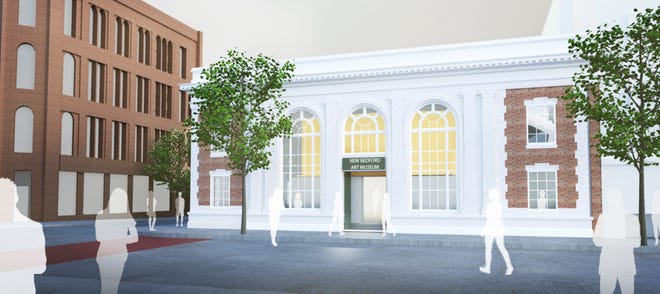
“When you set visuals to it, and you put the narrative to it, everyone just gets so excited about it,” stated Ashely Occhino, NBAM’s government director after the museum unveiled the most up-to-date architectural renderings at an event on Friday.
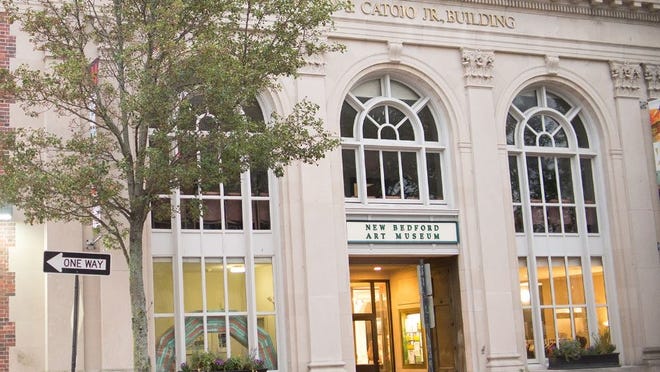
The museum’s approach is to renovate all a few floors of its building at 608 Pleasant St. Occhino claimed the most important focus will be doubling the dimension of the gallery and reconstructing the instruction space. NBAM’s options also include enhancing safety and environmental controls.
At this time, the city’s business of Housing and Community Development is positioned on the 2nd ground of the building. Mayor Jon Mitchell has verified strategies to shift the department to a different workplace space so the museum can occupy the overall making.
Additionally, Occhino says accessibility will be a important part of the updates. New handicap-obtainable loos and greater elevators will make it possible for any guest to have complete obtain to the museum.
Spot: NBAM – A strategy to grow the New Bedford Artwork Museum is getting it stage by step
“The museum can genuinely be a progressive institution,” Occhino included. “We need to have an elevator which is good and significant and huge for a chair user. So, I can healthy various people in there.”
The museum is doing the job with Boston-based mostly architecture firm Machado Silvetti for the proposal.
However Occhino would not give particulars about the price tag of the proposal or how substantially has been raised already, she mentioned, the museum is searching for to fund the undertaking with 50 percent of the cash coming from community resources.
The funding sources include the Massachusetts Cultural Council’s Cultural Facilities Fund, New Bedford’s Community Preservation Act funds, American Rescue Program Act resources, bonding and historic tax credits, and “operating together with authorities at the metropolis, condition, and federal stages,” she included in an emailed reaction.
Constructing a place attraction
The artwork museum was recognized in Mitchell’s 200-web page Arts & Tradition Plan unveiled in 2018 as a cultural advancement possibility for the city.
Occhino states they’ve been looking at the arts and society system as a roadmap. “It’s sort of all these constructing blocks have been set in position, and we’re just continuing to develop off of them.”
NBAM’s aim is to develop into a place museum for the location and state, she included.
Far more:$1 million more directed to improve local arts and tradition
In the course of a reception last Friday,theartwork museum’s administration, Machado Silvetti architect Austin Ward and Mitchell spoke to museum staff members, trustees, committee customers and arts supporters about the latest programs.
“I think with every little thing which is been going on for the past 18-19 months, it can be pleasant to have some extra fascinating moments for us in which folks can seriously rally around us,” Occhino stated.
“There was just a good excitement heading on in the space.”
Short-time period ideas for the museum
As for a timeline, Occhino says they do not have a strong remedy. “It’s about having our concept and wonderful tuning, fine tuning, wonderful tuning, and then eventually, you have the design ideas that you hand off to a contractor,” she explained.
“There’s no much better possibility than now.”
In the meantime, the museum has by now started to make modest enhancements these as adding banners outside the house the making to be more seen to visitors.
Given that May well, the museum has been presenting “Unusual Threads: The Function of Ruth E. Carter,” a solo exhibition celebrating the Massachusetts-born Academy Award profitable costume designer who has a 30-calendar year occupation in Hollywood.
Carter has intended costumes for movies these as “Black Panther,” “Malcom X,” and “Selma.” The exhibit closes on Nov. 14.
In December, NBAM will current a “associates exhibition” showcasing art from all about the location these kinds of as paintings, drawings, combined media, photography, ceramics and more.
Occhino also hopes with the renovations it will attract far better exhibitions which will lead to more powerful programing to eventually enable improve the residents of the city.
“At the close of the working day, this undertaking is really heading to change the lifestyle and art in New Bedford,” Occhino said. “There’s just so quite a few positive motives for this to happen.
“For the two the metropolis and the building by itself.”
Standard-Periods employees author Seth Chitwood can be reached at schitwood@s-t.com. Stick to him on twitter: @ChitwoodReports.Aid community journalism by buying a digital or print subscription to The Regular-Periods right now.