
Planting native plants in Palm Beach is ‘just smart landscaping’

I’ve discussed the importance of native plants for the survival of our pollinators and birds, but I haven’t really explained why invasives are so damaging to our environment.

For over a century, we’ve imported plants to South Florida from all over the world. Some were thought to be beneficial while others were just ornamental. Many couldn’t adapt and disappeared, while many more grew nicely here and caused no problems. But some found the environment perfect: they went to seed and spread to new territory, choking out the existing native plants that couldn’t compete with their vigorous growth and, in so doing, displaced the associated pollinators, birds and wildlife.

Once established, invasive species adversely affect native-plant communities, outcompeting and killing the existing native species and damaging natural ecosystems. We need to be proactive in addressing this issue to maintain the health, function and long-term productivity of our landscapes.

Because Florida’s climate is so accommodating, invasive species cause more crises here than anywhere else in the United States. All of Florida’s native habitats marine, freshwater, and terrestrial are threatened by invasives.

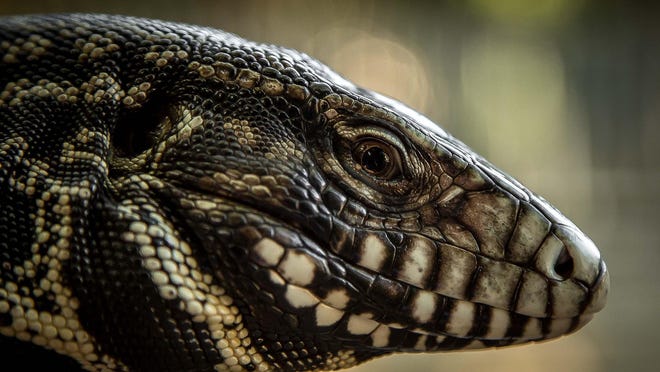
Tegu lizards can grow to 5 feet in length.
  • The omnivorous Argentine black-and-white tegu lizards can grow to 5 feet in length and feast on the eggs of ground nesting birds.
  • Burmese pythons have been spotted swimming from the Everglades to the Florida Keys. These invasive constrictors feed on native species and can grow upwards of 20 feet.
  • Beautiful and exotic lionfish devour smaller species of native fish and have no known predators.
  • Studies have shown that non-native wood boring insects promote disease and reduce a forest’s ability to capture and store carbon.

The cost of managing Florida’s invasive plants is upwards of $100 million every year. The cost of animal management could easily exceed this.

Lionfish devour smaller species of native fish and have no known predators.

Proper IDs

The first step in controlling invasives is identification: you can’t remove them if you don’t know what they are and you need to identify them so you don’t buy them accidentally. A few to be particularly aware of are: Japanese climbing ferns, melaleuca trees, Brazilian pepper, Australian pine, common lantana (Lantana camara), heavenly bamboo (Nandina domestica), Chinese privet (Ligustrum sinense), coral ardisia, and tropical or scarlet milkweed (Asclepias curassavica).

Tropical milkweed, Asclepius curassavica, is widely used and often sold as a native. It can cause monarchs to have a deadly parasitic infection called OE. If you have this milkweed, make sure to cut it back to the ground after monarch caterpillars have eaten the leaves.

Milkweed, you say? Isn’t that the essential host plant for the monarch butterfly? Yes, but it is important that you buy the native species, as the non-native can transmit the deadly OE bacterium to the monarch caterpillars, causing wing deformity, an inability to fly and ultimate death. Plant butterfly milkweed (Asclepias tuberosa) or rose milkweed (Asclepias incarnata): If you have the scarlet milkweed in your garden, as many of us do, make sure you cut it back to the ground after the caterpillars have defoliated it. This will decrease the risk of the OE bacterium.

Unfortunately, many of these invasives are still being sold at nurseries under incorrect names.

Native lantana has yellow flowers and is a low growing, spreading ground cover. It is not poisonous, but the invasive Lantana camara is.

One of the worst offenders is the invasive Lantana camara, often sold as the native Lantana depressa. The best way to avoid the invasive species is to understand the differences between the two.

Lantana camara, native to the West Indies and called shrub verbena, was loved by gardeners for its bright multicolored flowers, but it will dominate understory vegetation and is listed as a category I invasive. It has outcompeted our native Lantana depressa to the point that this is now listed as endangered.

Complete with a landscape design by 2.ink studio that incorporates indigenous plants, this sustainable headquarters by LEVER Architecture thoughtfully uses design thinking to accommodate various levels of physical ability and feel inviting to all

Portland, Oregon

Situated in Portland’s Albina community, The Meyer Memorial Have faith in Headquarters by LEVER Architecture with 2.ink Studio is a platform for advancing Meyer’s initiatives throughout the condition, supported by a structure that expresses the Foundation’s commitment to equity and sustainability.

Meyer Memorial Belief is a private foundation that invests in organizations, communities, strategies, and initiatives that add to a flourishing and equitable Oregon.

The new campus’ developing software involves an engagement centre for general public systems, mission library, cafe-model party place and roof garden terrace, workspace for 50, conference rooms, and coworking house for partners.

For its inclusive and sustainable design and style, Meyer Memorial Have confidence in Headquarters has recently been awarded a 2022 American Architecture Award Honorable Point out, by The Chicago Athenaeum: Museum of Architecture and Design and The European Centre for Architecture Art Design and Urban Scientific tests.

To bolster connections in between the Basis and the communities it serves, Meyer’s floor flooring is built as a “front porch.”

Inside of, the focal issue of the setting up is the Centre for Wonderful Purposes, a 100-seat convening centre for community courses and collaborations with companion businesses.

Produced from a regional wooden products identified as Mass Plywood, the Centre is an indoor/outside function area that opens to an instructional garden.

The landscape design acknowledges local ecology, local community history, and regional identity, serving as an educational setting for staff and guests.

Indigenous plant species ended up chosen mainly because of their historical significance as a major meals, medicinal or commodity source for Columbia River tribes. 

A back garden marker in the Kwánsǝm Yakwá Garden expresses the concept so steadily articulated by Indigenous men and women, “we’ve constantly been here” in Chinook Wawa.

The building thoughtfully incorporates style and design imagining that accommodates different concentrations of bodily ability, and is inviting to all regardless of race, coloration, religion, intercourse, national origin, disability, or age.

Examples contain a bottom-up tactic to design and decision-making with participation of the greater part of Meyer staff members at just about every phase equitable distribution of widespread features and windows all through going higher than and past ADA demands furnishings that accommodates different system forms and actual physical qualities diversity of cultures and languages mirrored in messaging, signage, and artwork. 

Reflecting a determination to varied representation and equitable outcomes throughout its workforce, Meyer designed rigorous participation goals and worked with the challenge crew to maximize options for BIPOC and lady-owned corporations: 39 {6d6906d986cb38e604952ede6d65f3d49470e23f1a526661621333fa74363c48} participation for the design crew and 55 {6d6906d986cb38e604952ede6d65f3d49470e23f1a526661621333fa74363c48} participation for the development staff.

The project connects sustainable developing design with social equity and local community growth, demonstrating the synergistic romantic relationship that can be produced among these objectives. 

In line with environmental targets, the job realized LEED v4 Platinum certification and is enrolled in the Path to Internet Zero with Electricity Rely on of Oregon.

The design and style for the new headquarters employs a quantity of strategies to reach these ambitious certifications, which includes solar PV panels, an strength successful constructing enclosure and HVAC technique, on-web-site stormwater management, regional components, and indigenous plantings.

The creating makes use of 30 percent much less electrical power and with the 50kW photo voltaic array, consumes 50 per cent significantly less vitality when when compared to a regular code structure in Oregon.

The setting up works by using 35 percent much less h2o indoors and 80 {6d6906d986cb38e604952ede6d65f3d49470e23f1a526661621333fa74363c48} fewer h2o for irrigation.

A dynamic filtration procedure and activated carbon filter media lower air particulates, eliminate odors from getting into the making, and produce much healthier indoor air good quality for staff members and visitors alike.  

Challenge: Meyer Memorial Have confidence in Headquarters
Architects: LEVER Architecture
Lead Architects: Chandra Robinson, Thomas Robinson, Cecily Ryan, and George-Michael Rusch 
Landscape Architects: 2.ink Studio
Structural Engineers: KPFF Consulting Engineers 
Civil Engineers: Standridge Layout
MEP EngineerS and LEED Advisor: Glumac 
Experiential Designers: Ditroen
Typical Contractor: O’Neill/Walsh Group Builders 
Shopper: Meyer Memorial Have faith in
Photographers: Jeremy Bittermann

Green Good Design Awards 2023

Palm Beach finds compromise on rules for native plants

Many homeowners in Palm Beach have removed ficus hedges and other non-native species from their yards and replaced them with native plants. The town last week revised a rule on the number and species of native plants that can be used in landscaping.

Procedures on the selection and species of indigenous vegetation that can be utilized in Palm Seaside landscapes gained a compromise revision past week from the City Council.

In a 4-1 vote, with Councilman Ted Cooney dissenting, the council voted to make a number of variations to the town’s indigenous vegetation ordinance.

Amongst the changes accepted at the Jan. 11 Advancement Critique conference:

  • In any new landscape structure, 30{6d6906d986cb38e604952ede6d65f3d49470e23f1a526661621333fa74363c48} of the plant count need to be native. This most lately experienced been 35{6d6906d986cb38e604952ede6d65f3d49470e23f1a526661621333fa74363c48} below the procedures accredited by the council in November 2021. Prior to that, the percentage stood at 25{6d6906d986cb38e604952ede6d65f3d49470e23f1a526661621333fa74363c48} under rules passed in 2019.

Former protection:Town’s latest native plant need has harvested worries, assist from back garden authorities

Additional:Eco-friendly gardening: Here are some fantastic-wanting natives for your Palm Seashore back garden

Local landscaping business turns to native plants in response to the ‘kill your lawn’ trend

It would seem like the liable factor to do, generating the variety of manicured garden and flowerbeds that could get a “yard of the month” award.

But present day landscaping as we know it, awash in orderly patterns and tidy crops, isn’t always good for soil wellbeing and biodiversity. A better strategy, say the founders of the south Louisiana company Swamp Fly, is to integrate native vegetation into household and industrial landscapes to assistance improve sustainability and restore habitats for birds and insects.

“We attempt to use largely indigenous plants, or mix in species that aren’t indigenous, but really do not out-contend other vegetation,” suggests co-founder Caitlin Robbins, who, with enterprise companions Ashley Brackeen and Emily Pontiff, released the native landscape organization Swamp Fly past 12 months.

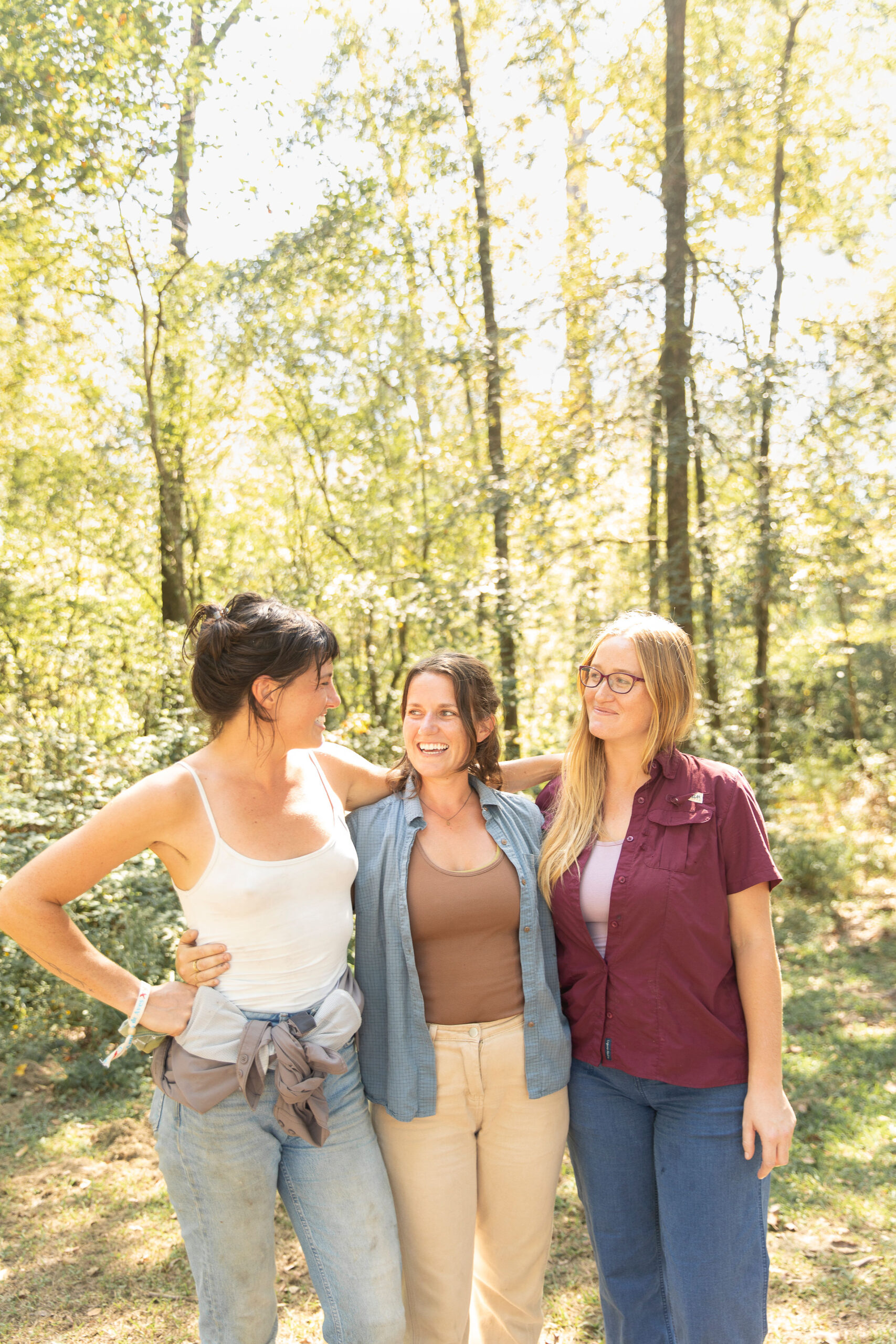
Swamp Fly Landscapes founders Ashlee Brackeen, Emily Pontiff and Caitlin Robbins.

The corporation serves consumers in both equally Baton Rouge and New Orleans, and focuses on regenerative commercial and residential landscaping.

“We never use chemical pesticides or herbicides,” Robbins claims. “Everything we use is natural and will have negligible influence on the bordering ecosystem, mainly because soil overall health and drinking water quality are crucial to human well being and the health of vegetation and animals.”

The concept for opening a complete-services native landscaping business took root just after Brackeen desired to convert her conventional landscaping business enterprise into something extra intentional. She pulled in good friends Robbins and Pontiff, who ended up functioning in various fields, but shared her interests.

The a few started by doing the job on a local community garden undertaking with Cindy Fantastic, a Baton Rouge activist and host of the WHYR radio show, Locals Only. While that challenge was delayed because of to the pandemic, Robbins suggests, the 3 close friends proceeded with a small business concept, launching Swamp Fly in spring 2021.

The business delivers consulting expert services and complete-services structure and set up. It is part of a expanding “kill your lawn before it kills you” movement throughout the nation, in which the return to small-influence landscaping is viewed as a healthful shift for equally crops and folks.

Indigenous landscaping addresses the reduction of “living landscapes” at the hand of urbanization, according to the Countrywide Audubon Society. About 150 million acres of habitat and farmland have yielded to urban sprawl, and the trend reveals no signal of slowing down, according to the corporation, which further more states that “the present day obsession with hugely manicured ‘perfect’ lawns on your own has established a eco-friendly, monoculture carpet throughout the state that addresses over 40 million acres.”

Swamp Fly will shortly be highlighted on the new Kill Your Lawn Venture series in generation by Joey Santore, host of the YouTube channel Crime Pays, but Botany Doesn’t. The documentary will comply with Santore as he explores so-named kill your garden jobs throughout the state, such as just one in New Orleans in which Swamp Fly designed a new, sustainable style and design, Robbins says.

To keep reading through about Swamp Fly and their focus on indigenous crops, examine out the complete tale from 225 Each day e-newsletter. Subscribe right here for extra.

Jun 25 | Parks, Plants and People The Impact of Jens Jensen on Evanston’s Natural Landscape

Be part of The Evanston Public Library, Jens Jensen Gardens, and the Evanston Backyard Club on Saturday, 6/25 for Jens Jensen Day ’22, a celebration of the loaded native plant and gardening record of Evanston.

The software will aim on 3 influential Evanstonians: Anna Rew Gross, Donn Werling, and Margery Taylor Carlson, and will consist of shows at the library adopted by a tour of the Lighthouse Beach front gardens.

Gross, Werling and Carlson have been all influenced by the do the job of famed Danish-American landscape architect, Jens Jensen, whose design and style operate can be found in both of those the metropolis of Chicago (Garfield Park, Humboldt Park, and Douglass Park amid many others) and in Evanston. Jensen’s most noteworthy design and style in Evanston was the Shakespeare Back garden (the initially of its form in the United States) on the grounds of Northwestern College and the Wildflower Trail on the grounds of the Grosse Position Lighthouse. The two had been commissioned by the Backyard garden Club of Evanston. His largest and most bold landscape in Evanston was the 4.7 acre landscape made in 1927 for the Harley Clarke mansion, positioned at 2603 Sheridan Road.

The keynote speaker, Dr. Donn Werling, was the 1st and only human being with the official title of City of Evanston Naturalist. He also served as Director of the Ladd Arboretum, Evanston Ecology Heart, and the Lighthouse Character Center from 1973 – 1982. He is now retired from the University of Michigan where by for 19 a long time he served as Director of the Henry Ford Estate, a single of Jensen’s major and most regarded performs.  Donn is also advisor to Jens Jensen Gardens in Evanston.

In 1915 a friendship in between Anne Rew Gross (1864 – 1946) and Jens Jensen (1860-1951) grew into a skilled connection that improved the aim of household plantings from nonnative vegetation species to patterns centered all-around the use of indigenous crops. In May well 1916 the to start with plant sale was held in Raymond Park and has ongoing to be an once-a-year event to this day. 

Margery Carlson (1892 – 1985), an early member of the Garden Club of Evanston and the initial complete time lady faculty member of Northwestern College, was another influential Evanstonian who will be celebrated.  She traveled throughout the entire world collecting botanical samples (some of which are still archived at the Subject Museum), arranged Victory Gardens, and was 1 of the founders of the Ladd Arboretum. Her legacy carries on to enrich our life today. 

The Program will start out at 10:00 AM in the community area of the key department of the Evanston Community library. There will be a lunch break from 12:00-1:00 and at 1:15 on web site contributors will travel by bus to Lighthouse Park the place the method will continue on with extra discussion and Q&A with Donn Werling. Excursions of the landscape rehabilitation work underway, native plant demonstration backyard garden, Alfred Caldwell Stonework, and waterfall will be provided. Users of the Garden Club of Evanston will be on website to conduct guided excursions of the historic Lighthouse wildflower stroll (built by Jensen in 1937). Light-weight refreshments will be supplied.

Even further data can be received by emailing info@jjge.org or on the website   www.JenjensengardensinEvanston.org.

Pollinator plants are Garden Butterfly’s specialty

This is the latest in a series we call Plant PPL, where we interview people of color in the plant world. If you have any suggestions for PPL to include in our series, tag us on Instagram @latimesplants.

Brandy Williams’ business is landscape design, but it’s more accurate to think of her as an artist who paints for pollinators, primarily with succulents and what she calls “California friendly” plants.

Williams never consciously intended to make plants her life’s work. In college, the Compton native thought about majoring in accounting or teaching, finally settling on human resources. But when it came to a project for her master’s degree, she found herself creating a program around gardening — specifically creating a pollinator garden at Augustus F. Hawkins High School in the Vermont-Slauson neighborhood of South L.A. — and it was as if someone had opened a door to her true profession.

“I had been working with plants with my grandmother ever since I was young,” Williams said. “She taught me how to keep a garden clean and be resourceful. But I had no idea I would make it my work until this project in 2014. That’s when I learned who I was. Plants gave me the freedom to create.”

Eight years later, her business, Garden Butterfly, is creating landscapes at private homes and businesses around Los Angeles. Her specialty is designing gardens laced with succulents of every size, California natives and other noninvasive plants fit for a Mediterranean climate. Her studio “lab” is the front yard of her 1930s Storybook-style home in Vermont Knolls.

Brandy Williams stands in her front yard surrounded by a variety of plants.

Brandy Williams uses her front yard as a studio “lab” for her landscape design business called Garden Butterfly.

(Ricardo DeAratanha / Los Angeles Times)

The 900-square-foot yard was just lawn and vintage walkway when she and her family moved in seven years ago. She got help removing the old grass and then started creating.

The result is so lovely that the Theodore Payne Foundation has made it part of its 2022 Native Plant Garden Tour on April 23-24. It will feature extraordinary landscapes where at least 50{6d6906d986cb38e604952ede6d65f3d49470e23f1a526661621333fa74363c48} of the plants are natives of California.

“Every year, Brandy hosts a tour for her neighborhood, and she invited us last year, and we were blown away by her style and skill,” writes Evan Meyer, the foundation’s executive director. “So when we went about deciding who should be featured in the [2022] tour, she was right at the top of the list.”

Williams’ landscape “canvas” is relatively small, but lushly filled with 20 varieties of California native plants — salvias, ceanothus, buckwheats, mallows and such perennials as monkey flower and yarrow. Stone pavers float inside a pea gravel path littered with the feathery leaves of California poppies and other emerging wildflowers. Interlaced in the plants are large rocks, half-buried logs (to provide shelter and breeding grounds for insects and animals) and a National Wildlife Federation sign designating the area as a certified wildlife habitat.

Tour gardens filled with native plants

Being a habitat requires a water source too, so Williams installed a fountain against the house, half hidden by pots of reeds and the long graceful branches of a Waverly sage, its constant burble a soothing garden song. Huge aeoniums — sort of the succulent version of a sunflower — and flapjack kalanchoe share space with seaside daisies and the long-stemmed purple flowers of lavender and Mexican sage. More succulents spill from pots along the porch and side of the house — creamy green burro’s tail (Sedum morganianum) paired with ruffled echeverias or aloes. Tiny rosettes of sempervivum succulents are nestled against mounds of lemon thyme and nearby, a silver green dudleya shares a pot with the aptly named red fairy duster (Calliandra californica), whose flowers look like a wispy vegetable brush.

At the corner of the yard, next to the house, Williams has built a small deck nearly covered by a large bench, where you can study a pallet-turned-planter brimming with succulents or watch hummingbirds flit over mounds of blooming lavender and sage to perch across the garden on the gangly Mexican succulent with reddish blooms known as tall slipper plant (Pedilanthus bracteatus).

A birdbath surrounded by potted plants and pea gravel

Brandy Williams’ garden is a dense mix of succulents, California native plants and Mediterranean-climate plants, such as this grouping that includes dudleyas, red fairyduster, succulents, lavender, a bromeliad and a pot of buckwheat. A birdbath and a simple statue of a Hindu deity compliment the greenery.

(Ricardo DeAratanha / Los Angeles Times)

It’s easy to be transported in this artfully arranged space, and like many artists, Williams sees her medium as a way to communicate with the world. Her website features a quote from agriculture scientist George Washington Carver, the first African American to earn a bachelor’s of science degree and whose innovative research and inventions at Tuskegee University helped Southern farmers restore their depleted soil: “I love to think of nature as an unlimited broadcasting station, through which God speaks to us every hour, if we will only tune in.”

That quote resonates in part because “plants have always talked to me,” Williams said, but also because she so admires Carver’s style.

“This is the way nature communicates with you. It’s saying, ‘You got a meeting this morning? Slow down, it’s O.K. You’ve got this.’”

“Of course, he was connected to the Black community, but he worked for humanity in general, and he was respected by all,” she said. “And what he was saying with this quote I experienced just this morning, when I was out in the garden drinking coffee. The hummingbirds were flying around, I saw two monarch butterflies and the bees were all around me. He was saying this is the way nature communicates with you. It’s saying, ‘You got a meeting this morning? Slow down, it’s OK. You’ve got this.’”

Williams, a slender, youthful mother of two college-age daughters, laughingly refuses to tell her age. For a photo shoot, she looks like a fashion model posing in a perfect prop garden wearing stilettos, but she laughs at the idea that this is her normal attire. At a job site, she says, she dresses in jeans, work boots and a flannel shirt, with a well-worn paint brush sticking out of her back pocket.

That brush is part of her grandmother’s legacy, the final touch when she’s planting her succulent gardens. She uses it to whisk dirt off the plants and tidy everything up.

A small footbridge is surrounded by rocks and succulents

A small footbridge and shady plantings, which include aeonium succulents and asparagus fern, accent Brandy Williams’ home garden.

(Ricardo DeAratanha / Los Angeles Times)

“She taught me that when you think of a garden, it should be swept and clean,” Williams said. “It’s a small task, but a necessary one. Even with a little raised garden bed, even when you’re planning, you have to keep it organized.”

Williams shares more about her grandmother’s lessons, her landscaping inspirations and how she uses plants to build community below.

Her grandmother’s collard greens and purple grapes inspired her craft

“I always say there were many paths that led me here. I have always been interested in and appreciated plants, but growing up in Compton with my grandmother, I was really influenced by her life in general. She grew up on a farm in Arkansas, and she and my grandfather were part of the great migration of Blacks who left the segregated South to move north and west, looking for better opportunities and education. They came west, and settled in Compton.

A purple succulent up close

Brandy Williams’ front yard garden is filled with succulents, like this purple aeonium.

(Ricardo DeAratanha / Los Angeles Times)

An heirloom Stupice tomato growing happily in a raised-bed vegetable garden

An heirloom Stupice tomato growing happily in a raised-bed vegetable garden planted on the sunny east side of Brandy Williams’ house.

(Ricardo DeAratanha / Los Angeles Times)

“My grandmother raised me, and I was required to work in the yard. I had to sweep and keep the garden clean and make sure the lawn was watered. I could not waste water — she got upset with me if I overwatered the lawn with the hose. But I didn’t mind doing the work. I just felt it was necessary, and I didn’t mind being outside. She had turf in the yard, a few succulents, a large lemon tree and a garden with collard greens and tomatoes and grapes growing along the gate. They were purple grapes and they tasted sour, but I thought it looked so cool. And that was my entry into all of this.

“Originally, when I went to school I was thinking about going into accounting and then I wanted to be a teacher, but life just had all these changes…. I started out at Compton College, but I became a nontraditional college student. I earned my master’s degree online, years later. I was a stay-at-home mom for awhile, but my husband encouraged me to finish my degree in human resources. There are lots of different paths with human services — counseling, working with elders — but for my master’s degree, I decided to create lessons for creating pollinator gardens in schools. Augustus Hawkins High School asked me to help re-establish a garden they had created years earlier. They already had garden beds for food — fruits and vegetables — but my idea was to also grow plants that attract pollinators.

“I have a love for flowers and I always knew you needed pollinators [to get fruit], and growing up, whenever I saw a butterfly, I would stop in my tracks and be mesmerized. So I started researching. I learned about native plants through the Theodore Payne Foundation website — I took their certification program — and Las Pilitas Nursery in Santa Margarita. But I also did a lot of reading at the library. It’s like a field trip for me — some people go shopping, and I go to the Los Angeles Central Library downtown. I love the library.”

Obama persuaded her to save the bees

“That project [at the high school] was really my epiphany. I felt like I was led here [to landscaping] by a higher power, because once I got here, doors started to open for me.

“I wasn’t really focused on succulents or native plants at first. I knew I wanted to make plants my work, but then I read this presidential memorandum [from the Obama White House] in 2014, called ‘Creating a Federal Strategy to Promote the Health of Honey Bees and Other Pollinators.’ I read the whole thing, because that’s the way I am — I study and read. I thought, ‘I was able to establish a garden for butterflies even though I have a master’s in human services because I’m creative and I have an open mind.’ The memo encouraged businesses to incorporate plants for pollinators, and there was something about how you can do it on a small scale, and I was like, ‘Yeah, this is what I want to do. I want to branch out with pollinator-friendly landscaping.’

A flowering calla lily in mottled shade

A flowering calla lily in mottled shade is one of many pollinators Brandy Williams has planted.

(Ricardo DeAratanha / Los Angeles Times)

“My grandmother grew a few succulents — agaves, jade and aloe, but she didn’t have all the variety of succulents you see here today. I was always familiar with succulents because she grew them and then one day I saw a video on YouTube by [succulent designer] Laura Eubanks. I saw what she did, creating these beautiful gardens with succulents, and it really encouraged me to become more creative. She was so free in working with the succulents. There weren’t any limitations, and because I’m an artist working with plants, I really connected to that.

“During my studies, I also walked around the gardens at the Natural History Museum [of Los Angeles County] to get ideas and observe how the plants grow together. I met a lady who worked there as a volunteer and she was just so excited talking about how we live in a Mediterranean climate here on the coast. People always identify this as a being a dry, desert climate, but at that moment, I learned that no, we aren’t a desert along the coast. Maybe inland, but here we’re a Mediterranean climate, and again, it was confirmation for me to go out and explore.

“It’s like my garden. What people will see is a mix of native plants, succulents and those California-friendly Mediterranean plants, and I say that because not all Mediterranean plants are California friendly. The plants I grow are noninvasive and grow well with California native plants. An example is moonshine yarrow [Achillea ‘Moonshine’ — a hybrid introduced in England] growing near bee’s bliss sage, or sweet lavender and rosemary growing near a native buckwheat and hummingbird sage.

A pair of Aloe brevifolia succulents growing next to a purple-leaved bromeliad and elephant bush (Portulacaria afra)

A pair of Aloe brevifolia succulents grow next to a mottle-leaved bromeliad and elephant bush (Portulacaria afra) in Brandy Williams’ front yard garden.

(Ricardo DeAratanha / Los Angeles Times)

“Lavender is one of my favorite plants in the whole wide world, and I don’t think there’s anything wrong with that. I don’t want to not experience lavender because it’s a non-native plant. As long as I do as much study and research as I can, if a plant is not invasive and it’s California friendly, then I’m with the group that says, ‘I’m OK with that.’ I promote natives but also succulents because not everyone appreciates native plants. So I make my succulent gardens, but I always try to introduce those native host plants for pollinators too. The bees and butterflies will appreciate nectar flowers like lavender but they need the native host plants to feed their young, like native milkweed for monarchs. So I always try to incorporate some native plants to create habitat and help bring people along [to appreciate natives].”

Her motto: ‘plants belong to all of us’

“When I’m designing, this is what I think: ‘A garden is an opportunity for people of different backgrounds to come together and just learn about each other. It’s a way to connect with people and break down barriers, because plants are something we all have in common. We all have to eat, and most people love beautiful things and a lot of people enjoy pollinators — they enjoy seeing the hummingbirds and butterflies. So if you’re an introvert or just need a way to have a conversation, you know you can always talk about plants.’

“One of my goals is to help people understand that they can do it wherever they are, even if it’s just a little raised garden bed or containers. Sometimes people are intimidated by gardening. They think, ‘I can’t grow that, it’s too hard, you have to know certain stuff, blah blah blah,’ but plants belong to all of us. Whatever socioeconomic background you have doesn’t matter. Plants belong to everyone, and gardens are one way to express that, so why would you be intimidated about something that’s good and belongs to everybody?

A glass box window on the side of Brandy Williams’ home filled with plants and cacti in containers

Brandy Williams garden is filled with plants that pollinators love, and inside her home she decorates this windowsill with a variety of cacti and low-water plants.

(Ricardo DeAratanha / Los Angeles Times)

“If you are interested in reaching out, even just to family, a garden is the perfect place to gather and communicate. It’s also an opportunity to teach. It’s what I do when I have my [personal] garden tour; I am a teacher and people learn. They take the information back to their families and neighborhoods and they communicate, and that lets me know that I did my job.

“I think it’s awesome for people to come out and see my garden. It’s not about me, it’s about what I’m doing and what the impacts are for our community. I want to play my part in the whole environmental conservation movement, and, hopefully, I can inspire people to think in the same way.”