Wildfire Resilience and the Role of Landscapes

Facility Maintenance Decisions

An expanded fire season has underscored the need for ongoing vigilance in planning, preparation, and maintenance.



wildfire resilienceFrom landscaping selection to vegetation management plans, managers should take positive actions to reduce the overall wildfire risk for their facilities.


In 2021, more than 46,000 wildfires scorched more than 5 million acres of land. Many of these fires have happened outside of the traditional fire season, which is September and October. 

The expanded fire season has underscored the need for ongoing vigilance when it comes to wildfire resilience planning, preparation, and maintenance by institutional and commercial facilities. Understanding the vulnerability of a facility extends beyond just the building and its contents. It includes the landscaping and hardscaping around its property. 

A building’s first line of defense against an approaching wildfire is its surroundings. A building’s defensible space divides into three zones and is the area between a building and an approaching wildfire, where the facility maintenance team can manage vegetation and other combustible materials to minimize the chance of ignition and fire spread. 

The team needs to manage this space and its contents to retain protection year-round. Landscaping with fire-resistant plants is essential to making a meaningful reduction in the wildfire risk to a facility, but there is no guarantee this effort will eliminate all risk. 

Ignition issues 

Zone One is located within 5 feet of the building and is often referred to as the building ignition zone. The objective of activities in this zone is to reduce the chance that ignition of combustible materials by embers will result in direct flame contact with the building. Because this zone is closest to the building, it requires the most careful selection and intensive management of vegetation and materials. Managers need to: 

  • Install hard surfaces in this zone, such as a concrete walkway, or use noncombustible mulch products, such as rock mulch. 
  • Remove dead plant material from vegetation. 
  • Plant acceptable landscape vegetation in this zone, including irrigated lawn and low-growing herbaceous — non-woody — plants. Shrubs and trees, particularly conifers, should not be used in this zone, and vegetation that could overhang the roof can lead to buildup of flammable debris on the roof. 
  • Limit plant selection to varieties that grow no more than 12 inches in height If the facility has noncombustible siding, such as fiber-cement and the decision is to have plants in this zone. Workers must water and care for vegetation in this zone as any plant can become highly flammable if it is dead, dried out, or not well maintained. 

Suitable plants for this zone include creeping phlox, jellybean plants, and Mexican hen and chicks. It is important to note that each of these plants thrive in USDA Hardiness Zones 9 through 11 and have a maximum height growth of 8 inches. For additional plants suitable for wildfire-prone locations, managers can consult the Insurance Institute for Business & Home Safety (IBHS) Wildfire Ready landscaping guide for businesses. 

Vegetation management 

Zone Two, located within 5-30 feet of the facility or to the property line, is where vegetation management is important to prevent fire from climbing into the upper portions of trees or shrubs, and to stop the fire from burning directly to the building. Trees and shrubs in this zone should be in well-spaced groupings and well maintained. 

Eliminating ladder fuels that can allow fire burning in low-growing vegetation to reach taller vegetation, and creating separation between plants or plant groupings, are effective techniques to fulfill this objective. These techniques include: 

  • Dead plant material and tree branches should be removed on a regular maintenance schedule. 
  • Create islands or groupings of vegetation that will result in a discontinuous path of vegetation, making it difficult for the fire to burn directly to the building. Embers still might be able to ignite individual islands of vegetation in this zone. 
  • Remove lower tree branches and nearby shrubs — ladder fuels — so a surface fire cannot reach the tree crown. Trees located within this area should be maintained with a minimum horizontal spacing of 10 feet between crowns. Branches should be removed from the bottom one-third of the tree height. 
  • Paved parking areas surrounding commercial developments can serve as fire breaks, preventing the fire from burning directly to buildings. The building would still have to maintain design features that minimize vulnerabilities to an ember exposure. 

Suitable plants in this zone include blue glow agave, hosta lily, and sun roses. It is important to note that each of these plants thrive in different USDA Hardiness Zones and have different maximum height growth, with the tallest at 36 inches. 

Slowing the roll 

Zone Three, located within 30-100 feet of the building or property line, has the main goal of slowing down the fire and reducing its energy. Maintenance tactics include: 

  • Tree and brush spacing should force the fire in the tree or shrub crowns to drop to the ground. 
  • Trees should be spaced a minimum of 10 feet between crowns. 
  • Tree branches should be trimmed so they do not hang below 10 feet from the ground. 
  • Dead trees, leaves, and shrubs should be removed. 

Suitable landscaping in this zone can include taller trees and bushes. Some examples that are hardy in USDA hardiness zone 3 through 8 are Canada red chokecherry, green ash and Kentucky coffee tree. 

In addition to selecting the proper landscaping, managers should consider developing a vegetation management plan that provides details and pictures about topography — slope and aspect — location of buildings on the parcel, proposed fuel treatment details and location, presence of noxious weeds on site and in the vicinity, environmentally sensitive concerns — e.g., threatened and endangered species, as well as state-listed sensitive species and wetlands — and vegetation maintenance and monitoring programs. 

The plan also should provide information on the way workers will develop and maintain the three defensible space zones. Managers should integrate the vegetation maintenance plan into their facilities inspection and maintenance plans. IBHS recommends doing inspections at every season change and after significant weather events. 

From landscaping selection to vegetation management plans, managers should take positive actions to reduce the overall wildfire risk for their facilities. Working together with neighboring facilities can create a more resilient community. While managers cannot fully eliminate the risk of wildfire, together they can help reduce the damage and overall downtime of businesses. 

Chris Cioffi is a commercial engineer with the Insurance Institute for Business & Home Safety


Related Topics:

Comments

Newton artists sell their wares at New Art Shop

The New Art Shop launched a three-weekend pop-up shop at the end of November selling the various wares of 45 local artists, with more than half of the artists from Newton and the rest from the Boston area. Emily O’Neil, executive director of the New Art Center, said her goal is to turn the space into a cooperative-style shop for local artists to sell their pieces while simultaneously running the shop themselves.

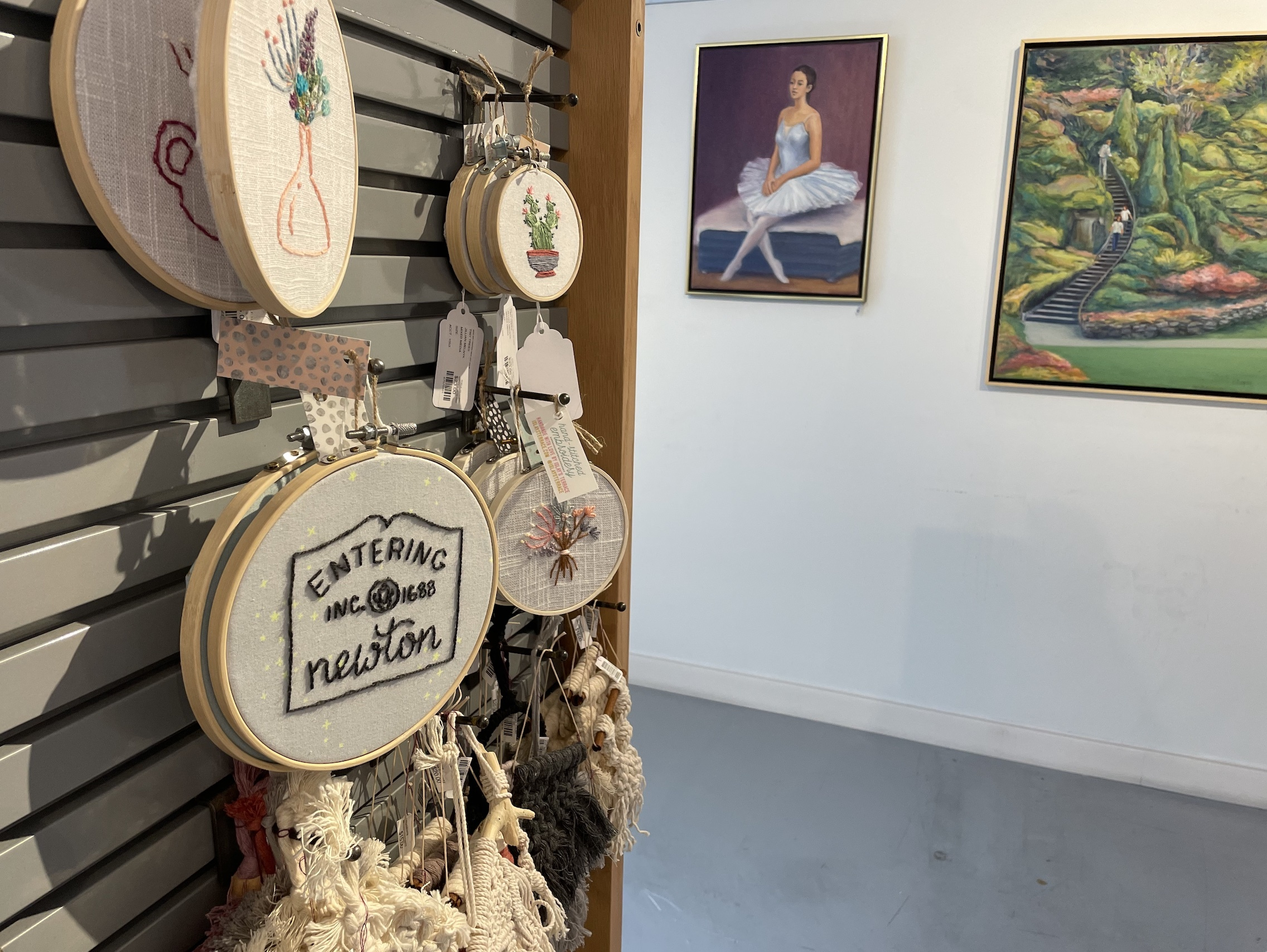
Currently, the artists earn a minimum of 65 percent of the profit from the sales of their work, O’Neil said, and if the shop fully becomes a co-op, the artists running the shop will also earn an hourly wage. The works sold in the shop vary from homemade candles and soaps to ceramics and wall art to books written by local authors.

“Our hope is at the culmination of our nine shopping days, we will have enough evidence to prove that there’s enough community interest to support a retail endeavor,” O’Neil said.

The New Art Center, a Newton-based nonprofit art education space, currently supports the volunteer-run shop. If the shop were to become a more permanent co-op endeavor, it would be run entirely by the artists, more independently from the Center, according to O’Neil and Kim Spencer, who founded the initiative together.

“Sales have been brisk,” Weinberg said, as 27 of her 39 pieces in the shop had already sold, and she was asked to bring in more.

Over the six days the shop has been open, sales have been “robust” and “above initial projection,” Spencer said. There have been an average of 30 transactions per day, she said, and the New Art Shop anticipates the overall gross sales for the nine sale days will be close to $20,000.

Sayaka Rawizza, a ceramic artist and instructor at the New Art Center, said the shop was “important to support the community.”

She said the shop was “an ideal style” for her this year during the pandemic, as it was less crowded and better ventilated in comparison to more traditional art fairs.

Sarah Kahn, a mixed media collage artist and New Art Center instructor, said within the first night, she received a call from the shop that she had already sold four of her pieces and they wanted her to bring in two more.

“I was so excited to think about selling myself to the community,” Kahn said.

Weinberg said it’s more important to her for people to “have my pieces in their home” than the money made from the sales.

“Having a venue for local artists to sell their work is really important to the community,” Weinberg said.

O’Neil said the New Art Shop is the only store in Newton selling work exclusively made by local artists.

“We’re hoping that people will shop locally, support local artists, support the community, and allow us to move this forward as a permanent retail venture,” O’Neil said.

The shop will be open for its last weekend of the season Friday, Dec. 10, through Sunday, Dec. 12. Hours can be found on the website.

Katherine Hapgood can be reached at newtonreport@globe.com.

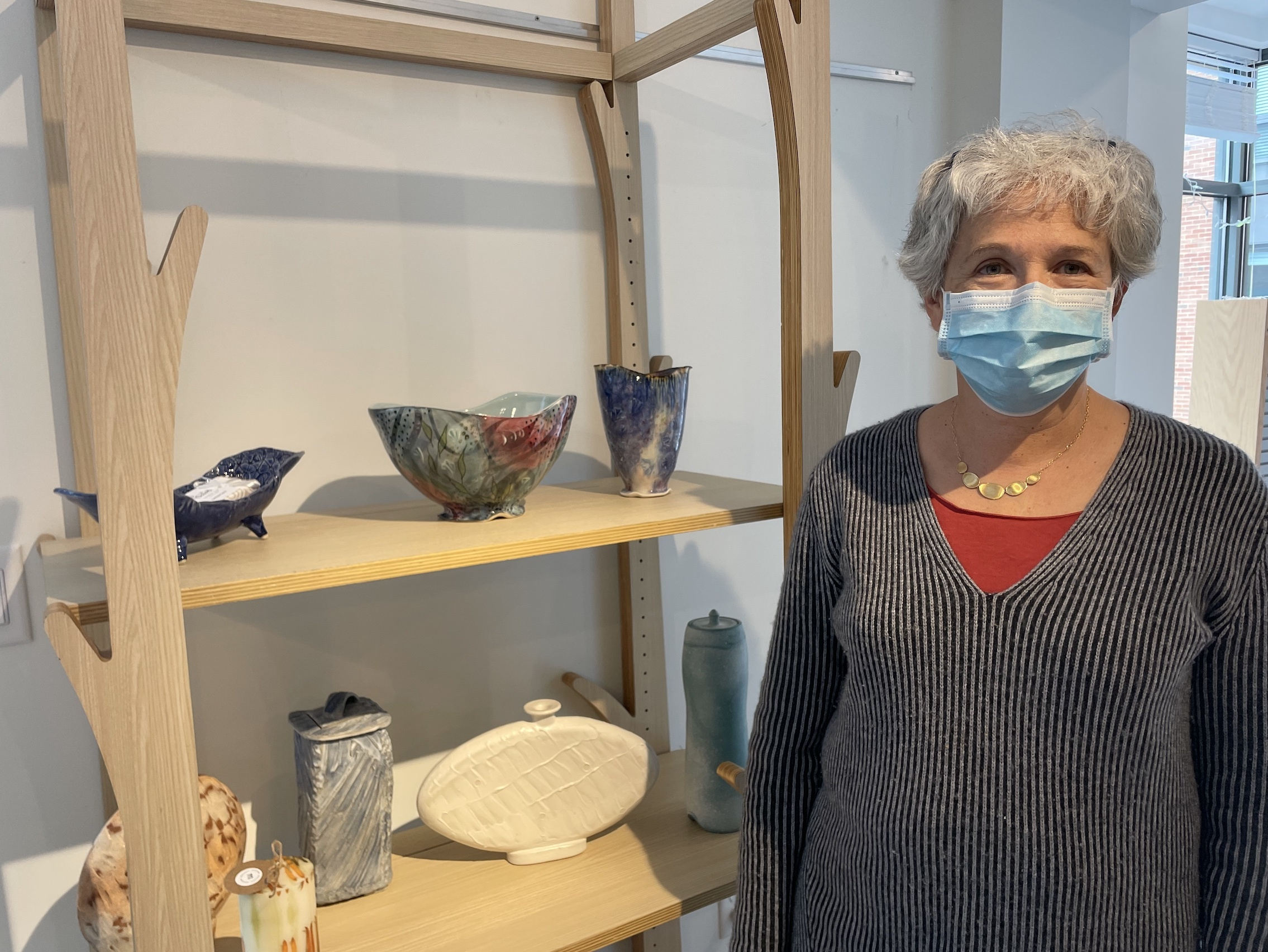
Ellen Weinberg shows her ceramics for sale on the second shelf of a display in the New Art Shop.
Ellen Weinberg shows her ceramics for sale on the second shelf of a display in the New Art Shop.Katherine Hapgood
Various wares are available for sale at the New Art Shop.
Various wares are available for sale at the New Art Shop. Katherine Hapgood

This ‘cool’ UNK club uses molten glass to create beautiful art


Post Views:
493

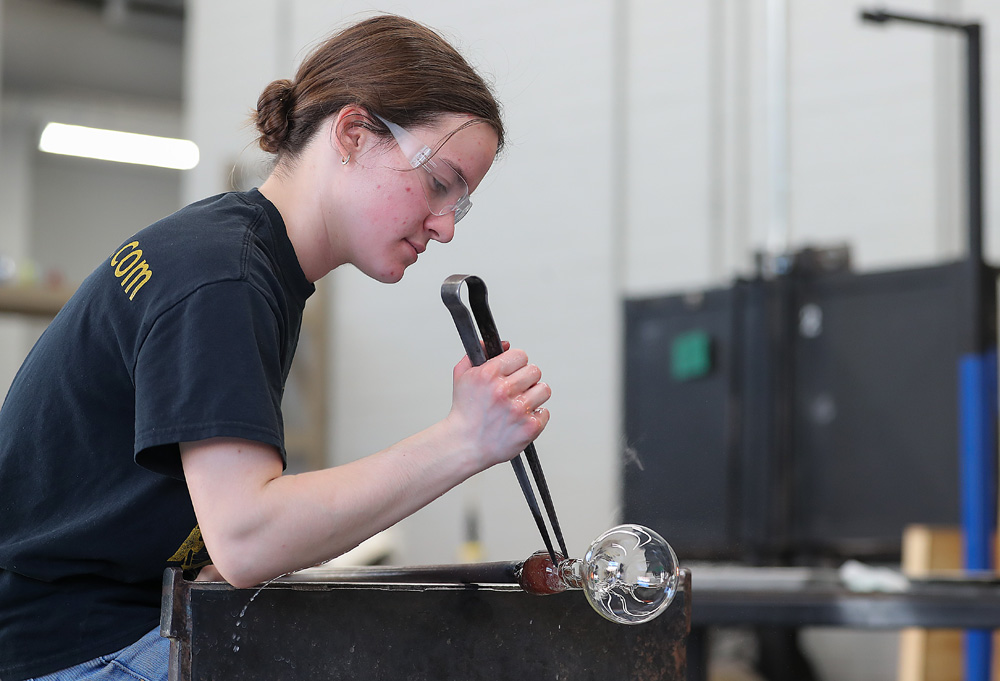
UNK sophomore Jackie Hinze creates a holiday ornament Tuesday inside the glass studio on campus. (Photos by Erika Pritchard, UNK Communications)

By ERIKA PRITCHARD
UNK Communications

KEARNEY – For Jackie Hinze, working in the University of Nebraska at Kearney’s glass studio is a relaxing escape from her science classes.

The biology major added a minor in 3D art because she enjoys using both the analytical and creative sides of her brain.

“I think the art classes are a good relief from the science classes sometimes because they can be pretty heavy as far as the memorization goes,” she said. “It’s nice to just make something with my own two hands and have a creative process.”

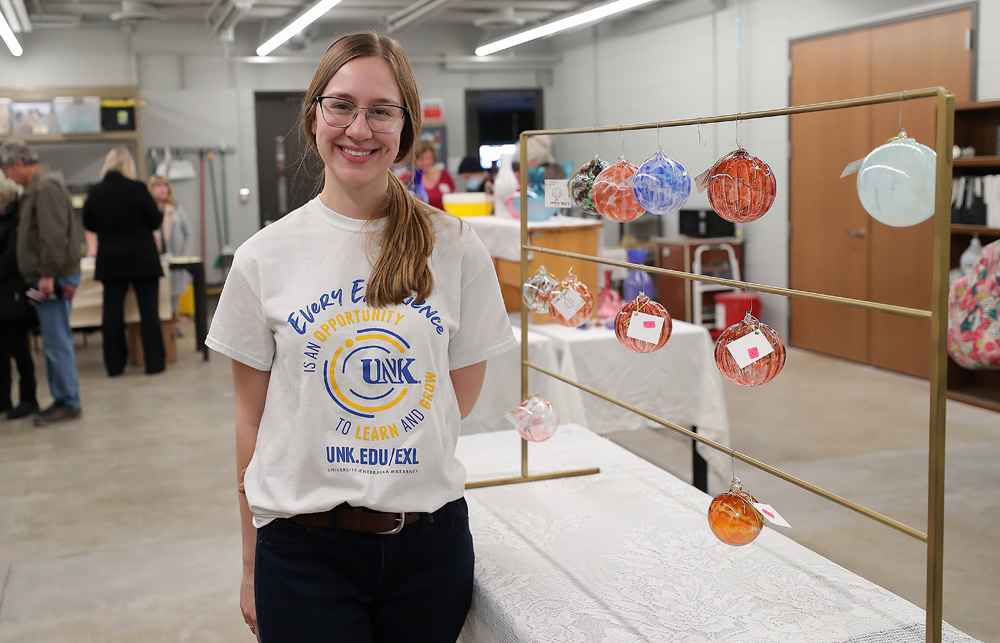
Members of the UNK Glass Club created a variety of ornaments for Tuesday’s holiday fundraiser.

After finishing one of her core courses Tuesday morning, the sophomore from McCook headed straight to the studio to create ornaments for the UNK Glass Club’s holiday fundraiser.

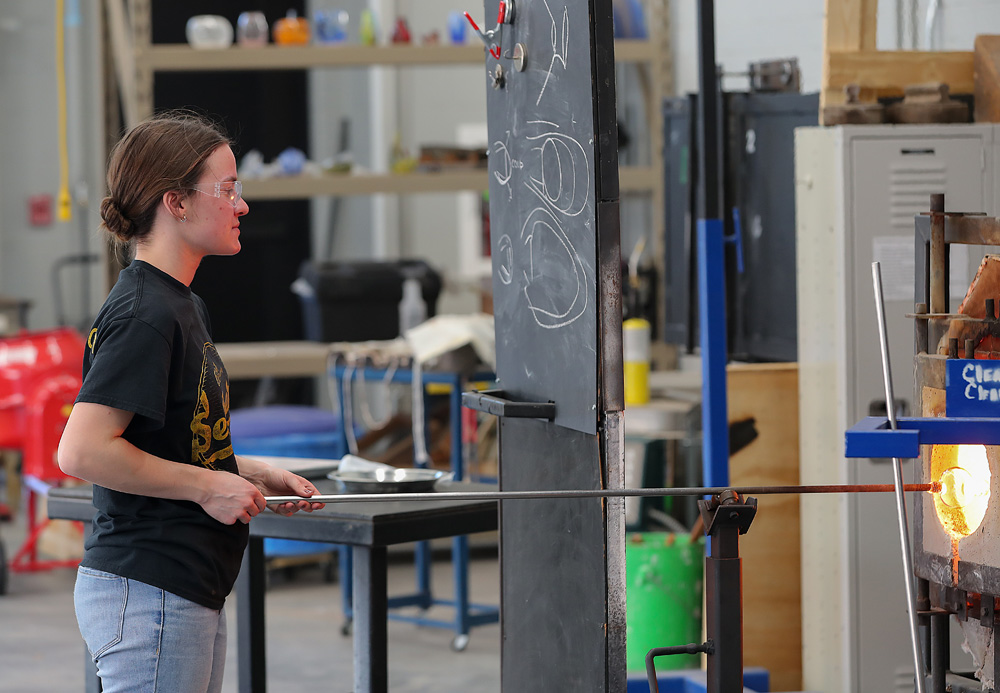
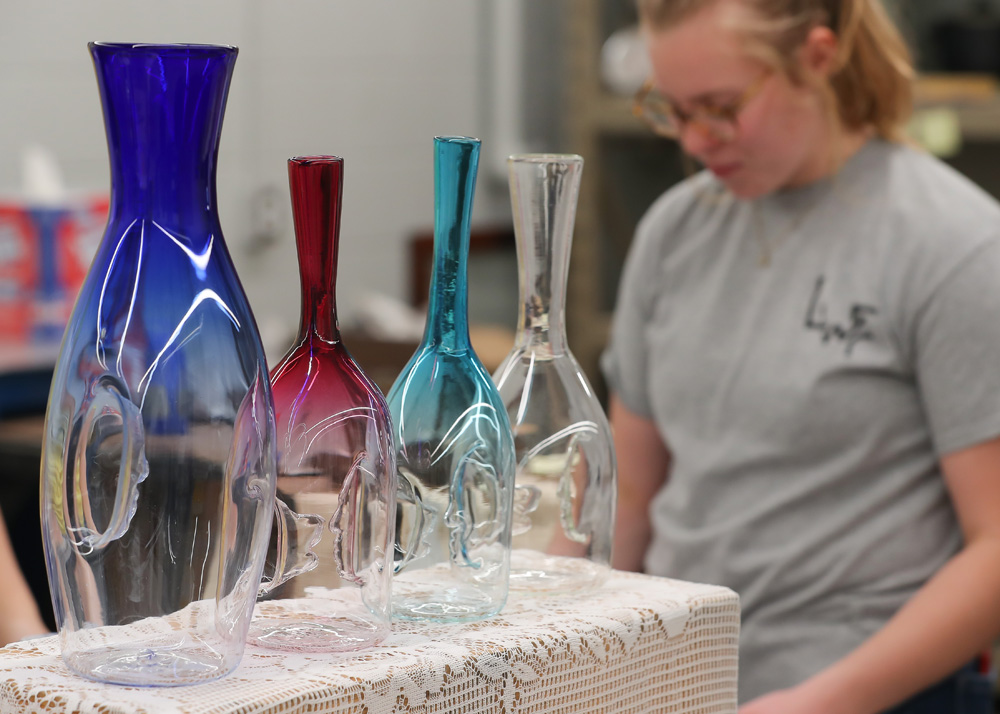
As Hinze gathered glass and continually shaped and reheated it in a 2,200-degree chamber, other club members and assistant professor of art and design Nadine Saylor sold colorful ornaments, vases, glasses, bowls and jewelry on the other side of the studio.

Teamwork is an important part of the process.

Saylor and the five Glass Club members formed an assembly line to make most of the ornaments. The starter gathered molten glass from the furnace and added color; the gaffer shaped the ornament; and another person added the hook. Then the one-of-a-kind decoration was ready to display.

Tuesday’s fundraiser was the second hosted this semester by the recently reestablished club. Members also sold handblown glass pumpkins ahead of Halloween.

Proceeds will be used to purchase new glassblowing tools and pipes, pay visiting artists and fund trips to professional conferences. So far, the club has purchased new tools, and the university bought a new belt sander to polish their glass creations. The furnace and kilns will be replaced in fall 2022.

Saylor, who joined UNK this semester, said bringing in visiting artists and sending students to the Glass Art Society Conference will expand her students’ world views.

“It brings in a fresh, new view from the outside world and makes them realize there’s a bigger world out there,” she said.

Of course, the club’s main mission is to give students an opportunity to gain more experience with glassblowing.

Alea Reifenrath, a senior from Wynot, is in her second semester of glassblowing at UNK.

“The best way to get the skills to blow glass is to do something over and over again,” Saylor said.

Psychology major Alea Reifenrath, a senior from Wynot, said glassblowing requires a lot of trial and error.

“You get used to having pieces break or fall off,” she said. The former happens when the glass gets too cool to form and the latter occurs when it’s too hot to hold together.

Over time, she’s learned to work quickly to keep everything at the right temperature.

“I think it’s a cool part of college that you can be any major and you can take a class that is totally random and learn about something new,” Reifenrath said.

Students must have previously taken a glass class to participate in the club, but they don’t need to be art majors or minors. Saylor hopes to see younger students join the club and glass program so they have more time to develop their skills.

Hinze signed up because she wanted another excuse to work in the studio.

In her second semester of glassblowing, she’s learned to make vases, cups and flowers. She wants to take as many glass classes as she can before she graduates and applies for medical school.

“I think there’s something really unique about making art out of glass,” Hinze said. “It’s a little bit dangerous and the products you make are beautiful beyond painting or drawing. I think glass is the most beautiful art form and that’s why I like being in here.”

LEARN MORE ABOUT THE UNK DEPARTMENT OF ART AND DESIGN


Landscape architecture professor, director of Geodesign program to retire

UNIVERSITY PARK, Pa. — Kelleann Foster, a long-time professor of landscape architecture in the Stuckeman School and the director of the online Geodesign graduate program, is set to retire from Penn State on Dec. 31. She will remain a member of the Department of Landscape Architecture faculty as an emeritus professor.

Foster led the development of the Geodesign program, which is offered exclusively through the World Campus, and has served as its director for eight years. Roxi Thoren, head of the Department of Landscape Architecture, has appointed David Goldberg, associate clinical professor of landscape architecture, to lead the program. Goldberg played a key role in establishing geodesign as an area of graduate studies at Penn State.

“I am very excited for geodesign’s future with David at the helm as he has been an instrumental player in our online graduate program from the very beginning,” said Foster. “He assisted in the program and course proposals, he has been a member of our international advisory board and he teaches one of the key geodesign models courses in the program. I have no doubt geodesign will thrive under his leadership.”

According to Goldberg, geodesign is a structured, decision-making design process that infuses planning insights to form compelling impact simulations that visually represent our planet’s future.

“This is the future of planning and design, and I am excited to lead our Geodesign program and build upon its solid foundation,” he said. “I hope to continue to elevate the program to a level of quality commensurate with the excellence of a Penn State education.”

The World Campus offers a master of professional studies degree as well as a graduate certificate in geodesign.

Foster joined the Department of Landscape Architecture faculty in 1989 as an assistant professor, nine years after she graduated from Penn State with a bachelor of science in landscape architecture and three years after earning her master’s in landscape architecture from the University of Massachusetts. She went on to move up the faculty ranks at Penn State, becoming a full professor in 2016 and serving as the interim head of the department from 2009 to 2011. In 2013, she was named the interim director of the Stuckeman School and in 2014 she was appointed as the school director, a position she held until 2019. She was also an associate dean of the College of Arts and Architecture during that time.

Foster has garnered numerous awards in her field throughout her career, including the 2019 Donald Hamer Leadership Award from the ClearWater Conversancy, a land trust and natural resource conservation organization in central Pennsylvania. A former board member and past president of the organization, she garnered the award for “sustained significant leadership in advancing Clearwater’s mission.”

Foster was named a recipient of the Presidential Award of Excellence from the Pennsylvania/Delaware chapter of the American Society of Landscape Architects (ASLA) for her book, “Becoming a Landscape Architect: A Guide to Careers in Design,” originally published in 2010 by John Wiley & Sons with a Chinese version published in 2014. She has also received Merit Awards from the chapter for the State College Borough Design Guide and the Land Use Management Program, which was completed for 10,000 Friends of Pennsylvania, a leading advocate for responsible and efficient land use. The 10,000 Friends of Pennsylvania group is a client of the Visual Interactive Communications Group, of which Foster was a managing partner from 1996 to 2013. In addition, she was honored with the Distinguished Service Award from the ASLA Pennsylvania/Delaware chapter for leadership in the authoring and production of a CD on landscape architecture schools in Pennsylvania.

Foster served as chair of the Penn State University Tree Commission for 16 years, through which she established the Campus Heritage Tree Program. She holds memberships in the Council of Educators in Landscape Architecture, American Planning Association and ASLA.

Before joining the faculty at Penn State, Foster taught at Temple University and worked at landscape architecture firms McCloskey and Faber P.C. and Sullivan Associates P.C, both in the Philadelphia area.

architects 49 integrates its diagonal house into the forested landscape

tropical architecture in thailand


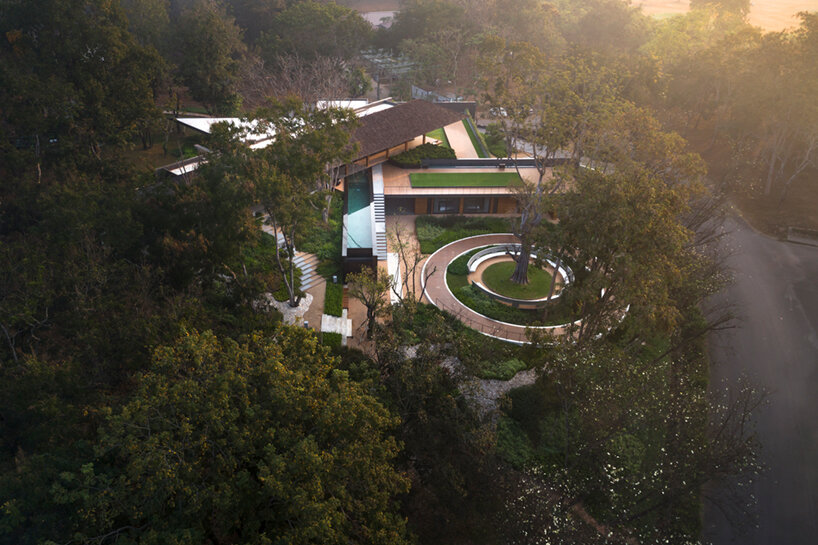
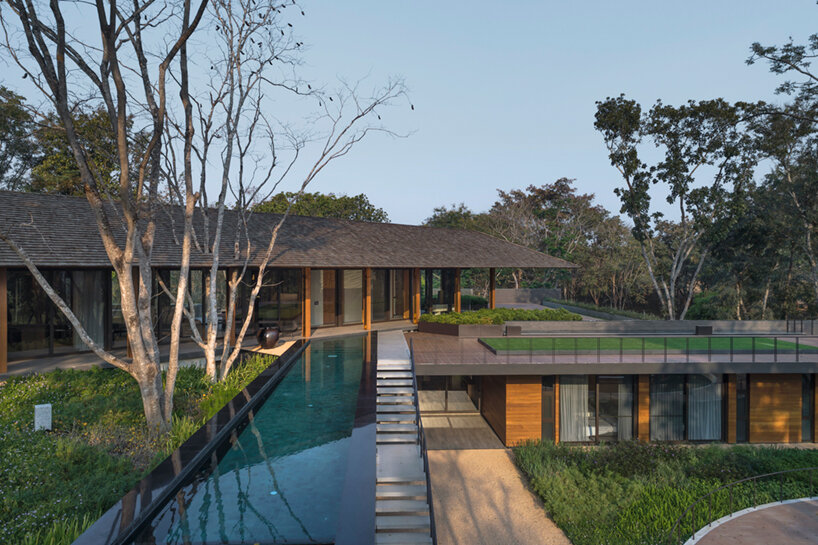
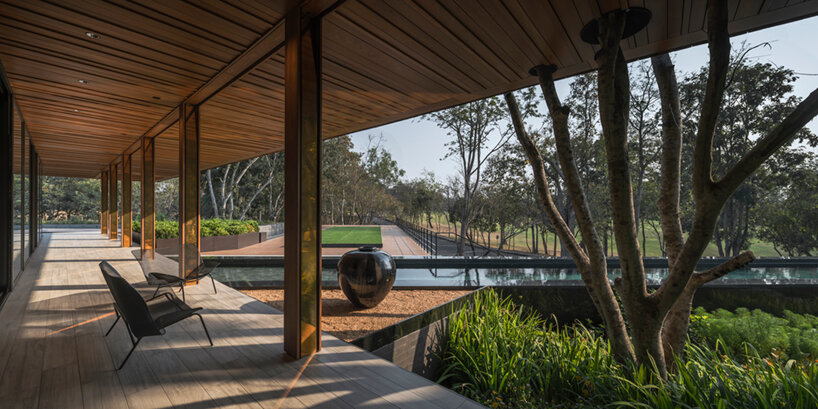
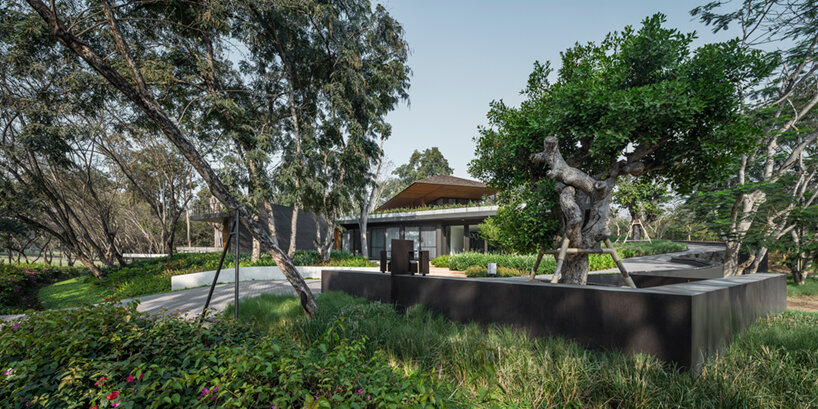
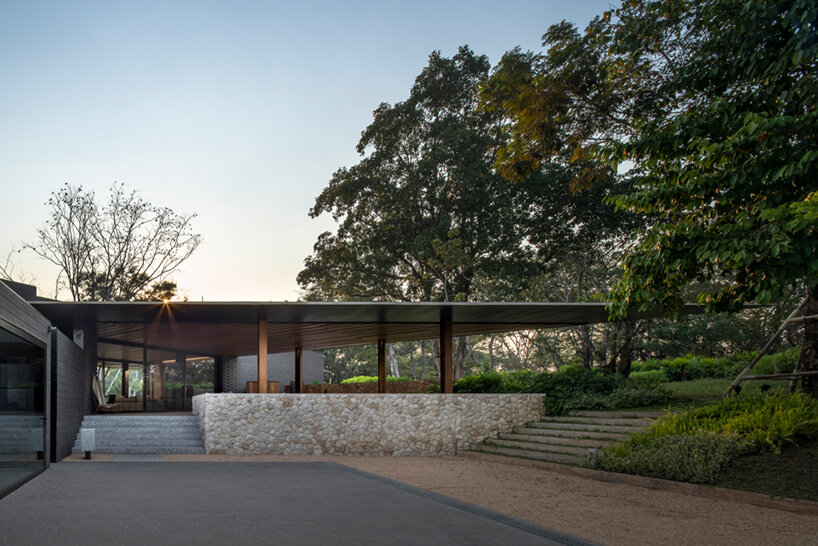
architects 49 designs a dwelling in thailand dubbed ‘diagonal house’ in celebration of its client’s love for tropical architecture. they wanted something in the team’s signature style, but also something unique and never seen from the studio before. intrigued and eager to create a sense of familiarity in a work that is different and new, the team looked to its past works and proceeded to design with a twist. in fact, the design team literally twisted the core of the house to achieve a new design that fits into its natural context, especially the surrounding slopes and trees.

diagonal house architects 49images © W workspace | @wworkspace


the diagonal house by architects 49


because the diagonal house is a multi-family residence, the team at architects 49 carefully organizes the layout with attention to the movements and circulation of the residents. living quarters for each family were clearly separated, while still maintaining convenient contact with one another. in this way, the project achieves a sense of a familiar environment within the new design.


the dwelling is realized with a material palette that is popular in the area, but not commonly used in residential designs. the team notes its use of brass, which is more often found in palaces or temples. these brass elements are integrated into the home to create a touch of modernity and to reflect the owner’s fondness for opulence. this complements the tropical architecture base which was designed to be simple and down to earth.

diagonal house architects 49


evolving materials


architects 49 designs its diagonal house so that is might age naturally and see its beauty evolve across time. eventually the brass will change from gold to brown and ultimately turn black while the gold teak will fade in color as it ages. this intentional detail requires less maintenance as the materials are allowed to exhibit their natural properties over time and the beauty of the home is naturally enhanced.


as these changes occur, the atmosphere of the dwelling evolves in turn. the design team notes that this can be likened to the vibrant color of leaves brought about by the changing seasons. the natural world is subtly and profoundly embedded in this house through the selection of materials and its careful placement within the surrounding landscape, essentially merging the architecture and natural environment together. this house is an expression of time and nature.

diagonal house architects 49 thailand-based architects 49 integrates its diagonal house into the forested landscape thailand-based architects 49 integrates its diagonal house into the forested landscape

10 Fashion Chairs From Fendi, LV & Dior at Art Basel

Meant to look like they are “traveling in time, caught in motion.” I was told by an assistant at the Dior Medallion Chair project that Ma Yansong’s 3-D-printed chairs were the “It” chairs of Art Basel and Design Miami this year.
Photo: MA YANSONG ©KEN NGAN/Dior

This year’s Art Basel saw a number of luxury fashion houses eager to show off their new … chairs? Chairs. Of course, high fashion’s fascination with furniture design isn’t exactly new. Rei Kawakubo started making (mostly nonfunctional) chairs in the ’80s, while Fendi launched Fendi Casa, an actually usable home collection, in 1988. Louis Vuitton and Hermès ventured into furniture some 30 years later, with the former inaugurating Objets Nomades — its furniture and design store — a year after Hermès debuted its first furniture collection at Milan’s design week in 2011. More recent years have seen the inception of Gucci Décor (2017) and Maison Dior (2019), the brands’ respective home-goods ventures, while Balenciaga and Miu Miu showed their own questionable furniture collaborations at Art Basel in 2019.

But back to these chairs. Yes, the pandemic led to substantial growth in sales of home furnishings, but even without that, the fashion world’s infatuation with our Sitzfleisch makes sense; fancy furniture has the same aspirational bent as fancy shoes, and if a brand can’t be on your body, surely it would like to be in your home, even if it’s not something you can actually sit on.

That was the case for quite a few of the chairs that fashion houses debuted at this year’s Art Basel and Design Miami, where Dior, Louis Vuitton, and Fendi revealed their latest experiments in furniture (or, one could argue, sculpture). Below, some of our favorite fashion chairs from this year’s events.

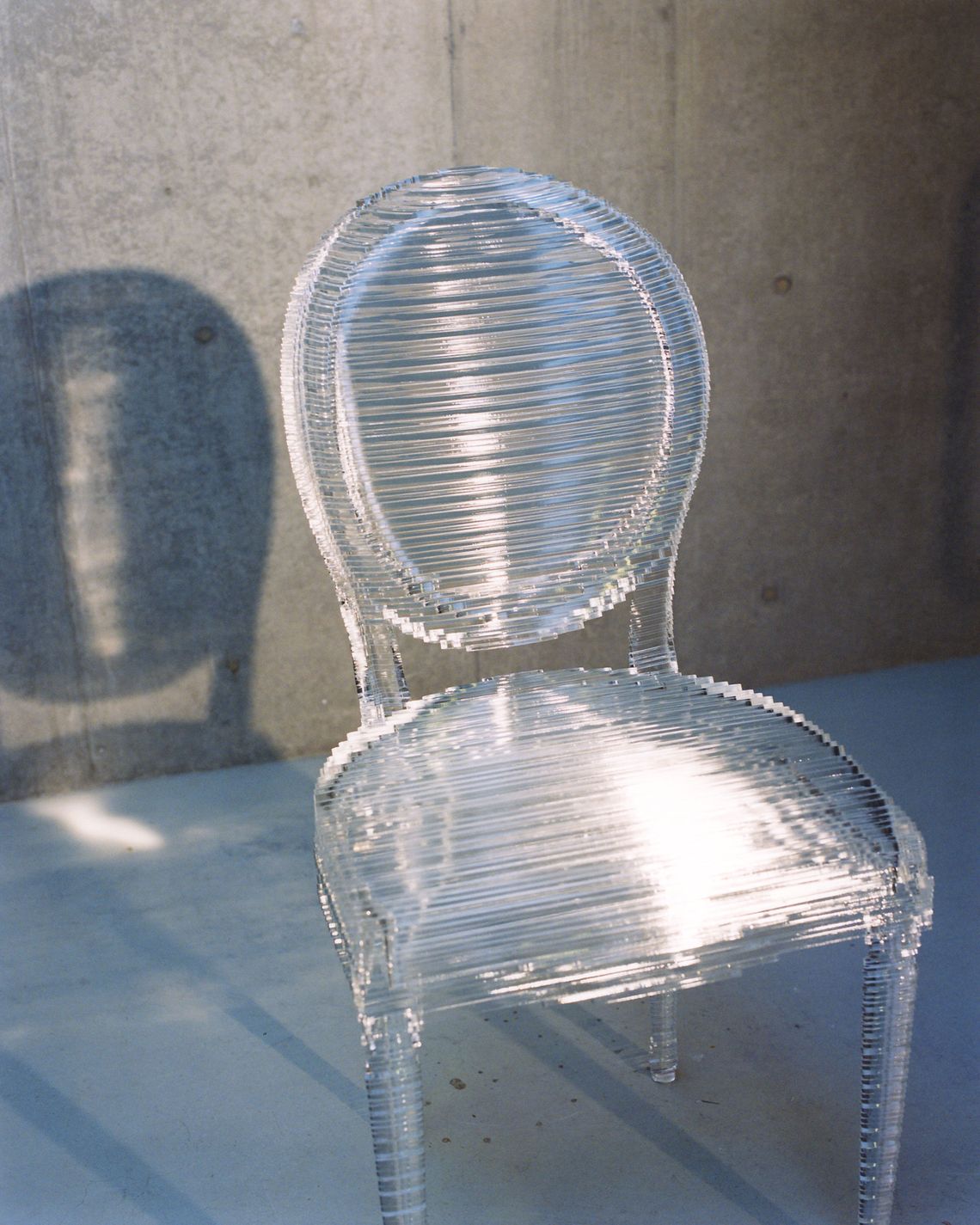
For its Medallion Chair project, Dior invited 17 artists to reinterpret its iconic Medallion Chair, an item that the house has typically used to seat guests at fashion shows. For his interpretation, Japanese designer Tokujin Yoshioka used layered acrylic for a chair that filters light like a chandelier.
Photo: TOKUJIN YOSHIOKA ©YUTO KUDO/Dior

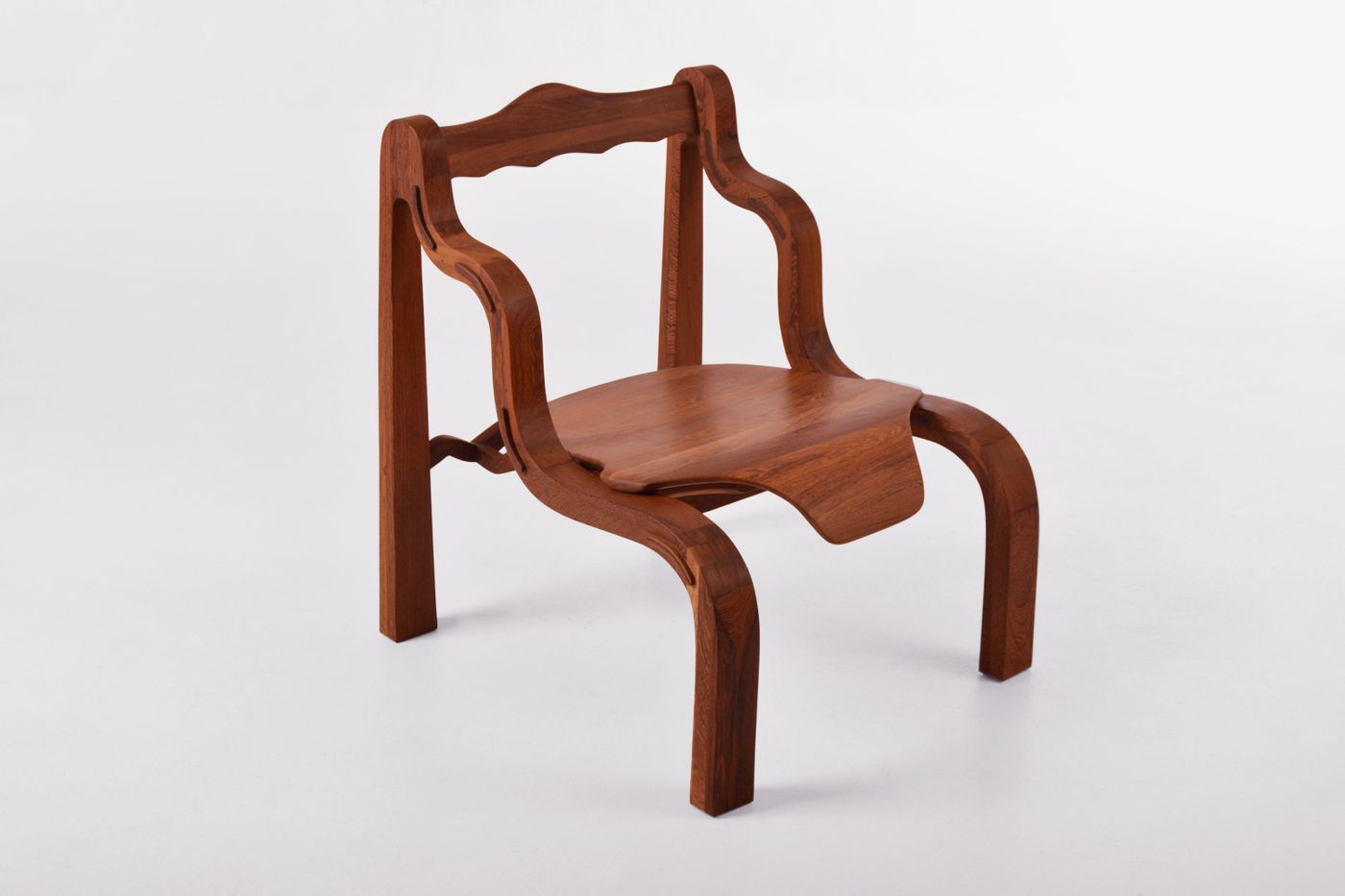
At Design Miami, Fendi’s artistic director, Kim Jones, called upon the Botswana-based furniture brand Mabeo to curate the ten-piece installation “Kompa.” The pieces (including the Foro chair, pictured above) were all handmade by artisans across Botswana using old woodworking techniques to reinterpret the Italian brand’s history of distinct style.
Photo: Courtesy of Peter Mabeo/Fendi

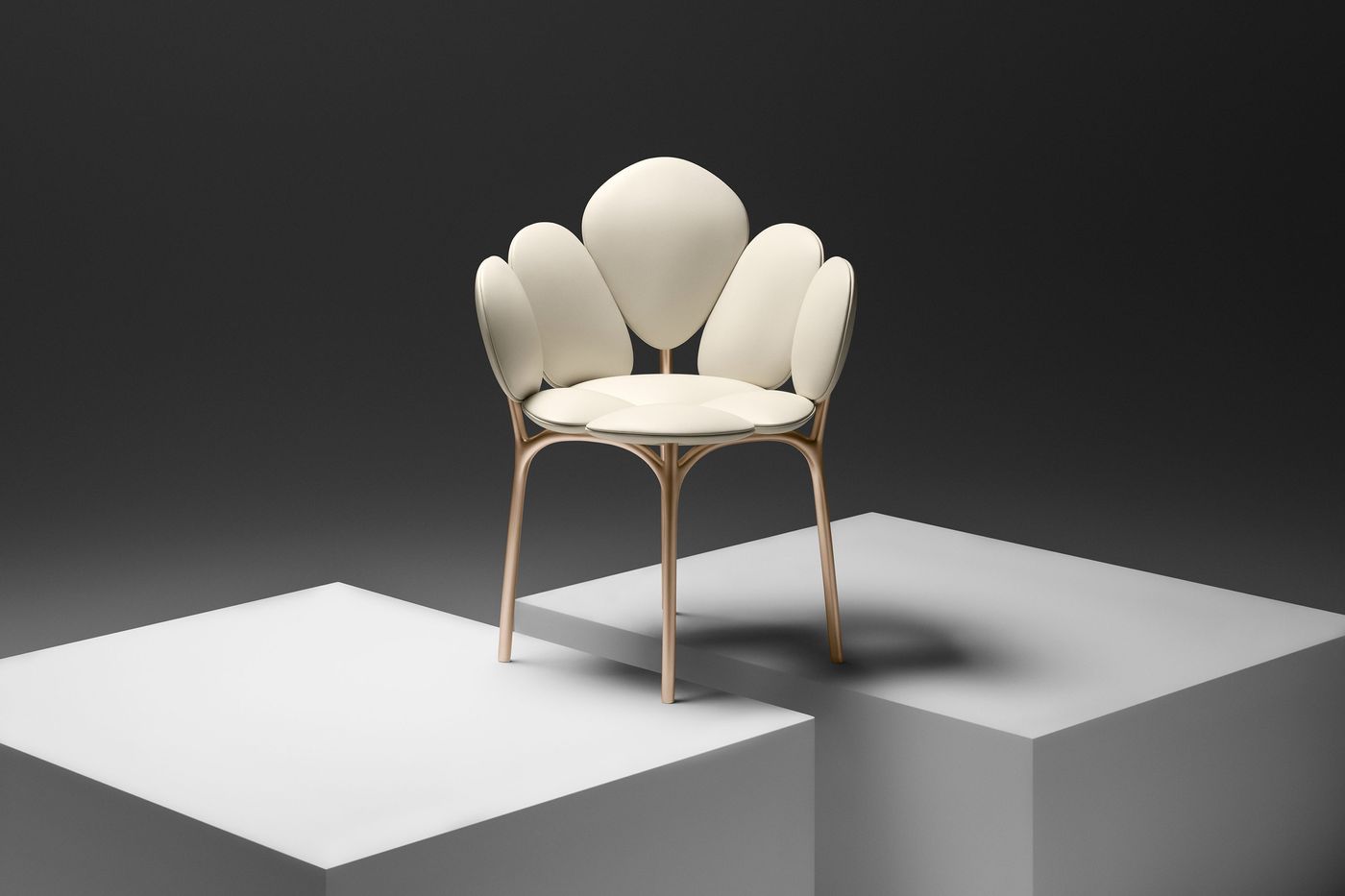
Since 2012, Louis Vuitton has brought together renowned international designers to create furniture and objects for its design venture, Objets Nomades. Above is Marcel Wanders studio’s Petal Chair, which, according to a press release, features calf-leather cushions “in three special Miami colourways (light pistache, neon yellow, coral and cream).”
Photo: Marcel Wanders studio/Louis Vuitton Objets Nomades

Korean artist Seungjin Yang describes his interpretation of Dior’s chair as “simple, unique, and fun.” Made of blown epoxy resin, an assistant at Dior’s gallery admitted that she nearly had to call security to prevent a guest from sitting on this piece, which definitely should not be sat on.
Photo: SEUNGJIN YANG ©Sungmin Kim/Dior

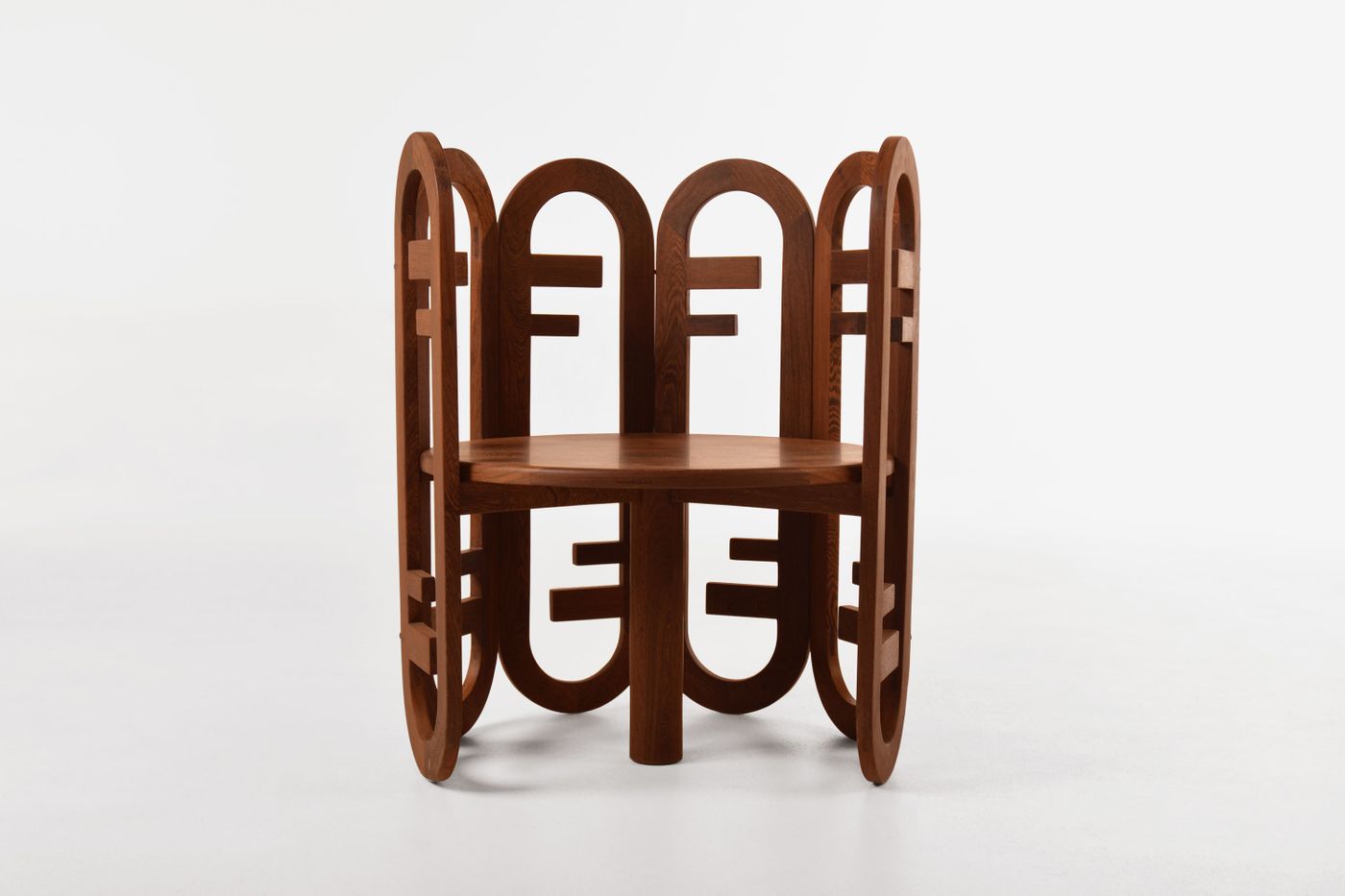
Mabeo’s Maduo chair is made in Botswana’s Mmankgodi village and takes inspiration from a piece of Fendi jewelry designed by Delfina Delettrez Fendi with its series of interlocking F shapes.
Photo: Courtesy of Peter Mabeo/Fendi

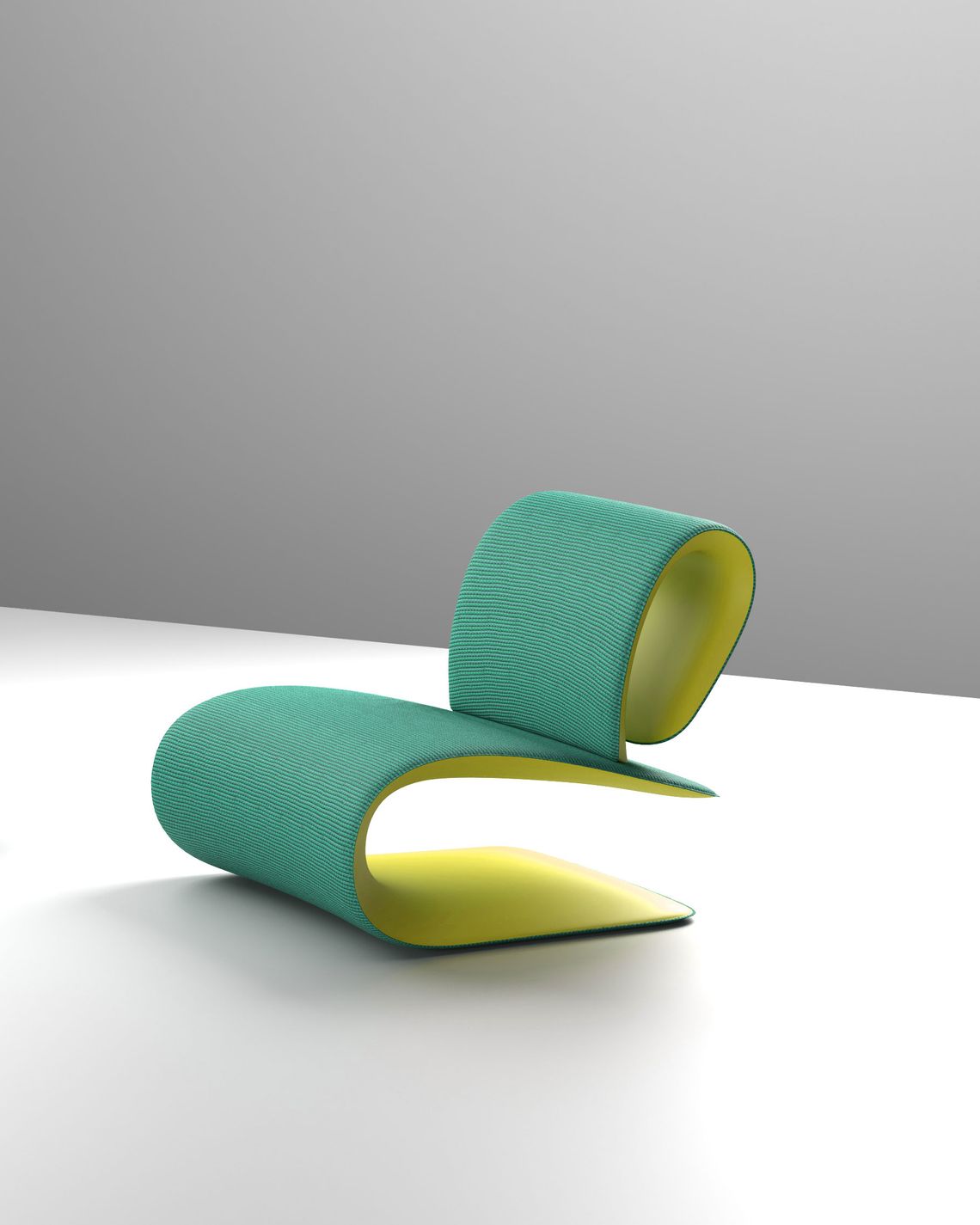
Objets Nomades debuted five pieces from Chinese designer Frank Chou. Above is his signature armchair, “inspired by terraced fields in China and desert rock formations in the USA.” Covered in Brio fabric, it’s the first Objets Nomades piece designed for exterior use.
Photo: Courtesy of Frank Chou/Louis Vuitton Objets Nomades

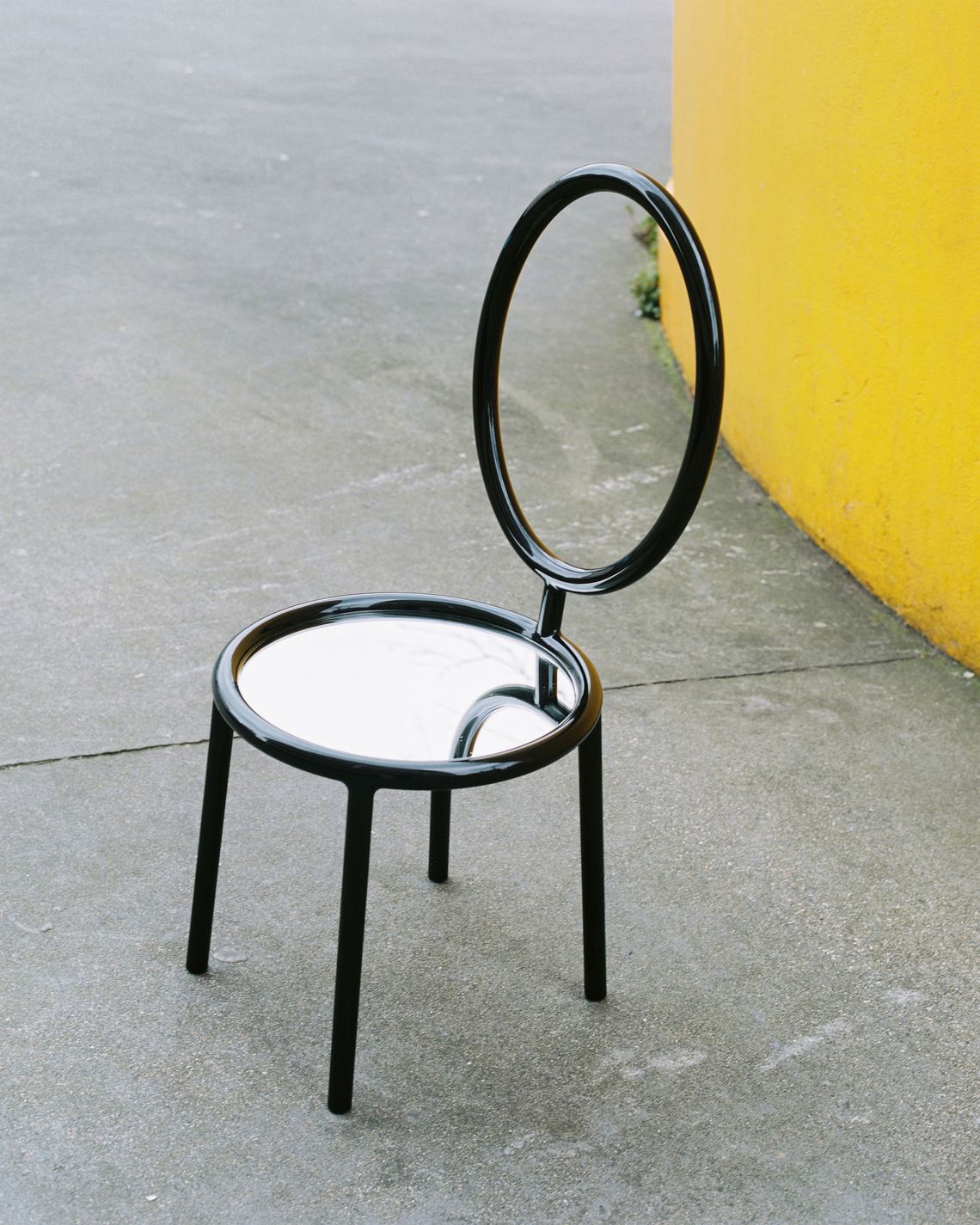
My personal favorite, from French artist Pierre Charpin. To me, it recalls a compact mirror, but Charpin drew inspiration from the kinds of haute couture silhouette sketches that Dior uses in its clothing design.
Photo: PIERRE CHARPIN ©Marion_Berrin/Dior/Salone Del Mobile

Drawing from his Tswana heritage, Atang Tshikare’s work looks to beliefs and myths about the cosmos and Divinity. His interpretation for Dior is made in vegan tanned leather enhanced with constellations and beadwork in Bantu pictograms.
Photo: ATANG TSHIKARE ©Ayesha Kazim/Dior

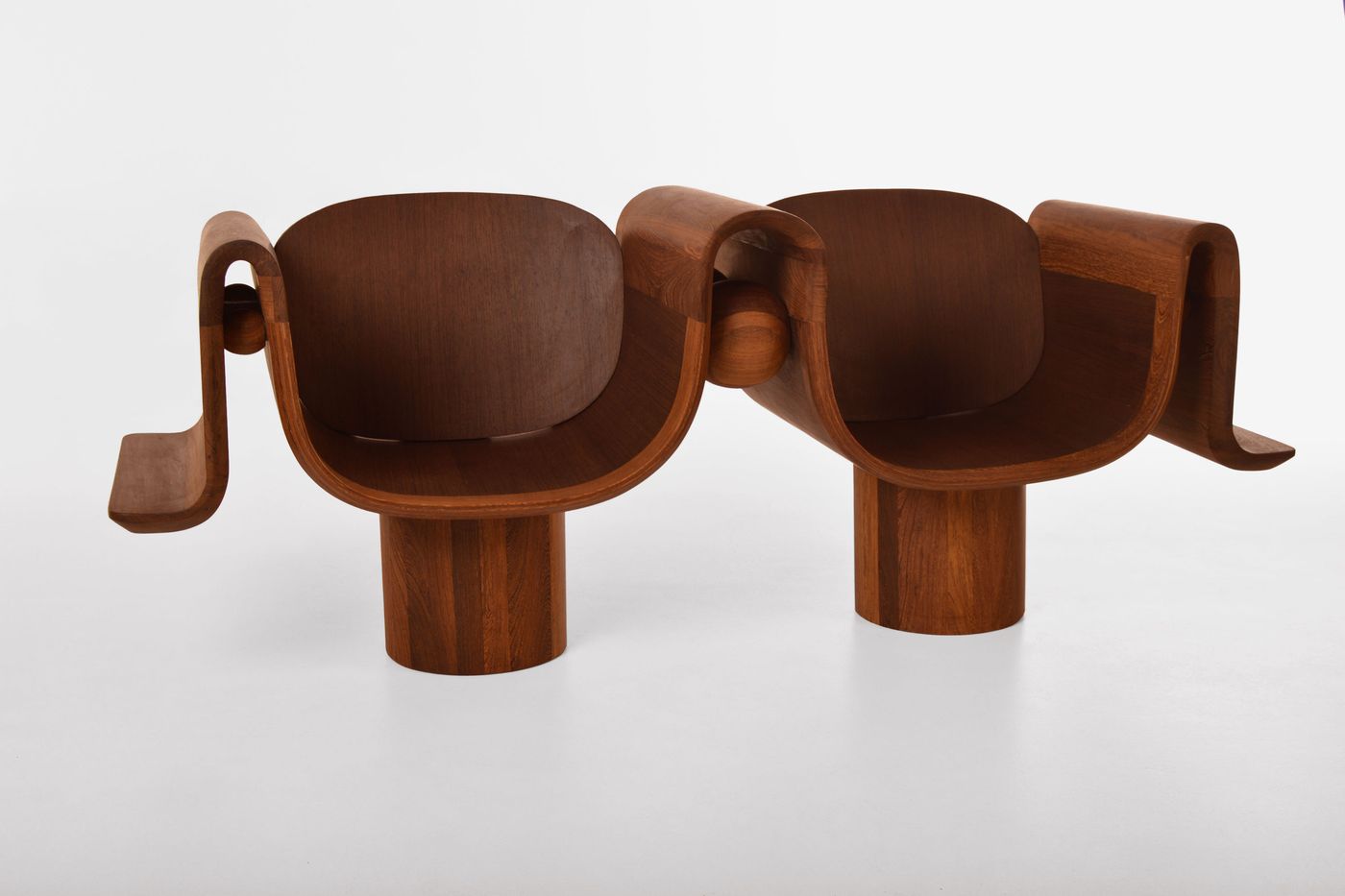
The Shiya seat, made of panga panga wood and plywood, from Mabeo’s collaboration with Fendi. On the whole, the collection is a departure from a history of the sleek, sexy furniture typical of the Italian brand.
Photo: Courtesy of Peter Mabeo/Fendi