Art Basel Miami Beach Returns, Smaller but Ready to Party

MIAMI BEACH — It’s back. Canceled last year because of Covid-19, the annual Art Basel Miami Beach fair returns next week, unfolding throughout the area. Beginning on Tuesday with invitation-only hours, and open to the public Thursday through Saturday, it will feature 253 galleries exhibiting work inside the city’s Convention Center, as well as a dizzying number of accompanying satellite art fairs, pop-up shows, and celebrity-studded private dinners.

It’s a sprawling cultural circus that has come to be called “Miami Art Week,” complete with corporate branding exercises, from a sculptural forest by the stage designer Es Devlin (commissioned by a Chanel fragrance) to a “Yacht the Basel” fete hosted by the snack food Cheetos, with “dynamic original art pieces created from Cheetos’ iconic orange dust.”

The return of Basel’s Miami fair couldn’t have come soon enough for the gallerists about to converge on Florida from around the globe. While contemporary art auctions are once again smashing records, overall gallery sales remain sluggish. A midyear Art Basel and UBS report by the economist Dr. Clare McAndrew found that nearly half of the 700 surveyed dealers saw a continued decline in sales during the first six months of 2021. Mega-dealers like Larry Gagosian and David Zwirner, with blue-chip rosters and multiple outposts, were rebounding quickly, the report said. But many smaller dealers, who had relied on Art Basel to develop new clients and introduce emerging talents, had been struggling.

Marc Spiegler, Art Basel’s global director, can pinpoint the moment when Miami’s revived art frenzy took off: Sept. 20, when the U.S. government said it would lift the Covid travel ban on most visitors from Europe and Asia in November, thus making the Miami fair the first truly international one in the U.S. since the pandemic’s start.

Spiegler’s phone immediately began burning up with messages from dealers who had previously passed on participating: “By the end of that week more than 30 galleries ‘uncancelled,’” he said, noting that despite all the grousing over “fair fatigue,” there was still no digital substitute for buying and selling art in the flesh. Nearly half the fair’s exhibitors will now be arriving from overseas and Latin America. “I’ve read all the predictions that art fairs were finished, that nobody was going to travel anymore,” Spiegler continued. “We have a show only marginally smaller than the one in 2019.”

This is no doubt a relief for Art Basel’s owners, the Swiss MCH Group, whose stockholder reports show they have lost more than $109 million since the pandemic’s start. Yet if the Miami fair’s return is reason for MCH to cheer, the future of its other two art fairs — Art Basel Hong Kong, scheduled for March 2022, and the flagship Art Basel in Switzerland, scheduled for June 2022 — remains uncertain. Even setting aside the growing wave of government repression and censorship in Hong Kong, there is a mandatory quarantine of up to three weeks for visitors entering the city. Come March, if that quarantine remains, Spiegler said it’s hard to imagine a full-fledged Basel fair happening. And with Covid infections surging again across Europe, sparking new lockdowns, it’s anyone’s guess what June will bring.

These potential losses in revenue for Art Basel make the smooth execution of the Miami fair all the more crucial. To avoid crowding, entry tickets are now timed and proof of a Covid vaccination or a recent negative test is required, as is the wearing of masks. These protocols may seem familiar — and reassuring — to visitors from New York or Los Angeles, but they’re almost nonexistent throughout Miami. Local officials have found themselves overruled on mask mandates by the Florida governor, Ron DeSantis, who has tried to make himself the face of Republican opposition to Biden administration virus policies. For Spiegler, however, the subject isn’t open to debate.

“When you bring together thousands of people from all over the world, wearing masks is the only thing that makes sense,” he said. And if a fair attendee, say, a billionaire art collector, refused to comply with the mask mandate? Would Basel’s security physically eject them from the Convention Center? “That’s what it means to have a mask mandate,” Spiegler answered firmly.

Beyond Art Basel, the mood within Miami’s year-round art scene is anything but tentative. Superblue, a joint venture of the heavyweight Pace gallery and Laurene Powell Jobs’s Emerson Collective, opened this past spring inside a 50,000-square-foot renovated warehouse in the Allapattah neighborhood. Meanwhile, Fotografiska, the privately owned global string of photography museums, has announced that it is moving into the 42,000-square-foot warehouse right across the street, next door to the Rubell Museum, with its David Rockwell-designed building set to open in 2023.

And in the city’s pre-eminent galleries, business is strong. At the Fredric Snitzer Gallery, the director, Joshua Veasey, said things are as busy now as at any point during his six-year tenure there. He credits the established collectors who fled cities up north or out west, riding out the coronavirus in their new Miami residences, who began visiting the gallery for the first time.

“After being stuck inside for so long, there was a lot of redecorating,” Veasey quipped. “These are the problems of the wealthy.” Yet the fresh faces at the gallery didn’t emerge out of Miami’s newly arrived “tech bros,” from the aspiring new media mogul Bryan Goldberg to the PayPal co-founder Peter Thiel, who have relocated here amid a wave of Silicon Valley cheerleading from the city’s mayor. New lower-key clients come with the more typical collector backgrounds of finance and real estate development.

What has trickled down from the tech industry is the love of all things NFT. Art Week hosts a bewildering array of NFT-themed gatherings, including the daylong NFT.BZL conference, featuring a bulging roster of NFT artists, tech figures, and both the city and county mayors. One of the many new NFT marketplaces, SuperRare, has even enlisted the engineers at SuperWorld to install 20 3-D sculptures throughout Art Basel’s Convention Center, viewable there only on their app — a novel way to get in front of influential eyeballs while sidestepping the fair’s curatorial committees and the roughly $60,000 (and up) booth fee.

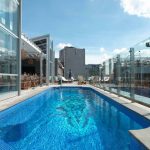
“I was skeptical at first, I wanted to see if NFTs would have more than five minutes of life,” conceded the Miami multimedia artist Carlos Betancourt, one of the few established local talents to have embraced the new blockchain-based medium. He said the key to his comfort was finding a platform, Aorist, with a curator, Ximena Caminos, who was already a longtime supporter of his work. That, and Aorist’s willingness to produce a real-life version of his seen-only-on-a-screen NFT piece “What Lies Beneath,” which spotlights global warming’s rapid melting of the polar ice caps. The result, whose sale will benefit a local underwater sculpture park, is a pair of faux icebergs — one of which is 20 feet high and 30 feet wide, wrapped in collages of Sven-Olof Lindblad’s photos of actual icebergs, and set afloat in the oceanfront pool of Miami Beach’s Faena Hotel.

While room rates at the Faena — starting at $3,300 a night, $5,500 for an ocean view — may limit the audience for “What Lies Beneath,” it’ll still be hard to avoid seeing Betancourt’s artwork and its varied styles around Miami next week. “Into The Everglades,” his animated silhouettes of Florida wildlife, will lope nightly across the side of downtown’s 35-story-high InterContinental Miami hotel; “Milagro!,” a 38-foot-long string of 245 handcrafted charms, commissioned by the city of Miami Beach, will hang across a busy city boulevard; and two of his photos — homoerotic portraits of both himself and his longtime partner and collaborator, the architect Alberto Latorre — will be featured in a group show, “Skin in the Game,” inside a Beach storefront.

His ubiquity, Betancourt said, is proof that Miami’s museums and collectors alike have finally embraced the city’s own artists, prodded by Art Basel’s attention to made-in-Miami work. “People had an inferiority complex here for many years,” he continued, recalling his arrival from Puerto Rico as a teenager in 1980, discovering an art scene that too often looked elsewhere for direction. The shift is evident next week as local institutions proudly exhibit work steeped in Miami’s social fabric.

For starters, Anastasia Samoylova’s “FloodZone” photos at the HistoryMiami museum capture an often surreal visual interplay of flora, fauna, and crumbling concrete; Gary Monroe’s “Refuseniks” photographs at Florida International University’s Miami Beach Urban Studios offer a poignant study of early ’80s Jewish immigrants from the Soviet Union rebuilding new lives in a then-unraveling South Beach; and Jared McGriff’s otherworldly paintings at the NSU Museum of Art Fort Lauderdale depict visions of Black life that are simultaneously troubled and stirringly gorgeous.

This seriously minded artwork is being presented within the context of a tropical weeklong party. If that seems contradictory, Betancourt believes that embracing that contradiction is precisely what has made Miami finally come into its own as an art city: “We enjoy the party and that manifests itself in our work,” he said. “That’s what Miami brings to the equation — we do it all unapologetically.”
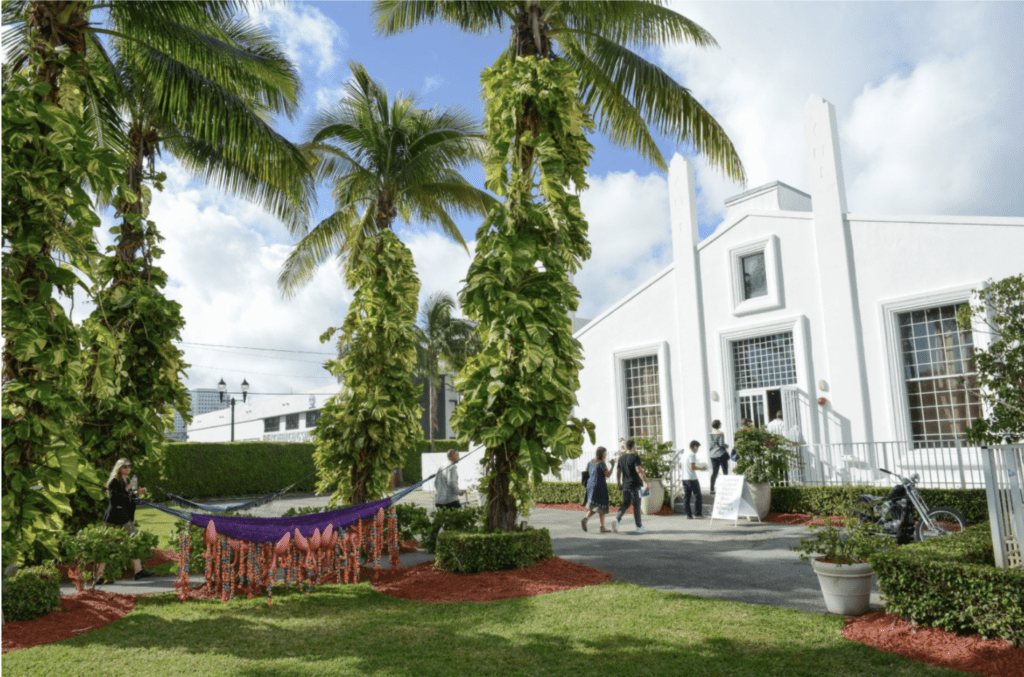
New Art Dealers Alliance Announces MobileCoin Art Prize, To Be Awarded at NADA Miami 2021

NADA miami 2021

The New Art Dealers Alliance (NADA), the definitive non-profit arts organization dedicated to the cultivation, support, and advancement of new voices in contemporary art, is partnering with MobileCoin for the inaugural MobileCoin Art Prize, an award that highlights, celebrates, and supports artwork addressing the critical topic of privacy at NADA Miami 2021. Juried by writer and curator Andrew Beradini and contemporary artist and MobileCoin Art Director Inga Bard, the prize is the first of its kind within the cryptocurrency sector, establishing MobileCoin as an industry pioneer thoughtfully navigating the intersection between art and cryptocurrency. It will be awarded to one of the 170 plus exhibitors at NADA Miami 2021 in the form of $7,500 equivalent to MOB.

“We’re thrilled to partner with MobileCoin to introduce a new initiative that shines a light on privacy issues in the digital art space. As we see the art world expand into the digital sphere, we share in MobileCoin’s commitment to give artists at all stages of their careers the space, time, and platform that remains essential to artistic freedom.”

said NADA Executive Director Heather Hubbs.

MobileCoin is a cryptocurrency designed to be used as digital cash on your phone. With nearly instantaneous transactions and a strong commitment to supporting the arts, MobileCoin is the first carbon-negative cryptocurrency. 

“We believe that privacy is fundamental to art. The right to privacy is the right to solace, to reflection, to expression; it is the right to association and movement without intrusion or intimidation. Privacy is essential to the autonomy and dignity required to make art and participate in the cultural life of a free society,”

said Joshua Goldbard, Founder of MobileCoin.

NADA Miami will feature over 170 exhibitors across three sections: Galleries; NADA Projects, an open, exhibition-like presentation of new art from emerging voices; and the latest addition, Artists’ Book Publishers, a co-presentation of artist book publishers with Printed Matter and EXILE Books. This year also introduces Curated Spotlight, an inaugural special section at NADA Miami 2021 curated by Ebony L. Haynes. The section will feature eight solo presentations by exhibiting galleries.  

NADA MIAMI 2021 VIP Opening Previews (by Invitation): Wednesday, December 1, 10am–2pm
Open to the Public: Wednesday, December 1, 2–8pm, Thursday, December 2, 11am–7pm Friday, December 3, 11am–7pm Saturday, December 4, 11am–7pm newartdealers.org/nada-miami-2021

About MobileCoin
MobileCoin is a cryptocurrency designed to be used as digital cash on your phone. MobileCoin’s payment system is easy to use with near-instantaneous transactions. With a strong commitment to supporting the arts, MobileCoin is the first carbon-negative cryptocurrency. @mobilecoin.art

Categories

Tags

Author

Mark Westall

Mark Westall is the Founder and Editor of FAD magazine Founder and co-publisher of Art of Conversation and founder of the platform @worldoffad

The Ingram Collection today announced the finalists for Ingram Prize 2021, the leading annual prize for contemporary artists in the UK. The […]

lido-swimming-pool-at-the-curtain-hotel-shoreditch-london-conde-nast-traveller-7june17-Adrian-Houston

The covid-19 pandemic revealed to many people just how important travelling is. The lockdown has been eased in many countries; […]

Jacob Love wins the Concord Art Prize with his three-channel audio-visual installation, created in response to Rodgers & Hammerstein’s My […]

CasinoUSA.com has recently announced a plan to acquire a total of 50 BTC. The popular online gambling platform has been […]

New art gallery brings opportunity for artists, art lovers | Local News

OSKALOOSA — Artists in Mahaska County and beyond now have the opportunity to showcase their work at the newly-opened Envision Art Gallery.

Located in Penn Central Mall, the gallery has something for every price point, from $5 prints to $1,000 paintings and everything in between.

Owner Vera Babich decided to open the gallery after noticing a high concentration of artists and art lovers in the area.

“It is a very artistically rich and diverse community,” she said. “Since we moved here in 2009, we’ve met so many talented people and seen so much beautiful art done by them.”

SEGUE

“We needed a place where people can come any time and see [art],” Babich said. “There are so many people I know who do art but they don’t have any way to display it.”

For the artists, Envision is a chance to showcase talents that those around them might not even know they have.

Oskaloosa-based artist Julie VerSteegh is one of the five creators currently on display in the gallery.

Though many who know her know of her talents in graphic design, VerSteegh was surprised at how many people didn’t know she that she is also a multimedia artist.

“I have people who I’ve been friends with in town for 20 years who say ‘oh, I didn’t know you do art,’” she said.

Several of her paintings and illustrations can be found available for purchase at Envision.

The gallery makes it possible for Versteegh and other local artists like her to showcase their work to potential costumers or art appreciators.

The gallery also includes works by Ames-based photographer Igor Kovalenko; colorful illustrator Jane Ryder; watercolor, pastel, oil and acrylic painter Vitali V. Lobov; and Babich’s husband, Sergiu Nagorny. Nagorny’s pieces include metalsmithing, chainmaille, copper decor and “wearable art”.

Though not all of the artists are Iowa-born, each has made Iowa their home. Many of the pieces on display from each of the artists represent or show recognizable Oskaloosa and Iowa scenes.

“A lot of times art means more to people if they have a connection with it,” VerSteegh said.

Whether it be a print of the Oskaloosa City Square’s band shell or a one-of-a-kind jewelry piece, Envision Art Gallery has something for everyone.

“For a small town like Oskaloosa, there’s a lot of things happening in the community to support art,” Babich said. “There are people who create art and there’s just as many people who want to see art. I thought we needed to be that connection between the artists and the audience who is interested in art.”

For Thanksgiving, check out new Native art in Seattle

Movies and virtual events 

Due to experience gained by all those pandemic pivots, virtual art events abound this year, which means you can enjoy including Native films, visual art shows and readings from your couch.

>> Washington state’s poet laureate, Bellingham-based poet Rena Priest (a member of the Lhaq’temish/Lummi Nation), will join two other Indigenous poets, New Zealand-based Iona Winter (Waitaha/Kāti Māmoe/Kāi Tahu/Pākehā) and Tacoma-based Sasha LaPointe, a Coast Salish author from the Nooksack and Upper Skagit Indian tribes for a reading co-hosted by Seattle City of Literature and Dunedin (NZ) City of Literature. The writers will discuss their work and shared resonances in a prerecorded virtual talk (Dec. 1, 6-7 p.m. Free). 

>> “Three years, two months and nine days,” says Ken Workman, the great-great-great-great-grandson of Chief Seattle, “from the time that the Denny Party landed at Alki Point on November 13, 1851, to the signing of the Point Elliott treaty in 1855.” This astonishingly brief time span becomes an incantation in Three Years, a new short (streaming free, online) by Seattle filmmaker B.J. Bullert. In simple scenes shot on a windy day at Alki Beach, Workman repeats the timeline, and explains in Lushootseed how Chief Seattle initially welcomed the new arrivals: “Come ashore my friends, come ashore onto this ancient land of the Duwamish.” When the wind kicks up, Workman’s words seem to push the waves backward, as if to reverse time. “The Duwamish remain,” he says. “We are fixed to the land. We are still here.”

>> The multidisciplinary arts group yəhaw̓ Indigenous Creatives Collective recently premiered two online visual art exhibits. Telling Our Own Stories: Afro-Indigenous Creativescurated by local artist Brit Reed, includes short films, multimedia collages, beadwork, music, quilts and digital artwork by artists from across the Western Hemisphere. A second virtual, multimedia art show featuring intriguing artworks (also curated by Reed) chronicles Indigenous responses to COVID-19 under the banner of Being A Good Ancestor. As Reed writes, these are the questions posed to artists: “How are you being a good ancestor as we go through this era of COVID-19, a continuing Civil Rights Movement, and political strife? What stories from the past, from the ancestors, are inspiring your actions today?” 

>> Three Dollar Bill Cinema is streaming a virtual Indigenous showcase consisting of two feature-length and two short films (Nov. 19-29). Being Thunder follows a two-spirit gender-queer teenager from the Narragansett tribe in Rhode Island, and in Fire Song, a gay Anishinaabe teenager grapples with a life-changing event. Also in the lineup is the short Drive to Top Surgery, by local Emmy-award-winning creator and director Raven Two Feathers, who will moderate a panel of Indigenous filmmakers on Nov. 21 at 1 p.m. on Three Dollar Bill’s Facebook and YouTube pages.

New York’s Midcentury Art Scene Springs to Life in ‘The Loft Generation’

They are a spiky, ambitious lot. We encounter the poet John Ashbery, to whom Schloss complained about being called “semiabstract” by a critic. “‘Isn’t all life semi?’” he replied consolingly. And the composer Elliott Carter, who sneered of folk music’s influence on modern urbans: “We are not shepherds. We are not coming out of the hills. We are not folk.” The dancer and choreographer Merce Cunningham rears up “like a furry old faun”; the gallerist Leo Castelli has a Felix Unger-ish fastidiousness.

Schloss writes of a time, incredible as it may seem now, when painters in New York had the clout of movie stars. (These days, maybe even movie stars no longer have the clout of movie stars.) The Bob De Niro she gossiped with over a temperamental kerosene stove on the street was the actor’s father. Franz Kline, another abstract expressionist, with whom she danced the tango, “had a sort of Bogart-like cool and melancholy.” Strolling downtown alongside Willem de Kooning, the Dutch painter, leader of this set, “was like walking with Clark Gable in Hollywood.”

De Kooning and his wife, Elaine, a.k.a. “Queen of the Lofts,” are among the more completely filled-out figures in a collection of mostly outlines and shadows, darting in and out of time. At Bill’s studio, Schloss, who’d escaped Nazi Germany studying languages abroad as a teenager, first beheld the takeover of former industrial spaces that transformed real estate as well as art. So powerful was the romance of New York lofts, surpassing the Parisian garrets before them, that prefabricated luxury versions are now an industry standard. They were “stages for work and for a whole new free way of living,” Schloss writes, describing her crowd’s appropriation of cable spools for coffee tables as if they were The Borrowers, a perpetual ascension of creaky stairs, parlor games absent an actual parlor and meals taken at the Automat.

Credit…Silvia Stucky

All five senses are shaken awake by “The Loft Generation,” which might as well be subtitled A Study of Synesthesia, punctuated by “cream-colored screams,” a hotly debated phrase the poet Frank O’Hara used to describe Cy Twombly’s canvases in ARTnews. Schloss got a reviewing gig there — she compares the work to embroidery or knitting — to smoothe Jacob’s admittance to a nursery school “only for the children of working mothers”; painting apparently didn’t qualify. There is sight, of course, with color insets of Schloss’s bright and optimistic daubings alongside work by her more dour-seeming contemporaries. There is sound, in her recounting of the unholy clamor of the Chelsea neighborhood where she and Burckhardt shacked up: the rattling of iron window shutters, mating cats, the fire and burglar alarms and “the intermittent swish of cars down Sixth Avenue, like long sighs.” (Next time you misplace the AirPods Pro, think of John Cage teaching Schloss to appreciate ambient noise as part of life’s symphony.)

Mini grants fund new art initiatives in Alachua County

Johanna Weiss spent the summertime creating desire in her two university student bands, but devoid of enough funding, putting collectively reside performances appeared out of attain.

Just after getting a $1,000 artwork grant, however, the band director of Gainesville’s Expressions Studying Arts Academy said her associates are established for good results.

“This grant has been certainly a godsend,” Weiss said.

The Alachua County Arts Council not long ago declared four recipients for the $1,000 mini arts grants: Weiss, Corey Cheval, MusicGNV and Y-Not Theatre. Newberry and Superior Springs each gained a $1,500 matching grant, which means they need to fundraise a part of the dollars.

The grants had been funded with dollars from “I Guidance the Arts” license plate product sales. The county received $23,000 in unspent specialty plate proceeds from Gainesville in 2017 and awarded $7,000 of it this calendar year.

Gina Peebles, assistant county manager and chief of team, said the 18 candidates for the mini grants ended up ranked dependent on a rubric focused on neighborhood impression. Peebles claimed the grants will set seed money into the hands of neighborhood artists.

Weiss claimed she will use the funds to nutritional supplement her two student bands, splitting $500 apiece. 1 group is a mariachi band referred to as Conquistadores de la Música and comprised of 12- to 14-yr-olds the other is In Total Swing, a jazz band made up of significant schoolers from Gainesville.

She stated she will buy a piano amp, folding chairs and rights to copyrighted songs, which can price $50 per piece.

In accordance to Weiss, 15-yr-outdated Isaac Savin was an integral component of In Full Swing’s founding and remains a main member. Isaac, who plays trombone for the group, explained he was grateful for the grant.

“To me, it validated the whole band,” stated Savin, a 10th grader at Eastside High Faculty.

MusicGNV, a nonprofit business focused to strengthening alternatives for local music artists, will use the dollars to develop a new tunes label termed MusicGNV Data.

“This grant was a fantastic chance to get the funding to get it off the ground,” mentioned Jacob Adams, a founding member of the team.

MusicGNV also intends to split its funding in 50 percent, utilizing each individual $500 to endorse report releases of two artists by way of image and online video written content alongside with news interviews.

After it recoups its expenditures through vinyl and merch sales, MusicGNV will let artists personal their music with out it taking a lower. Then, the rest of the $500 will be employed to advertise a new release.

“That $1,000 could perhaps be funding artists many years from now,” Adams said.

Corey Cheval will use the money to boost manufacturing of her are living show, Dusty’s Ragtime Circus. She reported the grant will support to enhance her set models and output high-quality, which will help the circus attain consideration.

“If you really don’t have a good quality sound system, and you really do not have that wonderful framing and established style, it is tricky to get recognized,” Cheval mentioned. “It’s just heading to more the top quality of this production and make it much more finish.”

Her brother, Dustin Cottrell, is the circus’ new music director. He stated the grant will go toward a new wood frame for his piano.

“It’s obtained probable for all sorts of prop use,” Cottrell stated. “It’s absolutely heading to be a massive aspect of the clearly show.”

Paul Gabbard is the founding creative director for Y-Not Theatre. He mentioned the organization is devoted to producing new American plays, compensating artists and strengthening variety.

The mini grant will guidance all these elements by funding Gabbard’s touring functionality application. His group will perform a are living, bilingual adaptation of “Tomás and the Library Woman,” a children’s story about a younger immigrant boy befriending a librarian. The team will stop by county schools, parks and libraries to conduct.

The two $1,500 matching grants awarded to Newberry and Significant Springs have been at first just one $3,000 grant. The two towns tied in their rating, and the council determined to split the dollars.

Peebles stated Newberry will use its grant to fund artwork on its electrical panel containers to beautify the town, even though High Springs intends to build a sculpture walkway.

“It was a earn-win problem for the two Significant Springs and Newberry,” stated David Sutton, the coordinator for Significant Springs’ Neighborhood Redevelopment Agency and a voting member of the arts council.

Sutton stated the sculptures will possible replicate his city’s link with ecotourism, with representations of aquatic wildlife like manatees and alligators as sturdy candidates. He also reported the walkway would allow persons to get away from the frantic distractions of day-to-working day daily life.

“Art is just one particular of those matters that make you sluggish down and enjoy lifetime,” he mentioned.