Newton artists sell their wares at New Art Shop

The New Art Shop launched a three-weekend pop-up shop at the end of November selling the various wares of 45 local artists, with more than half of the artists from Newton and the rest from the Boston area. Emily O’Neil, executive director of the New Art Center, said her goal is to turn the space into a cooperative-style shop for local artists to sell their pieces while simultaneously running the shop themselves.

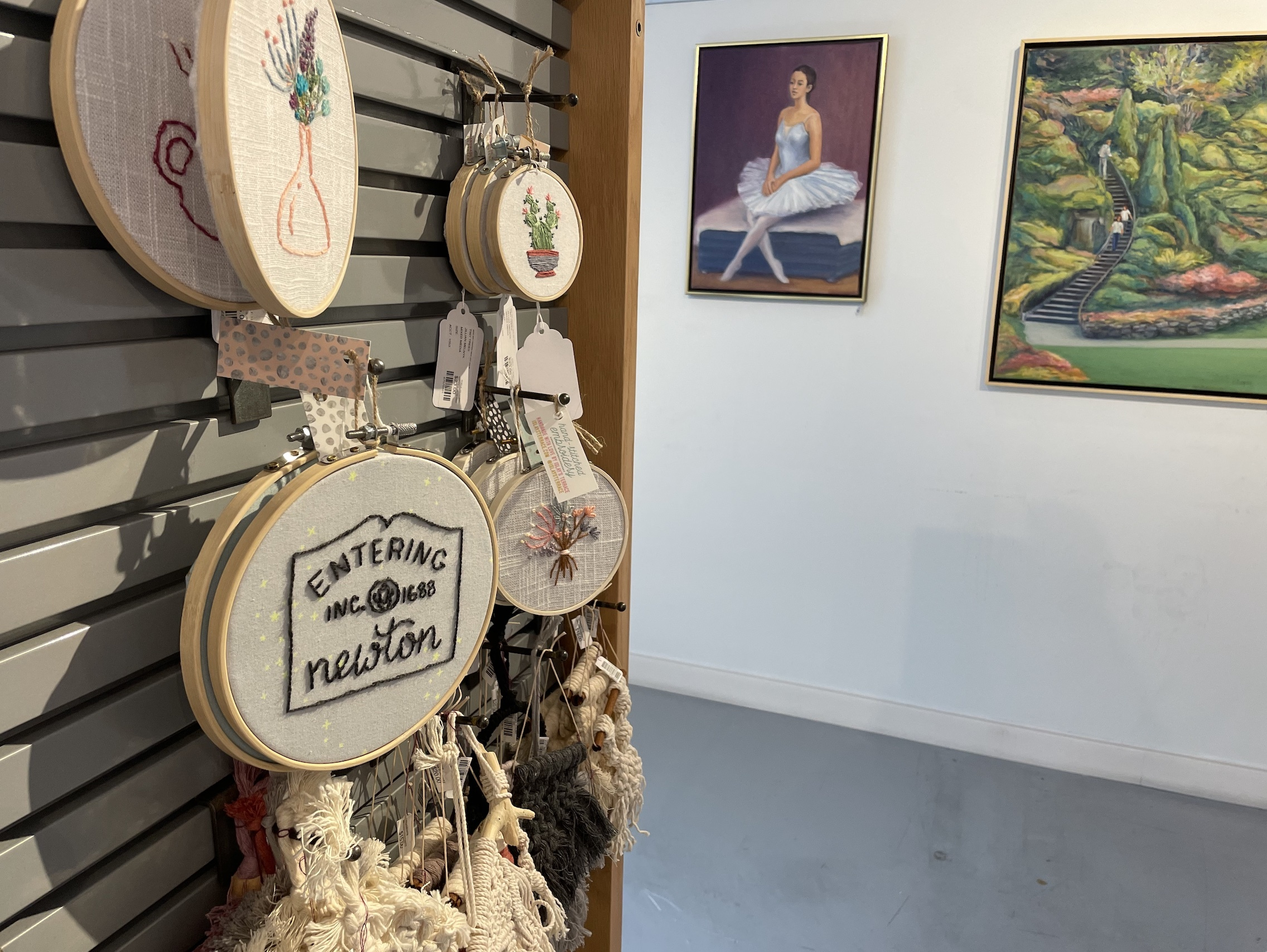
Currently, the artists earn a minimum of 65 percent of the profit from the sales of their work, O’Neil said, and if the shop fully becomes a co-op, the artists running the shop will also earn an hourly wage. The works sold in the shop vary from homemade candles and soaps to ceramics and wall art to books written by local authors.

“Our hope is at the culmination of our nine shopping days, we will have enough evidence to prove that there’s enough community interest to support a retail endeavor,” O’Neil said.

The New Art Center, a Newton-based nonprofit art education space, currently supports the volunteer-run shop. If the shop were to become a more permanent co-op endeavor, it would be run entirely by the artists, more independently from the Center, according to O’Neil and Kim Spencer, who founded the initiative together.

“Sales have been brisk,” Weinberg said, as 27 of her 39 pieces in the shop had already sold, and she was asked to bring in more.

Over the six days the shop has been open, sales have been “robust” and “above initial projection,” Spencer said. There have been an average of 30 transactions per day, she said, and the New Art Shop anticipates the overall gross sales for the nine sale days will be close to $20,000.

Sayaka Rawizza, a ceramic artist and instructor at the New Art Center, said the shop was “important to support the community.”

She said the shop was “an ideal style” for her this year during the pandemic, as it was less crowded and better ventilated in comparison to more traditional art fairs.

Sarah Kahn, a mixed media collage artist and New Art Center instructor, said within the first night, she received a call from the shop that she had already sold four of her pieces and they wanted her to bring in two more.

“I was so excited to think about selling myself to the community,” Kahn said.

Weinberg said it’s more important to her for people to “have my pieces in their home” than the money made from the sales.

“Having a venue for local artists to sell their work is really important to the community,” Weinberg said.

O’Neil said the New Art Shop is the only store in Newton selling work exclusively made by local artists.

“We’re hoping that people will shop locally, support local artists, support the community, and allow us to move this forward as a permanent retail venture,” O’Neil said.

The shop will be open for its last weekend of the season Friday, Dec. 10, through Sunday, Dec. 12. Hours can be found on the website.

Katherine Hapgood can be reached at newtonreport@globe.com.

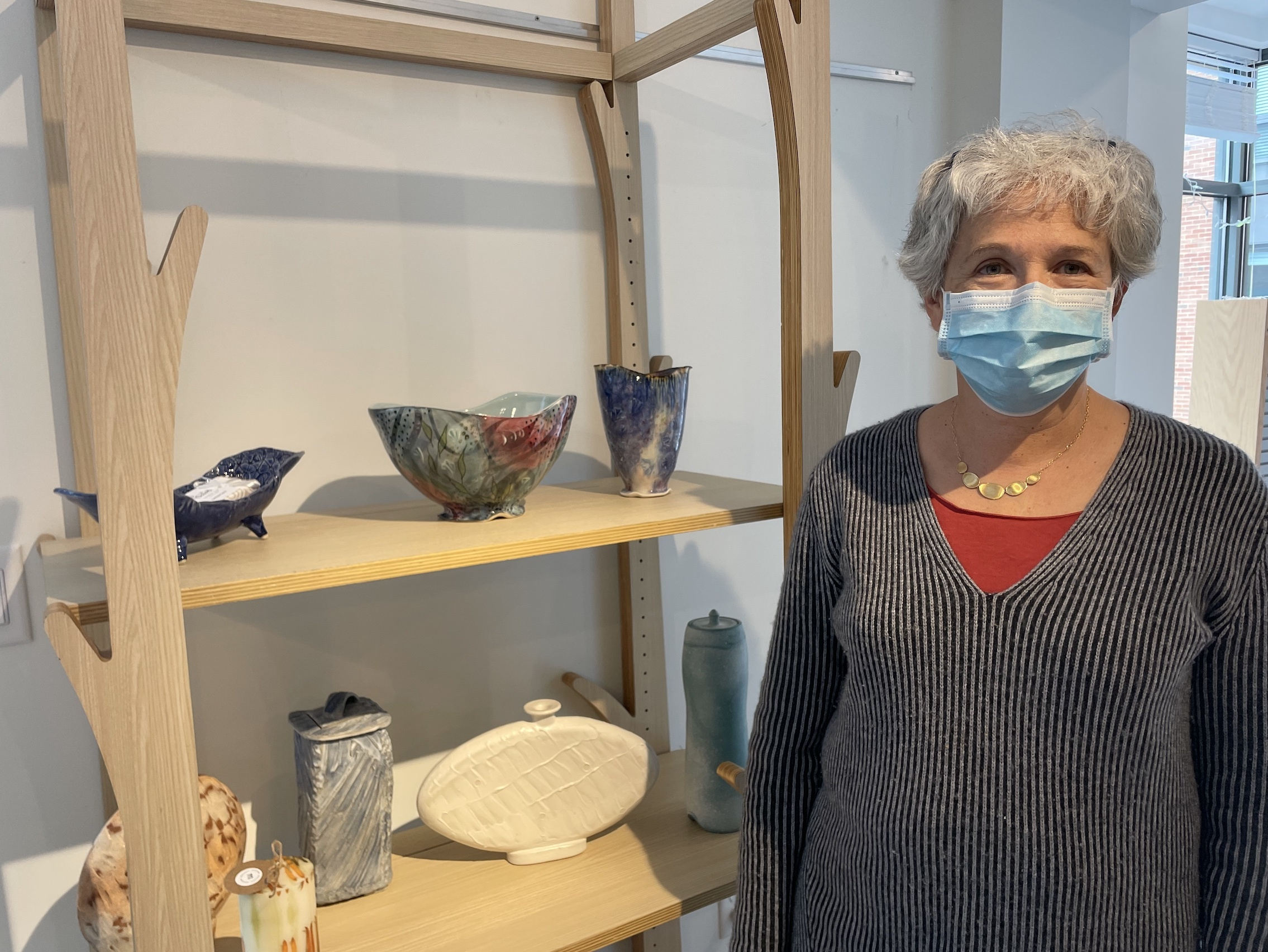
Ellen Weinberg shows her ceramics for sale on the second shelf of a display in the New Art Shop.
Ellen Weinberg shows her ceramics for sale on the second shelf of a display in the New Art Shop.Katherine Hapgood
Various wares are available for sale at the New Art Shop.
Various wares are available for sale at the New Art Shop. Katherine Hapgood

This ‘cool’ UNK club uses molten glass to create beautiful art


Post Views:
493

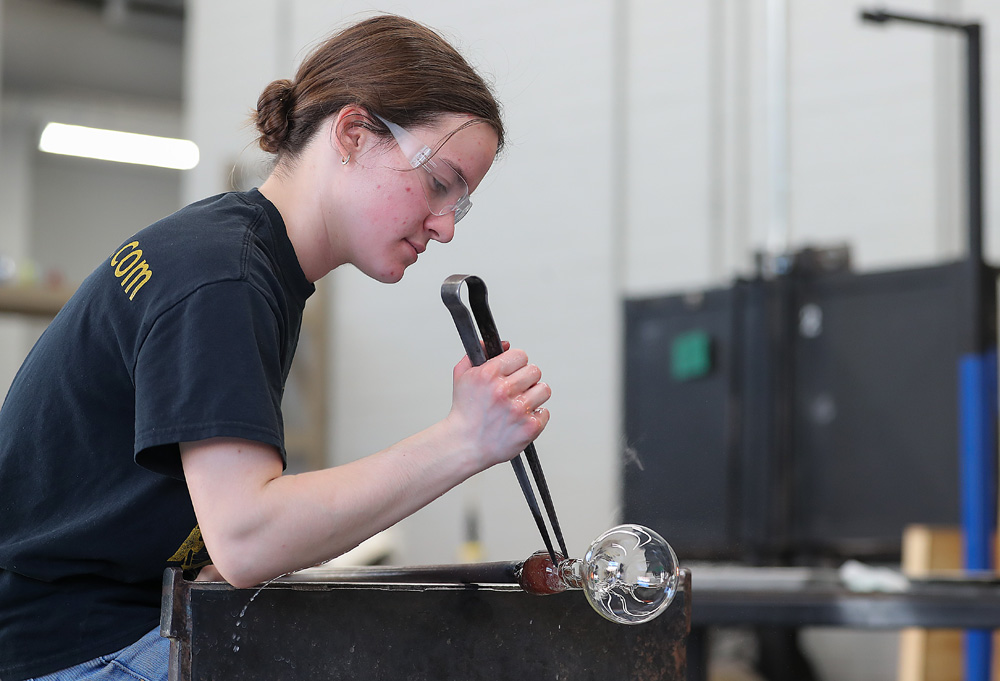
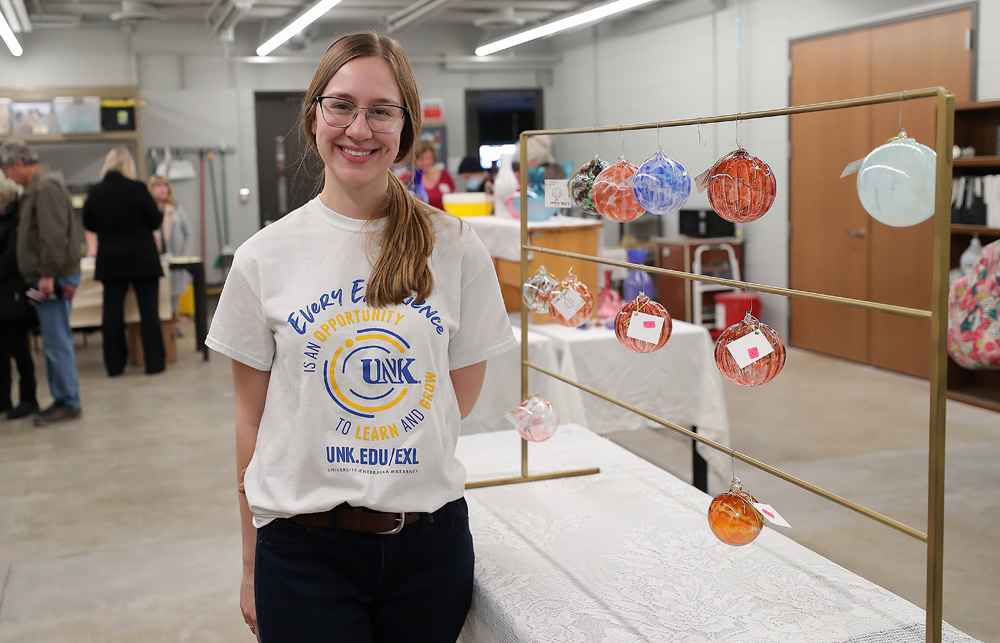
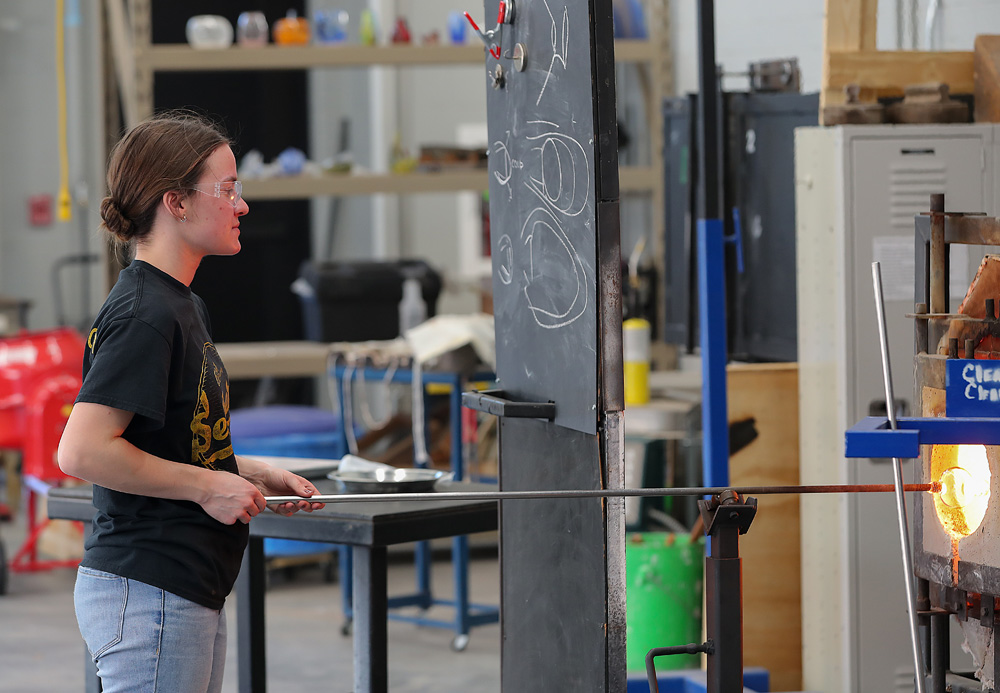
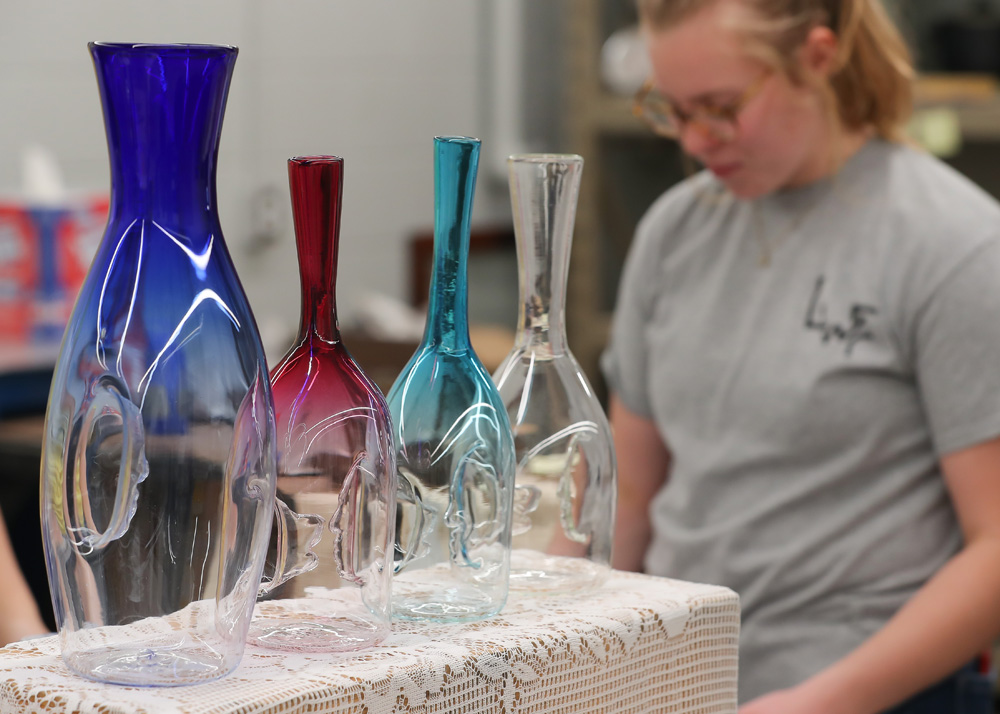
UNK sophomore Jackie Hinze creates a holiday ornament Tuesday inside the glass studio on campus. (Photos by Erika Pritchard, UNK Communications)

By ERIKA PRITCHARD
UNK Communications

KEARNEY – For Jackie Hinze, working in the University of Nebraska at Kearney’s glass studio is a relaxing escape from her science classes.

The biology major added a minor in 3D art because she enjoys using both the analytical and creative sides of her brain.

“I think the art classes are a good relief from the science classes sometimes because they can be pretty heavy as far as the memorization goes,” she said. “It’s nice to just make something with my own two hands and have a creative process.”

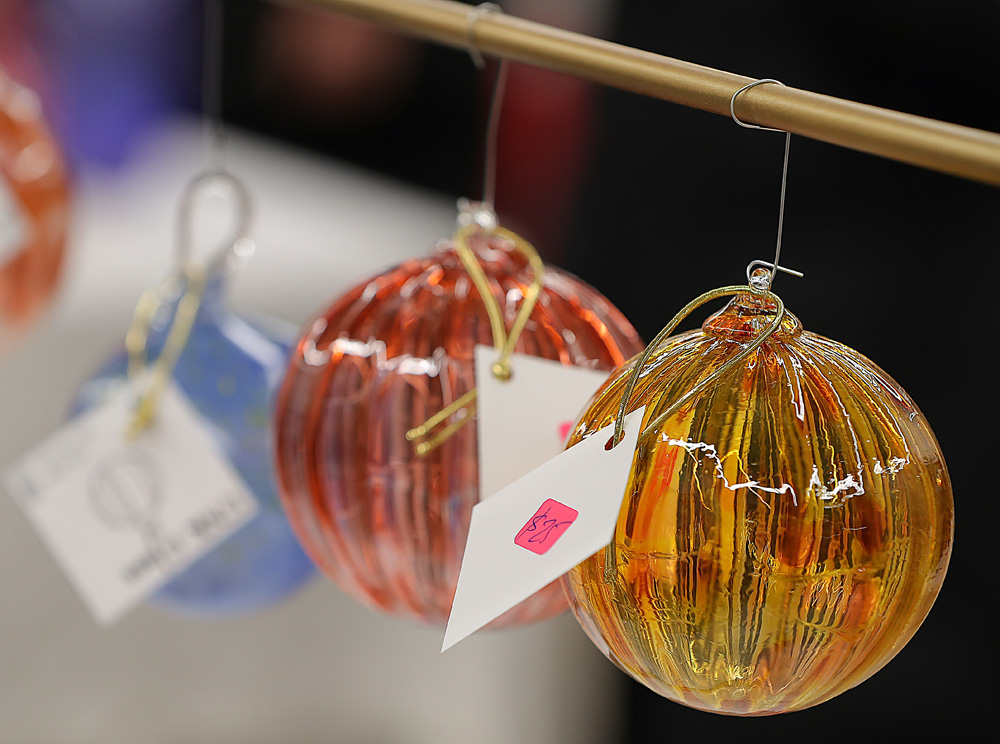
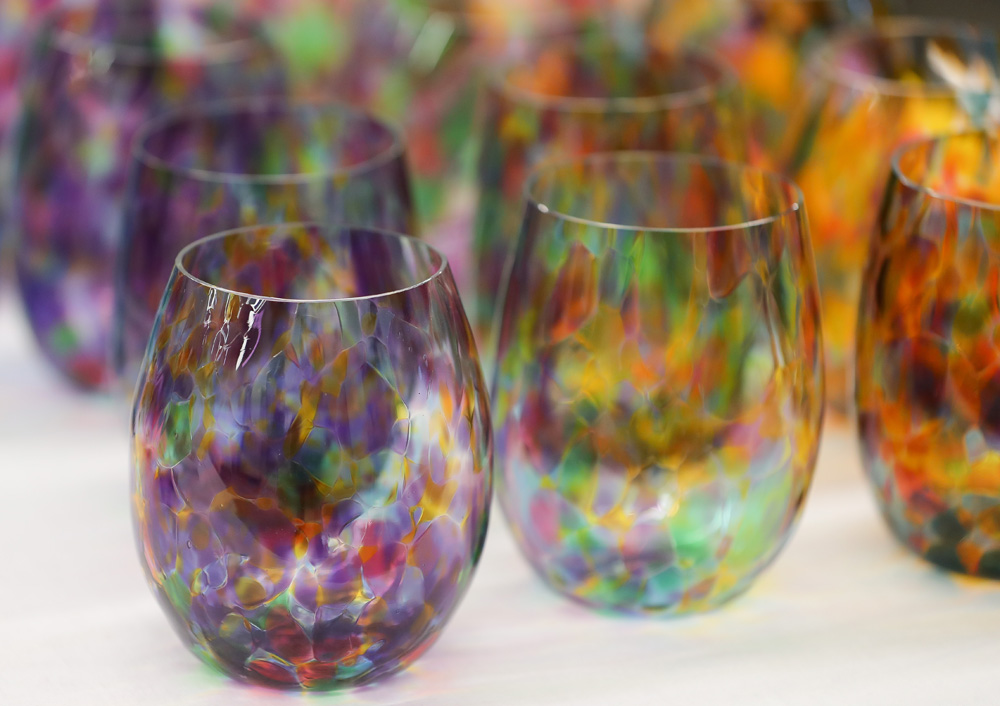
Members of the UNK Glass Club created a variety of ornaments for Tuesday’s holiday fundraiser.

After finishing one of her core courses Tuesday morning, the sophomore from McCook headed straight to the studio to create ornaments for the UNK Glass Club’s holiday fundraiser.

As Hinze gathered glass and continually shaped and reheated it in a 2,200-degree chamber, other club members and assistant professor of art and design Nadine Saylor sold colorful ornaments, vases, glasses, bowls and jewelry on the other side of the studio.

Teamwork is an important part of the process.

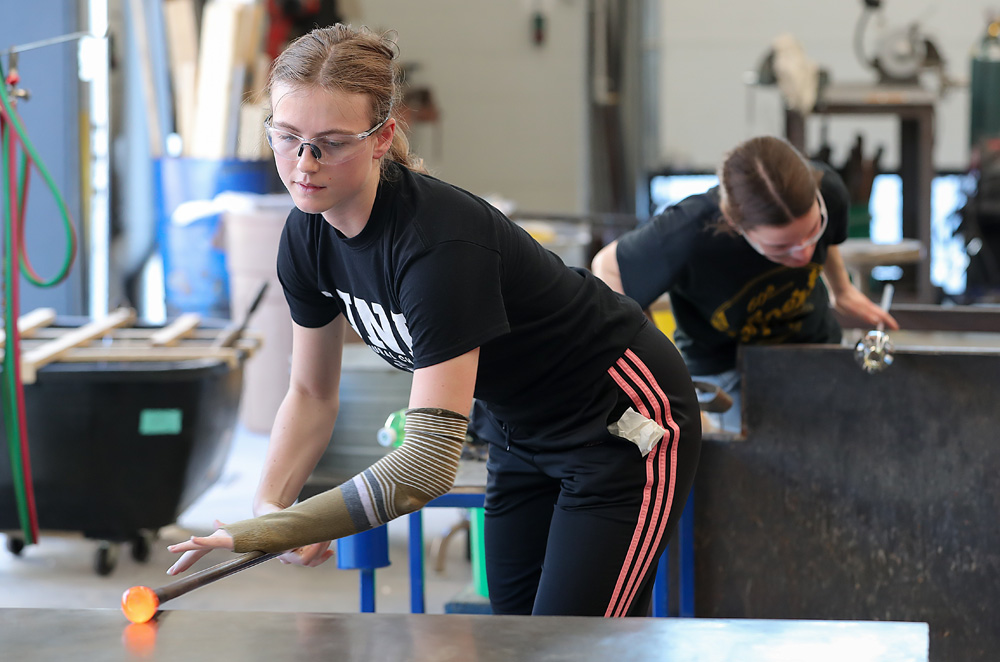
Saylor and the five Glass Club members formed an assembly line to make most of the ornaments. The starter gathered molten glass from the furnace and added color; the gaffer shaped the ornament; and another person added the hook. Then the one-of-a-kind decoration was ready to display.

Tuesday’s fundraiser was the second hosted this semester by the recently reestablished club. Members also sold handblown glass pumpkins ahead of Halloween.

Proceeds will be used to purchase new glassblowing tools and pipes, pay visiting artists and fund trips to professional conferences. So far, the club has purchased new tools, and the university bought a new belt sander to polish their glass creations. The furnace and kilns will be replaced in fall 2022.

Saylor, who joined UNK this semester, said bringing in visiting artists and sending students to the Glass Art Society Conference will expand her students’ world views.

“It brings in a fresh, new view from the outside world and makes them realize there’s a bigger world out there,” she said.

Of course, the club’s main mission is to give students an opportunity to gain more experience with glassblowing.

Alea Reifenrath, a senior from Wynot, is in her second semester of glassblowing at UNK.

“The best way to get the skills to blow glass is to do something over and over again,” Saylor said.

Psychology major Alea Reifenrath, a senior from Wynot, said glassblowing requires a lot of trial and error.

“You get used to having pieces break or fall off,” she said. The former happens when the glass gets too cool to form and the latter occurs when it’s too hot to hold together.

Over time, she’s learned to work quickly to keep everything at the right temperature.

“I think it’s a cool part of college that you can be any major and you can take a class that is totally random and learn about something new,” Reifenrath said.

Students must have previously taken a glass class to participate in the club, but they don’t need to be art majors or minors. Saylor hopes to see younger students join the club and glass program so they have more time to develop their skills.

Hinze signed up because she wanted another excuse to work in the studio.

In her second semester of glassblowing, she’s learned to make vases, cups and flowers. She wants to take as many glass classes as she can before she graduates and applies for medical school.

“I think there’s something really unique about making art out of glass,” Hinze said. “It’s a little bit dangerous and the products you make are beautiful beyond painting or drawing. I think glass is the most beautiful art form and that’s why I like being in here.”

LEARN MORE ABOUT THE UNK DEPARTMENT OF ART AND DESIGN


10 Fashion Chairs From Fendi, LV & Dior at Art Basel

Meant to look like they are “traveling in time, caught in motion.” I was told by an assistant at the Dior Medallion Chair project that Ma Yansong’s 3-D-printed chairs were the “It” chairs of Art Basel and Design Miami this year.
Photo: MA YANSONG ©KEN NGAN/Dior

This year’s Art Basel saw a number of luxury fashion houses eager to show off their new … chairs? Chairs. Of course, high fashion’s fascination with furniture design isn’t exactly new. Rei Kawakubo started making (mostly nonfunctional) chairs in the ’80s, while Fendi launched Fendi Casa, an actually usable home collection, in 1988. Louis Vuitton and Hermès ventured into furniture some 30 years later, with the former inaugurating Objets Nomades — its furniture and design store — a year after Hermès debuted its first furniture collection at Milan’s design week in 2011. More recent years have seen the inception of Gucci Décor (2017) and Maison Dior (2019), the brands’ respective home-goods ventures, while Balenciaga and Miu Miu showed their own questionable furniture collaborations at Art Basel in 2019.

But back to these chairs. Yes, the pandemic led to substantial growth in sales of home furnishings, but even without that, the fashion world’s infatuation with our Sitzfleisch makes sense; fancy furniture has the same aspirational bent as fancy shoes, and if a brand can’t be on your body, surely it would like to be in your home, even if it’s not something you can actually sit on.

That was the case for quite a few of the chairs that fashion houses debuted at this year’s Art Basel and Design Miami, where Dior, Louis Vuitton, and Fendi revealed their latest experiments in furniture (or, one could argue, sculpture). Below, some of our favorite fashion chairs from this year’s events.

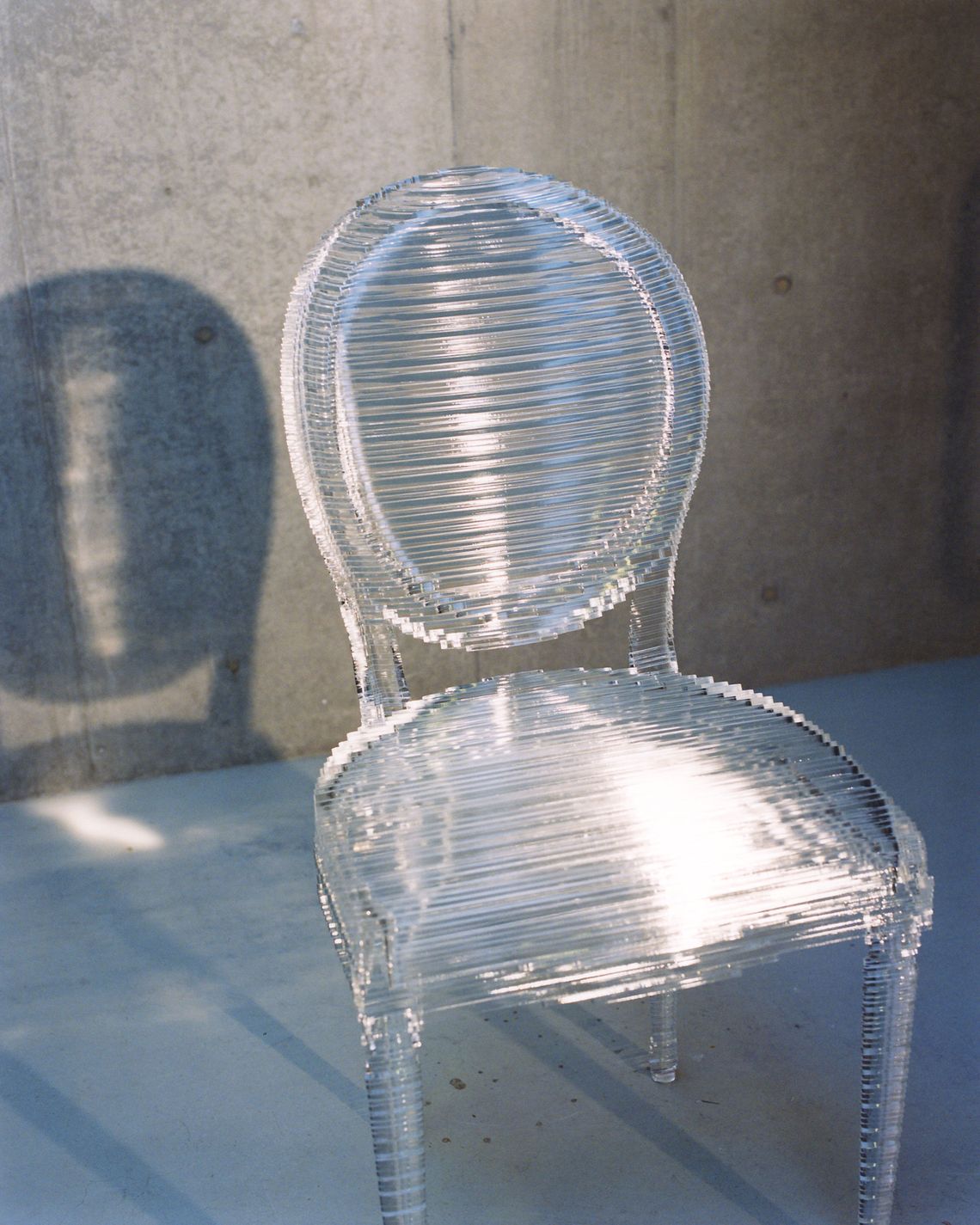
For its Medallion Chair project, Dior invited 17 artists to reinterpret its iconic Medallion Chair, an item that the house has typically used to seat guests at fashion shows. For his interpretation, Japanese designer Tokujin Yoshioka used layered acrylic for a chair that filters light like a chandelier.
Photo: TOKUJIN YOSHIOKA ©YUTO KUDO/Dior

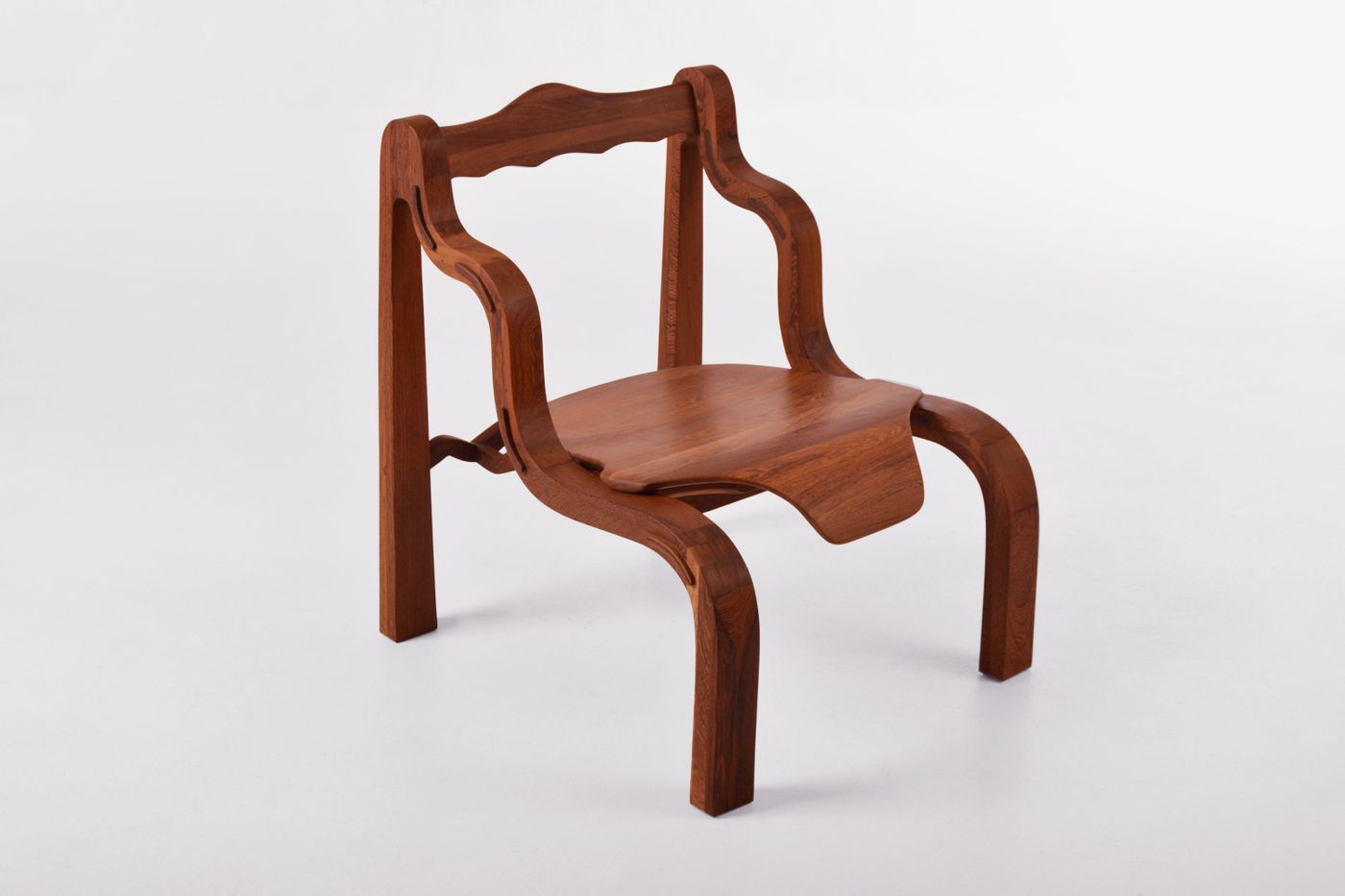
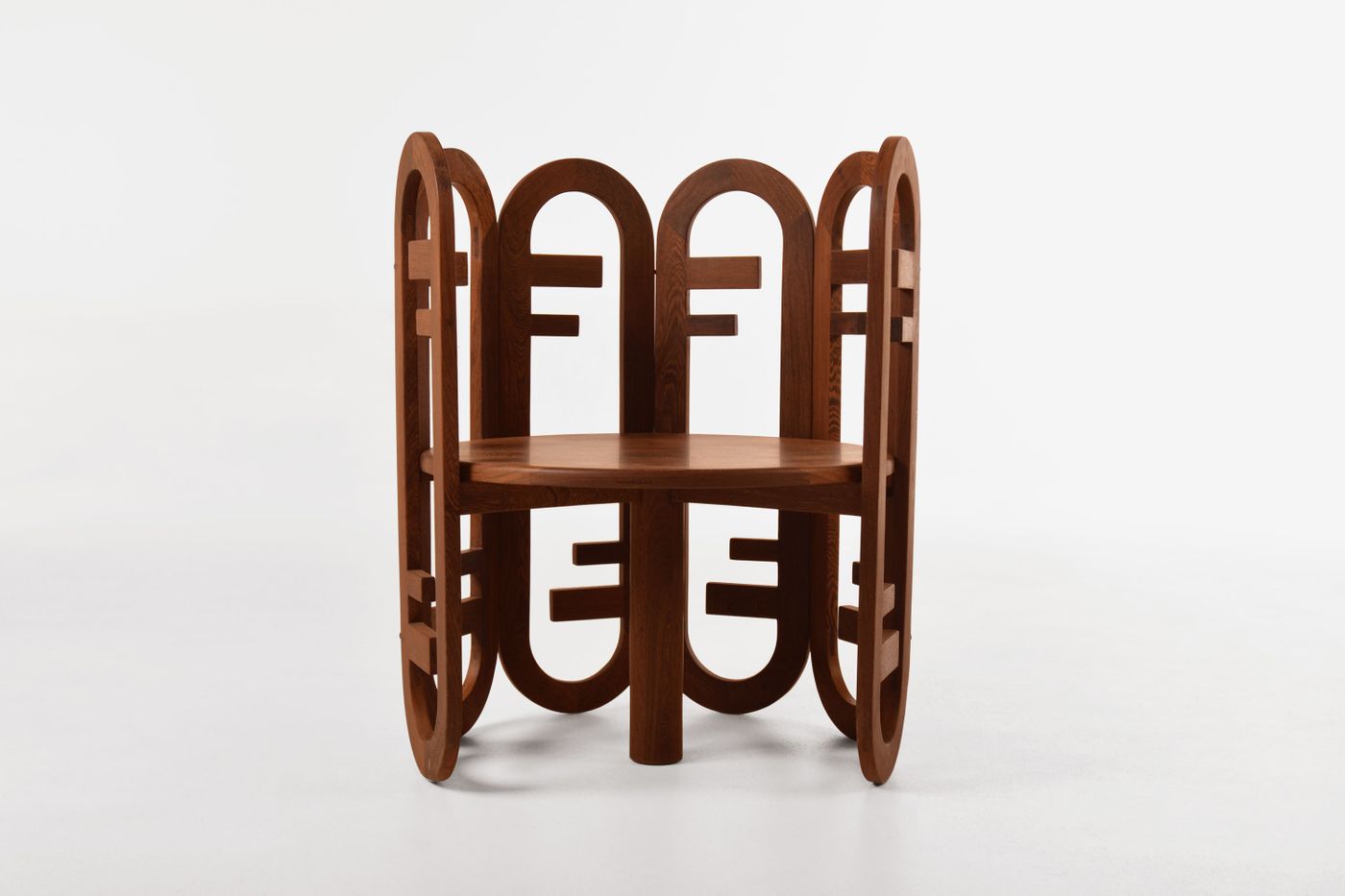
At Design Miami, Fendi’s artistic director, Kim Jones, called upon the Botswana-based furniture brand Mabeo to curate the ten-piece installation “Kompa.” The pieces (including the Foro chair, pictured above) were all handmade by artisans across Botswana using old woodworking techniques to reinterpret the Italian brand’s history of distinct style.
Photo: Courtesy of Peter Mabeo/Fendi

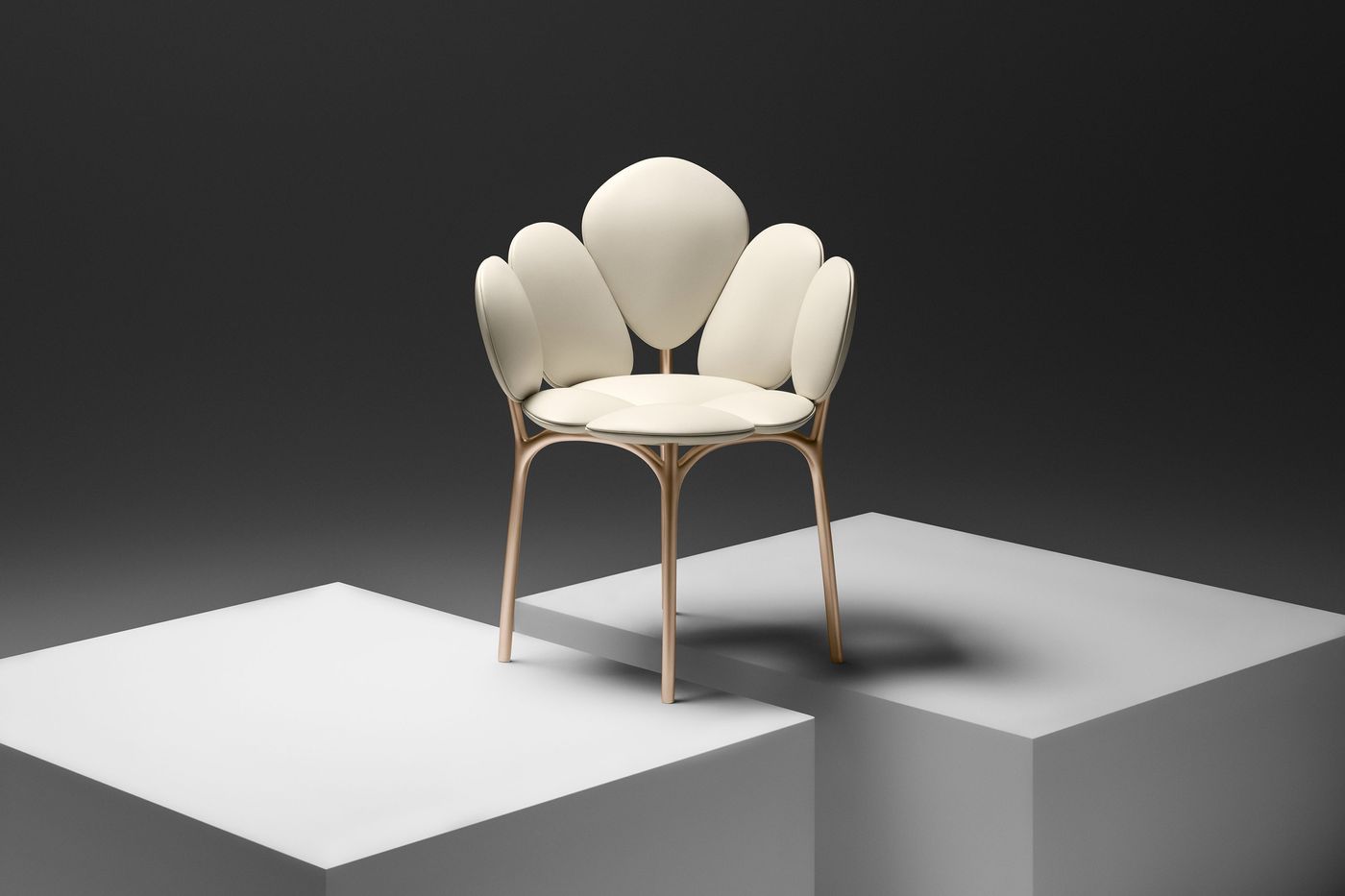
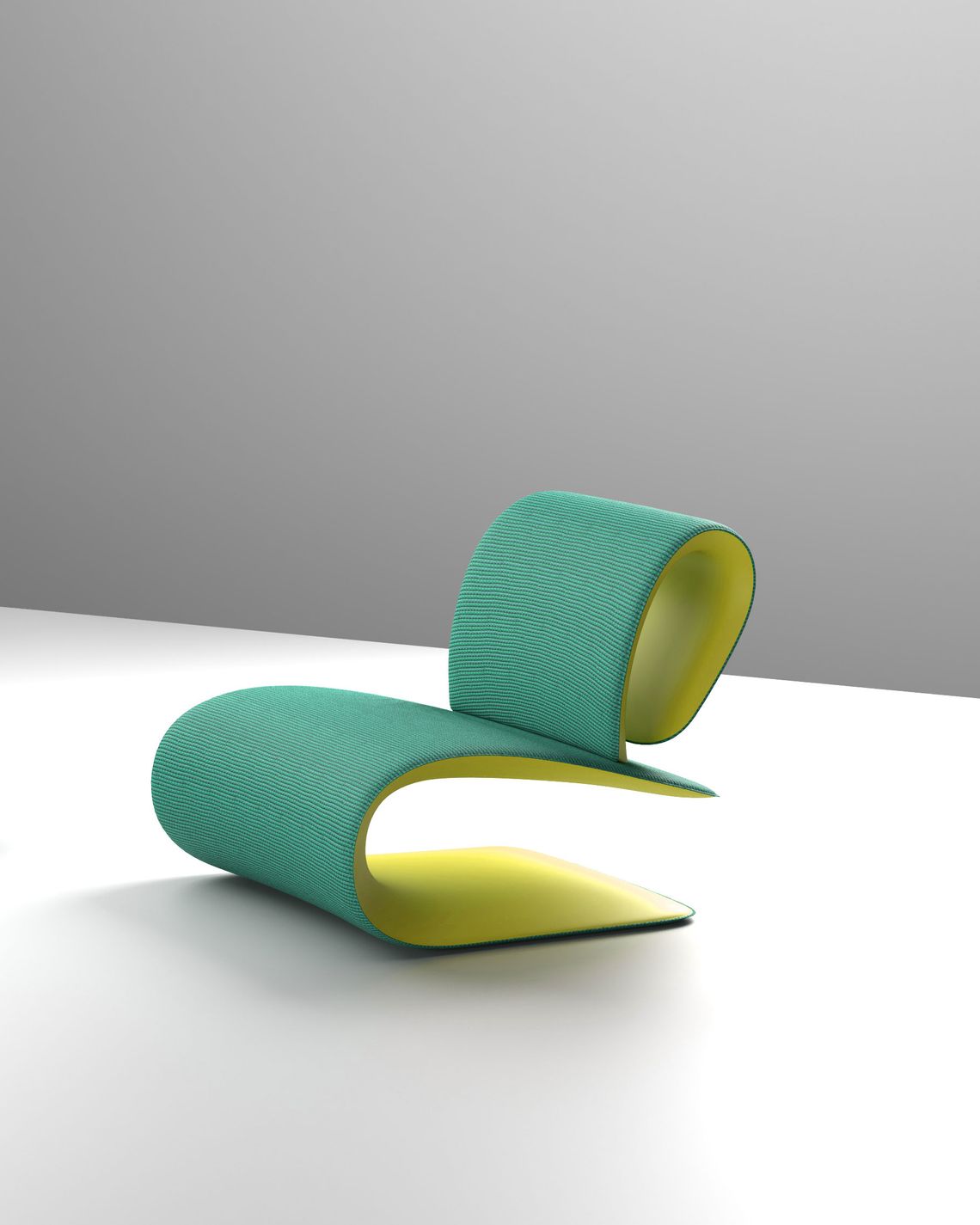
Since 2012, Louis Vuitton has brought together renowned international designers to create furniture and objects for its design venture, Objets Nomades. Above is Marcel Wanders studio’s Petal Chair, which, according to a press release, features calf-leather cushions “in three special Miami colourways (light pistache, neon yellow, coral and cream).”
Photo: Marcel Wanders studio/Louis Vuitton Objets Nomades

Korean artist Seungjin Yang describes his interpretation of Dior’s chair as “simple, unique, and fun.” Made of blown epoxy resin, an assistant at Dior’s gallery admitted that she nearly had to call security to prevent a guest from sitting on this piece, which definitely should not be sat on.
Photo: SEUNGJIN YANG ©Sungmin Kim/Dior

Mabeo’s Maduo chair is made in Botswana’s Mmankgodi village and takes inspiration from a piece of Fendi jewelry designed by Delfina Delettrez Fendi with its series of interlocking F shapes.
Photo: Courtesy of Peter Mabeo/Fendi

Objets Nomades debuted five pieces from Chinese designer Frank Chou. Above is his signature armchair, “inspired by terraced fields in China and desert rock formations in the USA.” Covered in Brio fabric, it’s the first Objets Nomades piece designed for exterior use.
Photo: Courtesy of Frank Chou/Louis Vuitton Objets Nomades

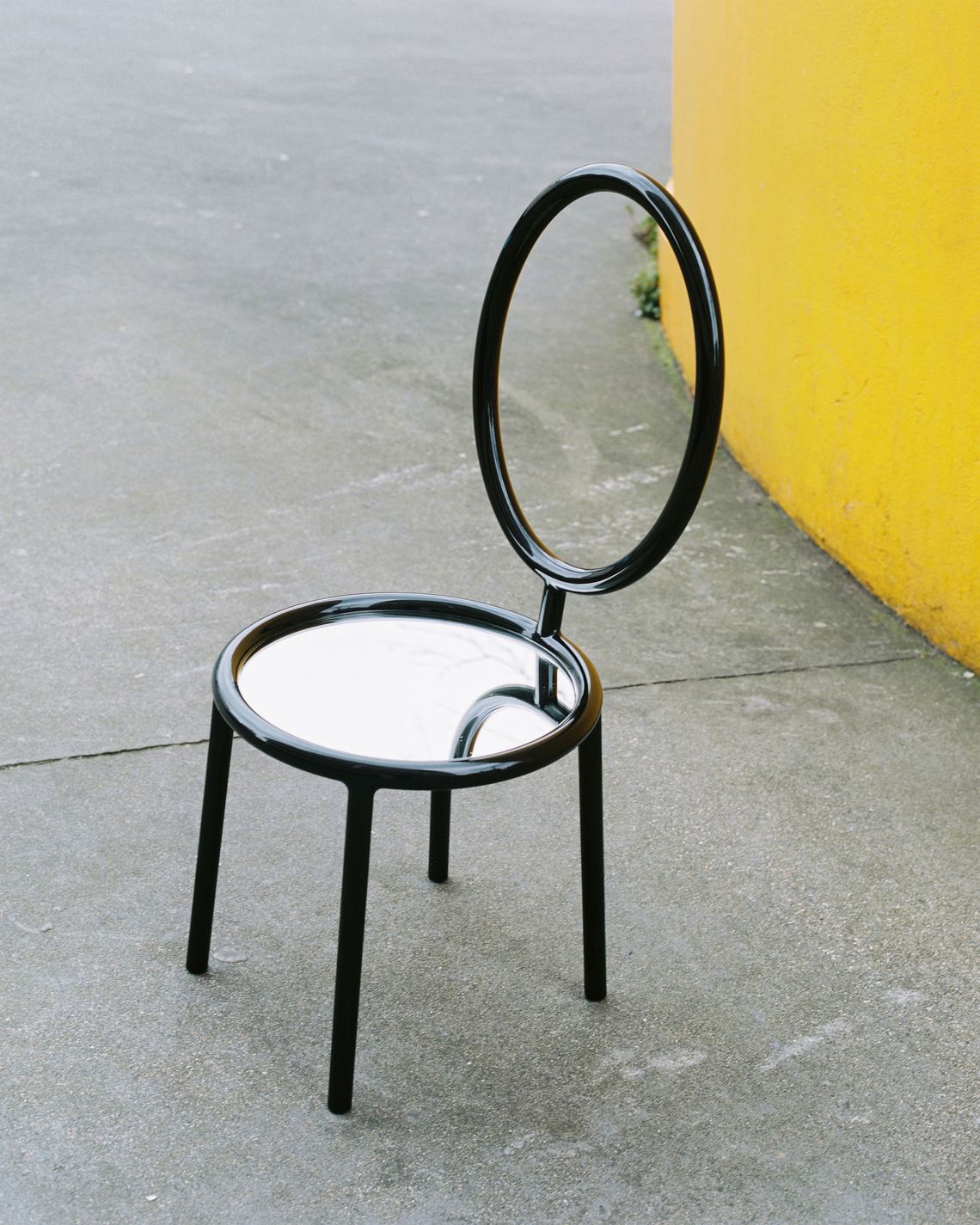
My personal favorite, from French artist Pierre Charpin. To me, it recalls a compact mirror, but Charpin drew inspiration from the kinds of haute couture silhouette sketches that Dior uses in its clothing design.
Photo: PIERRE CHARPIN ©Marion_Berrin/Dior/Salone Del Mobile

Drawing from his Tswana heritage, Atang Tshikare’s work looks to beliefs and myths about the cosmos and Divinity. His interpretation for Dior is made in vegan tanned leather enhanced with constellations and beadwork in Bantu pictograms.
Photo: ATANG TSHIKARE ©Ayesha Kazim/Dior

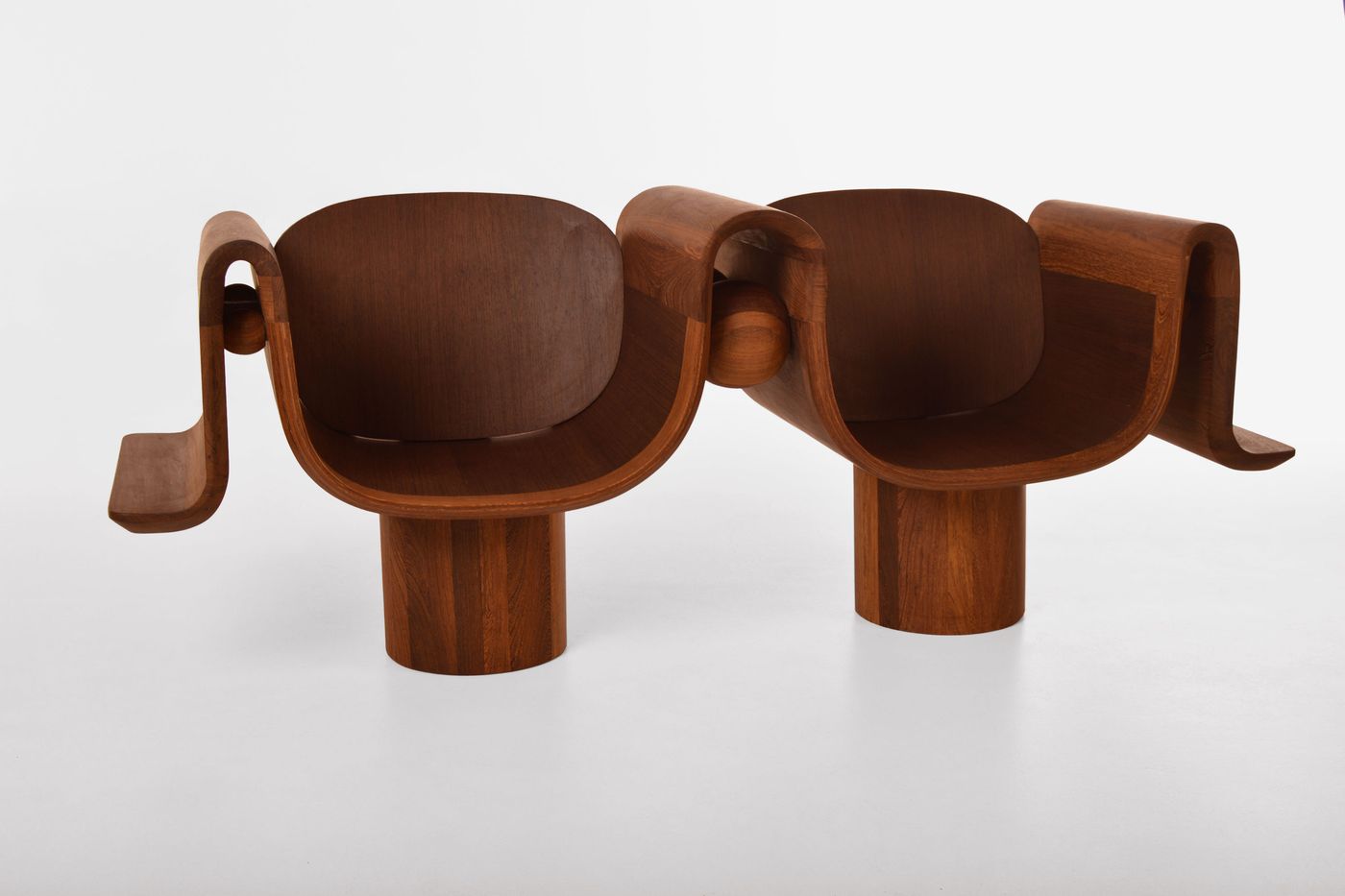
The Shiya seat, made of panga panga wood and plywood, from Mabeo’s collaboration with Fendi. On the whole, the collection is a departure from a history of the sleek, sexy furniture typical of the Italian brand.
Photo: Courtesy of Peter Mabeo/Fendi

A Major New Art Center Has Opened in a Former Moscow Power Plant, But Rising Political Unrest in the Region Is Cooling Excitement

Russian President Vladimir Putin took a tour this week of a century-old power plant, which has just reopened as a contemporary art center after a major, years-long renovation.

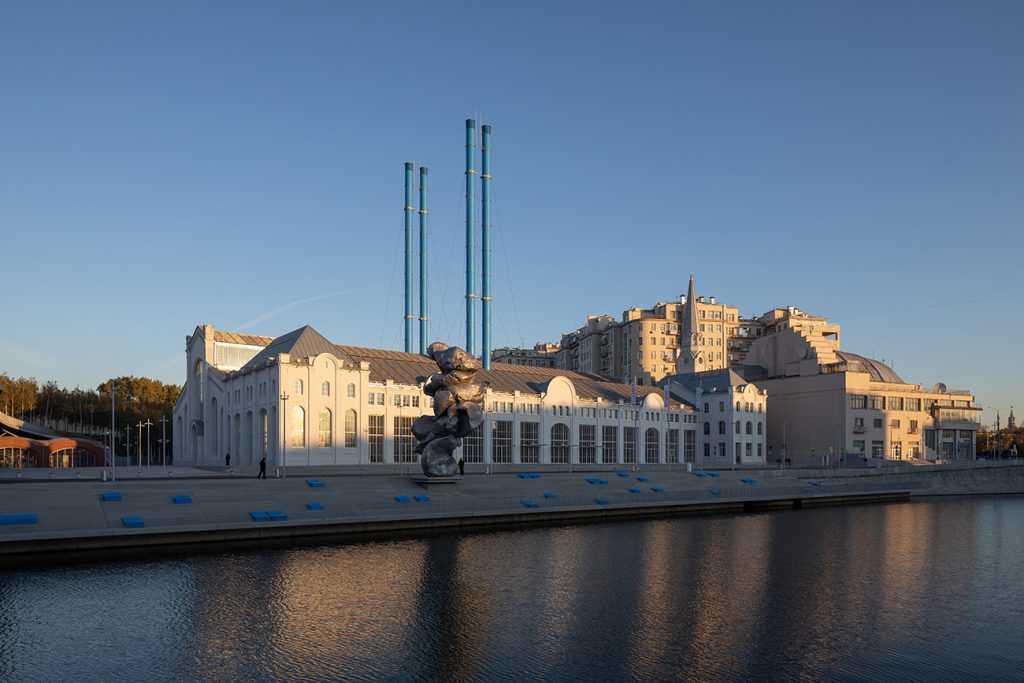
The GES-2 House of Culture, the newest home of the V-A-C Foundation, is an ambitious new cultural center set in the heart of Moscow, just opposite Russia’s formidable seat of power. It hopes to become a world-ranking cultural attraction and bring new creative energy to the Russian capital, though it has had to face down a pandemic as well as growing tensions between Russia and the West over Ukraine.

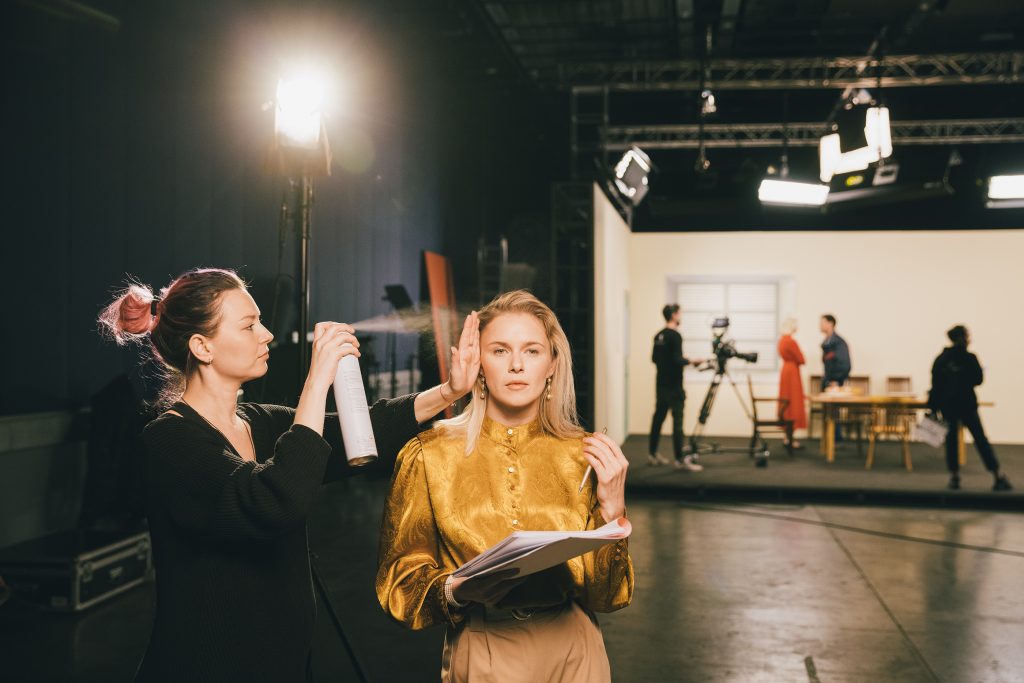
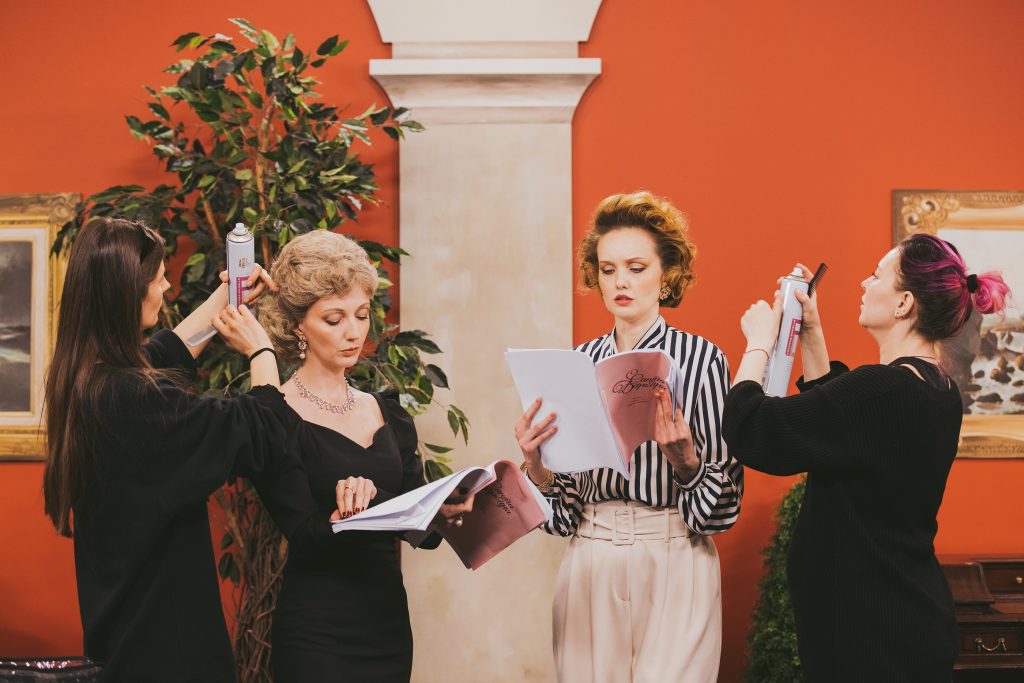
Nevertheless, GES-2 is well on its way to becoming a world-class institution. The museum welcomed international press last weekend to its first exhibition and its ultra-modern new home designed by Renzo Piano, who maintained as much of the early 20th-century structure as possible. Sprawling over a 328-foot-long stretch of the main gallery are its inaugural exhibitions and a new “living sculpture” by Icelandic artist Ragnar Kjartansson, comprised of a live film set with actors and a crew who are working over the next months to reshoot 98 episodes of a popular post-Soviet-era soap opera, Santa Barbara.

Ragnar Kjartansson, Santa Barbara, 2021–22 Durational performance, Directed by Ása Helga Hjörleifsdóttir. Staging and production: Lorem Ipsum Commissioned by V-A-C Foundation, Moscow; Courtesy of the artist, Luhring Augustine, New York and i8 Gallery, Reykjavik/ Based on the series originally created by Bridget and Jerome Dobson ‘SANTA BARBARA’ ©1984 TwentiethCenturyFox Television, all rights reserved.

Ragnar Kjartansson, Santa Barbara (2021–22), durational performance, directed by Ása Helga Hjörleifsdóttir. Staging and production: Lorem Ipsum Commissioned by V-A-C Foundation, Moscow; Courtesy of the artist, Luhring Augustine, New York and i8 Gallery, Reykjavik/ Based on the series originally created by Bridget and Jerome Dobson ‘SANTA BARBARA’ ©1984 TwentiethCenturyFox Television, all rights reserved.

The 440,000-square-foot disused electrical facility has been under renovation for several years to transform it into an airy and futuristic meeting place for art, performance, and culture. The restoration included redoing its roof with large glass panels and windows on all sides, in order to flood the galleries with light, but also to give a sense of openness and accessibility. On the banks beside the river just outside stands Urs Fischers Big Clay No. 4. Inside, there’s an indoor cinema, areas for artist workshops, and a library, as well as large exhibition spaces.

The institution’s new location has been paid for by Leonid Mikhelson, the billionaire behind Russia’s largest private gas group and cofounded V-A-C foundation alongside its director, curator Teresa Iarocci Mavica. The privately-financed project has not disclosed its costs, though it was last stated in 2018 that the GES-2 may cost at least $300 million. No updated figure has been given, though V-A-C Foundation director Mavica told Moscow Times that it was “incredibly expensive.” Entry will be free of charge.

GES-2 House of Culture. Photo: Ivan Erofeev, 2021

GES-2 House of Culture. Photo: Ivan Erofeev, 2021

“Culture is the process of learning about the world around us, the world of other people, the world within oneself. In other words, culture is a means of direct communication between everyone and everyone, in the most diverse forms,” said Mikhelson, the financial backer and founder of the V-A-C, in a statement, calling the GES-2 “a space of cultural communication open to all.”

Kjartansson’s inaugural exhibition, which is called “Santa Barbara – A Living Sculpture” is a performance piece that takes over the main hall of the museum. Each day of the exhibition, the crew will shoot another episode, to be started and completed that day and shot in one take.

In another part of the museum, his artistic partner Ingibjörg Sigurjònsdottír curated a group show called “To Moscow! To Moscow! To Moscow!” which includes artists Roni Horn, Theaster Gates, and Carolee Schneemann. The projects are both part of the first “season” of the museum’s program, which explores a larger story that the GES-2 has set out to explore, called “Holy Barbarians, or Both Are Worse.” This topic hopes to address the complexities of post-Soviet Russia and its relationship to the West.

Ragnar Kjartansson, Santa Barbara, 2021–22 Durational performance, Directed by Ása Helga Hjörleifsdóttir. Staging and production: Lorem Ipsum Commissioned by V-A-C Foundation, Moscow; Courtesy of the artist, Luhring Augustine, New York and i8 Gallery, Reykjavik/ Based on the series originally created by Bridget and Jerome Dobson ‘SANTA BARBARA’ ©1984 TwentiethCenturyFox Television, all rights reserved.

Ragnar Kjartansson, Santa Barbara, 2021–22 Durational performance, Directed by Ása Helga Hjörleifsdóttir. Staging and production: Lorem Ipsum Commissioned by V-A-C Foundation, Moscow; Courtesy of the artist, Luhring Augustine, New York and i8 Gallery, Reykjavik/ Based on the series originally created by Bridget and Jerome Dobson ‘SANTA BARBARA’ ©1984 TwentiethCenturyFox Television, all rights reserved.

And though it sets a jovial tone in some the darkest months of the year, the launch comes as the region is living through its second pandemic winter, but also amid escalating political tensions between Russia and the West. (Nearly 100,000 Russian troops were sent to the Ukrainian border this week, and NATO allies, including the U.S. and the U.K., have threatened Putin that they would retaliate should an invasion take place.)

Some also wonder how much freedom of expression there really will be at GES-2. One gallerist told the Moscow Times that the venue could run into problems given that the Russian government has reportedly said it would like to follow a “Chinese model where they completely freeze any political developments.”

Follow Artnet News on Facebook:


Want to stay ahead of the art world? Subscribe to our newsletter to get the breaking news, eye-opening interviews, and incisive critical takes that drive the conversation forward.

A Moment of Timeless Beauty at Art Basel Miami

After a couple of years on pause, life is busy once again. Streets are bustling with anticipation and conversation. It’s easy to get caught up in a stream of events without taking a minute to appreciate the small, beautiful moments in life. The question is, how do we find the time to do so?

To create an ode to Switzerland’s majestic landscapes, serenity, and the sublime, the skincare brand La Prairie has collaborated with Taiwanese new media artist, choreographer, and dancer Wen-Chi Su to create an immersive and contemplative performance. On December 1st and 2nd, at sunrise and sunset, Su presented “Moving Towards the Horizon,” a stunning 10-minute performance embodying the encounter of light and water.

In her performance, created exclusively for La Prairie, Su brings Switzerland’s serene landscape to the Miami coast. The city’s oceanfront waves offered the ideal stage for the immersive outdoor installation. La Prairie and Su served as guides through a journey to discover a pure moment of beauty in nature. The goal was to encourage the audience to consider a pause for self-contemplation.

A perfect fusion of art and science

La Prairie’s pioneering approach to skincare intertwines creative intention and rigorous innovation to offer a perfect vision of timeless beauty. While art is often abstract, fluid, and influenced by the imagination, and science is exactingly precise, the two disciplines have more similarities than you would think. That is why Su’s alliance with La Prairie is a harmonious and instinctive meeting of minds. For Su, dance is an art form steeped in science and precision. Influenced by her residency with the prestigious Accelerate@CERN program, she highlights the common links between scientists and artists. “Art and science are not two separate notions. We are honest to each other’s methods, but both our goals are to create something beautiful.”

Su compares the scientific language of graphs, fractions, and calculations to the language of dance, with its reliance on the art of abstraction and the creation of “techniques, shapes, movements considering weight shift and energy control.” She believes research and imagination both aim “to create a common language of understanding.” The performance was a unique opportunity to experience the intersection of these two linguistic expressions.

Read our exclusive Q&A with Wen-Chi Su below.

wen chi su

La Prairie

la prairie

La Prairie

On how she defines her work

“My work is about bringing two very different genres of art—performing art together with new media art—to facilitate and encourage a new process of thinking. By colliding these two worlds together, we trigger something new for the artists involved in the process but also a new experience for the audience.”

On how her dance interacts with new media

“New media is a new form of art which emerged about fifteen years ago. Dance has been present for millennia. Bringing a new form of art together with dance allows [one] to question the way the body interacts with the world.”

On what message she wants to convey through her art

“Through my works, I want to create moments of calmness and beauty so that people take a moment to step back from the hectic world to reflect on different aspects of life and its associated elements. This means focusing on the body itself and its connection with nature.”

la prairie wen chi su

La Prairie

On her collaboration with La Prairie

“When La Prairie approached me with an opportunity to work together, I appreciated the proposition of an exchange. I find my inspiration through true collaboration. Having a community like the one at La Prairie has been very enriching for me to conceptualize and create the experience around the theme of light and water.”

On how she brings these elements together on stage

“I was very much focused on translating the essential elements of light and water into a dance performance. The stage—the light, the sound, the choreography—all come together to recreate these moments where time and light flow.”

Discover her performance, “Moving Towards the Horizon”, at Art Basel in Miami Beach.

“Moving Towards The Horizon” is an ode to La Prairie’s upcoming launch, White Caviar Essence Extraordinaire, an exceptional essence that pushes the boundaries of science, inspired by the magical encounter of light and water and delivering a glimmering luminosity on the skin.

This content is created and maintained by a third party, and imported onto this page to help users provide their email addresses. You may be able to find more information about this and similar content at piano.io

Beautiful Lies: The Art of the Deep Fake

“MY WORK IS about telling the truth, about capturing it, about showing it and about presenting it,” writes the Norwegian photojournalist Jonas Bendiksen in an introductory essay to The Book of Veles, his latest volume of photographs. “The truth is what you see, and it’s the essence of photography.”

In 2019 and again in early 2020, just before the onset of the pandemic, Bendiksen traveled to the small city of Veles on the Vardar River in North Macedonia. The trips were inspired by a series of press reports, beginning in the late stages of the 2016 US presidential campaign, which revealed that Veles was a major source of the fake news stories flooding Facebook and other social media sites. Scores of young people in the impoverished city had discovered that they could make a decent living by fabricating and circulating stories celebrating Donald Trump and denigrating Hillary Clinton.

In his essay, Bendiksen reports on meeting several of the most successful scammers, some of whom were working out of small offices with teams of colleagues. None of them expressed any interest in, much less regret about, the social ramifications of their work. To them, the fractious political situation in the United States was just a convenient opportunity to attract an online audience and earn ad revenues. “I support Trump for a few reasons,” a young man named Alex explained to Bendiksen. “One, he makes money. Two, he makes Americans happy. Third, he makes money quickly.”

Any attempt to curb fake news is doomed to fail, Alex went on to say. “There are too many haters on the net, and too many fake news sites, and fake news is the new truth. The main thing is that we believe in freedom of speech.”

Bendiksen’s book presents dozens of haunting images of the city and its inhabitants. A man leans out of a window of a large apartment block, a pair of satellite dishes hanging nearby. A woman sits on an unmade bed, gazing into the screen of a laptop. Two lovers embrace under a highway overpass. Soldiers stand smoking behind a barbed-wire fence. A bear wanders past a graveyard at the edge of town. Another bear drinks from a dirty stream.

Grainy and dimly lit, the images are eerie, poignant, and beautiful. They’re also fake.

Bendiksen did make two trips to Veles, but he didn’t photograph any people. He shot pictures of empty buildings and deserted cityscapes, and when he returned home to Norway he used video-game-production software to transform the images into three-dimensional renderings. He then downloaded digitized, 3D images of models from the web and placed them inside the scenes, carefully adjusting their poses, clothing, and lighting to make everything look as realistic as possible. Finally, he transformed the renderings back into two-dimensional images. The “photographs” that appear in the book are, essentially, screen grabs from a video game that doesn’t exist.

Bendiksen’s introductory essay, too, is a fake. He didn’t write any of it. Instead, he fed existing news stories about Veles and social media fraud into GPT-2, a software program that employs machine-learning algorithms to generate fake text, and used a variety of prompts to get the program to spit out made-up stories on the topics he wanted to cover. He pieced bits of the stories together, including the entirely fictional interview with “Alex,” to produce the essay. “My work is about telling the truth”: those words aren’t Bendiksen’s; they’re the words of a computer.

When The Book of Veles appeared in July, Bendiksen assumed that readers would see through his ruse. He went out of his way to circulate the book and its images among professional photographers, confident that they would quickly realize the photos were fabrications. He was wrong. His work earned praise but not suspicion. Anxious to come clean, he created a fake Twitter account under the name “Chloe Miskin” and, in early September, used it to raise doubts about his photographs. That didn’t work, either. Finally, in an interview posted on the website of his agency, Magnum Photos, in late September, he confessed to the deception. He also explained his motivation:

I started to ask myself the question — how long will it take before we start seeing “documentary photojournalism” that has no other basis in reality than the photographer’s fantasy and a powerful computer graphics card? Will we be able to tell the difference? How hard is it to do? How skilled will our own community of photographers and editors be in sniffing out what are deep fakes and what is real? I was so frightened by what the answers would be that I decided to try to do this myself.

When you read The Book of Veles now, knowing it’s a fake, the artifice jumps out at you. The facial features of the people in the photos look slightly plastic, and many of their poses feel unnatural, as if their bones were flexible rather than rigid. Some of the pictures, such as one of a girl floating across an otherwise abandoned public swimming pool on an inflatable unicorn in winter, come off as ludicrous. Bendiksen’s essay reads like a cut-and-paste job, marked by clumsy phrasing and ungainly transitions. And, in the book’s concluding acknowledgments section, the author slyly lists the image-manipulation tools he used. “What fun toys,” he comments.

The fact that no one spotted the forgery underscores just how easy it is to fool people, even experts. We humans want to believe whatever’s presented to our senses through the media, particularly when it takes the form of images. “Photographs furnish evidence,” wrote Susan Sontag in her 1977 classic On Photography. “A photograph passes for incontrovertible proof that a given thing happened. The picture may distort; but there is always a presumption that something exists, or did exist, which is like what’s in the picture.” Take away that presumption, and our ideas about existence get tenuous fast.

¤

“Images are powerful,” writes Noah Giansiracusa, a Bentley University mathematics professor, in How Algorithms Create and Prevent Fake News; “altering images is a method to alter reality and history.”

As Giansiracusa shows, image manipulation has been around as long as images have. A widely circulated photograph of Abraham Lincoln taken during the presidential campaign of 1860 was subtly altered by the photographer, Mathew Brady, to make the candidate appear more attractive. Brady enlarged Lincoln’s shirt collar, for instance, to hide his bony neck. In a portrait made to memorialize Lincoln after his assassination, the artist Thomas Hicks, working from earlier pictures, transposed Lincoln’s head onto a more muscular man’s body to make the fallen president look heroic. The body Hicks used was that of the pro-slavery zealot John C. Calhoun.

In 1950, in the midst of the Red Scare, Senator Joseph McCarthy’s staff circulated a fabricated composite image purporting to show Senator Millard Tydings, a fierce critic of McCarthy’s, in close conversation with the leader of the American Communist Party, Earl Browder. Historians suspect that the photo contributed to Tydings’s defeat in his reelection campaign that year.

Opponents of John Kerry’s 2004 presidential bid pulled a similar stunt. They made a composite photo showing Kerry standing beside the controversial actress Jane Fonda at a rally opposing the Vietnam War. The photo was widely accepted as real, even earning a mention in a New York Times article about Kerry’s youthful activism. Early this year, after Kerry joined the Biden administration, the same picture began circulating again, this time on Facebook.

Photos don’t need to be doctored to mislead. They need only be placed into a false context. During the Black Lives Matter protests in 2020, the Trump reelection campaign posted an ad featuring two side-by-side pictures. One showed the president meeting with police officials, with the caption “Public Safety.” The other showed police being attacked by a mob, with the caption “Chaos & Violence.” The timing of the ad implied that the latter photo was taken at a BLM protest, but it was actually taken at a pro-democracy rally in the Ukraine in 2014. The out-of-context ploy works equally well with videos. Giansiracusa points to a horrifying clip of a person being burned alive that’s been used, inaccurately, to back up claims of atrocities in at least four countries.

Such examples of images that are altered or otherwise falsified using traditional techniques are now referred to as shallow fakes. That’s to distinguish them from the deep fakes being generated by computers using machine learning and other artificial-intelligence techniques. The process of creating a deep fake is complicated, to say the least. In simple terms, it begins by teaching a computer to identify an object in a digitized image — a human face, say — by showing it many examples of that object. (The computer doesn’t actually learn what a face looks like, of course; it learns to recognize a pattern of pixels — a statistical pattern — that has a high probability of being a face.) The computer can then alter the appearance of a face, by changing the pattern of pixels, while ensuring that it will still be recognized as a face. It can also replace one person’s facial features and expressions with another person’s. And it can generate an image of an entirely new face — a face that has never existed — by producing a new array of pixels that fits the statistical model.

Deep fakes began to appear on social media about five years ago. Transposing a celebrity’s face onto a porn star’s body proved to be the most popular early use of the technology, with the resulting photos and videos appearing widely on sites like Reddit. Giansiracusa points to a 2019 survey that found that 96 percent of the deep fakes on the net at the time were “face-swap pornography.” Since then, deep fakes have proliferated — and become much more convincing. On TikTok, a series of videos featuring a strikingly realistic, but completely fake, Tom Cruise has been watched by millions.

The high-tech forgeries are also becoming much easier to create, thanks to technical advances and a welter of free production apps. No longer restricted to titillation and entertainment, deep fakes are starting to be used in politics, crime, and espionage. In March of this year, the FBI warned that “malicious actors” would soon begin using “synthetic content” as a tool for propaganda and cyber attacks.

Machine learning is also being applied to the production of bogus text, as Bendiksen’s essay illustrates. By scanning the internet’s enormous repository of prose, a computer can learn how words fit together to create sentences and paragraphs. It can build an ever more accurate mathematical model of how language works. Again, the computer’s understanding is purely a matter of statistics — it has no sense of meaning — but that’s enough to enable it to manufacture natural-sounding writing on any topic in any style. Give the machine a simple prompt — a headline, say, or a few introductory sentences — and it will in an instant output a reasonable facsimile of a human-penned article. Research cited by Giansiracusa suggests that most people can’t distinguish text written by GPT-3, the much more powerful successor to Bendiksen’s GPT-2, from the work of actual writers. And GPT-4, which will be much more powerful still, is already in development.

The spread of ever more realistic deep fakes will make it even more likely that people will be taken in by fake news and other lies. The havoc of the last few years is probably just the first act of a long misinformation crisis. Eventually, though, we’ll all begin to take deep fakes for granted. We’ll come to take it as a given that we can’t believe our eyes. At that point, deep fakes will start to have a very different and perhaps even more pernicious effect. They’ll amplify not our gullibility but our skepticism. As we lose trust in the information we receive, we’ll begin, in Giansiracusa’s words, to “doubt reality itself.” We’ll go from a world where our bias was to take everything as evidence — the world Sontag described — to one where our bias is to take nothing as evidence.

The question is, what happens to “the truth” — the quotation marks seem mandatory now — when all evidence is suspect?

¤

Bendiksen borrowed the title of his book from an ancient manuscript, written on thin wooden boards bound together with leather straps, that dates back more than a thousand years. The manuscript is said to have been discovered by a soldier in a bombed-out castle in the Ukraine in 1919. The soldier later gave it to a Russian scientist named Yuriy Mirolubov, who restored the boards, photographed them, and translated their words into modern Russian. The manuscript provides accounts of the god Veles, a prominent deity in Slavic mythology. Known as a shapeshifter, a magician, and a trickster, Veles would often visit the mortal world in the form of a bear, making mischief wherever he went.

The ancient Book of Veles shares something else with its namesake: it’s a fake. Historians now believe the manuscript was forged, probably by Mirolubov, sometime in the middle of the 20th century. Some members of contemporary neo-pagan cults nevertheless continue to consider the book a holy text.

In his own Book of Veles, Bendiksen intersperses passages from the old manuscript among his photographs. He generated the passages the same way he generated the essay: with GPT-2. Technically speaking, they’re deep fakes of shallow fakes, or deep shallow fakes. On one level, the passages are just another of Bendiksen’s tricks — more mischief. As he explains in his Magnum interview, “Stuff like this always gets me interested: when stories start layering up and weaving themselves together in surprising ways.” But the references to the pagan god also add an unexpected resonance to the photos. By drawing mythology into his work, Bendiksen is suggesting something profound about the nature of truth and the representation of reality.

Myths are works of art. They provide a way of understanding the world that appeals not to reason but to emotion. What’s most pleasing to our sensibilities — what’s most beautiful, in other words — is what’s true. Though it may have been shoved aside by the Enlightenment’s stress on rationality and objectivity, mythology’s subjective and fundamentally aesthetic way of defining what’s true never went away. Now, after a few centuries on the periphery, it seems to be moving back into the mainstream. Once again, truth is becoming an aesthetic construct.

Think about the growing popularity, in QAnon circles and elsewhere, of extraordinarily strange conspiracy theories. They only make sense when understood as myths. Believing that Washington politicians are vampiric pedophiles operating out of a neighborhood pizza parlor, or that world leaders like George W. Bush and Queen Elizabeth II are extraterrestrial “lizard people” bent on enslaving the human race, is no different from believing that a chaos-sowing god stalks the Earth in the form of a bear. When all the evidence presented to our senses is unreal, then strangeness becomes a criterion of truth. The more uncanny the story, the more attractive and convincing it becomes.

In creating beautiful photographs that subvert the documentary tradition of photography and call into question our assumptions about how we perceive reality, Bendiksen has opened a door onto a weird and unsettling future. “Beauty is truth,” wrote Keats, and as we all know, beauty is in the eye of the beholder.

¤

Nicholas Carr is the author of several books on technology and culture, including The Shallows, The Glass Cage, and Utopia Is Creepy. He is a visiting professor of sociology at Williams College.