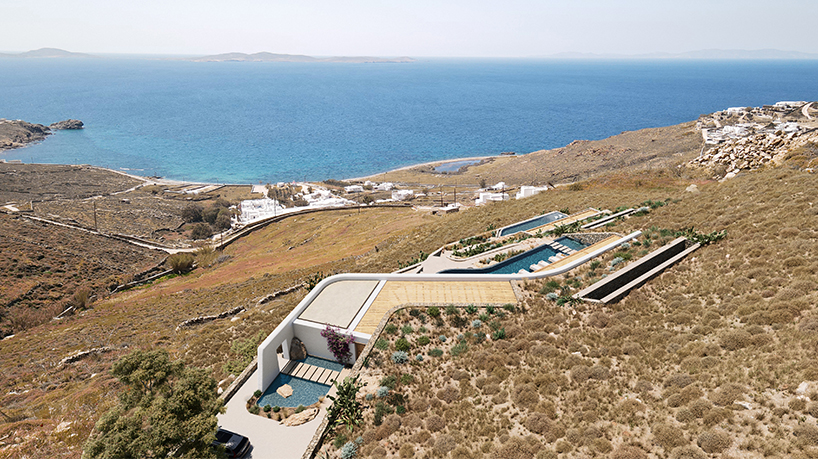
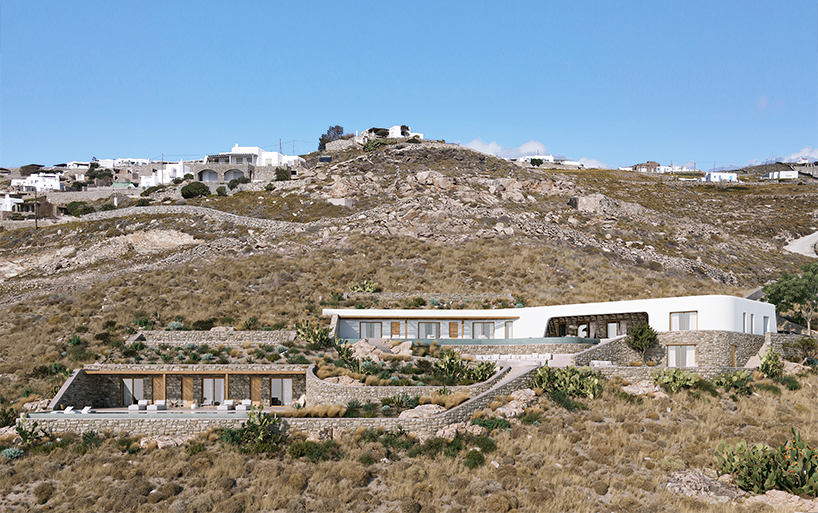
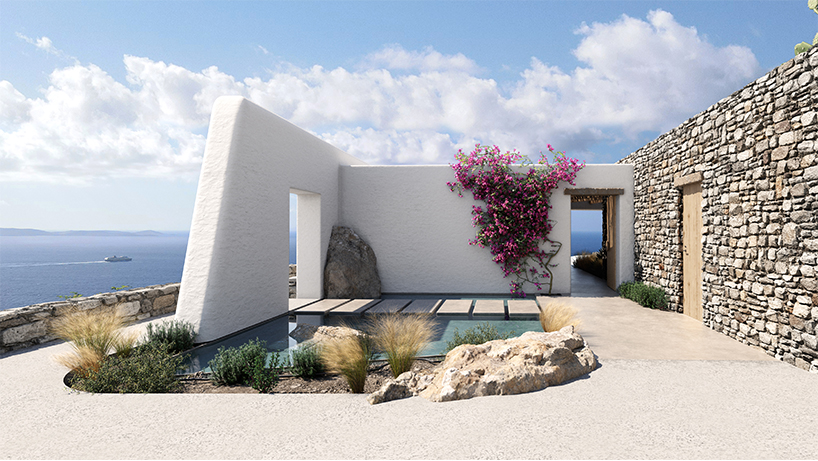
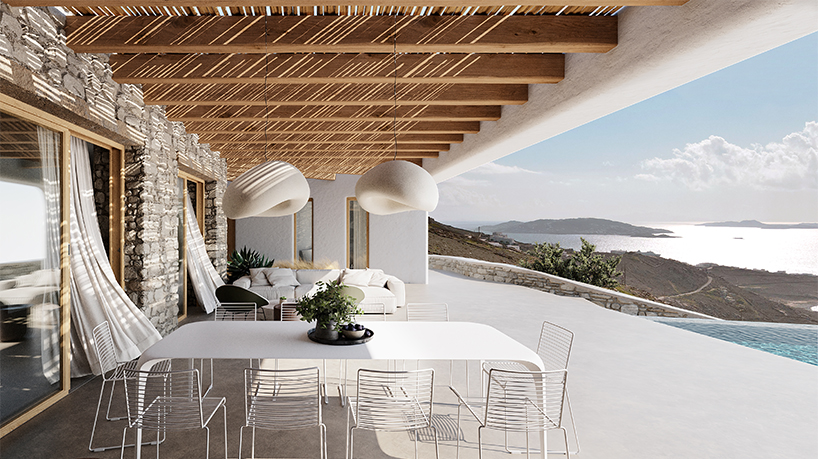
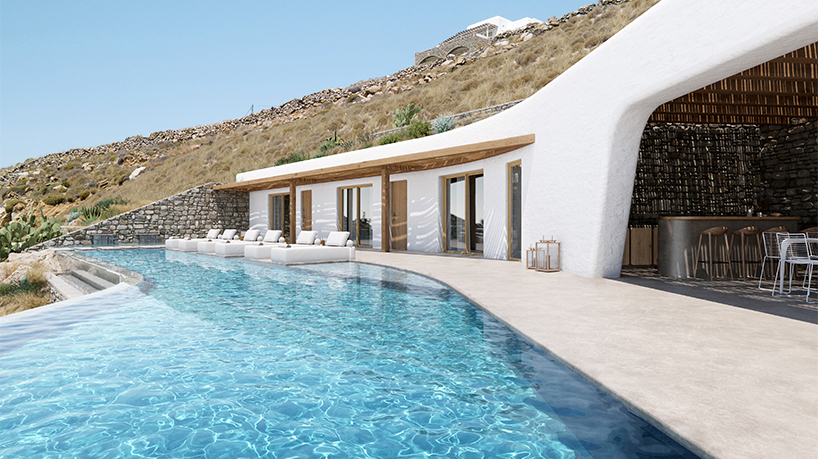
chorografoi architects unveils ‘the white rock villa’, a summer house situated on a sloping site in mykonos, greece. amphitheatrically embedded into the landscape, the dwelling blends harmoniously with its surroundings, while remaining distinctly visible thanks to a white-plastered wall that embraces the hillside and opens towards the view of the aegean and the nearby islands.
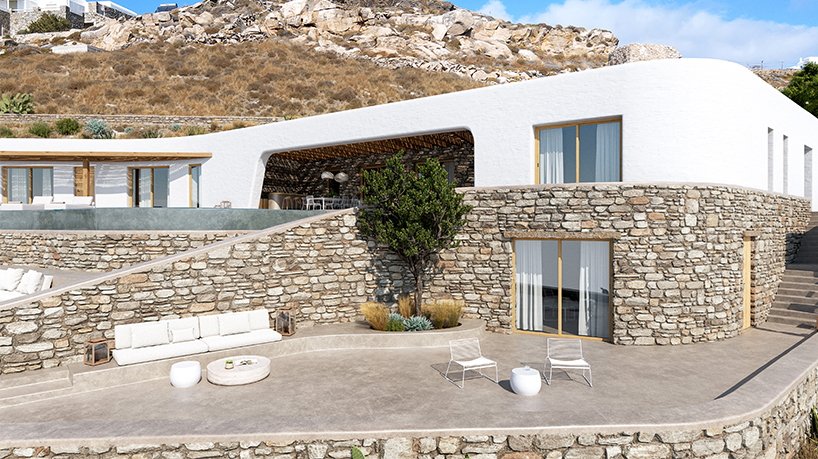
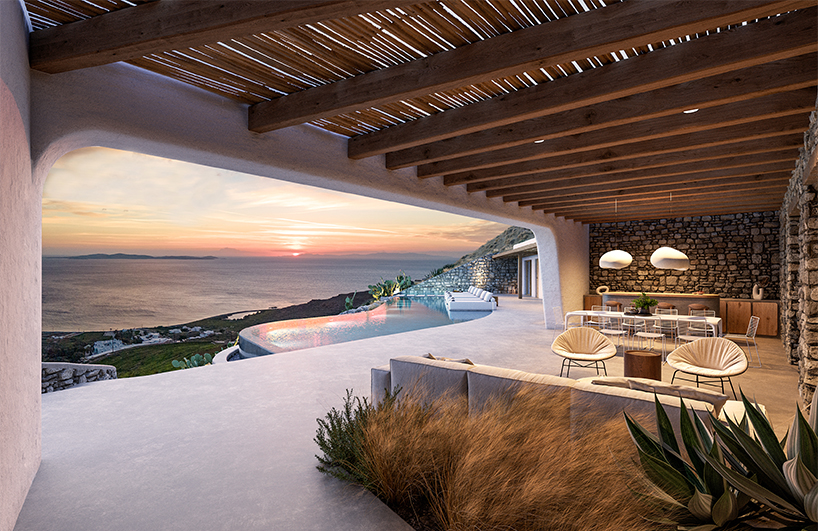
the villa by chorografoi architects is divided into three different levels connected by an outdoor pathway with stairs. occupants access the plot at its highest level, welcomed by a path that leads to the main house entrance and a large outdoor space, as well as an independent guest room with an en suite bathroom. the outdoor space of this level includes a shaded area and the infinity pool, both overlooking the aegean sea. the use of a pergola intends to give guests the opportunity to enjoy the outdoor space throughout the day protected from the sun and summer winds. it hosts an open kitchen, bar, dining and living area right by the pool. the swimming pool follows the white curved wall enhancing a sense of fluidity.
image by cloudn9 studio
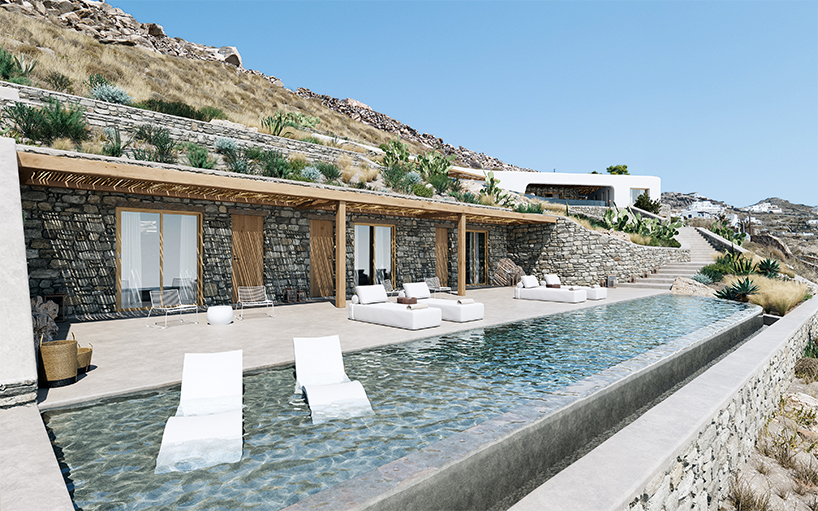
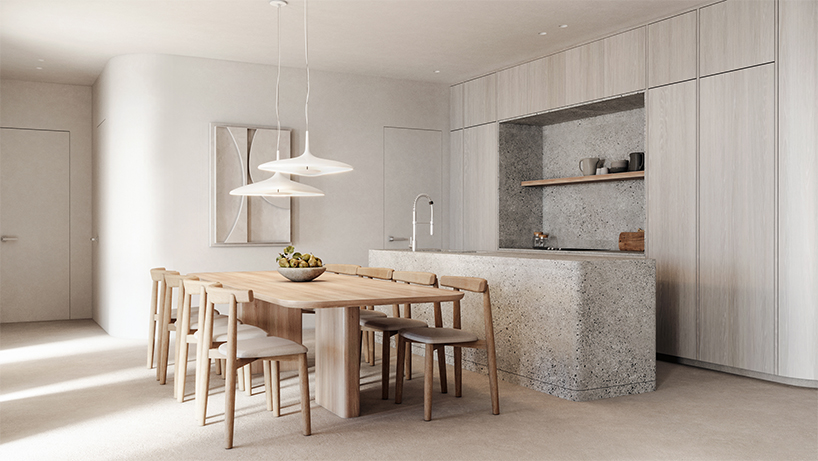
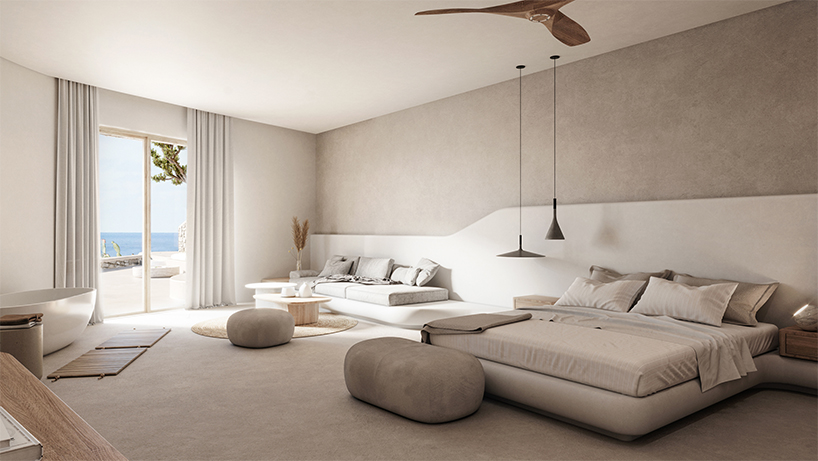
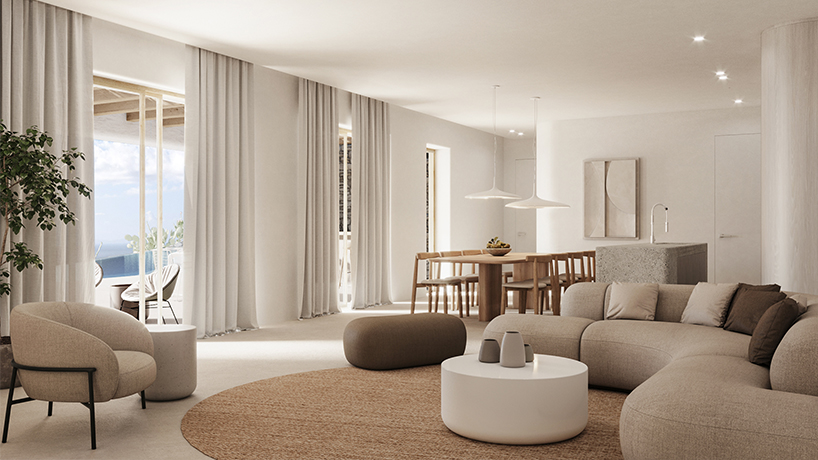
the white-washed stone building of the highest level accommodates the main residence housing the living room, dining room, kitchen, WC, auxiliary kitchen area, storage area, as well as four luxury suites with private bathrooms. following the natural slope of the terrain, the stairs lead towards a lower level where one can find an outdoor lounge area with a fireplace and another private guest suite with a bathroom. the lowest level and the most secluded area of the plot hosts three subterranean, luxury suites with en suite bathrooms.
image by cloudn9 studio
the villa blends into the hillside thanks to the extensive green roofs and the lush vegetation that seamlessly integrate the construction into the natural setting. the curved shapes, appearing in both the building design and the surrounding configurations, are inspired by the plasticity of the traditional architectural forms. in combination with the use of traditional materials, such as lime and local stone, elements in natural shades contribute to minimizing the imprint of the building and enhance the essence of the greek summer lifestyle.
name: the white rock villa, mykonos, greece architects:chorografoi architects design team: katerina dounavi, katerina papasifaki, minas bougiouris, maria apergi client: florios group location: mykonos island, greece total surface area: 598.5 sqm (6442 sqft)
designboom has received this project from our ‘DIY submissions‘ feature, where we welcome our readers to submit their own work for publication. see more project submissions from our readers here.
Bold colors and found paper, similar to collage art, make up the work of local artist Haunani Hess, who said she is directly inspired by the nature and culture surrounding her on Oahu. Her pieces are filled with mountains, aquatic scenes and photography, demonstrated in bright watercolors on the background of found pages from books.
“I am native Hawaiian. My work is an expression from the core of my being, and not solely as a reaction to external circumstances,” she said. “I am a Hawaiian artist, whereas non-Hawaiians who live here are sometimes mistakenly called, ‘Hawaiian artists.”
Hess is a local, self-taught, self-employed artist who said she has been doing art her whole adult life. Hess owns her own studio in Honolulu, where she is originally from. She explained she sells her pieces privately, and to get more coverage in the community, also at local markets on Oahu two times per month.
A BYU–Hawaii alumnus from Brisbane, Australia, and freelance artist and designer on the North Shore of Oahu, Sam Mangakahia says Maori tattoo art, or ta moko, inspires his artwork.
“[My] strong interest in moko wasn’t just in the beauty of design, it was in the process of learning people’s stories and sharing that through indigenous design,” Mangakahia shares on his website, Hamiora.com. He said he hand-carves culture pieces on almost anything, such as leather journals, phone cases and instruments. On his website, he showcases his style and technique.
According to Mangakahia, each piece showcases his Maori culture by representing the nature of New Zealand, Australia and Oahu. He uses bold lines and curved figures that look like waves, leaves, flowers and turtles.
A freshman from Papenoo, Tahiti, studying psychology, Edelweiss Chonger said she started doing art when she was 6 years old. She credited her inspiration and exposure to different styles of art to her mother, who is a pianist; her uncle, who is an artist; and her grandfather, who is an architect.
She said the exposure to different types of art has allowed her to experiment with different mediums like spray paint, acrylic art and collage. “I think today, my style has changed a little in the sense that I love trying new things every time,” Chonger said.
The creative process
Hess described her art as multi-layered with different colors and forms. She said she uses different lines and figures to represent the mountains and the landscape of Oahu. “My style is to be in a state of ease, flow and intuition,” she said. “I am led by the creative process, rather than pushing for a specific outcome.”
Hess explained her process starts by collecting the appropriate materials and having an organized space. “I am constantly gathering materials, be it found paper, magazines, old books, fabric swatches or any material that calls my attention,” she explained.
Throughout her life, Hess said she has experienced art through a more technical lens, which was not something pleasurable for her. She explained she has also interned in different parts of the United States. One place was Austin, Texas, where she learned from artist Reggie Thomas, who specializes in glass blowing.
She compared the experience of forcing a style of art on herself to doing countless push ups. As time passed, Hess said she grew away from doing tedious work and began exploring more abstract forms and doing what felt good to her as an artist.
She encouraged other artists to do what they love, emphasizing they should try and challenge themselves within the zone they enjoy while not participating in a style that is painful for them.
Mangakahia said creating becomes much easier for him when the tools he is used to using are readily available for him. “I like to have tools I can work with, whether that is an iPad, a drill, a paint brush or pens. I make sure I have these things around me so when I have a thought and I want to bring out my imagination, I can [quickly] before the thought or the inspiration leaves me.”
Photo by
Chalei Crane
Photo by
Chalei Crane
He continued, “Anyone can do art. Anyone who has an imagination can do art. There’s no set way of how you’re supposed to do it.” He said timeless and meaningful art has a strong base in the elements and principles of art.
Chonger expressed throughout her journey with creating art, she has learned more about herself. “Art is not just about painting, or doing graffiti or drawing. It is about [artists] leaving [their] comfort zones to better discover [their] strengths and weaknesses. … I want to be authentic. Even though what we do is never really completely unique because a lot of people can do the same, I still think it’s important to try to be different.”
History depicted through art
During an internship in New Zealand, Mangakahia said he collaborated with local artist Rangi Kipa, a New Zealand sculptor and carver, on the interior design of a local airport. As they worked, Mangakahia said he learned how the narrative and meaning behind a piece of art is just as important as the final product.
“What inspires me is the meaning behind the art and how you can create emotion from pieces of art. I want to inspire others to live a better life or be happier … when they view a piece or think about how they connect with the piece through family and culture,” he shared.
Mangakahia said the experience of working with Kipa impacted how he thought about his creative process and how he could use art to teach specific history lessons. He said having messages embedded in his work will allow more people to understand New Zealand roots and heritage. “Art can make everyone culturally adapt and familiar with these markings [ta moko] and bring culture back as the main source of visual communication, helping to decolonize New Zealand.”
As a child, Hess said she traveled to different states because her father was in the U.S. military. While traveling, she said she was exposed to different places and people where she learned how to adapt.
Hess explained how the layering of her childhood experiences can be seen in the layering done in her artwork. “In a way, every place I’ve lived has stuck with me,” she said. “My work has a lot of layers and textures and nuance. I love mixed media for the rebellious aspect of using whatever materials to create. I think traveling so much as a child taught me how to be adaptable, resilient and resourceful.”
Nature’s impact on creating
During a local art show in Honolulu, Hess described a time when driving home from work where she was awestruck by the natural creations surrounding her. “The mountains are always in the background. It’s not even like I have to remind myself to look at them and to recognize the beauty of nature,” Hess said. “It stuns me every day, stuns me all the time, and I’ve lived here almost my whole life.”
While on his internship, Mangakahia said he learned an important lesson from Kipa. He asked Kipa how inspiration can come to artists and how they could be re-inspired. Mangakahia said Kipa responded, “It’s everywhere. It’s in the ocean. Have a look. You just need to look. Look at the patterns and the shape of the sea urchins.”
Mangakahia said, “What I feel like he was saying is God is the ultimate creator, and all you need to do is look around at the leaves and trees. Look at how you were created. Look at your muscles and ratios within yourself. That’s how I gain inspiration.”
Chonger said the many cultures at BYUH have helped her create new pieces because she incorporates their energies into her work. For example, she explained how the Indonesian culture, which she has learned about through friends, can give her energy, while the Hawaiian culture grounds and relaxes her.
An example of Edelweiss Chonger’s artwork.
Photo by
Photo provided by Edelweiss Chonger
An example of Edelweiss Chonger’s artwork.
Photo by
Photo provided by Edelweiss Chonger
“The people on the island are very relaxed and chill, which is a completely different culture from Indonesia. It’s an interesting concept that I try to find a balance in and mix together in my artwork through color and pattern,” Chonger said smiling.
MANILA: Filipino journalist and multimedia producer Ardie Lopez has been tapped by Bentley Motors for its “Embrace Extraordinary” storytelling campaign.
KEY TAKEAWAYS
What is the goal of Bentley’s “Embrace Extraordinary” campaign?
Bentley selected talents in the region to capture and correlate the beauty of nature and Bentley cars.
How did journalist and multimedia producer Ardie Lopez interpret “Embrace Extraordinary?”
By photographing the Taal and Pinatubo volcanoes, Lopez said he was able to imply that like volcanoes, elegant Bentley cars contain hidden power.
In the second edition of “Embrace Extraordinary,” the British luxury carmaker has “selected talents around the region who have been deemed best to capture through their lenses the parallelism between Bentley design elements and the world around them,” Bentley Philippines said in a release.
Lopez took varied shots of the Bentley Bentayga and Continental GT Convertible, then correlated these with unique perspectives of Taal Volcano as viewed from Talisay, Batangas, and of Mount Pinatubo from the Sacobia River in Pampanga, the company added.
“If you’ll notice, both my landscape subjects are volcanoes. This is deliberate. I want to portray their beauty and majesty amid their environment,” Lopez explained.
“But I also want to imply the explosive power that lies beneath their surface. I think this is a quality that is similar to Bentley cars,” Lopez added.
For Embrace Extraordinary, photographers and content creators were motivated to draw inspiration from Bentley’s design language.
“From exquisite cut-crystal headlamps to double-diamond grille and hand-stitched quilted cabin features, Bentley cars have always been lavished by immaculate design details. These provide a rich tapestry of forms and texture from which images of natural marvels and architectural masterpieces can be assimilated,” the release read.
Lopez’s work also reflects Bentley’s sustainable goals and practices. Bentley aims to be the first carbon neutral luxury car manufacturer by 2030, and climate positive from then on.
In its manufacturing facility in Crewe, England, which has been certified carbon neutral since 2019, Bentley has partly been relying on solar energy, using hydrotreated vegetable oil as fuel, recycling water, and cutting down on paper consumption, among other ways, to reduce its carbon footprint.
The car marque is also offering hybrid-powered models.
Already available in select markets worldwide, the new Bentley Flying Spur Hybrid and Bentayga Hybrid are both set to join Bentley Philippines’ model range in 2022.
By combining a 2.9-liter, twin-turbocharged V6 gasoline engine with an advanced electric-motor, the Flying Spur Hybrid becomes the most efficient Bentley ever, having the capability to cover as much as 700 kilometers when fully fueled.
The Bentayga Hybrid, currently the only electrified luxury SUV in the world, is powered by a three-liter, twin-scroll turbocharged V6 petrol engine complemented by an e-motor. It can travel about the same distance as the Flying Spur Hybrid, and can also drive for about 40 kilometers in purely electric mode.
In 2025, Bentley will launch its first electric vehicle, and the company’s entire model range will be exclusively comprised of hybrid and fully electric vehicles the following year.
By 2030, every new Bentley will run on pure electric power.
Photos from Bentley Philippines, Bentley, and Ardie Lopez
Also read: Bentley re-certified carbon-neutral, uses greener measures on site
new university in india presents distinctive volumetry
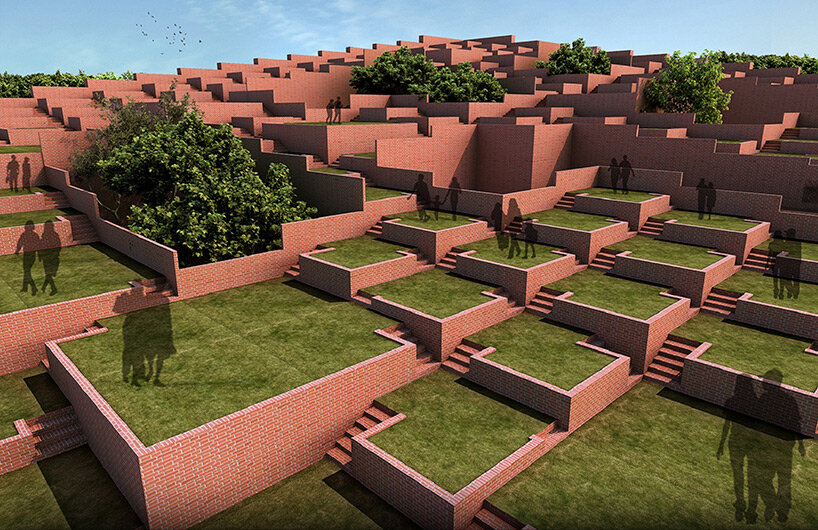
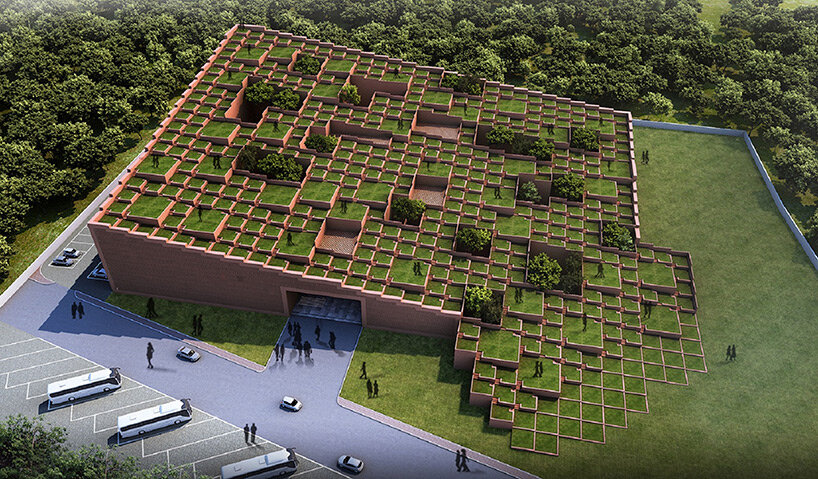
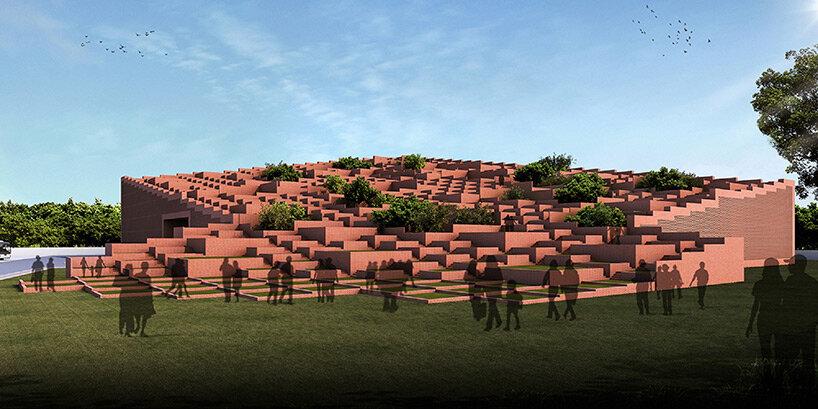
within a 32-acre campus, sanjay puri architects has completed the design for the main administration offices of the prestige university in indore, india. the newly unveiled building takes shape as a staggered arrangement of green terraces, gradually stepping up to reveal the 20-meter height of the structure. the distinctive volume houses a variety of functions including seminar halls, a library, and a cafeteria, while the entire terrace of the fourth level is accessible to the students and faculty, transferring into an open auditorium amidst the landscape.
all images courtesy of sanjay puri architects
naturally lit and sufficiently ventilated
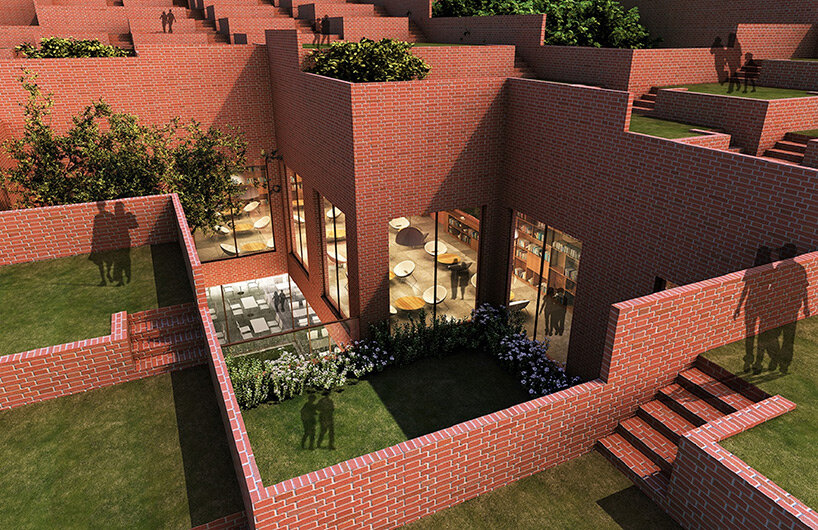
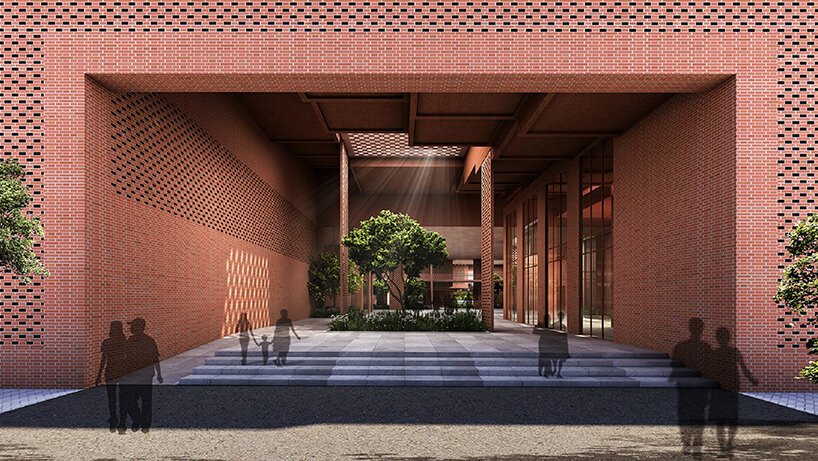
the prestige university administration building interweaves multiple functional spaces, with naturally lit landscaped courtyards allowing indirect light to infuse the internal volumes at each level. sanjay pure architects (find more here) drew inspiration from traditional indian architecture to create an energy-efficient sustainable building with minimal dependence on artificial lighting and air conditioning. varied sectional volumes punctuated by greenery create different experiences in each part of the building. meanwhile, a continuous diagonal indoor street, in addition to the numerous open courts, facilitates natural ventilation within the internal spaces.
the east, west, and southern sides of the structure are enveloped with a ventilated brick screen to mitigate heat gain in response to the climate. the prestige university is contextual to the climate of its location, creating an energy-efficient building that in addition to housing numerous activities, also becomes a large open public space with an accessible ground floor and landscaped roof. the building is a series of interactive spaces of different scales fostering engagement at various levels amongst the users as well as integrating functional and open landscaped areas intrinsically.
the common facilities like food court, an auditorium and the administrative offices are located on the ground floor for easy access. the various library components are located on the first floor connected by a bridge over the diagonal indoor street cutting across the building. the common classrooms occupy the second floor deriving light and ventilation from the various sectional volumes and open courts. these open courts act as the spill over area for recreational activities. the third floor houses the tiered classrooms. the fourth floor houses all the administrative and faculty related facilities.
Ecology blocks outside Seattle City Light’s substation in Ballard
By Erica C. Barnett
After at least one formal complaint, the Seattle Department of Transportation has issued a warning—but no penalty—to Fremont Brewing, the company co-owned by city council member-elect Sara Nelson, for obstructing the public right-of-way around its Ballard brewing facility with massive concrete “ecology blocks.”
As PubliCola reported last summer, eco blocks—so called because they are a byproduct of concrete production that uses waste that would otherwise occupy landfills—are an inexpensive way for business owners to prevent people living in their vehicles from parking on the street next to their properties.
Since the beginning of the pandemic, when the city stopped enforcing a law requiring people to move their vehicles every three days, the blocks have proliferated throughout Seattle’s industrial areas, which are the only places where people living in oversized vehicles can legally park. Business owners say that the presence of RVs and other types of large vehicles, such as box trucks, discourages patrons, and that large concentrations of RVs can lead to health and safety problems that impact their customers and employees.
Obstructing public streets is illegal, but SDOT has treated eco-blocks differently than other street obstructions; instead of penalizing business owners for taking over public space that belongs to everyone, as they might if a random person set up a tire fort or craft fair in the middle of the street, the department has responded to the proliferation of eco-blocks by essentially throwing up its hands.
Eco-blocks line the street next to Fremont Brewing’s production facility in Ballard.
This is true not just of Fremont Brewing, which received a written warning, but of many other businesses around the city’s industrial areas as well as the US Postal Service, which surrounded its Ballard sorting facility with eco blocks way back in August 2020.
At the time, USPS spokesman Ernie Swanson told PubliCola that “USPS got the OK from the city to put in the concrete barriers” in response to a proliferation of RVs in the area. The Seattle Department of Transportation disputed this, calling the road-blocking barricades “unpermitted,” but took no action. They’re still there today, graffiti-covered and looking dingy compared to their more recently installed counterparts in front of a Bevmo!-anchored strip mall across the street.
Contacted for information about why the blocks are still in place more than a year later, Swanson said, “The concrete blocks were placed in front of the Ballard PO as well as other neighboring businesses as a response to a proliferation of needles, human waste and other hazardous materials being discarded on the property. As of this date, the blocks remain not only in front of the PO but also other businesses in the area. We have no knowledge that a permit was ever required.”
The city’s process for dealing with Fremont Brewing’s ecology blocks was typical. After someone filed an anonymous complaint about the blocks in September, SDOT performed an inspection “and observed ecology blocks” in the street around Fremont Brewing, according to a notice SDOT sent to the company September 17. “We do not allow this type of use in public right-of-way due to traffic safety concerns as well as transportation and utility access needs. Please remove these unpermitted encroachments from public right-of-way by the compliance date indicated below”—November 10.
November 10 came and went; the blocks remained. About a week later, the case was closed.
SDOT spokesman Ethan Bergerson told PubliCola the department followed “standard procedure” in responding to the complaint. “The first step in the enforcement process is to mail a letter to the adjacent businesses or property owners notifying them of their responsibilities to remove the concrete blocks,” Bergerson said. “The purpose of this letter is to initiate a conversation with the responsible party so that we can find a path forward leading to their removal of the unpermitted concrete blocks. To date, we have sent letters of this nature to property owners and businesses adjacent to concrete blocks left in about a dozen locations around Ballard, SoDo, and Georgetown. … Our approach [with Fremont Brewing] has been consistent with the other locations.”
A reminder for dog walkers is visible behind a fence that blocks sidewalk access next to City Light’s Canal substation.
Fremont Brewing owner (and Nelson’s husband) Matt Lincecum, who runs the company day to day, declined to comment for this story, as did Nelson.
SDOT has the authority to take enforcement action against any business (or government entity) that obstructs the public street with eco blocks or other objects that make it impossible for the public to access streets, sidewalks, or parking strips. To date, it has not done so, beyond warnings like the one it issued to Fremont Brewing.
As if to emphasize the city’s lackadaisical approach to enforcement, Seattle City Light has installed its own anti-RV fortifications at its Canal Substation, located two blocks away from Fremont Brewing and the rest of the eco-block-littered Ballard brewery district. In addition to eco-blocks in the street, the north side of the substation is walled off by two layers of fencing that completely obstruct the public sidewalk. A review of historical Google Maps reveals that the eco-blocks were installed sometime after this past August, when several RVs were parked along the south side of the substation. The fence, too, is new; as of June 2021, per Google Maps, several RVs were parked on that side of the substation, too. Since then, the RVs appear to have moved around the corner, to a narrower residential street on the east side of the building.
We’ve reached out to City Light as well as SDOT about the obstructions around the Canal Substation and will update this post when we hear back.
Old and newer ecology blocks next to the Ballard postal sorting facility, which installed blocks on parking strips and (around the corner) on the street itself last year.
From the point of view of a property owner, ecology blocks solve an immediate problem—people living in RVs or parking large vehicles indefinitely in front of their business—that the city has failed to address. But the fact remains that even if the city continues to turn a blind eye to vigilante street obstructions, nothing will really change until the region stops ignoring the needs of people living in vehicles, who make up as much as half of King County’s homeless population. In the absence of “safe lots,” social services, and affordable, permanent housing, people sleeping in their vehicles will continue to take up space in public,
But no amount of semi-sanctioned street and sidewalk obstruction will fix the underlying problem: The city and county have dedicated virtually no resources to people living in vehicles, who make up as much as half of the region’s unsheltered homeless population.
In the far north of Ghana, the landscape is increasingly pressured by climate change. Seasons occur as they haven’t before, with prolonged drought now often followed by heavy flooding. The Sahel – a semi-arid region between the Sahara Desert to the north and lush tropical terrain to the south – is expanding southward into the country’s greener reaches.
“We don’t have a rainy a season anymore. It’s three months of rain and then nine months of dry season,” said Daniel Debrah, a forester who helped found Ghana’s GLFx Bawku chapter. Named for the town of Bawku in Ghana’s Upper East Region, GLFxBawku is a part of a Global Landscapes Forum (GLF) initiative to implement restoration activities in landscapes around the world. The chapter is so far one of five in the greater Sahel region, each funded by a EUR 5,000 grant from the Robert Bosch Foundation.
On top of the seed funding, the chapter received a major boost after a local chief, Puafadir Ziem Mon Naaba Alumbil, agreed to donate 3,200 square meters of his land for a tree nursery in the semi-arid Yarigungu community near Ghana’s northeast border with Burkina Faso.
The tree nursery on the donated land will sit on gently sloping ground that is well-drained and less than 500 meters from freshwater. Mango trees, neem trees and a mahogany tree are already on the site to provide shade and enable the tree seedlings to grow.
The Bawku chapter selected native species suitable for the soil, and the seedlings include more mahogany (Khaya), endangered rosewood (Pterocarpus erinaceus), the culturally significant baobab (Adansonia) – which also has an edible pulp – and shea (Vitellaria paradoxa), which contains a nut used to produce shea butter. Seedlings will also be distributed to the community to allow individuals to plant them near their homes.
Developed through a community consultation process, the restoration also aims to regenerate a landscape that has been badly depleted in the past two decades. Home to broad savannah grasslands and baobab trees, many areas of Upper Ghana have no tree cover due to unsustainable agricultural practices, bushfires, desertification, over-grazing and the clearing of trees for fuelwood and through controlled burning, which can spark bushfires given the dry conditions.
With the regional economy heavily dependent on agriculture and livestock, the landscape degradation and increasingly unpredictable weather have made agricultural livelihoods more uncertain. The global pandemic has also added to socioeconomic pressures, with many migrants returning home to their villages.
“There is a lot of tree loss across the landscape,” said Debrah. “Water is a serious problem, and food security is a big problem since it is difficult to grow rice, sorghum and millet.”
Ghana has already experienced one of the world’s highest rates of deforestation in recent years – much of it in the humid tropical forests in the south of the country. According to Global Forest Watch (GFW), the West African nation experienced the world’s highest increase in the rate of primary rainforest loss in 2018 compared to 2017. In 2020, GFW determined that Ghana lost 136,000 hectares of natural forest, equivalent to emitting 82.2 metric tons of carbon dioxide, based on remote sensing and satellite data from the University of Maryland.
Clearing for cocoa plantations, as well as road building, logging for mahogany and other trees, climate change and gold mining have all contributed to Ghana’s deforestation. One study cautioned that “at the current rate of deforestation, the country’s forests could completely disappear in less than 25 years.”
The GLFx Bawku chapter’s landscape restoration initiatives are part of a broader movement in Ghana to reverse this tree loss – one that has a ripple effect on human well-being and natural ecosystems. For example, the NGOs Green Republic and Youth Icons Ghana partnered to plant thousands of trees in the country. And as part of the AFR100 initiative, an effort to restore 100 million hectares of land in Africa by 2030, the Ghanaian government pledged the restoration of 2 million hectares. Across the continent, the African Union’s Great Green Wall initiative aims to restore and green the Sahel through tree plantings and other vegetation.
The donation of land in Bawku by Chief Alumbil also shows the level of restoration and innovation possible at the local level.
“When you plant a tree, you have given life and added property that will live into the future,” said Alumbil in a video commentary. “This is property no one will forget when they enjoy the tree’s shade or its fruit.”
In addition to tree plantings, restoration activities by the GLFx Bawku chapter will include training students and farmers on nursery development and compost preparation, establishing COVID-19 memorial plantings in schools and training students to become citizen scientists.
“The donated site will provide employment for five community members at the nursery and serve as a distribution center for tree seedlings to farmers for on-farm planting,” said Debrah. “The planting of trees helps strengthen the soil and also the people.”